Interviews are opportunities to demonstrate your expertise, and this guide is here to help you shine. Explore the essential Proficient in using statistical process control (SPC) interview questions that employers frequently ask, paired with strategies for crafting responses that set you apart from the competition.
Questions Asked in Proficient in using statistical process control (SPC) Interview
Q 1. Explain the principles of Statistical Process Control (SPC).
Statistical Process Control (SPC) is a powerful collection of statistical methods used to monitor and control a process to ensure it operates efficiently and produces consistent, high-quality outputs. It’s based on the principle that variation in any process is inevitable, but this variation can be understood, classified, and managed. SPC helps distinguish between ‘common cause’ variation (inherent to the process) and ‘special cause’ variation (due to specific, identifiable events). By monitoring process data over time, we can identify when special causes are present and take corrective action to prevent defects and improve performance. Think of it like a doctor regularly monitoring a patient’s vital signs; fluctuations within a normal range are expected, but significant deviations require investigation.
Q 2. What are control charts and how are they used in SPC?
Control charts are the cornerstone of SPC. These are graphical displays of process data plotted over time, showing the variation in a specific quality characteristic. They include a central line representing the average of the data, as well as upper and lower control limits. These limits are statistically determined, representing the expected range of variation if only common causes are present. Data points falling outside these limits signal a potential problem—evidence of special cause variation. By continuously monitoring data on a control chart, we can quickly detect changes in the process and address issues before they lead to widespread defects. For example, a manufacturing plant might use control charts to monitor the diameter of a manufactured part. If the diameter consistently falls outside the control limits, this signifies a need to investigate the manufacturing process and identify the cause of the variation.
Q 3. Describe the different types of control charts (e.g., X-bar and R chart, p-chart, c-chart).
There are many types of control charts, each designed for different types of data. Some common types include:
- X-bar and R chart: Used for continuous data (e.g., weight, length, temperature). The X-bar chart tracks the average of subgroups, while the R chart monitors the range (difference between the highest and lowest values) within each subgroup. This combination provides a comprehensive picture of both the process average and its variability.
- p-chart: Used for attribute data representing the proportion of nonconforming units in a sample (e.g., percentage of defective products). This chart monitors the proportion of defects.
- c-chart: Used for attribute data representing the number of defects per unit (e.g., scratches on a surface). This chart tracks the count of defects per item.
- u-chart: Similar to the c-chart but instead of tracking defects per unit, it tracks defects per unit of opportunity. This is useful when the size of the unit is variable.
The choice of chart depends entirely on the type of data being collected and the specific quality characteristic being monitored.
Q 4. How do you interpret control chart patterns (e.g., shifts, trends, runs)?
Interpreting control chart patterns is crucial for effective SPC. Patterns outside the control limits are clear indicators of special cause variation requiring immediate investigation. However, even points within the limits can reveal problems:
- Shifts: A sudden change in the process average, indicated by several consecutive points above or below the central line.
- Trends: A gradual shift in the process average, showing a consistent increase or decrease in values.
- Runs: A series of consecutive points above or below the central line, even if within the control limits, suggesting a systematic issue.
- Cycles or patterns: Repeating patterns in the data, suggesting external factors affecting the process (e.g., daily temperature fluctuations).
Identifying these patterns involves careful observation and understanding of the process. A sudden shift might point to a machine malfunction, while a trend could signal tool wear or gradual process deterioration. Runs and cycles demand a deeper analysis to understand underlying causes.
Q 5. What are the common causes and special causes of variation?
Variation in a process is categorized into common causes and special causes:
- Common causes: These are inherent, random variations present in the process due to many small, unpredictable factors. They are inherent to the system and are considered normal variation. Think of the slight variations in the weight of cookies baked from the same recipe—differences in oven temperature, slight ingredient variations, etc. This is ‘noise’ in the process.
- Special causes (or assignable causes): These are specific, identifiable factors that cause significant deviations from the usual process behavior. They are not inherent to the system; they are unusual events. These might include a machine malfunction, a change in raw materials, or human error.
Q 6. Explain the difference between common cause and assignable cause variation.
The key difference lies in their origin and impact. Common cause variation is inherent to the process and is expected within certain limits. It represents the stable, predictable variability. Managing common cause variation requires process improvements, often through significant changes to the process design. Assignable cause variation, on the other hand, is due to identifiable factors external to the inherent process variability. It’s often a signal of a problem that needs immediate attention and correction, not process improvement. The goal is to eliminate assignable causes to make the process more consistent and predictable.
Q 7. How do you calculate control limits for different types of control charts?
Calculating control limits varies depending on the type of control chart. The formulas often involve the process average and standard deviation, sometimes calculated from subgroups of data.
- X-bar and R chart: Control limits for X-bar are calculated using the average of the subgroup averages (X-double bar) and the average range (R-bar), along with constants from statistical tables. Similarly, the R chart limits are based on R-bar.
- p-chart: The control limits are calculated based on the average proportion of nonconforming units (p-bar) and the sample size.
- c-chart: The control limits are based on the average number of defects per unit (c-bar).
Statistical software packages (like Minitab, JMP, or R) simplify these calculations significantly. The key is to ensure that sufficient data is used for accurate calculation of the process statistics and control limits to ensure the limits are meaningful and representative of the process behavior. Incorrectly calculated limits can lead to misinterpretations and ineffective process control.
Q 8. What is the purpose of calculating process capability indices (Cp, Cpk)?
Process capability indices, Cp and Cpk, tell us how well a process can meet its specifications. Essentially, they quantify the inherent variation of a process relative to the customer’s requirements. A higher index indicates a more capable process, meaning it’s less likely to produce defective products. These indices are crucial for assessing process performance and identifying areas for improvement.
Q 9. Explain the meaning of Cp and Cpk values and their interpretations.
Cp (Process Capability) measures the potential capability of a process. It compares the process spread (usually expressed as 6 standard deviations) to the specification tolerance (Upper Specification Limit – Lower Specification Limit). A Cp of 1 indicates that the process spread is equal to the tolerance, while a Cp greater than 1 suggests the process is capable of producing items within the specifications.
Cpk (Process Capability Index) is a more realistic measure because it considers both the process spread and the process centering relative to the target specification. It accounts for the possibility that the process mean might be offset from the target. A Cpk of 1 indicates that the process is capable, with the process mean centered within the specifications. Cpk values less than 1 signal that the process is not meeting specifications and needs improvement.
Interpretations:
- Cp > 1.33 and Cpk > 1.33: Excellent capability, very few defects expected.
- 1 < Cp < 1.33 and 1 < Cpk < 1.33: Capable, but improvement is possible.
- Cp < 1 or Cpk < 1: Process is not capable, significant improvements are needed.
Example: Imagine a process manufacturing bolts with a target diameter of 10mm and a tolerance of ±0.1mm (9.9mm to 10.1mm). If the process has a standard deviation of 0.02mm, the Cp would be (10.1 – 9.9) / (6 * 0.02) = 1.67, indicating good potential capability. However, if the process mean is shifted to 10.05mm, the Cpk would be lower, reflecting the risk of producing non-conforming bolts.
Q 10. How do you determine if a process is capable of meeting specifications?
Determining process capability involves calculating Cp and Cpk. A process is considered capable if both Cp and Cpk are greater than or equal to 1. However, most organizations aim for higher values like 1.33 or even 1.5 to provide a safety margin against unexpected variations. These values generally ensure a very low defect rate (typically less than 1%).
The process involves:
- Defining specifications: Clearly establish the upper and lower specification limits for the characteristic being measured.
- Collecting data: Gather a minimum of 50-100 data points from the process, ensuring the data is representative of normal operating conditions.
- Calculating statistics: Determine the process mean (x̄) and standard deviation (σ).
- Calculating Cp and Cpk: Use the formulas for Cp and Cpk, plugging in the calculated statistics and specification limits.
- Interpreting the results: Compare the calculated Cp and Cpk values against the capability targets to assess whether the process meets the capability requirement.
Important Note: Before assessing capability, you must ensure the process is in a state of statistical control. Control charts are essential for demonstrating process stability.
Q 11. Describe the process of identifying and addressing out-of-control points on a control chart.
Out-of-control points on a control chart signal that the process is exhibiting unusual variation, possibly due to assignable causes (e.g., machine malfunction, operator error, material defects). Identifying and addressing these points is critical for improving process stability and reducing defects.
The process involves:
- Investigation: When a point falls outside the control limits or a pattern emerges (e.g., runs, trends), thoroughly investigate the potential causes. Examine records, interview operators, check machine settings, and analyze raw materials.
- Root cause analysis: Use tools such as the 5 Whys, fishbone diagrams (Ishikawa diagrams), or fault tree analysis to identify the root cause(s) of the out-of-control points.
- Corrective action: Implement corrective actions to eliminate or mitigate the identified root causes. This might involve repairing equipment, retraining operators, improving materials handling, or modifying process parameters.
- Verification: Monitor the process after implementing corrective actions to ensure the problem is resolved and the process is back in control.
- Documentation: Record all investigation steps, root causes, corrective actions, and verification results. This ensures that the learnings are retained and prevent future occurrences.
Example: If a control chart for a filling process shows several points consistently above the upper control limit, investigation might reveal a worn-out filling mechanism delivering more product than intended. Corrective action would involve replacing or repairing the mechanism, then monitoring to ensure the process is back in control.
Q 12. What are the benefits of using SPC in a manufacturing process?
SPC offers numerous benefits in manufacturing:
- Reduced Defects: By identifying and addressing variations early, SPC minimizes the production of defective products, leading to cost savings and increased customer satisfaction.
- Improved Quality: SPC helps maintain consistent product quality by monitoring and controlling process variations.
- Increased Efficiency: Early detection of process problems prevents larger, more costly issues down the line, optimizing production efficiency.
- Reduced Waste: By minimizing defects and improving process consistency, SPC reduces material and labor waste.
- Data-Driven Decision Making: SPC provides objective data for informed decision-making, ensuring that improvements are targeted and effective.
- Enhanced Process Understanding: Monitoring process behavior allows for a deeper understanding of its intricacies, highlighting areas for improvement.
Q 13. How does SPC relate to Six Sigma methodologies?
SPC is fundamentally linked to Six Sigma methodologies. Six Sigma aims to reduce defects to 3.4 defects per million opportunities (DPMO). SPC provides the tools (control charts, capability analysis) to monitor and improve processes, enabling organizations to achieve and sustain Six Sigma levels of performance. SPC is often used in the Measure, Analyze, and Improve phases of the DMAIC (Define, Measure, Analyze, Improve, Control) cycle, a core methodology of Six Sigma.
Q 14. Explain the concept of process stability and its importance in SPC.
Process stability in SPC refers to a state where the process variation is solely due to common causes (inherent, random variations). A stable process is predictable and consistent in its output. In contrast, an unstable process exhibits variation due to special or assignable causes (specific, identifiable problems), leading to unpredictable results. Process stability is crucial because only a stable process can be reliably assessed for capability using Cp and Cpk. You can’t accurately predict the future performance of an unstable process. Control charts are the primary tools used to assess and maintain process stability.
Q 15. How can you use SPC data to make data-driven decisions?
Statistical Process Control (SPC) data allows for data-driven decisions by providing a clear, visual representation of process variation over time. Instead of relying on gut feeling or infrequent inspections, SPC uses control charts to monitor key process characteristics. By analyzing these charts, we can identify trends, shifts, and special causes of variation. This allows for proactive interventions to prevent defects, reduce waste, and improve overall process efficiency.
For example, imagine a bottling plant monitoring the fill volume of bottles. An SPC chart showing a consistent pattern within control limits indicates a stable process. However, if data points consistently fall above the upper control limit, it suggests the filling mechanism is overfilling and needs adjustment. Similarly, points clustering near the lower control limit could indicate underfilling, perhaps due to a malfunctioning sensor. These insights, derived directly from data, enable informed decisions about process adjustments or preventative maintenance, minimizing losses and improving product quality.
Career Expert Tips:
- Ace those interviews! Prepare effectively by reviewing the Top 50 Most Common Interview Questions on ResumeGemini.
- Navigate your job search with confidence! Explore a wide range of Career Tips on ResumeGemini. Learn about common challenges and recommendations to overcome them.
- Craft the perfect resume! Master the Art of Resume Writing with ResumeGemini’s guide. Showcase your unique qualifications and achievements effectively.
- Don’t miss out on holiday savings! Build your dream resume with ResumeGemini’s ATS optimized templates.
Q 16. Describe your experience implementing and maintaining SPC in a manufacturing setting.
In my previous role at a medical device manufacturer, I was responsible for implementing and maintaining SPC across several production lines. This involved selecting appropriate control charts (e.g., X-bar and R charts for continuous data, p-charts for attribute data), defining control limits based on historical data, and training operators on data collection and interpretation. We focused on critical quality characteristics like component dimensions and functional test results.
Maintaining the system involved regularly reviewing control charts, investigating out-of-control points to identify root causes (using tools like Pareto charts and fishbone diagrams), and implementing corrective and preventative actions. I also worked on automating data collection wherever possible to improve efficiency and reduce errors. The success of this implementation was reflected in a significant reduction in defect rates and improved overall process capability, resulting in substantial cost savings and improved customer satisfaction.
Q 17. What software or tools have you used for SPC analysis (e.g., Minitab, JMP)?
Throughout my career, I’ve extensively used Minitab and JMP for SPC analysis. Both offer robust statistical capabilities, including a wide range of control charts, capability analysis tools, and statistical tests. Minitab’s user-friendly interface makes it particularly suitable for training operators and technicians, while JMP’s more advanced features are useful for deeper statistical investigation and data exploration. I’m also familiar with other software packages like R and Python, which offer powerful programming capabilities for custom SPC analysis and automation.
Q 18. How would you explain SPC concepts to a non-technical audience?
Imagine you’re baking cookies. You want every cookie to be the same size and perfectly baked. SPC is like having a system to monitor your baking process and ensure consistency. We use charts to track things like cookie diameter or baking time. If the cookies are consistently the same size and well-baked, the process is ‘in control’. But if suddenly the cookies start coming out too big or underbaked, the chart will show it, indicating a problem (like the oven temperature being off) that needs fixing. SPC helps prevent those unexpected variations and maintain a consistent, high-quality product.
Q 19. What are some common challenges encountered when implementing SPC?
Implementing SPC often faces challenges. One common hurdle is resistance to change from operators accustomed to traditional inspection methods. Another is the need for accurate and timely data collection, which can be hampered by inadequate measurement systems or insufficient operator training. Data integrity issues can arise from human error or poorly maintained equipment. Finally, management buy-in and resource allocation are crucial for successful implementation. Without adequate support and resources, the initiative may fail to gain traction or sustain momentum.
Q 20. How do you ensure data integrity and accuracy in SPC?
Ensuring data integrity is paramount in SPC. This starts with a well-defined measurement system analysis (MSA) to assess the accuracy and precision of the measurement instruments and techniques. We need to ensure that the measurement system is capable of detecting meaningful variations in the process. Furthermore, rigorous training for operators on proper data collection procedures is crucial to minimize human error. Regular calibration of equipment and audits of the data collection process are essential to maintain accuracy and identify any potential issues. Employing data validation techniques and implementing appropriate checks and balances can further enhance data quality.
Q 21. What are some limitations of SPC?
While SPC is a powerful tool, it does have limitations. It primarily focuses on detecting variation within a process, but it doesn’t identify the root causes of that variation directly. It assumes that the process is stable over time, but significant changes in the environment or process parameters can render the control charts ineffective. SPC is also most effective for processes that are relatively stable and produce a consistent stream of data. It’s less useful for highly complex processes or those with significant variability from external factors beyond immediate control. Finally, it only addresses common cause variation; it does not predict or prevent special causes of variation that are inherent to the process.
Q 22. Describe a situation where you used SPC to improve a process. What were the results?
In a previous role, we experienced high variability in the thickness of a crucial component produced on a CNC milling machine. This inconsistency led to assembly issues and increased scrap rates. To address this, we implemented an X-bar and R chart, a common SPC tool, to monitor the component’s thickness. We collected data from the machine over several shifts, calculating the average thickness (X-bar) and range (R) of thickness for each sample.
Initially, the control charts showed points outside the control limits, indicating that the process was not stable. Through investigation, we identified the root cause as inconsistent clamping pressure on the workpiece. By standardizing the clamping procedure and implementing regular checks, we were able to bring the process into control. The result was a significant reduction in variability (smaller R values), fewer defects, and a substantial decrease in scrap—moving from a 15% scrap rate down to under 2%.
Q 23. How do you handle situations where data is incomplete or unreliable?
Incomplete or unreliable data is a common challenge in SPC. My approach involves a multi-step process:
- Identify the nature of the incompleteness: Is data missing randomly, systematically (e.g., always missing data from one shift), or due to sensor malfunctions? Understanding the cause helps determine the appropriate action.
- Assess the impact: How much data is missing? A small amount of missing data might not significantly affect the analysis, especially if it’s randomly missing. A larger amount might require more substantial action.
- Data imputation (if appropriate): If missing data is relatively small and randomly distributed, I might use imputation techniques. Simple methods include replacing missing values with the mean or median of the available data. More sophisticated techniques include multiple imputation, which accounts for the uncertainty in the imputed values.
- Outlier analysis: Unreliable data often shows up as outliers. I would investigate outliers thoroughly. Are they genuine anomalies (e.g., a machine malfunction) or errors in data recording? Valid outliers might suggest a special cause that needs to be investigated; invalid outliers should be corrected or excluded.
- Data transformation: Sometimes transforming the data (e.g., using logarithmic or square root transformations) can stabilize variance and improve the reliability of the analysis.
- Process investigation: The presence of incomplete or unreliable data itself could suggest that something is amiss with the data collection process, which should be addressed for long-term solution.
It’s crucial to document all decisions and justifications regarding data handling to maintain transparency and accuracy.
Q 24. What is the difference between control charts and histograms?
Both control charts and histograms are valuable tools in SPC, but they serve different purposes:
- Histograms: Provide a snapshot of the distribution of a single variable. They show the frequency of occurrence of different values within a dataset. Think of it as a picture of your data at a single point in time. It is helpful in understanding the data’s overall shape and identifying potential issues like skewness or multimodality.
- Control charts: Track a variable or attribute over time, monitoring the process for stability and detecting shifts in the mean or variance. They help detect whether variations are due to common cause (inherent to the process) or special causes (assignable to a specific event).
Imagine monitoring the weight of bread loaves baked in an oven. A histogram would show the distribution of weights in a batch, while a control chart would track the average weight of loaves over multiple batches, allowing us to see trends and identify whether the oven is consistently producing bread of the target weight.
Q 25. What are the key steps involved in developing an effective SPC program?
Developing an effective SPC program is a multi-step process:
- Define the critical-to-quality (CTQ) characteristics: Identify the key process characteristics that directly impact product quality and customer satisfaction.
- Establish measurement systems: Ensure accurate and reliable measurement systems are in place for collecting data on CTQ characteristics.
- Select appropriate control charts: Choose the control chart type(s) best suited for the data type (continuous or attribute) and the process characteristic being monitored (e.g., X-bar and R charts for continuous data, p-charts for proportions).
- Establish control limits: Calculate control limits based on historical data from a stable process (if available). Otherwise, collect data to establish baselines and set control limits.
- Collect and analyze data: Continuously collect data, plot it on the control charts, and analyze patterns and trends.
- Investigate out-of-control points: Investigate any points that fall outside the control limits or exhibit non-random patterns. Identify and eliminate special causes of variation.
- Implement corrective actions: Implement corrective actions based on the root cause analysis of out-of-control points.
- Monitor and review: Regularly monitor the effectiveness of the SPC program and make adjustments as needed. Periodic review is crucial for continuous improvement.
Q 26. How do you ensure that SPC is effectively integrated into the overall quality management system?
Effective integration of SPC into a quality management system (QMS) requires a holistic approach. Here’s how to do it:
- Alignment with QMS objectives: Ensure that the SPC program aligns with the overall goals and objectives of the QMS. For example, if your QMS focuses on reducing defects, then your SPC program should be designed to monitor and control the key characteristics that contribute to defects.
- Integration with other QMS tools: Integrate SPC with other QMS tools such as failure mode and effects analysis (FMEA), root cause analysis (RCA), and corrective and preventive actions (CAPA). This allows for a systematic approach to quality improvement.
- Training and awareness: Provide comprehensive training to all personnel involved in data collection, analysis, and interpretation of SPC charts.
- Clear responsibilities: Clearly define responsibilities for data collection, analysis, and implementation of corrective actions.
- Regular audits and reviews: Conduct regular audits and reviews of the SPC program to ensure its effectiveness and identify areas for improvement.
- Use of software: Integrate SPC with existing software systems to automate data collection, analysis, and reporting.
By fully embedding SPC within the broader QMS framework, you avoid it becoming an isolated activity and enhance its overall effectiveness in driving continuous improvement.
Q 27. How would you design an SPC program for a new product launch?
Designing an SPC program for a new product launch requires a proactive approach:
- Design of Experiments (DOE): Before launch, conduct a DOE to identify and optimize critical process parameters. This helps ensure the process is capable of producing the product to specifications from the outset.
- Pilot run data collection: During pilot production, collect data on critical-to-quality characteristics. This data will be used to establish initial control limits for control charts.
- Process capability analysis: Perform process capability analysis to assess whether the process is capable of meeting the product specifications.
- Selection of control charts: Select the appropriate control charts based on the type of data and the characteristics being monitored.
- Real-time monitoring: Implement real-time monitoring of the process during the initial production runs.
- Continuous improvement: Continuously monitor the process, analyze data, and make adjustments as needed to maintain process stability and improve efficiency.
- Feedback loop: Establish a feedback loop between production, quality control, and engineering to ensure prompt identification and resolution of process issues.
The key is to establish baseline control limits early and then use SPC to track the process closely and quickly identify and resolve any issues that arise during the initial phases of production.
Q 28. Explain how you would train others on the use and interpretation of SPC charts.
Training on SPC should be tailored to the audience’s existing knowledge and roles. I’d employ a blended learning approach:
- Introductory sessions: Begin with interactive sessions explaining SPC concepts—variation, common vs. special causes, control chart types—using simple, relatable examples. A visual approach with real-world examples is crucial.
- Hands-on workshops: Provide hands-on workshops where participants analyze real-world datasets using statistical software. This allows them to practice interpreting control charts and identifying patterns.
- Case studies: Discuss real-world case studies demonstrating the application of SPC in different industries and situations. This enhances understanding and retention.
- On-the-job coaching: Provide on-the-job coaching and mentoring to ensure participants can confidently apply SPC in their daily work.
- Role-playing scenarios: Use role-playing exercises to simulate troubleshooting situations involving out-of-control points and decision-making around corrective actions.
- Regular refresher training: Offer regular refresher training sessions to keep participants up-to-date on best practices and new developments in SPC.
Throughout training, focus on practical application, critical thinking skills, and clear communication of results. Regular quizzes and assessments reinforce learning and identify areas needing further attention.
Key Topics to Learn for Proficient in using Statistical Process Control (SPC) Interview
- Control Charts: Understanding various control chart types (e.g., X-bar and R, p-chart, c-chart) and their applications in different processes. Mastering the interpretation of control charts to identify trends, shifts, and out-of-control points.
- Process Capability Analysis: Learning how to calculate and interpret Cp, Cpk, Pp, and Ppk indices. Understanding the implications of process capability for meeting customer requirements and specifications.
- Statistical Distributions: Familiarizing yourself with common distributions relevant to SPC, such as the normal distribution and understanding their role in interpreting data and setting control limits.
- Data Collection and Analysis: Developing a strong understanding of proper data collection techniques, ensuring data integrity and accuracy for reliable SPC analysis. Mastering data analysis methods to extract meaningful insights.
- Root Cause Analysis: Practicing different root cause analysis techniques (e.g., 5 Whys, Fishbone diagram) to identify and address the underlying causes of process variation and non-conformances.
- Process Improvement Strategies: Understanding how SPC data informs process improvement initiatives like Lean Manufacturing and Six Sigma methodologies. Knowing how to translate SPC findings into actionable improvement plans.
- Software Proficiency: Demonstrating familiarity with SPC software packages (mention specific software if applicable to your target audience, e.g., Minitab, JMP). Being prepared to discuss your experience using these tools for data analysis and reporting.
Next Steps
Mastering Statistical Process Control (SPC) is crucial for career advancement in quality control, manufacturing, and various data-driven industries. A deep understanding of SPC demonstrates your analytical skills and ability to drive process improvements, making you a highly valuable asset to any organization. To maximize your job prospects, create an ATS-friendly resume that effectively showcases your SPC expertise. ResumeGemini is a trusted resource to help you build a professional and impactful resume. We provide examples of resumes tailored to highlight proficiency in using Statistical Process Control (SPC), helping you stand out from the competition.

Operations Manager Resume Sample
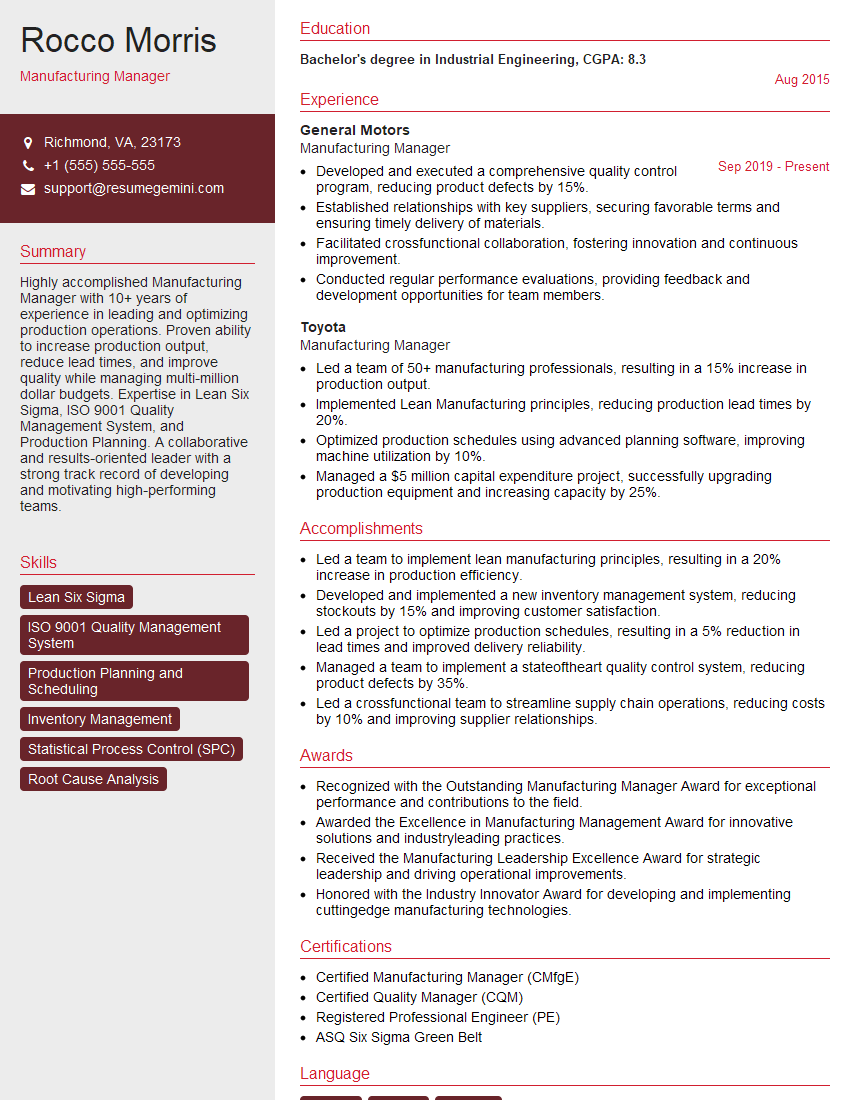
Manufacturing Manager Resume Sample
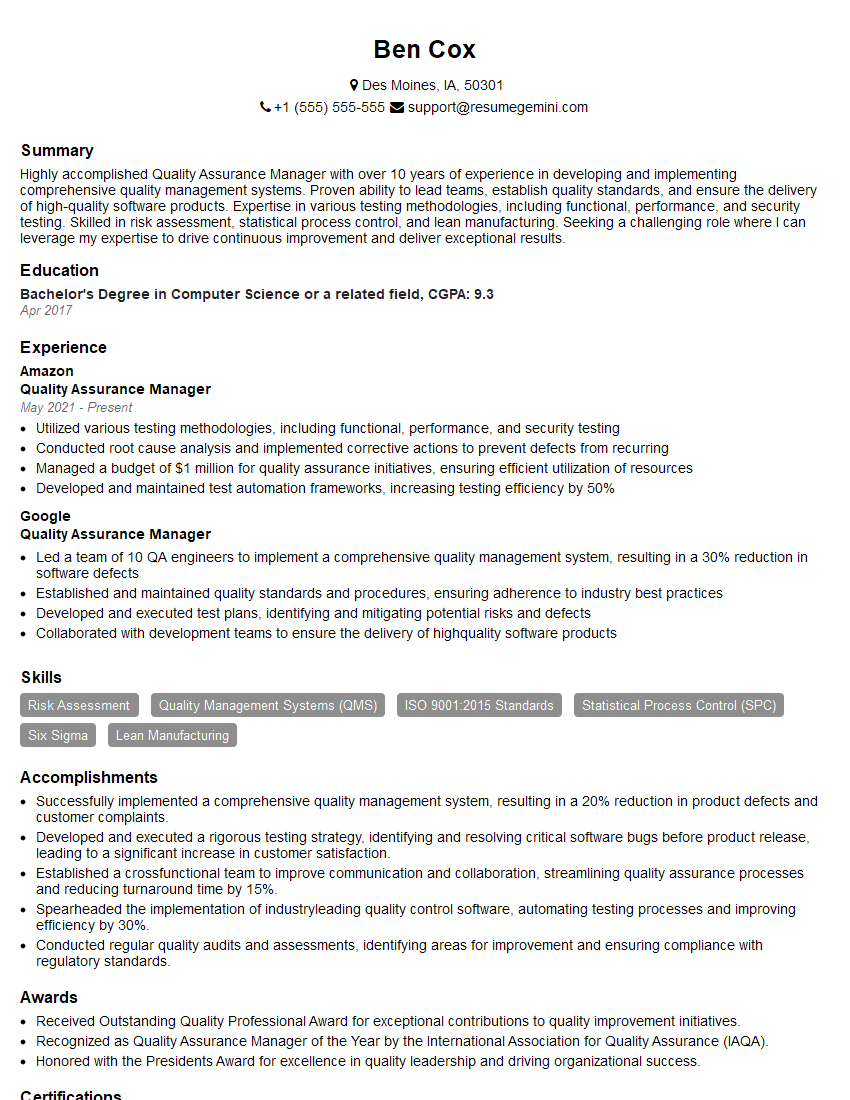
Quality Assurance Manager Resume Sample
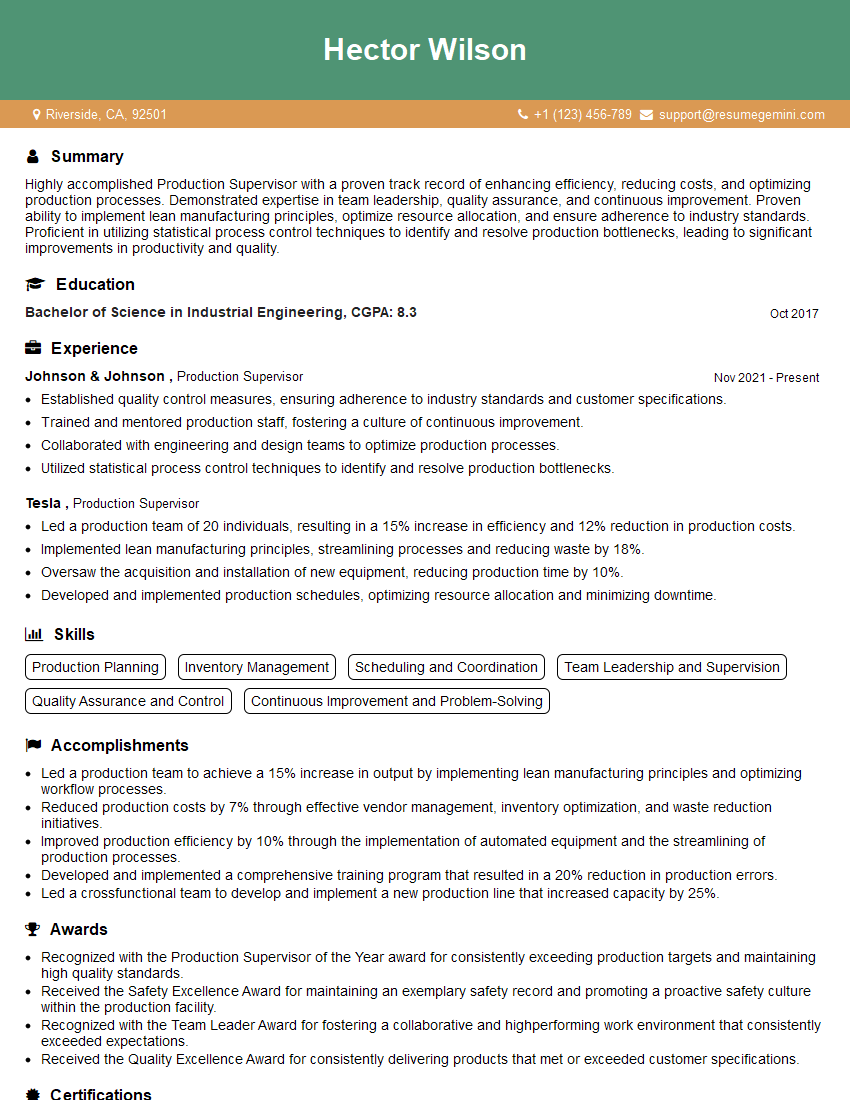
Production Supervisor Resume Sample

Supply Chain Manager Resume Sample
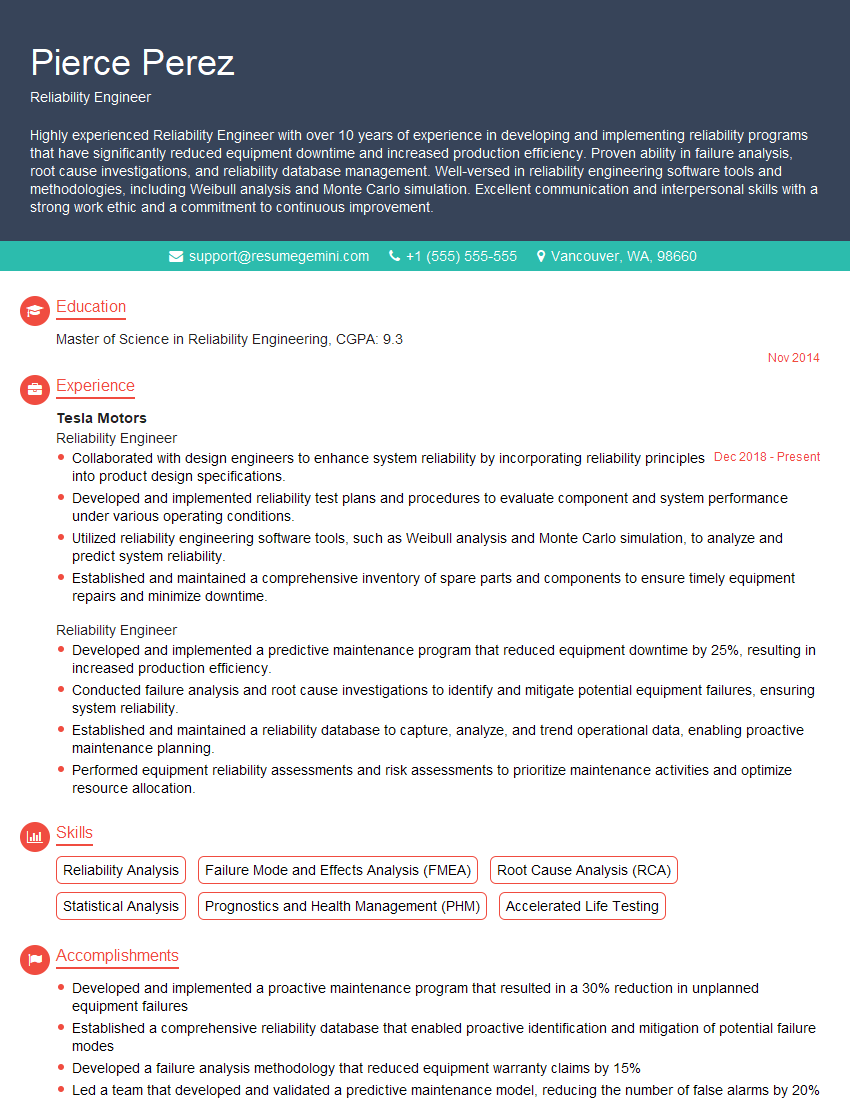
Reliability Engineer Resume Sample
Quality Systems Manager Resume Sample
Industrial Engineer Resume Sample
Manufacturing Engineer Resume Sample
Metrologist Resume Sample
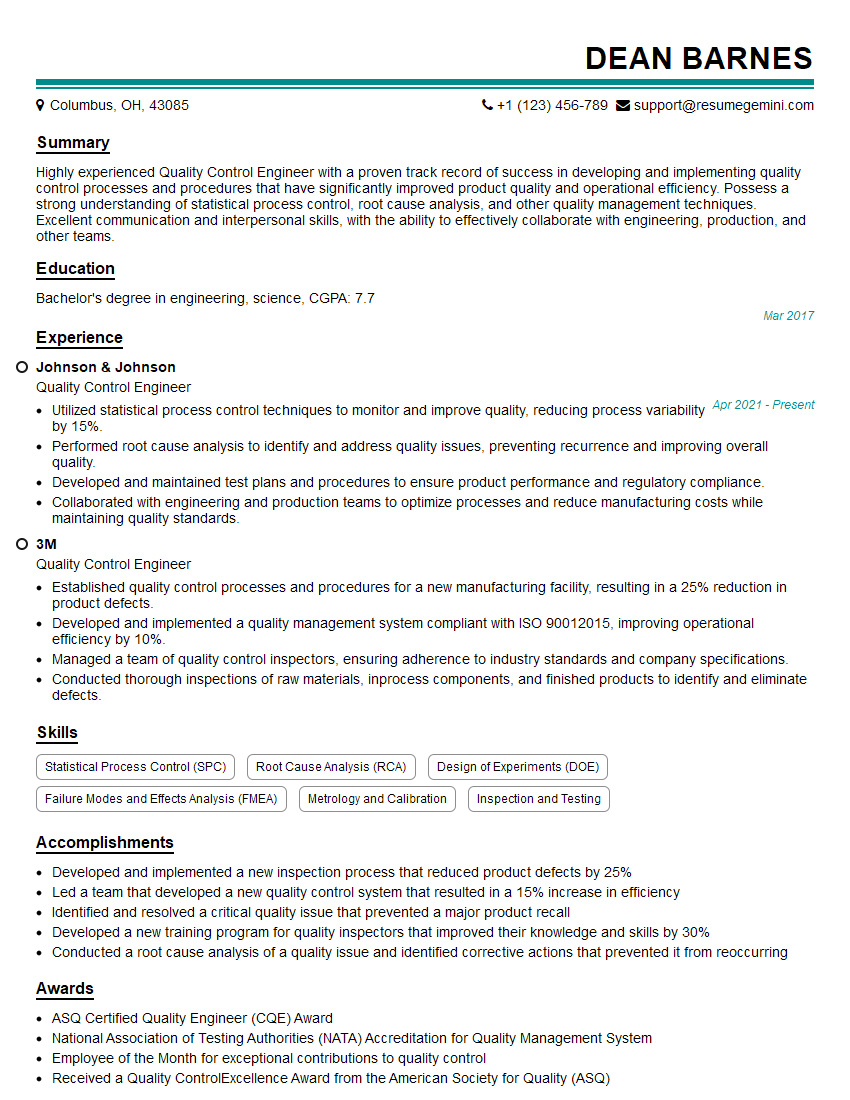
Quality Control Engineer Resume Sample
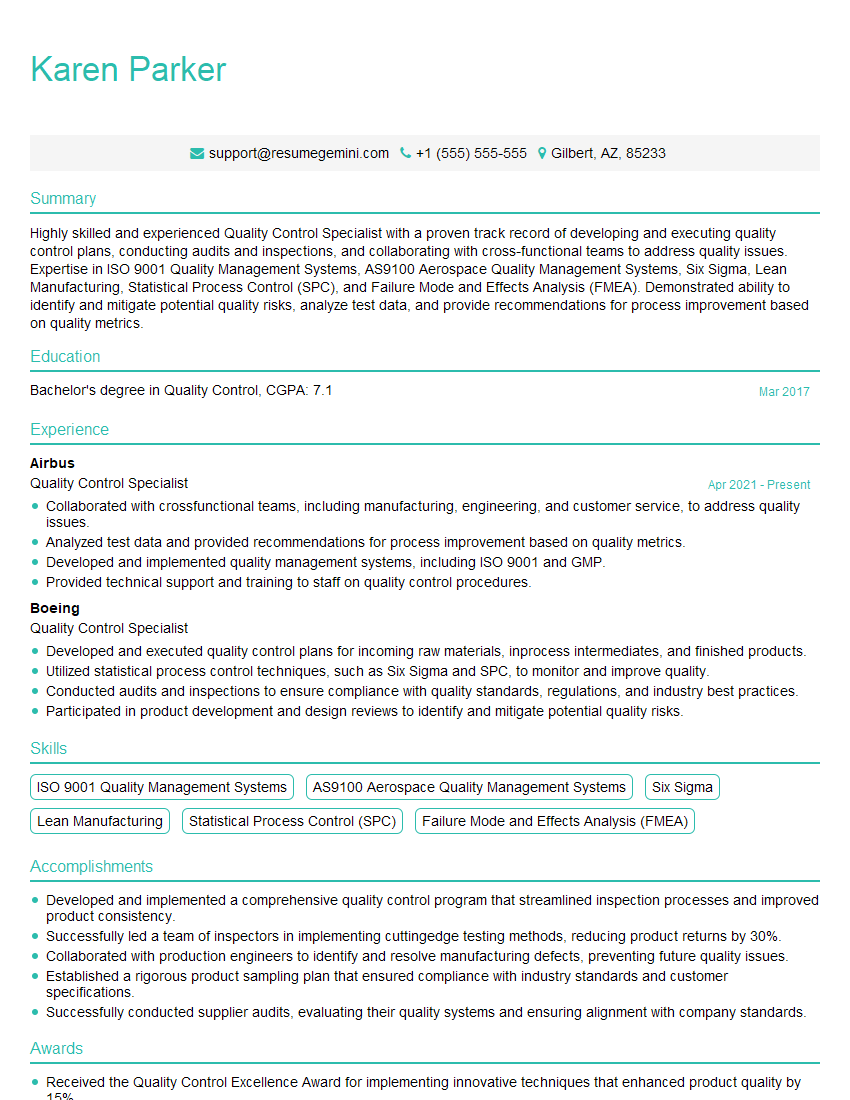
Quality Control Specialist Resume Sample
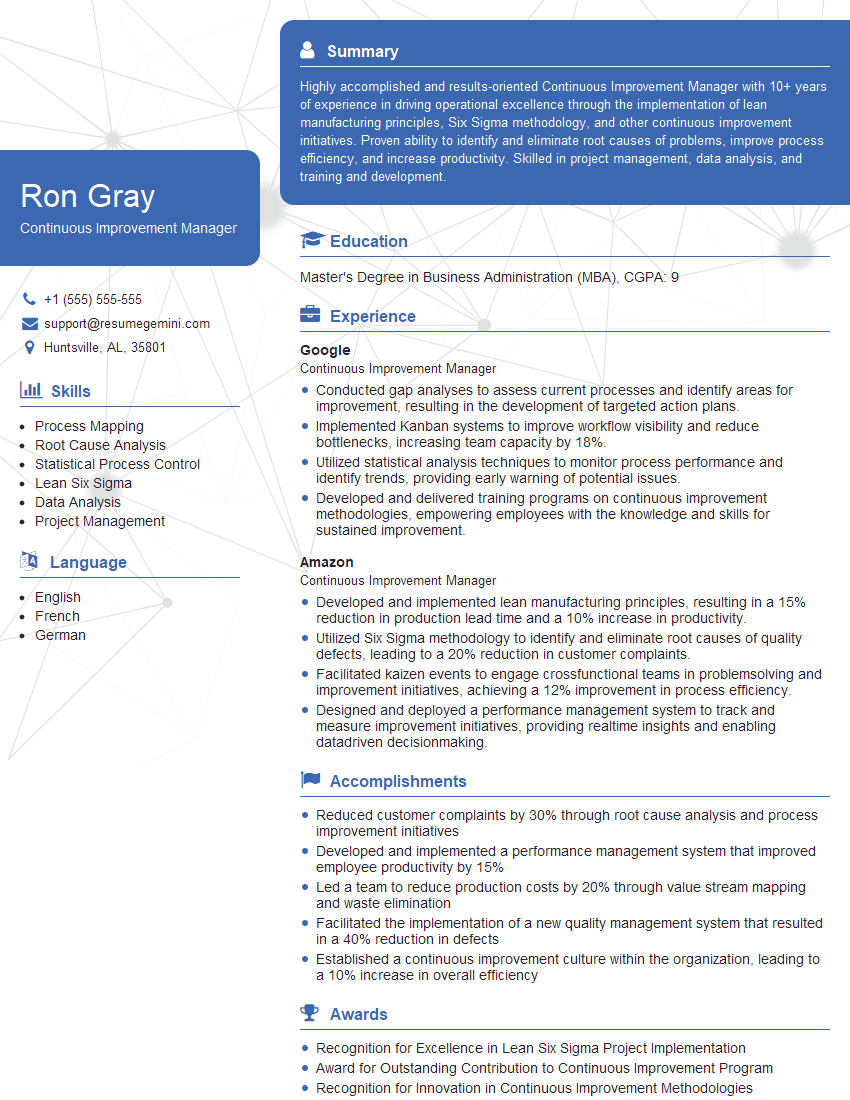
Continuous Improvement Manager Resume Sample
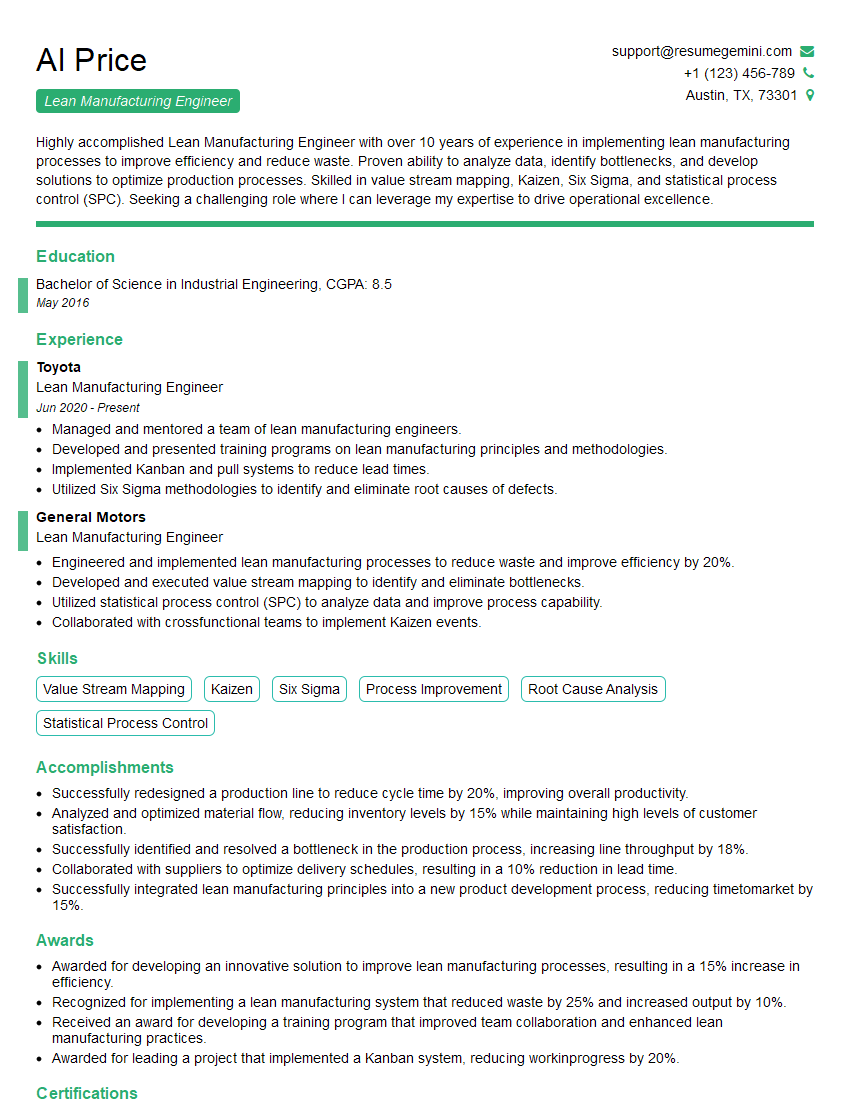
Lean Manufacturing Engineer Resume Sample
Senior Quality Engineer Resume Sample
Quality Auditor Resume Sample
- Operations Manager
- Manufacturing Manager
- Quality Assurance Manager
- Production Supervisor
- Supply Chain Manager
- Reliability Engineer
- Quality Systems Manager
- Industrial Engineer
- Manufacturing Engineer
- Metrologist
- Quality Control Engineer
- Quality Control Specialist
- Continuous Improvement Manager
- Lean Manufacturing Engineer
- Senior Quality Engineer
- Quality Auditor
Explore more articles
Users Rating of Our Blogs
Share Your Experience
We value your feedback! Please rate our content and share your thoughts (optional).
What Readers Say About Our Blog
Hello,
we currently offer a complimentary backlink and URL indexing test for search engine optimization professionals.
You can get complimentary indexing credits to test how link discovery works in practice.
No credit card is required and there is no recurring fee.
You can find details here:
https://wikipedia-backlinks.com/indexing/
Regards
NICE RESPONSE TO Q & A
hi
The aim of this message is regarding an unclaimed deposit of a deceased nationale that bears the same name as you. You are not relate to him as there are millions of people answering the names across around the world. But i will use my position to influence the release of the deposit to you for our mutual benefit.
Respond for full details and how to claim the deposit. This is 100% risk free. Send hello to my email id: [email protected]
Luka Chachibaialuka
Hey interviewgemini.com, just wanted to follow up on my last email.
We just launched Call the Monster, an parenting app that lets you summon friendly ‘monsters’ kids actually listen to.
We’re also running a giveaway for everyone who downloads the app. Since it’s brand new, there aren’t many users yet, which means you’ve got a much better chance of winning some great prizes.
You can check it out here: https://bit.ly/callamonsterapp
Or follow us on Instagram: https://www.instagram.com/callamonsterapp
Thanks,
Ryan
CEO – Call the Monster App
Hey interviewgemini.com, I saw your website and love your approach.
I just want this to look like spam email, but want to share something important to you. We just launched Call the Monster, a parenting app that lets you summon friendly ‘monsters’ kids actually listen to.
Parents are loving it for calming chaos before bedtime. Thought you might want to try it: https://bit.ly/callamonsterapp or just follow our fun monster lore on Instagram: https://www.instagram.com/callamonsterapp
Thanks,
Ryan
CEO – Call A Monster APP
To the interviewgemini.com Owner.
Dear interviewgemini.com Webmaster!
Hi interviewgemini.com Webmaster!
Dear interviewgemini.com Webmaster!
excellent
Hello,
We found issues with your domain’s email setup that may be sending your messages to spam or blocking them completely. InboxShield Mini shows you how to fix it in minutes — no tech skills required.
Scan your domain now for details: https://inboxshield-mini.com/
— Adam @ InboxShield Mini
Reply STOP to unsubscribe
Hi, are you owner of interviewgemini.com? What if I told you I could help you find extra time in your schedule, reconnect with leads you didn’t even realize you missed, and bring in more “I want to work with you” conversations, without increasing your ad spend or hiring a full-time employee?
All with a flexible, budget-friendly service that could easily pay for itself. Sounds good?
Would it be nice to jump on a quick 10-minute call so I can show you exactly how we make this work?
Best,
Hapei
Marketing Director
Hey, I know you’re the owner of interviewgemini.com. I’ll be quick.
Fundraising for your business is tough and time-consuming. We make it easier by guaranteeing two private investor meetings each month, for six months. No demos, no pitch events – just direct introductions to active investors matched to your startup.
If youR17;re raising, this could help you build real momentum. Want me to send more info?
Hi, I represent an SEO company that specialises in getting you AI citations and higher rankings on Google. I’d like to offer you a 100% free SEO audit for your website. Would you be interested?
Hi, I represent an SEO company that specialises in getting you AI citations and higher rankings on Google. I’d like to offer you a 100% free SEO audit for your website. Would you be interested?
good