Preparation is the key to success in any interview. In this post, we’ll explore crucial Fishing interview questions and equip you with strategies to craft impactful answers. Whether you’re a beginner or a pro, these tips will elevate your preparation.
Questions Asked in Fishing Interview
Q 1. Describe the different types of fishing nets and their applications.
Fishing nets come in a wide variety of designs, each suited to specific fishing methods and target species. Think of it like choosing the right tool for the job in a carpentry shop – you wouldn’t use a hammer to screw in a nail!
- Gill nets: These are vertical nets with mesh sizes designed to entangle fish by their gills. They’re commonly used for catching pelagic fish like salmon and tuna, but their non-selective nature can lead to bycatch (unintentionally catching non-target species).
- Trammel nets: These consist of three layers of netting – two fine nets sandwiching a coarser one. Fish enter the outer net and are trapped in the middle layer. They’re effective for catching flatfish like flounder.
- Seine nets: These large, usually purse-like, nets are deployed from a boat to encircle a school of fish. They’re used extensively in commercial fishing for species like herring and sardines.
- Cast nets: These circular nets are thrown by hand to catch fish in shallow waters. It requires skill and is commonly used for smaller species.
- Trawl nets: These cone-shaped nets are dragged through the water, often from a trawler. They are used for catching bottom-dwelling species like cod and shrimp, but are known for significant bycatch issues.
The choice of net depends heavily on factors like the target species, water depth, fishing method, and local regulations. For example, a small-scale fisherman might use a cast net, while a large commercial operation would utilize a massive trawl net.
Q 2. Explain the process of fish filleting and the importance of proper handling.
Fish filleting involves carefully removing the fillets (the edible side portions of the fish) from the carcass. Proper handling is crucial to maintain quality and safety. Think of it like preparing a delicate piece of art – a single wrong cut could ruin the whole piece.
- Cleaning: Begin by removing the scales, gutting the fish, and removing the head and fins.
- Filleting: Insert your filleting knife along the fish’s backbone and carefully run it along the body cavity to separate the fillet from the bone. Repeat on the opposite side.
- Pin-boning: Remove any remaining pin bones from the fillets.
- Trimming: Trim away any unwanted skin or fat.
Proper handling includes keeping the fish chilled to prevent spoilage. Immediately placing the cleaned fish on ice or in a refrigerator significantly extends its shelf life and minimizes bacterial growth. Using clean, sharp knives is also essential to prevent bacterial contamination and maintain the integrity of the fillet.
Improper handling can lead to rapid spoilage, making the fish unsafe to eat and causing a loss of quality. A commercial fish processor, for instance, will have stringent quality control procedures to ensure that fish are handled correctly from the moment of capture to packaging.
Q 3. What are the common fish diseases and their treatments?
Fish, like any other animal, are susceptible to various diseases. These can be bacterial, viral, parasitic, or fungal in origin. Early detection and proper treatment are key to minimizing losses.
- Bacterial diseases: Examples include Vibrio infections (causing ulcers and septicemia), and Aeromonas infections (leading to hemorrhagic septicemia).
- Viral diseases: Viral hemorrhagic septicemia virus (VHSV) is a significant threat causing mortality in many fish species. Viral nervous necrosis virus (VNNV) affects the central nervous system.
- Parasitic diseases: Sea lice are common external parasites affecting salmonids. Internal parasites like various nematodes can also cause significant problems.
- Fungal diseases: Saprolegnia is a common fungus that causes lesions and cotton-like growths on the skin and gills.
Treatment varies depending on the disease and severity. It may involve medication (antibiotics, antivirals, antiparasitics, antifungals), improving water quality, quarantining infected fish, or even culling severely affected populations. A fish farm, for example, would implement rigorous biosecurity measures and regularly monitor fish health to prevent disease outbreaks.
Q 4. How do you maintain fishing equipment and gear?
Maintaining fishing equipment is crucial for its longevity and performance. Regular maintenance is like regularly servicing a car – it prevents larger, more expensive problems down the line.
- Rods and reels: Clean and dry after each use. Lubricate moving parts of the reel regularly. Store rods in protective cases to prevent damage.
- Lines: Inspect for wear and tear. Replace lines that show fraying or damage. Keep lines clean and free of knots.
- Hooks and lures: Sharpen hooks regularly. Clean and repair lures. Store them in organized tackle boxes to prevent damage and corrosion.
- Nets: Repair any tears or holes promptly. Rinse nets thoroughly with fresh water after each use. Store nets in a dry place.
- Waders and boots: Clean and dry thoroughly after each use. Repair any rips or punctures.
Proper storage is also key. Keep your equipment in a dry, cool place, away from direct sunlight and moisture. This prevents corrosion, rust, and damage.
Q 5. What are the regulations for catching specific fish species in your region?
Fishing regulations vary significantly by region and are subject to change. It’s crucial to consult the local fisheries management agency for the most up-to-date information. These regulations are designed to protect fish stocks and ensure sustainability. Ignoring them can result in fines or even legal action.
For example, in many regions, there might be:
- Size limits: Minimum and maximum sizes for specific fish species to ensure that younger fish can reproduce.
- Bag limits: Restrictions on the number of fish of a particular species that an angler can catch in a day.
- Closed seasons: Periods during the year when fishing for certain species is prohibited, often coinciding with breeding seasons.
- Gear restrictions: Restrictions on the types of fishing gear allowed, such as limits on the number of hooks or the type of nets.
- License requirements: Requirements for a fishing license before fishing in certain areas.
These regulations are often species-specific and location-specific. For example, the regulations for catching striped bass in California will differ from those in Maine.
Q 6. Describe different sustainable fishing practices.
Sustainable fishing practices aim to maintain healthy fish populations for future generations. It’s about fishing responsibly and minimizing the impact on the ecosystem. Think of it like managing a bank account – you need to make sure there’s enough money for the future.
- Catch and release: Returning unwanted fish to the water unharmed. This is particularly crucial for protecting breeding populations.
- Selective fishing gear: Using fishing gear that minimizes bycatch (unintentional capture of non-target species).
- Fishing quotas: Limiting the total amount of fish caught to prevent overfishing. This requires careful monitoring and assessment of fish stocks.
- Marine protected areas: Establishing areas where fishing is restricted or prohibited to allow fish populations to recover.
- Sustainable aquaculture: Practicing responsible fish farming that minimizes environmental impact.
These practices often require collaboration between government agencies, fishing communities, and scientists. For instance, community-based fisheries management approaches often involve local stakeholders in creating and enforcing fishing regulations.
Q 7. Explain the concept of fish stock assessment and its importance.
Fish stock assessment is the scientific process of evaluating the abundance and health of fish populations. This is crucial for determining sustainable fishing levels and managing fisheries effectively. It’s like taking an inventory of your stockroom – you need to know how much you have to manage it effectively.
The process often involves:
- Data collection: Gathering data on fish abundance, size, age, and distribution using various methods like surveys, acoustic surveys, and catch statistics.
- Stock assessment models: Using mathematical models to analyze data and estimate fish population parameters, such as the total population size, recruitment rate, and mortality rate.
- Fishing mortality estimates: Determining the level of fishing pressure on the stock.
- Reference points: Setting reference points that define acceptable levels of fishing mortality and biomass to ensure sustainability.
- Management advice: Providing advice to fisheries managers on appropriate fishing quotas and regulations.
Accurate fish stock assessment is vital for preventing overfishing and ensuring the long-term health and productivity of our fisheries. This information is essential for both commercial and recreational fisheries management.
Q 8. How do you identify different types of fish?
Identifying different types of fish requires a multifaceted approach, combining visual observation with knowledge of their habitats and behaviors. Key features to look for include:
- Body Shape: Is the body elongated, compressed, or deep-bodied? Think of the streamlined shape of a tuna versus the flattened body of a flounder.
- Fin Structure: Note the number, size, and placement of fins. The dorsal fin (on the back) and anal fin (on the belly) are particularly important for identification. For example, the presence of a single dorsal fin versus two separate fins can distinguish between different species.
- Mouth Shape and Position: Is the mouth terminal (at the end of the snout), superior (pointing upward), or inferior (pointing downward)? This reflects the fish’s feeding strategy. A superior mouth might belong to a surface feeder, while an inferior mouth might suggest a bottom feeder.
- Scales and Coloration: Scale type (cycloid, ctenoid, etc.) and color patterns are species-specific. Color can also vary depending on the fish’s age, sex, and environment, however, distinctive markings remain consistent.
- Habitat: Where was the fish caught? Knowing the location provides important clues, as certain species are only found in specific environments, such as freshwater rivers, saltwater estuaries, or deep ocean trenches.
Experienced fishers often rely on a combination of these characteristics, along with field guides and online resources to confirm identification. For example, if you catch a fish with a long, slender body, a forked tail, and silver scales in a marine environment, you could reasonably suspect it to be a herring, but confirming this with a field guide would be vital for accuracy.
Q 9. What are the environmental impacts of overfishing?
Overfishing has severe and far-reaching environmental impacts. The most significant consequences include:
- Depletion of Fish Stocks: The most obvious impact is the reduction in the populations of targeted fish species. This can lead to a collapse of entire fisheries, affecting livelihoods and food security.
- Disruption of Food Webs: Removing large numbers of fish from an ecosystem disrupts the delicate balance of the food web. Predators that rely on the depleted species may face starvation, and populations of smaller fish, usually prey, might explode, leading to further imbalances.
- Habitat Degradation: Destructive fishing practices, such as bottom trawling, can damage sensitive seafloor habitats like coral reefs and seagrass beds. These habitats support a vast array of marine life and their destruction has long-term consequences.
- Bycatch: Fishing nets often capture non-target species (bycatch), including marine mammals, seabirds, and turtles. Bycatch can lead to significant mortality and endanger vulnerable species.
- Increased Carbon Emissions: Overfishing can contribute to climate change by damaging ocean ecosystems that help sequester carbon. Healthy oceans are essential to carbon cycle regulation, and the decline in fish populations can exacerbate this issue.
These impacts underscore the critical need for sustainable fishing practices, including strict quotas, effective management of fishing grounds, and the adoption of selective fishing gear to reduce bycatch.
Q 10. Describe different methods of aquaculture and their pros and cons.
Aquaculture, or fish farming, encompasses various methods, each with its own set of advantages and disadvantages.
- Extensive Aquaculture: This involves stocking fish in natural water bodies with minimal intervention. Pros: low initial investment, utilizes existing resources. Cons: lower yields, susceptible to environmental fluctuations and disease outbreaks.
- Semi-intensive Aquaculture: Fish are raised in ponds or enclosures with supplemental feeding. Pros: higher yields than extensive, easier to manage. Cons: still susceptible to environmental factors and disease, requires more management than extensive systems.
- Intensive Aquaculture: Fish are densely stocked in tanks or cages with controlled environments and regular feeding. Pros: high yields, efficient feed conversion, better disease control. Cons: high initial investment, requires sophisticated technology and management, risk of pollution from waste.
- Recirculating Aquaculture Systems (RAS): Water is continuously filtered and recycled, minimizing environmental impact. Pros: High yields, reduced water usage and waste discharge, better control of water quality and disease. Cons: High initial and operating costs, complex technology.
The choice of aquaculture method depends on factors like species, available resources, economic considerations, and environmental regulations. For instance, raising salmon in open-net pens is a semi-intensive approach, offering higher yields than extensive methods but posing risks to wild populations due to disease and escapees. In contrast, RAS systems are better suited for high-value species like certain types of fish and shrimp due to their ability to minimize environmental impact.
Q 11. Explain the role of sonar in fishing.
Sonar (Sound Navigation and Ranging) plays a crucial role in modern fishing by enabling fishers to locate and assess fish schools. Sonar uses sound waves to create images of underwater objects. A transducer transmits sound pulses into the water, and the returning echoes are processed to generate a visual representation on a display.
Different types of sonar are used in fishing:
- Fish Finders: These devices provide a simple visual representation of the water column, showing the depth and the presence of fish schools. They are widely used in recreational and small-scale commercial fishing.
- Side Scan Sonar: This creates a picture of the seafloor and the objects on it, allowing fishers to identify suitable fishing grounds. This is particularly useful for locating structures such as reefs and wrecks where fish tend to congregate.
- Multibeam Sonar: Provides a detailed three-dimensional image of the seafloor and water column. This technology is usually employed in larger commercial vessels for surveying and mapping fish populations.
The information obtained from sonar helps to optimize fishing strategies, reducing fuel consumption and increasing fishing efficiency. For example, a fisher using a fish finder can locate a school of fish at a certain depth and adjust their fishing gear accordingly. The use of sonar therefore is an excellent example of how technology is increasingly being incorporated into modern fishing practices.
Q 12. How do you navigate using GPS and charts while fishing?
Navigation using GPS (Global Positioning System) and charts is fundamental to safe and efficient fishing. GPS provides precise location data, while charts offer detailed information about the water body, including depths, hazards, and navigational aids.
Using GPS: A GPS receiver displays the vessel’s current latitude and longitude, allowing the fisher to pinpoint their location and track their movements. This is vital for returning to known fishing grounds or marking productive locations.
Using Charts: Nautical charts depict water depths, bottom contours, navigational markers (buoys, lights), and other important features. Fishermen consult charts to plan their routes, avoid shallow areas or obstructions, and identify potential fishing spots. Electronic charting systems (ECDIS) integrate GPS data with digital charts, providing a comprehensive navigation solution.
Combined Use: Combining GPS and charts allows for precise navigation. The fisher can use the GPS to determine the vessel’s position and then consult the chart to understand the surrounding environment, potential hazards, and optimal fishing locations. For example, while navigating towards a known fishing ground using GPS, a fisher can refer to the chart to ensure they avoid a known reef or shallow area.
Q 13. Describe different types of fishing vessels and their capabilities.
Fishing vessels range from small, single-person boats to large, factory ships, each designed for specific fishing methods and capabilities.
- Small Boats: These are typically used for recreational fishing or small-scale commercial operations. They can be powered by outboard motors or inboard engines and are easily maneuverable in shallow waters. They might use methods like trolling or casting.
- Trawlers: These vessels employ bottom trawling, dragging large nets across the seabed to catch groundfish. Trawlers can be relatively small or very large, depending on the scale of operation.
- Seiners: These vessels use purse seines—large nets that encircle schools of fish—to catch pelagic species (fish that live in the open ocean). They require efficient maneuvering capabilities.
- Longliners: These vessels deploy long lines with baited hooks to catch tuna, swordfish, and other species. They often operate in offshore waters.
- Factory Ships: These are massive vessels capable of processing catches onboard. They frequently act as motherships for smaller fishing boats, processing their catches and storing them. These ships allow extended fishing trips and processing in remote locations.
The size and type of vessel directly influence its fishing methods, range, capacity, and processing capabilities. A small inshore fishing boat might use simple gear and have a limited range, whereas a factory ship can operate for extended periods far offshore, processing large catches while at sea.
Q 14. What safety precautions are essential when working on a fishing vessel?
Safety is paramount on fishing vessels. Essential precautions include:
- Personal Protective Equipment (PPE): Wearing appropriate PPE, including life jackets, immersion suits (in cold waters), safety helmets, and safety glasses, is non-negotiable. This protects against falls, impacts, and exposure to the elements.
- Emergency Procedures: All crew members must be thoroughly trained in emergency procedures, such as man overboard drills, fire drills, and the use of life-saving equipment. Regular drills are vital for maintaining readiness.
- Vessel Maintenance: Regular maintenance of the vessel’s engines, safety equipment, and communication systems is essential to prevent accidents. This includes checks on life rafts, EPIRBs (Emergency Position-Indicating Radio Beacons), and other crucial safety features.
- Weather Monitoring: Close monitoring of weather forecasts is critical, as conditions at sea can change rapidly. Trips should be planned with careful consideration of weather conditions, and any sign of deteriorating weather should trigger immediate safety actions.
- Communication Systems: Reliable communication systems, such as VHF radios and satellite phones, are essential for contacting emergency services or communicating with other vessels. Knowing how to effectively use these devices is a must.
- Stability and Load Management: Proper weight distribution on the vessel and careful management of the catch are vital to maintain stability. Overloading the vessel is a significant risk factor.
Adherence to these safety measures significantly reduces the risk of accidents and enhances the overall safety of fishing operations. A thorough risk assessment before any trip is essential to identify potential hazards and take preventative actions.
Q 15. How do you handle fish spoilage and ensure freshness?
Maintaining fish freshness is paramount to prevent spoilage and ensure quality. Spoilage begins the moment a fish is caught, primarily due to enzymatic and bacterial action. Effective handling is key. This begins immediately after capture.
Immediate chilling: Placing fish in ice slush (ice mixed with water) as quickly as possible slows down bacterial growth. The ideal temperature is around 32°F (0°C). Think of it like putting your leftovers in the fridge – the faster, the better!
Proper storage: Different species require varying storage techniques. Some are better suited to keeping on ice, while others might benefit from freezing. Freezing, if done correctly, can preserve fish for extended periods, but quality can degrade over time.
Bleeding: For certain species, bleeding the fish immediately after capture significantly improves quality by reducing blood-borne bacteria. This involves cutting the gills or severing the blood vessels near the gills.
Gutting and cleaning: Rapid gutting and cleaning remove internal organs which are the primary sources of spoilage enzymes. A clean fish will stay fresh longer.
Transport: Using insulated containers with ice during transportation maintains low temperatures and prevents spoilage. Imagine keeping your ice cream cold on a hot day!
Following these steps ensures that your catch reaches its destination in optimal condition, maximizing its value and preventing waste.
Career Expert Tips:
- Ace those interviews! Prepare effectively by reviewing the Top 50 Most Common Interview Questions on ResumeGemini.
- Navigate your job search with confidence! Explore a wide range of Career Tips on ResumeGemini. Learn about common challenges and recommendations to overcome them.
- Craft the perfect resume! Master the Art of Resume Writing with ResumeGemini’s guide. Showcase your unique qualifications and achievements effectively.
- Don’t miss out on holiday savings! Build your dream resume with ResumeGemini’s ATS optimized templates.
Q 16. What is the role of a fish processing plant in the fishing industry?
Fish processing plants play a crucial role in transforming raw fish into marketable products. They act as the bridge between the fishing vessel and the consumer. This involves a series of crucial steps.
Receiving and sorting: Incoming fish are assessed for quality and sorted by species and size.
Cleaning and processing: Fish are cleaned, scaled, gutted, and often filleted or processed into other products such as canned fish, fish sticks, or surimi.
Freezing and packaging: Many plants freeze the processed fish for longer shelf life and package it for distribution. This may involve specialized techniques to maintain freshness and prevent freezer burn.
Quality control: Stringent quality control measures are implemented at every stage to ensure that the final product meets the highest standards of safety and quality.
Waste management: Responsible waste management practices are critical to minimize environmental impact, including proper disposal or recycling of byproducts.
In essence, the fish processing plant transforms a raw, perishable resource into a safe, convenient, and marketable product ready for consumers.
Q 17. How do you calculate the catch per unit effort (CPUE)?
Catch Per Unit Effort (CPUE) is a vital indicator of fish stock abundance. It’s calculated by dividing the total catch by the fishing effort expended to obtain that catch. A simple analogy would be calculating your miles per gallon of fuel.
The formula is: CPUE = Total Catch / Fishing Effort
Let’s break down the components:
Total Catch: This is the total weight (or number) of fish caught during a specific fishing trip or period.
Fishing Effort: This represents the amount of effort expended in fishing. It can be measured in various ways, depending on the fishing method:
Number of fishing days: Simple and widely used.
Number of hours fished: Provides a more precise measure of effort.
Number of fishing vessels: Useful for large-scale fisheries.
Gear type and size: Important for standardization, as different gear types catch fish differently.
Example: If 1000 kg of fish were caught in 10 days of fishing, the CPUE would be 100 kg/day (1000 kg / 10 days).
A declining CPUE often suggests that fish stocks are diminishing, while a stable or increasing CPUE suggests healthy populations. However, careful consideration of the methodology and various influencing factors is needed to accurately interpret CPUE data.
Q 18. What are the different fishing seasons and their impact on the catch?
Fishing seasons are dictated by several factors, including fish breeding cycles, migration patterns, and regulations designed to protect vulnerable species. These seasonal variations dramatically impact catch.
Spawning Seasons: During spawning, many fish species aggregate in specific locations, making them easier to catch. However, regulations often restrict fishing during these periods to protect breeding populations. This ensures the sustainability of fish stocks.
Migration Periods: Many fish species undertake seasonal migrations, following food sources or favorable environmental conditions. This creates opportunities for fishermen but also requires careful management to prevent overfishing in concentrated areas.
Environmental Conditions: Water temperature, currents, and other environmental factors influence fish behavior and availability. Specific weather patterns can make certain areas more productive during certain seasons.
Regulatory Seasons: Governments frequently set closed seasons to protect vulnerable species during crucial reproductive periods or to allow fish stocks to recover from periods of intense fishing pressure.
Understanding fishing seasons is crucial for sustainable fishing practices, maximizing catch during permissible periods, and respecting conservation measures.
Q 19. Explain the importance of fish tagging and tracking.
Fish tagging and tracking are essential tools for fisheries science and management. They provide valuable insights into fish movement, growth, survival rates, and stock dynamics. Imagine giving a fish a tiny, traceable ID card.
Movement patterns: Tags allow researchers to track fish migrations and identify important habitats, spawning grounds, and nursery areas.
Growth rates: By recapturing tagged fish, scientists can measure growth rates and assess the overall health of fish populations.
Stock assessment: Tagging data helps to estimate population sizes and assess the effectiveness of management strategies.
Mortality rates: Tagging studies can provide estimates of natural mortality rates and fishing mortality rates, helping to assess the impact of fishing on fish stocks.
Technological advancements: Modern tags, such as acoustic or satellite tags, provide real-time data on fish movements and behavior, improving the accuracy and timeliness of research.
This data is indispensable for developing sustainable fisheries management plans and ensuring the long-term health of fish populations.
Q 20. Describe different fish handling techniques to minimize stress.
Minimizing stress during fish handling is crucial for maintaining fish quality and ensuring humane treatment. Stressful handling can lead to physical damage, reduce the quality of the meat, and negatively impact fish welfare.
Quick and efficient handling: Minimize the time fish spend out of water. A longer time out of water leads to higher levels of stress.
Avoid unnecessary physical trauma: Handle fish gently, avoiding sharp objects or rough surfaces. Use appropriate tools and techniques for handling different sizes and species.
Proper stunning: Before killing the fish, consider proper stunning to reduce suffering. This can involve various methods depending on the species and circumstances.
Appropriate storage: After capture, immediately chill the fish on ice or in chilled water to minimize stress and slow down spoilage.
Oxygenation: If keeping fish alive temporarily (e.g., live fish markets), ensure adequate oxygen levels in the holding tanks.
Proper fish handling techniques are not just about preserving quality but also about ethical and responsible fishing practices. Remember that treating fish with care results in a better end product and respects the living resource we are harvesting.
Q 21. How do you use a fish finder effectively?
Fish finders, or sonar devices, use sound waves to detect fish and map the underwater environment. Mastering their use greatly enhances fishing success.
Understanding the display: Familiarize yourself with the various settings and interpretations of the display. Learn to differentiate between fish arches, bottom contours, and other objects.
Adjusting settings: Experiment with sensitivity, range, and frequency settings to optimize the display for different depths and conditions. Sensitivity affects the level of detail, while range dictates the viewing area, and frequency impacts the penetration and detail of the sonar signal.
Interpreting the data: Learn to recognize different fish signatures on the display. Fish often appear as arches or solid marks, while vegetation or other objects may display differently.
Combining with other information: Use other data such as depth, temperature, and location to further refine your understanding of the environment and fish distribution. Consider factors like currents and bottom structure.
Practice and experience: Consistent practice and experience are key to mastering the use of a fish finder. The more you use it, the better you’ll become at interpreting the data and improving your fishing.
Effective use of a fish finder allows you to pinpoint promising fishing spots, save time, and ultimately improve your catch rates. It’s a valuable tool for any angler.
Q 22. What are the legal requirements for operating a fishing vessel?
Operating a fishing vessel involves a complex web of legal requirements that vary significantly depending on the vessel’s size, type of fishing, and location. Generally, these requirements fall under several key areas:
- Vessel Registration and Documentation: Every commercial fishing vessel must be registered with the relevant authorities (e.g., the Coast Guard in the US). This involves providing detailed information about the vessel and its owner. Failure to register can lead to hefty fines and operational restrictions.
- Licensing and Permits: Fishermen and vessel operators usually require licenses specific to the type of fishing they engage in (e.g., commercial fishing licenses for certain species) and may need additional permits for operating in specific zones or using particular fishing gear. These licenses often have catch limits and other regulations attached.
- Safety Regulations: Rigorous safety standards are crucial for ensuring the well-being of the crew and the environment. Vessels must adhere to regulations on safety equipment (life jackets, flares, radios), vessel maintenance, and crew training. Regular inspections are often mandated.
- Environmental Regulations: Protecting the marine environment is a top priority. Regulations address things like prohibited fishing gear, bycatch reduction measures (minimizing unintended catches of non-target species), and proper waste disposal (discussed further in another question). Violations can result in significant penalties.
- Navigation Rules: Vessels must adhere to international and national navigation rules to avoid collisions and ensure safe operation in busy waterways. This involves adhering to speed limits, signaling, and maintaining proper watch.
For example, in the US, the National Marine Fisheries Service (NMFS) plays a crucial role in setting and enforcing these regulations. It’s vital for any fishing vessel operator to familiarize themselves with the relevant laws and regulations specific to their operating area and the type of fishing conducted. Ignoring these regulations can have dire consequences, from hefty fines to vessel seizure.
Q 23. Describe different methods for baiting hooks.
Baiting hooks effectively is crucial for successful fishing. The method depends greatly on the target species and the type of fishing being undertaken. Here are some common methods:
- Whole Bait: This involves using a whole fish, shrimp, or other organism. The bait is usually hooked through the lips or body, depending on its size and the hook size. Smaller baits might be hooked just once, while larger baits may require several hooks for better hold.
- Cut Bait: Larger baits are often cut into smaller pieces to target smaller fish or to create more attractive scents trails in the water. The type of cut (chunk, strips) can influence attractiveness.
- Artificial Bait: This includes lures, which mimic the movement and appearance of prey, and soft plastics, which are increasingly popular. These often have specific rigging techniques for optimal action.
- Live Bait: This method utilizes live fish or other organisms. Hooking technique is crucial, as the bait needs to stay alive and active to attract predators. Careful handling and proper hook placement are vital.
For instance, when fishing for tuna, using live bait like smaller fish or squid can be highly effective. Conversely, when targeting bottom-dwelling species like cod, cut bait or clams might be more appropriate. The choice of bait and method heavily influences the success of the fishing trip, and experience plays a critical role in understanding what works best in different situations.
Q 24. Explain the importance of proper waste disposal in the fishing industry.
Proper waste disposal is paramount for environmental sustainability in the fishing industry. Improper disposal significantly impacts marine ecosystems, threatening biodiversity and water quality. The consequences can range from harming marine life through entanglement or ingestion of waste to polluting beaches and affecting tourism.
- Fishing Gear Disposal: Lost or discarded fishing gear, known as ‘ghost gear’, poses a severe threat. Nets, lines, and hooks can continue to trap and kill marine animals long after being abandoned. Responsible fishing practices emphasize proper storage, maintenance, and retrieval of gear.
- Bycatch Disposal: Bycatch, or the unintended capture of non-target species, must be handled carefully. In many cases, it is illegal to simply throw it overboard. Depending on regulations, it might need to be returned to the water alive, discarded in designated areas, or brought back to shore for processing.
- Wastewater Management: Vessel wastewater (bilge water, galley wastewater) often contains pollutants and needs proper treatment before discharge. Regulations frequently mandate the use of waste management systems that prevent pollution.
- Plastic Waste: The fishing industry generates a significant amount of plastic waste (packaging, ropes, nets). Sustainable practices should focus on reducing plastic usage, recycling wherever possible, and proper disposal of unavoidable plastic materials.
Many organizations and governmental bodies are actively promoting responsible waste management practices. This often involves training programs for fishermen, incentivizing the use of sustainable gear, and implementing stricter regulations on waste disposal at sea. Adopting these measures is not just environmentally responsible but also protects the long-term economic viability of the fishing industry by preserving the resource base.
Q 25. How do you calculate the profitability of a fishing operation?
Calculating the profitability of a fishing operation is a multifaceted process requiring careful consideration of numerous factors. A simplified approach can be represented as follows:
Profit = Total Revenue – Total Costs
Let’s break down these components:
- Total Revenue: This is the total income generated from the sale of the catch. It’s calculated by multiplying the quantity of fish caught by the market price per unit. Factors like market demand and seasonality heavily influence the price.
- Total Costs: This encompasses all expenses associated with the fishing operation. Key cost categories include:
- Variable Costs: These vary with the level of fishing activity. Examples include fuel, bait, ice, crew wages (if paid per catch), and repairs.
- Fixed Costs: These remain constant regardless of the fishing level. They include vessel depreciation, loan repayments, insurance, dock fees, and licensing fees.
Example: Let’s say a fishing boat catches 10,000 pounds of fish at $2/pound, generating $20,000 in revenue. If total costs (variable and fixed) are $12,000, the profit would be $8,000. However, this is a highly simplified model. More sophisticated analyses might incorporate factors like fluctuations in fuel prices, changes in catch rates, and unforeseen operational expenses to create a more comprehensive and accurate picture of profitability.
Proper accounting and record-keeping are crucial for accurate profit calculation. Using financial software and consulting with an accountant experienced in the fishing industry can enhance the accuracy and help with long-term financial planning.
Q 26. What is your experience with fish farming or aquaculture?
My experience with fish farming, or aquaculture, spans several years, encompassing both practical aspects and regulatory knowledge. I’ve worked on projects involving various species, from salmon farming in net pens to the cultivation of shellfish in integrated multi-trophic aquaculture (IMTA) systems. This exposure has given me a deep understanding of the operational challenges and environmental considerations inherent in this sector.
In salmon farming, I gained practical experience in feed management, disease prevention, and harvesting techniques. The importance of water quality monitoring and parasite control became very apparent. In IMTA projects, I learned how integrating different species can improve efficiency and reduce environmental impact, for example, utilizing the waste products of one species as nutrients for another. I’m also familiar with the permitting processes and environmental regulations governing aquaculture operations, including concerns regarding escapes and potential impacts on wild fish stocks.
My involvement also extends to consulting on sustainable aquaculture practices. I’ve assisted businesses in developing environmentally friendly farming methods and obtaining certifications, highlighting the growing need for responsible and ethical aquaculture.
Q 27. Describe your knowledge of different fish species and their habitats.
My knowledge of fish species and their habitats is extensive, encompassing a wide range of marine and freshwater environments. I understand the biological characteristics of numerous species, including their diet, reproductive cycles, and behavioral patterns. This knowledge is essential for effective fishing practices, conservation efforts, and sustainable resource management.
For example, I understand the differences between pelagic fish (those living in the open ocean, like tuna and mackerel) and demersal fish (those living near the seabed, like cod and haddock). This informs the fishing techniques and gear used. My knowledge extends to understanding the specific habitat requirements of different species, for example, knowing that salmon migrate between freshwater and saltwater environments during their life cycle, or that coral reefs provide crucial habitat for a vast array of species. This understanding is crucial for responsible fishing, avoiding damage to sensitive ecosystems.
Further, my knowledge base includes information on endangered or threatened species and the regulations protecting them. This is vital for complying with fishing laws and conservation efforts. The interplay between species within an ecosystem is also a key area of my expertise, allowing me to understand the broader impacts of fishing activities on the balance of the ecosystem.
Q 28. What are your strategies for dealing with adverse weather conditions while fishing?
Dealing with adverse weather conditions is a critical skill for any successful fisherman. Safety is paramount, and a proactive approach is vital to mitigate risks.
- Weather Monitoring: Regularly checking weather forecasts (marine forecasts specifically) is essential. This includes paying attention to wind speed and direction, wave height, visibility, and potential storms.
- Emergency Preparedness: The vessel must be equipped with appropriate safety equipment, including life jackets, flares, radio, EPIRB (Emergency Position-Indicating Radio Beacon), and a well-maintained bilge pump. Crew members should be thoroughly trained in emergency procedures.
- Decision-Making: The decision to go out fishing or return to port should be based on a careful assessment of weather conditions and the vessel’s capabilities. Prioritizing safety over potential catches is crucial.
- Seamanship Skills: Experienced seamanship is vital for handling the vessel in challenging conditions. This involves understanding how to navigate in strong winds and waves, how to use the vessel’s equipment effectively, and how to maintain control in unexpected situations.
- Communication: Maintaining clear communication with other vessels and harbor authorities is essential, particularly during adverse weather conditions. This helps coordinate operations and ensure safety.
For example, if a sudden storm develops, the priority is to find a safe harbor or shelter. This might involve altering the course, reducing speed, and using appropriate seamanship techniques to navigate rough seas. Regular communication with the harbormaster or other vessels can help in finding a suitable shelter and coordinating safe arrival.
Key Topics to Learn for Fishing Interview
- Fishing Techniques and Methods: Understanding various fishing techniques (e.g., trolling, casting, jigging, fly fishing), their applications in different environments, and the selection criteria for choosing the appropriate technique for a given situation.
- Fish Biology and Behavior: Knowledge of fish species, their habitats, feeding habits, and migratory patterns. This includes understanding how environmental factors influence fish behavior and how this knowledge impacts fishing strategies.
- Fishing Regulations and Safety: Familiarity with local, regional, and national fishing regulations, including licensing requirements, catch limits, and size restrictions. Understanding safe boating practices and emergency procedures is crucial.
- Fishing Gear and Equipment: Comprehensive understanding of various fishing rods, reels, lines, lures, and other equipment. Ability to explain the purpose and function of each piece of gear and how to maintain it.
- Navigation and Chart Reading (if applicable): For roles involving offshore or large-scale fishing, proficiency in using nautical charts, GPS systems, and other navigational tools is essential.
- Sustainable Fishing Practices: Understanding the principles of sustainable fishing, conservation efforts, and responsible resource management. This demonstrates environmental awareness and commitment to ethical fishing practices.
- Problem-Solving and Decision-Making in Fishing: Ability to analyze situations, adapt to changing conditions (weather, fish behavior), and make effective decisions to optimize fishing success. Examples include troubleshooting equipment malfunctions or adjusting strategies based on real-time observations.
Next Steps
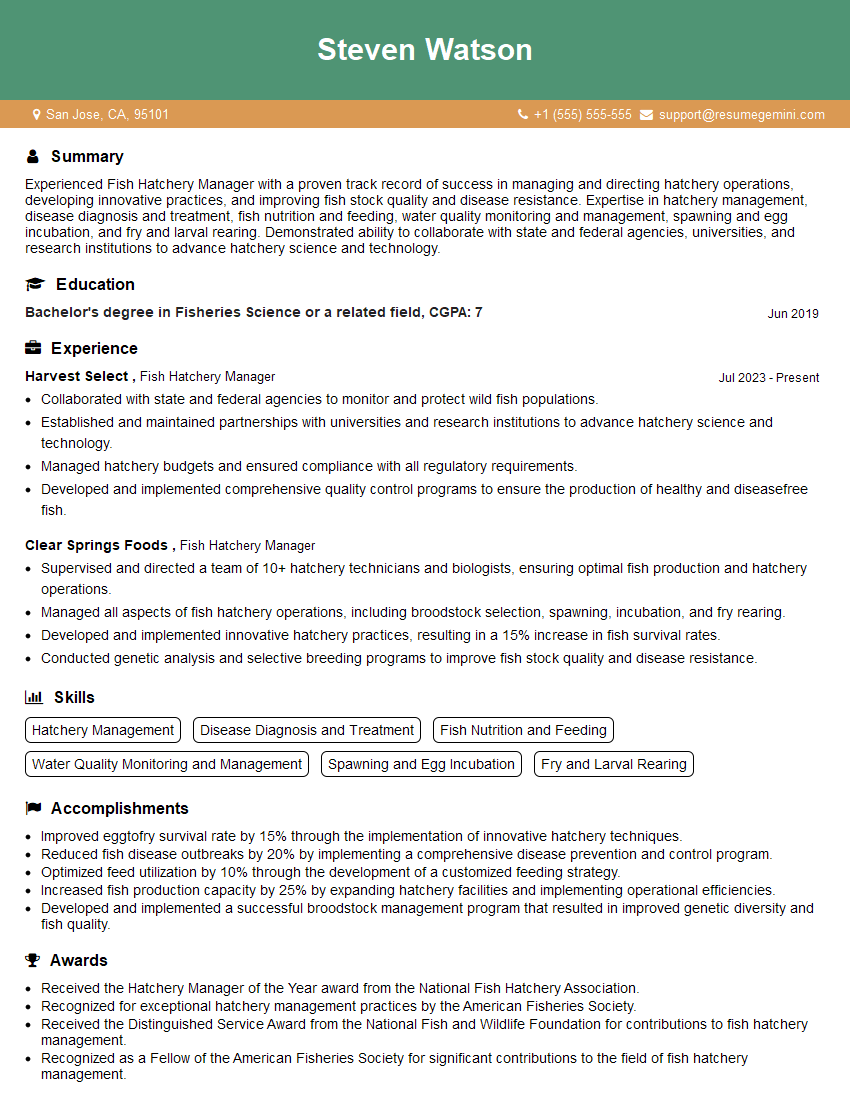
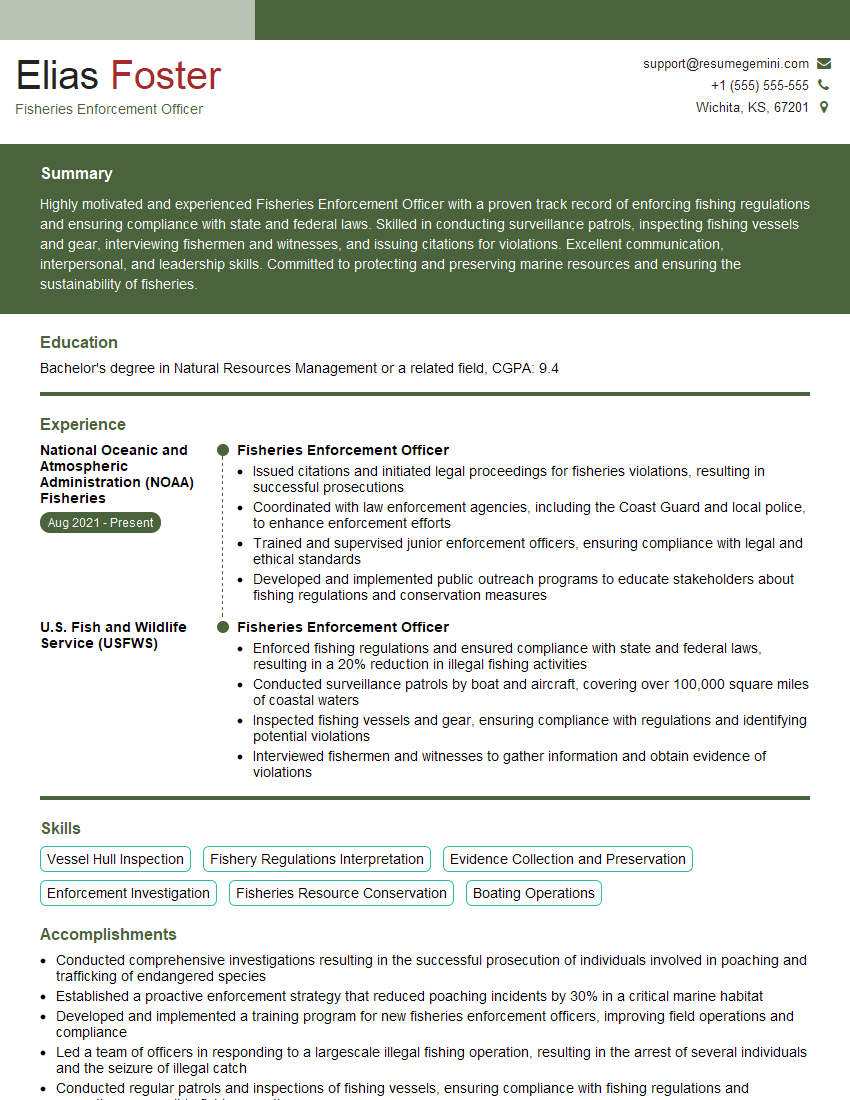
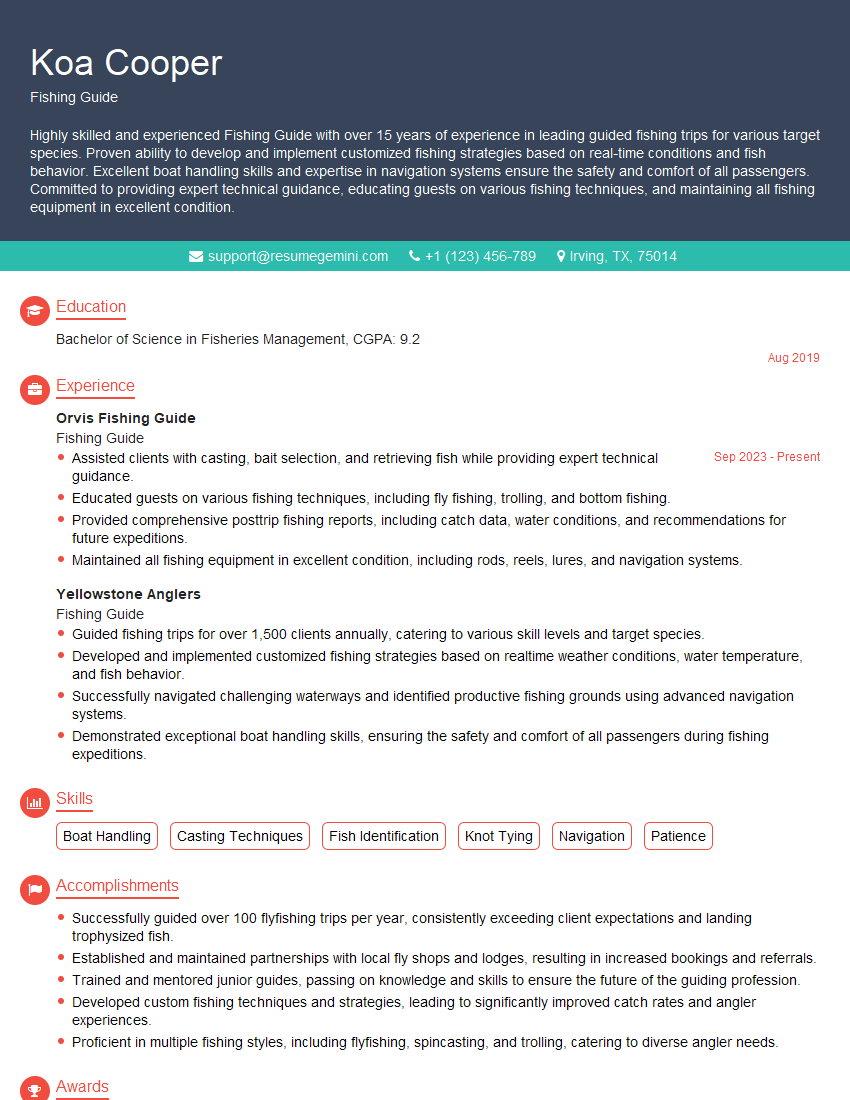
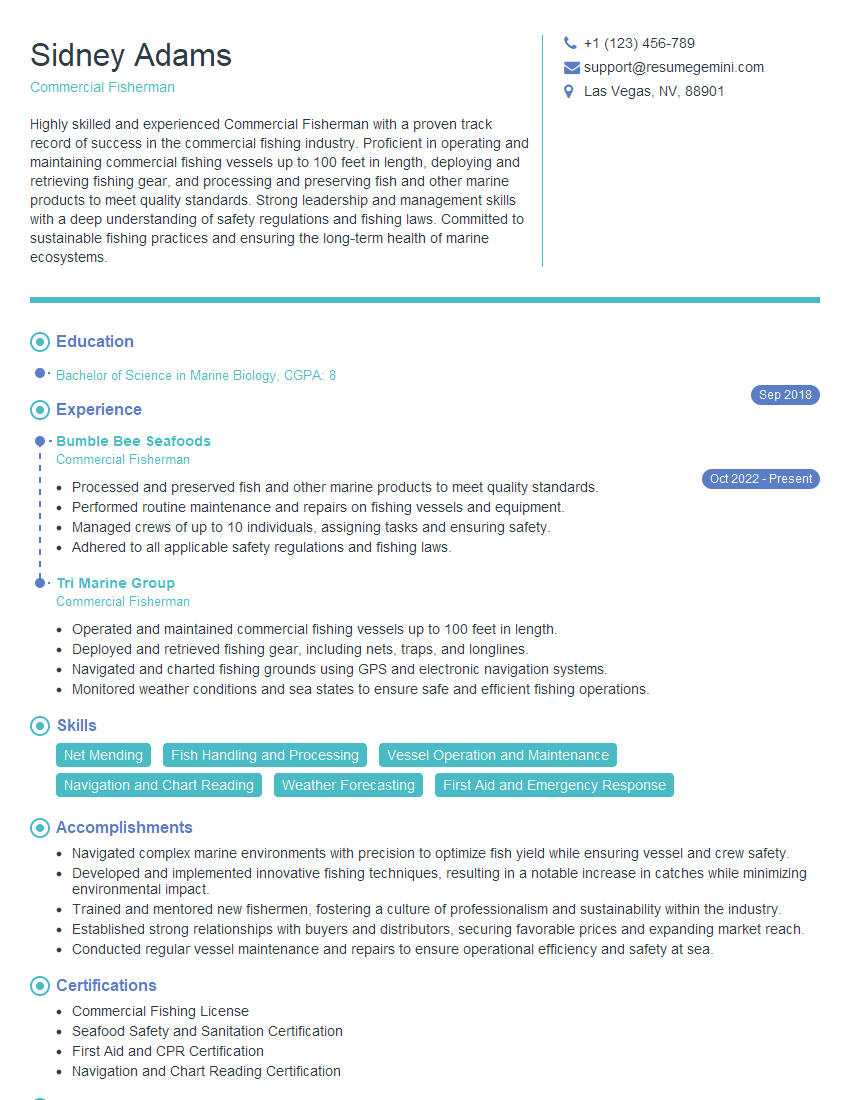
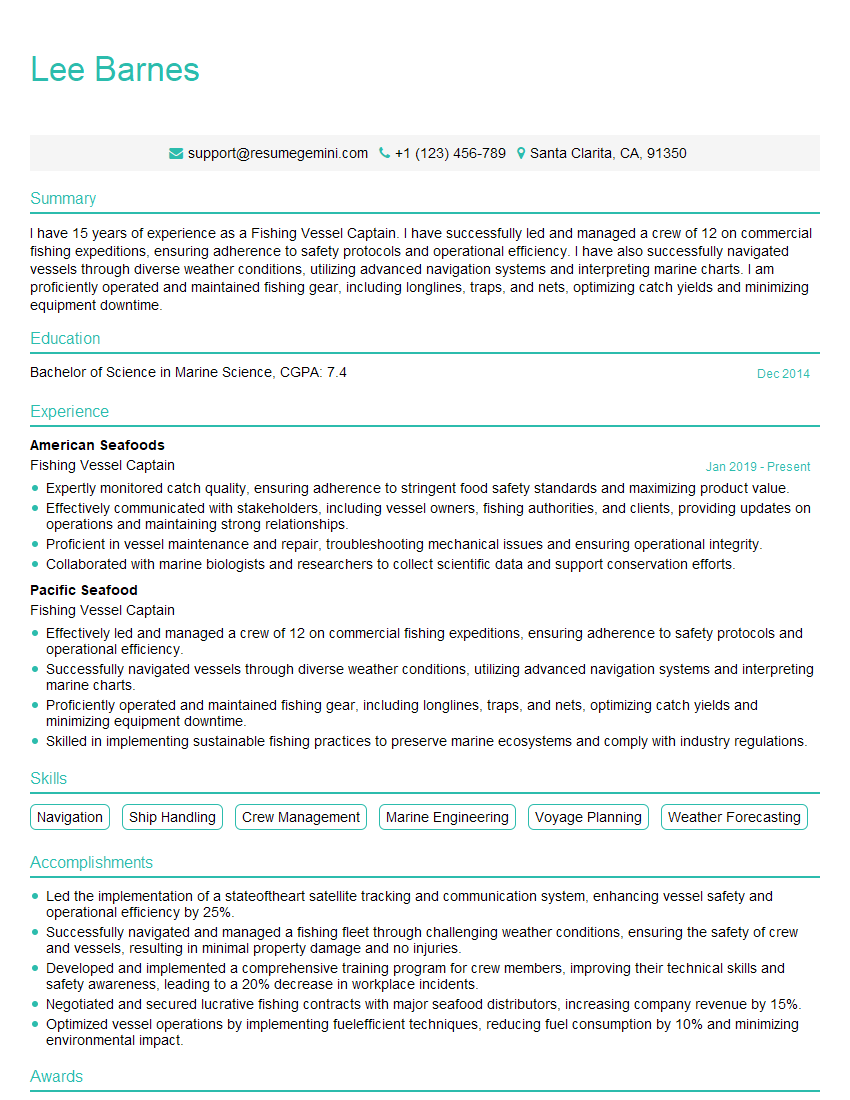
Mastering the skills and knowledge related to fishing opens doors to exciting career opportunities, offering diverse roles with varying levels of responsibility and specialization. To maximize your chances of landing your dream job, a well-crafted resume is essential. Building an ATS-friendly resume, optimized for applicant tracking systems, is crucial for getting your application noticed by recruiters. We highly recommend using ResumeGemini to create a professional and effective resume tailored to the fishing industry. ResumeGemini offers valuable tools and resources to help you present your skills and experience in the best possible light. Examples of resumes tailored to the fishing industry are available.
Explore more articles
Users Rating of Our Blogs
Share Your Experience
We value your feedback! Please rate our content and share your thoughts (optional).
What Readers Say About Our Blog
Very informative content, great job.
good