Unlock your full potential by mastering the most common Proficient in various art techniques interview questions. This blog offers a deep dive into the critical topics, ensuring you’re not only prepared to answer but to excel. With these insights, you’ll approach your interview with clarity and confidence.
Questions Asked in Proficient in various art techniques Interview
Q 1. Describe your proficiency in different artistic mediums (e.g., painting, sculpting, digital art).
My artistic journey has encompassed a wide range of mediums, allowing me to develop a versatile skillset. In painting, I’m proficient in both oil and acrylic techniques, favoring oils for their rich depth and luminosity, and acrylics for their fast-drying properties and versatility in mixed media projects. For instance, I recently completed a series of oil portraits that required meticulous detail and layering to achieve realistic skin tones, showcasing my command of blending and glazing techniques. My sculpting experience mainly involves working with clay, from building armatures to refining forms. I find sculpting to be a fantastic way to understand three-dimensional space and volume. A recent project involved creating a life-size clay bust, which required mastering anatomical accuracy and surface texturing. Finally, my digital art skills are well-honed, specifically in Photoshop and Illustrator. I use these programs extensively for both illustration and graphic design, ranging from creating detailed digital paintings to designing visually appealing marketing materials.
Q 2. Explain your artistic process from concept to completion.
My artistic process is iterative and involves several key stages. It begins with conceptualization—I usually start with mood boards, sketches, and even writing, to clearly define the narrative or emotion I want to convey. This initial stage is crucial for establishing a strong foundation. Next, I move into the development phase, where I create refined sketches and explore different compositional options, refining the visual elements. This stage often involves experimentation with color palettes and different mediums. The execution phase is where I actually produce the artwork, whether it’s painting, sculpting, or digital art, and this is where the technical skill takes center stage. Finally, I conduct a critical review of the finished piece, ensuring it aligns with my initial vision and addresses any shortcomings. This often includes seeking feedback from peers and mentors. It’s a cyclical process; I may revisit earlier stages to refine elements based on the results of the final review. Think of it as a continuous loop of ideation, refinement, and evaluation.
Q 3. How do you adapt your artistic style to different client needs or project requirements?
Adaptability is crucial in the art world. I approach adapting my style to client needs by first engaging in thorough communication. Understanding their vision and project goals is paramount. I carefully consider their target audience, brand identity, and overall message. For example, a client might require a minimalist design for a tech company, requiring a different approach than creating a whimsical illustration for a children’s book. I’m comfortable working within various stylistic guidelines, from photorealism to abstract expressionism, while maintaining my artistic integrity and creative input. Often, this involves presenting multiple style explorations to ensure alignment with the client’s expectations before committing to the final execution. My approach is always collaborative; it’s about finding the perfect balance between the client’s needs and my creative capabilities.
Q 4. Describe your experience with color theory and its application in your work.
Color theory is the cornerstone of my work. I have a strong understanding of color harmony, including complementary, analogous, and triadic color schemes. I use color to evoke specific emotions and create visual interest. For instance, warm colors like reds and oranges can convey energy and excitement, whereas cool colors like blues and greens often create a sense of calm. The strategic use of color temperature, saturation, and value helps me establish focal points, create depth, and guide the viewer’s eye through the composition. In a recent landscape painting, I used warm hues in the foreground to draw the viewer’s attention to the main subject, contrasting it with cooler tones in the background to create depth and distance. Understanding color interactions is essential for creating impactful and harmonious artwork.
Q 5. How do you handle constructive criticism of your artwork?
Constructive criticism is invaluable for growth. I actively seek feedback from trusted peers, mentors, and even online communities. I view criticism not as personal attacks but as opportunities for improvement. I listen carefully, analyze the feedback objectively, and determine its validity. Sometimes, criticism can be subjective, reflecting the critic’s personal preferences rather than inherent flaws in the work. However, even subjective feedback can highlight areas for exploration and growth. I carefully consider the critiques, separating valid points from personal biases, and then use the constructive feedback to refine my techniques and improve future projects. I’ve found that a receptive and open-minded approach transforms potentially negative feedback into valuable learning opportunities.
Q 6. What software and tools are you proficient in (e.g., Photoshop, Illustrator, ZBrush)?
My digital art proficiency spans a variety of software. I’m highly proficient in Adobe Photoshop, leveraging its powerful tools for digital painting, photo manipulation, and image retouching. Illustrator is another indispensable tool for my vector graphics work, particularly in creating logos, illustrations, and typographic designs. I also have experience with ZBrush, which I primarily use for 3D modeling and sculpting. Beyond these core programs, I’m familiar with other industry-standard software such as Adobe After Effects and Cinema 4D, enhancing my ability to deliver holistic design solutions. I consistently stay updated with the latest industry developments and software versions to maintain a competitive edge in the field.
Q 7. Explain your understanding of composition and its impact on visual storytelling.
Composition is the art of arranging visual elements to create a unified and engaging image. It’s crucial for effective visual storytelling. A well-composed artwork guides the viewer’s eye, creating a sense of balance and harmony. I utilize various compositional techniques, such as the rule of thirds, leading lines, and the golden ratio, to strategically place elements and create visual interest. For example, leading lines can be used to draw the viewer’s gaze toward a focal point. The rule of thirds helps avoid centering the main subject, creating a more dynamic composition. Understanding composition allows me to create artwork that is not only aesthetically pleasing but also effectively communicates the intended message or story. It’s about deliberately orchestrating the visual elements to guide the viewer’s experience and interpretation.
Q 8. Describe a project where you had to overcome a significant artistic challenge.
One significant artistic challenge I faced was during a large-scale mural project. The client requested a hyperrealistic depiction of a bustling city street scene, incorporating intricate details like reflections in glass and the subtle textures of weathered brick. The challenge wasn’t just the scale – it was maintaining consistency and precision across such a vast surface area while working outdoors, dealing with fluctuating light conditions and unpredictable weather.
To overcome this, I meticulously planned the composition, creating a detailed grid system on the wall and smaller, more manageable sections on canvas to pre-paint complex elements. I also used high-quality, weather-resistant paints and adapted my painting techniques to the changing light conditions throughout the day. Regularly stepping back to assess the overall composition and ensure tonal balance was key. This project taught me the importance of thorough planning, adaptability, and the value of breaking down a large undertaking into smaller, more achievable tasks.
Q 9. How do you stay updated on current trends and innovations in the art world?
Staying current in the art world requires a multi-pronged approach. I regularly visit art galleries and museums both physically and virtually, attending exhibitions and exploring online archives. This allows me to experience diverse styles and techniques firsthand. I also actively follow influential artists and art critics on social media platforms like Instagram and Twitter. Subscribing to reputable art magazines and online publications keeps me informed about emerging trends and critical discourse.
Furthermore, participating in workshops, conferences, and online courses allows me to learn new techniques and gain insights from other artists and experts. Engaging in professional networking events provides opportunities to learn about new technologies and approaches directly from practitioners. This holistic strategy ensures I’m not just aware of trends, but understand the underlying context and their influence on the artistic landscape.
Q 10. What are your strengths and weaknesses as an artist?
My strengths lie in my meticulous attention to detail and my proficiency in a wide range of artistic mediums, from traditional painting and drawing to digital illustration and graphic design. I’m adept at translating complex ideas into visually compelling narratives and am comfortable working independently and as part of a team. My ability to manage multiple projects simultaneously and meet deadlines consistently is another key strength.
However, I recognize that my perfectionism can sometimes slow down my workflow. While attention to detail is essential, I’m actively working on balancing this with the need for efficiency and timely project completion. I’m also focusing on expanding my knowledge of contemporary sculpture techniques, which is currently an area of development for me.
Q 11. Explain your understanding of different art movements and their historical context.
My understanding of art movements is grounded in their historical context and socio-cultural influences. For example, the Impressionist movement of the late 19th century, with artists like Monet and Renoir, reacted against the academic style by focusing on capturing the fleeting effects of light and atmosphere through loose brushstrokes and vibrant colours. This reflected a shift in societal values towards experiencing the present moment and celebrating the beauty of everyday life.
In contrast, the Cubist movement, pioneered by Picasso and Braque, challenged traditional perspectives by fragmenting objects and representing them from multiple viewpoints simultaneously. This was a response to the complexities of modern life and a desire to explore new ways of representing reality. Understanding these historical and social contexts is crucial for interpreting the works and appreciating their significance within the broader narrative of art history. I also have a strong understanding of movements like Surrealism, Pop Art, and Abstract Expressionism, each reflecting distinct historical and societal shifts.
Q 12. How do you manage your time and prioritize tasks in a fast-paced creative environment?
In a fast-paced creative environment, effective time management is crucial. I utilize project management tools like Trello or Asana to organize tasks, set deadlines, and track progress. I break down large projects into smaller, manageable steps, prioritizing tasks based on urgency and importance using methods like the Eisenhower Matrix (urgent/important). This allows me to stay focused and avoid feeling overwhelmed.
I also allocate specific time blocks for focused work, minimizing distractions by turning off notifications and creating a dedicated workspace. Regular breaks are essential to maintain creativity and prevent burnout. This structured approach ensures that I consistently meet deadlines while maintaining a healthy work-life balance.
Q 13. Describe your experience working collaboratively with other artists or designers.
I have extensive experience collaborating with other artists and designers. On one project, I worked with a team of graphic designers and illustrators to create a series of marketing materials for a new product launch. Effective communication was vital. We utilized online collaboration tools like Slack and shared document platforms to share progress, exchange feedback, and ensure everyone was aligned with the overall vision and brand guidelines.
Successful collaboration depends on open communication, mutual respect, and a shared understanding of goals and responsibilities. My experience taught me the importance of active listening, constructive criticism, and being adaptable to different working styles. The ability to compromise and find common ground is also essential to achieve a cohesive and effective outcome.
Q 14. How do you approach the creation of a detailed illustration?
Creating a detailed illustration involves a systematic approach. I start with thorough research and sketching, developing a strong composition and refining the details. I use reference materials to ensure accuracy and realism. Next, I create a detailed line art using digital tools like Adobe Illustrator or traditional methods like pen and ink.
Then, I move on to the coloring and shading stages, paying close attention to light and shadow to create depth and dimension. I might use a combination of digital painting techniques and traditional media depending on the desired style and effect. Throughout the process, I regularly zoom in and out to check the overall composition and ensure that details are consistent with the overall style. Finally, the illustration undergoes a final review to correct any imperfections and ensure it meets the client’s specifications. This multi-step process guarantees a high level of detail and visual appeal.
Q 15. What is your understanding of copyright and intellectual property rights in art?
Copyright and intellectual property rights in art protect the artist’s ownership and control over their creative work. This means that the artist has exclusive rights to reproduce, distribute, display, and create derivative works from their art. These rights are legally protected, and unauthorized use can lead to infringement. Copyright typically applies automatically upon creation of the artwork; however, registering the copyright with relevant authorities often provides stronger legal protection and easier recourse in case of infringement.
For example, if I create a painting, I own the copyright to that painting. I have the sole right to make prints, sell the original, license it for use in advertising, etc. If someone were to reproduce my painting without my permission, they would be infringing on my copyright, and I could potentially pursue legal action. Understanding the nuances of fair use, which permits limited use of copyrighted material under certain circumstances, is also crucial for both artists and those wishing to use their work.
Understanding intellectual property rights also extends to trademarks (for logos and branding) and potentially patents (for unique artistic processes or inventions), offering further layers of protection for artists’ creative and commercial endeavors.
Career Expert Tips:
- Ace those interviews! Prepare effectively by reviewing the Top 50 Most Common Interview Questions on ResumeGemini.
- Navigate your job search with confidence! Explore a wide range of Career Tips on ResumeGemini. Learn about common challenges and recommendations to overcome them.
- Craft the perfect resume! Master the Art of Resume Writing with ResumeGemini’s guide. Showcase your unique qualifications and achievements effectively.
- Don’t miss out on holiday savings! Build your dream resume with ResumeGemini’s ATS optimized templates.
Q 16. Explain your experience with printmaking techniques (e.g., etching, screen printing).
I have extensive experience in various printmaking techniques, with a particular focus on etching and screen printing. Etching involves using acid to create lines and textures on a metal plate, which is then inked and printed onto paper. This process allows for incredible detail and subtlety, and I particularly enjoy the unpredictability that the etching process can introduce. A recent project involved creating a series of etchings depicting cityscapes, utilizing different acid strengths and techniques to achieve a variety of textures and tones.
Screen printing, in contrast, is a more versatile and reproducible technique. It involves using stencils to transfer ink onto paper or fabric. I’ve used screen printing for creating editioned prints of my artwork, as well as for designs on textiles and other materials. For example, I once created a limited edition series of screen-printed posters for a local music festival, using vibrant inks and layering techniques to add depth and complexity to the designs.
Q 17. How do you approach the creation of a 3D model, from concept to rendering?
My 3D modeling process starts with a strong concept—a clear vision of what I want to create. This involves sketching, brainstorming, and often creating initial 2D concept art to solidify the design. Once I have a firm grasp of the concept, I move into the digital modeling phase, typically using software like ZBrush or Blender, depending on the project’s requirements. I begin with a basic shape, gradually refining the form and adding details through sculpting or modeling techniques. This iterative process involves constant refinement and attention to detail, using tools such as subdivision surface modeling to achieve smooth surfaces and high-polygon counts.
Following the modeling phase, I move to texturing, adding color, surface properties (roughness, reflectivity), and other details to bring the model to life. This can involve creating custom textures from scratch or using pre-made textures and modifying them. Finally, the rendering phase involves using specialized software (like Keyshot or OctaneRender) to produce high-quality images or animations. During rendering, lighting and camera settings are meticulously adjusted to create the desired mood and atmosphere. The entire process is a continuous cycle of refinement and problem-solving, ensuring the final 3D model accurately represents my initial vision.
Q 18. Describe your approach to creating a successful marketing campaign utilizing your artistic skills.
My approach to marketing leverages my artistic skills by creating visually compelling and engaging campaigns that resonate with the target audience. This starts with a deep understanding of my target demographic, their preferences, and where they engage online and offline. Then I design visually striking assets, such as posters, social media graphics, and website banners, utilizing my artistic style and skills to create a cohesive brand identity. I often incorporate storytelling elements into my marketing to connect with the audience on an emotional level.
For example, for a recent exhibition, I designed a series of eye-catching posters featuring fragments of my artwork, combined with evocative typography, and distributed them strategically in high-traffic locations. I also created a social media campaign, employing a consistent aesthetic and sharing behind-the-scenes content to build engagement. In addition to visual elements, I consider the overall campaign message and the platform used, ensuring consistency and effectiveness across all channels.
Q 19. What are your pricing strategies for commissioned artwork?
My pricing strategies for commissioned artwork are tailored to each project, taking into account several factors: complexity, size, materials used, time invested, and the client’s budget. I usually provide a detailed breakdown of the costs, offering transparency in my pricing methodology. I often employ a combination of hourly rates and project-based pricing, selecting the method best suited for the specific commission. For larger or more complex projects, I might ask for a deposit to cover initial costs and materials.
For instance, a small, simple illustration might have a fixed price, while a large-scale mural would be priced based on the area covered and the time required for its completion. I also take into account the client’s expectations and budget constraints, offering various options within a price range to find the most appropriate solution. Clear communication and upfront discussion regarding pricing and deadlines are essential for a smooth and successful collaboration.
Q 20. Explain your understanding of human anatomy and its application in artistic representations.
A strong understanding of human anatomy is fundamental for creating believable and expressive figures in art. This includes a thorough knowledge of bone structure, muscle groups, proportions, and the relationship between form and movement. My approach involves studying anatomy from various sources, such as anatomical books, life drawing sessions, and online resources. I focus on understanding the underlying structure of the body to accurately depict the forms and create realistic poses.
For example, understanding the structure of the ribcage allows me to depict the chest area accurately in my artworks, whereas knowledge of muscle attachments helps in conveying the tension and relaxation of muscles during various actions. I often use anatomical references throughout the artistic process, ensuring that even stylized figures maintain a convincing degree of anatomical accuracy. This detailed understanding allows me to convey emotions and narratives effectively, adding depth and authenticity to my character designs and figurative work.
Q 21. How do you ensure the technical quality of your artwork?
Ensuring the technical quality of my artwork involves a multi-faceted approach that begins with using high-quality materials and tools appropriate for the medium. This could mean sourcing archival-quality paints and canvases for paintings, using acid-resistant etching plates for printmaking, or selecting appropriate software and hardware for digital art. I pay close attention to details throughout the entire process, using techniques to achieve smooth transitions, sharp lines, and accurate representations of color and form. For example, in painting I meticulously blend colors to avoid harsh transitions, and in digital art, I use advanced rendering techniques to achieve realistic light and shadow effects.
Beyond the materials and techniques, I employ a rigorous quality control process. This includes regular self-critique during the creation process and seeking feedback from fellow artists or mentors at key stages. After completion, I conduct a thorough review to ensure the piece meets my standards of excellence. For digital artwork, this includes checking for artifacts, color balance, and overall sharpness. This commitment to quality extends beyond technical aspects to include aspects such as composition, design, and concept. The final artwork represents the highest standards of execution and artistic vision.
Q 22. Describe your experience with different types of brushes and painting techniques.
My experience with brushes and painting techniques is extensive, spanning various mediums. I’m proficient in oil, acrylic, and watercolor painting, each demanding a unique approach to brushwork. In oil painting, I frequently use hog bristle brushes for impasto techniques, creating thick, textured layers of paint. For finer details, I prefer sable brushes for their ability to hold a sharp point and create delicate lines. With acrylics, synthetic brushes are often my go-to, as they are durable and easy to clean. Watercolor demands a lighter touch, and I favor squirrel hair or synthetic watercolor brushes for their ability to create soft washes and gradients.
Techniques I employ range from alla prima (wet-on-wet) for spontaneous, expressive paintings, to sfumato (smoky blending) in oil for achieving soft transitions between colors and values. I also utilize glazing techniques in oil and acrylic, layering thin, translucent washes to achieve depth and richness of color. In watercolor, I utilize techniques like lifting and dry brushing to manipulate the paint’s texture and transparency. The choice of brush and technique depends entirely on the desired effect and the medium employed. For example, a stiff bristle brush might be perfect for creating the texture of bark in a landscape, while a fine sable brush would be ideal for the delicate details of a portrait’s eyes.
Q 23. How do you use feedback to refine your artistic skills?
Feedback is crucial for artistic growth. I actively seek constructive criticism from peers, mentors, and even online communities. I approach feedback as an opportunity for learning, not as personal judgment. For instance, if a critique mentions a lack of balance in a composition, I’ll analyze the piece to identify the imbalance and then explore solutions, such as repositioning elements or adjusting values and colors. I keep a detailed record of feedback received and use it to inform future projects. This might involve experimenting with different techniques, materials, or subjects to address identified weaknesses. I don’t just passively accept feedback; I actively engage with it, asking clarifying questions and exploring alternative perspectives.
Beyond direct critiques, I also analyze the reactions of my audience. If a particular piece consistently receives positive feedback, I reflect on what elements resonated with viewers. This helps me understand my strengths and refine my artistic voice. The process is iterative, constantly refining my skills through a cycle of creating, receiving feedback, and improving.
Q 24. How do you balance creativity with technical skill in your work?
Balancing creativity and technical skill is a constant dance. I see them not as opposing forces but as complementary aspects of the artistic process. Creativity provides the initial spark—the idea, the concept, the emotion I want to convey. Technical skill is the vehicle that allows me to translate that vision into a tangible artwork. Without strong technical skills, my creative ideas would remain unrealized. Conversely, without the spark of creativity, technical skill would be sterile and lifeless.
A simple example: I might have a creative vision for a dramatic landscape painting. However, without a solid understanding of perspective, color theory, and brushwork techniques, I would struggle to translate that vision convincingly onto the canvas. I constantly push myself to experiment, blending inventive approaches with mastery of fundamental techniques. The goal is not to perfectly execute a technique, but to use techniques to enhance and express my creative vision. For example, I may use a bold, expressive brushstroke to convey emotion, even if it deviates from traditional ‘correct’ technique.
Q 25. Describe your portfolio and highlight your most successful projects.
My portfolio showcases a diverse range of works, from detailed portraits in oil to expressive landscapes in acrylic and delicate botanical studies in watercolor. My most successful projects are those where I successfully merged my technical abilities with a strong conceptual foundation. One such project was a series of portraits that explored the theme of human resilience. I used oil paint to create richly textured, almost sculptural faces, emphasizing the strength and character of each subject. Another successful project was a series of landscape paintings that combined realism with abstraction. This series challenged me to balance meticulous detail with gestural brushstrokes, creating a balance of precision and spontaneity that I’m very proud of. These works demonstrate my versatility and ability to adapt my technique to various themes and styles.
Q 26. What inspires your artistic work?
My artistic work draws inspiration from a variety of sources. Nature is a major influence; I find constant inspiration in the intricate details of flora and fauna, the grandeur of landscapes, and the ephemeral beauty of light and shadow. I’m deeply moved by the human condition, and this often manifests in my portraiture, where I explore themes of emotion, character, and identity. Beyond the natural world and human experience, I also find inspiration in literature, music, and even architecture. I’m drawn to the interplay of form, color, and texture, and I try to incorporate these elements into my artwork. Each source fuels my creativity, contributing to the unique style and subject matter of my paintings.
Q 27. How do you approach problem-solving in a creative context?
Problem-solving in art is an iterative process. I approach challenges by first clearly defining the problem. For example, if I’m struggling with a composition, I’ll step back, analyze the elements, and identify the specific area causing the issue. Then I brainstorm possible solutions, experimenting with different approaches. I might try altering the placement of elements, adjusting values, or changing the color palette. I often sketch out multiple variations to visualize different possibilities. If the problem persists, I might seek feedback from peers, consult reference materials, or even step away from the artwork for a while to approach it with fresh eyes. The process involves flexibility, experimentation, and a willingness to abandon approaches that aren’t working.
Q 28. What are your career goals in the field of art?
My career goals involve establishing myself as a recognized and respected artist, exhibiting my work nationally and internationally. I aim to continue developing my artistic voice and technique, pushing creative boundaries while maintaining a strong foundation in classical skills. I also aspire to share my knowledge and passion for art through teaching and mentoring aspiring artists. My long-term goal is to build a sustainable career that combines creative expression, artistic exploration, and community engagement. I envision creating a space where I can connect with art enthusiasts and contribute to the broader art community.
Key Topics to Learn for Proficient in Various Art Techniques Interview
- Drawing Fundamentals: Understanding line weight, perspective, proportion, and shading techniques. Practical application: Analyzing your own work and identifying areas for improvement in these fundamental aspects.
- Painting Techniques: Mastery of various mediums (oil, acrylic, watercolor, etc.), color theory, and brushwork techniques. Practical application: Demonstrating understanding through examples of your work showcasing different techniques and mediums.
- Sculpting & 3D Modeling: Knowledge of different sculpting materials and techniques (clay, digital sculpting), understanding of form, volume, and texture. Practical application: Explaining your process in creating a 3D model or sculpture, highlighting problem-solving in achieving desired forms.
- Digital Art & Illustration: Proficiency in software like Photoshop, Illustrator, or Procreate; understanding of digital painting, vector graphics, and image manipulation. Practical application: Showcasing your digital portfolio and explaining your workflow in a particular project.
- Art History & Theory: Familiarity with major art movements, influential artists, and art-critical theories. Practical application: Connecting your artistic choices and techniques to historical precedents and theoretical frameworks.
- Portfolio Development & Presentation: Curating a strong and cohesive portfolio that highlights your skills and artistic vision. Practical application: Articulating the rationale behind the selection of pieces in your portfolio and the narrative you aim to convey.
- Creative Problem-Solving: Demonstrating the ability to approach artistic challenges creatively and effectively. Practical application: Describing instances where you had to overcome a creative obstacle or technical difficulty.
Next Steps
Mastering various art techniques is crucial for career advancement in the competitive art world. A strong portfolio is essential, but presenting your skills effectively through a well-crafted resume significantly increases your chances of landing your dream job. Building an ATS-friendly resume is key to getting noticed by recruiters and hiring managers. ResumeGemini is a trusted resource that can help you create a professional and impactful resume tailored to your specific skills and experience. Examples of resumes tailored to showcasing proficiency in various art techniques are available through ResumeGemini to guide your resume creation process.
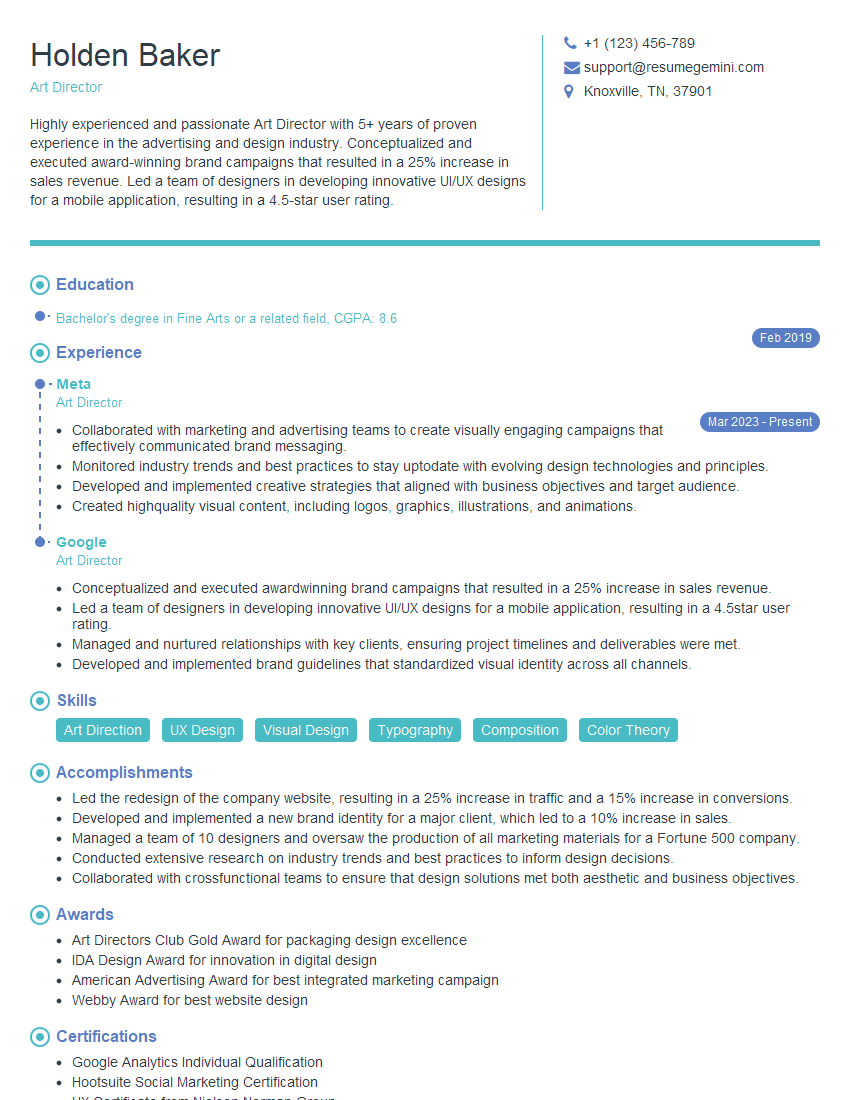
Art Director Resume Sample
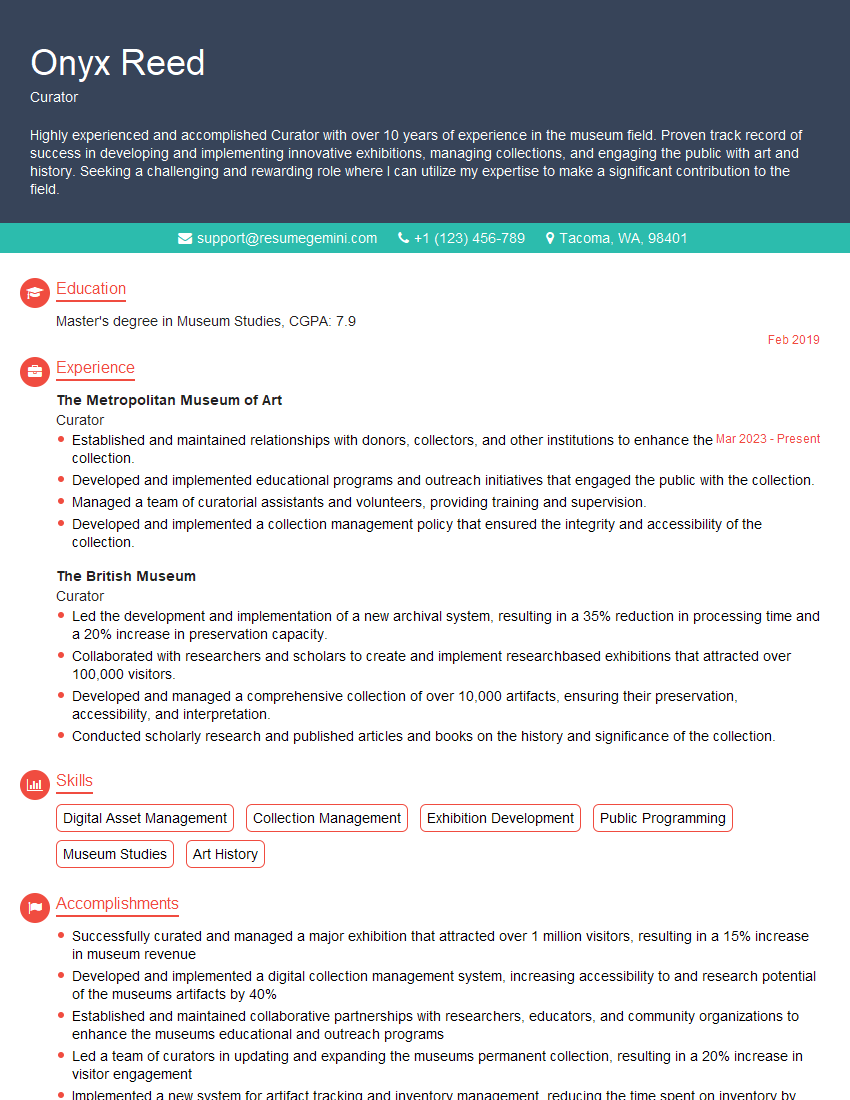
Curator Resume Sample
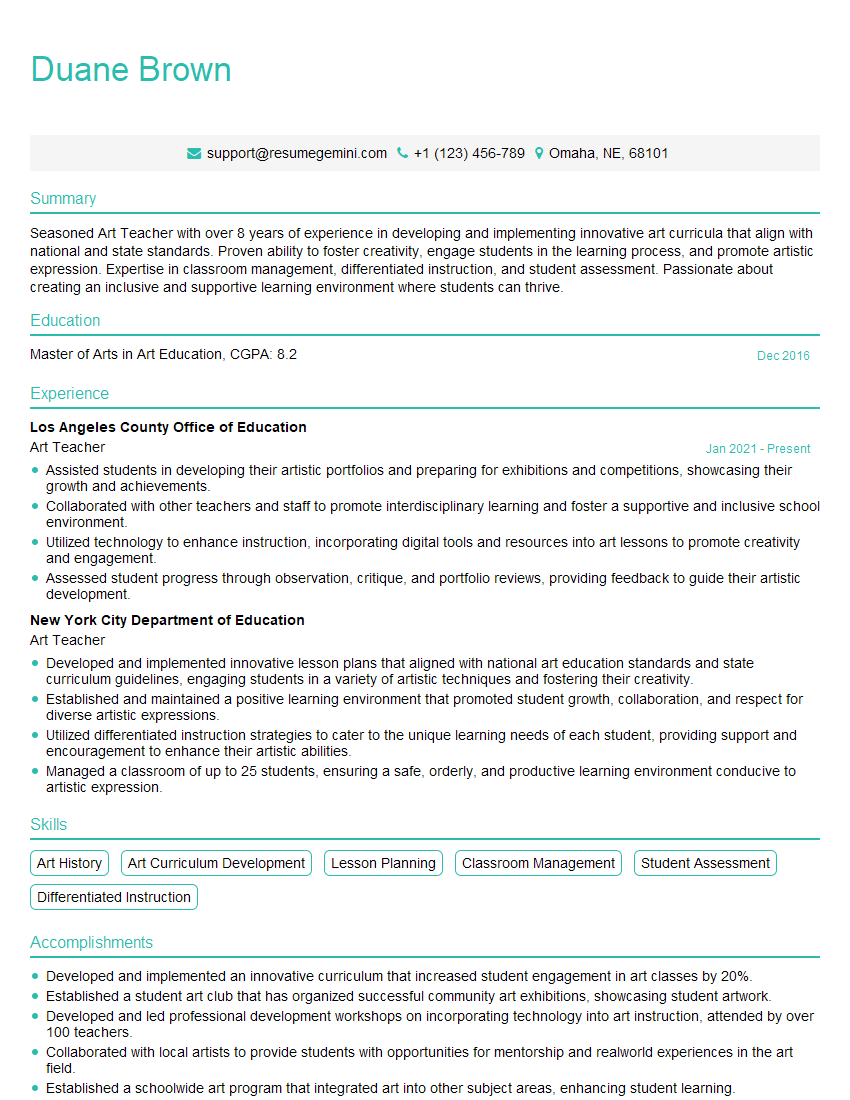
Art Teacher Resume Sample
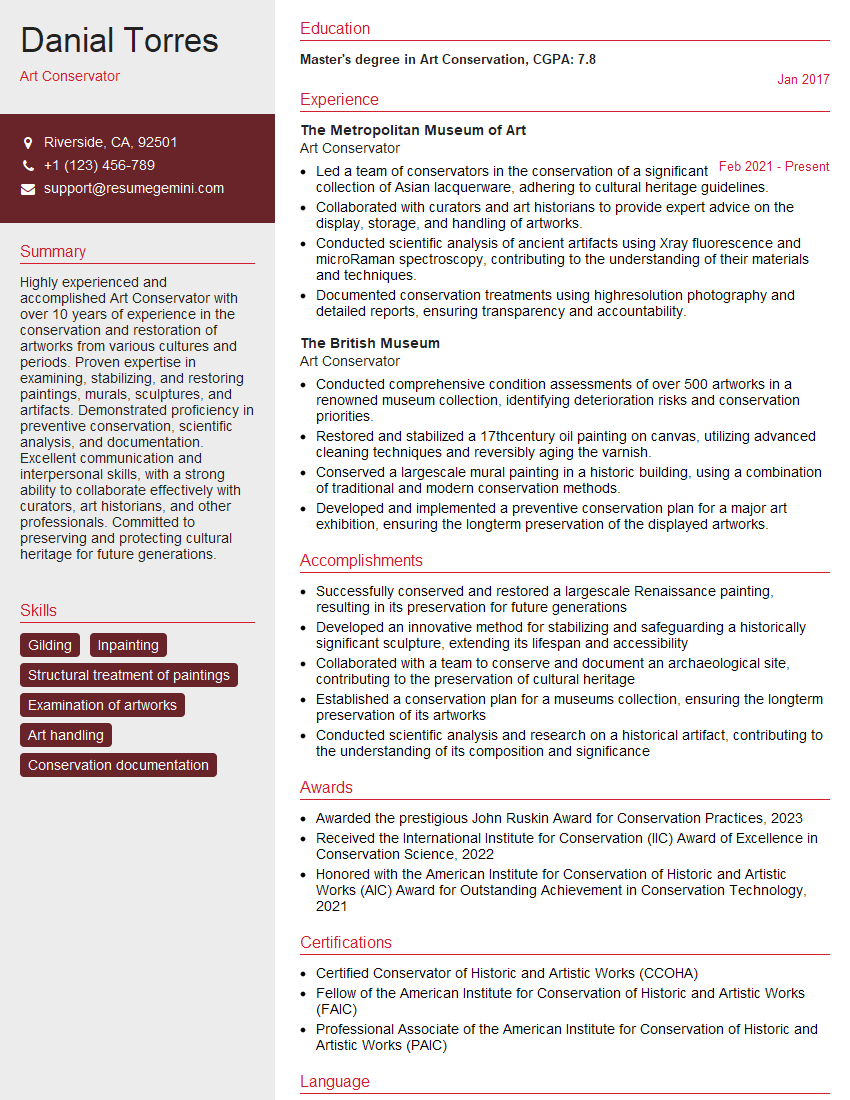
Art Conservator Resume Sample
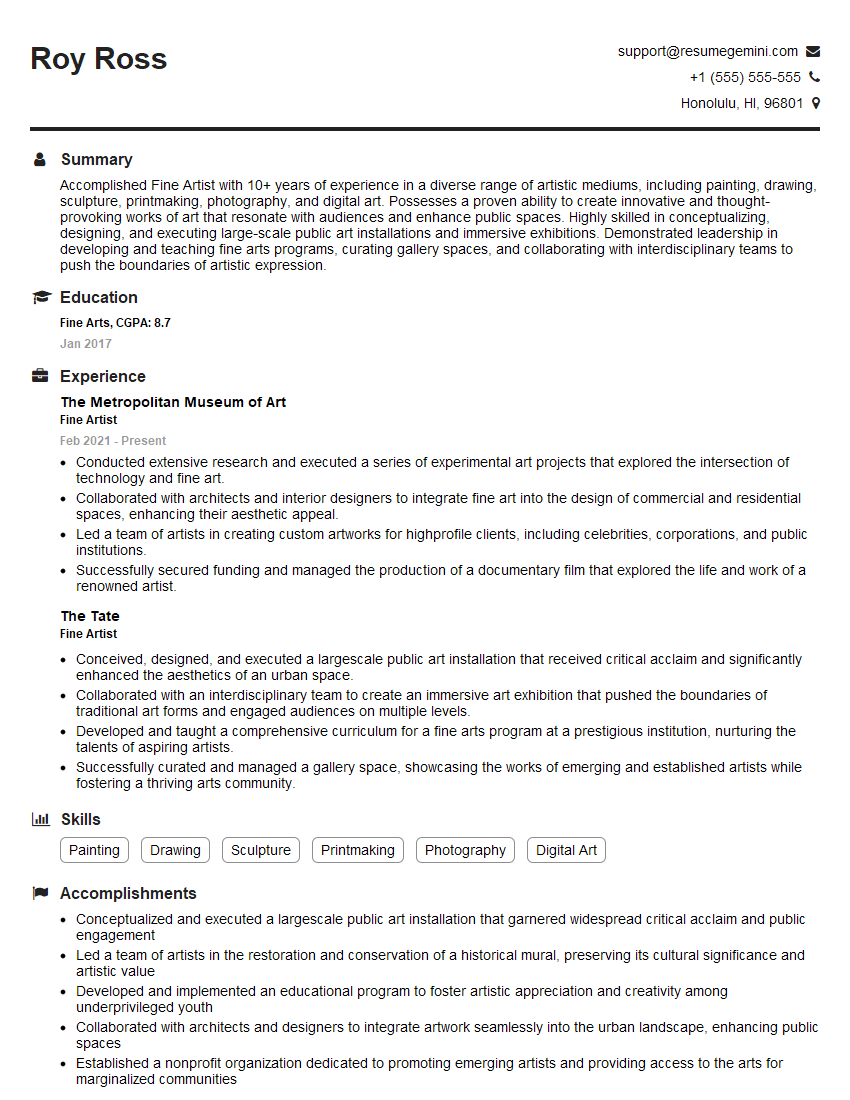
Fine Artist Resume Sample
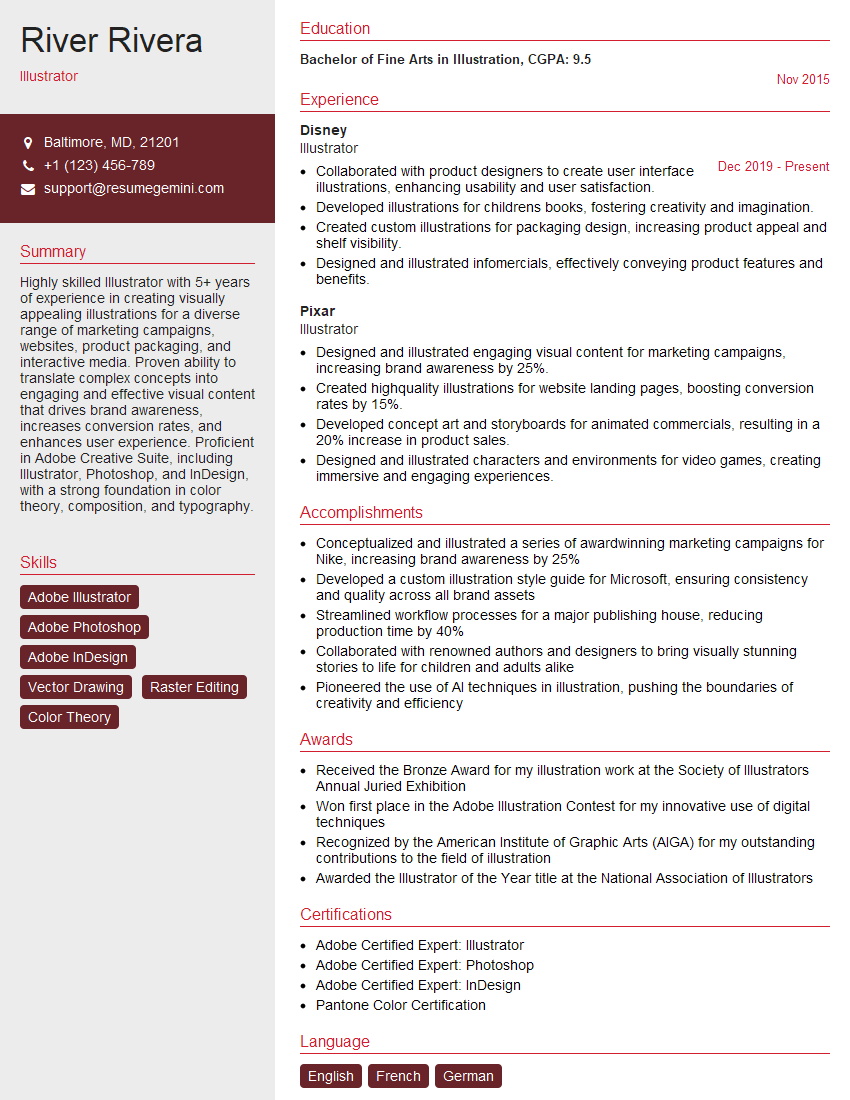
Illustrator Resume Sample
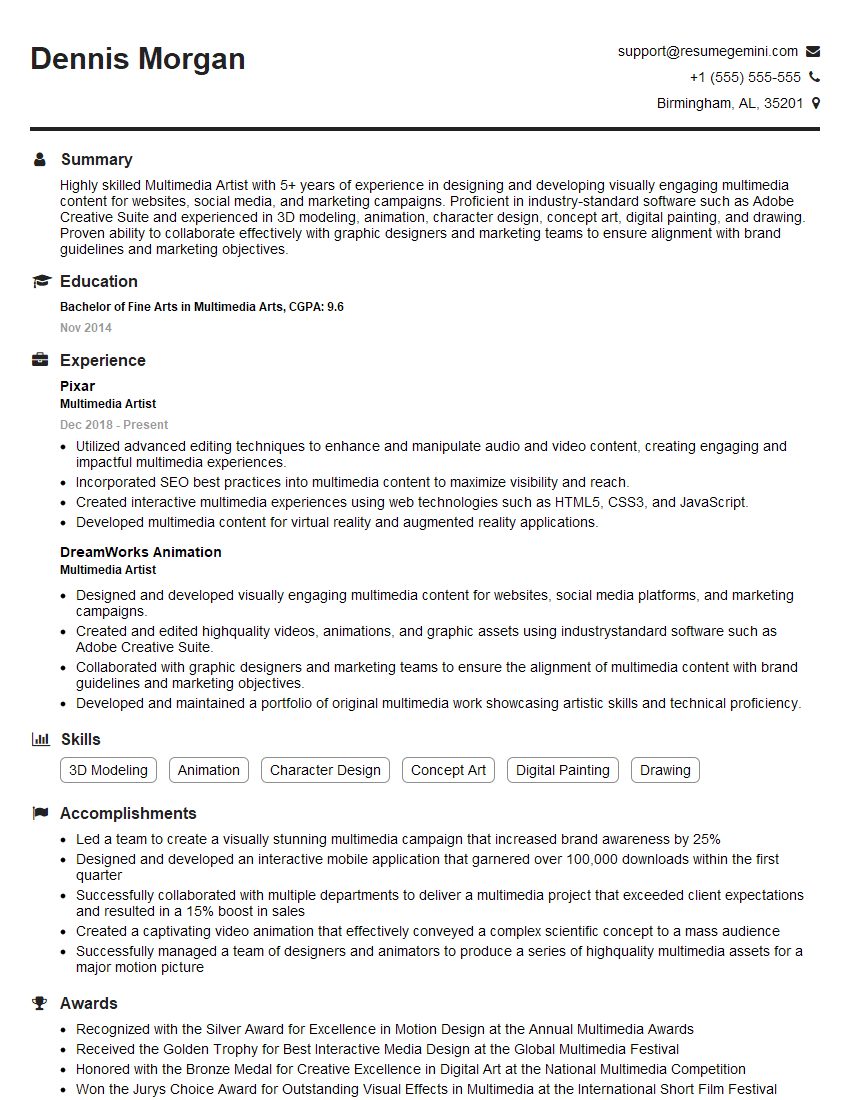
Multimedia Artist Resume Sample
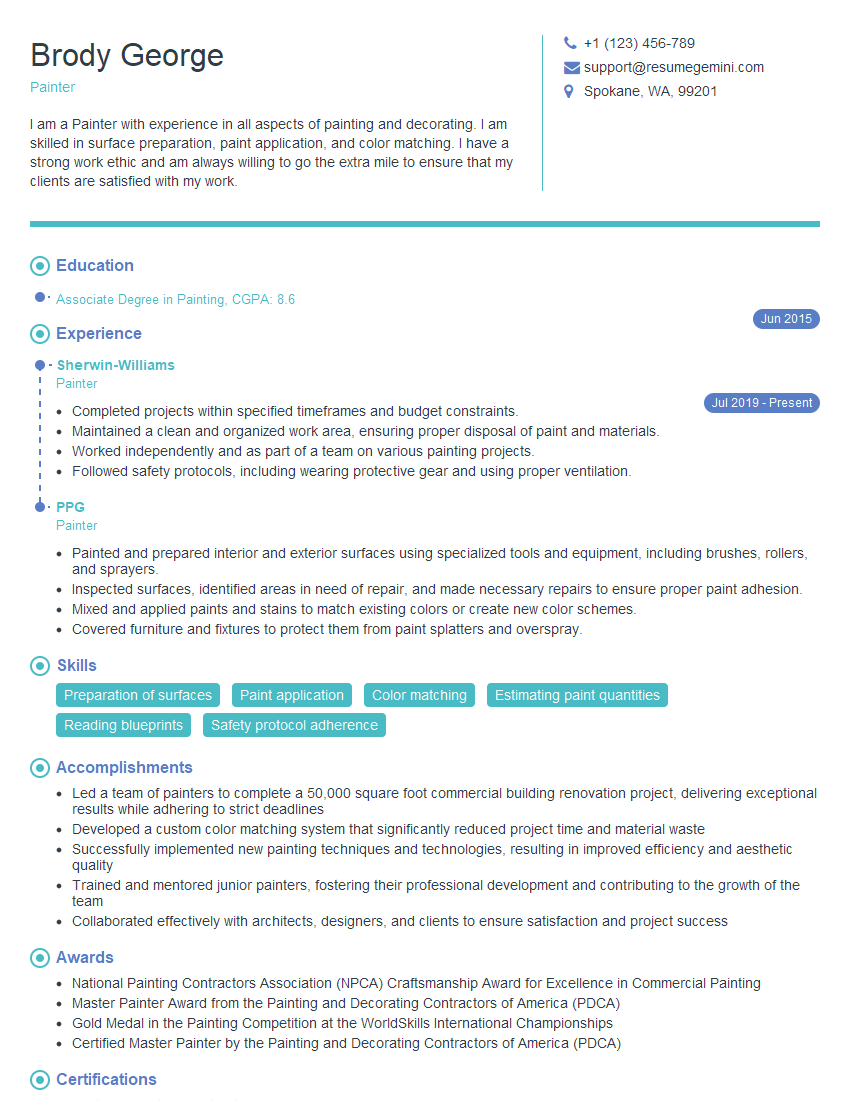
Painter Resume Sample
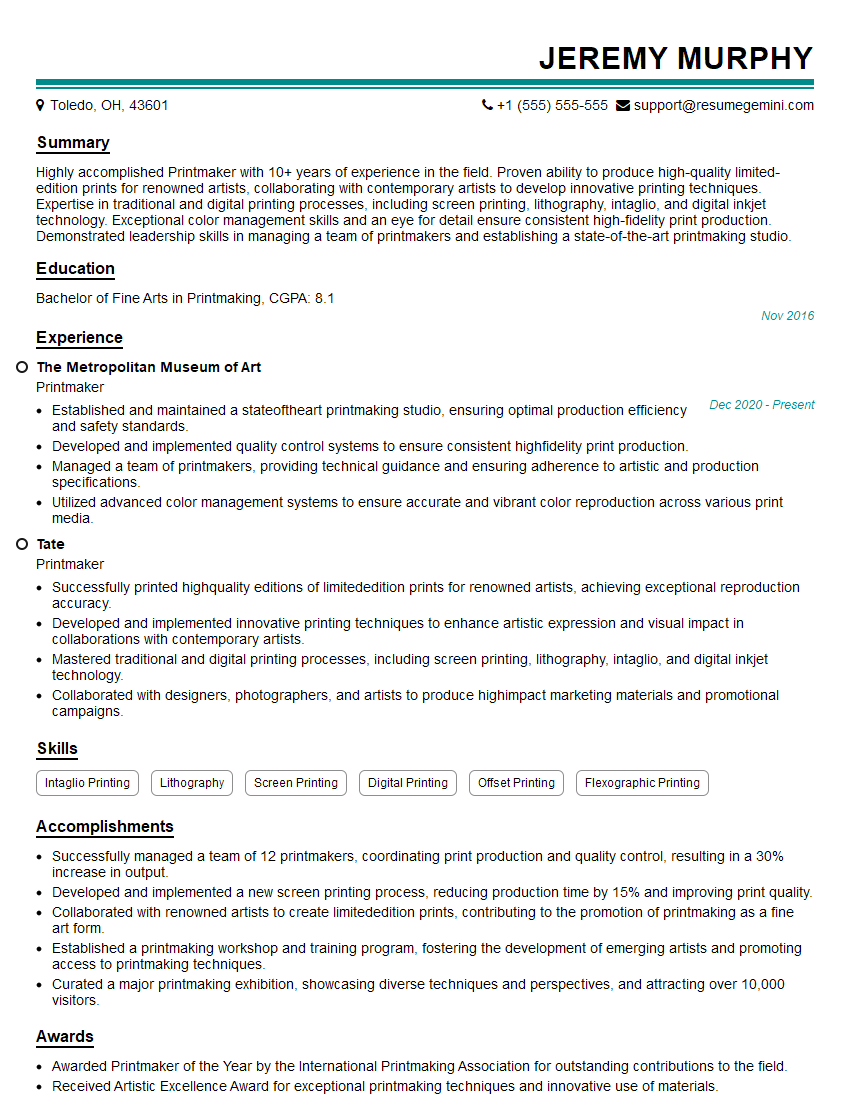
Printmaker Resume Sample
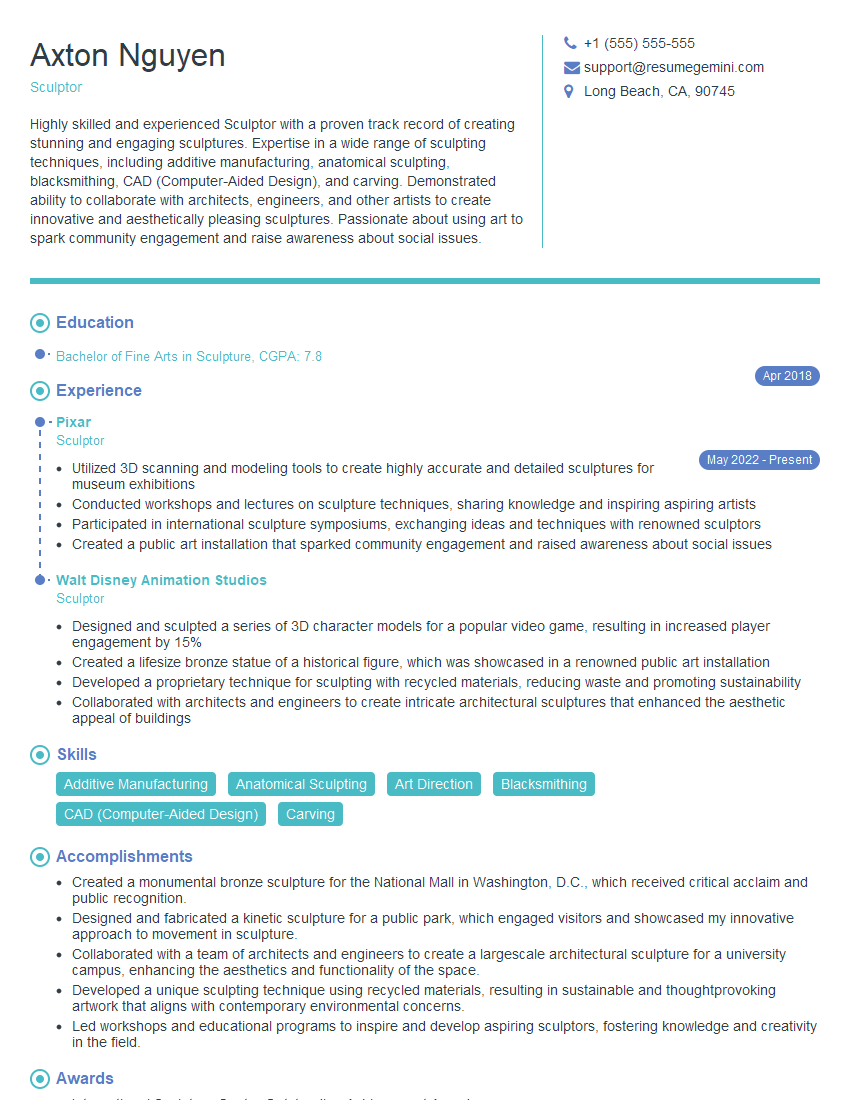
Sculptor Resume Sample
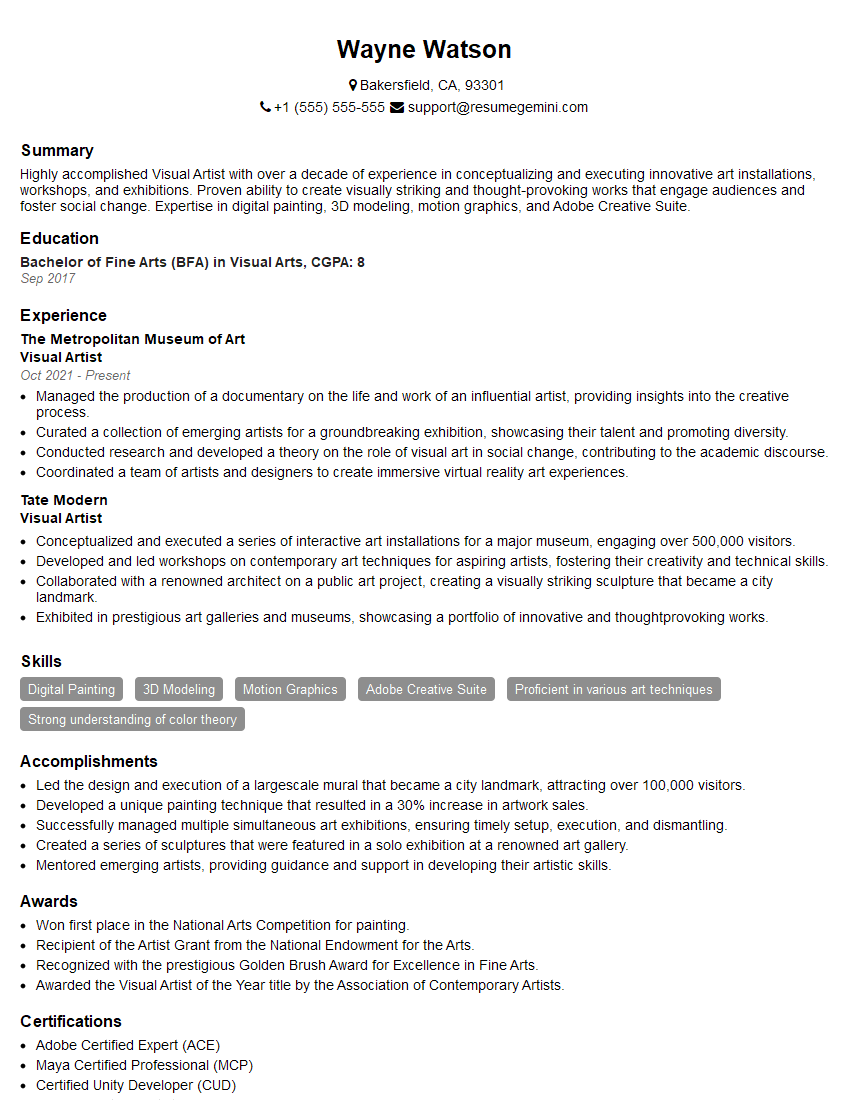
Visual Artist Resume Sample
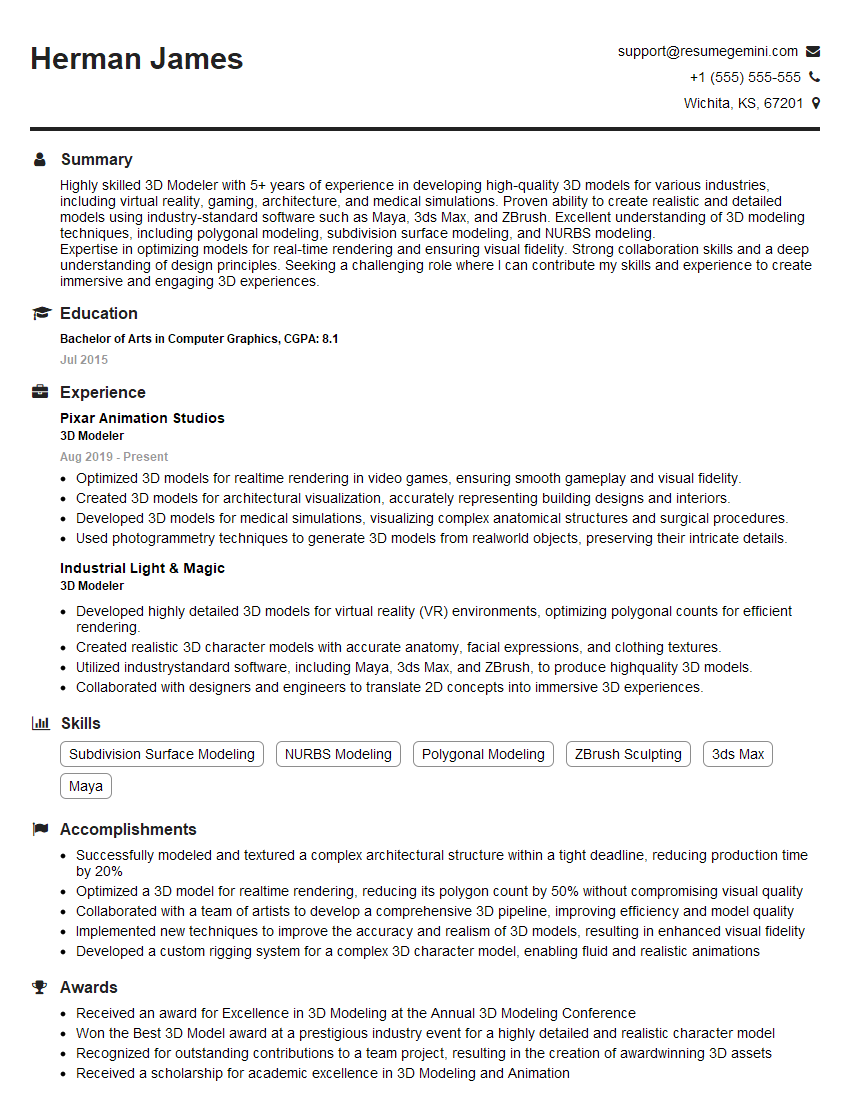
3D Modeler Resume Sample
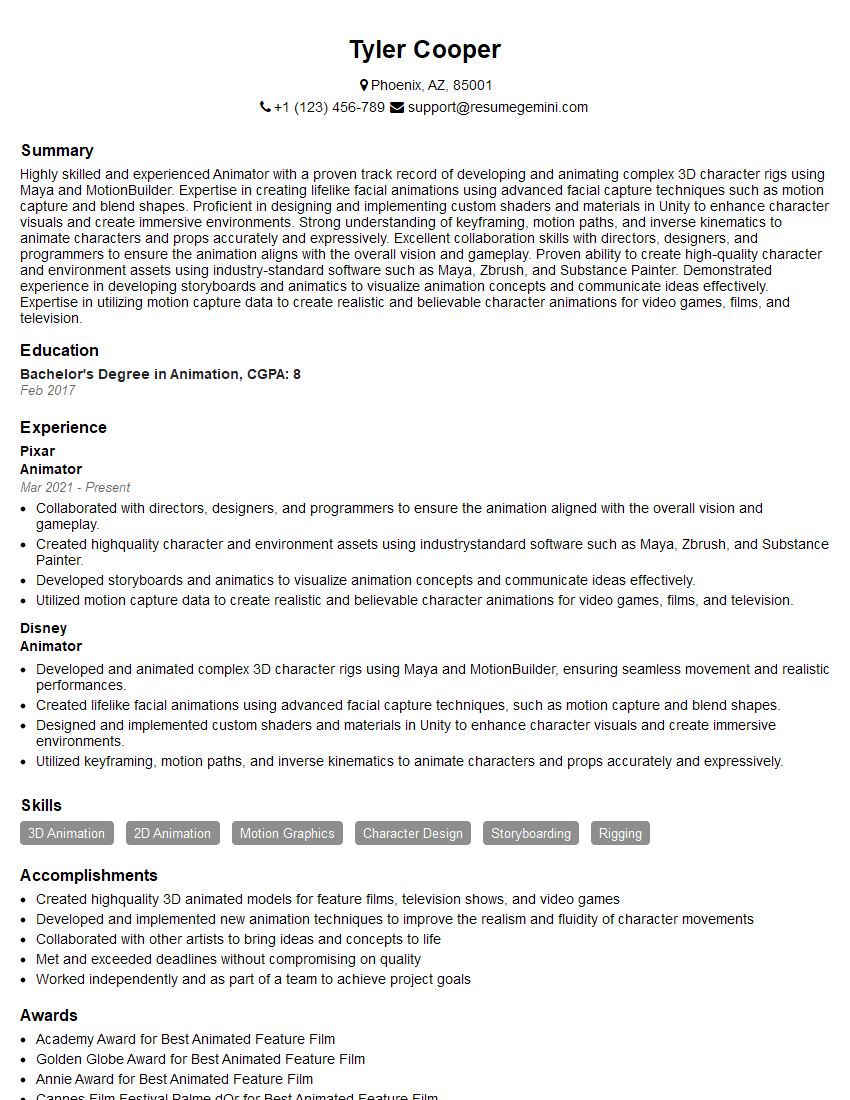
Animator Resume Sample
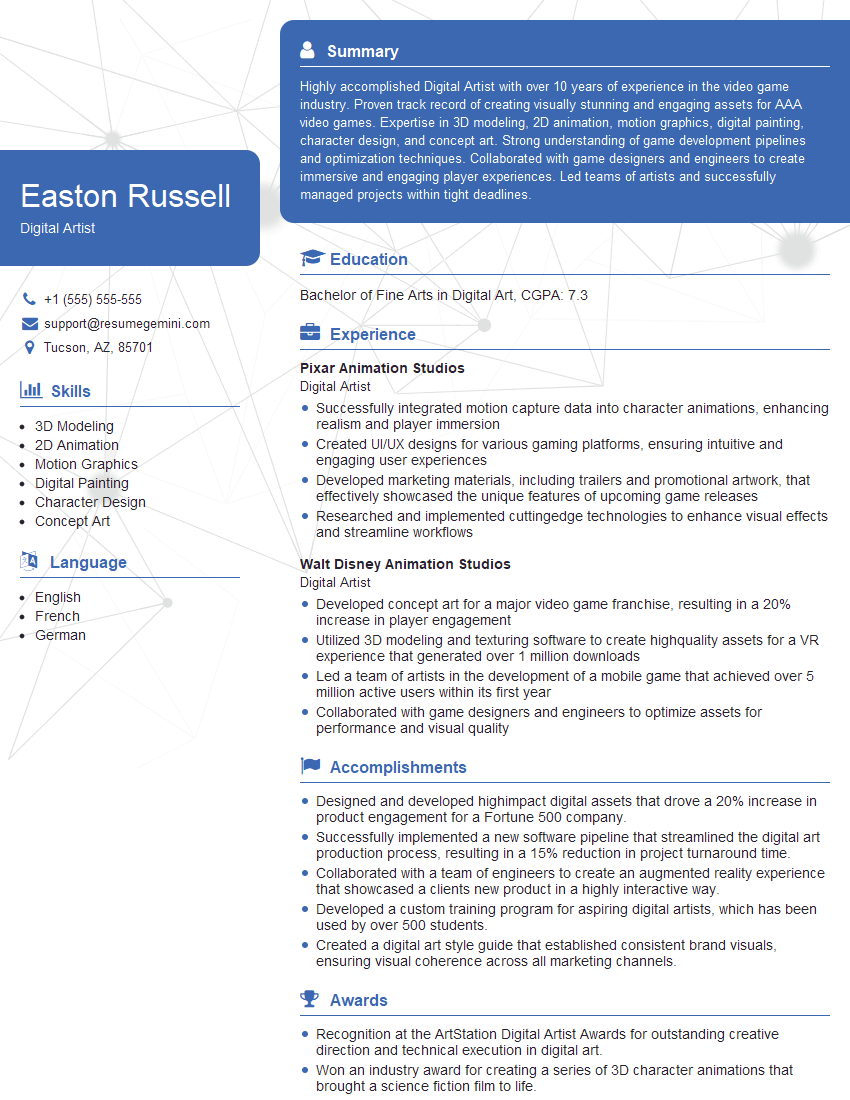
Digital Artist Resume Sample
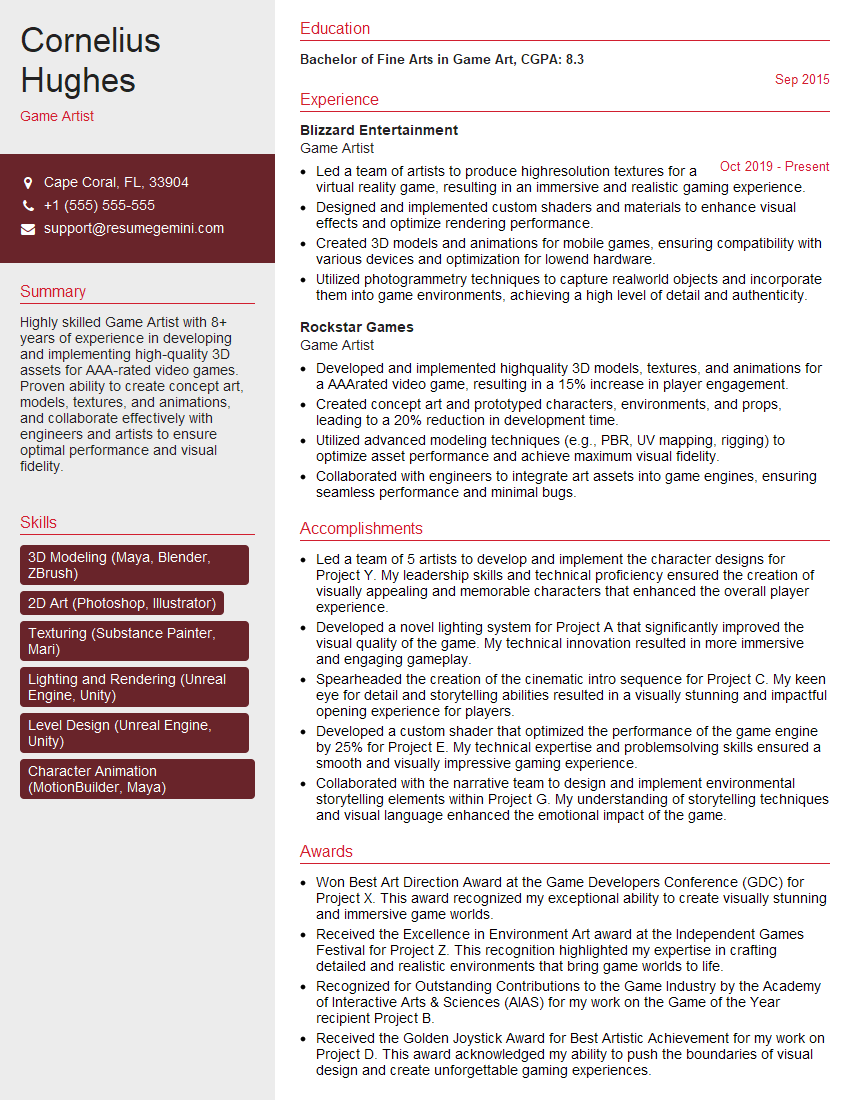
Game Artist Resume Sample
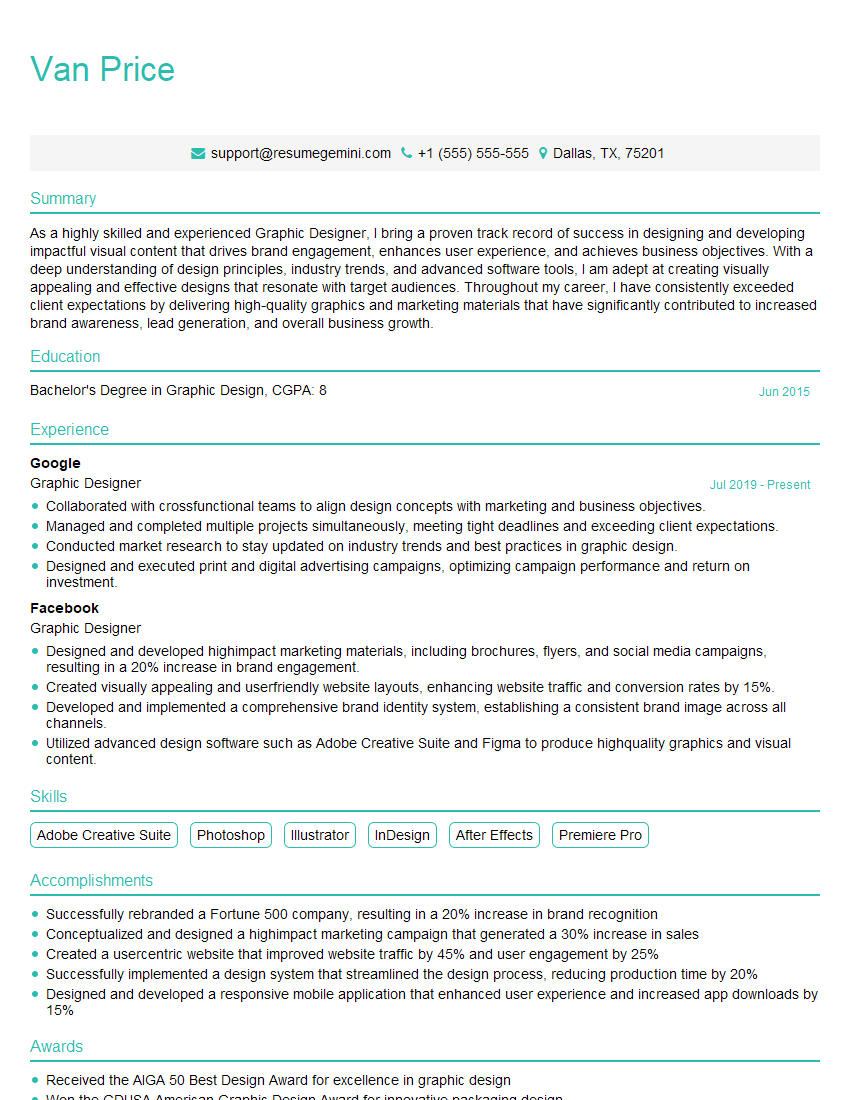
Graphic Designer Resume Sample
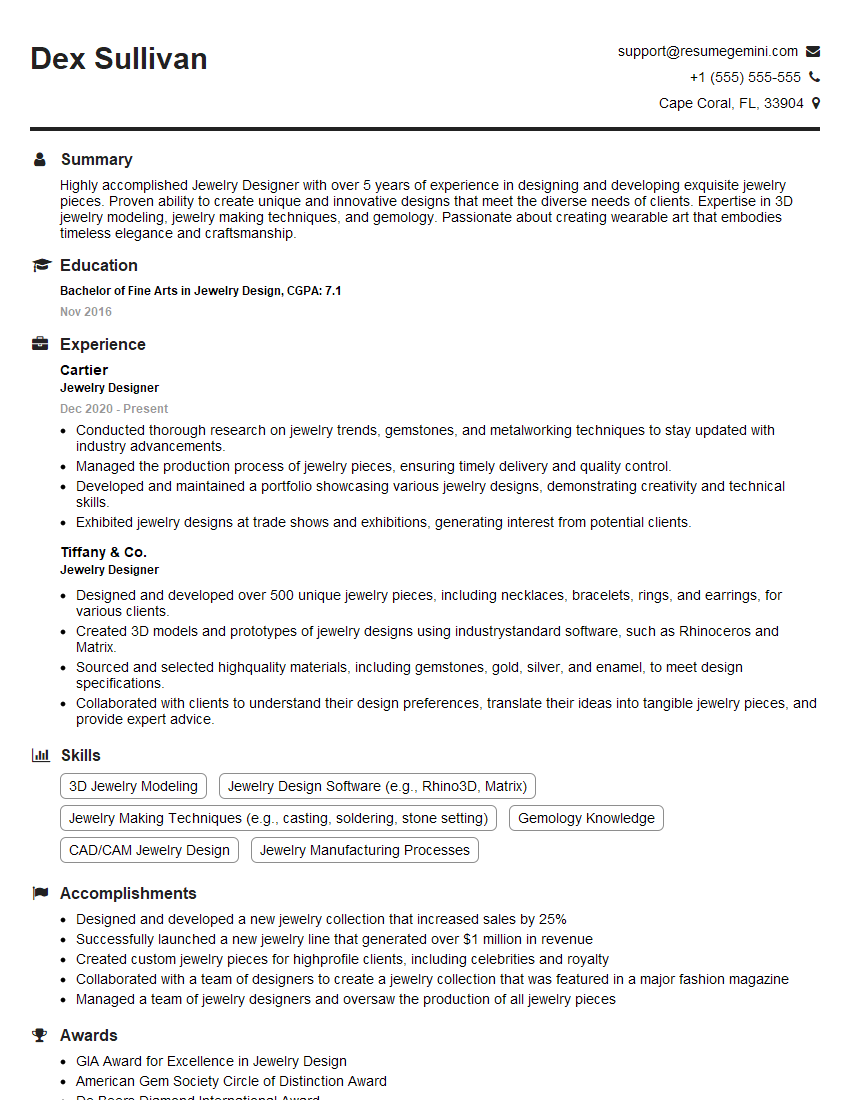
Jewelry Designer Resume Sample
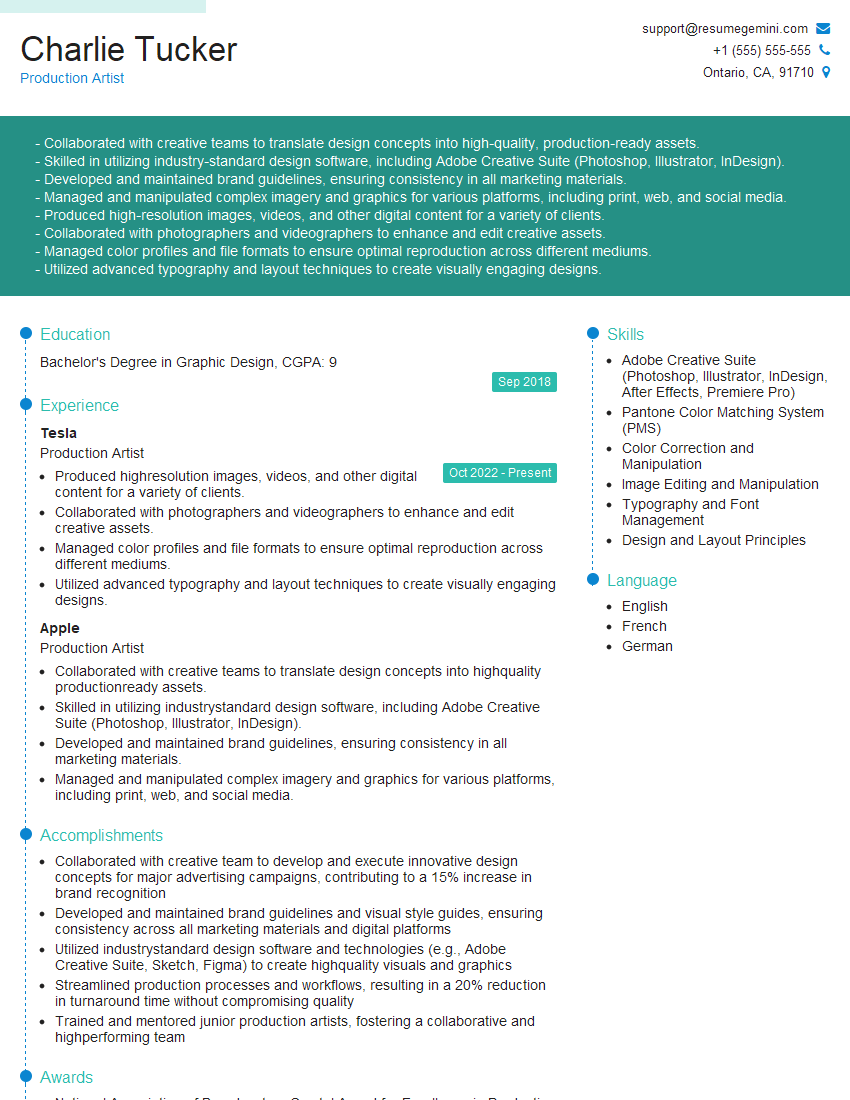
Production Artist Resume Sample
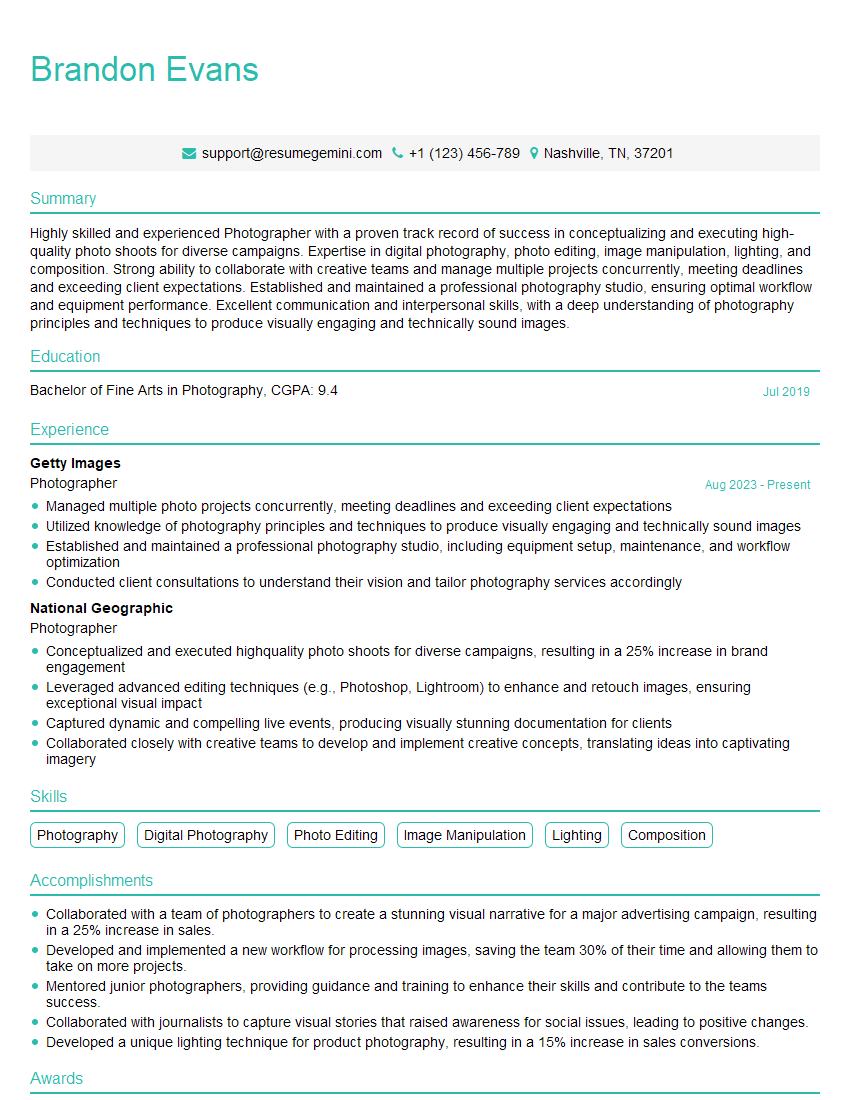
Photographer Resume Sample
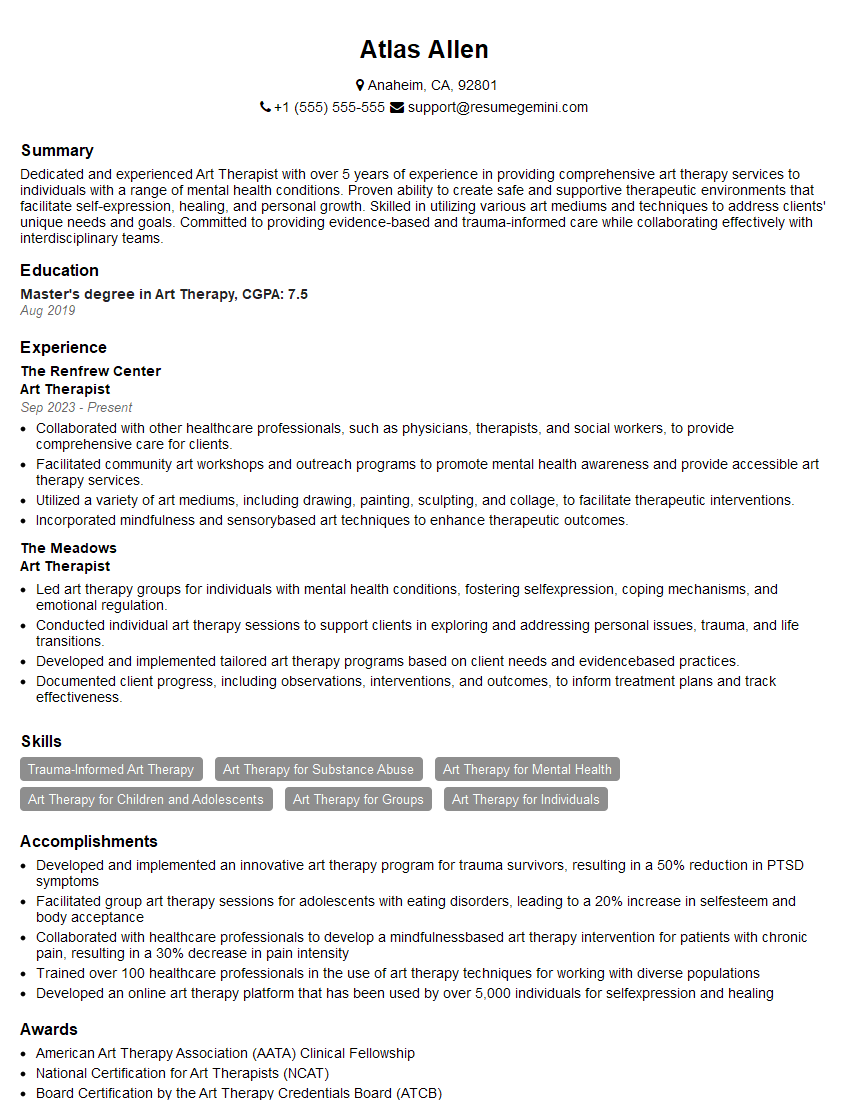
Art Therapist Resume Sample
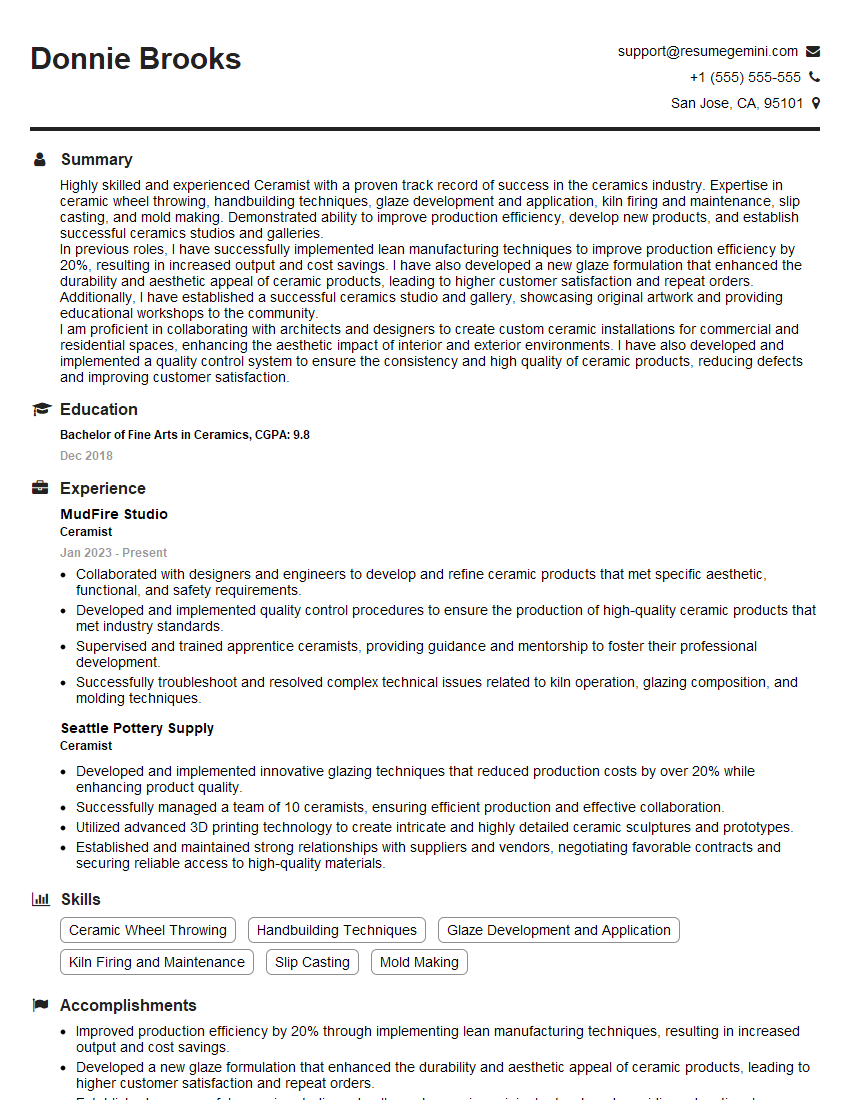
Ceramist Resume Sample
Explore more articles
Users Rating of Our Blogs
Share Your Experience
We value your feedback! Please rate our content and share your thoughts (optional).
What Readers Say About Our Blog
Very informative content, great job.
good