Feeling uncertain about what to expect in your upcoming interview? We’ve got you covered! This blog highlights the most important Proficient in Various Sewing Machine Types interview questions and provides actionable advice to help you stand out as the ideal candidate. Let’s pave the way for your success.
Questions Asked in Proficient in Various Sewing Machine Types Interview
Q 1. Describe your experience with different types of sewing machines (e.g., industrial, domestic, serger, embroidery).
My experience spans a wide range of sewing machines, from basic domestic models to heavy-duty industrial machines and specialized equipment like sergers and embroidery machines. With domestic machines, I’m proficient in both mechanical and computerized models, understanding their unique functionalities and limitations. For instance, I’ve extensively used Singer and Brother domestic machines for various projects, appreciating the ease of use of computerized models while recognizing the robustness and reliability of mechanical ones. My industrial machine experience includes working with high-speed straight-stitch machines commonly found in garment manufacturing, where precision and speed are paramount. I’ve also worked with industrial sergers, mastering the art of creating professional-grade seams and overlock finishes. Finally, my embroidery machine experience extends to multi-needle machines, capable of intricate designs and high-volume production. This diverse experience gives me a comprehensive understanding of the capabilities and maintenance needs of each type.
Q 2. How do you troubleshoot common sewing machine malfunctions?
Troubleshooting sewing machine malfunctions requires a systematic approach. I always begin by identifying the specific problem. Is the machine making unusual noises? Is the needle breaking frequently? Are stitches skipping or inconsistent? Once the problem is identified, I use a process of elimination. For example, if the stitches are skipping, I’d first check the tension, ensuring the upper and lower tensions are balanced. Then I’d inspect the needle for bends or damage, replace it if necessary, and check the thread for knots or tangles. I then carefully examine the bobbin case and bobbin for any issues. If the problem persists, I might investigate the feed dogs to ensure they are properly engaging with the fabric. I’m familiar with cleaning and lubricating the machine, often the solution for many minor issues. More complex problems might require a deeper dive into the machine’s internal workings, and in those cases, I consult manuals and utilize my experience to pinpoint the cause. I always prioritize safety and never attempt repairs beyond my skillset.
Q 3. Explain the process of threading a lockstitch machine.
Threading a lockstitch machine, the most common type of sewing machine, is a straightforward process but crucial for proper stitching. First, raise the presser foot and the needle to its highest position. Then, the top thread is guided through the tension discs (these control stitch tension), usually found at the top of the machine. Next, the thread follows a path indicated by arrows or numbers on the machine’s body, passing through the thread guide, then around the take-up lever (a small rotating lever that feeds the thread consistently), and finally through the needle clamp and into the needle’s eye from front to back. Now, carefully wind the bobbin and place it in its case. After ensuring the bobbin case is correctly inserted into the shuttle race (located under the needle plate), you gently pull up the bobbin thread from the bobbin case by gently turning the handwheel until both the top and bobbin threads meet underneath the fabric. Pull the threads back a few inches, and you are ready to sew. Different machine models may have slightly different threading paths, so it’s crucial to refer to the specific manual if unclear.
Q 4. What are the different types of needles used in sewing and when would you use each one?
Sewing needles come in various types, each designed for specific fabrics and stitch types.
- Universal needles: These are the most common and suitable for a wide range of fabrics, making them a versatile choice for general sewing.
- Ballpoint needles: Designed for knit fabrics, these needles have a rounded tip to prevent snagging or damaging the fabric’s delicate structure.
- Sharp needles: These needles feature a sharp point ideal for woven fabrics like cotton, linen, and silk. They penetrate the fabric cleanly without causing damage.
- Jeans needles: Stronger and heavier than universal needles, these are suited for heavy-duty fabrics like denim and canvas. They’re designed to withstand the stress of sewing thick materials.
- Embroidery needles: With a long eye, these needles smoothly handle embroidery threads, preventing thread breakage and creating neat stitches.
Q 5. What are the different types of stitches and their applications?
Numerous stitch types exist, each with unique applications.
- Straight stitch: The fundamental stitch, perfect for seams, topstitching, and seams requiring strength.
- Zigzag stitch: Used for overcasting seam edges to prevent fraying, decorative stitching, and appliqué.
- Satin stitch: Creates densely filled areas for decorative effects or to cover raw edges.
- Blind hem stitch: Used to create almost invisible hems on garments.
- Buttonhole stitch: Creates buttonholes, often employing automatic or semi-automatic settings found on many modern machines.
Q 6. How do you adjust stitch length and width?
Adjusting stitch length and width varies depending on the machine’s type but generally involves dials or digital controls. Stitch length is measured in stitches per inch (spi). A shorter stitch length (e.g., 10-12 spi) is ideal for seams needing strength and durability, such as those found in garments. A longer stitch length (e.g., 4-6 spi) can be used for basting or gathering. Stitch width, usually represented in millimeters, controls the width of the zigzag stitch or other decorative stitches. Narrower widths are better for delicate stitches, while wider widths create bolder patterns. Most machines have clearly marked dials or screens that allow for quick and precise adjustments, ensuring the desired stitch properties are achieved. Consulting the machine’s manual for specific instructions is always recommended.
Q 7. How do you maintain and clean different types of sewing machines?
Maintaining and cleaning sewing machines ensures their longevity and optimal performance. Regular cleaning is vital, involving removing lint, dust, and thread scraps from the bobbin case, shuttle, and feed dogs using a small brush or compressed air. Lubrication is equally important, applying a high-quality sewing machine oil to the moving parts as per the manufacturer’s instructions. This prevents friction and extends the machine’s lifespan. For sergers, the knife and tension discs require regular cleaning. Industrial machines often necessitate more frequent cleaning and lubrication due to their high-speed operation. Always unplug the machine before cleaning or maintenance. Following the manufacturer’s maintenance instructions ensures optimal performance and prevents costly repairs. Preventive maintenance, even for seemingly minor tasks, is significantly more cost-effective in the long run than reactive repair.
Q 8. Describe your experience with different types of fabrics and their sewing requirements.
My experience with various fabrics is extensive, encompassing everything from delicate silks and chiffons to heavy-duty denim and leather. Understanding fabric characteristics is paramount to successful sewing. For example, lightweight fabrics like silk require a very fine needle and a slow sewing speed to prevent breakage. Conversely, heavier fabrics like denim need a heavier needle and potentially a stronger stitch to withstand stress. Here’s a breakdown:
- Lightweight fabrics (silk, chiffon, voile): These require fine needles (size 70/10 or smaller), delicate stitches, and potentially a walking foot to prevent slippage. A light touch on the foot pedal is essential.
- Medium-weight fabrics (cotton, linen, poplin): These are more versatile and work with a wider range of needles (size 80/12 – 90/14) and stitches. Standard presser feet are usually sufficient.
- Heavyweight fabrics (denim, canvas, upholstery fabrics): These need heavier needles (size 100/16 or larger), stronger stitches, and potentially a denim needle to prevent breakage. A walking foot may be necessary for even feed.
- Specialty fabrics (leather, suede, vinyl): These require specialized needles (leather needles, ballpoint needles) to prevent piercing the fibers and damaging the material. Slow speeds are crucial. A Teflon presser foot helps prevent sticking.
I always pre-test my stitch settings on a scrap of the fabric before starting the project to ensure optimal results.
Q 9. How do you handle difficult fabrics such as leather or silk?
Sewing leather and silk presents unique challenges, but with the right techniques and tools, beautiful results can be achieved. Leather, being a dense material, can easily damage standard needles. I use specialized leather needles with a rounded tip to prevent piercing and breaking. Slow and steady speeds are essential. To prevent sticking, I use a Teflon presser foot that glides smoothly over the surface. Often, a walking foot is also beneficial for better feed.
Silk, on the other hand, is delicate and prone to slippage and snagging. I use a fine needle (size 70/10 or smaller), a slow sewing speed, and a walking foot to ensure consistent feeding of the fabric. A light touch on the foot pedal is important to avoid stretching the silk. Using silk pins or clips instead of metal pins helps to prevent holes in the fabric.
Using the correct needle, presser foot, and stitch type is crucial to avoid problems. I always pre-test stitch settings on scraps before beginning.
Q 10. Explain the importance of proper tension adjustments in sewing.
Proper tension adjustment is the foundation of beautiful, even stitching. The tension dictates how tightly the upper and lower threads interlock. If the tension is off, the stitches will appear uneven, puckered, or broken. Imagine it like a tug-of-war; the upper and lower threads should be in balance. Too much upper tension will pull the fabric to the top, creating puckering. Too much lower tension will cause the thread to loop on the bottom. I adjust the tension based on the fabric type and thread weight. Thicker fabrics and heavier threads require a slightly looser tension, while finer fabrics and threads need tighter tension.
Most sewing machines have tension dials for both the upper and lower thread. I always adjust the upper tension first, making small adjustments until I achieve a balanced stitch. I often pre-test on scraps before beginning a project.
Q 11. How do you identify and correct skipped stitches?
Skipped stitches are frustrating, but usually easily resolved. The most common causes are a dull or incorrectly sized needle, improper threading, incorrect tension, or lint buildup. My troubleshooting steps are:
- Check the needle: Is it bent, dull, or the wrong size for the fabric? Replace it if necessary.
- Check the threading: Ensure the thread is correctly threaded through the machine, including the tension discs and needle. A single missed step can cause skipped stitches.
- Check the tension: Adjust the upper and lower tension as needed. Start with the upper tension dial.
- Clean the machine: Lint and dust can accumulate and interfere with proper needle movement. I use a brush and compressed air to remove any buildup.
- Check the feed dogs: Ensure the feed dogs are clean and moving freely.
By systematically checking each potential cause, I can quickly identify and fix the problem. Remember to test on scrap fabric after each adjustment.
Q 12. What are your experience with different sewing machine presser feet?
I have extensive experience with a variety of presser feet, each designed for specific tasks. The standard presser foot is versatile, but specialized feet greatly enhance the quality and efficiency of my work. Here are some examples:
- Zipper foot: This allows for precise stitching close to the zipper teeth.
- Buttonhole foot: Creates consistent and professional-looking buttonholes.
- Walking foot: Prevents slippage on difficult fabrics like leather and heavy knits by feeding the layers evenly.
- Blind hem foot: Creates nearly invisible hems.
- Rolled hem foot: Creates a delicate, rolled edge on lightweight fabrics.
- Teflon foot: Glides easily over slippery surfaces such as leather, vinyl, and coated fabrics.
Selecting the appropriate presser foot is critical for producing high-quality work. For example, a standard presser foot may not create even seams on thick layers, while a walking foot will.
Q 13. Describe your experience with industrial sewing machines (e.g., single needle, double needle, chainstitch).
My experience with industrial sewing machines encompasses single-needle, double-needle, and chainstitch machines. These machines are built for durability and high-speed production. The differences are significant:
- Single-needle machines: Ideal for straight stitching, and commonly used for garment construction. They offer precise control and are versatile.
- Double-needle machines: Create two parallel rows of stitching simultaneously, often used for hems and decorative stitching. They increase productivity.
- Chainstitch machines: Create a chain-like stitch, commonly used for overlocking or finishing seams. They are excellent for creating a professional edge.
Industrial machines require different maintenance and operational procedures than domestic machines. For instance, they often require regular lubrication and specialized needles. Safety is also a priority; proper training is essential to avoid injury.
Q 14. How do you set up and operate a serger?
Setting up and operating a serger (also known as an overlock machine) involves threading the multiple threads through various loops and tension discs. The process is detailed but manageable with practice. First, I thread the needles with the appropriate thread type, usually using a serger thread designed for its elasticity. Then, I thread the looper threads, paying close attention to the manufacturer’s instructions. Next, I adjust the tension dials for each thread to achieve the desired stitch. Tension is critical for even stitch formation. Too much tension can cause puckering; too little can lead to loose stitches.
Once threaded and tension is adjusted, I carefully place the fabric under the presser foot. The cutting blades trim the fabric edges simultaneously as the stitching occurs, creating a neat, finished edge. Many sergers offer differential feed adjustments. This allows for finer control over the fabric’s feed, preventing stretching or puckering on stretchy fabrics. Practicing on scrap fabric is essential to master the nuances of serger operation.
Q 15. How do you troubleshoot a serger malfunction?
Troubleshooting a serger malfunction requires a systematic approach. Think of it like detective work – you need to identify clues to pinpoint the problem.
Check the basics first: Is the serger plugged in? Is the power switch on? Are the threads properly threaded and correctly tensioned? A simple oversight is often the culprit. I always start with the most obvious checks.
Examine the threads: Are the threads the correct type and weight for the fabric? Are they tangled, broken, or too thick or thin? Incorrect thread can cause looping, skipped stitches, or broken threads. For example, using too lightweight a thread on heavy denim will result in skipped stitches.
Inspect the needles: Are the needles the correct size and type for the fabric? Are they bent, damaged, or dull? A bent or dull needle will cause problems like skipped stitches, broken threads, or damage to the fabric. Remember to always change needles regularly, and inspect them before starting every project.
Adjust the tension: Is the differential feed properly adjusted? Incorrect tension settings are a frequent cause of problems like puckering, wavy seams, or uneven stitch length. Experimenting with tension adjustments is often necessary to find the sweet spot for different fabrics.
Clean the machine: Lint and debris can build up inside the machine, hindering proper functioning. A thorough cleaning, including removing lint from the cutting knife and the feed dogs, is usually required if the problem persists.
Check the presser foot: Is the presser foot properly aligned? Is it at the correct height? An improperly set presser foot can lead to uneven stitching. Always ensure the presser foot is secure and correctly adjusted for your fabric type.
Consult the manual: If you’ve tried all these steps and the serger still isn’t working correctly, refer to the owner’s manual for troubleshooting advice specific to your machine model. This can save a lot of time and potential damage.
By following this step-by-step process, I’ve effectively resolved countless serger issues across various brands and models. It’s a combination of systematic checking and understanding the machine’s mechanics.
Career Expert Tips:
- Ace those interviews! Prepare effectively by reviewing the Top 50 Most Common Interview Questions on ResumeGemini.
- Navigate your job search with confidence! Explore a wide range of Career Tips on ResumeGemini. Learn about common challenges and recommendations to overcome them.
- Craft the perfect resume! Master the Art of Resume Writing with ResumeGemini’s guide. Showcase your unique qualifications and achievements effectively.
- Don’t miss out on holiday savings! Build your dream resume with ResumeGemini’s ATS optimized templates.
Q 16. What is your experience with computerized sewing machines?
I have extensive experience with computerized sewing machines, having used them for both personal and professional projects. This includes models from major brands such as Brother, Singer, and Janome. I’m comfortable programming stitches, using various decorative features, and adjusting settings to accommodate different fabrics and stitch types.
One specific example is a project where I used a computerized sewing machine to create custom embroidery designs on apparel. The machine’s ability to precisely control stitch length, width, and density was crucial for achieving a high-quality finish. I was able to efficiently produce complex designs that would have been far more difficult, if not impossible, to achieve with a mechanical machine. The computerized features, such as automatic needle threading and stitch selection, significantly improved my speed and workflow.
My expertise extends beyond basic operation. I am adept at troubleshooting computerized sewing machines and familiar with common issues such as sensor malfunctions and software errors. I understand the importance of regular maintenance, including cleaning and lubrication, to ensure the machine’s longevity and optimal performance. Ultimately, computerized machines offer a level of precision and efficiency that greatly enhances my sewing capabilities.
Q 17. How do you interpret sewing patterns and specifications?
Interpreting sewing patterns and specifications is fundamental to successful sewing. It’s akin to reading a detailed recipe – each instruction and measurement is critical. I approach pattern interpretation systematically:
Review the pattern instructions: I carefully read through the instructions before even cutting the fabric. This step prevents mistakes and ensures I understand the sequence of steps, techniques, and seam allowances.
Identify the pattern pieces: I ensure I have all the necessary pattern pieces and correctly identify each one. This usually involves checking the pattern markings and comparing them to the instruction sheet.
Check the size chart: I measure myself to choose the correct size and note any necessary adjustments. Body shape and measurements vary considerably and these adjustments avoid the frustration of creating ill-fitting garments.
Understand the symbols: Familiarity with standard sewing symbols is essential. I use a reference guide if needed to fully understand the markings on the pattern pieces. These symbols save a lot of guesswork. For instance, understanding the symbol for ‘stitch in the ditch’ would result in cleaner and more professional results.
Prepare the fabric: I always pre-wash and iron the fabric to avoid shrinkage and wrinkles. This step ensures a smoother sewing process.
Cut and sew accurately: I use a rotary cutter and mat for accurate cutting, and I carefully follow the seam allowances specified. Inaccurate cutting can lead to an ill-fitting garment.
Through experience and attention to detail, I’ve refined my ability to efficiently interpret even the most complex patterns. A keen understanding of pattern symbols and measurements are essential for creating well-fitting garments. It’s not just about following instructions, but about understanding the *why* behind each step. That understanding leads to flexibility when adjusting patterns to better fit individual needs.
Q 18. Explain the importance of safety precautions when using sewing machines.
Safety is paramount when using sewing machines. I always prioritize safety through consistent practice and adherence to guidelines. Think of it as ‘sewing safely’ is just as important as ‘sewing well’.
Keep the area clean and organized: A clutter-free workspace minimizes tripping hazards and ensures easy access to tools.
Use appropriate safety equipment: I always use a thimble to protect my fingers from needle pricks. I also wear safety glasses to protect my eyes from flying debris.
Keep fingers away from moving parts: This is crucial to avoid injury. I maintain awareness of the machine’s operation at all times.
Unplug the machine before cleaning or maintenance: This simple step prevents electrical shocks. Safety should always be the priority before any maintenance.
Keep the machine well-maintained: Regular oiling and cleaning prevent malfunctions that could cause injuries. A well-maintained machine minimizes operational issues which would minimize safety risks.
Never leave a running machine unattended: This reduces the risk of accidents.
Beyond these guidelines, I always emphasize a mindful and careful approach to sewing. It’s about developing good habits and being acutely aware of potential hazards. I’ve seen firsthand the importance of this—a moment of inattention can lead to serious injury. Safety precautions aren’t an afterthought; they’re an integral part of my sewing practice.
Q 19. What are your experience with different types of bobbins?
My experience with different types of bobbins is extensive, encompassing various materials, sizes, and designs. Bobbins are like the unsung heroes of sewing – inconspicuous yet critical.
Class 15 bobbins: These are the standard bobbins used in many household sewing machines. They’re usually made of plastic and are quite reliable. I’ve used these frequently in various projects.
Class 66 bobbins: These bobbins are smaller and are often found in industrial machines or high-end domestic machines. I find them ideal for fine fabrics where a smaller bobbin means less bulk. They ensure consistent stitch formation even with delicate materials.
Metal bobbins: Though less common in modern machines, metal bobbins are durable and capable of holding more thread. I’ve used them in older vintage machines where they often provide superior performance.
Different Materials: I’ve worked with bobbins made of plastic, metal, and even some with a special coating designed to reduce friction. The material can impact the thread’s ability to feed smoothly, which is a critical part of the sewing process.
Proper Winding: Beyond the type of bobbin, I’m also skilled in precisely winding bobbins to ensure even thread tension and prevent breakage. Incorrectly wound bobbins can be a major source of sewing problems.
Understanding the nuances of various bobbins allows me to select the most appropriate one for the specific sewing machine and fabric, ensuring optimal performance and reducing the risk of malfunctions. It’s a small detail that significantly impacts sewing success.
Q 20. How do you select the correct needle for a specific fabric and stitch type?
Selecting the correct needle is crucial for achieving high-quality stitches and preventing damage to the fabric. It’s about finding the right tool for the job. I consider three main factors:
Fabric type: Different fabrics require different needle types and sizes. For example, a fine silk would require a sharp, thin needle (e.g., size 60/8), while heavy denim might require a stronger needle with a larger point (e.g., size 90/14) to prevent breakage. A needle too thin for heavy fabric would easily bend or break, while a needle too thick would leave unsightly holes in delicate fabrics.
Stitch type: The stitch type influences needle choice. For example, delicate decorative stitches might need a finer needle to prevent distorted stitches, while heavier duty stitches might require a more robust needle to handle the tension.
Needle type: There are various needle types designed for different tasks. For instance, ballpoint needles are ideal for knit fabrics, preventing snags and runs. Universal needles are often suitable for a wide range of fabrics, while microtex needles are useful for fine fabrics like silk or chiffon.
My experience allows me to quickly assess the fabric and stitch type and select the most appropriate needle size and type. Using the wrong needle can lead to skipped stitches, broken needles, fabric damage, and a frustrating sewing experience. It’s a seemingly small detail, but it’s fundamental to achieving consistent and professional results.
Q 21. What is your experience with sewing machine maintenance and repair?
Sewing machine maintenance and repair are crucial aspects of extending the life and reliability of the machines. I view this as preventive medicine for my tools.
Regular cleaning: This involves removing lint, dust, and thread scraps from various parts of the machine, including the bobbin case, hook assembly, and feed dogs. A clean machine runs smoothly and reduces wear and tear.
Lubrication: Regular oiling of moving parts helps to reduce friction and prevent wear. I use the appropriate sewing machine oil and follow the manufacturer’s instructions carefully.
Needle and bobbin replacement: Replacing worn needles and bobbins prevents damage to the fabric and ensures consistent stitch quality. Regularly checking for bent or dull needles avoids significant sewing issues down the line.
Tension adjustments: Sometimes, the machine requires fine-tuning of tension settings. I am skilled at adjusting tensions for different threads and fabrics.
Minor repairs: I have experience in addressing minor mechanical issues, like replacing broken belts or adjusting presser foot pressure. However, for more complex repairs, I always recommend taking the machine to a qualified technician.
Proactive maintenance saves time and money in the long run by preventing major problems and extends the useful life of the sewing machine. I approach maintenance as an investment in both quality and efficiency. A well-maintained machine runs smoothly, increases productivity and prevents costly breakdowns in the future.
Q 22. How familiar are you with different types of sewing machine feet and their functions?
Sewing machine feet are specialized attachments that dramatically expand a machine’s capabilities. Think of them as interchangeable tools that allow you to perform various sewing tasks with precision. Different feet are designed for different fabrics and stitches.
- General-Purpose Foot: This is your workhorse, ideal for most straight stitching, zig-zag stitching, and basic sewing projects. It’s the foot that comes standard with most machines.
- Zipper Foot: This narrow foot allows for precise stitching close to the zipper teeth, creating a clean and professional finish.
- Buttonhole Foot: Essential for creating consistent and well-formed buttonholes. Different types exist for different buttonhole styles.
- Blind Hem Foot: Creates almost invisible hems, ideal for delicate fabrics and professional finishes on trousers or skirts.
- Walking Foot: This foot is a lifesaver for sewing multiple layers of thick fabric (like quilting) or slippery fabrics (like silk) evenly. It has feed dogs on top to help move the fabric consistently.
- Overcasting Foot: Used for creating decorative or functional overlock stitches to prevent fraying.
- Rolled Hem Foot: Creates a delicate, professional rolled hem, often used on sheer fabrics.
Understanding the function of each foot allows you to select the right tool for the job, ensuring a high-quality, efficient sewing process. For instance, attempting to sew a zipper with a general-purpose foot would likely result in an uneven or inaccurate stitch.
Q 23. Describe your experience with speed and efficiency in a sewing production setting.
In a production setting, speed and efficiency are paramount but never at the cost of quality. My experience includes consistently exceeding production targets while maintaining high-quality standards. I’ve worked on high-volume projects, learning to optimize my workflow and machine settings to maximize output. This includes mastering techniques like efficient thread management, pre-cutting fabric to precise measurements, and utilizing specialized sewing machine features for faster stitch speeds appropriate to the fabric type. I’ve consistently improved my speed through practice and process optimization, finding the optimal balance between speed and precision for different tasks. For example, I learned to quickly identify and address minor machine adjustments that significantly improved my production rate without sacrificing quality.
Q 24. How do you handle large production runs to maintain quality and productivity?
Managing large production runs requires a structured approach. My strategy involves careful planning, efficient workflow, and consistent quality checks. This includes:
- Detailed Planning: This begins with a thorough understanding of the project specifications, including fabric requirements, stitch types, and quantity. It includes breaking down the project into smaller, manageable tasks.
- Efficient Workflow: Utilizing pre-cut fabric, employing efficient assembly-line methods if applicable, and ensuring all necessary tools and materials are readily available.
- Regular Quality Checks: Implementing checkpoints throughout the production process to catch any defects early. This prevents larger problems and reduces waste.
- Teamwork and Communication: In larger settings, effective team communication and clear task delegation are crucial for maintaining consistency and efficiency.
For example, on a recent large order of 1000 identical tote bags, I pre-cut all the fabric components, assigned specific team members to individual assembly steps, and implemented a quality check after each step. This system allowed us to complete the project ahead of schedule without compromising quality.
Q 25. Explain your process for quality control in sewing.
My quality control process is multifaceted and begins even before sewing. It’s a continuous cycle of checks and balances:
- Pre-Sewing Inspection: Checking the fabric for defects, ensuring accurate measurements of cut pieces, and verifying that all necessary supplies are present and in good condition.
- In-Process Checks: Regularly inspecting work in progress for stitch quality, accuracy, and fabric alignment.
- Final Inspection: A thorough examination of each finished product to check for inconsistencies, defects, and overall quality. This often includes checking for loose threads, incorrect stitching, and fabric damage.
- Documentation: Maintaining detailed records of all inspections, including any defects found and corrective actions taken.
Imagine baking a cake. You’d check your ingredients, monitor the baking process, and then do a final taste test before serving. Quality control in sewing is very similar – a series of checks to ensure a consistently high-quality end product.
Q 26. How do you handle production challenges or unexpected problems?
Unexpected problems are inevitable in any production setting. My approach involves a calm, systematic response:
- Identify the Problem: Accurately diagnose the issue by examining the affected item, checking machine settings, and reviewing the process.
- Analyze the Cause: Determine the root cause of the problem, whether it’s a machine malfunction, a material defect, or a process error.
- Develop a Solution: Based on the root cause, implement an appropriate solution – this may involve repairing or replacing faulty equipment, adjusting machine settings, using a different technique, or even redesigning the process.
- Implement and Monitor: Put the solution into action, monitoring the results closely to ensure the problem is resolved and doesn’t recur.
- Documentation: Record the problem, the solution implemented, and the outcome to facilitate improvements in future projects.
For example, I once encountered a consistent problem with fabric puckering during a large quilting project. After investigating, I discovered the tension settings were slightly off. Adjusting the tension solved the issue and prevented further defects.
Q 27. How do you stay updated on the latest techniques and technologies in sewing?
Staying current in the sewing industry is crucial. I achieve this through several methods:
- Industry Publications and Websites: Regularly reading trade magazines, blogs, and online forums focusing on sewing technology and techniques.
- Workshops and Seminars: Attending industry workshops and seminars to learn about new equipment, software, and techniques.
- Online Courses and Tutorials: Taking online courses to expand my skills and stay up-to-date on the latest software and advanced sewing techniques.
- Networking with Professionals: Connecting with other sewing professionals through industry events and online communities to share knowledge and best practices.
The sewing industry constantly evolves, with new technologies, fabrics, and techniques emerging regularly. Continuous learning ensures I remain competitive and provide the best possible service.
Q 28. Describe a time you had to solve a complex sewing problem. What was the solution?
In a past project, I was tasked with creating a complex garment with intricate seams and multiple layers of delicate fabric. The challenge was achieving a smooth, even finish on the seams without puckering or distorting the fabric. My initial attempts resulted in uneven seams and slight puckering, despite using the correct stitch settings.
To solve this, I experimented with different needle types, thread weights, and pressing techniques. I also researched various seam finishing methods, ultimately finding that using a slightly narrower zigzag stitch in combination with a specific type of seam finish (French seams) provided the perfect solution. This method reduced bulk, prevented puckering, and resulted in a professional-looking, high-quality garment. The experience taught me the importance of experimentation, thorough research, and adaptability when confronting complex sewing challenges.
Key Topics to Learn for Proficient in Various Sewing Machine Types Interview
- Industrial vs. Domestic Machines: Understanding the key differences in functionality, capabilities, and maintenance between industrial and domestic sewing machines (e.g., single needle vs. multi-needle, speed, stitch types).
- Types of Sewing Machine Stitches: Demonstrating knowledge of various stitch types (e.g., straight stitch, zigzag stitch, blind stitch, overlock stitch) and their appropriate applications in different fabrics and projects.
- Sewing Machine Maintenance and Troubleshooting: Explaining routine maintenance procedures (e.g., cleaning, lubrication, needle changes) and common troubleshooting techniques for issues like skipped stitches, broken needles, or thread jams.
- Fabric Selection and Needle Choice: Describing the relationship between fabric type (e.g., knit, woven, leather) and appropriate needle selection to achieve optimal stitching quality and prevent damage to the machine or fabric.
- Specialized Sewing Machine Attachments and Functions: Explaining the use and purpose of various attachments (e.g., buttonhole foot, zipper foot, walking foot) and advanced machine functions (e.g., automatic needle threading, programmable stitch settings).
- Safety Procedures and Best Practices: Highlighting essential safety precautions when operating various sewing machine types, emphasizing proper handling of needles, fabric, and the machine itself.
- Understanding Different Sewing Machine Mechanisms: Demonstrating a grasp of the inner workings of different machine types, including feed dogs, tension systems, and bobbin mechanisms.
- Practical Application: Be prepared to discuss examples of projects where you’ve utilized different sewing machine types to achieve specific results. This includes describing problem-solving approaches you’ve used.
Next Steps
Mastering proficiency in various sewing machine types significantly enhances your career prospects in the fashion, textile, or manufacturing industries. It demonstrates versatility, problem-solving skills, and a deep understanding of the craft. To maximize your job search success, focus on creating an ATS-friendly resume that highlights your skills effectively. ResumeGemini is a trusted resource that can help you build a professional and impactful resume. Examples of resumes tailored to showcasing proficiency in various sewing machine types are available to guide you. Invest time in crafting a strong resume—it’s your first impression on potential employers.

Draper Resume Sample
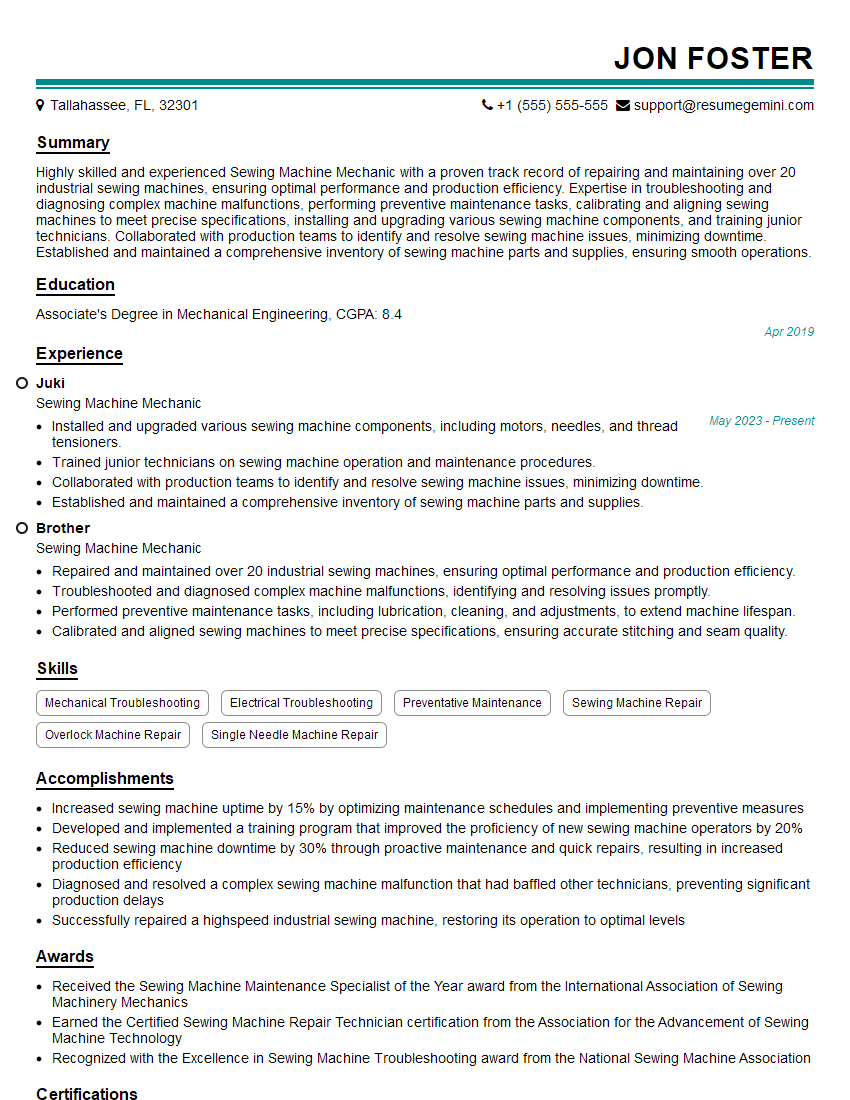
Sewing Machine Mechanic Resume Sample

Seamstress Resume Sample
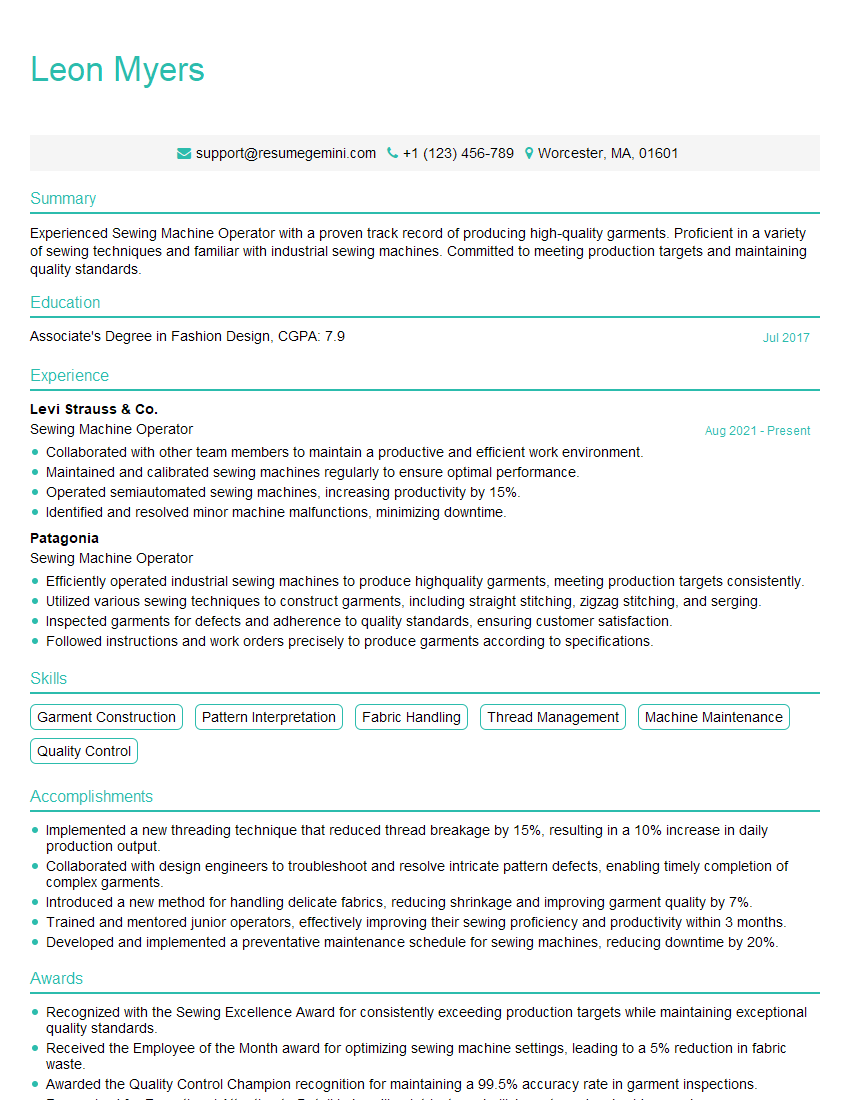
Sewing Machine Operator Resume Sample
Pattern Maker Resume Sample
Sample Maker Resume Sample
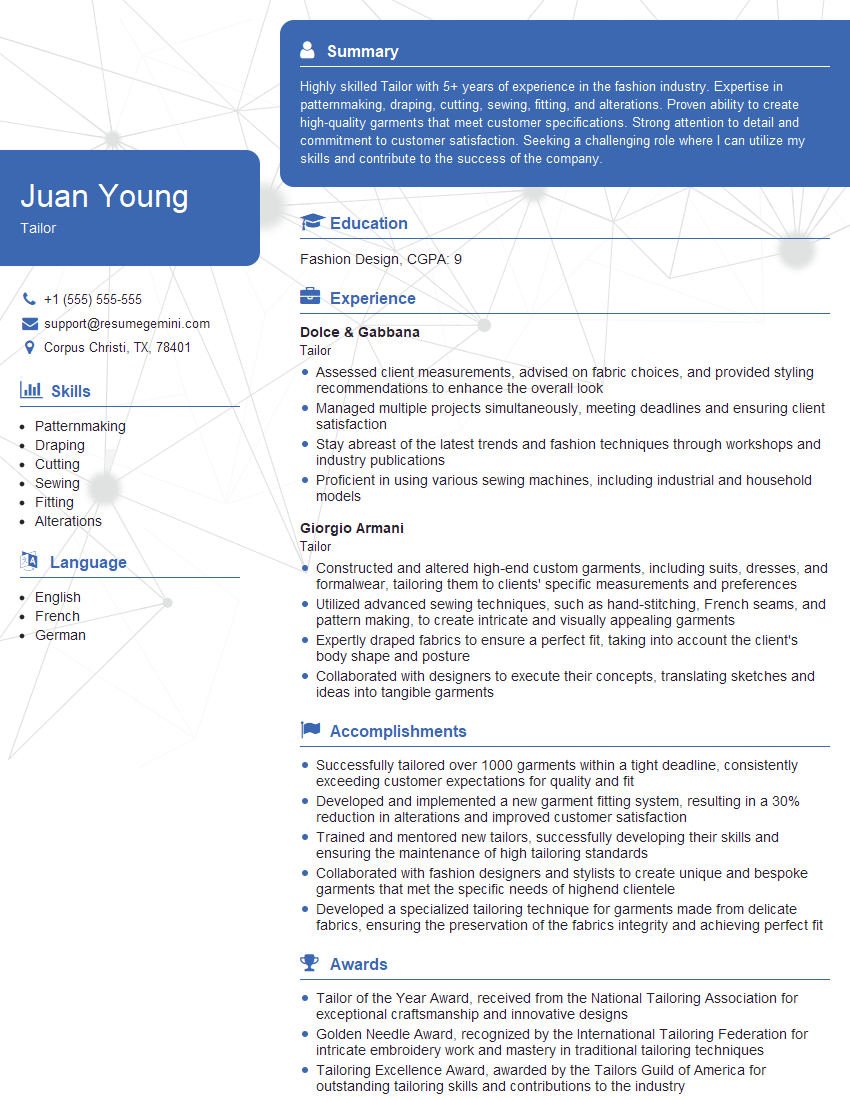
Tailor Resume Sample
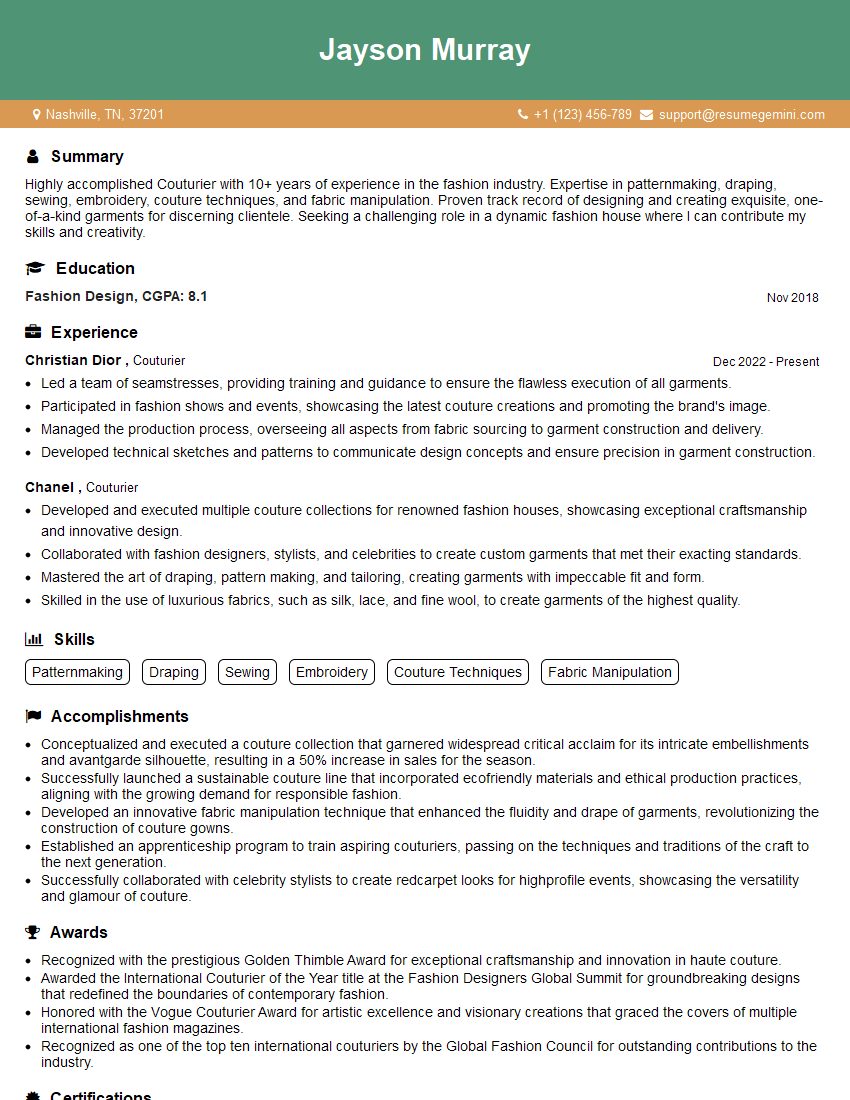
Couturier Resume Sample
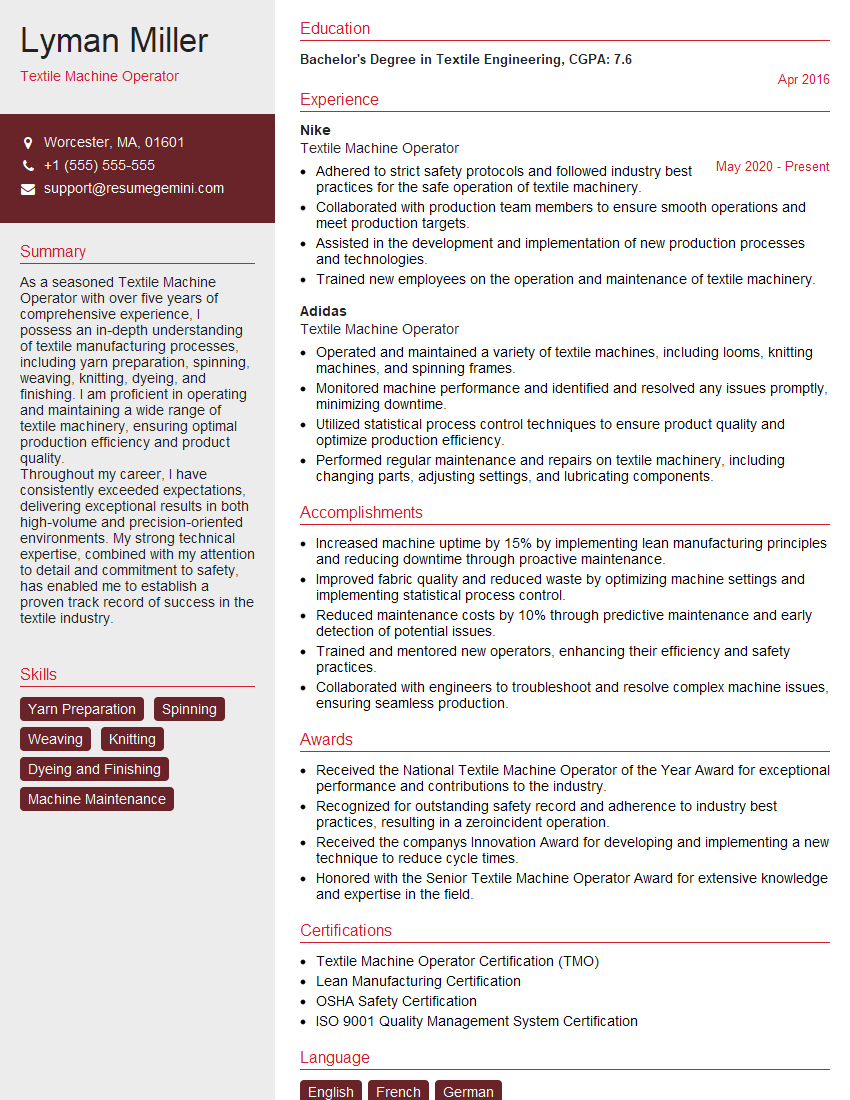
Textile Machine Operator Resume Sample

Upholsterer Resume Sample
Explore more articles
Users Rating of Our Blogs
Share Your Experience
We value your feedback! Please rate our content and share your thoughts (optional).
What Readers Say About Our Blog
Very informative content, great job.
good