Preparation is the key to success in any interview. In this post, we’ll explore crucial ProficientInMSOfficeSuite interview questions and equip you with strategies to craft impactful answers. Whether you’re a beginner or a pro, these tips will elevate your preparation.
Questions Asked in ProficientInMSOfficeSuite Interview
Q 1. Explain your experience with Microsoft Word’s mail merge functionality.
Mail merge in Microsoft Word is a powerful tool that allows you to create personalized documents, such as letters, emails, or labels, from a single template and a data source. Imagine you need to send personalized thank-you notes to 100 clients. Instead of typing each note individually, mail merge lets you create one template with placeholders for personalized information (like client name and address), then link it to a spreadsheet containing the client data. Word automatically populates the template with the correct information for each client.
My experience with mail merge spans various applications, from creating personalized marketing materials to generating customized certificates for training participants. I’m proficient in using different data sources, including Excel spreadsheets and Access databases. I understand how to manage fields, insert merge fields correctly, preview the results, and troubleshoot common issues like data mismatches or formatting errors. For example, I once used mail merge to generate personalized invitations for a large company event, saving significant time and ensuring consistency in messaging across all invitations.
- I understand the process of selecting the recipient list and matching fields.
- I can handle different data formats and troubleshoot common errors.
- I can preview the merged documents before printing or sending.
Q 2. How proficient are you with creating and formatting tables in Microsoft Excel?
Creating and formatting tables in Excel is a fundamental skill I use daily. I’m comfortable creating tables of various sizes and complexities, applying different styles, and using formulas within tables to perform calculations. Think of managing a project budget; Excel tables make it easy to organize expenses, track income, and automatically calculate totals and subtotals.
Beyond basic table creation, I’m experienced in:
- Advanced Formatting: Applying conditional formatting to highlight important data, using different fonts and cell styles for improved readability, and creating visually appealing tables with borders and shading.
- Data Validation: Implementing data validation rules to ensure data accuracy and consistency, preventing errors before they happen. For instance, limiting entries to specific numerical ranges or dropdown lists.
- Table Calculations: Using formulas like
SUM,AVERAGE,COUNTIF, etc., to perform calculations within tables and derive meaningful insights from the data.
I frequently use these skills to create professional-looking reports, dashboards, and presentations from complex datasets.
Q 3. Describe your experience using Excel’s pivot tables for data analysis.
PivotTables in Excel are incredibly powerful for data analysis and summarizing large datasets. They allow you to quickly create interactive summaries and reports from raw data. For example, imagine having sales data for different products across various regions and time periods. A PivotTable lets you instantly see total sales per region, sales by product category, sales trends over time, and more – all with drag-and-drop functionality.
My experience involves building complex PivotTables to analyze sales figures, customer demographics, and operational metrics. I’m familiar with using calculated fields and items, slicers, and filters to refine and customize the analysis. I’ve used PivotTables to identify sales trends, pinpoint underperforming products, and optimize marketing strategies.
Essentially, I’m adept at using PivotTables to turn raw data into actionable insights, effectively communicating complex information in a clear and concise manner.
Q 4. How would you use Excel’s VLOOKUP or INDEX/MATCH functions to find specific data?
VLOOKUP and INDEX/MATCH are both used to find specific data within a table, but INDEX/MATCH offers more flexibility and power. VLOOKUP searches for a value in the first column of a table and returns a value in the same row from a specified column. However, it only looks to the right of the search column, limiting its use.
INDEX/MATCH, on the other hand, allows you to search for a value in any column and return a value from any other column, offering significantly more versatility. For example, if I have a list of product IDs and their corresponding prices, and I want to find the price for a specific product ID, I would use INDEX/MATCH to search for the product ID and return the associated price regardless of the column location.
Here’s a basic INDEX/MATCH example:
=INDEX(price_range,MATCH(product_id,product_id_range,0))Where:
price_rangeis the range containing prices.product_idis the product ID you’re searching for.product_id_rangeis the range containing product IDs.0ensures an exact match.
I prefer INDEX/MATCH for its superior flexibility and ability to handle more complex lookup scenarios.
Q 5. Explain your experience with Microsoft PowerPoint’s animation and transition features.
PowerPoint’s animation and transition features are crucial for creating engaging and dynamic presentations. Animations can highlight specific points within a slide, drawing the audience’s attention to key information. Transitions create visual interest between slides, ensuring a smooth and enjoyable viewing experience. Imagine explaining a complex process; well-placed animations can visually break down each step, making it much easier to understand.
My experience includes using various animation and transition effects to enhance presentations for diverse audiences. I’m mindful of using these features judiciously, avoiding overdoing animations that can be distracting. I focus on creating a professional and cohesive presentation flow, ensuring the animations and transitions complement the content, not overshadow it. I prioritize using animations to emphasize key points and transitions to smoothly guide the audience from one topic to the next.
Q 6. How would you create a professional-looking presentation in PowerPoint?
Creating a professional-looking presentation in PowerPoint involves several key elements. First, choosing a consistent and appropriate design template is crucial. It sets the tone and style of the presentation, ensuring visual harmony throughout. I always consider the target audience and the message being conveyed when selecting a template.
Beyond templates, I pay close attention to:
- Visual Consistency: Maintaining consistent fonts, colors, and styles across all slides. Using high-quality images and graphics that are relevant and enhance the message. Avoiding cluttered slides by keeping text concise and using bullet points effectively.
- Data Visualization: Using charts and graphs to illustrate data effectively, making complex information more easily digestible. This often involves choosing the appropriate chart type for the data, such as bar charts, line graphs, or pie charts.
- Storytelling: Structuring the presentation to tell a compelling story, keeping the audience engaged from beginning to end. This involves using strong opening and closing statements, and a clear and logical flow of information.
The end result should be a visually appealing and easy-to-understand presentation that effectively communicates the intended message.
Q 7. Describe your experience using Microsoft Outlook for email management and scheduling.
Microsoft Outlook is an integral part of my daily workflow. I use it extensively for email management, calendar scheduling, and contact organization. For emails, I employ various features like filters and rules to automatically organize incoming messages, ensuring nothing gets lost in the inbox. I also utilize folders and labels to categorize emails based on project, client, or topic. This system allows for efficient retrieval and quick access to crucial information.
Regarding scheduling, I manage my calendar meticulously, using Outlook to schedule appointments, meetings, and deadlines. I set reminders and integrate tasks with my calendar to stay organized and prioritize my workload effectively. I also make frequent use of Outlook’s contact management features, creating and maintaining a comprehensive list of contacts with detailed information, ensuring I can easily reach out to colleagues, clients, and other stakeholders as needed.
Q 8. How familiar are you with using Outlook’s calendar features for scheduling meetings and appointments?
I’m highly proficient in using Outlook’s calendar features. Scheduling meetings and appointments is a daily part of my workflow. I’m comfortable creating recurring meetings, sending out invitations with specific times and locations, managing attendees’ responses (acceptances, declines, tentative), and setting reminders.
For example, when scheduling a recurring team meeting, I utilize the recurring meeting option, setting the frequency (e.g., weekly, bi-weekly), duration, and time zone. I meticulously add all attendees, ensuring their availability aligns with the scheduled time. The reminder feature ensures I’m always notified in advance, and I use color-coding to easily distinguish different types of meetings (e.g., client meetings in blue, internal meetings in green). I also leverage the calendar’s sharing capabilities to allow colleagues to view my availability.
Beyond basic scheduling, I utilize features like resource booking for meeting rooms or equipment and integrate my calendar with other applications for seamless task management.
Q 9. Explain your experience with managing email folders and rules in Outlook.
Managing email folders and rules in Outlook is crucial for maintaining inbox organization and efficiency. Think of it like organizing a filing cabinet – you wouldn’t just throw everything in one drawer! I employ a hierarchical folder system, categorized by project, client, or topic, making retrieval of specific emails quick and easy. I regularly archive old emails to maintain a clean inbox.
Outlook rules are my secret weapon for automating email management. For instance, I have rules that automatically move emails from specific senders to designated folders, flag important emails, or even delete unwanted junk mail. A rule I frequently use filters all emails containing specific keywords (like ‘invoice’ or ‘urgent’) into a dedicated folder, bringing them to my immediate attention. This automation saves a significant amount of time and reduces the chance of missing important communications.
Q 10. How would you use Microsoft Access to create and manage a database?
Creating and managing databases in Microsoft Access involves several key steps. First, I’d define the purpose of the database—what information needs to be stored and how it will be used. Then, I design the database structure, creating tables with relevant fields (columns) and data types (e.g., text, number, date). Each table represents a specific entity, like ‘Customers’ or ‘Products’. Relationships between tables are established using primary and foreign keys to ensure data integrity.
For example, to manage customer information and orders, I might create two tables: ‘Customers’ with fields like CustomerID (primary key), Name, Address, and Phone, and ‘Orders’ with fields like OrderID (primary key), CustomerID (foreign key), OrderDate, and TotalAmount. The CustomerID foreign key in the ‘Orders’ table links each order to a specific customer in the ‘Customers’ table.
After designing the database, I input data, ensuring accuracy and consistency. Data validation rules are implemented to prevent errors during input. Regular backups are crucial to prevent data loss.
Q 11. Describe your experience with querying data in Microsoft Access.
Querying data in Microsoft Access is essential for retrieving specific information from the database. I’m proficient in using query design tools to create various types of queries, including select queries (retrieving data), update queries (modifying data), append queries (adding data), and delete queries (removing data).
I commonly use SQL (Structured Query Language) for more complex queries. For instance, to find all customers who placed orders in the last month, I’d use a query like this:
SELECT * FROM Customers INNER JOIN Orders ON Customers.CustomerID = Orders.CustomerID WHERE Orders.OrderDate >= DateAdd('m', -1, Date());This query uses SQL’s `JOIN` function to combine data from the ‘Customers’ and ‘Orders’ tables and the `WHERE` clause to filter results based on the order date. Access’s query builder provides a user-friendly interface, but understanding SQL allows for more flexibility and control.
Q 12. How familiar are you with creating forms and reports in Microsoft Access?
Creating forms and reports in Microsoft Access significantly enhances user interaction and data presentation. Forms provide a user-friendly interface for data entry and modification, while reports summarize and present data in a clear, concise format.
When designing forms, I strive for intuitive layouts, using appropriate controls (text boxes, combo boxes, check boxes) for different data types. Navigation controls are included to facilitate easy movement between records. I often use form templates to streamline the design process.
Reports are equally important. I utilize report design tools to create various report formats (e.g., tabular, columnar, summary) and customize report appearance with headers, footers, and formatting options. Grouping and sorting data within reports is crucial for meaningful data presentation. For example, I might create a report summarizing sales by region or product category.
Q 13. What are your preferred methods for formatting documents in Microsoft Word?
My preferred methods for formatting documents in Microsoft Word revolve around efficiency and consistency. I utilize styles extensively—defining styles for headings, paragraphs, lists, and other elements ensures consistency throughout the document. This allows for quick formatting changes and easy updates. For example, if I need to change the font size for all headings, I simply modify the heading style, rather than manually changing each heading.
Beyond styles, I utilize features like tables for organizing data, inserting images and graphics for visual appeal, and using headers and footers for consistent document identification. I leverage Word’s built-in tools for spell and grammar checking, ensuring accuracy and professionalism. I also pay attention to white space and visual hierarchy to enhance readability. A well-formatted document makes a significant impression.
Q 14. How do you handle large datasets in Excel?
Handling large datasets in Excel requires efficient strategies to avoid performance issues. Instead of relying solely on Excel’s built-in functions, I often utilize Power Query (Get & Transform Data) for data manipulation and cleaning. Power Query allows for data import from various sources, data transformation (cleaning, filtering, merging), and efficient data management. This is especially crucial when working with millions of rows.
Furthermore, for complex calculations or analysis, I would leverage pivot tables to summarize and analyze large datasets. Pivot tables allow for dynamic data manipulation, filtering, and aggregation, providing valuable insights without slowing down Excel. Lastly, if the dataset is exceptionally large, I consider exporting the data to a database system (like Access or SQL Server) for more robust management and analysis. This avoids the limitations of Excel’s memory capacity.
Q 15. Explain your experience with using Excel’s charting features.
Excel’s charting features are incredibly versatile, allowing for the visual representation of data in numerous ways. My experience spans creating a wide variety of charts, from simple bar charts to complex combination charts with multiple data series. I’m proficient in selecting the appropriate chart type based on the data and the message I want to convey. For instance, I’d use a pie chart to show proportions of a whole, a line chart to illustrate trends over time, and a scatter plot to identify correlations between variables.
I understand the importance of chart formatting to enhance readability and impact. This includes selecting appropriate colors, fonts, and labels; adding titles and legends; and adjusting axis scales for clarity. I’ve used these skills extensively to create impactful visualizations for presentations, reports, and data analysis projects. For example, in a recent project analyzing sales data, I created a combination chart showing both sales revenue and profit margins over time, highlighting key trends and allowing for easy comparison. This helped stakeholders quickly understand the relationship between revenue growth and profitability.
Beyond basic charting, I’m familiar with advanced features such as creating charts from PivotTables for dynamic data analysis and utilizing chart elements like trendlines and error bars to add depth and nuance to the visualizations. I also know how to customize chart layouts, adding data labels, callouts, and other visual elements to improve communication of key insights.
Career Expert Tips:
- Ace those interviews! Prepare effectively by reviewing the Top 50 Most Common Interview Questions on ResumeGemini.
- Navigate your job search with confidence! Explore a wide range of Career Tips on ResumeGemini. Learn about common challenges and recommendations to overcome them.
- Craft the perfect resume! Master the Art of Resume Writing with ResumeGemini’s guide. Showcase your unique qualifications and achievements effectively.
- Don’t miss out on holiday savings! Build your dream resume with ResumeGemini’s ATS optimized templates.
Q 16. How would you troubleshoot common issues in Microsoft Office applications?
Troubleshooting Microsoft Office applications involves a systematic approach. My first step is to identify the specific issue and its context. This often involves checking error messages for clues. Is the application crashing? Is a specific feature not working? Is there a specific file causing problems?
- Restart the application and/or computer: A simple restart often resolves temporary glitches.
- Check for updates: Outdated software can lead to bugs and compatibility issues. Ensure all Office applications are up-to-date.
- Repair the Office installation: A corrupted installation can cause various problems. The repair tool can often fix these issues.
- Check file integrity: If a specific file is causing problems, try creating a copy and opening it in a new instance of the application. If the copy works correctly, the original file may be corrupted.
- Check for resource conflicts: Insufficient memory or hard drive space can impact application performance. Check your computer’s resources.
- Seek online solutions: Microsoft’s support website and online forums often contain solutions to common issues.
- Contact support: If the issue persists, contacting Microsoft support may be necessary.
I find a methodical approach, starting with the simplest solutions and progressively moving to more complex ones, is the most effective strategy. Documenting each step helps in tracking progress and identifying the root cause.
Q 17. Describe your experience with collaborating on documents using Microsoft Office Online.
My experience with Microsoft Office Online, specifically Word, Excel, and PowerPoint, centers around seamless collaboration. I’ve worked on numerous projects where multiple individuals simultaneously edited documents, spreadsheets, and presentations. The real-time co-authoring features are invaluable for team projects, allowing for efficient collaboration and reducing version control issues.
I’m comfortable using the commenting and revision tracking features to provide feedback and track changes made by collaborators. This enhances communication and ensures everyone is aligned on the final product. For example, in a recent marketing campaign, our team used Office Online to collaboratively create a presentation, each member contributing to different sections concurrently. The integrated commenting system allowed us to discuss revisions and ensure consistency throughout the presentation.
Beyond editing documents, Office Online’s shared workspace facilitates efficient workflow. We can easily share files, track progress, and communicate updates within the platform itself. This integrated approach eliminates the need for separate communication channels, streamlining collaboration and increasing productivity.
Q 18. How familiar are you with using Microsoft OneNote for note-taking and organization?
I’m very familiar with OneNote for note-taking and organization. I use it extensively to manage project notes, meeting minutes, research materials, and personal tasks. Its flexibility allows me to create notebooks for different projects or topics, organizing information into sections and pages. Within each page, I can use various features such as text, images, audio recordings, and even handwritten notes.
OneNote’s tagging and search functionality is particularly useful for retrieving information quickly. I can tag notes with keywords, allowing me to easily find relevant information regardless of where it is located within my notebooks. This is especially helpful when working on large projects with extensive documentation. For example, I used OneNote to document a complex software development project, organizing notes by feature, task, and meeting. The search function proved invaluable in finding specific information during various project phases.
Furthermore, OneNote’s ability to sync across multiple devices is a major advantage. I can access my notes from my computer, tablet, and phone, ensuring that information is always available, regardless of location.
Q 19. Explain your experience with Microsoft SharePoint for document management.
My experience with Microsoft SharePoint involves managing and collaborating on documents within a centralized repository. I’m adept at navigating SharePoint sites, creating and organizing document libraries, and utilizing version control features to manage multiple revisions of documents. I understand the importance of establishing clear folder structures and metadata to ensure efficient document retrieval. This is crucial for maintaining a well-organized and easily searchable repository.
I’ve utilized SharePoint’s workflow features to automate document approval processes. This ensures that documents are reviewed and approved according to established procedures, improving efficiency and reducing delays. I’ve also used SharePoint’s permissions settings to control access to sensitive documents, ensuring data security and compliance. For example, in a previous role, I configured SharePoint to manage project documentation, ensuring that only authorized personnel could access specific files.
SharePoint’s integration with other Microsoft Office applications further enhances its utility. I can easily access and edit documents stored in SharePoint directly from Word, Excel, or PowerPoint, streamlining the workflow and minimizing the need for file transfers.
Q 20. How would you use Excel’s conditional formatting to highlight specific data?
Excel’s conditional formatting is a powerful tool for highlighting specific data based on predefined rules. This significantly enhances the readability and analysis of data by visually emphasizing key information. I frequently use it to identify trends, outliers, and critical data points.
The process involves selecting the data range, accessing the conditional formatting options (usually found on the Home tab), and choosing a rule type. Common rule types include highlighting cells based on their values (e.g., highlighting sales above a certain target), using data bars or color scales to visualize data ranges, and creating icon sets to represent data categories.
For example, I might highlight cells containing sales figures exceeding the target by applying a green fill color. Alternatively, I could use a color scale to visually represent the range of sales figures, with lower values represented by darker shades and higher values by lighter shades. This allows for quick identification of high-performing and underperforming areas.
I’m also proficient in creating more complex rules using formulas. This allows for conditional formatting based on calculations or comparisons, offering even greater flexibility and analytical capability. This ensures that the data analysis is more precise and efficiently communicated.
Q 21. Describe your experience with using macros in Microsoft Excel or Word.
My experience with macros in Microsoft Excel and Word involves automating repetitive tasks and extending the functionality of these applications. I’ve used VBA (Visual Basic for Applications) to write macros for tasks such as data processing, report generation, and document formatting.
In Excel, I’ve created macros to automate tasks like data cleaning, sorting, and filtering, significantly reducing the time required for these processes. For instance, I wrote a macro to automatically format a large dataset, applying consistent formatting rules and ensuring data integrity. This saved considerable time and effort compared to manual formatting.
In Word, I’ve used macros to automate document generation, creating reports or letters with standardized formats. This ensures consistency in document style and reduces the risk of errors associated with manual data entry. For example, I created a macro that automatically generates personalized letters, populating them with data from a spreadsheet. This drastically improved efficiency in mass mailings.
I understand the importance of debugging and testing macros to ensure they function correctly and efficiently. I’m comfortable using the VBA editor’s debugging tools to identify and resolve errors in my code. I am also mindful of the security implications and best practices when using macros to avoid potentially harmful code.
Q 22. How do you ensure data accuracy and integrity when working with Microsoft Excel?
Ensuring data accuracy and integrity in Excel is paramount. It’s like building a house – a shaky foundation leads to a crumbling structure. My approach is multi-faceted:
- Data Validation: I use data validation extensively to restrict input. For instance, if a column represents age, I’d set a rule to only accept numerical values within a reasonable range (e.g., 0-120). This prevents erroneous data entry like text or negative numbers.
- Formulas and Functions: I leverage Excel’s powerful functions for calculations and data manipulation, minimizing manual entry and the risk of human error. For example, using
SUMIForVLOOKUPfor calculations instead of manual addition reduces the chance of mistakes. - Data Cleaning: Before analysis, I meticulously clean the data. This involves identifying and handling missing values (e.g., using averages or removing rows), dealing with inconsistencies (standardizing formats, correcting typos), and removing duplicates. I might use features like ‘Remove Duplicates’ or write custom VBA scripts for complex cleaning.
- Regular Auditing: I conduct regular checks on the data, comparing it against source data or other reliable sources. This helps identify and correct discrepancies early on. Cross-checking results with different calculation methods is another effective audit technique.
- Freezing Panes and Named Ranges: These features enhance clarity and reduce errors. Freezing panes keeps headers visible when scrolling, and named ranges make formulas more readable and easier to maintain, reducing ambiguity and improving the overall auditability.
For example, in a sales report, using data validation to ensure only positive numerical values are entered for sales figures, coupled with formula checks to verify that total sales match the sum of individual sales, significantly boosts accuracy and integrity.
Q 23. Explain your process for creating professional-looking business letters in Word.
Creating professional business letters in Word involves more than just typing words; it’s about conveying a clear message with a polished presentation. My process is:
- Template Selection: I start by choosing a professional template that aligns with the company’s branding guidelines. This instantly provides a consistent look and feel.
- Proper Formatting: I pay close attention to font selection (usually Times New Roman or Calibri), font size (12pt is standard), line spacing (1.5), and margins (typically 1 inch). Consistent formatting is crucial for readability and professionalism.
- Clear and Concise Language: The letter’s content must be precise and professional. I use strong verbs, avoid jargon, and structure the letter with clear paragraphs, each with a focused message.
- Professional Salutations and Closings: I always use formal salutations like ‘Dear Mr./Ms. [Last Name]’ and closings like ‘Sincerely’ or ‘Respectfully’.
- Proofreading and Editing: Before sending, I meticulously proofread the letter for any grammatical errors, spelling mistakes, or typos. Using Word’s built-in spell check and grammar tools is a must, but careful manual review is equally important.
- Header and Footer: I incorporate company letterhead in the header and my contact details in the footer for professionalism and easy reference.
For instance, I recently drafted a client proposal. I used a clean template, ensuring consistent formatting, used concise language, and included specific details about the project scope and deliverables. Before sending it, I used both Word’s spell check and my own careful review to guarantee a professional, error-free final product.
Q 24. How would you use PowerPoint to create engaging visuals for a presentation?
Creating engaging visuals in PowerPoint requires a thoughtful approach. It’s not just about pretty slides; it’s about effectively communicating information. I focus on:
- Storytelling: I structure the presentation as a compelling narrative, guiding the audience through the key points logically. This ensures a cohesive and memorable experience.
- Visual Hierarchy: I use visual cues like size, color, and font weight to guide the audience’s eye to the most important information. Less is more – avoiding cluttered slides is crucial.
- High-Quality Images and Charts: I use professional-quality images, avoiding blurry or low-resolution visuals. Charts and graphs are kept simple and easy to understand, with clear labels and titles.
- Consistent Branding: I maintain consistency in fonts, colors, and overall design to reinforce the brand message and create a cohesive look.
- Animations and Transitions (Sparingly): While animations can add dynamism, I use them sparingly to avoid distraction. Transitions should be subtle and consistent.
- White Space: Strategic use of white space improves readability and prevents visual overload.
For example, in a recent presentation about market trends, I used clear, concise bullet points, high-quality graphs illustrating key data points, and a consistent color scheme throughout. The visuals supported the narrative, making the presentation engaging and easily understood.
Q 25. Describe your experience with using Microsoft Teams for collaboration.
I have extensive experience using Microsoft Teams for collaboration. It’s become an indispensable tool for seamless teamwork. My experience includes:
- Chat and Messaging: I use chat for quick communication, keeping project updates and discussions organized in dedicated channels.
- File Sharing and Collaboration: Teams’ integrated file storage allows for easy sharing and co-authoring of documents. Version control ensures everyone works with the most up-to-date files.
- Video Conferencing: I utilize video conferencing for meetings, presentations, and brainstorming sessions, promoting efficient and face-to-face interaction despite physical distance.
- Team Organization: I leverage Teams’ organizational structure by creating teams and channels based on projects or departments, keeping communication focused and reducing clutter.
- Task Management: I often integrate task management tools like Planner or Asana with Teams for efficient task assignment, tracking, and progress monitoring.
For example, in a recent project, we used Teams to share documents, track progress using Planner, and hold regular video conferences. This streamlined our workflow, reduced email clutter, and significantly improved collaboration and communication effectiveness.
Q 26. How familiar are you with Microsoft Project for project management?
My familiarity with Microsoft Project is quite extensive. I’ve used it for various project management tasks, including planning, scheduling, and tracking progress. I am proficient in:
- Creating Project Schedules: I can build project schedules using Gantt charts, defining tasks, dependencies, durations, and resources.
- Resource Allocation: I can effectively allocate resources to tasks, considering their availability and skillsets, ensuring optimal resource utilization.
- Tracking Progress: I am adept at monitoring project progress against the schedule, identifying potential delays, and making necessary adjustments.
- Reporting: I can generate various reports to monitor project status, track costs, and manage timelines effectively.
- Baseline Comparisons: I can compare actual progress against the baseline plan, identifying variances and highlighting areas requiring attention.
For example, I recently used Microsoft Project to manage a software development project, creating a detailed schedule, assigning resources, tracking progress, and generating regular reports to stakeholders. This enabled efficient project execution and timely delivery.
Q 27. What are some keyboard shortcuts you frequently use in Microsoft Office applications?
I utilize a number of keyboard shortcuts regularly across Microsoft Office applications to boost my productivity. Here are a few examples:
Ctrl + C(Copy),Ctrl + X(Cut),Ctrl + V(Paste): Fundamental for efficient text and data manipulation.Ctrl + Z(Undo),Ctrl + Y(Redo): Essential for quickly correcting mistakes.Ctrl + B(Bold),Ctrl + I(Italic),Ctrl + U(Underline): Rapid text formatting.Ctrl + S(Save): A habit to prevent data loss.Ctrl + F(Find): Quickly locate specific text within a document.Ctrl + A(Select All): For selecting entire documents or spreadsheets.Alt + Tab(Switch between applications): Efficiently managing multiple open applications.
These shortcuts, ingrained through consistent use, significantly reduce the time spent on repetitive tasks, enhancing my overall efficiency.
Q 28. How do you stay up-to-date on the latest features and updates in Microsoft Office?
Staying updated on the latest Microsoft Office features is crucial for maintaining a competitive edge. I employ several strategies:
- Microsoft Office Updates: I ensure that my Office installation is always updated to the latest version, automatically receiving new features and improvements.
- Microsoft’s Official Website and Blogs: I regularly check Microsoft’s official website and blogs for announcements of new features, updates, and tutorials.
- Online Tutorials and Courses: I often explore online tutorials and courses from reputable sources like LinkedIn Learning or Udemy to expand my knowledge of new features and techniques.
- Industry Publications and Websites: Staying informed about technology trends through industry publications and websites helps me understand how new features can be leveraged effectively.
- Microsoft Community Forums: Engaging with the Microsoft community allows me to learn from other users’ experiences and discover tips and tricks for optimizing Office applications.
This proactive approach ensures I’m always aware of and proficient in using the latest features, leading to more efficient and effective use of the Microsoft Office Suite.
Key Topics to Learn for ProficientInMSOfficeSuite Interview
- Word Processing (Microsoft Word): Mastering document creation, formatting, styles, tables, mail merge, and advanced features like track changes and collaboration tools. Consider practical applications like creating professional reports, letters, and presentations.
- Spreadsheet Software (Microsoft Excel): Focus on data entry, formula creation (including complex formulas and functions), data analysis, charting, pivot tables, and VBA scripting (if applicable to the role). Think about showcasing your ability to solve real-world problems using data manipulation and analysis.
- Presentation Software (Microsoft PowerPoint): Develop skills in slide design, effective storytelling through visuals, animation and transitions, creating engaging presentations, and incorporating multimedia elements. Practice presenting your work confidently and articulately.
- Database Management (Microsoft Access): Understanding database design, creating tables and relationships, querying data using SQL (if relevant), and data management best practices. Practice designing and populating a database for a given scenario.
- Data Visualization and Reporting: Ability to effectively present data through charts, graphs, and reports using tools within Excel and other MS Office applications. Practice creating clear and insightful visualizations to convey complex information simply.
- Collaboration and Sharing: Understanding and utilizing features for co-authoring documents, sharing files securely, and managing version control within the Microsoft Office ecosystem. Highlight your experience working collaboratively on projects.
Next Steps
Mastering the Microsoft Office Suite is crucial for success in today’s competitive job market. Many roles across various industries require proficiency in these tools. To significantly boost your job prospects, create an ATS-friendly resume that effectively highlights your skills and experience. ResumeGemini is a trusted resource to help you craft a professional and impactful resume that gets noticed by recruiters. Examples of resumes tailored to showcasing ProficientInMSOfficeSuite skills are available to guide you through the process.
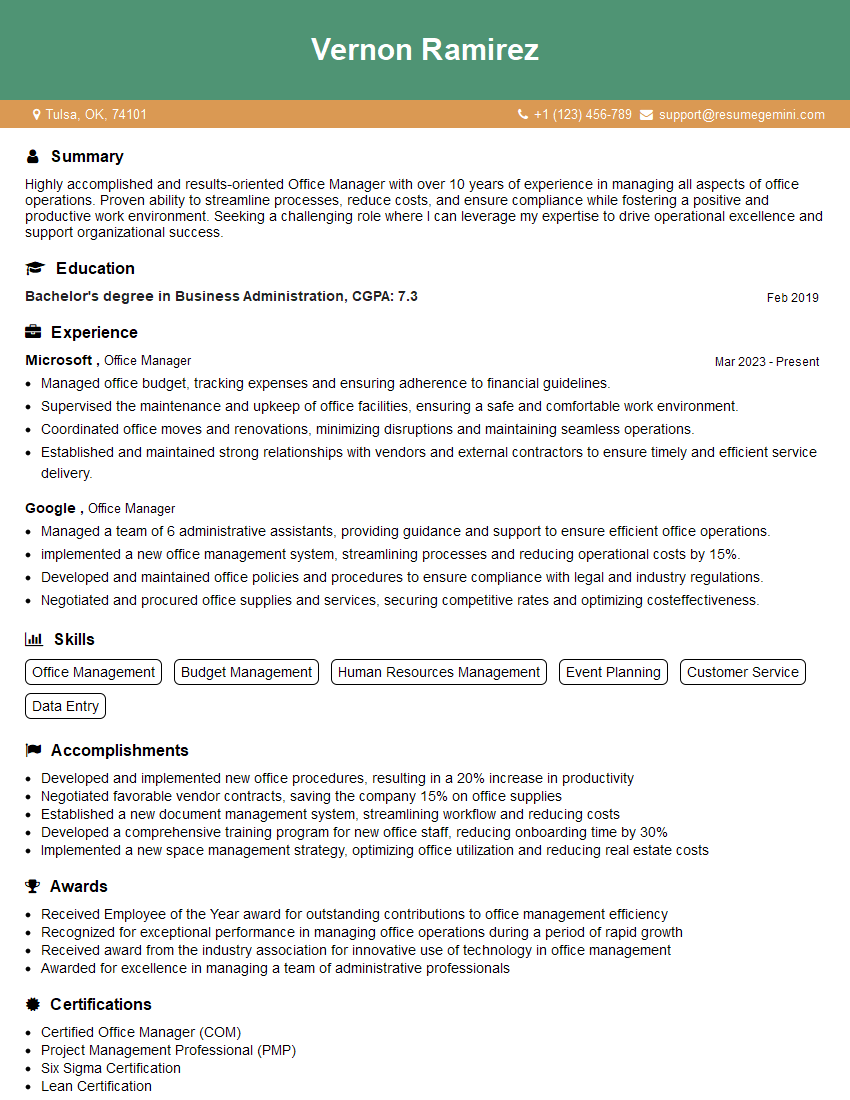
Office Manager Resume Sample
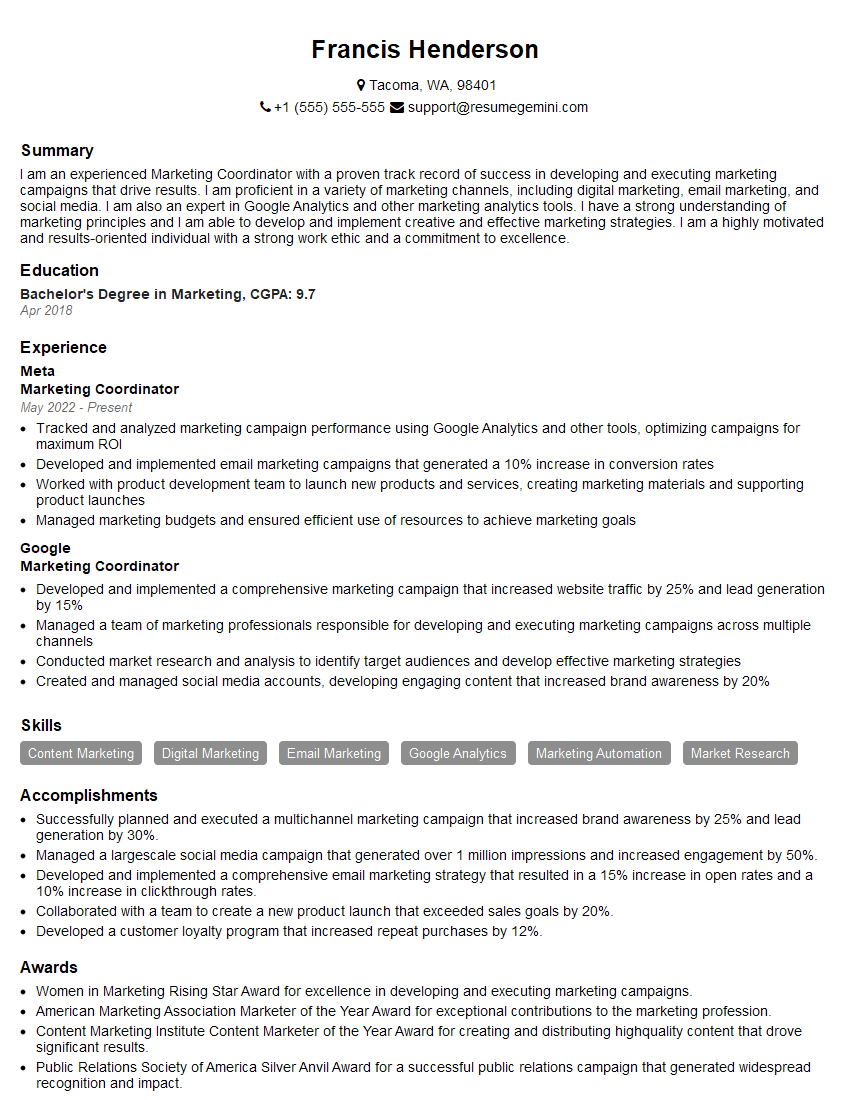
Marketing Coordinator Resume Sample
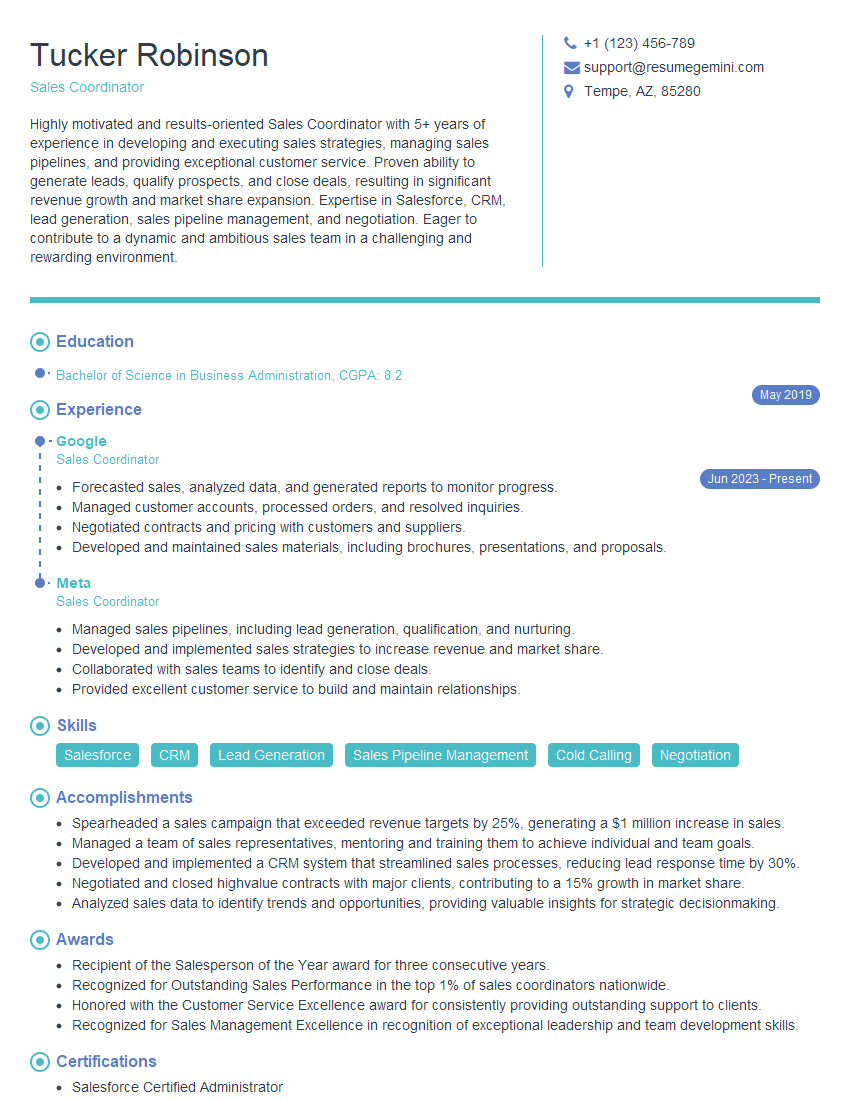
Sales Coordinator Resume Sample
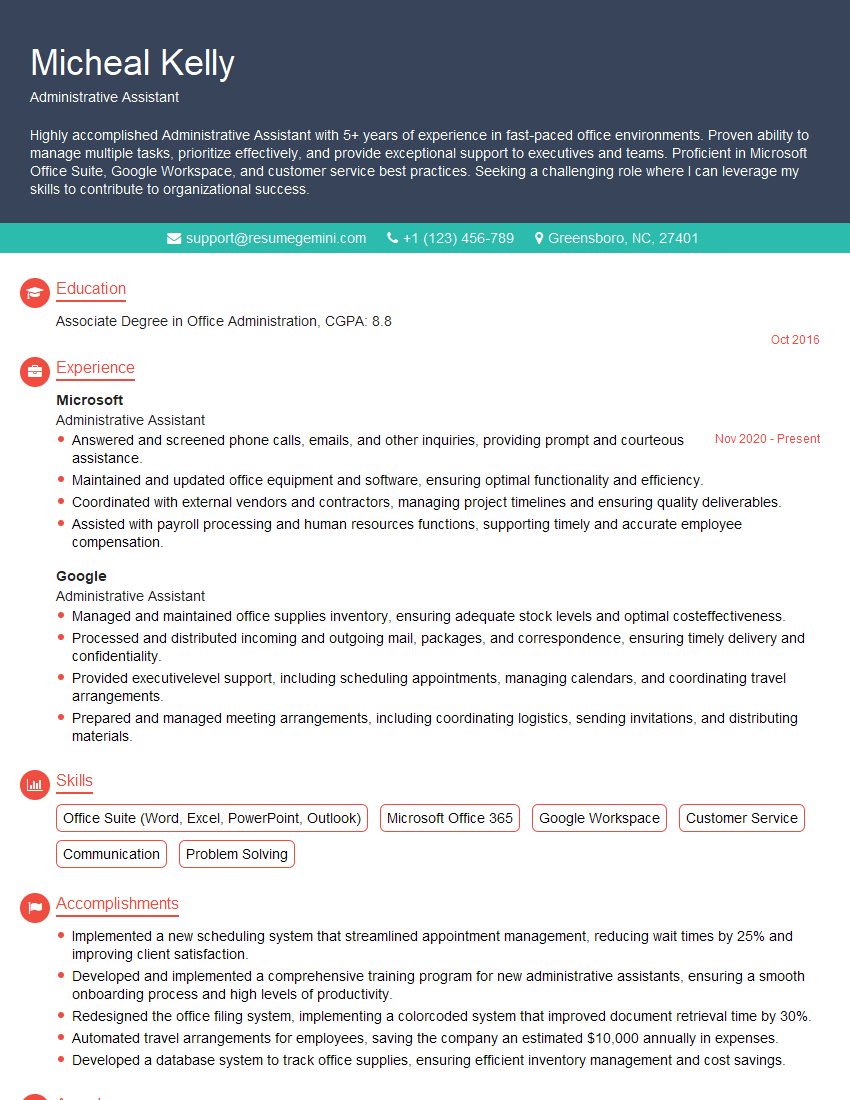
Administrative Assistant Resume Sample
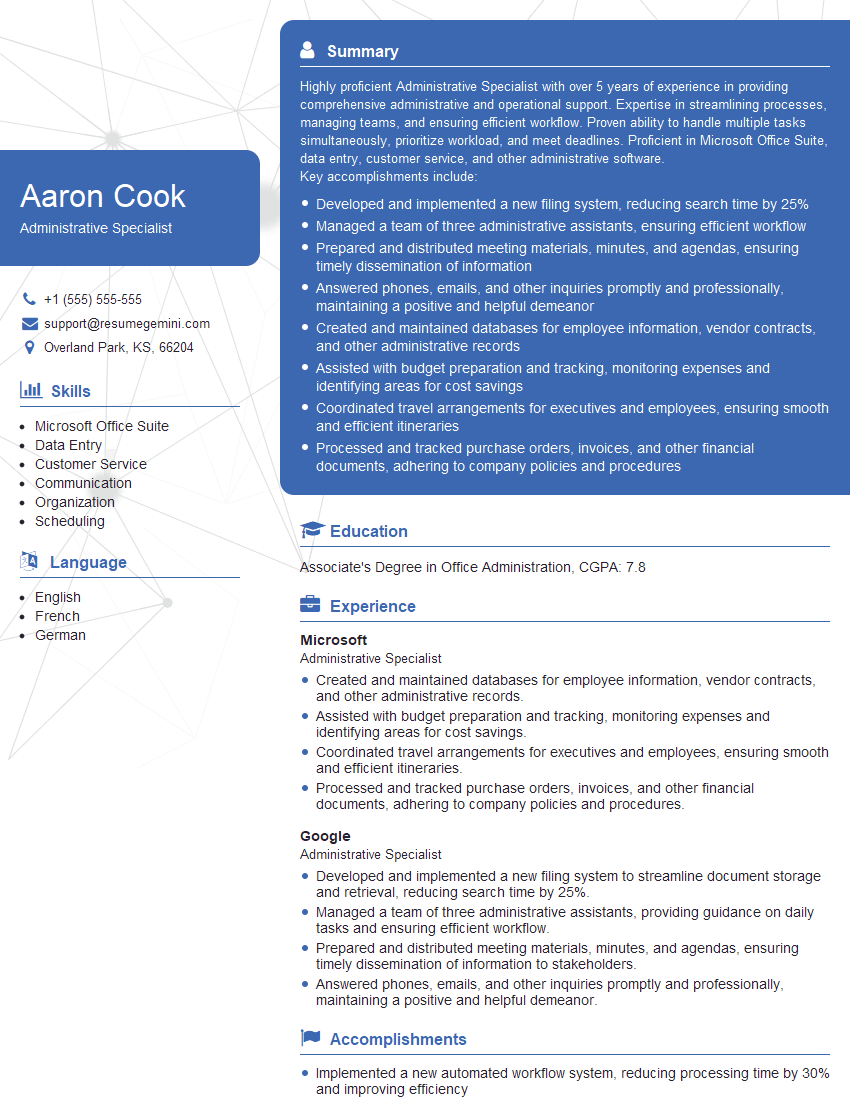
Administrative Specialist Resume Sample
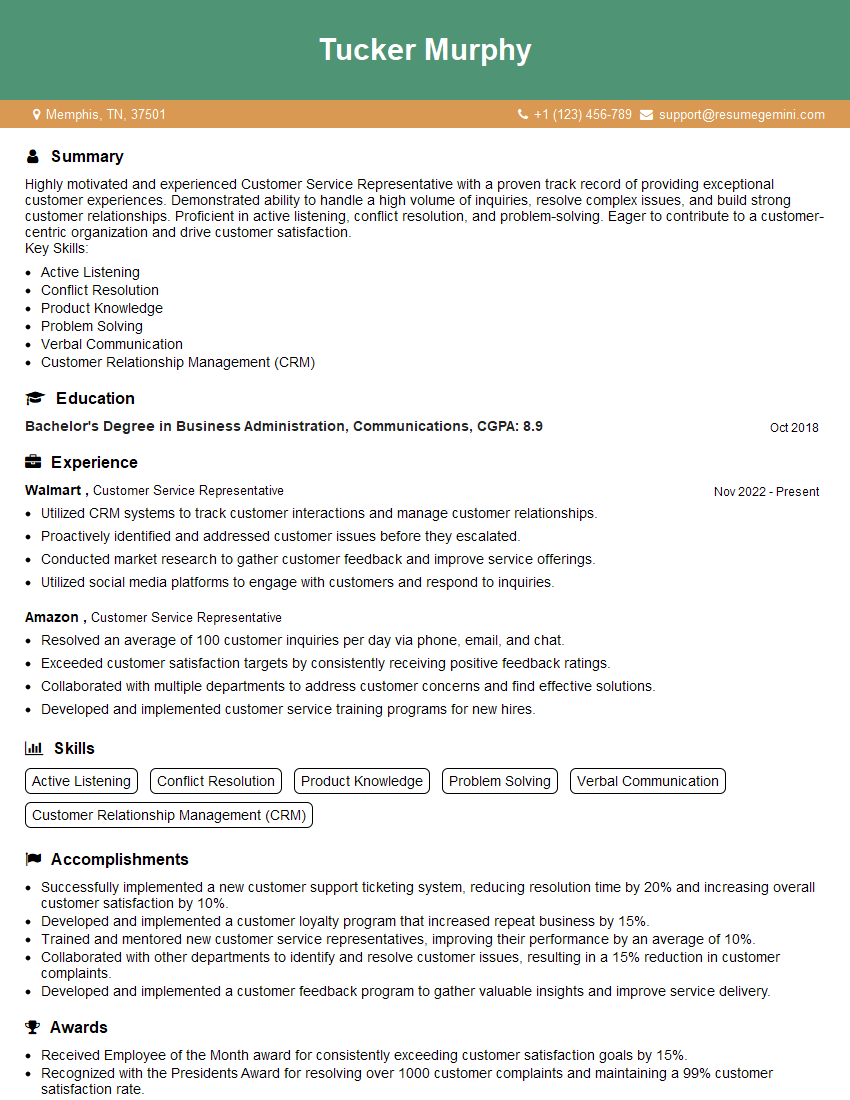
Customer Service Representative Resume Sample
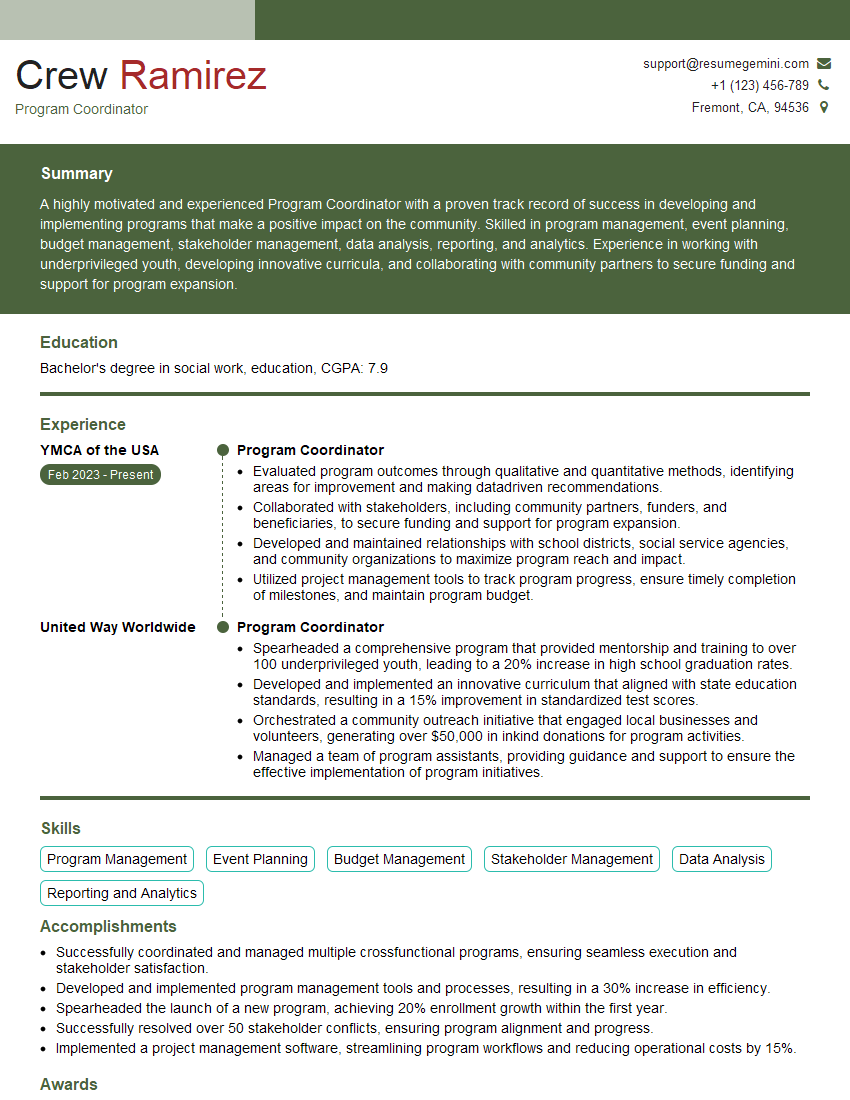
Program Coordinator Resume Sample
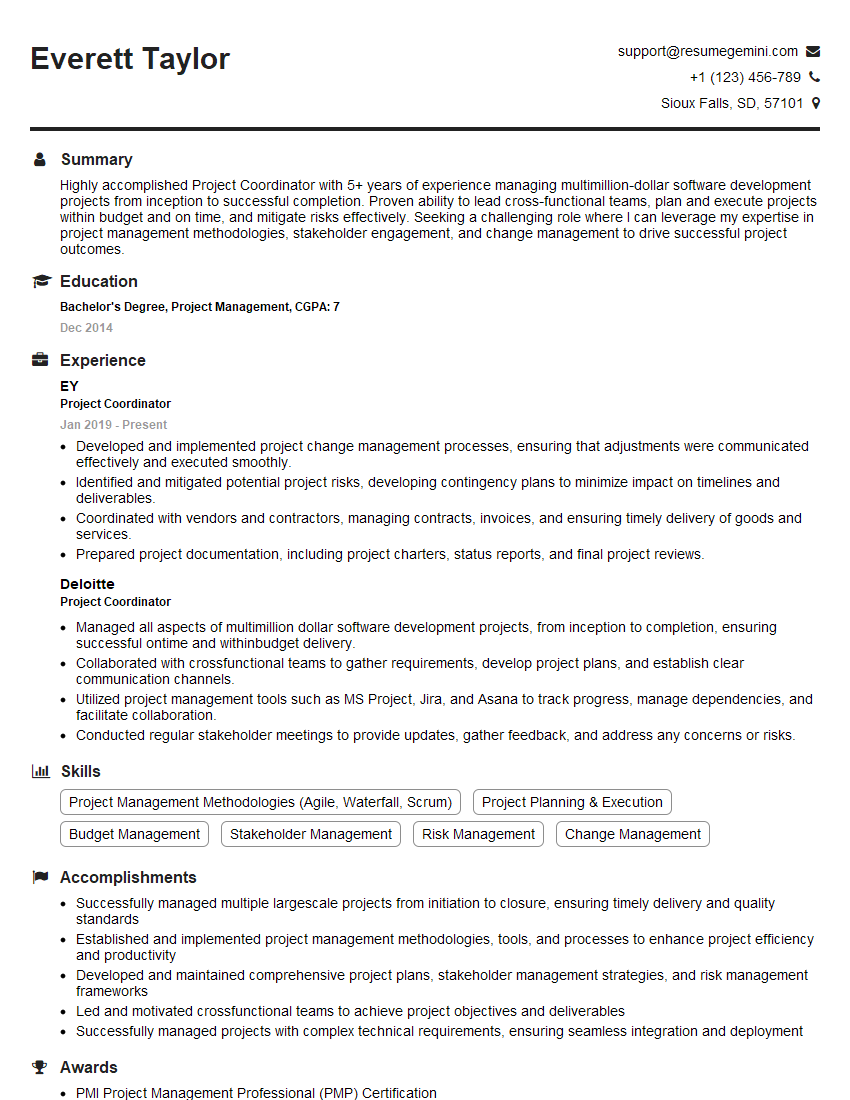
Project Coordinator Resume Sample
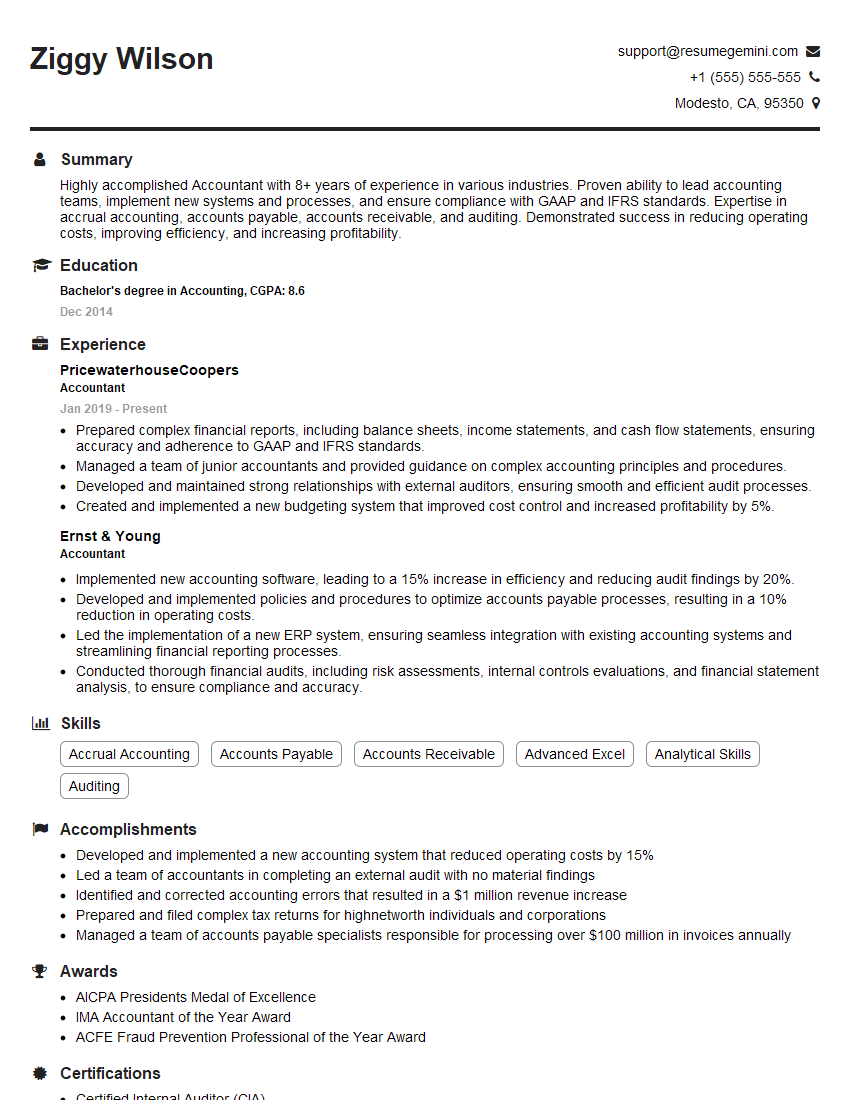
Accountant Resume Sample
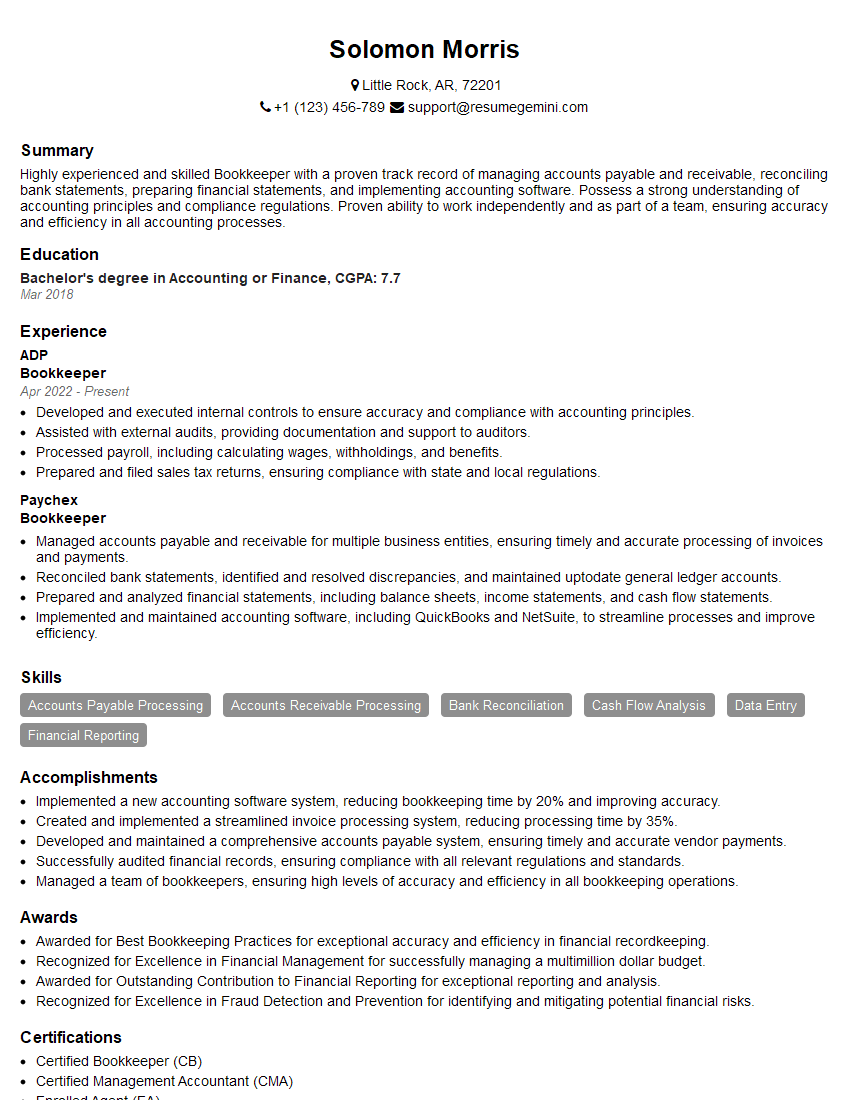
Bookkeeper Resume Sample
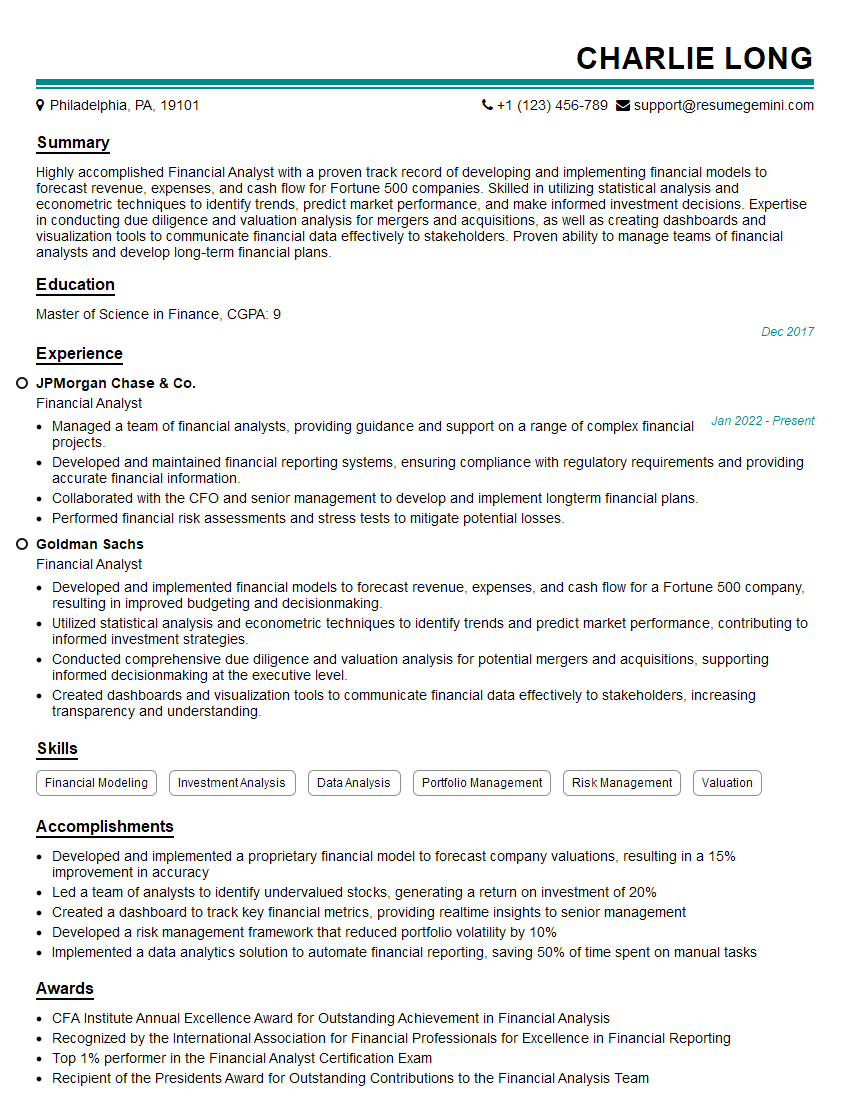
Financial Analyst Resume Sample
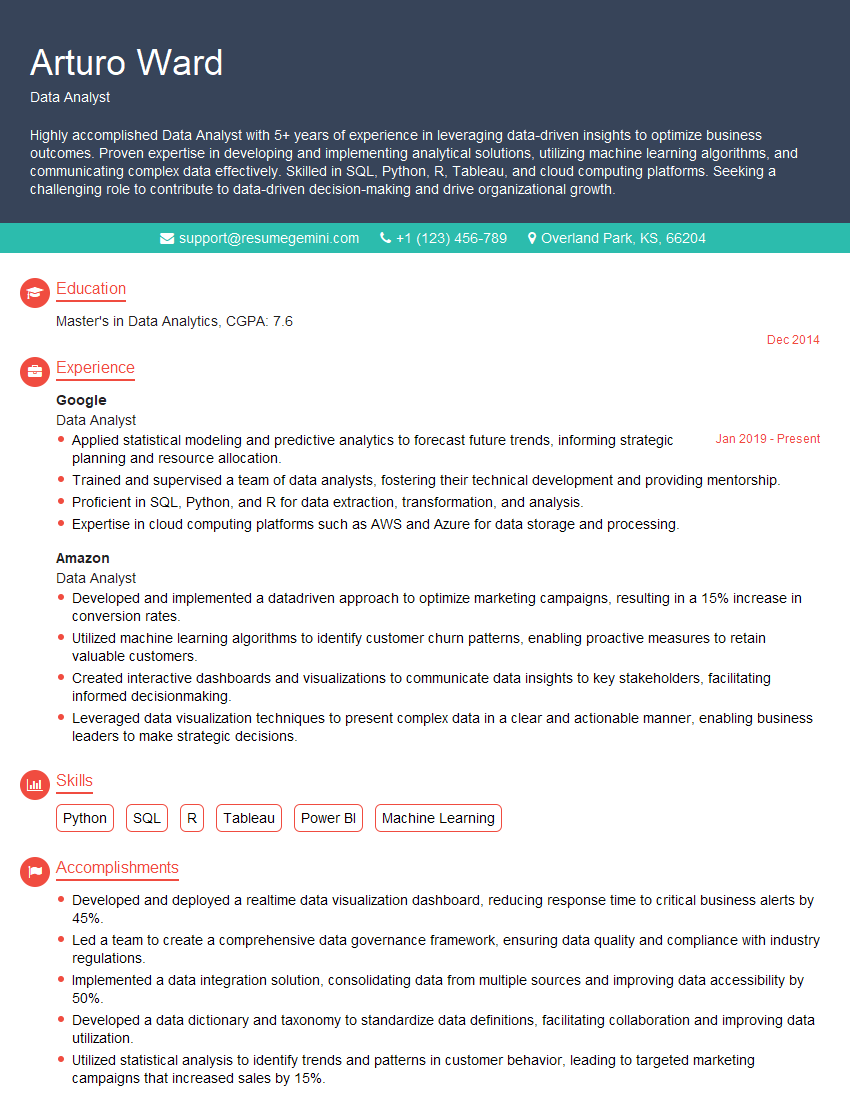
Data Analyst Resume Sample
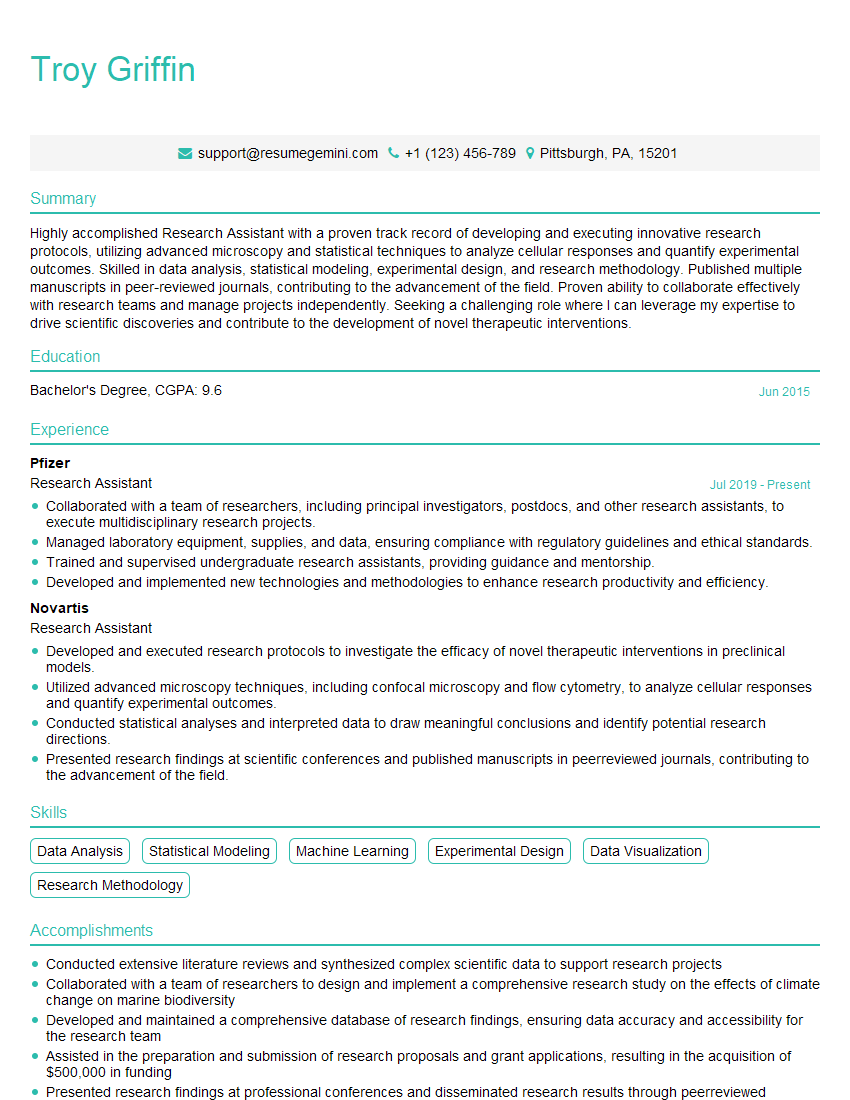
Research Assistant Resume Sample
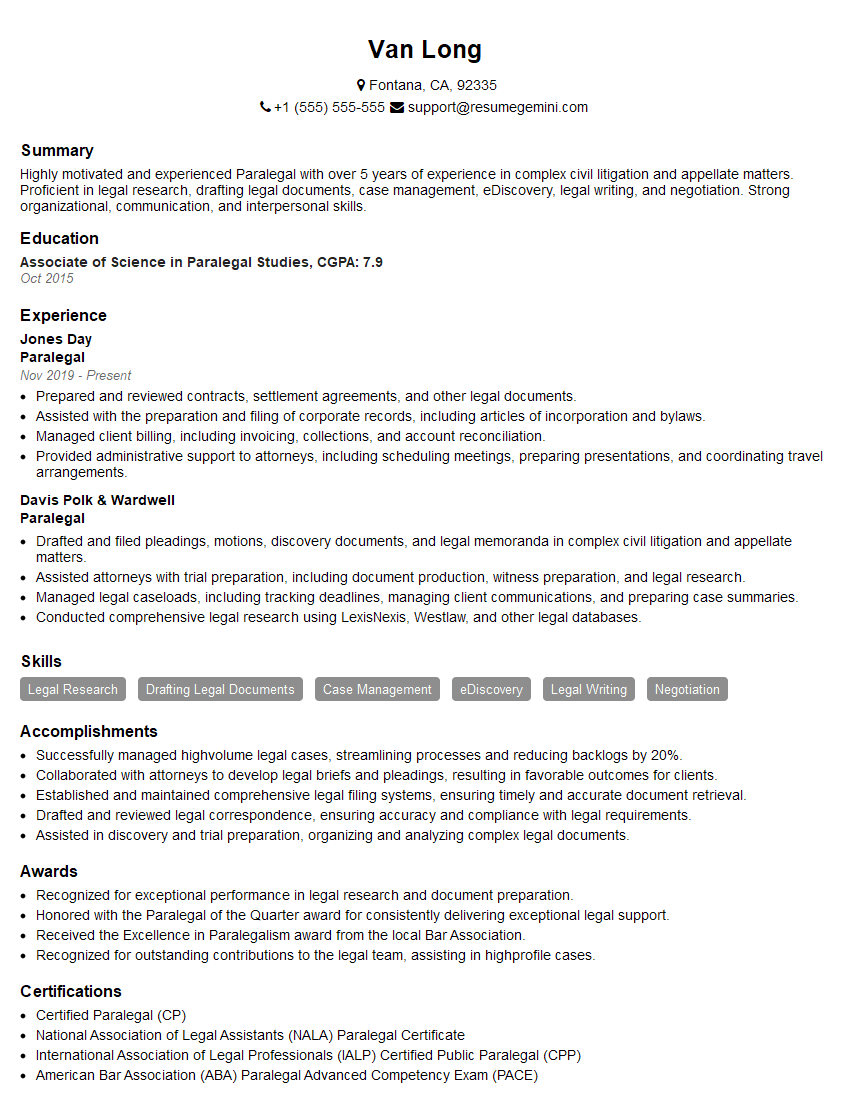
Paralegal Resume Sample
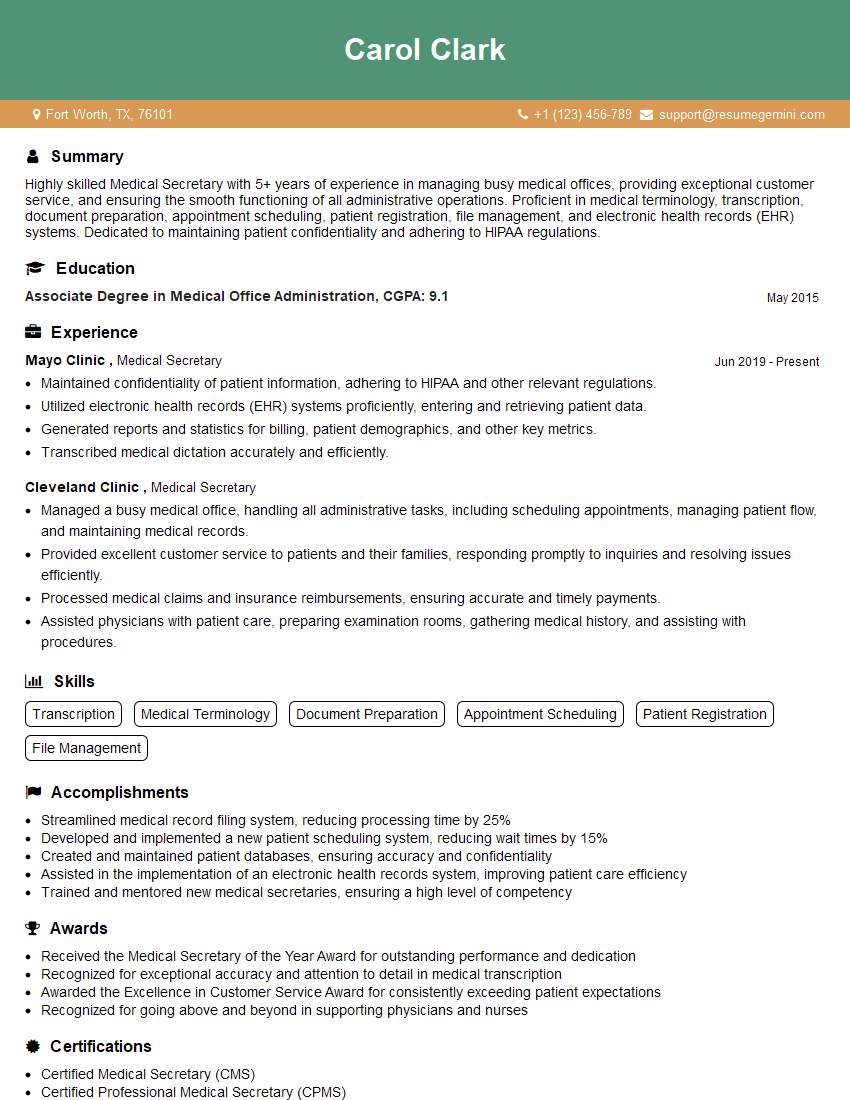
Medical Secretary Resume Sample
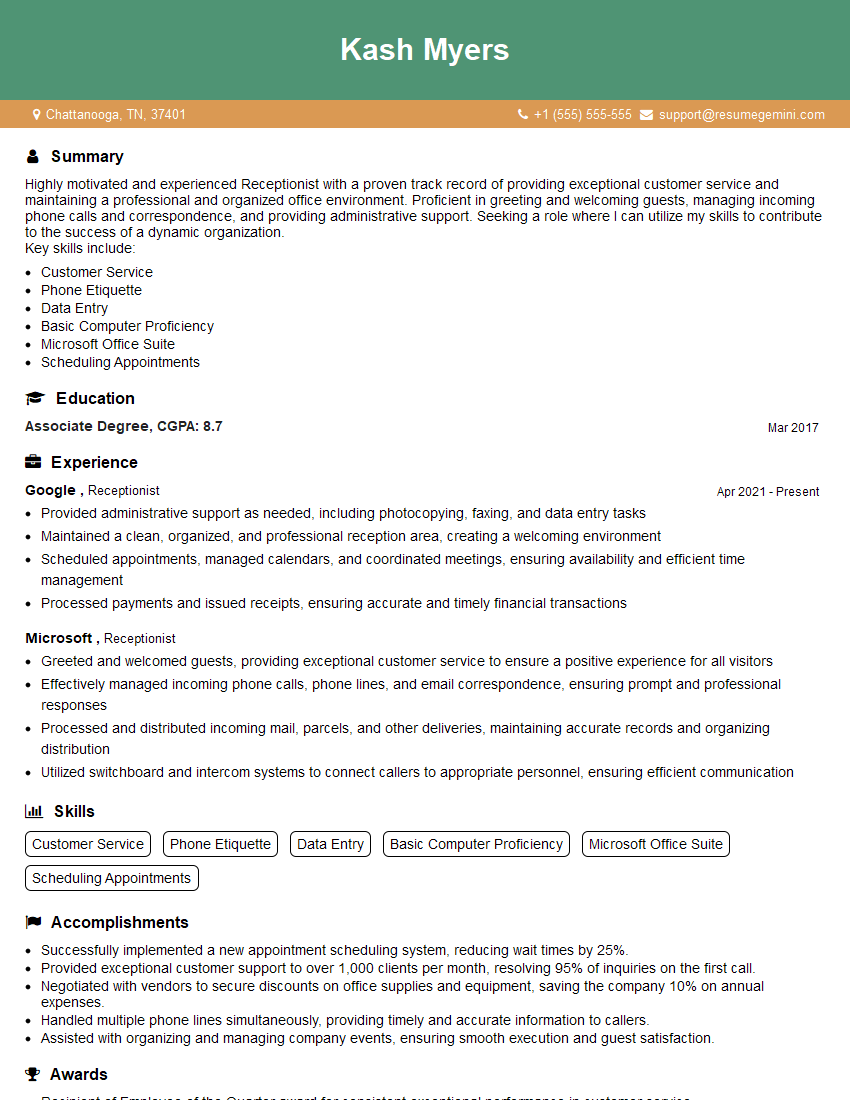
Receptionist Resume Sample
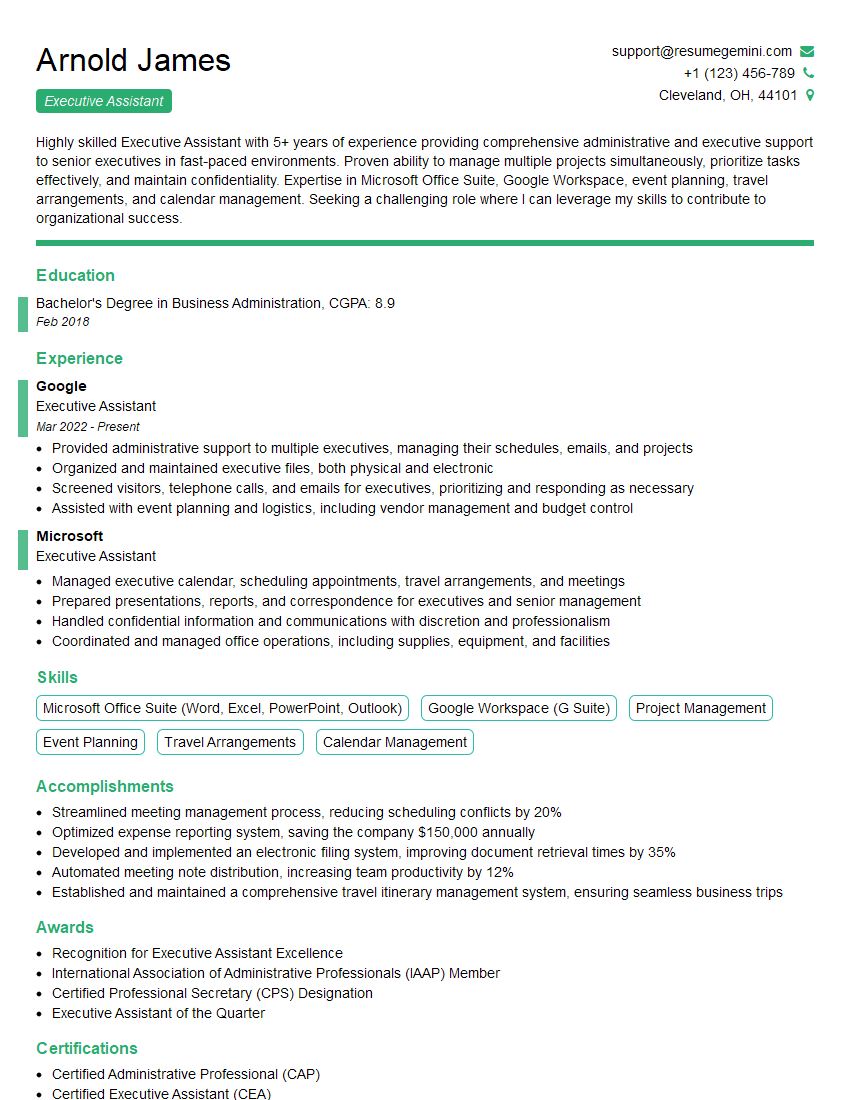
Executive Assistant Resume Sample
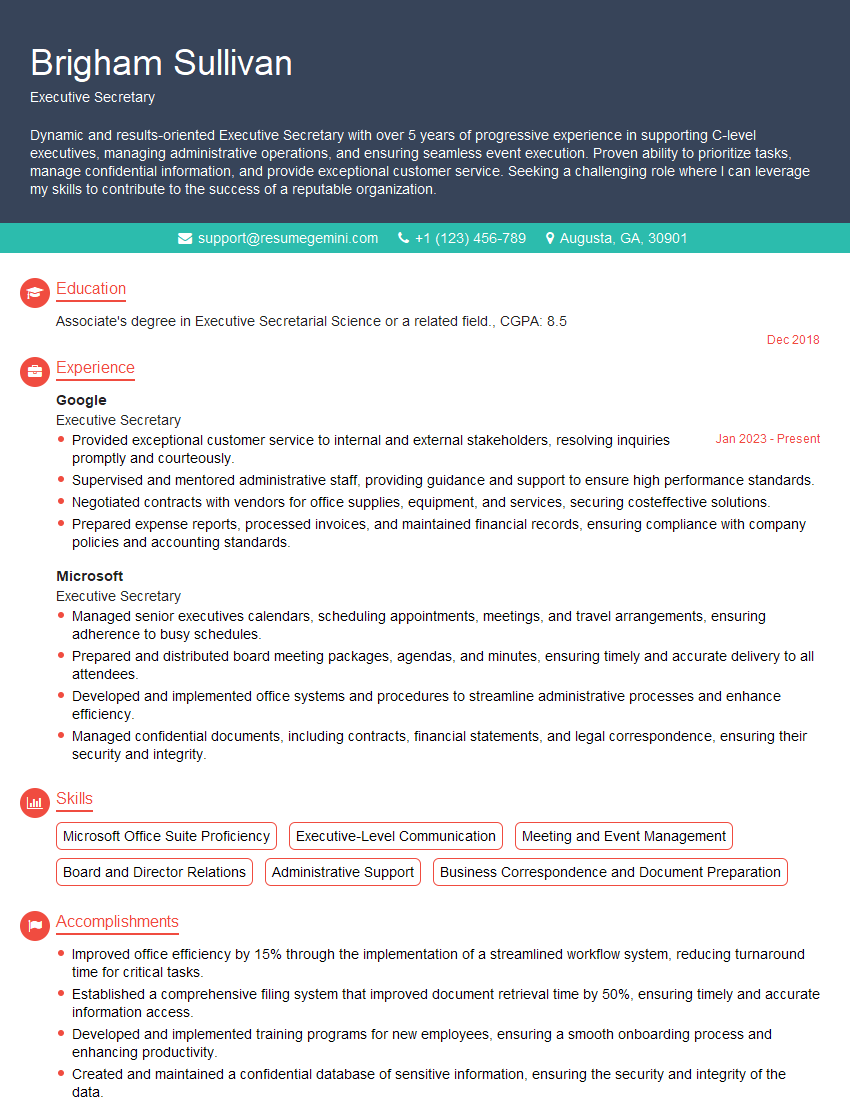
Executive Secretary Resume Sample
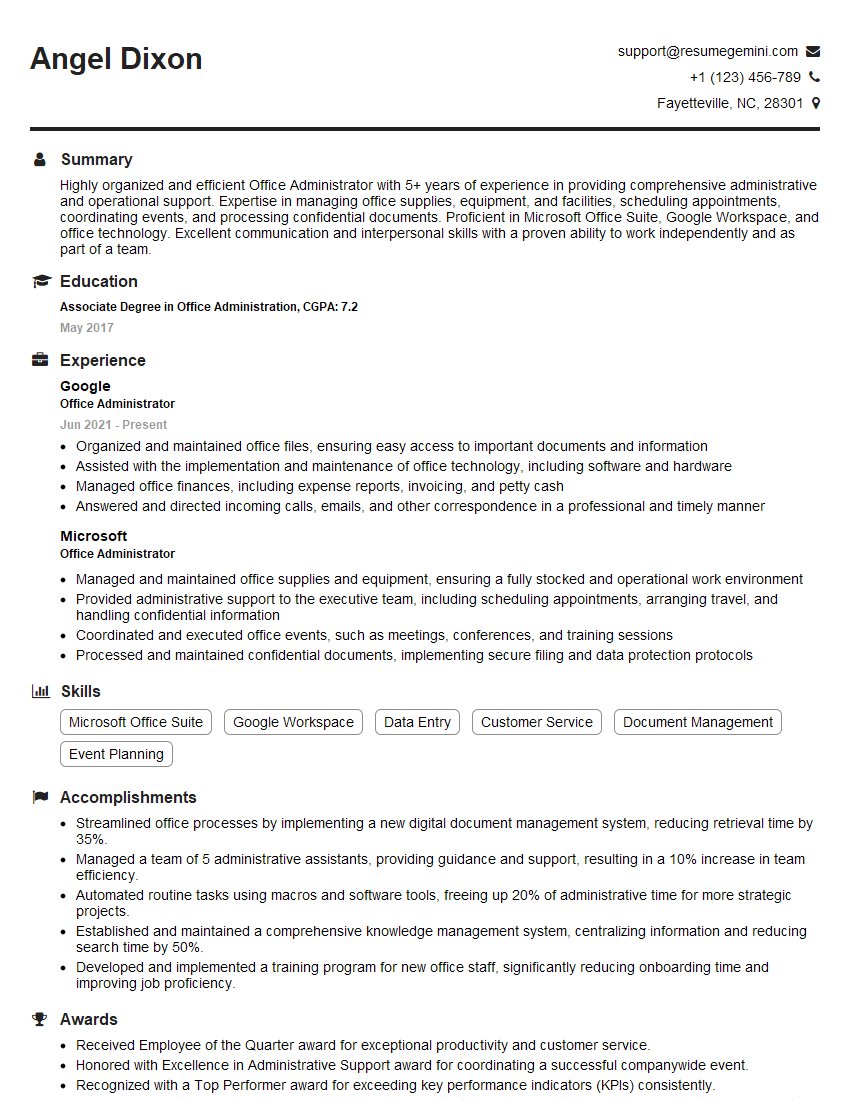
Office Administrator Resume Sample
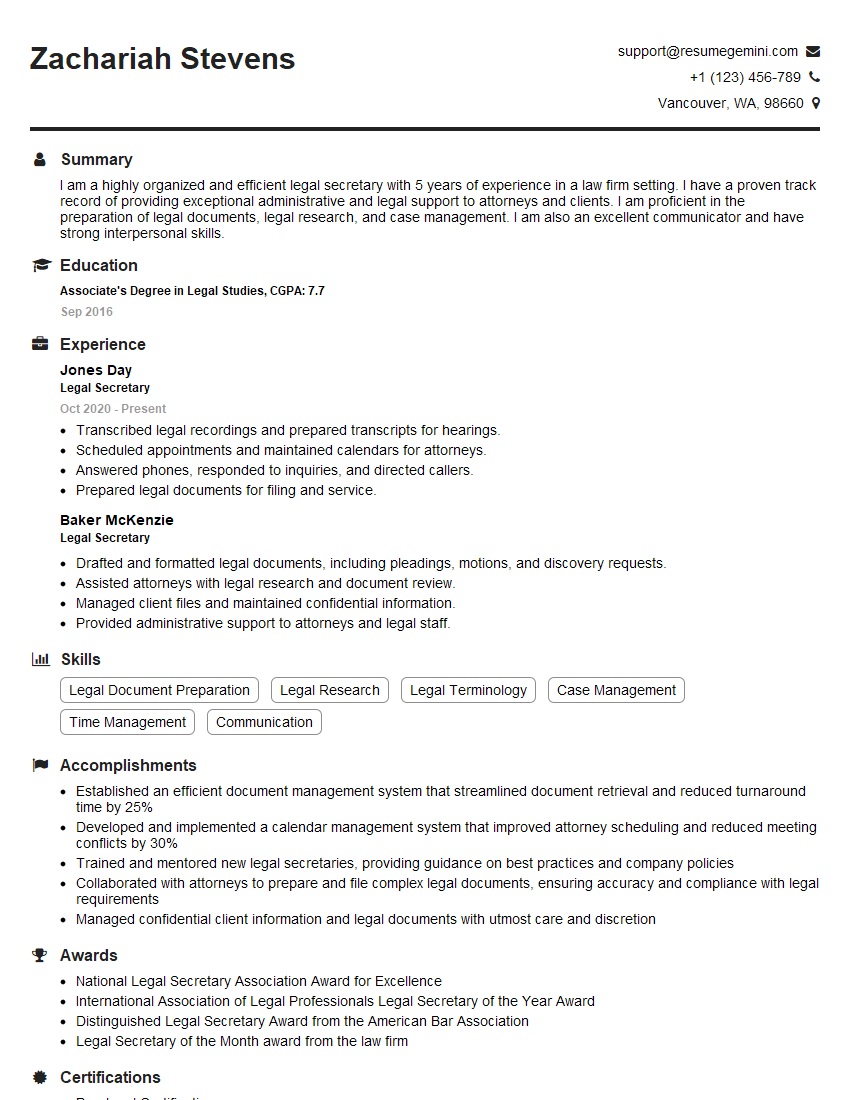
Legal Secretary Resume Sample
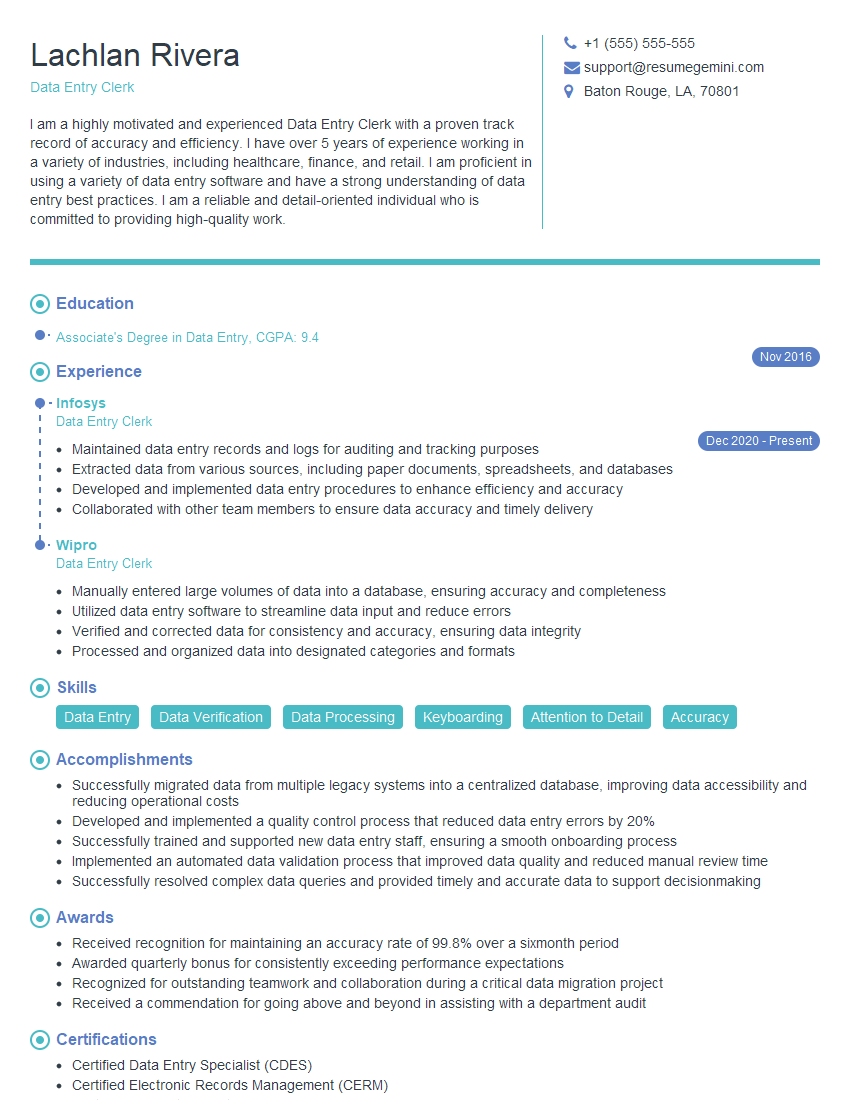
Data Entry Clerk Resume Sample
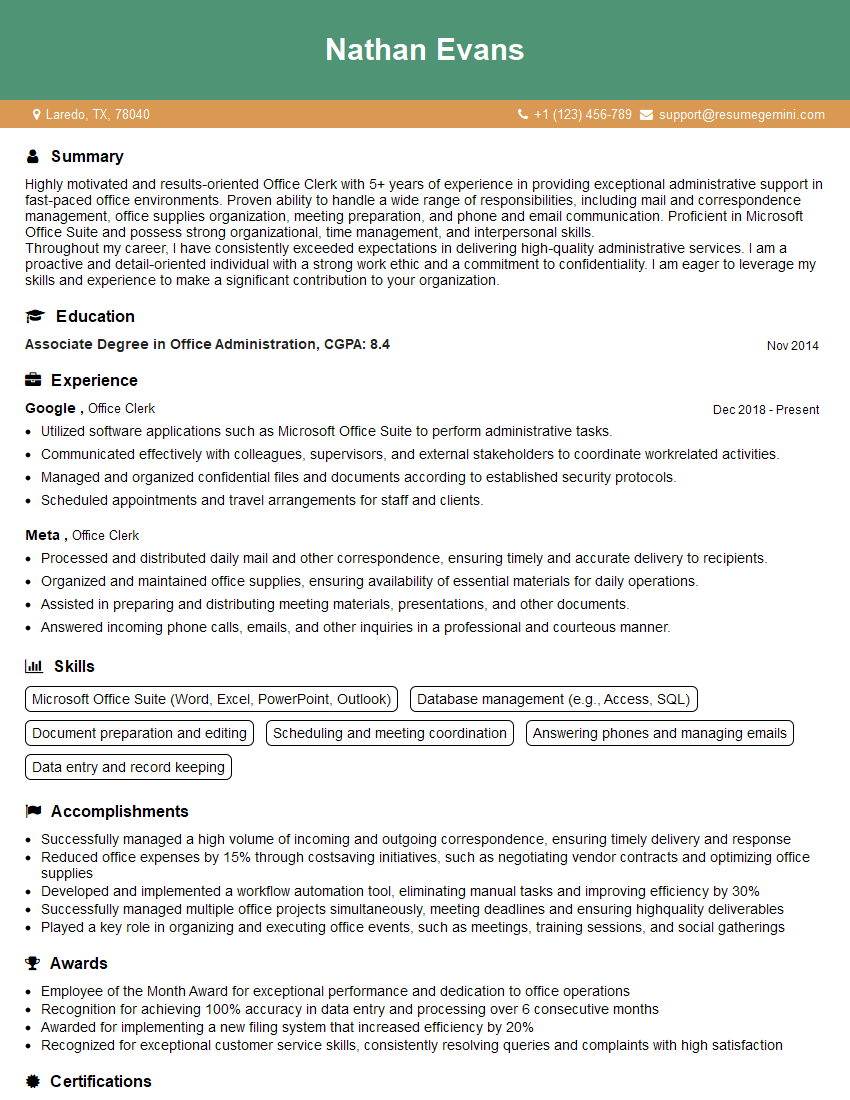
Office Clerk Resume Sample
- Office Manager
- Marketing Coordinator
- Sales Coordinator
- Administrative Assistant
- Administrative Specialist
- Customer Service Representative
- Program Coordinator
- Project Coordinator
- Accountant
- Bookkeeper
- Financial Analyst
- Data Analyst
- Research Assistant
- Paralegal
- Medical Secretary
- Receptionist
- Executive Assistant
- Executive Secretary
- Office Administrator
- Legal Secretary
- Data Entry Clerk
- Office Clerk
Explore more articles
Users Rating of Our Blogs
Share Your Experience
We value your feedback! Please rate our content and share your thoughts (optional).
What Readers Say About Our Blog
Very informative content, great job.
good