The right preparation can turn an interview into an opportunity to showcase your expertise. This guide to Project Economics and Cost Analysis interview questions is your ultimate resource, providing key insights and tips to help you ace your responses and stand out as a top candidate.
Questions Asked in Project Economics and Cost Analysis Interview
Q 1. Explain the difference between top-down and bottom-up cost estimating.
Top-down and bottom-up cost estimating are two fundamentally different approaches to predicting a project’s total cost. Think of it like building a house: top-down starts with the overall blueprint and estimates the cost based on similar projects, while bottom-up meticulously calculates the cost of every brick, beam, and nail.
Top-down estimating starts with a high-level overview. It uses historical data from similar projects to estimate the overall cost. For example, if you’re building a similar software application, you might use the cost of previous applications as a baseline, adjusting for factors like size and complexity. This method is fast but less precise. It’s suitable for early stages of project planning when detailed information isn’t available.
Bottom-up estimating, conversely, involves breaking down the project into its smallest, manageable components (work packages). The cost of each component is estimated individually, and these individual estimates are then aggregated to arrive at the total project cost. Imagine estimating the cost of each room in a house (materials, labor, etc.) and adding them up. This approach is more accurate but time-consuming and requires a detailed understanding of the project scope.
In short: Top-down is fast and broad, bottom-up is slow and detailed. The best approach often involves a combination of both, using top-down for initial estimations and refining with bottom-up as the project develops.
Q 2. What are the key components of a project budget?
A project budget is more than just a list of anticipated expenses; it’s a comprehensive financial roadmap. Key components include:
- Direct Costs: These are the costs directly attributable to the project, such as materials, labor, equipment rentals, and subcontractor fees. For instance, the cost of concrete for a building project falls under direct costs.
- Indirect Costs: These are costs that are not directly tied to a specific project activity but support the overall project, such as administrative overhead, utilities, and rent for project office space. These are often allocated based on a percentage of direct costs or other factors.
- Contingency Reserves: This is crucial! It’s an amount set aside to cover unexpected costs or risks. Think of it as an insurance policy for your project. It addresses potential issues like material price increases, labor shortages, or unforeseen delays.
- Management Reserves: This is for significant, unknown risks or changes in project scope that may arise. It’s generally larger than contingency reserves and managed at a higher level. It’s there for the ‘what ifs’ that can’t readily be foreseen.
- Capital Expenditures (CAPEX): Investments in long-term assets, such as equipment or software, that contribute to the project’s long-term value. These are depreciated over time.
- Operating Expenditures (OPEX): Day-to-day expenses incurred to operate and maintain the project or its outcomes (like ongoing software licenses).
A well-structured budget needs to be detailed, realistic, and regularly monitored to ensure that the project remains financially viable.
Q 3. Describe different cost estimating techniques (e.g., parametric, analogous).
Several cost estimating techniques exist, each with its strengths and weaknesses. The choice depends on the project’s phase, available data, and desired accuracy.
- Parametric Estimating: This technique uses statistical relationships between historical data and project parameters (e.g., size, weight, complexity) to estimate the cost. For instance, if you know that the cost of building a house increases by $X per square foot, you can estimate the cost of a 2000 sq ft house. This requires a historical database of similar projects and a clear understanding of the relevant parameters.
- Analogous Estimating: This relies on using the cost of similar past projects as a basis for estimating the current project’s cost. For example, if a similar software project cost $100,000, this can be a starting point for estimating a new, comparable project. The accuracy depends heavily on how similar the past project is to the current one. Adjustments are made based on differences in scope and complexity.
- Bottom-up Estimating: (Already discussed above) This detailed approach involves breaking down the project into smaller components and estimating the cost of each. It’s the most accurate but time-consuming.
- Three-Point Estimating: This takes into account uncertainty by using three estimates: optimistic, pessimistic, and most likely. These estimates are then combined using a weighted average to provide a more robust cost estimate and range. The formula often used is:
(Optimistic + 4 * Most Likely + Pessimistic) / 6
Often, a combination of these techniques is employed for a more comprehensive and reliable cost estimate.
Q 4. How do you handle cost overruns in a project?
Cost overruns are a serious concern. Effective management requires a proactive approach, not just reactive firefighting.
- Identify the Cause: The first step is to thoroughly investigate the reasons for the overrun. Was it due to inaccurate estimations, unforeseen risks, scope creep, change requests, or external factors?
- Analyze the Impact: Assess the extent of the overrun and its implications on the project’s schedule, resources, and overall success.
- Develop Mitigation Strategies: This may involve negotiating with vendors, re-prioritizing tasks, reducing scope (if feasible), improving efficiency, or seeking additional funding.
- Implement Corrective Actions: Take immediate steps to address the root causes of the overrun and prevent them from recurring. This might involve improving estimating techniques, better risk management, or enhancing communication and collaboration.
- Monitor and Control: Implement stricter controls on expenditures, track progress closely, and report on cost performance regularly to prevent further overruns.
- Communication is Key: Keeping stakeholders informed throughout the process is vital to avoid misunderstandings and maintain trust.
Often, a change request process needs to be formally established and adhered to prevent uncontrolled scope growth and cost overruns.
Q 5. What is earned value management (EVM)? Explain its key metrics.
Earned Value Management (EVM) is a project management technique that integrates scope, schedule, and cost to provide a comprehensive assessment of project performance. Think of it as a powerful performance dashboard for your project.
Key Metrics:
- Planned Value (PV): The authorized budget assigned to scheduled work to be accomplished for an activity or work breakdown structure (WBS) component up to a given point in time. It’s essentially the planned budget for the work completed up to a specific point.
- Earned Value (EV): The value of work actually completed as of a given point in time. It’s measured by comparing the actual work performed to the planned work and is often expressed as a percentage of the planned value.
- Actual Cost (AC): The actual cost incurred up to a given point in time. This includes all direct and indirect costs associated with the work completed.
Key EVM Indicators:
- Schedule Variance (SV):
SV = EV - PV. A positive SV means ahead of schedule, while a negative SV indicates a delay. - Cost Variance (CV):
CV = EV - AC. A positive CV indicates the project is under budget, while a negative CV means it’s over budget. - Schedule Performance Index (SPI):
SPI = EV / PV. An SPI greater than 1 means the project is ahead of schedule; less than 1 indicates a delay. - Cost Performance Index (CPI):
CPI = EV / AC. A CPI greater than 1 signifies the project is under budget; less than 1 shows it’s over budget.
EVM provides a quantitative measure of project performance, allowing for proactive intervention and improved decision-making.
Q 6. How do you calculate the critical path in a project schedule?
The critical path is the longest sequence of activities in a project network diagram that determines the shortest possible duration to complete the project. Activities on the critical path have zero slack or float; any delay on these activities directly delays the entire project.
Calculating the Critical Path:
- Create a Network Diagram: Represent each project activity as a node, with arrows indicating dependencies between activities. Include the duration of each activity.
- Forward Pass: Starting from the beginning of the project, calculate the earliest start and finish times for each activity. The earliest start time is the latest finish time of its predecessor activities.
- Backward Pass: Starting from the end of the project, calculate the latest start and finish times for each activity. The latest finish time is the earliest start time of its successor activities.
- Calculate Slack: For each activity, calculate the slack (or float) as the difference between the latest start time and the earliest start time (or latest finish time and earliest finish time). Activities with zero slack are on the critical path.
- Identify the Critical Path: The sequence of activities with zero slack forms the critical path.
Many project management software tools automate this calculation, but understanding the underlying principle is crucial for effective project scheduling and control.
Q 7. What are some common risks associated with project costs?
Project costs are susceptible to a variety of risks. Some common ones include:
- Inaccurate Cost Estimation: Underestimating the cost of resources, labor, or materials can lead to significant overruns.
- Scope Creep: Uncontrolled changes to the project’s scope often result in increased costs and timelines without proper budget adjustments. This is often the biggest culprit in cost overruns.
- Unforeseen Risks and Contingencies: Unforeseeable events, such as natural disasters, supply chain disruptions, or technological failures, can have substantial cost implications.
- Poor Risk Management: Failure to identify, assess, and mitigate project risks can result in unexpected expenses.
- Inflation: Changes in the cost of materials, labor, or other resources due to inflation can impact project costs.
- Change Orders: Frequent and poorly managed change orders can lead to escalating costs.
- Inefficient Resource Allocation: Poor resource allocation, leading to wasted time and materials, increases project costs.
- External Factors: Economic downturns, political instability, or changes in regulations can affect project costs.
Effective risk management involves proactively identifying potential risks, assessing their likelihood and impact, developing mitigation strategies, and regularly monitoring for emerging risks.
Q 8. How do you develop a project contingency plan?
Developing a robust project contingency plan involves proactively identifying potential risks and formulating mitigation strategies. It’s like having a spare tire in your car – you hope you never need it, but it’s crucial to have in case of a flat. The process begins with a thorough risk assessment, where we brainstorm potential problems that could impact the project’s schedule, budget, or quality. This could include things like supplier delays, unexpected technical issues, or changes in market conditions.
For each identified risk, we assess its likelihood and potential impact. A risk matrix is often used for this visualization. Then, we develop contingency strategies: what actions will we take if the risk materializes? These strategies should be specific, measurable, achievable, relevant, and time-bound (SMART). For example, if a key supplier is delayed, our contingency might involve securing a secondary supplier, negotiating an expedited delivery, or adjusting the project schedule.
Finally, we document the entire plan, including the identified risks, their likelihood and impact, the contingency strategies, and the responsible parties. This document should be reviewed and updated regularly throughout the project’s lifecycle to ensure it remains relevant and effective. Regularly updating the contingency plan ensures we maintain a robust response strategy to dynamic changes.
Q 9. Explain the concept of life-cycle costing.
Life-cycle costing (LCC) is a powerful technique for evaluating the total cost of ownership of an asset or project over its entire lifespan. Instead of just focusing on initial investment costs, LCC considers all costs associated with the asset from conception to disposal. Think of buying a car – the initial purchase price is just one part of the overall cost. You also have fuel, insurance, maintenance, repairs, and eventually, the cost of selling or disposing of the vehicle. LCC encompasses all of these factors.
LCC analysis is particularly useful for long-term projects or investments where ongoing operational and maintenance costs are substantial. It helps decision-makers make informed choices by providing a holistic view of the financial implications. For example, comparing two different building designs, one might have a lower initial construction cost but higher long-term maintenance expenses, leading to a higher overall LCC. The LCC approach ensures that the most cost-effective option is selected, not just the cheapest upfront.
A comprehensive LCC analysis typically includes:
- Initial investment costs
- Operational costs (e.g., energy, labor)
- Maintenance and repair costs
- Disposal costs
- Replacement costs
By considering all these costs, LCC provides a more accurate and comprehensive picture of a project’s true cost, leading to better decision-making.
Q 10. Describe your experience with different cost control software.
I have extensive experience using various cost control software, including Primavera P6, MS Project, and Planview Enterprise One. Each has its own strengths and weaknesses, but they all share the fundamental goal of helping manage and track project costs effectively.
Primavera P6 is a powerful tool for large, complex projects, providing robust scheduling, resource allocation, and cost management features. Its strength lies in its ability to handle intricate dependencies and large datasets. MS Project, while simpler to use, is well-suited for smaller projects or teams needing a more streamlined approach. Planview Enterprise One provides a broader portfolio management perspective, allowing organizations to manage multiple projects and resources across the enterprise.
My experience includes not only using these software tools but also configuring and customizing them to meet specific project needs. This involves setting up cost codes, defining cost baselines, and integrating the software with other enterprise systems. For instance, on a recent infrastructure project, we integrated P6 with our accounting software to automate cost reporting and provide real-time visibility into the project’s financial status. This streamlined the process and reduced the risk of manual errors.
Q 11. How do you analyze cost variances and identify their root causes?
Analyzing cost variances involves comparing planned costs (the budget) with actual costs. A variance is simply the difference between the two. Positive variances indicate cost overruns, while negative variances represent cost underruns (savings). The key, however, is not just identifying the variances but also understanding their root causes.
My approach involves a systematic investigation using a combination of quantitative and qualitative methods. I start by analyzing the variance data itself – looking for patterns, trends, and outliers. For example, consistently exceeding budgeted labor costs in a specific task area might suggest a problem with labor estimating or productivity. Then, I delve into the project documentation, interviewing project team members, and reviewing progress reports to understand the contextual factors that contributed to the variance.
Tools like earned value management (EVM) can be invaluable here. EVM provides a framework for tracking project performance and identifying variances early on. By analyzing the schedule variance (SV) and cost variance (CV), we can pinpoint where the project is falling behind schedule or over budget. Root cause analysis techniques, such as the ‘5 Whys,’ can help to systematically uncover the underlying issues contributing to the variances.
For example, a significant cost overrun might be traced back to initial underestimation of material costs, leading to change orders and additional expenses. Understanding the root cause allows us to implement corrective actions and prevent similar issues in future projects.
Q 12. What are some techniques for improving project cost efficiency?
Improving project cost efficiency involves a multi-faceted approach focusing on both proactive planning and reactive problem-solving. It’s about being smart with resources, not just cutting costs blindly. Here are some key techniques:
- Accurate Estimating: Thorough planning and accurate cost estimation are foundational. This involves using historical data, detailed work breakdowns, and expert judgment to create realistic budgets.
- Value Engineering: This systematic process involves analyzing each project element to identify ways to achieve the same functionality at a lower cost without compromising quality. It’s about finding creative solutions that improve value for money.
- Efficient Resource Allocation: Optimizing resource allocation – people, materials, equipment – is critical. This might involve using more efficient technologies, improving team collaboration, or outsourcing certain tasks to specialized vendors.
- Risk Management: Proactive risk management is crucial. Identifying and mitigating potential cost overruns before they occur saves significantly more than reactive problem-solving.
- Process Improvement: Streamlining project processes and eliminating unnecessary steps can significantly improve efficiency and reduce costs. This might involve using more efficient project management methodologies or implementing automated tools.
- Continuous Monitoring and Control: Regular tracking and analysis of project costs are essential for early identification of variances and prompt corrective action.
Implementing these techniques requires a holistic approach and a commitment from the entire project team. By focusing on proactive planning and continuous improvement, organizations can achieve significant gains in project cost efficiency.
Q 13. How do you prioritize projects based on their economic feasibility?
Prioritizing projects based on economic feasibility requires a structured approach that goes beyond simply comparing initial investment costs. We need to consider the project’s potential return on investment (ROI), its alignment with strategic goals, and its risk profile. Several techniques are commonly used:
- Net Present Value (NPV): NPV calculates the present value of future cash flows, discounted at an appropriate rate. Projects with a higher NPV are generally preferred as they indicate a greater return on investment.
- Internal Rate of Return (IRR): IRR is the discount rate at which the NPV of a project becomes zero. Projects with a higher IRR are considered more attractive.
- Payback Period: This represents the time it takes for a project to recoup its initial investment. Shorter payback periods are generally desirable.
- Profitability Index (PI): PI measures the ratio of the present value of future cash flows to the initial investment. Projects with a PI greater than 1 are considered economically viable.
In addition to these financial metrics, qualitative factors should also be considered, such as the strategic importance of the project, its alignment with organizational goals, and the potential risks involved. A balanced scorecard approach, incorporating both quantitative and qualitative factors, is often used to make informed prioritization decisions. A weighted scoring system allows for a systematic comparison of projects with varying attributes.
For example, a project with a high NPV but a significant environmental risk might be given a lower priority compared to a project with a slightly lower NPV but a lower environmental impact. This holistic approach ensures that the most valuable projects are selected, aligning with both financial and strategic objectives.
Q 14. What is discounted cash flow analysis (DCF), and how is it used in project evaluation?
Discounted cash flow (DCF) analysis is a valuation method used to estimate the value of an investment based on its expected future cash flows. The core concept is that money received today is worth more than the same amount received in the future due to its potential earning capacity. This is why we ‘discount’ future cash flows to their present value.
DCF analysis is extensively used in project evaluation to assess the economic feasibility of investments. The most common DCF methods are Net Present Value (NPV) and Internal Rate of Return (IRR), which I discussed earlier. The process involves:
- Forecasting Future Cash Flows: This involves projecting the expected cash inflows and outflows associated with the project over its entire lifespan.
- Determining the Discount Rate: This represents the opportunity cost of capital – the return that could be earned on an alternative investment with similar risk. This rate reflects the time value of money and the risk associated with the project.
- Calculating the Present Value of Cash Flows: Each future cash flow is discounted back to its present value using the discount rate. This accounts for the time value of money.
- Calculating NPV and IRR: The NPV is the sum of the present values of all cash flows, while the IRR is the discount rate that makes the NPV equal to zero.
A positive NPV indicates that the project is expected to generate more value than its cost, while an IRR higher than the discount rate suggests that the project’s return exceeds the opportunity cost of capital. DCF analysis provides a rigorous framework for evaluating projects based on their financial viability and helps decision-makers make informed investment choices.
Q 15. How do you incorporate inflation into project cost estimates?
Incorporating inflation into project cost estimates is crucial for accurate financial planning. Ignoring inflation can lead to significant underestimation and project failure. We typically use a technique called inflation indexing. This involves applying an inflation rate to each cost item over the project’s lifespan. The process is as follows:
- Identify inflation rates: Obtain relevant inflation indices (e.g., Consumer Price Index (CPI), Producer Price Index (PPI)) for the specific categories of goods and services involved in the project. Different items will have different inflation rates.
- Determine the inflation period: For each cost item, estimate the period during the project when the cost will be incurred.
- Apply the inflation factor: Calculate the future value of each cost item by multiplying the present value by the inflation factor (1 + inflation rate)^n, where ‘n’ is the number of periods (usually years) until the cost is incurred.
- Aggregate inflated costs: Sum up all the inflated costs to get the total project cost, adjusted for inflation.
Example: Suppose we need to buy equipment costing $100,000 in year 2, and the expected annual inflation rate for equipment is 3%. The inflated cost in year 2 would be $100,000 * (1 + 0.03)^2 = $106,090. This shows how even a small inflation rate can significantly impact the overall cost over the project’s duration.
Career Expert Tips:
- Ace those interviews! Prepare effectively by reviewing the Top 50 Most Common Interview Questions on ResumeGemini.
- Navigate your job search with confidence! Explore a wide range of Career Tips on ResumeGemini. Learn about common challenges and recommendations to overcome them.
- Craft the perfect resume! Master the Art of Resume Writing with ResumeGemini’s guide. Showcase your unique qualifications and achievements effectively.
- Don’t miss out on holiday savings! Build your dream resume with ResumeGemini’s ATS optimized templates.
Q 16. Explain the concept of net present value (NPV) and internal rate of return (IRR).
Net Present Value (NPV) and Internal Rate of Return (IRR) are crucial metrics for evaluating the financial viability of a project. They both take into account the time value of money, meaning that money received today is worth more than the same amount received in the future due to its potential earning capacity.
NPV represents the difference between the present value of cash inflows and the present value of cash outflows over a period of time. A positive NPV indicates that the project is expected to generate more value than it costs, making it financially attractive. We calculate NPV using a discount rate (often the company’s cost of capital). A higher discount rate results in a lower NPV.
NPV = Σ [CFt / (1 + r)^t] - Initial Investment
Where:
- CFt = Cash flow at time t
- r = Discount rate
- t = Time period
IRR is the discount rate that makes the NPV of a project equal to zero. It represents the project’s expected rate of return. A higher IRR indicates a more profitable project. We typically use iterative calculations or financial software to determine the IRR.
In essence: NPV tells you how much value a project will add, while IRR tells you the rate of return on your investment. Both are essential for making informed investment decisions.
Q 17. How do you perform sensitivity analysis on project costs?
Sensitivity analysis is a crucial step in project cost management. It helps assess how changes in key variables affect the overall project cost. We typically use what-if analysis to explore different scenarios.
The process involves identifying key cost drivers (e.g., material costs, labor rates, exchange rates), assigning a range of possible values to each driver, and calculating the resulting project cost for each combination. This can be done using spreadsheets or specialized project management software. The results are often presented visually, using charts or graphs, to show the sensitivity of the project cost to changes in each variable.
Example: If material costs are a major driver, we might run scenarios with material costs 10% below, at, and 10% above the base estimate. This will help determine the range of potential project costs and highlight areas requiring close monitoring. This helps prioritize risk mitigation strategies. Monte Carlo simulation, a more advanced technique, can incorporate probabilistic distributions for the variables, providing a more comprehensive sensitivity analysis.
Q 18. What is the difference between direct and indirect costs?
Direct costs are those directly attributable to a specific project or task. They are easily traceable and readily identifiable. Examples include materials, labor directly involved in production, and equipment specifically purchased for the project.
Indirect costs are those that are not directly attributable to a single project but are necessary for the overall operation of the organization. They are more difficult to allocate directly to specific projects. Examples include rent, utilities, administrative salaries, and general overhead.
The difference is crucial for accurate cost accounting: Direct costs are relatively easy to track and manage, while indirect costs require a more sophisticated allocation method (e.g., allocation based on floor space, labor hours, or revenue). Accurate tracking of both direct and indirect costs is essential for determining project profitability and making informed decisions.
Q 19. Describe your experience with different project management methodologies (e.g., Agile, Waterfall).
My experience spans both Waterfall and Agile project management methodologies. Waterfall is a linear, sequential approach suitable for projects with well-defined requirements and minimal anticipated changes. It’s characterized by distinct phases (initiation, planning, execution, monitoring and controlling, and closure), each with specific deliverables. I’ve used Waterfall on large-scale infrastructure projects where changes were costly and needed careful planning.
Agile, on the other hand, is iterative and incremental, emphasizing flexibility and adaptability. It’s best suited for projects with evolving requirements or high uncertainty. I’ve applied Agile methodologies to software development projects, where client feedback and changing market conditions require constant adjustments. My proficiency includes Scrum and Kanban frameworks. The choice of methodology depends heavily on the project’s nature, risk profile, and client requirements.
Q 20. How do you manage stakeholder expectations regarding project costs?
Managing stakeholder expectations regarding project costs requires proactive communication, transparency, and realistic planning. The key is to establish clear expectations from the outset. This includes:
- Detailed Cost Baseline: Develop a comprehensive and well-documented cost baseline, explaining the assumptions, estimations, and potential risks.
- Regular Reporting: Provide regular updates to stakeholders on project progress and cost performance, highlighting any variances from the baseline.
- Open Communication: Maintain open and transparent communication channels to address stakeholder concerns promptly.
- Contingency Planning: Build a contingency plan to address unforeseen events and cost overruns. This demonstrates preparedness and reduces the impact of unexpected situations.
- Change Management Process: Establish a formal process for evaluating and approving any changes to the project scope or cost.
By being proactive and communicative, I build trust and manage expectations effectively, minimizing conflicts and ensuring project success.
Q 21. Explain the role of Earned Value in forecasting future project costs.
Earned Value Management (EVM) is a powerful project management technique that integrates scope, schedule, and cost to provide a comprehensive measure of project performance. It allows for accurate forecasting of future project costs by comparing planned progress with actual progress.
EVM uses three key metrics:
- Planned Value (PV): The budgeted cost of work scheduled to be completed at a given point in time.
- Earned Value (EV): The value of the work actually completed at a given point in time.
- Actual Cost (AC): The actual cost incurred in completing the work.
By comparing EV and AC, we can assess cost performance (Cost Variance = EV – AC). By comparing EV and PV, we can assess schedule performance (Schedule Variance = EV – PV). EVM provides insights into cost trends and potential overruns, enabling proactive adjustments to mitigate risks and improve cost control. By analyzing the cost performance index (CPI = EV/AC) and schedule performance index (SPI = EV/PV), we can predict future costs and project completion time, facilitating better forecasting.
Q 22. What is the difference between a budget and a forecast?
A budget and a forecast, while both crucial for project planning, differ significantly in their purpose and timeframe. A budget is a detailed plan of how much money will be spent on a project over a specific period. It’s a fixed, pre-approved allocation of resources, often created before the project begins. Think of it as your spending limit. A forecast, on the other hand, is a projection of what the project costs are likely to be based on current information and trends. It’s dynamic and updated frequently throughout the project lifecycle, adjusting to unexpected changes or new insights. It’s more of an educated guess, constantly refined.
For example, imagine building a house. The budget might allocate $100,000 for materials. As the project progresses, a forecast might predict that due to material price increases, the actual cost of materials could rise to $105,000. This highlights how forecasts adapt while the budget remains a fixed target.
Q 23. How do you track and report project costs effectively?
Effective project cost tracking and reporting requires a structured approach. I typically employ a system that combines regular data collection with robust reporting tools. This involves:
- Establishing a robust cost baseline: This includes a detailed Work Breakdown Structure (WBS) that links tasks to associated costs. Each task should have a clearly defined budget.
- Regular cost monitoring: I use Earned Value Management (EVM) techniques to compare planned vs. actual costs. This involves tracking actual work performed (earned value) against planned work and budget.
- Utilizing project management software: Tools like MS Project or Jira help track time spent on tasks, expenses, and resources, providing automated reporting capabilities.
- Generating regular cost reports: These reports, typically weekly or bi-weekly, should visually represent the project’s financial health, highlighting variances from the baseline budget and providing early warning of potential cost overruns. Key metrics include the Cost Performance Index (CPI) and Schedule Performance Index (SPI).
- Communicating transparently: Regular communication with stakeholders is vital to keep everyone informed about the project’s financial status, ensuring timely interventions if necessary.
For instance, if the CPI drops below 1, it indicates a cost overrun, prompting immediate investigation and corrective action.
Q 24. Describe your experience with performance measurement baselines (PMBs).
Performance Measurement Baselines (PMBs) are crucial for effective project control. In my experience, PMBs serve as the foundation for tracking project progress against planned performance. They encompass a detailed description of the planned scope, schedule, and cost. I’ve extensively used PMBs to:
- Establish a benchmark: The PMB provides a clear starting point against which actual performance is measured, allowing for early identification of variances.
- Monitor progress and performance: By comparing the actual performance against the PMB, deviations can be identified promptly, enabling timely corrective action.
- Manage change control: Any change requests impacting the scope, schedule, or cost of the project require updates to the PMB to maintain its relevance and accuracy.
- Facilitate performance reporting: The PMB underpins the reporting process, enabling clear and concise communication of project status to stakeholders.
For example, in a software development project, a PMB might include detailed timelines for each phase, resource allocation, and specific functionality to be delivered. Any deviation from this baseline, such as delays or increased resource needs, is immediately visible and needs addressed.
Q 25. How would you handle a situation where a key cost driver has changed unexpectedly during the project?
Unexpected changes in key cost drivers require a proactive and methodical approach. Here’s how I would handle such a situation:
- Identify and quantify the impact: The first step involves thoroughly analyzing the change in the cost driver, determining its magnitude, and precisely quantifying its impact on the project’s overall cost.
- Assess the options: This involves exploring various mitigation strategies. These could include reducing scope, renegotiating contracts, seeking alternative suppliers, or increasing the project budget.
- Develop a revised plan: Based on the assessment, a revised project plan must be created, incorporating the impact of the changed cost driver and the chosen mitigation strategy. This includes updating the budget and schedule.
- Communicate with stakeholders: Open and transparent communication with stakeholders, including project sponsors, team members, and clients, is paramount. Clearly explaining the situation, the proposed solutions, and their potential impact on the project is essential.
- Implement and monitor: Once a solution is approved, it needs to be implemented meticulously. Continuous monitoring is crucial to ensure the effectiveness of the mitigation strategy and to detect any further unforeseen issues.
For example, a sudden increase in steel prices impacting a construction project might necessitate a reassessment of the building materials, exploring alternatives or seeking additional funding.
Q 26. What is your experience with cost-benefit analysis?
Cost-benefit analysis (CBA) is a crucial tool for evaluating the financial viability of a project. My experience with CBA involves conducting comprehensive analyses to determine whether the benefits of a project outweigh its costs. This includes:
- Identifying and quantifying costs: This encompasses all direct and indirect costs associated with the project, including initial investment, operating expenses, and maintenance costs.
- Identifying and quantifying benefits: This involves identifying both tangible and intangible benefits and expressing them in monetary terms wherever possible. This could involve increased revenue, reduced operating costs, or improved efficiency.
- Determining the time horizon: The analysis considers the project’s lifespan to accurately assess the long-term financial implications.
- Calculating the net present value (NPV): This is a key metric in CBA, indicating the overall profitability of the project by considering the time value of money.
- Performing sensitivity analysis: This involves assessing how changes in key assumptions (e.g., interest rates, inflation) could affect the project’s profitability.
I’ve utilized CBA in various projects, from evaluating new product development to assessing infrastructure investments, ensuring informed decision-making based on a thorough financial assessment.
Q 27. Explain how you would use data analytics to optimize project costs.
Data analytics offers powerful tools to optimize project costs. I leverage data analytics to gain deeper insights into project performance and identify areas for improvement. This involves:
- Data Collection and Integration: Gathering data from various sources (time tracking systems, expense reports, project management software) and integrating it into a centralized system for analysis.
- Predictive Modeling: Employing statistical techniques to forecast future costs based on historical data, enabling proactive cost management.
- Trend Analysis: Identifying patterns and trends in project costs over time to pinpoint recurring issues and areas for optimization.
- Resource Optimization: Analyzing resource allocation to identify inefficiencies and optimize resource deployment, reducing labor and material costs.
- Risk Assessment: Utilizing data to assess potential cost risks and implement mitigation strategies to avoid unforeseen expenses.
For example, analyzing historical data might reveal that certain tasks consistently exceed their allocated budget. This could lead to improvements in task estimation, resource allocation, or process optimization to minimize these cost overruns in future projects. This data-driven approach ensures that cost optimization is not just reactive, but also proactive and evidence-based.
Key Topics to Learn for Project Economics and Cost Analysis Interview
- Cost Estimation Techniques: Understand various methods like parametric estimating, bottom-up estimating, and analogous estimating. Be prepared to discuss their strengths, weaknesses, and appropriate applications.
- Budgeting and Forecasting: Explore the process of creating realistic project budgets, incorporating contingency planning, and performing cost forecasting throughout the project lifecycle. Practice creating realistic budget scenarios and handling unexpected cost overruns.
- Risk Management and Cost Control: Discuss how to identify, analyze, and mitigate cost risks. Understand techniques for monitoring and controlling project costs, including Earned Value Management (EVM).
- Return on Investment (ROI) and Discounted Cash Flow (DCF) Analysis: Master the calculation and interpretation of these key financial metrics to evaluate project viability and profitability. Be ready to explain their implications in decision-making.
- Life-Cycle Cost Analysis (LCCA): Understand how to assess the total cost of ownership of a project, considering initial investment, operating costs, and maintenance expenses over its lifespan.
- Sensitivity Analysis and Scenario Planning: Learn how to perform sensitivity analysis to understand the impact of changes in key variables on project costs and profitability. Practice creating various scenarios and evaluating their potential outcomes.
- Software and Tools: Familiarity with relevant software for cost analysis and project management (mention general categories rather than specific software names to avoid being overly prescriptive).
Next Steps
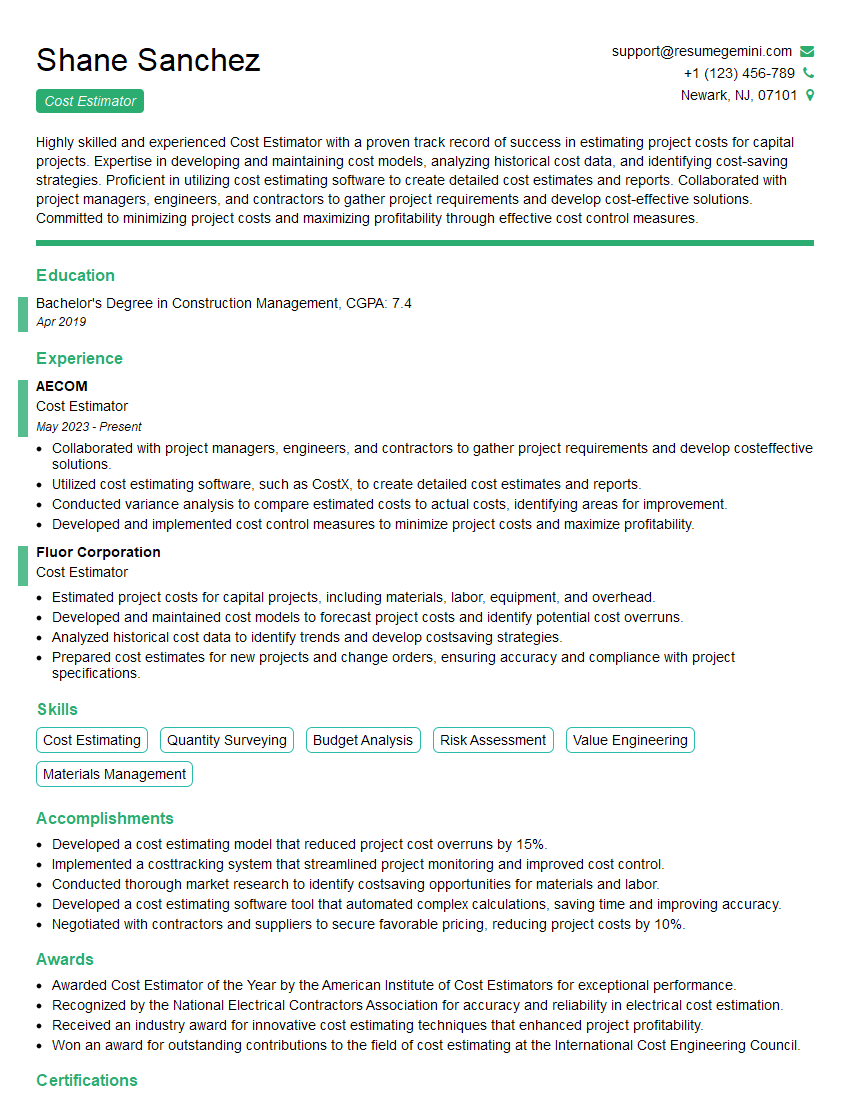
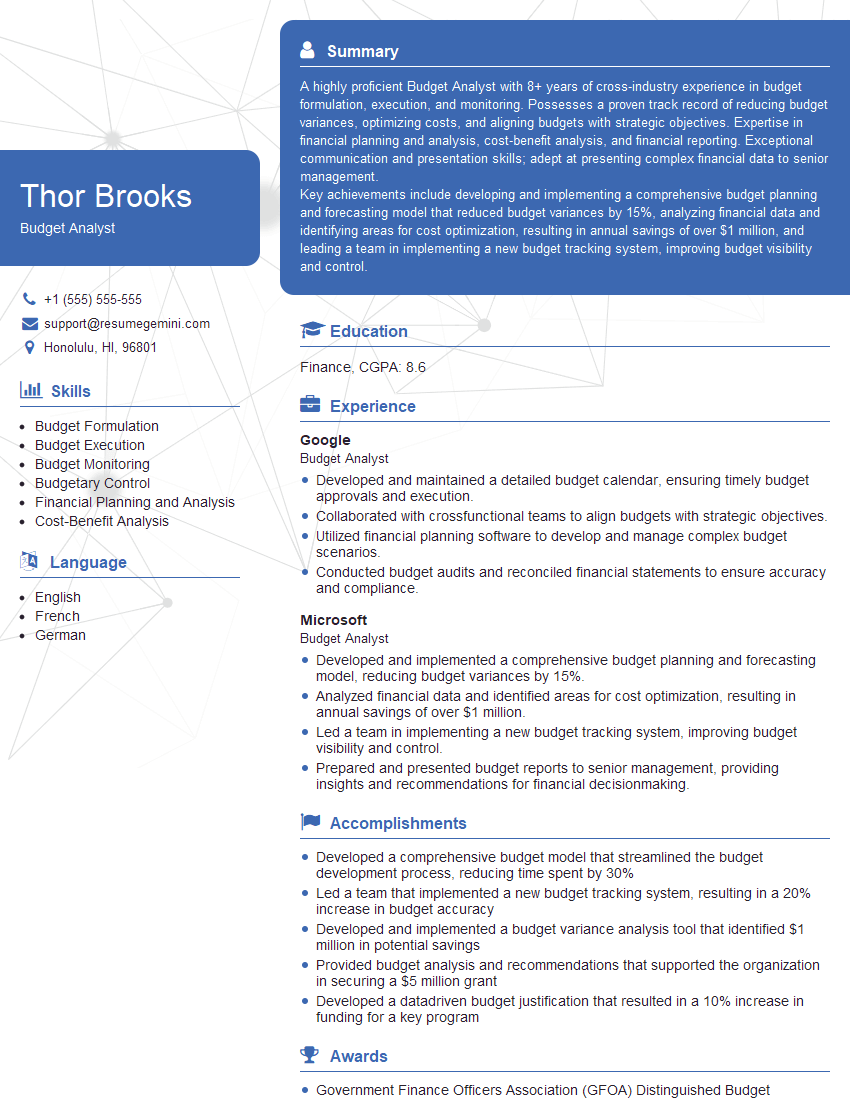
Mastering Project Economics and Cost Analysis is crucial for career advancement in any project-oriented field. A strong understanding of these principles demonstrates valuable skills to potential employers and opens doors to higher-level roles with increased responsibilities and compensation. To maximize your job prospects, crafting a compelling and ATS-friendly resume is essential. ResumeGemini can significantly enhance your resume-building experience by providing you with the tools and resources to create a professional document that showcases your skills effectively. We offer examples of resumes tailored to Project Economics and Cost Analysis to help you get started.
Explore more articles
Users Rating of Our Blogs
Share Your Experience
We value your feedback! Please rate our content and share your thoughts (optional).
What Readers Say About Our Blog
Very informative content, great job.
good