Interviews are more than just a Q&A session—they’re a chance to prove your worth. This blog dives into essential Project Engineering interview questions and expert tips to help you align your answers with what hiring managers are looking for. Start preparing to shine!
Questions Asked in Project Engineering Interview
Q 1. Explain your experience with project lifecycle management.
Project lifecycle management (PLM) is the application of a structured methodology to manage a project from its initial conception to its final completion and beyond. It involves a series of phases, each with its own set of goals and deliverables. My experience spans all phases, from initiation and planning through execution, monitoring & controlling, and closure.
- Initiation: Defining the project’s objectives, scope, and feasibility. For example, in a recent software development project, we meticulously defined user stories and acceptance criteria during this phase, ensuring everyone understood the project’s goals.
- Planning: Developing a detailed project plan, including timelines, budgets, resource allocation, and risk assessment. I typically use Gantt charts and critical path analysis here.
- Execution: Implementing the project plan, managing the team, and tracking progress. This often involves daily stand-up meetings and regular progress reports.
- Monitoring & Controlling: Tracking progress against the plan, identifying and addressing issues, and making necessary adjustments. This includes using Earned Value Management (discussed later) for performance measurement.
- Closure: Completing the project, documenting lessons learned, and formally closing out the project. This involves a thorough review of the project’s success against initial objectives and documenting key learnings for future projects.
I’ve consistently applied PLM principles across diverse projects, leading to improved predictability, better resource utilization, and ultimately, increased project success rates.
Q 2. Describe your approach to risk assessment and mitigation in projects.
My approach to risk assessment and mitigation is proactive and systematic. I believe in identifying potential problems early and developing strategies to minimize their impact. I typically follow these steps:
- Risk Identification: Brainstorming sessions, checklists, and SWOT (Strengths, Weaknesses, Opportunities, Threats) analyses are used to identify potential risks. For example, in a construction project, potential risks might include weather delays, material shortages, or labor disputes.
- Risk Analysis: Assessing the likelihood and potential impact of each risk. This often involves using a risk matrix that categorizes risks based on their probability and severity.
- Risk Response Planning: Developing strategies to address each risk. These strategies can include risk avoidance, risk mitigation (reducing the probability or impact), risk transfer (e.g., insurance), or risk acceptance (accepting the risk and its potential consequences).
- Risk Monitoring and Control: Regularly monitoring the identified risks and adjusting the response plans as necessary. This is an ongoing process throughout the project lifecycle.
For example, in a previous project facing potential supply chain disruptions, we mitigated the risk by securing alternative suppliers and building a buffer stock of critical materials. This proactive approach ensured the project remained on track despite the global supply chain challenges.
Q 3. How do you handle conflicting priorities in a project?
Conflicting priorities are inevitable in project management. My approach involves a structured process to prioritize tasks and manage expectations:
- Clearly Define Priorities: Work with stakeholders to establish clear priorities based on project objectives and business needs. This often involves prioritizing tasks based on their importance and urgency (using a matrix like Eisenhower’s Urgent/Important matrix).
- Open Communication: Facilitate open and honest communication among stakeholders to ensure everyone understands the priorities and the rationale behind the decisions. Transparency is key.
- Negotiation and Compromise: When conflicts arise, I facilitate discussions to find mutually acceptable solutions. This might involve rescheduling tasks, reallocating resources, or adjusting the project scope.
- Documentation: Clearly document the agreed-upon priorities and any changes to the project plan. This ensures everyone is on the same page and avoids misunderstandings.
- Escalation: If conflicts cannot be resolved at the project level, I escalate the issue to higher management for resolution.
For instance, if a project faces a delay due to resource constraints, I would work with stakeholders to prioritize critical tasks and potentially defer less critical ones, ensuring timely delivery of the core project objectives.
Q 4. What methods do you use for project scheduling and tracking?
Effective project scheduling and tracking are critical for success. I utilize several methods:
- Gantt Charts: Visual representations of project timelines, showing task dependencies and durations. These are excellent for high-level overview and communication.
- Critical Path Method (CPM): Identifies the longest sequence of tasks in a project, determining the shortest possible project duration and highlighting tasks that are critical to on-time completion. This helps to focus resources on the most important tasks.
- Project Management Software: Tools like Microsoft Project, Jira, or Asana provide robust features for task management, scheduling, resource allocation, and progress tracking. They facilitate collaboration and improve transparency.
- Agile Methodologies (e.g., Scrum): For iterative projects, Agile methods, with their short sprints and frequent reviews, are invaluable for tracking progress and adapting to changing requirements.
I regularly monitor progress against the schedule, using progress reports and meetings to identify and address potential delays. The choice of method often depends on the project’s size, complexity, and the chosen project management methodology.
Q 5. Explain your experience with Earned Value Management (EVM).
Earned Value Management (EVM) is a project management technique for measuring project performance and progress. It integrates scope, schedule, and cost data to provide a comprehensive view of project status. My experience with EVM involves using key metrics such as:
- Planned Value (PV): The budgeted cost of work scheduled to be accomplished up to a given point in time.
- Earned Value (EV): The value of the work actually completed up to a given point in time.
- Actual Cost (AC): The actual cost incurred up to a given point in time.
These metrics are used to calculate key performance indicators (KPIs) like:
- Schedule Variance (SV): EV – PV (Positive SV indicates ahead of schedule, negative behind schedule).
- Cost Variance (CV): EV – AC (Positive CV indicates under budget, negative over budget).
- Schedule Performance Index (SPI): EV / PV (SPI > 1 indicates ahead of schedule, SPI < 1 behind schedule).
- Cost Performance Index (CPI): EV / AC (CPI > 1 indicates under budget, CPI < 1 over budget).
By analyzing these KPIs, I can identify potential problems early and take corrective actions to keep the project on track and within budget. For instance, a negative CV and CPI would signal cost overruns, requiring immediate investigation and mitigation strategies.
Q 6. How do you manage project budgets and resources effectively?
Effective budget and resource management is crucial for project success. My approach involves:
- Detailed Budgeting: Creating a comprehensive budget that accounts for all project costs, including labor, materials, equipment, and other expenses.
- Resource Allocation: Assigning resources (personnel, equipment, materials) to tasks based on their needs and availability. Resource leveling techniques are used to optimize resource utilization and minimize conflicts.
- Cost Control: Regularly monitoring expenditures against the budget and taking corrective actions to address any variances. This involves regular cost reporting and analysis.
- Contingency Planning: Setting aside funds to address unforeseen costs or delays. A well-defined contingency plan ensures that the project can handle unexpected events.
- Change Management: Establishing a process for managing changes to the project scope, schedule, or budget. This ensures that any changes are properly evaluated and approved before implementation.
I often use spreadsheet software and project management tools to track budget and resource utilization. Regular reporting to stakeholders keeps everyone informed about the financial status of the project.
Q 7. Describe your experience with different project delivery methods (e.g., Agile, Waterfall).
I have experience with both Waterfall and Agile project delivery methods. The choice of methodology depends on the project’s nature and requirements.
- Waterfall: A linear approach where each phase must be completed before the next begins. This is suitable for projects with well-defined requirements and minimal expected changes. I’ve used this approach successfully for projects with fixed scopes and predictable timelines, like infrastructure upgrades.
- Agile (e.g., Scrum, Kanban): An iterative approach emphasizing flexibility and collaboration. Projects are broken down into smaller iterations (sprints), allowing for frequent feedback and adaptation. I have extensive experience using Agile methodologies, particularly Scrum, for software development projects where requirements can evolve during the project.
In practice, I often find a hybrid approach is the most effective. For instance, a large project might use a Waterfall structure for high-level planning, but employ Agile techniques for specific components or sub-projects. The key is to choose the methodology that best suits the project’s unique challenges and context.
Q 8. How do you ensure quality control throughout a project?
Ensuring quality control throughout a project is a multifaceted process that starts from the initial planning phase and continues until project completion. It’s not just about detecting defects; it’s about preventing them.
- Proactive Planning: We begin by defining clear quality standards and metrics early on. This includes setting specific, measurable, achievable, relevant, and time-bound (SMART) goals for quality. For example, we might define acceptable defect rates for a software project or tolerance levels for dimensional accuracy in a construction project.
- Regular Inspections and Audits: Throughout the project lifecycle, regular inspections and audits are crucial. This could involve formal walkthroughs, testing, peer reviews, and material inspections. These checks allow us to identify and rectify issues early, minimizing their impact and cost.
- Use of Quality Management Systems: Implementing a quality management system (QMS), such as ISO 9001, provides a structured framework for consistent quality control. This often involves documented procedures, processes, and responsibilities.
- Continuous Improvement: After each project phase or milestone, we conduct a thorough review. This process involves analyzing what worked well, what didn’t, and how to improve the process for future projects. Lessons learned are documented and shared to foster continuous improvement.
- Documentation and Traceability: Maintaining comprehensive documentation is critical. This includes design specifications, test results, inspection reports, and change requests. This ensures traceability and allows us to quickly identify the root cause of any problems.
For instance, in a recent bridge construction project, we implemented a rigorous quality control plan that involved daily inspections of concrete pours, regular testing of steel strength, and independent third-party audits. This proactive approach ensured the project met the highest safety and quality standards.
Q 9. How do you communicate project status to stakeholders?
Effective communication is the cornerstone of successful project management. Keeping stakeholders informed about project progress, challenges, and milestones is crucial for maintaining trust and securing necessary support.
- Regular Status Meetings: We hold regular meetings with stakeholders, providing concise updates on progress, highlighting achievements, and addressing potential roadblocks. The frequency of these meetings is adjusted based on the project’s complexity and stakeholder needs.
- Project Reports and Dashboards: We utilize visual project management tools and dashboards to present key performance indicators (KPIs) such as schedule adherence, budget status, and risk levels. This provides stakeholders with a clear and concise overview of project health.
- Targeted Communication: Understanding the information needs of different stakeholders is key. We tailor our communication accordingly, providing concise updates to senior management and more detailed reports to project teams.
- Communication Channels: We leverage various communication channels such as email, project management software (like Asana or MS Project), video conferencing, and even regular phone calls, to ensure information reaches the right people in a timely manner.
- Proactive Issue Management: We don’t wait for problems to escalate. We proactively communicate potential risks and challenges to stakeholders, outlining proposed mitigation strategies. Transparency builds trust.
For example, in a software development project, we used a project management tool to automatically generate weekly progress reports with visual dashboards. This allowed us to clearly communicate progress to clients and management, fostering collaboration and transparency.
Q 10. Describe a time you had to resolve a critical project issue.
During a large-scale refinery upgrade, we faced a critical issue: a major equipment delivery was delayed by six weeks due to unforeseen manufacturing complications at the supplier’s facility. This threatened to significantly delay the entire project and incur substantial cost overruns.
My approach involved:
- Immediate Assessment: I quickly convened a team to assess the impact of the delay on the project schedule and budget. We analyzed the critical path and identified tasks that could be expedited or adjusted.
- Collaboration and Negotiation: I collaborated with the supplier to explore solutions, such as partial shipments or alternative sourcing options. We negotiated a revised delivery schedule and a compensation package for the delay.
- Risk Mitigation Planning: We developed a contingency plan that included re-sequencing tasks, accelerating some work streams, and securing additional resources as necessary.
- Transparent Communication: I kept all stakeholders, including management, the client, and the impacted subcontractors, informed of the situation and the actions being taken. Transparency helped to mitigate concerns and maintain trust.
- Successful Resolution: Through diligent planning and collaboration, we managed to mitigate the impact of the delay. We successfully implemented the contingency plan, minimizing cost overruns and ultimately delivering the project only two weeks behind schedule.
This experience reinforced the importance of proactive risk management, strong vendor relationships, and transparent communication in resolving critical project issues.
Q 11. How do you handle changes in project scope?
Changes in project scope are inevitable, but managing them effectively is crucial for project success. Uncontrolled scope creep can lead to cost overruns, schedule delays, and stakeholder dissatisfaction.
- Formal Change Request Process: We establish a formal process for managing scope changes. All changes must be documented as formal change requests, reviewed, and approved by relevant stakeholders.
- Impact Assessment: Before approving any change, we carefully assess its potential impact on the project schedule, budget, and resources. This often involves creating a detailed impact analysis.
- Negotiation and Prioritization: When multiple change requests arise, we prioritize them based on their impact and feasibility. This may involve negotiation with stakeholders to balance competing priorities.
- Contractual Considerations: We carefully review the project contract to understand the procedures for managing scope changes and associated costs. This includes determining whether any additional fees or timelines are required.
- Updated Project Plans: Once a change is approved, the project plan, schedule, and budget are updated accordingly. This ensures consistency and transparency.
For instance, in a software development project, a client requested a new feature after the initial scope was finalized. We followed our change request process, documented the impact, and negotiated a revised timeline and budget with the client before proceeding.
Q 12. What software tools are you proficient in for project management?
My proficiency in project management software is extensive. I’m adept at using various tools depending on project needs and team preferences. Some of the key software packages I’m proficient in include:
- Microsoft Project: For detailed scheduling, resource allocation, and tracking project progress.
- Primavera P6: For complex projects requiring advanced scheduling and resource management capabilities. I’ve used this extensively for large-scale infrastructure projects.
- MS Project Online/Planview Enterprise One: For collaborative project management and real-time status updates.
- Asana/Trello: For task management and workflow automation, especially useful for Agile development projects.
- Jira: Primarily for software development projects, facilitating agile methodologies and issue tracking.
I’m comfortable using these tools to create project plans, track progress, manage resources, and facilitate collaboration among team members. My expertise extends to customizing these tools to meet specific project requirements.
Q 13. Explain your experience with engineering drawings and specifications.
My experience with engineering drawings and specifications is extensive. I have worked with various types of drawings, including CAD drawings (AutoCAD, Revit), P&IDs (Piping and Instrumentation Diagrams), and Isometrics. I understand the importance of accurate and detailed drawings in ensuring project success.
- Understanding Drawing Standards: I’m familiar with various drawing standards, including ANSI, ISO, and industry-specific standards. This ensures consistency and clarity in drawings and specifications.
- Review and Interpretation: I can effectively review and interpret engineering drawings and specifications to ensure they are complete, accurate, and compliant with relevant codes and standards.
- Coordination and Collaboration: I effectively collaborate with engineers, designers, and contractors to ensure drawing accuracy and consistency throughout the project lifecycle.
- Conflict Resolution: I can identify and resolve conflicts or discrepancies in drawings and specifications, ensuring all parties are on the same page.
- Use of CAD software: I can use various CAD software packages to create, modify, and manage engineering drawings.
For example, in a recent power plant project, I was responsible for reviewing all piping and instrumentation diagrams (P&IDs) to ensure they were compliant with industry safety regulations and aligned with the project’s specifications. This prevented potential errors during construction and operation.
Q 14. How do you ensure compliance with safety regulations on a project?
Ensuring compliance with safety regulations is paramount in any project. It’s not merely a checklist; it’s a core value ingrained in our project execution.
- Hazard Identification and Risk Assessment: We begin by conducting thorough hazard identification and risk assessments using techniques such as HAZOP (Hazard and Operability Study) and JSA (Job Safety Analysis). This identifies potential hazards and their associated risks.
- Safety Procedures and Plans: We develop comprehensive safety procedures and plans that outline safe work practices, emergency response protocols, and personal protective equipment (PPE) requirements.
- Training and Education: All team members receive appropriate safety training before starting work. This training covers relevant safety regulations, procedures, and emergency response protocols.
- Regular Safety Inspections: We conduct regular safety inspections to identify and address any potential hazards or non-compliance issues. This involves toolbox talks, site inspections, and safety audits.
- Incident Reporting and Investigation: We have a robust incident reporting and investigation system in place to ensure any accidents or near misses are thoroughly investigated to determine the root cause and implement preventative measures.
- Compliance with Regulations: We ensure strict adherence to all relevant safety regulations, including OSHA (Occupational Safety and Health Administration) guidelines or other applicable local and international regulations.
In a previous petrochemical plant project, our strict adherence to safety regulations, including daily safety inspections and robust training programs, resulted in a zero-incident record throughout the project’s duration. This not only ensured the safety of our workforce but also fostered a strong safety culture within the project team.
Q 15. Describe your experience with procurement and contract management.
Procurement and contract management are critical aspects of project engineering. My experience encompasses the entire lifecycle, from initial needs assessment and vendor selection to contract negotiation, execution, and closure. I’m proficient in developing comprehensive Request for Proposals (RFPs) ensuring clarity and minimizing ambiguities. This includes specifying technical requirements, payment terms, and risk mitigation strategies. I’ve successfully negotiated contracts with various vendors, securing favorable terms and conditions while maintaining strong working relationships. For example, on a recent infrastructure project, I negotiated a contract that incorporated a performance-based payment structure, incentivizing the vendor to deliver on time and within budget. This not only reduced project risk but also saved the company a considerable sum.
Post-contract award, I meticulously monitor performance against contractual obligations, proactively addressing any deviations. I have experience managing disputes through collaborative negotiation and, when necessary, formal dispute resolution mechanisms. My approach emphasizes building trust and mutual understanding with vendors, viewing them as partners rather than simply contractors. This collaborative approach fosters transparency and facilitates efficient problem-solving throughout the project lifecycle.
Career Expert Tips:
- Ace those interviews! Prepare effectively by reviewing the Top 50 Most Common Interview Questions on ResumeGemini.
- Navigate your job search with confidence! Explore a wide range of Career Tips on ResumeGemini. Learn about common challenges and recommendations to overcome them.
- Craft the perfect resume! Master the Art of Resume Writing with ResumeGemini’s guide. Showcase your unique qualifications and achievements effectively.
- Don’t miss out on holiday savings! Build your dream resume with ResumeGemini’s ATS optimized templates.
Q 16. How do you identify and manage project dependencies?
Identifying and managing project dependencies is crucial for successful project delivery. Dependencies are relationships between tasks where one task cannot begin until another is completed. I utilize a combination of techniques to identify these dependencies. This starts with thorough task breakdown during project planning, using tools like Work Breakdown Structures (WBS) and precedence diagramming. I also hold regular meetings with team members to elicit their understanding of task interrelationships. A key part of this process involves identifying both finish-to-start (FS) and other types of dependencies (start-to-start, finish-to-finish, start-to-finish) to create a precise project schedule.
Once identified, dependencies are managed using various strategies including: buffering (adding extra time to account for potential delays), resource leveling (optimizing resource allocation to minimize dependencies), and critical path analysis (as discussed in the next answer). For example, on a recent software development project, we identified a dependency where the backend development had to be completed before the frontend team could begin their work. By proactively communicating this dependency and allocating resources effectively, we avoided significant delays.
Q 17. Explain your understanding of critical path analysis.
Critical Path Analysis (CPA) is a project management technique used to identify the longest sequence of dependent tasks in a project. This longest sequence determines the shortest possible duration for project completion; any delay on the critical path will delay the entire project. I use CPA to prioritize tasks, allocate resources effectively, and identify potential bottlenecks. CPA usually involves creating a network diagram depicting the tasks and their dependencies, calculating the duration of each task, and determining the earliest and latest start and finish times for each task.
Tools like Microsoft Project or specialized project management software are often employed to perform CPA. The critical path is visually identified on the diagram, highlighting the tasks that require the most attention. By focusing efforts on optimizing the tasks on the critical path, I can minimize the overall project duration and improve the likelihood of on-time delivery. For instance, during the construction phase of a building project, the critical path may involve foundation work, structural framing, and roofing. By meticulously monitoring the progress of these tasks and mitigating any potential delays, I ensured the project remained on schedule.
Q 18. How do you build and maintain relationships with project team members?
Building and maintaining positive relationships with project team members is essential for a successful project. My approach is based on open communication, mutual respect, and a collaborative work environment. I foster trust by being transparent about project goals, challenges, and progress. I regularly hold team meetings to discuss updates, address concerns, and brainstorm solutions. Effective communication is key; I ensure everyone understands their roles and responsibilities.
I actively listen to team members’ input, valuing their expertise and perspectives. I provide regular feedback, both positive and constructive, to help team members grow and improve. Conflict resolution is an important skill, and I handle disagreements in a fair and impartial manner, focusing on finding solutions that benefit the team as a whole. I believe in celebrating successes and recognizing individual contributions, building team morale and fostering a sense of shared accomplishment. For example, on a challenging project, I facilitated team-building activities which significantly improved collaboration and boosted team spirit.
Q 19. Describe your experience with project closure and documentation.
Project closure and documentation are critical for ensuring project lessons are captured and future projects can benefit from past experiences. My process involves a thorough review of all project deliverables, ensuring they meet the defined specifications and quality standards. This includes verifying that all tasks are completed, all necessary approvals are obtained, and all documentation is accurately and comprehensively archived. I also ensure that all financial aspects of the project are closed, including final payments to vendors and reconciliation of project budgets.
Comprehensive documentation is crucial. This includes project plans, meeting minutes, change requests, risk logs, and final reports. These documents provide an auditable trail of the project’s execution and facilitate knowledge transfer to future projects. A post-project review, usually involving the core team members, is conducted to discuss what went well, what could be improved, and any lessons learned. This feedback is invaluable for continuous improvement. This knowledge is captured and disseminated across teams to foster a culture of continuous learning.
Q 20. How do you measure project success?
Measuring project success goes beyond simply meeting deadlines and staying within budget. While those are essential components, a holistic approach considers various factors. I typically use a multi-faceted approach. This includes quantitatively measuring against pre-defined key performance indicators (KPIs) like on-time delivery, budget adherence, and quality metrics. For example, in a software development project, KPIs may include lines of code per developer, bug fixes per sprint, and user satisfaction scores.
Qualitative aspects are equally important. I assess customer satisfaction, stakeholder feedback, and the achievement of project goals, which often extend beyond just the technical specifications. Did the project achieve its intended business objectives? Did it create value for the organization? Did it foster team growth and improvement? By considering both quantitative and qualitative data, I can obtain a comprehensive understanding of project success, leading to more accurate and meaningful evaluations.
Q 21. What is your experience with project post-mortem analysis?
Post-mortem analysis, or project retrospective, is a critical step in continuous improvement. It’s a structured review of a completed project, regardless of whether the project was deemed successful or not. The goal is to identify what worked well, what could have been improved, and to extract lessons learned for future endeavors. I facilitate these sessions in a blame-free environment, encouraging open and honest feedback from team members. This involves using structured techniques such as SWOT analysis (Strengths, Weaknesses, Opportunities, Threats) or a simple ‘what went well/what could be improved’ framework.
The findings from the post-mortem analysis are documented and disseminated throughout the organization. This knowledge sharing prevents the repetition of past mistakes and promotes best practices across future projects. For example, after a project experienced significant delays, the post-mortem analysis revealed inadequacies in the initial risk assessment. As a result, our team implemented changes to improve risk management processes in future projects, minimizing the probability of similar issues arising.
Q 22. How do you utilize data analytics to improve project performance?
Data analytics is crucial for optimizing project performance. I leverage data to identify trends, predict potential issues, and make informed decisions throughout the project lifecycle. This involves collecting data from various sources – project management software, timesheets, cost reports, risk registers, and stakeholder feedback – and then applying analytical techniques.
- Predictive Analytics: I use historical project data to forecast potential delays or cost overruns. For example, by analyzing past projects, I can identify patterns that indicate a high probability of scope creep and proactively implement strategies to mitigate it.
- Performance Monitoring: Real-time data dashboards allow me to track key performance indicators (KPIs) such as schedule adherence, budget consumption, and resource utilization. This enables proactive intervention if deviations from the baseline are detected. For instance, if resource utilization consistently exceeds projections, I can investigate the cause and adjust the resource allocation plan.
- Risk Assessment: Data analysis helps in identifying and prioritizing risks. By analyzing historical data on project risks and their impact, I can build a more accurate risk register and develop effective mitigation strategies. For instance, if data shows a specific type of weather event often delays projects, we can plan for contingency measures.
In essence, data-driven decision-making improves accuracy, reduces uncertainty, and enables more efficient project execution.
Q 23. Describe your experience with sustainable project practices.
Sustainable project practices are integral to my approach. I strive to minimize environmental impact, promote social responsibility, and ensure economic viability throughout the project lifecycle. This involves considering the entire project’s life cycle, from design and procurement to construction and operation.
- Material Selection: I prioritize the use of recycled and sustainably sourced materials, minimizing waste and reducing the carbon footprint. For example, choosing bamboo over traditional lumber for scaffolding reduces deforestation.
- Energy Efficiency: In building projects, I incorporate energy-efficient designs and technologies to reduce energy consumption during both construction and operation. This could involve using solar panels, improving insulation, or employing smart building technologies.
- Waste Management: Implementing comprehensive waste management strategies, including recycling, composting, and responsible disposal, is essential. Strict adherence to waste reduction plans during construction minimizes landfill waste.
- Community Engagement: I actively engage with local communities, ensuring projects benefit them and minimize disruption. This includes addressing local concerns and creating opportunities for community involvement.
By integrating sustainable practices, we create projects that are not only successful in their primary goals but also environmentally and socially responsible.
Q 24. How do you handle stakeholder conflicts?
Stakeholder conflicts are inevitable in complex projects. My approach involves proactive communication, active listening, and collaborative problem-solving. I utilize several strategies to manage and resolve these conflicts.
- Early Identification and Prevention: Regular stakeholder meetings and communication channels help identify potential conflicts early on. This proactive approach prevents minor disagreements from escalating.
- Understanding Perspectives: I make sure to listen carefully to each stakeholder’s perspective, concerns, and needs, empathizing with their positions even if they differ from mine.
- Facilitation and Mediation: When conflicts arise, I facilitate open dialogue and guide stakeholders towards finding mutually acceptable solutions. This may involve acting as a mediator, ensuring a fair and productive discussion.
- Documentation and Agreements: Once a solution is reached, I document the agreement and ensure all stakeholders understand and accept the decision. This prevents future misunderstandings.
My focus is on building trust and fostering collaborative relationships, ensuring all stakeholders feel heard and valued. The goal is not to ‘win’ the argument but to achieve a mutually beneficial outcome.
Q 25. Explain your understanding of different types of project risks.
Project risks are uncertainties that can negatively impact project objectives. They can be broadly categorized into several types:
- Technical Risks: These stem from challenges in the design, technology, or implementation of the project. Examples include software bugs, equipment malfunctions, or unforeseen technical complexities.
- Schedule Risks: These relate to delays in completing project tasks or milestones. Causes may include unforeseen events, resource constraints, or ineffective planning.
- Cost Risks: These involve exceeding the project budget. This can arise from inaccurate cost estimation, unexpected expenses, or cost overruns due to delays.
- Resource Risks: These are associated with the availability and competence of project resources, such as personnel, equipment, or materials. Shortages or skill gaps can significantly impact project success.
- External Risks: These are factors outside the project team’s control, such as economic downturns, regulatory changes, or natural disasters.
Understanding these risk categories helps in developing a comprehensive risk management plan, which includes identifying, assessing, responding to, and monitoring potential risks throughout the project lifecycle.
Q 26. What is your approach to conflict resolution in a project team?
My approach to conflict resolution within a project team centers on open communication, collaboration, and fairness. I employ a structured approach:
- Identify the Conflict: Clearly define the nature of the conflict, identifying the involved parties and the root cause.
- Facilitate Open Communication: Create a safe space for team members to express their concerns and perspectives without interruption or judgment.
- Find Common Ground: Focus on identifying shared goals and objectives to build a foundation for collaboration.
- Brainstorm Solutions: Engage the team in brainstorming potential solutions, ensuring everyone has an opportunity to contribute.
- Select and Implement a Solution: Collectively choose the best solution based on feasibility, effectiveness, and team consensus.
- Monitor and Evaluate: Track the effectiveness of the implemented solution and make adjustments as needed. Regular check-ins help prevent the conflict from recurring.
My goal is to foster a team environment where disagreements are viewed as opportunities for growth and improvement, rather than sources of tension and conflict.
Q 27. How do you adapt to changing project requirements?
Adapting to changing project requirements is a critical skill in project engineering. My approach is based on flexibility, strong communication, and a structured change management process:
- Formal Change Management Process: I use a formal system for evaluating, authorizing, and implementing changes. This involves documenting all change requests, assessing their impact on scope, schedule, and budget, and obtaining necessary approvals before implementation.
- Proactive Communication: Open and transparent communication with stakeholders is key. Regular updates on project progress, including any changes, keep everyone informed and minimize misunderstandings.
- Impact Assessment: A thorough assessment of the impact of any change request on the project is crucial. This involves considering potential delays, cost increases, and changes to the project deliverables.
- Scope Management: Clearly define and manage the project scope. Changes should be carefully evaluated against the original scope and objectives to avoid scope creep.
- Flexibility and Agility: The ability to adapt to changing circumstances is crucial. This often involves using agile methodologies, which allow for iterative development and flexibility in responding to changing needs.
By employing a systematic and transparent change management process, I ensure that changes are implemented efficiently and effectively, minimizing disruptions to the project.
Q 28. Describe a project where you had to make a difficult decision.
In a previous project involving the construction of a large-scale industrial plant, we faced a significant delay due to unexpected geological conditions uncovered during excavation. The original design assumed stable soil, but we encountered unexpectedly unstable ground, threatening structural integrity and potentially causing significant cost and schedule overruns.
The difficult decision was whether to proceed with the original design, requiring costly and time-consuming ground stabilization, or to redesign a portion of the plant foundation to accommodate the unstable soil. After careful analysis, considering cost, schedule, and risk mitigation, we opted for a revised design. This involved engaging specialized geotechnical engineers, redesigning a critical section of the foundation, and adjusting the project schedule. While this increased initial costs, it mitigated the far greater risk of structural failure and prolonged delays associated with the original approach.
The situation taught me the importance of thorough risk assessment, contingency planning, and making timely, well-informed decisions, even under pressure. Ultimately, the revised approach proved successful, resulting in a safe and functional plant, albeit with some schedule and budget adjustments.
Key Topics to Learn for Project Engineering Interview
- Project Planning & Management: Understanding project lifecycles (e.g., Waterfall, Agile), critical path analysis, risk management, and resource allocation. Practical application: Be prepared to discuss how you’ve used these techniques in past projects, highlighting your problem-solving skills.
- Cost Engineering & Budgeting: Developing and managing project budgets, cost estimation techniques (e.g., parametric estimating, bottom-up estimating), and cost control strategies. Practical application: Describe your experience with budget tracking and variance analysis, demonstrating your ability to identify and address cost overruns.
- Technical Proficiency: Demonstrate a strong understanding of relevant engineering principles and technologies specific to your area of expertise (e.g., CAD software, specific industry standards). Practical application: Be ready to discuss your technical skills and how you apply them to solve engineering challenges within project constraints.
- Teamwork & Communication: Highlighting your experience in collaborative environments, effective communication strategies, and conflict resolution. Practical application: Share examples of how you’ve successfully collaborated with diverse teams, managed stakeholder expectations, and navigated challenging situations.
- Quality Control & Assurance: Understanding quality management systems (e.g., ISO 9001), quality control processes, and ensuring project deliverables meet specifications. Practical application: Describe your experience with implementing quality control measures and troubleshooting quality issues.
- Health & Safety: Demonstrating awareness of relevant health and safety regulations and procedures within project environments. Practical application: Discuss your understanding of risk assessments, safety protocols, and your commitment to a safe work environment.
Next Steps
Mastering Project Engineering opens doors to exciting career advancements and higher earning potential. A strong resume is crucial for showcasing your skills and experience to potential employers. Building an ATS-friendly resume is key to getting your application noticed. We highly recommend using ResumeGemini to craft a professional and effective resume that highlights your qualifications. ResumeGemini provides examples of resumes tailored specifically for Project Engineering roles, helping you present your skills and experience in the best possible light.
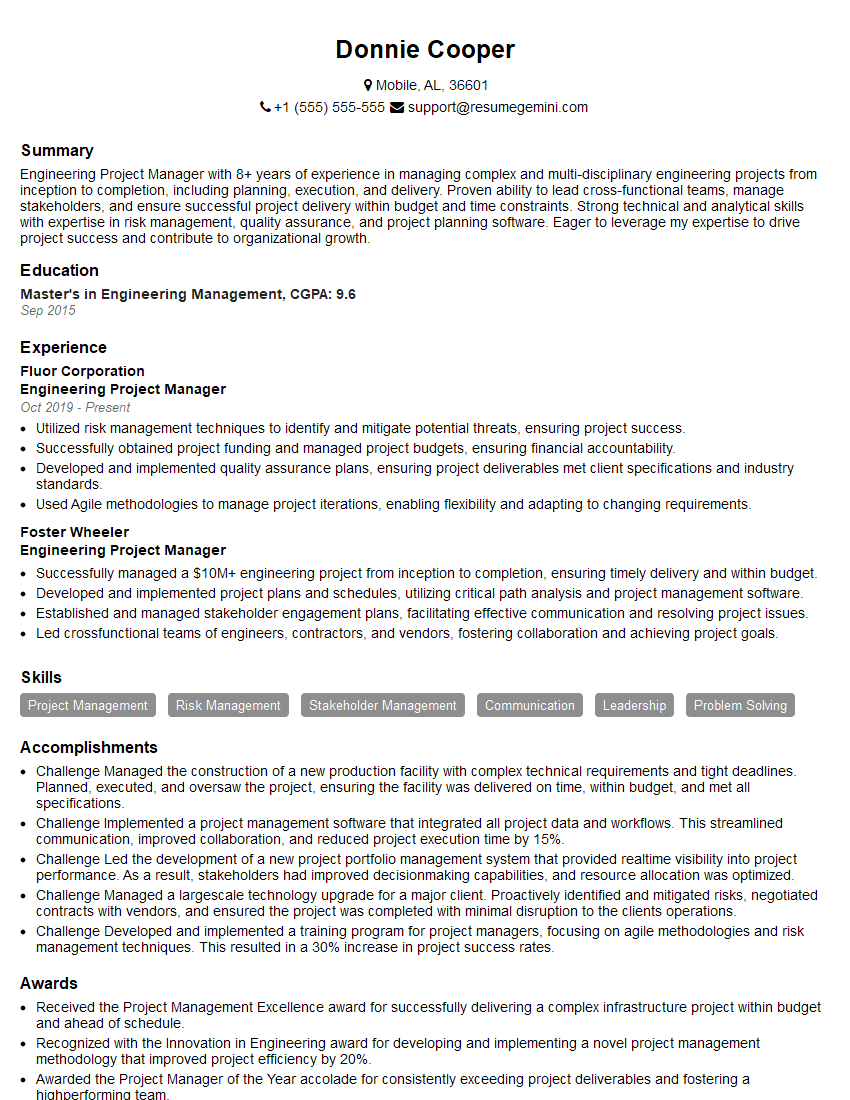
Engineering Project Manager Resume Sample
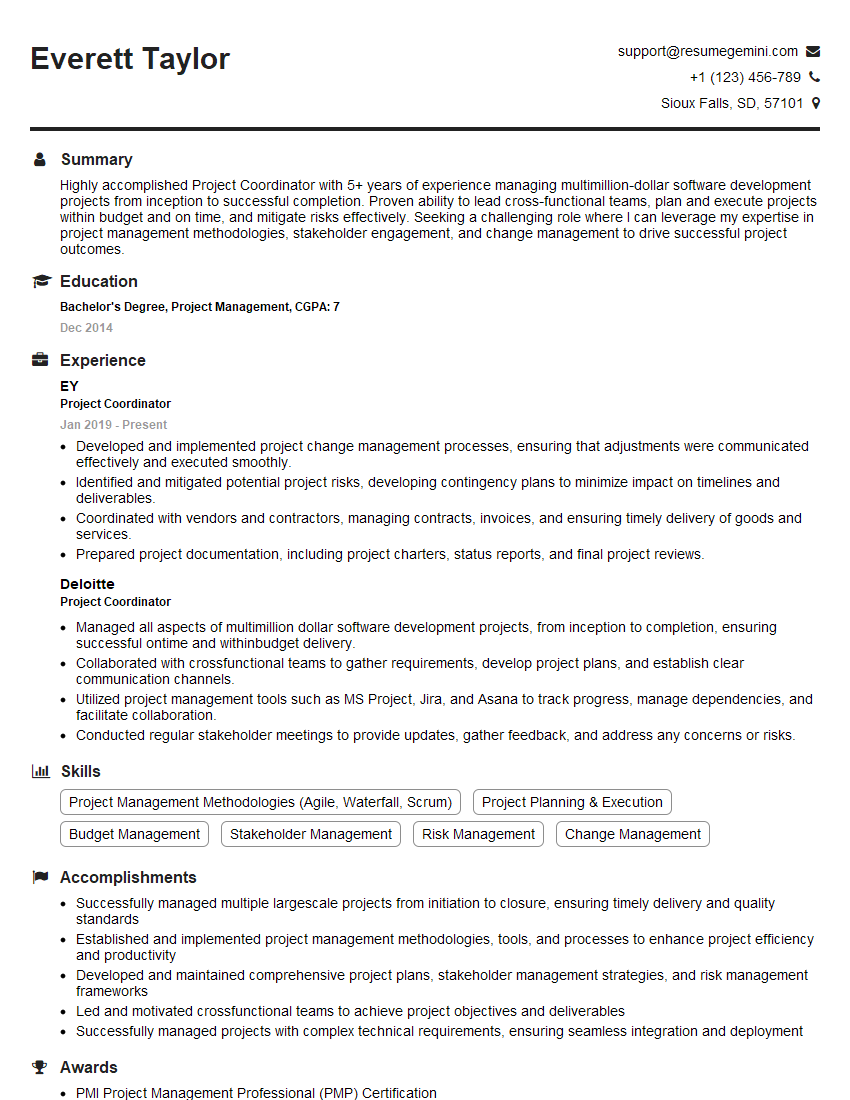
Project Coordinator Resume Sample

Project Engineer Resume Sample
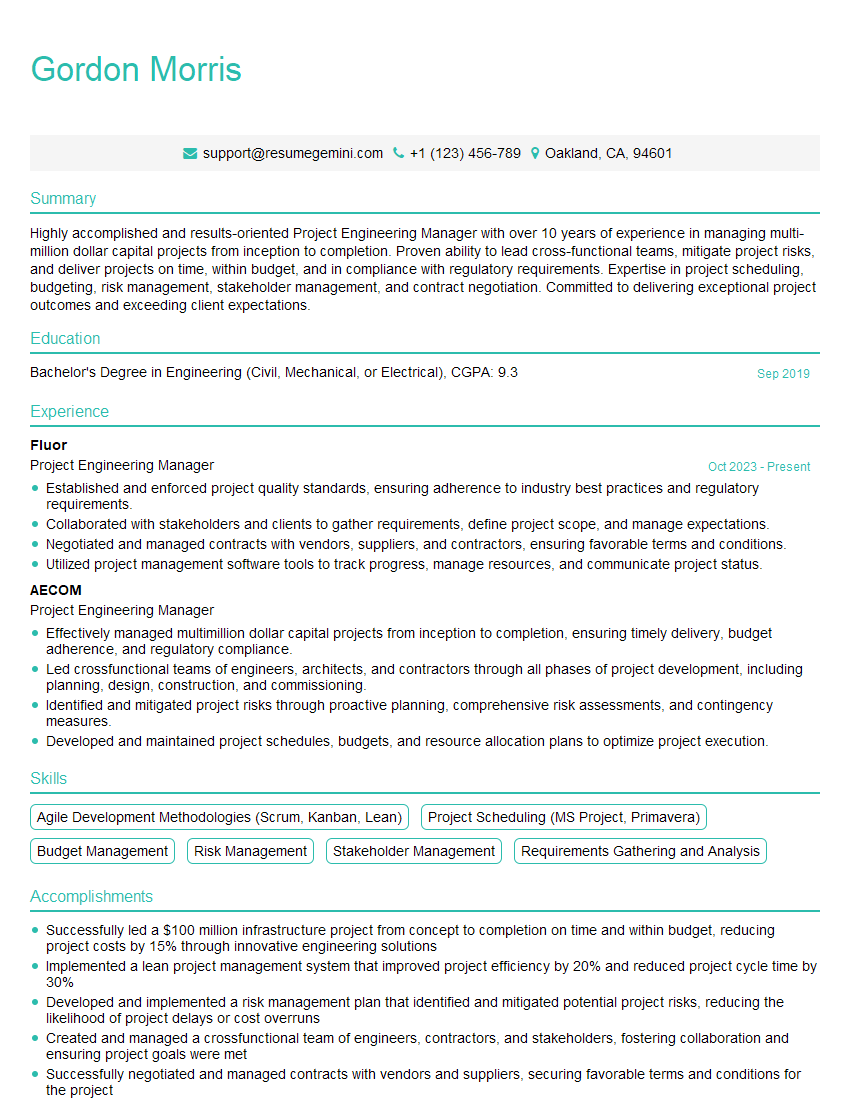
Project Engineering Manager Resume Sample
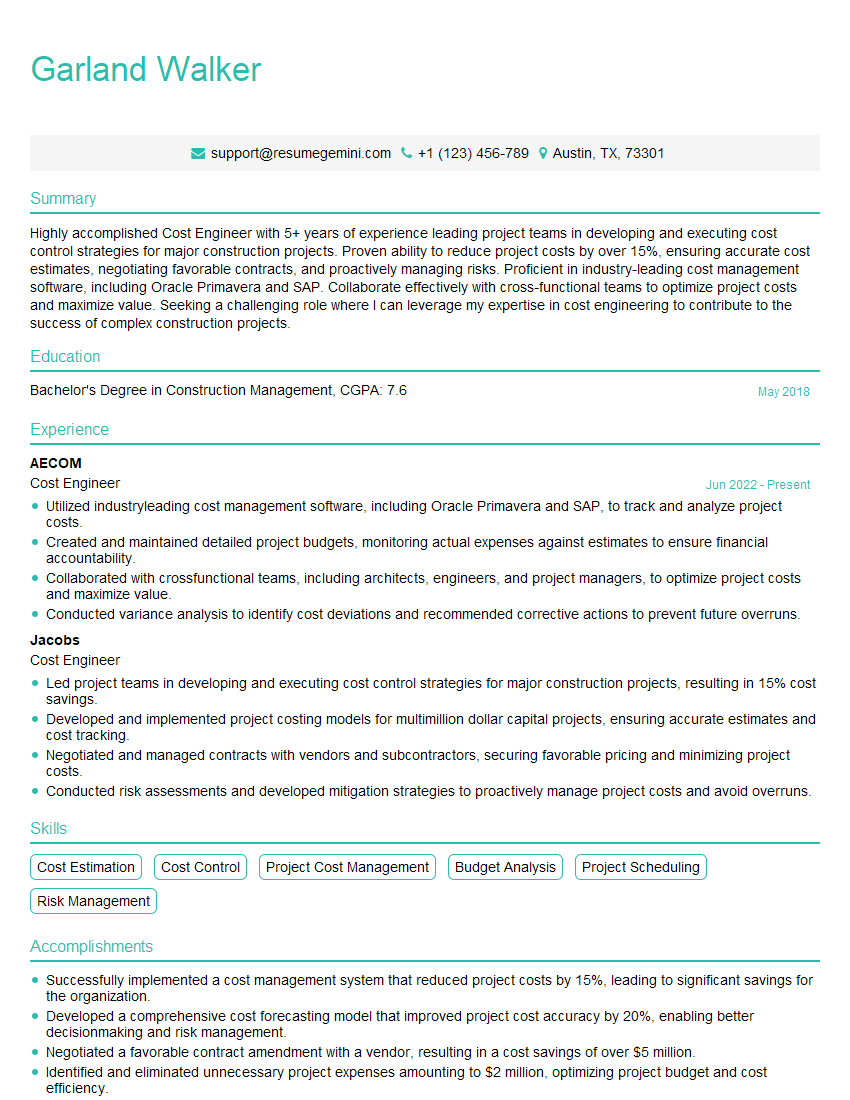
Cost Engineer Resume Sample
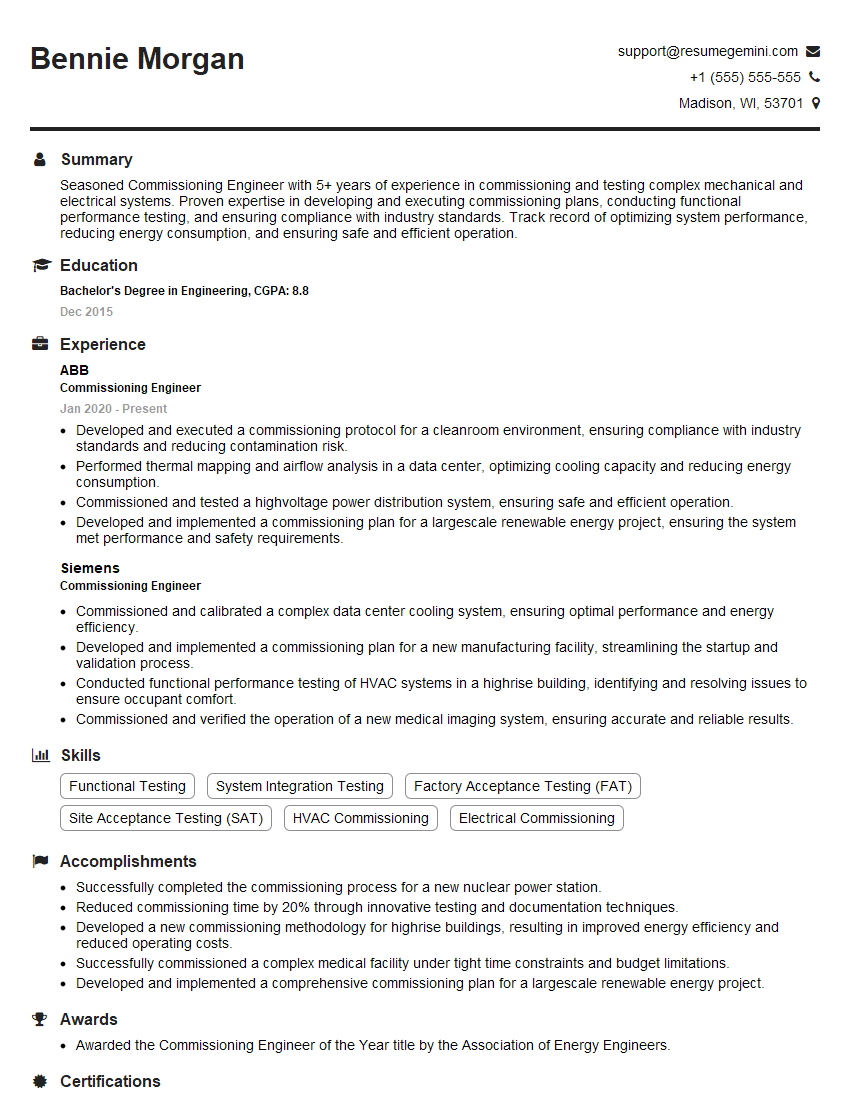
Commissioning Engineer Resume Sample
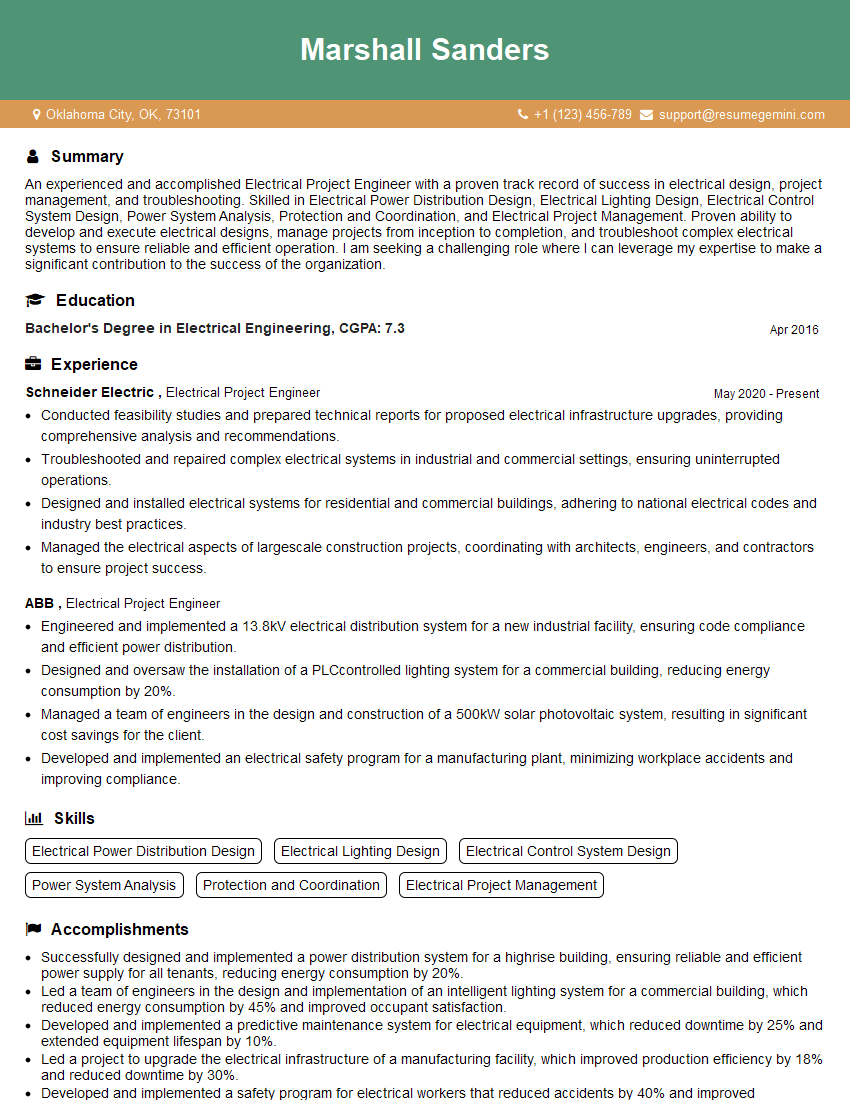
Electrical Project Engineer Resume Sample
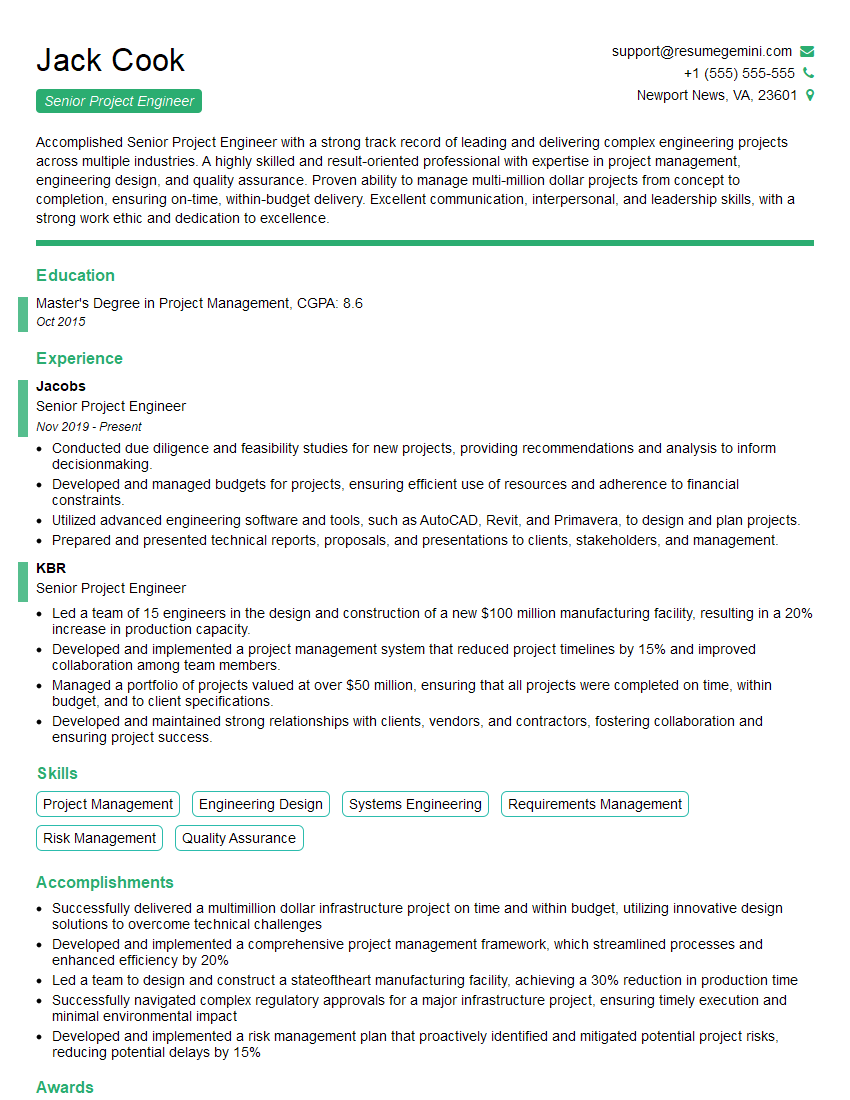
Senior Project Engineer Resume Sample
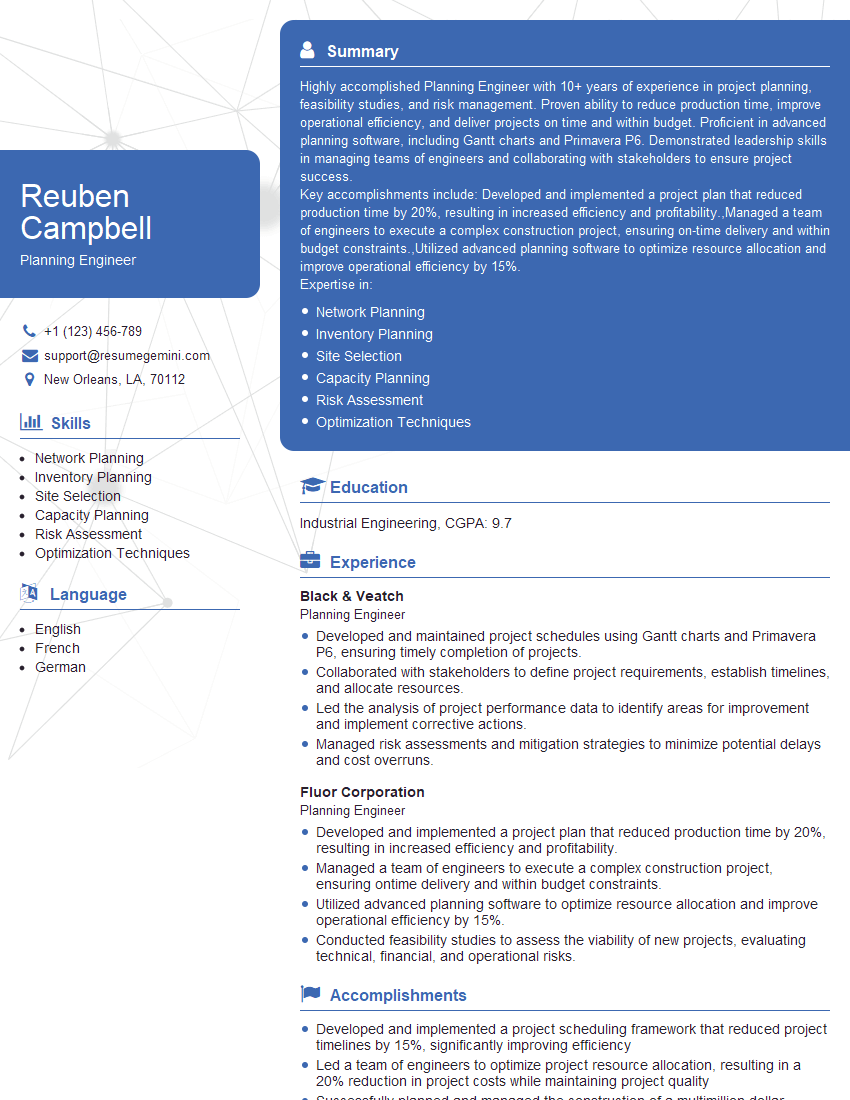
Planning Engineer Resume Sample
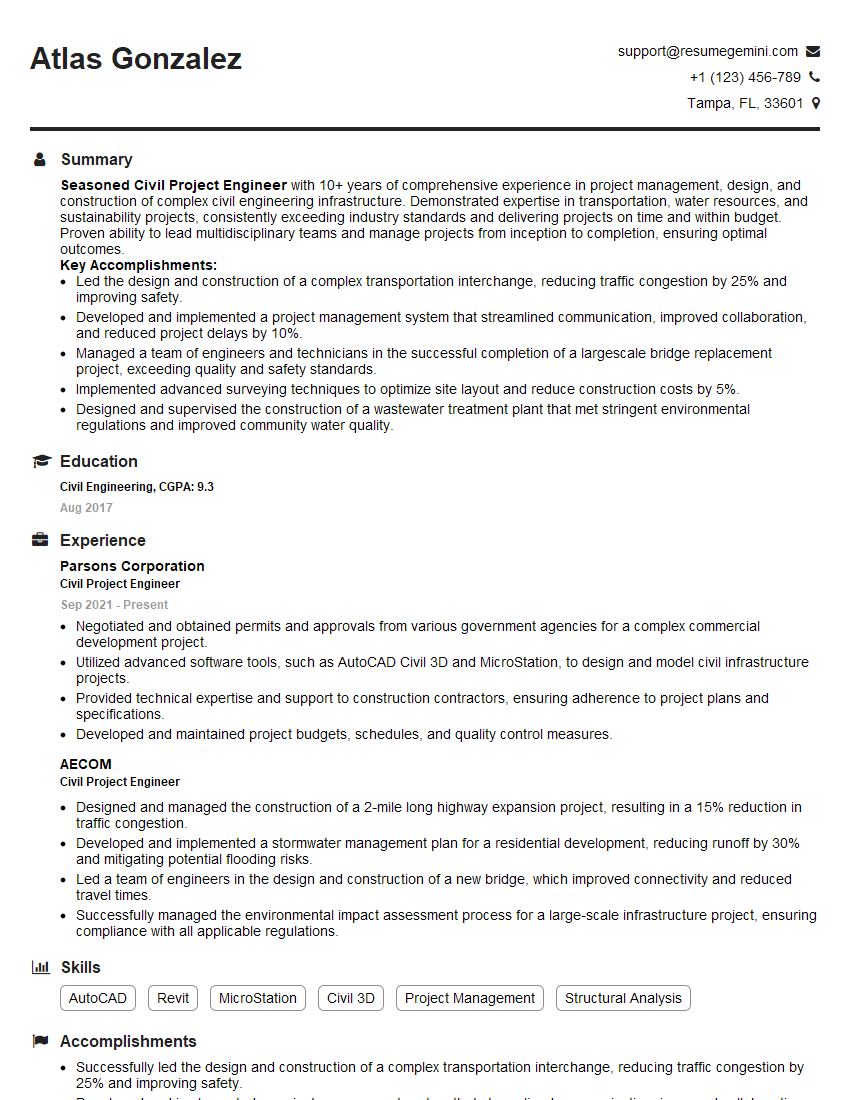
Civil Project Engineer Resume Sample
Explore more articles
Users Rating of Our Blogs
Share Your Experience
We value your feedback! Please rate our content and share your thoughts (optional).
What Readers Say About Our Blog
Very informative content, great job.
good