Preparation is the key to success in any interview. In this post, we’ll explore crucial Project Management Operation interview questions and equip you with strategies to craft impactful answers. Whether you’re a beginner or a pro, these tips will elevate your preparation.
Questions Asked in Project Management Operation Interview
Q 1. Explain your experience with different project management methodologies (Agile, Waterfall, etc.).
My experience spans a range of project management methodologies, primarily Agile and Waterfall, with exposure to hybrid approaches. Waterfall, a linear sequential approach, is best suited for projects with clearly defined requirements and minimal anticipated changes. I’ve utilized it successfully in software development projects with fixed specifications. For example, I managed the development of a client’s internal inventory management system using a Waterfall methodology. The defined stages – requirements, design, implementation, testing, and deployment – allowed for precise tracking and control. However, its rigidity can be a drawback when dealing with evolving needs.
Agile, on the other hand, embraces iterative development and flexibility. It’s ideal for projects with evolving requirements or those involving significant uncertainty. I’ve successfully implemented Scrum, a popular Agile framework, in several projects, including the development of a new mobile application. The iterative sprints (typically two-week cycles) enabled us to incorporate user feedback early and often, leading to a more robust and user-friendly final product. Agile methodologies emphasize collaboration, rapid prototyping, and continuous improvement. My experience in using both approaches allows me to choose the best fit for each project’s unique circumstances, and often I integrate elements from both.
Q 2. Describe your experience with project planning and scheduling tools (e.g., MS Project, Jira).
I’m proficient in several project planning and scheduling tools, including Microsoft Project and Jira. Microsoft Project is excellent for managing complex projects with intricate dependencies, offering robust features for scheduling, resource allocation, and cost tracking. I’ve used it to create detailed Gantt charts illustrating task dependencies and timelines for large-scale construction projects, effectively monitoring progress and identifying potential delays. Jira, a more Agile-focused tool, is ideal for managing iterative projects and tracking individual tasks within sprints. I frequently use Jira’s Kanban boards to visualize workflow, track progress, and facilitate collaboration within Agile teams. The ability to integrate Jira with other development tools further streamlines the workflow and provides a comprehensive overview of project health.
Q 3. How do you prioritize tasks in a high-pressure environment?
Prioritizing tasks under pressure requires a structured approach. I use a combination of methods, starting with a clear understanding of project objectives and deadlines. I then employ techniques like the MoSCoW method (Must have, Should have, Could have, Won’t have) to categorize tasks based on their importance and urgency. For instance, if facing a critical deadline, ‘Must have’ tasks receive immediate attention, while ‘Could have’ tasks might be deferred if time constraints exist. I also utilize Eisenhower Matrix (urgent/important), which helps to visualize and prioritize tasks based on their urgency and importance, ensuring that critical tasks aren’t overlooked. Finally, I frequently communicate these priorities to my team, ensuring everyone understands the rationale behind the task order and enabling effective collaboration under pressure.
Q 4. Explain your process for risk management in project operations.
My risk management process is proactive and systematic. It begins with risk identification during the project planning phase, utilizing brainstorming sessions and risk checklists to pinpoint potential threats and opportunities. Each identified risk is then analyzed, assessing its probability and impact. This allows me to prioritize risks based on their potential severity. For example, in a software development project, risks like unexpected technical challenges or delays from third-party vendors would be carefully evaluated. Following this assessment, mitigation strategies are developed, and contingency plans are put in place to address potential negative impacts. Throughout the project lifecycle, risk monitoring and control are implemented to ensure early detection of emerging issues and prompt corrective action. This approach minimizes disruption and protects project goals.
Q 5. How do you track and manage project budgets?
Tracking and managing project budgets involves meticulous planning and ongoing monitoring. I begin by creating a detailed budget breakdown, allocating resources to specific tasks and phases. This often includes using project management software like Microsoft Project to track expenses against the budget baseline. Regular budget reviews are conducted to compare actual spending against planned figures. Variance analysis helps to identify areas of overspending or underspending, enabling timely corrective actions. For instance, if we find that a specific task is exceeding its budget, I investigate the cause and collaborate with the team to find ways to reduce costs without compromising quality. Transparent and frequent reporting on budget status to stakeholders keeps everyone informed and enables proactive management.
Q 6. How do you handle stakeholder communication and expectations?
Effective stakeholder communication is paramount to project success. I begin by identifying key stakeholders and their interests. This helps me tailor my communication approach to meet their specific needs and expectations. Regular communication channels, such as weekly progress reports, meetings, and individual updates, are established to ensure transparency and keep stakeholders informed. I also proactively seek feedback from stakeholders throughout the project lifecycle, using this feedback to make necessary adjustments and manage expectations effectively. For example, if a stakeholder expresses concerns about a potential delay, I address their concerns transparently, explaining the reason for the delay and outlining the plan to mitigate its impact. This proactive approach builds trust and strengthens relationships.
Q 7. Describe a time you had to make a difficult decision regarding project scope or timeline.
In a recent project involving the development of a new e-commerce platform, we faced a significant challenge regarding the scope and timeline. The initial scope included a complex feature set that was pushing the project beyond its initial deadline. After careful consideration of the project priorities, stakeholder expectations, and available resources, I made the difficult decision to reduce the initial scope, focusing on the core functionalities that delivered the greatest value for the client. This meant deferring some less critical features to a future release. While this was not the initially planned outcome, this decision prevented the project from becoming significantly delayed and ultimately ensured the successful launch of a functional MVP (Minimum Viable Product), paving the way for iterative improvements and feature additions in subsequent phases. This experience reinforced the importance of prioritizing value delivery and adapting to evolving circumstances in project management.
Q 8. How do you measure project success?
Measuring project success goes beyond simply completing the project on time and within budget. It requires a holistic approach, considering the project’s initial goals and objectives. I use a multi-faceted approach that includes:
Meeting defined objectives: This is the cornerstone. Did we achieve the pre-defined goals? For example, if the project aimed to increase website traffic by 20%, did we reach that target? We would use analytics data to verify this.
Staying within budget and schedule: This is crucial for demonstrating effective management. We track variances regularly using Earned Value Management (EVM) techniques to monitor cost and schedule performance.
Stakeholder satisfaction: We gather feedback from key stakeholders through surveys, interviews, and regular progress meetings. High stakeholder satisfaction demonstrates that the project delivered value and met their expectations. For instance, a post-project survey could gauge client happiness with the delivered product or service.
Quality of deliverables: This involves assessing the quality of the final product or service against predefined quality standards and acceptance criteria. Testing, code reviews, and quality assurance processes are vital here.
Return on Investment (ROI): Where applicable, we calculate the ROI to demonstrate the project’s financial success. This involves comparing the project’s costs to its benefits.
By combining these measures, we obtain a comprehensive view of project success, going beyond simply ticking boxes and focusing on real-world impact.
Q 9. What are your preferred methods for monitoring project progress?
Monitoring project progress requires a proactive and multi-faceted approach. I favor a combination of methods to ensure a comprehensive overview:
Regular status meetings: These meetings allow for open communication, early identification of issues, and collaborative problem-solving. I typically use a structured agenda, focusing on progress against milestones, risks, and resource allocation.
Project management software: Tools like Jira, Asana, or MS Project provide real-time visibility into task completion, resource utilization, and overall project progress. I use these tools to track progress visually using Gantt charts and burndown charts, which give a clear picture of our trajectory.
Key Performance Indicators (KPIs): I define relevant KPIs based on project objectives and track them diligently. This could include metrics like task completion rates, bug reports, or customer satisfaction scores. I present these KPIs in dashboards for easy monitoring and reporting.
Progress reports: Regular progress reports (e.g., weekly or bi-weekly) provide a documented record of progress, issues, and risks. These reports are distributed to stakeholders to keep them informed and facilitate transparency.
Earned Value Management (EVM): For larger projects, I utilize EVM to provide a quantitative assessment of project performance, helping predict potential cost and schedule overruns.
By combining these methods, I ensure consistent monitoring and proactive identification of potential problems, enabling timely corrective actions.
Q 10. How do you identify and address project risks?
Risk management is crucial for project success. My approach involves a proactive and iterative process:
Risk identification: This involves brainstorming sessions, reviewing project documentation, and using checklists to identify potential risks (technical, schedule, resource, etc.). For example, on a software project, we’d consider risks related to coding errors, third-party dependencies, or unforeseen technical challenges.
Risk assessment: Once identified, we analyze each risk using a qualitative or quantitative approach, assessing its likelihood and potential impact on the project. This often involves a risk matrix.
Risk response planning: We develop strategies to mitigate identified risks. This may include developing contingency plans, avoiding the risk altogether, transferring the risk, or accepting the risk and its potential consequences.
Risk monitoring and control: We regularly monitor identified risks, tracking their status and implementing planned responses as needed. This involves continuous assessment and adjustment of risk management strategies.
Using a structured approach like this allows for proactive management of risks, increasing the likelihood of project success. The key is to not only identify but also actively manage and respond to those risks.
Q 11. Explain your experience with resource allocation and management.
Resource allocation and management are critical for project success. My approach is based on:
Resource identification: This involves identifying the necessary resources (people, equipment, materials, budget) needed for the project. I meticulously detail these requirements in the project plan.
Resource estimation: I estimate the quantity and duration of resource requirements for each task. This often involves utilizing historical data and expert judgment.
Resource allocation: I carefully allocate resources based on their skills, availability, and the criticality of tasks. I use tools such as resource leveling techniques to optimize resource usage and prevent bottlenecks. For example, I wouldn’t assign a senior developer to low-priority tasks if they are needed for critical aspects of the project.
Resource monitoring: I continuously monitor resource utilization and address any discrepancies promptly. This may involve reallocating resources, adjusting schedules, or requesting additional resources if needed.
Resource leveling: This is a key technique I employ to smooth out resource peaks and valleys, preventing overallocation and ensuring a consistent workload.
Effective resource management is about optimizing the use of resources to achieve project goals efficiently and effectively. I’ve successfully used these methods on projects ranging from software development to large-scale construction, adapting the specific methods based on the project’s needs.
Q 12. Describe your approach to resolving project conflicts.
Conflicts are inevitable in projects. My approach to conflict resolution is based on collaboration and communication:
Early identification: I actively monitor the project for signs of conflict, encouraging open communication and feedback to identify issues early.
Understanding perspectives: When a conflict arises, I actively listen to all involved parties to understand their perspectives and concerns. This helps to de-escalate tension and foster mutual understanding.
Facilitated discussion: I facilitate a constructive discussion among the involved parties, guiding them towards a mutually acceptable solution. This may involve mediation or negotiation techniques.
Documentation: I maintain clear documentation of the conflict, the resolution process, and the agreed-upon solution. This prevents future misunderstandings and provides a record of the event.
Follow-up: I follow up with all parties involved to ensure that the agreed-upon solution is implemented and that the conflict does not resurface.
My approach prioritizes finding a solution that addresses the root cause of the conflict while maintaining positive working relationships among team members. I’ve found that a collaborative approach often leads to better solutions and stronger teamwork.
Q 13. How do you ensure project quality and compliance?
Ensuring project quality and compliance requires a multi-pronged strategy:
Defining quality standards: At the outset, we define clear quality standards and acceptance criteria for all deliverables. This may involve using established quality frameworks like ISO 9001.
Quality assurance processes: We implement rigorous quality assurance processes throughout the project lifecycle, including regular testing, code reviews (for software projects), and inspections. This ensures that the project deliverables meet the defined quality standards.
Compliance adherence: We identify all relevant regulatory and legal requirements and ensure that the project complies with these requirements throughout its lifecycle. This may involve obtaining necessary permits, certifications, or approvals.
Continuous improvement: We actively seek ways to improve our quality processes and procedures based on lessons learned from previous projects. This might involve implementing new tools or techniques, or adjusting existing processes.
Documentation and traceability: We maintain thorough documentation of all quality assurance activities and compliance measures, creating a clear audit trail.
A commitment to quality and compliance is not just a matter of adhering to regulations; it’s essential for delivering a successful project that meets stakeholder expectations and stands the test of time. Ignoring either can lead to significant setbacks and reputational damage.
Q 14. What is your experience with project closure and post-project review?
Project closure and post-project review are crucial for learning and improvement. My approach involves:
Formal closure: We formally close the project by obtaining sign-off from stakeholders, verifying that all deliverables have been completed and accepted, and finalizing project documentation.
Lessons learned: We conduct a thorough post-project review, gathering feedback from the project team and stakeholders to identify lessons learned. This often involves using structured methods like SWOT analysis (Strengths, Weaknesses, Opportunities, Threats) or a post-mortem meeting.
Documentation and dissemination: We document the lessons learned and distribute them to relevant parties, ensuring that this knowledge is shared and used to improve future projects. This could include a formal report or a presentation to a project management community.
Financial closure: We finalize all financial aspects of the project, including accounting for all costs and revenues, and resolving any outstanding financial issues.
Archiving project documentation: We archive all project documentation, ensuring its accessibility for future reference and audits. This ensures that lessons learned and project information remain readily available.
The post-project review is not just an administrative task; it’s a critical opportunity for continuous improvement. By systematically analyzing past projects, we can identify areas for improvement and avoid repeating past mistakes.
Q 15. How do you use data to inform project decisions?
Data is the lifeblood of effective project management. I leverage data throughout the project lifecycle to make informed decisions, optimizing resource allocation, identifying risks, and ensuring we stay on track. This involves several key steps:
- Data Collection: I gather data from various sources, including project management software (like Asana or Monday.com – more on that later), timesheets, meeting minutes, risk registers, and stakeholder feedback forms.
- Data Analysis: Once collected, I analyze this data using various techniques such as trend analysis, variance analysis, and earned value management (EVM). For instance, a trend analysis of task completion rates can help predict potential delays. Variance analysis compares planned versus actual performance, highlighting areas needing attention. EVM offers a comprehensive view of project performance by comparing planned value, earned value, and actual cost.
- Decision Making: Based on the insights derived, I inform crucial decisions. For example, if the variance analysis reveals cost overruns in a specific phase, I can propose corrective actions like resource reallocation or scope adjustments.
- Reporting and Monitoring: I regularly report the findings from the data analysis to stakeholders, using clear and concise visuals like charts and graphs to easily communicate the project status and identify potential roadblocks. This ensures transparency and promotes proactive decision-making.
For example, in a recent project, analyzing daily task completion data revealed a consistent lag in the software development phase. This led us to identify a bottleneck in the testing process, which we addressed by allocating additional resources and refining the testing methodology. This prevented further delays and ensured the project remained on schedule.
Career Expert Tips:
- Ace those interviews! Prepare effectively by reviewing the Top 50 Most Common Interview Questions on ResumeGemini.
- Navigate your job search with confidence! Explore a wide range of Career Tips on ResumeGemini. Learn about common challenges and recommendations to overcome them.
- Craft the perfect resume! Master the Art of Resume Writing with ResumeGemini’s guide. Showcase your unique qualifications and achievements effectively.
- Don’t miss out on holiday savings! Build your dream resume with ResumeGemini’s ATS optimized templates.
Q 16. Describe your experience with change management within projects.
Change is inevitable in project management. My approach to change management is proactive and collaborative, focusing on minimizing disruption while adapting effectively. I utilize a structured process:
- Change Request Management: All changes are formally documented as change requests, which are then evaluated against the project’s scope, schedule, and budget. This ensures transparency and avoids uncontrolled changes.
- Impact Assessment: A thorough impact assessment is carried out to understand the potential consequences of each proposed change, including its effect on timelines, resources, and costs. This might involve simulations or ‘what-if’ scenarios.
- Communication and Stakeholder Management: Stakeholders are kept informed throughout the change process. This includes explaining the rationale behind the change, its potential impact, and the mitigation strategies in place. Transparency is key to securing buy-in.
- Implementation and Monitoring: Once a change is approved, it’s implemented systematically. Post-implementation monitoring ensures the change has achieved its intended effect and does not introduce new issues.
In one instance, a major regulatory change impacted a large-scale construction project. We formed a dedicated change management team to assess the impact, prepare revised plans, and communicate the changes effectively to all relevant stakeholders. By employing this structured approach, we minimized disruption and completed the project successfully, albeit with a slightly revised timeline.
Q 17. How familiar are you with project management software like Asana or Monday.com?
I’m highly proficient in several project management software tools, including Asana and Monday.com. My experience encompasses utilizing these platforms for task management, collaboration, communication, and reporting. I’m familiar with their features, such as:
- Task assignment and tracking: Assigning tasks, setting deadlines, and monitoring progress.
- Collaboration and communication: Using features like comments, file sharing, and integrated communication tools.
- Reporting and dashboards: Generating reports on project progress, identifying bottlenecks, and tracking key performance indicators (KPIs).
- Workflow automation: Implementing automated workflows to streamline processes and reduce manual effort.
I prefer Asana for its robust task management features and clear project visualization, while Monday.com’s visual dashboards are excellent for communication and high-level project status updates. The choice of software depends on the specific project requirements and team preferences. I’m comfortable adapting my skills to different platforms as needed.
Q 18. How do you handle unexpected project delays or issues?
Unexpected delays and issues are part and parcel of project management. My response is based on a structured approach:
- Identify and Assess: The first step is to quickly identify the nature and extent of the problem. This involves gathering information from the affected team members and analyzing the impact on the project schedule and budget.
- Develop Solutions: Once the problem is understood, I brainstorm potential solutions with the team, focusing on finding the most effective and efficient way to resolve the issue. This often involves risk mitigation strategies outlined in the project’s risk management plan.
- Communicate and Collaborate: Open and honest communication is crucial. I inform all relevant stakeholders about the delay or issue and the proposed solutions, ensuring everyone is on the same page.
- Implement and Monitor: The chosen solution is implemented, and progress is closely monitored to ensure effectiveness. This might involve adjusting the project schedule, re-allocating resources, or seeking external assistance.
- Document Lessons Learned: After resolving the issue, I document the root cause, the corrective actions taken, and lessons learned to prevent similar issues in future projects. This contributes to continuous improvement in project execution.
For instance, in a previous project, a supplier failed to deliver critical components on time. We quickly identified alternative suppliers, negotiated expedited delivery, and adjusted the project schedule accordingly. The incident was documented, and we refined our supplier risk management process to avoid similar situations.
Q 19. Explain your experience with creating and maintaining project documentation.
Comprehensive and meticulously maintained project documentation is essential for success. My experience covers various aspects of documentation, including:
- Project Charter: Creating a clear project charter that outlines the project’s objectives, scope, stakeholders, and success criteria.
- Work Breakdown Structure (WBS): Developing a detailed WBS to break down the project into smaller, manageable tasks.
- Risk Register: Identifying and documenting potential risks and developing mitigation strategies.
- Meeting Minutes: Recording detailed minutes from all project meetings, ensuring actions and decisions are documented and assigned.
- Change Log: Tracking and documenting all changes made to the project, including the rationale, impact assessment, and approval process.
- Project Closure Report: Creating a comprehensive closure report summarizing the project’s performance, lessons learned, and key achievements.
I use a combination of digital tools and physical files to maintain project documentation. Cloud-based platforms are preferred for easy access and collaboration. Version control is strictly implemented to ensure that everyone works with the latest version of the document. This organized approach ensures easy retrieval of information and smooth knowledge transfer during or after the project.
Q 20. How do you ensure consistent communication across project teams?
Consistent communication is the cornerstone of a successful project. My approach involves a multi-pronged strategy:
- Regular Meetings: Holding regular team meetings, using a structured agenda to ensure all key topics are discussed. This could include daily stand-up meetings for daily progress updates or weekly meetings for more in-depth discussions.
- Communication Channels: Utilizing appropriate communication channels based on the message’s urgency and recipient. For instance, quick updates can be shared via instant messaging, while formal announcements might require emails or project management software.
- Communication Plan: Developing a clear communication plan that outlines the communication channels, frequency, and recipients for various types of information. This ensures everyone knows how and when to communicate.
- Feedback Mechanisms: Establishing feedback mechanisms to encourage open communication and address concerns promptly. This could involve regular surveys or informal feedback sessions.
- Clear and Concise Communication: Ensuring all communication is clear, concise, and easily understandable, avoiding technical jargon whenever possible.
In a large-scale software development project, we implemented a communication plan that included daily stand-up meetings, weekly status reports, a dedicated project chat channel, and monthly stakeholder meetings. This ensured transparency and kept everyone informed throughout the project lifecycle.
Q 21. What is your experience with project reporting and dashboards?
Project reporting and dashboards are critical for monitoring progress, identifying risks, and communicating project status effectively. My experience encompasses:
- Progress Reports: Creating regular progress reports that summarize project status, key performance indicators (KPIs), risks, and issues.
- Dashboards: Utilizing dashboards to visually represent key project metrics, such as task completion rates, budget status, and schedule adherence. This provides a quick overview of the project’s health.
- Earned Value Management (EVM): Employing EVM techniques to analyze project performance, including schedule variance, cost variance, and schedule performance index (SPI).
- Custom Reporting: Adapting reporting and dashboards to meet specific stakeholder needs and preferences.
- Data Visualization: Utilizing effective data visualization techniques, including charts, graphs, and tables, to present project information clearly and concisely.
In a recent project, I created a custom dashboard that tracked key performance indicators in real-time, providing stakeholders with immediate insights into project performance. This facilitated proactive decision-making and contributed to the project’s successful completion on time and within budget.
Q 22. How do you handle scope creep effectively?
Scope creep, the uncontrolled expansion of project requirements, is a common project killer. Effectively managing it requires proactive measures and a robust change management process. My approach involves a multi-pronged strategy:
Clear Definition of Scope: I start with a meticulously detailed project scope statement, using tools like Work Breakdown Structures (WBS) to break down the project into manageable tasks. This document becomes the baseline against which all future changes are measured. For example, in a software development project, this might involve specifying each feature, its functionality, and acceptance criteria.
Formal Change Control Process: Any proposed changes to the scope must follow a formal process. This typically involves submitting a Change Request, evaluating its impact on time, cost, and resources, and obtaining approvals from stakeholders before implementation. This process helps maintain control and transparency.
Regular Monitoring and Communication: I conduct frequent status meetings and actively engage stakeholders to identify potential scope creep early on. Transparency is key; keeping everyone informed about the project’s progress and any potential deviations from the plan prevents misunderstandings and unexpected changes.
Scope Baseline Management: Maintaining a meticulously documented scope baseline is vital. This includes the initial scope statement, approved change requests, and any subsequent revisions. It serves as a single source of truth throughout the project lifecycle.
In one project, we were developing a new mobile application. Initially, the scope included basic features like user registration and product browsing. However, during development, stakeholders requested additional features like social media integration and push notifications. By using a formal change request process, we evaluated the impact of these additions, revised the project plan accordingly, and communicated the changes to all parties involved, thus preventing uncontrolled expansion of the project.
Q 23. How do you build and maintain strong relationships with stakeholders?
Building and maintaining strong stakeholder relationships is crucial for project success. It’s about understanding their needs, expectations, and concerns, and actively engaging them throughout the project lifecycle. My approach focuses on:
Proactive Communication: Regular updates, both formal and informal, keep stakeholders informed about project progress, challenges, and successes. I tailor communication to the specific needs and preferences of each stakeholder group.
Active Listening and Empathy: I actively listen to stakeholder concerns and perspectives, demonstrating empathy and understanding. This helps build trust and rapport.
Transparency and Openness: I maintain open communication channels and provide honest assessments of the project’s status, even if there are challenges. Transparency fosters trust and allows for collaborative problem-solving.
Relationship Building: I take the time to get to know stakeholders personally, understanding their roles, goals, and priorities. Building personal connections strengthens working relationships.
Conflict Resolution: Inevitably, conflicts may arise. I utilize conflict resolution techniques, like collaborative problem-solving and mediation, to find mutually acceptable solutions and preserve relationships.
For instance, in a recent project involving a large number of stakeholders, we employed regular online forums, biweekly status meetings tailored to specific stakeholder groups, and individual check-ins. This approach ensured everyone felt heard and informed, resulting in strong collaboration and a smoother project execution.
Q 24. Describe your experience with capacity planning in a project environment.
Capacity planning is the process of determining the resources required to complete a project successfully. My experience involves a comprehensive approach:
Resource Identification: The first step is to identify all the necessary resources, including personnel, equipment, software, and budget. This involves considering both internal and external resources.
Resource Estimation: Estimating the required resources includes estimating the effort, duration, and cost associated with each task. Techniques like three-point estimating and historical data analysis are useful here.
Resource Allocation: After estimating the resources, the next step is to allocate them effectively across different tasks and teams. This involves considering resource availability, skills, and dependencies.
Monitoring and Adjustment: Capacity planning is not a one-time activity. I continuously monitor resource utilization and make adjustments as needed throughout the project lifecycle. This might involve reallocating resources, adjusting task durations, or requesting additional resources.
In a previous project, we used a resource management tool to track resource availability and allocation across multiple projects. We used this data to identify potential resource bottlenecks and proactively address them before they impacted the project schedule. This proactive approach helped us complete the project on time and within budget.
Q 25. How do you identify and mitigate potential project bottlenecks?
Identifying and mitigating project bottlenecks requires a proactive approach and a keen eye for potential problems. My strategy involves:
Critical Path Analysis: I use techniques like Critical Path Method (CPM) to identify tasks that are critical to the project’s completion and are most susceptible to delays. This helps pinpoint potential bottlenecks.
Risk Assessment and Management: Regularly assessing potential risks and developing mitigation plans is crucial. Identifying potential bottlenecks is a key part of this process. For instance, delays in receiving key materials or equipment, lack of skilled resources, or unexpected technical issues.
Resource Leveling: If bottlenecks are identified, resource leveling techniques can help to distribute workload more evenly across resources, preventing excessive workload on critical personnel or equipment.
Communication and Collaboration: Open communication between team members, stakeholders, and management is vital to quickly identify and address bottlenecks. Collaborative problem-solving is crucial.
For example, in a construction project, a delay in receiving a specific building material could cause a significant bottleneck. By identifying this risk early and working with suppliers to ensure timely delivery or sourcing alternative materials, we avoided a major project delay.
Q 26. How do you measure and improve team productivity?
Measuring and improving team productivity is a continuous process. My approach involves:
Defining Clear Goals and Metrics: The first step is to define clear goals for the team and identify appropriate metrics to measure productivity. This could include velocity, defect rate, task completion rate, or customer satisfaction scores.
Data Collection and Analysis: Regularly collect data on the selected metrics. Analyze this data to identify trends, areas for improvement, and potential obstacles to productivity.
Addressing Bottlenecks and Obstacles: Once bottlenecks or obstacles are identified (e.g., lack of training, insufficient resources, unclear processes), work with the team to address them proactively.
Process Improvement: Continuously review and improve team processes. Lean methodologies or Agile practices can be very effective in optimizing workflow and removing waste.
Team Empowerment and Motivation: A productive team needs to be empowered and motivated. Creating a positive and supportive work environment, providing opportunities for professional development, and recognizing team accomplishments are all important factors.
In a software development team, we used Agile methodologies and tracked velocity (story points completed per sprint). By analyzing the velocity trends, we identified areas where the team struggled and implemented changes, such as improved training, better resource allocation, and refining our sprint planning processes. This led to a significant increase in team productivity.
Q 27. What are your strengths and weaknesses as a project operations professional?
Strengths: My key strengths lie in my ability to effectively plan and execute projects, manage complex stakeholder relationships, and proactively identify and mitigate risks. I’m a strong communicator, adept at fostering teamwork, and possess a deep understanding of project management methodologies (Agile, Waterfall). My analytical skills allow me to effectively interpret data and use it to drive informed decision-making. I’m also highly adaptable and comfortable working in dynamic environments.
Weaknesses: While I strive for perfection, I sometimes tend to focus on details and may need to consciously delegate more effectively to avoid becoming overwhelmed. I’m always actively working on improving my delegation skills and time management strategies to better balance individual tasks with the overall team needs. I also recognize that continuous learning is crucial in this fast-paced field and am constantly seeking opportunities to expand my knowledge and skills.
Q 28. Describe your experience with automating project processes.
I have extensive experience automating project processes to improve efficiency and reduce errors. This includes utilizing various tools and techniques:
Project Management Software: I’m proficient in using project management software like Jira, Asana, and MS Project to automate task assignment, progress tracking, and reporting. This allows for better visibility into project status and streamlined communication.
Automation Tools: I’ve used automation tools such as Zapier or IFTTT to automate routine tasks such as sending email notifications, updating spreadsheets, or integrating with other applications. This frees up time for more strategic tasks.
Scripting and Programming: In some instances, I’ve written simple scripts (e.g., Python) to automate repetitive tasks or extract data from various sources for analysis. This allows for customized automation solutions tailored to specific project needs.
APIs and Integrations: I have experience integrating project management software with other tools through APIs, creating a more centralized and efficient system for managing project data and information flow.
For example, in a previous project, we automated the process of generating weekly project reports using a combination of project management software and scripting. This automation saved significant time and improved the accuracy and consistency of the reporting. It also freed up time for team members to focus on more important tasks.
Key Topics to Learn for Project Management Operation Interview
- Project Initiation & Planning: Understanding project charters, defining scope, creating work breakdown structures (WBS), and developing project schedules. Practical application: Explain how you’d approach defining the scope of a complex project with multiple stakeholders.
- Risk Management: Identifying, analyzing, and mitigating potential project risks. Practical application: Describe a time you proactively identified and mitigated a significant project risk.
- Resource Management: Allocating and managing project resources (human, financial, material) effectively. Practical application: Explain your approach to managing a team’s workload and ensuring efficient resource allocation.
- Communication & Stakeholder Management: Effectively communicating project updates and managing expectations with stakeholders. Practical application: Describe a situation where you successfully navigated conflicting stakeholder priorities.
- Project Monitoring & Control: Tracking progress, managing changes, and ensuring projects stay on schedule and within budget. Practical application: Explain how you would use project management software to monitor progress and identify potential delays.
- Project Closure: Formalizing project completion, conducting post-project reviews, and documenting lessons learned. Practical application: Describe your process for ensuring a successful project closure and knowledge transfer.
- Agile Methodologies (if applicable): Understanding and applying agile principles like Scrum or Kanban. Practical application: Describe your experience working in an agile environment and your role in the process.
- Project Management Software Proficiency: Demonstrate familiarity with popular project management tools (e.g., Jira, Asana, MS Project). Practical application: Explain your experience using a specific project management tool and how it aided project success.
Next Steps
Mastering Project Management Operation principles is crucial for career advancement, opening doors to leadership roles and increased earning potential. An ATS-friendly resume is your key to unlocking these opportunities. It’s essential to present your skills and experience effectively to get noticed by recruiters. ResumeGemini is a trusted resource to help you craft a compelling and ATS-optimized resume, maximizing your chances of landing your dream Project Management Operation role. Examples of resumes tailored to Project Management Operation are available to help you get started.
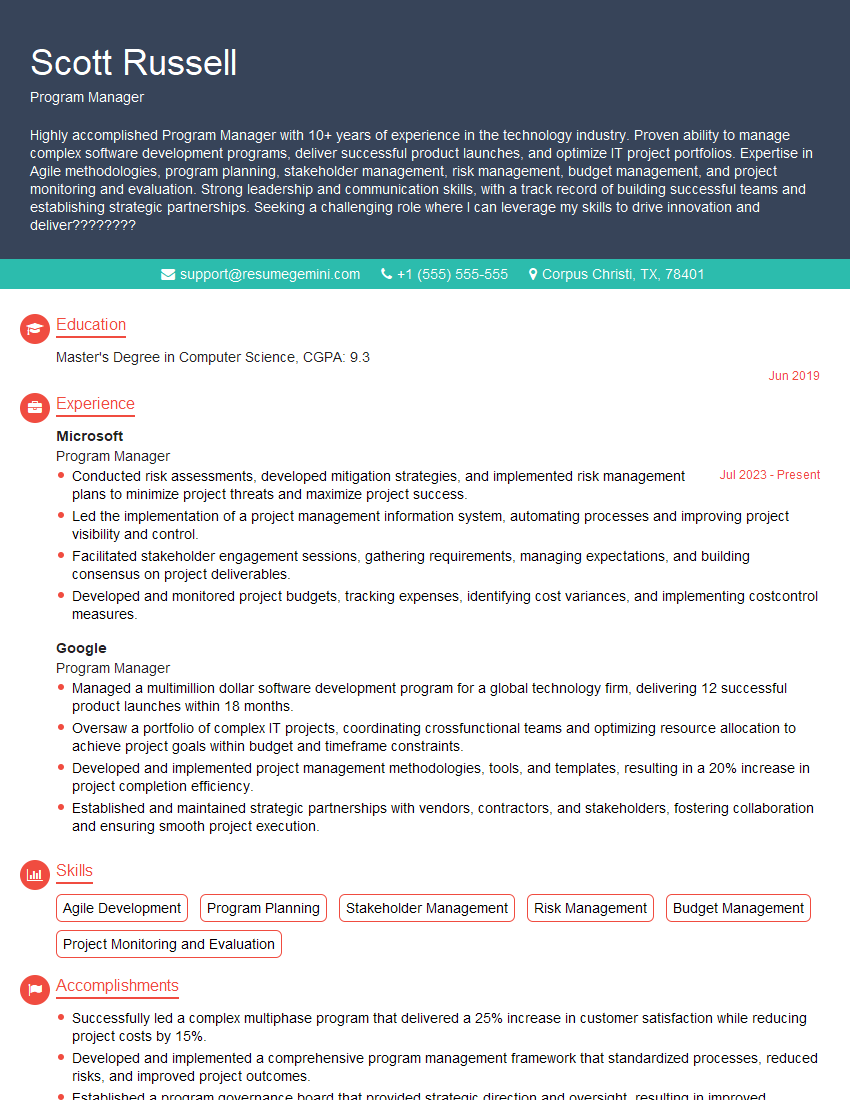
Program Manager Resume Sample
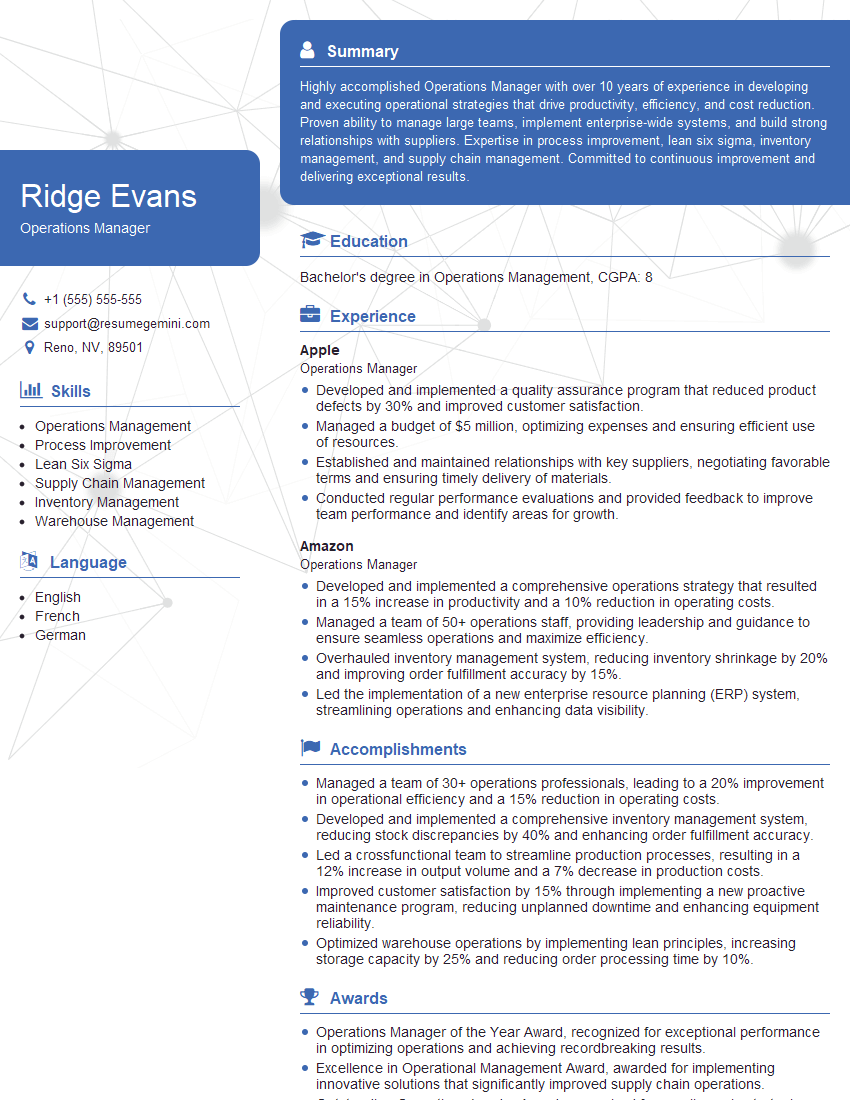
Operations Manager Resume Sample
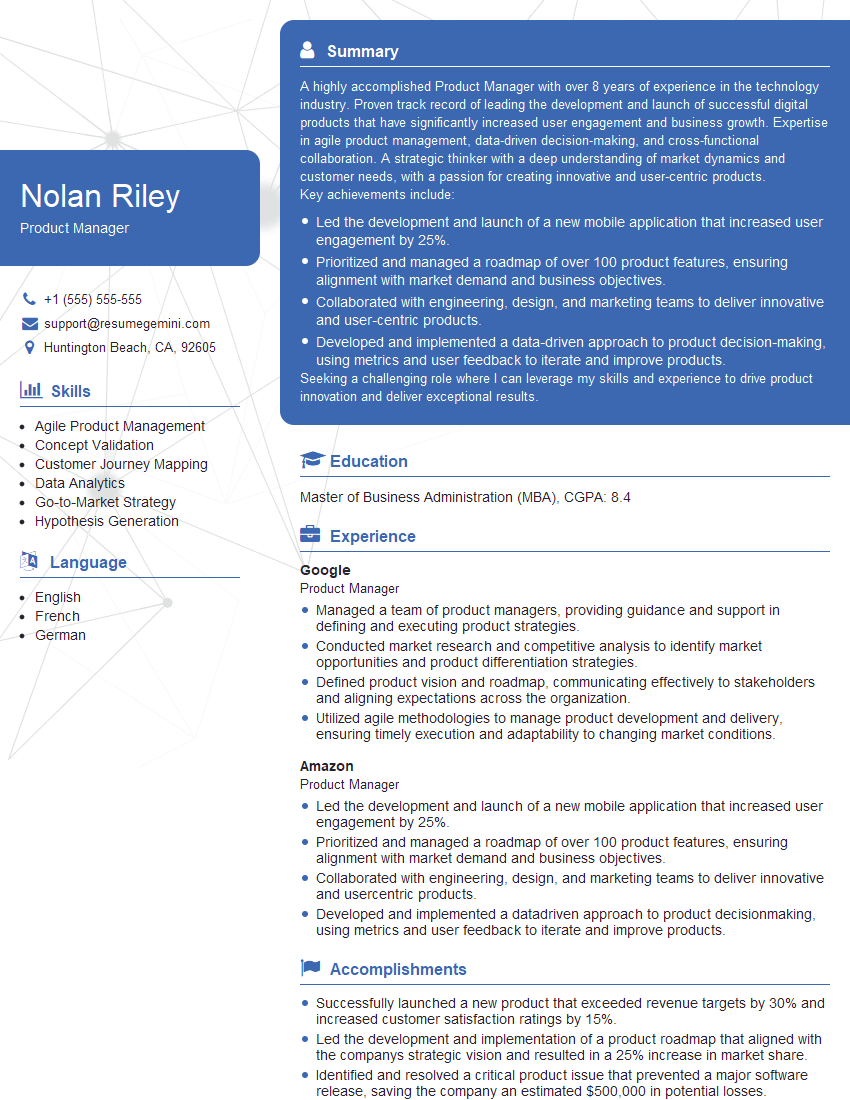
Product Manager Resume Sample
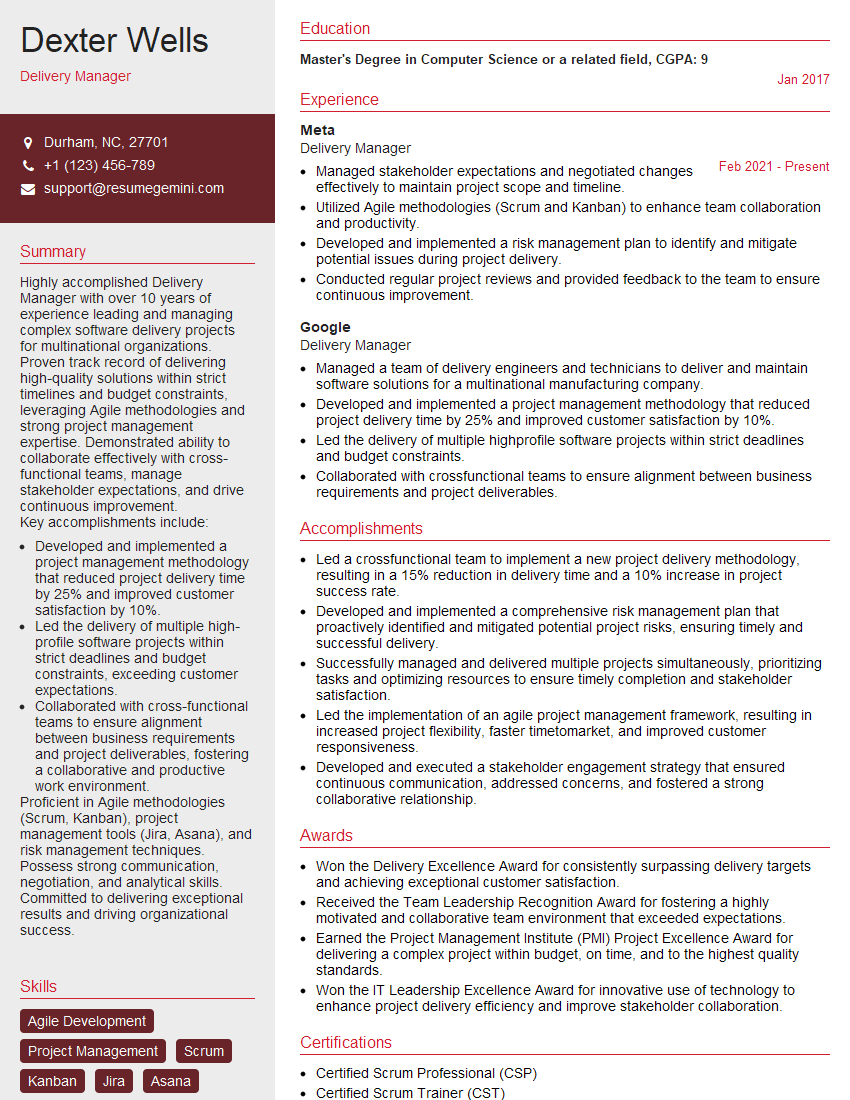
Delivery Manager Resume Sample
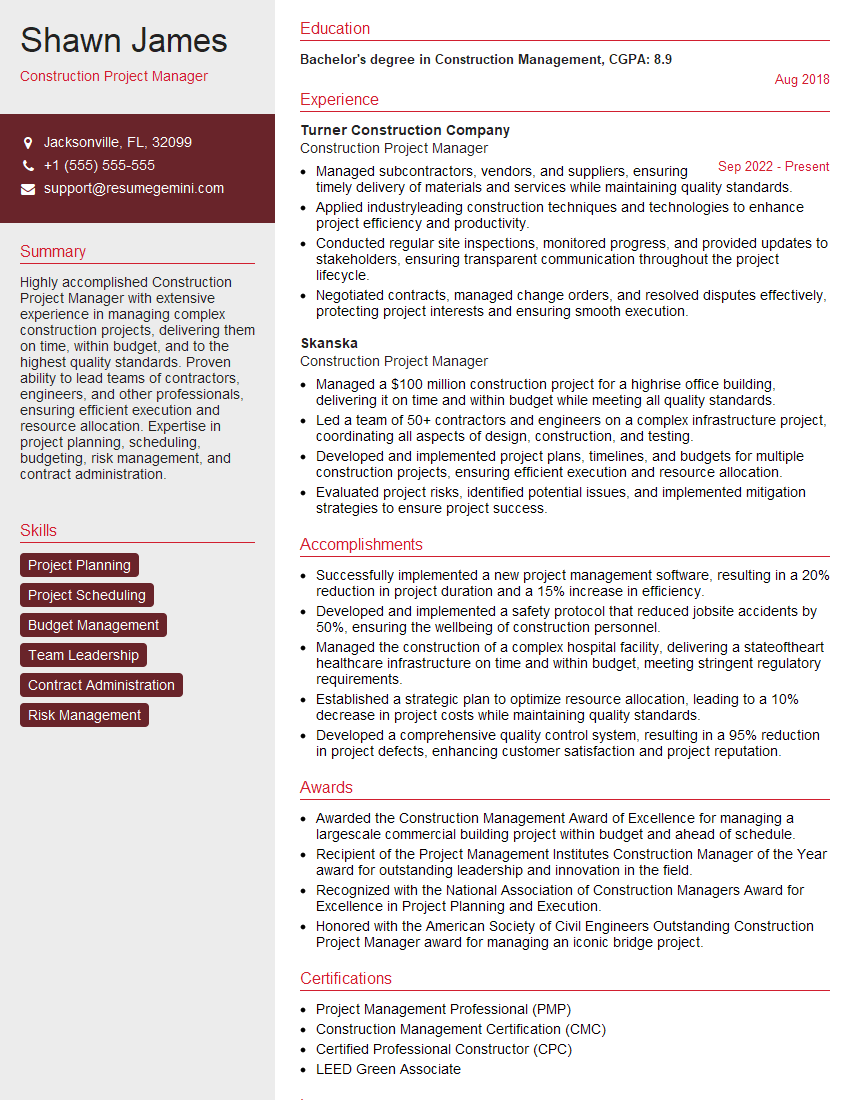
Construction Project Manager Resume Sample
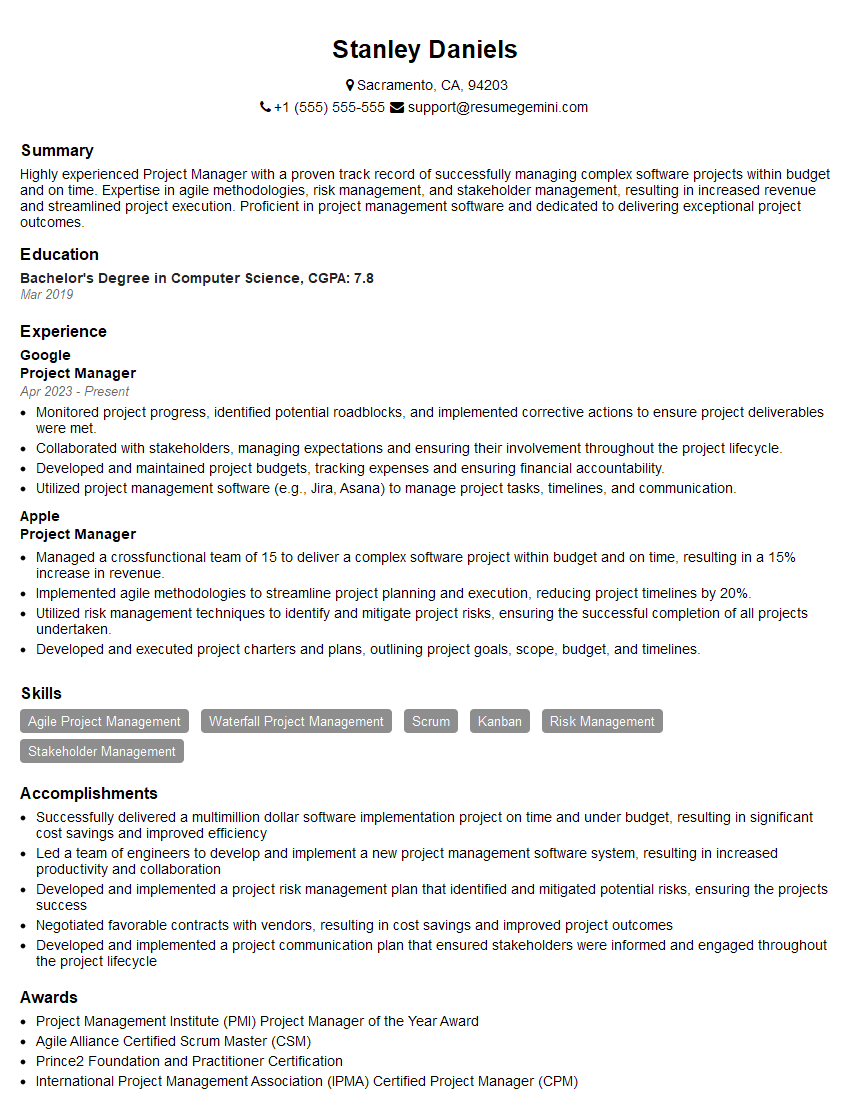
Project Manager Resume Sample
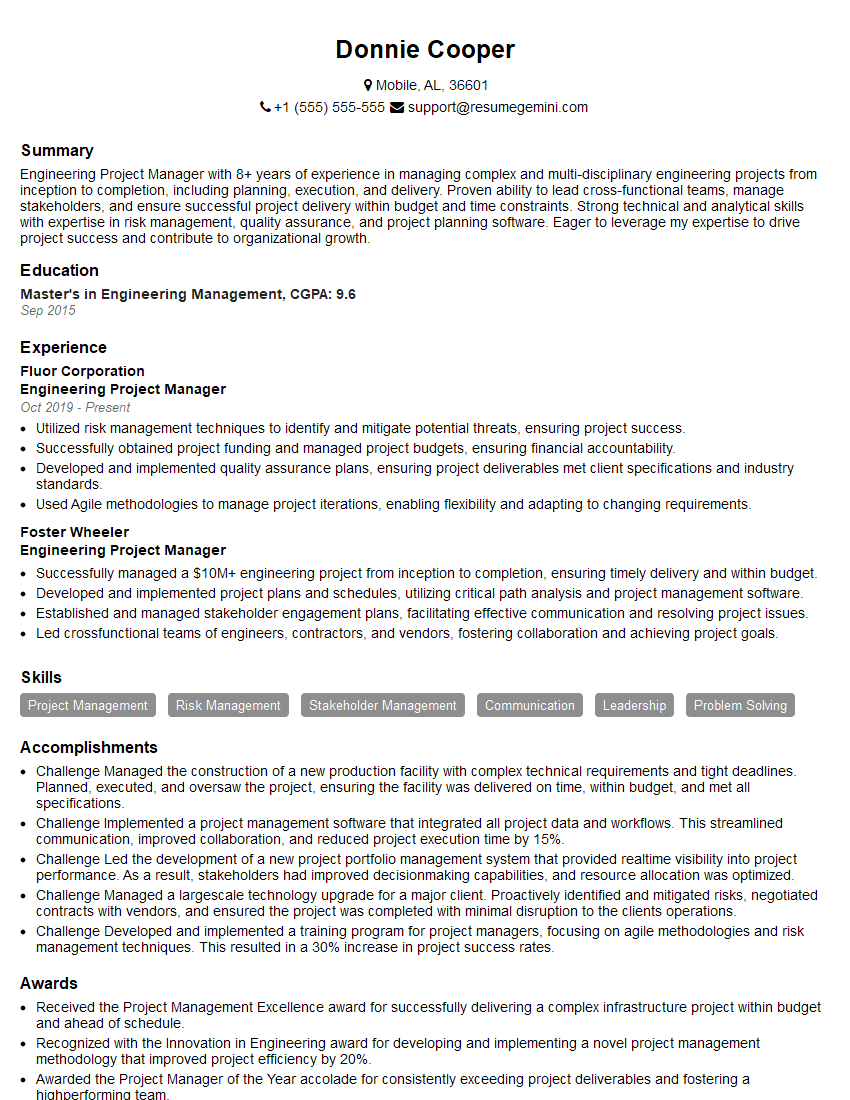
Engineering Project Manager Resume Sample
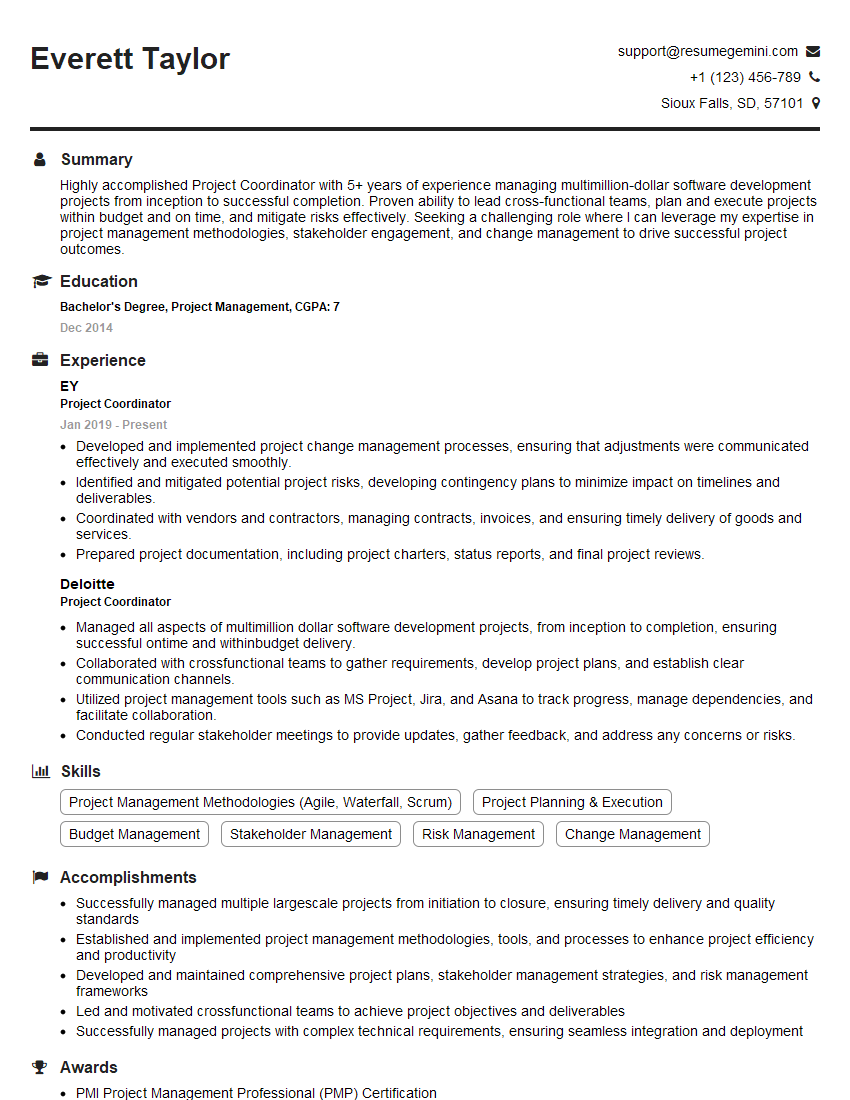
Project Coordinator Resume Sample
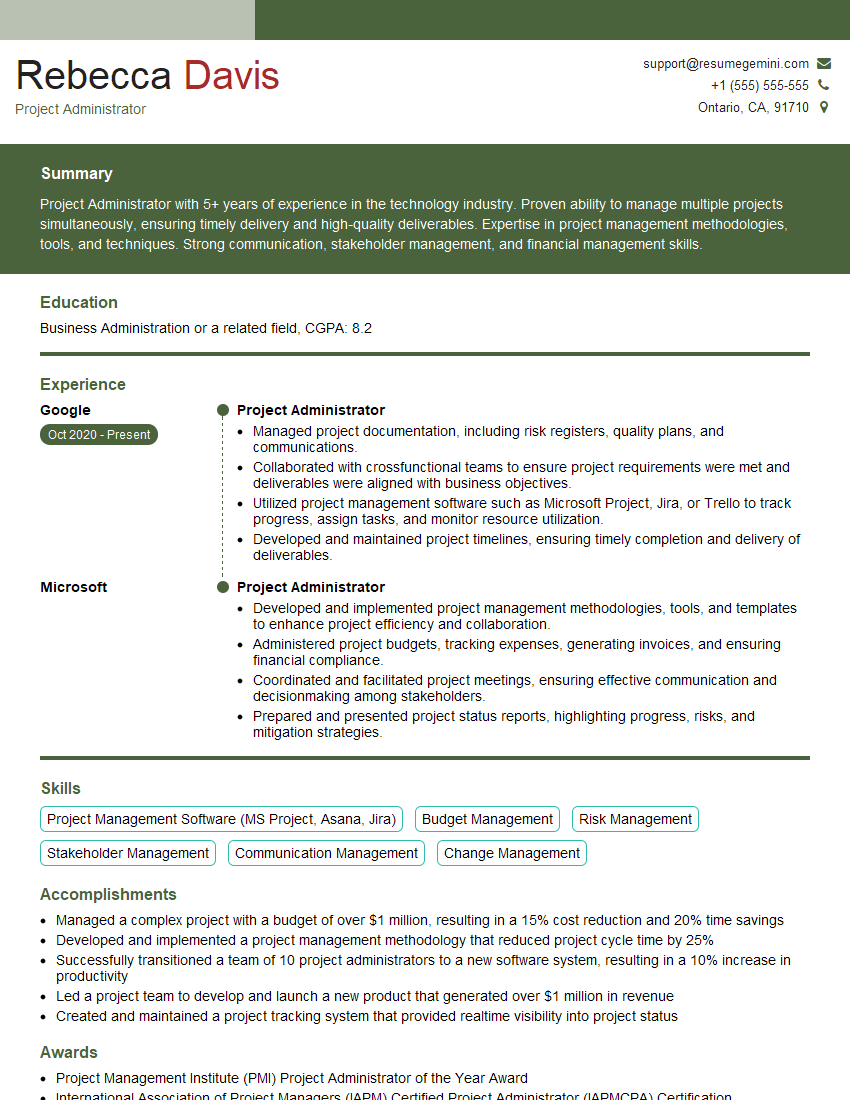
Project Administrator Resume Sample
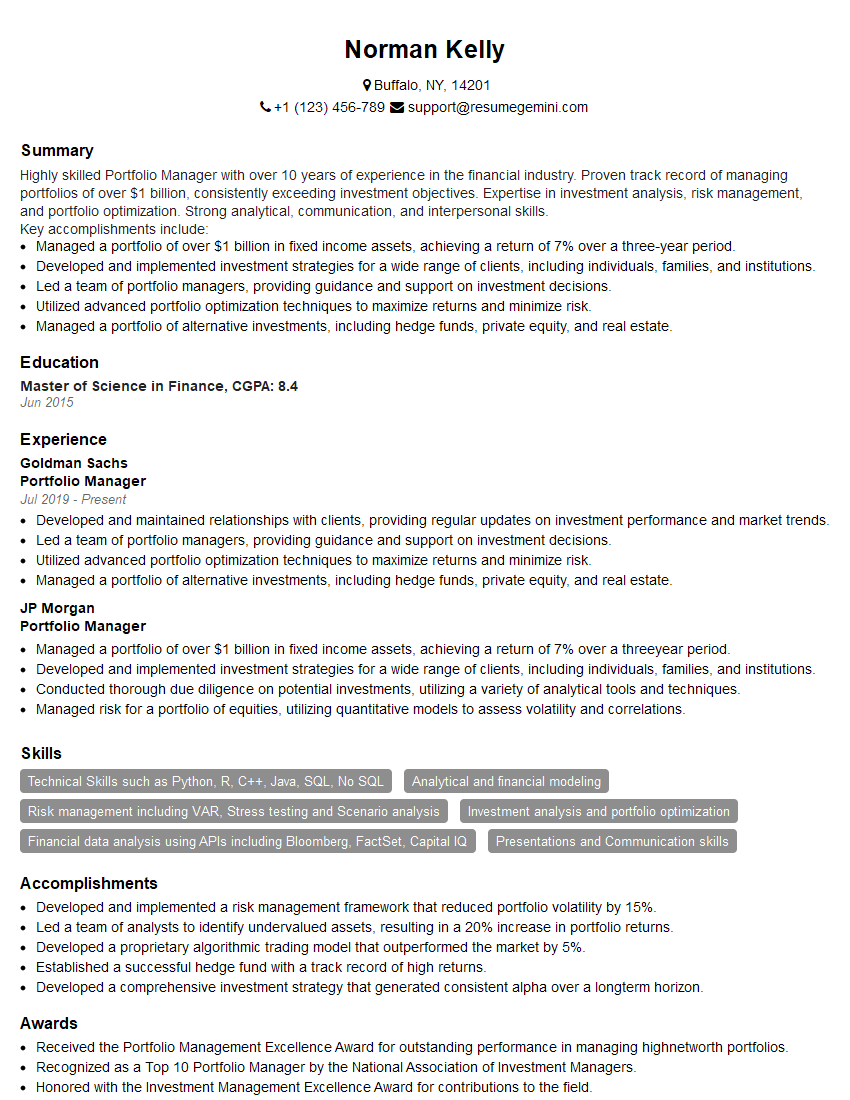
Portfolio Manager Resume Sample
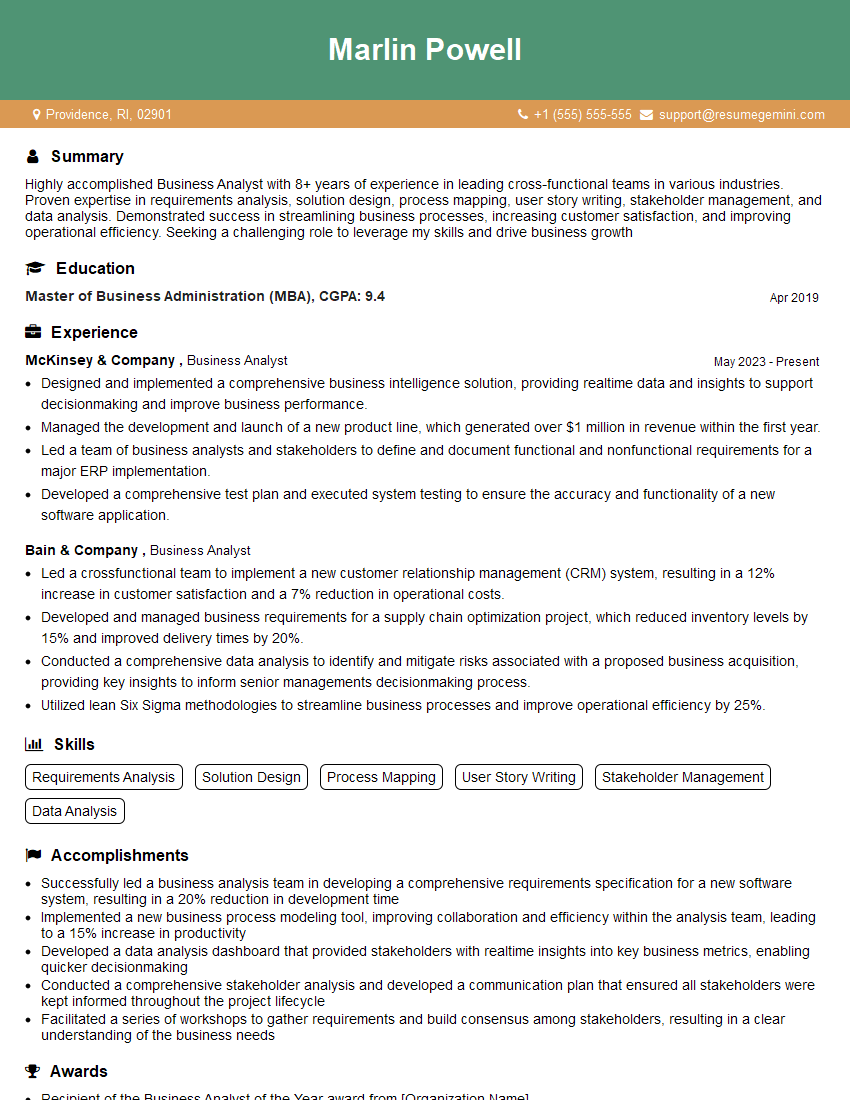
Business Analyst Resume Sample
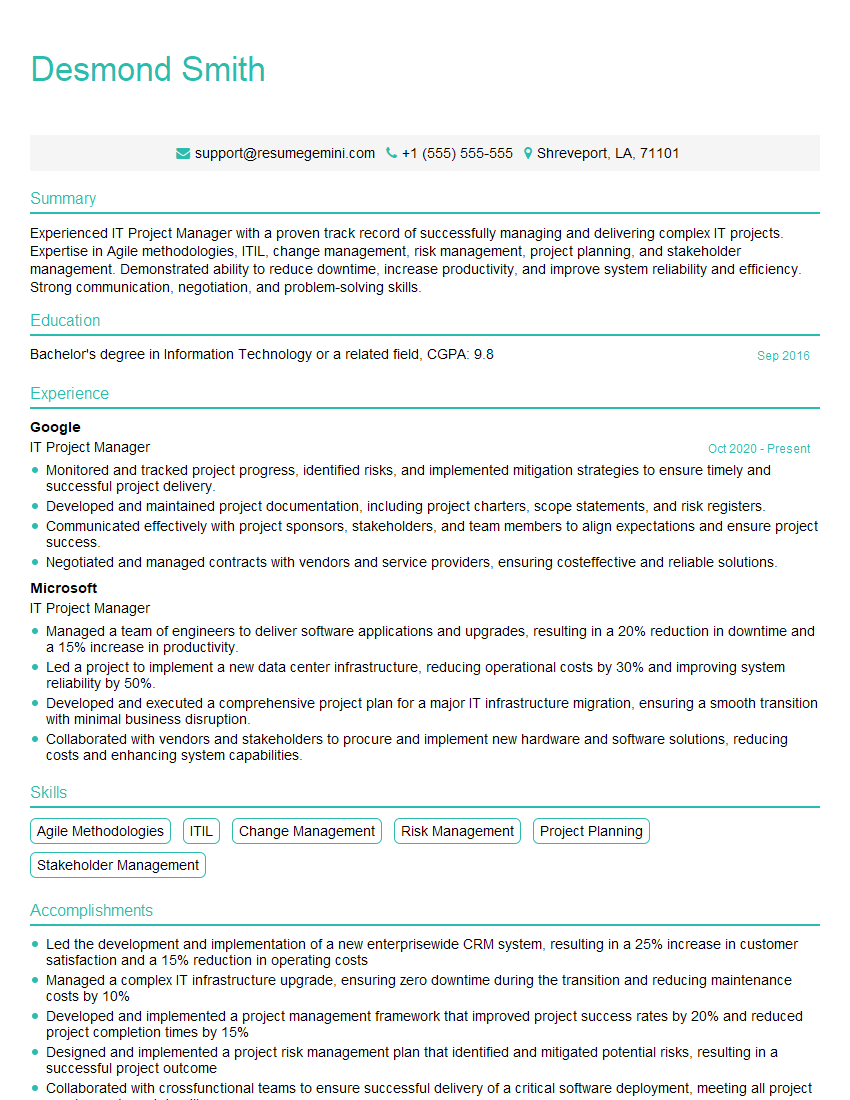
IT Project Manager Resume Sample
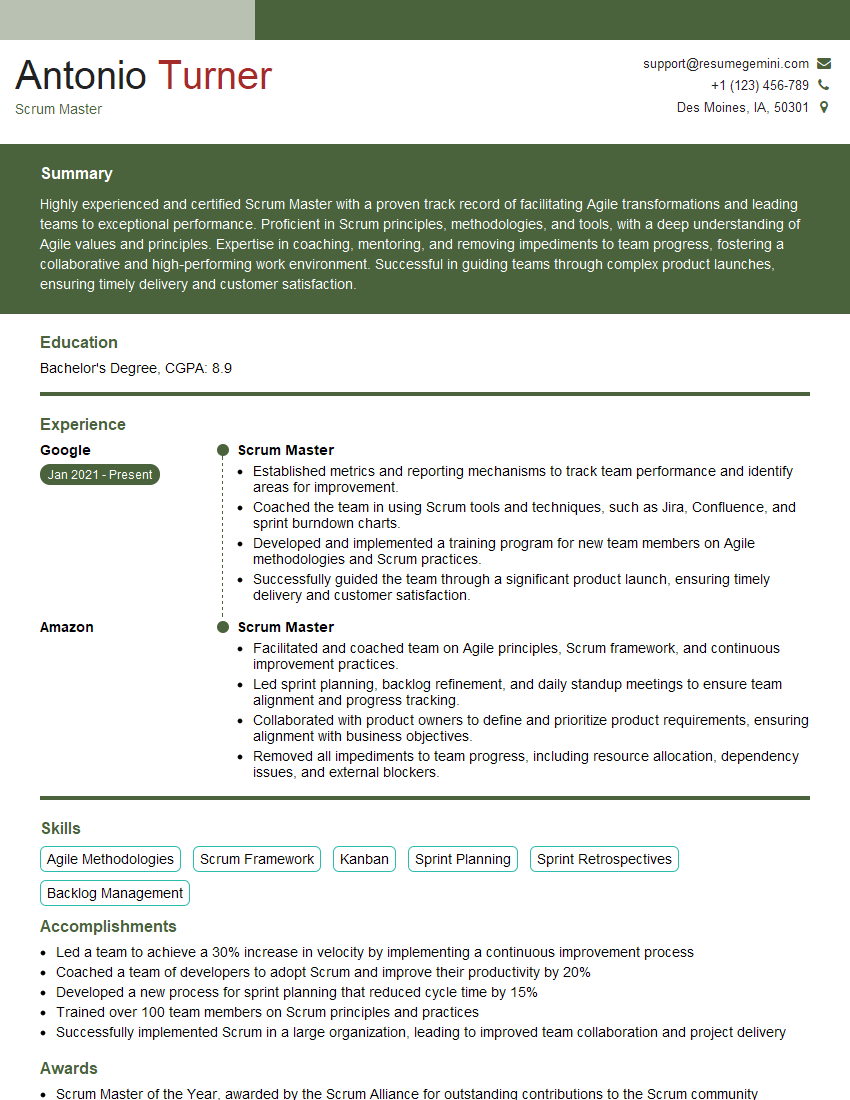
Scrum Master Resume Sample
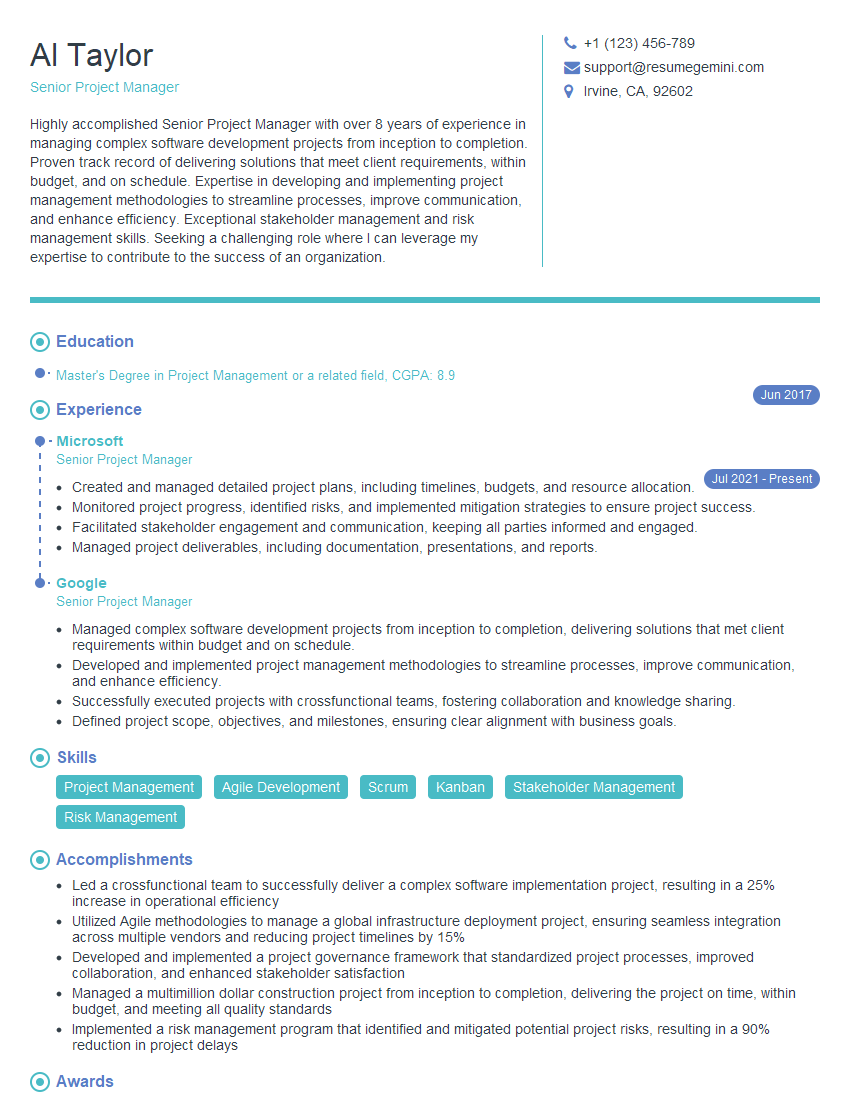
Senior Project Manager Resume Sample
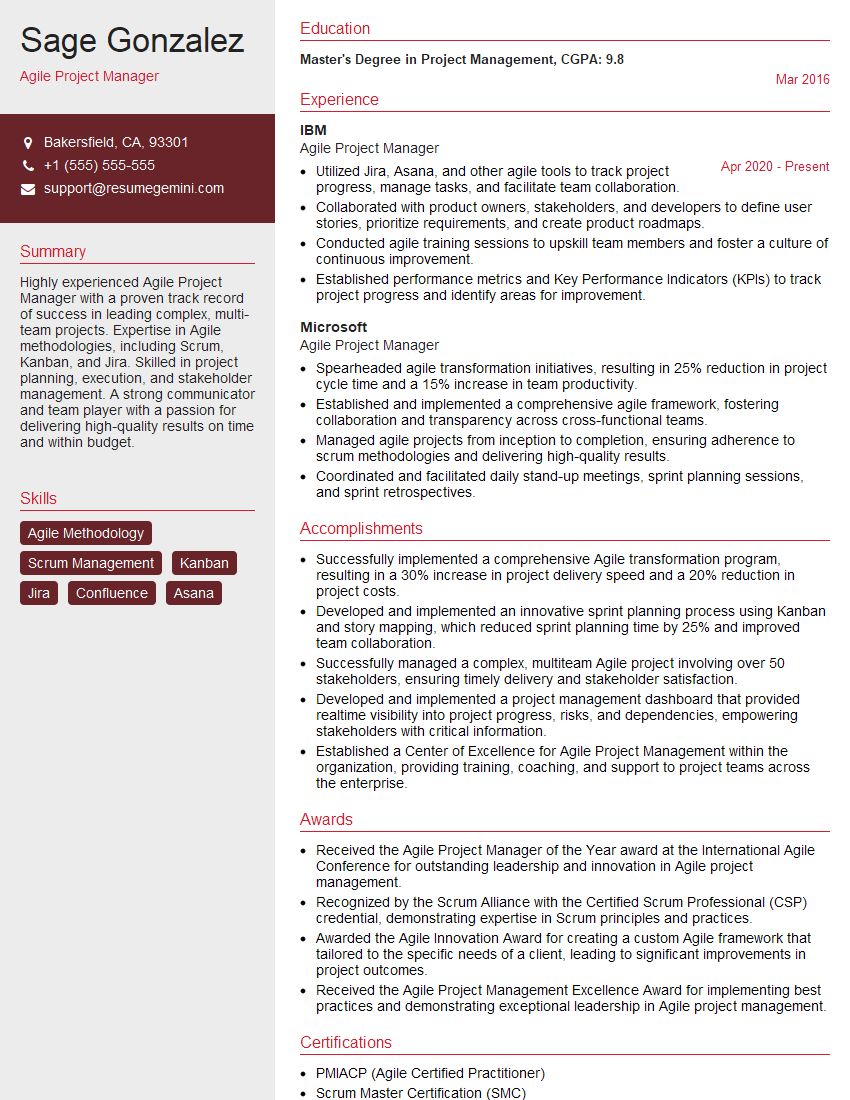
Agile Project Manager Resume Sample
Explore more articles
Users Rating of Our Blogs
Share Your Experience
We value your feedback! Please rate our content and share your thoughts (optional).
What Readers Say About Our Blog
Very informative content, great job.
good