Preparation is the key to success in any interview. In this post, we’ll explore crucial Project Management Principles (e.g., PMP) interview questions and equip you with strategies to craft impactful answers. Whether you’re a beginner or a pro, these tips will elevate your preparation.
Questions Asked in Project Management Principles (e.g., PMP) Interview
Q 1. Explain the difference between a project and a program.
While both projects and programs involve multiple tasks, they differ significantly in scope and objective. A project is a temporary endeavor undertaken to create a unique product, service, or result. It has a defined beginning and end, specific deliverables, and a dedicated budget and resources. Think of building a house – that’s a project. It has a start date, an end date (when the house is complete), and a defined scope (the house’s specifications).
A program, on the other hand, is a group of related projects, subsidiary programs, and program activities managed in a coordinated way to achieve strategic objectives. A program is more long-term and strategic than a project. For example, a company might have a program to improve customer satisfaction. This program could include multiple projects, such as improving the website, launching a new customer loyalty program, and implementing a new customer support system. Each of these is a project within the larger program.
In essence, a project is a single, defined effort, while a program is a collection of related projects working toward a broader goal.
Q 2. Describe the five project management process groups.
The five project management process groups are sequential stages that describe how project work is organized and managed. They are not necessarily linear; there’s often overlap. Think of them as phases of a project’s lifecycle.
- Initiating: This phase defines the project, obtains authorization to begin, and defines the high-level scope. Think of this as the planning meeting, where the overall objectives are decided and resources provisionally allocated.
- Planning: This stage involves defining how the project will be executed, monitored, controlled, and closed. This includes creating a detailed project plan, defining tasks, estimating resources, and developing a schedule.
- Executing: This is where the actual project work happens. The team completes tasks, manages resources, and communicates progress.
- Monitoring and Controlling: This involves tracking progress against the project plan, managing risks and issues, and making necessary changes. This phase is continuous throughout the project’s life.
- Closing: This final stage involves formally accepting the project deliverables, conducting a project review, and closing out the project documentation and contracts.
These process groups are fundamental to effective project management, ensuring projects are well-defined, planned, executed, monitored and properly concluded.
Q 3. What are the key components of a project charter?
A project charter is a formal document that authorizes the existence of a project and provides initial direction. It’s essentially the project’s birth certificate. Key components include:
- Project Purpose or Objectives: A clear statement of what the project aims to achieve.
- Project Goals and Deliverables: Specific, measurable, achievable, relevant, and time-bound (SMART) goals and what the project will deliver.
- High-Level Scope: A general description of what’s included and excluded from the project. This is refined later in the planning phase.
- Project Manager Assignment: Identification of the person responsible for managing the project.
- Project Stakeholders: Individuals or groups impacted by or involved in the project.
- Budgetary Constraints: An estimate of the overall project budget. This is often a range rather than a precise figure.
- Project Timeline or Schedule: A high-level timeline indicating major milestones and project duration. Again, this is refined later.
- Project Sponsor/Authority: The person who authorizes the project and provides overall direction.
The project charter is crucial because it provides a common understanding and agreement amongst stakeholders about the project’s purpose and direction.
Q 4. How do you handle scope creep?
Scope creep, the uncontrolled expansion of a project’s scope, is a common project killer. Effective management requires a proactive approach. Here’s a multi-pronged strategy:
- Clearly Define Scope: Start with a well-defined and documented scope statement. Be specific and avoid ambiguity. Use a Work Breakdown Structure (WBS) to break down tasks into smaller, manageable components.
- Change Management Process: Establish a formal process for requesting and evaluating changes. This includes documenting change requests, assessing their impact on scope, schedule, and budget, and obtaining approval from stakeholders.
- Regular Monitoring: Consistently monitor the project’s progress against the defined scope. Use regular meetings and status reports to identify potential scope creep early on.
- Training and Communication: Ensure all stakeholders understand the approved scope and the change management process. This reduces misunderstandings and unauthorized additions.
- Risk Management: Identify potential scope creep risks early in the project lifecycle and develop mitigation strategies.
- Saying No: It’s crucial for the project manager to politely but firmly reject changes that are not within the approved scope or that would significantly impact the project’s success.
By employing these strategies, you can effectively control scope creep and ensure your project stays on track and within budget.
Q 5. Explain the concept of earned value management (EVM).
Earned Value Management (EVM) is a project management technique for measuring project performance and progress. It integrates scope, schedule, and cost to provide a comprehensive view of project health. EVM uses three key metrics:
- Planned Value (PV): The budgeted cost of work scheduled to be completed at a given point in time.
- Earned Value (EV): The value of the work actually completed at a given point in time.
- Actual Cost (AC): The actual cost incurred in completing the work done.
Several key indicators are derived from these metrics:
- Schedule Variance (SV = EV – PV): Indicates if the project is ahead or behind schedule. A positive SV indicates ahead of schedule, while a negative SV indicates behind schedule.
- Cost Variance (CV = EV – AC): Shows whether the project is under or over budget. A positive CV means under budget, while a negative CV means over budget.
- Schedule Performance Index (SPI = EV / PV): Measures the efficiency of the project’s schedule. An SPI greater than 1 means the project is ahead of schedule; less than 1 indicates behind schedule.
- Cost Performance Index (CPI = EV / AC): Measures the efficiency of the project’s cost. A CPI greater than 1 means the project is under budget; less than 1 indicates over budget.
EVM provides a powerful tool for early identification of problems and enables proactive corrective action, making it invaluable for effective project control.
Q 6. What are some common project management methodologies?
Numerous project management methodologies exist, each with strengths and weaknesses depending on the project’s nature and context. Some common methodologies include:
- Waterfall: A linear, sequential approach where each phase must be completed before the next begins. Suitable for projects with well-defined requirements and minimal anticipated changes.
- Agile: An iterative and incremental approach emphasizing flexibility and collaboration. Ideal for projects with evolving requirements and a need for rapid feedback.
- Scrum: A specific Agile framework using short iterations (sprints) to deliver working software increments. Emphasizes teamwork, accountability, and continuous improvement.
- Kanban: A visual workflow management system that limits work in progress to improve efficiency and flow. Focuses on continuous delivery and minimizing bottlenecks.
- Prince2: A structured method that provides a framework for managing projects based on best practices. Widely used in Europe and the UK.
- Critical Path Method (CPM): A network diagramming technique used to identify the longest sequence of tasks (critical path) in a project to determine the shortest possible project duration.
The choice of methodology depends on the specific project context and team preferences.
Q 7. Describe your experience with Agile methodologies (e.g., Scrum, Kanban).
I have extensive experience with Agile methodologies, particularly Scrum and Kanban. In my previous role at [Previous Company Name], I led a team using Scrum to develop a new software application. We employed daily stand-up meetings to track progress, sprint reviews to demonstrate completed work, and sprint retrospectives to identify areas for improvement. The use of Scrum boards helped visualize the workflow and ensure transparency. This iterative approach allowed us to adapt to evolving requirements and deliver value incrementally. The project was successfully completed ahead of schedule and under budget.
In another project, I utilized Kanban to manage a complex marketing campaign. The Kanban board helped visualize the workflow and identify bottlenecks. By limiting work in progress and focusing on continuous improvement, we were able to streamline the process and improve efficiency significantly. The visual nature of Kanban fostered better collaboration and communication within the team. The use of Kanban allowed us to efficiently prioritize and manage tasks in a dynamic environment.
I’m proficient in utilizing Agile principles to foster a collaborative, adaptable, and efficient project environment. I’m adept at facilitating Agile ceremonies, managing sprint backlogs, and removing impediments to ensure smooth project execution.
Q 8. How do you prioritize tasks in a project?
Prioritizing tasks effectively is crucial for project success. I use a combination of techniques, adapting my approach based on the project’s specific context and constraints. Common methods include:
- MoSCoW Method: This prioritizes tasks into Must have, Should have, Could have, and Won’t have categories. This helps focus on the essential tasks first.
- Prioritization Matrix (Eisenhower Matrix): This categorizes tasks based on urgency and importance (Urgent/Important, Important/Not Urgent, Urgent/Not Important, Not Urgent/Not Important). This helps manage time effectively.
- Value vs. Effort Matrix: This plots tasks based on their value to the project and the effort required. High-value, low-effort tasks are prioritized first.
- Dependency Analysis: Identifying tasks that are dependent on others ensures a logical sequence. For example, you can’t paint a wall before it’s plastered.
For instance, in a software development project, I’d prioritize core functionality (Must have) over less critical features (Should have) to deliver a minimum viable product (MVP) first. I also use project management software like Jira or Asana to track dependencies and visually prioritize tasks using Kanban boards or Gantt charts.
Q 9. What are the key elements of a project risk management plan?
A robust project risk management plan is vital for proactive risk mitigation. Key elements include:
- Risk Identification: Brainstorming sessions, checklists, SWOT analysis, and expert judgment are employed to identify potential risks. This involves considering both internal (e.g., team member illness) and external (e.g., economic downturn) factors.
- Qualitative Risk Analysis: This assesses the likelihood and impact of each identified risk. Techniques such as probability and impact matrices are used to rank risks.
- Quantitative Risk Analysis: This involves using numerical data and statistical techniques like Monte Carlo simulation to estimate the potential impact of risks. This provides a more precise understanding of the potential financial or timeline consequences.
- Risk Response Planning: This outlines strategies for addressing identified risks. Strategies include avoidance, mitigation, transference, and acceptance. For example, mitigation might involve developing a backup plan, while transference could involve purchasing insurance.
- Risk Monitoring and Control: This involves regularly tracking identified risks, evaluating the effectiveness of response plans, and updating the risk register as needed. Regular review meetings are essential for this process.
For example, in a construction project, a risk might be inclement weather delaying the schedule. Mitigation strategies could involve securing covered storage for materials and planning for potential weather-related delays in the schedule.
Q 10. How do you manage stakeholder expectations?
Managing stakeholder expectations is about clear, consistent, and proactive communication. I focus on:
- Identifying Stakeholders: Thoroughly identifying all stakeholders (e.g., clients, team members, sponsors) and understanding their interests and influence is crucial.
- Communication Plan: Establishing a communication plan outlining how, when, and what information will be shared with each stakeholder group.
- Regular Updates: Providing frequent and transparent updates on project progress, challenges, and risks through various communication channels (e.g., meetings, emails, reports).
- Managing Expectations: Setting realistic expectations from the outset and proactively addressing any changes or potential issues that might impact deliverables. This might involve formal presentations or informal check-ins.
- Feedback Mechanisms: Building in mechanisms for stakeholders to provide feedback and address concerns promptly. Surveys, feedback forms, and regular stakeholder meetings can be valuable tools.
For example, I once worked on a project where the client had unrealistic expectations about the project timeline. By clearly outlining the scope, dependencies, and potential challenges early on, and maintaining open communication throughout the project, we were able to manage their expectations and avoid misunderstandings.
Q 11. Describe your experience with project budgeting and forecasting.
I have extensive experience in project budgeting and forecasting, leveraging both top-down and bottom-up approaches. A top-down approach starts with a high-level budget, then breaks it down into smaller components. A bottom-up approach involves estimating the cost of each task and aggregating those estimates. I usually combine these methods for a more accurate budget.
My experience includes:
- Developing detailed budgets: This includes identifying all costs, including labor, materials, equipment, and other expenses.
- Tracking expenses against the budget: Using project management software to monitor spending and identify variances from the budget.
- Forecasting: Regularly forecasting future costs based on current spending and anticipated changes in scope or resources.
- Variance analysis: Investigating significant variances from the budget and taking corrective action where necessary. This often involves reporting to stakeholders and explaining the reasons for variances.
- Earned Value Management (EVM): Utilizing EVM to track project performance and predict potential cost overruns or schedule delays. This involves comparing planned value (PV), earned value (EV), and actual cost (AC).
In a past project, we used a combination of top-down and bottom-up budgeting for software development. This allowed us to create an initial high-level budget and then refine it by estimating costs for individual features and modules. Regular tracking of expenses helped us identify and address potential cost overruns proactively.
Q 12. How do you handle conflicts within a project team?
Conflict is inevitable in any team environment. My approach to conflict resolution is proactive and focuses on finding mutually beneficial solutions. I typically follow these steps:
- Identify the conflict: Clearly define the nature of the conflict and the parties involved. This often involves listening actively to all sides without judgment.
- Facilitate a discussion: Create a safe and neutral space for all parties involved to express their perspectives and concerns openly and respectfully.
- Find common ground: Focus on finding areas of agreement and shared goals. This often involves re-framing the issue to focus on shared interests.
- Develop a solution: Work collaboratively with the involved parties to develop a solution that addresses everyone’s concerns and is fair and equitable. This might involve compromise or finding creative solutions.
- Implement and monitor the solution: Ensure the agreed-upon solution is implemented and monitor its effectiveness. Follow-up meetings can help ensure the conflict is resolved and prevent recurrence.
I prefer a collaborative approach, aiming for win-win solutions. However, in situations where a resolution isn’t possible through collaboration, I may need to mediate or even make a decision as the project manager.
Q 13. Explain the importance of communication in project management.
Communication is the lifeblood of any successful project. Effective communication ensures everyone is on the same page, leading to better collaboration, fewer misunderstandings, and improved outcomes. It impacts all aspects of project management, from stakeholder engagement to risk mitigation.
Its importance manifests in several ways:
- Stakeholder Management: Clear and regular communication keeps stakeholders informed, manages expectations, and builds trust.
- Team Collaboration: Effective communication facilitates teamwork, problem-solving, and information sharing within the project team.
- Risk Management: Open communication allows for early identification and mitigation of potential risks.
- Issue Resolution: Effective communication channels enable prompt identification and resolution of issues and conflicts.
- Project Success: Strong communication ensures everyone understands the project goals, their roles, and how to contribute to success.
My approach to communication involves tailoring the message and delivery method to the audience, utilizing both formal and informal channels, and actively seeking feedback to ensure clear understanding.
Q 14. How do you measure project success?
Measuring project success goes beyond simply completing the project on time and within budget. It requires a holistic approach that considers various factors, including:
- Scope Completion: Did the project deliver all the agreed-upon features and functionality?
- Time Management: Was the project completed within the scheduled timeframe?
- Budget Adherence: Was the project completed within the allocated budget?
- Stakeholder Satisfaction: Were the stakeholders satisfied with the outcome and the project process?
- Quality of Deliverables: Did the project deliver high-quality deliverables that meet the required standards?
- Return on Investment (ROI): Did the project generate a positive return on investment for the organization?
I use a variety of metrics to measure project success, including Key Performance Indicators (KPIs), stakeholder surveys, and post-project reviews. These methods provide a comprehensive picture of project performance and identify areas for improvement in future projects.
Q 15. What tools and techniques do you use for project scheduling?
Project scheduling relies on a combination of tools and techniques to create a realistic and achievable plan. The choice of tools often depends on project size and complexity. Some common methods include:
Gantt Charts: These visual representations display tasks, durations, dependencies, and milestones, offering a clear overview of the project timeline. For example, a Gantt chart would clearly show if Task A needs to be completed before Task B can begin.
Critical Path Method (CPM): CPM identifies the longest sequence of tasks (the critical path) that determines the shortest possible project duration. Any delay on the critical path directly impacts the project completion date. Imagine building a house – pouring the foundation is on the critical path; delaying it delays the entire project.
Program Evaluation and Review Technique (PERT): PERT is similar to CPM but incorporates probabilistic estimations for task durations, accounting for uncertainty. This is useful when you’re less certain about how long specific tasks will take. For instance, securing permits for a construction project might have a range of possible completion times.
Project Management Software: Tools like Microsoft Project, Asana, Jira, and Trello offer robust features for scheduling, resource allocation, and tracking progress. These tools automate many aspects of scheduling and provide valuable reporting capabilities.
I typically utilize a combination of Gantt charts and project management software, choosing the most appropriate tools based on project specifics. For smaller projects, a simple Gantt chart might suffice, while larger, more complex projects benefit from the features of comprehensive project management software.
Career Expert Tips:
- Ace those interviews! Prepare effectively by reviewing the Top 50 Most Common Interview Questions on ResumeGemini.
- Navigate your job search with confidence! Explore a wide range of Career Tips on ResumeGemini. Learn about common challenges and recommendations to overcome them.
- Craft the perfect resume! Master the Art of Resume Writing with ResumeGemini’s guide. Showcase your unique qualifications and achievements effectively.
- Don’t miss out on holiday savings! Build your dream resume with ResumeGemini’s ATS optimized templates.
Q 16. Describe your experience with resource allocation.
Resource allocation involves strategically assigning personnel, equipment, budget, and other resources to project tasks. Effective resource allocation ensures optimal utilization and prevents over-allocation or under-allocation. My approach involves:
Resource Requirements Analysis: I begin by meticulously identifying the specific resources needed for each task, considering skills, quantities, and availability.
Resource Leveling/Smoothing: Once resources are assigned, I use techniques like leveling to distribute workload evenly across the project timeline, preventing resource bottlenecks. This involves adjusting schedules to prevent overloading specific team members.
Resource Capacity Planning: I assess the overall capacity of the resources available and ensure that the project demands do not exceed the resources’ capabilities. I often utilize resource histograms to visualize resource utilization over time.
Communication and Collaboration: Open communication with team members is vital to understand their availability and constraints, ensuring realistic resource allocation and preventing conflicts.
In a recent project, I successfully managed resource allocation for a software development team by using a resource leveling technique in project management software. This prevented burnout and ensured timely project completion.
Q 17. How do you monitor and control project risks?
Risk monitoring and control is a continuous process throughout the project lifecycle. My approach involves:
Risk Identification: Proactively identifying potential risks through brainstorming, checklists, SWOT analysis, and expert judgment.
Qualitative Risk Analysis: Assessing the likelihood and impact of identified risks to prioritize them. This often involves using a probability and impact matrix.
Quantitative Risk Analysis: Using techniques like sensitivity analysis and Monte Carlo simulation to numerically analyze the impact of uncertainty on the project.
Risk Response Planning: Developing strategies to mitigate, avoid, transfer, or accept risks. This often involves creating contingency plans.
Risk Monitoring and Control: Regularly tracking identified risks, assessing their status, and taking corrective actions as needed. This involves updating the risk register and reporting on risk status to stakeholders.
For example, on a large-scale construction project, we identified the risk of inclement weather delaying the schedule. We developed a mitigation plan that included procuring weather insurance and planning for potential delays in the schedule.
Q 18. How do you create and maintain a project schedule?
Creating and maintaining a project schedule is an iterative process. My approach starts with:
Defining Scope and Objectives: Clearly defining the project’s deliverables and objectives to establish a solid foundation for the schedule.
Work Breakdown Structure (WBS): Breaking down the project into smaller, manageable tasks to facilitate scheduling and tracking progress.
Task Sequencing and Dependencies: Determining the order in which tasks need to be performed, identifying dependencies between tasks. This might involve using a precedence diagramming method.
Duration Estimation: Estimating the time required to complete each task. Techniques include three-point estimating, which considers optimistic, pessimistic, and most likely durations.
Schedule Development: Using tools like Gantt charts or project management software to create a visual representation of the schedule, including milestones and deadlines.
Schedule Control: Monitoring progress, comparing actuals to planned performance, and making adjustments as needed through change management processes.
Regularly updating the schedule based on progress and any changes keeps the project on track. For instance, if a task takes longer than anticipated, I’ll adjust the schedule and communicate the change to stakeholders.
Q 19. What are the critical path and float in a project schedule?
In a project schedule:
Critical Path: This is the sequence of tasks that determines the shortest possible duration to complete the project. Any delay on the critical path directly impacts the project’s completion date. Think of it as the longest path through a network of tasks.
Float (or Slack): This is the amount of time a task can be delayed without delaying the project’s completion date. Tasks not on the critical path have some float. It provides flexibility in scheduling.
Imagine building a house: laying the foundation is usually on the critical path; any delay will impact the entire project’s timeline. Painting the walls, however, might have some float—it can be delayed slightly without affecting the overall project finish date.
Q 20. Describe your approach to quality management.
My approach to quality management emphasizes a proactive and preventative strategy, ensuring that quality is built into the project from the beginning. This involves:
Quality Planning: Defining quality standards, metrics, and processes early in the project lifecycle.
Quality Assurance: Implementing processes and procedures to prevent defects and ensure that work meets defined standards. This might involve regular inspections and reviews.
Quality Control: Monitoring and verifying the quality of work products through inspections, testing, and audits to identify and correct defects.
Continuous Improvement: Regularly reviewing processes and identifying opportunities for improvement. This often involves root cause analysis to address recurring problems.
For example, in a software development project, we implemented a rigorous testing phase with unit, integration, and system testing to ensure the software met quality standards before release.
Q 21. Explain the different types of project dependencies.
Project dependencies represent relationships between tasks where one task cannot start until another is completed or reaches a certain point. There are several types:
Finish-to-Start (FS): The most common type; a successor task cannot start until a predecessor task is finished. For example, you can’t install the roof (successor) until the walls are built (predecessor).
Start-to-Start (SS): A successor task cannot start until a predecessor task has started. For example, site preparation (predecessor) and material delivery (successor) can happen concurrently but material delivery cannot begin before site preparation starts.
Finish-to-Finish (FF): A successor task cannot finish until a predecessor task has finished. For instance, designing and approving a plan (predecessor) must be complete before the construction of that plan can be considered finished (successor).
Start-to-Finish (SF): A successor task cannot finish until a predecessor task has started. This is less common. An example might be reviewing the work of a sub-contractor (successor) which cannot finish before they started their work (predecessor).
Understanding these dependencies is crucial for accurate scheduling and identifying potential delays.
Q 22. How do you identify and manage project constraints?
Identifying and managing project constraints is crucial for successful project delivery. Constraints are limitations that restrict options and impact project scope, schedule, cost, or quality. Think of them as the boundaries within which you must operate.
I use a structured approach, starting with constraint identification. This involves brainstorming sessions with the project team, stakeholders, and subject matter experts. We use techniques like SWOT analysis (Strengths, Weaknesses, Opportunities, Threats) and risk assessments to uncover potential constraints. For example, a limited budget might constrain the scope of features, while a tight deadline could necessitate a leaner project team.
Constraint management follows a multi-pronged strategy:
- Prioritization: We prioritize constraints based on their impact on the project’s critical path. Constraints that directly affect project completion need immediate attention.
- Mitigation: We develop strategies to mitigate the impact of constraints. For example, if a resource shortage is a constraint, we might explore outsourcing certain tasks or adjusting the project timeline.
- Workarounds: We brainstorm creative solutions to bypass constraints. If a specific technology is unavailable, we might explore suitable alternatives.
- Acceptance: In some cases, constraints are unavoidable. We clearly communicate the impact of these constraints to stakeholders and adjust expectations accordingly.
- Regular Monitoring: Throughout the project, we regularly monitor the identified constraints to ensure that they remain within acceptable limits. Changes to constraints trigger immediate reevaluation of mitigation strategies.
For instance, in a recent software development project, a constraint was a limited number of senior developers. To mitigate this, we prioritized tasks, upskilled junior developers, and outsourced some less critical functionalities.
Q 23. What is your experience with project closure processes?
Project closure is more than just wrapping things up; it’s a formal process to ensure all deliverables are met, lessons learned are documented, and the project is officially transitioned to operations. I’ve managed various project closures across different industries, always emphasizing a systematic approach.
My experience includes:
- Formal Handover: This involves creating comprehensive documentation detailing the project’s final deliverables, including user manuals, training materials, and system specifications, and transferring responsibility to the relevant stakeholders or operational teams.
- Final Reporting: I prepare comprehensive final reports summarizing project performance against the plan, including achievements, challenges encountered, and lessons learned. These reports are usually presented to stakeholders and used for post-project reviews.
- Team Debriefing: I facilitate a debriefing session with the project team to capture lessons learned, celebrate successes, and identify areas for improvement in future projects. This fosters team growth and helps improve future project performance.
- Financial Closure: Ensuring that all invoices are paid, financial records are reconciled, and budgets are closed out, confirming all budget and expenditure records are accurate and submitted.
- Post-Project Review: This involves a formal review of the project to determine what worked well, what could be improved, and to document lessons learned for future projects. This review often includes feedback from stakeholders.
In one project, we developed a comprehensive knowledge base as a part of the project closure, which included troubleshooting guides, frequently asked questions, and best practices. This made the handover smoother and reduced the need for additional support post-project completion.
Q 24. How do you use project management software?
Project management software is an indispensable tool for managing projects effectively. My experience spans several platforms, including Microsoft Project, Jira, Asana, and Trello. The choice of software depends on the project’s methodology (Agile vs. Waterfall), team size, and project complexity.
I utilize these tools for:
- Task Management: Defining tasks, assigning them to team members, tracking progress, and managing dependencies.
- Scheduling: Creating project timelines, Gantt charts, and identifying critical path activities.
- Resource Allocation: Managing resources (people, equipment, budget) and optimizing their allocation across project tasks.
- Communication: Facilitating communication within the team and with stakeholders using built-in communication features.
- Risk Management: Identifying, analyzing, and tracking project risks.
- Reporting: Generating reports on project progress, resource utilization, and budget status.
For example, in an Agile project using Jira, I configure the project boards with sprints, track task progress using story points, and utilize burndown charts to monitor sprint velocity and identify potential roadblocks.
Q 25. Describe your experience with different project lifecycle models (e.g., Waterfall, Agile).
My experience encompasses both Waterfall and Agile project lifecycle models. Understanding the strengths and weaknesses of each is crucial for choosing the appropriate model for a given project.
Waterfall is a linear, sequential model suitable for projects with well-defined requirements and minimal anticipated changes. It’s characterized by sequential phases: initiation, planning, execution, monitoring & controlling, and closure. It’s straightforward to manage but less adaptable to changing requirements.
Agile, on the other hand, is an iterative and incremental model ideal for projects with evolving requirements and a need for flexibility. It emphasizes collaboration, frequent feedback, and continuous improvement. Methods like Scrum and Kanban are popular Agile frameworks. Agile delivers value incrementally, allowing for adjustments based on feedback throughout the project.
I’ve successfully implemented both models depending on project needs. For instance, a construction project benefitted from the structure of Waterfall, while a software development project thrived using Scrum’s iterative approach.
Q 26. How do you handle changes to project requirements?
Handling changes to project requirements is a critical aspect of project management. The key is a structured approach that minimizes disruption while ensuring the changes are properly evaluated and integrated.
My process includes:
- Change Request Formalization: All change requests are formally documented, including the nature of the change, the impact on scope, schedule, and cost, and the justification for the change.
- Impact Assessment: We conduct a thorough impact assessment to determine the consequences of the proposed changes, using techniques such as cost-benefit analysis.
- Change Control Board (CCB) Review: The CCB (a group of stakeholders with decision-making authority) reviews and approves or rejects change requests based on their impact and alignment with project goals.
- Integration: Approved changes are integrated into the project plan, updating the scope, schedule, and budget as needed.
- Communication: Stakeholders are promptly notified of approved changes and their implications.
For example, in a website redesign project, a client requested a significant addition to the site’s functionality. We documented the change, assessed the impact (additional cost and time), presented the analysis to the CCB, and secured approval before incorporating the changes into the project plan.
Q 27. Explain your understanding of critical chain project management.
Critical Chain Project Management (CCPM) is a methodology that focuses on managing the project’s critical chain – the sequence of tasks that determines the project’s overall duration. Unlike traditional project management that focuses on individual task durations, CCPM focuses on managing the resources and constraints that impact the critical chain.
Key concepts in CCPM include:
- Identifying the Critical Chain: This involves analyzing task dependencies and resource constraints to identify the sequence of tasks that directly impact the project’s overall completion time.
- Buffering: Introducing buffers (time reserves) at strategic points in the critical chain to absorb unexpected delays. This helps protect the project’s overall schedule.
- Resource Contention Management: CCPM addresses resource contention by prioritizing tasks on the critical chain and carefully managing resource allocation.
- Multitasking Avoidance: Encouraging focusing on single tasks at a time to reduce the risk of delays and improving individual task efficiency.
- Feeding Buffers: Use of feeding buffers placed before each resource-constrained segment to protect against unforeseen resource contention.
CCPM is particularly effective in environments with resource constraints and uncertainty. By focusing on the critical chain and managing buffers strategically, projects can improve their chances of on-time completion.
Q 28. How do you ensure project compliance with organizational standards?
Ensuring project compliance with organizational standards is vital for minimizing risks and maintaining a consistent level of quality. This involves a proactive and integrated approach.
My approach involves:
- Thorough Understanding of Standards: Before initiating a project, I thoroughly understand all relevant organizational standards, policies, and regulations that apply to the project, including safety standards, quality control procedures, and ethical guidelines.
- Integration into Project Plan: The project plan is designed to incorporate compliance requirements, ensuring that all activities are performed in accordance with the applicable standards.
- Regular Audits and Monitoring: Regular audits and monitoring are performed throughout the project lifecycle to identify any deviations from the standards and to take corrective actions. This might involve periodic checks against documented procedures and compliance requirements.
- Training and Awareness: The project team receives adequate training on relevant standards and procedures to ensure that everyone understands their responsibilities and compliance requirements.
- Documentation and Reporting: Comprehensive documentation is maintained to demonstrate compliance with organizational standards, and regular reports are generated to track compliance status and identify potential issues.
For example, in a construction project, I ensured compliance with safety regulations by implementing regular safety inspections, providing appropriate safety training to the team, and documenting all safety procedures. This helped maintain a safe working environment and prevented potential accidents.
Key Topics to Learn for Project Management Principles (e.g., PMP) Interview
Ace your Project Management interview by mastering these crucial areas. Remember, practical application is key!
- Initiation Phase: Understanding project charters, stakeholder analysis, and defining project scope. Practical Application: Describe how you’d approach identifying key stakeholders and their needs for a complex software development project.
- Planning Phase: Developing a detailed project plan, including work breakdown structures (WBS), Gantt charts, and resource allocation. Practical Application: Explain your approach to risk management and contingency planning within a project timeline.
- Execution Phase: Managing the project team, monitoring progress, and implementing change management strategies. Practical Application: Describe a situation where you had to manage conflicting priorities or address team member performance issues.
- Monitoring and Controlling Phase: Tracking performance against the project baseline, identifying variances, and implementing corrective actions. Practical Application: Illustrate how you’d use earned value management (EVM) to monitor project progress and budget.
- Closure Phase: Formal project closure, documentation, and lessons learned. Practical Application: Explain your process for conducting a post-project review and capturing key insights for future projects.
- Agile Methodologies: Understanding Scrum, Kanban, and other agile frameworks. Practical Application: Describe your experience with Agile principles and how you’ve adapted them to different project contexts.
- Risk Management: Identifying, analyzing, and responding to project risks. Practical Application: Explain a situation where you successfully mitigated a significant project risk.
- Communication Management: Effective communication strategies for stakeholders at all levels. Practical Application: Describe how you’ve successfully communicated complex project information to both technical and non-technical audiences.
Next Steps
Mastering Project Management Principles is vital for career advancement, opening doors to leadership roles and higher earning potential. A strong resume is your first impression – make it count! Create an ATS-friendly resume that highlights your accomplishments and skills to maximize your chances of landing your dream job. ResumeGemini is a trusted resource to help you build a professional and impactful resume. We provide examples of resumes tailored to Project Management Principles (e.g., PMP) to help you get started. Let’s build your success story together!
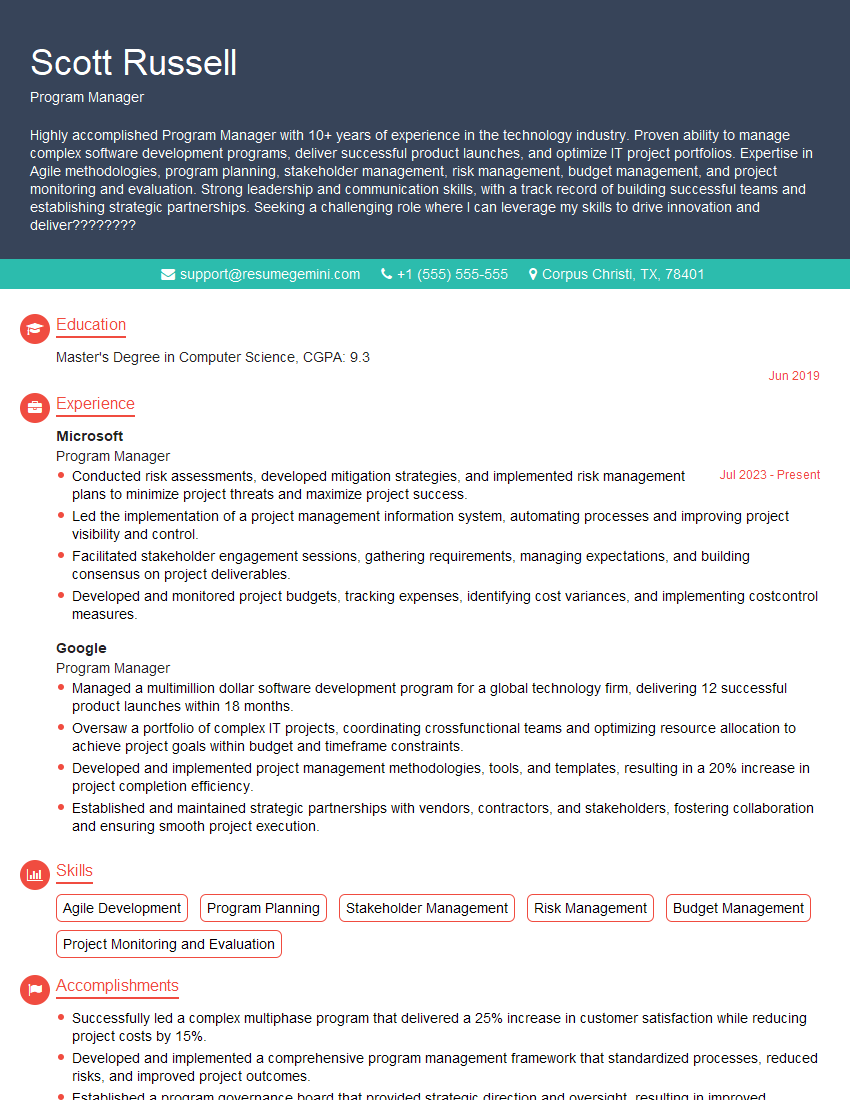
Program Manager Resume Sample
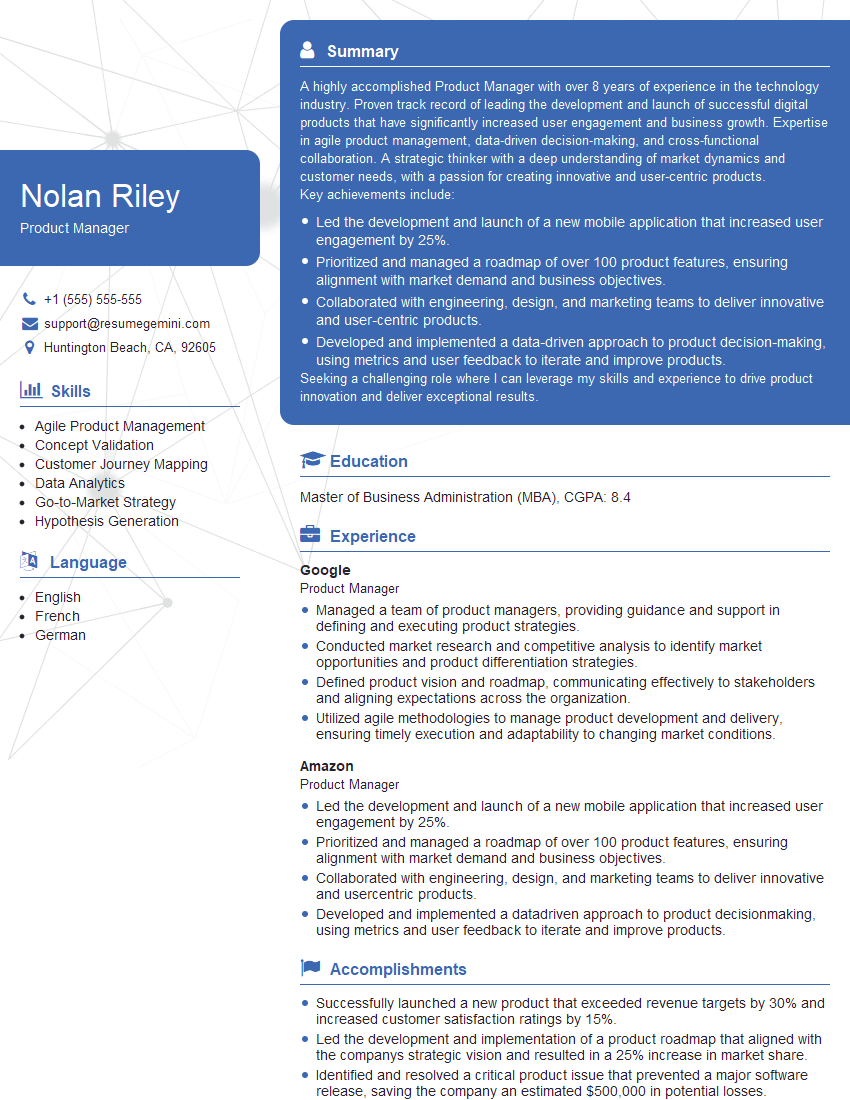
Product Manager Resume Sample
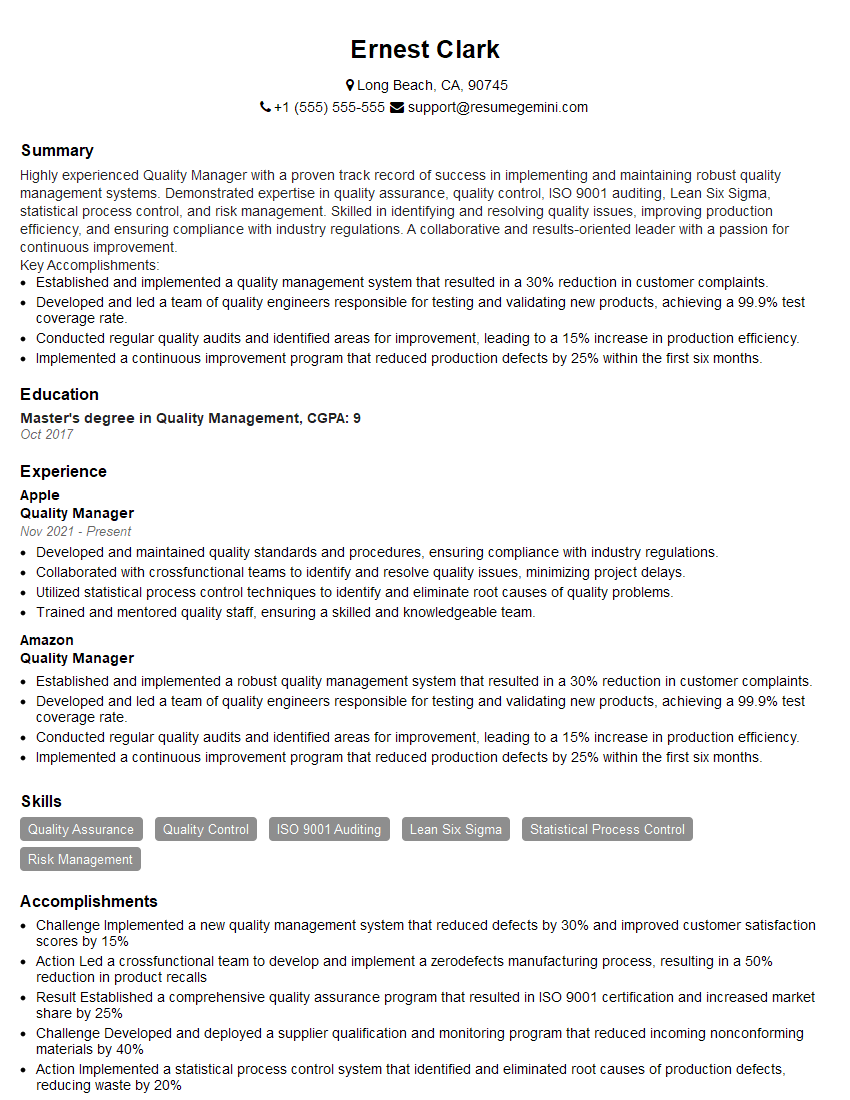
Quality Manager Resume Sample
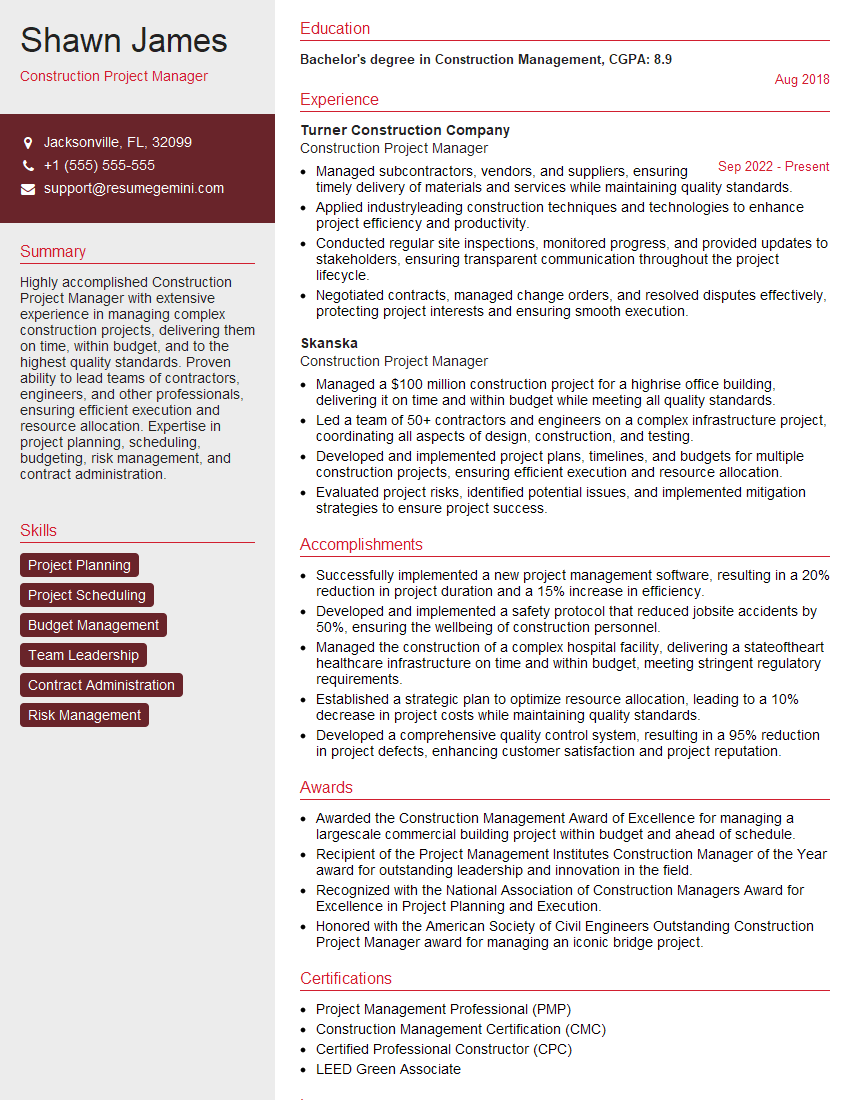
Construction Project Manager Resume Sample

Project Manager Resume Sample
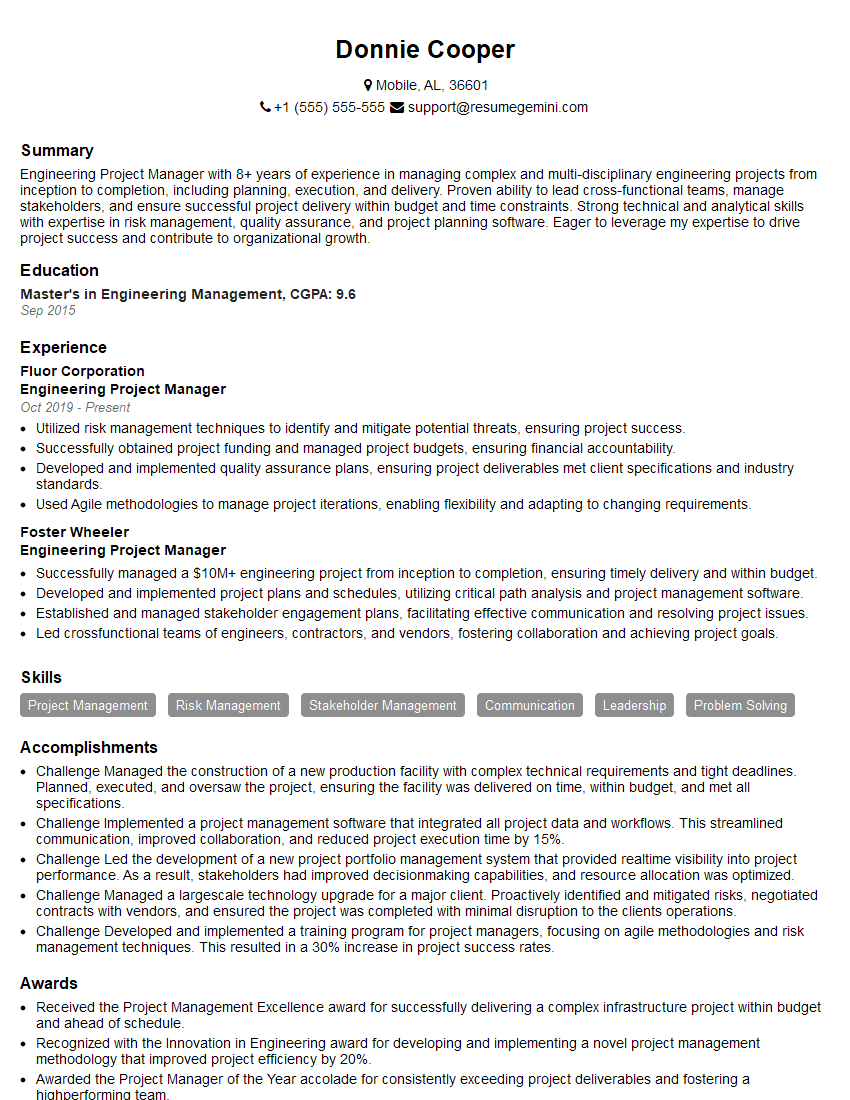
Engineering Project Manager Resume Sample
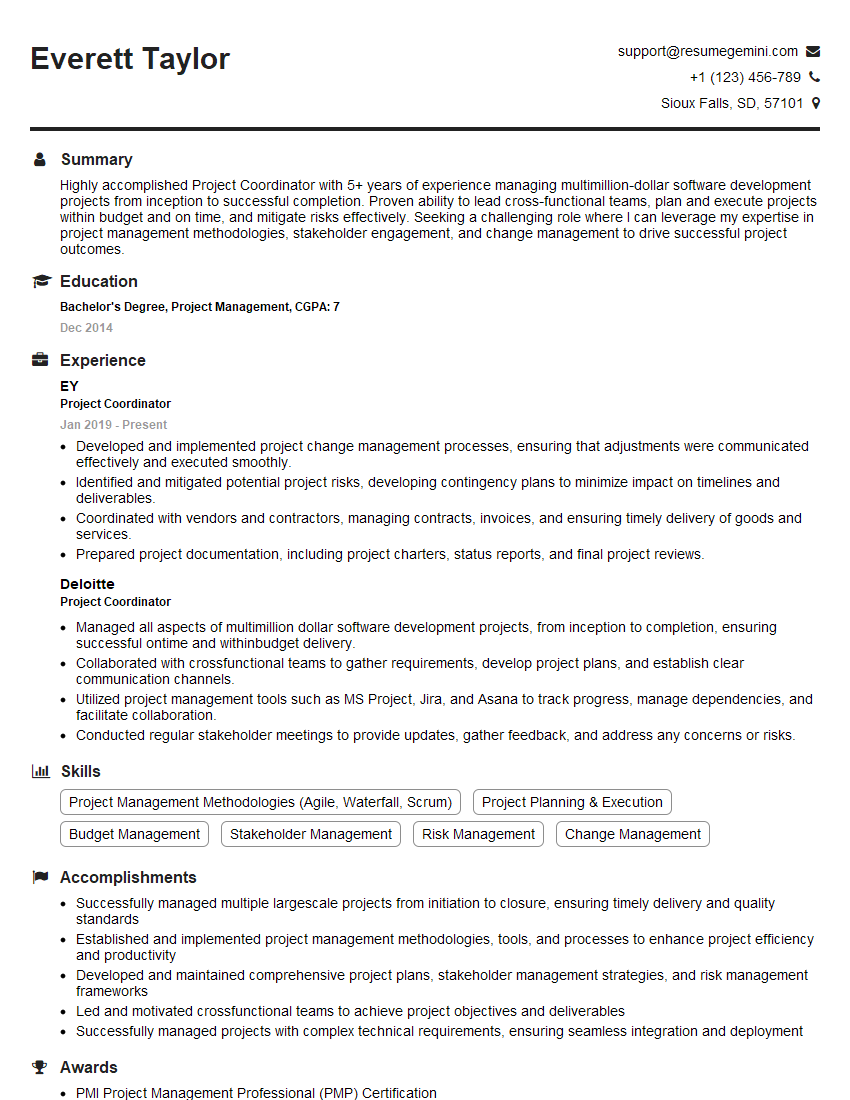
Project Coordinator Resume Sample
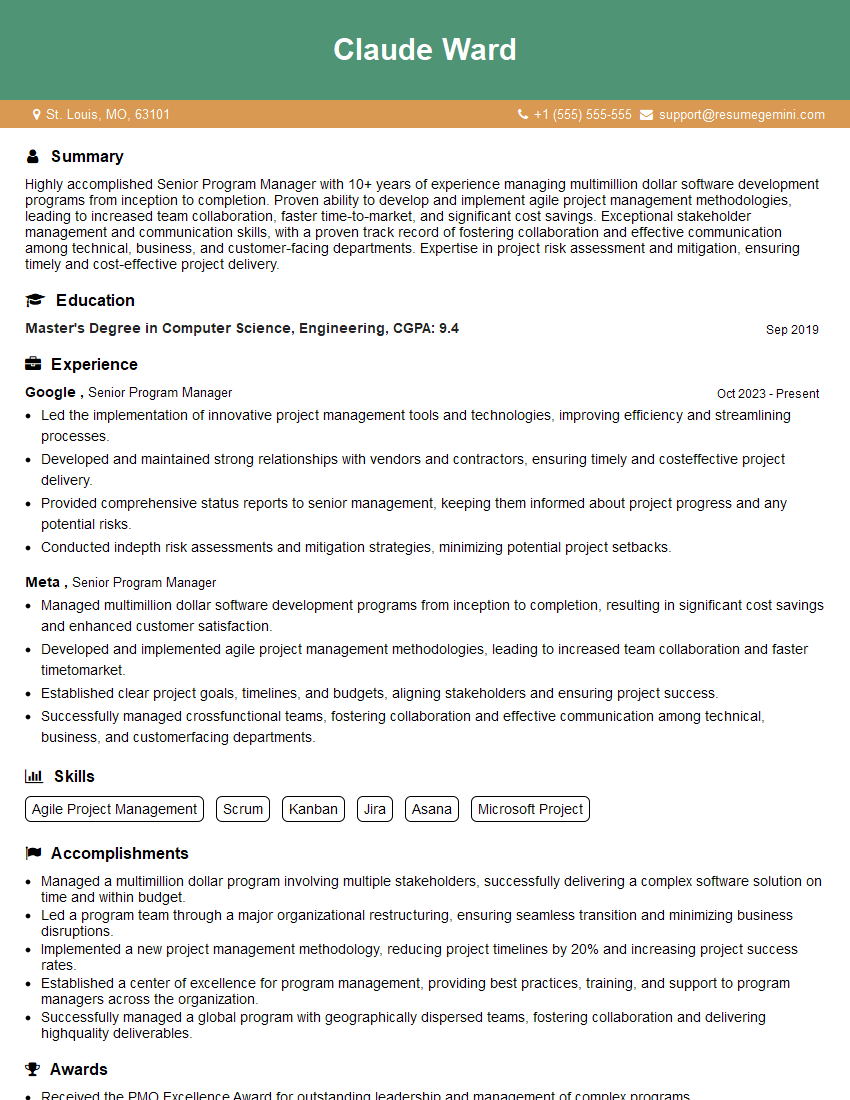
Senior Program Manager Resume Sample
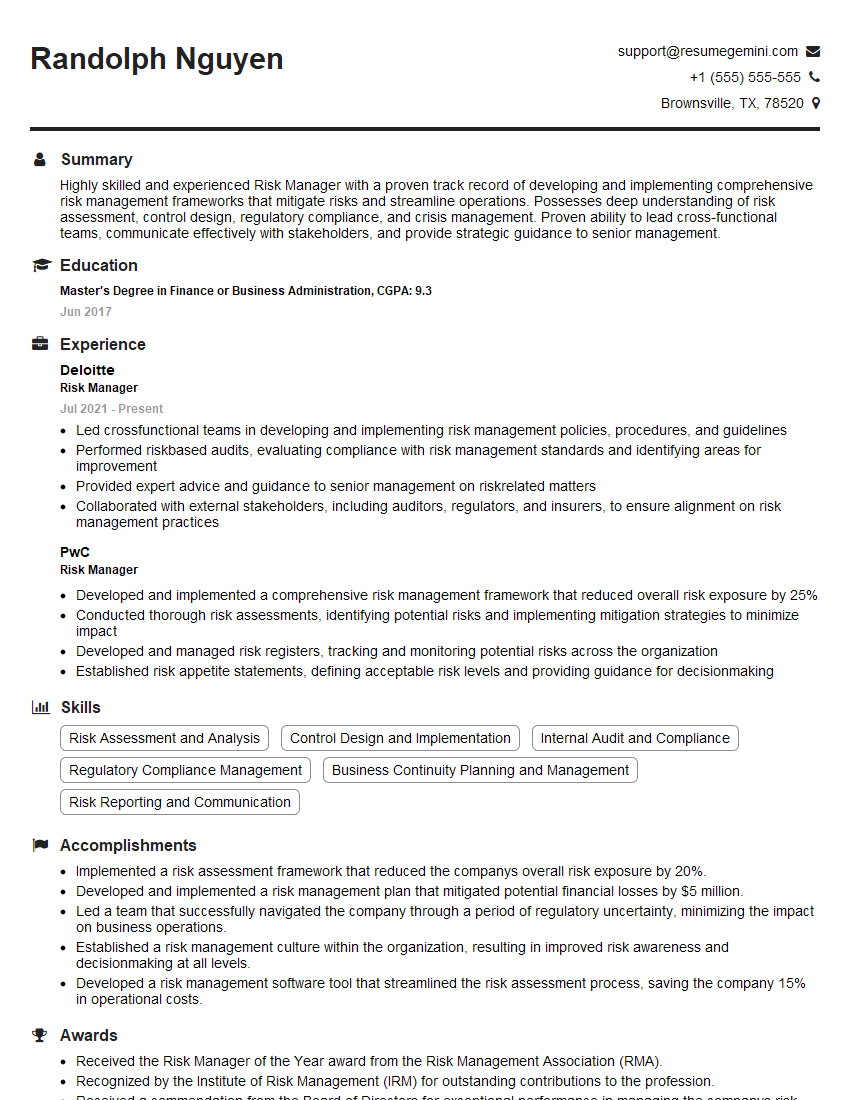
Risk Manager Resume Sample
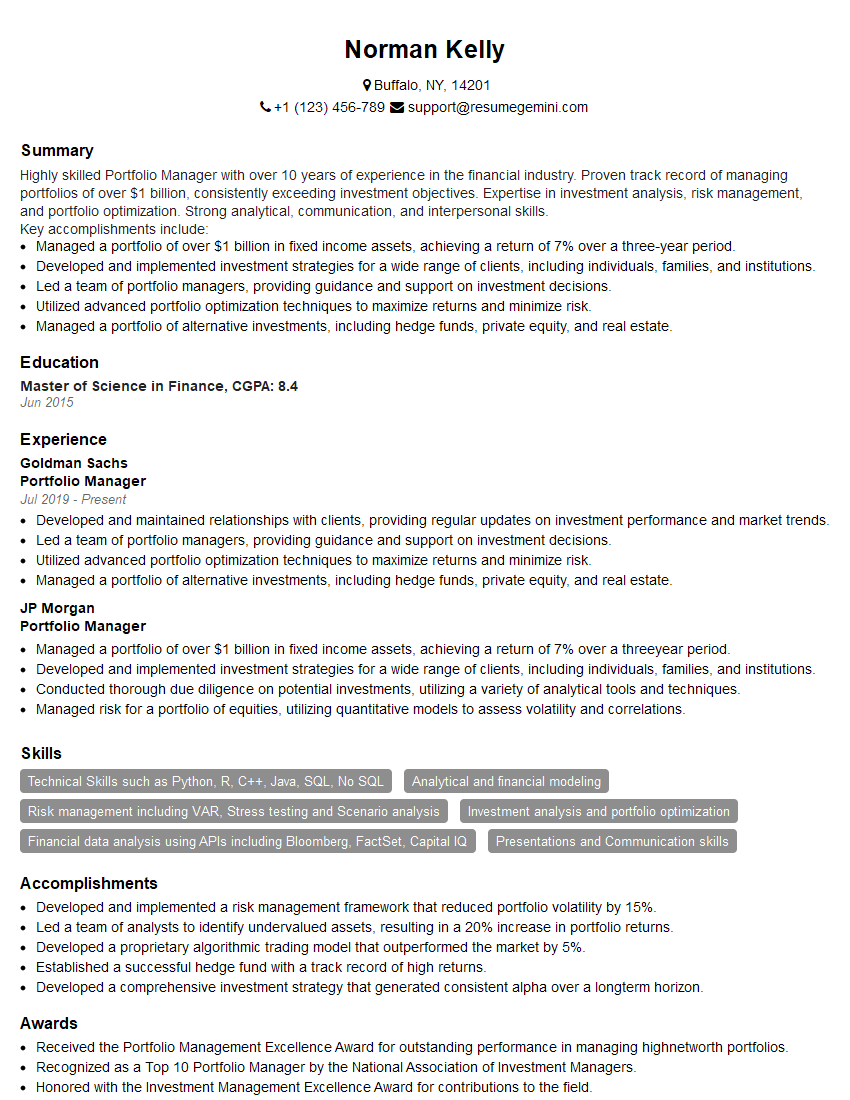
Portfolio Manager Resume Sample

Business Analyst Resume Sample
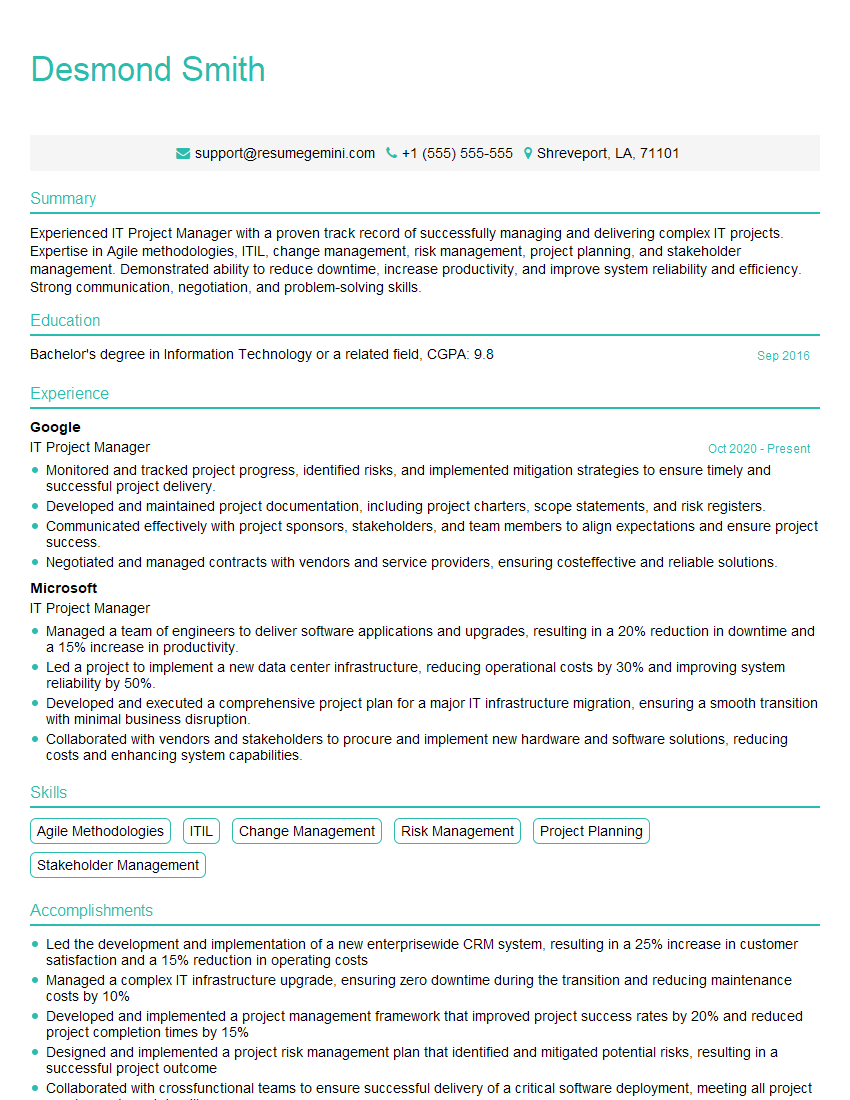
IT Project Manager Resume Sample
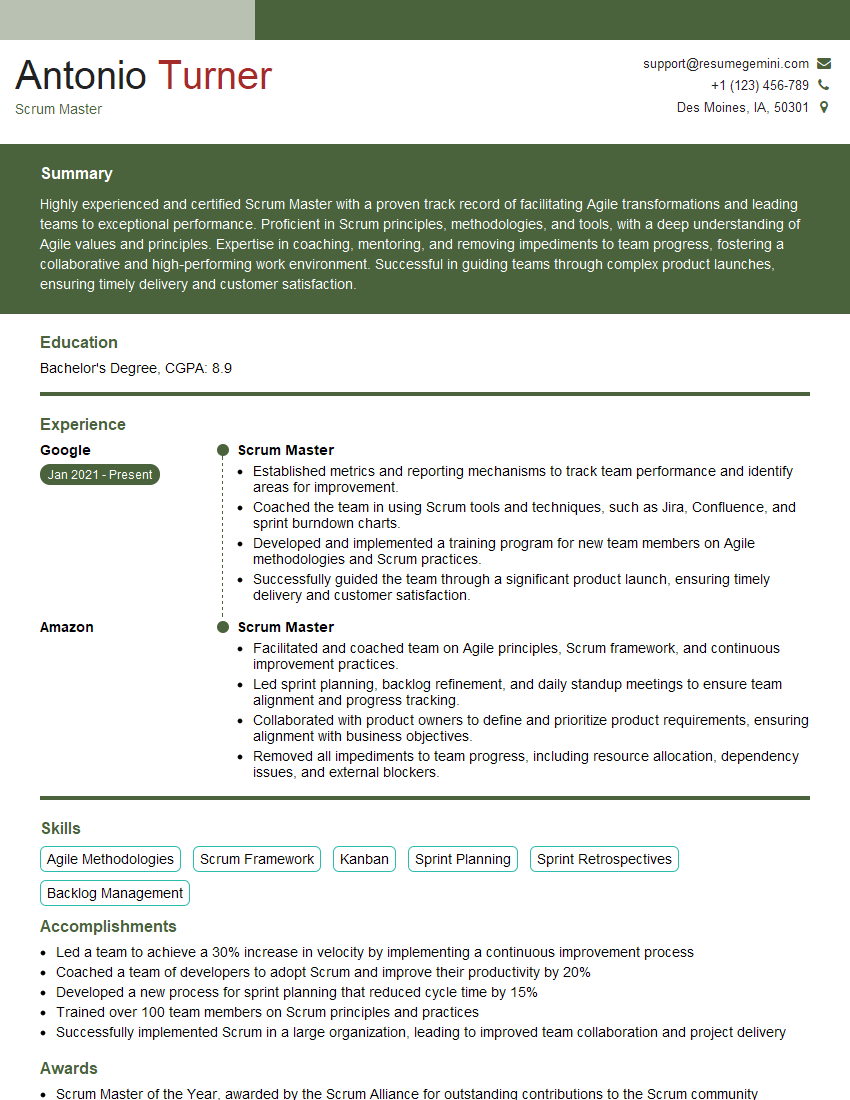
Scrum Master Resume Sample
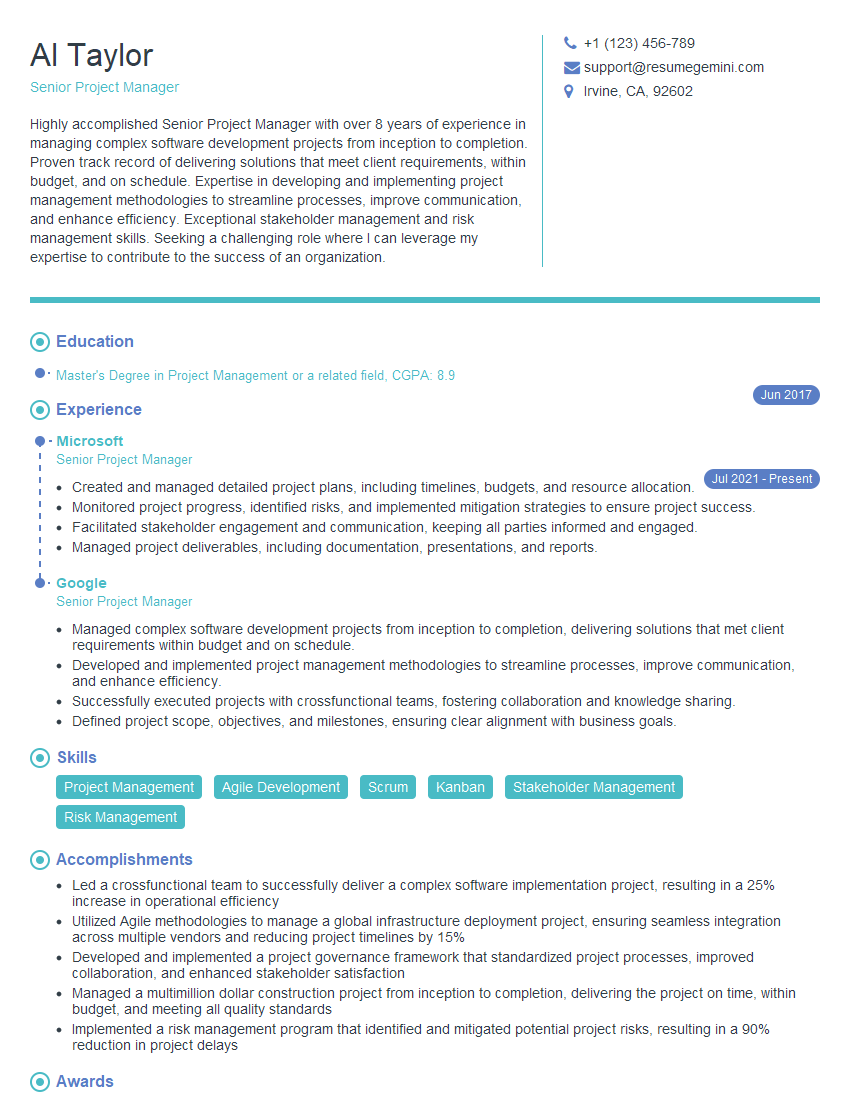
Senior Project Manager Resume Sample
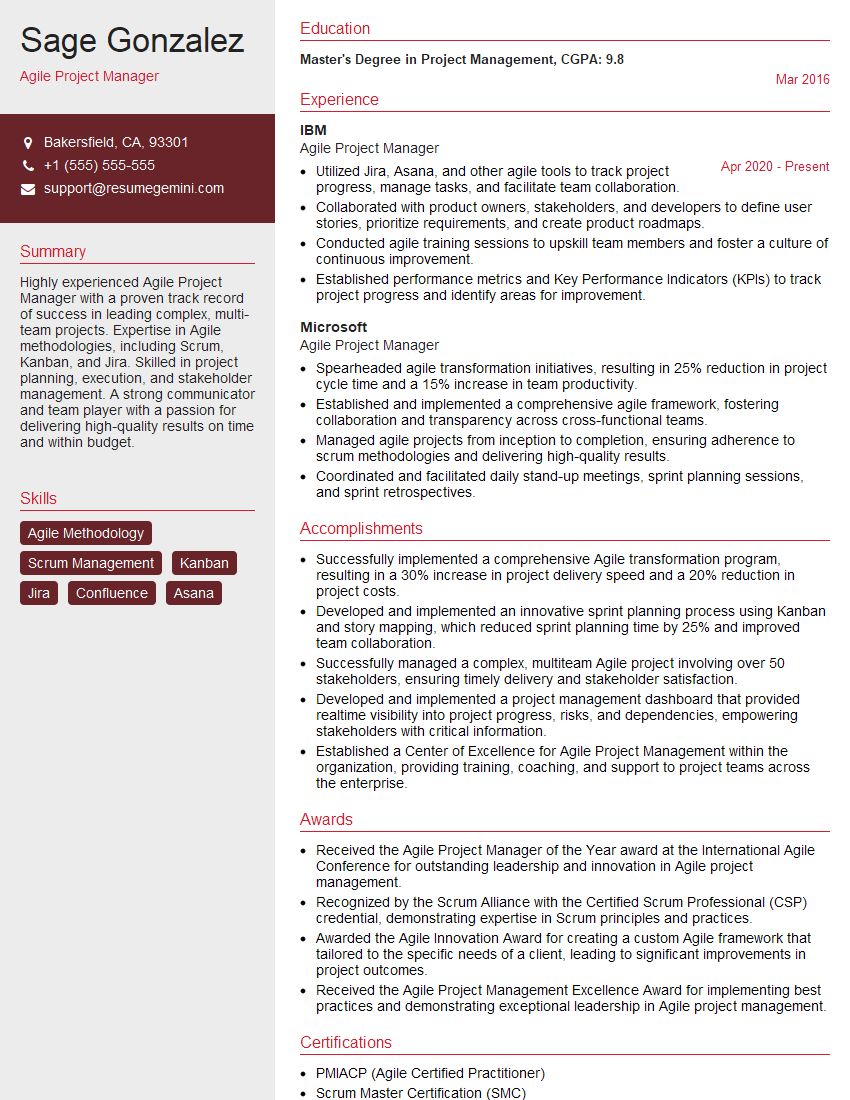
Agile Project Manager Resume Sample
Explore more articles
Users Rating of Our Blogs
Share Your Experience
We value your feedback! Please rate our content and share your thoughts (optional).
What Readers Say About Our Blog
Very informative content, great job.
good