Interviews are more than just a Q&A session—they’re a chance to prove your worth. This blog dives into essential Prop Inspection interview questions and expert tips to help you align your answers with what hiring managers are looking for. Start preparing to shine!
Questions Asked in Prop Inspection Interview
Q 1. Describe your experience with various types of property inspections.
My experience encompasses a wide range of property inspections, from pre-purchase inspections for residential homes and commercial buildings to post-construction inspections and insurance claim assessments. I’ve worked on various property types, including single-family homes, multi-unit dwellings, commercial properties, and even historical buildings. Each inspection type requires a tailored approach and a deep understanding of specific building codes and standards. For example, a pre-purchase inspection focuses on identifying potential problems that could affect the buyer’s decision, while a post-construction inspection verifies the adherence to building plans and specifications. My experience includes using various inspection tools and technologies, ranging from moisture meters and infrared cameras to drone technology for assessing roof conditions and hard-to-reach areas.
- Residential Inspections: These cover everything from foundation cracks to roof leaks, plumbing issues, and electrical problems.
- Commercial Inspections: These are more comprehensive and often involve specialized systems such as HVAC, fire suppression, and security systems.
- Insurance Claim Inspections: These require detailed documentation of damages for insurance purposes.
Q 2. Explain the process of conducting a thorough roof inspection.
A thorough roof inspection is crucial for identifying potential problems before they escalate into costly repairs. I begin by visually inspecting the entire roof surface, checking for missing, damaged, or loose shingles, tiles, or other roofing materials. I look for signs of wear and tear, such as curling, cracking, or blistering shingles. Then, I check the flashing around chimneys, vents, and skylights for proper sealing and any signs of leaks. I carefully examine gutters and downspouts for clogs, damage, or proper drainage. Using binoculars helps with observing hard-to-reach areas. I often use a drone with high-resolution cameras for a detailed aerial view, particularly for larger or sloped roofs, providing unobstructed perspectives. Finally, I inspect the attic for signs of moisture damage, leaks, and proper ventilation. This comprehensive approach ensures a complete assessment of the roof’s condition and longevity.
Q 3. How do you identify and document structural defects?
Identifying and documenting structural defects requires a keen eye for detail and a thorough understanding of structural engineering principles. I use a combination of visual inspection, specialized tools, and documentation techniques. For example, I look for cracks in walls, foundations, and ceilings, paying close attention to their size, location, and direction. I measure cracks using a measuring tape and note their width, length, and depth. I also look for signs of settlement, such as uneven floors or doors and windows that don’t close properly. I use a level to measure the levelness of floors and surfaces. I document all findings with detailed written reports, supported by high-resolution photos and videos. If necessary, I recommend further investigation by a structural engineer for more complex issues.
- Visual Inspection: Observing cracks, bowing walls, uneven settling.
- Measurements: Quantifying the extent of damage using measuring tools.
- Documentation: Detailed reports, photographs, and videos for clear evidence.
Q 4. What are the common signs of foundation problems?
Foundation problems can manifest in various ways. Common signs include cracks in the foundation walls, floors, or ceilings, particularly diagonal cracks which often indicate significant issues. Uneven floors or doors and windows that stick or don’t close properly are also strong indicators. Other warning signs include bulging walls, water stains, and signs of moisture ingress in the basement or crawlspace. Noticeable changes in the property’s alignment, such as sloping floors or sticking doors, could indicate foundation settling or shifting. In extreme cases, you might see visible separation between the foundation and the structure above it. It’s important to note that some minor cracks might be cosmetic; however, the presence of multiple cracks, particularly large or diagonal ones, is a cause for concern and warrants further investigation by a structural engineer.
Q 5. How do you assess the condition of plumbing systems?
Assessing plumbing systems involves a multi-step process. I start by checking for visible leaks, checking pipes for corrosion or damage and testing faucets and toilets for proper function. Then I inspect water pressure, checking for low pressure or inconsistent flow which may indicate problems further within the plumbing network. I verify water heater functionality, checking its temperature, pressure relief valve, and overall condition. I also check for signs of water damage, such as water stains or mold, which can reveal hidden leaks. I carefully inspect the drainage system, checking for slow drains or backups in sinks, toilets, and showers. For more comprehensive testing, I use tools like a pressure gauge to check water pressure and a drain auger to clear clogs. The goal is to identify any potential problems before they escalate into major repairs.
Q 6. Describe your experience inspecting electrical systems.
Inspecting electrical systems requires a cautious and methodical approach due to safety concerns. I always prioritize safety by turning off the power to the circuit being inspected. I visually inspect electrical panels for loose wiring, damaged components, and any signs of overheating. I check the number and capacity of circuits, ensuring that it’s adequate for the house’s electrical needs. I examine outlets and switches for proper grounding, loose connections, and damage. I also pay close attention to the condition of wiring, looking for frayed or damaged wires, particularly in older homes. I check for signs of overloaded circuits and any potential fire hazards. If any issues of concern are found beyond my competency, I recommend a qualified electrician to perform detailed analysis and necessary repairs.
Q 7. How do you evaluate the condition of HVAC systems?
Evaluating HVAC systems involves inspecting both the heating and cooling components. For heating systems, I check the furnace or boiler for proper operation, including checking the burner, heat exchanger, and blower motor. I assess the condition of the air filter and the overall cleanliness of the unit. For cooling systems, I check the air conditioner’s compressor, condenser coil, and evaporator coil for proper function. I also check the refrigerant levels and ensure proper airflow. I pay close attention to the thermostat, ensuring it’s properly calibrated and functioning correctly. I also look for signs of leaks, unusual noises, or inadequate airflow which can indicate problems with the system. In addition to a visual inspection, I may use tools such as a digital thermometer to check temperature readings and a multimeter to test electrical components, ensuring the system runs safely and efficiently.
Q 8. What are your methods for inspecting insulation and ventilation?
Inspecting insulation and ventilation requires a multi-faceted approach focusing on both visual assessment and sometimes, the use of specialized tools. I begin by visually inspecting accessible areas of insulation in attics, crawl spaces, and walls, checking for proper thickness, density, and any signs of damage, moisture, or pest infestation. I look for gaps or voids that compromise the insulation’s effectiveness.
For ventilation, I examine the soffit vents, ridge vents, and gable vents, ensuring they are unobstructed and properly sized for adequate air circulation. I check for any signs of blockage from debris, birds’ nests, or insulation. I also assess the air intake and exhaust system of the HVAC system, including ductwork, to ensure efficient air flow. In some cases, I use a thermal imaging camera to detect areas of poor insulation or air leakage, making invisible problems very clear.
- Example: During a recent inspection, I discovered that insufficient attic ventilation was causing moisture buildup leading to mold growth in the attic. Identifying this issue early prevented significant and costly damage.
- Example: I’ve also used a blower door test (in applicable situations) to pinpoint and quantify air leakage, helping home owners understand the energy efficiency implications and guiding necessary repairs.
Q 9. How do you identify and document pest infestation?
Identifying and documenting pest infestations requires a thorough and systematic approach. I begin with a visual inspection, looking for signs of activity such as droppings, gnaw marks, insect trails, damaged wood, or nests. I carefully examine areas known to attract pests, including attics, crawl spaces, basements, and around plumbing fixtures. I pay close attention to areas near the foundation and exterior walls.
I document any findings with detailed notes and photographs, including the location, type of pest, and the extent of the infestation. This documentation provides critical evidence for remediation efforts. For example, finding frass (insect droppings) in a wall void strongly suggests a wood-boring insect infestation, requiring a more thorough investigation.
While I don’t perform pest control myself, I always clearly outline my findings in the report, recommending the client engage a qualified pest control professional for further assessment and treatment.
Q 10. Explain your approach to inspecting exterior elements like siding and windows.
My inspection of exterior elements starts with a comprehensive visual survey of the siding, windows, doors, and foundation. I look for signs of damage, decay, deterioration, and proper caulking and sealing. I examine the siding for cracks, loose boards, holes, water damage, and signs of insect infestation. I check windows and doors for proper operation, caulking, and weather stripping, assessing their ability to seal effectively against drafts and water infiltration. I’ll check for rot, warping, or damage around the window and door frames.
For the foundation, I examine the visible portions for cracks, settling, or other signs of structural movement. I pay close attention to the areas around the foundation where the wall meets the ground for signs of water damage. All observations are meticulously documented with photographs and detailed descriptions in the final report.
Example: I recently detected significant cracking in the brickwork around a window, indicative of potential foundation issues. This finding was included in the report with recommendations for a structural engineer’s evaluation.
Q 11. How do you use specialized equipment during an inspection?
I utilize several specialized tools to enhance the accuracy and comprehensiveness of my inspections. These include:
- Moisture Meters: To detect hidden moisture in walls, floors, and ceilings. (Further detailed in the next answer)
- Thermal Imaging Cameras: To identify areas of heat loss, moisture intrusion, and electrical problems that are not visibly apparent.
- Blower Door System: To measure air leakage and identify drafts within a building envelope.
- Flashlights and Inspection Mirrors: To access hard-to-reach areas such as attics and crawl spaces.
- Level and measuring tape: To accurately assess the structural integrity of the property.
Using these tools allows me to go beyond visual inspection and offer more detailed insights into a property’s condition, improving the accuracy of my assessment and ensuring better service to my clients.
Q 12. Describe your experience with moisture detection tools.
I am proficient in using various moisture detection tools, including pin-type moisture meters and non-invasive surface moisture meters. Pin-type meters are used to measure the moisture content within wood or other materials by inserting pins into the material. Surface meters measure the surface moisture level without penetration. I understand the limitations of each type and choose the most appropriate tool based on the specific situation.
For example, I might use a pin-type meter to check for moisture damage within a wall if I suspect water intrusion. But for assessing the moisture levels in plaster, I would use a non-invasive surface moisture meter to avoid damaging the surface. Accurate interpretation of readings requires understanding factors such as material type, wood species (if wood is being tested), and environmental conditions.
Accurate readings provide objective evidence, informing decisions about needed repairs and offering concrete information to clients.
Q 13. How do you interpret building codes and regulations?
Interpreting building codes and regulations is crucial for accurate property assessments. I stay updated on local, state, and national building codes relevant to my region. I use my understanding of these codes to identify any safety hazards or code violations during inspections. My knowledge extends to understanding the requirements for different building systems, materials, and construction practices.
For example, I’m familiar with requirements for electrical wiring, plumbing installations, accessibility standards, and energy efficiency regulations. I will flag any discrepancies I find during my assessment and clearly detail those violations in my report, providing valuable information to clients who might be planning renovations or dealing with insurance claims. This ensures the client is well informed about potential risks and compliance issues.
Q 14. What is your experience with report writing and documentation?
I have extensive experience creating comprehensive and detailed inspection reports. My reports follow a standardized format, including a cover page, property information, detailed descriptions of my findings, photographs, conclusions, and recommendations. I use clear and concise language, avoiding technical jargon whenever possible, to ensure the report is easily understandable by clients, whether or not they have a background in construction.
I use professional report writing software to create visually appealing and well-organized reports. Each report contains supporting visual evidence—high-resolution photographs and detailed diagrams—to clearly illustrate the property’s condition. Furthermore, my reports are tailored to the specific needs of the client, whether it’s for a buyer, seller, or insurer. I am always available to discuss the report and answer any questions clients may have.
Q 15. How do you manage your time effectively during an inspection?
Effective time management during a property inspection is crucial for delivering thorough and timely reports. My approach involves a structured, pre-inspection planning phase, followed by efficient on-site execution, and finally, prompt post-inspection documentation.
Before arriving on-site, I meticulously review the inspection request, noting any specific client concerns or areas requiring extra attention. This allows me to prioritize my inspection process. I also create a checklist based on the type of property (residential, commercial, etc.) and the scope of the inspection (e.g., pre-purchase, pre-listing, general condition). This checklist guides my systematic approach, ensuring I cover all essential areas and don’t miss anything.
During the inspection, I utilize time-saving techniques like using a digital reporting system that allows for photo and video documentation directly onto the report. This reduces the time spent on manual note-taking and transcription. I also practice focusing on one area at a time and diligently sticking to my pre-planned schedule. Unexpected delays are managed by re-prioritizing tasks based on urgency and reporting the time constraints to the client, outlining a plan to address any remaining tasks. After the inspection, a structured reporting process further streamlines the workflow, typically utilizing automated report generation, allowing for quicker delivery and revision turnaround time.
Career Expert Tips:
- Ace those interviews! Prepare effectively by reviewing the Top 50 Most Common Interview Questions on ResumeGemini.
- Navigate your job search with confidence! Explore a wide range of Career Tips on ResumeGemini. Learn about common challenges and recommendations to overcome them.
- Craft the perfect resume! Master the Art of Resume Writing with ResumeGemini’s guide. Showcase your unique qualifications and achievements effectively.
- Don’t miss out on holiday savings! Build your dream resume with ResumeGemini’s ATS optimized templates.
Q 16. Describe your experience working with clients and reporting findings.
Client communication and reporting are central to my work. I believe in clear, proactive communication throughout the entire inspection process. Before the inspection, I clarify the client’s needs and expectations, ensuring we’re on the same page about the scope of work and the report’s format. I answer any questions they might have, aiming for complete transparency.
During the inspection itself, I may occasionally provide clients with brief verbal updates on significant findings, but I always prioritize a comprehensive written report. This report includes detailed descriptions of all findings, including photographs or videos when appropriate. For significant issues, I use plain language, avoiding technical jargon, and offer clear, concise explanations of the problem and potential solutions. I’ll also include prioritization of the defects for client budgeting purposes. After delivering the report, I am always available to answer any client questions and offer clarification or further explanations. For example, with a recent pre-purchase inspection, the client was particularly concerned about the foundation. I provided a detailed explanation, complete with photos and clear recommendations from a structural engineer, which reassured the client and helped inform their decision.
Q 17. How do you handle unexpected findings during an inspection?
Unexpected findings are a part of the job, and handling them effectively requires a methodical approach. My first step is to carefully document the unexpected issue, including photos, videos, and precise descriptions. I note the location, severity, and any potential safety hazards. I then assess the immediate risks, prioritizing safety above all else. If a safety hazard exists, I’ll take necessary precautions to mitigate the risk, often notifying the client immediately and advising against further use of the affected area until it’s addressed.
Next, I try to determine the cause of the unexpected finding. This might involve visual inspection, some basic testing if within my competency, or consulting with specialists if necessary. Once I understand the problem, I create a recommended course of action, which may include temporary solutions or recommendations for repair by licensed professionals. For example, I once discovered unexpected water damage behind a wall during a routine inspection. I documented it meticulously, alerted the client, and suggested immediate professional assessment and mitigation to prevent mold growth before further investigation.
Q 18. Explain your understanding of liability and insurance related to inspections.
Liability and insurance are critical concerns in property inspection. I carry professional liability insurance (Errors and Omissions insurance) to protect myself and my clients from potential financial losses due to errors or omissions in my work. This insurance covers claims of negligence or mistakes that could result in financial harm to the client, ensuring a safety net for everyone involved.
Understanding my liability involves recognizing my limitations. I am not a structural engineer or a licensed contractor. If an issue requires specialized expertise, I clearly state this in my report, recommending that a licensed professional conduct further evaluations. Transparency with both my clients and the limits of my expertise helps prevent misunderstandings and protects me from liability beyond my scope of practice. Regular professional development helps ensure that I remain up-to-date on building codes and regulations which helps minimize risk of errors.
Q 19. How do you stay up-to-date with industry best practices and changes in building codes?
Staying current with industry best practices and building code changes is essential for providing high-quality, accurate inspections. I achieve this through a multi-pronged approach, which includes:
- Continuing Education: I actively participate in professional development courses, workshops, and seminars offered by relevant organizations. This ensures that I remain knowledgeable about the latest inspection techniques, technologies, and building standards.
- Professional Organizations: Membership in professional inspection organizations provides access to industry publications, updates on building codes, and networking opportunities with other inspectors.
- Industry Publications and Online Resources: I regularly read industry publications, journals, and online resources to stay informed about new technologies, best practices, and changes in building codes. This keeps me up to date with both general and local standards.
- Networking with Professionals: Maintaining connections with other inspectors, contractors, and engineers provides valuable insights into emerging issues and best practices in the field.
This combined approach ensures that my inspections are thorough, accurate, and comply with all relevant regulations.
Q 20. Describe a situation where you had to troubleshoot a complex problem during an inspection.
During an inspection of a commercial building, I encountered a persistent, unexplained water leak in the basement. Initial observations suggested a simple plumbing issue, but further investigation revealed a more complex problem. The leak wasn’t consistently present, and visual inspection didn’t reveal any obvious cracks or damaged pipes.
My troubleshooting involved a systematic approach. I started by carefully reviewing the building’s plans, checking for potential locations of hidden plumbing. I then used a moisture meter to pinpoint the source more precisely. I also checked for any signs of previous water damage, which ultimately pointed me towards a compromised section of the foundation near a drainage system. This required investigation of the external landscaping around the building. It turned out that a poorly maintained drainage system was directing water against the foundation, creating the leak. The solution involved not only repairing the foundation but also improving the drainage system to prevent future occurrences. This situation reinforced the importance of detailed investigation and going beyond surface-level observations to identify the root cause of problems.
Q 21. How do you prioritize defects and recommend repairs?
Prioritizing defects and recommending repairs requires a clear understanding of the severity and urgency of each issue. My approach involves a three-tier system:
- Critical Defects: These are immediate safety hazards or issues requiring immediate attention to prevent further damage or harm. Examples include structural issues, significant plumbing leaks, or electrical hazards. These are always prioritized first in the report.
- Major Defects: These are significant issues that require repair but don’t pose immediate safety risks. Examples include significant roof leaks (non-emergency), foundation cracks (non-structural), or major appliance malfunctions. These are prioritized second, emphasizing the need for timely attention to prevent future problems.
- Minor Defects: These are issues that are less serious and might not need immediate repair but may warrant attention in the future. Examples include minor cosmetic issues, minor plumbing drips, or small cracks in the drywall. These are listed toward the end of the report.
In my report, I clearly categorize defects into these levels, offering explanations for the prioritization. I also provide estimated costs for repairs whenever possible to help clients make informed budgeting decisions.
Q 22. What software or technology do you utilize for inspections and reporting?
For inspections and reporting, I utilize a suite of software and technologies designed to maximize efficiency and accuracy. My primary tool is a comprehensive property inspection software package which allows me to create customizable inspection checklists, input data directly into the field using a tablet, capture high-resolution photos and videos, and generate professional reports automatically. This software often integrates with mapping systems (like Google Maps) to improve location accuracy and record keeping. Furthermore, I use cloud storage to ensure data backup and accessibility from any device. For example, I might use a program like PlanSwift for takeoff quantities for large scale commercial inspections or something more basic such as a simple word processing software with custom templates for smaller residential projects. The key is having a system that is both robust and adaptable to different project needs.
Q 23. How familiar are you with different types of building materials and their common defects?
My familiarity with building materials and their defects is extensive, built over years of experience. I can identify common issues in various materials like wood (rot, insect infestation, warping), concrete (cracking, spalling, efflorescence), masonry (mortar deterioration, cracks), roofing materials (shingles, tiles, membrane damage), and various types of siding (vinyl, aluminum, wood). For instance, I can easily differentiate between typical settling cracks in a foundation and those indicating more serious structural problems. I understand the differences between various types of lumber grades and how this impacts their durability and susceptibility to damage. Recognizing these subtle differences is key to giving accurate and thorough assessment of a property’s condition.
Q 24. How do you maintain accurate and detailed inspection records?
Maintaining accurate and detailed inspection records is paramount. My process involves a multi-step approach. First, I meticulously complete detailed checklists on site, using the software mentioned previously to record all observations, measurements, and photographic evidence. Every finding includes a precise location within the property using a standardized numbering system and clear descriptive language. Second, I review all data before generating the report, ensuring accuracy and consistency. Third, I keep a digital archive of all inspection data, organized by property address and date. Finally, I follow a strict version control process, keeping all previous versions available for reference. For instance, I’ve had situations where an issue surfaced later on, and having access to previous reports is essential for comparison analysis and even legal claims. This robust system ensures both the accuracy and traceability of my work.
Q 25. Describe your experience with different inspection standards and certifications.
I am proficient in various inspection standards and hold relevant certifications. I am familiar with ASHI (American Society of Home Inspectors) standards, InterNACHI (International Association of Certified Home Inspectors) guidelines, and local building codes. My understanding extends to commercial inspections, adhering to relevant industry standards as defined by project requirements. For example, if dealing with a commercial property, I am well versed in the standards set by the American Society of Civil Engineers (ASCE) for structural inspections. I’m constantly updating my knowledge and certifications to maintain a current and highly qualified level of practice.
Q 26. Explain your approach to client communication and expectation management.
Client communication and expectation management are crucial aspects of my work. I begin by clearly defining the scope of the inspection and outlining what will and won’t be covered. I provide clients with a pre-inspection questionnaire to gather relevant information and address any specific concerns. During the inspection, I maintain open communication, explaining my findings clearly and concisely, utilizing layman terms when needed. I make sure to promptly generate the report, presenting my findings with detailed explanations and photographic evidence and answering any client questions thoroughly. I value transparency and make it a point to always manage client expectations realistically.
Q 27. How do you ensure the safety of yourself and others during inspections?
Safety is my top priority. I follow strict safety protocols during every inspection. This includes wearing appropriate personal protective equipment (PPE) such as safety glasses, gloves, and sturdy footwear. I’m always mindful of potential hazards like uneven surfaces, exposed wires, and hazardous materials. Before entering any potentially dangerous areas, I take necessary precautions such as ensuring proper ventilation. I am well-trained in recognizing and handling different types of potential risks, and I will postpone an inspection if there are immediate threats to my safety or the safety of others. Safety is never an option, but an obligation.
Q 28. How do you handle conflict or disagreements with clients or contractors?
Handling conflict professionally and diplomatically is essential. I approach disagreements by actively listening to all parties involved, seeking to understand their perspectives before presenting my own. I rely on my inspection report and supporting documentation to support my findings. I will calmly explain my rationale and the evidence that supports my conclusions. If a resolution cannot be reached directly, I’m prepared to mediate or suggest alternate methods such as involving a third party, as needed to get to a fair and appropriate resolution. My goal is always a positive outcome based on facts and professional standards.
Key Topics to Learn for Prop Inspection Interview
- Property Condition Assessment: Understanding how to thoroughly assess the physical condition of a property, including structural elements, systems (HVAC, plumbing, electrical), and exterior components.
- Safety and Liability: Recognizing potential safety hazards and liabilities associated with property conditions; understanding relevant legal and regulatory compliance.
- Documentation and Reporting: Mastering the skills to accurately document findings through detailed reports, photographs, and other supporting evidence, using industry-standard terminology.
- Data Analysis and Interpretation: Analyzing inspection data to identify patterns, potential problems, and areas requiring further investigation or repair. Understanding the significance of your findings and presenting them clearly.
- Client Communication: Effectively communicating complex technical information to clients in a clear and understandable manner, both verbally and in writing. Building rapport and trust.
- Technology in Prop Inspection: Familiarity with utilizing technology such as drones, thermal imaging cameras, and software for reporting and data management.
- Problem-Solving and Critical Thinking: Applying analytical skills to troubleshoot potential property issues, propose solutions, and estimate repair costs.
- Industry Standards and Best Practices: Understanding and adhering to relevant industry codes, standards, and best practices for conducting thorough and accurate inspections.
Next Steps
Mastering prop inspection opens doors to exciting career opportunities in real estate, property management, and construction. A strong understanding of these key areas will significantly boost your interview performance and career prospects. To maximize your chances, create an ATS-friendly resume that highlights your skills and experience effectively. ResumeGemini is a trusted resource that can help you build a professional and impactful resume, showcasing your qualifications in a way that Applicant Tracking Systems recognize. Examples of resumes tailored to Prop Inspection are available, providing you with a clear path to success.
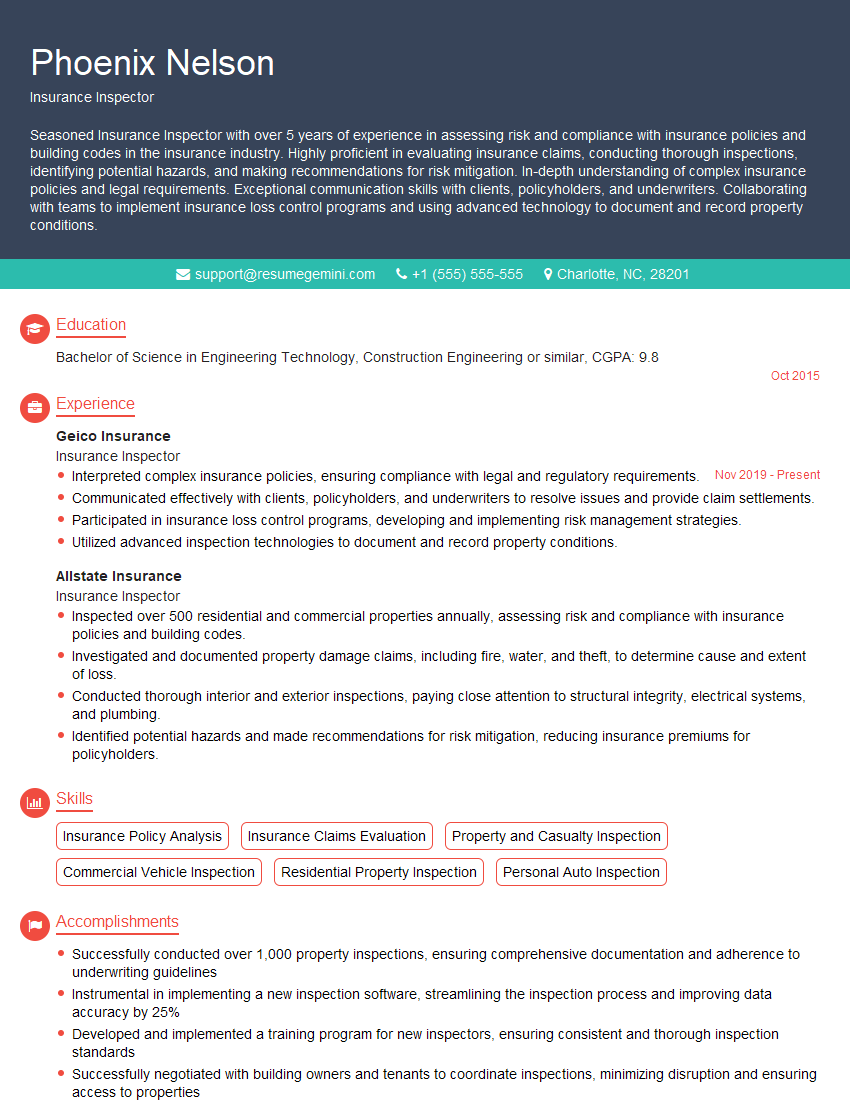
Insurance Inspector Resume Sample
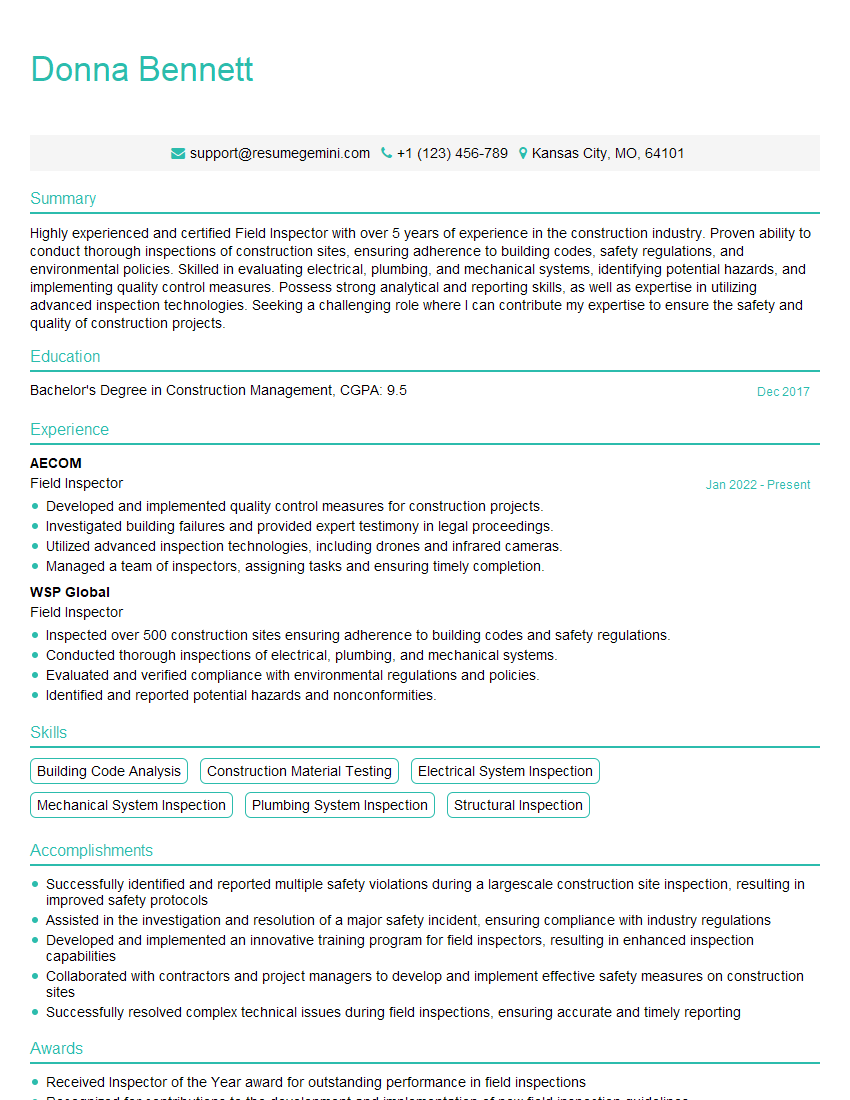
Field Inspector Resume Sample
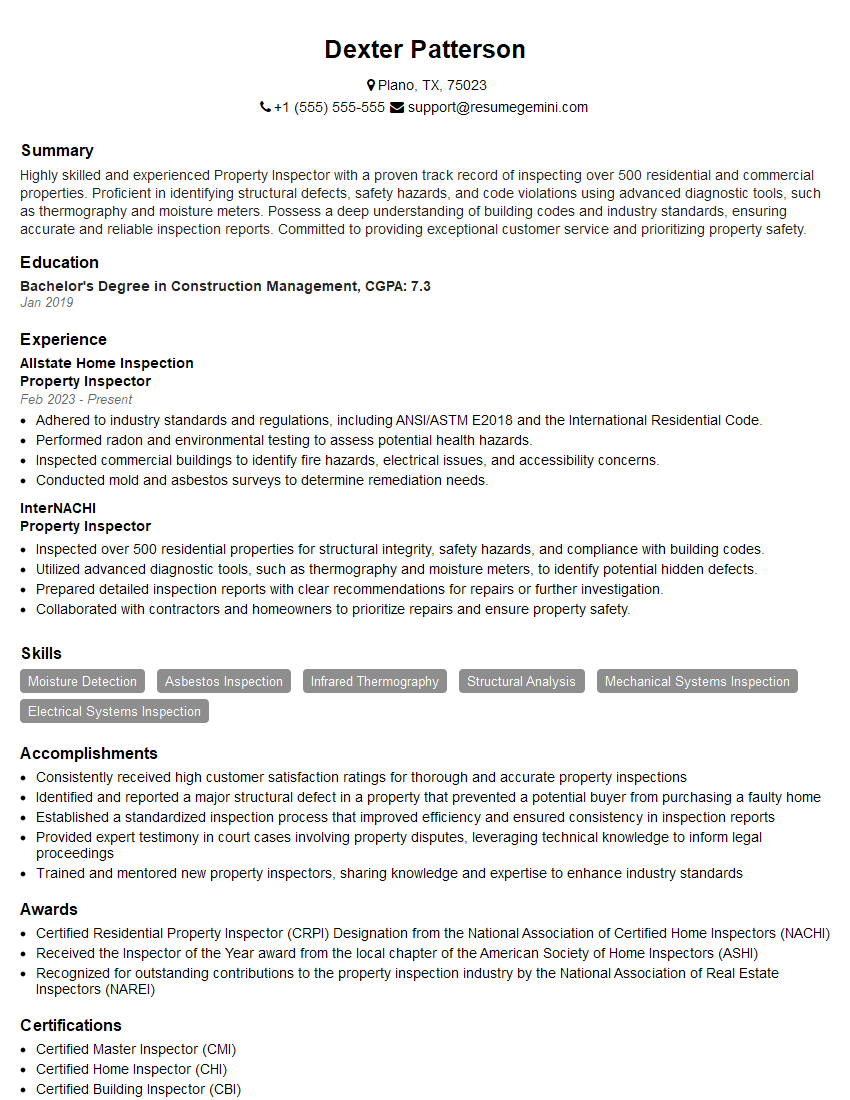
Property Inspector Resume Sample
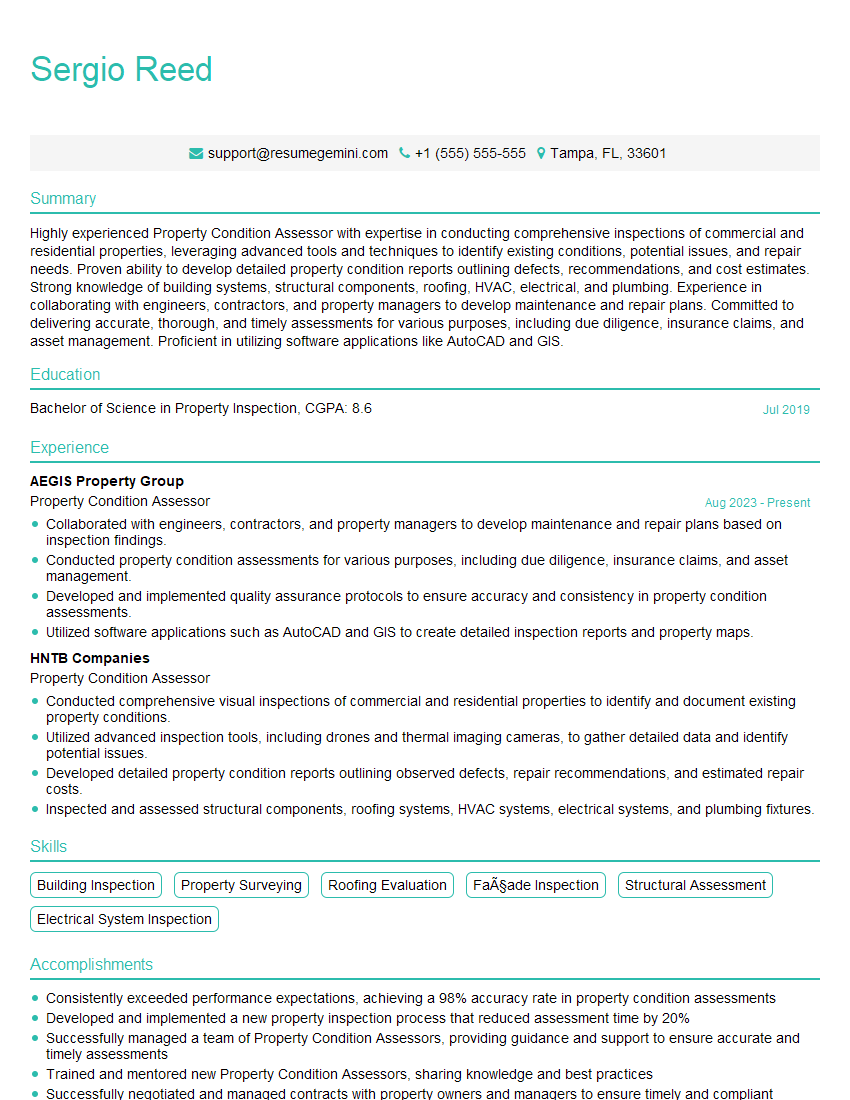
Property Condition Assessor Resume Sample
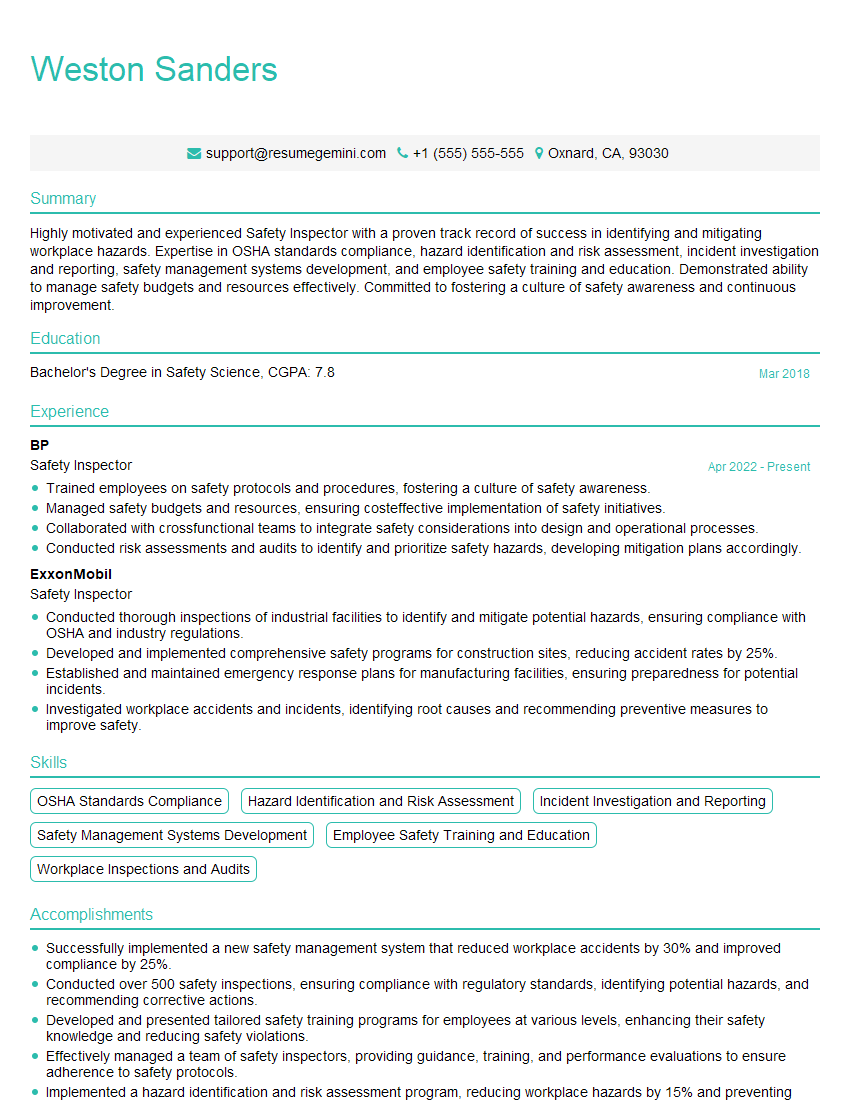
Safety Inspector Resume Sample
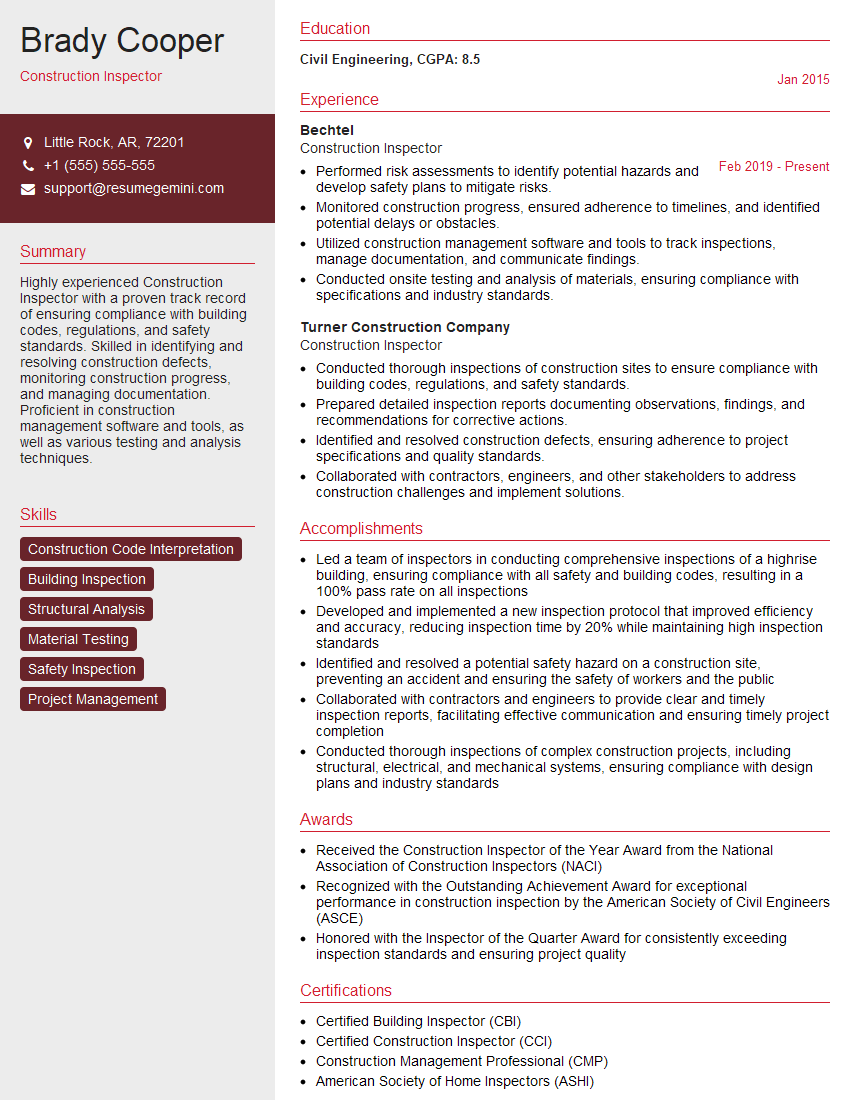
Construction Inspector Resume Sample
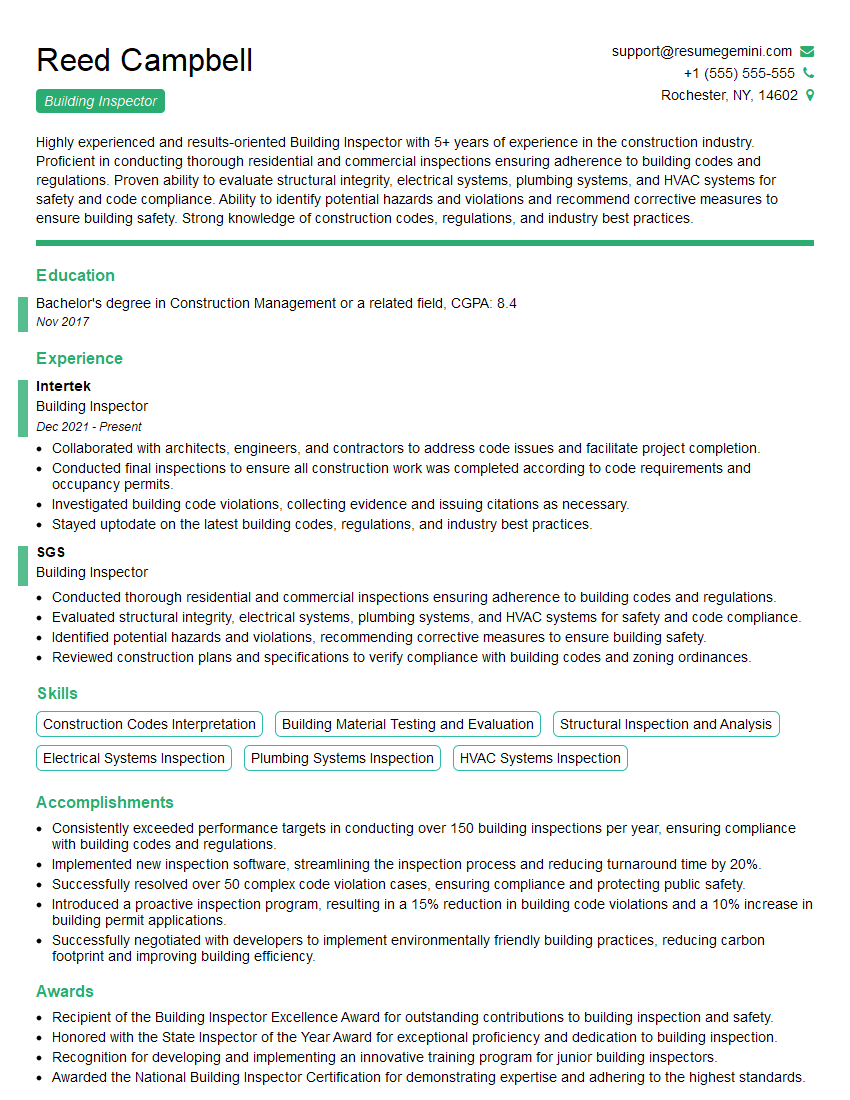
Building Inspector Resume Sample
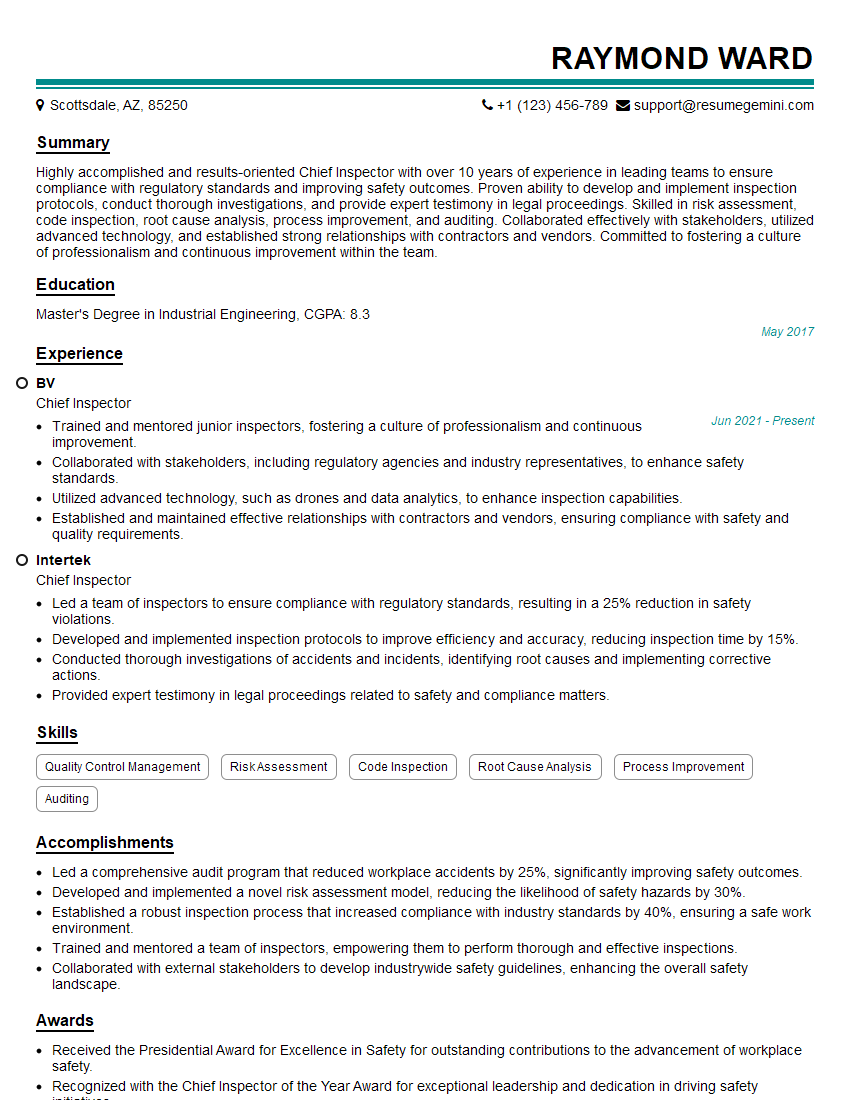
Chief Inspector Resume Sample
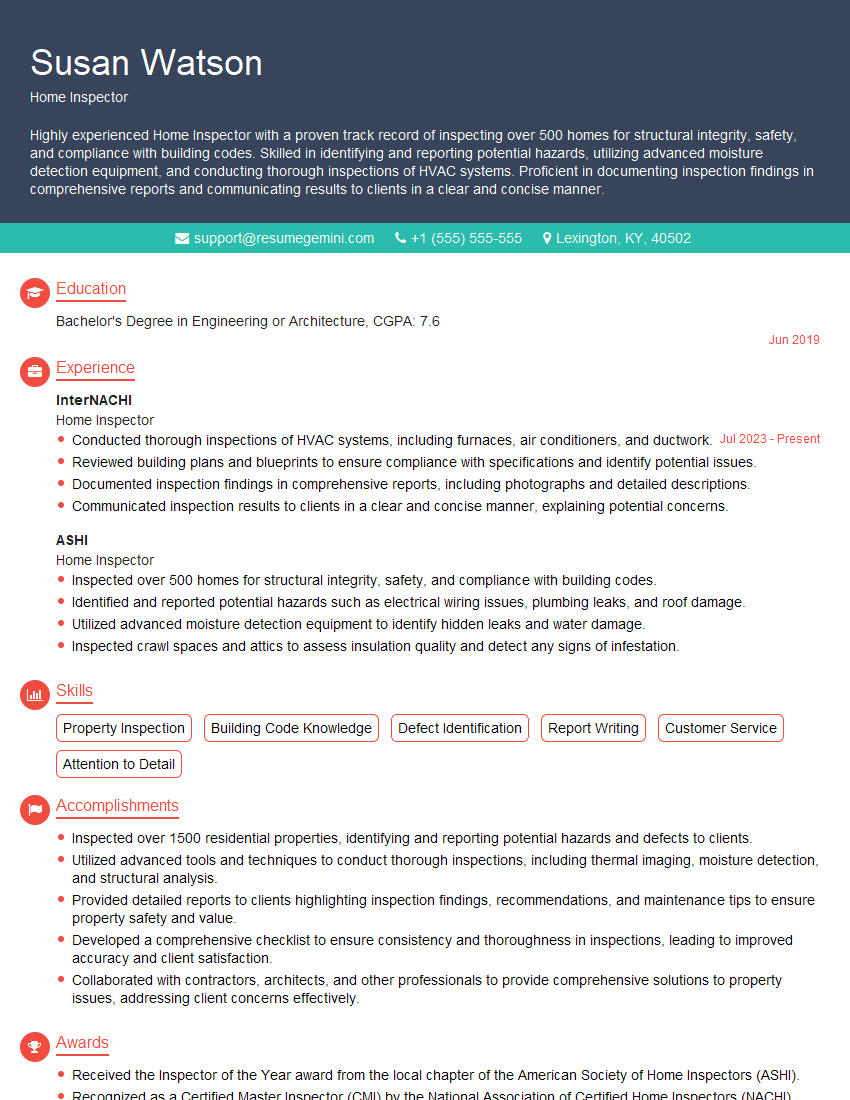
Home Inspector Resume Sample
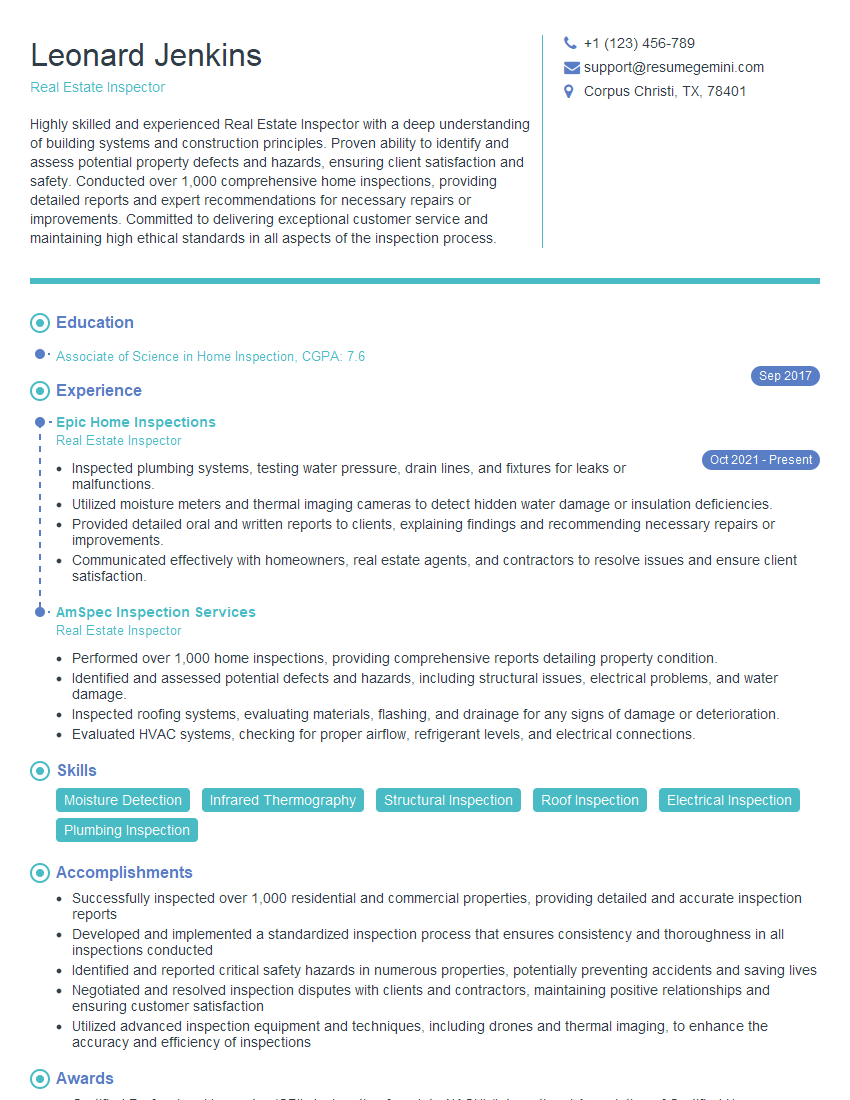
Real Estate Inspector Resume Sample
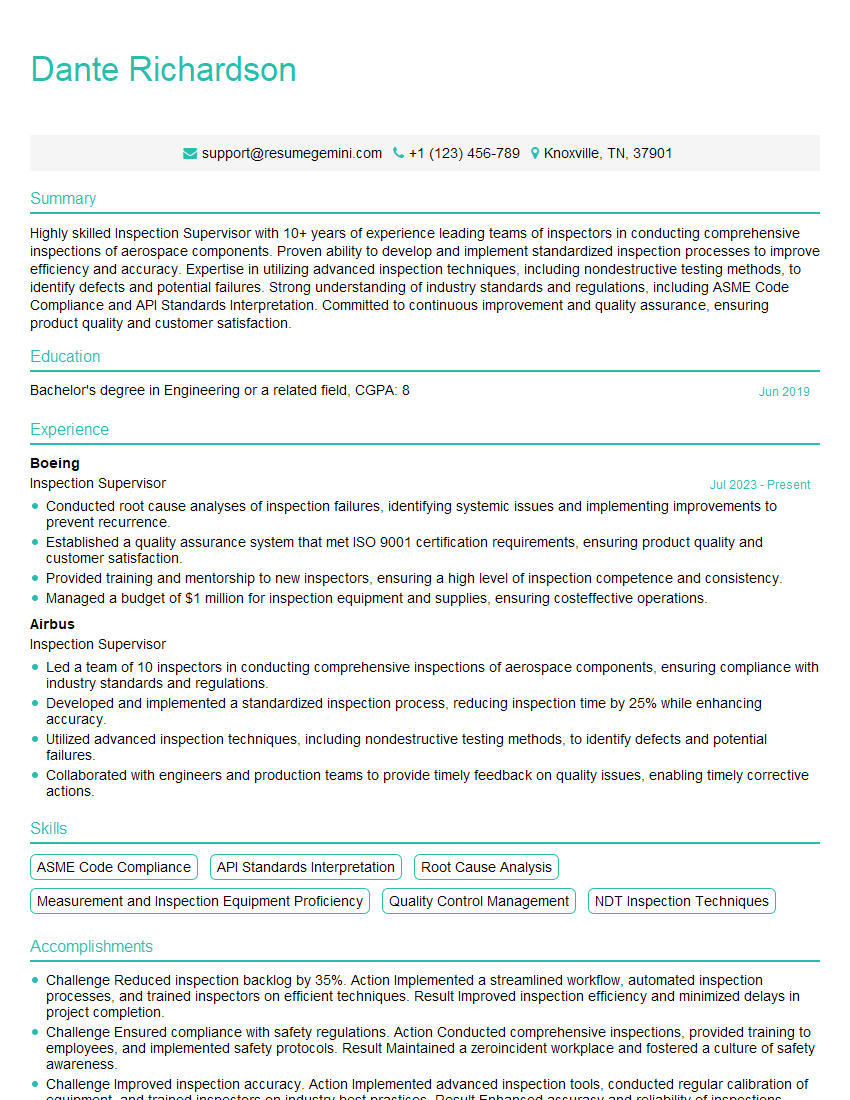
Inspection Supervisor Resume Sample
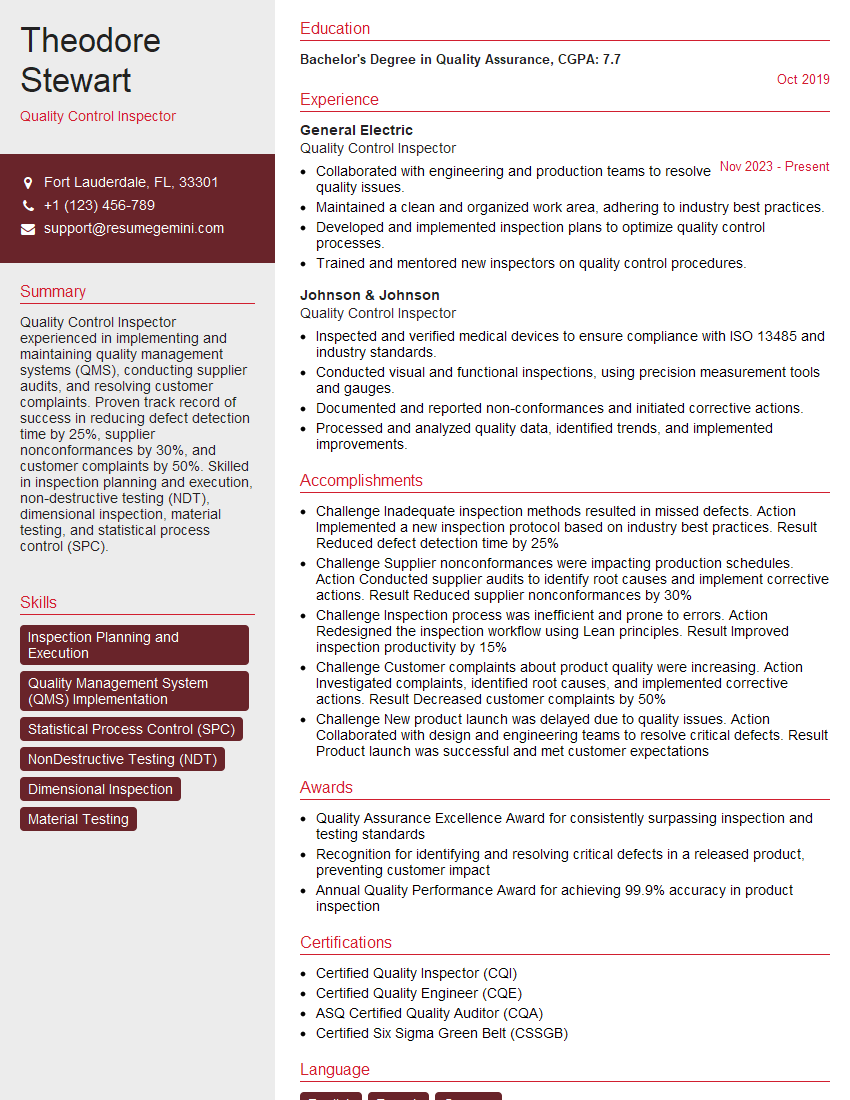
Quality Control Inspector Resume Sample
Explore more articles
Users Rating of Our Blogs
Share Your Experience
We value your feedback! Please rate our content and share your thoughts (optional).
What Readers Say About Our Blog
Very informative content, great job.
good