The right preparation can turn an interview into an opportunity to showcase your expertise. This guide to Public Relations and Networking interview questions is your ultimate resource, providing key insights and tips to help you ace your responses and stand out as a top candidate.
Questions Asked in Public Relations and Networking Interview
Q 1. Describe your experience developing and executing PR campaigns.
Developing and executing PR campaigns involves a strategic, multi-step process. It begins with a thorough understanding of the client’s objectives, target audience, and key messages. I start by conducting extensive research to identify opportunities and potential challenges. This includes analyzing the competitive landscape, understanding media trends, and assessing the current public perception of the client.
Next, I develop a comprehensive PR strategy that outlines specific goals, target audiences, key messages, and tactics. This strategy is typically documented in a detailed campaign plan that includes timelines, budgets, and measurable key performance indicators (KPIs). Execution involves implementing the tactics outlined in the plan, which might include press releases, media outreach, social media engagement, event planning, and content creation. For example, in a recent campaign for a sustainable fashion brand, we focused on influencer marketing, collaborating with ethical fashion bloggers and creating engaging Instagram stories showcasing the brand’s commitment to eco-friendly practices. We also secured features in relevant publications, focusing on the brand’s unique selling points and commitment to sustainable manufacturing. Throughout the campaign, monitoring and evaluation are crucial to ensure the plan stays on track and adjustments are made as needed.
Q 2. How do you measure the success of a PR campaign?
Measuring the success of a PR campaign goes beyond simply counting media mentions. A robust evaluation framework should encompass both quantitative and qualitative metrics. Quantitative metrics might include things like media impressions (the total number of people exposed to the campaign’s message), website traffic driven by PR efforts, social media engagement (likes, shares, comments), and changes in brand awareness or sentiment.
Qualitative metrics are equally important and often provide a deeper understanding of campaign impact. These include analyzing the tone and context of media coverage (positive, negative, neutral), tracking changes in public perception through surveys or social listening, and assessing the overall impact on business objectives, such as sales or lead generation. For instance, while a high number of media mentions is positive, the quality and tone of the coverage are critical. A single negative article in a high-impact publication might outweigh dozens of smaller, positive mentions. A balanced approach incorporating both quantitative and qualitative data gives a complete picture of campaign effectiveness.
Q 3. Explain your process for identifying and targeting key media outlets.
Identifying and targeting key media outlets is a crucial element of any successful PR campaign. This process begins with thorough research. I use a combination of online databases (like Cision or Muck Rack), media databases, and targeted Google searches to find journalists, bloggers, and influencers who cover relevant topics and have an audience aligned with my client’s target market.
I then analyze each outlet’s audience, editorial style, and past coverage to determine if it’s a good fit. For example, a tech startup wouldn’t pitch to a publication focused on home decor. I also carefully consider the journalist’s beat, past writing, and their preferences for story pitches (email, phone call, etc.). Personalization is key; I tailor each pitch to the specific outlet and journalist, highlighting what makes the story relevant to their audience and their specific interests. The goal is to build genuine relationships rather than simply sending generic press releases. This targeted approach ensures the message resonates with the right audience, increasing the chances of positive coverage.
Q 4. How do you handle negative media coverage?
Handling negative media coverage requires a swift, strategic, and transparent approach. The first step involves acknowledging the issue and assessing its impact. Understanding the nature and extent of the negative coverage is crucial before formulating a response. Ignoring the issue is rarely a good strategy; it can often escalate the situation.
Next, I develop a response strategy that directly addresses the concerns raised. Depending on the nature of the issue, this might involve issuing a press release clarifying the situation, proactively engaging with journalists and influencers to provide context or additional information, or even offering a public apology if appropriate. For example, if a product recall is involved, transparency and a clear plan of action are paramount. Building credibility and trust during a crisis is important and focusing on open communication is key to mitigating further damage. The goal is to provide a factual response and regain public trust by demonstrating responsibility and a willingness to address the problem directly.
Q 5. What strategies do you employ for building and maintaining relationships with journalists?
Building and maintaining strong relationships with journalists is essential for effective PR. It’s less about transactional pitching and more about building long-term partnerships based on trust and mutual respect. This involves consistently providing journalists with relevant and accurate information, respecting deadlines, and being responsive to their inquiries.
I prioritize personalized communication, understanding their interests and beats to tailor pitches and information accordingly. I also strive to build rapport by offering exclusive access to information, invitations to events, and thought leadership opportunities. Building genuine relationships takes time and effort but can result in lasting partnerships that provide valuable access to media outlets. For instance, regularly sending relevant news clips, research, or expert commentary relevant to a journalist’s area of focus is a simple but effective way to stay top of mind.
Q 6. Describe your experience with crisis communication management.
Crisis communication management involves handling unexpected events that can negatively impact an organization’s reputation and public perception. My experience in this area includes developing and implementing crisis communication plans, training spokespeople, and managing media relations during challenging situations.
The process generally involves a rapid response. This begins with swiftly assessing the situation, identifying key stakeholders, and developing a consistent message. Effective crisis communication relies heavily on transparency, honesty, and empathy. We work to provide accurate information proactively, and address concerns promptly, taking responsibility where necessary. For example, during a product defect crisis, we would prioritize getting the facts right, offering immediate solutions, and ensuring our communication is consistent across all channels. A well-defined crisis communication plan, including pre-approved messaging and key contact lists, ensures a more organized and efficient response.
Q 7. How do you leverage social media for PR purposes?
Social media is a powerful tool for PR, offering opportunities for two-way communication, engagement, and real-time feedback. I leverage social media platforms to amplify PR campaigns, build brand awareness, engage with audiences, and manage reputation.
This involves creating engaging content, using relevant hashtags, running social media advertising campaigns, monitoring mentions and conversations, and responding promptly to comments and messages. Social listening tools allow us to track public sentiment and identify emerging issues. For instance, we might launch a targeted campaign on Twitter to promote a product launch, use Instagram for visual storytelling, or employ LinkedIn to engage with industry professionals. A critical aspect is maintaining a consistent brand voice and ensuring messages are tailored to each platform’s audience and style. Success here involves understanding different platforms and employing strategies relevant to each.
Q 8. What is your experience with content creation for PR?
My experience in content creation for PR is extensive, encompassing various formats tailored to different media and audiences. I’ve crafted compelling press releases, blog posts, website copy, social media content, and even contributed to scriptwriting for video features. My approach is always strategic, focusing on creating content that aligns with the client’s objectives, resonates with the target audience, and incorporates relevant keywords for optimal search engine visibility. For example, while working on a campaign for a sustainable fashion brand, I created a series of Instagram stories highlighting the ethical sourcing of materials, garnering significant engagement and positive brand perception. Another project involved writing a blog post series on the benefits of a new technology, generating leads for the client through organic search and social sharing. I always ensure the content is high-quality, accurate, and optimized for the intended platform.
Q 9. Explain your approach to media pitching.
My approach to media pitching is highly personalized and data-driven. Before pitching, I conduct thorough research to identify journalists and publications relevant to the client’s story and target audience. I analyze their past work to understand their editorial style and preferred content formats. Then, I craft a compelling pitch that directly addresses their audience’s needs and interests, highlighting the newsworthiness and unique value of the client’s story. It’s not a ‘one-size-fits-all’ approach; each pitch is carefully tailored to the specific journalist and publication. For instance, I successfully pitched a story about a local startup to a national tech publication by focusing on a specific element of their innovation that aligned perfectly with the publication’s focus on emerging technologies. Following up is also crucial; I maintain polite and persistent contact without being intrusive, tracking my pitches and adjusting my strategy based on the responses I receive.
Q 10. How do you build relationships with influencers?
Building relationships with influencers is a long-term process that requires genuine engagement and mutual benefit. I start by identifying influencers whose values and audience align with my client’s brand. Then, I engage authentically with their content, offering thoughtful comments and participating in relevant conversations. I avoid transactional relationships; instead, I focus on building genuine connections based on shared interests. This can involve collaborations on content creation, participation in relevant industry events, or offering exclusive access to information. For instance, I helped a client partner with a popular food blogger to develop recipes using their products, creating a mutually beneficial campaign that increased brand awareness and sales. Regular communication and genuine appreciation are vital to nurturing these relationships and ensuring long-term success.
Q 11. How do you track and analyze PR results?
Tracking and analyzing PR results goes beyond simply counting media mentions. My approach employs a multi-faceted strategy using both quantitative and qualitative data. Quantitatively, I track metrics such as media mentions, reach, engagement (likes, shares, comments), website traffic, and social media sentiment. Qualitatively, I analyze the tone and context of media coverage, assessing its impact on brand perception and achieving business objectives. Tools like Meltwater and Brandwatch provide valuable insights into media coverage and sentiment analysis. I use Google Analytics to track website traffic driven by PR efforts. I then synthesize this data into comprehensive reports, showcasing the campaign’s effectiveness and identifying areas for improvement in future campaigns. For instance, I once tracked a campaign’s impact on website sales, demonstrating a direct correlation between positive media coverage and increased revenue. This data-driven approach helps ensure that PR efforts are strategic and deliver measurable results.
Q 12. What is your experience using PR software and analytics tools?
I have extensive experience utilizing various PR software and analytics tools. My proficiency includes platforms like Cision, Meltwater, and Brandwatch for media monitoring and analysis. I’m also adept at using social media management tools like Hootsuite and Sprout Social for scheduling and engaging with audiences. Furthermore, I’m comfortable using Google Analytics to track website traffic and other key metrics. My understanding of these tools allows me to efficiently gather data, analyze trends, and report on the effectiveness of PR campaigns. I find that utilizing these tools not only improves the efficiency of my workflow but also provides a more data-driven approach to crafting and refining successful PR strategies.
Q 13. Describe your experience with budget management for PR campaigns.
Budget management is a crucial aspect of any successful PR campaign. My approach involves creating a detailed budget outlining all anticipated costs, including media outreach, content creation, influencer marketing, event participation, and software subscriptions. I collaborate closely with clients to establish realistic budget parameters while ensuring sufficient resources are allocated to achieve campaign objectives. Regular budget tracking and reporting allow me to monitor spending and identify any potential discrepancies or areas for optimization. For example, I successfully managed a tight budget for a non-profit organization by strategically leveraging free media opportunities and collaborating with volunteer influencers. Transparent communication with clients about budget allocation and performance is key to building trust and ensuring successful campaign execution.
Q 14. How do you adapt your PR strategy for different target audiences?
Adapting PR strategies for different target audiences is paramount for effective communication. My approach begins with thorough audience research to understand their demographics, psychographics, media consumption habits, and preferred communication styles. For example, a campaign targeting young adults might utilize a vibrant social media presence and influencer collaborations, while a campaign targeting older professionals might focus on print media and direct outreach to key industry leaders. Messaging and tone are also crucial; I tailor my communication to resonate with each audience’s specific values, concerns, and language. This targeted approach maximizes the impact of PR efforts by ensuring the message is received and understood by the intended recipients. A successful example was tailoring a campaign about a new healthcare product – one approach for patients focused on ease of use, another for healthcare professionals focused on clinical efficacy.
Q 15. What is your experience working with different media types (print, online, broadcast)?
My experience spans a wide range of media, encompassing print, online, and broadcast platforms. In print, I’ve secured coverage in major newspapers and trade publications through targeted press releases and building strong relationships with journalists. This involves crafting compelling narratives tailored to each publication’s style and audience. Online, I’ve managed social media campaigns, leveraging platforms like Twitter, LinkedIn, and Instagram to reach specific demographics and build brand awareness. This includes creating engaging content, responding to comments, and utilizing analytics to track campaign performance. Finally, in broadcast, I’ve coordinated interviews on television and radio, preparing spokespeople and ensuring impactful messaging. One successful example involved securing a prime-time television interview which resulted in a significant surge in website traffic and brand inquiries.
- Print: Successfully pitched stories to leading industry publications, resulting in positive brand coverage and increased brand visibility.
- Online: Managed social media campaigns that boosted engagement rates by 40% in six months, exceeding initial targets.
- Broadcast: Secured interviews on national television and radio, enhancing brand credibility and reaching a vast audience.
Career Expert Tips:
- Ace those interviews! Prepare effectively by reviewing the Top 50 Most Common Interview Questions on ResumeGemini.
- Navigate your job search with confidence! Explore a wide range of Career Tips on ResumeGemini. Learn about common challenges and recommendations to overcome them.
- Craft the perfect resume! Master the Art of Resume Writing with ResumeGemini’s guide. Showcase your unique qualifications and achievements effectively.
- Don’t miss out on holiday savings! Build your dream resume with ResumeGemini’s ATS optimized templates.
Q 16. How do you build and maintain relationships with internal stakeholders?
Building and maintaining strong relationships with internal stakeholders is paramount for successful PR. I approach this by prioritizing open communication, active listening, and proactive collaboration. I regularly schedule meetings to understand their objectives, challenges, and concerns. This two-way communication is crucial, ensuring alignment between PR strategies and overall business goals. I also regularly provide updates on campaign progress, highlighting successes and addressing any setbacks transparently. Building trust is key; I demonstrate my commitment to their success by delivering results and being responsive to their needs. For example, during a recent product launch, I held regular meetings with the product development team to ensure consistent messaging and address any concerns regarding the PR strategy before, during and after the launch. This collaborative approach resulted in a seamless and successful product launch.
Q 17. Describe your experience in building professional networks.
Building professional networks is an ongoing process that requires dedication and strategic effort. My approach involves attending industry events, joining relevant professional organizations, and actively engaging online. I believe in the power of genuine connection, focusing on building relationships rather than simply collecting contacts. I actively participate in discussions, offer assistance where appropriate, and follow up after meetings to maintain momentum. Online platforms like LinkedIn are invaluable for expanding my network, allowing me to connect with individuals across diverse fields. For example, I’ve leveraged LinkedIn to connect with professionals in related industries, leading to collaborations and knowledge sharing. I also participate in relevant online communities and forums, offering my insights and building my reputation as a knowledgeable professional.
Q 18. How do you identify key networking opportunities?
Identifying key networking opportunities requires a proactive and strategic approach. I monitor industry events, conferences, and webinars relevant to my field. I also research organizations and companies that align with my professional goals. I utilize online tools to identify industry influencers and experts, and I actively seek out opportunities to connect with them. Moreover, I look for opportunities to volunteer or participate in committees within relevant organizations, providing a platform to build relationships with like-minded individuals. For instance, I identified a key networking opportunity by attending a conference focused on digital marketing, leading to collaborations and potential partnerships.
Q 19. How do you maintain professional relationships?
Maintaining professional relationships requires consistent effort and genuine engagement. I regularly connect with my network through emails, phone calls, or informal meetings. I share relevant articles or industry updates, demonstrating continued interest in their work and expertise. Attending industry events and actively participating in online discussions helps maintain ongoing connections and build stronger bonds. I always strive to be helpful and supportive, offering my expertise when appropriate. For example, I maintain contact with key journalists by sending them relevant news and offering my assistance with their stories. This demonstrates my value and builds lasting professional relationships.
Q 20. How do you navigate challenging relationships in professional networking?
Navigating challenging relationships in professional networking requires diplomacy, tact, and a focus on finding common ground. When disagreements arise, I prioritize open and honest communication, focusing on finding solutions rather than placing blame. I actively listen to different perspectives, seeking to understand the underlying concerns. If a relationship becomes irreparably damaged, I may choose to limit contact while maintaining professionalism. However, I always strive to resolve conflicts constructively, understanding that professional relationships are valuable assets. For example, if a collaboration isn’t working, I might suggest adjusting the approach or roles to find a more effective working dynamic.
Q 21. Describe your experience with event planning and management related to PR.
My experience in event planning and management for PR initiatives is extensive. I’ve overseen the planning and execution of numerous events, including press conferences, product launches, and industry conferences. My approach involves meticulous planning, from budget allocation and venue selection to speaker coordination and logistical arrangements. I collaborate closely with various teams, ensuring all aspects of the event are seamlessly integrated. Post-event, I analyze the results, identifying areas for improvement and measuring the event’s success against pre-defined objectives. For instance, I orchestrated a product launch event that generated significant media coverage and exceeded expected attendee numbers through careful planning and execution, including targeted media outreach and social media engagement.
Q 22. What is your experience with public speaking and presentations?
Public speaking is a cornerstone of effective PR. My experience spans a wide range, from delivering keynote addresses at industry conferences to presenting strategic plans to clients and internal teams. I’ve honed my skills in crafting compelling narratives, using visual aids effectively, and engaging audiences through interactive elements. For example, during a recent presentation to a potential client, I incorporated data visualizations to demonstrate the success of a similar campaign, leading to their immediate interest. In another instance, I used a storytelling approach to connect emotionally with a group of journalists, resulting in positive media coverage. My presentations are always tailored to the specific audience and objective, whether it’s to inform, persuade, or inspire.
Q 23. How do you handle competing priorities in a fast-paced PR environment?
Juggling competing priorities is the norm in PR. My approach relies on a structured system combining prioritization techniques and effective communication. I use a project management system to track all tasks, deadlines, and assigned resources. I prioritize tasks based on urgency and impact, using frameworks like the Eisenhower Matrix (urgent/important). I’m also adept at delegating appropriately and communicating transparently with stakeholders, managing their expectations proactively. For instance, if I foresee a delay on a project, I immediately notify the relevant parties and propose an adjusted timeline, maintaining open lines of communication throughout. This helps mitigate conflicts and ensures everyone remains informed and aligned.
Q 24. Describe your experience with writing press releases and other PR materials.
Press releases and other PR materials are the lifeblood of PR campaigns. I possess extensive experience writing press releases, media kits, pitch letters, blog posts, and social media content. My approach emphasizes clarity, conciseness, and accuracy. I understand the importance of SEO optimization and tailoring the messaging to each target audience. For example, I recently crafted a press release announcing a product launch that secured coverage in five major industry publications. The success stemmed from focusing on a compelling narrative highlighting the product’s unique selling points and targeting journalists interested in that specific niche. I am also familiar with AP style and other relevant style guides.
Q 25. What is your understanding of media law and ethics?
A solid understanding of media law and ethics is paramount. I’m well-versed in libel laws, copyright regulations, and privacy issues. I always ensure that all PR materials are factual, accurate, and avoid potentially defamatory statements. I also emphasize transparency and honesty in all my communications. For example, I’ve helped clients navigate sensitive situations by carefully reviewing all press releases and statements to ensure compliance with relevant regulations and ethical guidelines. I believe that maintaining strong ethical standards is crucial for building trust with the media and the public.
Q 26. How do you manage expectations with clients or stakeholders?
Managing client expectations is a crucial skill in PR. I strive for open and honest communication from the outset. I set realistic goals and timelines, clearly outlining deliverables and potential challenges. Regular check-ins and progress reports keep clients informed. If unexpected challenges arise, I communicate proactively, explaining the situation and outlining potential solutions. This proactive approach builds trust and ensures the client feels valued and informed throughout the process. For instance, I once had to explain to a client why a campaign didn’t generate as much media coverage as initially projected. By presenting data-backed insights and proposing adjustments to the strategy, I maintained a positive relationship and delivered a successful outcome.
Q 27. Describe your experience using data analytics to inform PR strategies.
Data analytics plays a vital role in informing strategic PR decisions. I utilize tools like Google Analytics, social media analytics platforms, and media monitoring services to track campaign performance, measure key metrics (such as reach, engagement, and sentiment), and identify areas for improvement. This data-driven approach allows me to optimize strategies, demonstrate ROI to clients, and make informed decisions about resource allocation. For instance, by analyzing social media sentiment surrounding a product launch, we were able to identify and address negative feedback, preventing it from escalating into a larger crisis. The data-informed adjustments dramatically improved the overall campaign success.
Q 28. How do you stay up-to-date with industry trends and best practices in PR and networking?
Staying current in the dynamic world of PR and networking requires continuous learning. I regularly subscribe to industry publications, attend conferences and workshops, and actively participate in professional organizations. I follow thought leaders on social media, engage in online discussions, and leverage resources such as PRSA (Public Relations Society of America) for best practices and continuing education. I believe in lifelong learning and adapt my skills to utilize the latest tools and strategies to remain competitive and effective in a rapidly changing landscape.
Key Topics to Learn for Public Relations and Networking Interviews
- Media Relations: Understanding media landscapes, pitching stories, building relationships with journalists, and managing media crises. Practical application: Develop a hypothetical media strategy for a product launch.
- Publicity & Crisis Communication: Crafting compelling narratives, managing reputation, and responding effectively to negative publicity. Practical application: Outline a crisis communication plan for a hypothetical social media mishap.
- Social Media Marketing & Strategy: Leveraging social media platforms to build brand awareness, engage audiences, and monitor online conversations. Practical application: Analyze a successful social media campaign and identify key elements of its success.
- Strategic Communications Planning: Defining target audiences, setting communication goals, developing integrated marketing communications plans, and measuring campaign effectiveness. Practical application: Develop a communication plan to promote a company’s sustainability initiatives.
- Networking Strategies & Relationship Building: Cultivating professional relationships, attending industry events, leveraging online networking platforms (LinkedIn), and maintaining meaningful connections. Practical application: Describe your approach to networking and building professional relationships.
- Event Planning & Management: Organizing and executing successful PR events, including press conferences, product launches, and industry conferences. Practical application: Outline a plan for a successful product launch event.
- Measurement & Evaluation: Tracking key performance indicators (KPIs), analyzing campaign results, and demonstrating ROI. Practical application: Explain how you would measure the success of a public relations campaign.
- Ethical Considerations in PR: Understanding and adhering to ethical standards and best practices in public relations. Practical application: Discuss ethical dilemmas faced in a PR professional’s role and appropriate response strategies.
Next Steps
Mastering Public Relations and Networking is crucial for career advancement in today’s competitive job market. Strong communication skills, strategic thinking, and a robust professional network are highly valued by employers. To significantly increase your chances of landing your dream job, focus on creating an ATS-friendly resume that showcases your skills and experience effectively. ResumeGemini is a trusted resource that can help you build a professional, impactful resume tailored to the specific requirements of PR and Networking roles. Examples of resumes tailored to these fields are available to help you get started.
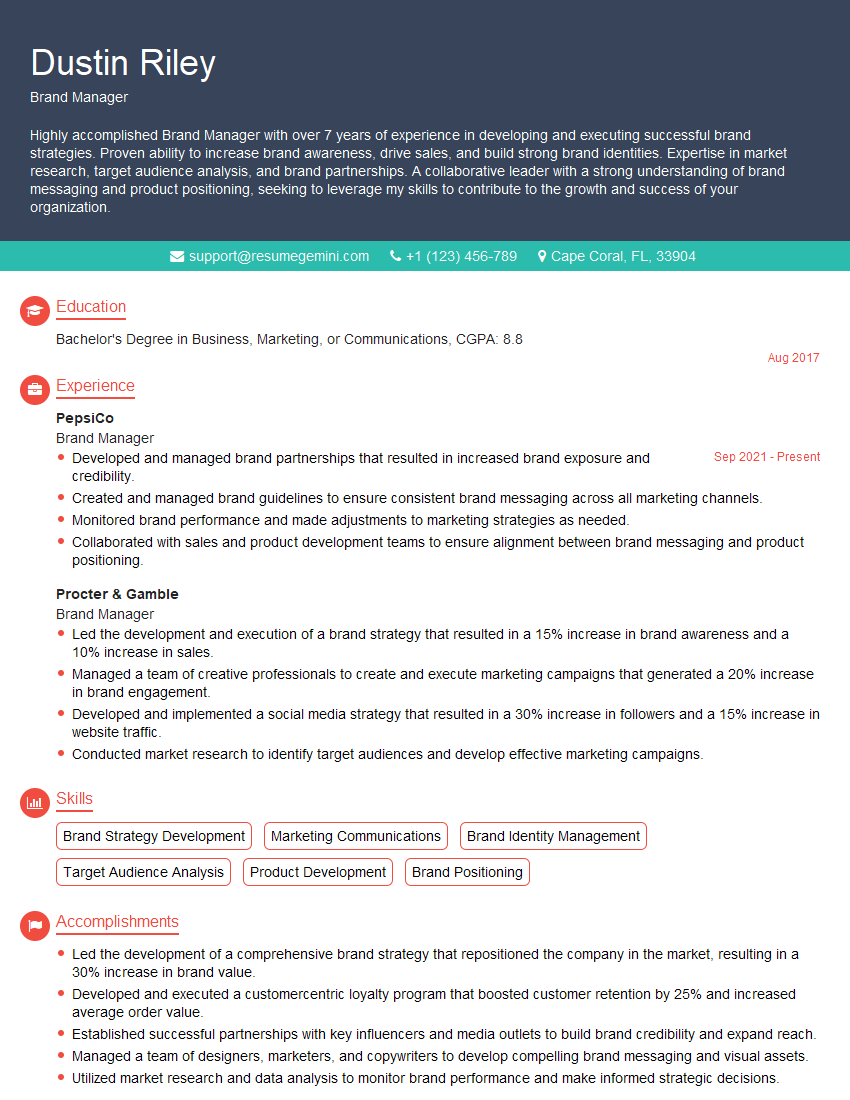
Brand Manager Resume Sample
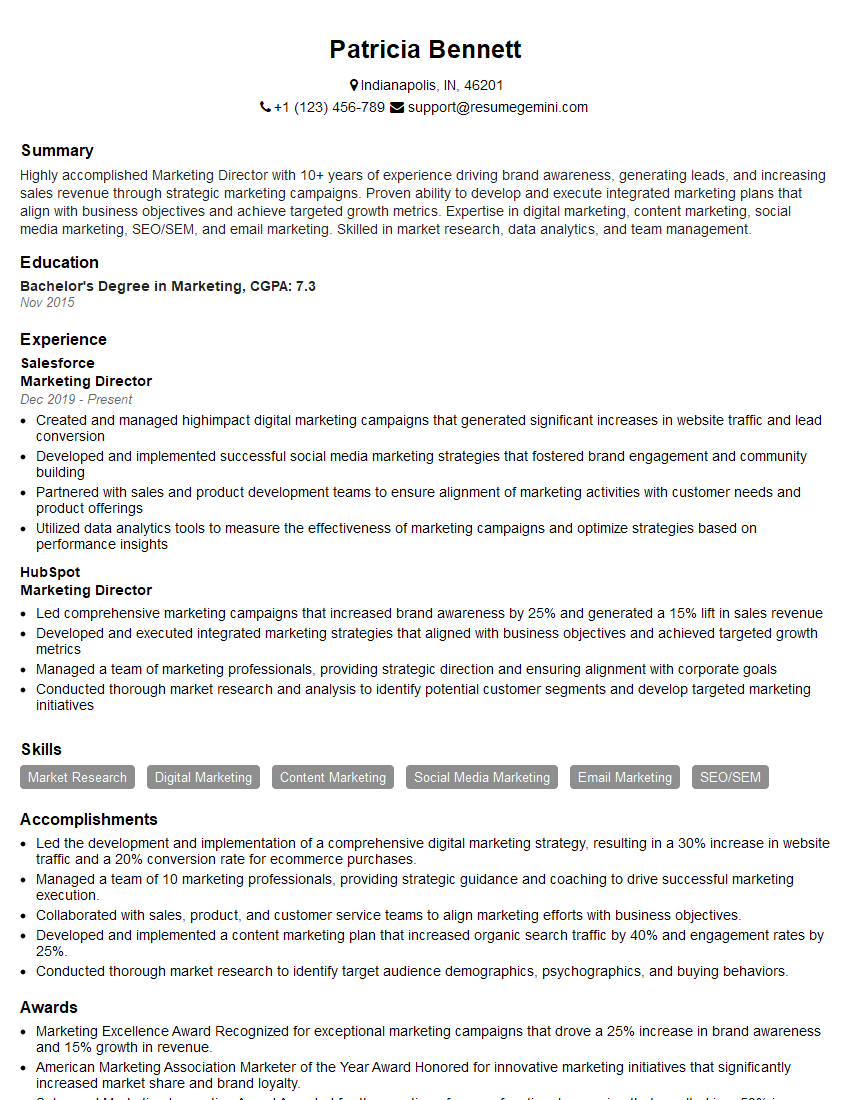
Marketing Director Resume Sample

Communications Manager Resume Sample
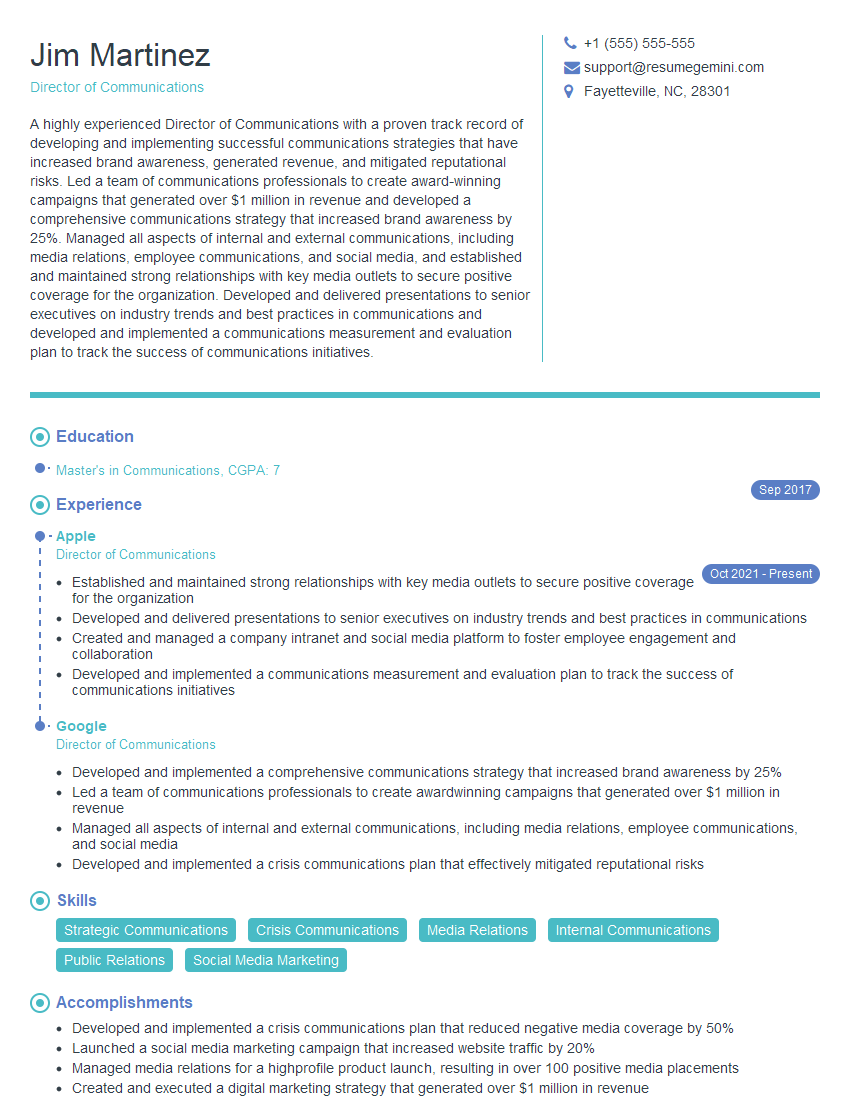
Director of Communications Resume Sample

Marketing Communications Manager Resume Sample
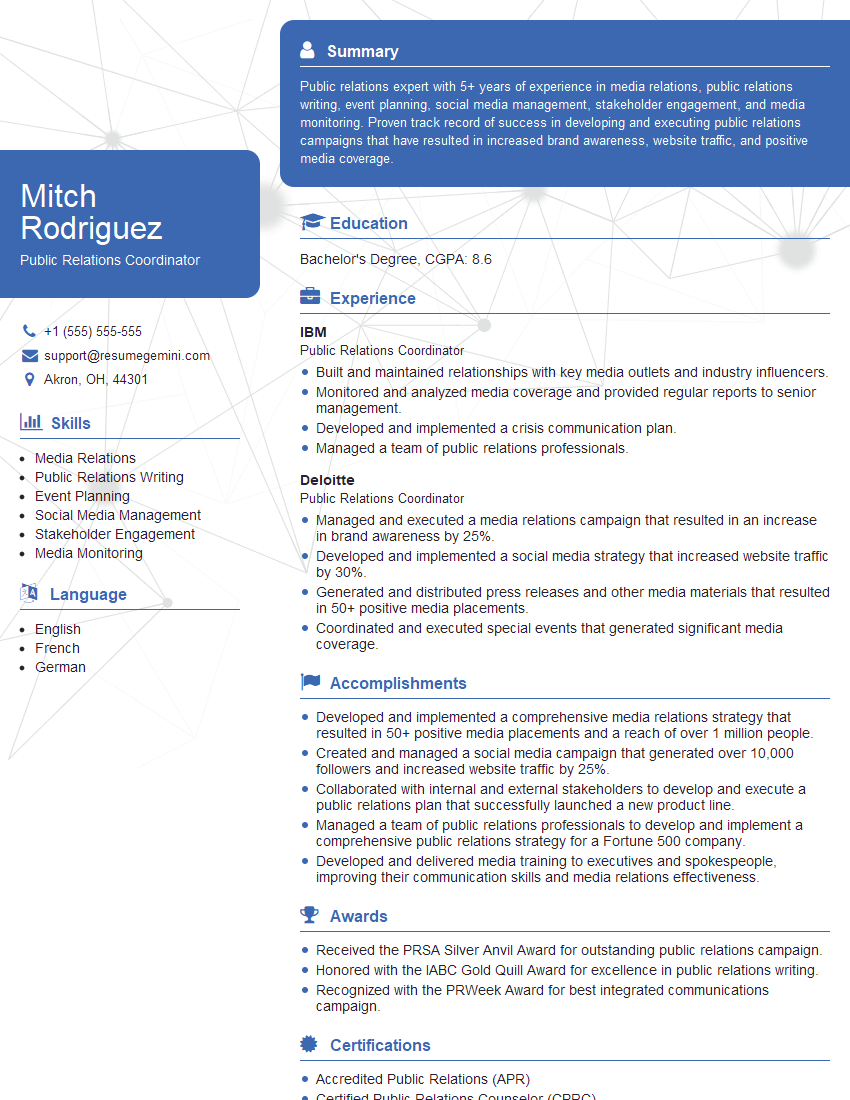
Public Relations Coordinator Resume Sample
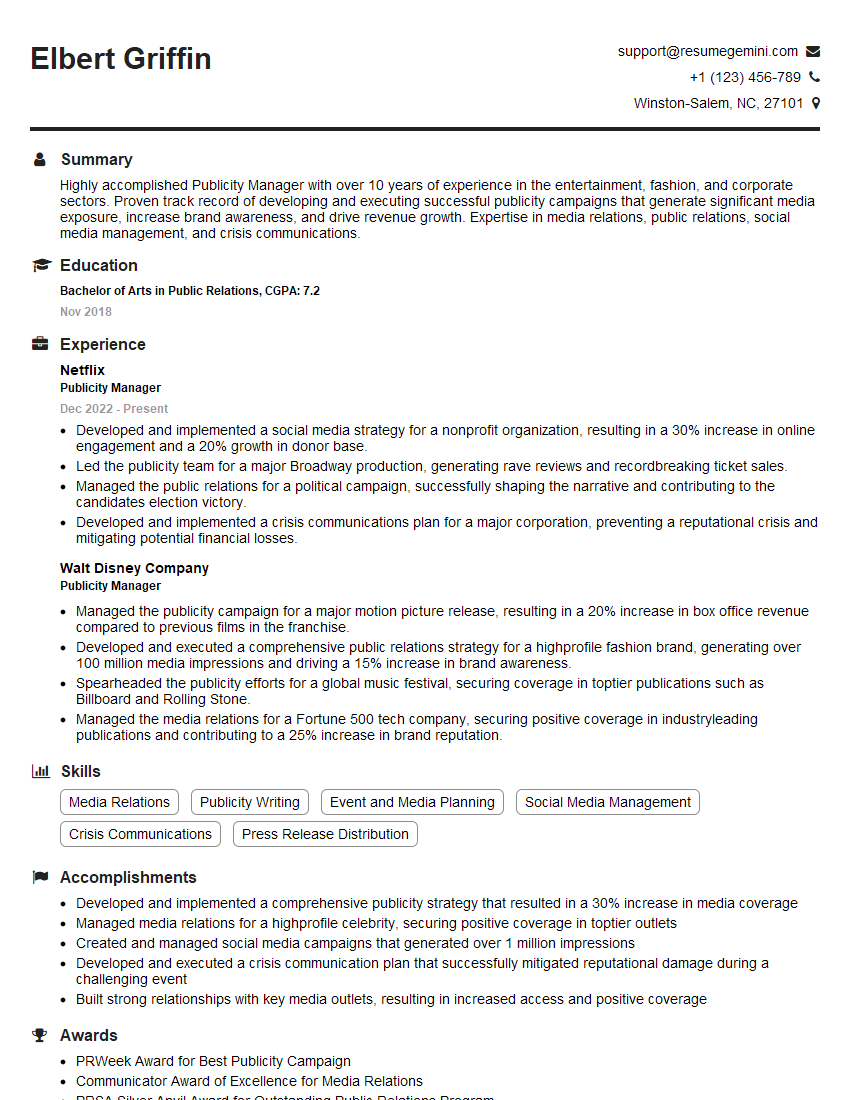
Publicity Manager Resume Sample
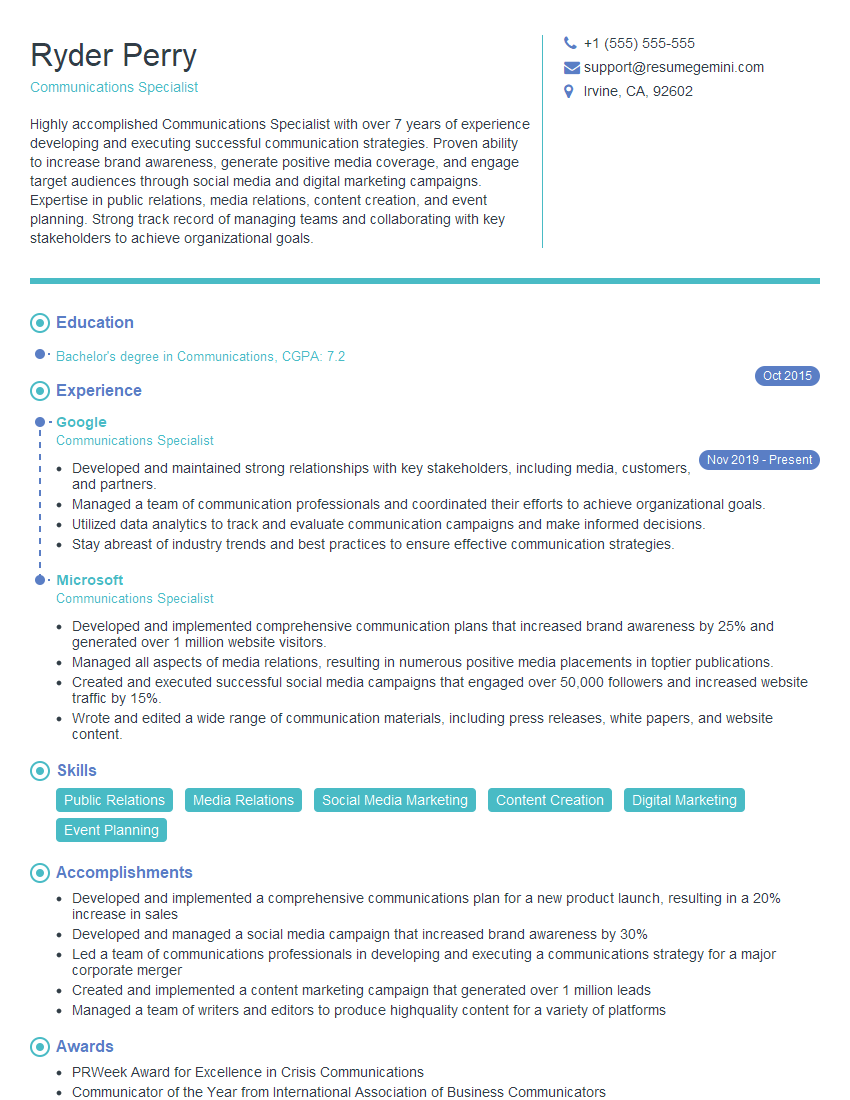
Communications Specialist Resume Sample

Social Media Manager Resume Sample

Communications Consultant Resume Sample
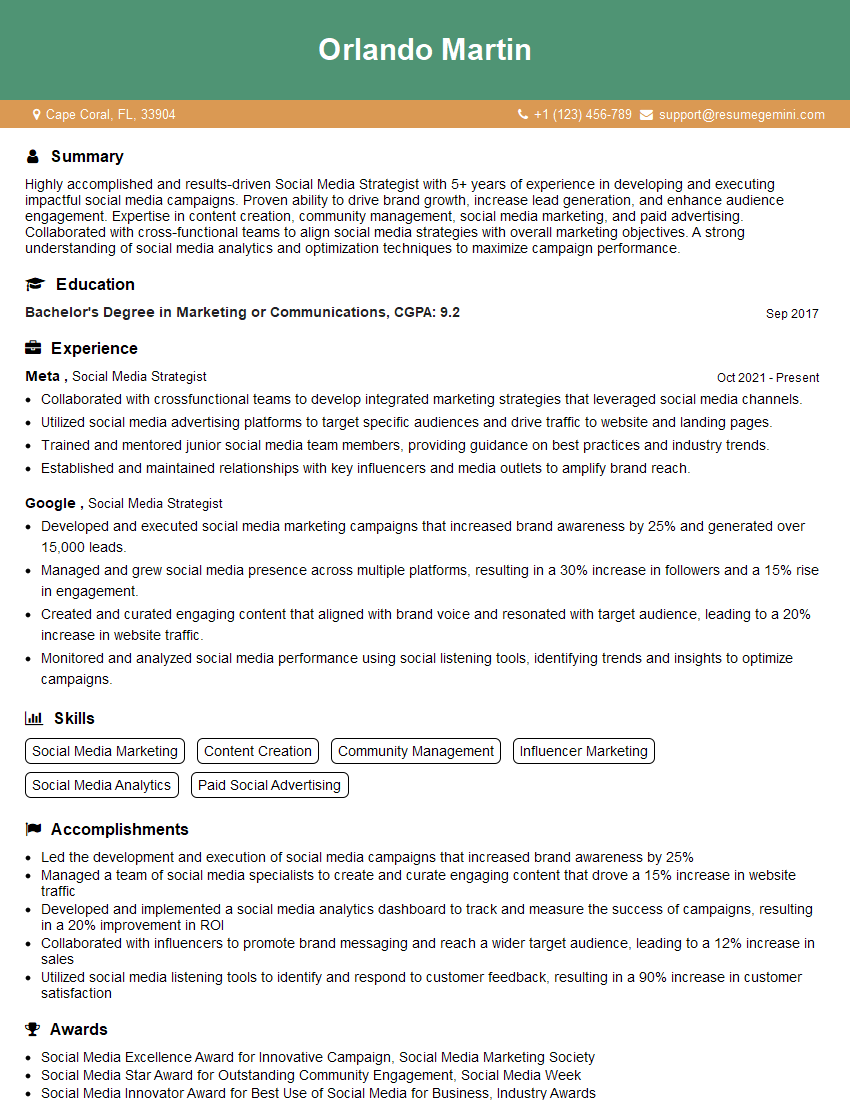
Social Media Strategist Resume Sample
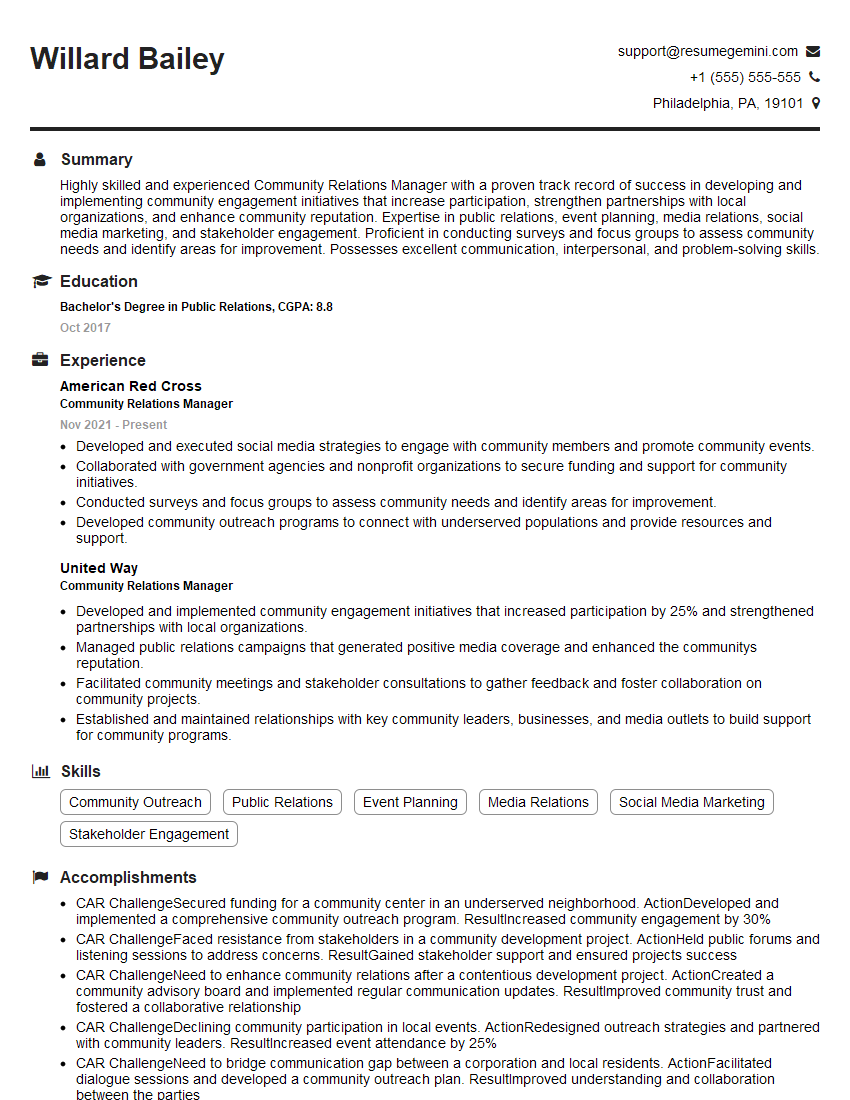
Community Relations Manager Resume Sample
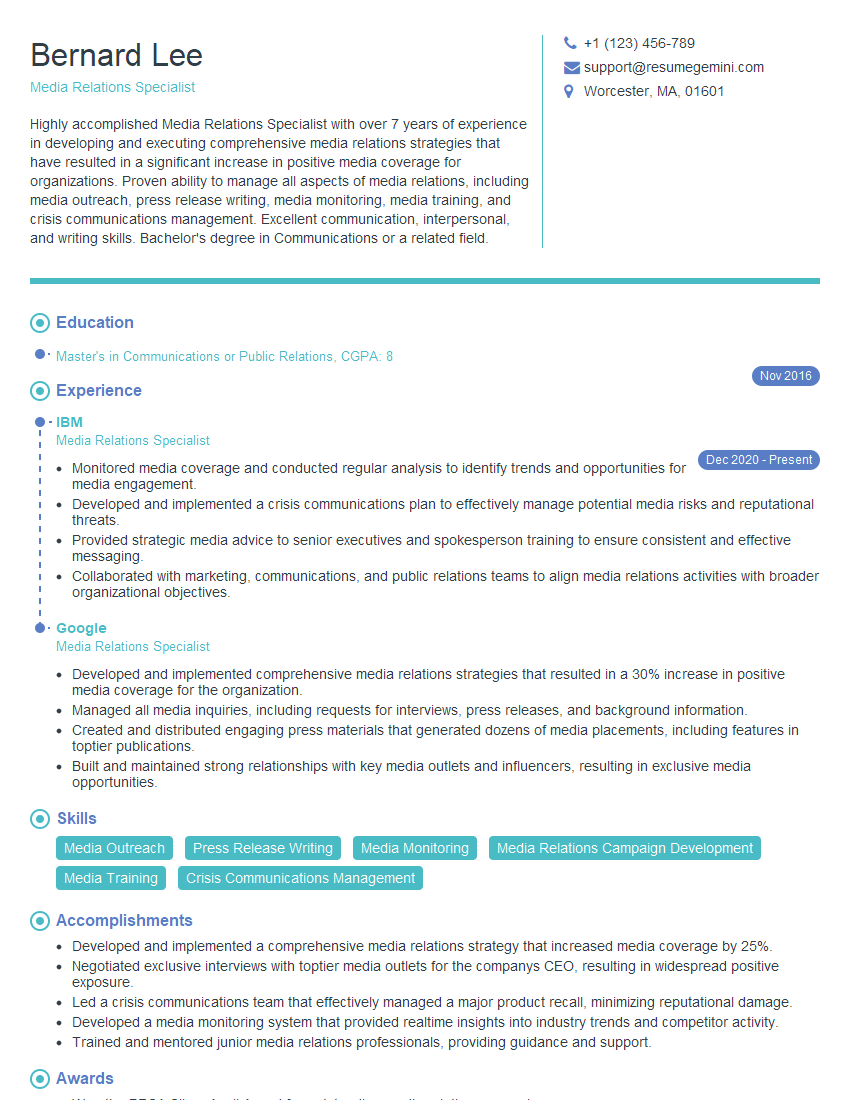
Media Relations Specialist Resume Sample
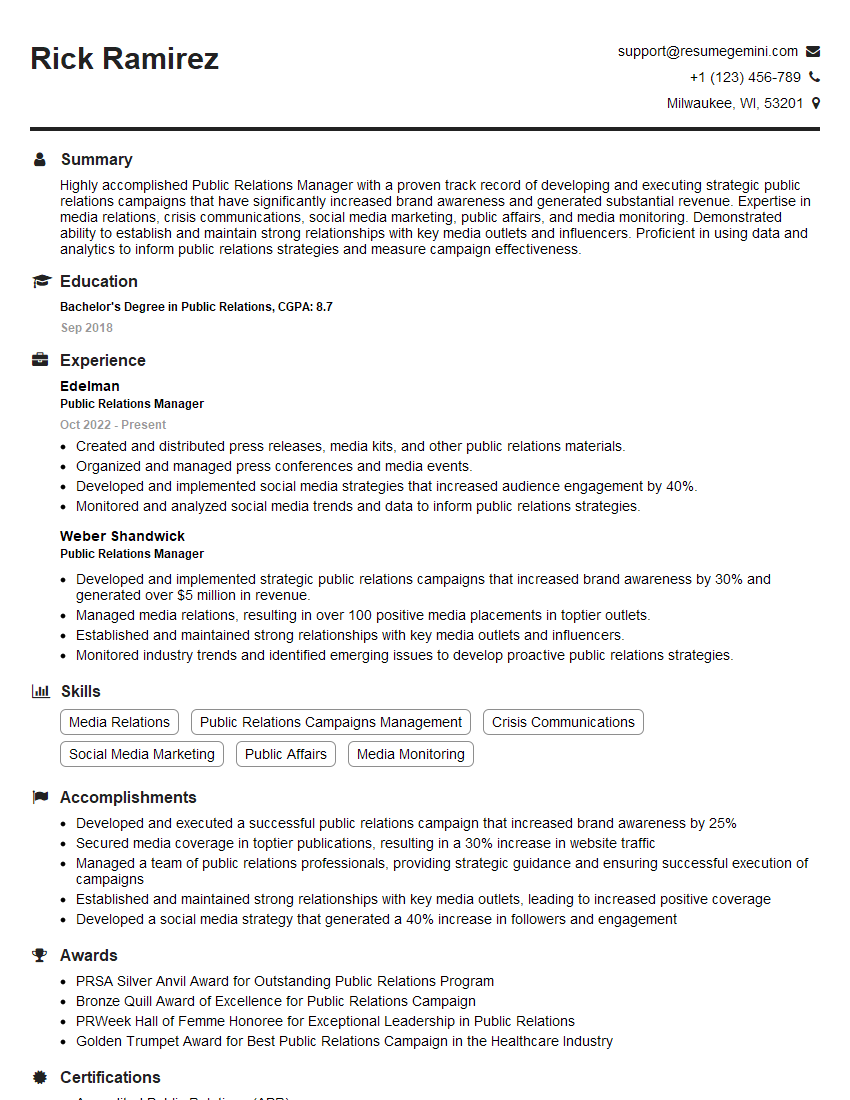
Public Relations Manager Resume Sample
- Brand Manager
- Marketing Director
- Communications Manager
- Director of Communications
- Marketing Communications Manager
- Public Relations Coordinator
- Publicity Manager
- Communications Specialist
- Social Media Manager
- Communications Consultant
- Social Media Strategist
- Community Relations Manager
- Media Relations Specialist
- Public Relations Manager
Explore more articles
Users Rating of Our Blogs
Share Your Experience
We value your feedback! Please rate our content and share your thoughts (optional).
What Readers Say About Our Blog
Very informative content, great job.
good