The right preparation can turn an interview into an opportunity to showcase your expertise. This guide to Public Relations and Stakeholder Management interview questions is your ultimate resource, providing key insights and tips to help you ace your responses and stand out as a top candidate.
Questions Asked in Public Relations and Stakeholder Management Interview
Q 1. Describe your experience managing media relations during a crisis.
Managing media relations during a crisis requires swift, decisive action and a proactive communication strategy. It’s about controlling the narrative before it controls you. My experience includes leading the response to a product recall, where a manufacturing defect resulted in minor injuries.
First, we established a dedicated crisis communication team, including legal counsel, engineering, and myself. We immediately activated our pre-prepared crisis communication plan, which included a designated spokesperson and pre-approved messaging. This ensured consistent and accurate information across all platforms.
Next, we identified and addressed misinformation through proactive media outreach. We held a press conference to transparently acknowledge the issue, detailing the steps we were taking to rectify the situation, including a voluntary product recall. We also utilized social media to actively respond to queries and address concerns, ensuring open and transparent communication. Finally, we monitored media coverage and social media sentiment continuously, adjusting our strategy as needed. The proactive and transparent approach minimized negative publicity and built trust with consumers.
The key learnings from this experience were the vital importance of preparedness, a well-defined communication plan, transparent communication, and rapid response. It’s not a matter of *if* a crisis will hit, but *when*, so preparation is paramount.
Q 2. How do you identify and prioritize key stakeholders?
Identifying and prioritizing key stakeholders is crucial for effective public relations. It’s about understanding who has the most influence on your organization’s success and reputation. My approach involves a multi-step process.
- Mapping: I begin by creating a stakeholder map, visualizing all relevant groups – employees, customers, investors, government agencies, community groups, media, etc.
- Analyzing Influence & Interest: For each stakeholder, I assess their level of interest in and influence on our organization using a power/interest grid. This helps prioritize engagement efforts.
- Segmentation: Once mapped, I segment stakeholders into manageable groups based on shared characteristics and interests, allowing for tailored communication strategies.
- Prioritization: High-influence, high-interest stakeholders receive the most attention. This might involve direct meetings, personalized communications, and proactive engagement.
For instance, during a community outreach program, identifying local leaders, community influencers, and residents proved crucial. We tailored communications to resonate with each group, leading to stronger community support and enhanced reputation.
Q 3. Explain your process for developing a comprehensive communication plan.
Developing a comprehensive communication plan involves a strategic, phased approach. It starts with a clear understanding of the objectives and desired outcomes.
- Define Objectives & Target Audience: Clearly define what you want to achieve (increase brand awareness, improve reputation, drive sales) and identify your target audience(s). What message resonates best with them?
- Develop Key Messages: Craft concise, compelling messages that address the target audience’s needs and interests. These messages should be consistent across all communication channels.
- Select Communication Channels: Choose the most effective channels to reach your target audience (e.g., social media, press releases, email marketing, events). This depends on your audience and goals.
- Timeline & Budget: Create a detailed timeline, outlining key activities and deadlines, with a realistic budget allocation for each task.
- Implementation & Monitoring: Implement the plan, closely monitor its effectiveness through analytics and feedback, and make necessary adjustments. This iterative process ensures optimal results.
For example, a product launch campaign might include a press release targeting media, social media marketing for consumer engagement, and email marketing for existing customers. Regular monitoring allows for adjustments in messaging or channels based on performance data.
Q 4. How would you measure the success of a public relations campaign?
Measuring the success of a PR campaign requires a multi-faceted approach, going beyond simple metrics. I use a combination of quantitative and qualitative methods.
- Quantitative Metrics: These include media mentions, website traffic, social media engagement (likes, shares, comments), reach, and sales leads generated. These numbers offer a clear view of campaign impact.
- Qualitative Metrics: This involves analyzing media coverage sentiment (positive, negative, neutral), conducting surveys to gauge audience perception, and gathering stakeholder feedback through focus groups or interviews. This provides deeper insight into brand perception and the effectiveness of the message.
- Return on Investment (ROI): While challenging to directly quantify, calculating the value of increased brand awareness, improved reputation, and sales generated helps demonstrate the overall ROI of the campaign.
For example, a successful campaign might show a significant increase in positive media coverage, strong social media engagement, and a measurable rise in sales. It’s the combination of these factors – both quantitative and qualitative – that paints a complete picture of success.
Q 5. What strategies do you employ to build and maintain positive relationships with stakeholders?
Building and maintaining positive relationships with stakeholders is an ongoing process that requires consistent effort and genuine engagement. It’s about demonstrating empathy and understanding their needs and concerns.
- Proactive Communication: Regularly communicate updates, relevant information, and company news. Transparency is key.
- Two-Way Dialogue: Encourage feedback and actively listen to stakeholders’ concerns, addressing them promptly and respectfully.
- Personalized Engagement: Tailor communications to individual stakeholders’ interests and preferences, showing that you value their specific input.
- Building Trust: Be honest, transparent, and accountable. Follow through on commitments and build credibility over time.
- Relationship Building Events: Organize events (e.g., conferences, workshops) to foster in-person interactions and strengthen relationships.
For instance, regularly engaging with employee groups through town halls, surveys, and internal communication channels fosters trust and a sense of community. Similarly, actively responding to customer comments and reviews on social media platforms demonstrates attentiveness and a commitment to customer satisfaction.
Q 6. Describe your experience using social media for public relations purposes.
Social media is a powerful tool for public relations, offering unparalleled opportunities for engagement and two-way communication. My experience involves leveraging various platforms strategically.
- Platform Strategy: Selecting the right platform(s) is crucial. The choice depends on the target audience and the campaign’s objectives. For example, LinkedIn might be ideal for business-to-business (B2B) communication, while Instagram may be more effective for consumer-facing brands.
- Content Creation: Developing engaging and shareable content, including images, videos, infographics, and blog posts, is essential to attract and retain audience attention. Consistency and quality are key.
- Community Management: Actively monitoring social media channels, responding to comments, and addressing concerns promptly demonstrates engagement and builds trust.
- Social Listening: Monitoring social media conversations related to your organization and industry to identify trends, understand public perception, and address potential issues proactively.
- Paid Advertising: Utilizing paid social media advertising campaigns to reach a wider audience and enhance campaign visibility.
For example, a recent campaign leveraged Instagram’s visual storytelling capabilities to highlight a company’s commitment to sustainability, engaging a large audience and generating positive brand sentiment.
Q 7. How do you handle conflicting stakeholder interests?
Handling conflicting stakeholder interests requires skillful negotiation, diplomacy, and a commitment to finding mutually acceptable solutions. Transparency and clear communication are crucial.
- Identify the Conflict: Clearly define the nature of the conflict and the stakeholders involved. What are their respective interests and concerns?
- Facilitate Dialogue: Create a safe space for open and honest communication. Encourage each stakeholder to express their perspective and listen actively to understand their concerns.
- Identify Common Ground: Explore areas of potential agreement and identify shared interests. This helps build a foundation for negotiation.
- Negotiate & Compromise: Work with stakeholders to find mutually beneficial solutions. This may involve compromise, concessions, or creative problem-solving. Fairness and equity are paramount.
- Document Agreements: Clearly document the agreements reached and ensure all stakeholders understand their commitments.
- Monitor & Evaluate: Monitor the effectiveness of the solution and address any remaining issues proactively.
For example, when balancing the interests of environmental groups and shareholders during a project proposal, I facilitated open dialogue, presented a comprehensive environmental impact assessment, and negotiated concessions to address environmental concerns, ultimately finding a solution that satisfied both groups.
Q 8. What experience do you have with reputation management?
Reputation management is the ongoing process of monitoring and influencing public perception of an organization, individual, or brand. It involves proactively shaping narratives and responding to crises to protect and enhance reputation. My experience encompasses both proactive and reactive strategies. Proactively, I’ve developed and implemented communication plans to build positive brand image through media outreach, community engagement, and content marketing. Reactively, I’ve managed several crises, guiding clients through reputational damage control and restorative communication. For example, I helped a tech company navigate a product recall by establishing transparent communication with customers, offering swift solutions, and prioritizing empathy in all public statements. This included press releases, social media engagement, and direct customer communication through various channels. The result was a mitigated negative impact and a demonstrable recovery in brand trust.
Q 9. Describe a situation where you had to adapt your communication strategy based on unexpected circumstances.
During a product launch for a new sustainable energy product, we encountered unexpected negative online reviews citing a perceived lack of transparency regarding the product’s manufacturing process. Our initial strategy focused on highlighting the product’s eco-friendly features. However, the negative feedback demanded a shift. We quickly adapted by proactively acknowledging the concerns, demonstrating transparency through a detailed blog post explaining the manufacturing process, and inviting independent audits of our facilities. We also engaged directly with critics on social media, responding with empathy and providing further clarification. This pivot, from highlighting solely the benefits to addressing the criticisms head-on, proved crucial in restoring confidence and ultimately contributed to the product’s success. It taught me the value of adaptability and the importance of listening to stakeholder concerns, even negative ones.
Q 10. How do you stay up-to-date on industry trends and best practices?
Staying current in PR and stakeholder management requires a multi-pronged approach. I regularly subscribe to leading industry publications like PRWeek and The Holmes Report, attend relevant conferences and webinars (both in-person and virtual), and actively participate in online communities and forums. I also follow key influencers and thought leaders on social media platforms like LinkedIn and Twitter. Furthermore, I consistently analyze competitor strategies and track the performance of successful campaigns. This holistic approach ensures I’m informed about emerging trends, innovative techniques, and best practices in the field.
Q 11. Explain your understanding of different communication channels and their effectiveness.
Effective communication relies on selecting the right channel for the right audience and message. My understanding encompasses a wide range of channels, including:
- Traditional Media: Press releases, media kits, and pitching stories to journalists remain vital for reaching large audiences and establishing credibility.
- Digital Media: Social media platforms (Twitter, Facebook, LinkedIn, Instagram) allow for targeted messaging, direct engagement, and real-time feedback. Blogs and websites offer in-depth content and control over messaging.
- Internal Communications: Newsletters, intranets, and town hall meetings are crucial for keeping employees informed and engaged.
- Events and Experiential Marketing: Conferences, workshops, and other events provide opportunities for face-to-face interaction and build stronger relationships with stakeholders.
The effectiveness of each channel is dependent on the specific campaign goals and target audience. For instance, a B2B campaign might prioritize LinkedIn and industry publications, while a consumer-focused campaign could leverage social media influencers and traditional advertising. I always conduct thorough audience research to determine the optimal communication mix.
Q 12. How do you build trust and credibility with stakeholders?
Building trust and credibility with stakeholders is foundational to successful PR. My approach is based on transparency, authenticity, and consistent engagement. This means being open and honest in communication, even when delivering difficult news. It also involves actively listening to stakeholder concerns and responding thoughtfully. Building relationships based on mutual respect is key. For example, I prioritize regular communication with key stakeholders – providing updates, seeking their feedback, and acknowledging their contributions. Demonstrating expertise and a deep understanding of their needs helps to establish credibility. Ultimately, consistency and reliability are essential in fostering long-term trust.
Q 13. What is your approach to developing key messages for different audiences?
Developing key messages for different audiences requires a nuanced understanding of their unique perspectives and needs. I begin by segmenting my audiences based on demographics, psychographics, and their relationship to the organization. Then, for each segment, I tailor the key message to resonate with their specific concerns and interests. This involves using language and framing that is relevant and engaging to that particular group. For instance, a message targeting investors will focus on financial performance and growth potential, while a message aimed at employees will highlight company culture and opportunities for professional development. Consistency in core values is crucial, though the delivery and emphasis will vary depending on the audience. This ensures the message is not only understood but also perceived as credible and relevant.
Q 14. How do you measure the ROI of a PR campaign?
Measuring the ROI of a PR campaign goes beyond simply tracking media mentions. A robust approach requires a clearly defined set of objectives and key performance indicators (KPIs) at the outset. These could include:
- Increased brand awareness: Measured through social media engagement, website traffic, and survey data.
- Improved brand reputation: Tracked through sentiment analysis of online conversations and brand surveys.
- Lead generation: Monitored through website form submissions and event registrations.
- Sales conversions: Tracked directly through sales data linked to PR activities.
- Media coverage reach and tone: Analyzing the quantity and quality of media placements.
By meticulously tracking these metrics, we can quantify the impact of the PR campaign and demonstrate a clear return on investment. This data-driven approach allows for continuous improvement and informs future strategies.
Q 15. Describe your experience working with diverse stakeholder groups.
Throughout my career, I’ve collaborated extensively with diverse stakeholder groups, including investors, employees, customers, government agencies, and community members. Effective stakeholder management requires understanding each group’s unique needs, priorities, and communication preferences. For example, while investors prioritize financial performance and return on investment, employees are more concerned with workplace culture, job security, and opportunities for growth.
In one instance, I worked with a technology company launching a new product in a developing market. We needed to engage local communities, address environmental concerns, and navigate complex regulatory hurdles. We achieved this by establishing a multi-lingual communication plan, incorporating local cultural nuances into our messaging, and proactively engaging with community leaders and government officials through town halls and workshops. This approach built trust and ensured a smooth product launch.
Another example involved managing communications during a company crisis. I worked closely with the media, employees, and customers, providing consistent and transparent updates to alleviate concerns and maintain credibility. Success here relied on clear, concise messaging tailored to each stakeholder group’s understanding and needs.
Career Expert Tips:
- Ace those interviews! Prepare effectively by reviewing the Top 50 Most Common Interview Questions on ResumeGemini.
- Navigate your job search with confidence! Explore a wide range of Career Tips on ResumeGemini. Learn about common challenges and recommendations to overcome them.
- Craft the perfect resume! Master the Art of Resume Writing with ResumeGemini’s guide. Showcase your unique qualifications and achievements effectively.
- Don’t miss out on holiday savings! Build your dream resume with ResumeGemini’s ATS optimized templates.
Q 16. What tools and technologies do you use to support your PR and stakeholder management efforts?
My PR and stakeholder management efforts are significantly enhanced by a range of tools and technologies. These include:
- CRM systems (Customer Relationship Management): These platforms help track stakeholder interactions, preferences, and engagement levels, enabling personalized communication. For example, Salesforce or HubSpot allow for detailed contact management and segmentation for targeted messaging.
- Social listening tools: Tools like Brandwatch or Talkwalker allow us to monitor online conversations about our organization and proactively address concerns or misinformation. This is crucial for reputation management.
- Media monitoring tools: Services like Meltwater or Cision provide real-time insights into media coverage, allowing us to track the effectiveness of PR campaigns and identify emerging issues.
- Collaboration and communication platforms: Tools like Slack or Microsoft Teams facilitate efficient internal communication and project management, ensuring everyone is on the same page.
- Analytics dashboards: These platforms, often integrated with the above tools, provide data-driven insights into the effectiveness of our communications strategies, enabling continuous improvement.
Effective utilization of these tools allows for data-driven decision making and ensures that our efforts are strategic and impactful.
Q 17. How do you manage stakeholder expectations?
Managing stakeholder expectations is crucial for building and maintaining trust. My approach is based on proactive communication, transparency, and realistic goal setting. I begin by clearly articulating expectations to stakeholders – both what they can expect from us and what we expect from them.
This involves regular communication – whether through newsletters, town halls, or one-on-one meetings – to keep stakeholders informed about progress and challenges. If expectations need to be adjusted, I do so transparently, explaining the reasons for the changes and managing any potential disappointment proactively. For example, if a project is delayed, I clearly communicate the reasons for the delay and offer revised timelines.
I also utilize feedback mechanisms such as surveys and focus groups to understand stakeholder perspectives and adjust our communications strategies accordingly. This demonstrates respect for their input and ensures alignment between our actions and their expectations.
Q 18. How do you handle negative publicity or criticism?
Handling negative publicity or criticism requires a swift, transparent, and empathetic response. My approach involves:
- Rapid assessment: Immediately assess the severity and scope of the negative publicity and identify the key stakeholders affected.
- Develop a response strategy: Craft a clear, concise, and accurate response that addresses the concerns raised. This often includes acknowledging the issue, expressing empathy, and outlining the steps being taken to address it.
- Proactive communication: Disseminate the response through appropriate channels, such as press releases, social media, and direct communication with affected stakeholders. Consistency of messaging across all platforms is vital.
- Transparency and accountability: Be transparent about the situation and take accountability where appropriate. Avoiding blame-shifting and offering genuine apologies when necessary is paramount.
- Long-term monitoring: Continue to monitor the situation and address any further concerns or criticism that may arise.
For example, in a case of product recall, a swift and transparent communication to consumers about the problem, the steps to rectify it and the support available, will help limit damage.
Q 19. Explain your understanding of risk communication.
Risk communication is the process of conveying information about potential hazards to stakeholders in a way that is clear, understandable, and actionable. It aims to build trust, promote informed decision-making, and reduce the impact of potential crises. Effective risk communication is proactive, transparent, and tailored to the specific audience.
Key elements include:
- Risk assessment: Identifying and evaluating potential hazards and their likelihood.
- Audience analysis: Understanding the knowledge, concerns, and communication preferences of different stakeholder groups.
- Message development: Crafting clear, concise, and accurate messages that address stakeholders’ concerns and provide actionable steps.
- Channel selection: Choosing the appropriate channels to reach different stakeholders effectively (e.g., press releases, social media, community meetings).
- Evaluation: Measuring the effectiveness of risk communication efforts and making adjustments as needed.
Imagine a company launching a new chemical product. Effective risk communication would involve transparently communicating the potential hazards associated with the product, providing safety guidelines, and establishing clear procedures for handling any incidents. This proactive approach fosters trust and minimizes potential negative consequences.
Q 20. Describe your experience developing and implementing an internal communications strategy.
Developing and implementing an effective internal communications strategy is essential for fostering a positive work environment and aligning employees with organizational goals. My approach typically involves:
- Needs assessment: Understanding employee communication preferences and identifying key information gaps.
- Goal setting: Defining clear objectives for the internal communications strategy, such as improved employee engagement, enhanced collaboration, or increased knowledge sharing.
- Channel selection: Choosing the appropriate communication channels to reach employees effectively (e.g., intranet, newsletters, email, town halls, team meetings).
- Content creation: Developing engaging and informative content that is relevant to employees’ needs and interests.
- Implementation and monitoring: Launching the internal communications strategy and regularly monitoring its effectiveness through feedback mechanisms and data analysis.
For example, during a company restructure, clear and consistent internal communication through multiple channels, including email, team meetings and town halls, is vital to keep employees informed of the process and its implications for them. This proactive approach can mitigate fear and uncertainty, maintaining morale and productivity.
Q 21. How do you use data and analytics to inform your PR strategies?
Data and analytics play a crucial role in informing and optimizing PR strategies. I use data to understand audience engagement, measure campaign effectiveness, and track key performance indicators (KPIs).
Examples of data-driven insights include:
- Website analytics: Tracking website traffic, bounce rates, and time spent on pages to understand audience interest and engagement with our content.
- Social media analytics: Analyzing social media mentions, sentiment, and engagement metrics to understand brand perception and identify areas for improvement.
- Media monitoring data: Tracking media coverage, sentiment, and reach to evaluate the effectiveness of PR campaigns.
- Survey data: Gathering feedback from stakeholders to understand their perceptions and preferences.
By analyzing this data, we can identify what’s working, what’s not, and make data-backed decisions to refine our strategies and achieve better outcomes. For instance, if social media analytics show a decline in engagement with a specific campaign, we can adjust the content, targeting, or messaging accordingly to improve results.
Q 22. How do you ensure consistent messaging across all communication channels?
Ensuring consistent messaging across all communication channels is paramount for building a strong brand reputation and avoiding confusion. This requires a strategic approach that begins with a central message document. This document, often called a ‘message map,’ outlines key messages, target audiences, and preferred tone of voice. Think of it as a playbook for all communications.
Then, we implement a multi-pronged strategy:
- Centralized Content Repository: All marketing and PR materials are stored in one place, easily accessible to all team members. This could be a shared drive, a content management system (CMS), or a dedicated project management tool.
- Template Creation: Creating standardized templates for press releases, social media posts, email newsletters, and website content ensures consistency in formatting and style.
- Regular Training and Communication: Regular training sessions for all team members involved in communications keep everyone up-to-date on messaging and guidelines. We use regular internal communication channels to reinforce these messages.
- Review and Approval Process: A formal approval process for all communication materials ensures that messages align with the overall strategy before they are released.
- Monitoring and Evaluation: Continuous monitoring of all communication channels allows for quick identification and correction of any inconsistencies.
For example, during a product launch, we might use the message map to ensure that the press release, social media posts, and website content all emphasize the same key benefits of the product, using the same language and tone.
Q 23. What is your experience with media training?
My media training experience spans over ten years, working with executives, spokespeople, and subject matter experts from diverse industries. I’ve developed and delivered tailored training programs covering a wide range of topics.
- Message Development: Helping individuals craft clear, concise, and compelling messages that resonate with their target audience.
- Interview Techniques: Practicing different interview formats (e.g., broadcast, print, online) and handling difficult questions with grace and professionalism.
- Nonverbal Communication: Training on body language, eye contact, and posture to project confidence and credibility.
- Crisis Communication: Preparing individuals to handle media scrutiny during challenging situations, ensuring a consistent and controlled narrative.
- Media Relations: Building rapport with journalists and understanding the media landscape.
I utilize role-playing exercises, mock interviews, and video recordings to provide constructive feedback and enhance performance. For instance, I recently helped the CEO of a tech startup prepare for a high-profile interview on CNBC. Through intensive practice, we honed his key messages and equipped him to effectively navigate challenging questions about a recent competitive setback.
Q 24. How do you identify and address potential communication risks?
Identifying and addressing potential communication risks is a proactive process that involves a thorough risk assessment. This assessment considers various factors:
- Internal Risks: Data breaches, internal conflicts, employee misconduct, and inconsistent messaging.
- External Risks: Negative media coverage, competitor actions, regulatory changes, and public perception shifts.
- Reputation Risks: Damage to brand image, loss of customer trust, and financial repercussions.
My approach involves:
- Regular Monitoring: Closely monitoring the media landscape, social media, and other relevant channels for potential threats.
- Scenario Planning: Developing contingency plans to address potential crises before they happen.
- Stakeholder Mapping: Identifying key stakeholders and their potential concerns.
- Communication Protocols: Establishing clear communication protocols to ensure swift and effective responses.
- Crisis Communication Plan: Developing a detailed plan that outlines roles, responsibilities, communication channels, and key messages for crisis situations.
For example, anticipating potential negative reaction to a price increase, we might proactively engage with customers through social media, explain the rationale, and offer mitigating measures.
Q 25. Describe a time you had to build consensus among stakeholders with differing viewpoints.
During a major organizational restructuring, I had to build consensus among stakeholders with vastly differing viewpoints. Some employees feared job losses, while others were excited about the potential for growth. Management was focused on cost savings.
My approach involved:
- Active Listening: Spending time listening to the concerns of each stakeholder group.
- Transparency and Open Communication: Providing clear and honest information about the restructuring process and its rationale.
- Facilitated Workshops: Organizing workshops to allow stakeholders to discuss their concerns and perspectives in a safe and constructive environment.
- Compromise and Negotiation: Working with each stakeholder group to find mutually acceptable solutions.
- Focus on Shared Goals: Highlighting the common goals and benefits of the restructuring process.
The result was a restructuring plan that was ultimately accepted by all stakeholders, although some concessions had to be made. The key was demonstrating empathy, understanding their varied concerns, and working collaboratively towards a shared vision.
Q 26. How do you measure the effectiveness of your stakeholder engagement strategies?
Measuring the effectiveness of stakeholder engagement strategies is crucial. We use a multifaceted approach:
- Quantitative Metrics: Tracking metrics such as website traffic, social media engagement, media mentions, and survey responses.
- Qualitative Metrics: Analyzing feedback from stakeholders through focus groups, interviews, and surveys to understand their perceptions and satisfaction.
- Stakeholder Satisfaction Surveys: Regularly assessing stakeholder satisfaction levels using surveys and feedback forms.
- Social Listening: Monitoring social media conversations and online reviews to identify emerging issues and gauge public sentiment.
- Media Coverage Analysis: Tracking media coverage to assess the reach and impact of our communication efforts.
We use these metrics to identify what’s working and what needs improvement. For example, a decline in social media engagement might indicate a need to refine our messaging or try a new platform. Positive feedback from stakeholder surveys might show that our engagement efforts are effective.
Q 27. What is your experience with corporate social responsibility (CSR) communications?
My experience with Corporate Social Responsibility (CSR) communications involves developing and implementing strategies that communicate a company’s commitment to social and environmental responsibility. This includes:
- Developing CSR reports: Creating transparent and engaging reports showcasing the company’s environmental, social, and governance (ESG) performance.
- Content creation: Producing content such as blog posts, videos, and infographics highlighting the company’s CSR initiatives and impact.
- Stakeholder engagement: Engaging with stakeholders including employees, customers, investors, and communities to share CSR updates and solicit feedback.
- Media relations: Securing positive media coverage of the company’s CSR initiatives.
- Sustainability reporting: Creating reports that meet recognized standards like the Global Reporting Initiative (GRI).
For example, I helped a manufacturing company communicate their commitment to reducing their carbon footprint by highlighting their investment in renewable energy and waste reduction initiatives. This involved creating a dedicated CSR section on their website, producing engaging videos, and securing media coverage in relevant publications.
Q 28. How do you maintain confidentiality when dealing with sensitive information?
Maintaining confidentiality when dealing with sensitive information is critical. I adhere to strict protocols and best practices:
- Non-Disclosure Agreements (NDAs): Employing NDAs with all relevant parties to ensure that confidential information is protected.
- Secure Communication Channels: Using encrypted email and other secure communication tools to protect sensitive information during transmission.
- Access Control: Limiting access to confidential information on a need-to-know basis.
- Data Encryption: Encrypting sensitive data both in transit and at rest to prevent unauthorized access.
- Regular Security Audits: Conducting regular security audits to identify and address potential vulnerabilities.
- Compliance with regulations: Adhering to all relevant data privacy regulations such as GDPR and CCPA.
I always prioritize the confidentiality of sensitive information and take all necessary precautions to prevent unauthorized disclosure. This includes carefully reviewing documents before sharing them, using secure storage for sensitive data, and regularly updating security protocols.
Key Topics to Learn for Public Relations and Stakeholder Management Interview
- Strategic Communication Planning: Developing comprehensive communication strategies aligned with organizational goals, considering diverse stakeholder needs and expectations.
- Stakeholder Analysis & Mapping: Identifying key stakeholders, understanding their interests and influence, and developing tailored communication approaches for each group. Practical application: Analyzing stakeholder sentiment regarding a potential product launch and adapting messaging accordingly.
- Crisis Communication Management: Developing and implementing proactive and reactive strategies to manage reputational risks and minimize negative impact during crises. Practical application: Crafting a crisis communication plan for a potential product recall.
- Media Relations & Public Relations: Building and maintaining positive relationships with the media, crafting compelling press releases and pitches, and managing media inquiries effectively. Practical application: Developing a media strategy to launch a new company initiative.
- Reputation Management: Monitoring and managing an organization’s reputation online and offline, addressing negative feedback, and proactively shaping public perception. Practical application: Responding to negative online reviews and mitigating their impact.
- Internal Communications: Effectively communicating with employees, fostering a positive work environment, and aligning internal communications with organizational strategy. Practical application: Developing an internal communication plan to announce a company restructuring.
- Measurement & Evaluation: Tracking the effectiveness of PR and stakeholder management initiatives using key performance indicators (KPIs) and reporting on results. Practical application: Analyzing social media engagement to gauge the success of a recent campaign.
- Ethical Considerations in PR & Stakeholder Management: Understanding and applying ethical principles in all communication activities, ensuring transparency and accountability. Practical application: Navigating a situation where a stakeholder’s interests conflict with company policy.
Next Steps
Mastering Public Relations and Stakeholder Management is crucial for career advancement in today’s dynamic business environment. These skills are highly valued across various industries and open doors to leadership roles. To significantly boost your job prospects, creating an ATS-friendly resume is essential. ResumeGemini is a trusted resource that can help you build a professional and impactful resume tailored to highlight your unique skills and experiences. Examples of resumes tailored to Public Relations and Stakeholder Management are available to further guide your preparation.
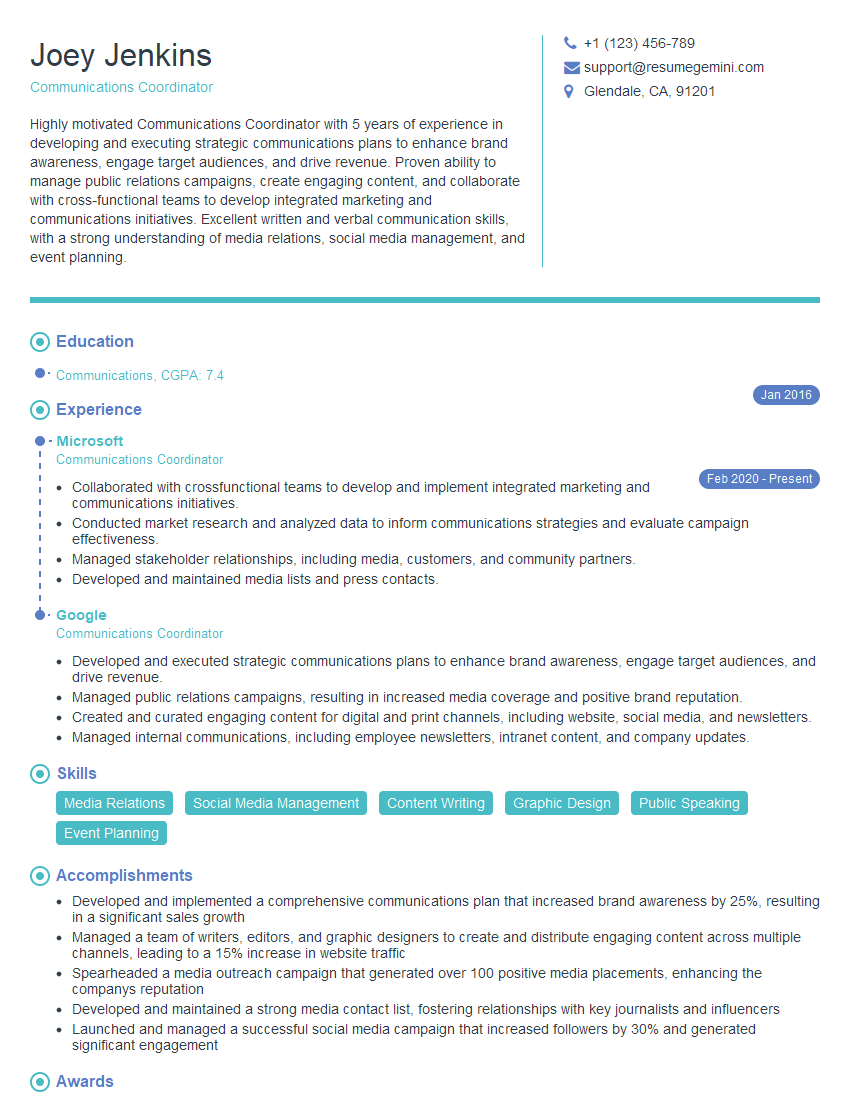
Communications Coordinator Resume Sample

Communications Manager Resume Sample
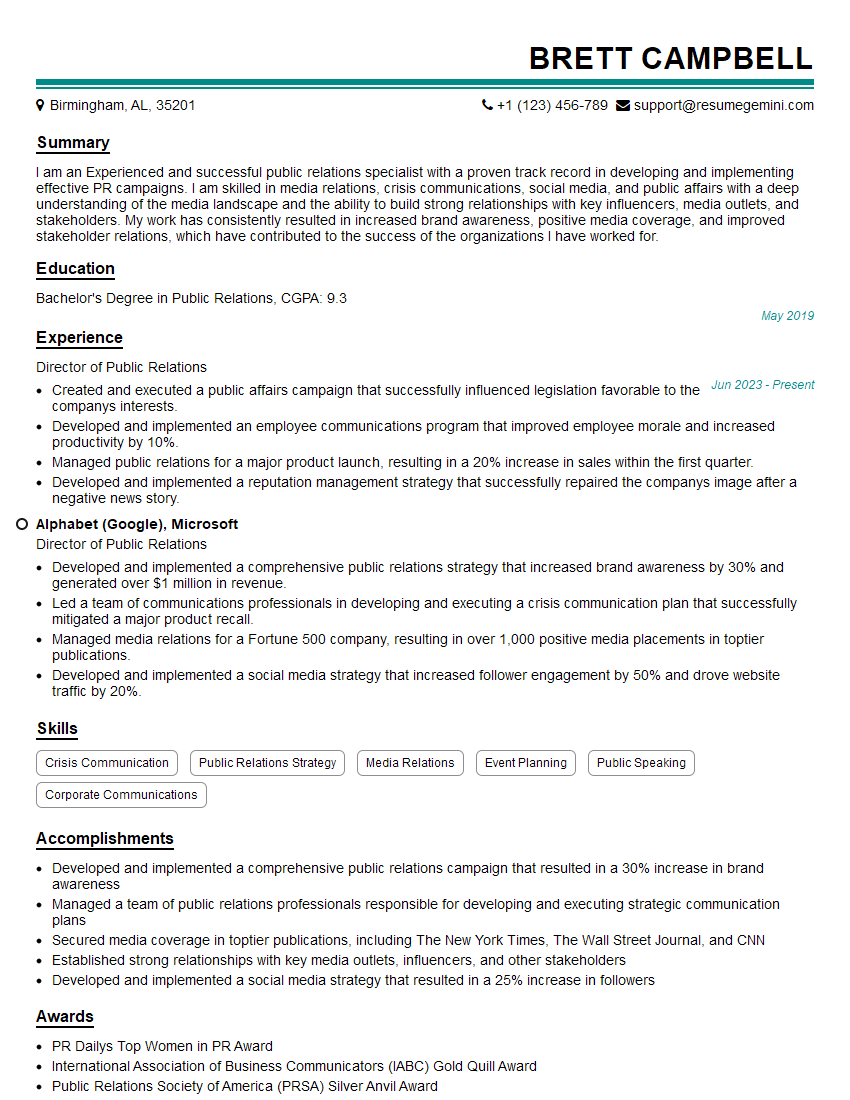
Director of Public Relations Resume Sample
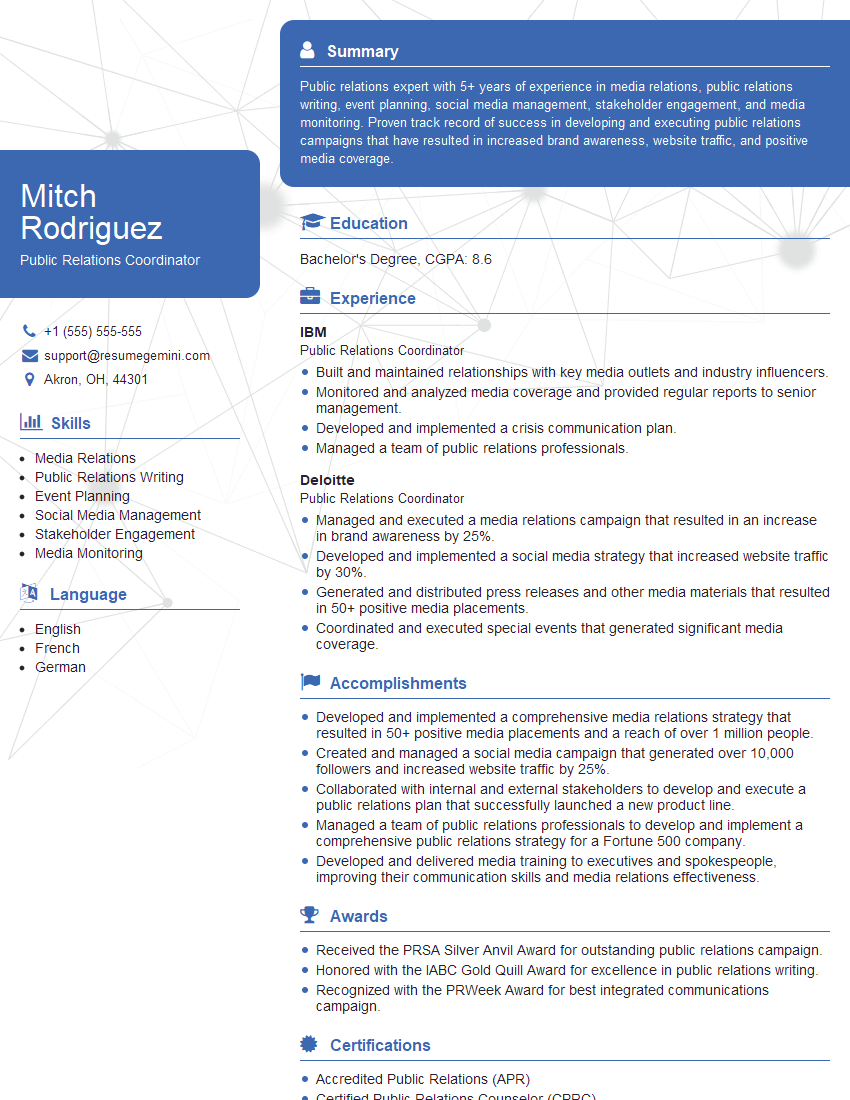
Public Relations Coordinator Resume Sample
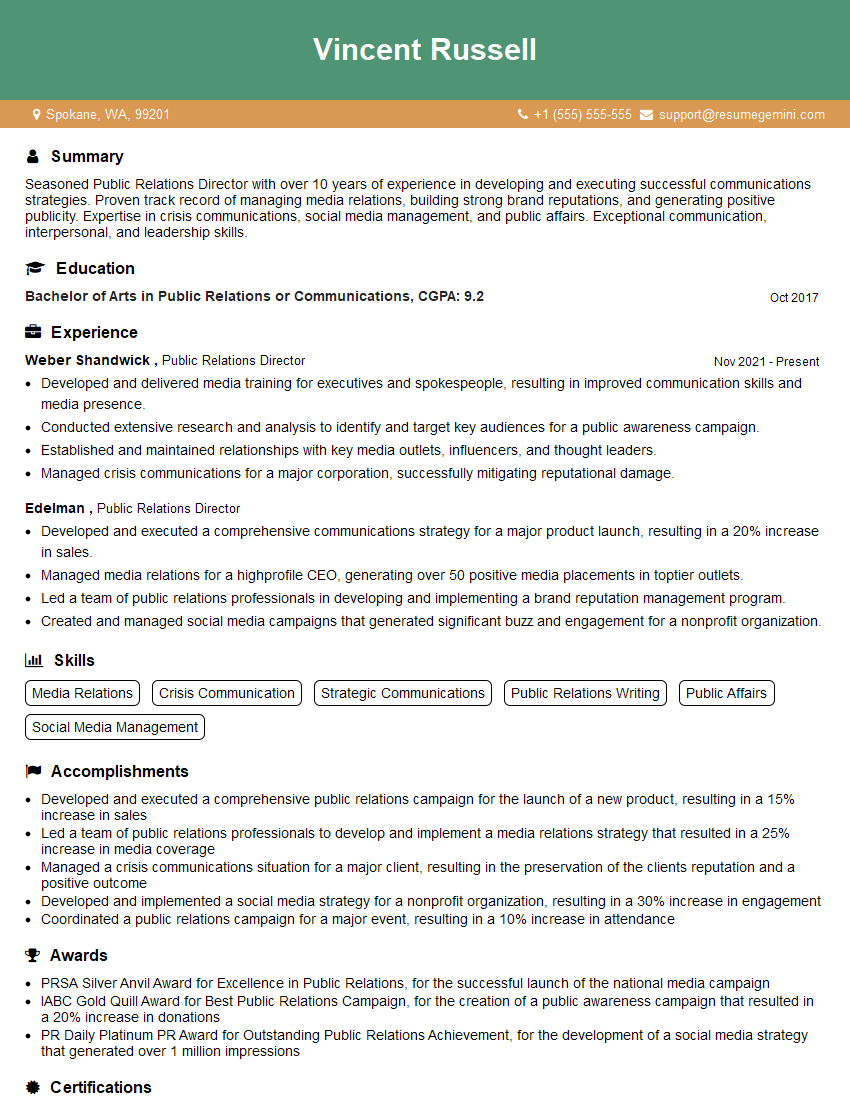
Public Relations Director Resume Sample
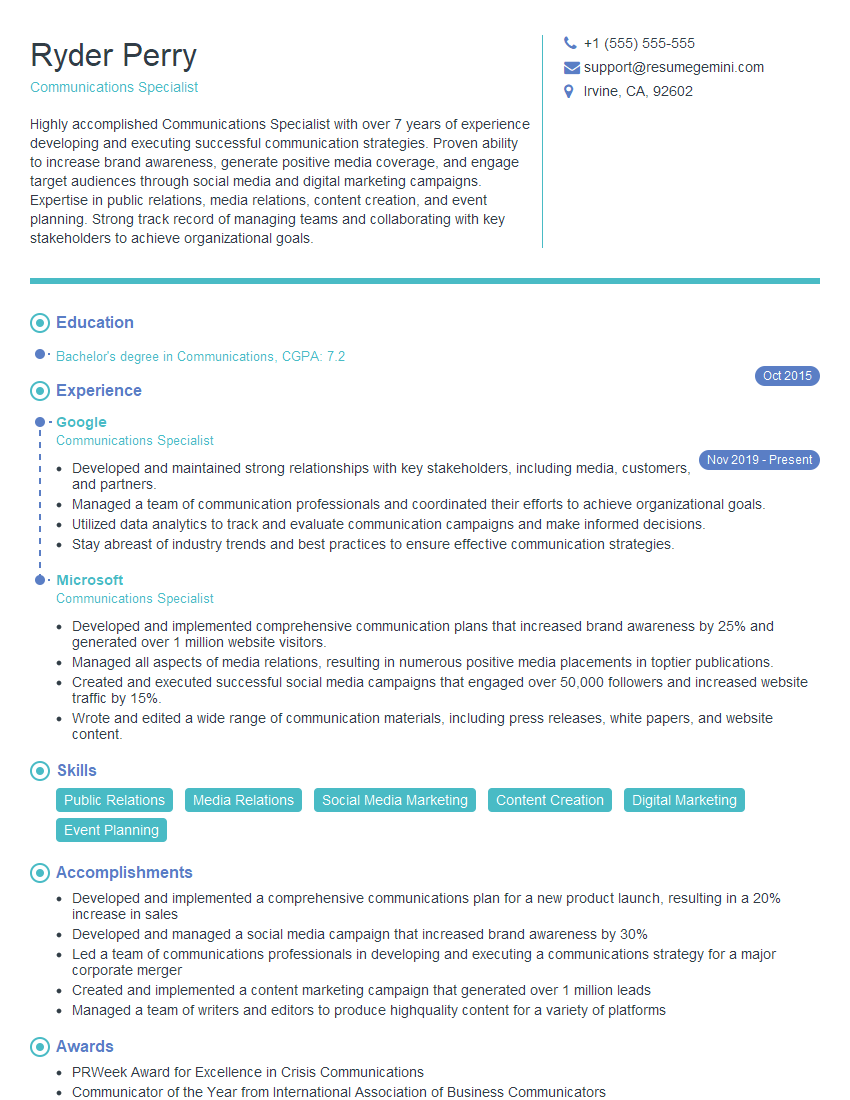
Communications Specialist Resume Sample
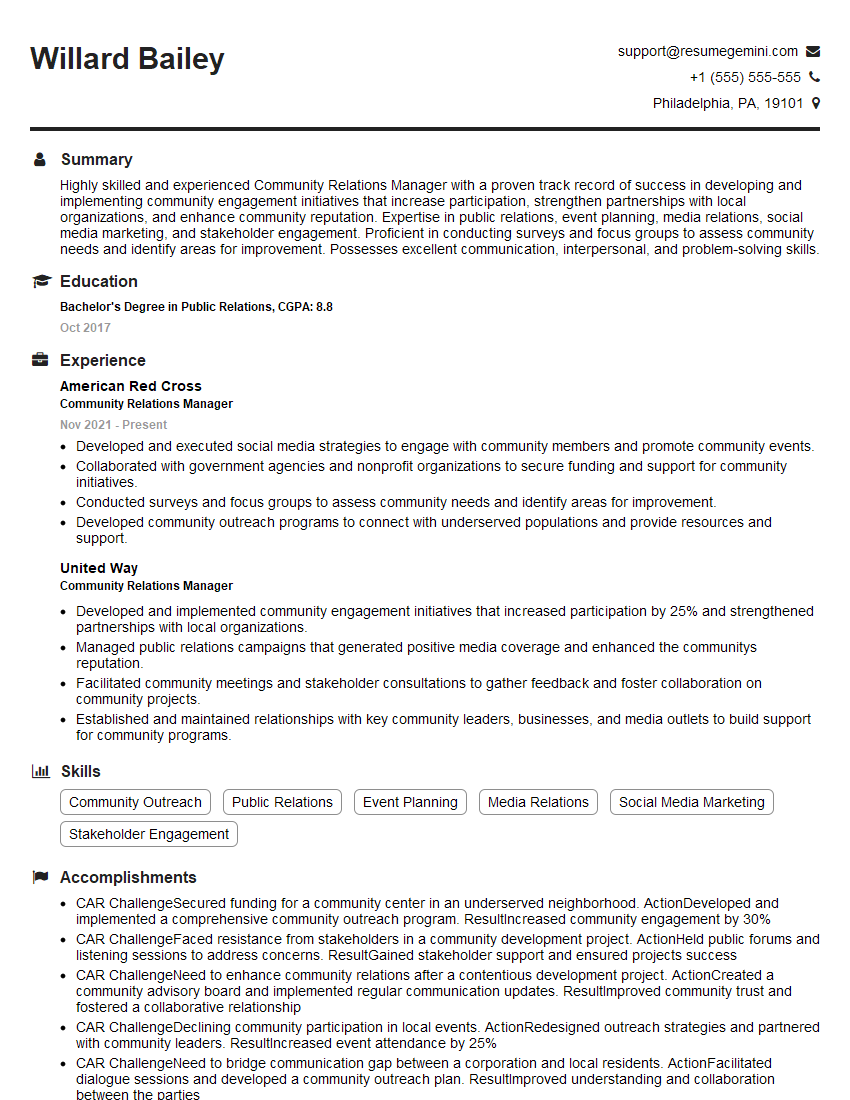
Community Relations Manager Resume Sample
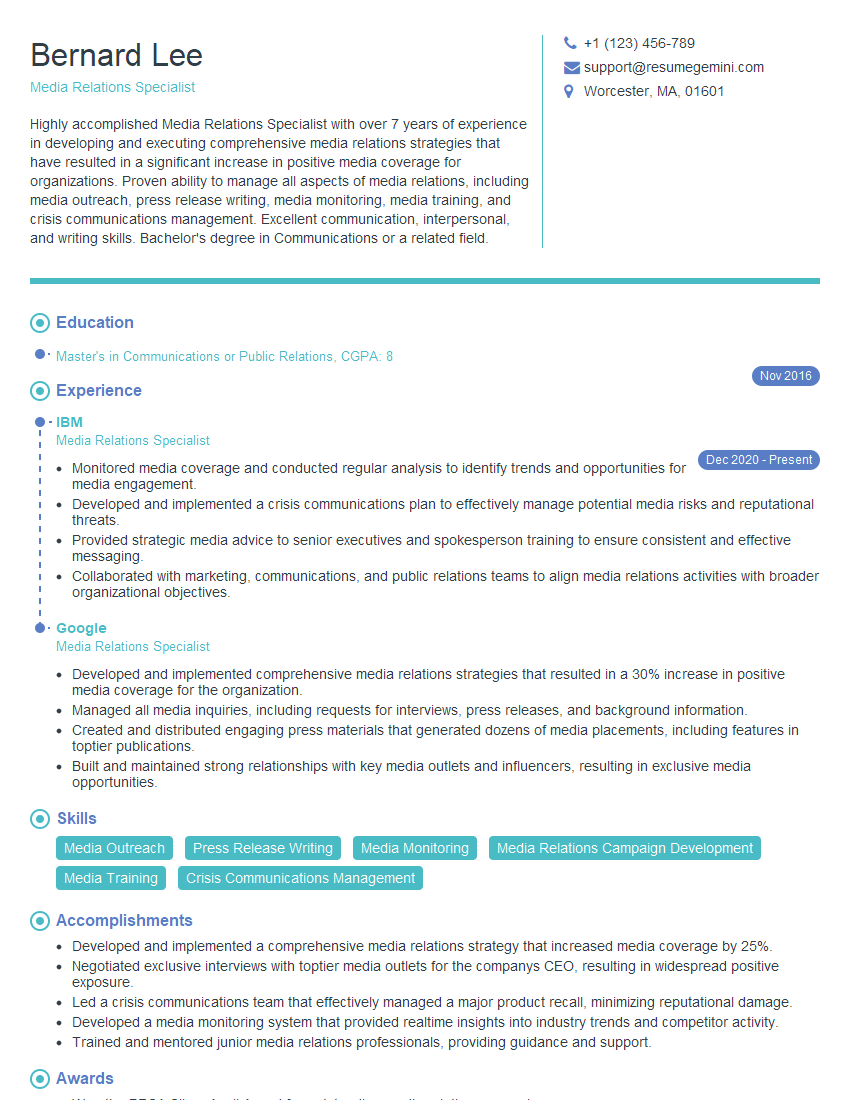
Media Relations Specialist Resume Sample
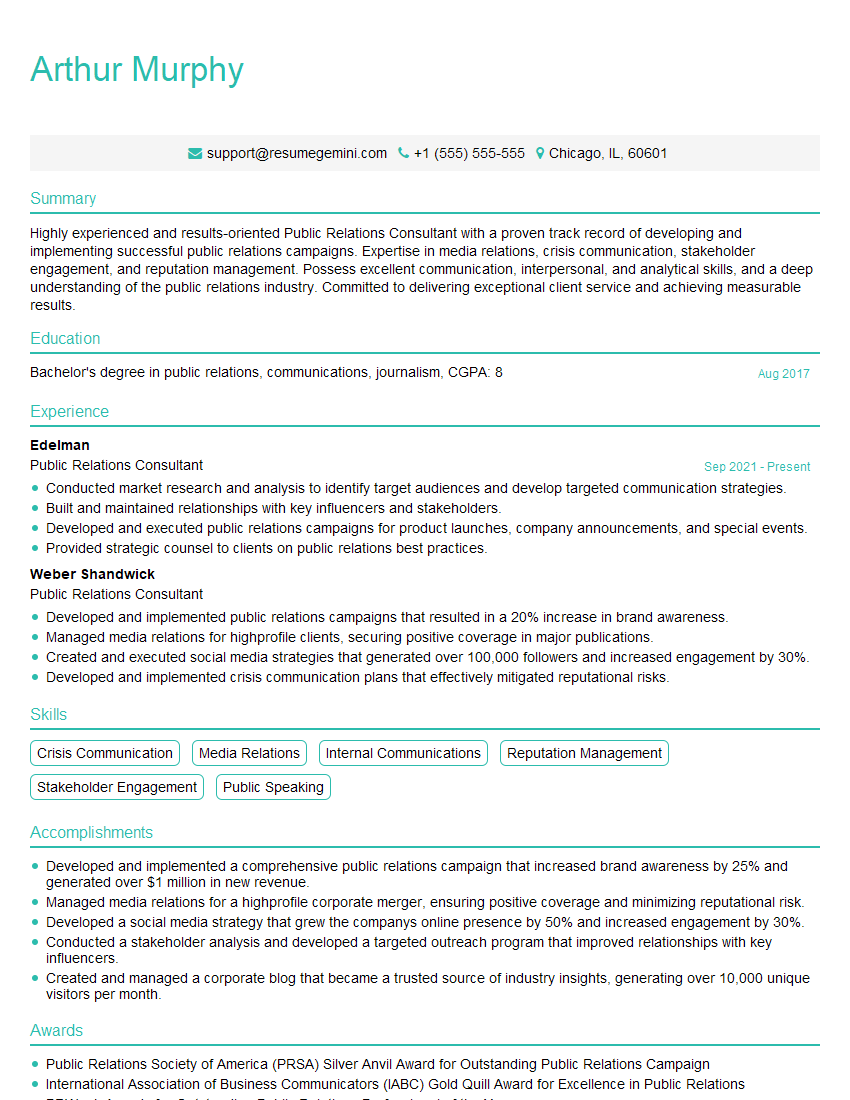
Public Relations Consultant Resume Sample
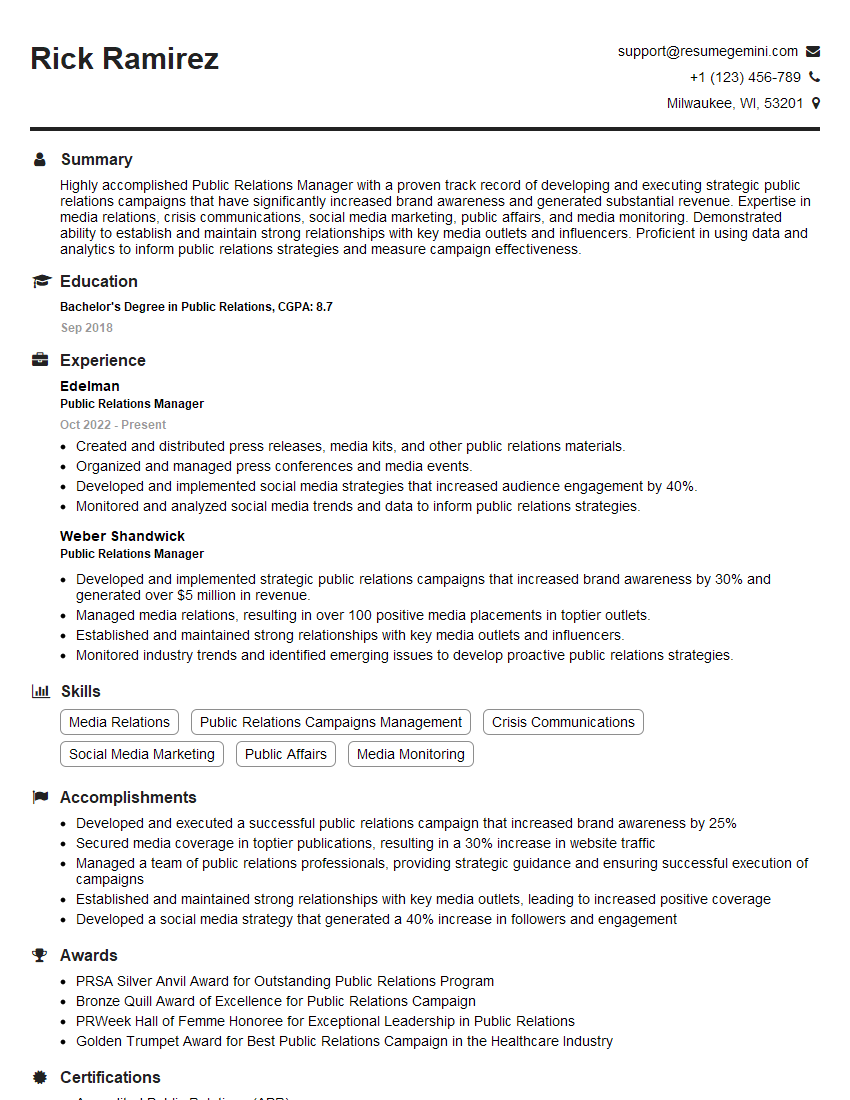
Public Relations Manager Resume Sample
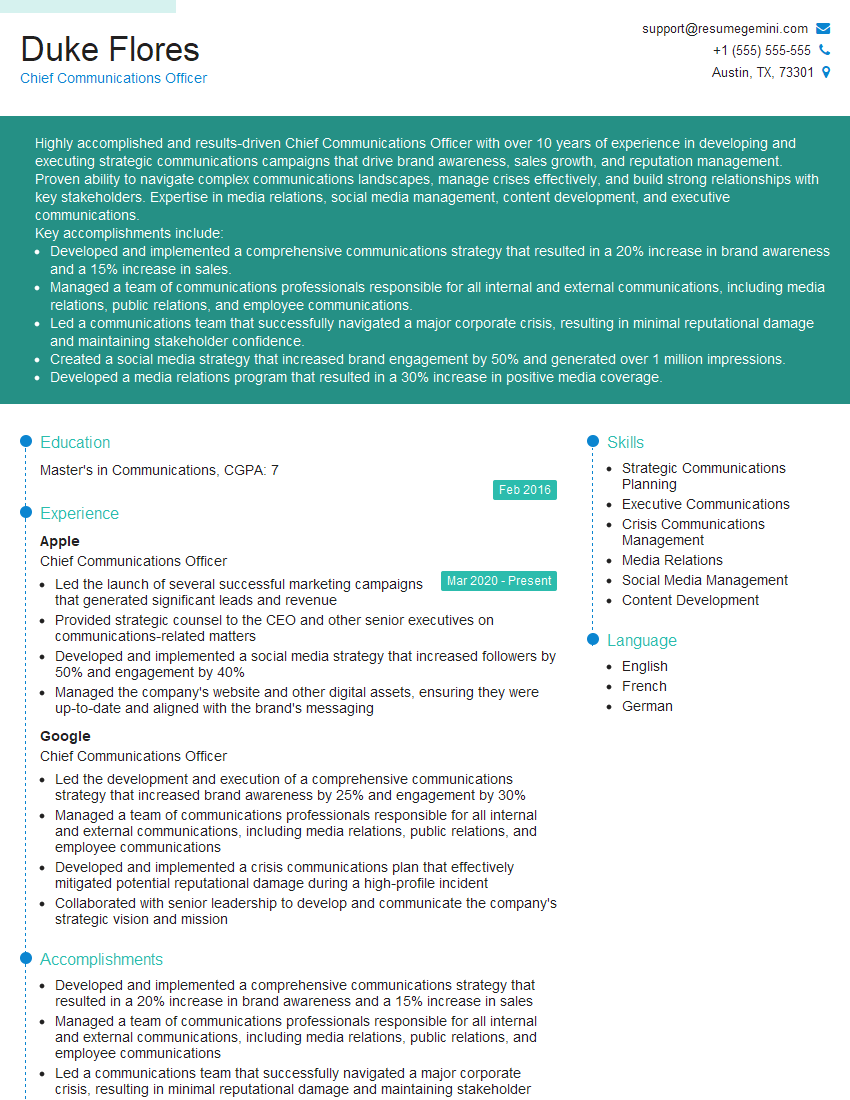
Chief Communications Officer Resume Sample
Explore more articles
Users Rating of Our Blogs
Share Your Experience
We value your feedback! Please rate our content and share your thoughts (optional).
What Readers Say About Our Blog
Very informative content, great job.
good