The thought of an interview can be nerve-wracking, but the right preparation can make all the difference. Explore this comprehensive guide to Punching and Forming interview questions and gain the confidence you need to showcase your abilities and secure the role.
Questions Asked in Punching and Forming Interview
Q 1. Explain the difference between blanking and piercing.
Blanking and piercing are both shearing operations used in sheet metal punching, but they differ in their purpose. Blanking creates a complete part by cutting it out from a larger sheet. Think of it like using a cookie cutter – you’re removing a shape to create a finished product. Piercing, on the other hand, creates a hole in a sheet without removing the entire shape. Imagine poking a hole in a piece of paper – the material remains, but you’ve created an opening. The key distinction lies in the outcome: blanking produces a separate part, while piercing creates a hole within a larger piece.
For example, blanking would be used to create a washer from a sheet of metal, while piercing would be used to create holes in a metal plate for mounting screws. The punches and dies used for each operation are also designed differently to achieve these distinct results.
Q 2. Describe the various types of punches used in punching operations.
Punch design is critical for efficient and accurate punching. Several types exist, each suited for specific applications:
- Solid Punches: These are simple, robust punches typically used for blanking and piercing operations. They are made from hardened tool steel and offer good durability.
- Compound Punches: These punches have multiple cutting edges to create complex shapes with a single stroke. This is often more efficient than performing multiple operations.
- Progressive Punches: Used for high-volume production, these punches perform multiple operations in a single pass of the sheet material. Each stage of the punch creates a feature of the final part.
- Pilot Punches: Used in conjunction with other punches, they act as guides ensuring accurate alignment of the die. Think of them like a centering tool that prevents misalignment.
- Shaped Punches: These punches create non-circular holes or cut out intricate shapes, allowing for more customized part production.
The choice of punch depends on the complexity of the part, the material being processed, and production volume. For instance, a simple solid punch might suffice for creating circular holes in low-volume production, while a progressive punch would be more suitable for high-volume production of complex components.
Q 3. What are the common types of dies used in forming processes?
Dies in forming processes are equally diverse and are matched to specific forming operations:
- Blanking Dies: These dies are used in blanking operations to cut out shapes from sheet metal. The shape of the punch matches the shape of the part you want to create.
- Piercing Dies: Used in piercing to create holes. They can create various hole shapes depending on the punch design.
- Bending Dies: These have a precisely shaped surface that bends sheet metal to a specific angle or radius. The die and punch work together to control the bend.
- Drawing Dies: Used to form cups or deep-drawn parts. The die acts as a cavity, while the punch pushes the metal into the cavity to create the shape.
- Embossing Dies: These dies create raised or indented patterns on the sheet metal, often used for decorative purposes or to improve stiffness.
Selecting the correct die type depends on the desired geometry and material properties. For example, drawing dies require precise tolerances and strong materials to withstand the high forces involved in deep drawing.
Q 4. How do you determine the appropriate die clearance for a given material?
Die clearance, the space between the punch and die, is crucial for efficient and clean cutting. It’s typically expressed as a percentage of the material thickness. The appropriate clearance depends heavily on the material being punched, its ductility, and the type of operation. Too little clearance leads to excessive friction and tool wear or potentially fractured parts. Too much clearance results in a rough, burry edge.
A general rule of thumb is to use a die clearance of 5-10% of the material thickness for most applications. However, this is just a starting point, and experimentation or reference to material-specific charts might be necessary. For example, harder materials generally require slightly less clearance compared to softer, more ductile materials. The exact value is often determined through experimentation and optimization processes to achieve the optimal balance between clean cut quality and tool life.
Q 5. Explain the concept of springback in sheet metal forming.
Springback is the elastic recovery of a material after it has been deformed during forming. Think of bending a paperclip – when you release it, it partially returns to its original straight shape. This phenomenon is a consequence of the material’s elastic properties. During forming, the material is plastically deformed, but some elastic strain is also stored. Upon releasing the load, the stored elastic energy causes the part to spring back to a degree.
Springback is a critical factor in sheet metal forming because it affects the final dimensions of the part. It needs to be accounted for during the design and tooling process. Techniques like overbending (bending the part beyond its desired final angle) can compensate for springback. Finite element analysis (FEA) simulations are commonly used to predict springback accurately before actual part production.
Q 6. How do you calculate the bending force required for a given part?
Calculating bending force is complex and depends on several factors including material properties (tensile strength, yield strength, modulus of elasticity), geometry (thickness, width, bend radius), and the desired bend angle. There isn’t a single universal formula. Instead, empirical formulas and approximations, often derived from experimental data and material testing, are often utilized.
One common approach uses a formula incorporating material properties and geometry: Force = K * T * t * S where K is a constant (depending on bend radius and material), T is the material thickness, t is the width of the bend, and S is the tensile strength. However, this is a simplification. More sophisticated calculations using FEA provide more accurate predictions, especially for complex geometries and materials.
Accurate calculations require material data sheets, the correct formulation for the specific bending scenario (V-bending, U-bending, etc.), and often specialized software.
Q 7. What safety precautions are necessary when operating punching and forming machines?
Punching and forming machines present significant safety hazards due to moving parts, high forces, and sharp edges. Strict adherence to safety protocols is paramount:
- Lockout/Tagout Procedures: Always lock out and tag out power sources before performing maintenance or adjustments. This prevents accidental activation.
- Personal Protective Equipment (PPE): Wear appropriate PPE, including safety glasses, hearing protection, and cut-resistant gloves, at all times.
- Machine Guards: Ensure all machine guards are in place and functioning correctly to prevent accidental contact with moving parts.
- Proper Training: Operators must receive thorough training on the specific machine’s operation, safety features, and emergency procedures.
- Regular Maintenance: Regular preventative maintenance helps identify and address potential hazards before they can cause accidents.
- Emergency Stop Buttons: Know the location and operation of emergency stop buttons and ensure they are easily accessible.
Failure to adhere to these safety practices can result in serious injury or even death. Safe operation requires constant vigilance and respect for the potential hazards involved.
Q 8. Describe different types of press brakes and their applications.
Press brakes are fundamental machines in sheet metal forming, used to bend sheet metal into various shapes. They come in several types, each suited for different applications and production volumes.
- Mechanical Press Brakes: These are the most common type, using a system of levers and linkages powered by a motor to generate bending force. They are robust, reliable, and relatively inexpensive, making them ideal for many applications. Think of them as the workhorses of the industry. A small shop might use a mechanical press brake for occasional bending tasks.
- Hydraulic Press Brakes: These utilize hydraulic cylinders to exert bending force, offering more precise control over bending pressure and stroke length. They are better suited for larger, more complex bending operations and offer greater flexibility in bending different materials and thicknesses. A larger manufacturing facility might use a hydraulic press brake for high-volume production of complex parts.
- CNC Press Brakes: These are computer-controlled, providing highly accurate and repeatable bends. The CNC system allows for programmed bending sequences, making them perfect for high-precision, complex parts or high-volume production runs with minimal manual intervention. Think of aerospace parts – the accuracy required needs a CNC press brake.
- Electric Press Brakes: Relatively newer to the market, these use electric motors for direct drive, offering energy efficiency and precise control similar to hydraulic brakes, but potentially with less maintenance.
The choice of press brake depends heavily on factors such as production volume, part complexity, material thickness, and budget. For simple bending of thin materials in low volume, a mechanical press brake might suffice, while high-volume production of intricate components would require a CNC press brake.
Q 9. How do you troubleshoot common problems encountered during punching operations?
Troubleshooting punching operations often involves systematically checking several potential sources of problems. Let’s outline a step-by-step approach:
- Examine the Punch and Die: Check for wear and tear, damage (e.g., chips, cracks), misalignment, or incorrect clearances. Worn punches and dies are a common cause of poor quality punches or broken tools. Visual inspection is crucial here.
- Inspect the Material: Ensure the sheet metal is of the correct type and thickness. Incorrect material can lead to tearing or other defects. Also look for imperfections in the sheet metal itself, such as scratches, surface defects, or inconsistent thickness.
- Check the Machine Setup: Verify the correct settings for tonnage (punching force), speed, and lubrication. Insufficient tonnage can lead to incomplete punches, while excessive tonnage can damage tools and the press. Incorrect lubrication leads to increased wear and friction.
- Assess the Stripper Plates: Ensure proper stripper plate function; otherwise, the punched part might stick to the punch, causing damage or inaccurate punching.
- Examine the Feed System: If the parts are fed automatically, check for accurate feeding and alignment. Misaligned feeding can lead to inaccurate punches or damage to the tools.
- Check for Tooling Misalignment: Verify the punch and die are perfectly aligned; even slight misalignment can lead to poor-quality punches or tool damage. This often requires precision measurement.
By systematically going through these steps, you can effectively pinpoint and solve common problems, ensuring high-quality punching operations and maximizing tool life. Remember proper documentation and record-keeping are essential for ongoing maintenance and improvement.
Q 10. Explain the importance of proper lubrication in punching and forming.
Proper lubrication is absolutely critical in punching and forming for several key reasons:
- Reduced Friction: Lubricants minimize friction between the punch, die, and sheet metal, reducing wear and tear on the tooling. This extends the lifespan of expensive tooling, saving significant costs in the long run. Think of it like oiling a bicycle chain – smoother operation and less wear.
- Improved Surface Finish: A well-lubricated process results in better surface finish on the punched or formed parts. This is especially important for applications requiring specific surface qualities. For instance, a cosmetic part needs a very good surface finish.
- Enhanced Tool Life: As mentioned, reducing friction directly translates to longer tool life, minimizing downtime and replacement costs. A longer tool life is good for budget and production scheduling.
- Prevents Tool Seizure: Lubrication prevents the punch and die from seizing, a condition where the tools become stuck together due to excessive friction and heat. This is a serious issue, requiring potentially expensive tool extraction.
- Increased Productivity: Smoother operation reduces downtime and increases production efficiency. Fewer interruptions allow for consistent output and meets production targets.
The choice of lubricant depends on the specific application and materials involved, but it’s a crucial aspect of maintaining efficient and high-quality punching and forming operations.
Q 11. What are the different types of sheet metal materials used in punching and forming?
A wide variety of sheet metal materials are used in punching and forming, each with its own properties affecting the process:
- Mild Steel: A common and cost-effective material, suitable for many applications due to its good formability and weldability. It’s versatile and easily available.
- Stainless Steel: Offers superior corrosion resistance, often chosen for applications requiring durability and longevity in harsh environments. It can be harder to form than mild steel.
- Aluminum: Lightweight and highly formable, it’s chosen for applications where weight reduction is essential. However, its softness can lead to issues with dimensional accuracy if not handled properly.
- Brass: Known for its corrosion resistance and attractive appearance, it’s frequently used in decorative or precision components. Its machinability is good.
- Copper: Excellent electrical and thermal conductivity, often used in electrical components. It is also relatively soft and ductile.
- Zinc: Used in applications requiring corrosion resistance and can be easily formed. Think of roofing materials.
The selection of material depends on the specific requirements of the final product, including strength, corrosion resistance, weight, cost, and formability. Each material presents its own set of challenges and considerations during the punching and forming process.
Q 12. How do you select the appropriate tool material for a specific application?
Selecting the appropriate tool material is crucial for achieving high-quality parts, maximizing tool life, and ensuring efficient production. The choice depends heavily on factors such as the material being punched or formed, the complexity of the operation, and the production volume.
- High-Speed Steel (HSS): A common and relatively cost-effective choice for many applications. It offers good hardness and wear resistance but may require sharpening or replacement more frequently than some other materials.
- Powder Metallurgy High-Speed Steel (PM-HSS): Offers improved properties compared to traditional HSS, including enhanced toughness and wear resistance. It is a bit more expensive than regular HSS.
- Carbide: Offers exceptional wear resistance and hardness, making it suitable for high-volume production and very hard-to-form materials. This is a premium tool material, significantly extending tool life.
- Ceramics: Exceptional hardness and wear resistance, particularly beneficial for punching abrasive materials. These are usually very hard and brittle.
In practice, a balance is needed between cost and performance. For low-volume production with soft metals, HSS might suffice, while high-volume operations using hardened stainless steel might benefit from carbide tooling, despite the higher initial cost. A skilled engineer or toolmaker would typically make this determination, weighing the cost of the tools against the cost of downtime and potential defects.
Q 13. What are the common methods used for inspecting punched and formed parts?
Inspection of punched and formed parts is crucial for ensuring quality and meeting specifications. Common methods include:
- Visual Inspection: A basic but important first step. This involves checking for burrs, scratches, surface imperfections, and dimensional accuracy using simple measuring tools like calipers and rulers. This should always be done.
- Dimensional Measurement: Using precision measuring instruments like CMMs (Coordinate Measuring Machines) or optical comparators for accurate dimensional verification, especially for critical dimensions. This offers high accuracy and reproducibility.
- Hardness Testing: Evaluating the hardness of the formed material to ensure it meets specifications. This test is essential when material properties need to be verified.
- Surface Roughness Measurement: Assessing the surface texture using profilometers or surface roughness gauges. This is particularly important for components with demanding surface finish requirements.
- Bend Angle Measurement: For formed parts, measuring the bend angles to verify they are within the required tolerances. This is essential for functional parts.
- Destructive Testing: In some cases, destructive testing like tensile testing or impact testing might be necessary to assess the mechanical properties of the material after forming. This can verify if material properties were not degraded during the forming process.
The choice of inspection methods depends on the specific requirements and tolerances of the part. A combination of methods is often used to ensure complete quality control.
Q 14. Explain the process of setting up a progressive die.
Setting up a progressive die is a precise process requiring careful attention to detail. Progressive dies are efficient tools for high-volume production, performing multiple operations in a single pass of the material. The setup generally follows these steps:
- Die Preparation: Ensure the die components (punches, dies, stripper plates, etc.) are clean, lubricated, and correctly assembled. This step is often done by specialized personnel.
- Press Selection: Select a press with sufficient tonnage (force) and stroke length to handle the die. The press capacity needs to be carefully checked against the demands of the die.
- Die Mounting: Securely mount the die in the press, ensuring proper alignment. Misalignment is a common cause of errors and damage.
- Stripper Plate Adjustment: Carefully adjust the stripper plates to ensure proper material release after punching and forming operations. This avoids material sticking and tool damage.
- Feed System Setup: If using an automated feed system, precisely calibrate it to ensure accurate material feeding. Misalignment here leads to errors in forming and punch location.
- Tonnage Adjustment: Set the press tonnage to the required levels for each operation in the progressive die. This needs to be accurate to avoid breaking the die or producing poor quality parts.
- Trial Run and Adjustment: Conduct a trial run with scrap material to check the operation of the die and make any necessary adjustments. This is crucial to identify and correct any potential issues before using expensive material.
- Production Run: Once all the checks are performed and adjustments made, start the actual production run. Consistent monitoring is still important.
Setting up a progressive die requires experience and a thorough understanding of the die design and the press. Improper setup can lead to costly errors, damaged tools, and scrapped parts. It’s not a job for the inexperienced.
Q 15. How do you calculate the tonnage requirement for a specific punching operation?
Calculating tonnage for punching requires understanding the material’s shear strength and the blank’s geometry. It’s not a simple formula, but rather an estimation based on several factors. We use a combination of empirical data and calculations to determine the press’s required force.
A simplified approach involves considering the shear strength (S) of the material, the thickness (t), and the length (L) of the cut. The total force (F) can be approximated as: F ≈ S * t * L. However, this is a very basic equation and doesn’t account for many real-world factors.
More accurate estimations involve using punch and die geometry, including clearance and the included angle. Factors like material ductility, friction between the punch and material, and the type of punch (e.g., sharp or blunt) significantly impact the tonnage required. Punching charts and software programs are commonly used to provide more precise calculations, taking all these factors into account. For instance, a thicker steel sheet will obviously require considerably more tonnage than a thinner aluminum sheet for the same size hole. We also need to add safety factors to account for variations in material properties and machine wear. In practice, we often conduct trial runs to fine-tune the tonnage and ensure efficient and safe operation.
Career Expert Tips:
- Ace those interviews! Prepare effectively by reviewing the Top 50 Most Common Interview Questions on ResumeGemini.
- Navigate your job search with confidence! Explore a wide range of Career Tips on ResumeGemini. Learn about common challenges and recommendations to overcome them.
- Craft the perfect resume! Master the Art of Resume Writing with ResumeGemini’s guide. Showcase your unique qualifications and achievements effectively.
- Don’t miss out on holiday savings! Build your dream resume with ResumeGemini’s ATS optimized templates.
Q 16. Describe the process of bending sheet metal using a press brake.
Press brake bending involves clamping a sheet metal blank between a punch and die. The punch descends, forcing the material to bend around the die’s radius. The process is controlled precisely to achieve the desired bend angle and radius.
Think of it like folding a piece of paper. The paper is your sheet metal, your fingers are the punch, and the edge of your table is the die. The force you apply determines how sharp the bend is. Press brakes use a hydraulic or mechanical system to apply this force in a controlled manner.
The process starts with positioning the sheet metal accurately in the press brake. The operator then selects the desired bending angle and tonnage, usually through a computerized control system. The press brake’s ram then descends, precisely bending the metal. After bending, the finished part is removed. Accurate positioning and proper tonnage are critical to avoid defects such as underbending, overbending, or cracking. Proper tooling, such as different die radii and punches for varied bend requirements are key.
Q 17. What are the different types of bending processes?
Numerous bending processes exist, categorized by tooling, machine, and technique. Common examples include:
- Air Bending: This is the most common method, where the punch bends the material over the die without significantly deforming it. It’s simple and versatile but has limitations on achievable bend angles.
- Bottom Bending: The punch pushes the material completely into the die, resulting in a sharper bend. This technique is suitable for tighter bend radii.
- Coining: This process involves high pressure to conform the metal to the exact shape of the die, resulting in a very precise bend. It’s used for specific applications demanding high accuracy.
- Roll Bending: Used for bending large sheets into cylindrical or curved shapes using a series of rollers. Think of bending a large metal sheet into a tube.
The choice of process depends on factors like the material, required bend radius, desired accuracy, and production volume.
Q 18. Explain the concept of draw beads in deep drawing operations.
Draw beads are strategically placed depressions in a deep drawing die’s surface. Their purpose is to control the flow of material during the deep drawing process, preventing wrinkles or earing (uneven deformation) in the drawn part.
Imagine trying to push a balloon into a small container. If you push it too fast, it will wrinkle. Draw beads act like ‘speed bumps’ for the sheet metal during the drawing process, slowing down the material flow in certain areas. They ensure the material flows evenly into the die, thus minimizing wrinkles and creating a uniform part.
The depth and spacing of the draw beads are carefully engineered based on the material properties, the die geometry, and the part’s design. Incorrectly designed draw beads can lead to flawed parts, so accurate calculations and experience are critical.
Q 19. What are the advantages and disadvantages of using different forming processes?
Each forming process offers advantages and disadvantages:
- Punching: Advantages: High production rate, precise hole creation. Disadvantages: Material waste, potential for burrs.
- Bending: Advantages: Versatile, relatively simple tooling. Disadvantages: Limited bend radius for some materials.
- Deep Drawing: Advantages: Creates complex shapes. Disadvantages: High tooling costs, potential for wrinkling and earing.
- Roll Forming: Advantages: High production rates for long parts. Disadvantages: Limited shape complexity.
The optimal process depends on factors like desired part geometry, material properties, production volume, and cost considerations. For example, a high-volume production of a simple part might favor punching and bending, while a low-volume, complex part would benefit from deep drawing.
Q 20. How do you prevent wrinkles in deep drawing operations?
Wrinkles in deep drawing are caused by uneven material flow. Preventing them involves careful design and control of the process.
- Proper Blank Design: The blank’s size and shape must be carefully determined to ensure uniform material flow into the die. Software simulations are often used to optimize blank design.
- Draw Beads: As mentioned earlier, draw beads control the flow of material, preventing wrinkles. Their proper design and placement are crucial.
- Lubrication: Proper lubrication between the blank and the die reduces friction and promotes smooth material flow.
- Die Design: The die’s geometry plays a significant role in preventing wrinkles. Well-designed radii and transitions are vital.
- Material Selection: Using materials with appropriate ductility and formability is crucial. Some materials are inherently more prone to wrinkling than others.
In practice, a combination of these techniques is often used to effectively prevent wrinkles and achieve a high-quality deep-drawn part.
Q 21. How do you compensate for springback in a forming operation?
Springback is the elastic recovery of a part after a forming operation. It’s a common phenomenon in bending operations where the part returns slightly to its original shape after the bending force is removed. We compensate for it using several methods.
- Overbending: Bending the part slightly beyond the desired final angle. The springback will then bring it back to the target angle. The amount of overbend depends on the material, the tooling, and the bend angle.
- Tooling Design: Specialized tooling with features that help minimize springback can be used. This often involves using springback compensation features integrated into the die design.
- Material Selection: Certain materials are less prone to springback than others. Choosing a more suitable material can help to reduce the effect.
- Computer Simulation: Software can predict the amount of springback, enabling a more accurate overbend compensation.
The best approach often involves a combination of techniques. For example, we might use software to predict the springback, then combine this with a strategic overbend to account for the predicted effect.
Q 22. Explain the role of tooling in achieving precise dimensions and tolerances.
Tooling is the backbone of precise punching and forming. The dimensions and tolerances of the final part are directly determined by the precision of the dies and punches used. Imagine trying to bake a perfect cake with a wonky pan – the result won’t be ideal. Similarly, imprecise tooling leads to inconsistent parts.
The design of the tooling, including the punch shape, die cavity, and stripper plates, dictates the final part geometry. For instance, a progressive die used for complex shapes needs extremely tight tolerances on each station to ensure smooth transitions and accurate features. Even minute variations in the tooling’s dimensions will accumulate and affect the final product. High-quality tooling, manufactured using processes like EDM (Electrical Discharge Machining) or wire EDM, allows for achieving micro-level precision, crucial for applications demanding tight tolerances, such as electronics or medical devices.
Furthermore, the material of the tooling itself is important. Tool steels with high hardness and wear resistance are necessary to maintain dimensional accuracy throughout the production run. The use of carbide inserts further enhances durability and extends the life of the tooling, directly impacting the consistency of produced parts.
Q 23. Describe different methods for reducing tooling costs.
Reducing tooling costs is a constant challenge in manufacturing. Several strategies can be employed:
- Standard Tooling Designs: Utilizing standard die components wherever possible instead of custom-designed parts significantly reduces the initial investment. This approach leverages readily available components and minimizes design and manufacturing time.
- Optimized Tooling Designs: A well-designed tool, efficiently utilizing material and minimizing the number of components, is key. Advanced CAD/CAM software allows for simulations and optimizations, helping identify potential cost-saving opportunities in the design phase.
- Material Selection: Selecting cost-effective but suitable tool steels or choosing less expensive materials for less critical parts of the tool can reduce overall expenses without sacrificing performance. For example, using high-speed steel (HSS) instead of carbide for less demanding applications can be a viable option.
- Tool Life Management: Proper maintenance and timely repairs extend the lifespan of tooling, reducing the need for frequent replacements. Regular inspections and sharpening can significantly prolong the useful life of punches and dies.
- Modular Tooling Systems: These systems allow for assembling dies from readily available standardized modules. This reduces the need for bespoke designs and manufacturing, speeding up the process and lowering costs. Such modularity also allows for easier modification and adaptation to slight design changes.
Q 24. How do you ensure the quality and consistency of punched and formed parts?
Ensuring consistent quality in punching and forming demands a holistic approach that addresses material, process, and tooling aspects.
- Material Inspection: Incoming material inspection is crucial to ensure that the material properties meet the specifications. This includes checking thickness, hardness, and surface finish to prevent defects arising from material inconsistencies.
- Process Monitoring: Employing statistical process control (SPC) techniques is vital to monitor key process parameters. This could include measuring punch force, stroke length, and die closure speed. Data analysis can highlight potential problems early on.
- Regular Tooling Maintenance: Maintaining sharp, well-aligned dies and punches is non-negotiable. Regular inspection and sharpening prevent part defects due to worn-out tooling.
- First-Off Inspection: A thorough inspection of the initial parts produced from a new tool or after maintenance prevents defects from propagating through the production run.
- Periodic Sampling and Inspection: Random sampling of parts throughout the production cycle is needed to verify ongoing consistency. This proactive approach helps to identify subtle deviations before they become major issues.
Implementing a robust quality control system, combined with continuous improvement initiatives, ensures the long-term production of high-quality, consistent parts.
Q 25. What are the common causes of die wear and tear?
Die wear and tear are inevitable in punching and forming, but understanding the causes helps in mitigation.
- Abrasion: The constant friction between the punch, die, and workpiece leads to gradual wear. This is particularly pronounced in high-volume production runs.
- Adhesion: Material sticking to the tooling surfaces, especially with sticky or difficult-to-form materials, increases wear.
- Fatigue: Repeated stress cycles on the tooling, especially during high-speed operations, can cause fatigue cracks and eventual failure.
- Plastic Deformation: The constant impact and deformation can lead to gradual changes in the tooling dimensions.
- Chemical Attack: Certain materials might cause chemical reactions with the tooling material, accelerating wear.
- Improper Lubrication: Insufficient lubrication exacerbates friction and wear, further shortening tool life.
These factors, often working in combination, significantly impact tooling lifespan and part quality. Addressing these root causes through appropriate material selection, lubrication, and maintenance practices is crucial.
Q 26. Describe different methods for maintaining and repairing punching and forming dies.
Maintaining and repairing punching and forming dies requires a skilled workforce and appropriate equipment. Methods include:
- Regular Inspection and Cleaning: Visual inspection for wear and tear, followed by cleaning to remove debris and adhered material, is the first step in preventative maintenance. This helps identify issues early on.
- Sharpening and Grinding: Worn punches and dies can be sharpened and reground to restore their original dimensions. This is often done using specialized grinding machines.
- Crater Repair: Small pitting or craters on the die surface can be repaired using techniques like electric discharge machining (EDM) or laser welding. This restores the surface geometry to its intended specification.
- Part Replacement: Severely worn or damaged components, if economically feasible, should be replaced rather than attempted repair. This guarantees optimal performance and prevents potential defects.
- Coatings: Applying specialized coatings to the tool surface enhances wear resistance and reduces friction. Different coatings exist for different materials and applications.
A well-structured maintenance program, using a combination of these methods, will maximize tooling life and minimize downtime.
Q 27. Explain the use of CAD/CAM software in punching and forming processes.
CAD/CAM software plays a crucial role in modern punching and forming. It’s not just about designing the parts; it’s about efficiently designing the tooling and the entire forming process.
- Die Design: CAD software allows for precise 3D modeling of dies and punches, ensuring accurate dimensions and clearances. This eliminates the need for time-consuming and costly manual drafting.
- Process Simulation: CAM software enables the simulation of the forming process, allowing engineers to predict potential problems and optimize the design for better efficiency and part quality. This preventative approach avoids costly rework.
- NC Programming: CAM software generates the numerical control (NC) code needed to operate CNC machining centers for the manufacturing of the dies and punches. This automated process improves precision and reduces errors.
- Tool Path Optimization: CAM software helps in optimizing the toolpaths for machining, ensuring efficient material removal and reduced machining time. This directly translates to lower manufacturing costs.
- Bend Simulation and Analysis: For bending processes, software can predict springback and other bending-related phenomena, aiding in precise design and tolerance setting.
The use of integrated CAD/CAM systems significantly streamlines the entire process, from design to manufacturing, improving accuracy, efficiency, and overall cost-effectiveness.
Q 28. How do you address a situation where a part is consistently out of specification?
When parts consistently fall out of specification, a systematic approach is needed. It’s not a simple fix; it requires a detective-like approach.
- Identify the Root Cause: This involves a thorough investigation, starting with detailed inspection of the parts to identify the specific type of defect. Is it a dimensional issue, a surface defect, or something else?
- Analyze the Process: Examine all aspects of the process – the material, the tooling, the machine settings, and the operator technique. Are the machine settings correctly calibrated? Is the material consistent? Are the dies worn out?
- Data Analysis: Review historical data related to the process. Look for trends or patterns in the defects. This might reveal subtle inconsistencies that have gone unnoticed.
- Tooling Check: A comprehensive inspection of the tooling is crucial. Are the punches and dies worn out? Are they properly aligned? Are there any defects in the tooling itself?
- Material Evaluation: Verify that the material properties are consistent and within specifications. Variations in material properties can significantly affect part quality.
- Corrective Actions: Based on the identified root cause, implement the necessary corrective actions. This might involve adjusting machine settings, replacing worn-out tooling, or refining the process parameters.
- Verification: After implementing the corrective actions, carefully verify that the parts now meet the specifications. Use statistical process control methods to monitor the process going forward.
A methodical approach, focusing on data analysis and a detailed understanding of the process, is key to resolving this type of problem effectively.
Key Topics to Learn for Punching and Forming Interview
- Die Design and Selection: Understanding the principles of die design, material selection, and their impact on the final product quality and efficiency. Consider factors like die life, material properties, and tolerances.
- Press Operation and Maintenance: Familiarize yourself with various press types (mechanical, hydraulic, etc.), their operating parameters, preventative maintenance schedules, and troubleshooting common malfunctions. Practical experience is highly valuable here.
- Material Properties and Behavior: Deepen your understanding of how different metals and alloys behave under stress during punching and forming. This includes yield strength, tensile strength, ductility, and their impact on the forming process.
- Process Optimization: Explore techniques to optimize the punching and forming process for speed, accuracy, and minimal material waste. This involves understanding process parameters and their impact on the final product.
- Safety Procedures and Regulations: Demonstrate knowledge of relevant safety protocols and regulations pertaining to press operation and die handling to ensure a safe working environment. This is crucial in any manufacturing setting.
- Quality Control and Inspection: Learn about various quality control methods used to ensure the final product meets specifications. Understanding dimensional accuracy, surface finish requirements, and defect detection techniques is essential.
- Troubleshooting and Problem Solving: Develop your ability to identify and resolve common issues encountered during punching and forming, such as die breakage, material defects, and dimensional inaccuracies. Being able to systematically approach problems is key.
Next Steps
Mastering Punching and Forming opens doors to rewarding careers in manufacturing, offering opportunities for advancement and specialization. A strong understanding of these processes is highly sought after by employers. To maximize your job prospects, creating an ATS-friendly resume is crucial. ResumeGemini is a trusted resource to help you build a professional and impactful resume that will get noticed. They provide examples of resumes tailored to Punching and Forming, ensuring your qualifications are presented effectively. Invest time in crafting a compelling resume – it’s your first impression!

Quality Assurance Specialist Resume Sample

Manufacturing Technician Resume Sample

Production Associate Resume Sample

Sheet Metal Fabricator Resume Sample
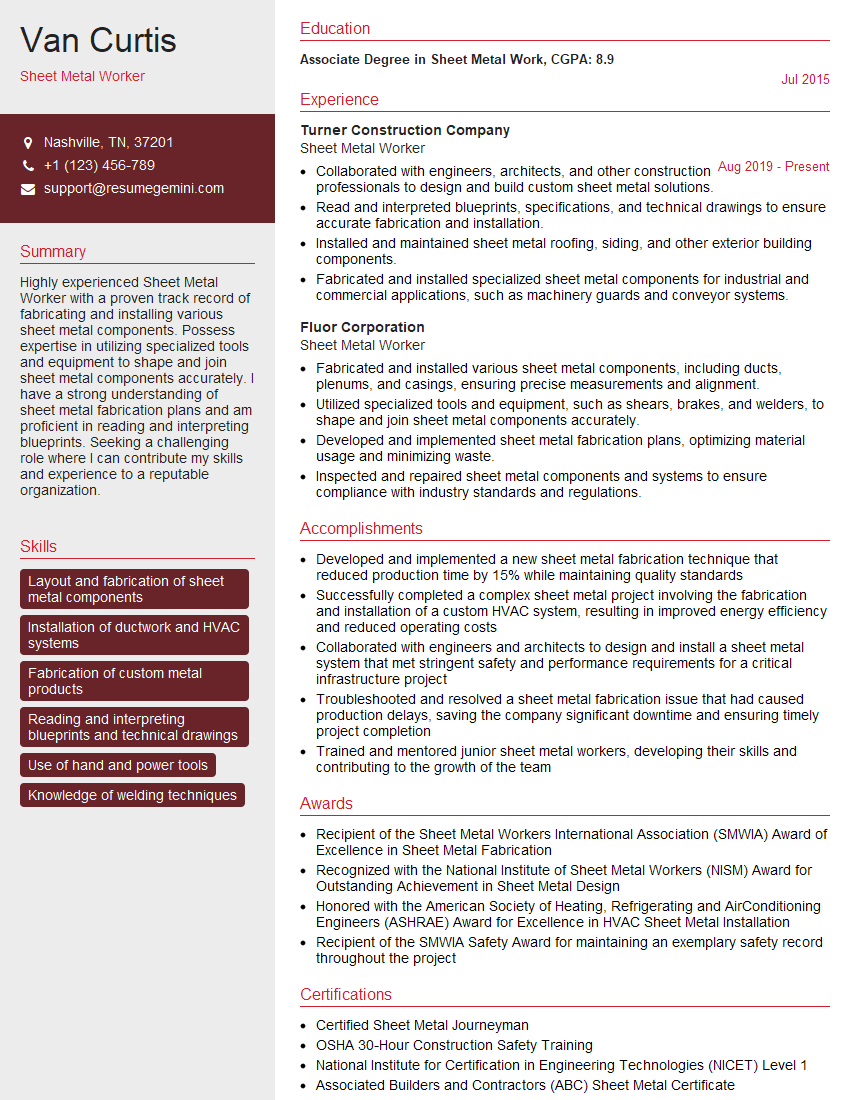
Sheet Metal Worker Resume Sample
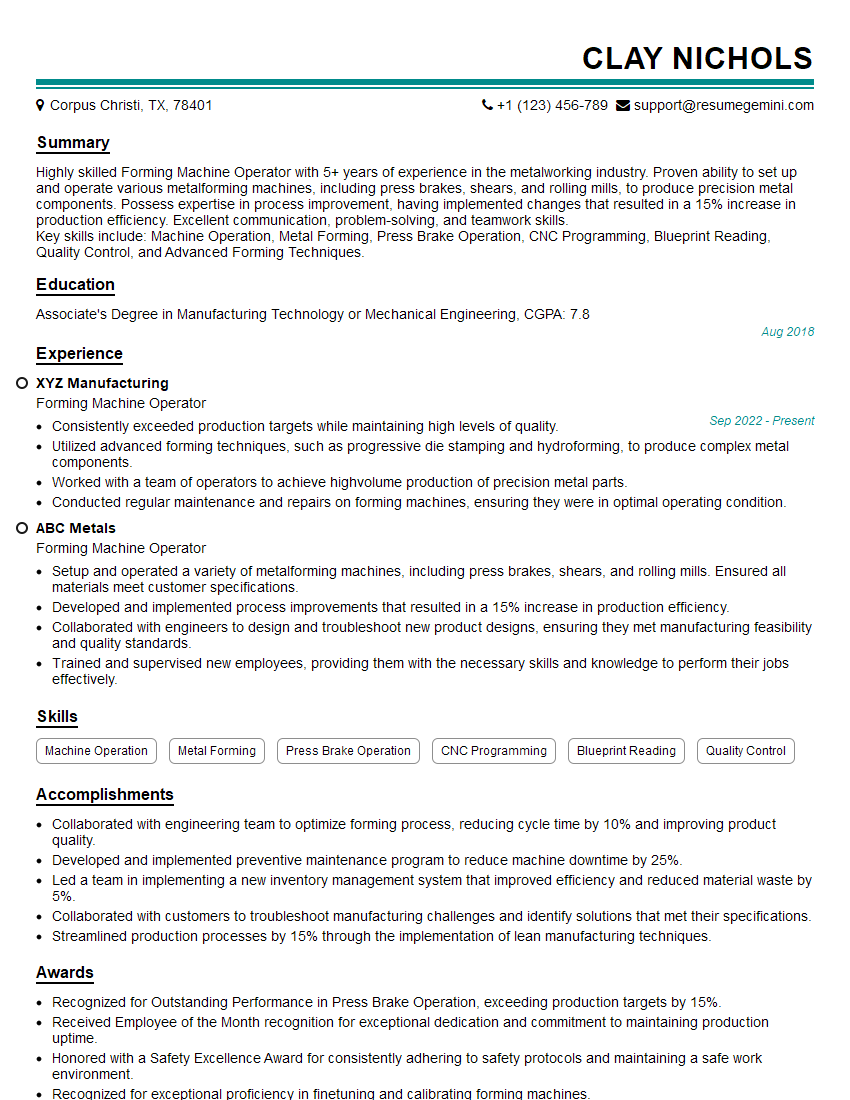
Forming Machine Operator Resume Sample

Die Setter Resume Sample
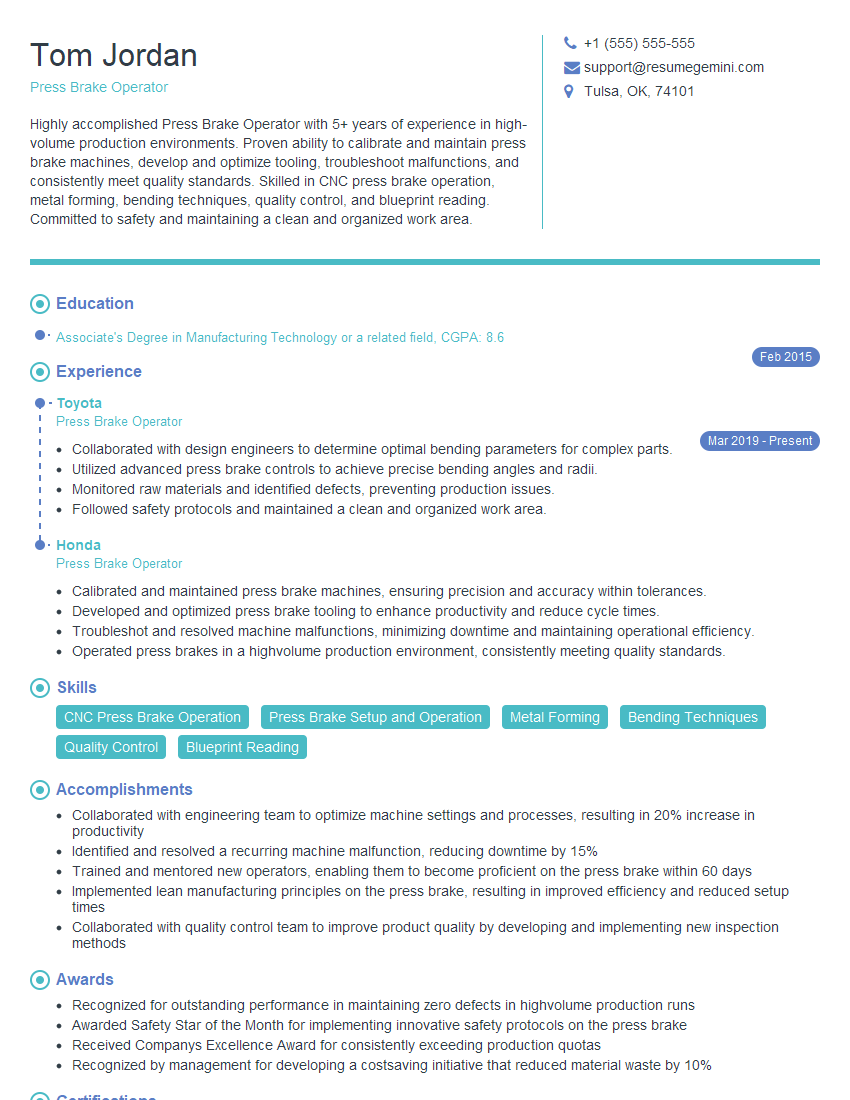
Press Brake Operator Resume Sample
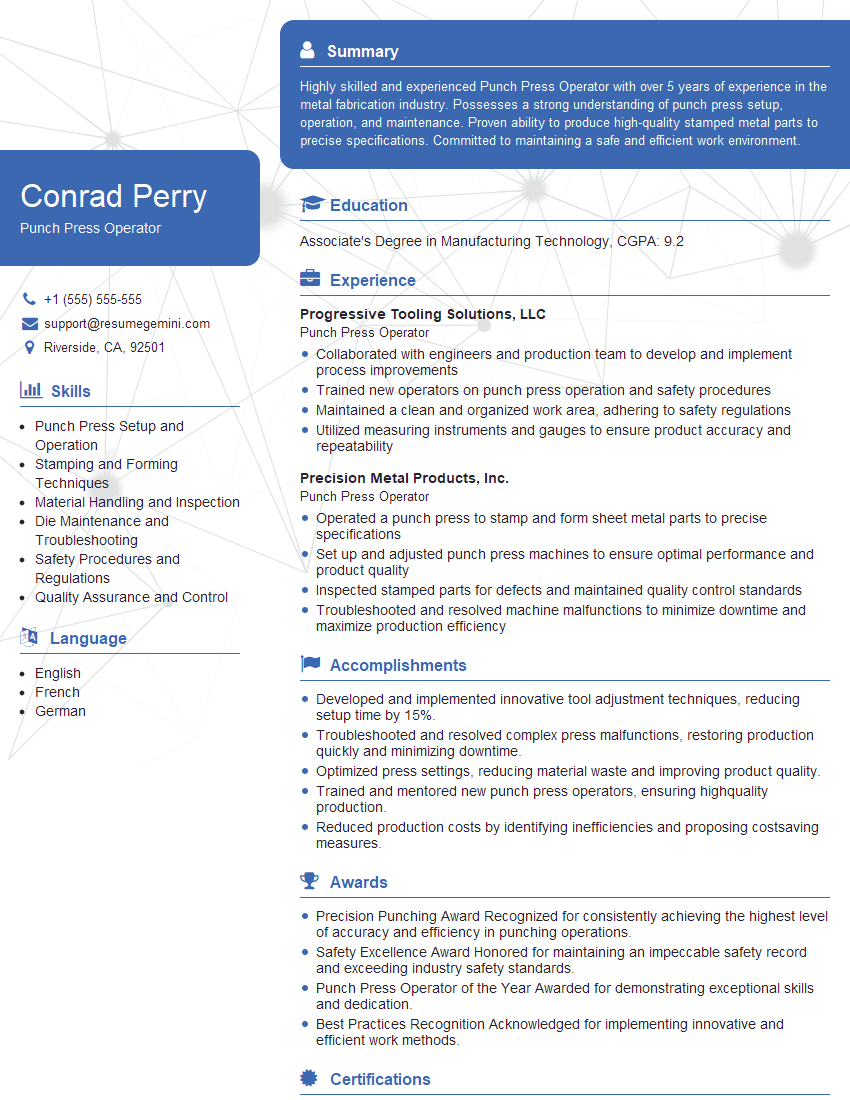
Punch Press Operator Resume Sample
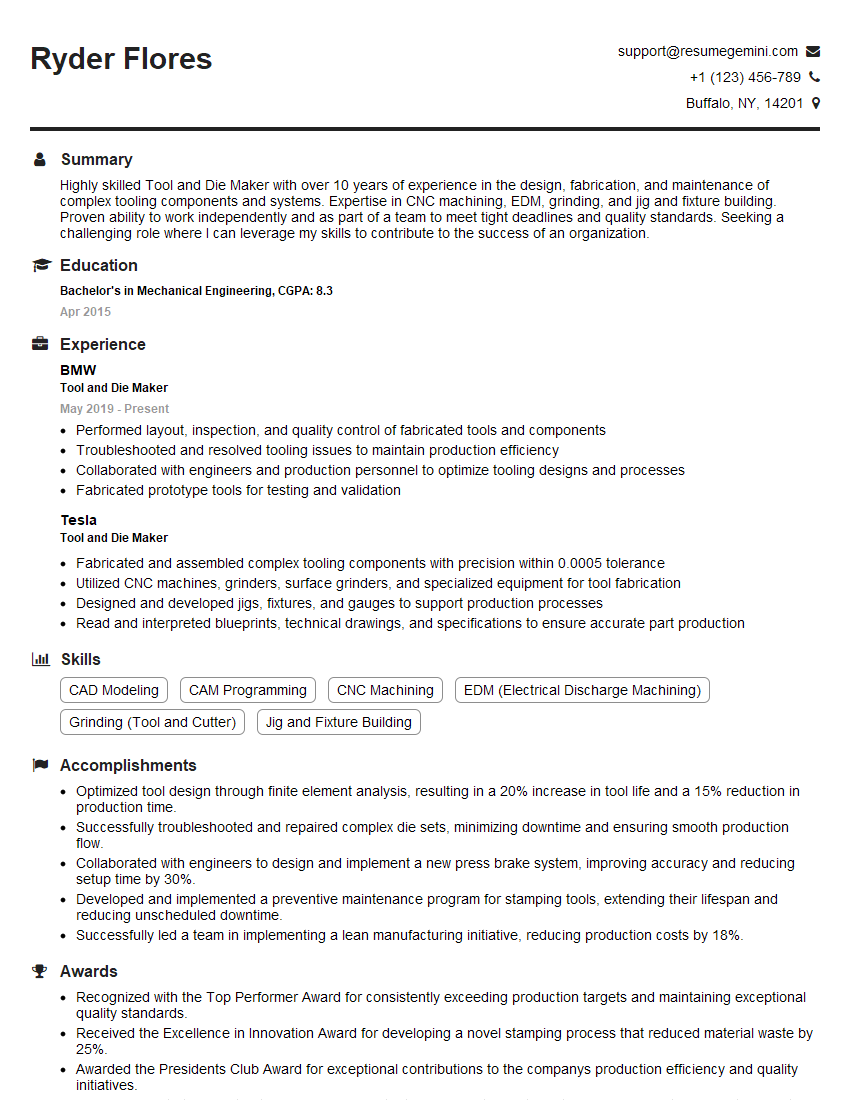
Tool and Die Maker Resume Sample
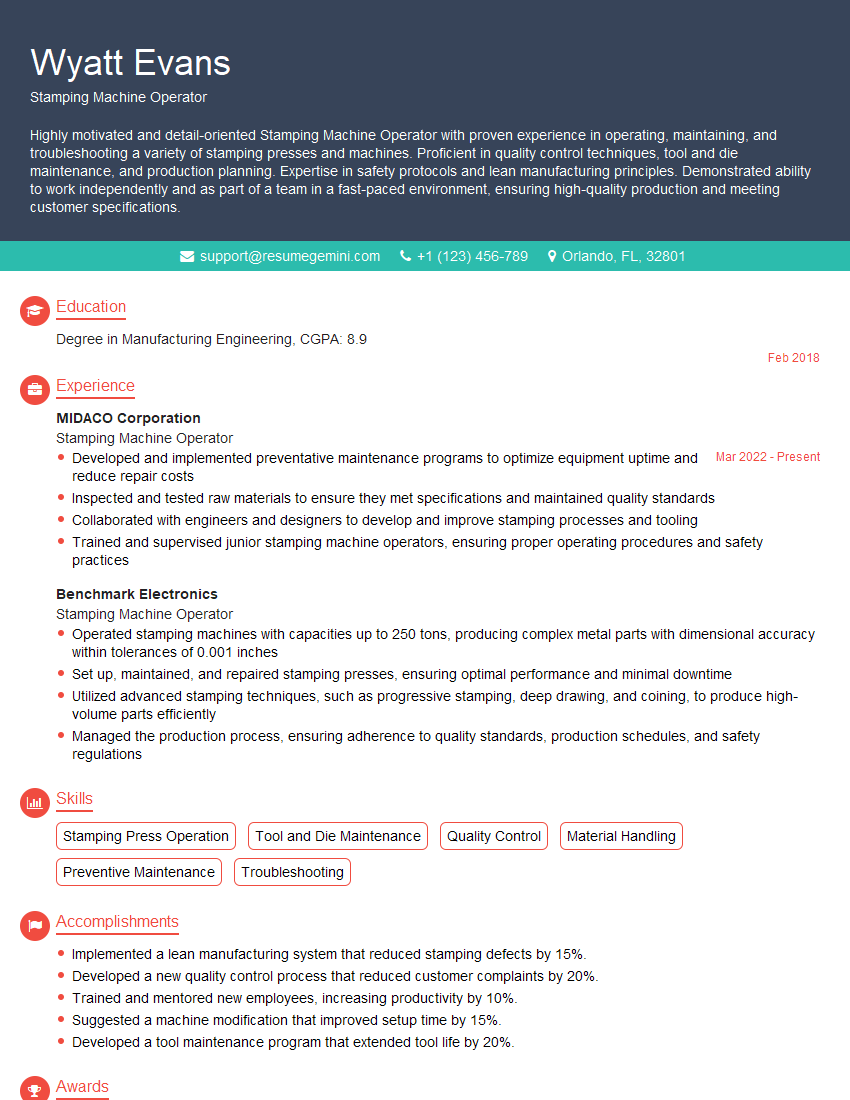
Stamping Machine Operator Resume Sample
Explore more articles
Users Rating of Our Blogs
Share Your Experience
We value your feedback! Please rate our content and share your thoughts (optional).
What Readers Say About Our Blog
Very informative content, great job.
good