Are you ready to stand out in your next interview? Understanding and preparing for QC management interview questions is a game-changer. In this blog, we’ve compiled key questions and expert advice to help you showcase your skills with confidence and precision. Let’s get started on your journey to acing the interview.
Questions Asked in QC management Interview
Q 1. Explain the difference between Quality Control and Quality Assurance.
Quality Control (QC) and Quality Assurance (QA) are often confused, but they represent distinct yet complementary approaches to ensuring product quality. Think of it like this: QA is preventative, focusing on preventing defects from occurring in the first place, while QC is reactive, focusing on identifying and rectifying defects after they’ve been produced.
Quality Assurance involves establishing a structured system and processes to ensure that the product consistently meets predefined quality standards. This includes planning, designing, and implementing quality policies, procedures, and processes across the entire product lifecycle. Examples include defining quality metrics, conducting regular audits of processes, and providing training to employees on quality management systems.
Quality Control, on the other hand, focuses on the actual inspection and testing of products or services to ensure they conform to established standards. This involves inspecting incoming materials, monitoring production processes, conducting tests on finished products, and identifying and addressing defects found during these inspections. Examples include conducting visual inspections, using measuring instruments to verify dimensions, and performing functional tests.
In short: QA prevents defects, QC detects defects.
Q 2. Describe your experience with ISO 9001 standards.
I have extensive experience working within the framework of ISO 9001 standards. In my previous role at [Previous Company Name], we implemented and maintained an ISO 9001:2015 certified Quality Management System (QMS). My responsibilities included developing and updating quality manuals, leading internal audits to ensure compliance with the standard, and participating in external audits conducted by certification bodies. We focused on continuous improvement, using data-driven insights to refine our processes and improve efficiency.
Specific areas where I contributed to ISO 9001 compliance included:
- Developing and implementing documented procedures for all key processes.
- Managing non-conformances and corrective actions to address identified deficiencies.
- Monitoring and measuring key quality indicators to track performance and identify areas for improvement.
- Training employees on the requirements of the ISO 9001 standard and their roles in the QMS.
My experience with ISO 9001 has instilled in me a deep understanding of the importance of documentation, process control, and continuous improvement, all essential for maintaining high levels of quality and customer satisfaction.
Q 3. What are the key performance indicators (KPIs) you use to measure QC effectiveness?
The KPIs I use to measure QC effectiveness vary depending on the specific product or service, but some common ones include:
- Defect rate: The percentage of non-conforming products or services identified during inspection or testing. A lower defect rate indicates improved QC effectiveness.
- Defect cost: The total cost associated with correcting defects, including rework, scrap, and warranty claims. Reducing defect costs is a crucial measure of QC success.
- First-pass yield: The percentage of products or services that pass inspection on the first attempt. A higher first-pass yield indicates efficient processes and effective QC.
- Customer returns: The number of products returned due to quality issues. This metric directly reflects the impact of QC on customer satisfaction.
- Cycle time for corrective actions: The time taken to identify and resolve quality issues. Shorter cycle times demonstrate efficient problem-solving within the QC process.
By tracking these KPIs and analyzing trends, we can identify areas for improvement within our QC procedures and implement corrective actions to enhance overall quality and reduce costs.
Q 4. How do you handle a situation where a product fails to meet quality standards?
When a product fails to meet quality standards, a systematic approach is crucial. My response follows a structured process:
- Immediate Containment: First, we isolate the affected products to prevent them from reaching customers. This may involve quarantining the batch or halting the production line.
- Problem Investigation: We conduct a thorough investigation to determine the root cause of the non-conformance using appropriate tools such as Pareto charts, fishbone diagrams (Ishikawa diagrams), or 5 Whys analysis.
- Corrective and Preventative Actions (CAPA): Based on the root cause analysis, we implement corrective actions to fix the immediate problem and preventative actions to prevent recurrence. This might involve process adjustments, employee retraining, or equipment upgrades.
- Disposition of Non-Conforming Products: We determine the appropriate course of action for the non-conforming products, which may include rework, repair, scrap, or concession. This decision is heavily influenced by cost-benefit analysis and regulatory requirements.
- Documentation and Reporting: We meticulously document the entire process, including the root cause, corrective and preventative actions, and the disposition of the non-conforming products. This documentation serves as valuable learning and allows for continuous improvement.
The specific steps taken will adapt to the severity and nature of the non-conformance, but maintaining a structured approach is vital for efficient and effective resolution.
Q 5. Describe your experience with statistical process control (SPC).
Statistical Process Control (SPC) is a powerful technique for monitoring and controlling process variation. I’ve extensively used SPC in various projects, leveraging control charts (like X-bar and R charts, p-charts, c-charts) to track process performance and identify trends indicative of process instability. For instance, in my previous role, we used control charts to monitor the dimensions of a critical component during manufacturing. By regularly plotting data points on control charts and interpreting their patterns, we could quickly identify any shifts or trends indicative of process instability. This allowed us to proactively address potential quality problems before they escalated into significant issues.
Example: A control chart showing an upward trend in the diameter of a manufactured part would signal potential process drift and the need for investigation and adjustment.
SPC empowers data-driven decision-making, enabling proactive adjustment and prevention of quality issues rather than relying solely on reactive measures.
Q 6. What are some common quality control tools and techniques you’ve used?
My toolkit includes a variety of quality control tools and techniques, chosen based on the specific context of the situation. These include:
- Control Charts (SPC): As mentioned earlier, essential for monitoring process stability.
- Checklists: Simple but effective for ensuring consistent execution of tasks and preventing errors.
- Pareto Charts: Identifying the ‘vital few’ causes contributing to most of the problems, directing focus to high-impact areas.
- Fishbone Diagrams (Ishikawa): For systematically investigating the root causes of problems by considering various contributing factors.
- Histograms: To visually represent data distribution and identify potential process capability issues.
- Scatter Diagrams: Identifying correlation between two variables to understand the relationship between different factors influencing quality.
- Flowcharts: Mapping out processes visually to identify areas for improvement and streamline workflow.
The selection and application of these tools are crucial for effective problem-solving and continuous improvement in a quality control environment.
Q 7. Explain your experience with root cause analysis.
Root cause analysis is crucial for ensuring that quality problems are not only fixed but prevented from recurring. I have extensive experience using various techniques, including the 5 Whys, Fishbone diagrams, and Fault Tree Analysis. The key is to move beyond simply identifying symptoms and delve into the underlying causes.
For example, if we have a high defect rate in a particular assembly process, the 5 Whys method might look like this:
- Why is the defect rate high? Because of incorrect component alignment.
- Why is the component alignment incorrect? Because the assembly instructions are unclear.
- Why are the assembly instructions unclear? Because they haven’t been updated since the design change last month.
- Why weren’t the instructions updated? Because the design engineer didn’t inform the documentation team.
- Why didn’t the design engineer inform the documentation team? Because there was a lack of clear communication protocol.
Through this iterative questioning, we uncover a root cause related to communication, not just the immediate problem of incorrect alignment. This allows for targeted corrective and preventative actions, focusing on improving communication protocols to prevent future similar issues.
Q 8. How do you develop and implement a quality control plan?
Developing and implementing a quality control (QC) plan is a systematic process that ensures products or services meet predefined standards. It begins with a thorough understanding of the product/service and its intended use.
- Define Scope: Clearly identify the product, process, or service the plan will cover. For example, if we’re talking about manufacturing widgets, the scope might be the entire widget production line, or just a specific stage like assembly.
- Identify Critical Quality Characteristics (CQCs): Determine the key attributes that directly impact the product’s quality and functionality. For our widgets, this could include dimensions, weight, material strength, and functionality of any integrated components.
- Establish Acceptance Criteria: Define the acceptable limits for each CQC. This might involve tolerances (e.g., widget length must be within ±0.5mm), pass/fail tests (e.g., widget must withstand a 10kg load), or visual inspection standards.
- Develop Inspection and Testing Procedures: Create detailed steps for inspecting and testing the product against the acceptance criteria. This could include using specific measuring instruments, checklists, or statistical process control (SPC) charts.
- Implement and Monitor: Put the plan into action and regularly monitor its effectiveness. This involves collecting data from inspections and tests, analyzing it, and making adjustments as needed. Data visualization tools are crucial here, allowing for easy identification of trends and outliers.
- Documentation: Maintain comprehensive records of all inspections, tests, results, and corrective actions. This is essential for traceability and compliance auditing.
For instance, in a previous role at a pharmaceutical company, we implemented a QC plan for a new drug formulation. This involved meticulous testing for purity, potency, and stability, with stringent acceptance criteria based on regulatory guidelines like GMP (Good Manufacturing Practices). We employed statistical process control (SPC) charts to monitor critical parameters throughout the manufacturing process, enabling early detection and prevention of deviations.
Q 9. How do you ensure compliance with regulatory requirements?
Ensuring compliance with regulatory requirements is paramount in maintaining the integrity of QC and avoiding penalties. It requires a proactive and multi-faceted approach.
- Identify Applicable Regulations: This involves thoroughly researching and understanding all relevant regulations, standards, and guidelines applicable to the industry and specific product/service. Examples include ISO 9001 (quality management systems), FDA regulations (for pharmaceuticals and medical devices), or industry-specific standards.
- Develop and Implement Compliance Procedures: Create detailed procedures that address each regulatory requirement. This might involve establishing documented processes for handling materials, manufacturing, testing, and record-keeping.
- Regular Audits and Inspections: Conduct internal audits to evaluate compliance, identify gaps, and implement corrective actions. External audits by regulatory bodies should be anticipated and prepared for.
- Training and Education: Ensure all personnel involved in QC processes receive adequate training on relevant regulations and procedures. Regular refresher training is vital.
- Maintain Comprehensive Documentation: Maintain detailed records to demonstrate compliance with all applicable regulations. This includes test results, calibration certificates, training records, and any corrective and preventive actions taken.
- Continuous Improvement: Regularly review and update compliance procedures to align with evolving regulations and best practices. This is an iterative process.
In my previous experience at a medical device company, we implemented a rigorous quality management system certified to ISO 13485, ensuring compliance with stringent medical device regulations. This involved rigorous documentation, internal audits, and proactive management of any non-conformances.
Q 10. Describe your experience with auditing quality management systems.
My experience in auditing quality management systems (QMS) is extensive. I’ve conducted both internal and external audits, using a structured approach to assess the effectiveness of the system in ensuring quality and compliance.
- Planning: Defining the scope, objectives, and methodology of the audit. This includes identifying the areas to be audited and the specific standards or regulations against which the QMS will be evaluated.
- Execution: Conducting the audit using a combination of document review, interviews with personnel, and observation of processes. I utilize checklists and audit templates to ensure consistency and thoroughness.
- Reporting: Documenting the audit findings, including both positive observations and areas needing improvement. This includes identifying any non-conformances and proposing corrective actions.
- Follow-up: Verifying that corrective actions have been implemented effectively and that the identified issues have been resolved. This ensures the effectiveness of the audit process.
For example, I led a team that audited a supplier’s QMS, uncovering several deficiencies in their documentation and testing procedures. We provided detailed reports outlining these shortcomings, facilitating corrective actions and ultimately improving the supplier’s quality output. This improved our supply chain quality considerably. I leverage my experience with ISO 9001, ISO 13485, and other relevant standards to perform these audits effectively.
Q 11. How do you handle conflict resolution within a quality control team?
Conflict resolution is a crucial skill in a QC team. Effective conflict resolution fosters collaboration and prevents issues from escalating. My approach is based on open communication, active listening, and a focus on finding mutually acceptable solutions.
- Identify the Root Cause: Understand the underlying reasons for the conflict. Is it a misunderstanding, a personality clash, or a disagreement on procedures?
- Facilitate Open Communication: Create a safe space for all parties to express their perspectives without interruption. Active listening is key.
- Focus on the Issue, Not the Person: Keep the discussion focused on the specific problem, avoiding personal attacks or blame.
- Find Common Ground: Identify areas of agreement and work collaboratively to find a solution that meets the needs of all parties.
- Document the Resolution: Once a solution is reached, document it clearly to ensure it is understood and implemented consistently.
In one instance, a disagreement arose between two team members regarding the interpretation of a test result. By facilitating open communication and a collaborative discussion, we were able to identify the root cause – a lack of clarity in the test procedure. We revised the procedure, resolving the conflict and preventing similar misunderstandings in the future.
Q 12. How do you prioritize tasks and manage your time effectively in a QC role?
Prioritizing tasks and managing time effectively in a QC role requires strong organizational skills and a structured approach.
- Task Prioritization: Use methods like the Eisenhower Matrix (urgent/important) to prioritize tasks based on their urgency and impact. Focus on high-impact tasks first.
- Time Blocking: Allocate specific time slots for different tasks, minimizing interruptions and distractions. This improves focus and productivity.
- Planning and Scheduling: Use tools like project management software or calendars to plan and schedule tasks, ensuring deadlines are met.
- Delegation: Where appropriate, delegate tasks to other team members to optimize workload and improve efficiency.
- Regular Review: Regularly review progress, adjust priorities as needed, and address any unexpected delays.
I routinely use project management software to track tasks, deadlines, and progress, allowing me to effectively manage my workload and ensure timely completion of all QC activities. For example, I recently managed multiple concurrent audits, using a project management tool to allocate resources, track progress, and ensure that all deadlines were met.
Q 13. Describe your experience with corrective and preventive actions (CAPA).
Corrective and Preventive Actions (CAPA) is a systematic approach to addressing quality issues, preventing recurrence, and improving the overall quality management system. It’s a critical component of any robust QC program.
- Identify and Investigate: Thoroughly investigate the root cause of the issue. This may involve reviewing data, interviewing personnel, and analyzing processes.
- Implement Corrective Actions: Take immediate actions to resolve the immediate problem and prevent it from happening again in the same instance.
- Implement Preventive Actions: Develop and implement actions to prevent similar issues from occurring in the future. This might involve process improvements, employee training, or equipment upgrades.
- Verification and Validation: Verify that the corrective and preventive actions were effective. This could involve monitoring key indicators to ensure that the problem has been solved and will not recur.
- Documentation: Maintain detailed records of the entire CAPA process, including the investigation, actions taken, and verification results.
I have extensive experience in managing CAPAs, including instances where a manufacturing process deviation resulted in substandard product. We conducted a thorough root cause analysis, implemented corrective actions (e.g., equipment calibration and repair), and implemented preventive actions (e.g., enhanced operator training and process monitoring) to prevent similar incidents. This resulted in significant improvements in product quality and reduced the frequency of deviations.
Q 14. How do you improve communication and collaboration with other departments to enhance quality?
Effective communication and collaboration across departments are essential for enhancing overall quality. It requires a proactive and multi-faceted approach.
- Establish Clear Communication Channels: Create formal and informal channels for effective communication. This may involve regular meetings, email updates, shared documentation, or project management software.
- Promote Open Communication: Foster a culture where all departments feel comfortable raising quality concerns or sharing information openly. This might involve training on communication skills or establishing a suggestion box system.
- Cross-Functional Teams: Establish cross-functional teams involving representatives from different departments to address quality issues or participate in quality improvement projects. This fosters collaboration and shared ownership.
- Shared Goals and Metrics: Align departments around common quality goals and metrics. This ensures that everyone is working towards the same objectives.
- Regular Communication and Feedback: Share information and feedback regularly to ensure everyone is aware of quality issues and progress made.
In a previous role, we improved communication between manufacturing and quality control by implementing daily production meetings. This helped us proactively address issues and prevented significant quality problems. We also established a cross-functional quality improvement team to tackle a major defect issue that involved representatives from engineering, manufacturing, and quality control. The collaborative approach led to a much faster and more effective resolution.
Q 15. How do you measure the effectiveness of your quality control processes?
Measuring the effectiveness of quality control processes is crucial for continuous improvement. It’s not just about identifying defects; it’s about understanding the overall impact on customer satisfaction, operational efficiency, and ultimately, the bottom line. We use a multi-faceted approach:
- Key Performance Indicators (KPIs): We track metrics like defect rate, customer returns, rework percentage, and process capability indices (like Cp and Cpk). For example, a consistently low defect rate (say, below 0.5%) indicates effective control. A high Cpk value (above 1.33) shows that our processes are capable of meeting specifications consistently.
- Customer Satisfaction Surveys: Direct feedback from customers regarding product quality provides invaluable insights. We analyze survey data to identify trends and areas needing improvement. A high Net Promoter Score (NPS), for example, is a strong indicator of customer satisfaction.
- Internal Audits: Regular audits of our processes, procedures, and documentation ensure compliance with standards and identify weaknesses before they cause problems. These audits provide objective assessment of our effectiveness.
- Cost of Quality (COQ): By analyzing the costs associated with prevention, appraisal, internal failures, and external failures, we can track the overall cost of poor quality. A decrease in COQ directly reflects improvements in quality control.
By regularly monitoring and analyzing these KPIs, we can identify trends, pinpoint areas for improvement, and demonstrate the return on investment of our quality control initiatives.
Career Expert Tips:
- Ace those interviews! Prepare effectively by reviewing the Top 50 Most Common Interview Questions on ResumeGemini.
- Navigate your job search with confidence! Explore a wide range of Career Tips on ResumeGemini. Learn about common challenges and recommendations to overcome them.
- Craft the perfect resume! Master the Art of Resume Writing with ResumeGemini’s guide. Showcase your unique qualifications and achievements effectively.
- Don’t miss out on holiday savings! Build your dream resume with ResumeGemini’s ATS optimized templates.
Q 16. What is your experience with Six Sigma methodology?
I have extensive experience applying Six Sigma methodology to improve processes and reduce defects. I’ve led several DMAIC (Define, Measure, Analyze, Improve, Control) projects, resulting in significant cost savings and quality enhancements. For instance, in a previous role, we tackled a high rejection rate in a manufacturing process. Using DMAIC, we:
- Defined the problem: High rejection rate of a specific component due to dimensional inaccuracies.
- Measured the current process performance using control charts and data analysis, pinpointing the root causes.
- Analyzed the data using statistical tools like Pareto charts and fishbone diagrams to identify the key contributors to the high rejection rate (e.g., machine wear, operator error).
- Improved the process by implementing corrective actions like machine calibration, operator training, and process parameter adjustments.
- Controlled the improved process by implementing monitoring procedures and control charts to prevent future deviations.
This project resulted in a 75% reduction in the rejection rate and significant cost savings through reduced material waste and rework. I’m proficient in using various Six Sigma tools, including Minitab and JMP, for data analysis and process optimization.
Q 17. Describe a time you identified a process improvement opportunity.
In a previous role, I noticed a significant increase in customer complaints about late deliveries. While the production line was meeting its targets, the logistics process was causing bottlenecks. Instead of simply blaming the logistics team, I investigated the root cause. I discovered that the order processing system was inefficient, leading to inaccurate order information and delayed scheduling.
My solution involved several steps:
- Data analysis: I gathered data on order processing times, delivery times, and complaint frequency.
- Process mapping: I created a detailed flow chart of the order processing and logistics process to identify bottlenecks.
- Root cause analysis: Using the 5 Whys technique, I identified the primary causes of the delays, ultimately tracing them back to the outdated order processing system.
- Proposed solution: I proposed an upgrade to the order processing system that incorporated automated scheduling and real-time tracking capabilities.
- Implementation: I worked with the IT department and logistics team to implement the new system.
The outcome was a 40% reduction in delivery times and a significant decrease in customer complaints related to late deliveries. This showed the impact of identifying and addressing process inefficiencies beyond the immediate production process.
Q 18. How do you manage and track quality control data effectively?
Effective quality control data management is critical for informed decision-making. We utilize a combination of methods:
- Database Management Systems (DBMS): We use a dedicated DBMS (e.g., SQL Server, Oracle) to store, manage, and analyze quality control data. This provides a centralized repository for all quality data.
- Statistical Process Control (SPC) Software: Software like Minitab or JMP is essential for creating control charts, analyzing data for trends, and performing capability analyses.
- Data Visualization Tools: Tools like Tableau or Power BI are used to create dashboards and reports that visually represent key quality metrics, making it easy to identify trends and problems.
- Document Control System: All quality-related documents, including test results, audit reports, and corrective actions, are managed through a document control system to ensure version control and traceability.
This integrated approach ensures that our quality data is accurate, readily accessible, and efficiently analyzed to support continuous improvement efforts.
Q 19. How do you handle customer complaints related to product quality?
Handling customer complaints related to product quality is paramount. Our process emphasizes prompt resolution and customer satisfaction:
- Acknowledgement and Investigation: We promptly acknowledge each complaint and launch a thorough investigation to determine the root cause of the problem. This may involve examining the product, reviewing production records, and interviewing relevant personnel.
- Corrective and Preventive Actions (CAPA): Based on the investigation, we implement corrective actions to address the immediate issue and preventive actions to prevent similar problems from occurring in the future.
- Customer Communication: We keep the customer informed of the investigation’s progress and the steps being taken to resolve the problem. We aim to resolve the issue quickly and fairly, potentially offering a replacement product, repair, or refund.
- Data Analysis: We analyze patterns in customer complaints to identify trends and potential systemic problems within our processes. This allows for proactive improvements.
By addressing customer complaints effectively, we build trust, improve our reputation, and continuously improve our product quality.
Q 20. Explain your experience with various quality control testing methods.
My experience encompasses a wide range of quality control testing methods, both destructive and non-destructive:
- Destructive Testing: Tensile strength testing, impact testing, fatigue testing, and chemical analysis are used to determine the material properties and ensure they meet specifications.
- Non-Destructive Testing (NDT): I’m proficient in various NDT methods such as visual inspection, ultrasonic testing, radiographic testing, and magnetic particle inspection, which allow for product evaluation without damaging the item.
- Dimensional Inspection: Using tools like calipers, micrometers, and coordinate measuring machines (CMMs), we ensure that products meet the specified dimensions and tolerances.
- Functional Testing: We perform functional tests to ensure that products operate as intended under various conditions.
- Statistical Sampling: We employ statistical sampling techniques to assess product quality efficiently, reducing the need for 100% inspection.
The choice of testing methods depends on the specific product, its application, and the potential risks associated with failure. I’m adept at selecting and applying the appropriate methods to ensure product quality and safety.
Q 21. What are your strengths and weaknesses as a Quality Control Manager?
My strengths as a Quality Control Manager include:
- Strong analytical and problem-solving skills: I’m adept at using data to identify root causes of problems and developing effective solutions.
- Proficiency in statistical methods and quality tools: My expertise in Six Sigma, SPC, and various analytical tools enables me to efficiently assess and improve processes.
- Excellent communication and teamwork skills: I can effectively communicate complex technical information to both technical and non-technical audiences and collaborate effectively with cross-functional teams.
- Leadership and mentoring skills: I can motivate and guide teams to achieve quality objectives.
An area I’m continuously working on is delegation. While I enjoy being hands-on, effectively delegating tasks and empowering team members is crucial for efficient team management and scaling operations. I’ve been actively participating in leadership development programs to improve this skill.
Q 22. How do you stay current with industry best practices and emerging technologies in QC?
Staying current in QC requires a multi-pronged approach. It’s not enough to rely solely on past experience; the field is constantly evolving with new technologies and methodologies. I actively engage in several strategies to ensure I remain at the forefront of industry best practices.
- Professional Development: I regularly attend industry conferences, workshops, and webinars. This allows me to network with other QC professionals and learn about the latest advancements in areas like AI-powered quality inspection, predictive analytics, and automation.
- Industry Publications and Research: I subscribe to leading QC journals and regularly read industry reports and white papers to stay informed about emerging trends and research findings. For example, I recently read a study on the application of blockchain technology to enhance supply chain transparency and traceability, which has significant implications for QC.
- Online Courses and Certifications: I utilize online learning platforms to expand my knowledge in specific areas. Recently, I completed a course on advanced statistical process control (SPC) techniques, which has enhanced my ability to analyze data and identify improvement opportunities.
- Networking and Collaboration: I actively participate in online forums and professional organizations, engaging in discussions and knowledge sharing with peers. This allows for the exchange of best practices and insights on real-world challenges.
This combination of formal and informal learning keeps me abreast of the latest developments and ensures I can apply the most effective and efficient techniques in my daily work.
Q 23. How do you motivate and train your quality control team members?
Motivating and training a QC team requires a blend of leadership, mentorship, and a focus on continuous improvement. I believe in fostering a culture of empowerment and collaboration.
- Clear Expectations and Goals: I start by ensuring each team member understands their roles, responsibilities, and the overall goals of the QC department. This involves clear communication and regularly scheduled performance reviews, providing constructive feedback.
- Training and Development: I invest in regular training programs, focusing on both technical skills (e.g., advanced metrology, specific testing procedures) and soft skills (e.g., communication, teamwork, problem-solving). I also encourage team members to pursue certifications relevant to their roles.
- Empowerment and Ownership: I empower team members by giving them autonomy and ownership over their tasks. This fosters a sense of responsibility and increases their engagement. I encourage them to suggest improvements to processes and actively solicit their input.
- Recognition and Rewards: I recognize and reward both individual and team accomplishments, celebrating successes and highlighting contributions to boost morale and motivation. This can be through formal awards, informal recognition, or simply expressing appreciation.
- Mentorship and Feedback: I actively mentor team members, providing guidance, support, and constructive feedback. This helps them develop professionally and grow within the organization.
By creating a positive, supportive, and challenging work environment, I strive to build a highly motivated and skilled QC team.
Q 24. Describe your experience with different types of quality control charts.
I have extensive experience with various quality control charts, each designed for different purposes and data types. These are essential tools for monitoring process performance and identifying areas for improvement.
- Control Charts for Variables: I frequently use
X-bar and R chartsto monitor the average (X-bar) and range (R) of a continuous variable, like the weight of a product.X-bar and s chartsare used similarly, but utilize the standard deviation (s) instead of the range. These are particularly useful for detecting shifts in the process mean or variation. - Control Charts for Attributes: For discrete data, I utilize
p-charts(for monitoring the proportion of nonconforming units) andc-charts(for monitoring the number of defects per unit). For example, a p-chart would be used to track the percentage of defective items in a batch, while a c-chart would track the number of scratches on a finished product. - Other Charts: I am also familiar with other types of control charts, such as
u-charts(for monitoring the average number of defects per unit when the sample size varies),Individuals and Moving Range charts(for monitoring individual measurements when subgroups are not available) andCUSUM charts(for detecting small shifts in the process mean).
The selection of the appropriate chart depends critically on the type of data being collected and the specific goals of the process monitoring. Misusing a chart can lead to inaccurate interpretations and ineffective process improvements. I ensure that the proper chart is selected and interpreted correctly.
Q 25. How do you balance quality control with production efficiency?
Balancing quality control with production efficiency is a crucial aspect of my role. It’s not about choosing one over the other; it’s about finding the optimal balance that ensures both high-quality products and efficient production processes. This is achieved through:
- Proactive Quality Control: Focusing on preventing defects rather than just detecting them. This includes implementing robust process controls, using statistical methods to identify potential problems before they occur, and thoroughly training personnel.
- Process Optimization: Continuously seeking to improve manufacturing processes to minimize waste and increase efficiency. This might involve streamlining workflows, automating tasks, or implementing lean manufacturing principles. For example, by implementing a 5S system, we reduce waste and improve efficiency simultaneously.
- Data-Driven Decision Making: Using data collected from quality control processes to identify areas for improvement. This might involve analyzing control charts to detect trends or using process capability analysis to identify bottlenecks.
- Automation and Technology: Leveraging automation and technology to improve both quality and efficiency. This can include automated inspection systems, advanced data analytics, and other tools that enhance the effectiveness of QC processes.
- Collaboration and Communication: Close collaboration between the QC department and the production team ensures that quality concerns are addressed promptly and efficiently without impacting production targets unnecessarily.
This integrated approach ensures that quality is not compromised for speed, and production efficiency is not sacrificed for quality standards.
Q 26. How do you adapt your quality control strategies to different product lines or manufacturing processes?
Adaptability is key in QC. Different product lines and manufacturing processes have unique quality requirements and challenges. My approach is to tailor QC strategies to each situation. I begin by thoroughly understanding the specific product and process:
- Product-Specific Requirements: I carefully analyze the product specifications, customer requirements, and relevant industry standards. This helps determine the critical quality characteristics (CTQs) that need to be monitored and controlled.
- Process Mapping and Analysis: I map out the manufacturing process and identify potential points of failure or variability. This helps determine where QC efforts should be focused.
- Tailored QC Methods: Based on the product and process analysis, I select appropriate QC tools and methods. This might involve different types of inspection techniques, control charts, or testing procedures.
- Risk Assessment: I conduct a risk assessment to identify potential quality risks and develop strategies to mitigate those risks. This ensures that QC efforts are focused on the most critical areas.
- Continuous Monitoring and Improvement: I continuously monitor the effectiveness of the QC strategies and make adjustments as needed. This ensures that the processes remain effective and efficient.
For instance, the QC strategy for a high-precision electronics assembly line would differ significantly from the strategy for a food processing plant. The former might require sophisticated automated inspection systems and detailed statistical process control, while the latter might focus on microbiological testing and sanitation checks.
Q 27. Describe your experience with implementing a quality management system (QMS).
I have extensive experience implementing and managing Quality Management Systems (QMS), most notably ISO 9001. Implementing a QMS is a structured approach to ensure consistent product quality and customer satisfaction. My approach involves several key steps:
- Gap Analysis: First, a thorough gap analysis is conducted to identify the differences between the existing processes and the requirements of the chosen QMS standard (e.g., ISO 9001). This analysis helps determine the necessary changes and improvements.
- Documentation and Procedures: Detailed documentation of all processes, procedures, and work instructions is crucial. This documentation ensures consistency and traceability throughout the organization.
- Training and Awareness: All relevant personnel must receive training on the QMS requirements and their roles within the system. This ensures that everyone understands their responsibilities and contributes to maintaining quality.
- Implementation and Monitoring: The QMS is implemented in phases, with ongoing monitoring and review. This involves tracking key performance indicators (KPIs) and conducting internal audits to ensure compliance and identify areas for improvement.
- Management Review: Regular management reviews are held to assess the effectiveness of the QMS and identify opportunities for improvement. This ensures that the system remains relevant and effective over time.
- Continuous Improvement: A commitment to continuous improvement is vital. This involves utilizing data from audits, customer feedback, and other sources to identify areas for improvement and implement corrective actions.
Successfully implementing a QMS isn’t a one-time event; it requires ongoing effort, commitment, and participation from all levels of the organization. I see it as a dynamic system that continuously evolves and improves along with the business.
Q 28. How do you handle pressure and meet tight deadlines in a QC role?
The QC role often involves pressure and tight deadlines. My approach to managing this involves a combination of planning, prioritization, and effective teamwork:
- Prioritization and Planning: I prioritize tasks based on their urgency and importance, focusing on critical activities that directly impact product quality and customer satisfaction. I use project management tools to track progress and ensure that deadlines are met.
- Resource Allocation: Effective resource allocation is crucial. This involves assigning tasks to the right people with the appropriate skills and ensuring that they have the necessary resources to complete their work efficiently.
- Communication and Collaboration: Open and transparent communication is essential, especially under pressure. I keep stakeholders informed of progress, potential challenges, and any necessary adjustments to timelines. Collaboration with other departments ensures that potential bottlenecks are addressed proactively.
- Problem-Solving Skills: When unexpected issues arise, I approach them systematically, identifying the root cause, implementing corrective actions, and preventing recurrence. This involves utilizing various problem-solving techniques, like the 5 Whys analysis or Pareto charts.
- Stress Management: I employ stress management techniques to maintain a healthy work-life balance. This could include taking breaks, prioritizing my well-being, and seeking support when needed. A calm and focused approach is crucial for effective problem-solving under pressure.
By combining effective planning with strong problem-solving skills and a proactive approach, I am able to consistently meet tight deadlines and handle pressure effectively while maintaining a high standard of quality.
Key Topics to Learn for QC Management Interview
- Quality Control Methodologies: Understanding and applying various QC methodologies like Six Sigma, Lean Manufacturing, and Statistical Process Control (SPC). Explore the strengths and weaknesses of each approach in different contexts.
- Practical Application: Discuss how you’ve implemented QC methodologies to improve product quality, reduce defects, or enhance efficiency in past roles. Be prepared to provide specific examples and quantifiable results.
- Quality Assurance Systems (ISO 9001, etc.): Demonstrate familiarity with relevant quality management systems and standards. Explain how these frameworks contribute to consistent quality and compliance.
- Root Cause Analysis (RCA): Showcase your ability to identify the root causes of quality issues using tools like the 5 Whys, fishbone diagrams, or Pareto charts. Practice explaining your approach to problem-solving.
- Data Analysis and Interpretation: Highlight your proficiency in interpreting statistical data, identifying trends, and using this information to make informed decisions about quality improvements. Be ready to discuss relevant tools and techniques.
- Teamwork and Communication: Emphasize your ability to collaborate effectively with cross-functional teams, communicate technical information clearly, and build consensus around quality initiatives.
- Continuous Improvement: Demonstrate an understanding of continuous improvement principles and your ability to drive ongoing enhancements to quality processes and systems.
- Risk Management: Show your capability to identify, assess, and mitigate potential quality risks throughout the product lifecycle.
- Auditing and Compliance: Describe your experience (if any) with conducting quality audits, ensuring compliance with regulations, and implementing corrective actions.
Next Steps
Mastering QC management significantly enhances your career prospects, opening doors to leadership roles and higher earning potential. A strong resume is crucial for showcasing your skills and experience to potential employers. Creating an ATS-friendly resume is key to ensuring your application gets noticed. ResumeGemini is a trusted resource to help you build a professional and effective resume that highlights your QC management expertise. Examples of resumes tailored specifically to QC management positions are available to guide you. Take the next step towards your dream career – build your best resume today!
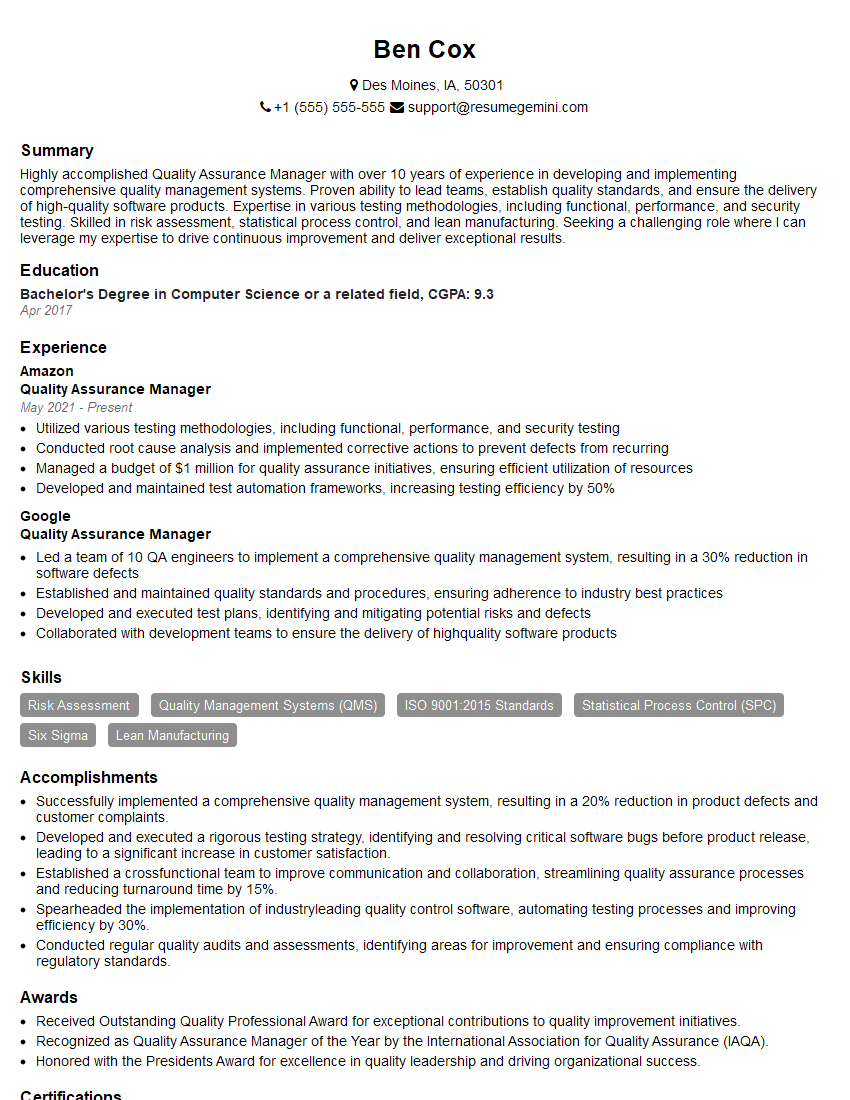
Quality Assurance Manager Resume Sample
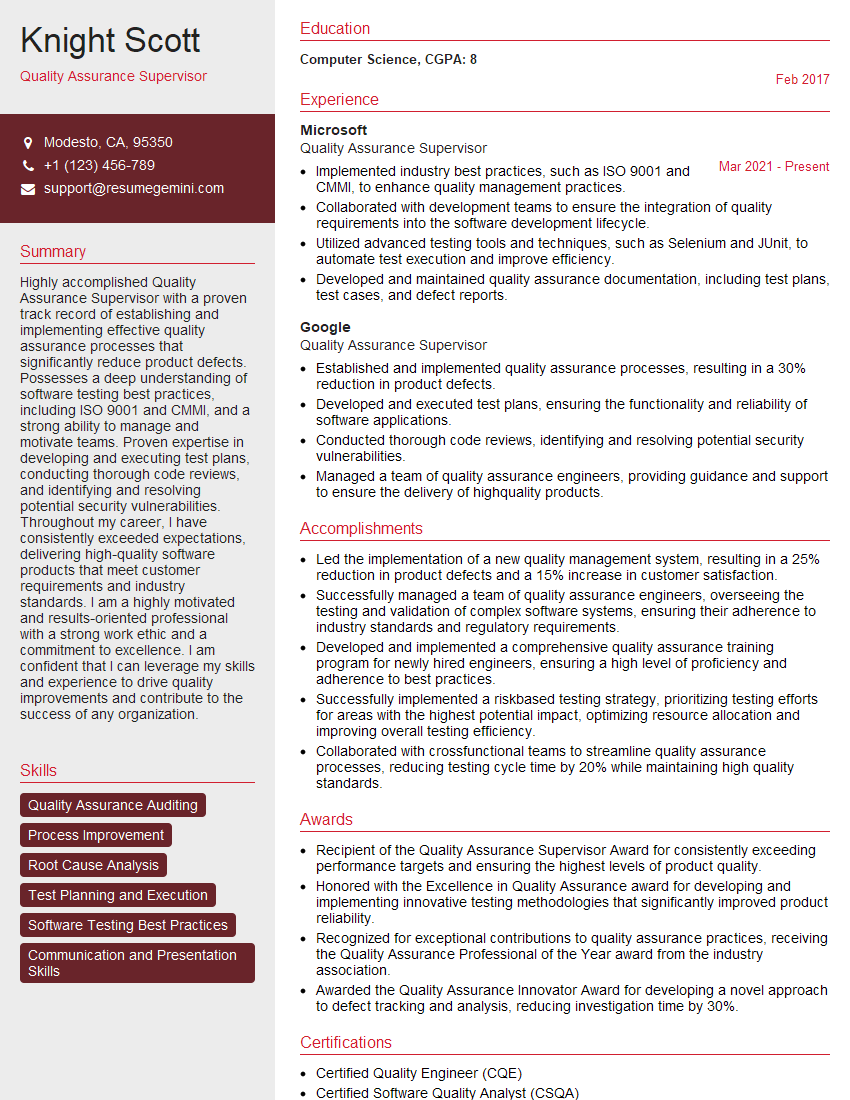
Quality Assurance Supervisor Resume Sample
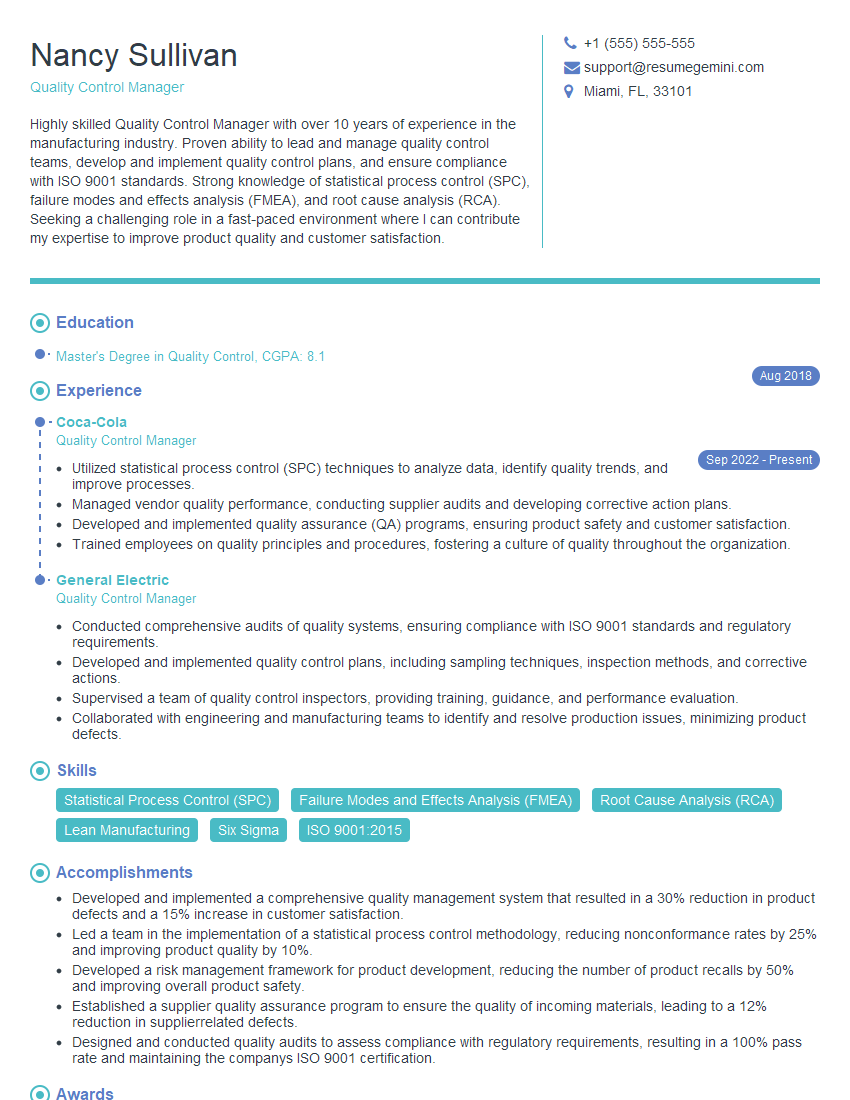
Quality Control Manager Resume Sample
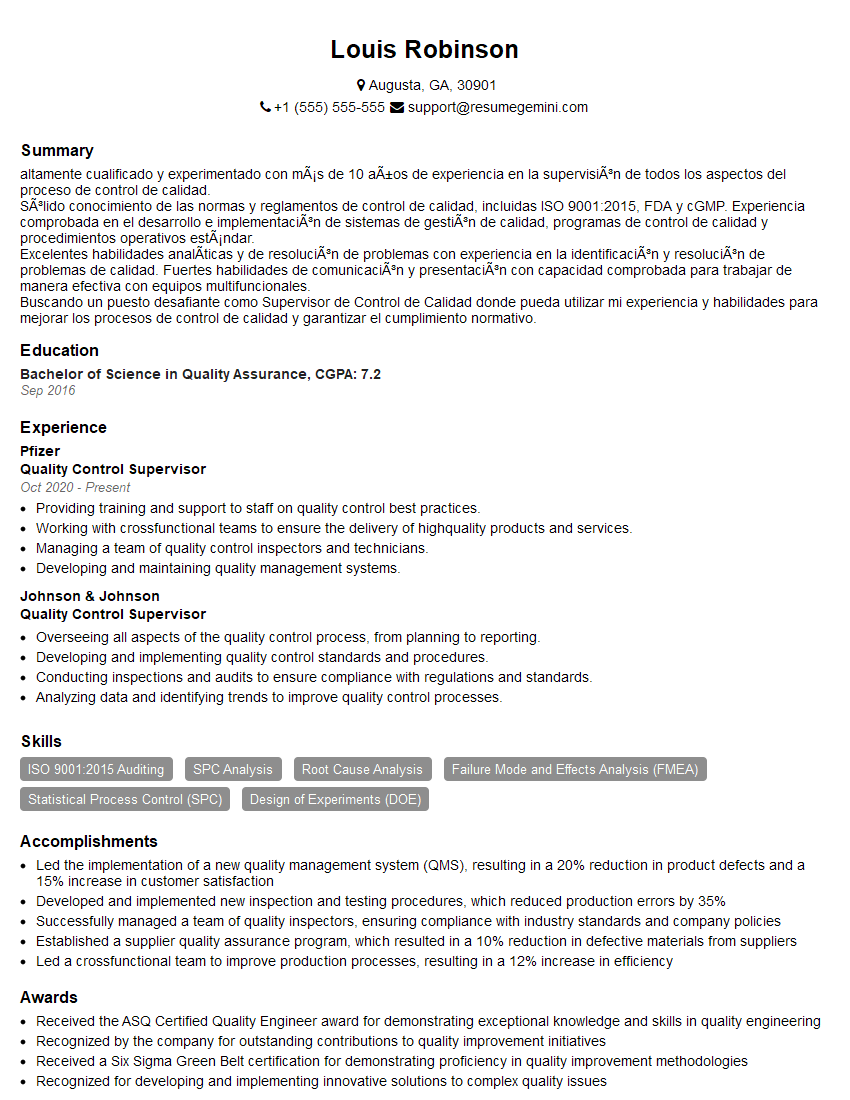
Quality Control Supervisor Resume Sample
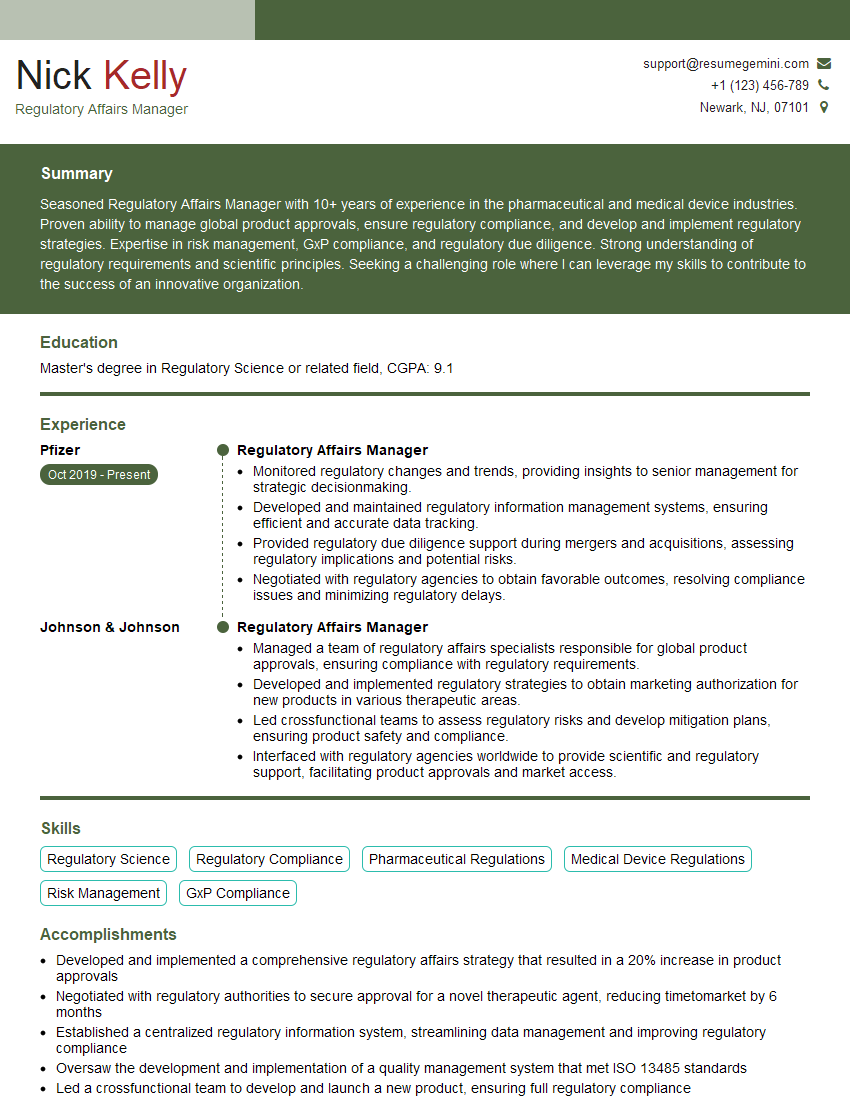
Regulatory Affairs Manager Resume Sample
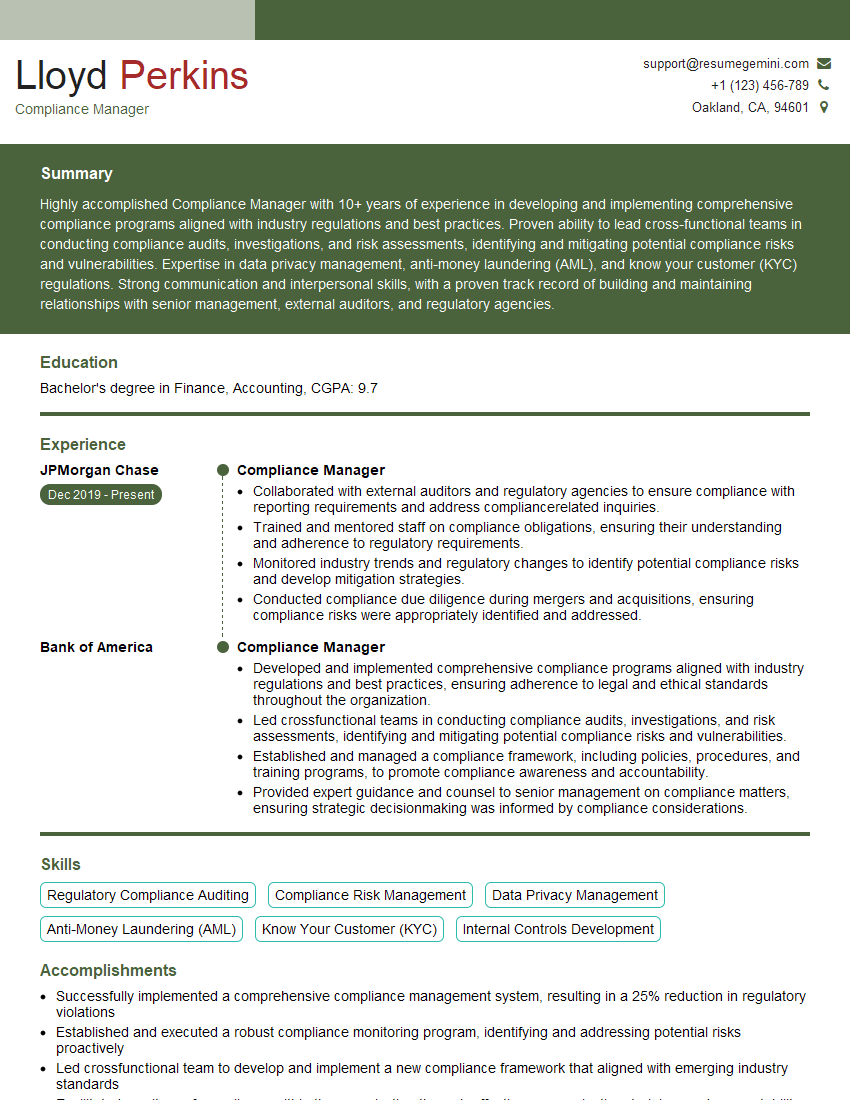
Compliance Manager Resume Sample
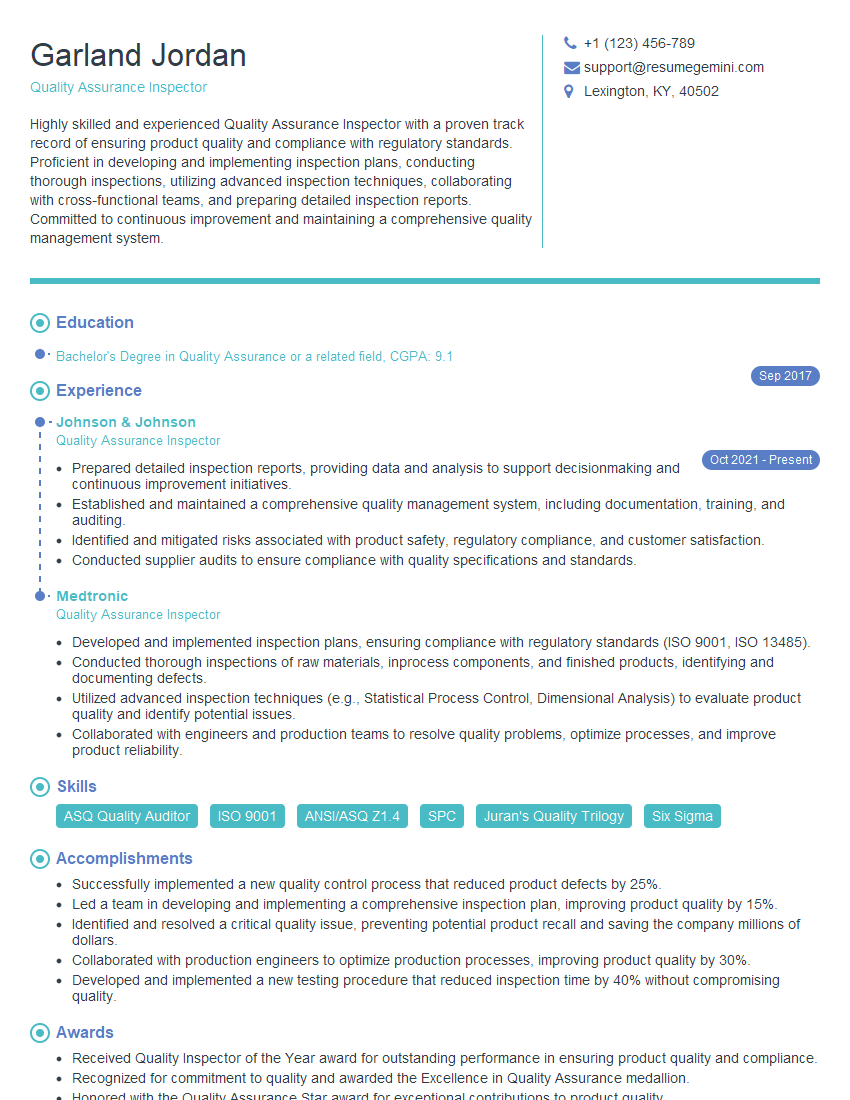
Quality Assurance Inspector Resume Sample
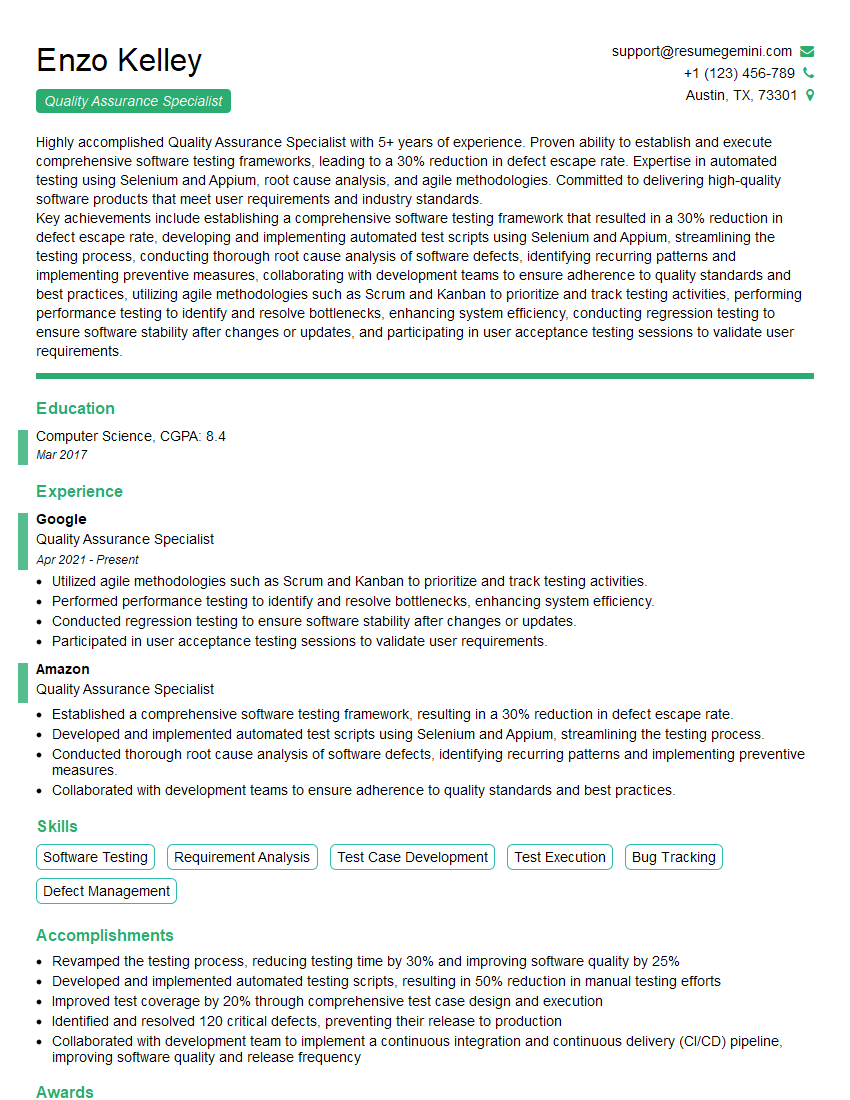
Quality Assurance Specialist Resume Sample
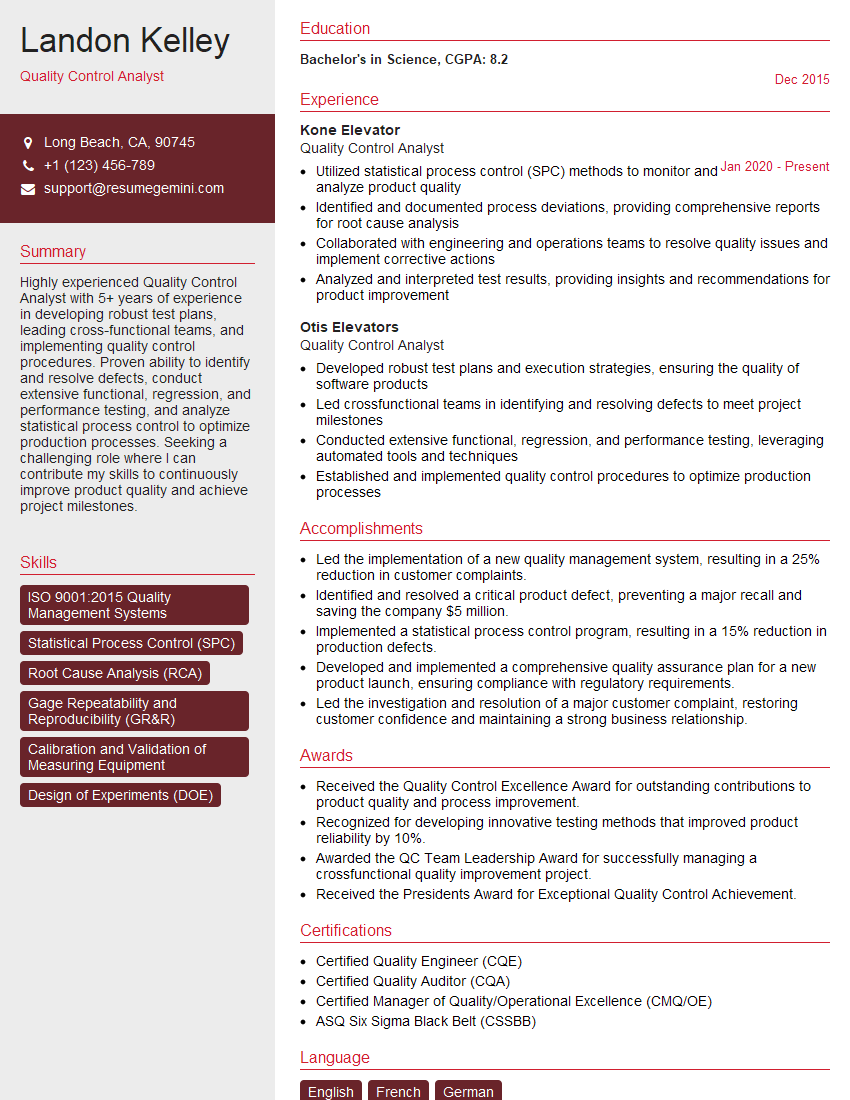
Quality Control Analyst Resume Sample

Quality Assurance Technician Resume Sample
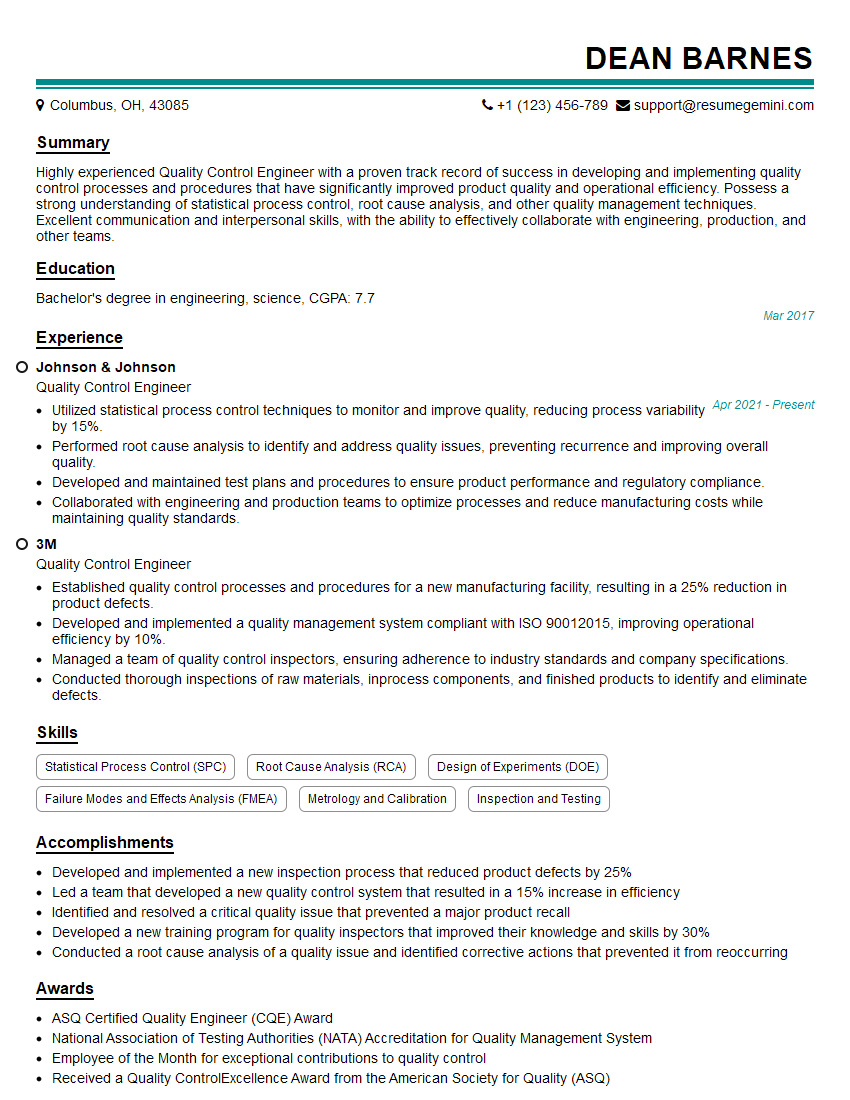
Quality Control Engineer Resume Sample
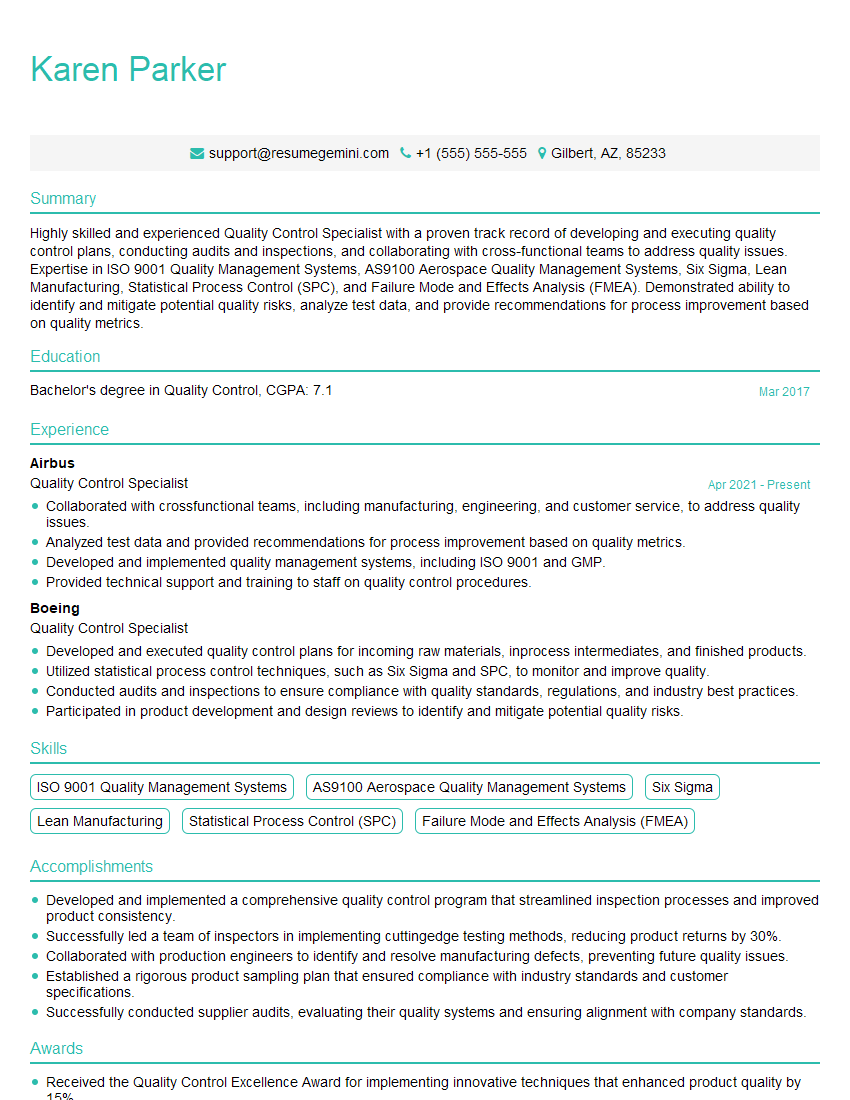
Quality Control Specialist Resume Sample
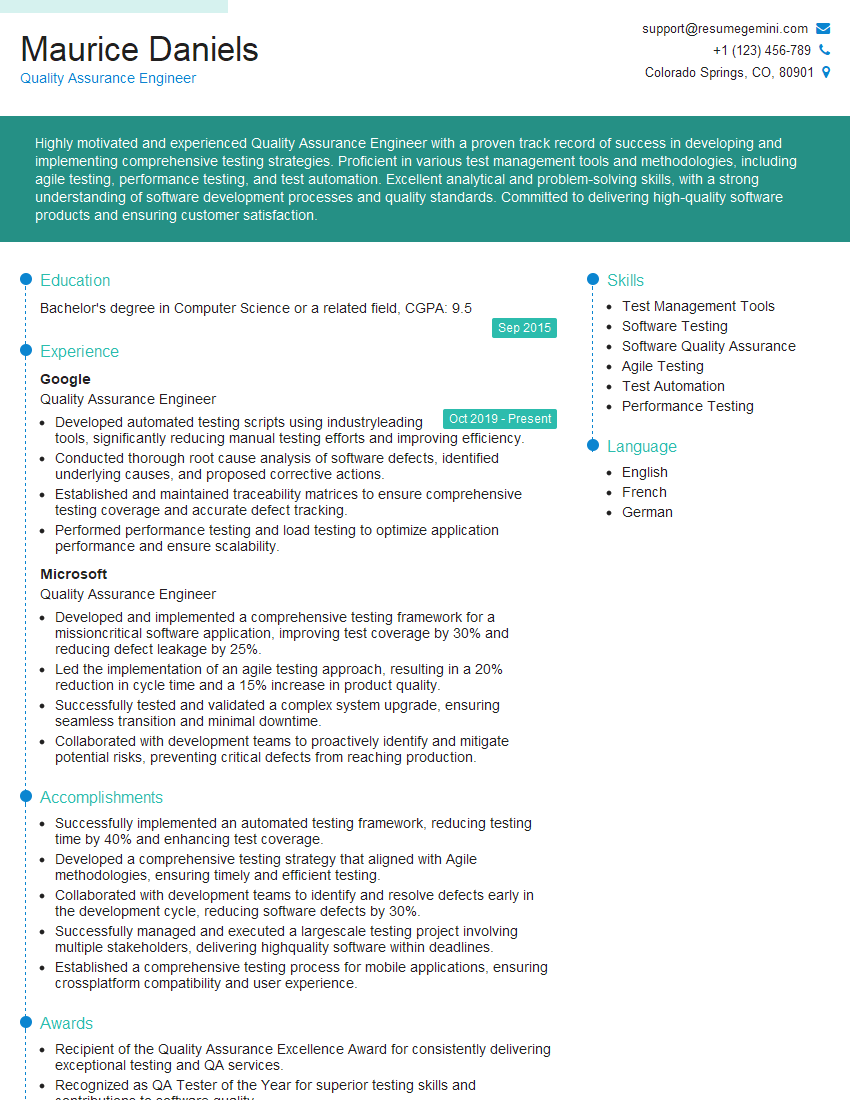
Quality Assurance Engineer Resume Sample
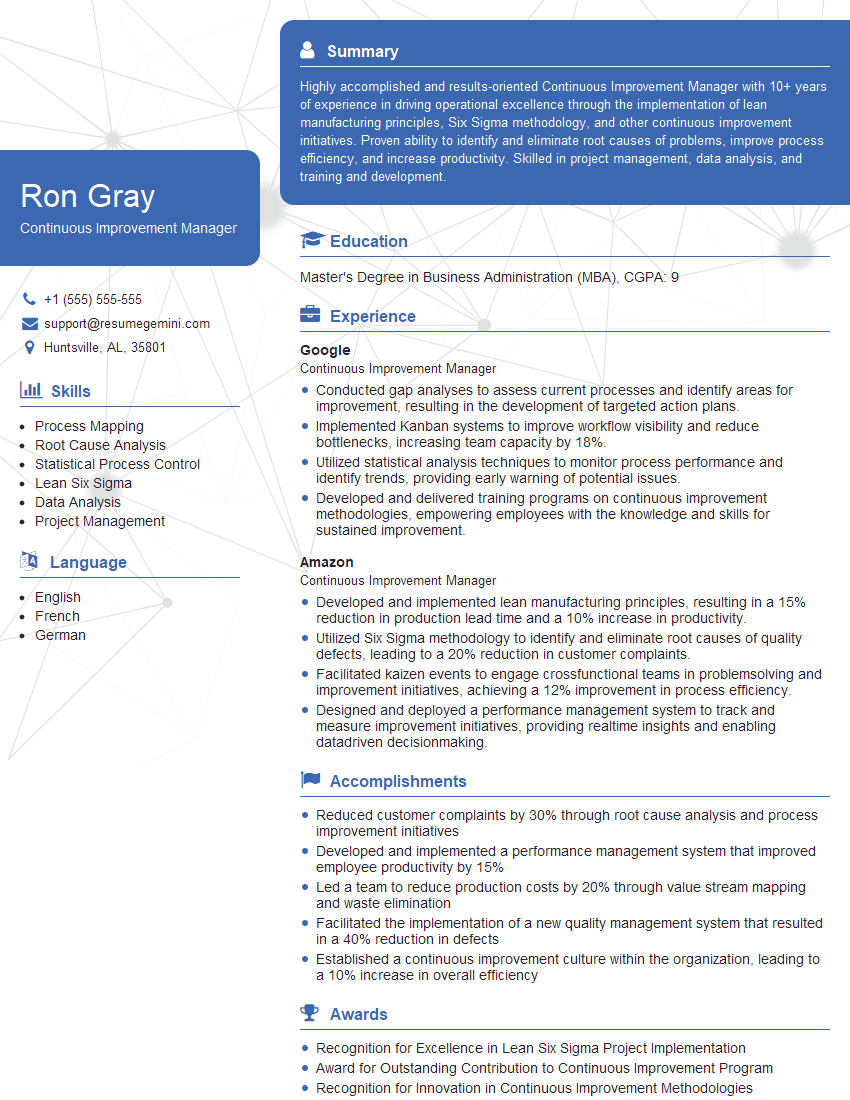
Continuous Improvement Manager Resume Sample
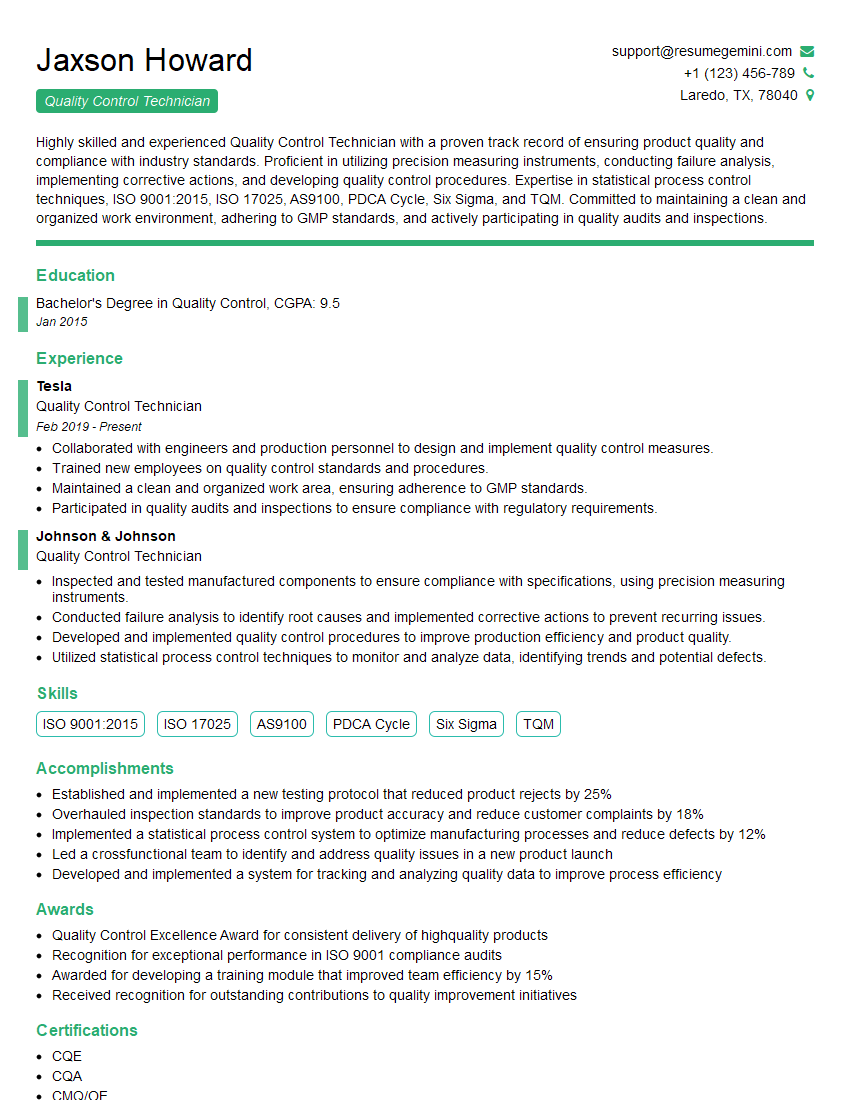
Quality Control Technician Resume Sample
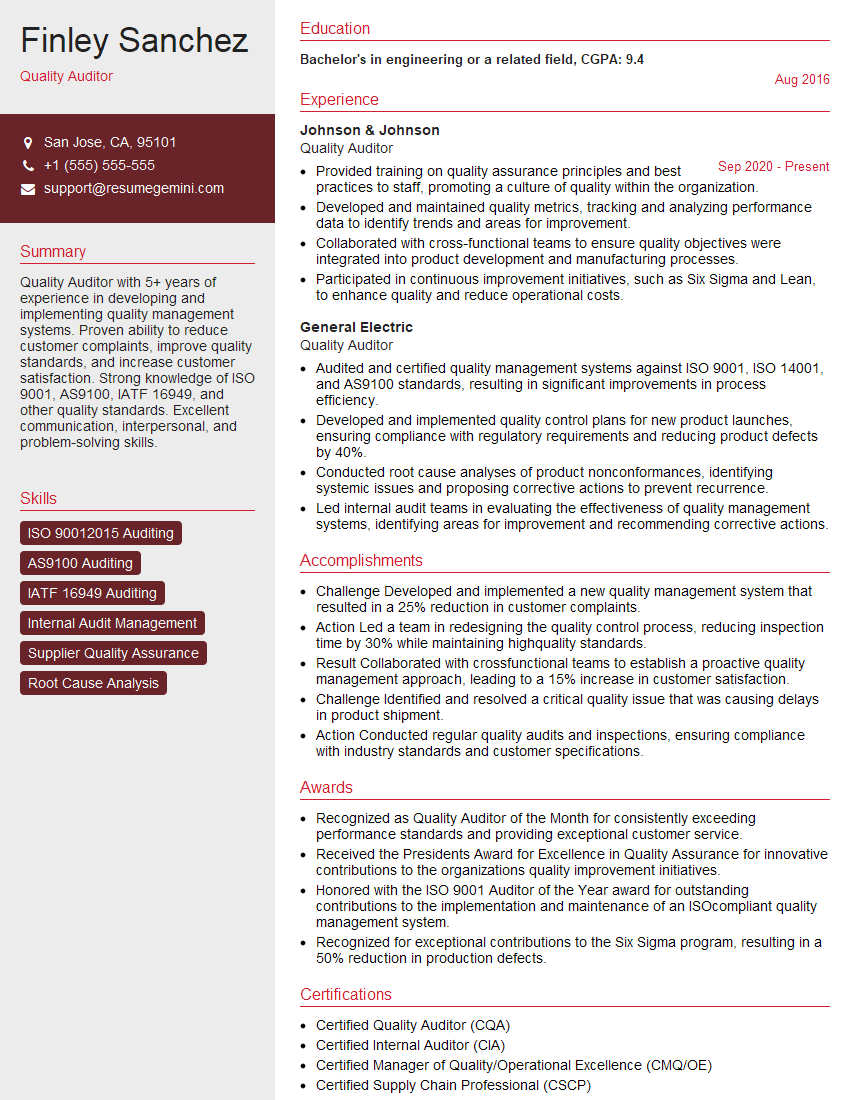
Quality Auditor Resume Sample
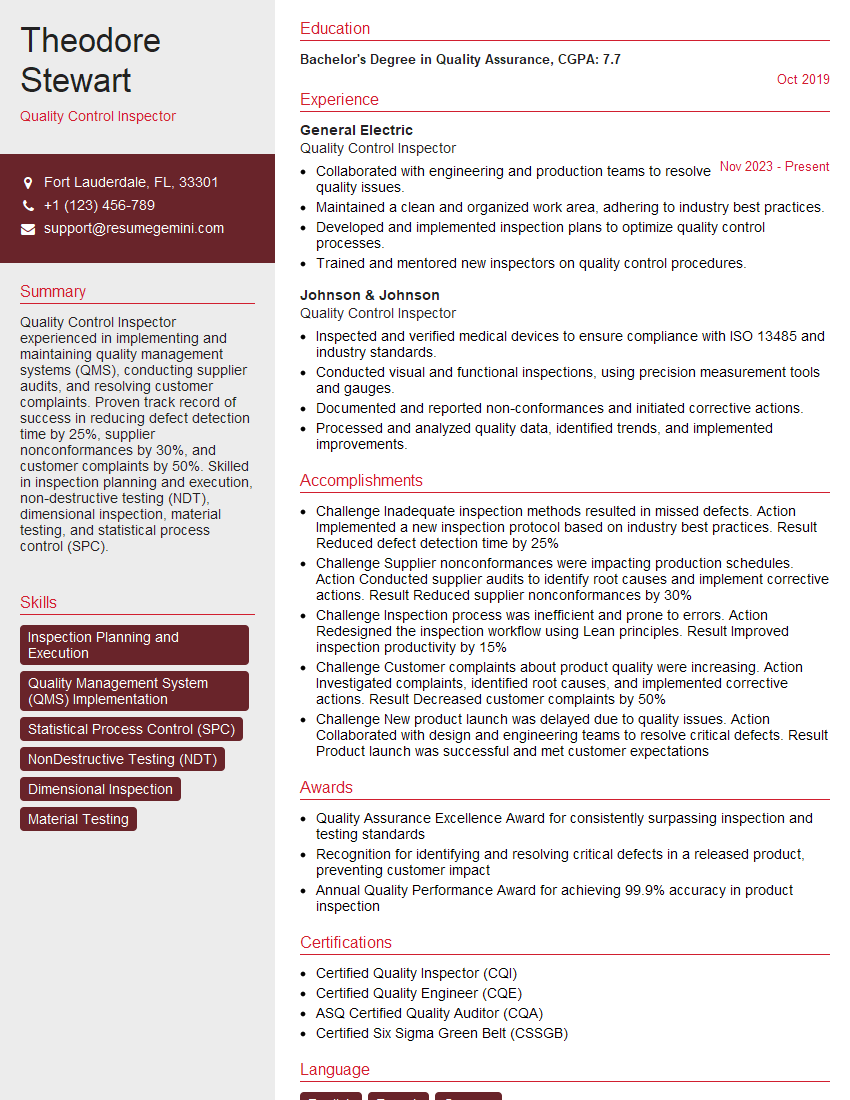
Quality Control Inspector Resume Sample
- Quality Assurance Manager
- Quality Assurance Supervisor
- Quality Control Manager
- Quality Control Supervisor
- Regulatory Affairs Manager
- Compliance Manager
- Quality Assurance Inspector
- Quality Assurance Specialist
- Quality Control Analyst
- Quality Assurance Technician
- Quality Control Engineer
- Quality Control Specialist
- Quality Assurance Engineer
- Continuous Improvement Manager
- Quality Control Technician
- Quality Auditor
- Quality Control Inspector
Explore more articles
Users Rating of Our Blogs
Share Your Experience
We value your feedback! Please rate our content and share your thoughts (optional).
What Readers Say About Our Blog
Very informative content, great job.
good