The right preparation can turn an interview into an opportunity to showcase your expertise. This guide to Quality Standards and Specifications interview questions is your ultimate resource, providing key insights and tips to help you ace your responses and stand out as a top candidate.
Questions Asked in Quality Standards and Specifications Interview
Q 1. Explain your understanding of ISO 9001.
ISO 9001 is an internationally recognized standard that outlines the requirements for a quality management system (QMS). It’s not a set of specific procedures, but rather a framework for organizations to consistently meet customer and regulatory requirements, and to enhance customer satisfaction. Think of it as a roadmap for achieving consistent quality across all aspects of a business. It focuses on continuous improvement, risk-based thinking, and customer focus.
Key elements of ISO 9001 include:
- Leadership commitment: Top management must be actively involved in setting quality objectives and ensuring resources are available.
- Customer focus: Understanding and meeting customer needs and expectations is paramount.
- Process approach: Managing processes effectively is critical to delivering consistent quality.
- Continual improvement: Regularly reviewing and improving processes is a core principle.
- Risk-based thinking: Identifying and mitigating potential risks affecting quality is essential.
- Evidence-based decision making: Decisions should be made based on data and analysis.
For example, a manufacturing company implementing ISO 9001 might establish procedures for controlling incoming materials, managing production processes, and inspecting finished goods. This ensures consistency in the quality of their products and provides a systematic approach to identify and correct any defects. They’d also document everything thoroughly for auditing and traceability.
Q 2. Describe your experience with implementing quality management systems.
I’ve been involved in implementing QMS across various industries, from manufacturing to software development. In one project with a food processing plant, we implemented ISO 9001 to improve food safety and reduce waste. This involved establishing robust procedures for hygiene, sanitation, and traceability of ingredients throughout the production process. We used a phased approach:
- Gap analysis: We initially assessed the existing processes against ISO 9001 requirements to identify areas needing improvement.
- Documentation: We developed and documented the QMS, including quality manuals, procedures, and work instructions.
- Training: We provided comprehensive training to employees on the new QMS and its procedures.
- Implementation: We supported the implementation of the QMS and monitored its effectiveness.
- Internal audits: Regular internal audits were conducted to ensure compliance with the QMS.
In another project, with a software company, the focus was on improving software quality and reducing defects. This involved establishing a robust software development lifecycle (SDLC) process incorporating elements like code reviews, testing, and change management. We adapted the ISO 9001 principles to the specific context of software development, focusing on aspects like requirements management and version control.
Q 3. How do you handle non-conforming materials or products?
Handling non-conforming materials or products is a crucial aspect of quality control. My approach follows a structured process:
- Identification and Isolation: Immediately identify and isolate any non-conforming material or product to prevent further use or distribution.
- Investigation: Determine the root cause of the non-conformance using appropriate root cause analysis techniques (discussed in the next question).
- Containment: Implement actions to prevent further non-conforming items from being produced or used.
- Corrective Action: Implement corrective actions to address the root cause and prevent recurrence. This might include process adjustments, operator retraining, or equipment maintenance.
- Disposition: Decide on the appropriate disposition of the non-conforming items. Options include rework, repair, scrap, or concession (if acceptable to the customer).
- Documentation: Thoroughly document all aspects of the non-conformance process, including the root cause, corrective actions taken, and the final disposition.
For example, if a batch of manufactured parts fails a dimensional inspection, we’d isolate the batch, investigate the cause (e.g., faulty machine setting), rectify the setting, and then decide whether to rework the parts or scrap them. The entire process would be documented to avoid future occurrences.
Q 4. What are your preferred methods for root cause analysis?
Several methods are used for root cause analysis, and the best choice depends on the specific situation. My preferred methods include:
- 5 Whys: A simple yet effective technique that involves repeatedly asking “Why?” to progressively drill down to the root cause. It’s easy to understand and implement, but it can sometimes miss less obvious root causes.
- Fishbone Diagram (Ishikawa Diagram): A visual tool that helps brainstorm potential causes categorized by different factors (e.g., man, machine, material, method, environment, measurement). This encourages a more holistic approach to root cause identification.
- Failure Mode and Effects Analysis (FMEA): A systematic approach for identifying potential failures, assessing their severity and likelihood, and determining preventative actions. This is more suitable for complex systems or processes.
For example, if a production line repeatedly experiences downtime, we might use the 5 Whys to progressively understand the issue. If the problem is more complex, involving multiple factors, a fishbone diagram could be more beneficial. FMEA would be preferred if we are aiming for preventative actions on a future product design.
Q 5. Explain your experience with statistical process control (SPC).
Statistical Process Control (SPC) is a powerful technique for monitoring and controlling processes by using statistical methods to identify and analyze variations. It helps us determine if a process is stable and predictable, and to identify potential problems before they lead to non-conforming products. I have experience using control charts, such as X-bar and R charts (for variables data) and p-charts and c-charts (for attribute data).
In a previous role, we used SPC to monitor the weight of packaged goods. By plotting the average weight and the range of weights on a control chart, we could easily identify any shifts or trends in the process that might indicate a problem, such as a malfunctioning weighing machine or inconsistent filling process. This allowed for prompt corrective actions, minimizing waste and improving product consistency. This data-driven approach ensures informed decisions regarding the stability and capability of our processes. Example data could be plotted on a control chart to illustrate the principles of SPC.
Q 6. How do you measure the effectiveness of quality control processes?
Measuring the effectiveness of quality control processes is crucial to ensure continual improvement. Key metrics include:
- Defect rate: The number of defects per unit produced or service provided. A lower defect rate indicates improved quality.
- Customer complaints: The number of customer complaints received. A reduction in complaints indicates improved customer satisfaction.
- Process capability: The ability of a process to meet specified requirements. A higher process capability indicates improved process control.
- Yield: The percentage of good units produced relative to the total number of units produced. A higher yield shows improved efficiency and reduced waste.
- Cost of quality: The total cost associated with preventing, detecting, and correcting defects. Reducing this cost demonstrates improved cost efficiency.
These metrics should be tracked over time to identify trends and assess the impact of implemented improvements. For example, consistently monitoring the defect rate and comparing it to targets allows us to identify areas needing attention and measure the effectiveness of corrective actions. Regular reviews of these metrics are critical for effective management and ongoing improvement.
Q 7. Describe your experience with internal audits.
I have extensive experience conducting internal audits, which are a critical part of maintaining a robust QMS. Internal audits provide an independent assessment of the effectiveness of the QMS and its conformity to the relevant standards (e.g., ISO 9001). My approach typically includes:
- Planning: Developing an audit plan that outlines the scope, objectives, and schedule of the audit.
- Audit execution: Conducting the audit according to the plan, reviewing relevant documentation, and interviewing personnel.
- Reporting: Preparing an audit report that documents findings, including non-conformances and opportunities for improvement.
- Follow-up: Following up on corrective actions to ensure that identified non-conformances are addressed.
During audits, I employ various techniques, including document reviews, interviews, observations, and checks of records and procedures. For example, in an audit of a manufacturing facility, I might review production records, observe the production process, and interview production personnel to verify the effectiveness of their quality control measures. The objective is not just to find fault but to help the organization improve its overall quality management practices. The audit findings provide valuable insights to management for continuous improvement initiatives.
Q 8. How do you develop and maintain quality standards documentation?
Developing and maintaining quality standards documentation is a crucial aspect of ensuring consistent product or service quality. It involves a systematic approach that encompasses planning, creation, review, and update cycles. Think of it like building a well-organized library for your quality processes.
The process usually includes:
- Defining Scope: Clearly outlining which aspects of the product or service the standards cover. For example, if it’s software, it might cover coding standards, testing protocols, or release criteria.
- Document Creation: Writing clear, concise, and unambiguous documents that define the requirements, specifications, and procedures. This often involves using templates for consistency.
- Version Control: Employing a version control system (like Git) is crucial to track changes, prevent confusion, and allow for easy rollback if necessary. This ensures everyone works with the latest version.
- Review and Approval: Formal review processes involving relevant stakeholders are essential to ensure accuracy, completeness, and alignment with overall business objectives. Think of this as a quality check on the quality documentation itself!
- Distribution and Access: Making the documents easily accessible to all relevant personnel through a centralized repository. This might be a shared network drive, a document management system, or a wiki.
- Regular Updates: Continuously reviewing and updating the documentation to reflect changes in processes, technologies, or regulatory requirements. This ensures the documentation remains a living, breathing representation of your quality system.
Example: In a manufacturing setting, quality standards might include specifications for material sourcing, manufacturing processes, and final product testing. These documents would be meticulously maintained and updated whenever a change occurs in the process or materials used.
Q 9. Describe your experience with corrective and preventive actions (CAPA).
Corrective and Preventive Actions (CAPA) is a systematic process designed to address quality issues and prevent their recurrence. Imagine it as a sophisticated feedback loop for continuous improvement. It involves identifying the root cause of a problem, implementing corrective actions to fix the immediate issue, and preventive actions to avoid similar problems in the future.
My experience involves:
- Investigating deviations: Thoroughly analyzing non-conformances, complaints, or audit findings to pinpoint the root cause using tools like fishbone diagrams or 5 Whys.
- Developing and implementing corrective actions: Defining and executing immediate actions to rectify the identified problem. This could involve fixing a faulty product, retraining staff, or updating a procedure.
- Implementing preventive actions: Designing and implementing long-term solutions to prevent the recurrence of the issue. This might involve improving a process, changing a system, or enhancing training programs.
- Documenting the entire process: Maintaining meticulous records of the CAPA process, including the problem description, root cause analysis, corrective and preventive actions taken, and effectiveness verification.
- Verifying effectiveness: Following up to ensure that the implemented actions have effectively addressed the problem and prevented recurrence. This often involves monitoring key performance indicators (KPIs).
Example: In a software development project, if a bug is discovered in a released product, a CAPA process would be initiated to identify the root cause (e.g., coding error, insufficient testing), implement a software patch (corrective action), and improve the testing process (preventive action) to prevent similar bugs from appearing in future releases.
Q 10. How do you handle customer complaints related to quality issues?
Handling customer complaints related to quality issues requires a customer-centric approach that prioritizes timely resolution and customer satisfaction. It’s about turning a negative experience into an opportunity for improvement.
My approach involves:
- Acknowledge and Empathize: Responding promptly and acknowledging the customer’s frustration. Show empathy and understanding.
- Gather Information: Collecting detailed information about the complaint, including specific details about the product or service, the nature of the problem, and the impact on the customer.
- Investigate the Issue: Conducting a thorough investigation to determine the root cause of the problem. This might involve reviewing product specifications, testing procedures, and production records.
- Implement Corrective Actions: Taking immediate corrective actions to resolve the customer’s issue, such as providing a replacement product, offering a refund, or providing a suitable solution.
- Communicate Resolution: Keeping the customer informed throughout the process and communicating the resolution promptly and clearly.
- Learn from the Experience: Analyzing the complaint to identify areas for improvement in the product, service, or process. This feedback is valuable for preventing similar issues in the future.
Example: If a customer complains about a faulty electronic device, I would start by acknowledging their frustration and then proceed to gather detailed information about the malfunction. After investigation, I might offer a replacement device or a refund, and then use the information to improve quality control procedures in the manufacturing process.
Q 11. Explain your understanding of different types of quality audits.
Quality audits are systematic and independent examinations to determine whether quality activities and related results comply with planned arrangements and whether these arrangements are implemented effectively and are suitable to achieve objectives. They are like health check-ups for your quality system.
Different types include:
- First-Party Audits (Internal Audits): These are conducted by the organization itself to assess its own processes and compliance against its own standards. This is like a self-assessment.
- Second-Party Audits: These are audits conducted by a customer or another external party (like a supplier) to evaluate a supplier’s quality system. This is like a supplier evaluation by a major client.
- Third-Party Audits (Certification Audits): These are performed by independent, accredited certification bodies to determine whether an organization meets the requirements of a specific standard (e.g., ISO 9001). This is like receiving an official stamp of approval.
- Process Audits: These focus on specific processes within the organization to identify inefficiencies or areas for improvement. This is like a deep dive into a specific aspect of the business.
- System Audits: These evaluate the overall quality management system to ensure its effectiveness and compliance with standards. This is a broader overview of the entire system.
- Product Audits: These focus on the quality of the finished product, ensuring it meets specified requirements. This checks the final output for quality.
Q 12. How familiar are you with different quality tools (e.g., Pareto charts, fishbone diagrams)?
I am very familiar with various quality tools, and they are essential for problem-solving and decision-making in quality management. Think of them as your toolbox for continuous improvement.
Examples include:
- Pareto Charts: These charts visually represent the frequency of different problems or causes, helping identify the ‘vital few’ contributing to the majority of issues. This helps prioritize efforts for maximum impact.
- Fishbone Diagrams (Ishikawa Diagrams): These diagrams visually organize potential causes of a problem, categorized by factors like materials, methods, manpower, machinery, measurement, and environment. This helps identify root causes.
- Control Charts: These charts monitor process performance over time to identify trends and deviations from expected values. This helps spot problems early.
- Check Sheets: These are simple forms used to collect data on the frequency of occurrences. This provides structured data collection.
- Histograms: These charts visually display the distribution of data, helping to understand the range and variability of a process.
- Scatter Diagrams: These charts illustrate the relationship between two variables, helping identify correlations. This allows for spotting causal relationships.
Example: A Pareto chart might show that 80% of customer complaints stem from a specific product defect, allowing the organization to focus its improvement efforts on that particular issue.
Q 13. Describe your experience with quality metrics and reporting.
Quality metrics and reporting are critical for monitoring performance, identifying trends, and demonstrating continuous improvement efforts. It’s like having a dashboard that tracks the health of your quality system.
My experience includes:
- Defining Key Performance Indicators (KPIs): Identifying the most relevant metrics to track progress towards quality objectives. This might include defect rates, customer satisfaction scores, process cycle times, and compliance rates.
- Data Collection and Analysis: Gathering data from various sources (e.g., production records, customer feedback surveys, audit reports) and analyzing it to identify trends, patterns, and areas for improvement.
- Reporting and Presentation: Preparing clear and concise reports, using charts, graphs, and dashboards to visually communicate key findings to management and stakeholders.
- Benchmarking: Comparing performance against industry benchmarks or best practices to identify areas for improvement.
- Continuous Improvement: Using the data and insights from reporting to drive continuous improvement efforts and inform strategic decisions.
Example: Tracking the defect rate in a manufacturing process, and using this data to identify the root causes of defects and implement corrective actions to reduce the rate. Regular reporting on the defect rate demonstrates progress and effectiveness of the improvement efforts.
Q 14. How do you ensure compliance with regulatory requirements?
Ensuring compliance with regulatory requirements is paramount for any organization, especially in industries with strict regulations. This is about adhering to legal obligations and protecting both the business and consumers.
My approach involves:
- Identifying Applicable Regulations: Determining all relevant regulations, standards, and guidelines that apply to the organization’s products, services, and operations. This involves researching and staying updated on changes in legislation.
- Implementing Compliance Programs: Developing and implementing comprehensive compliance programs to ensure adherence to all applicable regulations. This includes defining roles, responsibilities, procedures, and training programs.
- Regular Audits and Monitoring: Conducting regular internal audits and monitoring activities to ensure ongoing compliance. This identifies areas of non-compliance early.
- Documenting Compliance: Maintaining comprehensive documentation to demonstrate compliance with regulations. This is often required for audits and inspections.
- Responding to Audits and Inspections: Cooperating fully with regulatory authorities during audits and inspections and addressing any identified non-compliances promptly.
- Staying Updated: Staying informed about changes in regulations and industry best practices through continuous learning and professional development. Regulations change, so staying current is key.
Example: In the medical device industry, compliance with regulations like FDA’s Quality System Regulation (QSR) is crucial. This involves implementing rigorous quality management systems, conducting thorough testing, maintaining detailed documentation, and adhering to strict manufacturing processes to ensure the safety and effectiveness of the medical devices.
Q 15. Explain your experience with continuous improvement methodologies.
Continuous improvement methodologies are systematic approaches to constantly enhance processes, products, and services. I have extensive experience with several methodologies, including Lean, Six Sigma, and Kaizen. Lean focuses on eliminating waste and maximizing value from the customer’s perspective. I’ve used this to streamline production lines, reducing lead times by 20% in a previous role by identifying and eliminating bottlenecks in the assembly process. Six Sigma uses statistical methods to identify and reduce defects, improving process capability. I employed DMAIC (Define, Measure, Analyze, Improve, Control) in a project to reduce customer complaints related to product defects by 85%. Finally, Kaizen emphasizes incremental improvements through small, continuous changes suggested by employees on the front line. Implementing Kaizen within a team led to a 15% increase in overall productivity through the implementation of numerous small, yet impactful, process enhancements.
- Lean: Focuses on eliminating waste (muda) through value stream mapping and process optimization.
- Six Sigma: Uses statistical tools to reduce process variation and defects.
- Kaizen: Emphasizes continuous improvement through small, incremental changes.
Career Expert Tips:
- Ace those interviews! Prepare effectively by reviewing the Top 50 Most Common Interview Questions on ResumeGemini.
- Navigate your job search with confidence! Explore a wide range of Career Tips on ResumeGemini. Learn about common challenges and recommendations to overcome them.
- Craft the perfect resume! Master the Art of Resume Writing with ResumeGemini’s guide. Showcase your unique qualifications and achievements effectively.
- Don’t miss out on holiday savings! Build your dream resume with ResumeGemini’s ATS optimized templates.
Q 16. Describe a situation where you had to identify and solve a quality problem.
In a previous role, we experienced a significant increase in customer returns due to a faulty component in our flagship product. The problem wasn’t immediately apparent, as the defect rate was low and sporadic. To address this, I implemented a structured problem-solving approach:
- Identify the problem: We meticulously documented all returned products, noting commonalities and conducting detailed failure analysis. This revealed a pattern linked to a specific batch of a crucial component.
- Analyze the root cause: We traced the faulty component to a supplier and discovered a flaw in their manufacturing process. This involved analyzing their quality control procedures and collaborating with their team.
- Develop and implement solutions: We collaborated with the supplier to rectify their manufacturing process and implemented stricter incoming inspection procedures for all future batches of the component.
- Monitor and control: We established a robust monitoring system to track the defect rate, ensuring the implemented solutions remained effective.
This multi-faceted approach not only reduced customer returns to near-zero but also strengthened our relationship with the supplier and improved our overall quality management system. This highlighted the importance of proactive root cause analysis rather than simply addressing symptoms.
Q 17. How do you balance quality with cost and time constraints?
Balancing quality, cost, and time requires a strategic approach. It’s not about sacrificing one for another, but finding the optimal balance. This often involves prioritizing based on the specific context and project requirements. For instance, in a project with strict time constraints, we might prioritize critical quality characteristics, focusing on features that directly impact safety or functionality. We may use accelerated testing methods to reduce the overall testing time without compromising the quality of the results. Similarly, cost constraints might require exploring alternative materials or manufacturing processes that maintain quality while reducing costs. This needs careful analysis through cost-benefit assessments and value engineering. Techniques such as Design for Manufacturing (DFM) and Design for Assembly (DFA) help optimize the design to reduce manufacturing complexity and cost, ultimately supporting higher quality and speed.
Think of it like a three-legged stool – you need all three legs (quality, cost, and time) to have a stable structure. Compromising one significantly weakens the whole system.
Q 18. Explain your experience with different quality control techniques.
My experience encompasses a wide range of quality control techniques, including:
- Statistical Process Control (SPC): I’ve extensively used control charts (e.g., X-bar and R charts) to monitor process variation and identify potential problems before they become significant issues. For example, I used SPC to monitor the diameter of a critical component during manufacturing, enabling timely adjustments to the process and preventing a large batch of defective parts.
- Acceptance Sampling: This involves inspecting a sample of a batch to determine the quality of the entire batch. I’ve used various sampling plans, such as single, double, and multiple sampling plans, adjusting the plan based on the acceptable quality level (AQL) and the producer’s risk and consumer’s risk.
- Failure Mode and Effects Analysis (FMEA): I have a strong background in FMEA, which is a systematic method for identifying potential failure modes and their effects, and determining the severity, occurrence, and detection of these failures. This proactive approach helps prevent failures and mitigate their impact.
- Design of Experiments (DOE): This is used to optimize processes and designs efficiently. I’ve used DOE to identify the optimal combination of process parameters to maximize product yield and quality.
Q 19. How do you ensure the accuracy and reliability of testing and measurement equipment?
Ensuring the accuracy and reliability of testing and measurement equipment is paramount for maintaining product quality. This involves a multi-pronged approach:
- Calibration: Regular calibration against traceable standards is crucial. I manage a rigorous calibration schedule, ensuring that all equipment is calibrated according to the manufacturer’s recommendations and relevant industry standards. Calibration certificates are carefully maintained and reviewed.
- Preventive Maintenance: Regular maintenance, including cleaning and adjustments, is critical to prolonging the lifespan and maintaining the accuracy of the equipment. Preventative maintenance schedules and checklists are implemented.
- Operator Training: Proper training of operators in the correct use and care of the equipment is crucial to avoid misuse and potential damage. Comprehensive training programs covering operational procedures and safety protocols are provided.
- Control Charts: Monitoring the performance of equipment through control charts helps to identify potential drift or degradation in accuracy over time, allowing for early intervention and corrective action.
By maintaining a comprehensive program for calibration, maintenance, training, and monitoring, I ensure the reliability and integrity of all testing and measurement data.
Q 20. Describe your experience with quality planning.
Quality planning is a proactive approach that begins at the very start of a project. My experience includes developing comprehensive quality plans that cover all aspects of a product’s lifecycle. This starts with defining quality objectives and translating customer requirements into specific measurable parameters. I use techniques such as Quality Function Deployment (QFD) to align product design with customer needs. Then I determine the necessary processes and resources to achieve those objectives. This includes outlining testing procedures, defining acceptance criteria, and identifying potential risks and mitigation strategies. I’ve found it crucial to develop a clear communication plan to ensure that everyone involved understands their responsibilities and contributions to quality. In my previous projects, this proactive approach prevented many issues later in the project lifecycle, saving both time and money. This detailed and documented quality plan served as the guiding document throughout the entire process.
Q 21. How do you manage and improve supplier quality?
Managing and improving supplier quality is crucial for ensuring the overall quality of a product. My approach involves establishing a strong collaborative relationship with suppliers and implementing robust oversight mechanisms:
- Supplier Selection: I rigorously assess potential suppliers based on their quality management systems, capabilities, and past performance. This includes evaluating their certifications (e.g., ISO 9001) and conducting audits to verify their processes.
- Incoming Inspection: Implementing stringent incoming inspection procedures is critical to ensure that received materials and components meet the required quality standards. This includes both visual inspections and testing to verify critical characteristics.
- Performance Monitoring: Continuously monitoring supplier performance through metrics like defect rates, on-time delivery, and responsiveness is crucial. Regular performance reviews and feedback sessions with suppliers help address any issues promptly.
- Corrective Actions: When quality issues arise, I work collaboratively with suppliers to identify the root cause and implement corrective actions. This often involves conducting root cause analyses and implementing preventative measures to avoid future occurrences.
By maintaining open communication and a collaborative approach, I foster a strong relationship with suppliers, encouraging them to share their expertise and help improve the quality of our products together. This partnership creates a win-win situation for both parties.
Q 22. Explain your understanding of design for manufacturability (DFM).
Design for Manufacturability (DFM) is a systematic approach to product design that considers the manufacturing process from the very beginning. It aims to optimize the design for ease of manufacturing, reducing costs, improving quality, and shortening lead times. Think of it as building a house with the construction process in mind – choosing materials and designs that are easy and efficient for the builders to work with, rather than solely focusing on aesthetics.
DFM involves several key considerations:
- Material Selection: Choosing materials readily available, easy to process, and cost-effective.
- Part Simplification: Reducing the number of parts and simplifying their geometries to minimize assembly time and complexity.
- Tolerance Analysis: Defining appropriate tolerances to ensure parts fit together correctly without excessive precision and cost.
- Assembly Process: Designing parts for easy assembly, minimizing the need for specialized tools or techniques.
- Testing and Inspection: Incorporating design features that facilitate efficient testing and inspection during manufacturing.
For example, if designing a plastic housing, DFM would guide the choice of a readily moldable plastic, avoid complex geometries requiring expensive tooling, and ensure the design allows for easy injection molding and subsequent assembly with other components. Failure to consider DFM can lead to costly redesigns, production delays, and inferior product quality.
Q 23. How do you ensure effective communication within a quality team?
Effective communication within a quality team is crucial for success. I prioritize open and transparent communication channels, using a combination of methods to ensure everyone is informed and engaged. This includes:
- Regular Team Meetings: Scheduled meetings with clear agendas allow for updates, problem-solving, and collaborative decision-making.
- Project Management Software: Utilizing platforms like Jira or Asana helps track progress, manage tasks, and keep everyone updated on project status in real-time. This minimizes misunderstandings by providing a central repository for information.
- Clear Communication Protocols: Establishing standard operating procedures for reporting defects, initiating corrective actions, and documenting decisions ensures consistency and clarity.
- Active Listening and Feedback: Fostering a culture where team members feel comfortable voicing concerns and providing constructive feedback is essential. I always encourage open dialogue and ensure everyone feels heard.
- Visual Management Tools: Employing dashboards and visual aids like Kanban boards helps visualize progress, identify bottlenecks, and track key metrics easily and intuitively.
For example, in one project, I used a combination of daily stand-up meetings and a project management tool to track the progress of a large-scale quality audit. This allowed for proactive issue resolution and ensured everyone was aligned on priorities. Clear communication averted potential conflicts and delays, leading to a successful and timely audit.
Q 24. What are your preferred software tools for quality management?
My preferred software tools for quality management depend on the specific needs of a project, but generally, I favor a combination of tools to cover different aspects of quality control. These include:
- Statistical Process Control (SPC) software: Software like Minitab or JMP allows for detailed statistical analysis of process data, enabling identification of trends, patterns, and potential areas for improvement. This helps in creating control charts and performing capability analysis.
- Quality Management Systems (QMS) software: Platforms such as ISOTools or MasterControl are helpful for managing documents, tracking non-conformances, and conducting internal audits. These tools streamline processes and help maintain compliance with quality standards.
- Data analysis and visualization tools: Tools like Tableau or Power BI are extremely useful for creating reports, visualizing key performance indicators (KPIs), and communicating quality metrics effectively to stakeholders.
The choice of specific software always depends on factors such as budget, existing infrastructure, and the specific features required. But the underlying principle is to leverage technology to improve efficiency, accuracy, and decision-making in quality management.
Q 25. Describe your experience with quality certifications (e.g., ASQ certifications).
I hold a Certified Quality Engineer (CQE) certification from the American Society for Quality (ASQ). This certification demonstrates my expertise in quality principles, methodologies, and tools, including statistical process control, quality systems, and quality improvement techniques. The rigorous examination process required to obtain this certification thoroughly tested my knowledge and application skills.
My experience with ASQ certifications extends beyond just holding a CQE. I actively participate in ASQ chapter meetings, attending workshops and seminars on emerging quality standards and best practices. This ongoing professional development helps me stay updated with the latest industry trends and refine my skills.
The CQE certification has proven invaluable in my professional career, providing credibility and enhancing my ability to lead quality initiatives effectively. It’s helped me contribute meaningfully to quality improvement projects and build strong relationships with clients and colleagues.
Q 26. How do you stay updated on the latest developments in quality standards?
Staying current with the latest developments in quality standards is crucial in this ever-evolving field. My strategies include:
- Professional Organizations: Active membership in organizations like ASQ provides access to publications, conferences, and webinars, keeping me abreast of emerging standards and best practices. I regularly attend workshops and conferences to stay ahead of the curve.
- Industry Publications and Journals: I subscribe to several reputable quality management journals and industry publications, ensuring that I’m exposed to the latest research, case studies, and news.
- Online Resources: I utilize online platforms and resources like the ISO website to access updated versions of standards and related documents. This provides direct access to official information and helps me understand changes and updates quickly.
- Networking: Engaging with colleagues and experts in the field through conferences, online forums, and professional networks provides valuable insights and perspectives on current trends and challenges.
A recent example is my involvement in a project involving the implementation of ISO 9001:2015. By actively participating in ASQ webinars and studying the updated standard, I successfully guided our company through the transition, resulting in improved efficiency and regulatory compliance.
Q 27. Explain your experience with quality risk management.
Quality risk management is a systematic process to identify, analyze, evaluate, treat, monitor, and control risks related to quality. It’s about proactively addressing potential issues that could impact product quality and customer satisfaction. I use a structured approach based on risk assessment methodologies, which usually includes the following steps:
- Risk Identification: Brainstorming sessions, Failure Mode and Effects Analysis (FMEA), and hazard analysis are used to identify potential risks.
- Risk Analysis: Assessing the likelihood and severity of each identified risk. This often involves using risk matrices or scoring systems.
- Risk Evaluation: Prioritizing risks based on their potential impact. The highest-priority risks are addressed first.
- Risk Treatment: Developing and implementing strategies to mitigate or eliminate identified risks. This may involve design changes, process improvements, or additional testing.
- Risk Monitoring and Review: Regularly monitoring the effectiveness of risk treatment strategies and making adjustments as needed.
For instance, in a previous project involving the manufacture of medical devices, we used FMEA to identify potential risks in the manufacturing process. This proactive approach helped us implement corrective actions to mitigate risks and ensure the safety and effectiveness of our products, thus preventing potential recalls and damage to brand reputation.
Q 28. Describe your experience with process capability analysis.
Process capability analysis is a statistical method used to determine whether a process is capable of meeting predefined specifications. It assesses whether a process can consistently produce outputs within the acceptable limits defined by the customer or design requirements. This involves calculating process capability indices, such as Cp and Cpk.
Cp measures the potential capability of a process, assuming the process is centered on the target value. Cpk considers both the process capability and its centering, providing a more realistic assessment of the process’s actual performance.
My experience in process capability analysis involves collecting data from the process, analyzing it using statistical software (like Minitab or JMP), calculating the capability indices, and interpreting the results to determine if the process is capable. If the process isn’t capable, I work with the team to identify the root causes of variation and implement improvements to enhance the process’s capability. This typically involves implementing control charts (e.g., X-bar and R charts), identifying and eliminating sources of variation (e.g., through root cause analysis), and making process adjustments.
For example, in a previous project involving a packaging process, we found that the process was not capable of meeting the specifications for fill weight. By analyzing the data and identifying sources of variation (e.g., inconsistencies in the filling machine), we were able to implement corrective actions and improve the process capability to meet the required specifications. This prevented customer complaints and product waste.
Key Topics to Learn for Quality Standards and Specifications Interview
- Understanding Quality Management Systems (QMS): Explore ISO 9001, its principles, and practical implementation within different organizational structures. Consider how a QMS contributes to overall business success.
- Defining and Implementing Quality Standards: Learn how to establish clear, measurable, achievable, relevant, and time-bound (SMART) quality standards. Practice applying these principles to real-world scenarios, such as product development or service delivery.
- Specifications and Documentation: Master the creation and interpretation of technical specifications, including drawings, diagrams, and other documentation. Focus on how these specifications ensure consistent product quality and adherence to regulatory requirements.
- Quality Control and Assurance Methods: Explore various quality control techniques, such as statistical process control (SPC), inspection methods, and testing procedures. Understand the role of quality assurance in preventing defects and ensuring customer satisfaction.
- Root Cause Analysis (RCA): Develop your ability to identify the underlying causes of quality issues using techniques like the 5 Whys, Fishbone diagrams, and Pareto analysis. Practice applying these methods to solve real-world quality problems.
- Continuous Improvement Methodologies: Familiarize yourself with Lean manufacturing principles, Six Sigma methodologies, and other continuous improvement frameworks. Understand how these approaches are used to optimize processes and reduce waste.
- Auditing and Compliance: Understand the principles of internal and external audits, including planning, execution, and reporting. Learn about industry-specific regulations and compliance requirements.
- Communication and Collaboration: Highlight your ability to effectively communicate quality standards and specifications to diverse teams, including engineers, management, and clients. Demonstrate your teamwork skills and ability to collaborate effectively to achieve quality goals.
Next Steps
Mastering Quality Standards and Specifications is crucial for career advancement in many industries. A strong understanding of these concepts demonstrates your commitment to excellence and problem-solving abilities, opening doors to leadership roles and higher earning potential. To maximize your job prospects, create an ATS-friendly resume that showcases your skills and experience effectively. ResumeGemini is a trusted resource to help you build a professional and impactful resume. We provide examples of resumes tailored to Quality Standards and Specifications to guide you in this process.
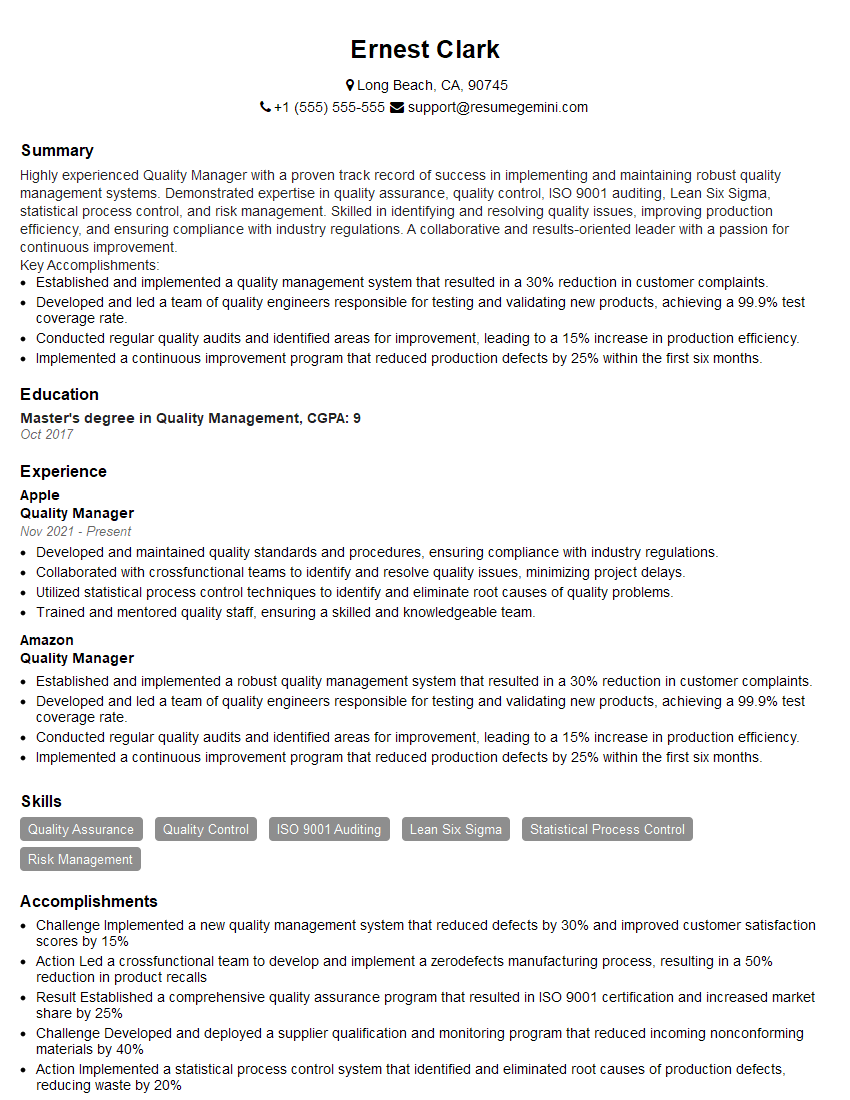
Quality Manager Resume Sample
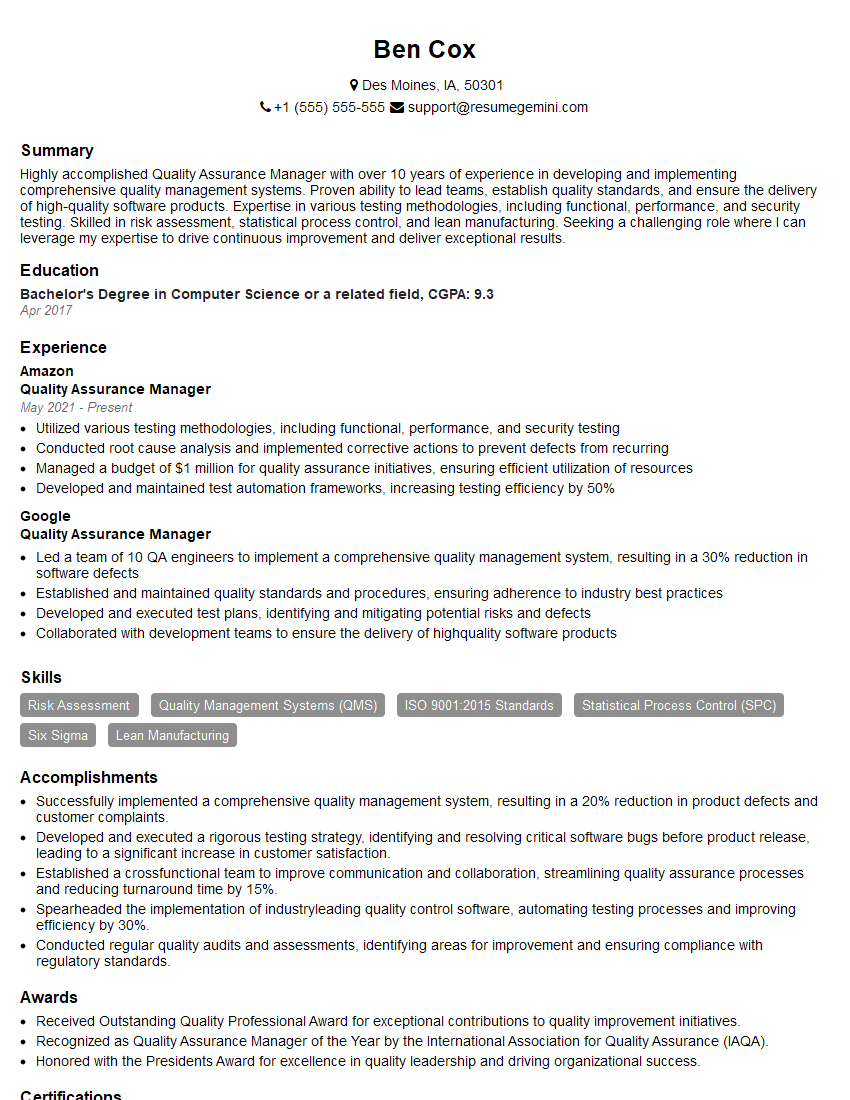
Quality Assurance Manager Resume Sample
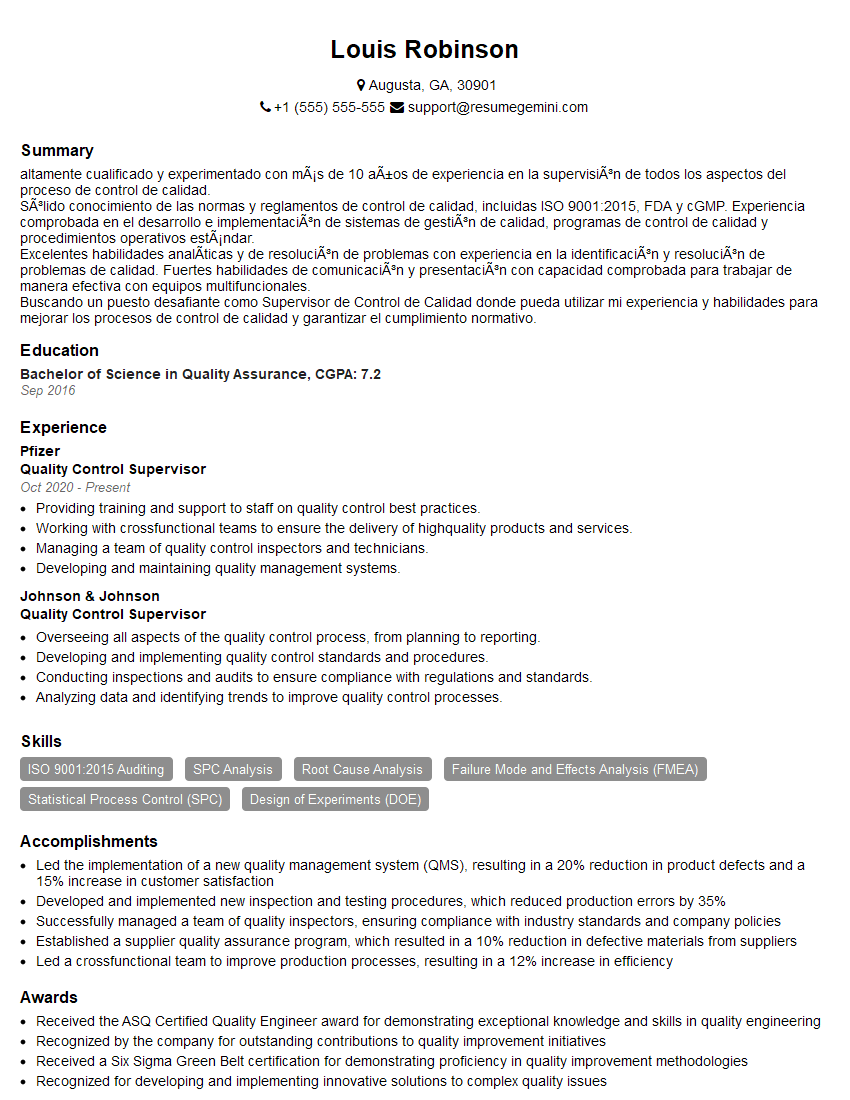
Quality Control Supervisor Resume Sample
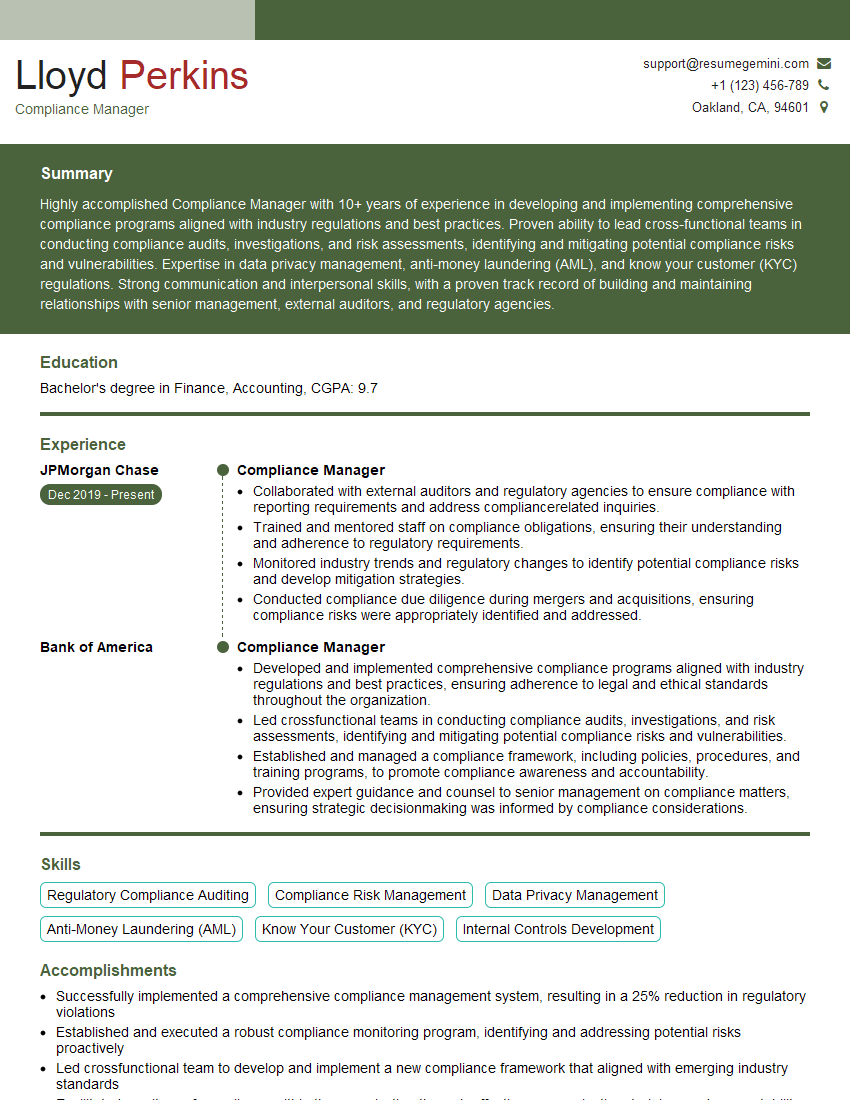
Compliance Manager Resume Sample
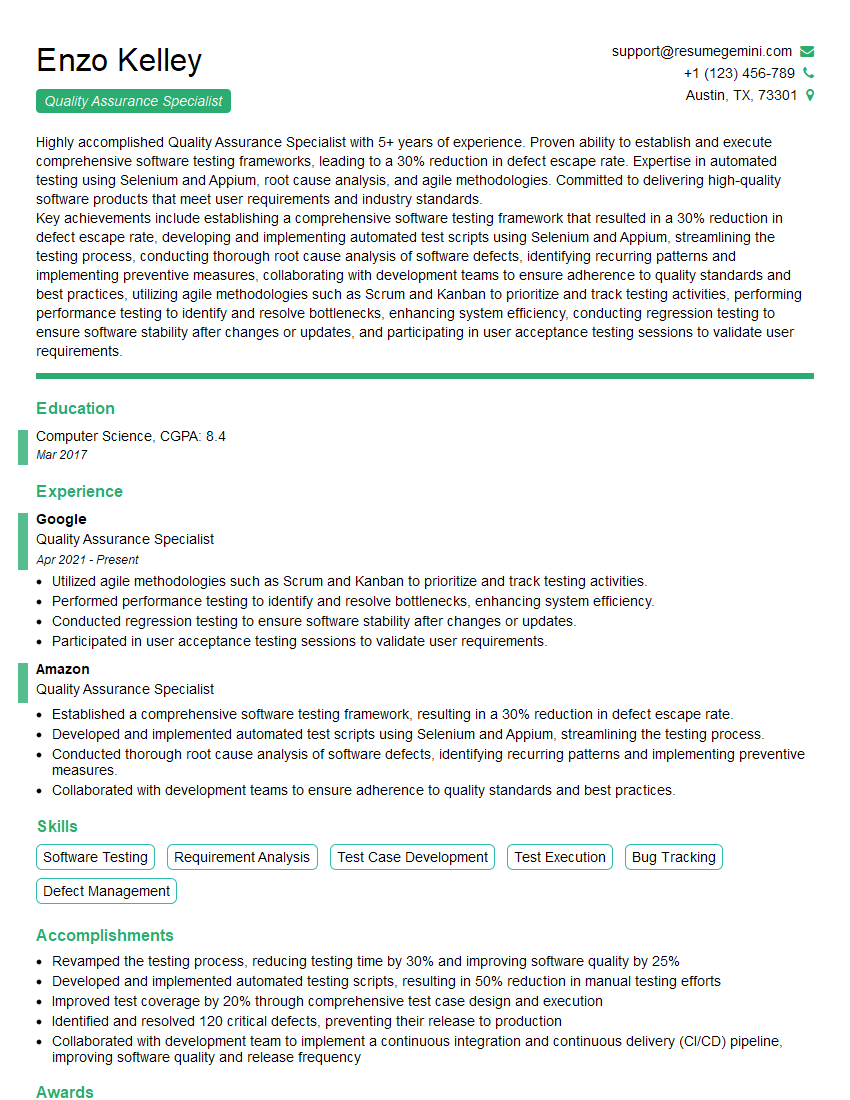
Quality Assurance Specialist Resume Sample
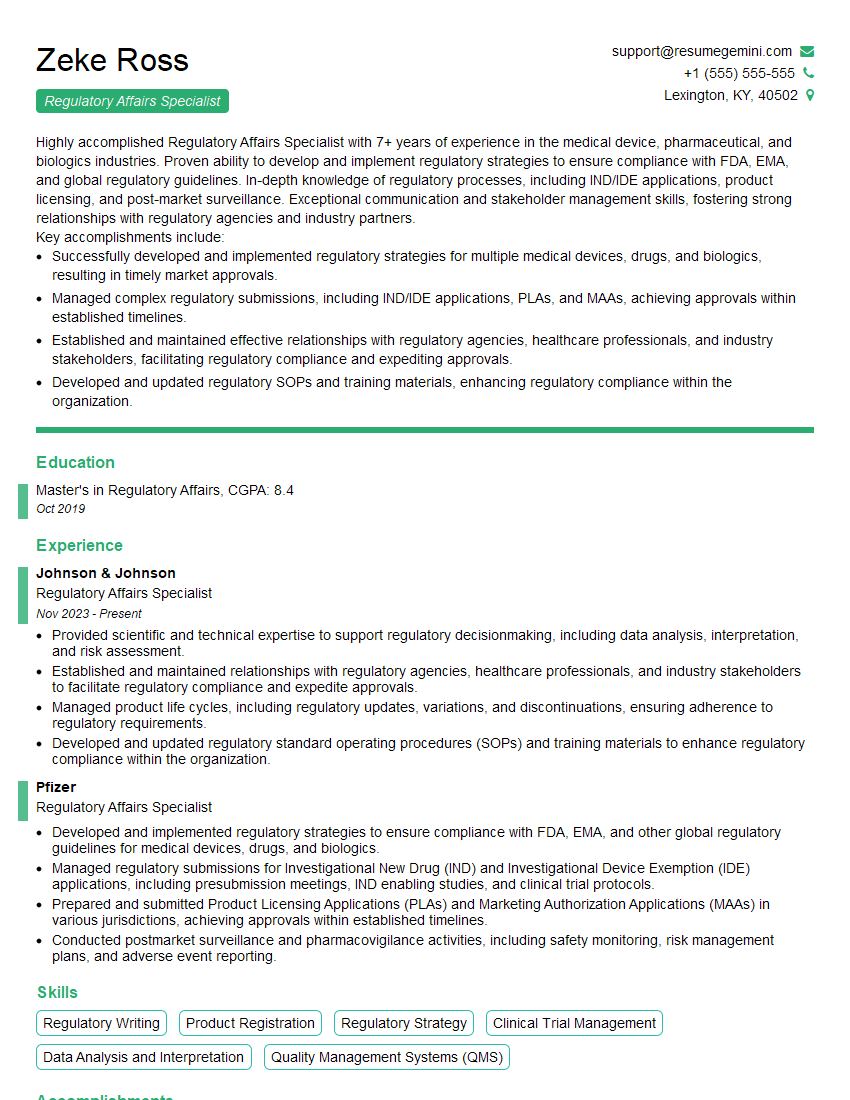
Regulatory Affairs Specialist Resume Sample
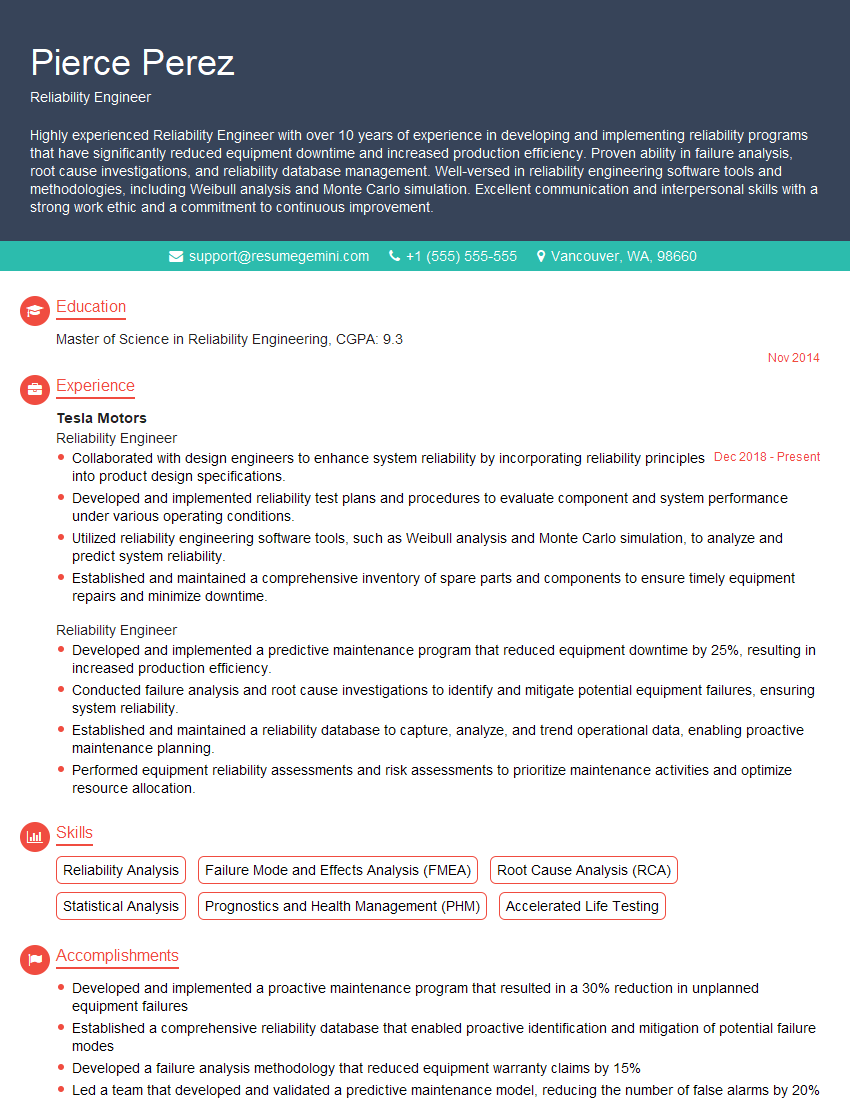
Reliability Engineer Resume Sample
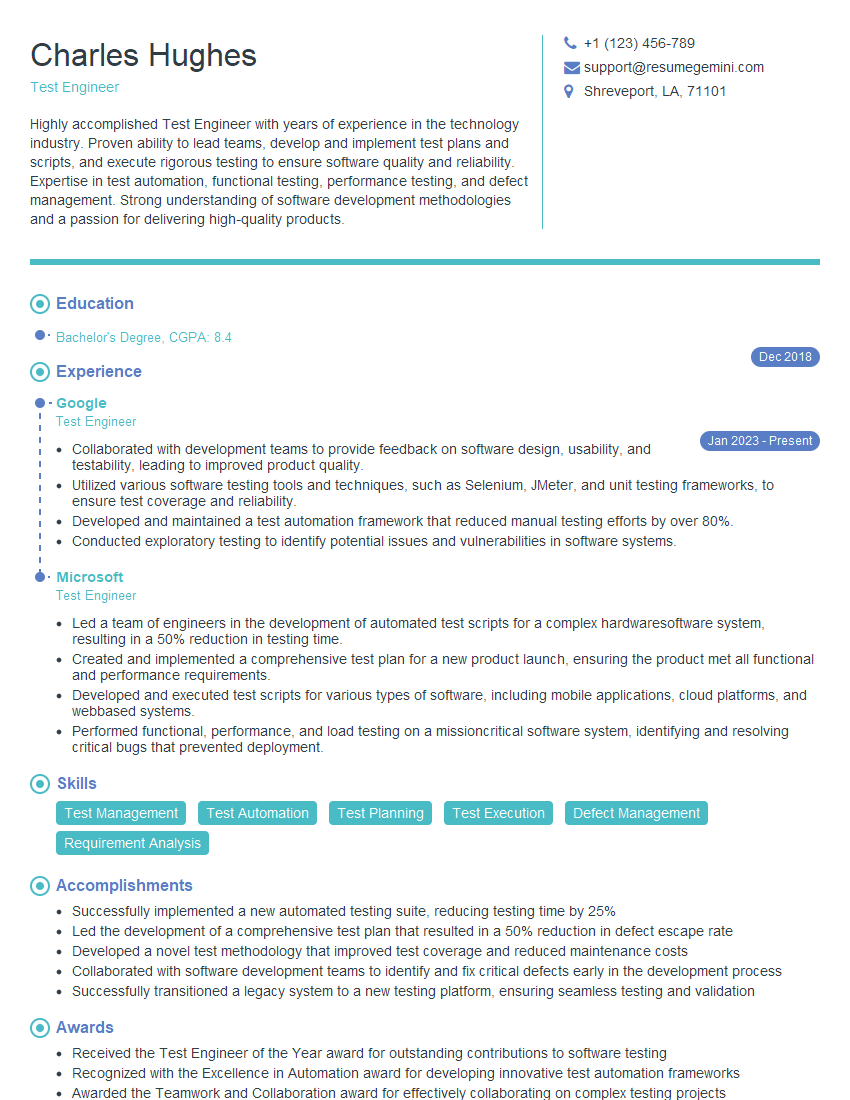
Test Engineer Resume Sample
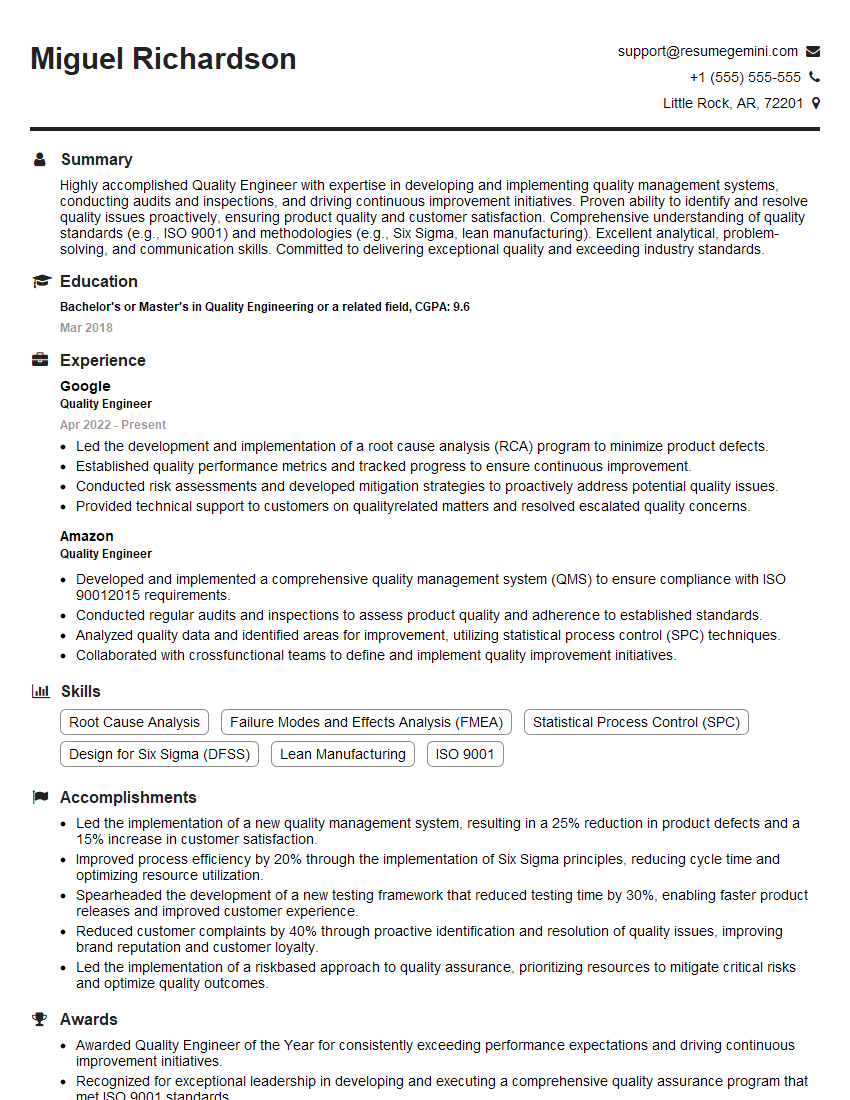
Quality Engineer Resume Sample
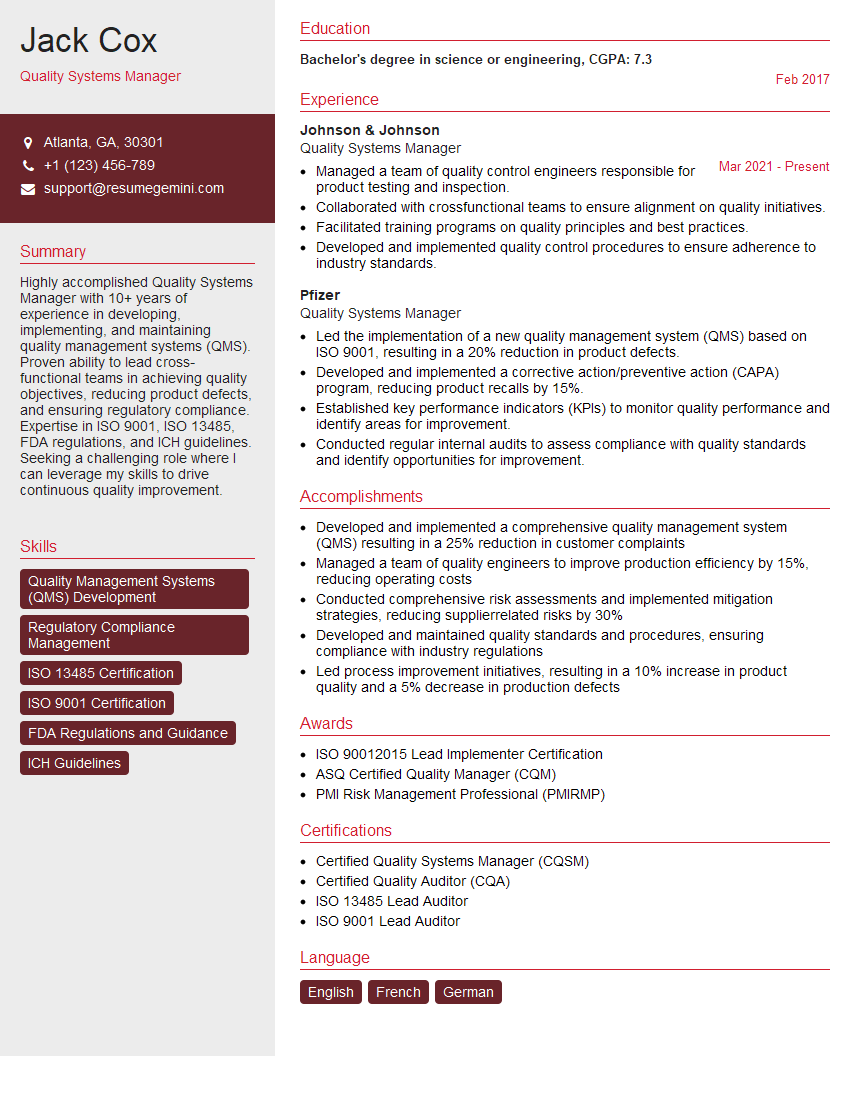
Quality Systems Manager Resume Sample
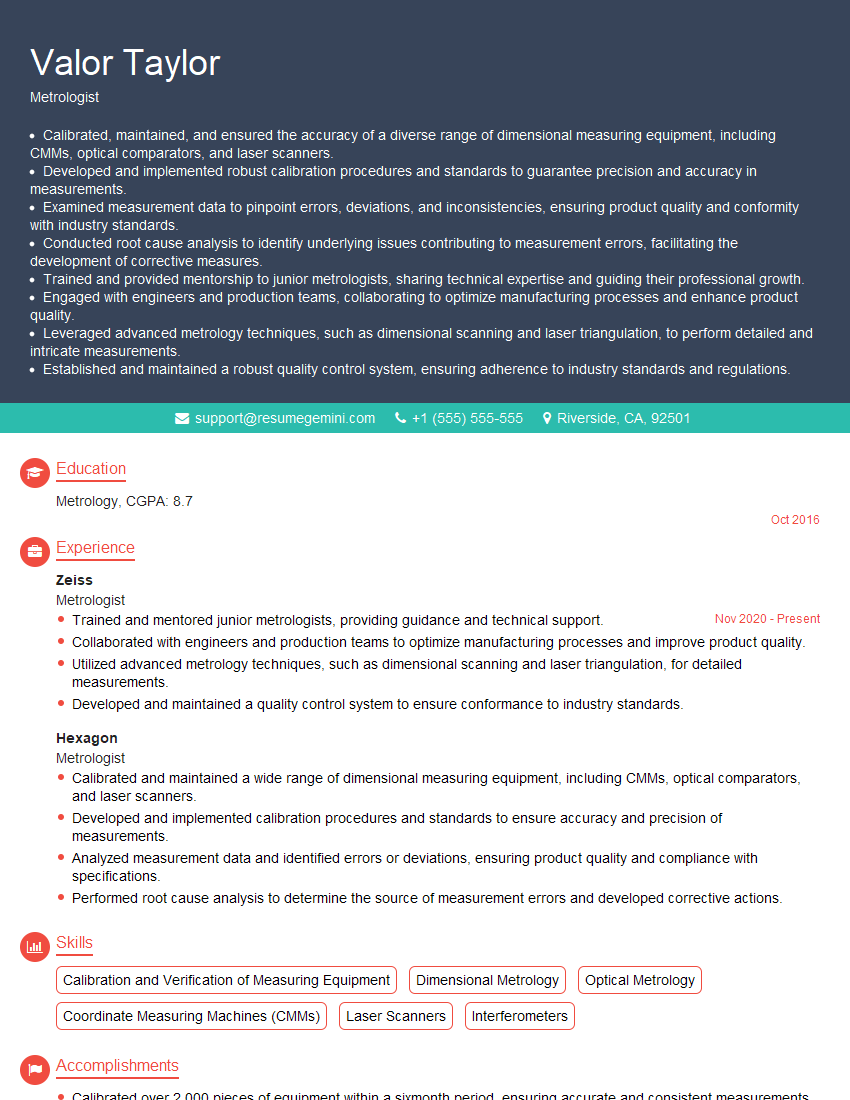
Metrologist Resume Sample
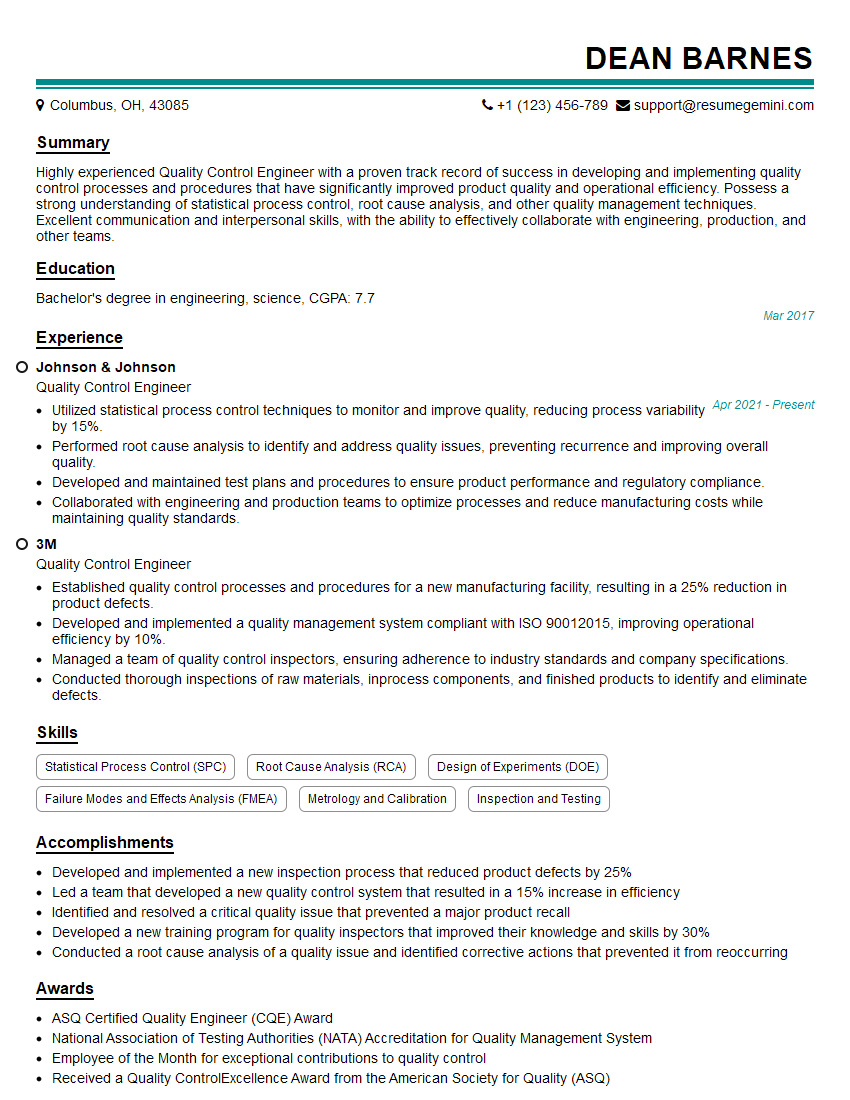
Quality Control Engineer Resume Sample
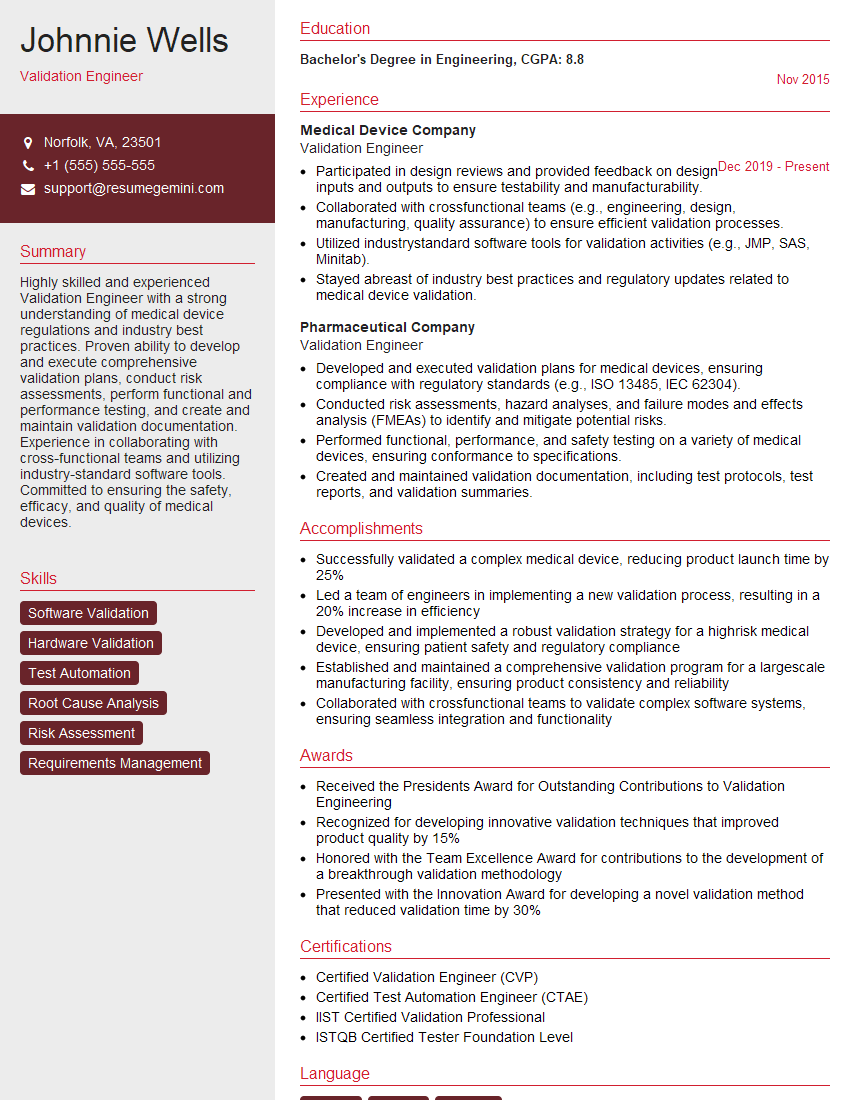
Validation Engineer Resume Sample
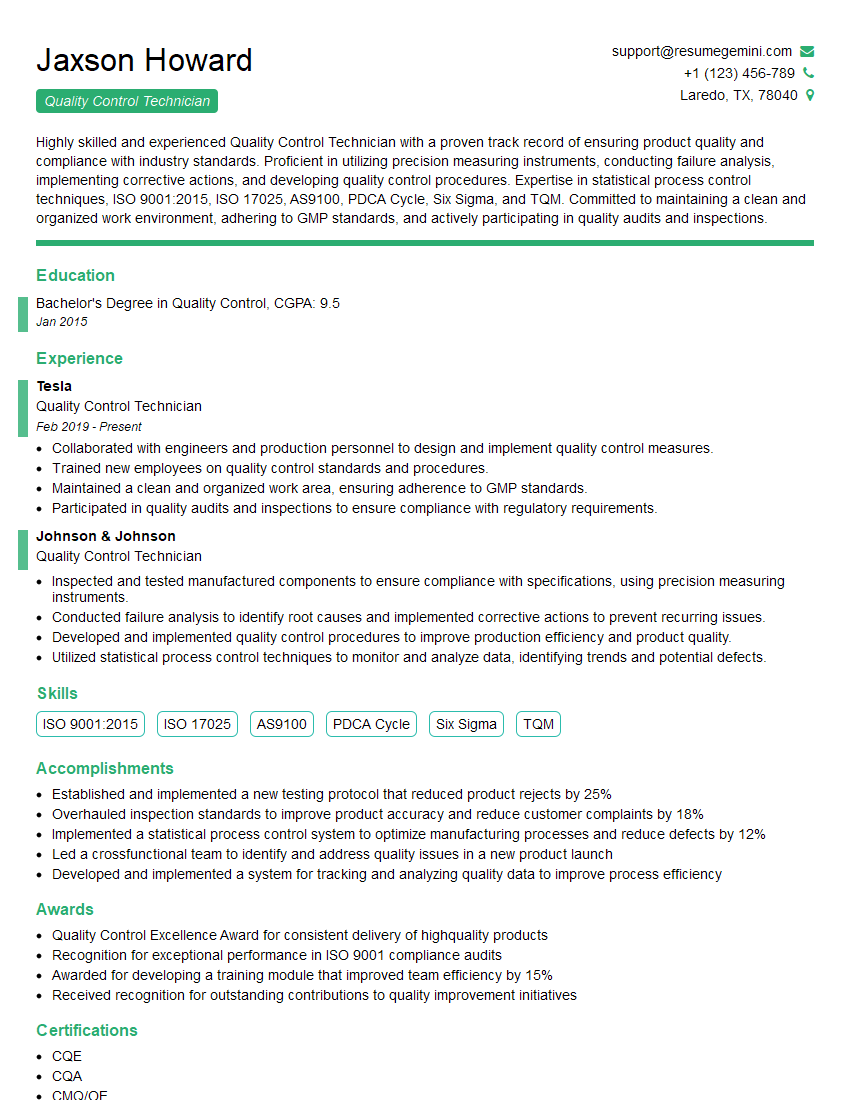
Quality Control Technician Resume Sample
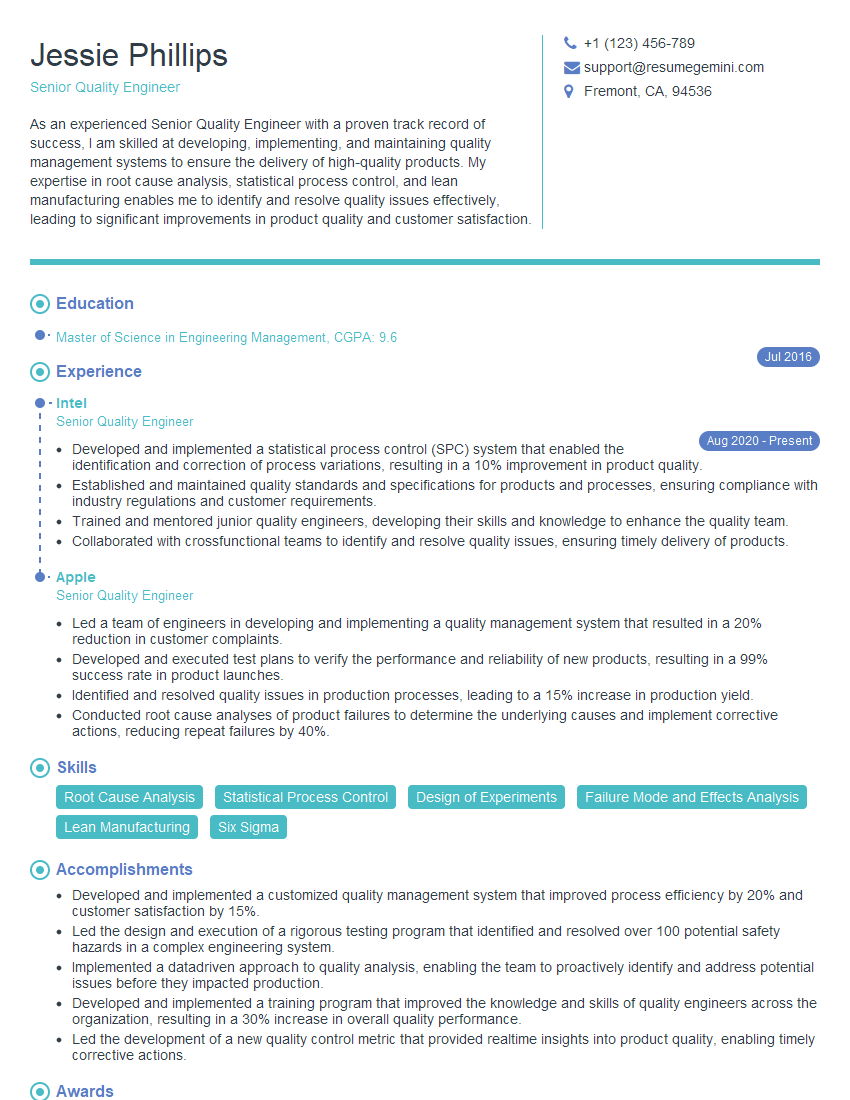
Senior Quality Engineer Resume Sample
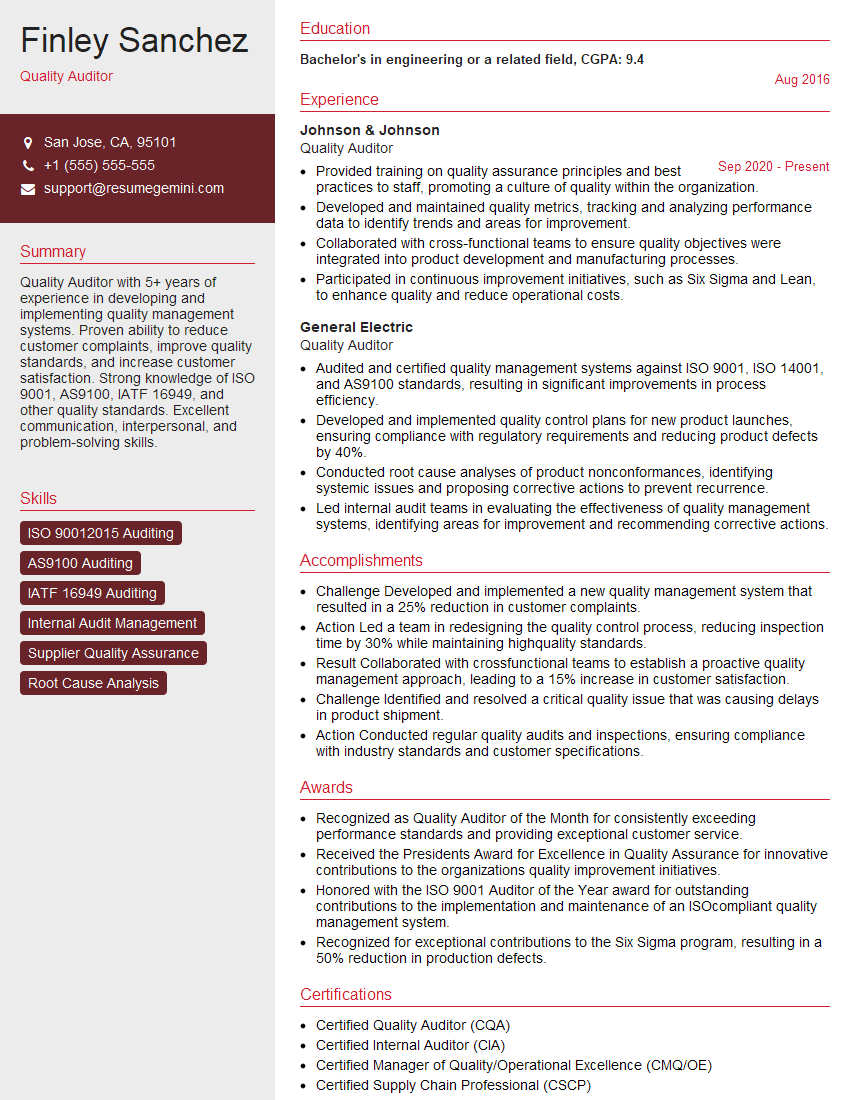
Quality Auditor Resume Sample
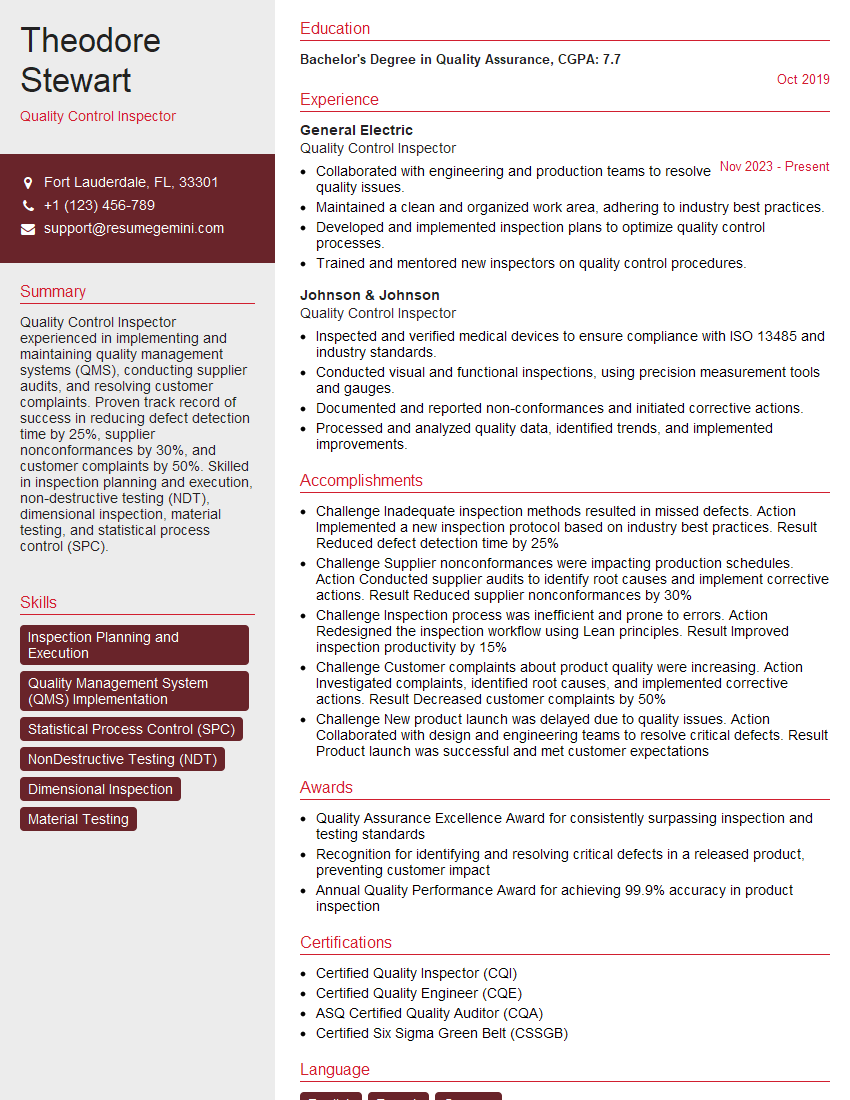
Quality Control Inspector Resume Sample
- Quality Manager
- Quality Assurance Manager
- Quality Control Supervisor
- Compliance Manager
- Quality Assurance Specialist
- Regulatory Affairs Specialist
- Reliability Engineer
- Test Engineer
- Quality Engineer
- Quality Systems Manager
- Metrologist
- Quality Control Engineer
- Validation Engineer
- Quality Control Technician
- Senior Quality Engineer
- Quality Auditor
- Quality Control Inspector
Explore more articles
Users Rating of Our Blogs
Share Your Experience
We value your feedback! Please rate our content and share your thoughts (optional).
What Readers Say About Our Blog
Very informative content, great job.
good