Feeling uncertain about what to expect in your upcoming interview? We’ve got you covered! This blog highlights the most important Radiation Dose Optimization interview questions and provides actionable advice to help you stand out as the ideal candidate. Let’s pave the way for your success.
Questions Asked in Radiation Dose Optimization Interview
Q 1. Explain the ALARA principle and its application in radiation dose optimization.
The ALARA principle, which stands for As Low As Reasonably Achievable, is a fundamental cornerstone of radiation protection. It dictates that all radiation doses should be kept as low as possible, taking into account social and economic factors. It’s not about eliminating all radiation exposure—that’s often impossible—but rather about a conscious and continuous effort to minimize unnecessary radiation. This principle applies across various radiation-related fields, including medical imaging, nuclear medicine, and radiation therapy.
In radiation dose optimization, ALARA is implemented through a multi-pronged approach. For example, in medical imaging, it might involve using the lowest possible radiation dose settings on X-ray machines while still achieving diagnostic quality images. It could also mean choosing imaging modalities that inherently deliver lower doses, such as ultrasound, when appropriate. In radiation therapy, ALARA translates to meticulous treatment planning to precisely target the tumor while sparing healthy tissues. It also involves regular quality checks on equipment and processes to ensure they are operating within established safety parameters.
Example: Consider a chest X-ray. A radiographer following ALARA would choose the appropriate kVp (kilovoltage peak) and mAs (milliampere-seconds) settings to get a clear image while minimizing radiation dose to the patient. They would also ensure proper collimation (restricting the X-ray beam to the area of interest) to prevent unnecessary irradiation of surrounding tissues.
Q 2. Describe different methods for calculating organ doses.
Calculating organ doses involves sophisticated computational methods that consider several factors. The most common methods include:
- Monte Carlo simulations: These are stochastic (random-based) simulations that model the interaction of radiation with the patient’s body at a microscopic level. They are computationally intensive but provide highly accurate dose estimations, especially for complex geometries and heterogeneous tissues.
- Analytical methods: These methods use mathematical formulas to estimate organ doses. They are less computationally demanding than Monte Carlo but may be less accurate, especially for irregular organ shapes. Examples include the use of dose kernels and point kernel methods.
- Kernel convolution methods: These techniques mathematically convolve the source distribution with a dose spread function to determine the dose distribution at the organs of interest. This is a more efficient way to calculate dose from distributed sources compared to Monte Carlo.
- Treatment Planning Systems (TPS): Modern TPS utilize algorithms (often incorporating Monte Carlo or analytical methods) to compute dose distributions in 3D for radiation therapy planning. These systems allow for precise dose calculations tailored to the individual patient anatomy and treatment plan.
The choice of method depends on the specific application, the level of accuracy required, and the available computational resources. For example, Monte Carlo is frequently used for research or when high precision is critical, whereas analytical methods are often preferred for faster calculations in routine clinical practice.
Q 3. What are the key factors influencing radiation dose to patients?
Several key factors influence radiation dose to patients. These factors often interact in complex ways:
- Type of radiation: Different types of radiation (e.g., X-rays, gamma rays, protons) have varying properties that affect their interaction with tissue and thus the resulting dose. Alpha particles, for instance, have a higher relative biological effectiveness (RBE) than X-rays.
- Radiation energy: Higher energy radiation generally penetrates deeper into the body, potentially exposing more organs to radiation. Lower energy radiation may deposit more dose to superficial tissues.
- Imaging technique and parameters: Factors like the kVp and mAs in X-ray imaging significantly influence the dose. CT scans, due to their multiple rotational projections, generally deliver higher doses than plain X-rays.
- Patient size and composition: Larger patients tend to receive higher doses simply because more tissue is being irradiated. The composition of tissues (e.g., bone density) also affects the dose distribution.
- Distance from the source: The inverse square law dictates that the radiation intensity decreases proportionally to the square of the distance from the source. Maintaining appropriate distance is therefore crucial for minimizing dose.
- Collimation and shielding: Restricting the radiation beam to the area of interest (collimation) and shielding sensitive organs reduces dose to non-target tissues.
Q 4. Discuss the role of imaging techniques in minimizing radiation dose.
Imaging techniques play a vital role in minimizing radiation dose to patients. Several approaches aim to optimize this balance between diagnostic quality and radiation safety:
- Dose reduction techniques: Many modern imaging systems incorporate dose reduction features. These may include automatic exposure control (AEC), optimized filtration, and iterative reconstruction algorithms in CT scans that decrease noise while reducing radiation exposure.
- Image acquisition protocols: Optimizing imaging parameters (e.g., kVp, mAs, scan time, slice thickness) can significantly reduce dose without compromising image quality. Protocols should be tailored to the specific clinical scenario and patient characteristics.
- Alternative imaging modalities: Choosing less radiation-intensive modalities like ultrasound, MRI, or nuclear medicine techniques (when appropriate) can significantly reduce overall radiation exposure.
- Image post-processing techniques: Advances in image processing allow for better image quality from lower radiation doses. Noise reduction algorithms and image enhancement techniques can improve visualization while using lower radiation exposure settings.
- Radiation dose monitoring and reporting: Precise tracking of radiation doses received by patients is crucial. Regular calibration and quality control of imaging equipment are essential to ensure accuracy and minimize unnecessary radiation.
Q 5. How do you ensure the accuracy of dose calculations?
Ensuring the accuracy of dose calculations is critical for patient safety and treatment efficacy. This requires a multi-faceted approach:
- Regular quality assurance (QA) of treatment planning systems (TPS): TPS software and hardware must be regularly tested and calibrated using standardized protocols to ensure accuracy. This involves performing various tests such as linac output measurements and geometric accuracy checks.
- Accurate patient data acquisition: Precise CT scans and anatomical contours are essential for accurate dose calculations. Image registration techniques are used to align various images and ensure proper anatomical delineation.
- Validation of dose calculations: Dose calculations should be validated using independent methods or comparisons with other TPS systems whenever possible. This reduces the risk of systematic errors.
- Use of appropriate dose calculation algorithms: The chosen algorithm should be suitable for the specific radiation type, energy, and treatment technique. The algorithm’s accuracy should be documented and verified.
- Experienced personnel: Dose calculations and treatment planning should be carried out by qualified and experienced medical physicists and radiation therapists.
Through meticulous QA protocols and a focus on detail throughout the entire treatment planning process, we aim for the highest possible accuracy in dose calculation. Any deviations from expected values trigger further investigation and corrective actions.
Q 6. Explain the concept of treatment planning in radiation therapy and its impact on dose optimization.
Treatment planning in radiation therapy is a crucial step that directly impacts dose optimization. It involves the creation of a treatment plan to deliver a prescribed radiation dose to the tumor while minimizing radiation exposure to surrounding healthy tissues. This is a complex process involving:
- Image acquisition and analysis: High-quality CT scans are acquired to accurately depict the tumor and surrounding anatomy.
- Target volume delineation: The tumor and other target volumes (e.g., lymph nodes) are precisely defined on the CT images by experienced radiation oncologists and dosimetrists.
- Organ at risk (OAR) delineation: Critical organs near the tumor (e.g., spinal cord, heart, lungs) are carefully delineated to limit radiation exposure.
- Treatment beam selection and optimization: The optimal radiation beams are selected to target the tumor while minimizing dose to OARs. This often involves using multiple beams from different angles.
- Dose calculation and verification: Sophisticated software calculates the dose distribution in three dimensions and is verified to ensure accuracy.
- Plan evaluation and approval: The radiation oncologist and medical physicist review the dose distributions and treatment plan to ensure it meets the clinical goals and safety requirements.
Dose optimization is central to treatment planning. The goal is to deliver a sufficient dose to the target volume to eradicate the tumor while adhering to dose constraints for OARs to minimize side effects.
Q 7. Describe different dose-volume constraints and their importance.
Dose-volume constraints are limits on the amount of radiation dose delivered to specific organs or tissues. They are crucial in radiation therapy planning to minimize toxicity and side effects. These constraints are typically expressed as a maximum dose to a certain percentage of the organ volume (e.g., V20Gy for the spinal cord, meaning the volume receiving 20 Gy or more) or the mean dose to the entire organ.
Examples of dose-volume constraints:
- Spinal cord: Strict dose limits are imposed on the spinal cord to prevent radiation myelopathy (damage to the spinal cord).
- Kidneys: Dose constraints to the kidneys are essential to prevent renal dysfunction.
- Heart: Dose limits to the heart are used to minimize the risk of cardiac complications.
- Lungs: Dose constraints to the lungs are implemented to prevent radiation pneumonitis (lung inflammation).
The specific dose-volume constraints used depend on several factors, including the tumor location, the type of radiation used, the patient’s overall health, and the treatment goals. Adherence to these constraints is crucial for optimizing treatment efficacy and ensuring patient safety. Treatment plans that violate these constraints may require modification to improve dose distribution.
Q 8. How do you handle uncertainties in dose calculations?
Uncertainties in dose calculations are inevitable due to limitations in imaging, treatment planning models, and patient anatomy variations. Handling these uncertainties requires a multi-pronged approach focusing on robust planning techniques and thorough quality assurance.
Comprehensive Imaging: Employing high-resolution imaging modalities like CT and MRI minimizes anatomical uncertainties. Careful contouring of target volumes and organs at risk (OARs) is crucial. For instance, using deformable image registration can help account for inter-fractional motion.
Treatment Planning System Validation: Regular quality assurance checks of the treatment planning system (TPS) are essential. This includes using phantoms and performing independent dose calculations to ensure accuracy.
Uncertainty Modeling: Incorporating uncertainty models into treatment planning, such as Monte Carlo simulations, allows us to estimate the range of possible doses a patient might receive. This helps in making informed decisions about treatment parameters. For example, we can use these simulations to assess the impact of variations in patient setup.
Margin Adjustment: Adding margins to target volumes accounts for uncertainties in patient positioning and anatomical changes. However, this increases the dose to surrounding healthy tissue, so a careful balance is needed.
Sensitivity Analysis: Performing sensitivity analyses helps to identify parameters that significantly impact the dose distribution. This allows us to focus optimization efforts on the most critical aspects of the plan.
For example, consider a patient with a lung tumor. Breathing motion introduces significant uncertainty. We address this by using 4D-CT imaging, gated radiotherapy, or deep-inspiration breath-hold techniques, and we incorporate margins in the planning process to account for residual uncertainties.
Q 9. Discuss the role of quality assurance in radiation dose optimization.
Quality assurance (QA) is paramount in radiation dose optimization. It ensures the accuracy and safety of the treatment process, minimizing unintended dose variations and protecting patients from unnecessary radiation exposure.
Treatment Planning QA: This involves independent review of treatment plans by experienced physicists and dosimetrists, verifying dose calculations, and checking for conflicts between the plan and clinical goals. We often use dose-volume histograms (DVHs) to compare dose to target volumes and OARs against predefined limits.
Machine QA: Regular calibrations and quality checks of the linear accelerator (linac) are crucial to ensure the delivered dose matches the planned dose. This includes verifying the accuracy of the beam parameters and the consistency of the machine’s performance.
Image QA: Verifying the accuracy of the imaging data used for treatment planning. This may include comparing the planning CT to the daily CBCT scans to assess for setup discrepancies.
Patient-Specific QA: Procedures like portal imaging, electronic portal imaging devices (EPIDs), and in-vivo dosimetry (e.g., diode arrays) ensure accurate dose delivery to the patient during treatment. These techniques allow us to detect and correct any deviations from the plan during treatment.
A rigorous QA program provides confidence in the accuracy and safety of the radiation therapy process and helps minimize the risk of treatment errors, thereby directly contributing to dose optimization and patient safety.
Q 10. What are the regulatory requirements for radiation dose optimization in your region?
Regulatory requirements for radiation dose optimization vary by region but generally align with the principles of ALARA (As Low As Reasonably Achievable). In many jurisdictions, this involves adhering to guidelines from organizations like the International Atomic Energy Agency (IAEA) and national regulatory bodies. Specific requirements often include:
Dose Reporting: Detailed documentation and reporting of all radiation doses delivered to patients.
Treatment Planning Protocols: Following established treatment planning protocols that emphasize dose optimization strategies.
Quality Assurance Programs: Maintaining comprehensive QA programs to ensure the accuracy and safety of the treatment process.
Staff Training: Requiring appropriate training and certification for radiation therapists and medical physicists involved in dose optimization.
Incident Reporting: Establishing mechanisms for reporting and investigating any incidents related to radiation dose errors.
These regulations aim to ensure patient safety and the responsible use of radiation in medical treatments. Specific details will vary depending on the country or state, and staying updated on the most current guidelines is crucial for compliance.
Q 11. Explain the differences between 2D and 3D treatment planning.
2D treatment planning uses simpler techniques and relies heavily on two-dimensional projections of the patient anatomy. 3D treatment planning uses sophisticated imaging techniques (CT, MRI) and computer algorithms to create a three-dimensional representation of the tumor and surrounding tissues, allowing for more precise dose delivery.
2D Planning: Primarily involves using parallel opposed beams and simple dose calculations. It provides less accurate dose distributions and results in higher doses to organs at risk (OARs). Think of it as aiming a single water hose to a target—it’s not precise and causes collateral damage.
3D Planning: Uses advanced techniques such as inverse planning, intensity-modulated radiotherapy (IMRT), and volumetric modulated arc therapy (VMAT). It offers superior precision and dose conformity to the target, while minimizing dose to healthy tissues. Think of it like using a highly focused laser beam to target the tumor, causing minimal damage to surrounding tissues.
The shift from 2D to 3D planning has significantly improved the accuracy and effectiveness of radiation therapy, enabling better tumor control while reducing side effects. 3D planning allows for the creation of highly conformal treatment plans, precisely shaping the radiation dose to match the target volume.
Q 12. Describe various techniques used for IMRT and VMAT dose optimization.
IMRT and VMAT are advanced radiation therapy techniques that optimize dose distribution using sophisticated dose calculation algorithms and treatment delivery methods.
IMRT Optimization Techniques: IMRT uses multiple beams with varying intensities to deliver a highly conformal dose distribution. Optimization techniques include:
Gradient Descent: An iterative algorithm that adjusts beam intensities to minimize the difference between the planned dose and the desired dose distribution.
Linear Programming: A mathematical method that optimizes beam intensities based on constraints set by dose-volume limits for the target and OARs.
Evolutionary Algorithms: Algorithms inspired by natural selection that explore a wide range of possible beam arrangements to find the optimal solution.
VMAT Optimization Techniques: VMAT uses a single rotating gantry to deliver radiation, further enhancing efficiency and improving dose conformity. Optimization techniques include:
Inverse Planning: A technique where the desired dose distribution is specified, and the optimization algorithm determines the optimal beam parameters.
Multi-criteria Optimization: Considering multiple objectives (e.g., minimizing dose to OARs while maximizing dose to the target) simultaneously.
The selection of optimization technique depends on the specific clinical scenario, the complexity of the target volume and surrounding structures, and the capabilities of the treatment planning system. For example, using evolutionary algorithms might be necessary to handle complex geometries.
Q 13. How do you optimize radiation dose for specific patient anatomies?
Optimizing radiation dose for specific patient anatomies requires careful consideration of the target volume’s location, shape, and proximity to critical organs. Treatment planning must account for individual variations in anatomy and organ motion.
Adaptive Radiation Therapy (ART): This technique allows adjustments to the treatment plan based on changes in the patient’s anatomy or tumor response during the course of treatment. Image-guided radiation therapy (IGRT) is often integrated into ART workflows.
Contouring Accuracy: Precise delineation of the target volume and OARs is crucial for optimal dose distribution. This often involves collaboration between radiation oncologists, medical physicists, and dosimetrists.
Motion Management: Strategies such as deep inspiration breath hold (DIBH), respiratory gating, and tumor tracking can help mitigate the impact of organ motion, particularly in the lungs and abdomen. For instance, DIBH reduces lung motion during treatment, allowing for more precise dose delivery.
Patient-Specific Planning: Tailoring the treatment plan to the individual patient’s anatomy is essential. This means using the appropriate treatment techniques and optimization algorithms to achieve the desired dose distribution.
For instance, a patient with a tumor near the spinal cord requires careful optimization to minimize dose to the cord, potentially using fewer beams or altering beam angles. Careful review of the dose-volume histograms and dose distributions is critical before treatment delivery.
Q 14. Explain the use of inverse planning in dose optimization.
Inverse planning is a powerful technique in radiation dose optimization where the desired dose distribution is defined first, and the treatment planning system (TPS) calculates the beam parameters needed to achieve that distribution. This differs from forward planning, where the beam parameters are defined, and the resulting dose distribution is calculated.
In inverse planning, the user specifies dose constraints for the target volume and organs at risk (OARs) such as minimum dose to the target and maximum dose to OARs. The TPS algorithm then iteratively adjusts the beam parameters (e.g., intensity, angles, energy) until the optimal solution that satisfies the specified constraints is found. This process often uses mathematical optimization techniques like linear programming or gradient descent methods.
The advantage of inverse planning is that it allows for a more direct and efficient way to achieve a desired dose distribution, enabling better dose conformity to the target while minimizing dose to healthy tissues. It’s particularly useful in complex cases involving multiple target volumes and critically located organs at risk, offering a more refined and personalized treatment plan. However, it requires careful definition of dose constraints and an understanding of the limitations of the optimization algorithm.
Q 15. Describe different dose verification methods.
Dose verification in radiation therapy is crucial for ensuring the accuracy of the delivered dose and minimizing the risk of treatment errors. Several methods are employed, each offering unique advantages and limitations.
Film dosimetry: This traditional method uses radiographic film to record the radiation dose distribution. It provides a 2D representation of the dose, allowing for visual inspection and comparison with the planned dose. However, it’s less precise than other methods and requires careful processing and analysis.
Ionization chambers: These devices measure the ionization produced by radiation, providing a direct measurement of the dose. They are accurate and reliable but measure only at a single point, requiring multiple measurements to map the entire dose distribution. They are commonly used for absolute dose measurements in quality assurance.
Diodes: Small, solid-state detectors that measure dose directly. They are less sensitive than ionization chambers and can be used for in vivo dosimetry, providing real-time feedback during treatment.
Electronic portal imaging devices (EPIDs): These devices are integrated into the linear accelerator and capture images of the radiation beam during treatment. They offer a 2D image of the delivered dose distribution, allowing for immediate feedback and adjustments if necessary. They are invaluable in verifying beam setup and shape.
3D dose verification using detectors such as the ArcCHECK or MapCHECK: These systems use an array of detectors to create a 3D representation of the dose distribution, offering a highly detailed comparison with the planned dose. This is a valuable tool for comprehensive quality assurance.
The choice of verification method depends on factors such as the treatment technique, the desired level of accuracy, and available resources. Often, a combination of methods is used for comprehensive dose verification.
Career Expert Tips:
- Ace those interviews! Prepare effectively by reviewing the Top 50 Most Common Interview Questions on ResumeGemini.
- Navigate your job search with confidence! Explore a wide range of Career Tips on ResumeGemini. Learn about common challenges and recommendations to overcome them.
- Craft the perfect resume! Master the Art of Resume Writing with ResumeGemini’s guide. Showcase your unique qualifications and achievements effectively.
- Don’t miss out on holiday savings! Build your dream resume with ResumeGemini’s ATS optimized templates.
Q 16. How do you address dose discrepancies between planned and delivered doses?
Dose discrepancies between planned and delivered doses are a serious concern in radiation therapy. Addressing these discrepancies requires a systematic approach focusing on identifying the source of the error and implementing corrective actions.
Careful review of the treatment plan: The first step involves a thorough review of the treatment plan, including the patient’s anatomy, target volumes, and dose constraints. This helps identify potential errors in the planning process itself.
Verification of treatment parameters: The accuracy of treatment parameters such as beam energy, field size, and monitor units must be verified. This often involves checking the treatment machine’s calibration and performance.
Assessment of patient positioning and setup: Patient motion and setup errors are common sources of dose discrepancies. Image guidance techniques such as CBCT (Cone Beam Computed Tomography) or kV imaging are used to ensure accurate patient positioning. Immobilization devices can minimize patient movement.
Investigation of equipment malfunction: Any malfunction in the linear accelerator or other treatment delivery components must be promptly investigated and rectified. Regular quality assurance checks are vital for preventing equipment-related errors.
Analysis of dose verification data: Comparing the planned and delivered dose distributions using dose verification methods (as described above) highlights areas of discrepancies, pinpointing the source of errors.
Corrective actions: Once the source of the discrepancy is identified, corrective actions must be implemented, such as modifying the treatment plan, adjusting treatment parameters, or retraining personnel. Documentation of the discrepancy and corrective actions is crucial for quality assurance.
For instance, a significant discrepancy might indicate a problem with the machine calibration, leading to a recalibration or even equipment repair. A smaller discrepancy might be due to minor patient setup variations, addressed by using advanced image guidance techniques. Each situation requires a tailored solution, emphasizing safety and accuracy.
Q 17. What are the ethical considerations involved in radiation dose optimization?
Ethical considerations in radiation dose optimization are paramount, prioritizing patient safety and well-being above all else.
Beneficence: The principle of beneficence dictates that we must act in the best interests of the patient. This means optimizing the treatment plan to deliver the most effective dose while minimizing side effects. This involves thorough consideration of the tumor characteristics and the surrounding healthy tissues.
Non-maleficence: This principle emphasizes the importance of avoiding harm. Over-treatment leads to unnecessary side effects, while under-treatment compromises efficacy. Precise dose optimization aims to achieve the therapeutic ratio (tumor control probability divided by normal tissue complication probability) as high as possible.
Justice: Equitable access to high-quality radiation therapy services, regardless of socioeconomic status or geographical location, is essential. This encompasses access to advanced treatment planning systems and quality assurance protocols.
Autonomy: Patients should have a full understanding of their treatment options and be actively involved in the decision-making process. Informed consent requires a clear explanation of the benefits, risks, and alternative treatment strategies.
Transparency and accountability: Transparency in treatment planning and dose verification methods builds trust and confidence between healthcare professionals and patients. Detailed documentation of the treatment process ensures accountability and facilitates ongoing quality improvement efforts.
Ethical dilemmas can arise, such as when optimizing dose for a particularly aggressive tumor might increase the risk of side effects to surrounding healthy tissues. Careful deliberation, considering the patient’s individual circumstances and preferences, is required to navigate such situations responsibly. A multidisciplinary approach with input from oncologists, radiation oncologists, and physicists is vital.
Q 18. Explain the concept of biological effective dose (BED).
The Biological Effective Dose (BED) is a concept that accounts for both the physical dose of radiation and the biological response of the tissue. It’s a more comprehensive measure of the overall effect of radiation compared to the physical dose alone. It considers the type of radiation (different radiations have varying biological effectiveness) and the repair capacity of the cells (how quickly they repair damage).
The BED is calculated using the following formula:
BED = nd(1 + α/β)
Where:
nis the number of fractionsdis the dose per fractionα/βis the ratio of the linear and quadratic components of the cell survival curve, reflecting the inherent radiosensitivity of the tissue. This ratio varies widely between tissues; high values suggest a relatively steep dose-response curve (e.g., late-reacting tissues).
For example, a high α/β ratio would mean that the effect of each fraction is significant, while a low ratio implies a more gradual effect. This makes BED essential in treatment planning, particularly in comparing the efficacy of different fractionation schemes.
Imagine comparing two treatments: one with a large number of smaller doses and another with a few larger doses. While the total dose might be the same, the BED could differ significantly due to the α/β ratio of the specific tissue being targeted. A higher BED translates to a larger biological impact.
Q 19. Discuss the use of treatment simulation in dose optimization.
Treatment simulation plays a pivotal role in dose optimization by creating a detailed 3D model of the patient’s anatomy and the target volumes. This allows radiation oncologists to precisely plan the radiation beams to maximize tumor coverage while minimizing dose to healthy tissues.
The process generally involves:
CT scanning: A CT scan of the patient’s relevant anatomy is acquired to produce high-resolution images.
Contouring: Radiation oncologists delineate the target volumes (tumors) and organs at risk (OARs) on the CT images. Precise contouring is vital for accurate dose calculation.
Treatment planning: Using treatment planning software (TPS), radiation oncologists design the radiation beams to deliver the prescribed dose to the target volumes while minimizing dose to OARs. This involves optimizing beam angles, intensity modulation, and other parameters to achieve the best possible therapeutic ratio.
Dose calculation: The TPS calculates the dose distribution throughout the patient’s body based on the planned beams. This provides a 3D representation of the dose, enabling a comprehensive evaluation.
Plan evaluation: The plan is thoroughly evaluated to ensure it meets the treatment goals and dose constraints. Several metrics are assessed, such as the homogeneity of dose within the target volume and the dose received by OARs.
Simulation is not just a static process. It involves iterative planning and adjustments until a satisfactory plan is achieved, demonstrating the interplay between the simulation and the optimization process. The more precise the simulation, the better the plan and the lower the dose to healthy tissues.
Q 20. How do you manage and minimize patient motion during radiation therapy treatment?
Patient motion during radiation therapy can significantly affect the accuracy of dose delivery, potentially leading to treatment failures or increased side effects. Minimizing motion requires a multi-pronged approach.
Immobilization devices: These devices, such as masks, bite blocks, and vacuum cushions, help secure the patient in a consistent position throughout the treatment process. Custom-made immobilization devices are used to optimize positioning for individual patients.
Image guidance: Techniques such as CBCT (Cone Beam Computed Tomography) or kV imaging are used to verify the patient’s position before each treatment fraction. This allows for adjustments to ensure accurate beam delivery, even if the patient has shifted slightly.
Respiratory gating or tracking: For tumors that move due to respiration, these techniques synchronize radiation delivery with the patient’s breathing pattern. Radiation is only delivered when the tumor is in a specific location, minimizing dose to surrounding tissues.
Real-time tracking systems: Advanced systems such as optical surface imaging or electromagnetic tracking monitor patient motion during treatment and make real-time adjustments to the radiation beams. This accounts for involuntary movements during treatment delivery.
Patient education and instruction: Patients play a vital role in minimizing motion. Thorough instruction on breath-holding techniques or maintaining a still position can improve the accuracy of treatment.
Consider the example of a lung cancer patient. Respiratory motion can cause significant variability in the tumor’s position. Therefore, a combination of respiratory gating and imaging guidance is often used to ensure the accurate delivery of the dose to the tumor while sparing healthy lung tissue. Careful attention to motion management is vital for optimal treatment outcome and minimizing the risk of treatment complications.
Q 21. Describe the role of treatment planning systems in dose optimization.
Treatment planning systems (TPS) are sophisticated software packages that are indispensable for radiation dose optimization. They integrate various aspects of treatment planning, enabling the creation of highly precise and personalized radiation treatment plans.
Key roles of TPS in dose optimization include:
3D image processing and fusion: TPS can process and fuse various medical images, such as CT, MRI, and PET scans, creating a comprehensive anatomical model of the patient.
Target volume delineation: The TPS provides tools for clinicians to define and contour the target volumes (tumors) and organs at risk (OARs).
Beam modeling and optimization: TPS simulates radiation beam characteristics and employs sophisticated algorithms to optimize beam parameters to achieve the desired dose distribution. This includes intensity modulation (IMRT), volumetric modulated arc therapy (VMAT), and proton therapy.
Dose calculation: TPS performs complex dose calculations to determine the dose distribution throughout the patient’s body. The algorithm choice depends on the treatment modality. Several algorithms exist to account for the interaction of radiation with tissues.
Plan evaluation and analysis: TPS provides tools to evaluate the treatment plan, displaying various dose metrics and visualizations, allowing clinicians to assess dose homogeneity, target coverage, and OAR sparing.
Quality assurance: TPS often has integrated quality assurance modules that help ensure the accuracy of the treatment plan before treatment delivery. This involves comparing the planned dose with the actual delivered dose.
Modern TPS incorporates advanced algorithms, such as inverse planning, that allow for more efficient and precise dose optimization. The evolution of TPS continues, driven by efforts to improve treatment accuracy, reduce treatment times, and minimize side effects.
Q 22. Explain the importance of patient positioning and its effect on dose delivery.
Precise patient positioning is paramount in radiation therapy. It ensures that the radiation beam accurately targets the cancerous tumor while minimizing exposure to healthy surrounding tissues. Even slight misalignments can lead to suboptimal treatment efficacy or increased radiation dose to critical organs.
For example, in prostate cancer treatment, precise positioning using immobilization devices like a vacuum bag and customized molds is crucial. A millimeter of error can significantly impact the dose delivered to the tumor and nearby organs like the rectum and bladder. We use advanced imaging techniques like Cone Beam Computed Tomography (CBCT) before each treatment fraction to verify patient positioning and make necessary adjustments. This ensures that the treatment plan is accurately delivered, maximizing tumor control and minimizing side effects. Furthermore, careful attention to anatomical landmarks and the use of fiducial markers (small, radiopaque markers implanted near the tumor) can aid in precise positioning.
Q 23. How do you handle emergencies or unexpected events affecting radiation dose?
Handling emergencies during radiation therapy demands immediate action and a calm, systematic approach. Unexpected events, such as machine malfunctions or patient discomfort, require a rapid assessment of the situation and implementation of established protocols. For example, if a machine malfunction occurs mid-treatment, we immediately halt the process, ensuring patient safety. We assess the situation, initiate troubleshooting according to the manufacturer’s guidelines, and, if necessary, contact the engineering team. If a patient experiences unexpected severe pain or discomfort, we stop the treatment, assess their condition, and potentially administer pain relief. The incident is meticulously documented, and a post-incident review is conducted to identify areas for improvement in our protocols and equipment maintenance. We prioritize minimizing further radiation exposure to the patient while maintaining their safety and well-being.
Q 24. Describe your experience with different radiation treatment modalities and their dose optimization techniques.
My experience encompasses a wide range of radiation treatment modalities, including external beam radiotherapy (EBRT), brachytherapy, and proton therapy. In EBRT, dose optimization techniques vary depending on the treatment planning system (TPS) used. For example, inverse planning allows us to define target coverage and organ-at-risk (OAR) constraints, and the TPS iteratively calculates the optimal beam arrangement to meet those goals. I have extensive experience using various TPSs such as Eclipse and Pinnacle. In brachytherapy, which involves placing radioactive sources directly into or near the tumor, dose optimization focuses on achieving uniform dose distribution within the target volume while minimizing dose to surrounding organs. This often involves sophisticated calculations using dose-volume histograms (DVHs) and advanced treatment planning software. With proton therapy, the precision of the proton beam allows for more conformal dose delivery, minimizing dose to healthy tissues, which demands specialized treatment planning software and expertise.
Q 25. What are the advantages and disadvantages of different dose calculation algorithms?
Several dose calculation algorithms exist, each with its own strengths and weaknesses. Analytical algorithms, such as the collapsed cone convolution algorithm, are computationally fast but may be less accurate for complex geometries. Monte Carlo algorithms, while computationally intensive, provide highly accurate dose calculations by simulating individual particle interactions. However, their extensive computational time limits their practicality for routine clinical use. Another method is the superposition/convolution algorithm, which is a balance between speed and accuracy. The choice of algorithm depends on the treatment modality, clinical context, and available computational resources. For instance, Monte Carlo is often used for quality assurance and complex treatment plans, while faster algorithms are suitable for routine clinical planning. The choice often involves a trade-off between accuracy and computational time.
Q 26. How do you stay up-to-date with the latest advancements in radiation dose optimization?
Staying current in this rapidly evolving field requires continuous professional development. I actively participate in professional organizations like the American Association of Physicists in Medicine (AAPM), attending conferences and workshops, and regularly reviewing peer-reviewed journals such as the International Journal of Radiation Oncology, Biology, Physics (IJROBP). I also participate in online continuing medical education (CME) courses and engage in collaborative research projects focusing on dose optimization techniques. The field is continuously evolving with advancements in treatment technologies and algorithms, so staying abreast of the latest developments is crucial for providing optimal patient care.
Q 27. Describe a situation where you had to optimize radiation dose in a challenging clinical scenario.
I recall a case involving a patient with pancreatic cancer located near major blood vessels and the duodenum. The proximity of the tumor to these critical structures posed a significant challenge in dose escalation. To overcome this, I employed advanced treatment planning techniques, including intensity-modulated radiation therapy (IMRT) and volumetric modulated arc therapy (VMAT), allowing for a highly conformal dose distribution. Careful consideration of dose-volume constraints for the OARs was crucial. We also used a sophisticated dose calculation algorithm to accurately model the dose distribution. Through iterative planning and meticulous review, we were able to deliver a high dose to the tumor while mitigating the risk of severe side effects to the surrounding organs. The outcome was excellent, with good tumor control and minimal toxicity.
Q 28. How do you communicate complex radiation dose information to non-technical personnel?
Communicating complex radiation dose information to non-technical personnel, such as patients and their families, requires clear and concise language, avoiding jargon. I use analogies and visual aids to explain concepts like dose escalation and target coverage. For example, I might explain the treatment plan using the analogy of a sniper targeting a specific area while minimizing collateral damage. We also use diagrams and images to visually represent the treatment plan and show the expected dose distribution. Emphasizing the benefits and potential side effects of the treatment in a straightforward manner helps patients make informed decisions. Open communication and active listening help foster trust and understanding, enabling a collaborative approach to treatment.
Key Topics to Learn for Radiation Dose Optimization Interview
- ALARA Principle & Justification: Understand the “As Low As Reasonably Achievable” principle and its practical application in various medical imaging modalities. Be prepared to discuss scenarios requiring justification of radiation doses.
- Image Quality & Dose Relationship: Explore the intricate balance between achieving diagnostic image quality and minimizing patient radiation exposure. Discuss techniques to optimize image acquisition parameters for dose reduction.
- Radiation Protection Techniques: Master various techniques used to minimize radiation exposure, including shielding, collimation, and the selection of appropriate imaging protocols. Be ready to discuss their practical implementation and limitations.
- Dosimetry & Measurement: Familiarize yourself with different dosimetry methods and their applications in assessing radiation exposure. Understand the units and interpretation of radiation dose measurements.
- Advanced Imaging Techniques & Optimization: Explore the dose optimization strategies specific to advanced imaging modalities like CT, MRI, and PET. Discuss iterative reconstruction techniques and their impact on image quality and dose.
- Quality Assurance & Control: Understand the role of quality assurance programs in maintaining optimal radiation dose levels and ensuring consistent image quality. Discuss procedures for calibration, testing, and troubleshooting.
- Risk-Benefit Analysis: Be prepared to discuss the ethical considerations involved in balancing the benefits of medical imaging with the risks of radiation exposure. This includes patient communication and informed consent.
- Regulatory Compliance: Familiarize yourself with relevant regulations and guidelines related to radiation safety and dose optimization in your specific region or country.
- Problem-Solving & Case Studies: Practice analyzing hypothetical scenarios involving radiation dose optimization. Consider case studies to enhance your understanding of practical applications and problem-solving approaches.
Next Steps
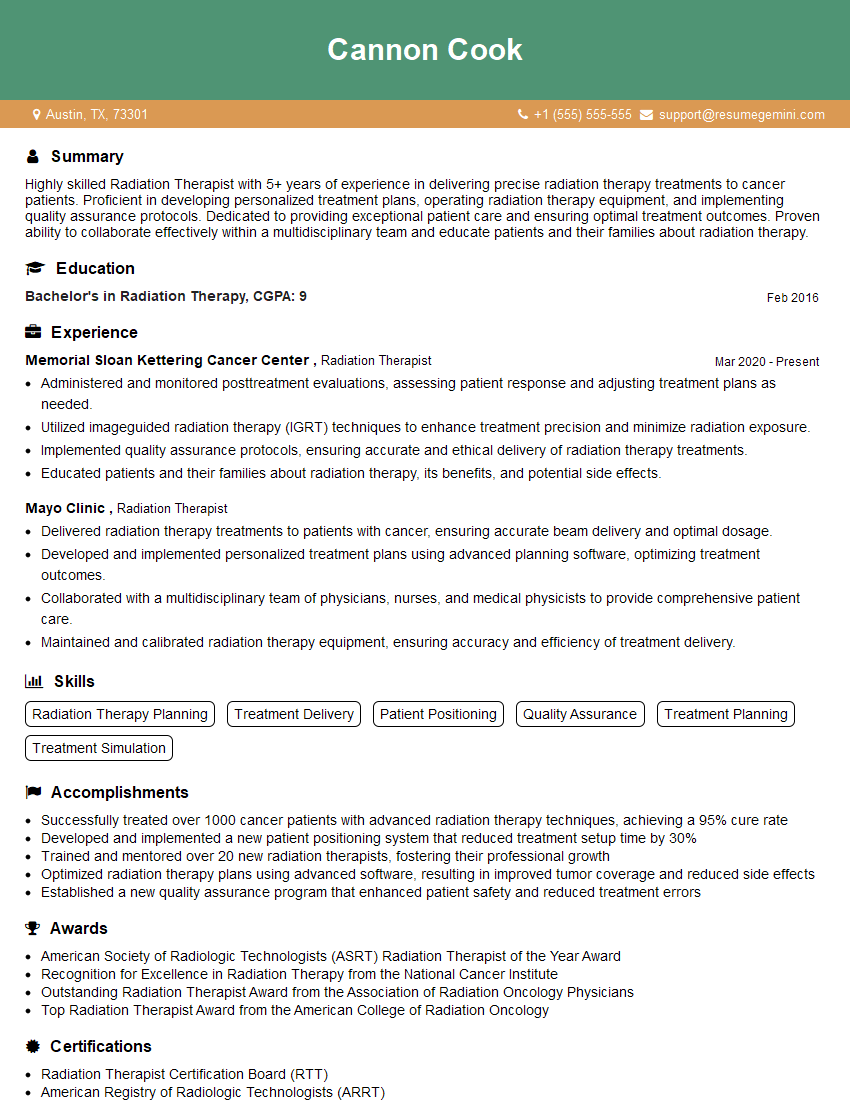
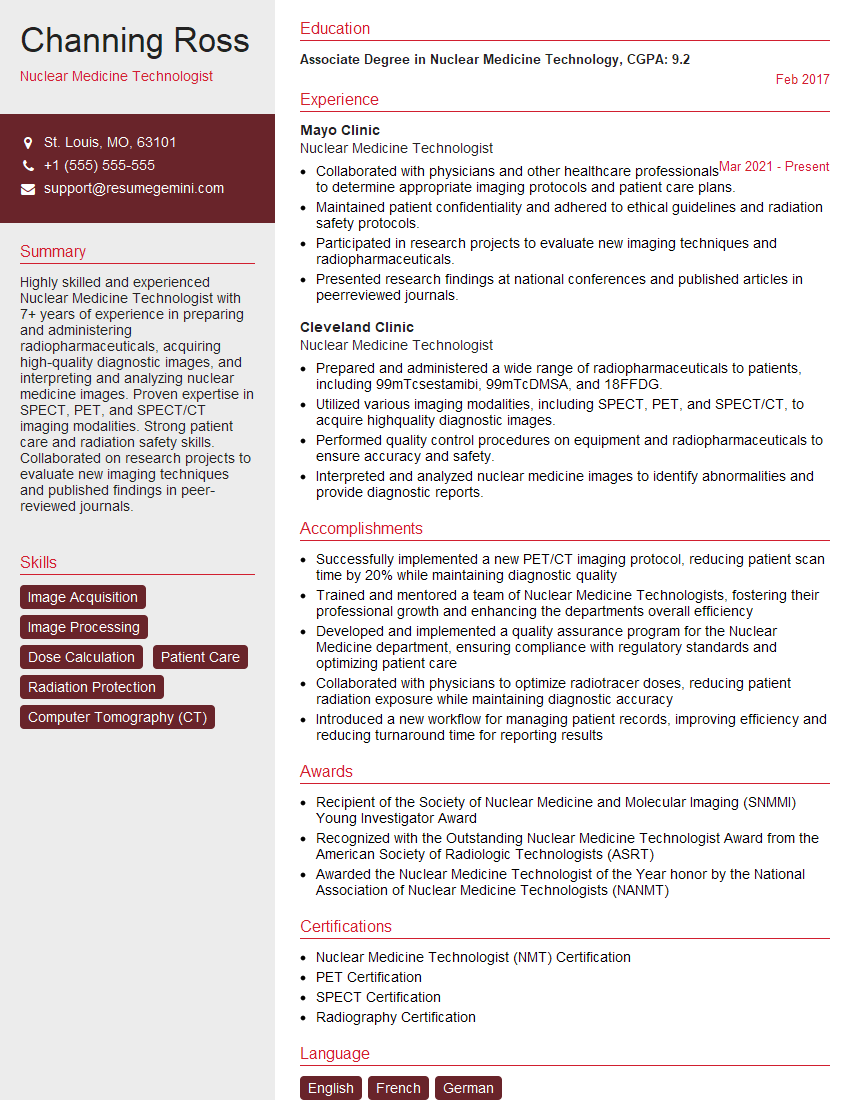
Mastering Radiation Dose Optimization is crucial for career advancement in medical physics, radiology, and related fields. It demonstrates a commitment to patient safety and a deep understanding of best practices. To significantly boost your job prospects, create an ATS-friendly resume that highlights your skills and experience effectively. ResumeGemini is a trusted resource that can help you craft a compelling resume tailored to the specific requirements of Radiation Dose Optimization roles. Examples of resumes tailored to this field are available to guide you. Invest the time in building a strong resume – it’s your first impression with potential employers.


Explore more articles
Users Rating of Our Blogs
Share Your Experience
We value your feedback! Please rate our content and share your thoughts (optional).
What Readers Say About Our Blog
Very informative content, great job.
good