The right preparation can turn an interview into an opportunity to showcase your expertise. This guide to Radiation Instrumentation and Calibration interview questions is your ultimate resource, providing key insights and tips to help you ace your responses and stand out as a top candidate.
Questions Asked in Radiation Instrumentation and Calibration Interview
Q 1. Explain the principles of operation of a Geiger-Müller counter.
A Geiger-Müller (GM) counter is a simple and robust radiation detector that utilizes the principle of gas ionization. Imagine a sealed tube filled with a low-pressure gas. When ionizing radiation (like alpha, beta, or gamma rays) enters the tube, it collides with gas atoms, knocking off electrons and creating ion pairs (positive ions and free electrons). A high voltage applied across the tube accelerates these electrons, causing them to further ionize other gas atoms in a chain reaction, creating an avalanche of charge. This avalanche creates a detectable electrical pulse, which is then amplified and counted. Each pulse represents a single ionizing event, allowing the GM counter to measure the radiation’s intensity.
The simplicity of the GM counter makes it ideal for detecting the presence of radiation and measuring its approximate intensity. However, it doesn’t provide energy discrimination – it can’t distinguish between different types of radiation or their energies, it only tells us that ionizing radiation is present. Think of it as a simple ‘yes/no’ answer to the question of radiation presence, unlike more sophisticated detectors that can provide detailed information about the radiation.
Q 2. Describe the different types of radiation detectors and their applications.
The world of radiation detectors is vast, with each type offering unique capabilities. Some common examples include:
- Geiger-Müller counters: As described previously, excellent for radiation detection and approximate measurement of intensity. Used widely in radiation safety monitoring and contamination detection.
- Scintillation detectors: These detectors use scintillating materials that emit light when radiation interacts with them. The light is then converted into an electrical signal by a photomultiplier tube (PMT). Scintillation detectors offer better energy resolution than GM counters, allowing for the identification of different types of radiation. They are used extensively in nuclear medicine, high-energy physics, and environmental monitoring.
- Ionization chambers: These are used for accurate measurements of radiation exposure. They work by measuring the ionization current produced by radiation in a gas-filled chamber. They are often used for calibrating other radiation detectors and in radiation protection applications.
- Semiconductor detectors: These detectors utilize the semiconductor material’s ability to generate electron-hole pairs upon radiation interaction. They offer high energy resolution and are used in various applications like X-ray spectroscopy and nuclear safeguards.
- Proportional counters: These operate similarly to GM counters but at a lower voltage, enabling discrimination between different types of radiation based on the size of the pulse produced. They are used in specialized applications like alpha particle detection.
Choosing the right detector depends on the specific application. For simple radiation detection, a GM counter suffices. For precise measurements and energy discrimination, a scintillation or semiconductor detector is preferable.
Q 3. What are the key factors to consider when selecting a radiation detector for a specific application?
Selecting a radiation detector requires careful consideration of several factors:
- Type of radiation: Alpha, beta, gamma, or neutron radiation each requires a detector with suitable sensitivity and interaction mechanisms.
- Energy range: Different detectors have different energy response ranges. The detector must be able to detect the energies of interest.
- Required sensitivity: The detector’s sensitivity must be sufficient to detect the radiation levels expected. A highly sensitive detector might be needed for low-level measurements.
- Energy resolution: High energy resolution is critical for identifying different types of radiation or their specific energies.
- Accuracy and precision: The accuracy and precision of measurements depend on the detector’s design and calibration.
- Environmental conditions: Temperature, humidity, and other environmental factors can affect the detector’s performance.
- Cost and availability: The budget and the availability of the detector should also be considered.
For example, if you need to measure low levels of gamma radiation in environmental samples, a high-sensitivity scintillation detector with good energy resolution would be ideal. For a simple survey of radiation in a lab, a GM counter might suffice. Selecting the wrong detector could result in inaccurate or unreliable measurements.
Q 4. How do you perform a calibration of an ionization chamber?
Calibrating an ionization chamber involves relating its measured response to a known radiation exposure. This usually involves using a traceable radiation source with a known activity or dose rate. The process typically involves:
- Choosing a standard radiation source: A traceable source with a certificate from a National Metrology Institute (NMI) is essential. The source’s energy should match the energy range of the ionization chamber.
- Establishing a standardized geometry: The distance and orientation between the source and the ionization chamber must be precisely defined and controlled, often employing a standardized jig to ensure reproducibility.
- Measuring the ionization current: The ionization chamber’s response is measured in terms of the ionization current generated when exposed to the radiation source.
- Determining the calibration factor: The calibration factor is determined by comparing the measured ionization current to the known exposure rate from the standard source. This factor allows one to convert the measured current to the actual dose rate or exposure.
- Documentation: All details of the calibration process including date, source information, geometry, and the derived calibration factor should be meticulously recorded.
Regular calibrations ensure the ionization chamber’s accuracy and traceability to national or international standards. Without calibration, measurements would be unreliable.
Q 5. Explain the concept of traceability in radiation measurements.
Traceability in radiation measurements ensures that the results can be linked back to national or international standards through an unbroken chain of calibrations. This is crucial for ensuring the accuracy and reliability of measurements. Imagine a hierarchy: the NMI maintains primary standards, which are then used to calibrate secondary standards at calibration laboratories. These secondary standards are then used to calibrate radiation detectors in the field. Traceability ensures that the measurements made by a detector can be linked back to these primary standards, guaranteeing their accuracy and comparability across different laboratories and countries. This is critical for scientific research, regulatory compliance, and ensuring public health and safety.
Lack of traceability means measurements are potentially unreliable and incomparable. A detector calibrated against an unverified or poorly characterized source produces questionable results which may have serious implications in medical physics, radiation protection, and environmental monitoring.
Q 6. What are the common sources of uncertainty in radiation measurements?
Uncertainty in radiation measurements stems from various sources:
- Detector uncertainties: These include uncertainties in the detector’s calibration, its energy response, and its efficiency.
- Source uncertainties: Uncertainties in the activity or dose rate of the radiation source used for calibration or measurement contribute to the overall uncertainty.
- Geometric uncertainties: Inaccurate source-detector geometry leads to uncertainties in the measured values.
- Environmental uncertainties: Temperature, pressure, and humidity fluctuations can affect the detector’s response.
- Statistical uncertainties: The inherent randomness of radioactive decay leads to statistical fluctuations in the measured counts.
- Human errors: Errors in data recording, instrument handling, or calculation can introduce significant uncertainty.
A complete uncertainty analysis considering all these factors is vital for accurately reporting radiation measurements. It reflects the confidence level associated with the reported values.
Q 7. Describe the process of verifying the calibration of a radiation survey meter.
Verifying the calibration of a radiation survey meter involves comparing its readings to those of a known calibrated instrument or traceable radiation source. This process aims to ensure the meter continues to provide accurate readings. Here’s a step-by-step guide:
- Select a calibration source: A traceable source with a known dose rate or activity, ideally similar to the meter’s intended use.
- Establish standardized geometry: Maintain a consistent distance and orientation between the source and the survey meter as described in the meter’s calibration instructions.
- Compare readings: Take multiple readings from both the survey meter and the reference instrument (e.g., calibrated ionization chamber) at different dose rates, if possible.
- Evaluate agreement: Compare the readings. A significant deviation from the reference instrument suggests a calibration issue. The allowed deviation is usually specified by regulatory standards or the meter’s manufacturer.
- Documentation: Record all details, including date, source information, readings, and any deviations observed. This documentation is crucial for auditing purposes.
- Corrective action (if needed): If significant discrepancies are observed, the survey meter may need recalibration or repair.
Regular verification ensures the survey meter’s continued accuracy and reliability, preventing inaccurate measurements with potentially serious consequences in radiation safety applications.
Q 8. How do you ensure the accuracy and reliability of radiation measurements?
Ensuring accurate and reliable radiation measurements hinges on a multi-pronged approach encompassing meticulous calibration, proper detector selection, and rigorous quality control. Think of it like baking a cake – you need the right ingredients (detectors and sources), the right recipe (calibration procedures), and the right oven temperature (environmental controls) to get a consistent, accurate result.
- Calibration: Regular calibration against traceable standards, like those from national metrology institutes, is crucial. This ensures the instrument readings accurately reflect the actual radiation levels. We use various calibration sources, depending on the type of radiation and energy range. For example, a calibrated 60Co source is commonly used for gamma spectrometry calibration.
- Detector Selection: Choosing the appropriate detector type for the specific radiation being measured is vital. A Geiger-Müller counter might suffice for quick surveys, but a high-purity germanium (HPGe) detector is necessary for precise energy spectroscopy. The choice depends on the application; a simple survey meter is adequate for determining if an area is generally safe, but detailed measurements of isotopes require far more sensitive instrumentation.
- Quality Control: Implementing robust quality control measures, including regular background checks, detector linearity tests, and energy resolution assessments, ensures the data’s integrity and reliability over time. Think of these checks as performing regular maintenance on your measuring equipment.
In my experience, meticulously documented procedures and a thorough understanding of the instrument’s limitations are key to producing high-quality, reliable radiation measurement data. A single flawed measurement can have significant consequences in a safety-critical environment.
Q 9. What are the safety precautions to be taken when handling radioactive sources?
Safety when handling radioactive sources is paramount. It’s not just about following rules; it’s about preventing harm to yourself and others. The ALARA principle – As Low As Reasonably Achievable – guides all our actions.
- Time Minimization: Limit the time spent near radioactive sources. The less time you spend near a source, the less exposure you receive. This is particularly critical when dealing with high-activity sources.
- Distance Maximization: Increase the distance between yourself and the source. Radiation intensity decreases rapidly with distance, following an inverse square law. Staying further away significantly reduces exposure.
- Shielding: Utilize appropriate shielding materials, such as lead or depleted uranium, to absorb radiation before it reaches personnel. The type of shielding required depends entirely on the type and energy of the radiation being emitted.
- Personal Protective Equipment (PPE): Wear appropriate PPE, including gloves, lab coats, and dosimeters to monitor personal radiation exposure. Dosimeters track cumulative exposure, providing crucial information for safety monitoring.
- Proper Handling and Storage: Ensure radioactive sources are handled carefully and stored securely in designated containers, following strict protocols to prevent accidental spills or release. Proper labeling and documentation are essential.
Working with radioactive materials requires rigorous training, adherence to strict protocols, and a deep understanding of the potential hazards. A single lapse in safety procedures can have severe consequences.
Q 10. Explain the importance of radiation shielding and its design principles.
Radiation shielding is essential for protecting personnel and the environment from harmful ionizing radiation. The design principles are based on attenuating radiation through absorption and scattering. Think of it as building a wall around a source to prevent radiation from escaping.
- Material Selection: The choice of shielding material depends on the type and energy of the radiation. Lead is effective against gamma and X-rays, while concrete or water can provide sufficient shielding for neutrons or beta particles. The higher the atomic number of the material, the greater its ability to attenuate gamma and X-rays.
- Thickness Calculation: The required thickness of the shielding material is determined by calculating the necessary attenuation to reduce the radiation dose rate to acceptable levels. This involves intricate calculations considering the source activity, energy spectrum, and desired dose reduction. We utilize sophisticated software tools for these calculations.
- Geometric Considerations: The geometry of the shielding arrangement is crucial. Shielding is often designed to minimize radiation leakage through gaps or cracks. Precise design is essential to ensure optimal protection.
- Accessibility and Maintenance: Shielding designs must also incorporate considerations for access to equipment for maintenance and repair while maintaining radiation safety. Interlocks and remote handling systems are often part of the design.
In practice, shielding design requires specialized knowledge in radiation physics and engineering. Poorly designed shielding can lead to unacceptable radiation exposures, so the safety standards are exceptionally rigorous.
Q 11. What are the regulatory requirements for radiation safety in your field?
Regulatory requirements for radiation safety are stringent and vary depending on the location and the specific application. They are designed to protect both workers and the public from the harmful effects of ionizing radiation. These regulations typically cover:
- Licensing and Permits: Obtaining necessary licenses and permits to possess and use radioactive materials is mandatory.
- Radiation Safety Training: Personnel working with radioactive materials must receive adequate training on radiation safety principles, procedures, and emergency response.
- Dosimetry and Monitoring: Regular monitoring of personal radiation exposure is required through the use of dosimeters, area monitoring devices, and environmental sampling. Limits on dose levels are strictly enforced.
- Waste Management: Safe and proper management of radioactive waste, including disposal and storage, is crucial. Strict guidelines on waste packaging, transportation and disposal are followed.
- Emergency Preparedness: Facilities must have detailed emergency plans in place to address potential radiation accidents or releases. Regular drills ensure preparedness for such scenarios.
Non-compliance can result in severe penalties, including fines and legal action. Therefore, strict adherence to all relevant regulations is absolutely non-negotiable in our field. The regulatory bodies in different regions, such as the NRC (Nuclear Regulatory Commission) in the US and similar organizations globally, enforce these standards.
Q 12. Describe your experience with different types of radiation sources.
My experience encompasses a wide range of radiation sources, including:
- Sealed Sources: These sources, like 60Co or 137Cs, are encapsulated to prevent the release of radioactive material. They are commonly used in calibration and industrial applications.
- Unsealed Sources: These sources, like tritium or 32P, are not encapsulated and require special handling procedures to prevent contamination. They are used in research and medical applications. Handling these sources requires particularly stringent safety procedures.
- X-ray Sources: I have worked extensively with X-ray tubes, which generate X-rays through electron bombardment. These sources are used in medical imaging, industrial inspection, and research. The control of the energy and intensity of the X-ray beam is crucial.
- Neutron Sources: I’ve worked with both radioactive neutron sources (e.g., 252Cf) and accelerator-based neutron sources. Neutron sources are important in nuclear physics research and material analysis.
Each source type demands a unique approach to handling, measurement, and safety, highlighting the necessity for specialized knowledge and training. My expertise includes not only the safe handling but also the precise characterization of the radiation fields produced by these sources.
Q 13. How do you troubleshoot malfunctioning radiation detectors?
Troubleshooting malfunctioning radiation detectors involves a systematic approach, starting with the simplest checks and progressing to more complex diagnostics. It’s akin to diagnosing a car problem – you start with the basics before moving on to more intricate issues.
- Check for Obvious Issues: Begin by inspecting the detector for any physical damage, loose connections, or power supply problems. A simple visual inspection can often reveal the culprit.
- Verify Calibration: Ensure the detector is properly calibrated and that the calibration hasn’t expired. A calibration check is often the first step in resolving unexpected readings.
- Test with a Known Source: Use a calibrated radiation source to assess the detector’s response. This helps to determine if the issue lies with the detector itself or with the data acquisition system.
- Check Electronics: Inspect the signal processing electronics, including amplifiers, discriminators, and pulse shaping circuits, for malfunctions. Often, a faulty component in the electronics chain will compromise the signal.
- Evaluate Data Acquisition: Verify that the data acquisition system is functioning correctly and that the data is being recorded and processed properly. Software glitches or data errors can also lead to inaccurate results.
- Consult Documentation: Refer to the detector’s manufacturer’s manual for troubleshooting guidance, error codes, and recommended procedures.
In many cases, a thorough understanding of the detector’s operational principles and the electronic signal processing chain is crucial for effective troubleshooting. Knowing how the various components interact allows for quicker and more accurate diagnosis.
Q 14. What is dead time in radiation detectors, and how does it affect measurements?
Dead time in a radiation detector refers to the period after a detection event during which the detector is unresponsive to subsequent radiation events. Imagine a camera with a shutter that takes a finite time to open and close; it can’t capture another image until the shutter cycle is complete. Similarly, a detector needs time to process a single event before it’s ready for the next.
This dead time affects measurements by causing underreporting of the true count rate, especially at high radiation levels. The longer the dead time, the more pronounced this effect becomes. The detector simply misses some events.
There are various methods to account for dead time, including:
- Paralyzable and Non-Paralyzable Dead Time: There are two main types of dead time. In non-paralyzable dead time, the detector is unresponsive for a fixed duration after each event. In paralyzable dead time, the occurrence of an event during the dead time extends the dead time itself. Knowing the type of dead time associated with a particular detector is essential for accurate corrections.
- Dead Time Correction Methods: Several mathematical methods exist to correct for dead time, depending on the detector type and the dead time characteristics. These corrections involve estimating the number of events missed due to dead time and adding them to the measured count rate.
- Reducing Dead Time: Designing detectors with shorter dead times is a key goal in instrument development. Faster electronics and improved detector materials can contribute to shorter dead times and therefore more accurate measurements.
Dead time correction is essential for obtaining accurate radiation measurements, particularly in high-count-rate applications. Failure to account for dead time can lead to significant underestimation of radiation levels, potentially with safety implications.
Q 15. Explain the principles of pulse height analysis.
Pulse height analysis is a fundamental technique in radiation spectrometry. It’s based on the principle that the energy deposited by ionizing radiation in a detector is directly proportional to the amplitude of the resulting electrical pulse. Essentially, we measure the height of the electrical pulse to determine the energy of the incident radiation.
Imagine dropping marbles (radiation) into a bucket (detector) filled with water. A heavier marble will create a bigger splash (pulse), and a lighter marble will create a smaller splash. Pulse height analysis measures the size of these splashes, allowing us to determine the energy (weight) of the individual marbles.
A multi-channel analyzer (MCA) is the key instrument here. It sorts and counts these pulses according to their height, creating a spectrum. The x-axis represents the pulse height (proportional to energy), and the y-axis represents the number of counts (representing the number of radiation events with that energy). This spectrum reveals the energy distribution of the radiation source, helping identify different isotopes or characterize the radiation field.
For instance, analyzing the gamma spectrum of a radioactive sample allows identification of the isotopes present based on their characteristic gamma-ray energies (peaks in the spectrum). This is crucial in various applications like nuclear medicine, environmental monitoring, and nuclear safeguards.
Career Expert Tips:
- Ace those interviews! Prepare effectively by reviewing the Top 50 Most Common Interview Questions on ResumeGemini.
- Navigate your job search with confidence! Explore a wide range of Career Tips on ResumeGemini. Learn about common challenges and recommendations to overcome them.
- Craft the perfect resume! Master the Art of Resume Writing with ResumeGemini’s guide. Showcase your unique qualifications and achievements effectively.
- Don’t miss out on holiday savings! Build your dream resume with ResumeGemini’s ATS optimized templates.
Q 16. What is the difference between energy resolution and efficiency in radiation detectors?
Energy resolution and efficiency are two critical performance parameters for radiation detectors, but they represent different aspects.
- Energy resolution refers to the detector’s ability to distinguish between two closely spaced energy peaks in the spectrum. It’s usually expressed as the Full Width at Half Maximum (FWHM) of a peak, divided by the peak’s centroid (energy). A lower FWHM indicates better energy resolution – the detector can better separate events with slightly different energies. Imagine trying to separate two very close notes on a piano; high resolution means you can easily tell them apart.
- Efficiency, on the other hand, describes the detector’s ability to actually register the incident radiation. It’s the ratio of detected events to the total number of radiation particles or photons that interact with the detector. A higher efficiency means the detector is better at capturing the radiation. This is like having a wider net to catch more fish (radiation).
A detector can have high efficiency but poor energy resolution (e.g., a large, low-resolution scintillation detector), or vice versa (e.g., a small, high-resolution HPGe detector). The optimal choice depends on the application. If precise energy measurement is paramount (e.g., in nuclear safeguards), high resolution is crucial. If detecting a large number of events is more important (e.g., in radiation monitoring), high efficiency might be preferred.
Q 17. Describe different methods for background radiation reduction.
Background radiation is ubiquitous and can significantly affect measurement accuracy. Several methods can reduce it:
- Shielding: Surrounding the detector with materials that absorb background radiation (e.g., lead, concrete, or specialized shielding depending on the type of radiation). Lead is effective for gamma rays, while concrete attenuates neutrons.
- Distance: Increasing the distance between the detector and potential sources of background radiation reduces the intensity significantly due to the inverse square law. This is especially effective for gamma sources.
- Time: Performing measurements during periods of low background radiation (e.g., nighttime, weekends) can minimize interference.
- Active shielding: Using anticoincidence detectors that surround the main detector. These detectors identify background events and use this information to reject spurious counts registered in the main detector. This is often utilized in low-level counting experiments.
- Spectroscopic Subtraction: Measuring the background separately and subtracting it from the sample measurement. This requires careful calibration and a stable background.
The specific approach depends on the application and the dominant background components. For instance, in low-level counting of alpha particles, passive shielding with a low-background chamber is crucial. In gamma spectroscopy, a combination of lead shielding and spectral subtraction might be used.
Q 18. What is the significance of detector linearity in radiation measurements?
Detector linearity is crucial because it ensures that the output signal (pulse height) is directly proportional to the input energy deposited by the radiation. A linear detector accurately reflects the energy of the incident radiation. This is a fundamental requirement for accurate quantitative analysis.
Non-linearity introduces systematic errors in energy measurements. Imagine a faulty scale that doesn’t show weights proportionally – it’ll make it impossible to weigh accurately. Similarly, a non-linear detector will distort the energy spectrum, leading to inaccurate results in identifying isotopes or determining radiation doses.
Linearity is checked during detector calibration by exposing the detector to radiation sources of known energy (e.g., gamma calibration sources). The measured pulse heights are plotted against the known energies. A linear response indicates a properly functioning detector, while deviations from linearity suggest problems that need to be addressed.
Q 19. How do you calculate the uncertainty associated with a radiation measurement?
Uncertainty in radiation measurements arises from various sources – counting statistics, detector uncertainties, calibration errors, and background subtraction. Calculating the total uncertainty involves combining these individual uncertainties.
The most significant component is often the counting statistics. The uncertainty (standard deviation) in the number of counts (N) is given by the square root of N: √N. If we have 100 counts, the uncertainty is approximately 10 counts. This is expressed as a percentage uncertainty (10%).
Other sources of uncertainty are assessed differently, and often combined using the method of error propagation. For instance, if we have multiple sources of uncertainty, we would use a combination of methods, such as the addition of errors in quadrature: √(σ₁² + σ₂² + ...) where σ represents individual uncertainties. Each specific source of uncertainty needs careful consideration and quantification based on the instrumentation, calibration procedures, and the measurement methodology.
Therefore, reporting a radiation measurement involves not only the measured value but also its associated uncertainty, which conveys the reliability and precision of the measurement.
Q 20. Explain the concept of a radiation protection survey.
A radiation protection survey is a systematic assessment of the radiation environment in a specific area to identify and quantify radiation hazards, ensuring that exposure levels remain below regulatory limits to protect personnel and the public.
It involves using radiation monitoring instruments to measure various radiation types (alpha, beta, gamma, neutron) at different locations. Data obtained is used to create a radiation map showing hotspots and areas with elevated radiation levels. This helps identify potential sources of radiation, assess the risk, and implement appropriate safety measures (e.g., shielding, distance, time limitations).
Different survey instruments are used depending on the type of radiation being measured (e.g., Geiger-Müller counters for gamma and beta, scintillation detectors for gamma and alpha, neutron rem meters). The survey results are documented and used to create a radiation safety plan. This process is mandated in areas where radiation-producing activities occur (e.g., hospitals, nuclear power plants, research labs).
Q 21. Describe your experience with radiation monitoring instruments.
Throughout my career, I’ve extensively used various radiation monitoring instruments, both for research and regulatory purposes. My experience encompasses the use of:
- Geiger-Müller counters: For rapid surveys of gamma and beta radiation fields, providing immediate readings of dose rates.
- Scintillation detectors (NaI(Tl), CsI(Tl)): For gamma spectroscopy, identifying and quantifying different isotopes based on their characteristic gamma-ray energies. I have significant experience in calibrating and using these detectors for various applications, from environmental monitoring to nuclear medicine.
- High-purity germanium (HPGe) detectors: Used for high-resolution gamma spectroscopy, providing superior energy resolution compared to scintillation detectors. My work includes analyzing complex gamma spectra to identify and quantify various radionuclides present in samples.
- Proportional counters: For alpha and beta particle detection, especially in low-level counting applications.
- Neutron rem meters: For measuring neutron dose equivalents.
I’m proficient in operating these instruments, ensuring proper calibration, and interpreting the collected data to make informed decisions regarding radiation safety and environmental protection. I’m also familiar with various data acquisition systems and software used in conjunction with these instruments. My experience includes both field measurements and laboratory analyses.
Q 22. What are the different types of radiation dosemeters?
Radiation dosemeters are instruments used to measure the amount of ionizing radiation a person or object has been exposed to. They come in various types, each with its strengths and weaknesses. The choice depends on the type of radiation being measured, the required accuracy, and the application. Here are some key types:
- Film badges: These are older technology, utilizing photographic film that darkens proportionally to the radiation dose received. They offer a permanent record but are less sensitive and require processing. Think of them like old-fashioned photographic film reacting to light, except the ‘light’ is ionizing radiation.
- Thermoluminescent dosimeters (TLDs): These use crystals that store energy when exposed to radiation. Heating these crystals releases the stored energy as light, the intensity of which is proportional to the absorbed dose. TLDs are more sensitive and accurate than film badges. Imagine them as tiny batteries that charge up with radiation and then release their charge as light when heated.
- Optically stimulated luminescence dosimeters (OSLDs): Similar to TLDs, but they are stimulated by light instead of heat to release their stored energy. OSLDs are even more sensitive and reusable than TLDs, and offer better long-term stability.
- Electronic personal dosimeters (EPDs): These are modern, digital devices that provide real-time radiation dose readings. They are often smaller and more convenient than other types but require a power source and periodic calibration.
- Pocket dosimeters: These are small, direct-reading instruments that show the accumulated dose immediately. They are usually less accurate than other types but are useful for quick checks. Imagine them as simple radiation-detecting gauges you can carry around.
The choice of dosimeter depends heavily on the application and the level of accuracy required. A nuclear power plant worker might use an EPD alongside a TLD, whereas a student in a research lab might only need a pocket dosimeter for occasional monitoring.
Q 23. How do you interpret radiation survey data?
Interpreting radiation survey data involves a systematic approach to understand the levels and distribution of radiation in a given area. This goes beyond simply reading the numbers; it requires understanding the context and potential sources. The first step is to carefully review the instrument’s calibration records to ensure accurate readings. Then:
- Identify the units: Ensure you understand if the readings are in µSv/h (microsieverts per hour), CPM (counts per minute), or other units. Each unit represents a different aspect of radiation exposure.
- Consider background radiation: Subtract the background radiation level (the naturally occurring radiation in the environment) from your readings to get a net radiation level. This is crucial for accurate assessment.
- Analyze spatial distribution: If you have readings from multiple locations, plot them on a map to visualize radiation hotspots. This helps pinpoint potential sources of contamination.
- Compare to regulatory limits: Refer to relevant safety regulations and limits to determine if the measured radiation levels are within acceptable ranges. This often varies by location and regulatory body.
- Identify potential sources: Based on the spatial distribution and levels of radiation, try to identify possible sources, such as contaminated materials or equipment.
For example, consistently higher readings in a particular area of a laboratory might indicate a leak or a spill of radioactive material, whereas readings that are consistently low might mean the area is safe. Always cross-reference survey data with other information, such as work history and material handling records, to build a complete picture.
Q 24. What are the common causes of radiation detector drift?
Radiation detector drift refers to a gradual change in the instrument’s response over time, leading to inaccurate measurements. Several factors can contribute to this drift:
- Temperature fluctuations: Changes in ambient temperature can affect the detector’s sensitivity and electronic components. Think of it like a car engine; performance changes significantly in extreme hot or cold weather.
- High voltage instability: In many detectors, a stable high voltage is essential. Fluctuations in this voltage can directly impact the detector’s response, leading to drift.
- Component aging: Electronic components, like capacitors and resistors, age over time, leading to performance degradation and drift.
- Contamination: Accumulation of dust or other contaminants on the detector’s window can reduce its efficiency.
- Radiation damage: Prolonged exposure to high levels of radiation can damage the detector’s sensitive components, leading to a change in response.
- Gas leaks (for gas-filled detectors): In gas-filled detectors, leaks can change the detector’s gas pressure, affecting its performance and leading to drift.
Regular calibration and preventative maintenance are vital to minimize drift and ensure accurate measurements. In some instances, detector drift may signal a need for repair or replacement. For example, a noticeable, sudden drift in a Geiger counter may indicate a problem with the detector itself or the high voltage supply, rather than just gradual aging.
Q 25. How do you maintain and perform preventative maintenance on radiation detectors?
Maintaining and performing preventative maintenance on radiation detectors is crucial for ensuring accuracy and reliability. This involves a combination of regular checks and more involved procedures:
- Regular calibration: This is the most important aspect. Detectors should be calibrated at regular intervals, using traceable standards, to verify their accuracy. Calibration involves comparing the detector’s readings to those from a known source of radiation.
- Visual inspection: Regularly inspect the detector for any physical damage, dust, or contamination. Clean the detector gently as needed. Look for any obvious signs of wear and tear.
- High voltage checks (if applicable): Ensure that the high voltage is stable and within the specified range. This requires using appropriate monitoring equipment.
- Functional checks: Perform routine tests using known radiation sources to ensure the detector is operating within its specifications. This often involves taking readings from a known standard source.
- Leak checks (for gas-filled detectors): Regularly check for leaks in gas-filled detectors. This might involve pressure checks or specialized leak detection equipment.
- Documentation: Maintain thorough records of all maintenance activities, calibration results, and any identified issues. These records will be critical if an issue ever arises.
The frequency of maintenance depends on the detector type, usage, and environmental conditions. A detector used in a high-radiation environment requires more frequent maintenance than one in a low-radiation setting. For instance, a Geiger-Müller tube used in a nuclear facility might require monthly calibration and visual inspection, while a survey meter used in a low-level laboratory setting might require calibration annually.
Q 26. Explain the principles of spectrometry.
Spectrometry is the measurement and interpretation of the energy spectrum of radiation. It involves identifying the types and energies of radiation emitted by a source. Unlike simple radiation detection, which only measures the total radiation, spectrometry provides detailed information about the composition of the radiation field. Imagine it like analyzing a rainbow — simple detection tells you there’s light, but spectrometry reveals the different colors and their intensities.
The basic principle involves using a detector that can discriminate between different energies of radiation. When radiation interacts with the detector, it deposits energy. The amount of energy deposited is proportional to the energy of the incident radiation. This energy is then measured and recorded, creating an energy spectrum that shows the number of counts at each energy level. Different types of radiation sources have unique spectral signatures, allowing us to identify the radionuclides involved.
Common techniques include:
- Gamma-ray spectrometry: Uses high-purity germanium (HPGe) or sodium iodide (NaI) detectors to measure the energy of gamma rays emitted by radioactive materials.
- Alpha and beta spectrometry: Uses silicon surface barrier detectors or other specialized detectors to measure the energy of alpha and beta particles.
Analyzing the spectral data allows us to quantify the amount of each radionuclide present and to assess potential radiation hazards more precisely.
Q 27. Describe your experience with using radiation measurement software.
Throughout my career, I’ve extensively used various radiation measurement software packages. My experience includes using software for data acquisition, analysis, and reporting. This includes software used with HPGe detectors, specifically analyzing complex gamma-ray spectra. I am proficient in using software that supports peak fitting, spectrum deconvolution, and isotope identification to accurately determine the amount of each radionuclide in a sample. I have also used software to manage and analyze data from other radiation detectors, including beta and alpha counting systems. I’m familiar with software that can calculate doses, produce reports, and integrate with databases to meet regulatory reporting requirements.
For example, in a recent project involving environmental monitoring, I used a specific software package to analyze samples collected from a site suspected of radioactive contamination. The software allowed me to process the large datasets efficiently, identifying and quantifying the different radionuclides present, ultimately determining the extent of contamination and supporting remediation strategies. This included using quality assurance procedures in the software to confirm data integrity and minimize uncertainties in the results.
Q 28. What are the potential hazards associated with working with radiation?
Working with radiation presents several potential hazards, ranging from acute effects to long-term health consequences. The severity of these hazards depends on several factors including the type and energy of the radiation, the duration of exposure, and the distance from the source.
- Acute radiation syndrome (ARS): High doses of radiation can cause ARS, a serious condition affecting multiple organ systems. Symptoms can range from nausea and vomiting to organ failure and death.
- Cancer: Ionizing radiation can damage DNA, increasing the risk of developing various cancers. The risk increases with higher doses and longer exposure times.
- Genetic effects: Radiation can also damage reproductive cells, potentially causing genetic mutations that may be passed on to future generations.
- Skin damage: Exposure to high levels of radiation can cause skin burns, redness, and other skin lesions.
- Other health effects: Radiation exposure can lead to cataracts, infertility, and other health problems.
Mitigation of these hazards involves strict adherence to safety procedures, including using appropriate shielding, minimizing exposure time, maximizing distance from the source (the inverse square law), and wearing personal protective equipment such as lead aprons and dosimeters. Regular radiation monitoring and health surveillance are also essential.
It’s important to remember that even low levels of radiation exposure can carry some risk over a lifetime. Therefore, a strong safety culture and rigorous adherence to established procedures are paramount in any environment involving radiation.
Key Topics to Learn for Radiation Instrumentation and Calibration Interview
- Detector Types and Principles: Understand the operating principles of various radiation detectors (e.g., Geiger-Müller counters, scintillation detectors, semiconductor detectors). Be prepared to discuss their strengths, weaknesses, and applications.
- Calibration Techniques: Master the methods used for calibrating radiation instruments, including source selection, energy calibration, efficiency calibration, and uncertainty analysis. Familiarize yourself with relevant standards and regulations.
- Data Acquisition and Analysis: Gain proficiency in data acquisition systems and software used in radiation measurements. Practice analyzing data, identifying potential errors, and interpreting results.
- Radiation Safety and Regulations: Demonstrate a strong understanding of radiation safety protocols, regulatory compliance (e.g., ALARA principle), and the handling of radioactive materials.
- Electronics and Signal Processing: Understand the basic electronics behind radiation detectors, including pulse shaping, amplification, and discrimination. Be able to troubleshoot common issues.
- Specific Applications: Prepare examples of how radiation instrumentation and calibration are applied in various fields, such as nuclear medicine, health physics, environmental monitoring, or industrial applications. Discuss practical case studies.
- Troubleshooting and Problem Solving: Develop your ability to diagnose and solve problems related to malfunctioning equipment, inaccurate measurements, and data inconsistencies. Focus on systematic approaches to troubleshooting.
Next Steps
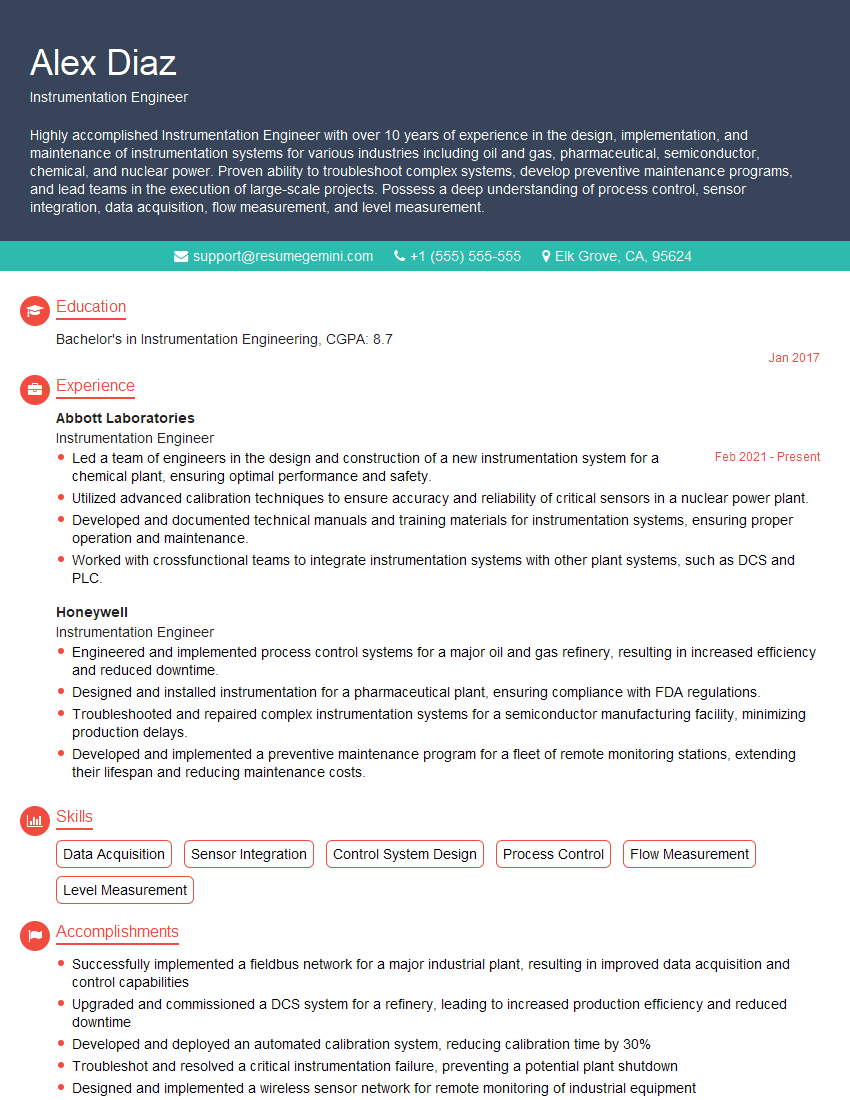
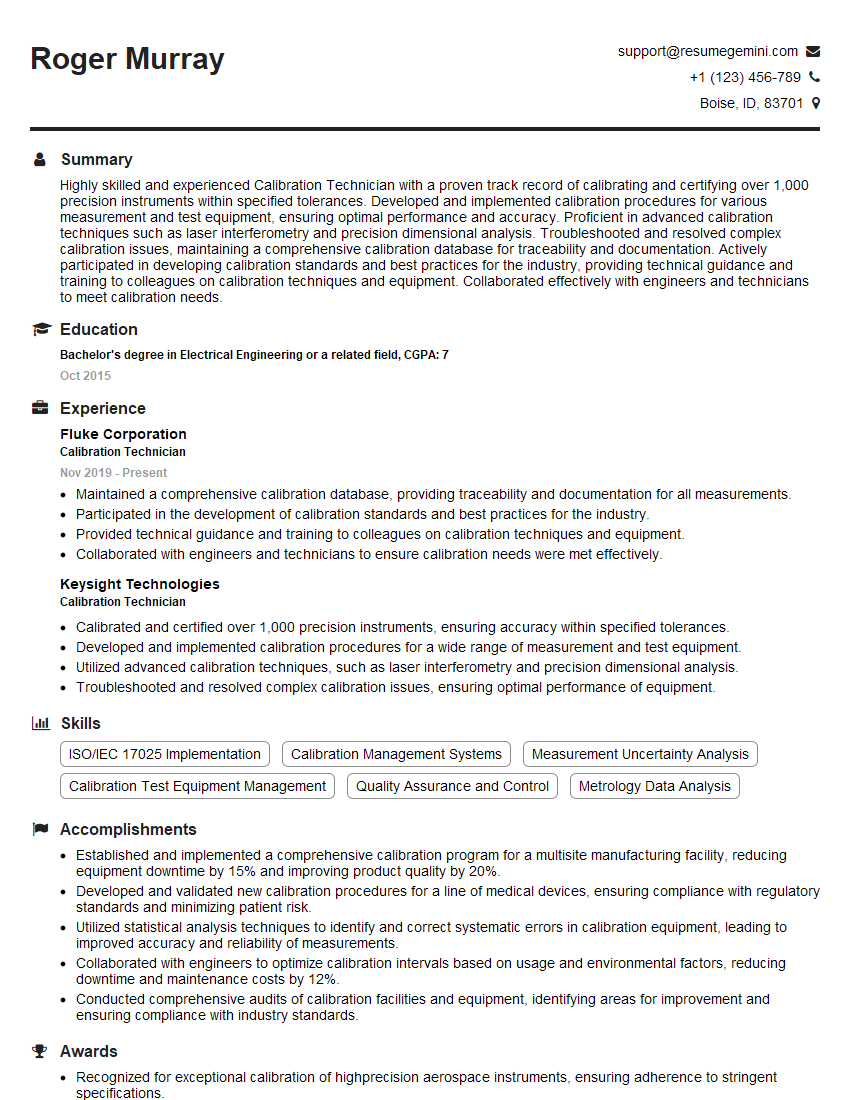
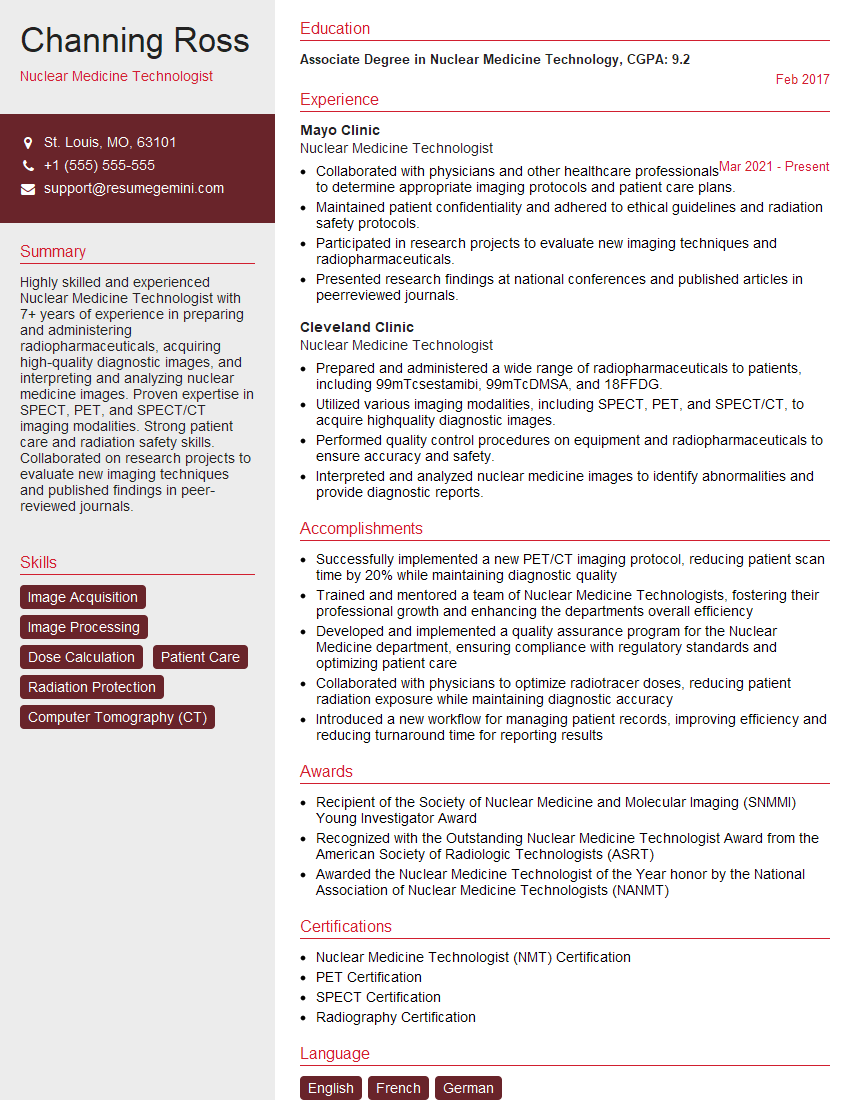
Mastering Radiation Instrumentation and Calibration opens doors to exciting and impactful careers in various sectors. A strong foundation in this field is highly valued, leading to increased job opportunities and career advancement. To maximize your chances of securing your dream role, it’s crucial to present your skills and experience effectively. Creating an ATS-friendly resume is paramount in today’s competitive job market. ResumeGemini is a trusted resource to help you build a professional and impactful resume that will catch the recruiter’s eye. We provide examples of resumes tailored to Radiation Instrumentation and Calibration to help you get started. Invest in your future – build a compelling resume today!




Explore more articles
Users Rating of Our Blogs
Share Your Experience
We value your feedback! Please rate our content and share your thoughts (optional).
What Readers Say About Our Blog
Very informative content, great job.
good