Every successful interview starts with knowing what to expect. In this blog, we’ll take you through the top Radio Equipment Operation interview questions, breaking them down with expert tips to help you deliver impactful answers. Step into your next interview fully prepared and ready to succeed.
Questions Asked in Radio Equipment Operation Interview
Q 1. Explain the difference between AM and FM radio waves.
AM (Amplitude Modulation) and FM (Frequency Modulation) are two different methods of encoding audio information onto a radio wave. Think of it like two ways to send a message using a flashlight: AM changes the brightness (amplitude) of the light to represent the sound, while FM changes the frequency (how rapidly the light blinks) to represent the sound.
In AM, the amplitude of the carrier wave is varied in proportion to the amplitude of the audio signal. This is simpler to implement but more susceptible to noise and interference, resulting in a less clear sound, especially static. AM radio stations often broadcast at lower frequencies, facilitating longer-range transmission but having reduced bandwidth for fidelity.
FM, on the other hand, varies the frequency of the carrier wave in proportion to the amplitude of the audio signal. This makes it significantly less susceptible to noise and interference, resulting in a cleaner, higher-fidelity sound. However, FM signals typically require a higher frequency band and thus a shorter transmission range. Think of a crisp, clear voice versus a crackly one – that’s the difference in audio quality.
Q 2. Describe the process of troubleshooting a malfunctioning radio transmitter.
Troubleshooting a malfunctioning radio transmitter is a systematic process. It begins with a thorough understanding of the system and its specifications. We start by isolating the problem—is it the transmitter itself, the antenna, or something in between?
- Initial checks: Examine the power supply, ensuring the correct voltage and current are provided. Visually inspect for any loose connections, damaged components, or signs of overheating. Check all cables for proper connection.
- Signal Tracing: Use a signal generator and oscilloscope to trace the signal path through the transmitter, identifying any point of signal degradation or loss. This helps to pinpoint the faulty component or stage.
- Component Level Testing: Once the faulty section is identified, each component in that section is tested individually, using a multimeter or other appropriate testing equipment. This may involve checking resistors, capacitors, transistors, and integrated circuits for proper operation.
- Antenna Check: Ensure proper impedance matching between the transmitter and antenna. A mismatch can cause significant signal loss or damage to the transmitter. Check for any physical damage to the antenna or its connection.
- Software Check (if applicable): For modern, software-defined radios, software bugs or glitches might be the root cause. Firmware updates or a software reset may solve the problem.
Throughout the process, safety precautions, like turning off power before working on internal components, are paramount.
Q 3. How do you ensure the safety of radio equipment during operation and maintenance?
Safety is paramount when operating and maintaining radio equipment. High-power transmitters can pose several hazards.
- RF Exposure: High-power radio waves can be harmful to human tissue. Strict adherence to RF safety guidelines, including appropriate shielding and distance limits, is essential. Personal protective equipment (PPE) like safety glasses and gloves might be required depending on the application.
- High Voltage: Many transmitters use high voltages. Always ensure the equipment is properly grounded and de-energized before any maintenance or repair work. Use insulated tools to prevent electric shock.
- Heat: Transmitters generate heat during operation. Ensure adequate ventilation to prevent overheating and fire hazards. Regular cleaning to remove dust and debris will also improve cooling.
- Proper Training: All personnel involved should receive proper training in safe operating procedures and emergency response protocols.
Regular safety inspections and maintaining clear and concise safety documentation are crucial for a safe working environment.
Q 4. What are the common causes of radio signal interference?
Radio signal interference can stem from various sources.
- Co-channel Interference: Two or more transmitters operating on the same frequency can interfere with each other, resulting in signal degradation or loss. This is especially problematic in densely populated areas with many radio systems.
- Adjacent Channel Interference: Transmitters operating on adjacent frequencies can cause interference, particularly if the filters in the receivers are not sufficiently selective.
- Intermodulation Interference: This happens when two or more signals mix within a non-linear component, producing new signals that fall within the operating frequency band of the receiver.
- Atmospheric Interference: Natural phenomena like lightning and solar flares can generate electromagnetic noise that interferes with radio signals.
- Man-made Interference: Electronic devices, power lines, and industrial equipment can emit electromagnetic radiation that causes interference. This often manifests as static or buzzing sounds.
Identifying the source of interference often involves signal tracing and using specialized equipment, such as spectrum analyzers, to pinpoint the interfering signal’s frequency and location.
Q 5. Explain the concept of radio frequency spectrum allocation.
Radio frequency (RF) spectrum allocation is the process of assigning specific frequency bands to different users and services. This is essential to prevent interference and ensure efficient use of the limited radio spectrum. Think of it like assigning lanes on a highway to different types of vehicles.
International organizations like the International Telecommunication Union (ITU) coordinate the global allocation. National regulatory bodies, such as the Federal Communications Commission (FCC) in the United States, manage the allocation within their respective countries. Allocations consider various factors, including the type of service (e.g., broadcasting, mobile communication, satellite communication), geographical location, and technical requirements.
Different frequency bands are suitable for different applications. Lower frequencies are better for long-range communication, while higher frequencies are often used for higher bandwidth applications, like data transmission.
Q 6. How do you perform routine maintenance on radio equipment?
Routine maintenance of radio equipment is crucial for ensuring reliable performance and extending its lifespan.
- Visual Inspection: Regularly inspect the equipment for loose connections, signs of damage, corrosion, and excessive dust buildup.
- Cleaning: Clean the equipment using appropriate cleaning agents and tools to remove dust and debris. Pay attention to cooling fans and ventilation pathways.
- Connection Checks: Check all connections, ensuring they are secure and properly terminated. This includes antenna connections and power cables.
- Calibration: Periodically calibrate the equipment using a calibrated signal generator and measuring instruments to ensure accurate operation.
- Firmware Updates: Update the firmware of the radio equipment to improve performance, fix bugs, and add new features (if applicable).
- Preventive Maintenance: Replace any worn or damaged parts proactively to prevent equipment failure.
A log book detailing all maintenance performed is vital for tracking performance and identifying potential issues early on. Following the manufacturer’s maintenance recommendations is also essential.
Q 7. Describe your experience with different types of antennas and their applications.
My experience encompasses various antenna types and their applications.
- Dipole Antennas: These are simple, resonant antennas that are widely used for their ease of construction and good performance over a narrow frequency range. I’ve used them extensively in amateur radio and simple broadcast applications.
- Yagi-Uda Antennas: These directional antennas offer high gain and directivity, making them ideal for long-distance communication. I’ve worked with them in point-to-point microwave links and television broadcasting.
- Patch Antennas: These planar antennas are compact and suitable for integration into various devices, including mobile phones and satellite terminals. I’ve used these in projects requiring a small form factor.
- Horn Antennas: These antennas are used for high-frequency applications such as satellite communication and radar systems. They offer good directivity and bandwidth.
- Microstrip Antennas: These printed circuit board antennas are compact and low-cost, often used in mobile communication systems. I’ve incorporated them in several small, low-power wireless applications.
The choice of antenna depends heavily on the frequency, desired gain, directivity, and the size and shape constraints of the application. Proper antenna matching is critical for optimal performance.
Q 8. What are the safety precautions you take when working with high-power radio transmitters?
Working with high-power radio transmitters demands rigorous safety precautions. High-power RF energy can cause serious burns, eye damage, and even internal organ heating. My approach involves a multi-layered safety protocol:
- Personal Protective Equipment (PPE): I always wear appropriate PPE, including safety glasses or goggles to protect my eyes from potential arc flashes and RF burns, and safety gloves to prevent accidental contact with energized components. For extremely high power levels, specialized RF-shielding clothing might be necessary.
- Access Control: I ensure that only authorized and trained personnel are allowed near the transmitter during operation. Proper signage and warning labels are crucial to prevent unauthorized access. I’ll often implement physical barriers or interlocks to prevent accidental contact with live components.
- RF Exposure Monitoring: Before operating the transmitter, I verify the RF exposure levels using a calibrated RF power meter or survey meter to confirm that they comply with regulatory limits (like those set by the FCC or ICNIRP). During operation, I maintain a safe distance from the antenna and high-power components.
- Emergency Procedures: I’m thoroughly familiar with emergency shutdown procedures in case of equipment malfunction. This includes knowing the location of emergency power-off switches and contacting emergency personnel if necessary.
- Regular Maintenance and Inspections: Regular maintenance and inspection of the transmitter and its associated components are crucial for preventing malfunctions and ensuring safe operation. This includes checking for loose connections, damaged components, and proper grounding.
For example, during a recent installation of a 1kW FM broadcast transmitter, I implemented a controlled access zone with warning signs and restricted entry during operation. We used RF meters to measure radiation levels and ensured they remained well below regulatory limits. Safety is always the paramount concern.
Q 9. How do you diagnose and resolve problems with radio receiver sensitivity?
Diagnosing poor receiver sensitivity involves a systematic approach, focusing on signal strength, noise, and component performance. Think of it like trying to hear a whisper in a noisy room – you need to amplify the whisper and reduce the noise.
- Signal Strength Measurement: The first step is to measure the signal strength at the receiver input using a signal generator and a spectrum analyzer. A low signal strength indicates a potential problem.
- Noise Figure Measurement: Next, I measure the noise figure of the receiver. A high noise figure implies excessive internal noise, masking the weak signal. This requires specialized equipment.
- Component Testing: I systematically test individual receiver components, starting with the antenna, then the RF amplifier stages, mixer, IF amplifier, and finally the detector. Faulty components (e.g., a degraded RF amplifier) will significantly reduce sensitivity.
- Impedance Matching: Poor impedance matching between the antenna and the receiver can lead to significant signal loss. I verify the impedance matching using a vector network analyzer and correct it if needed.
- Interference Check: External interference can mask weak signals. I use a spectrum analyzer to identify and mitigate interference sources. This might involve changing the receiver’s frequency or using filters.
For instance, I once dealt with a receiver that had significantly reduced sensitivity. By systematically testing components, I discovered a faulty RF amplifier stage. Replacing the faulty component restored the receiver’s performance to its original specifications.
Q 10. Explain the importance of proper grounding and shielding in radio systems.
Proper grounding and shielding are critical for minimizing noise and interference in radio systems. They prevent unwanted signals from entering the system and ensure the safety of personnel. Think of it like building a Faraday cage to protect sensitive electronics.
- Grounding: Grounding provides a low-impedance path for unwanted currents and static electricity to flow to the earth, preventing them from inducing noise into the system. This minimizes ground loops and reduces interference. It is essential for safety to avoid electric shocks.
- Shielding: Shielding protects sensitive components from electromagnetic interference (EMI) and radio frequency interference (RFI). Shields are typically made from conductive materials like copper or aluminum, creating a barrier that reduces the impact of external electromagnetic fields. The shield must be properly grounded to be effective.
Imagine a radio receiver near a large motor. Without proper grounding and shielding, the motor’s electrical noise could overwhelm the weak radio signals. Good grounding and shielding significantly reduce or eliminate this noise, leading to improved reception and reduced interference. In a professional setting, this is particularly critical for high-sensitivity receivers operating in noisy environments.
Q 11. Describe your experience with different modulation techniques (e.g., AM, FM, digital).
I have extensive experience with various modulation techniques, each offering different trade-offs between bandwidth efficiency, power efficiency, and robustness to noise.
- Amplitude Modulation (AM): AM is a simple modulation technique where the amplitude of a carrier wave is varied in proportion to the message signal. It’s relatively easy to implement but inefficient in terms of power and bandwidth.
- Frequency Modulation (FM): FM modulates the frequency of the carrier wave. It offers better noise immunity than AM, making it suitable for audio broadcasting. However, it requires more bandwidth.
- Digital Modulation (e.g., QAM, PSK, OFDM): Digital modulation techniques represent the message signal as a sequence of digital symbols. These techniques offer high spectral efficiency and the ability to implement sophisticated error correction schemes. Examples include Quadrature Amplitude Modulation (QAM), Phase-Shift Keying (PSK), and Orthogonal Frequency-Division Multiplexing (OFDM) – commonly used in digital radio and Wi-Fi.
In my work, I’ve configured and maintained both AM and FM broadcast transmitters. More recently, I’ve become involved in the deployment and maintenance of digital radio systems employing OFDM, which provide high data rates and resilience to multipath fading.
Q 12. How do you test the power output of a radio transmitter?
Testing the power output of a radio transmitter involves using a calibrated RF power meter. The procedure is straightforward but requires careful attention to safety precautions due to high RF power levels.
- Connect the Power Meter: Connect the power meter’s RF input to the transmitter’s output using a suitable coaxial cable and appropriate connectors. Ensure a good connection to avoid inaccurate readings.
- Safety Precautions: Take appropriate safety precautions. High-power transmitters can be dangerous. Ensure that the RF power is kept at safe levels during testing.
- Calibrate the Power Meter: Verify that the power meter is calibrated and functioning correctly.
- Measure the Power Output: Turn on the transmitter and observe the power meter’s reading. Note the power output in watts (or dBm).
- Compare to Specifications: Compare the measured power output to the transmitter’s specifications. Discrepancies may indicate a problem within the transmitter.
For instance, when testing a 50-watt VHF transmitter, I used a calibrated RF power meter connected to the output via a low-loss coaxial cable. The reading confirmed that the output was within the specified range, ensuring the transmitter operated correctly.
Q 13. What are the common causes of radio equipment overheating?
Radio equipment overheating can be caused by several factors, all relating to excessive heat generation or insufficient heat dissipation.
- High Power Dissipation: Excessive RF power, inefficient amplifier designs, or high current draw in other circuits generate significant heat.
- Poor Ventilation: Inadequate airflow around components prevents efficient heat dissipation, leading to overheating. This is particularly problematic in enclosed equipment.
- Faulty Components: Components like transistors or integrated circuits can overheat due to internal failures, causing localized hotspots.
- Load Mismatch: A significant mismatch between the transmitter output impedance and the antenna impedance can cause excessive power to be reflected back to the transmitter, leading to overheating.
- Environmental Factors: High ambient temperatures or poor ventilation in the equipment’s operating environment can exacerbate overheating problems.
In one case, a transmitter consistently overheated. Through careful investigation, I discovered a faulty heat sink on a high-power amplifier. Replacing the heat sink and ensuring proper ventilation solved the overheating issue.
Q 14. Explain your understanding of radio frequency impedance matching.
Radio frequency (RF) impedance matching is crucial for efficient power transfer between components in a radio system. It’s about ensuring that the impedance of the source (e.g., transmitter) is matched to the impedance of the load (e.g., antenna). Think of it like trying to fill a bucket with water – if the hose’s opening doesn’t match the bucket’s opening, you’ll have a lot of spillage (reflected power).
A mismatch leads to:
- Power Loss: Reflected power results in wasted energy and reduced efficiency.
- Overheating: Reflected power can cause components to overheat.
- Standing Waves: Mismatched impedance creates standing waves on the transmission line, potentially damaging components or the antenna.
To achieve impedance matching, various techniques are employed:
- Matching Networks: These networks, consisting of inductors and capacitors, transform the impedance of the source to match the impedance of the load. Examples include L-networks, pi-networks, and matching transformers.
- Antenna Tuners: These devices adjust the antenna’s impedance to match the transmitter’s output impedance. They are especially important for antennas operating outside their ideal frequency range.
For instance, in the installation of a new antenna, I used a vector network analyzer to measure the antenna’s impedance. Then, I designed and implemented an L-network to match the antenna’s impedance to the transmitter’s 50-ohm output impedance. This ensured efficient power transfer and prevented potential damage from reflected power.
Q 15. How do you interpret a radio equipment schematic diagram?
Interpreting a radio equipment schematic diagram involves understanding its symbolic representation of the electronic components and their interconnections. Think of it like a blueprint for the radio system. It shows the flow of signals and power within the equipment.
- First, identify the key components: Look for symbols representing transistors, capacitors, resistors, inductors, integrated circuits (ICs), and other components. Each symbol has a specific meaning defined in electronics standards.
- Trace the signal path: Follow the lines connecting the components to understand how signals are processed, amplified, and transmitted or received. This might involve following the path from an antenna input to a speaker output, for example.
- Understand the power supply: Identify the power supply components and how they provide power to different parts of the circuit. This is crucial for understanding how the system operates and potential power-related issues.
- Analyze stages: Most schematics are divided into functional blocks. Understand what each block does (e.g., RF amplification, mixing, filtering, demodulation). This modular approach simplifies analysis.
- Refer to component datasheets: If specific component values or characteristics are needed for a deeper understanding, consult the datasheets for those components.
For example, in a simple AM receiver schematic, you’d see how the antenna signal is processed through stages of RF amplification, mixing with a local oscillator, intermediate frequency (IF) amplification, detection, and finally audio amplification before reaching the speaker. Understanding this flow is key to troubleshooting any problems.
Career Expert Tips:
- Ace those interviews! Prepare effectively by reviewing the Top 50 Most Common Interview Questions on ResumeGemini.
- Navigate your job search with confidence! Explore a wide range of Career Tips on ResumeGemini. Learn about common challenges and recommendations to overcome them.
- Craft the perfect resume! Master the Art of Resume Writing with ResumeGemini’s guide. Showcase your unique qualifications and achievements effectively.
- Don’t miss out on holiday savings! Build your dream resume with ResumeGemini’s ATS optimized templates.
Q 16. Describe your experience with various types of radio equipment testing instruments.
My experience with radio equipment testing instruments is extensive, encompassing a wide range of tools crucial for ensuring optimal performance and compliance. I’m proficient in using instruments like:
- Spectrum Analyzers: These are essential for analyzing the frequency spectrum of radio signals. I use them to measure signal power, identify interference, and verify compliance with emission standards. For instance, I’ve used them to pinpoint the source of unwanted signals interfering with a critical communication link.
- Signal Generators: These instruments generate precisely controlled signals for testing the sensitivity, linearity, and other characteristics of receivers. I’ve employed them to test the dynamic range of a receiver, ensuring it can handle both weak and strong signals without distortion.
- Network Analyzers: These are invaluable for analyzing transmission lines and antennas. I utilize them to assess impedance matching, reflection coefficients (SWR), and other parameters that affect signal quality and power transfer. This helps optimize antenna performance for maximum efficiency.
- Oscilloscope: I regularly use oscilloscopes to observe the time-domain behavior of radio signals. This allows me to analyze waveform shapes, identify distortions, and troubleshoot timing-related issues in the radio equipment.
- Power Meters: Precise measurement of radio frequency (RF) power is crucial for safety and regulatory compliance. I have extensive experience in using power meters to measure the output power of transmitters and ensure it stays within permitted limits.
My experience extends beyond just using these instruments; I am also adept at interpreting the data they provide to diagnose and resolve technical problems.
Q 17. How do you ensure compliance with relevant radio regulations and standards?
Ensuring compliance with radio regulations and standards is paramount for safe and reliable operation. This involves a multifaceted approach:
- Understanding applicable regulations: I stay updated on regulations like FCC rules in the US or similar regulations in other regions. This includes rules about frequency allocation, power limits, emission masks, and equipment certification.
- Proper equipment certification: I always ensure that the radio equipment used is appropriately certified (e.g., FCC ID, CE marking) for its intended use and operating area. This is a crucial step to demonstrate compliance.
- Regular testing and measurements: I conduct regular testing using the instruments discussed earlier to ensure the equipment’s performance remains within regulatory limits. This involves measuring output power, spurious emissions, and other relevant parameters.
- Record keeping: Maintaining detailed records of testing and maintenance procedures is crucial for demonstrating compliance during audits or investigations. These records provide evidence that the equipment is operating as intended and meets all applicable regulations.
- Staying informed about updates: Radio regulations and standards evolve. I continuously monitor relevant publications and notifications to stay informed about any changes that might affect my work.
For example, I recently conducted a comprehensive test on a new transmitter to ensure its output power and spurious emission levels were below the FCC limits before its deployment.
Q 18. Explain your understanding of radio propagation and its impact on signal quality.
Radio propagation refers to how radio waves travel from a transmitter to a receiver. Understanding this is critical for optimizing communication systems. Several factors affect propagation, leading to variations in signal quality:
- Frequency: Higher frequencies experience greater attenuation (signal loss) and are more susceptible to atmospheric effects. Lower frequencies can travel farther and penetrate obstacles more effectively.
- Distance: Signal strength weakens with distance due to the inverse square law. This means that doubling the distance reduces the signal power by a factor of four.
- Obstacles: Buildings, hills, and foliage can block or absorb radio waves, reducing signal strength. This is why line-of-sight is often preferred for high-quality communication.
- Atmospheric conditions: Rain, fog, and atmospheric gases can attenuate radio signals. Ionospheric conditions also impact propagation, especially for high-frequency (HF) signals.
- Multipath propagation: Signals can reflect off surfaces, arriving at the receiver via multiple paths. This can cause constructive or destructive interference, leading to fading or signal distortions.
These factors collectively impact signal quality. Poor propagation can result in weak signals, noise, and unreliable communication. Understanding these effects is crucial for antenna placement, system design, and selection of appropriate frequencies to ensure robust communication.
For instance, during the deployment of a rural communication network, we had to consider the terrain and potential signal blockage to strategically position repeaters and optimize antenna heights to achieve the desired coverage.
Q 19. Describe your experience with different types of radio communication protocols.
My experience encompasses several radio communication protocols, each designed for specific applications and environments. Examples include:
- AM (Amplitude Modulation): A simple and robust method suitable for broadcasting and some short-range communications. It’s susceptible to noise but relatively easy to implement.
- FM (Frequency Modulation): Offers better noise immunity than AM and is commonly used in broadcasting (FM radio) and some two-way radio systems. It uses a wider bandwidth compared to AM.
- PSK (Phase Shift Keying): A digital modulation scheme used in various communication systems, offering efficient data transmission. Several variations exist, including BPSK, QPSK, and others, each with different data rates and spectral efficiencies.
- FSK (Frequency Shift Keying): Another digital modulation technique that switches between two frequencies to represent data. It’s simpler than PSK but less spectrally efficient.
- DMR (Digital Mobile Radio): A digital standard used in two-way radio systems that offer improved audio quality, enhanced features (e.g., data transmission), and better spectral efficiency than analog systems.
- TETRA (Terrestrial Trunked Radio): A digital standard typically used for professional mobile radio communications (e.g., public safety, utilities). It’s designed for high capacity and reliability.
Understanding the strengths and weaknesses of each protocol is essential for selecting the most appropriate one for a given application. For instance, when designing a low-power, long-range sensor network, we carefully considered factors like power consumption, data rate requirements, and interference to select the most suitable modulation and communication protocol.
Q 20. How do you troubleshoot a problem with a radio repeater system?
Troubleshooting a radio repeater system involves a systematic approach to identify the source of the problem. I usually follow these steps:
- Gather information: First, I gather information about the nature of the problem—is it affecting all users, a specific location, or a specific time? What are the reported symptoms (e.g., low signal strength, no audio, intermittent communication)?
- Check signal levels: Using a spectrum analyzer and signal level meter, I measure the signal strength at various points in the system, including the input and output of the repeater, and the coverage area. This helps to pinpoint where signal degradation is occurring.
- Test the transmitter and receiver: I conduct tests on the repeater’s transmitter and receiver sections individually to check if there are issues with modulation, amplification, or filtering.
- Inspect cabling and connectors: Loose or damaged cables and connectors can lead to signal loss or interference. I carefully inspect all connections and cabling for any signs of damage or degradation.
- Check antenna systems: Problems can stem from the antennas themselves—damage, poor grounding, or misalignment can all cause problems. I inspect the antennas for damage and check their alignment and impedance matching.
- Examine the repeater’s internal components: If the problem persists, I might need to inspect the repeater’s internal components (power supplies, filters, amplifiers, etc.). I utilize oscilloscopes and other diagnostic tools to assess their functionality.
- Consult system logs and data: Many repeaters have logging capabilities that provide valuable information about errors or unusual events. Reviewing these logs can provide crucial clues to the problem’s cause.
It’s a process of elimination. By systematically investigating these areas, I can usually isolate the root cause and implement the appropriate repair or adjustment.
Q 21. How do you maintain accurate records of radio equipment maintenance and repairs?
Maintaining accurate records of radio equipment maintenance and repairs is crucial for several reasons – legal compliance, efficient troubleshooting, and cost tracking. I utilize a combination of digital and physical methods:
- Digital database: I use a computerized maintenance management system (CMMS) to track equipment information, maintenance schedules, repairs, and associated costs. This database can include details such as serial numbers, model numbers, purchase dates, maintenance dates, repairs performed, and parts used. A well-designed database allows for easy search and retrieval of information.
- Physical logs: I maintain detailed physical logs and service records for each piece of equipment. These logs include handwritten notes, diagrams, and other relevant documents from on-site maintenance activities. This helps to provide a backup to the digital information and provides a record that can be accessed even without a computer system.
- Calibration certificates: For all testing equipment, I maintain certificates of calibration from a certified laboratory. This demonstrates the accuracy and reliability of my measurements.
- Photographs and schematics: Where appropriate, I use photographs to document the physical condition of the equipment, especially after repairs. Schematics are frequently updated to reflect changes made during maintenance or repairs.
This comprehensive approach ensures that all information is accurately recorded, readily accessible, and auditable. This is particularly important for regulatory compliance and for efficient troubleshooting when problems arise.
Q 22. Explain your experience with radio system upgrades and installations.
My experience with radio system upgrades and installations spans over ten years, encompassing various projects from small-scale deployments to large-scale network overhauls. I’ve worked with a wide range of radio technologies, including VHF, UHF, and microwave systems. A recent project involved upgrading a legacy analog system to a digital trunked radio system (DTRS) for a large municipal police department. This required meticulous planning, careful site surveys to identify optimal antenna placement, and extensive coordination with multiple teams to minimize service disruption. The upgrade involved replacing outdated base stations, installing new repeaters with advanced features like GPS tracking and encryption, and providing training to the end-users on the new system’s operation. Another key aspect was ensuring seamless integration with existing dispatch consoles and other critical infrastructure. The project’s success was validated by a significant improvement in communication clarity, range, and overall system reliability.
In another instance, I was involved in the installation of a new microwave link between two remote locations. This involved careful site selection, precise antenna alignment using sophisticated surveying equipment, and rigorous testing to ensure optimal signal quality. This project highlighted the importance of precise measurements and understanding of RF propagation principles in achieving a reliable connection in challenging geographical conditions.
Q 23. How do you handle emergency situations related to radio equipment failure?
Handling emergency situations involving radio equipment failure requires a calm and systematic approach. My first step is always to assess the situation and identify the scope of the problem. This often involves troubleshooting the affected equipment, checking power supplies, antenna connections, and network connectivity. We utilize a tiered approach to restoration. For example, if a critical repeater fails, we immediately switch to a backup repeater to maintain communication. While the primary repeater is being repaired, I would initiate a thorough investigation to determine the root cause of the failure to prevent future occurrences. Detailed logs and documentation are crucial in this process. If the problem involves a widespread network outage, I work with my team to implement emergency communication plans using alternative methods such as satellite phones or dedicated backup communication systems. Clear and concise communication with stakeholders is vital during these stressful moments, keeping them updated on the progress of repairs and expected restoration time.
For instance, during a severe storm, a key repeater experienced a lightning strike. My team and I quickly activated the backup system and initiated repairs, prioritizing critical communication channels. Simultaneously, we contacted the relevant authorities and kept them informed about the situation’s progress, demonstrating transparency and accountability.
Q 24. Describe your experience with different types of radio frequency filters.
My experience encompasses a broad range of radio frequency filters, including bandpass, band-stop, low-pass, and high-pass filters. These filters are crucial for isolating desired signals and eliminating unwanted interference. I’ve worked extensively with cavity filters for microwave applications, which offer high selectivity and excellent performance. Surface acoustic wave (SAW) filters are commonly used in cellular systems, providing compact size and cost-effectiveness. Crystal filters find application in narrowband systems requiring high stability and precision. The choice of filter type depends on the specific application’s requirements, such as frequency range, bandwidth, attenuation characteristics, and power handling capabilities. For instance, in a cellular base station, SAW filters are essential for isolating different frequency channels to avoid interference between them. In a narrowband radio system, crystal filters are often used to provide highly selective filtering to ensure accurate frequency reception.
Understanding the specifications of each filter type – insertion loss, return loss, and bandwidth – is critical for selecting the appropriate filter for a particular application. Incorrect filter selection can lead to signal degradation, interference, or even system failure.
Q 25. What are your strengths and weaknesses in radio equipment operation?
My strengths lie in my problem-solving abilities, my in-depth technical knowledge of radio systems, and my proactive approach to maintenance and troubleshooting. I am adept at quickly diagnosing complex equipment failures and implementing efficient solutions. I excel at working both independently and collaboratively, and possess strong communication skills enabling me to effectively convey technical information to both technical and non-technical audiences. I am also highly organized and detail-oriented, ensuring the accuracy and completeness of my work.
An area I am continuously working on is staying completely abreast of the newest cutting-edge technologies and software upgrades as the field evolves at a rapid pace. While I am proactive in my learning and development, proactively dedicating time to professional development opportunities keeps my skill set refined and current.
Q 26. Describe a challenging radio equipment repair you have completed.
One particularly challenging repair involved a malfunctioning high-power amplifier in a VHF repeater located on a remote mountaintop. The amplifier was exhibiting intermittent power output, resulting in significant signal degradation. Initial troubleshooting pointed towards a possible fault within the amplifier’s power supply circuitry. However, upon closer inspection, I discovered a hairline crack in a crucial component within the amplifier itself, which was almost impossible to spot without specialized equipment. Due to the remote location, replacing the component immediately wasn’t feasible. I painstakingly repaired the crack using advanced soldering techniques and specialized epoxy. After a thorough retest and alignment procedure, the amplifier was restored to its full operating capacity, showcasing the importance of meticulous diagnostic skills and hands-on expertise in such remote, high-stakes situations.
Q 27. How do you stay updated with the latest advancements in radio technology?
Staying updated on the latest advancements in radio technology is paramount in this rapidly evolving field. I achieve this through a multi-pronged approach. I actively participate in industry conferences and webinars, attending workshops and seminars to learn about the newest technologies and best practices. I subscribe to industry journals and publications and engage in professional networking, connecting with colleagues and peers to exchange knowledge and insights. Online learning platforms and manufacturer training programs offer excellent opportunities to deepen my understanding of new equipment and software. I also actively participate in online forums and discussion groups related to radio technology, ensuring that I stay engaged and informed about current trends and challenges within the field.
Q 28. Explain your understanding of different types of radio wave polarization.
Radio waves can be polarized, meaning their electric field oscillates in a specific direction. The two primary types of polarization are linear and circular. Linear polarization can be further categorized into vertical and horizontal. In vertical polarization, the electric field oscillates vertically, while in horizontal polarization, it oscillates horizontally. Circular polarization can be either right-hand circular or left-hand circular, depending on the direction of rotation of the electric field vector. The choice of polarization depends on several factors, including propagation characteristics, antenna design, and interference reduction. For example, vertical polarization is often favored for VHF and UHF communications, while horizontal polarization is used in some microwave applications. Circular polarization is less susceptible to signal fading caused by multipath propagation and is often preferred for satellite communications and long-range terrestrial links. Understanding polarization is crucial for proper antenna design and system optimization, ensuring efficient signal transmission and reception.
Key Topics to Learn for Radio Equipment Operation Interview
- Radio Frequency (RF) Principles: Understanding wave propagation, modulation techniques (AM, FM, digital), and signal characteristics is fundamental. Consider exploring different antenna types and their applications.
- Equipment Operation & Maintenance: Familiarize yourself with the practical aspects of operating various radio equipment, including troubleshooting common issues and performing routine maintenance procedures. This includes understanding safety protocols.
- Communication Protocols & Systems: Gain a solid understanding of different communication protocols used in radio systems (e.g., simplex, half-duplex, full-duplex) and their applications in various contexts (e.g., land mobile radio, marine radio).
- Troubleshooting & Problem-Solving: Develop your ability to diagnose and resolve technical problems related to radio equipment malfunctions. Practice identifying symptoms and applying systematic troubleshooting methodologies.
- Regulatory Compliance & Safety: Understand relevant regulations and safety procedures related to radio equipment operation, including licensing requirements and emergency protocols.
- Digital Signal Processing (DSP): For advanced roles, familiarity with the principles of digital signal processing within radio systems will be highly beneficial. Explore concepts such as filtering and equalization.
- Network Configuration & Management: Depending on the role, understanding network configurations, including trunking systems and repeaters, will be crucial.
Next Steps
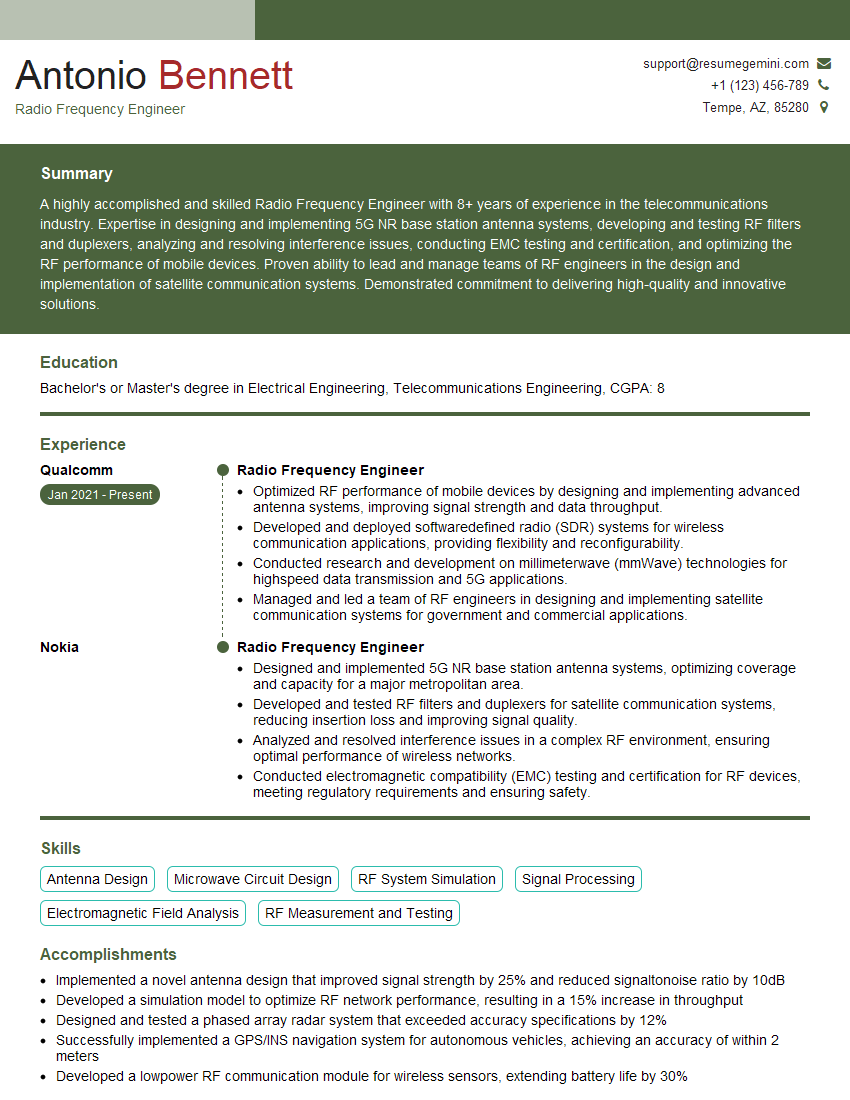
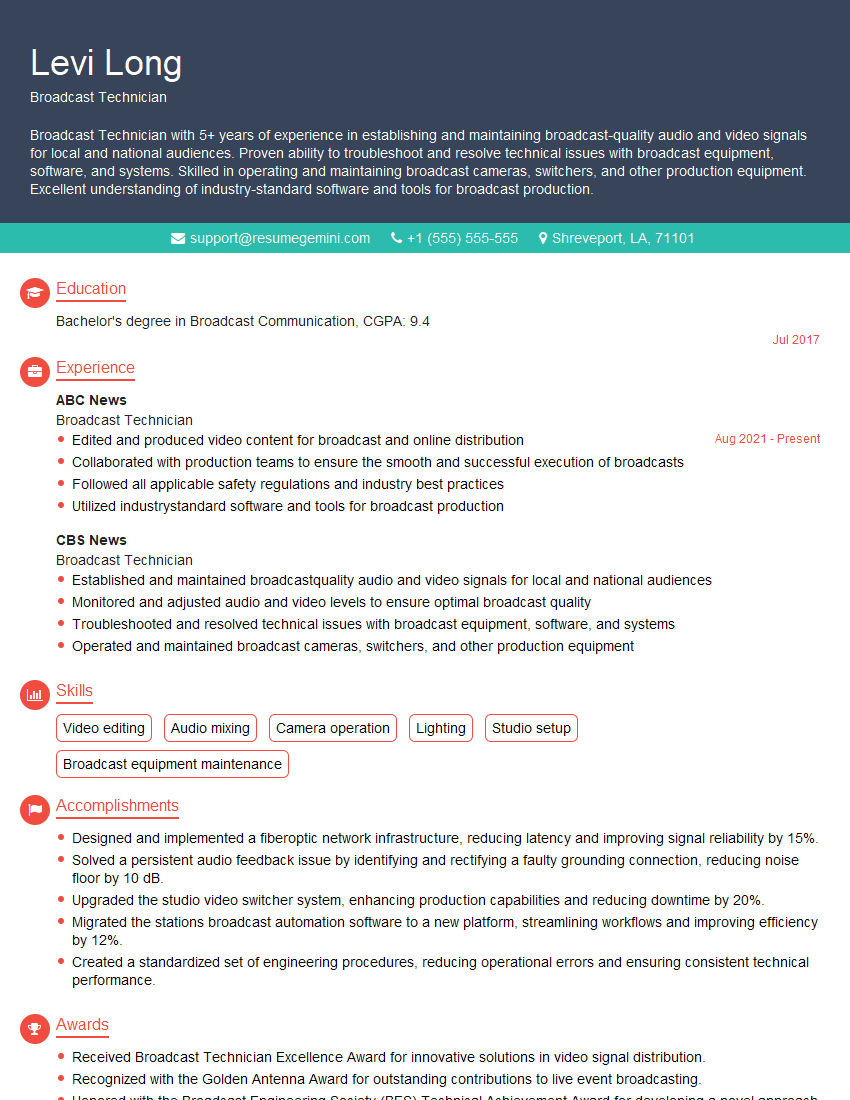
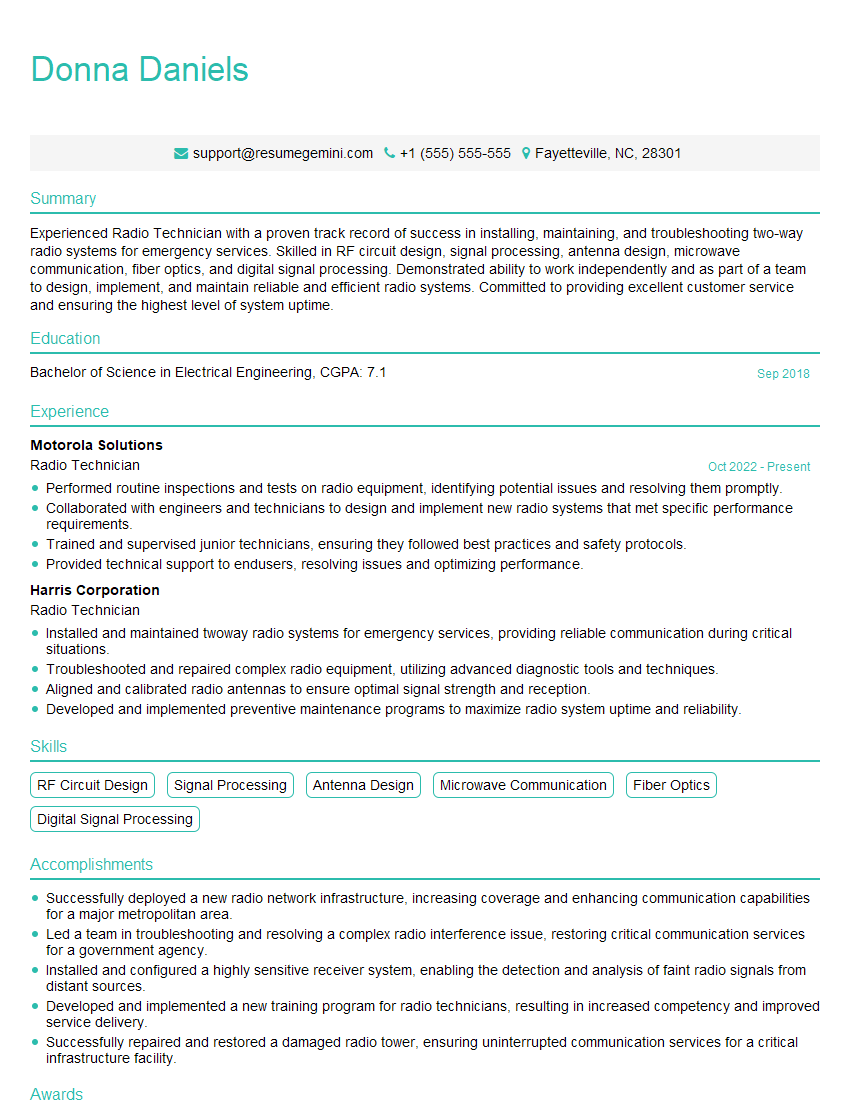
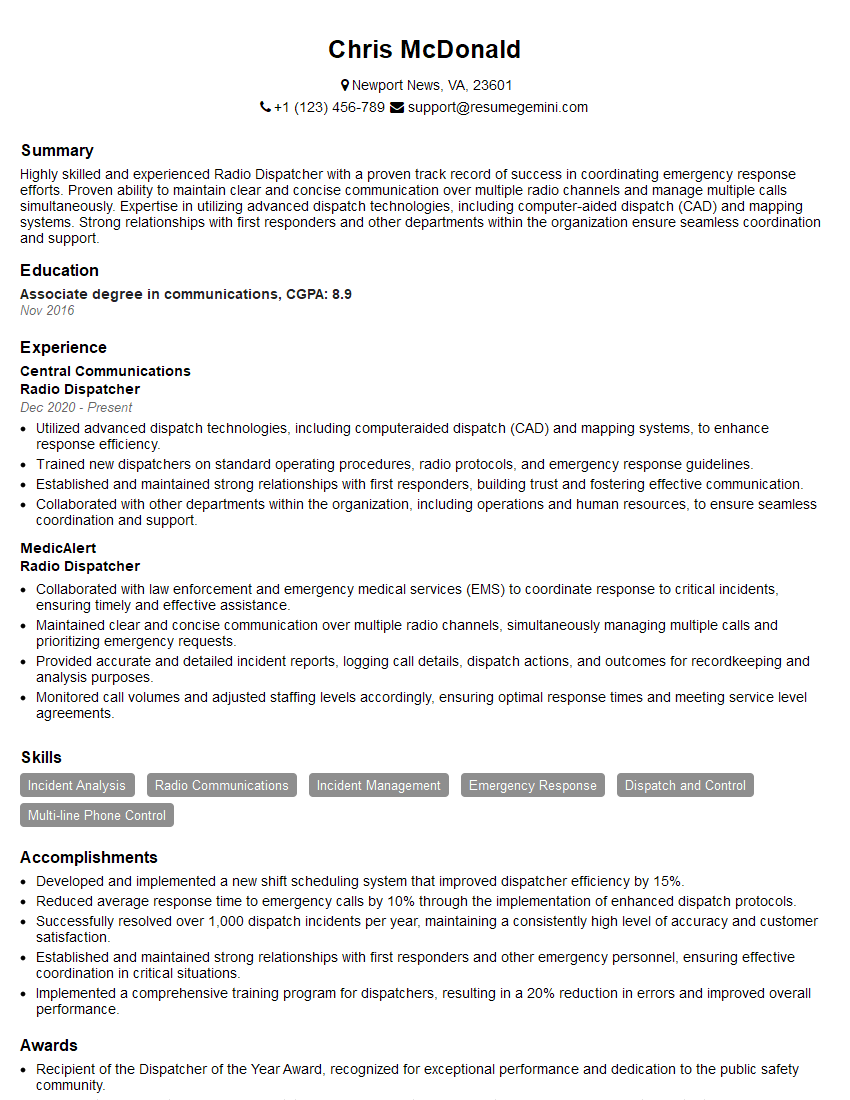
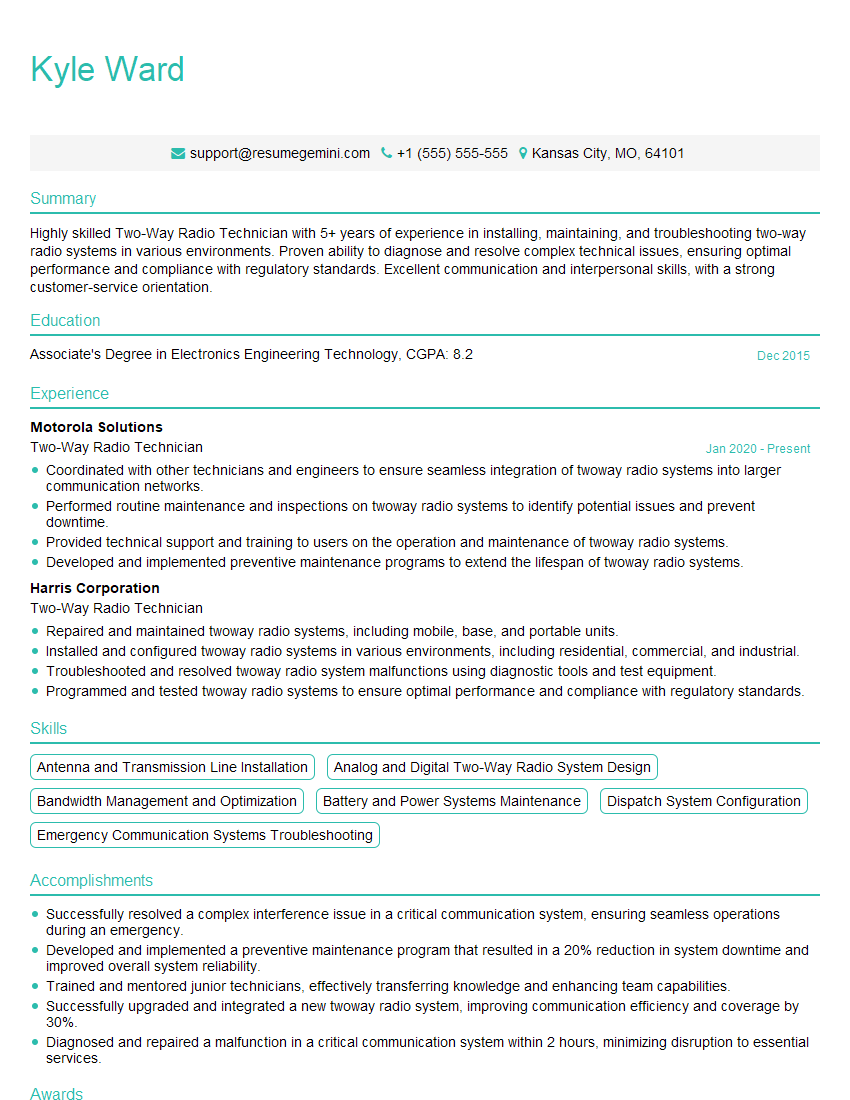
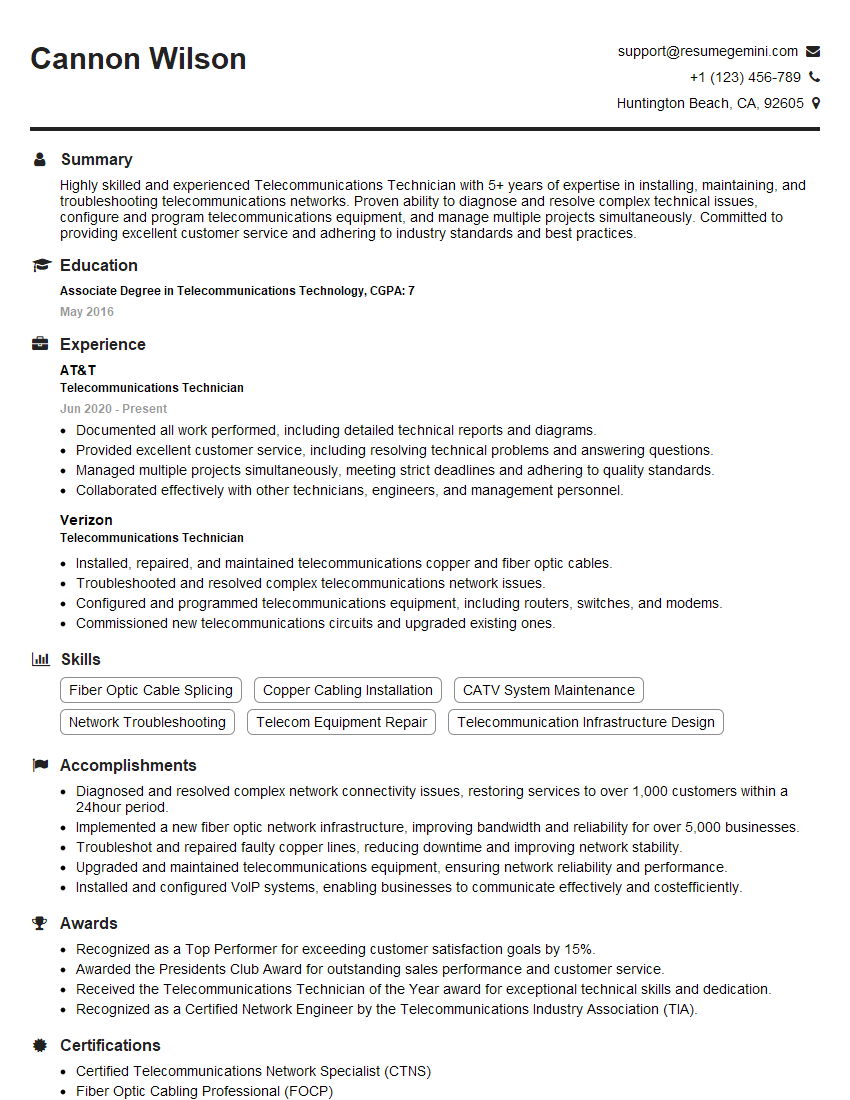
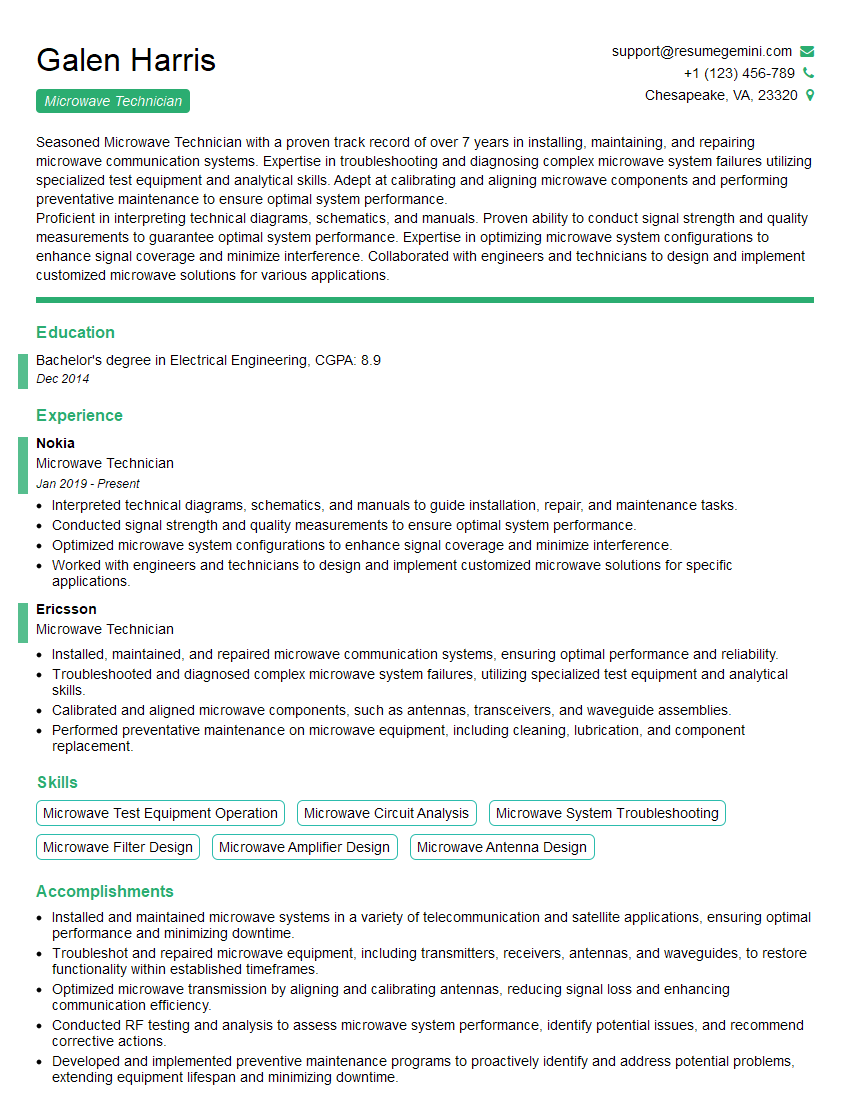
Mastering Radio Equipment Operation opens doors to exciting and rewarding careers in diverse fields. A strong understanding of these principles is essential for career advancement and securing your dream role. To significantly improve your job prospects, focus on creating a professional, ATS-friendly resume that highlights your skills and experience effectively. ResumeGemini is a trusted resource that can help you build a compelling resume tailored to the specific demands of the Radio Equipment Operation field. Examples of resumes specifically designed for this industry are available to guide you through the process.
Explore more articles
Users Rating of Our Blogs
Share Your Experience
We value your feedback! Please rate our content and share your thoughts (optional).
What Readers Say About Our Blog
Very informative content, great job.
good