The thought of an interview can be nerve-wracking, but the right preparation can make all the difference. Explore this comprehensive guide to Recipient Coordination interview questions and gain the confidence you need to showcase your abilities and secure the role.
Questions Asked in Recipient Coordination Interview
Q 1. Explain your experience with various shipping carriers and their respective services.
My experience spans a wide range of shipping carriers, from major players like FedEx, UPS, and DHL to smaller regional carriers specializing in specific services. I understand the nuances of each carrier’s strengths and weaknesses – for instance, FedEx’s excellent overnight delivery service versus UPS’s robust ground shipping network. My familiarity extends beyond simply selecting a carrier; I understand their service level agreements (SLAs), pricing structures, and tracking capabilities. This enables me to make informed decisions based on the specific needs of each shipment – urgency, cost, fragility, size, and destination. For example, for time-sensitive documents going a short distance, I might opt for FedEx’s same-day delivery. Conversely, for large, less urgent shipments across the country, UPS ground shipping would be more cost-effective.
I have experience utilizing their online portals, APIs, and direct customer service lines to manage shipments effectively. I’m adept at negotiating rates and leveraging volume discounts to optimize shipping costs. Furthermore, I have a deep understanding of different shipping modalities, including air freight, sea freight, and ground transportation, and can choose the most suitable option depending on the shipment’s characteristics.
Q 2. Describe your process for tracking shipments and resolving delivery issues.
My shipment tracking process is proactive and systematic. I utilize the tracking numbers provided by each carrier and leverage their online tracking portals to monitor shipments in real-time. I create a central tracking database, often using a dedicated software (discussed in the next question), to consolidate all tracking information, simplifying monitoring and reporting. This database allows me to instantly see the status of any shipment, identify potential delays, and proactively address any issues.
If delivery issues arise, my problem-solving process is multi-faceted. I first attempt to resolve the issue directly through the carrier’s customer service, providing all relevant tracking information and documentation. If necessary, I escalate the issue to a supervisor or claims department. I meticulously document all communication and actions taken, ensuring a clear audit trail. In cases involving damaged goods, I work closely with the carrier and the recipient to file claims and initiate the return/replacement process. I always prioritize clear, timely communication with both the sender and recipient, keeping them informed throughout the entire process. For instance, if a shipment is delayed due to unforeseen circumstances, I immediately notify the recipient, providing an estimated delivery date and explaining the reason for the delay.
Q 3. How do you prioritize multiple shipments with varying deadlines and complexities?
Prioritizing multiple shipments requires a structured approach. I employ a combination of methods, including a prioritization matrix that considers factors like deadline urgency, shipment value, complexity, and recipient importance. Critical shipments with tight deadlines and high value are naturally prioritized over less urgent ones. I visualize this using a Kanban-style board, either physical or digital, to track the progress of each shipment. This allows me to easily identify bottlenecks and re-allocate resources as needed.
For instance, if I have a high-priority, time-sensitive shipment alongside several others with more flexible deadlines, I allocate my time and resources to ensure the critical shipment is processed and shipped first. I use project management principles, such as breaking down complex shipments into smaller, manageable tasks, to improve efficiency. Proactive communication with carriers about potential delays or resource constraints is crucial for successful prioritization.
Q 4. What software or systems are you proficient in for managing recipient information and tracking shipments?
I am proficient in several software systems for managing recipient information and tracking shipments. My experience includes using specialized logistics management systems (LMS) such as SAP Transportation Management (TM) and Oracle Transportation Management (OTM). These systems offer features such as automated tracking, address verification, reporting, and integration with carrier APIs. I’m also adept at using cloud-based solutions such as Salesforce and Microsoft Dynamics 365, which often provide CRM capabilities for managing recipient information alongside shipping logistics. Furthermore, I am familiar with various spreadsheet software like Excel and Google Sheets for organizing and analyzing shipment data. Finally, I am comfortable using the individual online portals provided by each shipping carrier for tracking and managing shipments.
Q 5. How do you handle address verification and correction to ensure accurate delivery?
Address verification is a crucial aspect of ensuring accurate delivery. I utilize several strategies, including leveraging the address verification tools integrated within the LMS and carrier systems. These tools often cross-reference addresses against national databases to identify and flag any inconsistencies or potential errors. For international shipments, I ensure that addresses adhere to the specific format required by the destination country.
When discrepancies are detected, I proactively contact the sender or recipient to confirm the correct address. In some cases, I might use online mapping tools to visually verify the address and identify any potential delivery challenges, such as inaccessible locations or poor road conditions. I document all address verification efforts and any corrections made, maintaining a detailed audit trail for each shipment.
Q 6. What strategies do you employ to manage and reduce delivery errors?
Reducing delivery errors involves a multi-pronged approach focusing on prevention and proactive management. First and foremost, I prioritize accurate data entry and verification at every step of the process. This includes careful review of recipient addresses, contact information, and shipment details. I utilize automated data validation tools whenever possible to minimize manual errors. Regular training on proper data entry procedures for all team members is critical.
Secondly, I encourage open communication and collaboration with both senders and recipients. Confirming delivery instructions, special requirements (e.g., signature required, specific delivery times), and contact information in advance significantly reduces the potential for errors. Finally, I regularly analyze delivery error data to identify trends and patterns. This analysis helps to pinpoint areas for improvement and allows for the implementation of corrective measures. For example, if a high percentage of errors are related to incomplete addresses, we might implement stricter address validation procedures.
Q 7. Describe your experience with international shipping regulations and documentation.
My experience with international shipping regulations and documentation is extensive. I am familiar with various international trade regulations, including customs procedures, import/export documentation (e.g., commercial invoices, packing lists, certificates of origin), and relevant HS codes (Harmonized System codes used to classify goods for customs purposes). I understand the differences in regulations between various countries and regions, and I can ensure that shipments comply with all applicable laws and regulations.
I have handled documentation for shipments across various countries and have experience working with customs brokers to navigate complex import and export processes. My understanding extends to the proper classification of goods, the calculation of duties and taxes, and the completion of necessary customs forms. I am also well-versed in international shipping Incoterms (International Commercial Terms), which define the responsibilities of buyers and sellers in international trade transactions.
Q 8. How do you handle recipient inquiries and complaints regarding shipments?
Handling recipient inquiries and complaints effectively is crucial for maintaining customer satisfaction and brand reputation. My approach involves a multi-step process. First, I acknowledge the inquiry or complaint promptly, showing empathy and understanding. I then carefully listen to the recipient’s concerns, asking clarifying questions to fully grasp the situation. This could involve understanding the nature of the problem – a damaged item, late delivery, or incorrect product. Next, I investigate the issue using tracking information, delivery notes, and communication logs. Depending on the problem, I might contact the shipping carrier for further investigation or review internal processes to pinpoint the root cause. Finally, I provide a resolution, whether it’s issuing a refund, replacement, or offering a suitable compensation, ensuring the recipient feels valued and heard. For example, if a recipient reports a damaged package, I would first apologize for the inconvenience, then request photos of the damage and the packaging. This evidence helps determine the next steps, such as filing a claim with the carrier or issuing a replacement. Throughout the process, I maintain clear and consistent communication, keeping the recipient updated on the progress.
Q 9. What is your approach to resolving discrepancies between shipment records and recipient confirmation?
Discrepancies between shipment records and recipient confirmations require a thorough investigation. My approach begins with a comparison of the two records, noting the specific differences. For example, a discrepancy might involve a difference in the quantity of items received, the condition of the goods, or the delivery date. I would then systematically analyze potential reasons for this difference. This may involve checking the packing list against the shipment manifest, verifying the weight and dimensions, and reviewing the delivery signature (if applicable). If the discrepancy involves damage or shortage, I’d investigate whether the packaging was sufficient to protect the contents during transit. I would also contact the recipient to gather further information and perhaps request photos as evidence. Finally, I use this evidence to determine the most appropriate course of action, which might include a partial refund, replacement of missing items, or issuing a credit note. Open communication with both the recipient and the shipping team is crucial throughout this process to reach a fair resolution.
Q 10. How familiar are you with different types of shipping labels and their applications?
I’m highly familiar with various shipping labels and their applications. My knowledge encompasses different label types such as address labels, barcode labels, hazardous materials labels (Hazmat), custom labels, and return labels. Each label serves a unique purpose in the shipping process. For example, address labels ensure the package reaches the correct recipient, while barcode labels streamline warehouse management and tracking. Hazmat labels are essential for the safe transportation of dangerous goods, adhering to strict regulations. Understanding the specific requirements of each label type is critical for ensuring compliance and preventing delays or penalties. I’m also proficient in using label printing software and integrating it with inventory management systems to automate the label generation process. Furthermore, I understand the implications of incorrect or missing labels, and how they can lead to delays, misrouting, and additional costs.
Q 11. Describe your experience with creating and managing shipping manifests.
I have extensive experience in creating and managing shipping manifests. This includes compiling all shipment information into a single, organized document that lists every package in a shipment, including details like tracking numbers, weight, dimensions, destination, and recipient information. I’m proficient in using various software solutions for manifest generation and am familiar with different formats required by different carriers. My experience also covers the reconciliation of the manifest with actual shipments, identifying any discrepancies early on. Moreover, I understand the importance of accurate manifest creation for compliance with regulations and for efficient tracking and tracing. For instance, in managing a large shipment of 500 packages, I ensure each package has a unique tracking number accurately recorded on the manifest, which enables me to easily track the location of each package and resolve any issues arising during transit. The manifest serves as a critical document for auditing purposes and helps in optimizing logistics and cost management.
Q 12. Explain your understanding of various shipping methods and their associated costs.
My understanding of various shipping methods includes ground shipping (LTL, FTL), air freight, express delivery (e.g., FedEx, UPS), and sea freight. Each method has distinct characteristics regarding speed, cost, and suitability for different cargo types. For example, ground shipping is generally the most economical but slowest option, ideal for large, less time-sensitive shipments. Air freight is faster but significantly more expensive, suitable for urgent deliveries of smaller, high-value items. Express delivery offers even faster delivery but comes with a premium price tag. Sea freight is the most cost-effective option for very large shipments, but it is the slowest. My experience allows me to assess the specific requirements of each shipment – size, weight, fragility, urgency – and recommend the most appropriate shipping method while considering budgetary constraints. I’m also familiar with various carrier options and their service offerings, enabling me to negotiate favorable rates and optimize shipping costs.
Q 13. How do you ensure timely delivery while maintaining cost-effectiveness?
Ensuring timely delivery while maintaining cost-effectiveness involves a strategic approach that balances speed and expense. This starts with accurate order processing and efficient warehouse operations to minimize handling time. Then comes selecting the right shipping method, considering factors such as delivery deadlines and product characteristics. This often involves comparing options from different carriers, negotiating rates, and exploring volume discounts. Proactive tracking and monitoring of shipments allows for early identification and resolution of potential delays. For instance, if a shipment faces unforeseen circumstances such as inclement weather, I can take proactive steps such as rerouting or providing updates to the recipient. Efficient communication with all stakeholders – carriers, warehouses, and recipients – is crucial in maintaining transparency and managing expectations. Finally, regular performance analysis helps identify areas for improvement in the entire process, leading to further optimization of both speed and cost.
Q 14. What experience do you have with managing returns and exchanges?
My experience with managing returns and exchanges encompasses all aspects, from receiving the returned goods to processing refunds or replacements. I follow a structured process that ensures accuracy and minimizes disputes. First, I confirm the eligibility of the return, referencing the company’s return policy. Then I coordinate the return shipment, providing the customer with pre-paid shipping labels and instructions. Once the returned item is received, I inspect it for damage or defects and then process the refund or exchange accordingly. This involves updating inventory records and accounting systems. I also maintain clear and transparent communication with the customer throughout the process, providing regular updates and tracking information. For example, I might proactively send an email confirming receipt of the returned item and informing the customer about the processing time for their refund or exchange. This careful approach ensures customer satisfaction and minimizes operational issues related to returns.
Q 15. Describe your experience with inventory management as it relates to shipping and receiving.
Inventory management is crucial for smooth shipping and receiving operations. It ensures we have the right products in the right quantity at the right time. In my experience, this involves a multi-faceted approach. Firstly, accurate stock counts are essential. We utilize both physical inventory checks and automated systems to track stock levels in real-time. This allows us to predict demand and ensure sufficient stock for upcoming shipments. Secondly, I’m adept at forecasting inventory needs based on historical data, sales projections, and seasonal trends. This proactive approach minimizes stockouts and prevents delays in fulfilling orders. Finally, effective warehousing and organization play a significant role. Proper labeling, storage location optimization, and the use of barcode or RFID systems ensure efficient retrieval of items for shipment.
For example, during peak season, we meticulously monitored our inventory of popular holiday gifts. By analyzing previous years’ sales data, we projected demand and ensured we had sufficient stock to meet customer expectations, avoiding delays and potential lost sales.
Career Expert Tips:
- Ace those interviews! Prepare effectively by reviewing the Top 50 Most Common Interview Questions on ResumeGemini.
- Navigate your job search with confidence! Explore a wide range of Career Tips on ResumeGemini. Learn about common challenges and recommendations to overcome them.
- Craft the perfect resume! Master the Art of Resume Writing with ResumeGemini’s guide. Showcase your unique qualifications and achievements effectively.
- Don’t miss out on holiday savings! Build your dream resume with ResumeGemini’s ATS optimized templates.
Q 16. How do you maintain accurate records of shipments and recipient information?
Maintaining accurate records is paramount for successful recipient coordination. We use a combination of methods to achieve this. Our primary tool is a comprehensive database system that stores all shipment and recipient information, including tracking numbers, delivery addresses, contact details, and proof of delivery (POD). Each shipment receives a unique identifier, facilitating easy tracking and retrieval. This system automatically generates reports on key metrics, providing valuable insights into our delivery performance. Furthermore, we diligently maintain physical copies of key documents, like shipping manifests and invoices, as backups. Regular data reconciliation ensures the accuracy and integrity of our records, minimizing discrepancies and potential issues.
For instance, if a recipient contacts us about a delayed shipment, we can instantly access all relevant information from our database – from the initial order to the last recorded scan of the package – to provide accurate updates and resolve the issue swiftly.
Q 17. Explain your process for identifying and resolving potential delivery delays.
Identifying and resolving delivery delays involves a proactive and multi-step approach. First, we leverage the real-time tracking data provided by our shipping carriers. Any deviations from the expected delivery schedule trigger an alert within our system. Then, we investigate the cause of the delay; this might involve contacting the carrier, checking for weather disruptions, or verifying the accuracy of the recipient’s address. Once the root cause is identified, we implement the appropriate corrective action. This might include rerouting the shipment, contacting the recipient to schedule redelivery, or issuing a refund if necessary. Throughout this process, we maintain transparent communication with the recipient, keeping them informed about the situation and the expected resolution timeline.
For example, a recent snowstorm caused widespread delivery delays. Our system flagged these delays, allowing us to proactively contact affected recipients and offer alternative delivery options, minimizing inconvenience and maintaining customer satisfaction.
Q 18. How do you handle situations where a recipient is unavailable to receive a shipment?
When a recipient is unavailable, we follow a pre-defined procedure to ensure the shipment is delivered successfully. The first step is attempting to contact the recipient via phone or email to reschedule delivery. If this is unsuccessful, we might leave a notification card requesting the recipient to contact us to arrange redelivery. If the situation remains unresolved after several attempts, we may explore alternative delivery options, such as delivering to a neighbor, holding the package at a nearby depot, or returning the shipment to the sender. Throughout this process, we carefully document all actions taken, ensuring transparency and accountability. The specific approach depends on the carrier’s policies and the value and nature of the shipment.
Think of it like leaving a voicemail – you’re trying different ways to reach the recipient, leaving a message (the notification card), and ultimately having a backup plan (depot delivery or return to sender) if initial attempts fail.
Q 19. How do you maintain compliance with relevant shipping regulations and safety protocols?
Maintaining compliance with shipping regulations and safety protocols is a top priority. This involves staying updated on all relevant laws and guidelines related to hazardous materials, customs declarations, and data privacy. We use compliant packaging materials, accurately label shipments according to regulations, and ensure all necessary documentation is completed and submitted correctly. Regular training for our staff on these regulations keeps everyone informed and ensures consistent adherence to the rules. Furthermore, we utilize technology to automate many compliance-related tasks, minimizing errors and improving efficiency. We maintain thorough records of all compliance-related activities for audits and verification purposes.
For example, shipping hazardous materials requires special permits, labels, and packaging. We ensure all our procedures comply with regulations such as those set by the Department of Transportation (DOT) or equivalent international bodies.
Q 20. Describe your experience with using a Transportation Management System (TMS).
I have extensive experience using Transportation Management Systems (TMS). These systems are instrumental in streamlining the entire shipping process. In my previous roles, we used a TMS to manage shipment planning, execution, and tracking. It allows us to optimize routes, select carriers based on cost and delivery speed, automate shipping document creation, and monitor shipments in real-time. The TMS provides valuable data analytics, allowing us to identify areas for improvement and enhance efficiency. We used the system to track key performance indicators (KPIs) such as on-time delivery rates, shipment costs, and customer satisfaction. This data-driven approach allows for continuous improvement in our delivery operations.
For example, our TMS allowed us to compare the cost and delivery times of different carriers for a particular shipment, enabling us to select the most efficient option based on our specific needs.
Q 21. How familiar are you with different Incoterms and their implications on shipping?
I am very familiar with Incoterms (International Commercial Terms). These standardized trade terms define the responsibilities of buyers and sellers in international trade transactions, including who is responsible for various aspects of shipping and insurance. Understanding Incoterms is critical for accurate cost calculation, risk management, and clear communication between trading partners. Different Incoterms, such as FOB (Free On Board), CIF (Cost, Insurance, and Freight), and DDP (Delivered Duty Paid), allocate different responsibilities for transportation, insurance, and customs clearance. For instance, under FOB, the seller’s responsibility ends once the goods are loaded onto the vessel, while under DDP, the seller is responsible for delivery to the buyer’s premises, including all duties and taxes.
Understanding Incoterms is crucial for avoiding misunderstandings and disputes. For example, selecting the wrong Incoterm could lead to unexpected costs or liability for either the buyer or the seller.
Q 22. How do you collaborate with other departments (e.g., sales, warehouse) to ensure smooth shipping processes?
Effective recipient coordination requires seamless collaboration across departments. In my experience, fostering strong relationships with sales and warehouse teams is crucial for smooth shipping. I achieve this through regular communication, utilizing shared platforms like project management software or dedicated communication channels.
For example, I work closely with the sales team to obtain accurate recipient details before the order is processed, ensuring addresses are verified and any special delivery instructions are noted. This prevents delays caused by inaccurate information. With the warehouse team, I collaborate on order fulfillment timelines, providing them with realistic delivery windows based on carrier schedules and recipient availability. This proactive approach minimizes storage costs and ensures timely processing. We also utilize a system of alerts and confirmations to keep each other informed of order status and potential problems.
- Regular Meetings: Weekly meetings with representatives from sales and warehouse teams to discuss upcoming shipments and address potential issues.
- Shared Database: Using a centralized database to track orders, recipient information, and shipping statuses, ensuring real-time visibility for all parties.
- Clear Communication Protocols: Establishing clear communication channels and protocols to ensure timely information flow, preventing misunderstandings and delays.
Q 23. Describe your experience with managing sensitive or hazardous materials shipments.
Managing shipments of sensitive or hazardous materials requires meticulous attention to detail and strict adherence to regulations. My experience includes handling materials requiring specific temperature controls, those classified as dangerous goods (under IATA or DOT regulations), and those subject to import/export controls.
For instance, I’ve managed the transportation of pharmaceuticals requiring temperature-controlled containers with continuous monitoring devices. This involved coordinating with specialized carriers, ensuring appropriate documentation (including safety data sheets), and implementing robust tracking systems to monitor temperature throughout transit. Another example involved the export of hazardous chemicals, where I was responsible for ensuring compliance with all relevant international regulations, including the proper labeling, packaging, and documentation required for customs clearance. I meticulously checked that all necessary permits and certifications were in order before shipping. This included careful selection of carriers experienced in handling hazardous materials.
- Specialized Packaging: Utilizing UN-certified packaging for hazardous materials to ensure safe transport.
- Carrier Selection: Partnering with carriers specializing in the transport of hazardous materials and possessing the necessary certifications and insurance.
- Documentation Management: Ensuring all necessary documentation, including safety data sheets, permits, and certificates, is accurate and readily available.
Q 24. How do you handle unexpected situations, such as damaged goods or missed deadlines?
Handling unexpected situations is a critical aspect of recipient coordination. My approach focuses on swift response, clear communication, and proactive problem-solving.
For example, if goods arrive damaged, I immediately initiate a damage claim with the carrier, providing photographic evidence and documentation. Simultaneously, I contact the recipient to inform them of the situation, offering an apology, and explaining the next steps, such as arranging for a replacement shipment or issuing a refund. Missed deadlines are handled by promptly investigating the cause – whether it’s a logistical hiccup, carrier delay, or internal issue – and then communicating transparently with all stakeholders. This might involve rerouting the shipment using expedited service, offering a suitable compensation, or re-negotiating delivery timelines. The key is clear communication and proactive problem-solving to minimize the impact on the recipient and our reputation.
- Root Cause Analysis: Thoroughly investigating the root cause of the problem to prevent recurrence.
- Transparent Communication: Keeping all stakeholders informed throughout the process.
- Proactive Solutions: Implementing effective solutions to resolve the issue quickly and minimize disruption.
Q 25. What metrics do you track to measure the efficiency and effectiveness of your work?
Measuring the efficiency and effectiveness of recipient coordination involves tracking key metrics. I monitor several key performance indicators (KPIs), including:
- On-time delivery rate: The percentage of shipments delivered on or before the scheduled delivery date.
- Order accuracy rate: The percentage of orders shipped without errors in terms of items, quantity, or recipient details.
- Damage rate: The percentage of shipments arriving damaged.
- Shipping cost per unit: The cost of shipping each unit of goods, which helps assess efficiency and identify areas for cost reduction.
- Customer satisfaction: Measured through surveys or feedback mechanisms, reflecting recipient happiness with the shipping process.
- Average delivery time: The average time taken for shipments to reach the recipient.
By regularly analyzing these metrics, I can identify trends, pinpoint areas for improvement, and track the success of implemented changes. For instance, a consistently low on-time delivery rate may indicate a need for reevaluation of carrier selection or internal processes.
Q 26. Explain your experience with different types of packaging and their suitability for various goods.
My experience encompasses a wide range of packaging types, each with its own suitability depending on the goods being shipped. For example, fragile items like electronics require robust packaging such as custom-fit foam inserts inside corrugated boxes to minimize the risk of damage during transit. This might also incorporate void-fill materials to prevent shifting.
Heavy items may require specialized palletizing and bracing, ensuring stability during handling and transport. Temperature-sensitive goods, as mentioned before, need insulated containers with temperature monitoring devices. Liquid goods necessitate leak-proof containers and potentially absorbent materials to contain spills. The choice of packaging material is crucial – corrugated cardboard offers a good balance of protection and cost-effectiveness, while specialized materials are used for particular needs such as anti-static bags for electronics or vacuum-sealed packaging for food products.
- Material Selection: Choosing appropriate materials based on the fragility, weight, and nature of the goods.
- Protective Measures: Implementing adequate protection against shocks, vibrations, and other hazards during transit.
- Compliance: Ensuring packaging adheres to all relevant industry regulations and standards.
Q 27. Describe your approach to optimizing shipping routes and reducing transportation costs.
Optimizing shipping routes and reducing transportation costs requires a strategic approach. I utilize route optimization software and leverage my understanding of carrier networks to find the most cost-effective routes. This includes evaluating factors such as distance, transit time, fuel surcharges, and carrier rates.
For instance, consolidating shipments to minimize the number of deliveries can significantly reduce costs. Negotiating favorable rates with carriers through volume discounts or contract agreements is another crucial strategy. Furthermore, exploring alternative transportation modes, such as rail freight for long distances or smaller delivery vans for local deliveries, can sometimes lead to significant savings depending on the volume and type of goods being transported. Regularly analyzing shipping data helps identify less efficient routes or carriers, enabling me to adjust strategies for better cost management.
- Route Optimization Software: Utilizing software to analyze routes, compare carriers, and identify the most cost-effective options.
- Carrier Negotiation: Negotiating favorable rates with carriers through volume discounts or contracts.
- Consolidation: Consolidating shipments to reduce transportation costs.
- Mode Optimization: Evaluating different transportation modes to select the most cost-effective option.
Q 28. How do you stay up-to-date on industry trends and best practices in recipient coordination?
Staying current in the ever-evolving field of recipient coordination requires continuous learning and professional development. I actively participate in industry conferences and webinars, attend workshops focusing on logistics and supply chain management, and subscribe to relevant industry publications and newsletters.
Moreover, I actively engage with professional networks and online communities dedicated to logistics and supply chain management, exchanging best practices and insights with other professionals. I also continuously research and evaluate new technologies and software solutions designed to enhance recipient coordination, such as route optimization tools, warehouse management systems (WMS), and transportation management systems (TMS). Staying informed about evolving regulations, both domestically and internationally, is essential for ensuring compliance and avoiding potential legal issues.
- Industry Conferences and Webinars: Attending relevant events to stay informed about new trends and technologies.
- Professional Networks: Engaging with professional organizations and online communities to share knowledge and best practices.
- Continuous Research: Regularly researching new technologies and solutions to improve efficiency and effectiveness.
- Regulatory Updates: Staying informed about any changes in industry regulations.
Key Topics to Learn for Recipient Coordination Interview
- Understanding Recipient Needs: Analyzing recipient demographics, preferences, and communication styles to tailor effective outreach strategies.
- Communication Strategies: Mastering various communication channels (email, phone, mail) and crafting clear, concise, and engaging messages for diverse audiences.
- Data Management & Organization: Efficiently managing recipient databases, ensuring data accuracy, and utilizing data analysis for improved coordination.
- Workflow Optimization: Streamlining processes to ensure timely and accurate delivery of information and resources to recipients. This includes identifying and resolving bottlenecks.
- Compliance & Regulations: Understanding and adhering to relevant privacy laws and regulations related to data handling and recipient communication (e.g., GDPR, HIPAA).
- Problem-Solving & Troubleshooting: Identifying and resolving issues related to recipient communication, delivery, and feedback. Demonstrating proactive problem-solving skills.
- Technology & Tools: Familiarity with relevant software and tools used in recipient coordination, such as CRM systems, email marketing platforms, and data management software.
- Metrics & Reporting: Tracking key performance indicators (KPIs) to measure the effectiveness of recipient coordination strategies and providing data-driven reports.
- Collaboration & Teamwork: Working effectively with internal and external stakeholders to ensure seamless coordination and communication.
Next Steps
Mastering Recipient Coordination opens doors to exciting career advancements, offering opportunities for increased responsibility and higher earning potential. To maximize your job prospects, focus on crafting an ATS-friendly resume that highlights your relevant skills and experience. ResumeGemini is a trusted resource to help you build a professional and impactful resume that gets noticed. We provide examples of resumes tailored specifically to Recipient Coordination to help you get started. Invest the time to create a strong resume – it’s your first impression with potential employers.
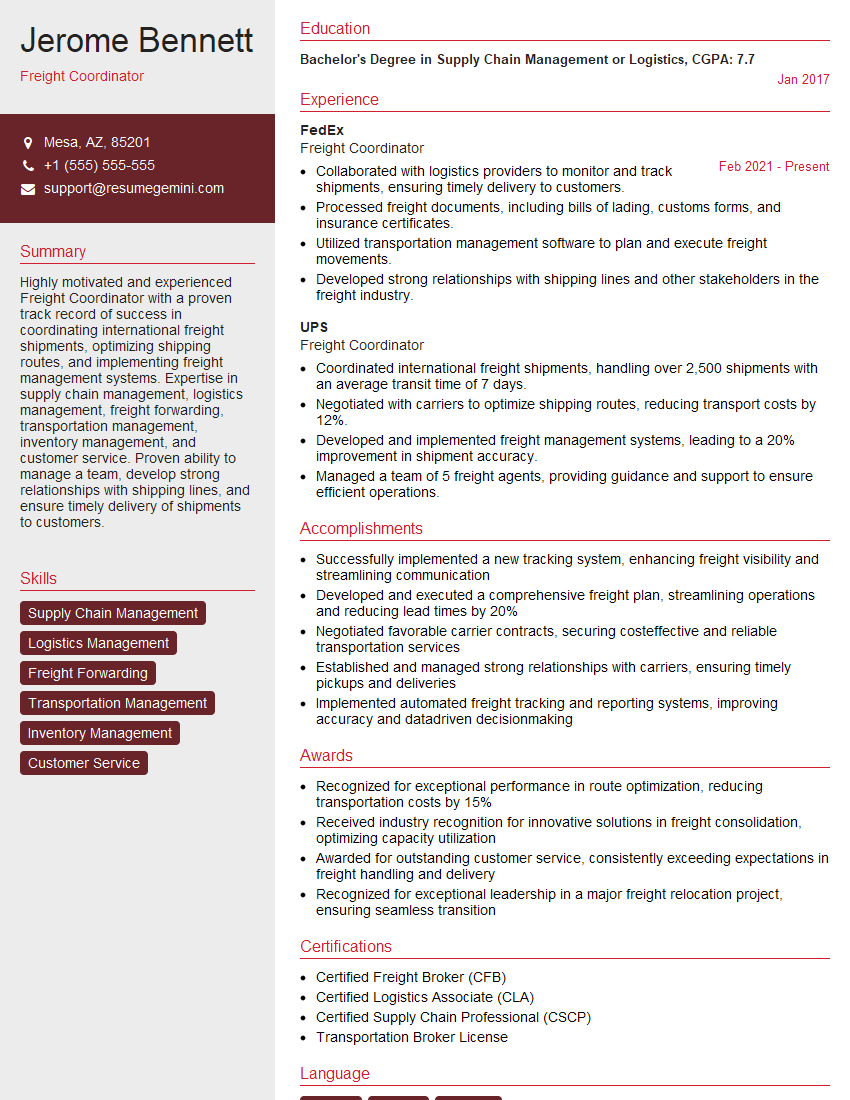
Freight Coordinator Resume Sample
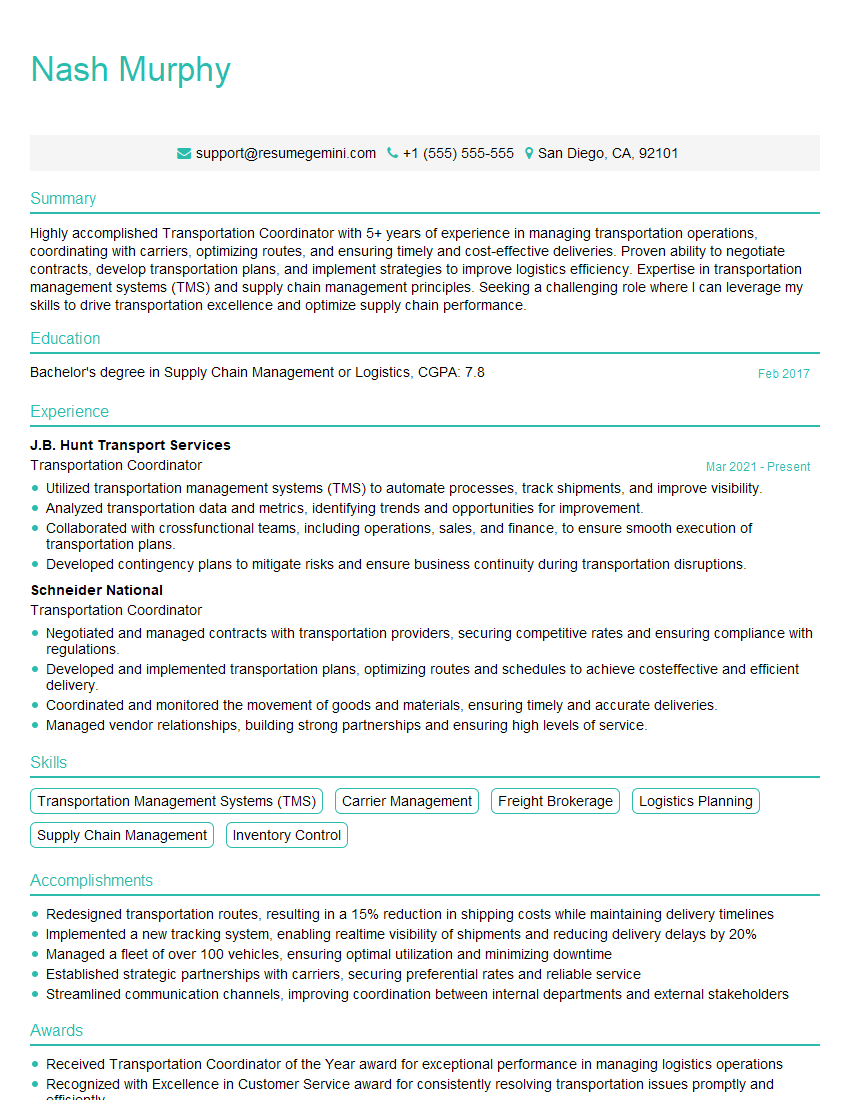
Transportation Coordinator Resume Sample
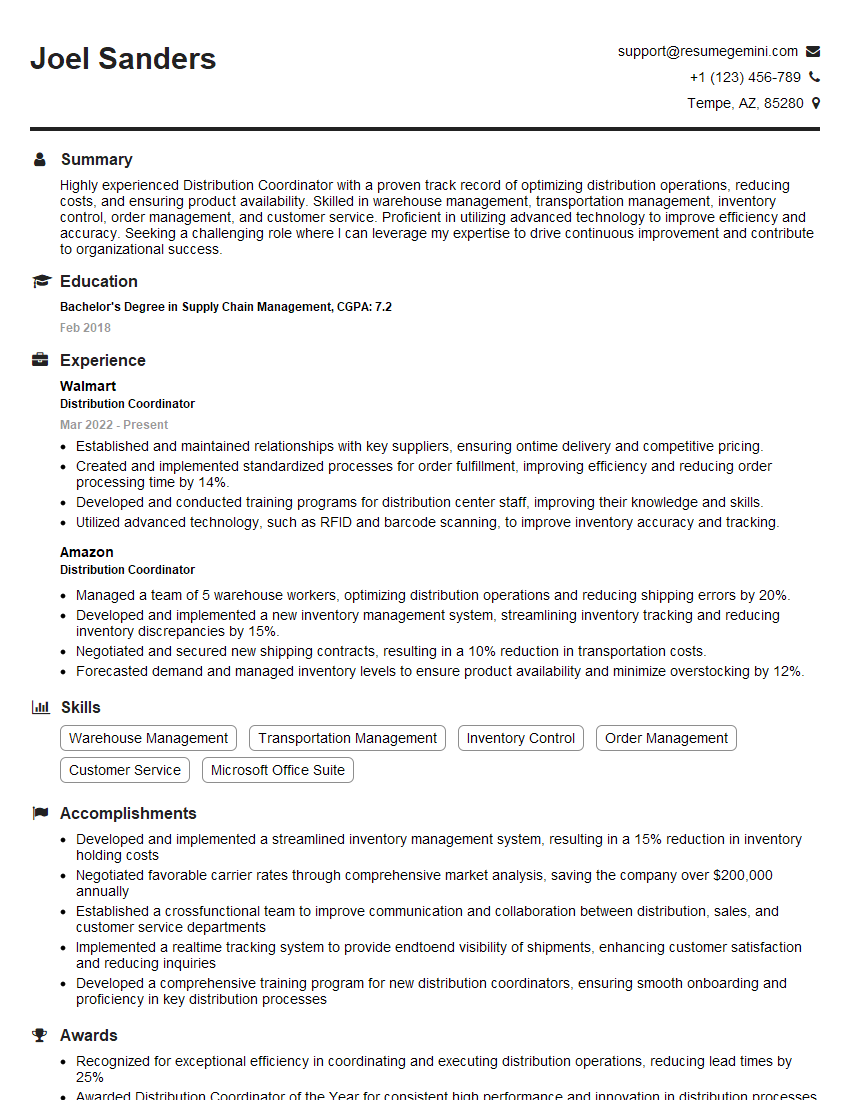
Distribution Coordinator Resume Sample
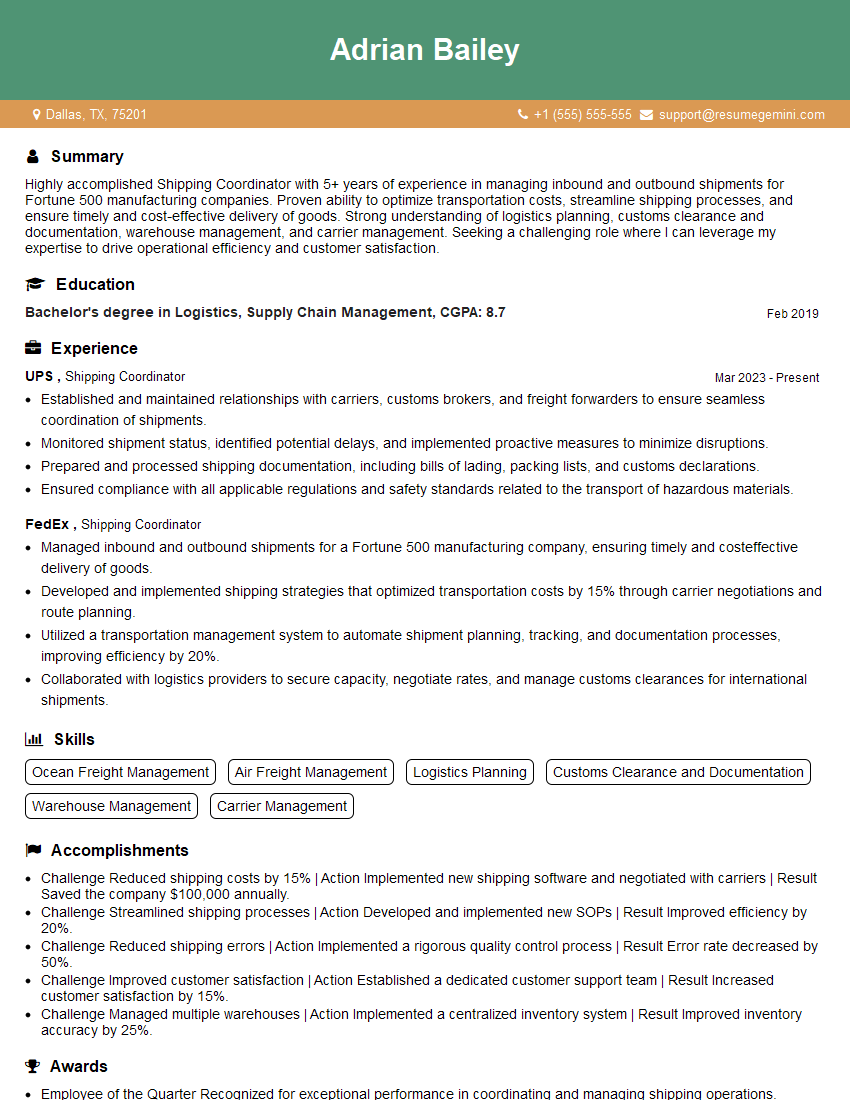
Shipping Coordinator Resume Sample
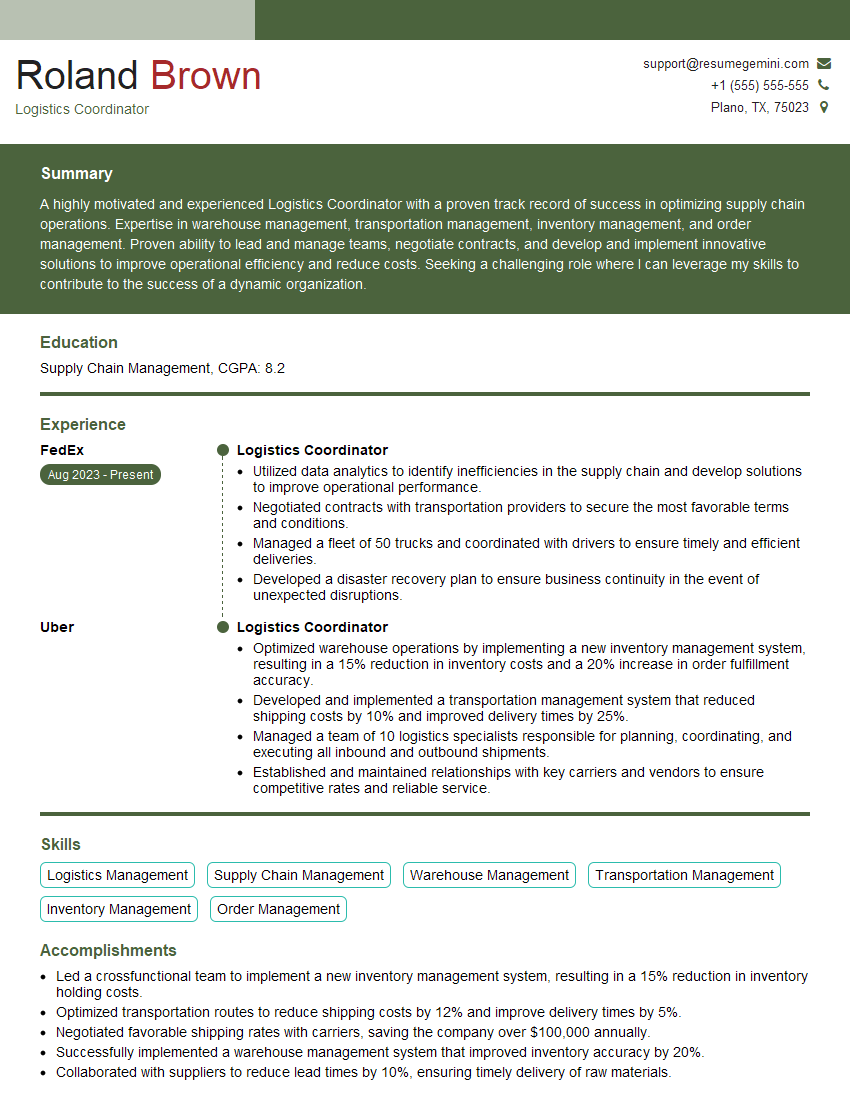
Logistics Coordinator Resume Sample
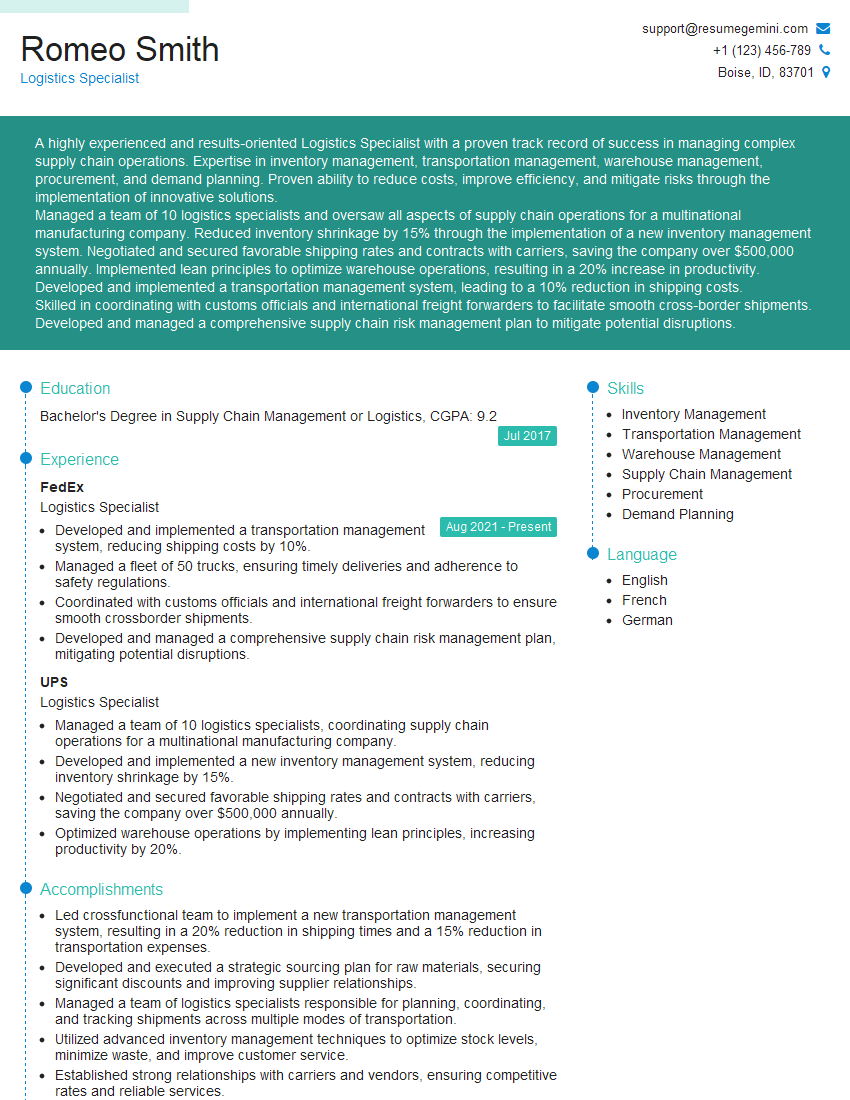
Logistics Specialist Resume Sample
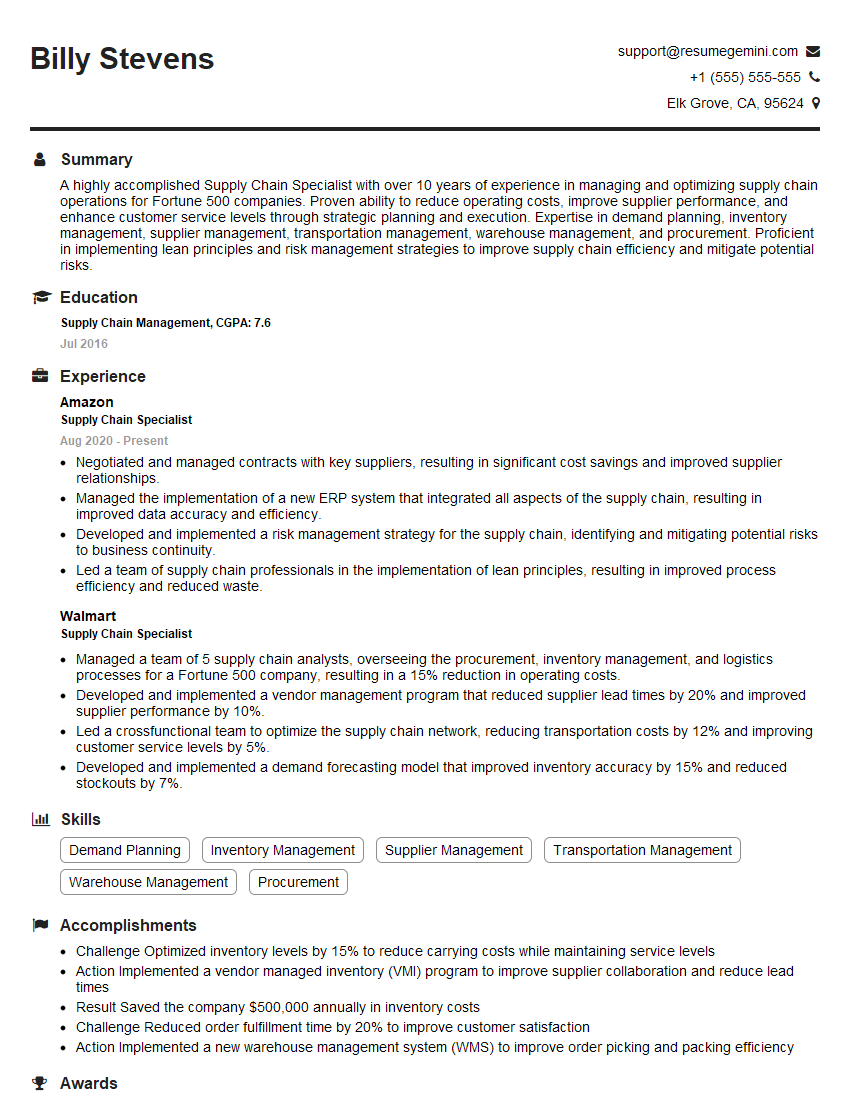
Supply Chain Specialist Resume Sample
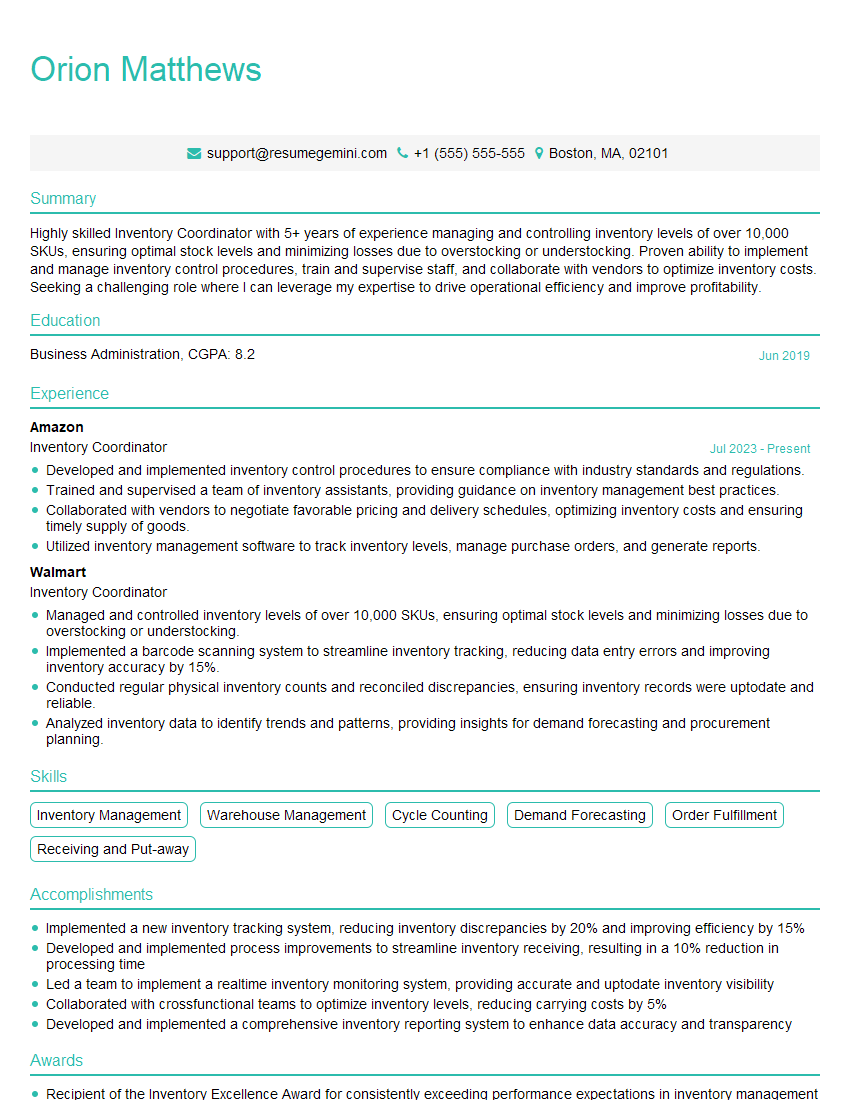
Inventory Coordinator Resume Sample
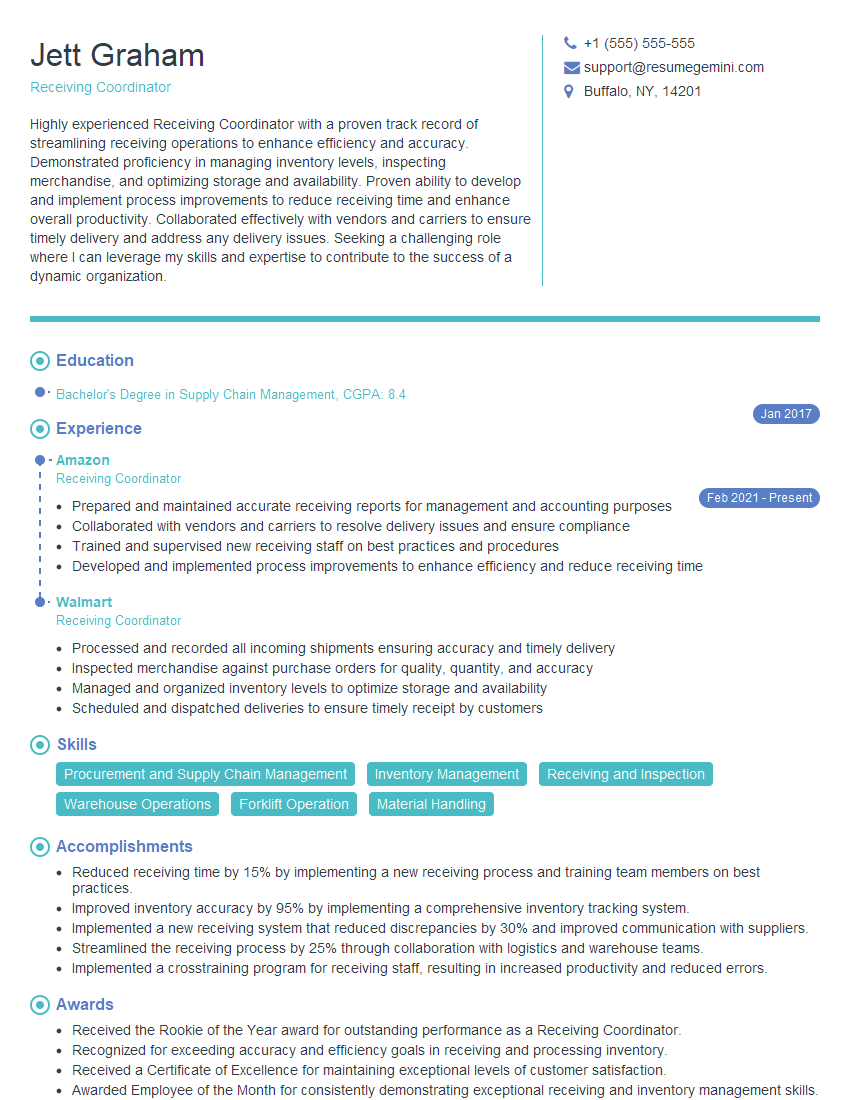
Receiving Coordinator Resume Sample
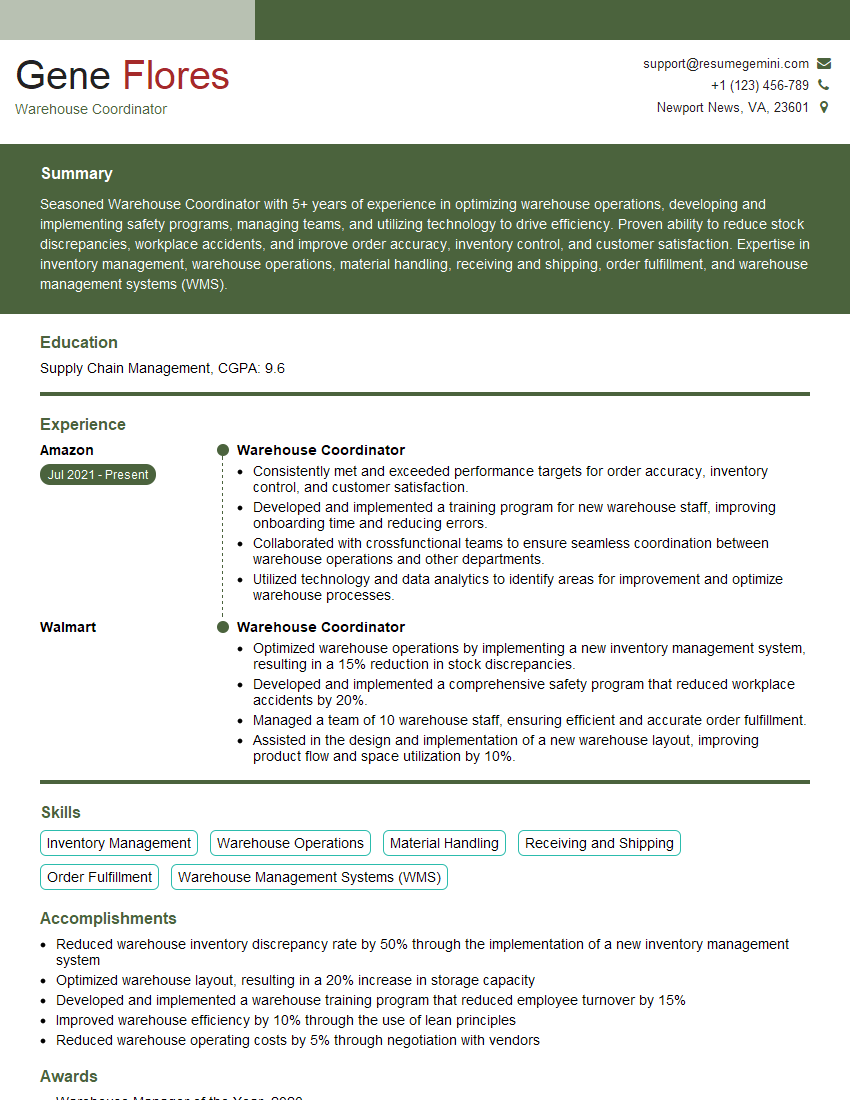
Warehouse Coordinator Resume Sample
Explore more articles
Users Rating of Our Blogs
Share Your Experience
We value your feedback! Please rate our content and share your thoughts (optional).
What Readers Say About Our Blog
good