Every successful interview starts with knowing what to expect. In this blog, we’ll take you through the top Reefer Maintenance interview questions, breaking them down with expert tips to help you deliver impactful answers. Step into your next interview fully prepared and ready to succeed.
Questions Asked in Reefer Maintenance Interview
Q 1. Explain the principles of refrigeration cycle in a reefer container.
The refrigeration cycle in a reefer container is based on the principle of vapor-compression refrigeration. Think of it like a sophisticated water cycle, but instead of water, we’re using a refrigerant. The cycle involves four key stages:
- Evaporation: The refrigerant, a liquid under low pressure, absorbs heat from the inside of the container, causing it to evaporate into a gas. This is what cools the cargo.
- Compression: The gaseous refrigerant is then compressed by a compressor, significantly increasing its temperature and pressure.
- Condensation: The high-pressure, high-temperature refrigerant gas passes through a condenser, releasing heat to the outside environment and condensing back into a liquid.
- Expansion: Finally, the high-pressure liquid refrigerant passes through an expansion valve, causing a sudden drop in pressure and temperature, preparing it to re-enter the evaporator and repeat the cycle.
This continuous cycle effectively transfers heat from the inside of the reefer container to the outside, maintaining the desired low temperature for the cargo. Imagine a refrigerator working on a larger scale – that’s essentially what a reefer container does.
Q 2. Describe different types of reefer unit compressors and their applications.
Reefer units utilize different types of compressors, each with specific advantages and disadvantages:
- Reciprocating Compressors: These are the most common type, using pistons to compress the refrigerant. They are relatively simple, reliable, and affordable but can be noisy and less efficient than other types.
- Scroll Compressors: These compressors use two spiral-shaped plates to compress the refrigerant. They are known for their quiet operation, high efficiency, and compact size, making them ideal for smaller reefer units.
- Screw Compressors: These are used in larger reefer units and employ rotating screws to compress the refrigerant. They offer high capacity and efficiency but are generally more expensive and require more maintenance.
- Centrifugal Compressors: These are high-capacity compressors used in very large refrigeration systems and are less common in standard reefer containers. They offer high efficiency at high capacities but are complex and expensive.
The choice of compressor depends on factors like the size of the container, required cooling capacity, budget, and noise requirements. For instance, a small reefer transporting pharmaceuticals might opt for a quiet scroll compressor, while a large reefer carrying frozen goods might utilize a more powerful screw compressor.
Q 3. How do you diagnose a malfunctioning reefer unit?
Diagnosing a malfunctioning reefer unit requires a systematic approach. It starts with observing the symptoms:
- Temperature Monitoring: Check the internal temperature of the container using a reliable thermometer to see if it’s maintaining the set point.
- Visual Inspection: Look for any obvious issues like leaks in the refrigerant lines, damaged wiring, or loose connections. Listen for unusual noises from the compressor.
- Control Panel Readings: Examine the reefer unit’s control panel for error codes or unusual readings. Many modern units provide diagnostic codes that pinpoint the problem.
- Refrigerant Pressure Checks: Using pressure gauges, measure the high and low-side refrigerant pressures. Deviations from the manufacturer’s specifications indicate potential issues within the refrigeration cycle.
Once the symptoms are identified, further troubleshooting may involve using specialized diagnostic tools like refrigerant leak detectors and multimeters to pinpoint the exact cause of the malfunction. Accurate record-keeping during this process is crucial for efficient repairs and future preventative maintenance.
Q 4. What are the common causes of reefer unit failures?
Reefer unit failures can stem from various causes:
- Refrigerant Leaks: Leaks reduce the refrigerant charge, impacting cooling capacity. This can be due to corrosion, damage to lines, or faulty seals.
- Compressor Failure: Compressor malfunctions are common and often result from wear and tear, lack of lubrication, or electrical issues.
- Condenser Fouling: Dust, dirt, and other debris can accumulate on the condenser fins, reducing its efficiency in releasing heat.
- Electrical Problems: Faulty wiring, blown fuses, or malfunctioning control components can disrupt the operation of the unit.
- Expansion Valve Issues: A malfunctioning expansion valve can prevent proper refrigerant flow and temperature regulation.
- Lack of Maintenance: Neglecting regular maintenance significantly increases the risk of premature failures.
Understanding these common causes helps in implementing preventative measures and quickly addressing issues when they arise. For example, regular cleaning of the condenser fins can prevent fouling, while adherence to a preventative maintenance schedule minimizes the risk of compressor failure.
Q 5. Explain the importance of preventative maintenance on reefer units.
Preventative maintenance is critical for reefer units for several reasons:
- Increased Reliability: Regular servicing ensures the unit functions optimally, minimizing the risk of unexpected breakdowns during transport.
- Extended Lifespan: Preventative maintenance extends the operational life of the unit, saving money on replacements.
- Reduced Downtime: Identifying and addressing minor issues before they escalate prevents costly and time-consuming repairs.
- Improved Efficiency: A well-maintained unit operates more efficiently, reducing energy consumption and minimizing environmental impact.
- Cargo Protection: Maintaining proper temperature prevents spoilage or damage to temperature-sensitive cargo, saving both time and money.
Think of it like regular car servicing – catching small problems early prevents major engine failures. The same principle applies to reefer units. A comprehensive preventative maintenance schedule will include checks and cleaning of crucial components like the condenser, evaporator, compressor, and refrigerant lines.
Q 6. How do you perform a pre-trip inspection of a reefer container?
A thorough pre-trip inspection of a reefer container is crucial before loading temperature-sensitive cargo. It involves the following steps:
- Visual Inspection: Check the container’s exterior for any signs of damage, leaks, or obstructions.
- Power Supply Check: Ensure the power supply is connected and functional. Test the reefer unit’s power supply.
- Temperature Setting: Set the desired temperature according to the cargo’s requirements. Allow the unit to cool down and stabilize before loading.
- Refrigerant Pressure Check: Verify the high and low-side refrigerant pressures against the manufacturer’s specifications.
- Compressor Operation: Listen to the compressor; it should operate smoothly without unusual noises.
- Air Circulation: Check for proper airflow around the condenser to ensure efficient heat dissipation.
- Control Panel Check: Verify all control panel functions, including temperature display, alarms, and other settings.
- Door Seals: Examine door seals for any damage or gaps that might compromise the temperature integrity of the container.
- Documentation: Record all inspection findings, including temperature readings and any observed issues.
This meticulous approach helps prevent problems and ensures the safe transport of cargo. Skipping this step can result in cargo spoilage and significant financial losses.
Q 7. Describe the different types of refrigerants used in reefer units and their environmental impact.
Several refrigerants have been used in reefer units, each with varying environmental impacts:
- R-134a (Tetrafluoroethane): A common refrigerant, it’s less ozone-depleting than older refrigerants but still contributes to global warming.
- R-404A: A blend of refrigerants, it’s efficient but possesses a high global warming potential (GWP).
- R-452A: This blend has a lower GWP than R-404A and improves energy efficiency.
- Natural Refrigerants (Ammonia, CO2): These refrigerants have zero ozone depletion potential (ODP) and significantly lower GWPs than synthetic alternatives. However, they present some handling challenges due to toxicity or flammability (Ammonia) and higher operating pressures (CO2).
The industry is transitioning towards refrigerants with lower environmental impact due to increasing regulatory pressure and environmental concerns. The selection of refrigerant involves balancing factors like efficiency, cost, safety, and environmental impact. The move towards natural refrigerants represents a significant step in reducing the environmental footprint of reefer transport.
Q 8. How do you troubleshoot electrical issues in a reefer unit?
Troubleshooting electrical issues in a reefer unit requires a systematic approach. Think of it like diagnosing a car problem – you need to identify the source before you can fix it. I always start by visually inspecting all wiring, connections, and components for any obvious damage like loose wires, corrosion, or burnt components. Then, I’ll use a multimeter to check voltage, amperage, and continuity at various points in the circuit.
For example, if the compressor isn’t running, I’d first check the power supply to the compressor itself. If power is present but the compressor still doesn’t start, the problem might be within the compressor motor itself. If the power is not reaching the compressor, I’d trace the wiring back, checking fuses, relays, and the control board for faults. I might need to consult the reefer’s wiring diagram to pinpoint the problem effectively. Testing the thermal fuse is crucial, as this safety device often blows when the compressor overheats. Documenting each step and the readings obtained during the testing process is critical for efficient troubleshooting and future reference.
Sometimes, the issue isn’t a simple component failure but a more complex problem in the control system. This could involve sophisticated diagnostics using the reefer’s onboard computer or even requiring the assistance of a specialized technician. However, a thorough visual inspection and basic electrical testing often uncover the root cause.
Q 9. Explain the function of the reefer unit’s control system.
The reefer unit’s control system is the brain of the operation, managing all aspects of temperature control and monitoring. Think of it as a sophisticated thermostat on steroids. It receives input from various sensors (temperature sensors, pressure sensors, etc.) and uses this information to regulate the compressor, evaporator fan, and condenser fan. The system’s goal is to maintain a consistent temperature inside the container, even when faced with fluctuating external temperatures or changes in load.
The control system typically includes:
- Temperature sensors: Monitor the internal and external temperatures.
- Pressure sensors: Monitor refrigerant pressure in different parts of the system.
- Control board: Processes sensor data and makes adjustments to the various components.
- Compressor: The heart of the system, compressing the refrigerant to create cooling.
- Evaporator fan: Circulates air over the evaporator coils.
- Condenser fan: Dissipates heat from the condenser coils.
This intricate dance between components is orchestrated by the control system’s software, constantly adjusting operations to reach and maintain the desired temperature settings. Modern reefers often include sophisticated features like remote monitoring and data logging, further enhancing the capabilities of the control system.
Q 10. How do you handle a reefer unit that is not maintaining the set temperature?
If a reefer unit isn’t maintaining the set temperature, it’s like having a faulty refrigerator – your cargo is at risk! My first step is to check the obvious things: Is the unit even turned on? Are the set points correctly configured? Is the door properly sealed?
Then, I’d systematically investigate possible issues:
- Check the temperature sensors: A faulty sensor can give inaccurate readings, leading to incorrect control actions.
- Inspect the refrigerant charge: Low refrigerant levels will severely impact cooling capacity. I’d check for leaks using specialized leak detection equipment.
- Examine the compressor: Listen for unusual noises; a weak or failing compressor may not produce sufficient cooling.
- Check the condenser and evaporator coils: Dirt and ice buildup can significantly reduce cooling efficiency. Cleaning or defrosting is often necessary.
- Review the control system: Check for error codes and perform any necessary diagnostics.
Let’s say I find low refrigerant. The next step would be to identify and repair the leak before recharging. Using specialized equipment and techniques, I would pinpoint the leak location and then use appropriate brazing or welding techniques, depending on the type of leak and the system. If the problem remains even after this, more extensive diagnostics and possibly the involvement of a refrigeration specialist might be needed.
Q 11. Describe the process of charging a reefer unit with refrigerant.
Charging a reefer unit with refrigerant is a specialized procedure that requires proper training and safety precautions. Think of it as a delicate operation, like topping off the coolant in a car’s radiator – it needs to be done carefully to avoid damage. Before starting, I’d ensure the unit is properly isolated and depressurized. I’d also identify the type and quantity of refrigerant needed; this information is usually found on the unit’s data plate.
The process generally involves these steps:
- Connect charging lines: Securely connect the charging hoses to the service ports of the reefer unit, ensuring a proper seal to prevent leaks.
- Evacuate the system: Use a vacuum pump to remove any non-condensables like air and moisture that could negatively impact the system’s efficiency.
- Charge the refrigerant: Introduce the refrigerant slowly into the system while monitoring the pressure and temperature. I would use appropriate charging scales and equipment to accurately measure the quantity of refrigerant added.
- Monitor system pressure and temperature: Ensure they are within the manufacturer’s specified ranges.
- Leak check: Once the system is charged, a thorough leak check should be done.
It’s crucial to follow the manufacturer’s recommendations regarding refrigerant type and charging procedure. Improper charging can damage the system and pose safety risks. Accurate measurements are essential to avoid overcharging, which can also lead to system damage and inefficiencies.
Q 12. What safety precautions do you take when working on a reefer unit?
Safety is paramount when working on a reefer unit. Refrigerant can be toxic and flammable, and high pressures are involved, so I always follow a strict safety protocol. This includes:
- Personal Protective Equipment (PPE): Wearing safety glasses, gloves, and closed-toe shoes is non-negotiable. For some tasks, respiratory protection may also be needed.
- Proper ventilation: Ensure adequate ventilation in the working area to prevent the buildup of refrigerant vapors.
- Lockout/Tagout procedures: Following lockout/tagout procedures is essential to prevent accidental activation of the unit during maintenance.
- Fire suppression: Having a suitable fire extinguisher nearby is crucial, as some refrigerants are flammable.
- Refrigerant handling: Following proper handling procedures for refrigerant, including appropriate disposal methods.
- Working with a partner: Whenever possible, having a second person present can enhance safety and ensure someone is available to assist in case of an emergency.
I always prioritize safety over speed. If I’m unsure about any step, I’ll consult the manufacturer’s documentation or seek help from a more experienced technician before proceeding. Ignoring safety protocols can lead to serious accidents or injuries.
Q 13. How do you interpret a reefer unit’s temperature charts?
Reefer unit temperature charts provide a valuable record of the unit’s performance over time. Think of them as a patient’s medical chart – they tell the story of the unit’s health. They usually show temperature readings at regular intervals, often alongside other parameters like pressure and compressor run time.
By analyzing the charts, I can identify:
- Temperature fluctuations: Large swings indicate potential problems with the cooling system or insulation.
- Temperature deviations from the set point: Consistent deviations suggest issues with the control system or cooling capacity.
- Trends: Gradual increases or decreases in temperature can reveal deterioration in the system over time.
- Compressor runtime: Excessive run time could signal low refrigerant charge, inefficient cooling, or a faulty compressor.
For example, if the chart shows a steady decline in temperature despite a constant set point, that could suggest a gradual refrigerant leak. Conversely, a sudden spike in temperature might indicate a compressor failure or a sensor malfunction. Understanding the patterns and trends in temperature charts is crucial for preventive maintenance and efficient troubleshooting.
Q 14. Explain the importance of proper ventilation in a reefer container.
Proper ventilation in a reefer container is essential for several reasons. It’s like breathing fresh air – the reefer needs it to operate efficiently and safely. Inadequate ventilation can lead to a buildup of moisture, condensation, and gases, which can damage the cargo and even pose safety hazards.
Ventilation is particularly important because:
- Prevents condensation: Moisture buildup can cause mold, mildew, and other forms of cargo damage.
- Reduces humidity: High humidity promotes microbial growth and accelerates spoilage.
- Dissipates heat: Efficient ventilation removes heat generated by the reefer unit and the cargo itself.
- Reduces the risk of fire hazards: Proper ventilation helps to prevent the buildup of flammable gases.
Reefer containers are designed with ventilation systems, often involving air vents and ducts. Ensuring these systems are clean, free from obstructions, and functioning correctly is crucial for maintaining the quality of the cargo and ensuring the safety of the unit. Any blockage or improper functioning of the ventilation system must be addressed immediately.
Q 15. What are the common causes of compressor failure?
Compressor failure in reefer units is a serious issue, often leading to significant cargo loss. Several factors contribute to this. Think of the compressor as the heart of the system – if it fails, the entire cooling process stops.
- Lack of lubrication: Insufficient or contaminated oil can lead to overheating and eventual failure. Imagine trying to run a car engine without oil – the same principle applies.
- Overheating: This is often caused by issues with the condenser (discussed later), blocked airflow, or a malfunctioning fan. A constantly overworked compressor is prone to burnout, like a muscle strained beyond its limit.
- Electrical faults: Problems with wiring, motor windings, or the starting capacitor can prevent the compressor from starting or functioning correctly. This is akin to a power surge frying a home appliance.
- Refrigerant leaks: A significant refrigerant leak can cause the compressor to work harder and eventually fail due to a lack of cooling capacity. It’s like trying to pump air with a hole in the hose.
- Wear and tear: Over time, components within the compressor can wear out, leading to reduced efficiency and eventual failure. This is similar to the wear and tear on a vehicle engine over many years.
Regular preventative maintenance, including oil checks, condenser cleaning, and electrical inspections, is crucial to prevent compressor failures.
Career Expert Tips:
- Ace those interviews! Prepare effectively by reviewing the Top 50 Most Common Interview Questions on ResumeGemini.
- Navigate your job search with confidence! Explore a wide range of Career Tips on ResumeGemini. Learn about common challenges and recommendations to overcome them.
- Craft the perfect resume! Master the Art of Resume Writing with ResumeGemini’s guide. Showcase your unique qualifications and achievements effectively.
- Don’t miss out on holiday savings! Build your dream resume with ResumeGemini’s ATS optimized templates.
Q 16. How do you troubleshoot issues with the reefer unit’s evaporator?
The evaporator is where the refrigerant absorbs heat from the cargo. Troubleshooting evaporator issues requires a systematic approach. Think of it as the cooling element’s direct contact with the product.
- Frost build-up: Excessive frost indicates a problem with the defrost system (discussed later) or insufficient airflow. This acts like an insulator, reducing cooling efficiency.
- Airflow restrictions: Blocked air vents or a dirty evaporator coil can restrict airflow, reducing cooling capacity. Imagine trying to cool a room with a blocked air vent – the airflow is crucial.
- Refrigerant leaks: Leaks in the evaporator coil will reduce cooling capacity. You can hear hissing if there is a significant leak.
- Temperature sensor malfunctions: A faulty temperature sensor can give incorrect readings to the control system, leading to improper cooling. It’s like the system having the wrong information to base its decisions on.
Troubleshooting involves visually inspecting the evaporator for frost, dirt, and damage. Checking refrigerant levels and the functionality of the temperature sensors is also critical.
Q 17. How do you troubleshoot issues with the reefer unit’s condenser?
The condenser releases the heat absorbed by the refrigerant to the outside environment. Think of it as the radiator of the system.
- Blocked airflow: Dirt, debris, or even ice build-up on the condenser fins can significantly reduce its efficiency. Restricted airflow will cause overheating.
- Clogged condenser fins: Bent or dirty fins restrict airflow. Cleaning the fins is vital for optimal performance.
- Refrigerant leaks: Leaks in the condenser will lead to a reduction in cooling capacity and eventually, a complete failure of the system.
- Fan motor failure: The condenser fan is essential for pulling air across the condenser. A faulty fan will cause overheating.
Troubleshooting often starts with a visual inspection of the condenser for cleanliness and damage. Checking the fan motor and measuring refrigerant levels are crucial steps.
Q 18. Describe the different types of reefer unit doors and their maintenance requirements.
Reefer unit doors vary depending on the unit’s size and application. They are critical for maintaining the cold chain.
- Swing doors: These are common in smaller units and require regular lubrication of hinges and latches to prevent sticking and ensure proper sealing. Proper sealing is vital for maintaining temperature.
- Roll-up doors: Used in larger units, they require checking the roller mechanism for smooth operation, lubrication of moving parts, and ensuring the seals are intact. A properly functioning roll up door is important for easy loading and unloading.
- Sliding doors: These are typically found on side-opening units and require lubrication of tracks and rollers to ensure smooth operation. Proper alignment of the sliding mechanism is key.
Regardless of the type, regular inspections for damage, proper sealing, and smooth operation are crucial for maintaining temperature control and preventing energy loss.
Q 19. How do you maintain the cleanliness of a reefer unit?
Maintaining cleanliness is paramount for efficient operation and longevity of the reefer unit. Think of it like regularly cleaning your house – it keeps it running smoothly.
- Regular cleaning of condenser coils: Using a condenser coil cleaner and brush to remove dust, debris, and other contaminants is essential for maximizing heat dissipation.
- Cleaning the evaporator coils: Though less frequent than condenser cleaning, removing frost and dirt from evaporator coils improves cooling efficiency.
- Cleaning the interior of the unit: Regularly wiping down the interior surfaces removes spilled materials and prevents mold or bacterial growth. Hygiene is crucial for food safety.
Following the manufacturer’s recommendations for cleaning and using appropriate cleaning agents will preserve the unit’s lifespan and efficiency.
Q 20. How do you handle a refrigerant leak?
Refrigerant leaks are serious and must be handled by qualified personnel due to safety hazards and environmental concerns. It’s critical to follow safety procedures.
- Identify the leak: Use leak detection equipment to pinpoint the source of the leak. This usually involves using electronic leak detectors.
- Repair the leak: Qualified technicians will repair or replace the damaged component and then recover any remaining refrigerant.
- Evacuate and recharge: Once the leak is repaired, the system must be evacuated to remove any air and moisture, then recharged with the correct amount of refrigerant.
Never attempt to handle a refrigerant leak without proper training and equipment. Refrigerant is hazardous and requires proper disposal.
Q 21. What is the role of a reefer unit’s defrost system?
The defrost system is crucial for preventing excessive frost buildup on the evaporator coils. Think of it as the unit’s self-cleaning mechanism.
Frost reduces the evaporator’s heat transfer efficiency, leading to increased energy consumption and reduced cooling capacity. The defrost system periodically shuts off the refrigeration cycle and uses either hot gas or electric heating elements to melt the frost. This melted frost is then drained away. Regular maintenance of the defrost system, including checking the drainage system, ensures optimal performance and prevents malfunctions.
Q 22. How do you troubleshoot issues with the reefer unit’s defrost system?
Troubleshooting a reefer unit’s defrost system involves a systematic approach. Defrost issues often manifest as ice buildup on the evaporator coil, hindering cooling efficiency. The first step is to check the defrost timer. Is it cycling correctly? If not, a faulty timer might be the culprit, and it needs replacing. Next, inspect the defrost heater. A simple multimeter test can determine if it’s receiving power and functioning. A faulty heater requires replacement. The defrost thermostat is another critical component; it controls the defrost cycle. If it’s stuck open or closed, the defrost cycle won’t work properly. Test its continuity with a multimeter. Finally, check the drain line for blockages. Ice or debris can clog the line, preventing melted frost from draining properly. Clearing the drain line usually resolves this. Remember, safety first! Always disconnect the power before working on any electrical components.
For example, I once encountered a reefer unit where the defrost cycle wasn’t activating. After systematically checking each component, I discovered a faulty defrost heater. Replacing the heater restored the proper defrost cycle, resolving the ice buildup issue.
Q 23. Explain the different types of reefer unit alarms and their meanings.
Reefer unit alarms are crucial for preventing spoilage and ensuring efficient operation. They alert you to potential problems. Different alarms signify various issues:
- High Temperature Alarm: Indicates the reefer unit’s internal temperature is rising above the setpoint, potentially due to a malfunctioning compressor, insufficient refrigerant, or a blocked airflow.
- Low Temperature Alarm: Signals that the internal temperature is dropping below the setpoint. This could indicate a problem with the refrigeration system’s cooling capacity or a faulty thermostat.
- High Pressure Alarm: Suggests excessively high pressure within the refrigeration system, possibly caused by a restricted refrigerant flow, a faulty compressor, or a failing condenser.
- Low Pressure Alarm: Points to low pressure within the system, often stemming from refrigerant leaks, compressor malfunction, or a problem with the evaporator.
- Power Failure Alarm: Indicates a loss of power to the reefer unit.
- Door Ajar Alarm: This alarm sounds when the reefer unit’s doors are left open, causing temperature fluctuations and compromising the refrigerated goods’ safety.
Understanding these alarms is vital for prompt troubleshooting and preventing significant losses. For instance, a high-temperature alarm needs immediate attention to avoid product spoilage.
Q 24. How do you perform a reefer unit’s pressure test?
A pressure test on a reefer unit is a crucial diagnostic procedure, essential for detecting leaks in the refrigeration system. The process typically involves using a pressure gauge and refrigerant to pressurize the system. First, ensure the unit is turned off and depressurized. Then, connect the pressure gauge to the service ports. Slowly introduce dry nitrogen (or the specified refrigerant) into the system, increasing the pressure to the manufacturer’s specified level. Monitor the pressure for any drop; a consistent drop over time indicates a leak. Locating the leak often involves using leak detection tools such as electronic leak detectors or soapy water solution. After the test and leak repair, the system should be vacuumed to remove any non-condensable gases before refilling it with refrigerant.
For example, I used this method to detect a small leak in a reefer’s condenser. By carefully monitoring the pressure, I pinpointed the leak, allowing for its quick repair, preventing further refrigerant loss.
Q 25. Describe the process of replacing a reefer unit’s compressor.
Replacing a reefer unit’s compressor is a complex procedure best handled by trained professionals. Safety is paramount. It typically begins with disconnecting the power to the unit. Then, recover the refrigerant from the system using specialized equipment. Next, disconnect all the electrical connections to the compressor, including the wiring harness and control wires. After that, carefully disconnect the suction and discharge lines using specialized wrenches. Remove the compressor mounting bolts and carefully remove the old compressor. Installation of the new compressor follows the reverse steps, ensuring all connections are secure. Once installed, the refrigerant is reintroduced into the system, followed by a thorough leak test and system vacuum. Finally, the unit is powered on, and its operation is checked.
This process involves precision and safety. One mistake can lead to a significant issue. It’s always better to have a seasoned technician handle this task.
Q 26. What are the common causes of reefer unit noise?
Unusual noises from a reefer unit can indicate several problems. Identifying the source requires careful listening. Common causes include:
- Compressor Noise: Unusual rattling, knocking, or squealing sounds from the compressor could indicate worn bearings, internal component failure, or insufficient lubrication.
- Fan Noise: Whirring, scraping, or unbalanced sounds from the condenser or evaporator fan often signify worn bearings or a fan motor problem.
- Refrigerant Leaks: A hissing sound could point to refrigerant leaks. This is serious and needs immediate attention.
- Loose Components: Rattle sounds might indicate loose bolts, screws, or other components needing tightening.
For example, a rhythmic clicking sound I encountered in a reefer unit pointed to a worn-out compressor clutch. Replacing the clutch solved the problem.
Q 27. How do you handle emergency situations involving a reefer unit?
Handling reefer unit emergencies requires a calm and methodical approach. The most critical aspect is to prioritize the safety of personnel and the preservation of the goods. If the unit is losing cooling capacity, the priority is to immediately identify the cause of the malfunction. If the unit stops functioning entirely, steps should be taken to secure the goods. This may involve relocating them to another refrigerated space or employing emergency cooling methods, such as dry ice. If a refrigerant leak is suspected, immediately shut down the unit to prevent further loss and contact a trained technician to assess and repair the leak. Always follow safety procedures and wear appropriate protective equipment when handling refrigerants. Document all the steps undertaken, and report the incident to the relevant parties.
During one instance, I experienced a complete power failure that impacted a reefer containing perishable food items. I immediately implemented a backup plan, relocating the goods to a backup refrigerator while awaiting power restoration. Proper documentation and reporting ensured compliance and reduced losses.
Key Topics to Learn for Reefer Maintenance Interview
- Refrigeration Systems: Understanding various refrigeration cycles (vapor-compression, absorption), components (compressors, condensers, evaporators, expansion valves), and their functions. Practical application: Diagnosing and troubleshooting common refrigeration system malfunctions.
- Electrical Systems: Knowledge of electrical wiring diagrams, motor control circuits, and safety procedures related to electrical work on reefer units. Practical application: Identifying and repairing electrical faults, ensuring safe operation.
- Mechanical Systems: Familiarity with different types of reefer units, their mechanical components (pumps, fans, motors), and maintenance procedures. Practical application: Performing preventative maintenance, diagnosing and resolving mechanical issues.
- Temperature Control and Monitoring: Understanding how to accurately set and maintain desired temperatures, using thermostats and other control systems. Practical application: Troubleshooting temperature inconsistencies, ensuring cargo integrity.
- Refrigerant Handling and Safety: Knowledge of proper handling procedures for refrigerants, including safety regulations, leak detection, and repair. Practical application: Safe and efficient refrigerant charging and recovery.
- Preventive Maintenance: Understanding the importance of regular inspections, lubrication, and cleaning to prevent breakdowns and extend the lifespan of reefer units. Practical application: Developing and implementing a preventative maintenance schedule.
- Troubleshooting and Diagnostics: Ability to systematically identify and resolve problems using diagnostic tools and techniques. Practical application: Using diagnostic equipment to pinpoint malfunctions and perform effective repairs.
- Safety Regulations and Compliance: Understanding and adhering to relevant safety regulations and industry best practices. Practical application: Ensuring compliance with all safety standards during maintenance procedures.
Next Steps
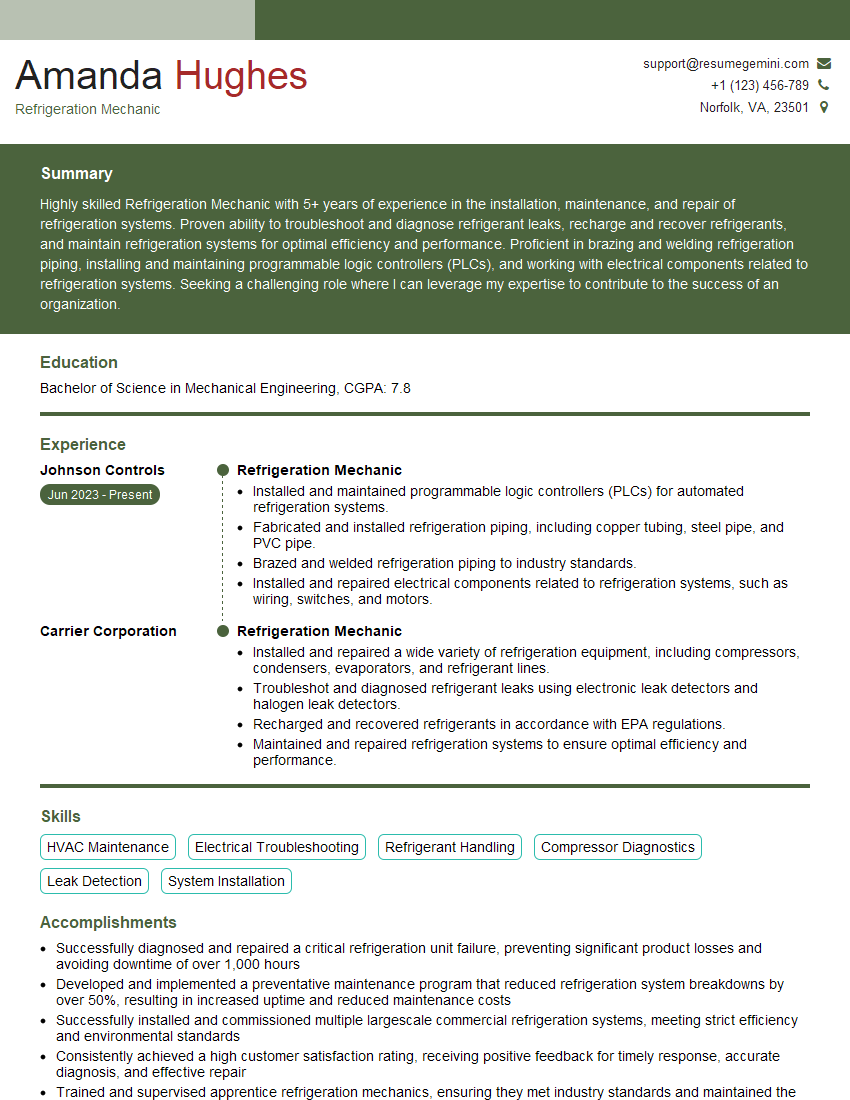
Mastering Reefer Maintenance opens doors to a rewarding career with excellent growth potential, offering opportunities for specialization and advancement within the transportation and logistics industry. To maximize your job prospects, it’s crucial to have an ATS-friendly resume that highlights your skills and experience effectively. We strongly encourage you to use ResumeGemini to create a professional and impactful resume. ResumeGemini offers a user-friendly platform and provides examples of resumes tailored to Reefer Maintenance to help you present yourself in the best possible light. Investing time in crafting a strong resume is an investment in your future success.
Explore more articles
Users Rating of Our Blogs
Share Your Experience
We value your feedback! Please rate our content and share your thoughts (optional).
What Readers Say About Our Blog
Very informative content, great job.
good