Unlock your full potential by mastering the most common Refrigerant Charging interview questions. This blog offers a deep dive into the critical topics, ensuring you’re not only prepared to answer but to excel. With these insights, you’ll approach your interview with clarity and confidence.
Questions Asked in Refrigerant Charging Interview
Q 1. What are the different types of refrigerants used in HVAC systems?
HVAC systems utilize various refrigerants, each with specific properties impacting efficiency and environmental impact. Historically, refrigerants like R-22 (Freon) were common, but due to their ozone-depleting potential, they’re being phased out. Modern systems increasingly employ refrigerants with lower environmental impact.
- HFCs (Hydrofluorocarbons): These refrigerants, such as R-410A and R-134a, don’t deplete the ozone layer but are potent greenhouse gases. R-410A is prevalent in many residential and light commercial systems. R-134a is often found in automotive air conditioning.
- HFOs (Hydrofluoroolefins): These are newer refrigerants like R-1234yf and R-1234ze designed to have very low global warming potential (GWP). They are increasingly used in automotive and some commercial applications.
- Natural Refrigerants: These include ammonia (R-717), carbon dioxide (R-744), propane (R-290), and isobutane (R-600a). These are environmentally friendly, but each has its limitations regarding safety and application. Ammonia, for example, is toxic, requiring specialized handling. Propane and Isobutane are flammable.
The choice of refrigerant depends on factors such as system design, efficiency requirements, environmental regulations, and safety considerations. A qualified technician must select and handle the appropriate refrigerant for the specific HVAC system.
Q 2. Explain the process of recovering refrigerant from an HVAC system.
Refrigerant recovery is crucial for environmental protection and efficient system maintenance. It involves carefully extracting refrigerant from a system before repair or disposal, preventing its release into the atmosphere. This is done using a specialized refrigerant recovery machine.
- Preparation: Secure the system, ensure proper ventilation, and wear appropriate safety gear, including gloves and eye protection.
- Connecting the Machine: Connect the recovery machine’s hoses to the system’s service ports, ensuring tight connections to prevent leaks.
- Evacuation: Evacuate the system to remove any non-condensables (air and moisture) that can interfere with the recovery process. This is done using the vacuum pump feature on the recovery machine.
- Recovery: Initiate the recovery process using the machine. This involves drawing the refrigerant out of the system and into the recovery cylinder within the machine. Monitor the pressure gauges to ensure proper operation.
- Verification: Once the recovery is complete, verify the amount of refrigerant recovered. Compare this with the system’s charge data to confirm nearly all refrigerant has been retrieved. A small amount of refrigerant may remain, but this should be minimal.
- Record Keeping: Accurately document the refrigerant type and quantity recovered to comply with environmental regulations.
Remember, improper refrigerant recovery can lead to environmental damage and legal repercussions. Always follow manufacturer instructions and local regulations.
Q 3. Describe the procedure for charging refrigerant into a refrigeration system.
Refrigerant charging involves adding refrigerant to a system to restore its optimal operating capacity. This process requires precision and careful attention to detail to avoid overcharging or undercharging, both of which can negatively impact efficiency and performance.
- System Preparation: Ensure the system is leak-free, properly evacuated, and ready for charging.
- Refrigerant Selection: Select the correct type and amount of refrigerant specified by the manufacturer.
- Charging Method: Charging can be done using several methods:
- Weight Charging: This is the most accurate method, involving weighing the refrigerant added using a scale. It allows for precise control over the amount of refrigerant in the system.
- Subcooling/Superheat Method: This method involves monitoring the refrigerant’s temperature and pressure to determine the correct charge. This requires experience and understanding of refrigerant properties.
- Liquid Charging: Refrigerant is added in liquid form. This is common in smaller systems.
- Vapor Charging: Refrigerant is added in vapor form. It is particularly useful in systems that are difficult to access.
- Monitoring and Adjustment: Monitor system pressure and temperature during the charging process. Make adjustments as needed to achieve the manufacturer’s specified operating parameters.
- Verification: Once charging is complete, verify that the system is operating correctly by monitoring performance and ensuring that the operating parameters are within the acceptable range.
Incorrect charging can lead to system damage and reduced efficiency. Always follow manufacturer guidelines and consult with experienced professionals when necessary. Imagine trying to inflate a tire without a gauge—you might over-inflate it and cause damage, or under-inflate and compromise performance. Refrigerant charging is similar – precision is key.
Q 4. What safety precautions must be taken when handling refrigerants?
Refrigerants can pose serious health and environmental risks if handled improperly. Strict adherence to safety procedures is mandatory.
- Personal Protective Equipment (PPE): Always wear appropriate PPE, including safety glasses, gloves, and respiratory protection. Some refrigerants can be toxic or irritating.
- Ventilation: Ensure adequate ventilation in the work area to prevent the build-up of refrigerant vapor. Many refrigerants are heavier than air and can accumulate in low-lying areas.
- Leak Detection: Regularly inspect for leaks using leak detectors. Promptly repair any leaks to prevent refrigerant release.
- Fire Safety: Some refrigerants are flammable, so be aware of potential fire hazards and take appropriate precautions. Keep away from ignition sources.
- Proper Disposal: Dispose of used refrigerant and equipment according to environmental regulations. Never vent refrigerant into the atmosphere.
- Training and Certification: Receive proper training and certification before handling refrigerants. This ensures understanding of safe handling procedures and regulatory compliance.
Think of it like handling chemicals in a lab – you wouldn’t do so without proper safety protocols. The same careful attention should be given to refrigerant handling.
Q 5. How do you identify a refrigerant leak in an HVAC system?
Identifying a refrigerant leak requires a systematic approach. Leaks can be small and difficult to spot visually, so specialized tools are often needed.
- Visual Inspection: Begin with a visual inspection of all connections and components, looking for signs of oil or frost buildup, which can indicate a leak.
- Electronic Leak Detectors: These devices detect refrigerant leaks by sensing changes in the concentration of refrigerant vapor in the air. These are highly sensitive and are an essential tool for detecting even small leaks.
- Soap Solution Test: Applying a soapy solution to suspected leak points can reveal bubbles if a leak is present. This is a simple and effective method for larger leaks.
- Pressure Monitoring: Regularly monitoring system pressure can reveal gradual pressure drops that indicate a leak. This is a more indirect method, best used in conjunction with other techniques.
A persistent drop in system pressure is a clear indication of a leak, even without directly seeing it. Locating the precise leak is crucial for repair; a systematic search using multiple detection methods is often necessary.
Q 6. What tools and equipment are used for refrigerant charging?
Several tools and equipment are necessary for effective refrigerant charging.
- Refrigerant Recovery Machine: This machine is essential for recovering refrigerant from a system before maintenance or disposal.
- Refrigerant Charging Manifold: This manifold has gauges to measure system pressure and allows for both liquid and vapor charging.
- Vacuum Pump: This is used to evacuate the system, removing air and moisture before charging.
- Scales: Used for accurate weight charging of refrigerant.
- Temperature and Pressure Gauges: These instruments are necessary for monitoring system parameters during the charging process.
- Leak Detector: This device detects refrigerant leaks, ensuring a leak-free system before and after charging.
- Hoses and Fittings: These provide the connections between the equipment and the system.
- Refrigerant Cylinder: This contains the refrigerant to be added to the system.
The specific tools required may vary depending on the system and charging method used, but having the right equipment is essential for safe and efficient refrigerant handling. Imagine a surgeon operating without the proper instruments; the results would be disastrous. Similarly, inadequate tools can lead to errors and complications when charging refrigerant.
Q 7. What is the purpose of a refrigerant recovery machine?
A refrigerant recovery machine is a vital piece of equipment for HVAC technicians and is crucial for environmental protection and responsible refrigerant handling. Its primary purpose is to safely recover refrigerant from HVAC systems before repair or disposal, preventing its release into the atmosphere. This helps to minimize the environmental impact of refrigerants, many of which are potent greenhouse gases or ozone-depleting substances.
The machine extracts refrigerant from the system and stores it in a sealed container for later reuse or proper disposal. It often incorporates a vacuum pump to evacuate the system of non-condensables, such as air and moisture, that can interfere with system performance. Using a recovery machine is not just good practice, it is often required by law in many jurisdictions.
Q 8. Explain the concept of subcooling and superheating in refrigerant systems.
Subcooling and superheating are crucial concepts in refrigerant system operation, impacting efficiency and reliability. Think of it like this: refrigerant needs to be cold enough to absorb heat effectively (subcooling) and hot enough to release heat efficiently (superheating).
Subcooling refers to the amount by which the refrigerant’s temperature is below its saturation temperature at a given pressure in the liquid phase. Imagine a glass of iced tea. The ice makes the tea colder than its normal temperature; that extra coldness is analogous to subcooling. It’s beneficial because it ensures that only liquid refrigerant flows through the metering device (expansion valve or capillary tube), preventing vapor from causing damage or inefficiency.
Superheating, conversely, is the amount by which the refrigerant’s temperature is above its saturation temperature at a given pressure in the vapor phase. Picture cooking a steak – you want the pan hot, above the boiling point of water, to achieve a nice sear. Similarly, superheat ensures complete vaporization of the refrigerant before it reaches the compressor, preventing liquid slugging, a condition that can damage the compressor. Optimal subcooling and superheating values are usually specified by the equipment manufacturer.
Q 9. How do you determine the correct amount of refrigerant to charge a system?
Determining the correct refrigerant charge is critical. Over- or undercharging can significantly impact system performance and lifespan. There are several ways to achieve this:
- Weight Charge: This is the most accurate method. You weigh the refrigerant as it’s added to the system, using a calibrated scale. The required amount is usually specified in the equipment’s documentation.
- Subcooling/Superheat Method: This involves measuring the subcooling and superheat using gauges. The system should be charged until the subcooling and superheat values fall within the manufacturer’s recommended range. This method requires a thorough understanding of refrigerant properties and system behavior.
- Liquid Charging with Sight Glass: Some systems incorporate a sight glass, enabling visual monitoring of the refrigerant flow. Charging proceeds until the desired refrigerant level is visible in the sight glass. This method is less precise.
- Electronic Refrigerant Charge Monitoring Devices: Many modern systems utilize these devices which connect to system sensors and provide accurate refrigerant charge readings, eliminating the guesswork involved with traditional methods.
Regardless of the method used, always follow the manufacturer’s instructions and safety precautions. Consult any refrigerant handling specific guidelines.
Q 10. What are the potential consequences of overcharging or undercharging a system?
Incorrect refrigerant charge has significant repercussions:
Overcharging: Can lead to increased pressure within the system, potentially causing compressor damage, leaks, or even a system failure. High pressure also reduces efficiency and can lead to overheating.
Undercharging: Results in insufficient cooling capacity. The system might struggle to reach the desired temperature, leading to increased energy consumption and premature component wear. Additionally, there’s a risk of frost formation on the evaporator.
Think of it as baking a cake: too much flour makes it dense and dry; too little results in a crumbly, misshapen product. The right amount of refrigerant is crucial for optimal system performance.
Q 11. Describe the different methods of refrigerant charging (e.g., liquid, vapor).
Refrigerant charging methods depend on the system’s design and the refrigerant’s state:
- Liquid Charging: The refrigerant is charged into the system in its liquid state. This method is suitable for smaller systems or when precise charging is needed. Liquid charging is usually done through the liquid line port using a specialized charging hose and scale.
- Vapor Charging: The refrigerant is charged as a vapor. This is often used for larger systems or when it’s challenging to add refrigerant as a liquid. It involves using a vapor charging hose and carefully monitoring the system’s pressure and temperature.
- Recovery/Recycling/Reclamation: Before any charging can occur, always recover, recycle, or reclaim the existing refrigerant in accordance with environmental regulations and safety guidelines.
The choice of method depends on factors such as system size, refrigerant type, and the tools available. Always refer to the manufacturer’s guidelines.
Q 12. How do you troubleshoot common refrigerant charging problems?
Troubleshooting refrigerant charging issues requires systematic investigation:
- Check for Leaks: Use a leak detector to identify any leaks in the system. Addressing leaks is essential before attempting to recharge.
- Verify the Refrigerant Type: Ensure that you’re using the correct refrigerant for the system; using the wrong refrigerant can damage the system.
- Inspect the Metering Device: Verify that the expansion valve or capillary tube is functioning correctly. Malfunctions in these components can cause incorrect refrigerant flow.
- Review Gauges and Readings: Make sure that the pressure gauges and temperature sensors are accurate and properly calibrated. Inaccurate readings can lead to incorrect charging.
- Check the Compressor: Verify that the compressor is operating correctly and not contributing to the problem.
- Review Manufacturer Specifications: Refer to the manufacturer’s specifications for the correct refrigerant charge, subcooling, and superheating ranges. Comparing your system readings to these specifications is essential.
Remember to always prioritize safety when troubleshooting refrigeration systems.
Q 13. Explain the importance of proper evacuation before charging a system.
Proper evacuation is crucial before charging a refrigeration system. It removes air, moisture, and non-condensables from the system. These contaminants can significantly affect the system’s performance and reduce its lifespan. Think of it like cleaning a canvas before painting a masterpiece – a clean slate allows for the best possible outcome.
Air and moisture can react with the refrigerant, leading to corrosion and reduced efficiency. Non-condensables, such as air, increase the system’s operating pressure and hinder proper heat transfer. A deep vacuum, usually down to several microns of pressure, removes these contaminants ensuring a clean and efficient system.
Q 14. What is the role of a pressure gauge in refrigerant charging?
Pressure gauges are fundamental tools in refrigerant charging. They provide critical information about the system’s pressure and temperature, helping you determine the correct amount of refrigerant. Specifically, they show the:
- High-Side Pressure: Indicates the pressure in the high-pressure side of the system (after the compressor).
- Low-Side Pressure: Indicates the pressure in the low-pressure side of the system (before the compressor).
- Suction and Discharge Temperature: These readings provide insights into the refrigerant’s state (vapor or liquid) and enable proper calculation of subcooling and superheat.
By monitoring these pressures and temperatures, you can ensure that the system is properly charged and operating within the manufacturer’s specifications.
Q 15. What are the environmental regulations related to refrigerant handling?
Environmental regulations concerning refrigerant handling are stringent and vary by location, but generally aim to minimize the impact of refrigerants on ozone depletion and global warming. Key regulations often revolve around the following:
- Phase-out of ozone-depleting substances (ODS): Many countries have phased out or severely restricted the use of refrigerants like R-22 (HCFC-22), due to their ozone depletion potential (ODP). This often involves stricter controls on their production, import, and use.
- Reduction of greenhouse gas emissions: Regulations focus on reducing the use of high global warming potential (GWP) refrigerants. This leads to incentives for using low-GWP alternatives and mandates for proper handling to prevent leaks.
- Licensing and certification: Technicians handling refrigerants often require specific licenses and certifications demonstrating their knowledge of safe handling procedures, recovery techniques, and legal compliance. This ensures proper disposal and prevents illegal venting.
- Recovery and recycling: Regulations mandate the recovery and recycling of refrigerants before equipment disposal or service. This minimizes the release of harmful substances into the atmosphere.
- Leak detection and repair: Regular leak checks and prompt repairs are often legally required, especially for systems containing high-GWP refrigerants. This prevents significant environmental damage from escaping refrigerants.
For example, the European Union’s F-Gas Regulation sets quotas for the production and import of high-GWP refrigerants, driving the industry towards more sustainable options. Similar regulations are in place globally, often tailored to specific regional contexts and refrigerant types.
Career Expert Tips:
- Ace those interviews! Prepare effectively by reviewing the Top 50 Most Common Interview Questions on ResumeGemini.
- Navigate your job search with confidence! Explore a wide range of Career Tips on ResumeGemini. Learn about common challenges and recommendations to overcome them.
- Craft the perfect resume! Master the Art of Resume Writing with ResumeGemini’s guide. Showcase your unique qualifications and achievements effectively.
- Don’t miss out on holiday savings! Build your dream resume with ResumeGemini’s ATS optimized templates.
Q 16. What are the different types of refrigerant recovery cylinders?
Refrigerant recovery cylinders come in various types, primarily categorized by their intended use and refrigerant compatibility:
- Yellow cylinders: These are specifically designed for recovering and storing reclaimed refrigerants. They are typically marked with a yellow color and are often equipped with specific valves to prevent cross-contamination.
- Refillable cylinders: These cylinders are designed to be refilled multiple times with recovered refrigerant. They are rigorously tested and inspected to ensure safety and compliance with regulations. They’re typically used in larger-scale operations.
- Single-use cylinders: These cylinders are used only once for recovering refrigerant and are then typically disposed of according to local regulations. They may have different capacities and pressure ratings.
- Different cylinder sizes: Recovery cylinders are available in various sizes, ranging from small cylinders used for smaller appliances to larger cylinders for industrial refrigeration systems. The cylinder size is chosen based on the refrigerant quantity in the system.
Choosing the right cylinder is crucial for safety and efficiency. Using the wrong type could result in contamination, pressure build-up, or even explosions. Proper labeling and identification are critical for ensuring that only compatible refrigerants are stored in the same cylinder. Remember, always follow the manufacturer’s recommendations and local regulations when selecting and using recovery cylinders.
Q 17. How do you handle different refrigerant types safely?
Safe handling of different refrigerant types necessitates a multi-faceted approach emphasizing safety precautions and awareness of specific refrigerant properties:
- Personal Protective Equipment (PPE): Always use appropriate PPE, including safety glasses, gloves, and respiratory protection. Some refrigerants are toxic, and others can cause frostbite on contact.
- Proper ventilation: Ensure adequate ventilation in the work area, as many refrigerants are heavier than air and can displace oxygen. This is particularly important in confined spaces.
- Leak detection: Employ electronic leak detectors to quickly identify leaks. Different refrigerants may have varying leak detection methods.
- Refrigerant-specific procedures: Different refrigerants have different properties. For example, ammonia is toxic and requires specialized handling procedures, while HFC refrigerants are generally less toxic but still require careful handling to prevent leaks and environmental damage.
- Training and certification: Only trained and certified technicians should handle refrigerants. This training will cover appropriate handling, recovery and recycling procedures.
- Emergency procedures: Be prepared for emergencies. Have a plan in place in case of leaks or other accidents.
Imagine handling ammonia—a highly toxic refrigerant. Without proper training, PPE, and ventilation, exposure could be fatal. This highlights the importance of adapting your approach to each unique refrigerant’s characteristics. A technician’s competence and adherence to safety protocols are paramount to ensuring a safe working environment.
Q 18. Explain the difference between R-22 and R-410A refrigerants.
R-22 (HCFC-22) and R-410A are both refrigerants, but they differ significantly in their composition, environmental impact, and applications:
- R-22 (HCFC-22): This is a hydrochlorofluorocarbon (HCFC) refrigerant that was widely used in older air conditioning and refrigeration systems. However, it’s an ozone-depleting substance (ODS) with a high Ozone Depletion Potential (ODP). Due to this, its production and use have been significantly phased out in many countries.
- R-410A (HFC-410A): This is a hydrofluorocarbon (HFC) refrigerant that is a near-azeotropic mixture of HFC-32 and HFC-125. It has a zero ODP, making it more environmentally friendly than R-22. However, it has a relatively high Global Warming Potential (GWP). It’s widely used in newer air conditioning systems, but its use is also being phased down due to its GWP.
In essence, R-410A replaced R-22 in many applications due to its better ozone protection, but the industry is now transitioning to even lower-GWP refrigerants. The key difference lies in their environmental impact: R-22 harms the ozone layer, while R-410A primarily contributes to global warming. Therefore, when choosing a refrigerant, a balanced assessment of both GWP and ODP is crucial. The transition from R-22 to R-410A illustrates the ongoing evolution of refrigerants driven by environmental concerns.
Q 19. How does the ambient temperature affect refrigerant charging?
Ambient temperature significantly influences refrigerant charging because it affects the refrigerant’s pressure and density. A higher ambient temperature results in a higher refrigerant pressure at a given temperature, and vice versa. This impact necessitates adjustments to the charging process:
- Subcooling and Superheat: Achieving the proper subcooling and superheat is crucial for optimal system performance and efficiency. These values change with ambient temperature and must be adjusted during charging to compensate for the temperature changes. For example, during hot weather, you will typically see higher pressures, and thus you may need to adjust for lower subcooling to avoid overcharging.
- Charging methods: The charging method (weight-based or pressure-based) and the required adjustments vary depending on the ambient temperature. Accurate pressure readings and understanding the pressure-temperature relationship are crucial for successful charging at various temperatures.
- Refrigerant density: Changes in ambient temperature affect the density of the refrigerant. Charging by weight is usually more precise, but it can still be influenced by temperature changes. The weight of liquid refrigerant at a given volume will change with temperature.
For instance, charging a system on a hot day using a pressure-based method might lead to overcharging if the technician doesn’t compensate for the higher pressure due to the ambient temperature. Always consult the refrigerant’s pressure-temperature chart and make necessary adjustments according to the ambient conditions for accurate charging and to prevent system damage.
Q 20. What are the signs of a faulty compressor in relation to refrigerant levels?
A faulty compressor can manifest in several ways related to refrigerant levels:
- Low refrigerant levels: A compressor may struggle to pump refrigerant if the system’s charge is too low. This could manifest as poor cooling performance, increased compressor run time, and overheating of the compressor.
- High refrigerant levels: Although less common, overcharging can lead to increased compressor pressure and strain, potentially leading to compressor failure. This could also cause liquid refrigerant slugging which can damage the compressor.
- Refrigerant leaks: A compressor with a leak may lose refrigerant over time, leading to low refrigerant levels and the symptoms described above. A small leak can be difficult to detect visually, but the symptoms can clearly indicate a system issue.
- Compressor overheating: This may be a symptom of low refrigerant, indicating a need to check the charge. It might also suggest a problem with the compressor itself that prevents it from functioning properly, leading to a potential leak or internal damage.
For example, if an air conditioning system’s compressor runs constantly but fails to adequately cool, and there are no other apparent issues, a low refrigerant level due to a leak, or a failing compressor, could be the problem. A proper diagnostic procedure would involve checking the refrigerant levels and investigating the compressor’s operation to determine the root cause.
Q 21. How do you interpret a pressure-temperature chart for refrigerant?
A pressure-temperature chart (P-T chart) for a refrigerant is a graphical representation showing the relationship between the refrigerant’s pressure and temperature at various states (saturated liquid, saturated vapor, superheated vapor). Interpreting this chart is crucial for accurate refrigerant charging:
- Saturated liquid and vapor lines: The chart shows the pressure and temperature at which the refrigerant exists as a saturated liquid or saturated vapor. These lines define the boundaries of the two-phase region (liquid and vapor coexistence).
- Superheated vapor region: The region above the saturated vapor line represents superheated vapor, where the refrigerant is entirely in the gaseous phase and its temperature can rise above the saturation temperature at a given pressure.
- Subcooled liquid region: The region below the saturated liquid line represents subcooled liquid, where the refrigerant is entirely in the liquid phase and its temperature is below the saturation temperature at a given pressure.
- Determining system pressures: By measuring the system’s pressure and referring to the chart, you can determine the approximate temperature of the refrigerant. This is critical for verifying proper refrigerant levels and identifying potential issues.
For example, if your system’s pressure reading corresponds to the saturated vapor line at a given temperature, this suggests that the refrigerant is at its saturation point. By measuring the superheat, you can then determine if the refrigerant charge is within optimal parameters. Misinterpreting the chart can lead to overcharging or undercharging, ultimately impacting system efficiency and longevity. Careful reading and understanding of the chart are essential.
Q 22. Explain the importance of weighing refrigerant during the charging process.
Accurately weighing refrigerant during the charging process is crucial for optimal system performance and efficiency. Think of it like baking a cake – you need the right amount of each ingredient for the best result. Too much or too little refrigerant can lead to significant problems.
Using a scale ensures the precise amount of refrigerant is added, preventing overcharging, which can cause high-pressure damage to components like the compressor, and undercharging, resulting in poor cooling capacity and inefficient operation. Overcharging can also lead to liquid refrigerant slugging in the compressor, causing catastrophic failure. Undercharging leads to decreased efficiency and potential component damage due to overheating.
Accurate weighing is especially critical with newer refrigerants which are often more expensive and have tighter charge tolerances. By carefully weighing the charge, you can optimize system performance and extend the system’s lifespan.
Q 23. What are the potential hazards of improper refrigerant handling?
Improper refrigerant handling poses several serious hazards. These refrigerants can be toxic, flammable, and harmful to the environment. The potential hazards include:
- Toxicity: Some refrigerants can be poisonous if inhaled or if they come into contact with skin. For example, ammonia (NH3) is a highly toxic refrigerant.
- Flammability: Certain refrigerants, such as hydrocarbons (like propane), are highly flammable and pose a significant fire risk if they leak near ignition sources.
- Environmental Damage: Many refrigerants, particularly older ones like CFCs and HCFCs, contribute to ozone depletion and global warming. Improper handling, such as venting refrigerant into the atmosphere, exacerbates this environmental damage. Modern refrigerants like HFOs have a much lower global warming potential (GWP).
- Asphyxiation: Refrigerant leaks can displace oxygen in a confined space, leading to asphyxiation.
- Burns: High-pressure refrigerant escaping from a system can cause frostbite or burns.
Proper training, the use of personal protective equipment (PPE), and adherence to safety regulations are paramount to mitigating these risks.
Q 24. Describe the process of evacuating a refrigeration system.
Evacuating a refrigeration system is the process of removing air, moisture, and other non-condensables from the system before charging it with refrigerant. Think of it as cleaning a house before moving in new furniture. These contaminants can severely impact system efficiency and lifespan.
The process typically involves connecting a vacuum pump to the system’s service ports. The vacuum pump pulls out the air and moisture, reducing the system’s pressure to a deep vacuum (typically below 500 microns). This is usually measured with a micron gauge.
The evacuation time depends on several factors, such as system size and the depth of vacuum desired. Generally, a longer evacuation time ensures the removal of more contaminants. After the evacuation process, the system’s pressure is checked to ensure the desired vacuum level is reached. Improper evacuation can lead to decreased system efficiency and premature component failure. We always want to ensure our systems are thoroughly cleaned before we introduce new refrigerant.
Q 25. How do you identify and address refrigerant leaks?
Identifying and addressing refrigerant leaks requires a systematic approach. Leaks can be identified using several methods:
- Visual Inspection: Carefully examine all components for signs of oil or refrigerant residue. Look for frost formation, which often indicates a leak.
- Electronic Leak Detectors: These devices detect refrigerant leaks by sensing the presence of refrigerant in the air. Different types are available for various refrigerants.
- Pressure Testing: This involves pressurizing the system with nitrogen and checking for pressure drops, indicating a leak.
- Dye Tracing: A fluorescent dye is added to the refrigerant; UV light is used to locate leaks.
Once a leak is located, the repair method depends on the location and type of leak. Small leaks in tubing or fittings might be repaired by brazing or using specialized leak sealant. Larger leaks or severe damage may require component replacement.
Always remember to follow safety procedures and use appropriate PPE when dealing with refrigerant leaks.
Q 26. What is the difference between a low-side and high-side service valve?
Refrigeration systems have two main service valves: the low-side and high-side valves. They are located on the suction and discharge lines, respectively.
The low-side service valve is located on the suction line, the lower-pressure side of the refrigeration system. It’s used for adding refrigerant, accessing the system’s suction pressure, and performing vacuuming. It’s typically near the evaporator.
The high-side service valve is on the discharge line, the high-pressure side of the system. It’s used for checking high-side pressure, recovering refrigerant, and accessing the system for various service tasks. It’s usually close to the compressor.
Knowing the difference between these valves is vital for safe and effective refrigerant handling. Working on the high-side requires extra caution due to the high pressures involved.
Q 27. What are the different types of refrigerant leaks and how are they repaired?
Refrigerant leaks can manifest in different ways, and their repair depends on the type and location:
- Pinhole Leaks: These small leaks are often difficult to detect visually and require specialized leak detection equipment. Repair often involves brazing or using leak sealants.
- Cracked Components: Leaks due to cracked pipes, fittings, or compressor casings generally require replacing the damaged component.
- Loose Connections: Leaking connections can often be resolved by tightening the fittings or replacing damaged seals.
- Porous Materials: Leaks in porous materials may be extremely difficult to repair and may even require replacing the affected part.
Before repairing any leak, always ensure the system is properly depressurized and that appropriate safety precautions are taken. The choice of repair method depends on factors such as the size and location of the leak, the type of refrigerant, and the cost of repair versus replacement.
Q 28. How do you ensure compliance with EPA regulations during refrigerant handling?
Compliance with Environmental Protection Agency (EPA) regulations during refrigerant handling is crucial to protect both human health and the environment. These regulations focus on minimizing refrigerant emissions and the proper disposal of refrigerants.
Key aspects of compliance include:
- Proper Handling and Storage: Refrigerants should be stored in designated areas following safety guidelines.
- Leak Detection and Repair: Regular inspections, leak detection, and prompt repair are mandatory to prevent refrigerant releases.
- Refrigerant Recovery and Recycling: Before servicing or discarding equipment, technicians must recover refrigerant and recycle or reclaim it to prevent its release to the atmosphere.
- Proper Disposal: Refrigerants must be disposed of through certified recycling centers. Improper disposal can result in substantial fines.
- Technician Certification: In many regions, technicians handling refrigerants must obtain EPA certification, demonstrating their knowledge of safe handling procedures and environmental regulations.
Adherence to these regulations not only prevents environmental damage but also avoids potential legal penalties. It’s essential to keep up-to-date with the latest EPA requirements and best practices to ensure continuous compliance.
Key Topics to Learn for Refrigerant Charging Interview
- Refrigerant Types and Properties: Understanding the characteristics of different refrigerants (e.g., R-410A, R-134a, R-32), their environmental impact, and appropriate applications.
- Charging Methods: Mastering various charging techniques, including weight charging, subcooling/superheating methods, and the use of specialized equipment.
- System Evacuation and Leak Detection: Knowing the importance of proper evacuation procedures to remove air and moisture, and proficiency in using leak detection tools.
- Safety Procedures and Regulations: Demonstrating a strong understanding of safety protocols, handling procedures for refrigerants, and relevant industry regulations.
- Troubleshooting and Diagnostics: Ability to identify common refrigeration system problems, analyze symptoms, and propose effective solutions. This includes understanding pressure-temperature relationships and interpreting gauges.
- Refrigeration Cycle Fundamentals: A solid grasp of the basic refrigeration cycle, including compression, condensation, expansion, and evaporation processes.
- Practical Application: Being able to explain how to charge a system in different scenarios, including new installations, repairs, and top-offs. Thinking through potential complications.
- Advanced Topics (for Senior Roles): Consider exploring topics like alternative refrigerants, variable-speed compressors, and system optimization techniques.
Next Steps
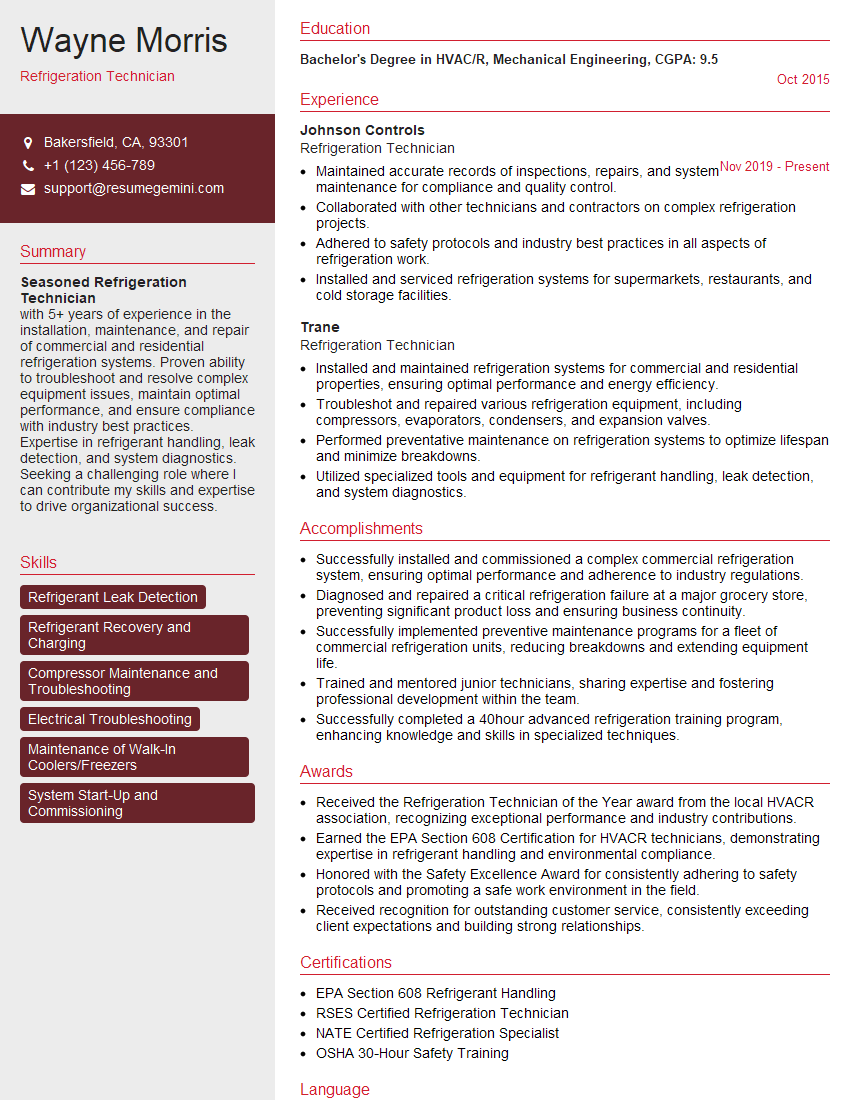
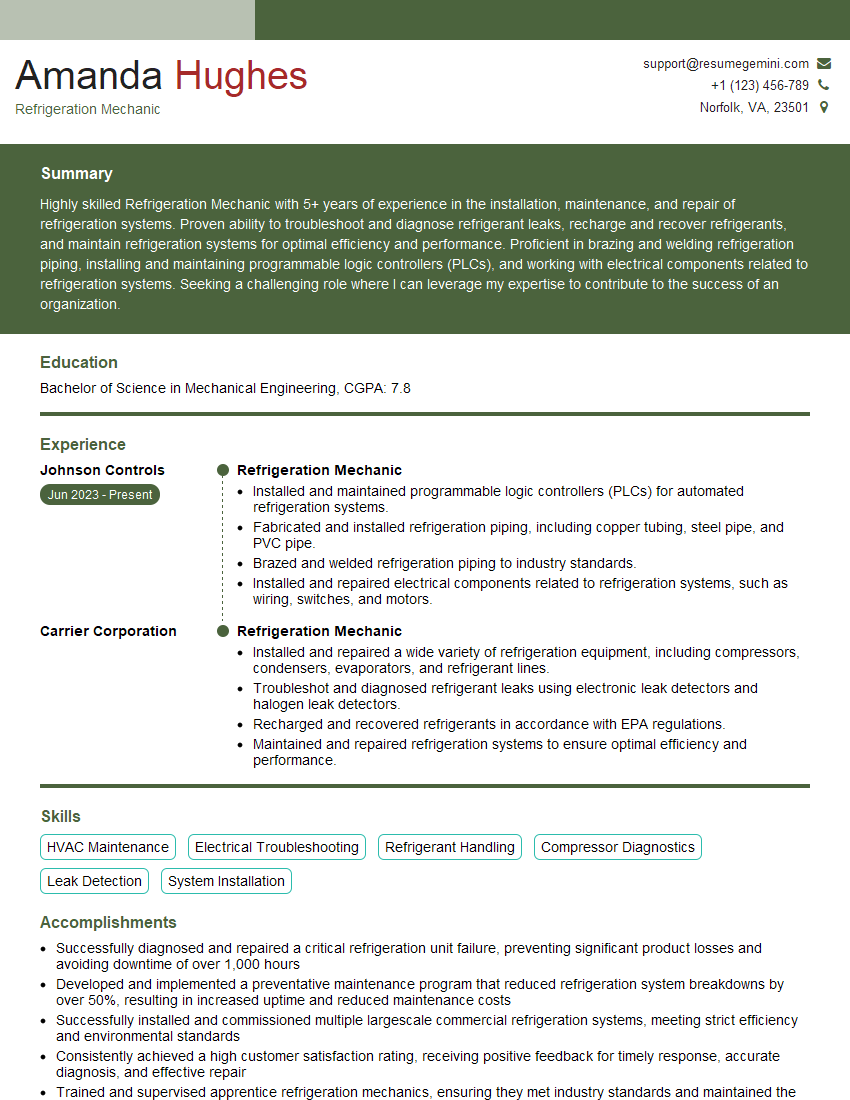
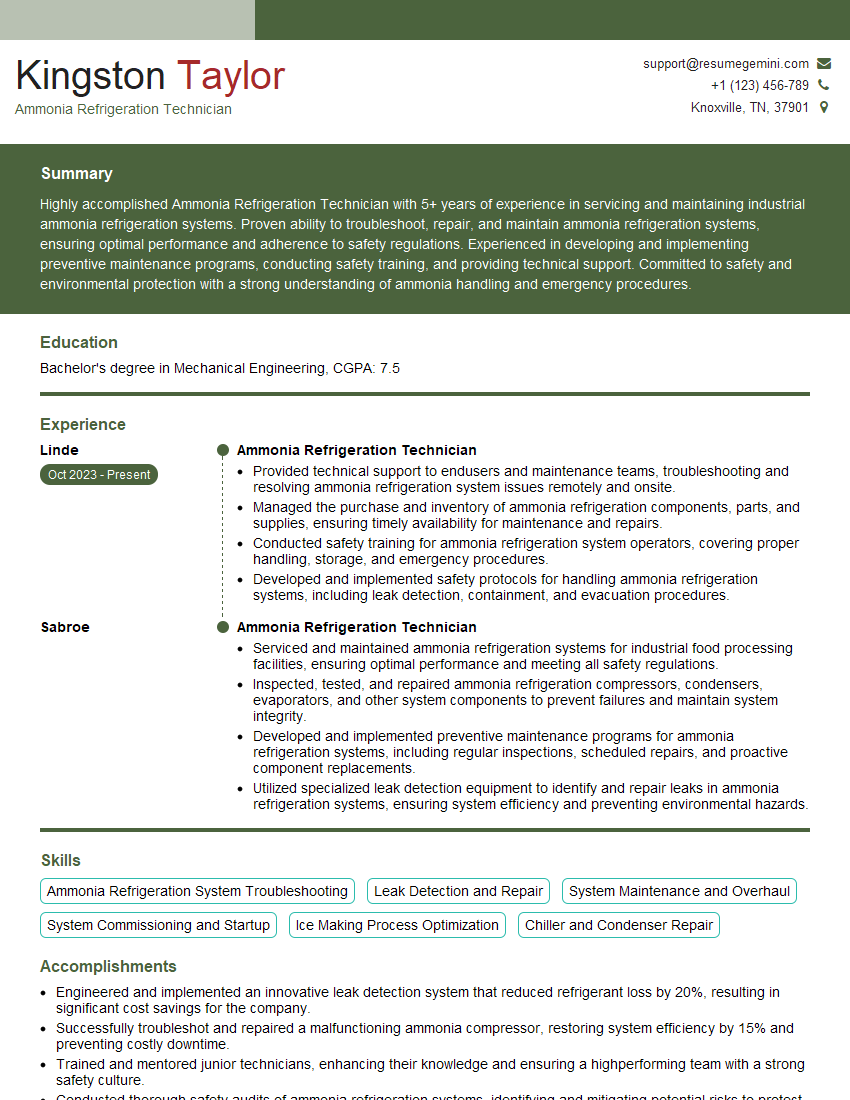
Mastering refrigerant charging is crucial for advancement in the HVAC/R industry, opening doors to higher-paying roles and greater responsibility. A strong resume is your key to unlocking these opportunities. Creating an ATS-friendly resume, optimized for applicant tracking systems, is vital to getting your application noticed. ResumeGemini can help you craft a professional and impactful resume that highlights your skills and experience in refrigerant charging. They provide examples of resumes tailored specifically to this field to help you get started.
Explore more articles
Users Rating of Our Blogs
Share Your Experience
We value your feedback! Please rate our content and share your thoughts (optional).
What Readers Say About Our Blog
Very informative content, great job.
good