Interviews are more than just a Q&A session—they’re a chance to prove your worth. This blog dives into essential Refrigeration and Cooling Systems interview questions and expert tips to help you align your answers with what hiring managers are looking for. Start preparing to shine!
Questions Asked in Refrigeration and Cooling Systems Interview
Q 1. Explain the basic principles of refrigeration.
Refrigeration is all about moving heat from a colder space to a warmer one, essentially reversing the natural flow of heat. Think of it like this: your refrigerator keeps your food cold by removing heat from inside the fridge and releasing it into your kitchen. This process relies on a refrigerant, a special fluid that absorbs heat when it evaporates and releases heat when it condenses. The refrigeration cycle uses this property to create a cooling effect.
The basic principle involves four key steps: evaporation (heat absorption), compression (increasing pressure and temperature), condensation (heat rejection), and expansion (decreasing pressure and temperature). These steps are repeated in a continuous cycle to maintain a consistent low temperature within the refrigerated space. For example, a home refrigerator uses this cycle to keep food fresh, while large industrial refrigeration systems are used in supermarkets and food processing plants.
Q 2. Describe the different types of refrigerants and their properties.
Refrigerants are the heart of any refrigeration system. They are substances that readily change phase (from liquid to gas and vice versa) at relatively low temperatures and pressures. Different refrigerants possess varying properties, influencing their suitability for specific applications. Historically, Chlorofluorocarbons (CFCs) like R-12 were common, but these were phased out due to their ozone-depleting potential.
- Hydrochlorofluorocarbons (HCFCs): These, like R-22, offered a temporary solution, having less ozone-depleting potential than CFCs but still contributing to global warming.
- Hydrofluorocarbons (HFCs): Substances like R-134a became popular replacements for CFCs and HCFCs, as they don’t damage the ozone layer. However, they are potent greenhouse gases.
- Natural Refrigerants: Ammonia (R-717), carbon dioxide (R-744), propane (R-290), and isobutane (R-600a) are gaining traction as environmentally friendly alternatives due to their low global warming potential and ozone depletion potential. They are often chosen based on system size and safety considerations. For example, ammonia is widely used in large industrial applications but requires specialized handling due to its toxicity.
The choice of refrigerant depends on factors like environmental impact, efficiency, safety, cost, and the specific application. Modern refrigeration systems increasingly favor natural refrigerants to minimize environmental footprint.
Q 3. What are the key components of a vapor-compression refrigeration cycle?
The vapor-compression refrigeration cycle, the most common type, comprises four main components:
- Compressor: Increases the pressure and temperature of the refrigerant vapor.
- Condenser: Rejects heat from the high-pressure, high-temperature refrigerant vapor, converting it to a liquid.
- Expansion Valve (or metering device): Reduces the pressure and temperature of the liquid refrigerant, causing it to partially evaporate.
- Evaporator: Absorbs heat from the refrigerated space, causing the remaining liquid refrigerant to evaporate completely.
These components work together in a closed loop, continuously circulating the refrigerant and transferring heat to maintain the desired temperature. Think of it like a continuous cycle of heating and cooling the refrigerant to achieve the cooling effect.
Q 4. Explain the function of a compressor in a refrigeration system.
The compressor is the workhorse of the refrigeration system. Its primary function is to increase the pressure and temperature of the refrigerant vapor leaving the evaporator. This high-pressure, high-temperature refrigerant vapor is then ready to release its heat in the condenser. Different types of compressors exist, including reciprocating, rotary, scroll, and centrifugal compressors, each with its advantages and disadvantages in terms of efficiency, capacity, and application.
For example, a reciprocating compressor uses pistons to compress the refrigerant, while a centrifugal compressor uses rotating impellers. The selection of a compressor type depends heavily on the size and application of the refrigeration system; larger systems might use centrifugal compressors for higher efficiency, while smaller systems might utilize scroll compressors for their compact size and quiet operation.
Q 5. How does a condenser work in a refrigeration system?
The condenser’s job is to reject the heat absorbed by the refrigerant in the evaporator. The high-pressure, high-temperature refrigerant vapor enters the condenser, where it releases its heat to the surroundings (e.g., ambient air or cooling water). This process converts the refrigerant vapor back into a high-pressure liquid. Different types of condensers exist, including air-cooled, water-cooled, and evaporative condensers.
Air-cooled condensers use fans to blow air across the refrigerant coils to dissipate heat. Water-cooled condensers utilize cooling water to absorb the heat, typically used in larger refrigeration systems where efficient heat rejection is crucial. Evaporative condensers combine air cooling with water evaporation to achieve more efficient heat rejection in hot and humid climates. The choice of condenser depends on factors like environmental conditions, available resources, and energy efficiency requirements.
Q 6. What is the role of an evaporator in a refrigeration system?
The evaporator is where the magic of cooling happens. The low-pressure, low-temperature liquid refrigerant enters the evaporator, where it absorbs heat from the space to be cooled (e.g., the interior of a refrigerator). This heat absorption causes the refrigerant to evaporate, becoming a low-pressure vapor. The evaporator is designed with a large surface area to maximize heat transfer, ensuring efficient cooling.
Different evaporator designs exist, including flooded evaporators, dry evaporators, and air evaporators, optimized for specific applications. For example, a refrigerator utilizes an air evaporator to cool the air within the cabinet, while a large industrial refrigeration system may employ a flooded evaporator to provide more effective heat transfer from a liquid product. The selection depends on the heat transfer method, the refrigerant used, and the type of application.
Q 7. Describe the different types of expansion devices used in refrigeration systems.
Expansion devices, also known as metering devices, control the flow of refrigerant into the evaporator, regulating the pressure and temperature drop. This controlled expansion is crucial for efficient refrigeration. Common expansion devices include:
- Thermostatic Expansion Valves (TXVs): These valves use a temperature sensor to regulate the refrigerant flow, ensuring optimal evaporator operation. They are widely used in many refrigeration systems because they can self-adjust to changing conditions.
- Capillary Tubes: These are simple, inexpensive tubes with a precisely sized internal diameter, restricting refrigerant flow. They are commonly found in small, simpler refrigeration systems.
- Electronic Expansion Valves (EEVs): These valves are electronically controlled, providing precise regulation of refrigerant flow. They offer better control than TXVs, especially in complex systems and allow for enhanced efficiency.
The choice of expansion device depends on the system complexity, capacity, cost considerations, and the desired level of control. TXVs represent a good balance between cost and performance for many applications, while EEVs provide superior control in larger, sophisticated systems.
Q 8. Explain the concept of superheat and subcooling in refrigeration.
Superheat and subcooling are crucial parameters in refrigeration systems that significantly impact efficiency and performance. Think of it like this: your refrigerant is like water in a pot – you want it to boil (evaporate) completely before it enters the refrigerator, and you want it to cool completely before it enters the compressor.
Superheat refers to the temperature difference between the refrigerant vapor leaving the evaporator and the saturation temperature of the refrigerant at the evaporator’s pressure. A sufficient superheat ensures that all the liquid refrigerant has evaporated before it reaches the compressor. Without enough superheat, liquid refrigerant can enter the compressor, leading to damage, reduced efficiency and potentially dangerous slugs of liquid hammering the compressor pistons. A typical superheat value might be 10-15°F (5-8°C), but this can vary depending on the system design and refrigerant.
Subcooling, on the other hand, is the temperature difference between the refrigerant liquid leaving the condenser and the saturation temperature at the condenser pressure. Subcooling ensures that the refrigerant is completely condensed before it enters the expansion valve. Sufficient subcooling prevents flashing (sudden vaporization) of the refrigerant in the expansion valve, which would reduce cooling capacity and efficiency. A typical subcooling value might be 10-15°F (5-8°C) as well.
Monitoring superheat and subcooling is vital for maintaining optimal refrigeration system performance. Improper levels can point to issues within the system, requiring attention and adjustments.
Q 9. How do you troubleshoot a refrigeration system that is not cooling properly?
Troubleshooting a refrigeration system that isn’t cooling properly involves a systematic approach. Think of it like diagnosing a car problem – you wouldn’t start by replacing the engine without checking the basics first!
- Check the obvious: Is the system even turned on? Are there any tripped circuit breakers? Is the condenser fan running properly? Is there a power outage?
- Temperature Readings: Measure the suction and discharge pressures and temperatures at various points (evaporator outlet, compressor suction, compressor discharge, condenser inlet/outlet). Compare these readings to the manufacturer’s specifications. Deviations indicate problems.
- Airflow: Inspect the condenser and evaporator coils for dirt or debris. Poor airflow reduces heat transfer efficiency.
- Refrigerant Charge: Check the refrigerant charge using appropriate gauges. Low charge is a very common reason for poor cooling, often indicated by low suction pressure. A high charge can also cause problems. This is where proper knowledge of superheat and subcooling is crucial.
- Expansion Valve/Capillary Tube: Check for proper operation of the expansion valve or capillary tube – these control the refrigerant flow. A faulty valve could restrict or over-supply refrigerant.
- Compressor: Listen for unusual sounds like knocking or rattling. These can signal compressor failure. Measure the compressor’s amperage draw; excessive amperage indicates a problem.
- Leaks: Inspect all joints, connections, and components for any signs of refrigerant leaks using an electronic leak detector. A leak means you lose refrigerant and cooling capacity.
A combination of systematic checks and measurements will typically reveal the root cause. Remember to consult the system’s schematics and manufacturer’s documentation for specific troubleshooting procedures.
Q 10. What are the common causes of refrigerant leaks?
Refrigerant leaks are a common problem in refrigeration systems, often caused by several factors. Imagine tiny holes in your water pipe causing water loss – similarly, leaks in the system cause refrigerant loss.
- Corrosion: Over time, components, especially those made of copper, can corrode, creating pinholes that leak refrigerant.
- Vibrations: Vibrations from the compressor or other components can loosen connections, leading to leaks at joints.
- Mechanical Damage: Accidental damage during installation, maintenance, or operation can puncture lines or components.
- Improper Installation: Poor workmanship during installation, such as incorrectly flared or crimped tubing, is a significant source of leaks.
- Wear and Tear: Components age and wear out, making them more prone to leaks.
- Freeze Damage: In some cases, freezing water around the lines can cause damage and result in leaks. This is more common in outdoor units.
Identifying the source requires careful inspection and often the use of specialized leak detection equipment.
Q 11. How do you identify and repair refrigerant leaks?
Identifying and repairing refrigerant leaks demands attention to detail and safety. It’s not a DIY job; proper training and certification are essential.
- Leak Detection: Use an electronic leak detector to locate the source of the leak. These detectors use sensors to detect the presence of refrigerant in the air.
- Visual Inspection: Carefully inspect all connections, lines, and components for any visible signs of refrigerant oil or frost, which may indicate a leak.
- Pressure Testing: After isolating the suspected area, the system may be pressure tested with nitrogen to confirm the leak location and rate of leakage.
- Repair: Once the leak is located, the damaged section needs to be repaired. This may involve replacing a damaged component, brazing a leak, or replacing a section of tubing. This process requires specialized tools and knowledge of proper brazing techniques and safety procedures.
- Evacuation and Charging: After the repair, the system must be thoroughly evacuated to remove any air and moisture before recharging it with the correct amount of refrigerant.
Always follow safety procedures and use appropriate personal protective equipment (PPE) when working with refrigerants.
Q 12. Explain the importance of proper refrigerant handling and disposal.
Proper refrigerant handling and disposal are essential for environmental protection and worker safety. Refrigerants are potent greenhouse gases; releasing them into the atmosphere causes significant environmental damage. Think about the ozone layer and global warming.
- Recovery and Recycling: Before any maintenance or repair, refrigerant should be carefully recovered using a certified refrigerant recovery machine. This captured refrigerant can then be recycled for reuse or properly disposed of.
- Safe Storage: Refrigerant cylinders should be stored in a cool, dry, and well-ventilated area, away from ignition sources.
- Proper Disposal: Refrigerants must be disposed of through certified recycling centers or in accordance with local environmental regulations. Improper disposal is illegal and harmful to the environment.
- Leak Prevention: Regular inspections and maintenance, including leak detection, are vital in preventing refrigerant leaks and reducing environmental impact.
By adhering to these practices, we can minimize the environmental impact of refrigeration systems and ensure responsible use of these important materials.
Q 13. What are the safety precautions when working with refrigerants?
Working with refrigerants requires strict adherence to safety precautions. Refrigerants can be toxic, flammable, and harmful to the environment.
- Personal Protective Equipment (PPE): Always wear appropriate PPE, including safety glasses, gloves, and respiratory protection. Specific PPE needs may vary depending on the refrigerant and the task.
- Ventilation: Ensure adequate ventilation in the work area to prevent the buildup of refrigerant vapors. Work in well-ventilated areas or use respiratory protection.
- Fire Safety: Many refrigerants are flammable, so keep away from open flames and ignition sources. Have fire extinguishers readily available.
- Training and Certification: Proper training and certification are crucial for handling refrigerants safely and legally. This includes knowledge of the specific refrigerant, safety procedures, and environmental regulations.
- Emergency Procedures: Familiarize yourself with emergency procedures in case of leaks or accidents.
Following these guidelines helps ensure a safe and healthy work environment when working with refrigeration systems.
Q 14. Describe the different types of refrigeration systems (e.g., vapor-compression, absorption).
Several types of refrigeration systems exist, each with its own operating principles and applications. The choice depends on factors like the required cooling capacity, efficiency requirements, and environmental considerations.
- Vapor-Compression Refrigeration: This is the most common type, used in household refrigerators, air conditioners, and many commercial applications. It uses a refrigerant that cycles through evaporation, compression, condensation, and expansion to provide cooling. The process is driven by a compressor.
- Absorption Refrigeration: This system uses heat energy (instead of electricity) to drive the refrigeration cycle. A refrigerant-absorbent solution is used. This system is often found in applications where heat is readily available, such as solar-powered cooling systems.
- Air-Cycle Refrigeration: This system uses compressed air as the refrigerant. It’s often used in very low-temperature applications or where flammability is a major concern.
- Stirling-Cycle Refrigeration: This system uses a closed-cycle thermodynamic process to produce cooling. It’s known for its high efficiency but is more complex and expensive than other systems.
- Thermoelectric Refrigeration: This system uses the Peltier effect to generate cooling. It uses electricity and is often employed for small-scale cooling applications, such as in portable coolers.
Each system has its strengths and weaknesses; the selection depends on specific needs and circumstances.
Q 15. Explain the difference between commercial and industrial refrigeration systems.
The primary difference between commercial and industrial refrigeration systems lies in their scale, application, and complexity. Commercial systems, like those found in supermarkets or restaurants, typically involve smaller-scale refrigeration units, often operating with multiple individual components. They focus on maintaining specific temperature ranges for food storage and preservation. Industrial systems, conversely, are found in large-scale applications such as food processing plants, breweries, or chemical facilities. They often involve larger, more complex systems with higher capacity and may incorporate specialized technologies for process cooling or cryogenic applications. For instance, a commercial system might use a simple air-cooled condensing unit, while an industrial system might employ a large water-cooled system with multiple compressors and evaporators. The design considerations, regulatory compliance, and maintenance requirements also differ significantly.
Career Expert Tips:
- Ace those interviews! Prepare effectively by reviewing the Top 50 Most Common Interview Questions on ResumeGemini.
- Navigate your job search with confidence! Explore a wide range of Career Tips on ResumeGemini. Learn about common challenges and recommendations to overcome them.
- Craft the perfect resume! Master the Art of Resume Writing with ResumeGemini’s guide. Showcase your unique qualifications and achievements effectively.
- Don’t miss out on holiday savings! Build your dream resume with ResumeGemini’s ATS optimized templates.
Q 16. How do you calculate the cooling capacity of a refrigeration system?
Calculating the cooling capacity of a refrigeration system involves determining the rate at which heat is removed. This is typically expressed in tons of refrigeration (1 ton = 12,000 BTU/hr) or kilowatts (kW). The calculation depends on several factors, including the desired temperature, the ambient temperature, the load (amount of heat to be removed), and the efficiency of the system. A common approach involves determining the heat load through calculations considering factors like infiltration, solar gain, and internal heat sources (equipment, people). Software tools and industry standards are frequently used to streamline this process. For example, if you need to cool a room with a high heat load and maintain a low temperature, you’ll need a system with higher capacity than a small room requiring a modest temperature drop. The efficiency (often expressed as EER or SEER) of the refrigeration system plays a crucial role in determining the required capacity, as a more efficient system will require less power to achieve the same cooling effect. In a practical sense, we often work with manufacturers’ data sheets which provide performance curves indicating cooling capacity across different operating conditions.
Q 17. What are the different types of cooling towers and their applications?
Cooling towers are crucial for dissipating waste heat from refrigeration systems and other industrial processes. Several types exist, each with specific applications:
- Evaporative Cooling Towers: These are the most common type, using evaporation to cool water. They are further categorized into:
- Forced-draft: Fans pull air through the tower.
- Induced-draft: Fans push air through the tower.
- Natural-draft: Airflow is driven by natural convection.
- Air-cooled condensers: These directly release heat to the atmosphere without using water, making them suitable for locations with water scarcity or stringent environmental regulations. They are usually less efficient than evaporative towers.
- Hybrid cooling towers: These combine features of both evaporative and air-cooled systems to offer flexibility and efficiency in various climates.
Applications are closely tied to their cooling capacity and efficiency. For example, large industrial processes like power plants usually opt for large natural-draft towers or a bank of smaller forced-draft towers. Smaller commercial systems often rely on induced-draft or air-cooled condensers for simplicity and lower installation costs.
Q 18. Explain the principles of heat transfer in refrigeration systems.
Refrigeration systems rely on the principles of heat transfer, primarily through three mechanisms: conduction, convection, and radiation. The refrigerant absorbs heat from the space to be cooled through conduction and convection. Conduction occurs when heat is transferred through direct contact between the evaporator coil and the surrounding air. Convection takes place when the refrigerant, now warmer from absorbing heat, circulates and transfers heat to the air flowing over the evaporator. The compressor then raises the refrigerant’s pressure and temperature. This hot refrigerant then releases its heat to the condenser, primarily through convection (air or water flowing over the condenser coils) and some radiation. The cycle then repeats, with the refrigerant undergoing phase changes (evaporation and condensation) to efficiently transfer heat. Think of it as a continuous cycle of heat absorption and rejection, utilizing the refrigerant’s properties to move heat from a cold space to a warmer environment.
Q 19. How do you maintain and service a refrigeration system?
Maintaining and servicing a refrigeration system is crucial for safety, efficiency, and longevity. A preventative maintenance program is paramount. This includes regular inspection of components such as compressors, condensers, evaporators, and controls. This involves checking refrigerant levels, oil levels (in compressors), checking for leaks, cleaning condenser coils and filters, and lubricating moving parts as necessary. Troubleshooting involves diagnosing issues through systematic analysis, often using pressure gauges, temperature sensors, and specialized tools to pinpoint malfunctions. Regular filter replacements prevent system blockages. In larger systems, this might involve scheduled shutdowns for thorough cleaning and inspection. Proper documentation of all maintenance activities is essential. Ignoring maintenance can lead to reduced efficiency, costly repairs, system failure, and even safety hazards like refrigerant leaks.
Q 20. What are the common types of refrigeration system controls?
Refrigeration system controls maintain optimal operating conditions. Common types include:
- Thermostats: These are fundamental components, controlling the on/off cycling of the system based on temperature setpoints.
- Pressure switches: These monitor refrigerant pressure, ensuring safe operation and preventing compressor damage.
- Electronic controls: Microprocessor-based controls offer advanced features like variable speed drives, optimizing compressor operation for energy efficiency and precise temperature control. They can incorporate monitoring systems, allowing remote access and diagnostics.
- Safety controls: These include high-pressure cutouts, low-pressure switches, and other safeguards to prevent dangerous situations.
The complexity of the control system depends on the scale and application of the refrigeration system. A simple walk-in cooler might only use a basic thermostat, while a large industrial system might have a sophisticated PLC (Programmable Logic Controller) managing numerous parameters.
Q 21. Describe your experience with different types of refrigeration compressors (e.g., reciprocating, scroll, centrifugal).
My experience encompasses various compressor types, each with its own strengths and weaknesses:
- Reciprocating Compressors: These are widely used in smaller commercial systems. They’re relatively simple, robust, and cost-effective. However, they can be less efficient than other types and generate more vibration and noise.
- Scroll Compressors: These are increasingly common in both commercial and smaller industrial applications. They are known for their compact size, quiet operation, and high efficiency. However, they may not be suitable for very large or high-pressure applications.
- Centrifugal Compressors: These are primarily found in large industrial systems and are renowned for their high capacity and efficiency at larger scales. They require more complex control systems and are typically more expensive.
I’ve worked extensively with all three types in diverse settings. For example, I oversaw the replacement of reciprocating compressors in a supermarket chain with higher-efficiency scroll compressors, resulting in significant energy savings. In an industrial setting, I helped troubleshoot a failure in a large centrifugal compressor, successfully diagnosing the issue as a bearing failure and implementing preventative measures.
Q 22. Explain the importance of regular maintenance on refrigeration equipment.
Regular maintenance on refrigeration equipment is paramount for ensuring optimal performance, extending its lifespan, and preventing costly breakdowns. Think of it like servicing your car – neglecting it leads to bigger problems down the line.
- Improved Efficiency: Clean coils and properly lubricated components ensure the system operates at peak efficiency, reducing energy consumption and saving money.
- Preventing Failures: Regular inspections identify potential issues before they escalate into major failures, minimizing downtime and repair costs. For instance, a small refrigerant leak detected early can be easily fixed; ignored, it could lead to a complete system failure.
- Safety: Refrigerants can be harmful if they leak, and regular maintenance helps identify and address leaks promptly, ensuring the safety of personnel and the environment.
- Extended Lifespan: Just like regular check-ups keep you healthy, maintenance keeps the refrigeration system running smoothly for many years.
- Compliance: Many jurisdictions mandate regular inspections and maintenance for commercial refrigeration systems to ensure environmental compliance.
A typical maintenance schedule would include checking refrigerant levels, cleaning condenser coils, lubricating motors, and inspecting for leaks. The frequency depends on the system’s size, usage, and type.
Q 23. How do you troubleshoot a refrigeration system with low pressure?
Low pressure in a refrigeration system indicates a problem with either the refrigerant charge or the system’s ability to circulate it. Troubleshooting involves a systematic approach:
- Check Refrigerant Charge: The most common cause. Low refrigerant can result from leaks (check sight glasses and pressure gauges for indications). Use a leak detector to pinpoint the location if necessary. Remember safety precautions when handling refrigerants.
- Inspect Compressor: A faulty compressor, whether due to mechanical issues or insufficient lubrication, can reduce the pressure. Listen for unusual noises and check the oil level.
- Examine Condenser: A dirty condenser reduces its efficiency, leading to lower pressures. Clean the condenser coils thoroughly.
- Check Expansion Valve/Capillary Tube: A restricted expansion device restricts refrigerant flow, leading to low suction pressure. This requires specialized tools and knowledge to diagnose and replace.
- Verify Evaporator Fan: Ensure proper airflow over the evaporator coil. A malfunctioning fan reduces heat absorption, leading to lower pressures.
- Check for Air in the System: Air in the system reduces the effective refrigerant charge and can impact pressure readings. This requires specialized equipment to purge the system.
Always consult the system’s technical documentation and safety guidelines before attempting any repairs.
Q 24. How do you troubleshoot a refrigeration system with high pressure?
High pressure in a refrigeration system suggests restricted flow somewhere in the high-pressure side of the circuit. This could lead to compressor damage if not addressed promptly.
- Condenser Issues: A dirty or blocked condenser restricts airflow, increasing pressure. Cleaning the coils is the first step. A faulty condenser fan motor also contributes to this.
- Restricted Refrigerant Flow: Check the condenser itself for internal blockages. This might involve accessing and inspecting the internal tubes, which often requires specialized tools and expertise.
- Overcharged System: Too much refrigerant in the system can increase pressure significantly. This needs careful evacuation and recharging following the manufacturer’s specifications.
- High Ambient Temperature: Extremely high ambient temperatures can also increase the condensing pressure. This is less of a problem to fix and more of a factor to consider when designing the system.
- Compressor Issues: A failing compressor, especially one with a restricted discharge valve, can also contribute to high pressure. Unusual compressor noises are a key indicator.
Addressing high pressure requires careful diagnosis to avoid damaging the compressor. Always prioritize safety and consider calling a qualified refrigeration technician if you are unsure.
Q 25. What are the environmental regulations related to refrigerants?
Environmental regulations regarding refrigerants are stringent and constantly evolving due to their impact on ozone depletion and global warming. The most prominent regulation is the Montreal Protocol, which phased out ozone-depleting substances (ODS) like CFCs and HCFCs. More recently, regulations focus on reducing the global warming potential (GWP) of refrigerants.
Current regulations often mandate:
- Proper handling and disposal of refrigerants: Strict procedures exist to prevent leakage during maintenance, repair, and disposal.
- Use of low-GWP refrigerants: Regulations are pushing the industry towards refrigerants with lower environmental impact, such as HFOs (hydrofluoroolefins) and natural refrigerants (ammonia, CO2).
- Leak detection and repair: Regular leak checks and timely repairs are often mandatory for certain systems.
- Record-keeping: Detailed records of refrigerant use, leaks, and disposal are required in many areas.
The specific regulations vary by region and jurisdiction, so it’s crucial to consult local environmental agencies for the latest information. Ignoring these regulations can lead to significant fines and legal repercussions.
Q 26. Describe your experience with different types of expansion valves (e.g., TXV, capillary tube).
Expansion valves are crucial components that regulate the flow of refrigerant into the evaporator, ensuring proper temperature control. I have extensive experience with both thermostatic expansion valves (TXV) and capillary tubes.
- TXV (Thermostatic Expansion Valve): TXVs are more sophisticated, using a temperature sensor in the evaporator to regulate the refrigerant flow. They provide more precise control and are more adaptable to varying loads. I’ve worked with various types of TXVs, understanding their internal components and troubleshooting issues like sticking, freezing, or incorrect superheat settings.
- Capillary Tube: Capillary tubes are simpler, using a fixed orifice to control the flow. They’re less expensive and generally used in smaller, simpler systems. While their operation is less adaptable to varying loads, they are reliable if properly sized for the system. Troubleshooting often involves checking for kinks or blockages.
The choice between TXV and capillary tube depends on factors such as system size, complexity, and cost considerations. For large commercial systems, TXVs offer superior performance, while capillary tubes are suitable for smaller residential or simpler commercial applications. I can effectively diagnose and repair issues related to either type.
Q 27. Explain your understanding of psychrometrics and its relevance to refrigeration.
Psychrometrics is the study of the thermodynamic properties of moist air. It’s crucial in refrigeration because it helps determine the conditions of the air entering and leaving the evaporator (in air-cooled systems) or the air being conditioned. Understanding psychrometrics allows us to optimize the refrigeration system’s performance and energy efficiency.
Specifically, psychrometric charts and calculations help us understand:
- Moisture content of the air: This is essential for calculating the cooling load and selecting the proper size of the evaporator.
- Dew point: Knowing the dew point helps prevent condensation issues in the system.
- Enthalpy: Enthalpy is the total heat content of the air, crucial for calculating the heat removed by the system.
- Relative humidity: Understanding the impact of relative humidity is critical in designing and operating refrigeration systems for food storage, as it directly impacts food preservation.
For example, in a walk-in cooler, the psychrometric properties of the air must be carefully controlled to maintain the desired temperature and humidity to prevent food spoilage. Using psychrometric data, we can design a system that efficiently removes the appropriate amount of heat and moisture to reach those conditions.
Q 28. What are the energy-saving measures you can implement in a refrigeration system?
Implementing energy-saving measures in a refrigeration system can significantly reduce operating costs and environmental impact. Here are some key strategies:
- Regular Maintenance: Keeping the system clean and well-maintained improves efficiency, reducing energy consumption. Cleaning condenser coils and ensuring proper lubrication are essential.
- Optimize Refrigerant Charge: The correct refrigerant charge is critical for optimal efficiency. Overcharging or undercharging leads to increased energy use.
- Upgrade to Energy-Efficient Components: Replacing old, inefficient components such as compressors, fans, and motors with newer, energy-efficient models can lead to significant savings.
- Variable Speed Drives (VSDs): Installing VSDs on compressors and fans allows for variable speed control, reducing energy consumption based on the cooling load. This is particularly effective in applications with fluctuating demands.
- Proper Insulation: Effective insulation minimizes heat gain, reducing the workload of the refrigeration system. Regular inspection of insulation for damage and replacement of damaged sections are crucial.
- Evaporator and Condenser Optimization: Ensuring proper airflow over the evaporator and condenser coils through appropriate fan placement and maintenance enhances heat exchange efficiency.
- Energy-Efficient Refrigerants: Using low-GWP refrigerants minimizes the environmental impact while potentially improving system efficiency.
- Smart Controls and Monitoring: Utilizing advanced control systems and monitoring tools enables optimized operation and early detection of anomalies that could lead to energy waste.
Implementing a combination of these strategies can drastically improve the energy efficiency of a refrigeration system, significantly reducing operating costs and minimizing environmental impact.
Key Topics to Learn for Refrigeration and Cooling Systems Interview
- Thermodynamics of Refrigeration Cycles: Understand the principles of vapor-compression, absorption, and other refrigeration cycles. Explore concepts like enthalpy, entropy, and the impact of different refrigerants.
- Refrigerant Properties and Selection: Learn about various refrigerants (e.g., HFCs, HCFCs, natural refrigerants), their environmental impact (ODP and GWP), and the criteria for selecting appropriate refrigerants for different applications.
- Components of Refrigeration Systems: Master the function and operation of compressors, condensers, evaporators, expansion valves, and other key components. Be prepared to discuss their maintenance and troubleshooting.
- Practical Applications: Discuss your experience (or theoretical knowledge) in areas such as commercial refrigeration (supermarkets, restaurants), industrial refrigeration (food processing, chemical plants), HVAC systems, or automotive air conditioning.
- Troubleshooting and Diagnostics: Be ready to explain your approach to diagnosing and resolving common problems in refrigeration systems, including pressure imbalances, leaks, and component failures. This could involve using diagnostic tools and understanding system schematics.
- Safety and Regulations: Demonstrate awareness of safety regulations and procedures related to handling refrigerants and working with high-pressure systems. Understanding relevant codes and standards is crucial.
- Energy Efficiency and Sustainability: Discuss strategies for optimizing energy efficiency in refrigeration systems, such as using variable-speed drives, improving insulation, and employing advanced control systems. The environmental impact of your choices should be a key consideration.
- Control Systems and Automation: Familiarize yourself with different types of control systems used in refrigeration, including basic thermostats and more advanced PLC-based systems. Understanding how these systems maintain desired temperatures and optimize energy use is important.
Next Steps
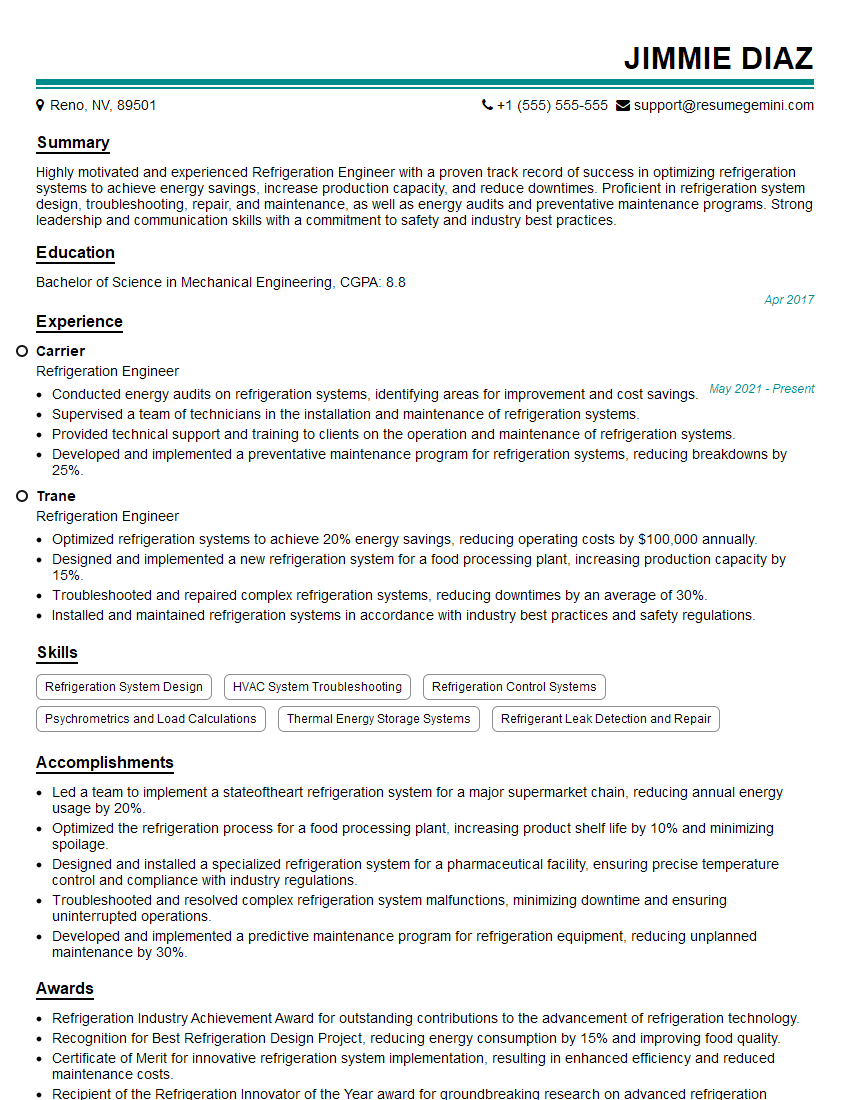
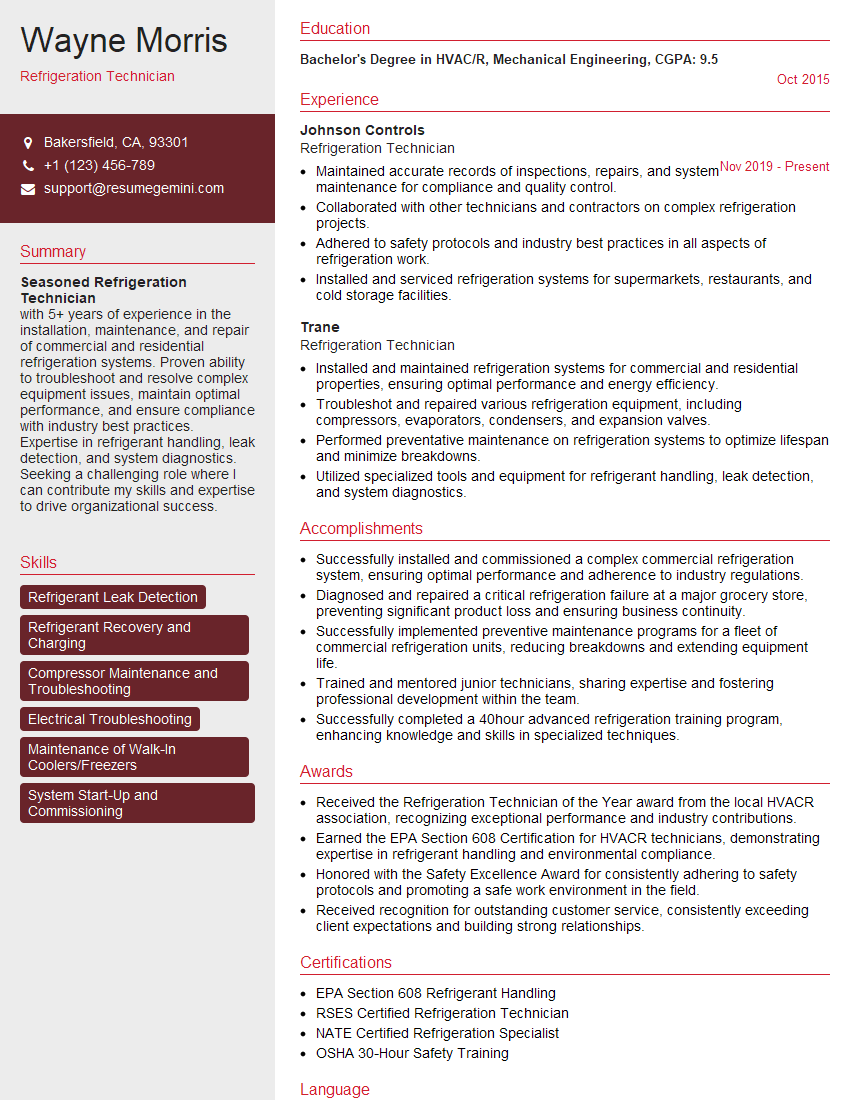
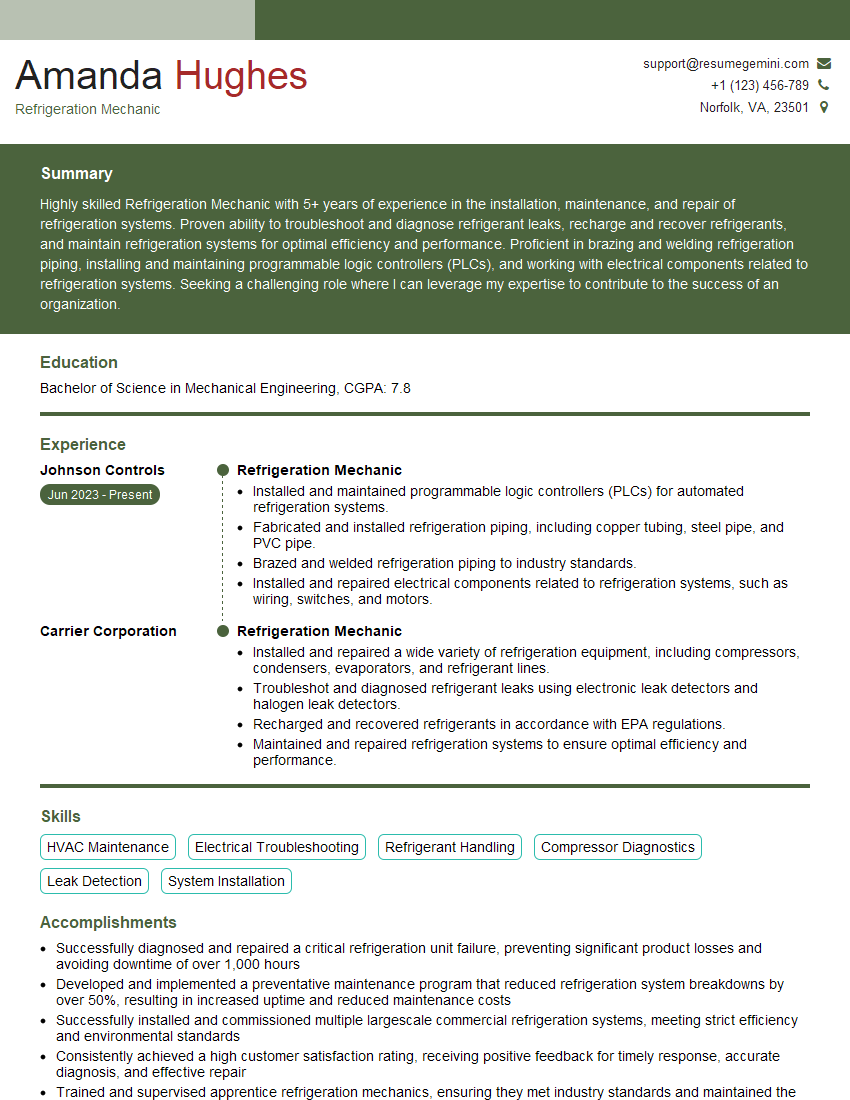
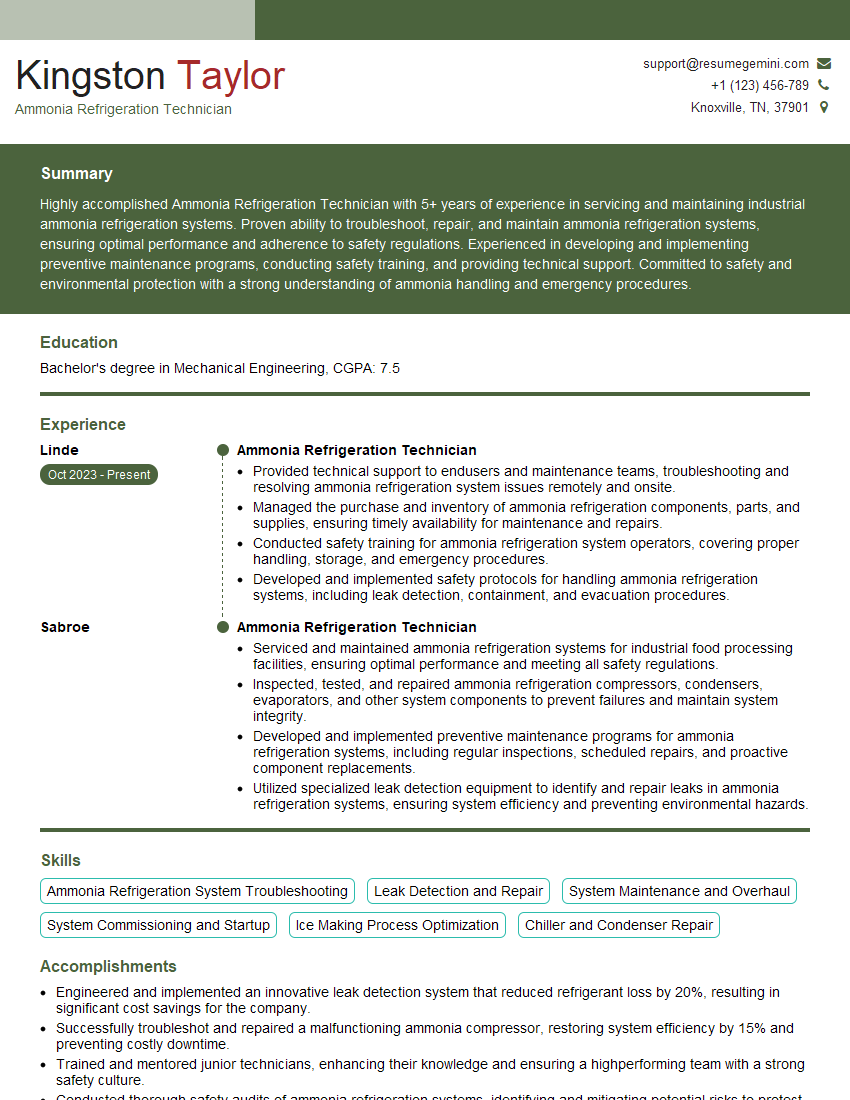
Mastering Refrigeration and Cooling Systems knowledge opens doors to exciting and rewarding careers with significant growth potential. To maximize your job prospects, focus on building a strong, ATS-friendly resume that highlights your skills and experience effectively. ResumeGemini is a trusted resource to help you create a professional and impactful resume that catches the eye of recruiters. We provide examples of resumes tailored specifically to the Refrigeration and Cooling Systems field to guide you. Invest time in crafting a compelling resume; it’s your first impression on potential employers.
Explore more articles
Users Rating of Our Blogs
Share Your Experience
We value your feedback! Please rate our content and share your thoughts (optional).
What Readers Say About Our Blog
Very informative content, great job.
good