Interviews are opportunities to demonstrate your expertise, and this guide is here to help you shine. Explore the essential Regulatory Compliance Monitoring and Reporting interview questions that employers frequently ask, paired with strategies for crafting responses that set you apart from the competition.
Questions Asked in Regulatory Compliance Monitoring and Reporting Interview
Q 1. Explain the importance of a robust compliance monitoring program.
A robust compliance monitoring program is crucial for several reasons. Think of it as the organizational immune system against regulatory breaches. It safeguards an organization from hefty fines, legal battles, reputational damage, and loss of customer trust. Without a strong program, even unintentional non-compliance can lead to severe consequences.
Specifically, a well-structured program ensures that the organization consistently adheres to applicable laws, regulations, and internal policies. It allows for early identification of potential risks, enabling proactive mitigation efforts. This proactive approach is far more cost-effective than reacting to violations after they’ve occurred. Furthermore, a robust program demonstrates a commitment to ethical conduct and good corporate governance, building confidence among stakeholders.
- Risk Mitigation: Proactive identification and remediation of compliance gaps.
- Legal and Financial Protection: Reduces the likelihood of penalties and legal action.
- Enhanced Reputation: Demonstrates a commitment to ethical business practices.
- Improved Operational Efficiency: Streamlines processes and minimizes disruptions.
Q 2. Describe your experience with different compliance frameworks (e.g., SOX, HIPAA, GDPR).
My experience spans several key compliance frameworks. I’ve worked extensively with SOX (Sarbanes-Oxley Act), focusing on internal controls over financial reporting. This involved designing and implementing monitoring procedures to ensure the accuracy and reliability of financial statements. I’ve also worked with HIPAA (Health Insurance Portability and Accountability Act), concentrating on protecting the privacy and security of protected health information (PHI). This included conducting risk assessments, implementing data security measures, and developing breach response plans. Finally, I have significant experience with GDPR (General Data Protection Regulation), guiding organizations on data subject rights, cross-border data transfers, and consent management.
In each instance, my approach involved a thorough understanding of the specific requirements, tailoring monitoring procedures to the unique characteristics of the organization and its operations. For example, with GDPR, I developed data mapping exercises to pinpoint where personal data is stored and processed, helping to identify potential vulnerabilities.
Q 3. How do you identify and assess compliance risks?
Identifying and assessing compliance risks requires a systematic approach. It starts with a thorough understanding of the applicable regulatory landscape and the organization’s operations. I typically use a risk assessment framework that considers the likelihood and impact of potential compliance failures. This includes reviewing relevant laws and regulations, conducting internal assessments, and interviewing key personnel. I might use tools like risk matrices to visually represent the identified risks.
For example, in a healthcare setting, a key risk might be the unauthorized access or disclosure of PHI. A risk matrix would quantify the likelihood (e.g., high, medium, low) and the impact (e.g., severe financial penalties, reputational damage) of such an event. This helps prioritize mitigation efforts towards the highest-risk areas.
This process often involves:
- Regulatory Mapping: Identifying all relevant regulations applicable to the organization.
- Gap Analysis: Comparing current practices to regulatory requirements.
- Risk Assessment: Evaluating the likelihood and potential impact of non-compliance.
- Prioritization: Focusing on the most critical risks.
Q 4. What methods do you use to monitor compliance with regulations?
Monitoring compliance involves a multifaceted approach that combines automated and manual controls. Automated monitoring often leverages technology like data analytics and audit management software to continuously scan for anomalies or deviations from established policies and procedures. This could include automated checks for data breaches, financial irregularities, or policy violations. Manual monitoring includes regular reviews of processes, documentation, and transactions to identify potential weaknesses or non-compliance issues.
For instance, automated systems could flag transactions exceeding a predefined threshold, suggesting a possible financial irregularity requiring further investigation. Manual reviews would encompass checking physical security measures, reviewing employee training records, and ensuring proper data handling procedures are followed.
Effective monitoring methods typically involve:
- Automated Monitoring Tools: Software solutions to continuously analyze data and identify potential compliance violations.
- Regular Audits: Scheduled reviews of systems, processes, and documentation to ensure compliance.
- Key Performance Indicators (KPIs): Metrics tracking compliance performance and identifying trends.
- Employee Training and Awareness Programs: Educating employees about compliance requirements and fostering a culture of compliance.
Q 5. How do you handle compliance violations?
Handling compliance violations requires a structured and well-defined process. The first step is to investigate the violation thoroughly to understand its nature, extent, and root cause. This often involves collecting evidence, interviewing relevant personnel, and reviewing related documentation. Based on the findings, a corrective action plan is developed to address the violation and prevent recurrence. This plan should be documented and communicated to all relevant parties. Depending on the severity of the violation, escalation to senior management or external authorities might be necessary.
For example, if a data breach occurs, the investigation would involve identifying the affected data, determining the cause of the breach, and implementing measures to prevent future incidents, like enhanced security controls and employee training. A comprehensive report documenting the event, investigation, and corrective actions should be prepared for regulatory bodies if required.
Key steps in handling violations:
- Investigation: Thoroughly examine the violation to understand the root cause.
- Corrective Action Plan: Develop and implement measures to rectify the violation and prevent recurrence.
- Reporting: Document and report the violation to relevant parties, including regulatory bodies as necessary.
- Monitoring and Follow-up: Track the effectiveness of corrective actions and ensure continued compliance.
Q 6. Describe your experience with conducting internal audits.
I have extensive experience conducting internal audits, employing a risk-based approach to assess compliance with relevant regulations and internal controls. This involves planning the audit scope, developing audit procedures, performing fieldwork, and documenting findings. I use various techniques, including testing of controls, interviews with personnel, and review of supporting documentation. My reports include findings, conclusions, and recommendations for improvement. It’s crucial to maintain objectivity and independence during the audit process.
For instance, during a SOX audit, I would test the effectiveness of controls surrounding revenue recognition. This might include examining sales contracts, reviewing the revenue recognition process, and interviewing personnel involved in the process. If control weaknesses were found, recommendations would be made to improve the control design and implementation.
Key aspects of my internal audit approach:
- Risk-Based Approach: Focusing on the most critical areas with the highest potential risk.
- Testing of Controls: Assessing the design and operating effectiveness of controls.
- Documentation: Thoroughly documenting the audit procedures, findings, conclusions, and recommendations.
- Communication: Effectively communicating audit findings to management and relevant stakeholders.
Q 7. How do you ensure the accuracy and completeness of regulatory reports?
Ensuring the accuracy and completeness of regulatory reports is paramount. It requires rigorous data collection, validation, and reconciliation processes. This often involves utilizing data analytics to identify inconsistencies, errors, or omissions. Reconciliation with source data is crucial to ensure that reported information is reliable and reflects actual events. It’s also essential to follow established reporting deadlines and use appropriate reporting formats. Finally, robust version control and audit trails must be maintained to track changes and ensure accountability.
For example, when preparing a GDPR data breach report, data would be meticulously collected from various sources, cross-validated, and compared to relevant documentation. This would involve checks for missing or inconsistent information before submission to authorities. Strict version control would maintain a record of all changes made to the report, with clear accountability for each modification.
Key elements for accurate and complete reporting:
- Data Validation: Verifying the accuracy and completeness of the data used in reporting.
- Reconciliation: Comparing reported data with source data to ensure consistency.
- Data Analytics: Utilizing data analysis techniques to identify anomalies and potential errors.
- Version Control: Maintaining a clear audit trail of changes and modifications to the report.
- Compliance with Reporting Deadlines: Ensuring timely submission of reports.
Q 8. What key performance indicators (KPIs) do you track for compliance monitoring?
Key Performance Indicators (KPIs) for compliance monitoring are crucial for measuring the effectiveness of our compliance program. We don’t just track the number of incidents; instead, we focus on a holistic view, encompassing both quantitative and qualitative measures.
- Incident Rate: This is the number of compliance violations detected per period (e.g., monthly, quarterly). A decreasing trend shows improved compliance. For example, tracking the number of data breaches per year helps assess the effectiveness of our data security protocols.
- Time to Remediation: This measures how quickly we identify and resolve compliance issues. Faster remediation minimizes potential risks and damages. For instance, we monitor the time taken to address a customer complaint about a privacy violation.
- Training Completion Rate: This measures employee engagement in compliance training. High completion rates indicate a commitment to compliance. We actively track this through our learning management system (LMS).
- Audit Score: Regular internal and external audits assess our compliance posture. Higher scores indicate stronger compliance. We analyze the findings of each audit to identify areas for improvement.
- Employee Awareness Score: Measuring the understanding of compliance policies through quizzes and surveys helps gauge the effectiveness of our training and communication initiatives.
These KPIs are regularly reviewed, analyzed, and reported to management to ensure continuous improvement.
Q 9. How do you communicate compliance issues to management?
Communicating compliance issues to management is critical for proactive risk management. My approach is multifaceted and ensures timely, accurate, and actionable information.
- Regular Reporting: I prepare concise, regular reports (e.g., monthly or quarterly) that summarize key compliance metrics, including those KPIs mentioned earlier. These reports highlight trends and any emerging issues.
- Immediate Escalation for Critical Issues: For significant breaches or potential high-impact issues, immediate notification to the relevant management team is crucial. This usually involves a detailed report outlining the issue, potential impact, and recommended actions.
- Visualizations and Dashboards: Using data visualization tools, I create dashboards that provide a clear and concise overview of compliance performance. This makes it easy for management to understand the situation at a glance.
- Risk-Based Prioritization: Reports highlight the risk associated with each compliance issue, allowing management to prioritize responses based on the severity and potential impact.
- Actionable Recommendations: Each report includes specific, actionable recommendations to address identified issues and prevent future occurrences.
This combination ensures management has the information needed to make informed decisions and take necessary action.
Q 10. How do you stay updated on changes in regulations?
Staying updated on regulatory changes is paramount. My strategy involves a multi-pronged approach combining various resources:
- Subscription to Regulatory Updates: I subscribe to relevant newsletters, journals, and online resources from official government bodies and reputable industry associations. Examples include subscribing to newsletters from the relevant regulatory bodies.
- Professional Networks: Actively participating in professional organizations and attending industry conferences provides valuable insights and allows for networking with compliance professionals.
- Compliance Management Software: Many software solutions provide automated alerts and updates on relevant regulatory changes. This is a crucial tool for timely updates.
- Internal Monitoring: We maintain an internal process of regularly reviewing and updating our compliance procedures in response to changing legislation.
- Legal Counsel: Consulting with legal counsel to clarify ambiguities and obtain expert advice on complex issues ensures accuracy and minimizes risks.
This combined strategy helps maintain a proactive stance to ensure our compliance program remains up-to-date and effective.
Q 11. Explain your experience with using compliance management software.
I have extensive experience using compliance management software, having implemented and managed several systems throughout my career. My experience spans various software types, including GRC (Governance, Risk, and Compliance) platforms and specialized tools for specific regulatory requirements (e.g., HIPAA, GDPR).
My expertise includes:
- System Selection and Implementation: I’ve been involved in the process of evaluating, selecting, and implementing suitable compliance management software, ensuring alignment with our specific needs and regulatory requirements.
- Data Migration and Integration: I’ve overseen the migration of existing compliance data into new systems, ensuring data integrity and accuracy. This often includes integrating with other enterprise systems.
- User Training and Support: I’ve designed and delivered training programs to ensure users can effectively utilize the software, including providing ongoing support and troubleshooting.
- Reporting and Analytics: I’m proficient in using the software’s reporting and analytics capabilities to generate insights and track key compliance metrics.
- Workflow Automation: I leverage the software’s workflow automation capabilities to streamline compliance processes and reduce manual intervention, increasing efficiency and accuracy.
My experience demonstrates my ability to leverage technology to optimize compliance management and improve overall efficiency.
Q 12. Describe a time you had to deal with a complex compliance issue.
In a previous role, we faced a complex compliance issue involving a data breach affecting a significant number of customers. The breach involved sensitive personal information, triggering several regulatory investigations.
My role involved:
- Immediate Containment: We first focused on containing the breach, securing our systems, and preventing further data loss. This involved immediate collaboration with IT security and legal teams.
- Root Cause Analysis: A thorough investigation was launched to identify the root cause of the breach and any vulnerabilities in our systems. This was critical to prevent recurrence.
- Notification and Remediation: We developed and implemented a plan to notify affected customers and provide remediation measures, including credit monitoring services. This was done in accordance with regulatory requirements.
- Regulatory Reporting and Cooperation: We collaborated closely with relevant regulatory bodies, providing full transparency and cooperation throughout the investigation process.
- Internal Process Improvements: Following the incident, we implemented significant improvements to our data security protocols, employee training, and incident response plan. This was a pivotal learning experience.
The successful navigation of this situation demonstrated my ability to handle high-pressure situations, collaborate effectively across teams, and proactively mitigate risks.
Q 13. How do you prioritize compliance tasks?
Prioritizing compliance tasks requires a structured approach. I utilize a risk-based prioritization framework.
My process involves:
- Risk Assessment: Each compliance task is assessed based on its potential impact and likelihood of occurrence. This includes considering factors like regulatory fines, reputational damage, and operational disruptions.
- Urgency and Immediacy: Tasks with immediate deadlines or those requiring urgent attention are prioritized higher. For example, tasks related to an upcoming audit take precedence.
- Resource Allocation: The availability of resources (e.g., personnel, budget) influences prioritization. Tasks requiring significant resources might be scheduled strategically.
- Dependency Analysis: The interdependencies between tasks are carefully considered. Tasks that are prerequisites for other tasks are prioritized accordingly.
- Regular Review: Prioritization is not static. I regularly review and adjust priorities based on changes in the regulatory landscape, emerging risks, and resource availability.
This framework ensures that critical compliance tasks are addressed promptly and effectively, minimizing potential risks.
Q 14. What are the key elements of an effective compliance training program?
An effective compliance training program is crucial for fostering a culture of compliance within an organization. Key elements include:
- Needs Assessment: Conducting a thorough needs assessment to identify specific compliance knowledge gaps helps tailor the training to address those needs.
- Engaging Content: Training materials must be engaging, easy to understand, and relevant to employees’ roles and responsibilities. Using interactive elements and real-life examples can increase effectiveness.
- Modular Design: Breaking down training into smaller, manageable modules allows for flexibility and facilitates ongoing learning.
- Regular Updates: The training program should be regularly updated to reflect changes in regulations and best practices.
- Assessment and Evaluation: Including quizzes, assessments, or scenarios helps gauge employee understanding and ensures retention of information. Tracking completion rates is also vital.
- Reinforcement and Refresher Training: Regular refresher training and reinforcement activities help maintain employee awareness and compliance.
- Multi-Modal Learning: Using a combination of methods, such as e-learning, workshops, and on-the-job training, caters to different learning styles.
- Documentation and Records: Maintaining detailed records of employee training participation and performance is critical for demonstrating compliance to auditors.
A well-designed and implemented training program is instrumental in fostering a culture of compliance and minimizing the risk of violations.
Q 15. Describe your experience with regulatory reporting processes.
My experience with regulatory reporting processes spans over a decade, encompassing diverse industries and regulatory frameworks. I’ve been involved in every stage, from data collection and validation to report generation and submission to regulatory bodies. This includes designing and implementing reporting systems, ensuring data accuracy and completeness, and managing the entire reporting lifecycle. For example, in my previous role at a financial institution, I was responsible for the preparation and filing of regulatory reports under Dodd-Frank, ensuring compliance with all aspects of the legislation, including stress testing and capital adequacy reporting. This involved close collaboration with various departments including risk management, finance, and IT to ensure timely and accurate reporting.
I’m proficient in various reporting methodologies and technologies, from manual processes to sophisticated automated systems. I’m also well-versed in different reporting formats and understand the nuances of communicating complex data to both internal and external stakeholders. My experience includes working with reporting tools such as SQL, Python, and specialized regulatory reporting software.
Career Expert Tips:
- Ace those interviews! Prepare effectively by reviewing the Top 50 Most Common Interview Questions on ResumeGemini.
- Navigate your job search with confidence! Explore a wide range of Career Tips on ResumeGemini. Learn about common challenges and recommendations to overcome them.
- Craft the perfect resume! Master the Art of Resume Writing with ResumeGemini’s guide. Showcase your unique qualifications and achievements effectively.
- Don’t miss out on holiday savings! Build your dream resume with ResumeGemini’s ATS optimized templates.
Q 16. How do you ensure data integrity in compliance monitoring?
Ensuring data integrity in compliance monitoring is paramount. It’s like building a house – a shaky foundation leads to a crumbling structure. My approach involves a multi-layered strategy focusing on data governance, validation, and auditing. This starts with establishing clear data definitions and ownership, coupled with robust data entry controls. We leverage data validation rules, including automated checks for consistency and reasonableness, to identify and flag potential errors early on.
Furthermore, regular data audits are performed to verify the accuracy and completeness of the data. These audits might involve comparing data from different sources or performing reconciliation checks. We also implement version control and track all data changes, allowing for easy identification of modifications and providing an audit trail. For example, using checksums or hashing algorithms allows us to verify data integrity during transmission and storage. Any discrepancies are investigated thoroughly and rectified immediately to maintain the highest level of data integrity.
Q 17. How familiar are you with data analytics for compliance monitoring?
I’m highly familiar with data analytics for compliance monitoring. It’s no longer enough to simply collect and report data; we need to analyze it to identify trends, patterns, and potential risks. I have extensive experience using various analytical techniques, including statistical modeling, machine learning, and data visualization, to gain actionable insights from compliance data.
For example, I’ve used predictive modeling to identify potential compliance violations before they occur. By analyzing historical data, we can identify factors that correlate with non-compliance and develop models to predict future risks. This allows for proactive mitigation measures and prevents potential regulatory issues. Data visualization tools enable us to present complex data in a clear and understandable format, facilitating better communication and decision-making within the organization. Tools like Tableau and Power BI are very familiar to me.
Q 18. What are some common challenges in regulatory compliance?
Common challenges in regulatory compliance are numerous and often interconnected. One significant hurdle is the ever-evolving regulatory landscape. Regulations are constantly updated, amended, or replaced, requiring organizations to stay informed and adapt their compliance programs accordingly. This requires constant monitoring of regulatory changes and proactive updates to internal policies and procedures.
Another major challenge is data management. Compliance monitoring often involves large volumes of complex data from various sources, making data aggregation, analysis, and reporting difficult and resource-intensive. Furthermore, maintaining data quality and integrity can be challenging, particularly in organizations with decentralized systems. Finally, resource constraints, both in terms of personnel and budget, can hinder effective compliance. Building a strong compliance culture within an organization and ensuring sufficient staff training are essential to overcoming these challenges.
Q 19. How do you measure the effectiveness of your compliance program?
Measuring the effectiveness of a compliance program is crucial for continuous improvement. We use a multi-faceted approach that combines quantitative and qualitative measures. Key performance indicators (KPIs) are established to track compliance metrics, such as the number of compliance violations, the time taken to remediate issues, and the cost of compliance. Regular reporting and analysis of these KPIs allow us to identify areas of strength and weakness in our compliance program.
In addition to quantitative measures, we also conduct regular compliance audits and assessments to evaluate the effectiveness of our controls and procedures. These audits help identify gaps in our compliance program and provide recommendations for improvement. We also solicit feedback from employees to assess their understanding of compliance requirements and to identify any challenges they face in complying with regulations. Combining these quantitative and qualitative approaches gives a holistic view of our compliance program’s effectiveness.
Q 20. How do you collaborate with other departments on compliance matters?
Collaboration is key to effective compliance. I work closely with various departments, including legal, risk management, IT, and operations, to ensure a unified approach to compliance. This involves regular meetings, joint projects, and the sharing of information. For instance, when implementing a new compliance program, I work with the IT department to ensure that our systems are configured to support compliance requirements. With the legal department, we ensure alignment with all legal interpretations and updates, and with risk management, we develop strategies to mitigate compliance risks. Open communication and transparency are vital to this collaborative effort.
I also utilize collaborative tools and platforms, such as project management software and shared databases, to facilitate communication and information sharing across departments. This ensures everyone is on the same page and works towards common goals. A clear escalation path is established for handling compliance-related issues, guaranteeing a swift and coordinated response to any potential problems.
Q 21. What is your experience with remediation efforts for non-compliance?
My experience with remediation efforts for non-compliance involves a structured approach focusing on identifying the root cause of the issue, implementing corrective actions, and preventing future occurrences. This begins with a thorough investigation to understand the nature and extent of the non-compliance. We then develop a remediation plan that addresses the underlying causes of the problem, which often involves implementing improved controls, retraining employees, and updating policies and procedures.
For example, if a non-compliance issue is identified in our financial reporting process, we’ll investigate to determine if the problem stems from insufficient training, flawed processes, or inadequate systems. Once the root cause is identified, we implement corrective actions, which may involve training staff on new accounting procedures, revising our financial reporting processes, or updating our financial systems. Regular monitoring and follow-up checks are performed to ensure the effectiveness of the remediation efforts and to prevent similar issues from occurring in the future. Accurate documentation of the entire process is maintained for audit purposes.
Q 22. How do you handle stakeholder communication regarding compliance matters?
Effective stakeholder communication is crucial for successful compliance. It’s about ensuring everyone understands their roles and responsibilities, and feels comfortable reporting potential issues. My approach involves a multi-faceted strategy.
- Regular updates: I provide concise, regular reports tailored to different stakeholder groups (executive leadership, operational teams, etc.). These updates highlight key compliance metrics, potential risks, and actions taken.
- Interactive communication: I encourage open dialogue through regular meetings, Q&A sessions, and feedback mechanisms. This proactive approach builds trust and allows for immediate clarification of concerns.
- Targeted communication: When dealing with specific incidents or non-compliance, I utilize direct, personalized communication to ensure the message is clear and understood. This often involves face-to-face meetings or detailed written explanations.
- Training and awareness programs: I actively participate in designing and delivering training programs to ensure employees have the necessary knowledge to meet compliance requirements. This fosters a culture of compliance and reduces the likelihood of violations.
For example, during a recent audit, I discovered a potential vulnerability in our data security protocols. I immediately informed the IT department, executive leadership, and the relevant regulatory body, providing regular updates on the mitigation strategy. This transparent communication ensured everyone was informed and minimized potential disruption.
Q 23. Describe your experience with risk assessments and mitigation strategies.
Risk assessment is a cornerstone of effective compliance. I use a structured approach that combines qualitative and quantitative analysis. My process generally involves these steps:
- Identify potential risks: This involves brainstorming potential compliance issues, reviewing previous audit findings, and analyzing industry trends. I also leverage tools like risk registers and questionnaires.
- Assess risk likelihood and impact: For each identified risk, I assess the likelihood of occurrence and the potential impact on the organization (financial, reputational, operational). This often uses a risk matrix for visualization.
- Develop mitigation strategies: Based on the risk assessment, I develop and implement appropriate mitigation strategies. These could include policy changes, process improvements, training initiatives, or technology solutions.
- Monitor and review: The risk assessment process isn’t a one-time event. I regularly monitor the effectiveness of implemented controls and update the risk register as needed.
For instance, I recently conducted a risk assessment related to data privacy. We identified a high likelihood of data breaches due to outdated technology. The mitigation strategy involved upgrading our systems, implementing stronger access controls, and conducting employee training on data security best practices. This significantly reduced the risk profile.
Q 24. How do you document your compliance monitoring activities?
Meticulous documentation is essential for demonstrating compliance. My approach focuses on creating a comprehensive audit trail that can be easily accessed and understood. This involves:
- Centralized repository: All compliance documentation is stored in a secure, centralized system (e.g., a document management system) for easy access and version control.
- Detailed records: I maintain detailed records of all compliance monitoring activities, including risk assessments, audits, inspections, training, and any corrective actions taken. This includes dates, times, individuals involved, and outcomes.
- Standard templates: I utilize standardized templates for reports, checklists, and other documentation to ensure consistency and facilitate efficient review.
- Automated tools: I leverage technology (e.g., compliance management software) to automate data collection and reporting, reducing manual effort and improving accuracy.
For example, when conducting a periodic review of our anti-bribery and corruption policies, I document the review date, individuals involved, any identified gaps, corrective actions implemented, and evidence of their effectiveness. This creates a detailed record of our compliance efforts.
Q 25. What is your experience with regulatory examinations and inspections?
I have extensive experience with regulatory examinations and inspections. My approach is to be proactive and collaborative. This involves:
- Preparation: Before an examination, I thoroughly prepare by gathering all relevant documentation, ensuring our processes are up-to-date, and identifying potential areas of concern.
- Cooperation: I work collaboratively with the examiners, providing them with timely and accurate information. This fosters a constructive environment and promotes a more efficient examination.
- Documentation: I meticulously document the entire examination process, including all communications, requests for information, and any findings or corrective actions.
- Follow-up: After the examination, I carefully review the findings and implement any necessary corrective actions. I also follow up with the regulatory body to ensure all issues are resolved.
In a recent examination, we were audited by a regulatory agency regarding our environmental compliance program. Through thorough preparation and proactive collaboration with the examiners, we successfully demonstrated our adherence to regulations, resulting in a positive outcome.
Q 26. Explain your understanding of internal controls related to compliance.
Internal controls are crucial for ensuring compliance. They are the processes, policies, and procedures designed to ensure that the organization operates effectively and efficiently, minimizes risks, and complies with relevant laws and regulations. My understanding encompasses these key elements:
- Preventive controls: These controls are designed to prevent errors or non-compliance from occurring in the first place. Examples include segregation of duties, authorization controls, and data validation rules.
- Detective controls: These controls are designed to identify errors or non-compliance that has already occurred. Examples include reconciliations, audits, and exception reports.
- Corrective controls: These controls are designed to remedy errors or non-compliance that has been identified. Examples include corrective action plans, remediation efforts, and employee training.
A strong internal control framework typically follows a framework like COSO, providing a structured approach to identifying, assessing, and managing risks. For example, our internal control framework for financial reporting includes segregation of duties for authorization, processing, and recording transactions, regular account reconciliations, and annual audits. This framework helps ensure the accuracy and reliability of our financial reporting and compliance with accounting regulations.
Q 27. How do you use technology to improve compliance monitoring and reporting?
Technology plays a significant role in enhancing compliance monitoring and reporting. I utilize various tools and technologies to improve efficiency and accuracy. This includes:
- Compliance management software: This software helps automate many compliance tasks, such as policy management, risk assessments, audit scheduling, and reporting. It provides a centralized repository for all compliance-related information.
- Data analytics tools: These tools allow for the analysis of large datasets to identify trends, patterns, and potential compliance issues. They can help proactively identify risks before they materialize.
- Workflow automation tools: Automating tasks like approvals and document routing streamlines processes and reduces the risk of errors.
For instance, we use a compliance management platform to automate the distribution and tracking of policy acknowledgements, ensuring that all employees are aware of and understand relevant policies. Data analytics tools allow us to monitor key compliance metrics in real-time and identify emerging risks early on. This proactive approach significantly reduces the likelihood of non-compliance and facilitates more efficient regulatory reporting.
Q 28. Describe your experience with building and maintaining a compliance culture.
Building and maintaining a strong compliance culture is essential for long-term success. It’s about embedding compliance into the organization’s DNA so that it becomes second nature, rather than a series of imposed rules. My experience involves a combination of approaches:
- Leadership commitment: Compliance starts at the top. I work with senior leadership to ensure their visible commitment to compliance, setting the tone from the highest levels of the organization.
- Clear communication: I ensure clear and consistent communication of compliance requirements and expectations to all employees through training programs, regular updates, and clear policies.
- Accountability: I promote accountability for compliance at all levels. This involves establishing clear roles and responsibilities, providing appropriate training, and using performance management systems to reinforce compliance expectations.
- Rewards and recognition: I recognize and reward individuals and teams for their commitment to compliance. This fosters a positive and supportive culture around compliance efforts.
- Continuous improvement: A robust compliance culture is never static. I encourage continuous improvement through regular reviews, feedback mechanisms, and a commitment to adapting to changing regulatory environments.
For example, I implemented a peer-to-peer compliance recognition program where employees could nominate colleagues for outstanding compliance work. This simple initiative dramatically increased buy-in and made compliance a shared value within the company. By fostering this culture, we’ve seen a significant decrease in compliance violations and an increase in pro-active reporting of potential issues.
Key Topics to Learn for Regulatory Compliance Monitoring and Reporting Interview
- Regulatory Frameworks: Understanding relevant regulations (e.g., SOX, GDPR, HIPAA) and their implications for different industries. Practical application: Analyzing a company’s processes to identify potential compliance gaps.
- Monitoring Techniques: Exploring methods for tracking compliance, including automated systems, data analysis, and internal audits. Practical application: Designing a monitoring program to ensure adherence to specific regulations.
- Reporting and Documentation: Mastering the creation of accurate and timely compliance reports, including data visualization and presentation skills. Practical application: Preparing a compliance report for senior management highlighting key findings and recommendations.
- Risk Assessment and Management: Identifying and assessing compliance risks, developing mitigation strategies, and implementing effective controls. Practical application: Conducting a risk assessment of a new product launch to ensure regulatory compliance.
- Data Integrity and Security: Understanding the importance of data accuracy, security, and privacy within a compliance framework. Practical application: Implementing procedures to safeguard sensitive data and prevent breaches.
- Internal Controls: Designing and implementing effective internal controls to prevent and detect non-compliance. Practical application: Evaluating the effectiveness of existing internal controls and suggesting improvements.
- Auditing and Investigation: Understanding the process of conducting compliance audits and investigating potential violations. Practical application: Developing an audit plan to assess compliance with specific regulations.
- Communication and Collaboration: Effectively communicating compliance issues and collaborating with different stakeholders (e.g., legal, audit, management). Practical application: Presenting compliance findings to a cross-functional team.
Next Steps
Mastering Regulatory Compliance Monitoring and Reporting is crucial for career advancement in today’s regulated industries. It demonstrates a high level of responsibility and expertise, opening doors to leadership roles and higher earning potential. To maximize your job prospects, create an ATS-friendly resume that effectively highlights your skills and experience. ResumeGemini is a trusted resource for building professional and impactful resumes. Utilize their tools and resources to craft a compelling resume that showcases your abilities. Examples of resumes tailored to Regulatory Compliance Monitoring and Reporting are available to help you get started.
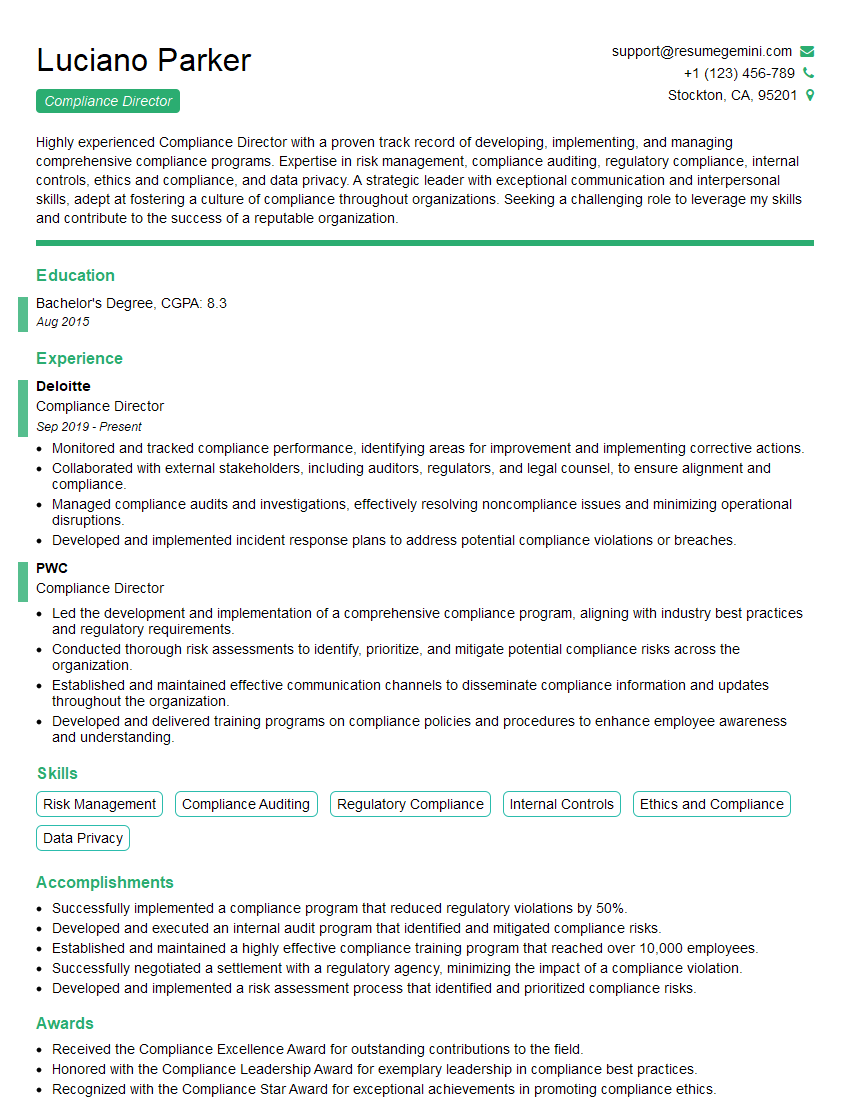
Compliance Director Resume Sample
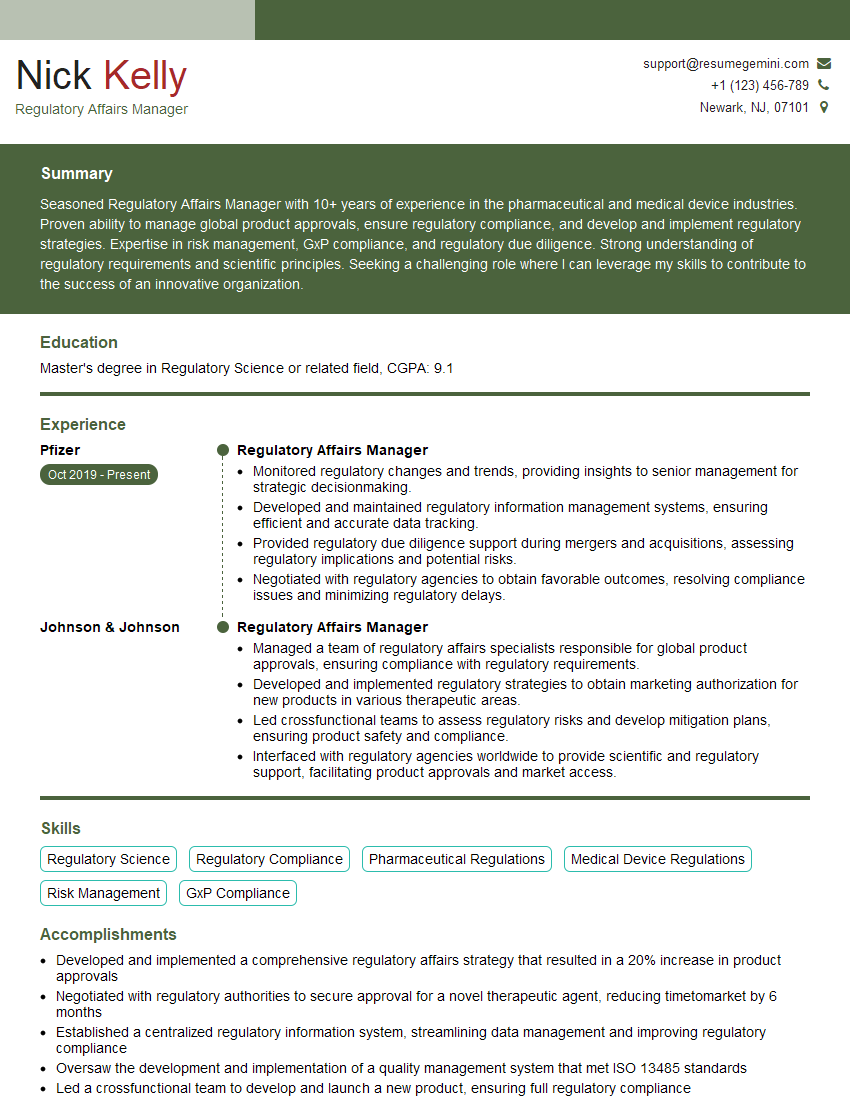
Regulatory Affairs Manager Resume Sample
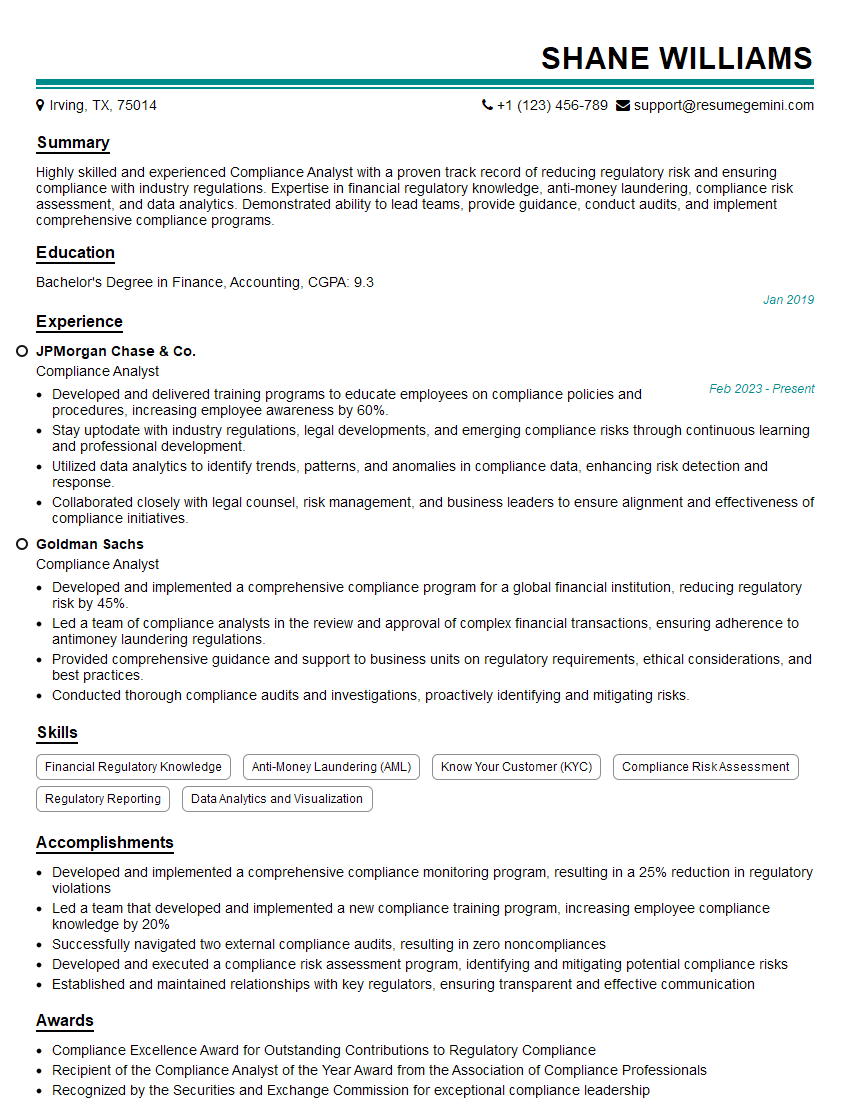
Compliance Analyst Resume Sample

Compliance Officer Resume Sample
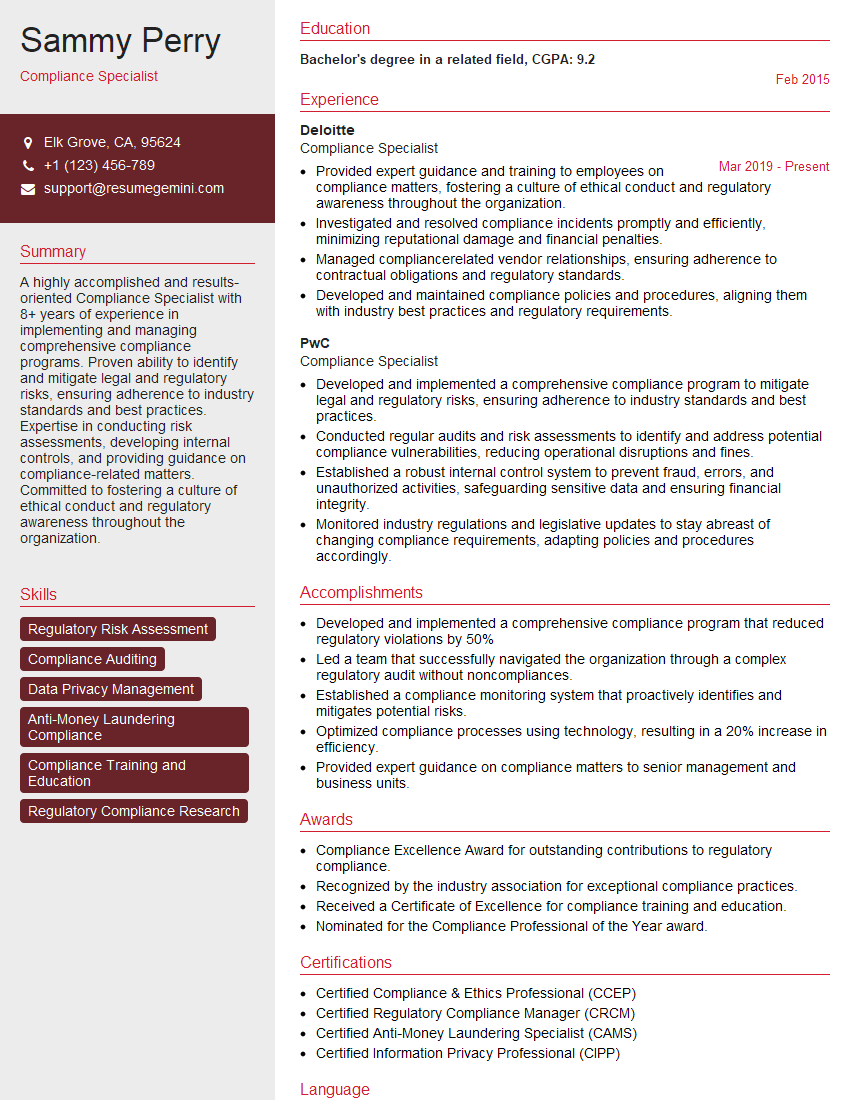
Compliance Specialist Resume Sample
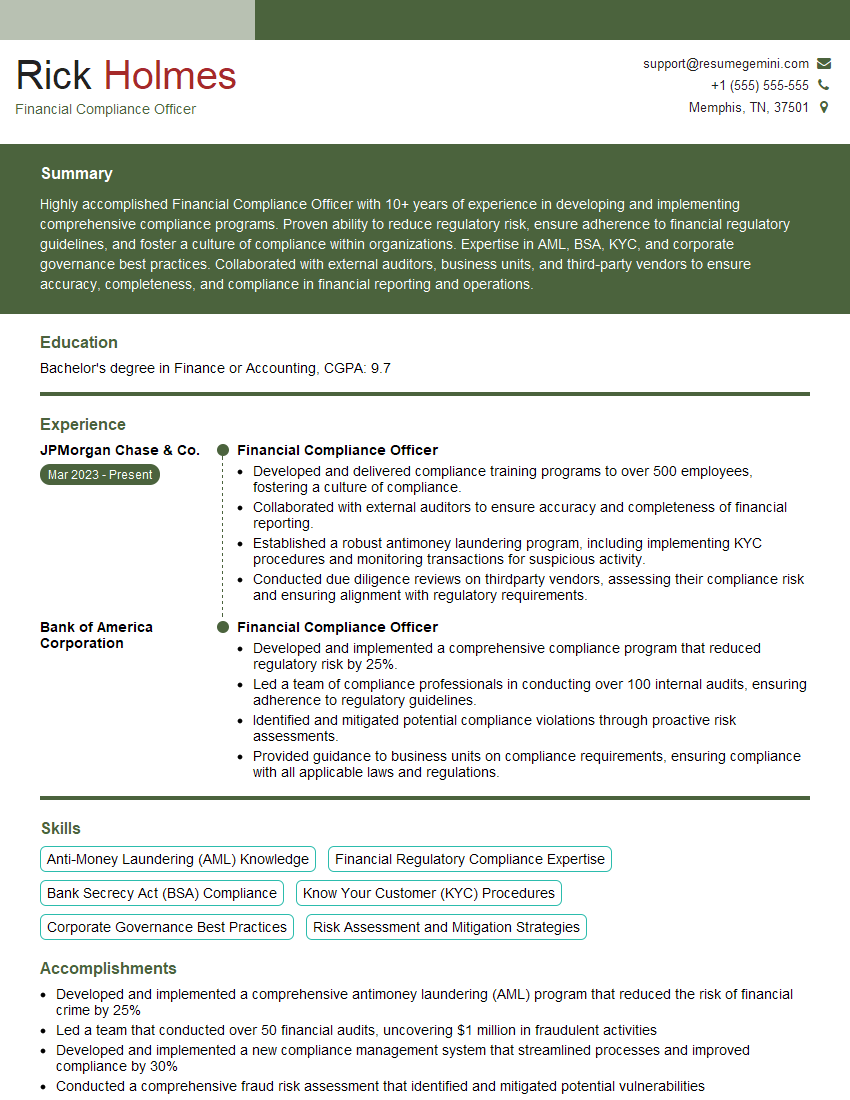
Financial Compliance Officer Resume Sample
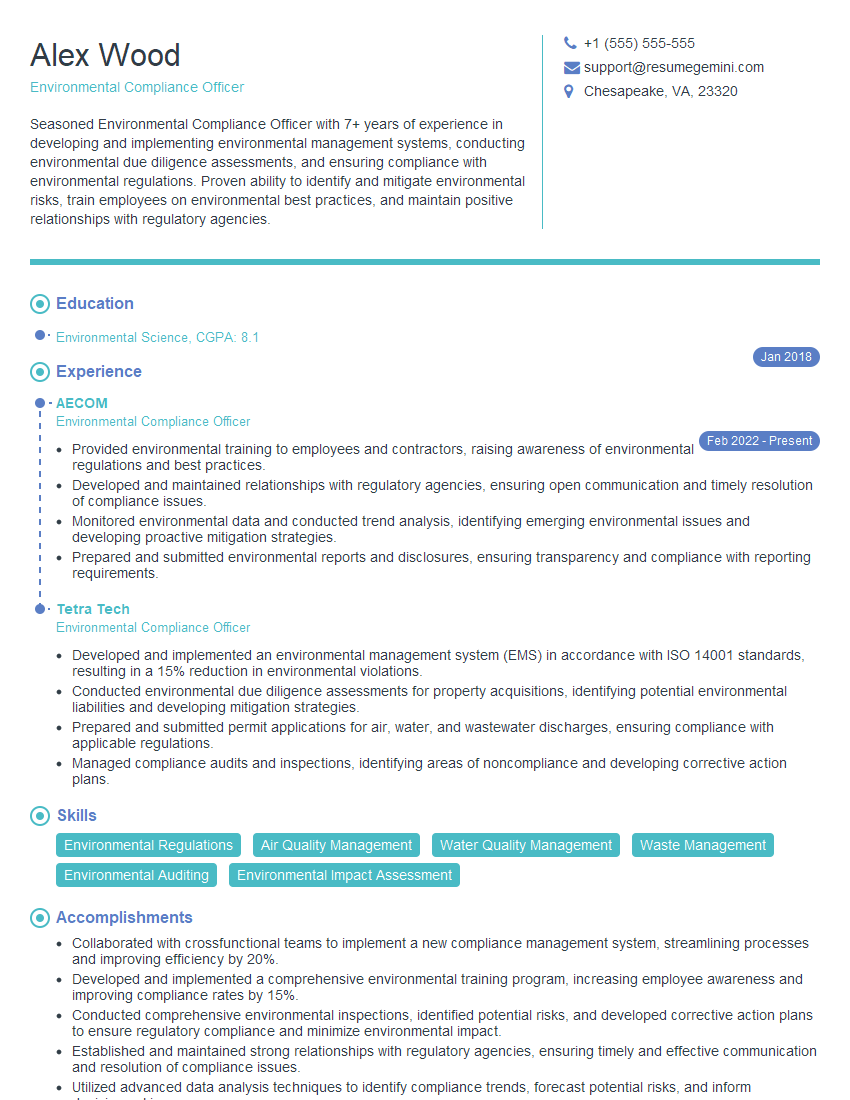
Environmental Compliance Officer Resume Sample
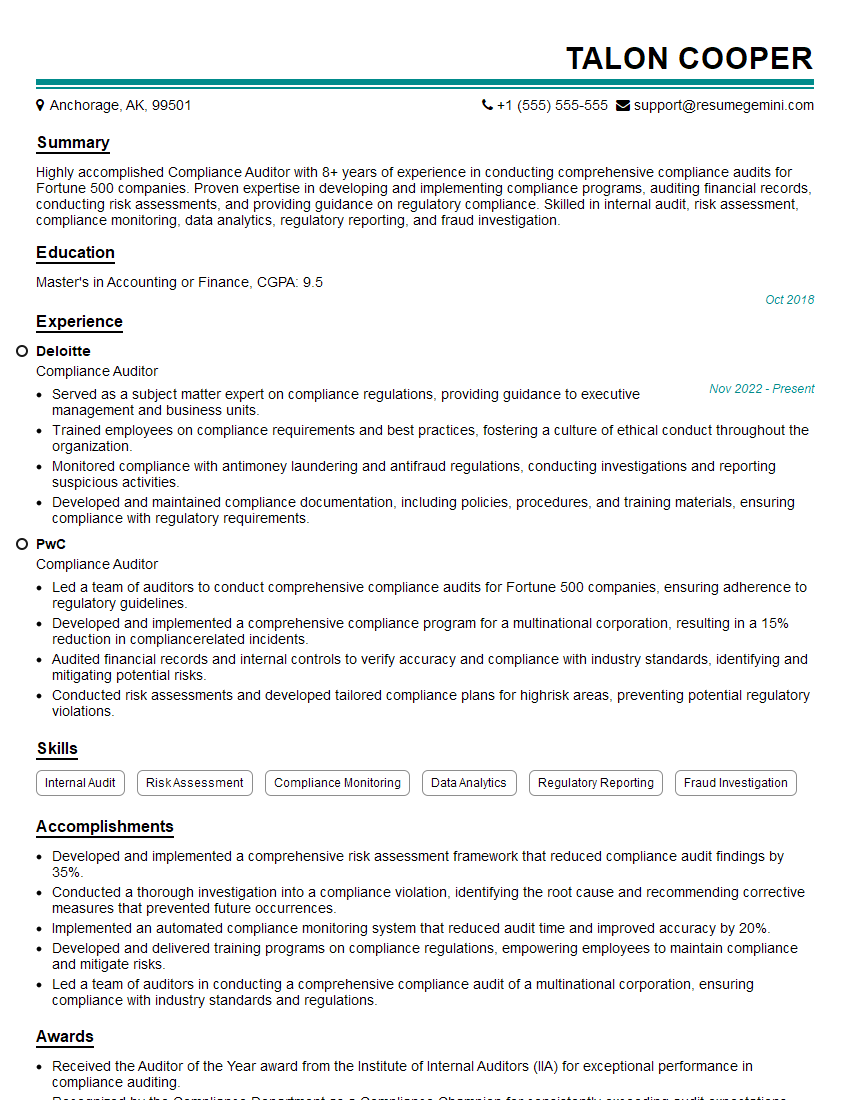
Compliance Auditor Resume Sample
Explore more articles
Users Rating of Our Blogs
Share Your Experience
We value your feedback! Please rate our content and share your thoughts (optional).
What Readers Say About Our Blog
Attention music lovers!
Wow, All the best Sax Summer music !!!
Spotify: https://open.spotify.com/artist/6ShcdIT7rPVVaFEpgZQbUk
Apple Music: https://music.apple.com/fr/artist/jimmy-sax-black/1530501936
YouTube: https://music.youtube.com/browse/VLOLAK5uy_noClmC7abM6YpZsnySxRqt3LoalPf88No
Other Platforms and Free Downloads : https://fanlink.tv/jimmysaxblack
on google : https://www.google.com/search?q=22+AND+22+AND+22
on ChatGPT : https://chat.openai.com?q=who20jlJimmy20Black20Sax20Producer
Get back into the groove with Jimmy sax Black
Best regards,
Jimmy sax Black
www.jimmysaxblack.com
Hi I am a troller at The aquatic interview center and I suddenly went so fast in Roblox and it was gone when I reset.
Hi,
Business owners spend hours every week worrying about their website—or avoiding it because it feels overwhelming.
We’d like to take that off your plate:
$69/month. Everything handled.
Our team will:
Design a custom website—or completely overhaul your current one
Take care of hosting as an option
Handle edits and improvements—up to 60 minutes of work included every month
No setup fees, no annual commitments. Just a site that makes a strong first impression.
Find out if it’s right for you:
https://websolutionsgenius.com/awardwinningwebsites
Hello,
we currently offer a complimentary backlink and URL indexing test for search engine optimization professionals.
You can get complimentary indexing credits to test how link discovery works in practice.
No credit card is required and there is no recurring fee.
You can find details here:
https://wikipedia-backlinks.com/indexing/
Regards
NICE RESPONSE TO Q & A
hi
The aim of this message is regarding an unclaimed deposit of a deceased nationale that bears the same name as you. You are not relate to him as there are millions of people answering the names across around the world. But i will use my position to influence the release of the deposit to you for our mutual benefit.
Respond for full details and how to claim the deposit. This is 100% risk free. Send hello to my email id: lukachachibaialuka@gmail.com
Luka Chachibaialuka
Hey interviewgemini.com, just wanted to follow up on my last email.
We just launched Call the Monster, an parenting app that lets you summon friendly ‘monsters’ kids actually listen to.
We’re also running a giveaway for everyone who downloads the app. Since it’s brand new, there aren’t many users yet, which means you’ve got a much better chance of winning some great prizes.
You can check it out here: https://bit.ly/callamonsterapp
Or follow us on Instagram: https://www.instagram.com/callamonsterapp
Thanks,
Ryan
CEO – Call the Monster App
Hey interviewgemini.com, I saw your website and love your approach.
I just want this to look like spam email, but want to share something important to you. We just launched Call the Monster, a parenting app that lets you summon friendly ‘monsters’ kids actually listen to.
Parents are loving it for calming chaos before bedtime. Thought you might want to try it: https://bit.ly/callamonsterapp or just follow our fun monster lore on Instagram: https://www.instagram.com/callamonsterapp
Thanks,
Ryan
CEO – Call A Monster APP
To the interviewgemini.com Owner.
Dear interviewgemini.com Webmaster!
Hi interviewgemini.com Webmaster!
Dear interviewgemini.com Webmaster!
excellent
Hello,
We found issues with your domain’s email setup that may be sending your messages to spam or blocking them completely. InboxShield Mini shows you how to fix it in minutes — no tech skills required.
Scan your domain now for details: https://inboxshield-mini.com/
— Adam @ InboxShield Mini
support@inboxshield-mini.com
Reply STOP to unsubscribe
Hi, are you owner of interviewgemini.com? What if I told you I could help you find extra time in your schedule, reconnect with leads you didn’t even realize you missed, and bring in more “I want to work with you” conversations, without increasing your ad spend or hiring a full-time employee?
All with a flexible, budget-friendly service that could easily pay for itself. Sounds good?
Would it be nice to jump on a quick 10-minute call so I can show you exactly how we make this work?
Best,
Hapei
Marketing Director
Hey, I know you’re the owner of interviewgemini.com. I’ll be quick.
Fundraising for your business is tough and time-consuming. We make it easier by guaranteeing two private investor meetings each month, for six months. No demos, no pitch events – just direct introductions to active investors matched to your startup.
If youR17;re raising, this could help you build real momentum. Want me to send more info?
Hi, I represent an SEO company that specialises in getting you AI citations and higher rankings on Google. I’d like to offer you a 100% free SEO audit for your website. Would you be interested?
Hi, I represent an SEO company that specialises in getting you AI citations and higher rankings on Google. I’d like to offer you a 100% free SEO audit for your website. Would you be interested?