Interviews are more than just a Q&A session—they’re a chance to prove your worth. This blog dives into essential Renewable Energy Incentives interview questions and expert tips to help you align your answers with what hiring managers are looking for. Start preparing to shine!
Questions Asked in Renewable Energy Incentives Interview
Q 1. Explain the Investment Tax Credit (ITC) for solar energy.
The Investment Tax Credit (ITC) is a federal tax credit in the United States that incentivizes investment in solar energy systems. It allows eligible taxpayers to deduct a percentage of the cost of their solar energy system from their federal income tax liability. Think of it as a discount on your taxes for going green!
Currently, the ITC offers a credit of 30% for most residential and commercial solar installations. This means that if you invest $10,000 in a solar panel system, you can deduct $3,000 from your taxes. However, it’s crucial to understand that the credit is applied against your tax liability, not your total income. It’s not a direct refund.
Eligibility requirements are generally straightforward, requiring the solar energy system to be installed on a property that the taxpayer owns or leases, and meeting specific requirements around the type of system and its connection to the grid. There are also requirements regarding the credit’s lifespan and potential modifications for very large-scale projects.
For example, a homeowner installing a $20,000 solar system could claim a $6,000 ITC, reducing their tax bill by that amount. Businesses installing large-scale solar projects benefit similarly, with the ITC significantly lowering their capital investment costs and accelerating their return on investment.
Q 2. Describe the Production Tax Credit (PTC) for wind energy.
The Production Tax Credit (PTC) is a federal tax credit designed to encourage the development of wind energy. Unlike the ITC, which is based on the cost of the investment, the PTC is based on the amount of electricity generated by the wind energy facility. Imagine it as getting paid for every kilowatt-hour of clean energy your wind turbine produces.
The PTC provides a specific amount per kilowatt-hour (kWh) of electricity generated. This amount varies slightly over time and depends on the technology used. The credit is claimed annually and is calculated based on the actual production of the wind farm. This approach motivates higher energy output and efficiency.
To be eligible, the wind energy facility must meet specific criteria, such as being newly constructed and using qualified wind energy technologies. This credit is claimed by the owners or operators of the wind energy project.
For instance, a wind farm that generates 100 million kWh of electricity in a year might receive a credit of several million dollars, depending on the current PTC rate per kWh. This can make wind energy projects financially more attractive to developers and investors.
Q 3. What are the key differences between federal and state renewable energy incentives?
Federal and state renewable energy incentives differ significantly in scope, availability, and administration. The federal incentives tend to be broader in application, covering a wider range of renewable energy technologies and applying nationwide. State incentives, on the other hand, are more specific and tailored to each state’s energy goals and resources.
- Federal Incentives: Typically focus on technologies like solar and wind energy and offer tax credits (ITC, PTC). Their application is national, providing consistent support across states.
- State Incentives: These can be more diverse, including tax credits, rebates, grants, performance-based incentives (such as Renewable Energy Certificates or RECs), and Renewable Portfolio Standards (RPS). State regulations and programs change frequently, requiring constant vigilance. Some states might offer incentives for geothermal, biomass, or hydro, while others might focus solely on solar.
Furthermore, eligibility criteria, application processes, and administrative details vary considerably between federal and state programs. Federal incentives often require a greater level of documentation and compliance compared to certain state incentives.
For example, a solar project might qualify for both the federal ITC and a state rebate program, combining the benefits for maximum financial advantage. A careful review of both federal and state programs is essential to maximize potential savings.
Q 4. How do you determine eligibility for renewable energy tax credits?
Determining eligibility for renewable energy tax credits involves a careful review of both federal and state regulations, which often have detailed requirements and forms. Typically, one must meet criteria concerning:
- Type of renewable energy system: The system must use qualified renewable energy technologies, such as photovoltaic solar panels, wind turbines, or fuel cells (meeting specific standards).
- System placement and ownership: The system must generally be located on property owned or leased by the claimant. Lease agreements might require specific clauses.
- System size and capacity: Size limitations might apply for certain tax credits, particularly for business applications.
- Proper documentation: This includes installation dates, system specifications, and other forms that must be correctly filed with tax returns. Penalties apply for non-compliance.
The process often involves verifying the system’s compliance with relevant standards and maintaining meticulous records throughout the installation and operation phases. Professional guidance from tax advisors or renewable energy consultants is often recommended to navigate the complexities of these regulations and ensure maximum compliance and credit capture. Many resources, such as those available from the IRS or state energy agencies, provide detailed information, but a professional consultation is highly recommended for large projects or individuals facing tax complexities.
Q 5. Explain the concept of Renewable Portfolio Standards (RPS).
Renewable Portfolio Standards (RPS) are state-level mandates that require electricity suppliers to source a certain percentage of their electricity from renewable energy sources by a specific date. Think of it as a state-level commitment to clean energy.
These standards typically set increasing targets over time, pushing suppliers to continually increase their use of renewable sources. States set individual RPS goals, often using a percentage of electricity generation to measure progress. For example, a state might mandate that 50% of its electricity must come from renewable sources by 2035. This creates a market demand for renewable energy, encouraging investment and development in the sector.
RPS programs can include various renewable energy sources, such as solar, wind, hydro, geothermal, and biomass, with each state potentially weighing these differently. To meet their RPS obligations, electricity providers often purchase Renewable Energy Certificates (RECs), representing a specific amount of renewable electricity generated. This creates a market for RECs and indirectly incentivizes the development of renewable energy projects.
The RPS creates a predictable market for renewable energy projects, encouraging long-term investments and reducing the risks for renewable energy developers. This contributes to a more sustainable energy mix for the participating state.
Q 6. What are some common challenges in securing renewable energy incentives?
Securing renewable energy incentives involves navigating a complex landscape of regulations, applications, and timelines. Some common challenges include:
- Complex eligibility requirements: Meeting all criteria for each incentive can be difficult, especially for large or complex projects. Careful planning and documentation are crucial.
- Changing regulations: Incentive programs frequently evolve, requiring constant monitoring and adaptation to avoid losing out on potential benefits.
- Lengthy application processes: Obtaining approvals and reimbursements can take considerable time, potentially leading to cash flow issues during project implementation.
- Limited funding availability: Many grant programs have finite budgets, leading to competitive application processes.
- Administrative burden: The paperwork and documentation needed can be extensive and time-consuming, requiring dedicated administrative resources.
- Technical complexities: Understanding the technical specifications and compliance requirements of renewable energy systems is crucial.
Effective project planning, engagement of experienced consultants, and proactive monitoring of regulations are essential to mitigate these challenges and successfully secure renewable energy incentives. Building strong relationships with state and federal agencies is also advantageous.
Q 7. Describe different types of renewable energy grants and subsidies.
Renewable energy grants and subsidies come in various forms, aiming to reduce the cost of renewable energy technologies and accelerate their adoption. These can include:
- Direct Grants: These provide lump-sum payments to cover a portion of project costs, often awarded through competitive application processes. Examples include grants for installing solar panels on low-income homes or for research and development of new renewable energy technologies.
- Rebates: These are payments made directly to consumers or businesses to offset the cost of renewable energy systems, often based on the system’s size or efficiency. For example, a rebate program might offer $1,000 for the installation of a home solar system.
- Tax Credits: As discussed earlier, these reduce the tax liability of individuals or businesses that invest in renewable energy. The ITC and PTC are prime examples.
- Loan Guarantees: These reduce the risk for lenders by guaranteeing repayment of loans used to finance renewable energy projects. This can lead to more favorable loan terms for developers.
- Performance-Based Incentives: These provide payments based on the actual energy generated by a renewable energy system, such as feed-in tariffs or REC payments. This motivates high system efficiency and output.
The specific types of grants and subsidies available vary considerably by location and funding agency. Researching all available options is vital for maximizing financial support for renewable energy projects.
Q 8. How do you navigate the complexities of renewable energy incentive applications?
Navigating renewable energy incentive applications can feel like traversing a maze, but with a structured approach, it becomes manageable. The key is understanding the specific requirements of each program at the federal, state, and sometimes even local level. These programs often have different eligibility criteria, application processes, and documentation needs.
- Thorough Research: Start by identifying all potential incentives relevant to your project. This involves checking databases maintained by government agencies (like the Department of Energy), state energy offices, and utility companies. Each program’s website will detail eligibility requirements, application deadlines, and necessary documentation.
- Detailed Project Planning: A well-defined project plan is crucial. This includes precise details on the renewable energy system’s specifications (size, type, location), projected energy production, and associated costs. This information forms the foundation of your application.
- Meticulous Documentation: Gather all necessary documentation well in advance of application deadlines. This typically includes engineering reports, site assessments, financial projections, and proof of ownership. Incomplete or inaccurate documentation is a common reason for application rejections.
- Professional Guidance: Consider seeking assistance from renewable energy consultants or legal professionals specializing in incentive programs. They can navigate complex regulations, ensuring your application is complete and compliant.
- Regular Monitoring: After submitting your application, stay informed about its status through regular communication with the relevant agency. Be prepared to address any queries or requests for additional information promptly.
For example, applying for the Investment Tax Credit (ITC) for solar energy requires detailed documentation about the system’s capacity, installation date, and compliance with all applicable building codes. Failing to meet even one criterion can result in application denial or a reduced incentive.
Q 9. Explain the impact of Inflation Reduction Act on renewable energy incentives.
The Inflation Reduction Act (IRA) of 2022 has significantly expanded and extended renewable energy incentives in the United States. It’s a game-changer for the sector, boosting investment and accelerating the transition to clean energy. Key impacts include:
- Extended and Increased Tax Credits: The IRA extended and significantly increased the Investment Tax Credit (ITC) for solar, wind, and other renewable energy technologies. It also introduced or expanded credits for energy storage, clean hydrogen, and advanced nuclear technologies.
- Direct Pay Option: A crucial change is the introduction of the direct pay option. This allows eligible entities (like municipalities, nonprofits, and some cooperatives) to receive the tax credits as a direct payment rather than needing to have a tax liability to claim the credit. This significantly reduces the financial barrier for many projects.
- Clean Energy Manufacturing: The IRA includes provisions aimed at boosting domestic manufacturing of clean energy technologies, offering incentives for companies to build factories and create jobs in the U.S.
- Incentives for Energy Efficiency: The IRA also includes incentives for energy efficiency upgrades in buildings and homes, which synergistically works with renewable energy adoption.
For example, a community solar project previously struggling to access the ITC due to lack of tax liability can now receive direct payments, facilitating widespread renewable energy access.
Q 10. What are the current trends in renewable energy incentives?
Current trends in renewable energy incentives reveal a shift towards:
- Decarbonization Focus: Incentives are increasingly focused on reducing greenhouse gas emissions, often incorporating carbon intensity metrics into eligibility criteria.
- Equity and Accessibility: There’s a growing emphasis on ensuring that renewable energy benefits reach underserved communities, including low- and moderate-income households and disadvantaged areas. This is often achieved through targeted incentives or community-based programs.
- Technology-Specific Incentives: While broad incentives remain important, there’s a push towards incentives tailored to specific renewable energy technologies, recognizing the varying development stages and cost structures.
- Integration of Storage: Incentives frequently bundle renewable energy generation with energy storage systems, acknowledging the importance of grid stability and reliability.
- Streamlined Application Processes: Many jurisdictions are working to simplify the application process for renewable energy incentives, making it easier for individuals and businesses to access them.
For example, many states offer rebates or tax credits specifically for installing rooftop solar panels on low-income housing, encouraging wider adoption.
Q 11. How do you stay updated on changes in renewable energy incentive policies?
Staying updated on changes in renewable energy incentive policies requires a multi-pronged approach:
- Government Websites: Regularly check the websites of relevant government agencies, including the Department of Energy (DOE), state energy offices, and the Internal Revenue Service (IRS).
- Industry Publications and Newsletters: Subscribe to newsletters and publications focusing on renewable energy and policy. These often provide summaries and analyses of recent legislative changes.
- Professional Organizations: Engage with professional organizations like the American Clean Power Association (ACP) or similar groups in your region. They frequently host webinars and provide updates to their members.
- Policy Tracking Services: Many specialized firms provide policy tracking services that monitor legislative developments and alert clients to relevant changes.
- Networking: Attend conferences, workshops, and networking events in the renewable energy sector to connect with experts and learn about the latest policy trends.
Think of it like following the stock market; you need diverse sources to get a complete and accurate picture.
Q 12. Discuss the role of energy efficiency programs in conjunction with renewable incentives.
Energy efficiency programs and renewable energy incentives are complementary strategies working together to achieve energy sustainability. They’re not mutually exclusive but rather synergistic.
- Reduced Energy Demand: Energy efficiency programs aim to reduce overall energy consumption. By improving building insulation, optimizing HVAC systems, and adopting energy-efficient appliances, we lower the demand for electricity, making it easier to meet that demand with renewable sources.
- Cost Savings: Improvements in energy efficiency often lead to substantial cost savings for consumers and businesses. These savings can free up resources for investing in renewable energy technologies.
- Grid Stability: Reduced demand eases pressure on the electricity grid, thereby increasing grid stability and resilience, which is especially important when integrating intermittent renewable energy sources.
- Combined Incentives: Many jurisdictions offer stacked incentives—meaning you can claim both energy efficiency rebates and renewable energy tax credits for a project integrating both approaches. For example, you can receive a rebate for improving your home’s insulation and a tax credit for installing solar panels.
For instance, a business could receive funding for LED lighting upgrades and separately receive a tax credit for installing a rooftop solar system, resulting in significant long-term cost savings.
Q 13. How do you analyze the financial viability of a project considering available incentives?
Analyzing the financial viability of a renewable energy project, accounting for incentives, requires a thorough financial model. This model should include:
- Project Costs: This encompasses all upfront capital costs (equipment, installation, permits), operational and maintenance (O&M) expenses, and potential decommissioning costs.
- Energy Production: Estimate the amount of renewable energy the project will generate, considering factors like solar irradiance, wind speed, and system efficiency.
- Energy Prices: Project future electricity prices to estimate revenue streams from energy sales or self-consumption.
- Incentives: Quantify the value of all applicable incentives, such as tax credits, rebates, grants, and performance-based incentives. This includes calculating the present value of future cash flows from the incentives.
- Financing Costs: If financing is involved, factor in interest rates, loan terms, and repayment schedules.
- Depreciation and Amortization: Account for the depreciation of assets and amortization of loans over the project’s lifetime.
- Discount Rate: Use an appropriate discount rate to bring future cash flows back to present value for accurate comparison.
A common approach is to calculate the Net Present Value (NPV) and Internal Rate of Return (IRR). A positive NPV and an IRR greater than the discount rate indicate financial viability. Sensitivity analysis is crucial to understand the impact of variations in key parameters (e.g., energy prices, incentive levels) on project profitability.
For example, a solar farm development project would benefit from modeling the impact of the ITC, state renewable portfolio standards (RPS) payments, and potential feed-in tariffs on the overall financial metrics.
Q 14. Explain the concept of net metering and its impact on renewable energy adoption.
Net metering is a billing mechanism that allows renewable energy system owners (like those with solar panels) to sell excess electricity they generate back to the utility grid. Essentially, you’re using the grid as a giant battery.
- Mechanism: A net meter installed at your property tracks both the electricity you draw from and feed into the grid. At the end of the billing cycle, the net amount (difference between electricity used and electricity generated) is billed. If you generate more than you consume, you may receive a credit on your bill, or potentially a payment from the utility.
- Impact on Adoption: Net metering significantly lowers the upfront cost of renewable energy adoption. The ability to offset a portion of your electricity bill makes investing in renewable systems more financially attractive. This accelerates the growth of renewable energy adoption by providing a direct financial incentive.
- Challenges: Net metering programs can face challenges, such as utility concerns about grid stability and fair cost allocation amongst consumers. Some utilities have proposed changes to net metering policies, such as time-of-use rates or fixed compensation rates for excess electricity.
For example, imagine a homeowner with a solar panel system generating 10 kWh of electricity in a day while consuming only 5 kWh. Under net metering, the 5 kWh excess electricity is sold to the grid, reducing their electricity bill or potentially resulting in a monetary payment.
Q 15. What are the potential risks and pitfalls associated with renewable energy incentives?
Renewable energy incentives, while crucial for driving the green transition, aren’t without their risks. One major pitfall is incentive cliff effects. When incentives expire abruptly, investment in renewable energy projects can plummet, creating uncertainty and hindering long-term growth. Imagine a company investing heavily in solar based on a 10-year tax credit – when that credit ends, their profitability is suddenly significantly impacted.
Another risk lies in market distortions. Overly generous incentives can lead to an oversupply of renewable energy resources in certain areas, driving down prices to unsustainable levels and potentially causing financial hardship for producers. We saw this to some extent in the early days of solar panel manufacturing.
Furthermore, policy uncertainty is a significant concern. Frequent changes in incentive regulations can create instability, discouraging investment and making it difficult for companies to plan long-term projects. A shift in government can lead to unexpected changes in support.
Finally, there’s the risk of fraud and abuse. Incentive programs can be complex, making them vulnerable to manipulation and misrepresentation of data to inflate claims, requiring robust monitoring and auditing processes.
Career Expert Tips:
- Ace those interviews! Prepare effectively by reviewing the Top 50 Most Common Interview Questions on ResumeGemini.
- Navigate your job search with confidence! Explore a wide range of Career Tips on ResumeGemini. Learn about common challenges and recommendations to overcome them.
- Craft the perfect resume! Master the Art of Resume Writing with ResumeGemini’s guide. Showcase your unique qualifications and achievements effectively.
- Don’t miss out on holiday savings! Build your dream resume with ResumeGemini’s ATS optimized templates.
Q 16. How do you assess the environmental impact of renewable energy projects beyond the incentive framework?
Assessing the environmental impact of renewable energy projects goes beyond simply looking at the incentives. We must consider the entire lifecycle, from resource extraction and manufacturing to operation and eventual decommissioning. For example, the manufacturing of solar panels requires energy and materials, some of which have environmental consequences. We need to account for this ’embodied carbon’ in a project’s overall assessment.
Life Cycle Assessment (LCA) is a crucial tool for this. An LCA quantifies the environmental impacts across the entire project lifecycle, including greenhouse gas emissions, water usage, land use, and waste generation. We also need to consider impacts on biodiversity, habitat disruption, and potential visual impacts.
Beyond LCA, we need to understand and mitigate potential negative impacts. For example, large-scale solar farms may impact local ecosystems. Thorough environmental impact assessments (EIAs) and careful site selection are essential to minimize these concerns. These assessments often involve engagement with stakeholders to ensure local communities are heard and that any negative impact is addressed effectively.
Q 17. Discuss the importance of due diligence in claiming renewable energy incentives.
Due diligence is paramount when claiming renewable energy incentives. It ensures compliance with all applicable regulations, minimizing the risk of penalties, delays, or even rejection of the application. Think of it as meticulously preparing a case file for a judge.
Due diligence includes verifying project eligibility, meticulously documenting all relevant information (energy production data, equipment specifications, system installations, etc.), and ensuring all required forms and supporting evidence are accurate and complete. Ignoring details can lead to delays and even rejection.
A thorough review of the incentive program’s guidelines, including eligibility criteria, application procedures, and reporting requirements, is essential. We also use checklists and internal reviews to identify potential issues and ensure adherence to all rules. Failing to meet these requirements can invalidate the incentive claim completely.
Q 18. How do you track and manage renewable energy incentive claims and compliance?
Tracking and managing renewable energy incentive claims and compliance often requires a dedicated system. We utilize a combination of specialized software and internal tracking systems. These systems help us maintain detailed records of all applications, supporting documentation, and communication with relevant agencies.
Key elements include: centralized databases to store all relevant project information, automated reminders for upcoming deadlines and reporting requirements, and secure document management to ensure the confidentiality and integrity of sensitive data.
Regular audits and internal reviews are critical for identifying potential compliance issues early on, allowing for prompt corrective action. We also build in periodic reconciliation of reported data with actual project performance to ensure accuracy.
Q 19. What is your experience with different types of renewable energy incentive programs?
My experience spans a broad range of renewable energy incentive programs, including Production Tax Credits (PTCs) and Investment Tax Credits (ITCs) for solar and wind energy in the US, as well as various state-level incentives such as renewable portfolio standards (RPS) and feed-in tariffs. I’ve worked on projects incorporating different technologies, including solar photovoltaic (PV), concentrated solar power (CSP), onshore and offshore wind, and geothermal.
I’m also familiar with international incentive programs, including those offered by the EU and various national governments. Understanding the nuances of each program is crucial, as eligibility criteria, application processes, and incentive structures can vary significantly. Each country and even state often has unique incentive schemes.
This experience helps me identify the most advantageous incentive programs for a given project and guide clients through the complexities of the application process. We analyze the various incentive opportunities to develop a comprehensive strategy.
Q 20. Describe your experience in preparing and submitting incentive applications.
Preparing and submitting incentive applications is a meticulous process requiring attention to detail and a strong understanding of the specific requirements. It begins with a comprehensive review of the program guidelines, followed by gathering and organizing all necessary documentation. This includes technical specifications, financial projections, and environmental assessments.
We often use templates and checklists to ensure consistency and completeness. The application itself is prepared with careful attention to accuracy and clarity. Often, this is a collaborative effort between engineers, financial analysts, and legal experts, ensuring that each section complies with the applicable regulations.
Before submission, we conduct a thorough internal review to identify and correct any potential errors or omissions. This is followed by a final review with the client to ensure they understand the application and are comfortable with it before it is submitted.
Q 21. How do you handle incentive application rejections or audits?
Handling incentive application rejections or audits requires a systematic approach. Upon receiving a rejection, we immediately analyze the reasons provided, identifying any areas where the application fell short. This often involves careful review of the application itself, comparison against guidelines, and potentially revisiting the original project documentation.
In the event of an audit, we cooperate fully with the authorities, providing all necessary information and documentation in a timely manner. We thoroughly prepare for the audit by conducting internal reviews, ensuring that all financial records and technical documentation are accurate, readily available, and comply with applicable regulations.
If a rejection is deemed unfair or an audit reveals an issue, we will work to appeal the decision or rectify any issues. This may involve providing additional documentation, correcting errors, or clarifying misunderstandings. A professional and cooperative approach during an audit is critical to achieving a positive outcome.
Q 22. Explain your understanding of carbon offsetting and its relevance to renewable energy incentives.
Carbon offsetting is a process where individuals or organizations compensate for their greenhouse gas emissions by investing in projects that reduce or remove carbon dioxide from the atmosphere. These projects often involve renewable energy, such as reforestation, afforestation, or renewable energy installations. Its relevance to renewable energy incentives is significant because carbon offsets can be used to meet regulatory emission reduction targets, creating a market demand for renewable energy projects and making them more financially viable. Incentives, such as carbon credits, directly support the development and implementation of carbon offset projects.
For example, a company exceeding its carbon emissions limits might purchase carbon credits generated from a wind farm project. This purchase provides revenue for the wind farm, making it more attractive to investors. The incentives are thus indirectly stimulating the renewable energy sector by creating financial mechanisms to address climate change goals.
Q 23. How do you incorporate renewable energy incentives into a project’s financial model?
Incorporating renewable energy incentives into a project’s financial model requires a meticulous approach. First, you need to identify all applicable incentives at the federal, state, and local levels. This includes tax credits (like the Investment Tax Credit for solar), grants, rebates, performance-based incentives (PBIs), and feed-in tariffs. Each incentive has specific eligibility criteria and calculation methods. Next, you model the cash flows, incorporating the timeline for receiving each incentive. This usually involves discounted cash flow (DCF) analysis to determine the net present value (NPV) and internal rate of return (IRR) of the project, taking into account both the costs and the expected revenue streams, including the incentives received.
For instance, a solar project’s financial model would include the cost of equipment, installation, operation & maintenance, and the revenue from electricity sales. The model would also factor in the Investment Tax Credit (ITC), reducing the initial investment cost. The model then demonstrates how the ITC improves the project’s profitability and makes it more bankable.
Q 24. How do you communicate complex incentive information to both technical and non-technical audiences?
Communicating complex incentive information requires tailoring your message to your audience. For technical audiences (engineers, financial analysts), you can use precise language, detailed financial models, and technical specifications of the incentives. You might use formulas to show calculations or detailed tables illustrating various incentive scenarios.
For non-technical audiences (community members, stakeholders), a simpler, more narrative approach is needed. Use visual aids like charts and infographics. Explain the benefits in terms of cost savings, environmental impact, and job creation. Use analogies to make complex concepts easier to understand. For example, explain a tax credit as a direct discount on the purchase price, similar to a retail sale.
Q 25. What strategies do you employ to maximize the benefits of renewable energy incentives?
Maximizing the benefits of renewable energy incentives involves a multi-pronged strategy. First, conduct thorough research to identify all available incentives at all governmental levels, as policies frequently change. Next, strategically structure the project to meet all eligibility requirements. This may involve adjusting project size, technology choices, or location. Careful project design that aligns with incentive programs is key.
Secondly, establish strong relationships with relevant government agencies and incentive administrators. They can offer guidance on application processes and potential challenges. Finally, engage experienced financial advisors and legal counsel specializing in renewable energy finance. They can help navigate the complex incentive landscape and ensure compliance. It’s a holistic approach that combines technical expertise, financial acumen, and regulatory knowledge.
Q 26. Describe your understanding of the interplay between renewable energy incentives and energy storage technologies.
Renewable energy incentives and energy storage technologies are increasingly intertwined. Energy storage, such as batteries or pumped hydro, can improve the reliability and efficiency of renewable energy sources, addressing their intermittency. Many incentive programs now explicitly support energy storage projects, often offering additional incentives when paired with renewable energy generation. This is because storage helps to manage the fluctuating output of solar and wind power, ensuring a more consistent supply of electricity.
For example, a solar project coupled with a battery storage system might qualify for both solar and storage incentives, providing a significant financial boost. The synergy is crucial for wider adoption of renewable energy, as storage technologies overcome one of their major drawbacks – their unpredictable supply.
Q 27. How do you anticipate future changes in renewable energy incentive policies and their impact on project development?
Anticipating future changes in renewable energy incentive policies requires close monitoring of political, economic, and technological trends. The global push towards decarbonization suggests continued, although potentially evolving, support for renewable energy. However, the specific form of incentives might change. For example, we may see a shift from direct subsidies to market-based mechanisms like carbon pricing or renewable portfolio standards (RPS). We might also witness a focus on efficiency and cost-effectiveness, favoring technologies with the lowest levelized cost of energy (LCOE).
Therefore, project developers need to adopt flexible project designs and financial models that can adapt to changing incentive landscapes. Robust financial analysis and scenario planning are essential for navigating uncertainty and maintaining project viability. Diversification of funding sources and exploration of alternative revenue streams (such as power purchase agreements) will be important resilience strategies.
Key Topics to Learn for Renewable Energy Incentives Interview
- Federal and State Incentive Programs: Understanding the structure, eligibility criteria, and application processes for various incentive programs like tax credits, rebates, and grants at both the federal and state levels.
- Incentive Program Design and Policy: Analyzing the effectiveness and impact of different incentive mechanisms on renewable energy deployment, considering factors like cost-effectiveness, market penetration, and environmental outcomes. Practical application: Evaluating the success of a specific incentive program and proposing improvements.
- Financial Modeling and Analysis: Utilizing financial models to assess the economic viability of renewable energy projects, incorporating incentive structures into the calculations to determine project profitability and return on investment. Problem-solving approach: Identifying and mitigating financial risks associated with renewable energy investments.
- Renewable Energy Technologies and Incentives: Connecting specific renewable energy technologies (solar, wind, geothermal, etc.) with applicable incentives. Understanding the nuances of incentives tailored to different technologies.
- Regulatory Landscape and Compliance: Navigating the complex web of regulations and compliance requirements associated with renewable energy projects and incentives. Practical application: Ensuring projects meet all necessary regulatory standards to qualify for incentives.
- Data Analysis and Reporting: Analyzing data on renewable energy project performance, incentive utilization, and market trends to inform decision-making and policy development. Problem-solving approach: Identifying areas for improvement in incentive program design based on data analysis.
- Stakeholder Engagement and Communication: Effectively communicating the benefits of renewable energy incentives to diverse stakeholders, including government officials, project developers, and the public.
Next Steps
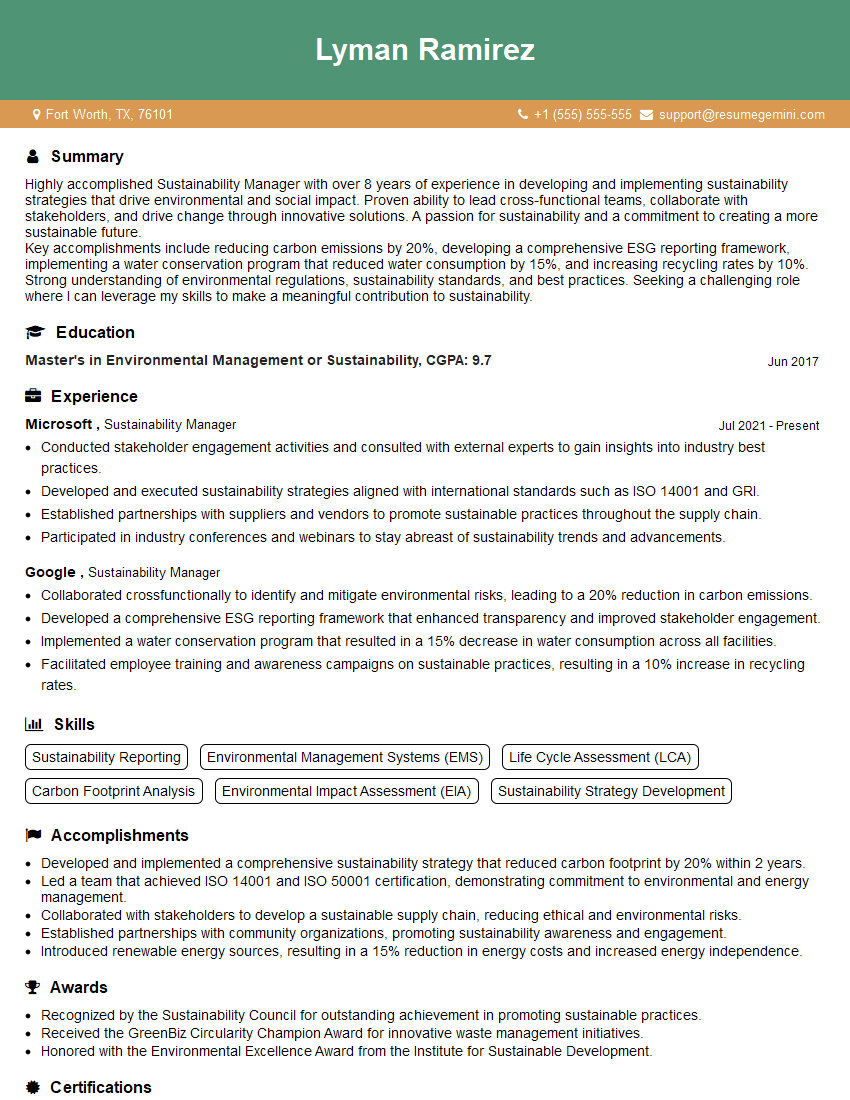
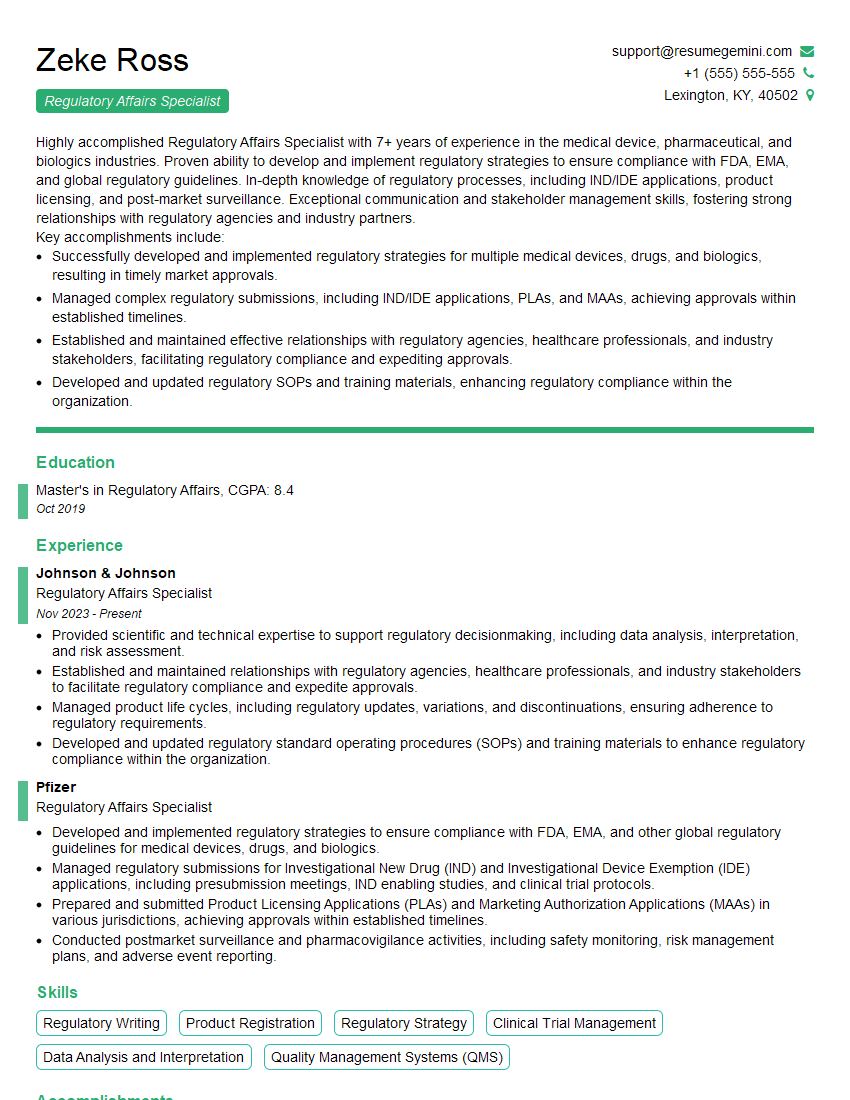
Mastering Renewable Energy Incentives is crucial for career advancement in the rapidly growing renewable energy sector. A strong understanding of these topics demonstrates valuable expertise and opens doors to exciting opportunities. To maximize your job prospects, create an ATS-friendly resume that highlights your skills and experience effectively. ResumeGemini is a trusted resource to help you build a professional and impactful resume. We provide examples of resumes tailored to the Renewable Energy Incentives field to help you get started. Investing time in crafting a compelling resume will significantly increase your chances of landing your dream job.

Explore more articles
Users Rating of Our Blogs
Share Your Experience
We value your feedback! Please rate our content and share your thoughts (optional).
What Readers Say About Our Blog
Very informative content, great job.
good