Interviews are opportunities to demonstrate your expertise, and this guide is here to help you shine. Explore the essential Reporting and Presentations interview questions that employers frequently ask, paired with strategies for crafting responses that set you apart from the competition.
Questions Asked in Reporting and Presentations Interview
Q 1. Explain your experience with different data visualization tools (e.g., Tableau, Power BI).
My experience with data visualization tools spans several years and includes extensive use of Tableau and Power BI. I’ve leveraged both for various projects, from creating interactive dashboards for sales performance tracking to developing complex visualizations for financial forecasting. Tableau, with its drag-and-drop interface and robust visualization options, is my go-to for creating visually appealing and insightful dashboards quickly. I particularly appreciate its ability to connect to diverse data sources and its advanced features for data manipulation and analysis. Power BI, on the other hand, excels in its integration with the Microsoft ecosystem and its strong capabilities for collaborative reporting and data sharing within organizations. I’ve used its DAX language extensively for creating calculated measures and optimizing report performance. In choosing between the two, I always consider the project’s specific requirements and the client’s existing technological infrastructure.
For example, in a recent project analyzing customer churn, I used Tableau to create an interactive map visualizing churn rates geographically. This allowed stakeholders to instantly identify high-risk areas and tailor marketing strategies accordingly. In another project involving budget analysis, Power BI’s integration with Excel and its powerful data modeling features proved invaluable in consolidating data from different departments and creating a comprehensive financial dashboard.
Q 2. Describe your process for creating a compelling presentation.
My process for crafting compelling presentations follows a structured approach. It begins with a thorough understanding of the audience and the key message I want to convey. This involves identifying the audience’s level of understanding, their interests, and their potential questions. Next, I meticulously structure the narrative, focusing on a clear and logical flow of information. I always prioritize a concise and impactful opening, a well-organized body with supporting visuals, and a strong conclusion summarizing key takeaways and next steps. I carefully select visuals, ensuring they’re relevant, easy to understand, and enhance the narrative rather than distracting from it. Simplicity and clarity are key; I avoid cluttered slides and overwhelming amounts of information. Finally, I practice the presentation extensively to ensure a smooth and confident delivery. I see the presentation as a story that needs to be told effectively and engagingly, not just a recitation of data.
For instance, when presenting financial projections to senior management, I’d prioritize clear, concise charts illustrating key performance indicators (KPIs) and highlight areas needing immediate attention. For a more technical audience, I might delve deeper into the underlying data and methodology.
Q 3. How do you tailor a report to a specific audience?
Tailoring a report to a specific audience is crucial for effective communication. I start by understanding their technical expertise, their role in the organization, and what information is most relevant to their needs and decision-making processes. For a non-technical audience, I would focus on high-level summaries, visually appealing charts and graphs, and avoid technical jargon. I would use simple language and clear explanations. For a technical audience, I would include more detailed analysis, granular data, and advanced visualizations. I might also include technical specifications and methodologies. The key is to provide the right level of detail without overwhelming the reader or losing their attention.
For example, a report on website traffic might include a simple bar chart showing overall traffic trends for a non-technical executive, while a more detailed report for the marketing team might include segmented data broken down by traffic source, device type, and geographic location.
Q 4. What metrics do you prioritize when analyzing data?
The metrics I prioritize when analyzing data depend heavily on the context of the analysis and the overall business objectives. However, some common metrics I frequently use include:
- Key Performance Indicators (KPIs): These directly reflect the success of a business strategy or initiative. Examples include revenue growth, customer acquisition cost, customer churn rate, and website conversion rates.
- Growth Rates: Analyzing the rate of change in key metrics helps in identifying trends and predicting future performance.
- Conversion Rates: These indicate the effectiveness of different marketing or sales processes in driving desired actions.
- Customer Satisfaction Metrics: Understanding customer satisfaction levels is vital for improving products or services and fostering customer loyalty. Examples include Net Promoter Score (NPS) and Customer Satisfaction Score (CSAT).
- Return on Investment (ROI): This is essential for measuring the effectiveness of any investment made by the company.
The selection of specific metrics is always a deliberate process, carefully aligned with the business goals and the questions I am trying to answer. Prioritizing the right metrics allows for a focused analysis that drives informed decision-making.
Q 5. How do you handle conflicting data sources or inconsistencies?
Handling conflicting data sources or inconsistencies requires a methodical approach. First, I investigate the root cause of the discrepancy. This may involve verifying the data sources’ reliability, examining data collection methods, and checking for data entry errors. I would cross-reference the data with other reliable sources and look for patterns or anomalies. If the inconsistencies are minor, I might apply appropriate weighting or averaging techniques to reconcile the data. For more significant discrepancies, I would need to determine which data source is more reliable and justify my decision. Thorough documentation of the process and justification for the chosen approach is crucial for transparency and reproducibility. In extreme cases, I may need to consult with data experts or stakeholders to determine the best course of action.
For example, if sales data from two different systems shows conflicting figures, I would first check for data integration issues, potential data entry errors, or differences in reporting periods. I’d then use data validation techniques and possibly consult the departments responsible for each data source to resolve the discrepancy.
Q 6. Describe a time you had to present complex data to a non-technical audience.
In a previous role, I had to present complex financial data on investment portfolio performance to a board of directors, many of whom lacked a strong financial background. To make the data accessible, I focused on high-level visualizations such as bar charts and line graphs illustrating key trends and performance indicators. I avoided technical jargon and used simple, clear language to explain the data. I also incorporated analogies and real-world examples to illustrate complex concepts, like comparing investment growth to a familiar concept like compound interest. The key was to tell a compelling story with the data, highlighting the key takeaways and implications for future strategies. The feedback I received was very positive; the board appreciated the clarity and ease of understanding, even without prior knowledge of complex financial models.
Q 7. How do you ensure the accuracy and reliability of your reports?
Ensuring accuracy and reliability in my reports is paramount. I follow a multi-step process: First, I meticulously verify the accuracy and reliability of all data sources. This involves examining data collection methods, checking for data entry errors, and verifying data integrity. I utilize data validation techniques and cross-reference data from multiple sources whenever possible. I clearly document all data sources, methodologies, and assumptions used in the analysis. This allows others to understand and verify the process. I also conduct thorough quality checks at every stage of the reporting process, including data cleaning, transformation, and visualization. I perform sensitivity analysis to assess the impact of potential errors or variations in the data. Finally, I always include clear disclaimers or caveats if there are any limitations to the data or analysis. This approach ensures that my reports are not only accurate but also transparent and reliable.
Q 8. What techniques do you use to identify key insights from data?
Identifying key insights from data involves a blend of technical skills and critical thinking. I begin by understanding the business question driving the analysis. This context is crucial; without it, data becomes just numbers. Then, I employ a multi-pronged approach:
Descriptive Statistics: Calculating measures like mean, median, mode, standard deviation, and percentiles provides a foundational understanding of the data’s distribution. For example, if analyzing sales data, I’d look at average sales, the spread of sales figures, and identify outliers (unusually high or low sales).
Data Visualization: I leverage charts and graphs (histograms, scatter plots, box plots, etc.) to visually represent data patterns. A well-designed visualization can quickly reveal trends that might be missed in raw data. For instance, a scatter plot can show the correlation between advertising spend and sales revenue.
Data Segmentation: I break down the data into meaningful segments to uncover hidden patterns within different subgroups. For example, segmenting sales data by region, product category, or customer demographics can reveal which segments are performing well and which require attention.
Statistical Modeling: For more complex analyses, I employ techniques like regression analysis or time series forecasting to identify relationships and predict future outcomes. This might involve forecasting future sales based on past trends and external factors.
Finally, I always validate my findings by considering potential biases, limitations, and alternative explanations. It’s not just about finding insights; it’s about ensuring those insights are accurate and meaningful.
Q 9. Explain your experience with data storytelling.
Data storytelling is about transforming raw data into a compelling narrative that resonates with the audience. It’s not just about presenting numbers; it’s about weaving a story that explains the ‘why’ behind the data. My experience includes crafting narratives that:
Begin with a clear objective: Every story needs a purpose. I start by defining the key message I want to convey and tailor the narrative to that objective.
Use visuals effectively: Charts, graphs, and images are crucial for engaging the audience and making complex data easier to understand. I choose the most appropriate visual representations for the data and the intended message.
Focus on the narrative arc: Like any good story, data storytelling should have a beginning, middle, and end. I structure the presentation to build suspense, highlight key moments, and arrive at a clear conclusion.
Emphasize actionable insights: The story should culminate in clear recommendations or actions based on the data. I avoid leaving the audience wondering ‘so what?’
For example, in a presentation to executives about marketing campaign performance, I might start by highlighting the overall campaign success, then delve into the performance of individual channels, and finally, recommend adjustments for future campaigns based on the data. This structure creates a compelling and actionable narrative.
Q 10. How do you handle feedback on your reports or presentations?
I view feedback as an invaluable opportunity for growth and improvement. My approach to handling feedback on reports and presentations is proactive and constructive:
Active Listening: I pay close attention to the feedback, ensuring I understand the points being raised. I ask clarifying questions to fully grasp the perspective of the feedback giver.
Objectivity: I separate constructive criticism from personal opinions. I focus on the validity of the feedback, regardless of how it’s presented.
Implementation: I document all feedback, prioritizing actionable suggestions. I then determine how to best incorporate this feedback into revisions, considering the impact on the overall message and clarity of the report or presentation.
Follow-up: I always follow up with the feedback provider to show that their input was valued and to discuss the changes made based on their suggestions.
For example, if feedback suggests a graph is confusing, I’ll revise it, potentially using a different chart type or adding clearer labels. This iterative process ensures that reports and presentations are constantly improving.
Q 11. How do you prioritize different tasks when working on multiple reports simultaneously?
Prioritizing tasks when working on multiple reports simultaneously requires a structured approach. I use a combination of techniques:
Project Management Tools: I utilize tools like Trello or Asana to manage tasks, deadlines, and dependencies across multiple reports. This helps me visualize the workload and allocate time effectively.
Prioritization Matrix: I use a matrix (like Eisenhower’s Urgent/Important matrix) to categorize tasks based on urgency and importance. This helps me focus on high-impact, time-sensitive tasks first.
Time Blocking: I allocate specific time blocks for each report, ensuring dedicated time for each task without getting overwhelmed.
Communication: Open communication with stakeholders is essential. I regularly update them on progress and adjust priorities based on their feedback and changing needs.
By combining these techniques, I can efficiently manage multiple reports while ensuring deadlines are met and quality is maintained. For example, if a report with an imminent deadline needs urgent attention, it will take priority over a report with a further-out deadline, even if the latter is potentially more impactful in the long run.
Q 12. Describe your experience with different reporting formats (e.g., dashboards, spreadsheets, presentations).
My experience spans various reporting formats, each suited for different purposes and audiences:
Dashboards: I’m proficient in creating interactive dashboards using tools like Tableau and Power BI. Dashboards are ideal for real-time monitoring of key metrics and providing a high-level overview of performance. For example, a sales dashboard might display key performance indicators (KPIs) such as revenue, conversion rates, and customer acquisition cost.
Spreadsheets: Spreadsheets (Excel, Google Sheets) are essential for data cleaning, manipulation, and basic analysis. They’re also useful for creating simpler reports that require less interactive functionality. I can effectively use formulas and pivot tables to extract insights from large datasets.
Presentations: I have extensive experience creating presentations (PowerPoint, Google Slides) to communicate findings to various audiences. I focus on clear messaging, impactful visuals, and a narrative structure that keeps the audience engaged. For example, I would use a presentation to explain complex data trends to a non-technical audience.
The choice of format depends on the specific needs of the report and the audience. For example, a quick update might be best communicated via a spreadsheet, while a comprehensive analysis would benefit from an interactive dashboard or a detailed presentation.
Q 13. How do you ensure your reports are timely and efficient?
Ensuring timely and efficient reporting involves careful planning and execution:
Clear Project Scope: I define the objectives, data requirements, and deliverables upfront to avoid scope creep and delays. This includes clearly defining the target audience and their needs.
Efficient Data Acquisition: I use automated processes whenever possible to streamline data collection and reduce manual effort. This might involve using APIs or scheduled data imports.
Data Automation: I automate repetitive tasks using scripting languages like Python or using built-in automation features within reporting tools. This significantly reduces processing time and minimizes errors.
Effective Time Management: I break down large tasks into smaller, manageable chunks, allocating specific time blocks for each. This approach helps manage time effectively and prevent delays.
Regular Communication: I maintain open communication with stakeholders to manage expectations and address any roadblocks promptly. This prevents misunderstandings and delays caused by unmet needs.
By following these steps, I ensure that reports are delivered on time and efficiently, without compromising quality.
Q 14. What software and tools are you proficient in for data analysis and reporting?
I’m proficient in a range of software and tools for data analysis and reporting:
Data Visualization Tools: Tableau, Power BI, Qlik Sense
Spreadsheet Software: Microsoft Excel, Google Sheets
Presentation Software: Microsoft PowerPoint, Google Slides
Programming Languages: Python (with libraries like Pandas, NumPy, and Matplotlib), R
Database Management Systems: SQL, MySQL
Cloud Platforms: Google Cloud Platform (GCP), Amazon Web Services (AWS)
My expertise extends beyond basic proficiency; I understand the strengths and weaknesses of each tool and can select the most appropriate tool for a specific task. For instance, I’d use Python for complex data manipulation and analysis, while Tableau would be ideal for creating interactive dashboards.
Q 15. How do you identify and address potential biases in data?
Identifying and addressing bias in data is crucial for creating accurate and trustworthy reports. Bias can creep in at various stages, from data collection to analysis and visualization. My approach involves a multi-step process:
- Data Source Examination: I carefully evaluate the source of the data. Is it representative of the population I’m studying? Are there any known biases in how the data was collected (e.g., sampling bias, self-selection bias)? For example, if analyzing customer satisfaction from online reviews, I acknowledge that the data might overrepresent dissatisfied customers since satisfied customers are less likely to leave reviews.
- Data Cleaning and Transformation: I meticulously clean the data to identify and handle missing values, outliers, and inconsistencies. I might use techniques like imputation for missing values or winsorizing for outliers, but always document these choices and their potential impact.
- Visualization and Exploration: I use data visualization tools to explore the data for patterns and potential biases. Histograms, box plots, and scatter plots can reveal skewed distributions or unexpected relationships that might indicate bias. For instance, a gender pay gap analysis might show a skewed distribution if a particular demographic group is underrepresented.
- Statistical Testing: Where appropriate, I employ statistical tests to quantify the presence and significance of bias. This could involve testing for normality, checking for correlations, or using regression analysis to control for confounding variables.
- Transparency and Documentation: I clearly document all data cleaning, transformation, and analysis steps, highlighting potential biases and how they were addressed. Transparency is key to building trust in the results.
By systematically addressing these aspects, I strive to minimize the impact of bias and ensure that my reports present a fair and accurate representation of the data.
Career Expert Tips:
- Ace those interviews! Prepare effectively by reviewing the Top 50 Most Common Interview Questions on ResumeGemini.
- Navigate your job search with confidence! Explore a wide range of Career Tips on ResumeGemini. Learn about common challenges and recommendations to overcome them.
- Craft the perfect resume! Master the Art of Resume Writing with ResumeGemini’s guide. Showcase your unique qualifications and achievements effectively.
- Don’t miss out on holiday savings! Build your dream resume with ResumeGemini’s ATS optimized templates.
Q 16. How do you maintain data integrity and security?
Maintaining data integrity and security is paramount. My approach combines technical and procedural safeguards:
- Data Governance Policies: Adhering to strict data governance policies, including access control, version control, and data quality checks, is essential. This involves defining clear roles and responsibilities for data handling. For instance, access to sensitive data is restricted to authorized personnel only.
- Data Validation and Cleansing: I implement rigorous data validation and cleansing procedures to identify and correct errors and inconsistencies. This involves using data quality tools and checks during data ingestion, transformation, and loading processes.
- Secure Storage and Access Control: I ensure data is stored securely using encrypted databases and cloud storage services with robust access controls. This includes regular security audits and penetration testing to identify vulnerabilities.
- Data Backup and Recovery: Regular data backups and a robust disaster recovery plan are critical to ensure business continuity and prevent data loss. This includes both offsite and onsite backups with versioning.
- Compliance with Regulations: I ensure compliance with relevant data privacy regulations, such as GDPR or CCPA. This includes anonymizing or pseudonymizing sensitive data whenever possible.
These measures, implemented collaboratively with IT and other stakeholders, ensure the longevity, accuracy, and security of the data used in my reporting and presentations.
Q 17. Describe your experience with creating interactive reports or dashboards.
I have extensive experience building interactive reports and dashboards using tools like Tableau, Power BI, and Qlik Sense. My approach focuses on creating user-friendly interfaces that facilitate data exploration and insight discovery.
For example, in a project for a retail client, I developed a dashboard that allowed users to drill down into sales data by region, product category, and time period. Interactive charts and maps provided a visual representation of key performance indicators (KPIs), enabling users to identify trends, anomalies, and areas for improvement. Users could filter data, highlight specific regions, and export customized reports. The interactive nature of the dashboard significantly improved their ability to understand and utilize the data.
Another example involves creating an interactive report using Python and libraries such as Plotly and Dash. This allowed for creating customized visualizations and providing more complex interactive elements, tailored to very specific user needs.
My focus is always on making the data accessible and understandable to a non-technical audience. I design intuitive interfaces that minimize the need for technical expertise, empowering users to explore the data independently and draw meaningful conclusions.
Q 18. What are some common challenges you encounter in data analysis and reporting?
Data analysis and reporting present several common challenges:
- Data Quality Issues: Inconsistent data, missing values, and outliers are common hurdles that require careful cleaning and preprocessing. This often involves considerable time and effort to ensure data accuracy.
- Data Silos and Integration: Data is frequently scattered across multiple sources and systems, making integration complex. Combining data from different databases, spreadsheets, and APIs requires careful planning and technical skills.
- Defining the Right KPIs: Selecting the appropriate key performance indicators (KPIs) is crucial for effective reporting. This necessitates a clear understanding of business objectives and the ability to translate them into measurable metrics.
- Communicating Findings Effectively: Presenting complex data in a clear, concise, and engaging manner to diverse audiences requires excellent communication and visualization skills. The challenge is to tailor the message to the audience’s level of understanding.
- Keeping up with Technological Advancements: The field of data analytics is constantly evolving, requiring continuous learning and adaptation to new tools, techniques, and technologies.
My strategy involves proactive planning, utilizing robust data integration techniques, employing effective visualization methods, and engaging in continuous professional development to overcome these challenges.
Q 19. How do you measure the success of your reports or presentations?
Measuring the success of reports and presentations involves both quantitative and qualitative assessments:
- Quantitative Metrics: This includes tracking the number of views, downloads, or interactions with the report or presentation. For dashboards, I monitor usage frequency and the types of data users are accessing. In presentations, audience engagement metrics like questions asked and follow-up requests can be tracked.
- Qualitative Feedback: Gathering feedback from stakeholders through surveys, interviews, or informal discussions is essential to understand how the report or presentation was received and its impact on decision-making. This is particularly vital in assessing comprehension and usefulness of the provided information.
- Actionable Insights: The ultimate measure of success is whether the report or presentation led to actionable insights and informed decision-making. Did it influence strategic choices, drive process improvements, or lead to measurable business outcomes? For example, if a sales report resulted in adjustments to sales strategy leading to a noticeable increase in revenue, this is a clear indication of success.
By combining quantitative and qualitative measures, I obtain a comprehensive understanding of the effectiveness of my work and identify areas for improvement in future projects.
Q 20. How do you stay up-to-date with the latest trends in data visualization and reporting?
Staying current in the rapidly evolving field of data visualization and reporting is vital. I employ several strategies:
- Industry Publications and Blogs: I regularly follow leading industry publications, blogs, and online communities to stay informed about new tools, techniques, and best practices.
- Conferences and Webinars: Attending industry conferences and webinars provides opportunities to learn from experts and network with peers. This often involves hands-on workshops and networking events to ensure practical application of theoretical concepts.
- Online Courses and Tutorials: I actively participate in online courses and tutorials offered by platforms like Coursera, edX, and Udemy to enhance my skills and knowledge in specific areas. This allows for focused learning on new technologies and best practices.
- Experimentation and Practice: I regularly experiment with new tools and techniques on personal projects to gain hands-on experience and refine my skills. This ensures that I not only understand the theory but also master the practical implementation.
- Mentorship and Collaboration: Connecting with experienced professionals and collaborating on projects provides valuable insights and learning opportunities. This often involves sharing best practices and challenging assumptions in joint projects.
This continuous learning ensures that I remain at the forefront of industry trends and employ the most effective and innovative approaches in my work.
Q 21. Explain your experience with different data sources (e.g., databases, APIs, spreadsheets).
I have worked extensively with diverse data sources, including databases, APIs, and spreadsheets. My experience spans relational databases (SQL Server, MySQL, PostgreSQL), NoSQL databases (MongoDB), and cloud-based data warehouses (Snowflake, BigQuery). I am proficient in using APIs to extract data from various web services, and I am comfortable working with large datasets in spreadsheet software such as Excel and Google Sheets.
For example, in a project involving customer relationship management (CRM) data, I integrated data from a SQL Server database containing customer information with data from a Salesforce API providing sales activity details. This required writing SQL queries to extract relevant information from the database and using Python libraries like `requests` to access and process data from the API. The combined dataset was then analyzed to provide insights into customer behavior and sales performance.
When working with spreadsheets, I employ techniques to ensure data consistency and accuracy. This includes data cleaning, validation, and the use of formulas for calculations and analysis. However, I always emphasize the importance of migrating large datasets from spreadsheets to more robust database systems for better management and analysis in the long term.
My ability to work with diverse data sources allows me to tackle complex data integration challenges and derive valuable insights from various data points. My approach is always focused on data quality, security, and efficient processing.
Q 22. Describe your experience with data cleaning and preparation.
Data cleaning and preparation is the crucial first step in any reporting or analytical process. It involves transforming raw data into a usable format, ensuring accuracy and reliability. Think of it as preparing ingredients before cooking a meal – you wouldn’t start cooking without washing and chopping your vegetables, right? My experience includes handling various data sources, from spreadsheets and databases to APIs.
- Handling Missing Values: I’ve used various techniques to address missing data, including imputation (replacing missing values with calculated estimates) and removal (if the missing data is insignificant or random). For example, I once worked with a dataset where customer ages were missing. Instead of discarding the data, I imputed missing ages based on the average age of customers with similar purchasing behavior.
- Data Transformation: This often involves converting data types (e.g., converting text to numbers), standardizing formats (ensuring consistency in date and time formats), and creating new variables from existing ones. In one project, I transformed raw sales data into meaningful metrics like average order value and customer lifetime value.
- Outlier Detection and Treatment: Identifying and handling outliers – data points significantly different from the rest – is critical. Methods I’ve used include visual inspection (using box plots and scatter plots) and statistical techniques (e.g., Z-score). Outliers can skew analyses and I employ methods like winsorizing (capping extreme values) or removing them after careful consideration of their impact.
- Data Validation and Consistency Checks: Ensuring data integrity is paramount. I routinely perform data validation checks, comparing data across sources to identify inconsistencies and discrepancies. I’ve developed custom scripts to automate these checks, improving efficiency and accuracy.
Ultimately, my goal in data cleaning is to create a clean, consistent, and accurate dataset ready for analysis and reporting, leading to reliable and insightful conclusions.
Q 23. How do you use data to support business decisions?
Data is the foundation of informed business decisions. I leverage data to provide actionable insights that drive strategic choices. My approach involves a structured process:
- Understanding the Business Problem: The first step is clearly defining the business question or challenge. This might involve understanding sales trends, identifying customer segments, or optimizing marketing campaigns.
- Data Selection and Acquisition: Once the problem is defined, I identify relevant data sources and extract the necessary data. This may involve querying databases, pulling data from APIs, or working with various file formats.
- Data Analysis and Interpretation: I use various analytical techniques, including descriptive statistics, regression analysis, and data visualization, to understand the data and identify trends and patterns. For instance, I might use regression analysis to determine the factors affecting customer churn.
- Presentation and Communication: Finally, I present my findings in a clear, concise, and visually appealing manner, using charts, graphs, and dashboards to communicate key insights to stakeholders. I always tailor my presentation to the audience’s level of understanding, ensuring the insights are readily actionable.
For example, in a previous role, I analyzed sales data to identify seasonal trends. This insight allowed the company to adjust inventory levels, leading to significant cost savings and increased profitability. I also prepared and presented a report highlighting potential areas of opportunity, based on data trends, which was used by the leadership team in strategy planning.
Q 24. What are your strengths and weaknesses in reporting and presentations?
My strengths lie in my ability to translate complex data into easily understandable narratives, creating engaging and visually compelling reports and presentations. I’m proficient in data visualization tools like Tableau and Power BI, and I have a knack for identifying the most impactful data points to highlight. I also possess strong communication skills, enabling me to confidently present findings to diverse audiences.
One area I’m continuously developing is my proficiency in advanced statistical modeling. While I have a solid foundation, I’m actively seeking opportunities to enhance my expertise in areas like machine learning and predictive analytics. I’m currently taking an online course to deepen my knowledge in this domain, believing ongoing professional development is crucial in this rapidly evolving field.
Q 25. How do you handle pressure and tight deadlines?
I thrive under pressure and am adept at managing tight deadlines. My approach involves prioritizing tasks, breaking down large projects into smaller, manageable steps, and proactively communicating potential challenges or delays. I find that clear communication and effective time management are key to navigating pressure successfully. I am also skilled at leveraging automation tools to streamline tasks, improving my efficiency and allowing me to better handle unexpected situations.
For instance, I once had to prepare a critical report for a high-profile client within a very tight deadline. I prioritized the most important elements, delegated smaller tasks where possible, and worked efficiently to meet the deadline, delivering a high-quality report.
Q 26. Describe your experience collaborating with cross-functional teams.
Collaboration is essential in my line of work. I have extensive experience working with cross-functional teams, including marketing, sales, product development, and IT. I believe in active listening, clear communication, and respectful interaction to foster a productive team environment. I’m always willing to share my knowledge and learn from others, and I strive to contribute positively to the team’s success.
In a recent project involving a new product launch, I collaborated with the marketing team to develop a comprehensive reporting framework that tracked key performance indicators (KPIs) such as website traffic, lead generation, and conversion rates. This collaborative effort allowed for more precise data-driven decision making regarding future marketing strategies.
Q 27. How do you contribute to a positive and productive work environment?
I contribute to a positive and productive work environment by fostering open communication, actively participating in team discussions, and offering support to colleagues. I believe in creating a collaborative atmosphere where everyone feels valued and respected. I am always willing to help others, share my expertise, and celebrate team successes.
For example, I regularly offer assistance to colleagues who are new to data analysis or reporting, providing training and guidance where needed. This fosters a culture of learning and collaboration, leading to improved team performance and efficiency.
Q 28. What are your salary expectations?
My salary expectations are commensurate with my experience and skills, and align with the industry standard for similar roles. I’m open to discussing a competitive salary range based on the specifics of this position and the overall compensation package.
Key Topics to Learn for Reporting and Presentations Interview
- Data Visualization Techniques: Understanding different chart types (bar charts, line graphs, pie charts, etc.) and their appropriate use for conveying specific data insights. Consider scenarios where you’d choose one over another and why.
- Data Storytelling: Transforming raw data into a compelling narrative. Practice structuring your presentations to build a logical argument and engage your audience. Consider how to highlight key findings and support them with evidence.
- Report Writing & Structure: Mastering the art of clear, concise, and persuasive written reports. Explore different report structures (executive summaries, detailed analyses, recommendations) and their practical applications.
- Presentation Skills: Develop techniques for delivering engaging and informative presentations. Think about audience engagement, visual aids, and effective communication strategies. Practice structuring your presentations logically and maintaining audience interest.
- Data Analysis & Interpretation: Demonstrate your ability to analyze data, identify trends, and draw meaningful conclusions. Prepare examples showcasing your analytical skills and the steps you took to arrive at your findings.
- Software Proficiency: Highlight your expertise in relevant software (e.g., Excel, PowerPoint, Tableau, Power BI). Be ready to discuss specific features and how you utilize them for reporting and presentation purposes.
- Problem-solving & Critical Thinking: Prepare for questions that require you to analyze a hypothetical reporting or presentation challenge and propose a practical solution. Focus on the process and your approach.
Next Steps
Mastering Reporting and Presentations is crucial for career advancement in many fields. Strong communication and data visualization skills are highly sought after, leading to increased opportunities and higher earning potential. To maximize your job prospects, focus on crafting an ATS-friendly resume that effectively showcases your abilities. ResumeGemini is a trusted resource to help you build a professional resume that highlights your skills and experience. Examples of resumes tailored to Reporting and Presentations roles are available, providing you with valuable templates and guidance.
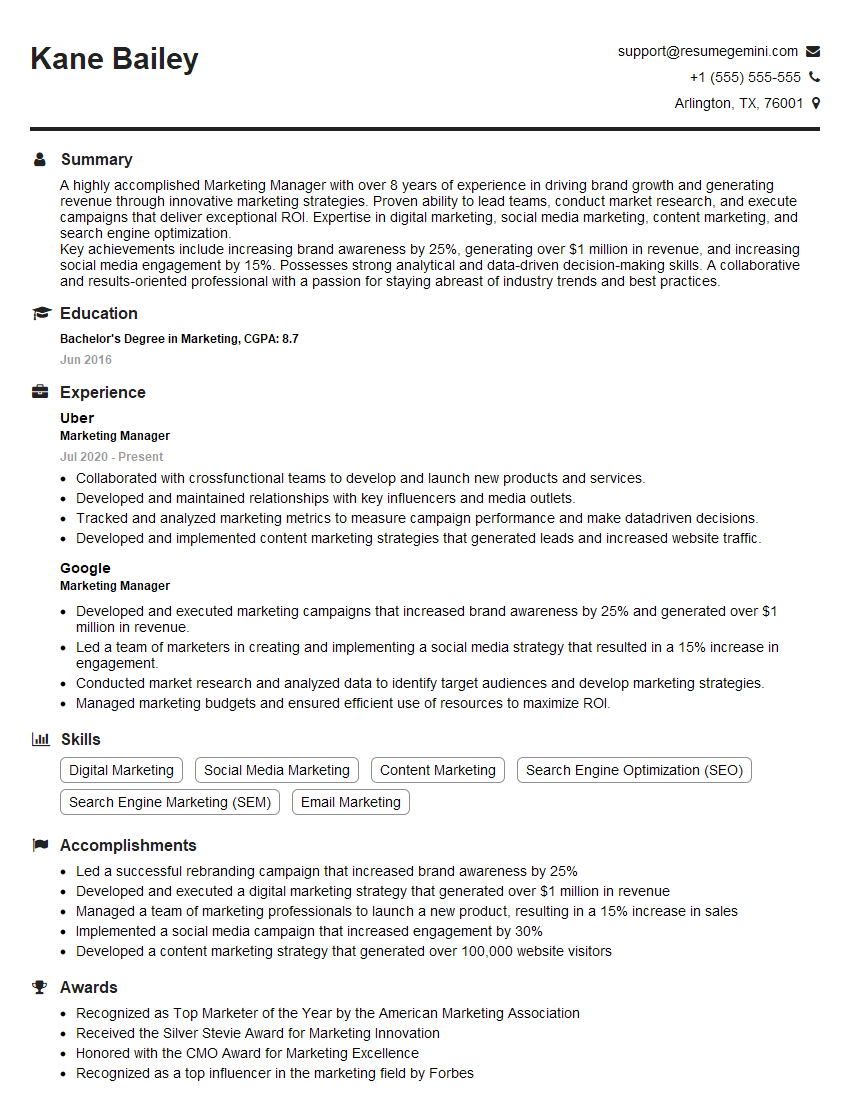
Marketing Manager Resume Sample
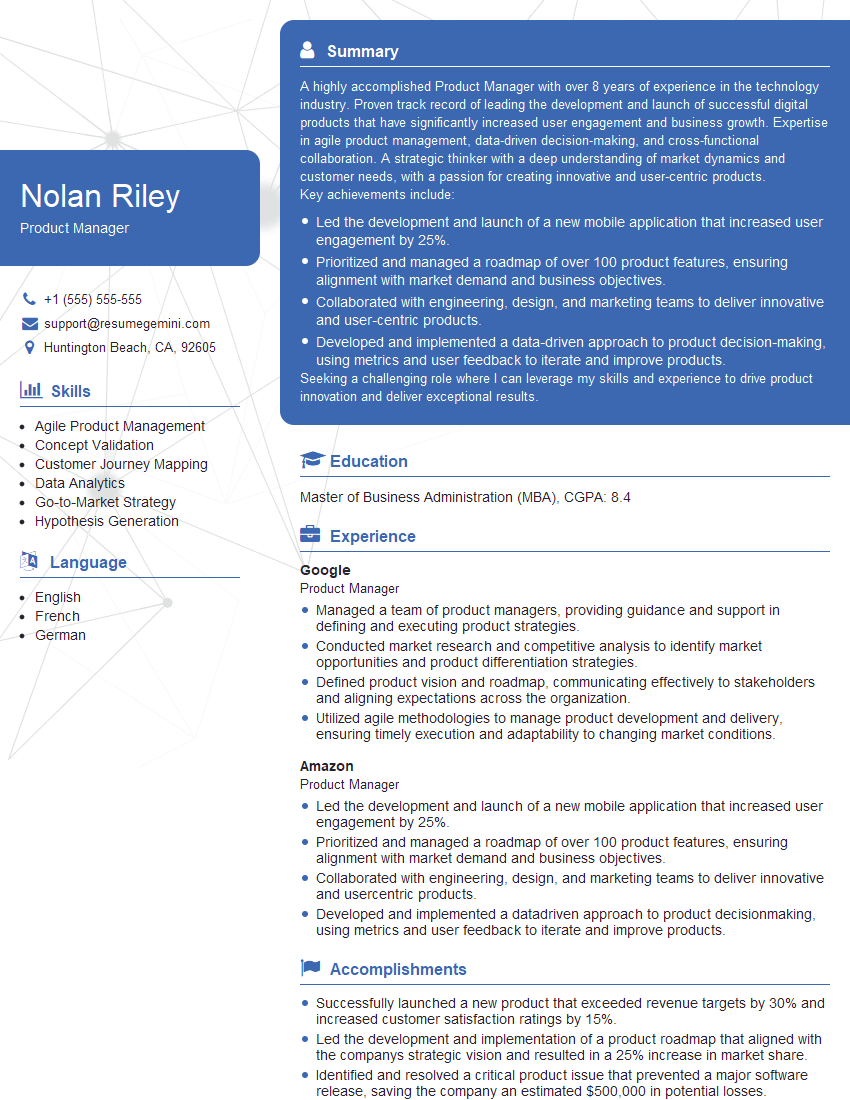
Product Manager Resume Sample
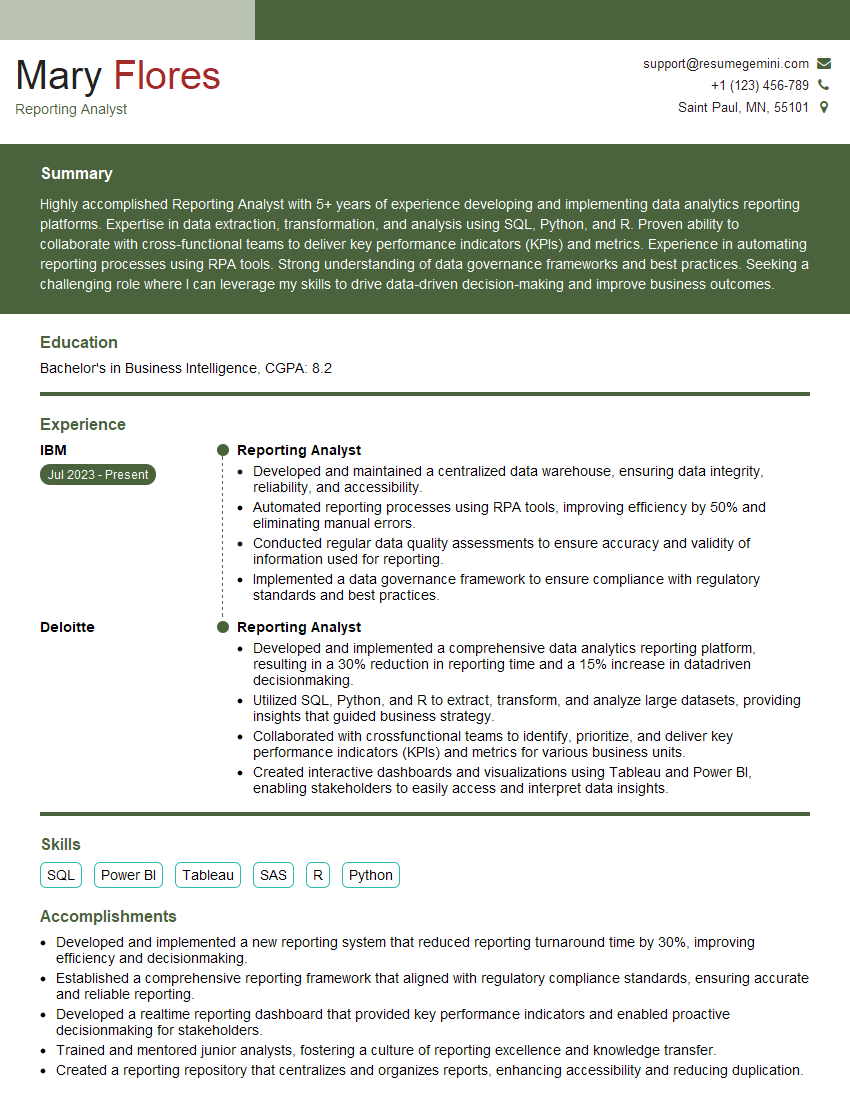
Reporting Analyst Resume Sample
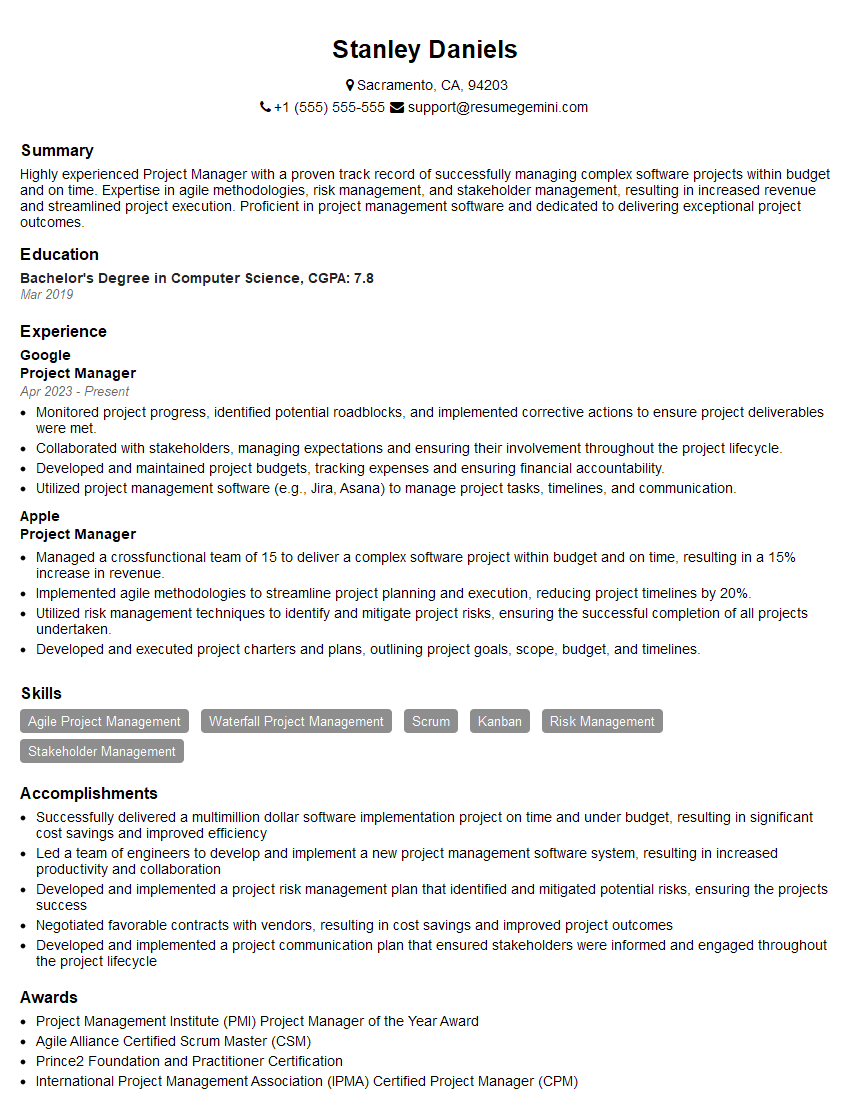
Project Manager Resume Sample
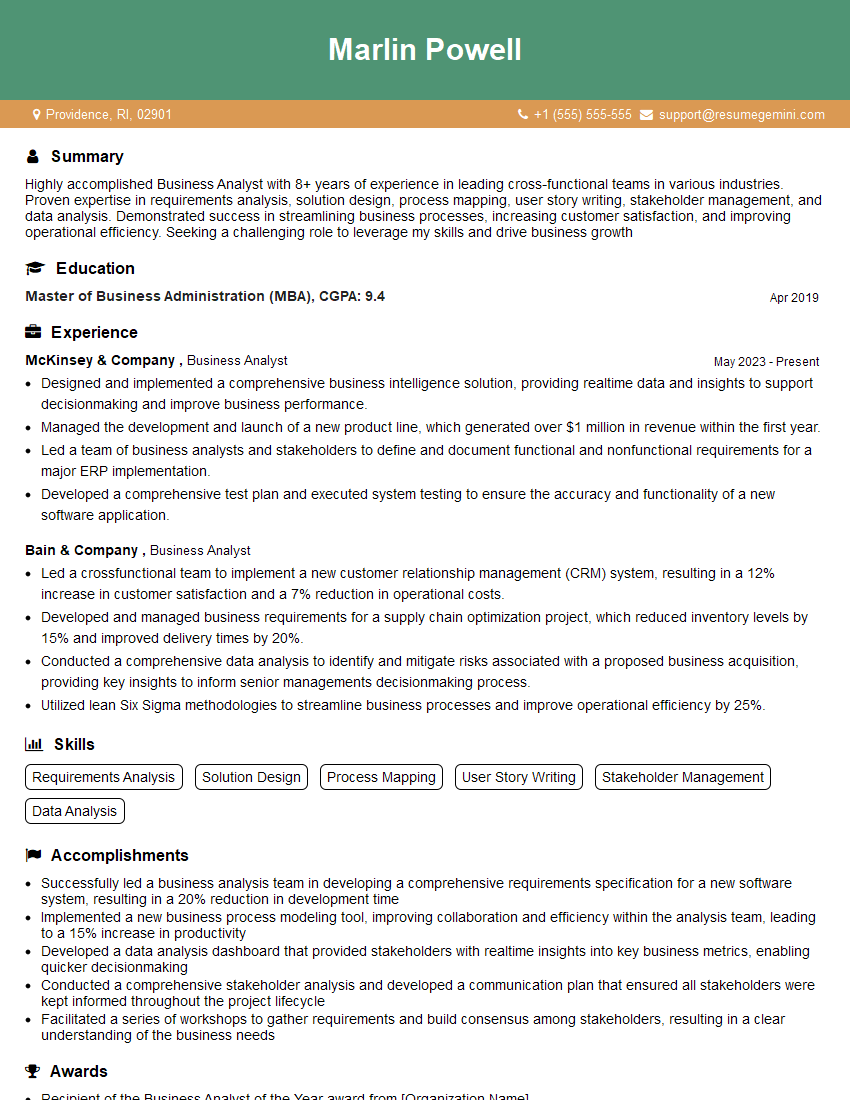
Business Analyst Resume Sample
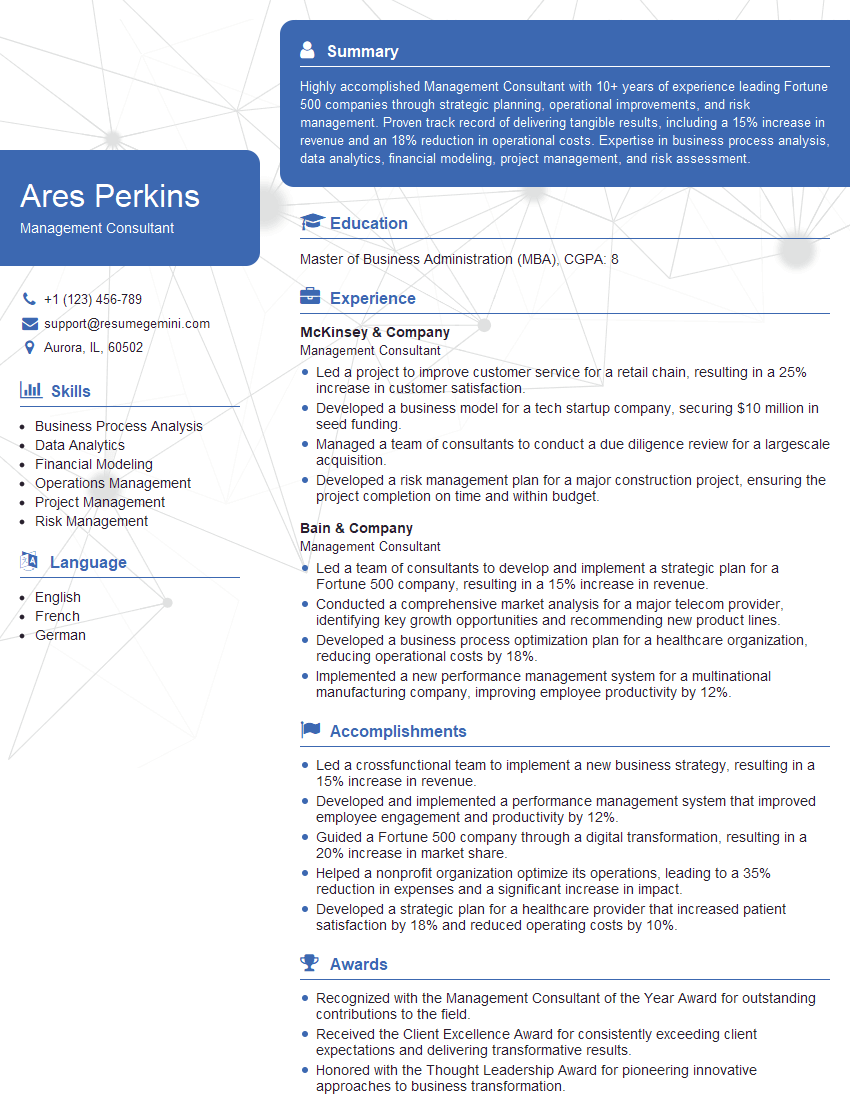
Management Consultant Resume Sample
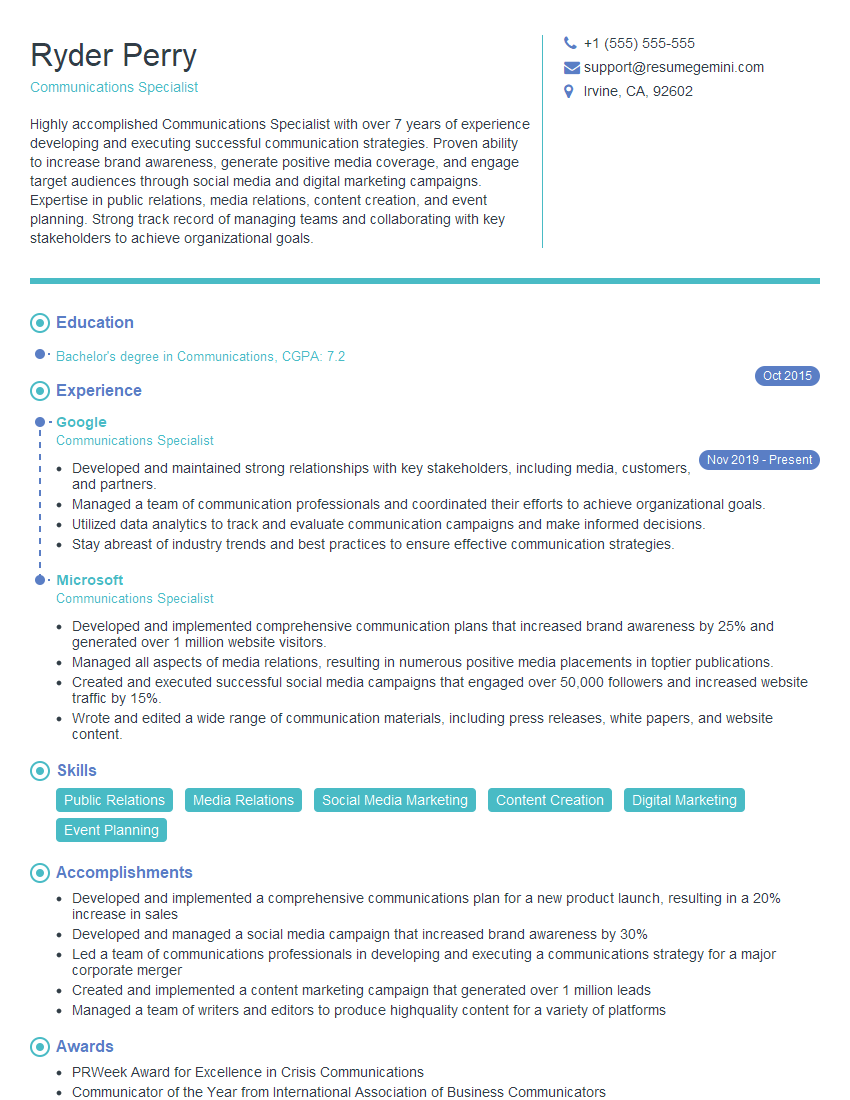
Communications Specialist Resume Sample
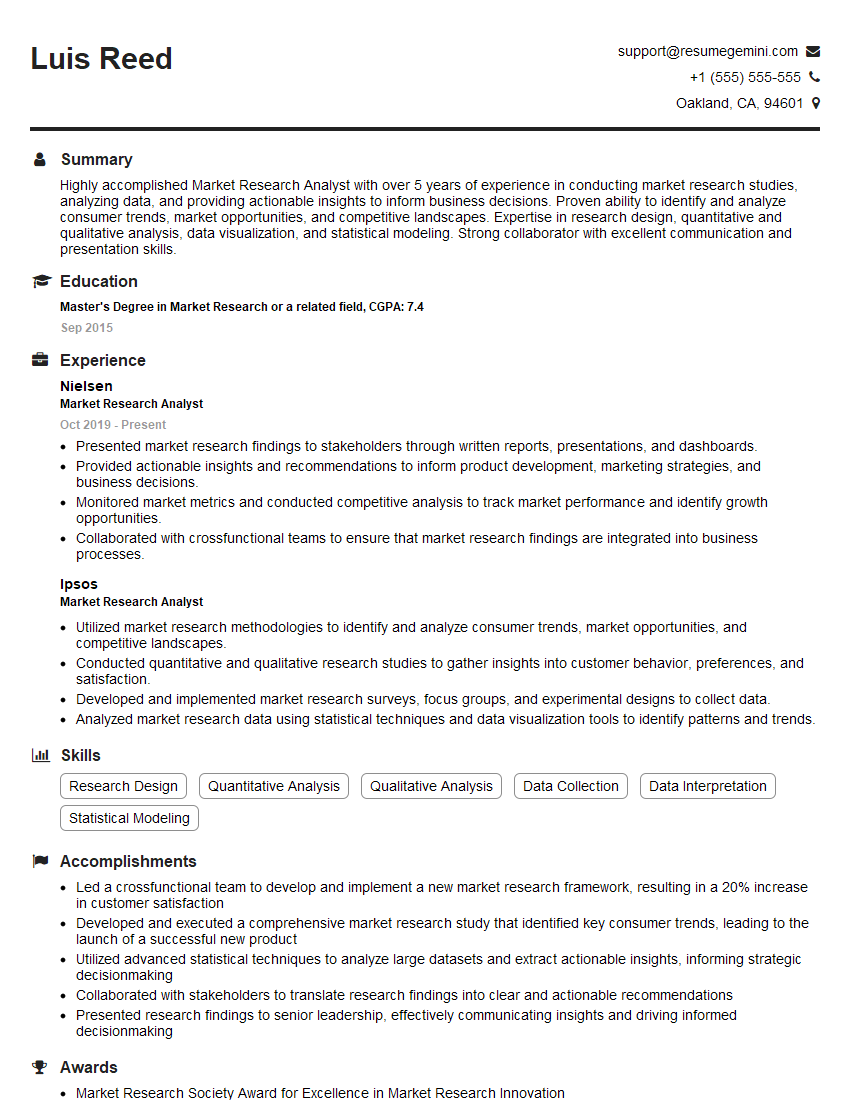
Market Research Analyst Resume Sample
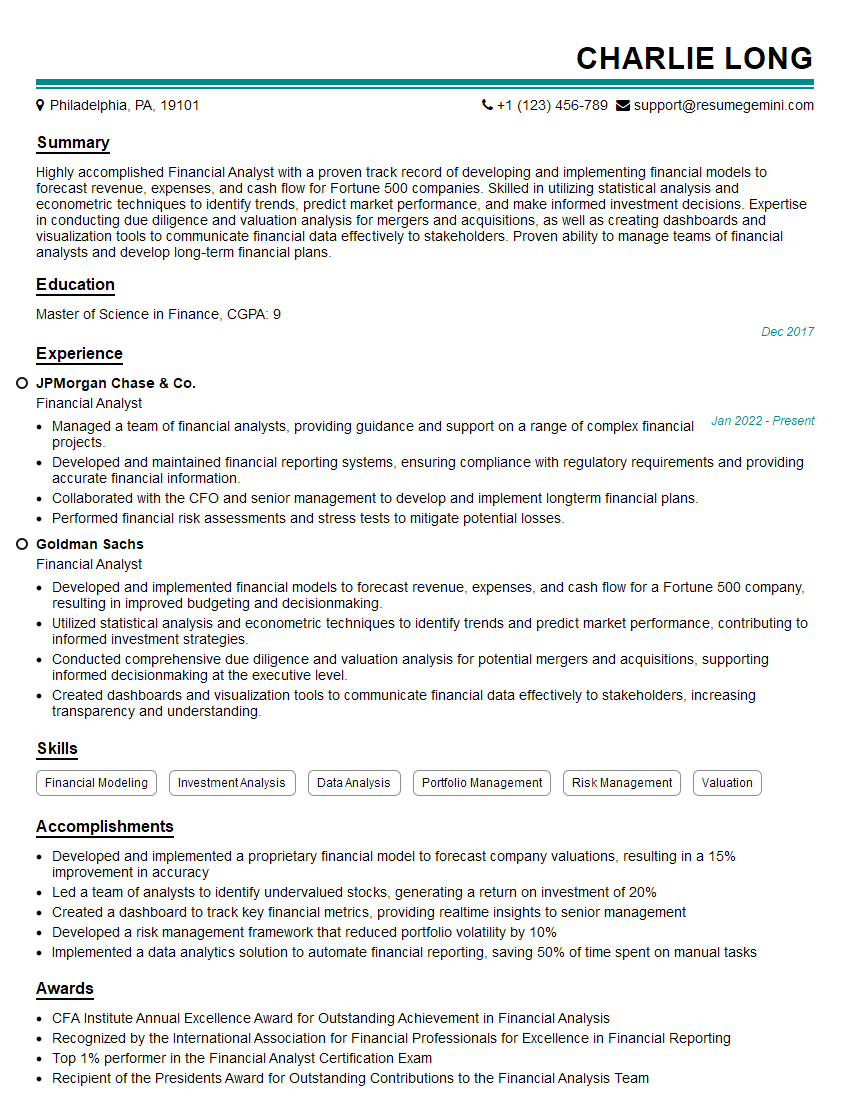
Financial Analyst Resume Sample
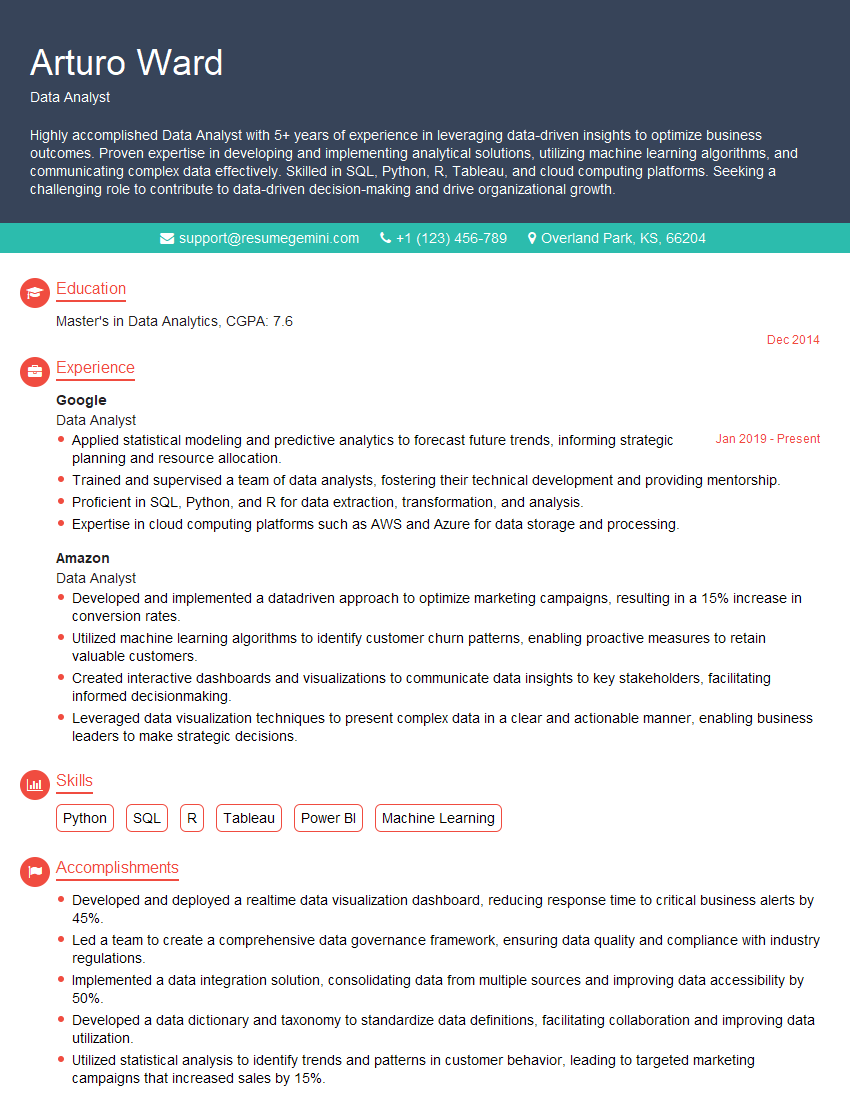
Data Analyst Resume Sample
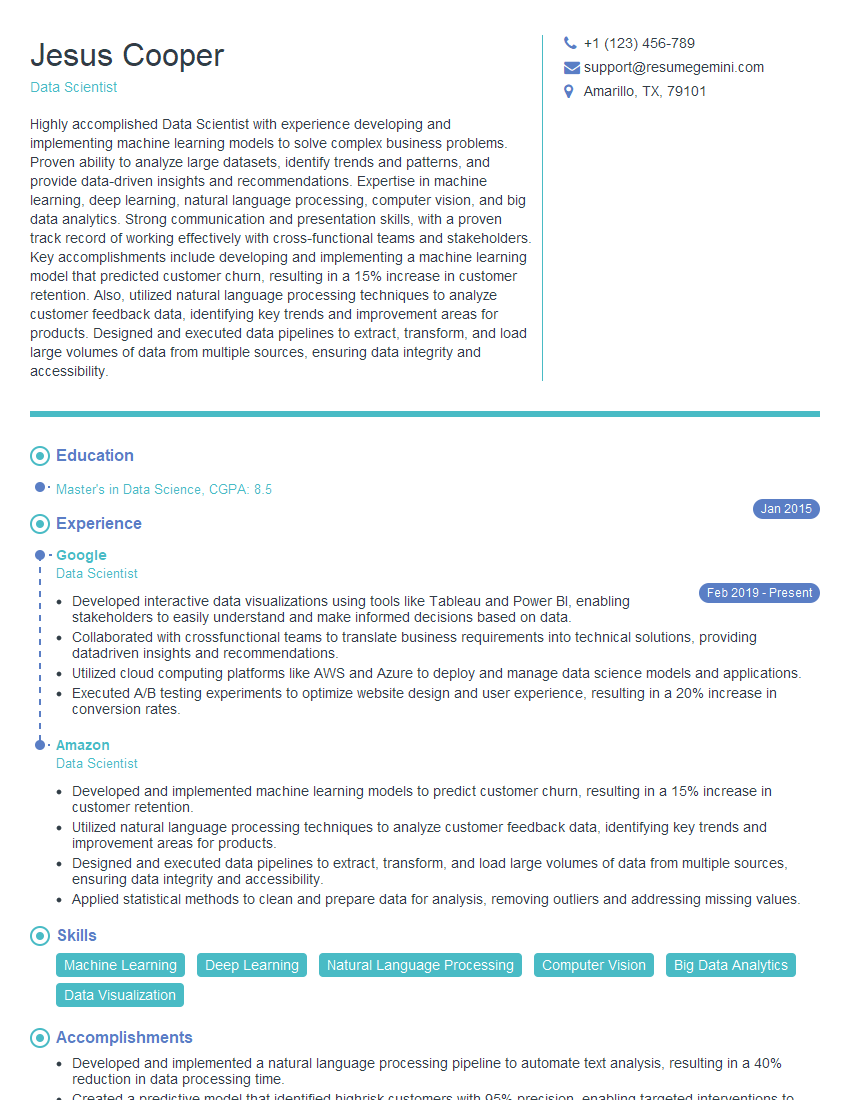
Data Scientist Resume Sample

Information Architect Resume Sample

Technical Writer Resume Sample
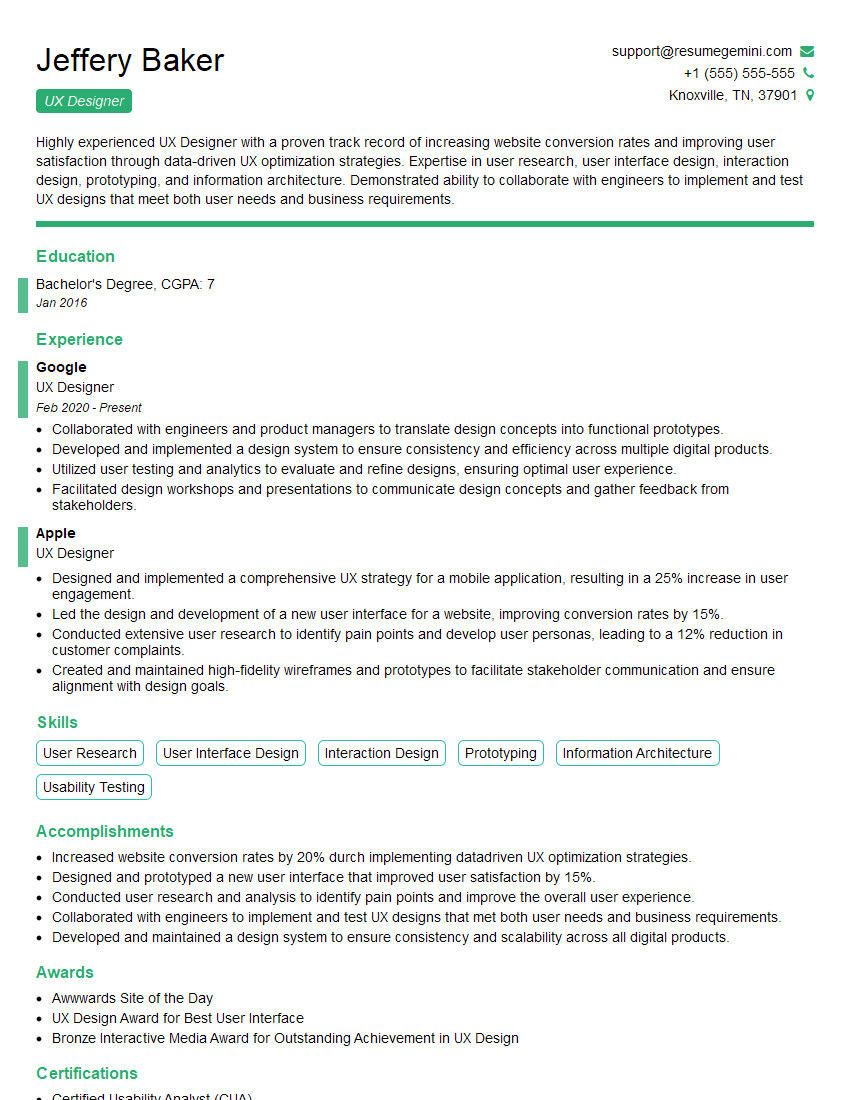
UX Designer Resume Sample
Explore more articles
Users Rating of Our Blogs
Share Your Experience
We value your feedback! Please rate our content and share your thoughts (optional).
What Readers Say About Our Blog
Very informative content, great job.
good