Feeling uncertain about what to expect in your upcoming interview? We’ve got you covered! This blog highlights the most important Riding Techniques interview questions and provides actionable advice to help you stand out as the ideal candidate. Let’s pave the way for your success.
Questions Asked in Riding Techniques Interview
Q 1. Explain the difference between English and Western riding styles.
English and Western riding styles differ significantly in their equipment, riding posture, and disciplines. Think of it like comparing ballet to square dancing – both involve dance, but the movements and goals are distinct.
English riding emphasizes a close contact between rider and horse, using a light, refined seat and subtle aids. The rider sits deeply in the saddle, maintaining a balanced and upright posture. Disciplines like dressage, jumping, and eventing are all under the English umbrella. Common equipment includes a close-contact saddle, snaffle or Pelham bridle, and often boots with short heels.
Western riding focuses more on functionality and control, often involving working cattle or trail riding. The rider’s posture is more upright and relaxed, using more direct aids. Western saddles are larger and more heavily built than English saddles, often with a horn for roping or added security. Bridles can range from simple snaffles to more complex setups including curb bits. Boots often have a higher heel.
In essence, English riding prioritizes elegance and precision, while Western riding emphasizes practicality and control. The choice between them depends largely on personal preference and the intended equestrian activity.
Q 2. Describe the proper procedure for mounting and dismounting a horse.
Mounting and dismounting safely is crucial for both rider and horse. Always approach the horse calmly and from its left side (the near side).
- Mounting: Stand facing the horse, holding the reins loosely in your left hand. Place your left foot in the stirrup, keeping your back straight and using your leg muscles to swing yourself into the saddle. Once seated, adjust your stirrups and reins.
- Dismounting: Bring your horse to a complete halt, then reverse the mounting procedure. Turn your horse slightly away from you to provide space. Take the reins in one hand. Remove your left foot from the stirrup, keeping your back straight and swinging your right leg over the horse’s back. Once you are safely dismounted, always step away from the horse’s legs.
Never attempt to mount or dismount a horse that is not stationary. It’s also always a good idea to have someone assist you initially if you are inexperienced.
Q 3. What are the key components of a balanced seat?
A balanced seat is fundamental to effective riding. It’s about distributing your weight evenly over the saddle, allowing for independent movement of your legs and upper body without hindering the horse. Think of it like maintaining your balance on a bicycle – you have to constantly adjust.
- Upright Posture: Keep your spine straight, shoulders relaxed, and your chin level. Imagine a string pulling you upwards from the crown of your head.
- Even Weight Distribution: Avoid leaning forward, backward, or to one side. Your seat bones should be evenly weighted in the saddle.
- Independent Seat and Legs: Your seat should remain stable and independent of your leg movements, allowing you to use your legs for aids without affecting your balance. This requires core strength and coordination.
- Supple Joints: Maintaining a relaxed but engaged posture in your hips and knees, allows for effective absorption of the horse’s movement.
A balanced seat improves communication with the horse, enhances your control, and contributes to the horse’s comfort and performance. Regular practice and instruction are key to developing a balanced seat.
Q 4. How do you address a horse that is exhibiting resistance to a particular command?
When a horse resists a command, it’s crucial to understand the *why* before reacting. Resistance can stem from pain, fear, misunderstanding, or simply lack of training. Never resort to harshness; that only builds resentment and makes the problem worse.
- Identify the Problem: Is the horse uncomfortable? Is the command unclear? Is it physically capable of the request?
- Check your Aids: Are your leg and rein aids clear, consistent, and correctly applied? A misaligned or overly forceful aid can cause resistance.
- Try a Different Approach: If direct application doesn’t work, break the command into smaller, easier steps. For example, if the horse refuses to canter, try practicing transitions to a trot.
- Release the Pressure: If the horse resists, immediately release the pressure from your aids. This helps the horse associate relaxation with correct behavior.
- Seek Professional Help: If the problem persists, consulting an experienced riding instructor or veterinarian is essential to rule out underlying issues.
Understanding the root cause of resistance and patiently working through it fosters trust and respect between you and your horse. Remember, consistency and clear communication are key to overcoming training challenges.
Q 5. Explain the importance of proper leg and rein aids.
Proper leg and rein aids are the primary means of communication between rider and horse. They allow you to guide, direct, and control the horse’s movement smoothly and effectively.
Leg Aids: Primarily used for impulsion, direction, and lateral movements. They are applied gently but firmly, usually on the sides of the horse’s body. For example, a squeeze with both legs encourages forward movement, while a squeeze with one leg asks for lateral bending.
Rein Aids: Used for direction, controlling speed, and maintaining the horse’s posture. Gentle and precise movements with the reins communicate effectively. Harsh or jerky pulling can cause discomfort and resistance. For instance, a gentle pull on one rein aids in turning.
The correct combination and timing of leg and rein aids are crucial for effective communication. Riders must develop a feel for the subtle nuances of each aid, achieving a light yet firm contact without causing discomfort or resistance. Practice and instruction are essential for developing precise aid use.
Q 6. Describe the different types of bridles and their uses.
Bridles are essential for controlling a horse during riding. Various types exist, each suited for different purposes and levels of control.
- Snaffle Bridle: The simplest type, consisting of a single bit in the horse’s mouth, offering a direct and gentle rein action. It is ideal for beginners and younger horses.
- Pelham Bridle: Offers more control than a snaffle, incorporating a curb chain or strap under the jaw to leverage the pressure on the bit. This is a more advanced bridle.
- Double Bridle: Used for more advanced disciplines such as dressage, it features two bits: a snaffle and a curb bit, providing precise control of the horse’s head and neck.
- Hackamore: A bitless bridle, typically using a noseband and headstall to control the horse. It’s often preferred by those who are cautious of bit use.
The choice of bridle depends on the horse’s temperament, training level, and the rider’s skill. Improper use of any bridle can be detrimental to the horse’s mouth and welfare. Understanding the mechanics and impact of each type of bridle is critical.
Q 7. How do you assess a horse’s fitness level for riding?
Assessing a horse’s fitness for riding involves a holistic approach, combining visual observation, physical examination, and knowledge of the horse’s history. It’s vital to avoid pushing an unfit horse, which can lead to serious injury.
- Visual Assessment: Observe the horse’s body condition – is it too thin or overweight? Look for any visible injuries, lameness, or signs of stress.
- Physical Examination: Check the horse’s heart rate and respiration rate, both before and after exercise. Examine its hooves for soundness, assess its muscle tone and flexibility, and check its overall responsiveness.
- History Review: Understanding the horse’s previous fitness levels, training regime, and any medical conditions is essential. Sudden changes in workload can be detrimental.
- Trial Ride: A short and gentle trial ride can reveal any subtle issues that might not be apparent through observation.
If you have any concerns, consulting a veterinarian is always recommended. Remember, an unfit horse is more prone to injury and will not perform at its best.
Q 8. What safety measures do you implement while riding and handling horses?
Safety is paramount in horse riding. My approach is built on a foundation of risk assessment and proactive mitigation. This involves a multi-layered strategy encompassing rider safety, horse safety, and environmental safety.
Rider Safety: Always wearing a properly fitted riding helmet is non-negotiable. I also advocate for appropriate riding attire, including sturdy boots with a small heel to prevent foot slippage in the stirrups, and clothing that allows for a full range of motion without being overly loose. Before every ride, I check my equipment—saddle, bridle, girth—to ensure everything is secure and in good working order. Furthermore, I maintain a consistent awareness of my surroundings and the horse’s behaviour, avoiding distractions.
Horse Safety: Understanding equine body language is critical. I closely observe the horse for any signs of stress, discomfort, or illness, delaying the ride if necessary. I always handle horses calmly and confidently, using clear and consistent communication. Before mounting, I ensure the horse is properly tacked up and comfortable, paying close attention to the placement and tightness of the saddle and girth. Safe handling techniques are always employed, especially during mounting and dismounting.
Environmental Safety: I carefully select riding locations, avoiding areas with potential hazards like uneven terrain, traffic, or wildlife. I ensure the riding area is clear of obstacles and that the horse has sufficient space to move freely and safely. During trail rides, I’m particularly mindful of potential hazards like loose rocks, uneven ground, and sudden changes in elevation.
This holistic approach, combining personal preparedness, careful horse handling, and environment awareness, significantly minimizes the risk of accidents and injuries.
Q 9. Explain the stages of training a young horse for riding.
Training a young horse is a gradual process requiring patience, consistency, and a deep understanding of equine development. I typically divide the training into several key stages:
Groundwork (Initial Handling and Desensitization): This crucial phase focuses on building trust and establishing basic obedience. It involves gentle handling, desensitization to various stimuli (sounds, sights, objects), and teaching the horse to yield to pressure from the handler. This stage lays the foundation for future training.
Lunging and Long-Reining: Once the horse is comfortable with groundwork, lunging and long-reining help develop balance, coordination, and responsiveness to aids. It introduces the horse to the concept of lateral movements and helps strengthen its muscles. This is done before saddling to build fitness and obedience.
Saddling and Mounting: Introducing the saddle and rider is a gradual process. I start with short periods of saddling and desensitizing the horse to the weight and feel of the tack. Mounting is done gently and calmly, ensuring the horse is comfortable and relaxed.
Basic Riding Exercises: Once the horse accepts the rider, I start with basic exercises like walking, trotting, and halting, focusing on maintaining a correct posture and balanced seat. The transition between gaits is taught gradually, prioritizing clear communication and reinforcement of positive behaviours.
Advanced Training: As the horse progresses, more advanced exercises, including lateral work, collection, and more complex maneuvers, are introduced. This phase often involves specific training for a particular discipline.
Throughout all stages, positive reinforcement techniques and clear communication are central to the training process. I avoid harsh methods, focusing on rewarding desired behaviour and patiently addressing any resistance.
Q 10. How do you identify and address common rider errors?
Identifying and addressing rider errors requires keen observation and a thorough understanding of riding mechanics. Common errors often stem from imbalances in posture, incorrect use of aids, or a lack of effective communication with the horse.
Postural Issues: A rider with poor posture might grip with their legs, lean too far forward or backward, or have an unbalanced seat. This can negatively impact the horse’s balance and movement. I address this by guiding the rider to improve their posture, emphasizing a straight back, relaxed shoulders, and a centered seat.
Incorrect Use of Aids: Misuse of reins, legs, or seat can confuse or discomfort the horse. For example, pulling excessively on the reins can create tension and discomfort. I correct this by explaining the proper use of each aid, highlighting the need for subtle and consistent application.
Lack of Communication: The rider must clearly communicate their intentions to the horse. Poor communication can lead to misunderstandings and resistance. I help riders improve their communication by demonstrating how to use their aids effectively, teaching them how to interpret the horse’s responses, and emphasizing the importance of clear and consistent signals.
My approach combines verbal instruction, hands-on guidance, and visual demonstrations. I use mirrors to allow riders to see their posture and adjust accordingly, and I provide regular feedback to ensure they understand and implement corrections.
Q 11. Describe your experience with different riding disciplines.
My experience spans several riding disciplines, allowing me to appreciate the nuances and challenges inherent in each. I’ve worked extensively with horses in:
Dressage: This discipline emphasizes precision, balance, and harmony between horse and rider. I have a strong background in classical dressage techniques, focusing on developing the horse’s suppleness and responsiveness.
Jumping: The thrill of jumping requires athleticism, confidence, and excellent communication. My experience includes training horses and riders across various jumping levels, emphasizing safe and effective techniques.
Western Riding: I’ve worked with horses in western disciplines, gaining experience in reining, cutting, and pleasure riding, developing my understanding of different riding styles and horse-training methods.
Trail Riding: I enjoy the freedom and challenge of trail riding. My experience with this discipline emphasizes navigation, horsemanship, and the importance of situational awareness in varied terrains.
This diverse experience allows me to offer a well-rounded approach to training, adapting my techniques to suit the individual needs of both horse and rider.
Q 12. What is your approach to teaching riders of varying skill levels?
My teaching approach is highly adaptable to cater to diverse skill levels. I believe in building a strong foundation for beginners and providing advanced riders with opportunities for refinement and growth.
Beginner Riders: My focus is on building confidence, developing a safe and effective riding posture, and establishing basic communication skills with the horse. Lessons emphasize proper mounting and dismounting, the use of aids, and basic exercises like walking, trotting, and halting.
Intermediate Riders: At this level, the focus shifts to refining technique, improving balance and control, and introducing more advanced exercises. I work with intermediate riders on developing their understanding of horse behavior and communication, and on improving the rhythm and suppleness of their riding.
Advanced Riders: For advanced riders, the emphasis is on achieving greater precision, finesse, and athleticism in their riding. I assist with perfecting advanced movements, refining techniques, and pursuing specific goals related to competition or personal riding aspirations.
Regardless of skill level, I prioritize a supportive and encouraging learning environment, providing clear and individualized instruction tailored to each rider’s unique needs and learning style.
Q 13. How do you maintain a horse’s physical and mental well-being during training?
Maintaining a horse’s physical and mental well-being is crucial for its performance, longevity, and overall health. My approach involves several key aspects:
Proper Nutrition: I ensure the horse receives a balanced diet appropriate for its age, breed, workload, and individual needs. This includes providing high-quality forage, appropriate concentrates, and regular access to fresh water.
Regular Exercise: A well-structured exercise program is crucial. This includes a balance of work and rest, gradually increasing the intensity and duration of exercise as the horse’s fitness improves. Variety in training is also essential to prevent boredom and overuse injuries.
Farrier and Veterinary Care: Regular hoof trimming and veterinary checkups are essential to prevent and address potential health issues. I work closely with farriers and veterinarians to ensure the horse receives appropriate preventative care and prompt treatment when necessary.
Mental Stimulation: Horses need mental stimulation to remain engaged and happy. This can involve providing variety in their training, allowing them time to interact socially with other horses, and providing opportunities for exploration and play.
Rest and Recovery: Adequate rest and recovery are essential for muscle repair and overall well-being. I incorporate regular rest days into the training program and monitor the horse closely for signs of fatigue or stress.
This multifaceted approach emphasizes a holistic perspective on equine well-being, ensuring the horse remains healthy, happy, and able to perform at its best.
Q 14. What are the signs of a horse in pain or discomfort?
Recognizing signs of pain or discomfort in a horse is essential for ensuring its well-being. These signs can be subtle or overt, and careful observation is necessary.
Behavioral Changes: Changes in temperament, such as increased irritability, reluctance to work, or unusual shyness, can indicate discomfort. Changes in eating habits, such as reduced appetite or difficulty eating, also warrant attention.
Physical Signs: Obvious signs include lameness (limping), swelling, heat, or discharge from wounds or body orifices. More subtle signs include muscle stiffness or tension, unusual posture, and reluctance to move or stand.
Changes in Gait: Alterations in gait, such as shortening of stride, stumbling, or favoring one leg, are clear indicators of lameness or discomfort.
Respiratory Changes: Rapid or labored breathing, particularly after minimal exertion, may suggest pain or respiratory distress.
If I observe any of these signs, I immediately consult a veterinarian to assess the horse’s condition and determine the appropriate course of action. Early intervention is critical in addressing potential health issues and preventing further complications.
Q 15. How do you handle emergencies during riding sessions?
Emergency preparedness is paramount in riding. My approach is based on proactive risk mitigation and swift, decisive action if things go wrong. This includes regular equipment checks (saddle, bridle, stirrups), ensuring the horse is appropriately fit for the ride, and selecting suitable terrain for the horse’s experience level.
If an emergency occurs, my priority is the safety of both horse and rider. For example, if the horse spooks and bolts, I’d maintain a calm demeanor, try to regain control by using appropriate aids (rein pressure, leg pressure) and avoid sharp movements which might further frighten the animal. If a fall occurs, I’d assess injuries immediately and seek medical help if needed. A solid understanding of first aid for both horse and rider is crucial. I always carry a well-stocked first-aid kit and a mobile phone.
- Scenario: Horse stumbles. I immediately loosen my reins to allow the horse freedom of movement, maintain my balance, and gently guide the horse back to a steady gait.
- Scenario: Tack breaks. I assess the situation and determine if it’s safe to continue riding or if I need to dismount and secure the horse. I always carry a basic repair kit for minor tack issues.
Career Expert Tips:
- Ace those interviews! Prepare effectively by reviewing the Top 50 Most Common Interview Questions on ResumeGemini.
- Navigate your job search with confidence! Explore a wide range of Career Tips on ResumeGemini. Learn about common challenges and recommendations to overcome them.
- Craft the perfect resume! Master the Art of Resume Writing with ResumeGemini’s guide. Showcase your unique qualifications and achievements effectively.
- Don’t miss out on holiday savings! Build your dream resume with ResumeGemini’s ATS optimized templates.
Q 16. Describe your experience with different types of saddles and their suitability for specific disciplines.
Saddle selection significantly impacts both comfort and performance. My experience encompasses various types, each suited for different disciplines. For example, a dressage saddle features a deep seat and close contact points to facilitate precise movements and rider posture. The close contact allows for better communication with the horse.
Western saddles, with their larger pommels and cantles, provide stability and support for the rider during cattle work or trail riding. Jump saddles have a more forward-flared flap to give the rider more freedom of leg movement when jumping. Eventing saddles are often a hybrid, offering versatility for both dressage and jumping phases.
The suitability of a saddle also depends on the horse’s build. A well-fitted saddle is crucial for preventing discomfort and potential injury to the horse. I always prioritize saddles that distribute weight evenly and avoid pinching or pressure points.
Q 17. What are the principles of proper horse care and stable management?
Proper horse care is fundamental to their well-being and performance. It encompasses nutrition, grooming, exercise, and stable management. A balanced diet, appropriate to the horse’s age, workload, and breed, is paramount. This often involves high-quality hay, grain (in measured quantities), and potentially supplements. Regular dental check-ups are critical, as dental problems can affect eating and overall health.
Grooming helps detect potential skin issues or injuries early. It also strengthens the horse-rider bond through physical interaction. Regular hoof care, including trimming or shoeing, is essential for soundness. Exercise is vital for maintaining fitness and mental well-being, but it must be appropriately balanced to avoid overexertion. Stable management includes maintaining a clean and safe environment to prevent the spread of disease.
- Stable hygiene: Regular cleaning of stalls, muck removal and disinfection prevent disease outbreaks.
- Water access: Providing clean and fresh water is critical, especially during hot weather.
- Parasite control: Regular deworming is essential to prevent parasitic infestations.
Q 18. How do you deal with a horse that is fearful or anxious?
Dealing with a fearful or anxious horse requires patience, understanding, and a calm approach. My strategy focuses on desensitization and building trust. I’d start by identifying the source of fear. Is it a specific object, noise, or situation? Once identified, I gradually introduce the horse to the fear-inducing stimulus, starting at a safe distance and rewarding calm behavior with treats and positive reinforcement. This could involve progressively moving closer to the object while maintaining a relaxed presence.
Positive reinforcement is key: rewarding calm behavior reinforces desired responses. I might use a soft voice, gentle touch, and encouraging words to reassure the horse. In some cases, professional assistance from an equine behaviorist might be necessary, especially with severely anxious horses. Rushing the desensitization process can worsen the situation.
Q 19. Explain the importance of warm-up and cool-down routines for both horse and rider.
Warm-up and cool-down routines are essential for both horse and rider, preparing the body for exertion and preventing injury. A proper warm-up gradually increases the horse’s heart rate and blood flow, preparing muscles and joints for work. This typically involves light walking, followed by progressively more energetic movements, such as trot and canter.
For the rider, a warm-up improves flexibility and coordination. Cool-down routines allow the body to gradually return to its resting state, promoting recovery and minimizing muscle soreness. For the horse, this involves a slow walk, allowing the heart rate and breathing to normalize. For the rider, stretching exercises can aid in muscle relaxation.
Ignoring warm-up and cool-down can lead to pulled muscles, strained tendons, or other injuries in both horse and rider. Think of it like preparing a car engine before driving it intensely and then letting it idle before turning it off.
Q 20. What are your strategies for building a strong horse-rider bond?
Building a strong horse-rider bond is crucial for effective communication and partnership. This involves consistent positive reinforcement, clear and concise communication using body language and voice, and respect for the horse’s individual personality. Spending quality time with the horse, even outside of riding sessions, helps build trust and understanding.
Desensitization exercises and groundwork can foster mutual respect. Groundwork helps build confidence in the horse while enhancing the rider’s understanding of horse behavior. Positive interactions, such as grooming and gentle handling, create a positive association between rider and horse. Rewarding calm behavior and attentiveness strengthens the bond. Empathy and patience are equally crucial.
Q 21. How do you assess a horse’s temperament and suitability for a particular rider?
Assessing a horse’s temperament and suitability for a particular rider involves a multi-faceted approach. It begins with observing the horse’s behavior in various situations – how it reacts to handling, other horses, and novel stimuli. I look for signs of nervousness, aggression, or docility. I also consider the horse’s training level, physical capabilities, and overall health.
The rider’s experience and skill level are equally important. A novice rider shouldn’t be paired with a spirited, high-strung horse. A more experienced rider might handle a more challenging horse confidently. Matching the horse’s temperament and training level with the rider’s skills and experience will ensure a safe and enjoyable riding experience for both. Thorough questioning of the rider about their experience and expectations is crucial before making a match.
Q 22. What are your methods for teaching different gaits (walk, trot, canter, gallop)?
Teaching the different gaits – walk, trot, canter, and gallop – requires a progressive approach, focusing on rider balance, independent seat, and effective communication with the horse. I begin with the walk, emphasizing a relaxed, balanced posture and independent seat – meaning the rider’s body moves independently of the horse’s movement. This is crucial for all gaits. We work on establishing a consistent, rhythmic walk before moving on.
The transition to the trot involves teaching the rider how to absorb the horse’s movement using their legs, core, and seat. I often use exercises like rising trot to improve the rider’s balance and rhythm. We focus on maintaining a light contact with the reins, avoiding pulling or gripping. The two-point position (standing in the stirrups) is introduced once the rising trot is smooth and confident.
Cantering is introduced after a solid trot, focusing on balanced aids – a slight shift in weight, a release of the inside rein, and a gentle application of leg pressure. I start with short canters on a circle, ensuring the horse’s balance and the rider’s ability to maintain a secure, balanced position. The half-seat cantering position is later introduced.
Finally, the gallop is only introduced to advanced riders with good balance and control, on suitable terrain and horses. The focus is on maintaining a light seat, following the horse’s movement, and effective communication for starting and stopping the gallop safely. Throughout the teaching process, I constantly assess the rider’s progress and adjust my methods accordingly, emphasizing safety and positive reinforcement.
Q 23. Describe your experience with advanced riding techniques such as lateral movements.
My experience with advanced riding techniques, particularly lateral movements like shoulder-in, haunches-in, and travers, is extensive. I’ve trained numerous riders to perform these movements correctly and with precision. These exercises require a deep understanding of the horse’s biomechanics and the rider’s ability to subtly influence the horse’s balance and suppleness.
Teaching these movements starts with establishing correct basic posture and aids, which is fundamental. Then, I introduce the exercises gradually, starting with simple transitions into the lateral movement on a long rein before refining the precision and duration. I use visualization exercises to help riders develop the feel for the horse’s responses to their subtle aids. I always emphasize the importance of maintaining the horse’s suppleness and comfort throughout the exercise. The entire process requires a significant amount of patience, precision, and careful observation of both the horse and rider.
For example, achieving a correct shoulder-in requires subtle inside leg pressure, an inside rein to control the shoulder, and an outside rein to allow for the bending of the horse’s neck and body. The outside leg maintains impulsion and prevents the hindquarters from falling out.
Q 24. How do you handle difficult or challenging horses?
Handling difficult or challenging horses demands a calm, confident approach. Understanding the underlying causes of the horse’s behavior is crucial. This could involve a physical issue like pain, or a behavioral problem stemming from past experiences or poor training. My approach is always grounded in patience and understanding, prioritizing the horse’s well-being.
Firstly, I focus on establishing trust and building a positive relationship. This might involve spending time with the horse, grooming, and desensitization exercises. Then, I carefully assess the horse’s behavior, looking for patterns or triggers. I use clear and consistent communication, avoiding anything that could provoke fear or aggression. For example, a horse exhibiting anxiety may need a calm, reassuring presence and well-spaced, measured exercises, whereas a dominant horse may require a clear demonstration of leadership, using assertive, but kind techniques.
I work closely with equine veterinarians and behaviorists to rule out any physical or medical issues and develop tailored training plans. Safety is paramount, so I utilize appropriate safety equipment and adapt training sessions to the individual horse’s needs and limitations.
Q 25. Explain your knowledge of equine anatomy and its relevance to riding.
A strong understanding of equine anatomy is fundamental to effective riding. Knowing the skeletal structure, musculature, and how the horse moves informs every aspect of my teaching. For example, understanding the horse’s center of gravity allows for a better understanding of balance and how to maintain it during different gaits and maneuvers.
Knowledge of the horse’s musculoskeletal system helps identify potential issues that may impact performance and even cause discomfort. Understanding the biomechanics of how the horse’s muscles work and interact during movement guides my instruction to ensure correct posture and the application of effective aids, minimizing strain on the horse. For instance, understanding the way the horse’s hindquarters engage helps me teach a more effective impulsion and balance.
Awareness of the horse’s nervous system is also critical to help identify and respond to subtle changes in its behavior and body language. This enables prompt identification of discomfort or other potential issues before they escalate. It also ensures that training methods are sensitive and promote well-being.
Q 26. How do you adapt your teaching methods to accommodate riders with disabilities?
Adapting my teaching methods for riders with disabilities requires careful consideration of individual needs and limitations. I work closely with each rider to develop personalized lesson plans that focus on building confidence and achieving their goals, while ensuring safety remains the top priority.
This may involve modifying equipment, such as using adaptive saddles or specialized reins, or adjusting exercises to suit physical capabilities. For example, a rider with limited mobility might benefit from using a side-walk or additional support during mounting and dismounting, and altered exercises that focus on specific strengths while gently avoiding areas of limitation.
I might also incorporate alternative teaching techniques to cater to different learning styles and cognitive abilities. Patience, positive reinforcement, and clear communication are crucial. I focus on building the rider’s independence and self-confidence, celebrating every achievement, no matter how small. It’s about adapting to empower, ensuring each rider experiences the joy and therapeutic benefits of riding.
Q 27. What are the common causes of rider falls and how can they be prevented?
Rider falls are often caused by a combination of factors, including rider error, horse-related issues, and environmental factors. Common rider errors include poor posture, ineffective use of aids, inappropriate responses to the horse’s movements, and lack of balance. Horses may spook, stumble, or react unexpectedly. Environmental factors, such as uneven terrain or unexpected obstacles, also contribute.
Prevention strategies involve regular training to improve rider balance, posture, and coordination. Effective communication with the horse is key – consistent aids, gentle hands, and clear communication will help reduce unexpected reactions. Proper horse selection and handling also play vital roles. Selecting a horse appropriate to the rider’s experience level and ensuring proper grooming and equipment are crucial. Regularly assessing the riding environment for potential hazards and addressing any safety concerns proactively helps prevent accidents.
Instructing riders on safety procedures such as wearing protective helmets, appropriate attire, and understanding how to fall safely is also essential. Furthermore, the development of emergency plans including the rider understanding how to safely dismount the horse if a potentially dangerous situation arises can minimize the negative outcome of a fall.
Q 28. Describe your experience with creating and implementing lesson plans.
Creating and implementing lesson plans is a structured process that starts with defining clear learning objectives for each lesson. I consider the rider’s skill level, experience, and specific goals, creating a progressive learning pathway. Each lesson incorporates a warm-up phase, focusing on basic exercises to prepare the horse and rider. The main part of the lesson focuses on specific skills, with clear instructions and demonstrations. A cool-down phase helps the horse relax and prepares the horse and rider for the next lesson.
I use a variety of teaching methods, including demonstrations, verbal instructions, and hands-on assistance. I incorporate different exercises to keep the lessons engaging and promote skill development. For instance, I may use dressage movements to improve rider position and balance or cross-country riding elements to develop horse control and improve rider confidence. I always incorporate safety checks, focusing on risk assessments.
After each lesson, I evaluate the rider’s progress and adjust future plans as needed. This process involves detailed records of each lesson, including notes on the rider’s performance and any adjustments made to the lesson plan. This iterative approach ensures effective learning and continuous improvement, addressing areas where extra attention may be required.
Key Topics to Learn for Riding Techniques Interview
- Seat and Posture: Understanding the impact of proper posture and weight distribution on balance, control, and comfort. Practical application includes analyzing different riding styles and their postural requirements.
- Steering and Control: Mastering techniques for accurate steering, including counter-steering and weight shifting. Practical application involves explaining how to navigate various terrains and obstacles effectively.
- Braking and Safety: Understanding braking techniques for different scenarios (emergency stops, controlled braking). Practical application: Demonstrating knowledge of safe braking procedures and hazard avoidance.
- Gear Selection and Shifting: Efficient gear selection for optimal performance and fuel efficiency. Practical application: Explaining the relationship between gear selection, terrain, and riding conditions.
- Cornering Techniques: Mastering techniques for safe and efficient cornering, including line selection and body positioning. Practical application: Analyzing and describing the nuances of cornering on different surfaces.
- Maintenance and Troubleshooting: Basic knowledge of motorcycle maintenance and common troubleshooting procedures. Practical application: Identifying potential mechanical issues and explaining basic preventative maintenance practices.
- Riding Etiquette and Road Awareness: Understanding and adhering to traffic laws and safe riding practices. Practical application: Demonstrating knowledge of defensive riding techniques and hazard perception.
Next Steps
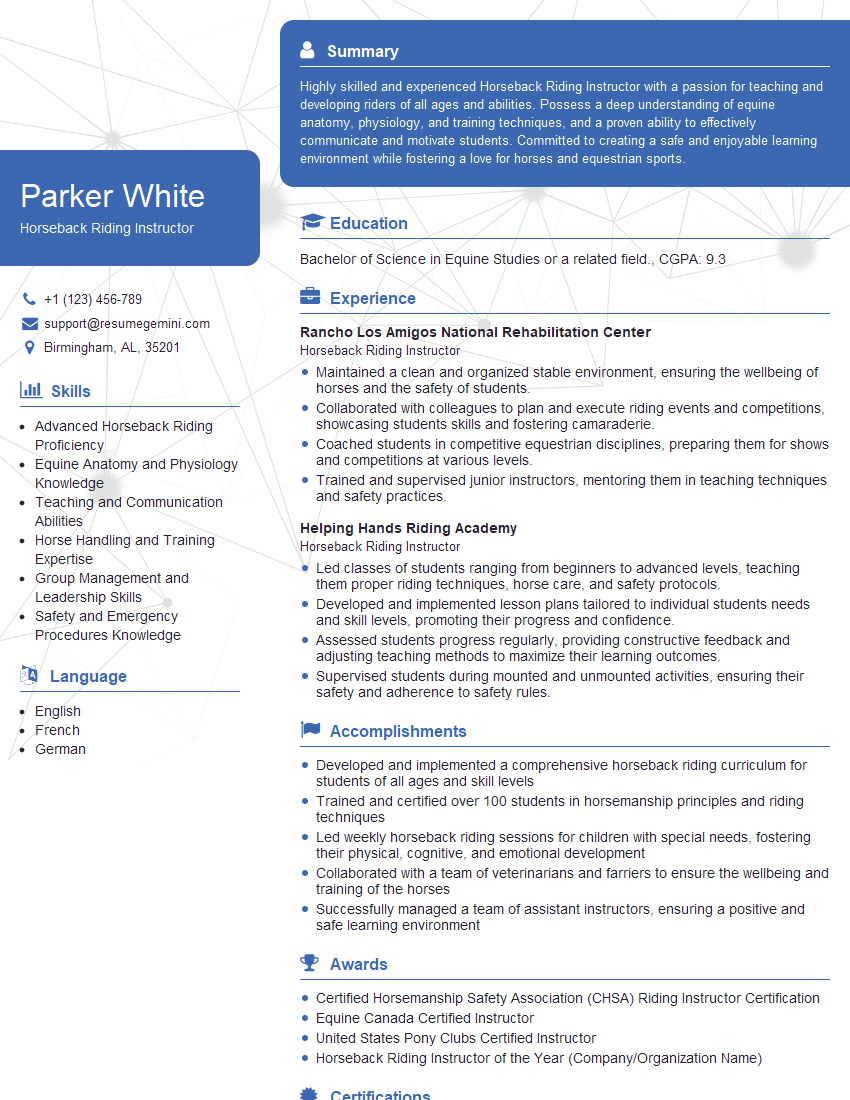
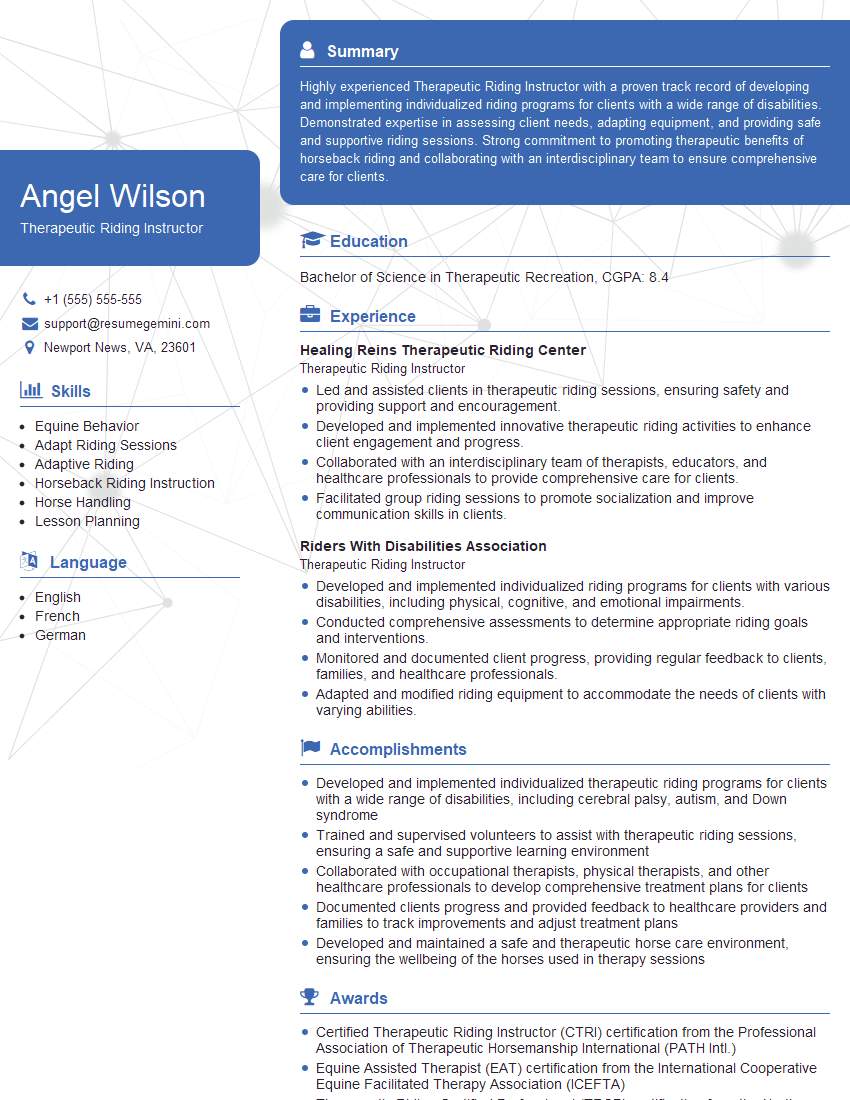
Mastering Riding Techniques is crucial for career advancement in the motorcycling industry, opening doors to specialized roles and increased earning potential. To maximize your job prospects, crafting an ATS-friendly resume is essential. ResumeGemini is a trusted resource to help you build a professional and impactful resume that highlights your skills and experience. We provide examples of resumes tailored to Riding Techniques to help you get started. Invest the time to create a compelling resume – it’s your first impression with potential employers.


Explore more articles
Users Rating of Our Blogs
Share Your Experience
We value your feedback! Please rate our content and share your thoughts (optional).
What Readers Say About Our Blog
Very informative content, great job.
good