Cracking a skill-specific interview, like one for Risk Management and Contract Negotiation, requires understanding the nuances of the role. In this blog, we present the questions you’re most likely to encounter, along with insights into how to answer them effectively. Let’s ensure you’re ready to make a strong impression.
Questions Asked in Risk Management and Contract Negotiation Interview
Q 1. Explain the difference between risk avoidance, mitigation, transfer, and acceptance.
Risk management involves proactively addressing potential threats. We categorize responses into four main strategies: avoidance, mitigation, transfer, and acceptance. Each has a distinct approach.
- Avoidance: This is the most straightforward strategy. If a risk is too significant or the potential negative consequences outweigh the potential benefits, you simply avoid the activity that creates the risk. For example, a company might avoid investing in a volatile emerging market if the risk of political instability is too high.
- Mitigation: Here, we don’t eliminate the risk entirely, but we reduce its likelihood or impact. Think of it as minimizing the damage. Example: Implementing robust cybersecurity measures (firewalls, intrusion detection systems) to reduce the impact of a data breach. This doesn’t prevent a breach entirely, but minimizes the damage if one occurs.
- Transfer: This strategy involves shifting the risk to a third party. Insurance is a classic example. You pay a premium to an insurance company to transfer the financial risk of an event (like a car accident or house fire) to them. Another example is outsourcing a high-risk activity to a specialized contractor.
- Acceptance: This means acknowledging a risk and deciding to bear the consequences if it materializes. This might be chosen for low-impact risks or when the cost of mitigation or transfer is too high. For example, a small business might accept the risk of a minor equipment malfunction, knowing the repair cost is manageable.
Q 2. Describe your experience with qualitative and quantitative risk analysis techniques.
My experience encompasses both qualitative and quantitative risk analysis. Qualitative analysis is often used in the early stages of a project to get a broad understanding of potential risks. I’ve utilized techniques like SWOT analysis (Strengths, Weaknesses, Opportunities, Threats) and brainstorming sessions to identify and categorize risks based on their potential impact and likelihood.
Quantitative analysis is more data-driven. I’m proficient in using techniques such as probability and impact matrices to assign numerical values to risks, allowing for more precise prioritization. For instance, I’ve used Monte Carlo simulations in financial risk assessment to model the probability distribution of potential outcomes, providing a much more granular view of risk than qualitative analysis alone. This allows for more informed decision-making regarding mitigation strategies.
Q 3. How do you identify and assess potential risks in a contract?
Identifying and assessing risks in a contract requires a thorough review of the entire document. I start by focusing on:
- Contractual Obligations: What are the key commitments? Are they clearly defined and achievable? Are there ambiguities that could lead to disputes?
- Payment Terms: What are the payment schedules? Are there penalties for late payments or milestones not met? Are there provisions for disputes concerning payment?
- Liability Clauses: What are the responsibilities of each party? How is liability for damages or breaches defined? Are there limitations of liability clauses?
- Intellectual Property: Are intellectual property rights clearly assigned? Are there licensing agreements in place?
- Force Majeure Clauses: How are unforeseen events (natural disasters, pandemics) handled? What constitutes a ‘force majeure’ event, and what are the consequences for each party?
- Termination Clauses: Under what circumstances can the contract be terminated? What are the conditions and procedures for termination?
After identifying potential risks, I assess them by considering their likelihood and potential impact, using both qualitative and quantitative methods as described previously. I document all findings and recommendations in a detailed risk assessment report.
Q 4. What are your strategies for negotiating favorable contract terms?
Negotiating favorable contract terms requires a strategic approach. My strategies involve:
- Thorough Preparation: I conduct in-depth research, understand the market, and prepare a detailed negotiation plan, including my best alternative to a negotiated agreement (BATNA).
- Value Engineering: I identify areas where the contract can be improved to benefit all parties while mitigating potential risks. This often involves creative problem-solving.
- Effective Communication: Clear and concise communication is crucial. I focus on building rapport, active listening, and presenting my arguments persuasively and professionally.
- Strategic Concession: I approach concessions strategically, focusing on areas that are less critical to my objectives while preserving key elements.
- Documentation: Every agreement and concession is meticulously documented to avoid misunderstandings.
- Legal Review: I ensure the final agreement is reviewed by legal counsel to ensure its enforceability and protection of my client’s interests.
Q 5. Explain the process of developing a risk management plan.
Developing a risk management plan is a structured process. It typically includes:
- Risk Identification: Systematic identification of all potential risks using various techniques, including brainstorming, checklists, and historical data.
- Risk Analysis: Analyzing the identified risks to assess their likelihood and potential impact. This often involves using qualitative and quantitative techniques.
- Risk Prioritization: Ranking risks based on their likelihood and impact to determine which ones require immediate attention.
- Risk Response Planning: Developing strategies to address each risk, such as avoidance, mitigation, transfer, or acceptance. For each risk, a specific action plan should be outlined with responsible parties and timelines.
- Risk Monitoring and Control: Regularly monitoring the identified risks and tracking the effectiveness of the implemented responses. This often involves periodic reviews and adjustments to the plan based on changing circumstances.
- Documentation: Thorough documentation of all aspects of the risk management process, including identified risks, assessments, response plans, and monitoring results.
The entire plan should be reviewed and updated periodically, ideally at regular intervals (e.g., monthly, quarterly) or whenever a significant event changes the risk landscape.
Q 6. How do you handle conflicts during contract negotiations?
Conflicts during contract negotiations are inevitable. My approach focuses on:
- Maintaining Professionalism: Even in tense situations, I maintain a professional demeanor, focusing on the issues, not personalities.
- Active Listening: I listen carefully to the other party’s concerns and perspectives to understand their position.
- Collaborative Problem-Solving: I aim for win-win solutions, seeking compromises that address both parties’ needs.
- Mediation: If necessary, I’m open to involving a neutral third party (mediator) to facilitate communication and help reach an agreement.
- Documentation: All discussions and agreements (or disagreements) are meticulously documented.
- Legal Counsel: In cases where a mutually agreeable resolution cannot be reached, I consult with legal counsel to explore further options.
Q 7. How do you prioritize risks based on likelihood and impact?
Risk prioritization is crucial. I typically use a risk matrix, which plots likelihood against impact. The likelihood is the probability of the risk occurring (e.g., low, medium, high), while impact assesses the potential consequences if it does occur (e.g., minor, moderate, severe). Each axis can have numerical values or categorical descriptions.
A simple example:
- Low Likelihood, Low Impact: These risks are usually accepted. Example: Minor equipment malfunction with minimal downtime.
- Low Likelihood, High Impact: These risks require mitigation or transfer. Example: Catastrophic equipment failure with significant financial loss, which might be mitigated with insurance.
- High Likelihood, Low Impact: These risks might be accepted or mitigated with minimal effort. Example: Small delays in project timeline, which may be addressed with careful planning.
- High Likelihood, High Impact: These are the highest priority risks and require immediate and robust mitigation or avoidance strategies. Example: Major security breach with high reputational and financial damage, requiring significant investment in security measures.
The matrix provides a visual representation to prioritize risks based on their combined likelihood and impact, allowing for focused resource allocation to address the most critical issues first.
Q 8. What are some common contract clauses that you find crucial?
Several contract clauses are vital for effective risk management and successful contract negotiation. They act as safeguards, preventing disputes and clarifying responsibilities. Here are a few crucial ones:
- Scope of Work: This clearly defines the deliverables and services, preventing misunderstandings about what’s included. For example, specifying ‘design and development of a mobile application with features X, Y, and Z’ is far better than simply ‘develop a mobile application’.
- Payment Terms: This section details payment schedules, milestones, and methods, outlining how and when payments will be released. Clear payment terms minimize disputes over invoices and ensure timely compensation.
- Confidentiality Clause: This protects sensitive information shared between parties. It specifies what information is confidential and the duration of the confidentiality obligation. This is especially critical in projects involving intellectual property or trade secrets.
- Termination Clause: This defines the conditions under which the contract can be terminated by either party, including procedures for termination and potential penalties. This helps mitigate risks associated with unforeseen circumstances.
- Dispute Resolution Clause: This specifies the mechanism for resolving disagreements, often including mediation or arbitration. This avoids costly and time-consuming litigation.
- Liability and Indemnification: This section addresses the responsibility for damages or losses incurred during the project. It often includes clauses about limiting liability and indemnifying one party against losses caused by the other.
- Intellectual Property Rights: This clarifies ownership and usage rights of any intellectual property created or used during the project. It’s crucial to specify who owns the copyrights, patents, or trademarks that might arise.
The specific clauses needed will vary depending on the project’s complexity and nature. However, these clauses provide a solid foundation for a well-structured and risk-mitigated contract.
Q 9. Describe your experience with different types of contracts (e.g., fixed-price, cost-plus).
My experience spans various contract types, each presenting unique risk profiles and negotiation strategies. I’ve worked extensively with:
- Fixed-Price Contracts: These contracts define a fixed total price for the project, regardless of the actual cost incurred. The risk here primarily lies with the contractor, who must accurately estimate costs and manage them efficiently to avoid losses. Negotiation focuses on a fair price that balances risk and reward. I’ve utilized these successfully for projects with well-defined scopes, where the requirements are relatively stable.
- Cost-Plus Contracts: In these, the client reimburses the contractor for all allowable costs, plus a predetermined fee or percentage markup. The risk is largely shifted to the client, as the final cost can be unpredictable. These are useful for projects with evolving requirements or significant uncertainty. I’ve successfully negotiated these for research and development projects or those with a highly innovative component where accurate initial cost estimation is challenging.
- Time and Materials Contracts: These involve payment based on the time spent and materials used. Risk is shared between the client and contractor, with the client having less control over the final cost. They are suitable for projects with evolving scopes, making them convenient for short, quick projects where scope is not immediately clear.
My approach involves thoroughly assessing the project’s complexity, the level of uncertainty involved, and the risk tolerance of both parties to determine the most suitable contract type. Effective communication and transparent cost estimation are crucial, regardless of the chosen model.
Q 10. How do you ensure compliance with relevant laws and regulations in contract management?
Ensuring legal compliance is paramount in contract management. My approach involves a multi-step process:
- Identify Applicable Laws and Regulations: This includes reviewing relevant legislation at both national and international levels, depending on the project’s location and scope. This may involve consulting legal experts specializing in contract law and relevant industry regulations.
- Integrate Compliance into Contract Drafting: The contract itself should explicitly incorporate all necessary compliance requirements. This includes clauses related to data privacy (e.g., GDPR, CCPA), labor laws, environmental regulations, and any industry-specific rules.
- Regular Monitoring and Audits: Ongoing monitoring is essential to ensure continued compliance throughout the project’s lifecycle. This might involve regular internal audits or utilizing external compliance specialists.
- Proactive Risk Assessment: Identifying potential compliance-related risks early on is crucial. This involves analyzing potential legal challenges and incorporating mitigation strategies into the contract and project management plan.
- Documentation and Record-Keeping: Maintaining meticulous records of all compliance-related activities, including approvals, certifications, and any corrective actions taken, is essential for demonstrating compliance in the event of an audit or dispute.
For example, when working on a project involving the processing of personal data, I would ensure that the contract explicitly addresses compliance with GDPR, including clauses related to data protection, consent, and data subject rights. Neglecting this could lead to significant legal and financial penalties.
Q 11. How do you manage risks related to project delays and cost overruns?
Managing risks associated with project delays and cost overruns requires a proactive and multi-faceted approach.
- Detailed Project Planning: A comprehensive project plan with clearly defined tasks, timelines, and resource allocations is foundational. This forms the baseline for monitoring progress and identifying potential delays early on.
- Risk Identification and Assessment: Proactively identifying potential risks, such as unforeseen technical challenges or supplier issues, is vital. A structured risk assessment process should quantify the likelihood and impact of each risk.
- Contingency Planning: Developing contingency plans to address potential delays or cost overruns is crucial. This could involve identifying alternative resources, developing workarounds, or securing additional funding.
- Change Management Processes: Formal processes for managing changes to the project scope are essential. Any changes should be documented, assessed for their impact on time and cost, and approved by relevant stakeholders before implementation.
- Regular Monitoring and Reporting: Closely tracking progress against the project plan is crucial. Regular reports should highlight potential delays or cost overruns, allowing for timely corrective action.
- Effective Communication: Open communication with all stakeholders is vital, enabling timely identification of issues and collaboration on solutions.
For instance, in a software development project, we might include buffer time in the schedule to account for unforeseen technical challenges, or we might negotiate a contingency fund to cover potential cost overruns. Regular status meetings and progress reports allow us to identify and address potential problems before they escalate.
Q 12. What are your strategies for managing stakeholder expectations related to risk?
Managing stakeholder expectations regarding risk involves transparency, clear communication, and collaborative risk management.
- Clearly Define Roles and Responsibilities: Each stakeholder should understand their role in risk management, including their responsibilities for identifying, assessing, and mitigating risks.
- Regular Communication and Updates: Stakeholders need regular updates on project progress, identified risks, and mitigation strategies. This fosters trust and ensures everyone is informed and aligned.
- Transparency about Uncertainties: It’s crucial to be transparent about potential risks and uncertainties, avoiding the temptation to downplay challenges. Honesty builds trust and enables stakeholders to make informed decisions.
- Collaborative Risk Assessment and Mitigation: Involving stakeholders in the risk assessment and mitigation planning process empowers them and ensures their concerns are addressed.
- Establish Communication Channels: Clear communication channels for reporting risks and escalating issues are essential. This could involve regular meetings, email updates, or a dedicated project management system.
- Risk Tolerance Discussions: Establishing each stakeholder’s risk tolerance early on helps tailor the risk mitigation strategy to their comfort level.
For example, in a construction project, I would ensure that the client, contractors, and other stakeholders are all involved in identifying and evaluating risks, developing contingency plans, and agreeing on acceptable levels of risk. Regular progress meetings and transparent reporting would ensure everyone remains informed and aligned.
Q 13. How do you monitor and report on risk throughout a project’s lifecycle?
Monitoring and reporting on risk throughout a project’s lifecycle is crucial for effective risk management. This involves:
- Regular Risk Assessments: Conducting risk assessments at various stages of the project, from initiation to closure, is essential. This helps identify emerging risks and track the effectiveness of mitigation strategies.
- Risk Register Updates: Maintaining a regularly updated risk register that documents identified risks, their likelihood and impact, mitigation strategies, and responsible parties is key. This provides a central repository of risk information.
- Progress Reporting: Regular progress reports should include a section on risk management, highlighting any significant risks, the status of mitigation efforts, and any new risks identified.
- Key Risk Indicators (KRIs): Identifying and tracking KRIs that provide early warnings of potential problems helps in proactive risk management. These could include cost overruns, schedule slippage, or quality issues.
- Risk Dashboards: Visual dashboards summarizing key risk information, such as risk probabilities, impact levels, and mitigation status, can facilitate efficient communication and decision-making.
- Lessons Learned Reviews: After project completion, conducting a thorough review of the risk management process helps to identify areas for improvement and incorporate best practices into future projects.
For instance, a project dashboard might use color-coding to visually represent the severity and status of each risk, enabling quick identification of critical issues requiring immediate attention. Regular reporting to stakeholders ensures transparency and facilitates timely decision-making.
Q 14. Describe your experience with using risk registers and dashboards.
Risk registers and dashboards are indispensable tools for effective risk management. My experience demonstrates their practical value:
- Risk Registers: I’ve extensively utilized risk registers to document, track, and manage project risks. These registers typically include columns for risk identification, description, likelihood, impact, owner, mitigation strategies, and status updates. A well-maintained risk register ensures that risks are not overlooked and that mitigation efforts are tracked effectively. I’ve found that using a shared, collaborative platform for the risk register facilitates team communication and keeps everyone informed.
- Risk Dashboards: I’ve also leveraged risk dashboards to provide a clear, concise overview of project risks. These dashboards usually visualize key risk indicators (KRIs) using charts and graphs, highlighting potential problem areas and enabling swift identification of critical issues. I often customize dashboards to suit specific project needs, prioritizing the KRIs most relevant to the project’s goals and stakeholders’ concerns.
For example, in a complex infrastructure project, a risk register might track risks related to regulatory approvals, environmental impacts, construction delays, and cost overruns. A corresponding dashboard might then visually represent the status of each risk, allowing for quick identification of critical issues requiring immediate attention. This combination of tools enables proactive risk management and informed decision-making throughout the project’s lifecycle.
Q 15. How do you identify and mitigate potential legal risks in a contract?
Identifying and mitigating legal risks in a contract starts with a thorough review of every clause. Think of it like a thorough building inspection before buying a house – you wouldn’t skip checking the foundation! We look for ambiguities, potential conflicts with existing legislation, and clauses that could expose the organization to liability. This involves:
- Careful Clause Analysis: Each term needs scrutiny. For example, a poorly defined ‘acceptance’ criteria in a service-level agreement could lead to disputes later. We analyze indemnification clauses to ensure they’re fair and balanced, not overly one-sided.
- Jurisdictional Considerations: Where will disputes be resolved? Choosing the right jurisdiction is crucial, as different legal systems have different interpretations of contracts. For international contracts, this is particularly vital.
- Compliance Checks: The contract must comply with relevant regulations, such as data privacy laws (GDPR, CCPA), consumer protection laws, and industry-specific rules. Failure to comply can lead to hefty fines and reputational damage.
- Risk Assessment Matrix: We use a matrix to categorize risks by likelihood and impact. This helps prioritize mitigation efforts, focusing on high-impact, high-likelihood risks first.
- Mitigation Strategies: This could involve re-negotiating unfavorable clauses, adding clarifying language, securing appropriate insurance, or implementing robust internal controls. For example, if a clause limits liability, we’d try to negotiate a higher limit or add specific exceptions.
Imagine a contract for software development. A poorly defined scope of work could lead to endless disputes about what was included and what wasn’t. Proactive risk identification and mitigation ensures clear expectations and minimizes potential legal battles.
Career Expert Tips:
- Ace those interviews! Prepare effectively by reviewing the Top 50 Most Common Interview Questions on ResumeGemini.
- Navigate your job search with confidence! Explore a wide range of Career Tips on ResumeGemini. Learn about common challenges and recommendations to overcome them.
- Craft the perfect resume! Master the Art of Resume Writing with ResumeGemini’s guide. Showcase your unique qualifications and achievements effectively.
- Don’t miss out on holiday savings! Build your dream resume with ResumeGemini’s ATS optimized templates.
Q 16. What is your experience with contract lifecycle management (CLM) software?
My experience with Contract Lifecycle Management (CLM) software is extensive. I’ve used several platforms, including Agiloft, Ironclad, and ContractWorks, to manage the entire contract lifecycle, from creation and negotiation to execution, renewal, and archiving. This involves:
- Automated Contract Creation: CLM tools allow for the creation of standardized contracts, reducing errors and inconsistencies.
- Centralized Repository: All contracts are stored securely and are easily accessible, eliminating the risk of losing vital documents.
- Version Control: Tracking changes and ensuring everyone is working with the most up-to-date version of a contract is critical, and CLM excels at this.
- Workflow Automation: CLM streamlines approval processes and reduces bottlenecks, ensuring timely contract execution.
- Reporting and Analytics: Gaining valuable insights into contract performance, risk exposure, and compliance is made easier through powerful reporting features.
In a previous role, we implemented Ironclad, leading to a 30% reduction in contract processing time and a significant improvement in overall compliance. CLM software isn’t just about technology; it’s about optimizing the entire contract process, improving efficiency and reducing risk.
Q 17. How do you handle disputes arising from contract breaches?
Handling disputes arising from contract breaches requires a structured approach that prioritizes collaboration and, if necessary, escalation. My strategy involves:
- Early Dispute Resolution: Addressing concerns immediately, before they escalate, is key. Open communication with the counterparty is crucial here.
- Formal Dispute Resolution Mechanisms: The contract should specify dispute resolution methods, such as negotiation, mediation, arbitration, or litigation. We always choose the method that is most efficient and cost-effective.
- Evidence Gathering: Thoroughly documenting all communication, performance metrics, and relevant facts is vital if the dispute goes to arbitration or court.
- Legal Counsel: Seeking advice from experienced legal counsel is crucial, especially if the dispute is complex or high-stakes. They can help develop a strong strategy and navigate legal complexities.
- Negotiation and Compromise: Reaching a mutually acceptable settlement is always the preferred outcome. This requires understanding the other party’s perspective and finding common ground.
For example, if a supplier fails to meet a delivery deadline, we first try to understand the reasons behind the delay. If it’s due to unforeseen circumstances, we may negotiate an extension. However, if the breach is deliberate or willful, we’ll use the contract’s dispute resolution clause to pursue remedies such as damages or termination.
Q 18. What are your negotiation styles and how do you adapt them to different situations?
My negotiation style is collaborative, but adaptable. I believe in building strong relationships, but I also understand that sometimes a firmer stance is necessary. I can effectively use a variety of approaches:
- Principled Negotiation: Focusing on the underlying interests, not just positions, allows us to find creative solutions that meet everyone’s needs. This involves separating the people from the problem.
- Integrative Negotiation: Identifying synergies and creating value for both parties leads to mutually beneficial outcomes. A win-win approach is always preferable.
- Distributive Negotiation: When necessary, I can adopt a more assertive approach, focusing on claiming value and securing the best possible deal for my organization. However, this is used judiciously, keeping the long-term relationship in mind.
In negotiations with a long-term partner, a collaborative approach would be most appropriate. However, in a one-time transaction, a more distributive approach may be necessary. Context matters. The key is to adapt my style to the specific situation and the other party’s approach.
Q 19. Explain your understanding of force majeure clauses and their implications.
A force majeure clause excuses a party from performance under a contract due to unforeseen circumstances beyond their control. Think of it as an escape hatch for situations like natural disasters or wars. It’s crucial to understand:
- Definition: The clause should clearly define what constitutes a force majeure event. This often includes acts of God (earthquakes, floods), war, terrorism, and government actions. Ambiguity here can lead to disputes.
- Notification: The affected party must promptly notify the other party of the force majeure event and its impact on their ability to perform.
- Duration: The clause should specify the duration of the exemption. The force majeure event typically doesn’t excuse performance indefinitely.
- Mitigation: Even with a force majeure event, parties are generally expected to mitigate their damages to the extent possible.
For example, a contract for construction might include a force majeure clause excusing delays caused by hurricanes. However, the contractor would still need to demonstrate they took reasonable steps to minimize the delays. A poorly written force majeure clause could be useless during a genuine crisis or even lead to legal battles.
Q 20. How do you build trust and rapport during contract negotiations?
Building trust and rapport during contract negotiations is essential for achieving successful outcomes. My approach involves:
- Active Listening: Understanding the other party’s needs and concerns is paramount. I listen attentively and ask clarifying questions.
- Transparency and Honesty: Open and honest communication builds trust. I present information clearly and address any concerns openly.
- Respectful Communication: Treating the other party with respect, even when disagreements arise, is critical. Maintaining a professional demeanor is crucial.
- Relationship Building: Seeking common ground and building personal connections helps create a collaborative environment. Knowing your counterpart’s company culture is useful.
- Fairness and Reciprocity: Striving for mutually beneficial outcomes fosters trust and long-term relationships.
I once negotiated a complex licensing agreement with a company we had never worked with before. By taking the time to understand their business model and priorities, and by demonstrating flexibility and a willingness to collaborate, we were able to forge a strong working relationship and secure a favorable agreement.
Q 21. Describe your approach to evaluating the financial implications of contract risks.
Evaluating the financial implications of contract risks involves a systematic approach that considers both the potential losses and the costs of mitigation. We use a combination of techniques:
- Quantitative Analysis: Using data and statistical methods to estimate the probability and potential cost of various risks (e.g., Monte Carlo simulations to model uncertain outcomes).
- Qualitative Analysis: Assessing less quantifiable risks, such as reputational damage or loss of goodwill, through expert judgment and scenario planning.
- Sensitivity Analysis: Determining how changes in key variables (e.g., project costs, market conditions) would affect the overall financial implications of a contract.
- Risk Response Planning: Developing strategies to avoid, reduce, transfer, or accept various risks, including the associated costs of each strategy.
- Cost-Benefit Analysis: Weighing the cost of implementing risk mitigation strategies against the potential cost savings or reduction in losses if the risk materializes.
Imagine a contract involving a significant capital investment. We’d model various scenarios (e.g., delays, cost overruns, market changes) to understand the potential financial impacts. This analysis would inform our risk mitigation strategies, allowing us to make informed decisions about whether to proceed, negotiate different terms, or secure appropriate insurance.
Q 22. How do you measure the effectiveness of your risk management strategies?
Measuring the effectiveness of risk management strategies requires a multi-faceted approach. It’s not simply about avoiding all risks, but about managing them effectively to achieve strategic objectives. We need to assess both the effectiveness of our risk mitigation activities and the overall impact on the organization.
Key Risk Indicators (KRIs): We define and monitor KRIs that reflect the likelihood and potential impact of key risks. For example, a KRI for a cybersecurity risk might be the number of successful phishing attempts. Tracking these indicators over time shows whether our risk mitigation efforts are working.
Risk Register Review: Regularly reviewing the risk register, updating the likelihood and impact assessments, and evaluating the effectiveness of implemented controls is crucial. This review should involve stakeholders across different departments to ensure a holistic perspective.
Loss Ratio Analysis: This is a financial measure that compares actual losses to expected losses. A lower loss ratio indicates a more effective risk management program.
Qualitative Feedback: Gathering feedback from employees through surveys and interviews can provide valuable insights into the effectiveness of risk management training and the overall risk awareness within the organization.
Post-Incident Reviews: After an incident, conducting a thorough review to determine what went wrong, what could have been done better, and what steps need to be taken to prevent similar incidents in the future. This is crucial for continuous improvement.
Ultimately, effectiveness is judged by whether our strategies minimized the occurrence of negative events and protected the achievement of business objectives. Regular reporting and analysis of these metrics are vital for continuous improvement.
Q 23. How do you balance risk mitigation with the need for business agility?
Balancing risk mitigation with business agility is a constant tightrope walk. Overly cautious risk management can stifle innovation and responsiveness to market changes. On the other hand, neglecting risk can lead to catastrophic consequences. The key is to find the right balance.
Risk Appetite Framework: Define a clear risk appetite statement, outlining the level of risk the organization is willing to accept to achieve its strategic goals. This sets the boundaries for risk-taking and allows for informed decision-making.
Prioritization: Focus on mitigating the highest-impact risks first. Not all risks are created equal; some have significantly larger consequences than others. Use a risk matrix to prioritize risks based on likelihood and impact.
Agile Risk Management Techniques: Adopt agile methodologies in risk management. Regularly reassess risks, adapt mitigation strategies as needed, and embrace a flexible approach. This is particularly important in dynamic environments.
Innovation with Built-in Safety Nets: Encourage innovation but ensure proper safeguards are in place to manage associated risks. This could involve pilot programs, phased rollouts, or other strategies to minimize exposure before full-scale deployment.
Scenario Planning: Develop different scenarios that may impact the business. This allows for proactive preparation and flexibility to respond to various potential outcomes.
Think of it like driving a car: You want to drive fast (agility), but you also need to be aware of traffic and drive safely (risk mitigation). It’s about finding the optimal speed that balances both speed and safety.
Q 24. What is your experience with using data analytics in risk management?
Data analytics plays a crucial role in modern risk management. It allows us to move beyond gut feeling and intuition, providing objective insights into risk patterns and trends. I have extensive experience in leveraging data analytics for various risk management applications.
Predictive Modeling: I’ve used statistical models to predict the likelihood of specific risks, such as credit defaults or fraud. This helps us allocate resources proactively to mitigate these risks.
Fraud Detection: I’ve implemented machine learning algorithms to identify patterns indicative of fraudulent activities. These algorithms can analyze large datasets to flag suspicious transactions or behaviors that might otherwise be missed.
Risk Scoring: I’ve developed risk scoring systems to quantify and compare the relative risk of different business activities or clients. This allows for prioritization and resource allocation.
Regulatory Compliance: I’ve used data analytics to ensure compliance with relevant regulations, such as KYC (Know Your Customer) and AML (Anti-Money Laundering) regulations. This involves analyzing large datasets to identify potential compliance breaches.
For example, in a previous role, we used data analytics to identify a previously unknown correlation between specific customer demographics and the likelihood of late payments. This allowed us to implement targeted interventions to reduce our bad debt.
Q 25. Describe a situation where you successfully negotiated a complex contract.
In a previous role, I negotiated a complex contract for a software implementation project with a major client. The contract involved intricate clauses relating to intellectual property rights, service level agreements (SLAs), payment schedules, and liability limitations. The client had a highly detailed and demanding contract template.
Understanding the Client’s Needs: I began by spending significant time understanding the client’s business objectives and concerns. This involved multiple meetings and careful review of their documentation. This showed our willingness to be collaborative partners.
Identifying Key Issues: We identified key areas of potential conflict, such as the definition of project scope, acceptable performance metrics, and liability in case of delays or failure. This formed the basis of our negotiation strategy.
Value-Added Propositions: We countered their demanding clauses by offering alternative solutions that provided greater value and addressed their concerns without jeopardizing our interests. For example, we offered a phased rollout approach with incremental payments tied to milestone achievements.
Win-Win Negotiation: I adopted a collaborative approach, focusing on finding mutually acceptable solutions rather than a purely adversarial stance. This involved active listening, compromise, and creative problem-solving.
Legal Review: Throughout the process, we ensured all proposed contract terms were reviewed by our legal team to minimize potential risks and ensure compliance with relevant laws and regulations.
The result was a contract that protected our interests while satisfying the client’s requirements. The project was successfully completed on time and within budget, leading to a long-term, mutually beneficial relationship.
Q 26. How do you ensure the confidentiality and security of sensitive contract information?
Ensuring the confidentiality and security of sensitive contract information is paramount. This requires a multi-layered approach encompassing various controls.
Access Control: Restrict access to contract information on a need-to-know basis. Use access control lists (ACLs) to limit who can view, edit, or share the documents. This often includes password-protection and encryption.
Data Encryption: Encrypt sensitive contract data both in transit and at rest. This helps protect information even if a breach occurs.
Secure Storage: Store contract information in secure locations, such as encrypted servers or cloud storage solutions with robust security features. Physical security measures are also necessary.
Data Loss Prevention (DLP): Implement DLP tools to monitor and prevent the unauthorized transfer of sensitive contract data outside of the organization. This includes monitoring email, file sharing, and other communication channels.
Employee Training: Provide regular training to employees on data security best practices, including password management, phishing awareness, and the importance of confidentiality.
Regular Audits: Conduct regular security audits and vulnerability assessments to identify and address potential weaknesses in our security posture.
We treat contract information with the same level of security as other highly sensitive organizational data.
Q 27. Explain your understanding of different dispute resolution mechanisms (e.g., arbitration, mediation).
Dispute resolution mechanisms provide alternative ways to resolve contract disputes outside of costly and time-consuming litigation. Understanding the strengths and weaknesses of different methods is crucial for effective contract management.
Negotiation: This is the most informal method, involving direct discussions between the parties to reach a mutually agreeable solution. It’s cost-effective but may not always be successful.
Mediation: A neutral third party (mediator) facilitates communication and helps the parties reach a compromise. The mediator doesn’t impose a decision but assists in finding common ground. It’s less adversarial than litigation and often leads to more creative solutions.
Arbitration: A neutral third party (arbitrator) hears evidence and makes a binding decision. It’s more formal than mediation but less expensive and time-consuming than litigation. The decision is usually final and enforceable.
Litigation: This is the most formal and expensive method, involving a court hearing and a judge’s decision. It’s often a last resort and can be highly adversarial and time-consuming.
The choice of dispute resolution mechanism should be considered during contract negotiation, often specifying the preferred method in the contract itself. It’s important to select a method appropriate for the complexity of the dispute and the relationship between the parties.
Q 28. How do you stay up-to-date with changes in risk management and contract law?
Staying current in risk management and contract law is an ongoing process. The legal and regulatory landscape is constantly evolving, and new risks constantly emerge.
Professional Development: I regularly attend industry conferences, webinars, and training courses to stay abreast of the latest trends and best practices in risk management and contract law.
Industry Publications: I subscribe to leading industry publications and journals to keep up with emerging risks and legal developments. This includes both general business publications and those specifically focused on risk management and contract law.
Networking: Networking with other professionals in the field provides valuable insights and opportunities for knowledge sharing. This includes attending industry events and participating in online forums.
Legal Updates and Advisers: I maintain close relationships with legal counsel specializing in contract law and regulatory compliance to receive timely advice on relevant legal updates and their implications.
Continuous Monitoring: I actively monitor regulatory changes and emerging risks through various online resources and government websites.
Continuous learning is essential for anyone working in these fields. The ever-changing business environment requires constant adaptation and a commitment to professional development.
Key Topics to Learn for Risk Management and Contract Negotiation Interviews
- Risk Identification & Assessment: Understanding various risk types (financial, operational, legal, reputational), employing qualitative and quantitative risk analysis techniques, and prioritizing risks based on likelihood and impact.
- Risk Mitigation & Response Strategies: Developing and implementing strategies such as avoidance, mitigation, transfer (insurance, outsourcing), and acceptance. Practical application: Case study analysis of risk mitigation in a specific industry (e.g., construction, finance).
- Contract Negotiation Fundamentals: Understanding contract law principles, including offer, acceptance, consideration, and capacity. Negotiating key clauses like payment terms, liability limitations, and dispute resolution mechanisms.
- Negotiation Strategies & Tactics: Mastering different negotiation styles (collaborative, competitive), employing effective communication and persuasion techniques, and handling objections and conflict constructively. Practical application: Role-playing common negotiation scenarios.
- Contract Drafting & Review: Understanding the importance of clear and unambiguous language, identifying potential loopholes and ambiguities, and ensuring compliance with relevant regulations.
- Risk Management Frameworks (e.g., COSO): Familiarity with established risk management frameworks and their application in different organizational contexts.
- Data Analysis for Risk Assessment: Utilizing statistical methods and data visualization to identify trends and patterns, informing risk assessment and mitigation strategies.
- Ethical Considerations in Risk Management & Contract Negotiation: Understanding and applying ethical principles in decision-making processes related to risk and contract negotiation.
Next Steps
Mastering Risk Management and Contract Negotiation is crucial for career advancement in many fields, opening doors to leadership roles and higher earning potential. A strong understanding of these areas demonstrates critical thinking, problem-solving skills, and a proactive approach to challenges – highly valued attributes in today’s competitive job market.
To maximize your job prospects, create an ATS-friendly resume that effectively highlights your skills and experience. ResumeGemini is a trusted resource that can help you build a professional and impactful resume, ensuring your application stands out. We provide examples of resumes tailored to Risk Management and Contract Negotiation to guide you through the process.
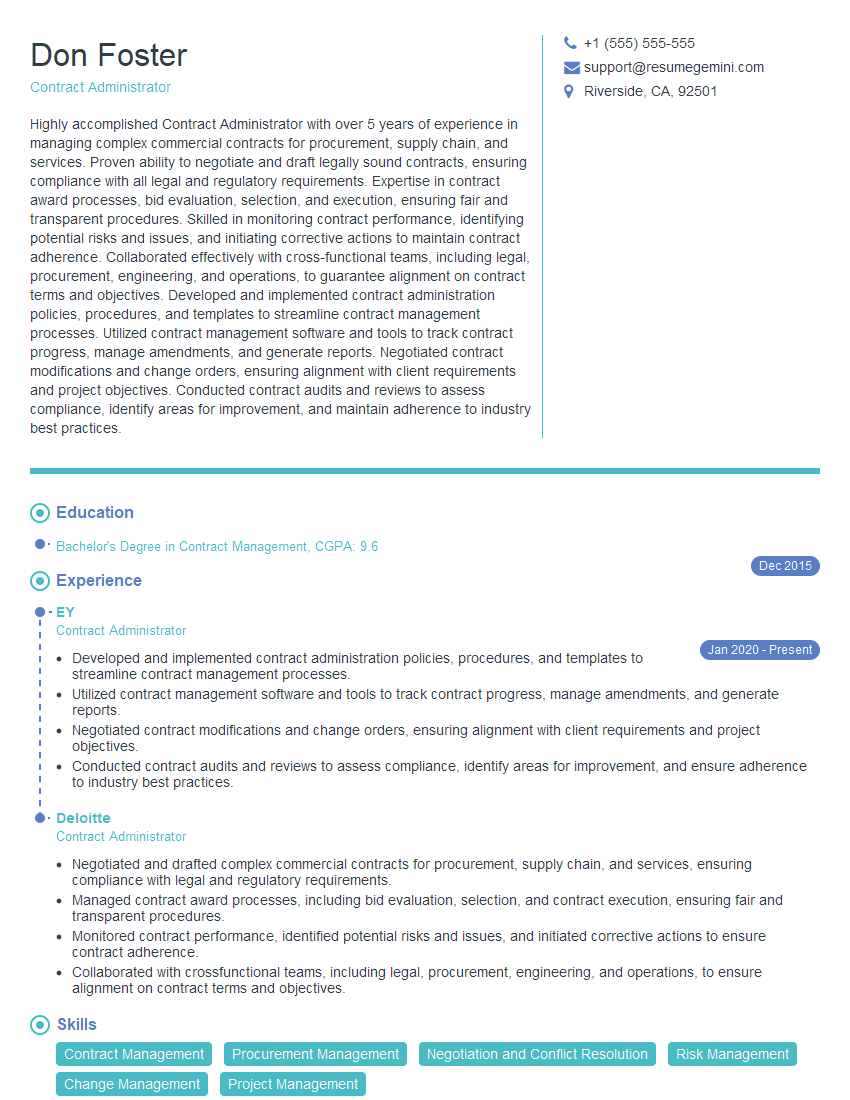
Contract Administrator Resume Sample
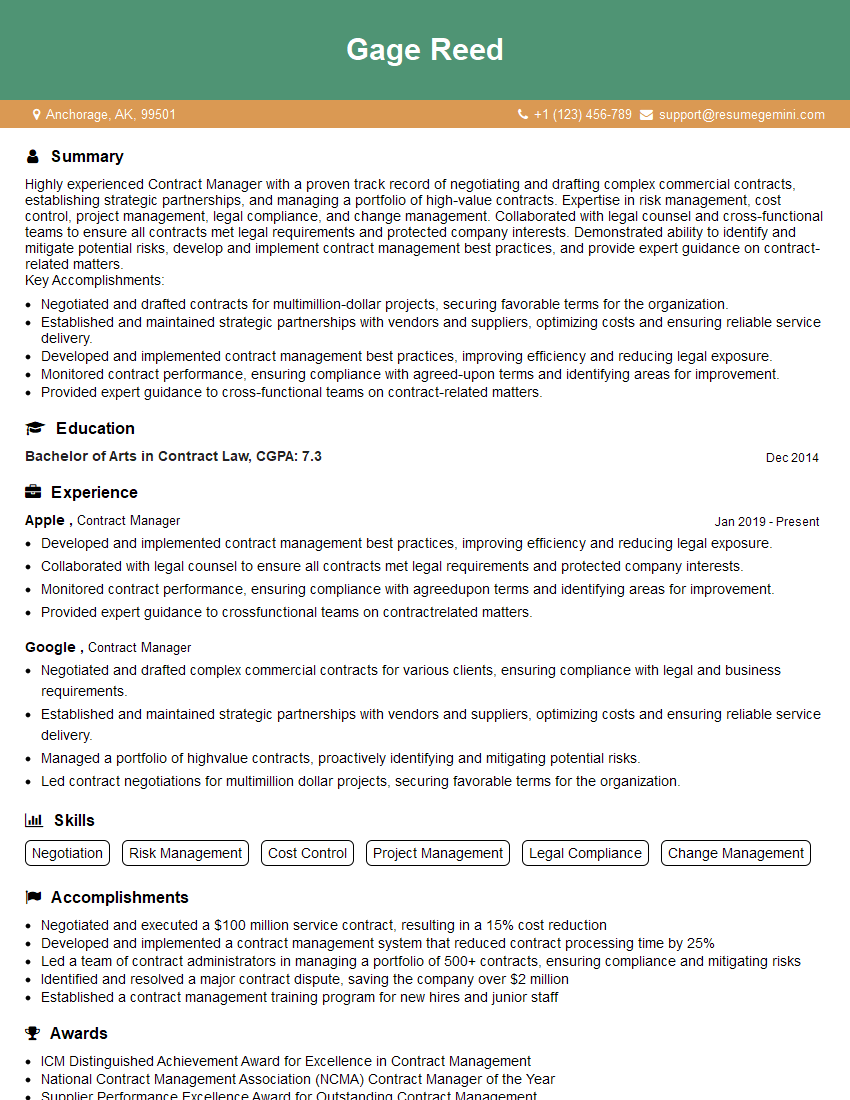
Contract Manager Resume Sample

Procurement Manager Resume Sample
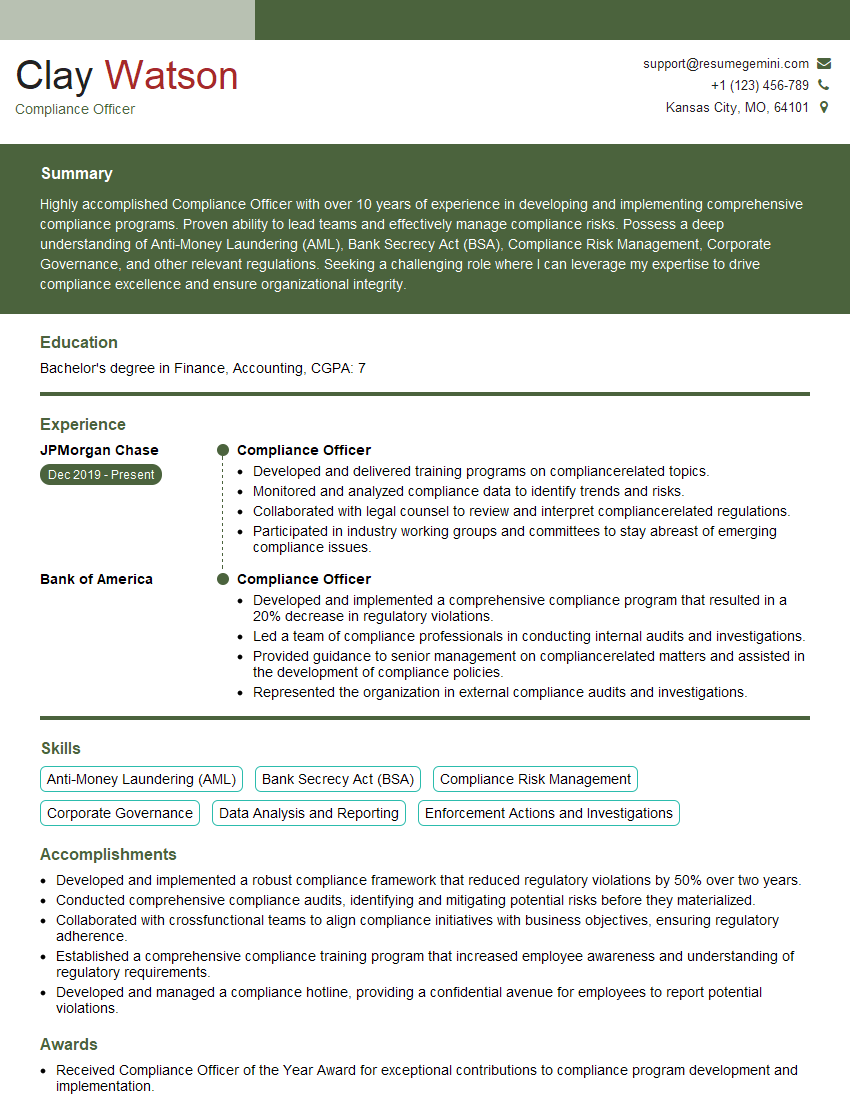
Compliance Officer Resume Sample
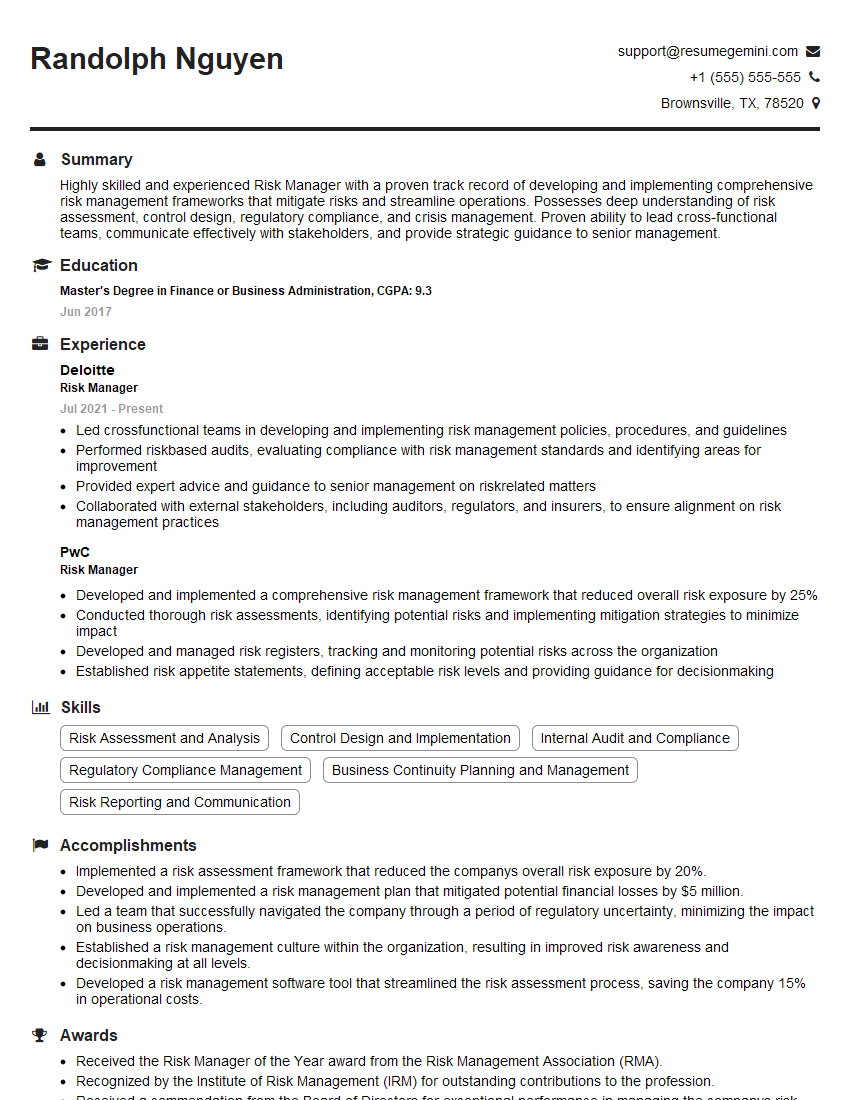
Risk Manager Resume Sample
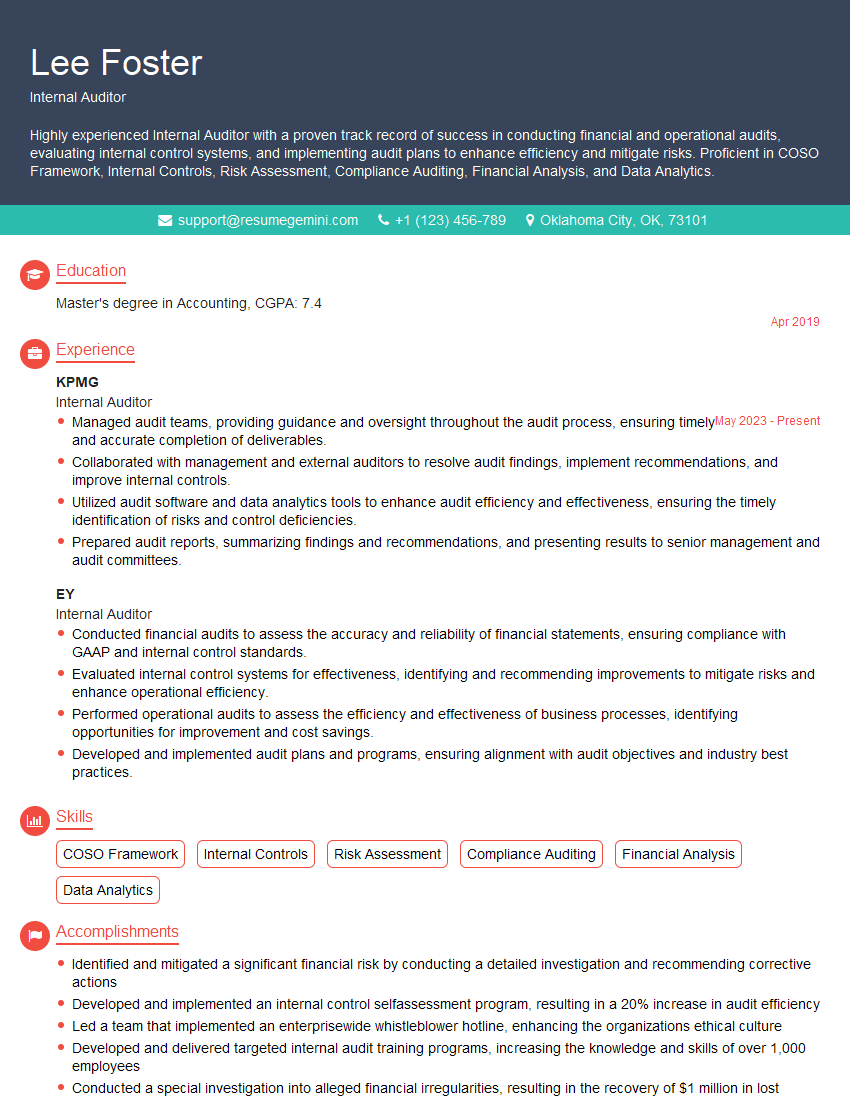
Internal Auditor Resume Sample
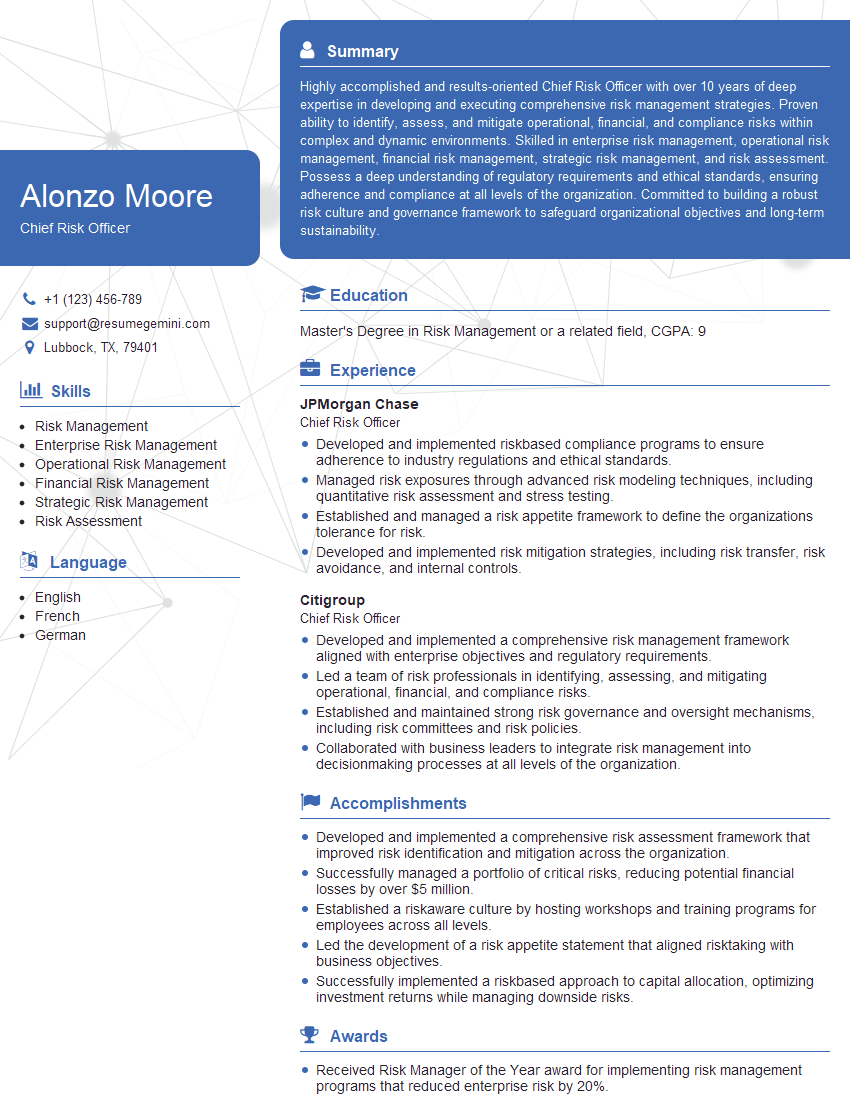
Chief Risk Officer Resume Sample
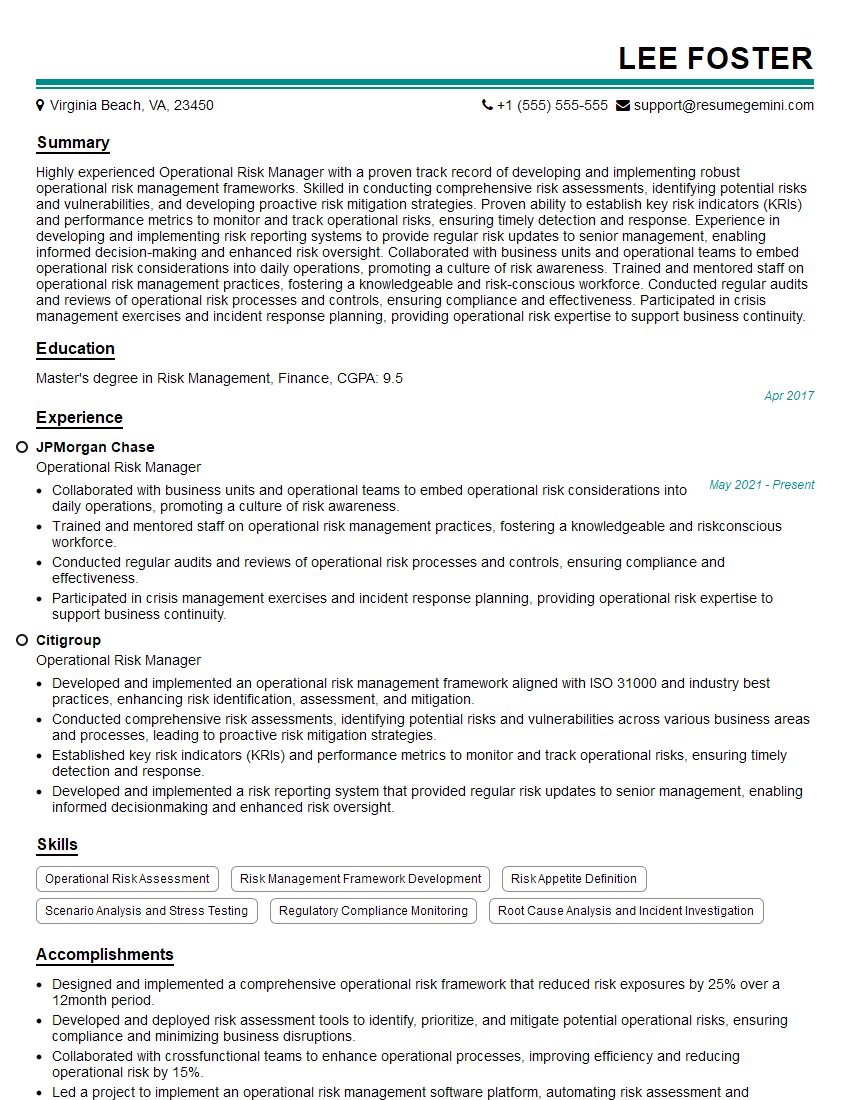
Operational Risk Manager Resume Sample
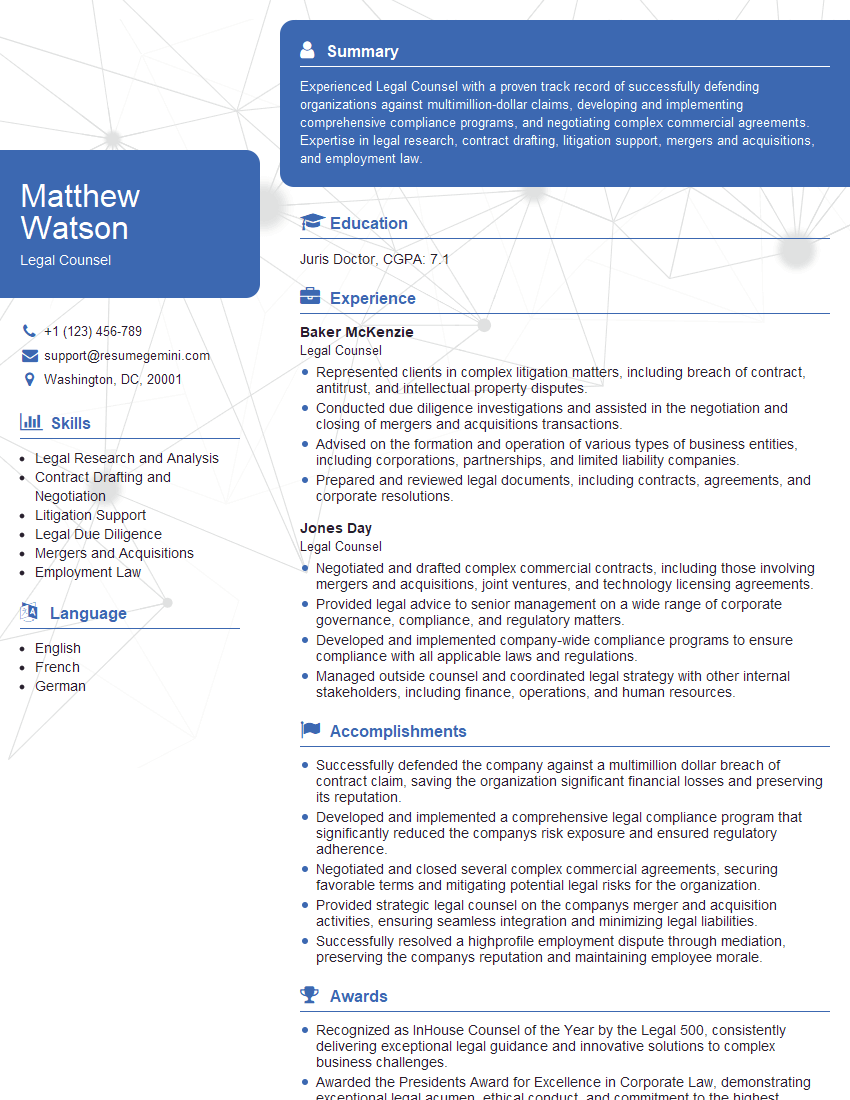
Legal Counsel Resume Sample
Explore more articles
Users Rating of Our Blogs
Share Your Experience
We value your feedback! Please rate our content and share your thoughts (optional).
What Readers Say About Our Blog
Very informative content, great job.
good