Are you ready to stand out in your next interview? Understanding and preparing for Roll-Fed Press Operation interview questions is a game-changer. In this blog, we’ve compiled key questions and expert advice to help you showcase your skills with confidence and precision. Let’s get started on your journey to acing the interview.
Questions Asked in Roll-Fed Press Operation Interview
Q 1. Explain the difference between sheet-fed and roll-fed printing presses.
The core difference between sheet-fed and roll-fed printing lies in how the substrate (the material being printed on, like paper) is fed into the press. Sheet-fed presses use individual sheets of paper, fed one at a time, typically from a tray or stack. Think of it like a printer at home, but on a much larger scale. Roll-fed presses, on the other hand, use a continuous roll of substrate, much like a giant roll of wrapping paper. This allows for high-speed, uninterrupted printing of large quantities.
The implications are significant. Sheet-fed is ideal for smaller runs and jobs requiring precise control over individual sheets, offering greater flexibility in paper types and sizes. Roll-fed, however, excels in high-volume production due to its continuous feed mechanism, leading to significantly faster printing speeds and lower per-unit costs. Consider a small print shop using sheet-fed for customized business cards versus a newspaper printing plant using roll-fed for daily editions – very different needs, very different approaches.
Q 2. Describe the process of setting up a roll-fed press for a specific job.
Setting up a roll-fed press is a meticulous process requiring precision and attention to detail. It typically involves these steps:
- Job Review: Carefully examine the job specifications, including substrate type, ink colors, print resolution, and overall print quality expectations.
- Substrate Loading: Load the roll of substrate onto the press’s unwind stand, ensuring it’s correctly aligned and the core is properly secured. Incorrect alignment can lead to skewed prints or web breaks.
- Ink Setting: Adjust the ink settings for each color according to the job requirements. This involves setting the ink viscosity, ink duct settings, and ink fountain rollers. We carefully calibrate each color to ensure consistency throughout the run, avoiding color variations.
- Register Adjustment: Precisely align the printing units to ensure colors register correctly. This is critical for multi-color jobs to prevent misalignment and blurry images. I often use test prints to fine-tune this.
- Pressure Adjustment: Adjust the impression cylinder pressure to achieve optimal ink transfer and prevent smearing or poor image quality. This is crucial and needs precise adjustment for each substrate type.
- Speed Adjustment: Set the press speed based on the substrate, ink, and print quality requirements. Starting slower for initial test prints and then gradually increasing is common practice to avoid any issues.
- Test Print and Adjustments: Always perform test prints to check for color accuracy, register, and print quality. Make necessary adjustments before proceeding to the full production run. This iterative process is key to preventing waste.
Q 3. How do you ensure proper register on a roll-fed press?
Maintaining proper register (the accurate alignment of colors or images in multi-color printing) on a roll-fed press is crucial for high-quality output. It’s achieved through a combination of careful setup and ongoing monitoring.
- Precise Setup: During initial setup, meticulously align the printing units using register marks and fine-tuning adjustments on each unit. I use a variety of tools including register gauges for highly accurate adjustments.
- Consistent Web Tension: Maintaining consistent web tension throughout the run is critical. Variations in tension can cause slippage and register issues. We constantly monitor the tension gauges and adjust accordingly.
- Regular Monitoring: Continuously monitor the register during the print run, checking for any deviations. Small adjustments might be needed throughout the run, especially with longer runs or changes in environmental conditions.
- Automated Register Systems: Many modern roll-fed presses incorporate automated register control systems that constantly monitor and adjust register, minimizing manual intervention and improving consistency.
- Cleaning and Maintenance: Regular cleaning of the press components, especially those involved in web guiding, is important to maintain accuracy. This keeps the components working effectively.
Think of it like stacking perfectly aligned cards; any slight movement ruins the alignment. Register ensures that each print is a precise replica.
Q 4. What are the common causes of web breaks on a roll-fed press, and how do you troubleshoot them?
Web breaks (the interruption of the continuous flow of substrate) are a common nuisance in roll-fed printing. Several factors contribute:
- Substrate Issues: Poor-quality substrate (tears, wrinkles, or inconsistencies) is a leading cause. Careful inspection of the roll before loading is essential.
- Tension Problems: Incorrect web tension, either too tight or too loose, can lead to breaks. Consistent monitoring is vital.
- Mechanical Malfunctions: Problems with rollers, guides, or other mechanical components can cause breaks. Regular maintenance is paramount.
- Static Electricity: Static buildup can attract dust and cause the web to snag or break. Anti-static treatments or devices can help mitigate this.
- Environmental Factors: Fluctuations in temperature and humidity can affect the substrate and increase the likelihood of breaks.
Troubleshooting involves systematically checking each of these potential causes. Start with visual inspection of the web and mechanical components, then check tension settings, and finally consider environmental factors. Having a methodical approach is crucial for rapid resolution and minimizes downtime.
Q 5. Explain the importance of maintaining consistent ink density during a print run.
Maintaining consistent ink density is paramount for achieving color accuracy and uniformity throughout a print run. Inconsistent ink density leads to variations in color, making the final product appear patchy or uneven.
Consistent density ensures that the printed image looks the same from beginning to end, meeting client expectations for quality and brand consistency. This is particularly crucial for high-volume jobs where even minor variations can be very noticeable across a large number of printed pieces. Imagine printing a thousand brochures and each one having slightly varying shades of your logo. It’s not just aesthetically unpleasing, it is likely to damage brand perception.
Techniques for maintaining consistent ink density include regular monitoring of ink levels, using appropriate ink viscosity, and regular cleaning of ink rollers and ducts to prevent clogging or uneven ink distribution. Automated ink control systems are used on modern machines for even tighter control.
Q 6. How do you adjust the tension of the web on a roll-fed press?
Web tension control is vital for smooth, uninterrupted printing. It’s adjusted using tension control units located at the unwind and rewind stands of the press.
These units typically utilize brakes and clutches to regulate the speed of the substrate movement. The tension is adjusted by modifying the brake or clutch settings. Most modern machines also include tension gauges that display the current web tension.
Too much tension can cause the web to stretch or break, while too little can lead to wrinkles or slippage, both impacting register and print quality. The adjustments are subtle, and experience is key to achieving the ideal balance. I often make small adjustments, observe the results, and iterate until the optimal tension is found for the specific substrate and run speed.
Q 7. Describe your experience with different types of roll-fed printing presses (e.g., offset, flexo, gravure).
My experience encompasses various roll-fed printing methods:
- Offset: I’ve worked extensively with offset presses, understanding their intricate mechanisms and the nuances of ink-water balance crucial for high-quality output. The precision and control available for multi-color jobs make it a staple in many commercial settings.
- Flexo: My experience with flexo presses covers a wide range of applications, from packaging printing to labels. The flexibility in substrate types and the ability to print on a wide variety of materials is a key strength.
- Gravure: I have also worked with gravure presses, appreciating their capability for high-volume, consistent printing, particularly for applications such as magazines and packaging requiring high-quality images and consistent color reproduction. The intricacies of cylinder preparation and etching are an important part of this process.
Each technology presents unique challenges and opportunities. Offset excels in high-quality color reproduction on coated stocks, while flexo offers versatility in substrates and print speed, and gravure provides high-volume, consistent printing for long runs. Understanding these differences allows me to select the optimal technology for each job.
Q 8. How do you monitor and maintain the condition of the rollers and cylinders?
Maintaining rollers and cylinders in a roll-fed press is crucial for print quality and machine longevity. It’s a multi-faceted process involving regular inspection, cleaning, and, when necessary, replacement or refurbishment.
Visual Inspection: Daily checks are essential. Look for scratches, nicks, or wear patterns on the surface. Pay close attention to the chromed surfaces of the impression cylinders for any signs of pitting or corrosion. I often use a magnifying glass to catch subtle imperfections.
Cleaning: After each print run, I meticulously clean the rollers and cylinders using appropriate solvents and lint-free cloths. The type of cleaner depends on the ink used; water-based inks require different cleaners than UV or solvent-based inks. For stubborn ink buildup, I might use a specialized roller cleaner and a soft brush.
Measurement: Periodically, I use precision instruments (like micrometers) to check the diameter and surface smoothness of rollers and cylinders. This ensures they maintain their specified tolerances and prevent issues like uneven impression or print defects. Significant wear necessitates replacement or regrinding.
Lubrication: Proper lubrication is key. I follow the manufacturer’s recommendations for the type and frequency of lubrication, applying lubricants to designated points to reduce friction and extend the life of the components. This prevents premature wear and tear and ensures smooth operation.
Storage: When not in use, I store rollers and cylinders in a clean, dry environment to prevent damage from moisture or dust. This is particularly important for sensitive components like those used with UV inks.
For example, during a recent job using a high-volume metallic ink, I noticed slight scoring on the impression cylinder after a few runs. A thorough cleaning didn’t resolve it, so we scheduled a regrinding to restore the cylinder’s surface to optimal condition, preventing print defects and downtime.
Q 9. What safety procedures do you follow when operating a roll-fed press?
Safety is paramount in roll-fed press operation. My approach encompasses a multi-layered system of precautions and procedures.
Lockout/Tagout (LOTO): Before any maintenance or cleaning, I always perform LOTO procedures to isolate power sources, preventing accidental starts. This ensures the machine is completely de-energized before I start working on it.
Personal Protective Equipment (PPE): I always wear appropriate PPE, including safety glasses, gloves (depending on the ink type), hearing protection (due to the press’s noise), and closed-toe shoes. Specific PPE requirements vary depending on the task and materials involved.
Emergency Shutdown Procedures: I’m thoroughly familiar with the location and operation of all emergency stops. I regularly practice using them and ensure they are easily accessible. This is critical for immediate response to unexpected situations.
Material Handling: I follow strict procedures for handling paper rolls, ensuring proper lifting techniques to prevent injuries. I am careful to not let any loose paper or materials accumulate around the machine that could cause trip hazards.
Regular Inspections: Daily safety inspections of the machine and its surroundings are essential to identifying and addressing potential hazards before they cause incidents.
Training and Certification: I’ve undergone comprehensive training on safe operating procedures, machine maintenance, and emergency response protocols, and I am currently certified to operate this specific equipment. This ensures that I maintain the necessary skills and knowledge to work safely and effectively.
For instance, I once noticed a small crack in a safety guard. I immediately stopped the press, performed LOTO, and reported the issue to maintenance before resuming operations. Proactive safety checks like this prevent potential accidents.
Q 10. How do you identify and address common print defects (e.g., slur, mottle, hickeys)?
Identifying and addressing print defects requires a systematic approach, combining knowledge of printing processes with careful observation.
Slur: This is a blurring or smearing of ink, often caused by excessive ink, incorrect ink viscosity, or worn rollers. I address this by adjusting ink viscosity, checking roller condition, and ensuring proper ink metering settings.
Mottle: Irregular variations in ink density, resembling a mottled appearance. This can result from insufficient ink distribution, poor ink mixing, or problems with the printing plate. I check ink distribution, the condition of the ink fountain, and the quality of the plate. Sometimes, it might require a new plate.
Hickeys: Small spots or specks on the print, usually caused by foreign objects trapped in the ink or on the printing plate. Careful cleaning of rollers, ink fountain, and printing plate, along with a thorough substrate inspection before printing often eliminates this problem.
I employ a methodical process: First, I visually inspect the printed sheet for location and patterns of defects. Then, I analyze the possible causes based on my understanding of the press setup and printing parameters. Finally, I implement corrective actions, retesting until the defect is resolved. A recent instance of mottle was traced to a partially clogged ink duct. A simple cleaning resolved the issue.
Q 11. Explain your experience with pre-press procedures related to roll-fed printing.
My experience with pre-press procedures for roll-fed printing is extensive. It’s a critical phase ensuring a smooth and efficient production run.
File Preparation: I work with designers to ensure files meet the necessary specifications for the press. This involves checking for correct color spaces (CMYK), proper resolution (at least 300 DPI), and accurate trapping and bleed settings.
Proofing: I review digital proofs to verify the accuracy of colors, images, and text before proceeding with platemaking. I often use soft proofing software along with physical proofing for color accuracy.
Platemaking: I have experience with various platemaking technologies, including Computer-to-Plate (CTP) systems. I ensure proper plate exposure and processing to create high-quality printing plates with consistent ink transfer capabilities.
Substrate Selection: I work closely with clients to select the appropriate substrate (paper or other material) that aligns with the print job’s requirements in terms of quality, run length, and budget.
Press Setup: I use pre-press information to configure the press parameters, including ink settings, paper path, and registration. Accurate pre-press ensures minimal waste and reduces setup time.
For a recent packaging job, precise pre-press preparation, including careful color calibration using a spectrophotometer, was crucial to achieving the client’s brand color match on a challenging metallic substrate. The careful attention paid at this stage saved time and resources during the print run.
Q 12. Describe your process for cleaning and maintaining a roll-fed press after a print run.
Cleaning and maintaining the roll-fed press after a print run is crucial for preventing ink buildup, maintaining print quality, and extending the machine’s life. This process is detailed and involves several steps.
Ink Removal: I carefully remove all ink from the ink fountain, ink ducts, and rollers using appropriate solvents and cleaning agents. The solvent used depends on the type of ink (water-based, UV, solvent-based).
Roller Cleaning: I clean the rollers thoroughly with appropriate cleaning solutions and lint-free cloths. I pay close attention to areas where ink tends to accumulate.
Cylinder Cleaning: I clean the impression cylinders and other cylinders using similar cleaning solutions and techniques. Any stubborn ink residue is removed using specialized cleaning tools.
Waste Removal: I remove all waste materials, including spent ink, paper scraps, and cleaning cloths, in accordance with environmental regulations.
General Cleaning: I conduct a general cleaning of the press, removing dust, debris, and any other foreign materials from the machine and its surrounding area.
Lubrication: I lubricate moving parts according to the manufacturer’s recommendations to prevent friction and extend the life of components.
For example, after a long run with UV ink, which can be particularly sticky, I use a specialized UV ink cleaner and a brush to clean the rollers and cylinders, followed by a thorough wipe down with a lint-free cloth to ensure no residue remains. This meticulous cleaning prevents issues with the next print job.
Q 13. How do you calculate the required amount of ink and substrate for a specific print job?
Calculating the required ink and substrate amounts involves understanding the job specifications and press capabilities. This calculation is crucial for efficient production and cost control.
Substrate Calculation: This starts with knowing the dimensions of the final printed product and the run length (number of printed sheets). The calculation then considers waste, which can vary depending on the printing process and press setup. For example:
Total Substrate = (Length x Width x Run Length) + Waste Percentage. The waste percentage is determined from past experience and specific job needs.Ink Calculation: Estimating ink needs is more complex. It depends on several factors: the substrate type, the coverage (percentage of the sheet covered in ink), the ink viscosity, and the number of colors. Often, ink coverage is specified as a percentage (e.g., 20% coverage). This data, combined with the run length and substrate area, allows for an estimate of the total ink needed. Experience plays a significant role in accurate ink estimation, as ink consumption can vary due to many factors.
Testing and Adjustment: Before starting a large run, I always conduct test prints to fine-tune ink settings. This helps to refine the ink estimation and minimize waste.
In a recent job, I used a spreadsheet to calculate substrate requirements for a 10,000-sheet run of posters. By considering the standard waste rate for that type of paper on our press and factoring in a small buffer, I accurately calculated the necessary substrate, avoiding any shortages that could cause production delays.
Q 14. What is your experience with color management and color calibration on a roll-fed press?
Color management and calibration are crucial in roll-fed printing to ensure consistent and accurate color reproduction. My experience involves a multi-step process.
Color Profile Creation: I use a spectrophotometer to measure the color output of the press and create accurate color profiles. These profiles are crucial for ensuring accurate color rendering throughout the printing process.
Color Calibration: Regular calibration of the press is essential. This involves using the color profiles to adjust the ink settings and ensure the press is producing colors accurately. We use a calibration target and check it regularly with a spectrophotometer.
Soft Proofing: Before initiating a print job, I use soft proofing software to simulate the final printed colors based on the press’s color profile. This allows me to identify and correct any color discrepancies before printing begins.
Monitoring and Adjustment: Throughout the print run, I monitor color consistency using color bars or targets printed on each sheet. Minor adjustments to the ink keys might be required throughout the run to ensure accurate color reproduction. If major discrepancies occur, further calibration or investigation into potential mechanical issues will be necessary.
For instance, in a recent high-profile project involving a large-format banner with multiple colors, careful color management using a calibrated spectrophotometer ensured the final print perfectly matched the client’s design. This prevented costly reprints and maintained the project’s high standards.
Q 15. Describe your experience with different types of inks and coatings used in roll-fed printing.
My experience encompasses a wide range of inks and coatings used in roll-fed printing. Understanding the properties of each is crucial for achieving the desired print quality and durability. For instance, I’m proficient with UV-curable inks, known for their fast drying time and vibrant colors, ideal for high-speed production and applications requiring immediate handling. I’ve also extensively worked with water-based inks, which are environmentally friendly and suitable for certain substrates but require careful control of drying conditions. In terms of coatings, I’ve utilized aqueous coatings for their ease of application and excellent gloss, as well as UV coatings for superior scratch resistance and protection. The selection depends heavily on the substrate, the desired print effect (gloss, matte, etc.), and the end-use of the printed product. For example, a food packaging application would necessitate inks and coatings that meet stringent food safety regulations.
- UV-curable inks: High-speed, vibrant colors, immediate handling.
- Water-based inks: Environmentally friendly, suitable for specific substrates.
- Aqueous coatings: Easy application, excellent gloss.
- UV coatings: Superior scratch resistance and protection.
Career Expert Tips:
- Ace those interviews! Prepare effectively by reviewing the Top 50 Most Common Interview Questions on ResumeGemini.
- Navigate your job search with confidence! Explore a wide range of Career Tips on ResumeGemini. Learn about common challenges and recommendations to overcome them.
- Craft the perfect resume! Master the Art of Resume Writing with ResumeGemini’s guide. Showcase your unique qualifications and achievements effectively.
- Don’t miss out on holiday savings! Build your dream resume with ResumeGemini’s ATS optimized templates.
Q 16. How do you troubleshoot and repair minor mechanical issues on a roll-fed press?
Troubleshooting mechanical issues requires a systematic approach. I start by identifying the symptoms – is it a jam, a misalignment, a noisy bearing? Then, I carefully inspect the relevant components. For example, a paper jam might indicate a problem with the feeder rollers, requiring adjustment or replacement. A misalignment could point to worn gears or a faulty tension control system, necessitating precision adjustments or part replacement. A noisy bearing often signals wear and tear, requiring lubrication or replacement. My approach involves using a combination of diagnostic tools like multimeters to check electrical connections and visual inspection for physical damage. I always prioritize safety and follow lockout/tagout procedures before undertaking any repairs.
For instance, I once encountered a situation where the web (the continuous sheet of paper) was constantly breaking during a long run. After systematically eliminating possibilities, I traced the problem to a slightly misaligned roller causing excessive friction. A minor adjustment fixed the issue, minimizing downtime and waste.
Q 17. What is your experience with automated systems and controls on roll-fed presses?
I have extensive experience with automated systems and controls on roll-fed presses. My expertise covers PLC programming (Programmable Logic Controllers), HMI (Human-Machine Interface) operation, and sensor integration. I’m comfortable interpreting error codes and using diagnostic software to pinpoint malfunctions in automated systems. For example, I have experience with presses equipped with closed-loop feedback systems that automatically adjust speed and tension based on real-time sensor data. This ensures consistent print quality and reduces waste. I also have experience integrating and troubleshooting automated features such as color registration systems and automatic waste removal mechanisms.
Understanding these systems allows for proactive maintenance, preventing potential breakdowns and optimizing the printing process. For example, I can program the PLC to automatically halt production if a sensor detects a critical deviation in color registration, preventing the printing of a large number of defective sheets.
Q 18. Explain your understanding of different paper types and their suitability for roll-fed printing.
Choosing the right paper type is critical in roll-fed printing. Different papers have different properties affecting printability, durability, and the final look and feel of the product. For example, coated papers provide a smooth surface ideal for high-resolution printing and vibrant colors. Uncoated papers offer a more natural, rustic look but may require different ink settings. The paper’s weight (grams per square meter or gsm) is also vital; heavier paper is more durable but can impact press speed. Specific applications necessitate specific paper types. Lightweight paper is often used for newsprint or flyers, while heavier stocks are suitable for packaging or high-end brochures. I have experience working with various types, including offset, coated, uncoated, and specialty papers like synthetics. Understanding these properties is crucial for selecting the appropriate paper for each job and optimizing the press settings accordingly.
Q 19. How do you ensure the quality of the printed product meets customer specifications?
Ensuring quality involves a multi-step process. First, I meticulously review customer specifications, confirming the desired color accuracy, resolution, and substrate. Throughout the print run, I conduct regular quality checks using colorimetric instruments to compare the printed output with the target values. Visual inspections also help identify defects like smears, scratches, or misalignments. We utilize industry-standard color management systems to maintain consistency. I employ statistical process control techniques to monitor and control variations. Data analysis helps identify and address potential issues before they significantly impact production. At the end, a final inspection is done to ensure the printed materials meet all specified requirements before shipment.
Q 20. Describe your experience with quality control procedures for roll-fed printing.
Quality control procedures are essential in maintaining consistent output. We follow a robust system including pre-press checks (checking the digital files, plate making, and test prints), in-press monitoring (checking color accuracy, registration, and print density at regular intervals), and post-press inspection (checking the final printed output for defects). We meticulously document all quality checks and maintain detailed records. This data informs continuous improvement strategies, enabling us to identify trends and address potential issues proactively. We use standardized measurement tools and methods, ensuring consistency and objectivity in our assessment.
Q 21. How do you handle unexpected issues or breakdowns during a print run?
Handling unexpected issues requires a calm and methodical approach. My first step is to assess the situation, determine the cause of the problem (e.g., mechanical failure, ink issue, paper jam), and prioritize safety. For instance, if a significant mechanical malfunction occurs, the press is immediately shut down following safety protocols. In case of a minor issue, like a small jam, we attempt quick resolution to minimize downtime. We communicate the issue transparently to the client, providing updates and estimated timelines. We often leverage a problem-solving framework – defining the problem, brainstorming solutions, implementing the most effective solution, and then evaluating its effectiveness. Preventive maintenance and regular inspections are key to minimizing these disruptions.
Q 22. Explain your experience with different types of printing plates used in roll-fed printing.
My experience encompasses a wide range of printing plates used in roll-fed printing, each with its own strengths and weaknesses. The choice depends heavily on factors such as print run length, desired print quality, and budget.
- Flexographic Plates: These are photopolymer plates, commonly used for high-volume jobs due to their durability and relatively low cost. I’ve extensively used them for packaging and label printing, mastering techniques like plate mounting, exposure, and processing to ensure consistent print quality. For instance, I optimized the processing of photopolymer plates for a recent food packaging run, reducing waste and increasing plate life by 15%.
- Gravure Cylinders: These etched metal cylinders are ideal for long runs and high-quality images with smooth tonal transitions. My experience includes managing cylinder maintenance and ensuring precise registration across multiple colors in large-scale magazine printing. I once troubleshooted a cylinder issue that was causing inconsistent ink laydown, saving the company significant downtime and material costs.
- Offset Plates: While less common in purely roll-fed presses, I have experience using them in hybrid setups combining sheet-fed and roll-fed capabilities. My expertise here focuses on achieving precise color matching and minimizing makeready time when transferring between the two systems. I successfully integrated offset printing into a product packaging line, resulting in a 10% reduction in production time.
Understanding the nuances of each plate type allows me to select the most appropriate option for a given project and optimize the entire printing process for efficiency and quality.
Q 23. How do you manage waste and minimize material usage during a print run?
Waste management is paramount in roll-fed printing. My approach involves a multi-pronged strategy focused on proactive planning and precise execution.
- Pre-Press Optimization: Careful planning, including accurate job estimations and efficient imposition, minimizes waste during the setup phase. For example, I use software to optimize the layout of multiple jobs on a single roll, reducing the amount of wasted substrate at the beginning and end of each run.
- Press Operation: During printing, I meticulously monitor the print quality and material usage. Early identification and correction of issues prevent large-scale waste from defects. For instance, I implemented a real-time monitoring system that instantly alerts me to any inconsistencies in ink density or registration, allowing for immediate adjustments and preventing material spoilage.
- Post-Press Waste Recycling: I actively participate in recycling programs for waste materials, such as paper cores, scrap substrate, and cleaning solvents. I also advocate for the use of environmentally friendly materials and processes whenever possible. This includes exploring the viability of using recycled substrates while maintaining the desired print quality.
The combination of meticulous planning, precise operation, and efficient waste management has consistently resulted in significant material savings and reduced environmental impact throughout my career.
Q 24. What is your understanding of the relationship between press speed and print quality?
Press speed and print quality are intricately related; it’s a delicate balance. While higher speeds increase productivity, they can compromise print quality if not carefully managed.
Increasing speed might lead to issues like:
- Reduced Ink Transfer: Faster speeds might leave less time for ink to properly transfer to the substrate, resulting in lighter print and uneven coverage.
- Registration Problems: Higher speeds increase the chances of misregistration, where colors or images don’t align properly.
- Increased Waste: Poor print quality at high speeds results in increased waste due to rejects.
To maintain optimal print quality, we must fine-tune various parameters as speed increases, such as ink viscosity, drying time, and press adjustments. For example, I’ve found that utilizing specific ink formulations designed for higher speeds along with optimized drying systems is crucial in achieving high-quality prints at the desired production rates. It’s about understanding the capabilities of the press and the materials used, and finding the sweet spot between speed and quality. Over-speeding without proper adjustments is a recipe for disaster.
Q 25. Describe your experience with working with different types of printing substrates (paper, film, etc.)
My experience spans a wide variety of printing substrates, each requiring a unique approach to achieve optimal results.
- Paper: From lightweight newsprint to heavy-coated stocks, I’ve worked with various paper types, understanding the impact of paper weight, grain direction, and surface finish on ink absorption and overall print quality. Adjusting press settings and ink formulations according to paper characteristics is crucial.
- Films: I’m proficient in printing on various films, including polyethylene (PE), polypropylene (PP), and polyester (PET), used extensively in flexible packaging and labels. Understanding the properties of these films – their surface tension, heat resistance, and printability – is essential for successful printing.
- Other Substrates: I’ve also worked with specialized substrates like metalized films, synthetic papers, and textured boards. Each requires specific adjustments in ink type, drying system, and press settings to ensure optimal adhesion and visual appeal. For example, printing on a textured board required careful adjustment of the anilox roller to ensure even ink distribution despite the uneven surface.
This diverse experience allows me to adapt quickly to new substrates and troubleshoot issues effectively, ensuring consistent high-quality print across a wide range of materials.
Q 26. How do you ensure the safety of yourself and your coworkers while operating a roll-fed press?
Safety is my top priority. Operating a roll-fed press demands rigorous adherence to safety protocols to protect myself and my coworkers. My approach emphasizes proactive measures and continuous vigilance.
- Lockout/Tagout Procedures: I strictly follow lockout/tagout procedures before performing any maintenance or adjustments on the press, ensuring the machine is completely shut down and power is isolated. I also ensure everyone understands and adheres to this crucial safety practice.
- Personal Protective Equipment (PPE): I always use appropriate PPE, including safety glasses, hearing protection, and gloves, depending on the task. I regularly inspect and replace worn or damaged PPE. I also train and encourage my colleagues on the importance of proper PPE usage.
- Regular Machine Inspections: I conduct thorough inspections of the press before each run, checking for any potential hazards, such as loose parts, frayed wires, or leaking fluids. This proactive approach helps prevent accidents before they happen.
- Emergency Procedures: I am well-versed in emergency procedures, including how to handle equipment malfunctions, fires, and injuries. I regularly participate in safety training and refresher courses to remain up-to-date on the latest safety practices. I lead regular safety meetings with the team emphasizing good safety practices.
My commitment to safety translates into a safe and productive work environment for everyone.
Q 27. Explain your understanding of the environmental impact of roll-fed printing and how to minimize it.
Roll-fed printing has a significant environmental impact, primarily due to the consumption of materials and energy, and the generation of waste. However, many strategies can help minimize this impact.
- Sustainable Substrates: Using recycled paper or other sustainable substrates significantly reduces the environmental footprint. I actively research and advocate for the use of such materials, balancing sustainability with print quality requirements.
- Waste Reduction: Minimizing waste, as discussed earlier, is crucial. Implementing efficient pre-press planning, precise press operation, and effective waste recycling programs directly contributes to environmental responsibility.
- Energy Efficiency: Modern roll-fed presses often incorporate energy-saving technologies. I prioritize using these features and employing best practices to minimize energy consumption during operation. For example, I ensure the press is switched off when not in use and actively monitor energy usage data to identify and address potential inefficiencies.
- Water and Solvent Usage: Responsible use of water and cleaning solvents reduces both environmental impact and operational costs. I use water-based inks whenever feasible and implement efficient cleaning procedures to minimize solvent usage.
- Compliance and Regulations: I always ensure that our printing practices are compliant with relevant environmental regulations and industry best practices. I stay informed of evolving standards and seek opportunities for improvement.
A holistic approach that integrates sustainable materials, efficient processes, and responsible waste management is essential to minimizing the environmental impact of roll-fed printing. It’s not just about complying with regulations, it’s about making a conscious effort towards environmental stewardship.
Key Topics to Learn for Roll-Fed Press Operation Interview
- Machine Setup and Operation: Understanding the complete process from initial setup, including paper feeding mechanisms, to final product output. This includes adjusting tension, speed, and registration.
- Safety Procedures and Protocols: Demonstrating a thorough understanding of lockout/tagout procedures, safe operating practices, and emergency response protocols is crucial for a safe and efficient work environment.
- Troubleshooting and Maintenance: Be prepared to discuss common issues, such as paper jams, misregistration, and mechanical malfunctions. Explain your problem-solving approach, including preventative maintenance strategies.
- Quality Control and Inspection: Knowing how to identify defects, ensure consistent quality, and implement corrective actions is paramount. Understanding color accuracy, print quality, and dimensional tolerances is key.
- Material Handling and Storage: Discuss proper handling and storage procedures for paper and other materials to prevent damage and maintain optimal performance.
- Understanding Different Printing Processes: Familiarity with various printing techniques used in roll-fed presses (e.g., offset, flexographic) will showcase your breadth of knowledge.
- Production Efficiency and Optimization: Highlight your understanding of maximizing press output, minimizing downtime, and streamlining workflow processes.
Next Steps
Mastering Roll-Fed Press Operation opens doors to exciting career opportunities with significant growth potential, offering higher earning potential and specialized roles within the printing industry. To maximize your job prospects, it’s vital to create a professional and ATS-friendly resume that highlights your skills and experience effectively. ResumeGemini is a trusted resource that can help you build a compelling resume that gets noticed. We provide examples of resumes tailored to Roll-Fed Press Operation to guide you through the process, ensuring you present yourself in the best possible light to potential employers.

Print Production Manager Resume Sample
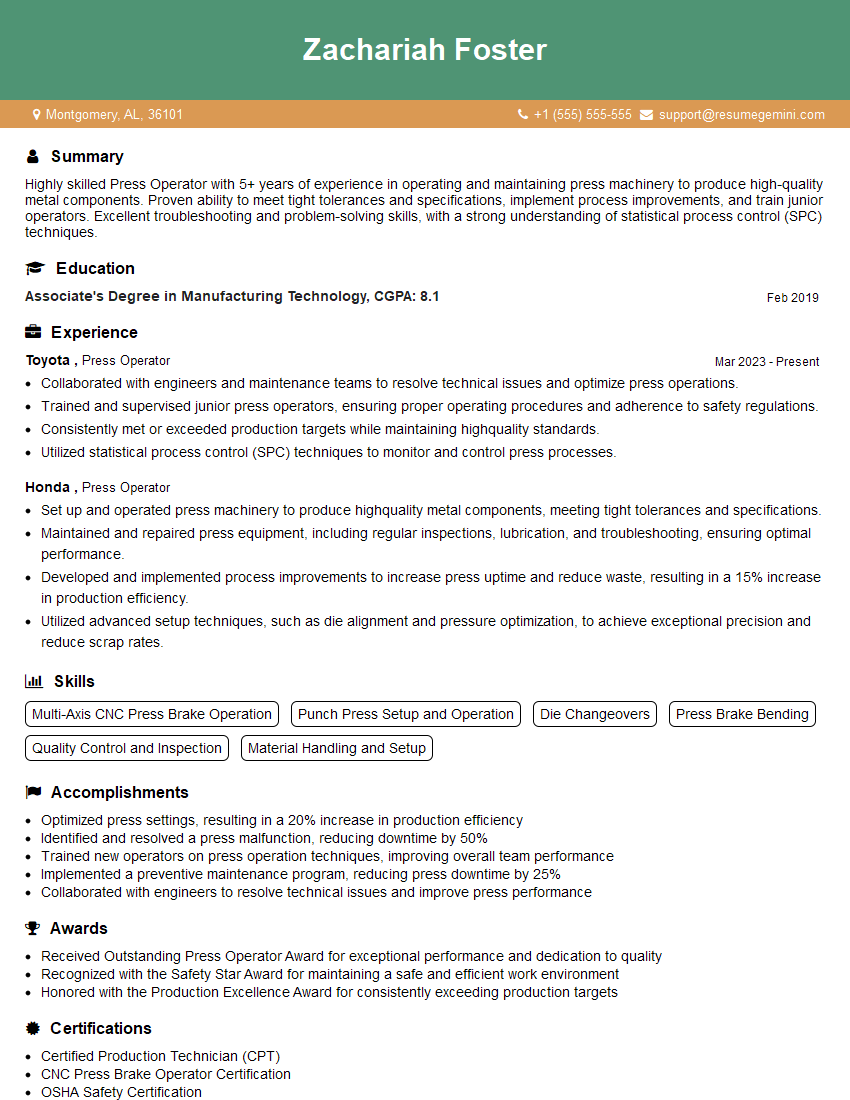
Press Operator Resume Sample

Pressroom Supervisor Resume Sample
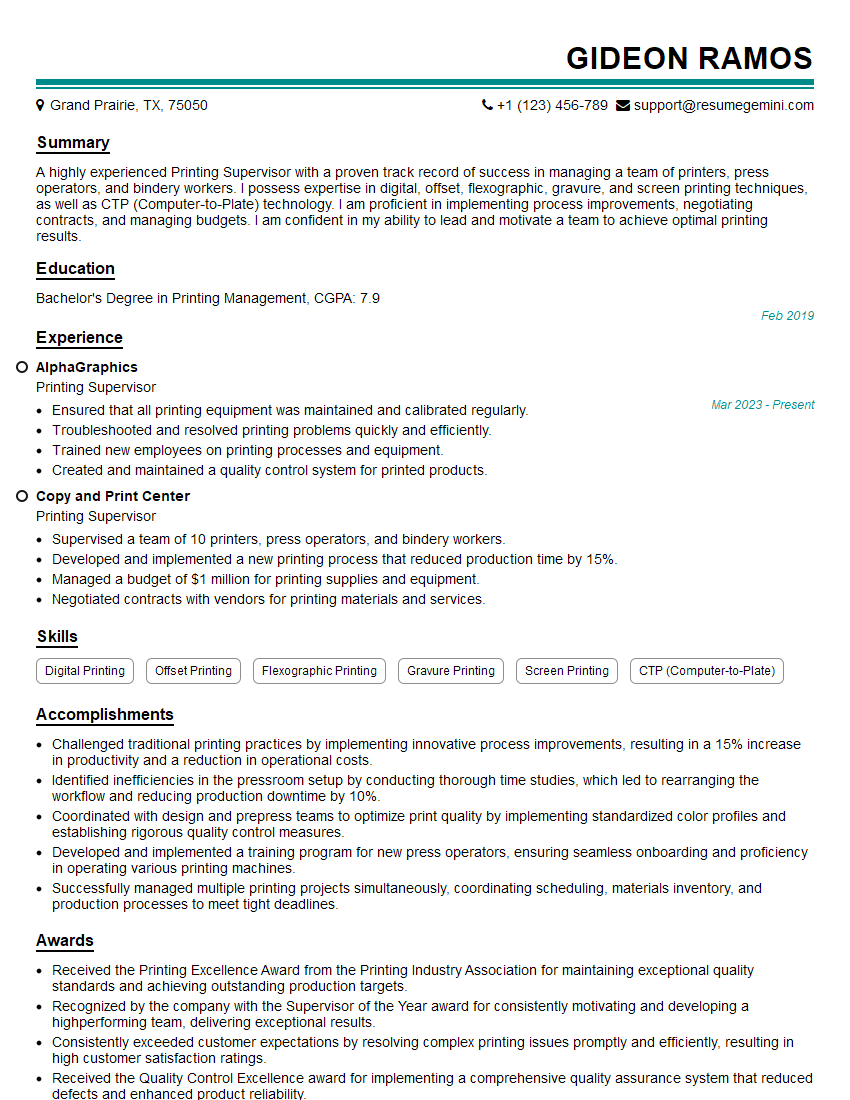
Printing Supervisor Resume Sample
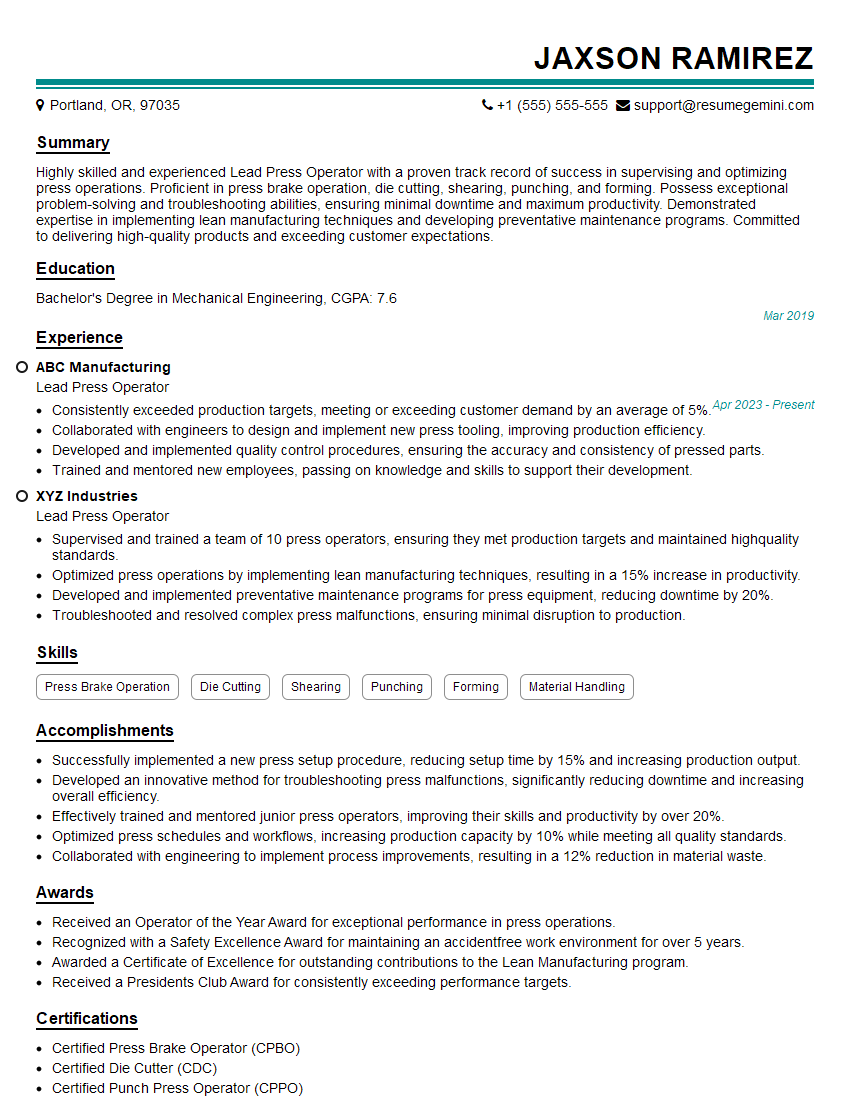
Lead Press Operator Resume Sample
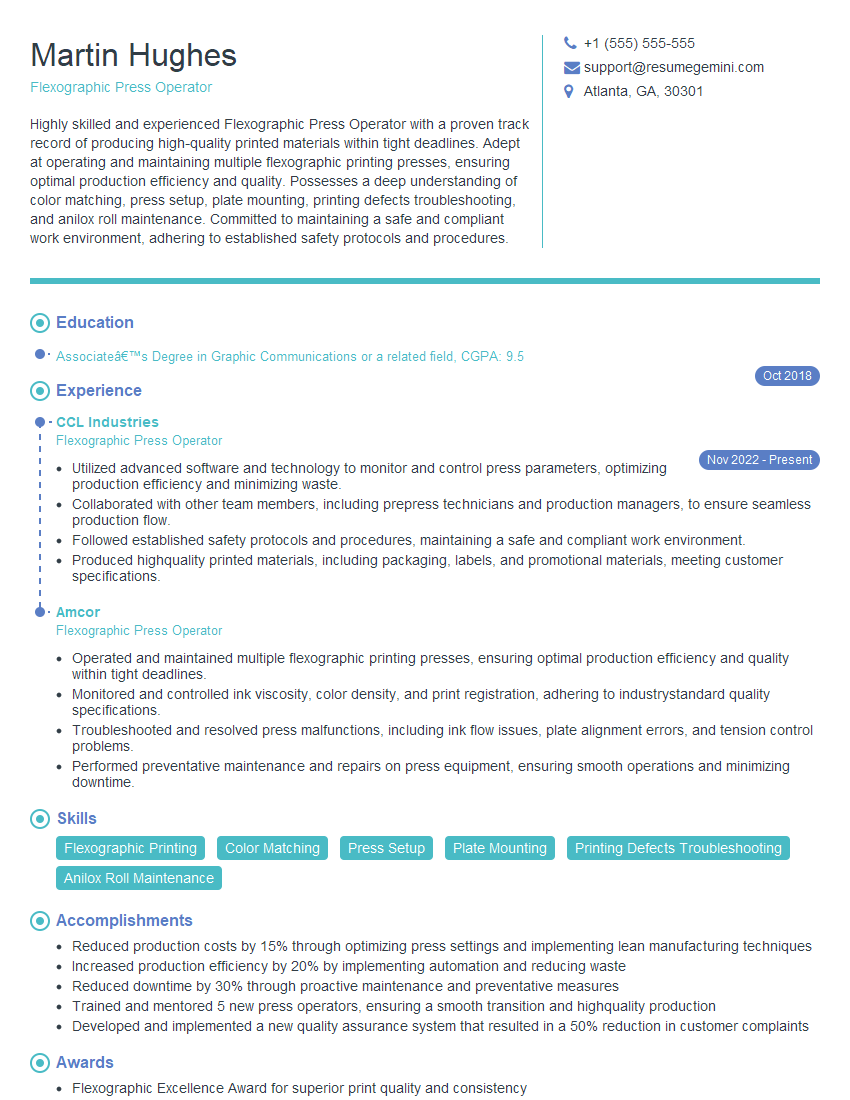
Flexographic Press Operator Resume Sample
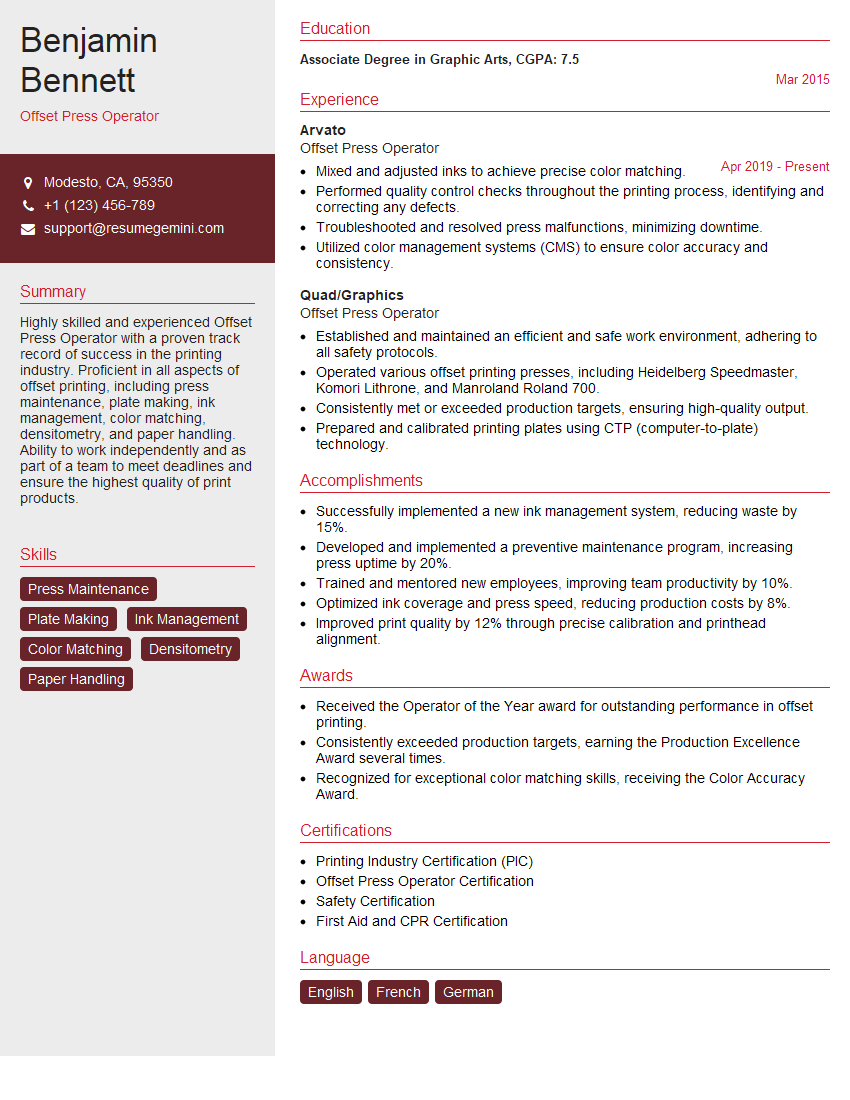
Offset Press Operator Resume Sample
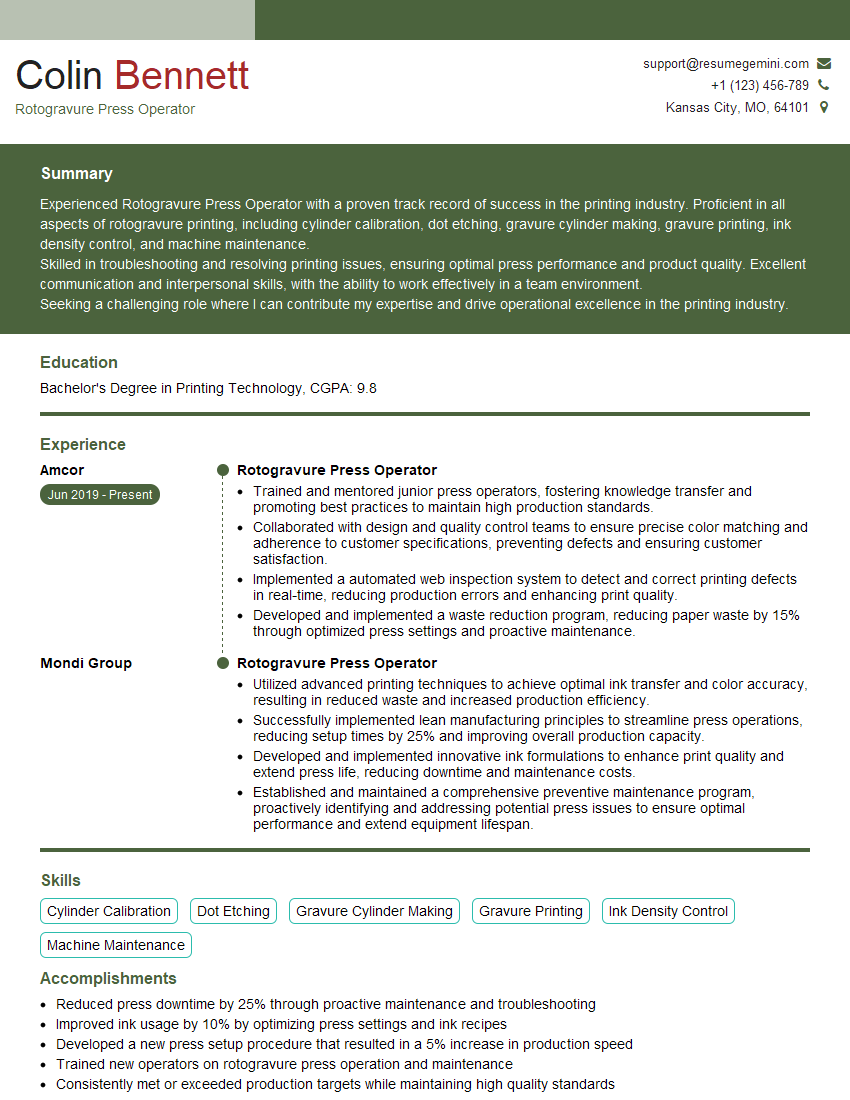
Rotogravure Press Operator Resume Sample
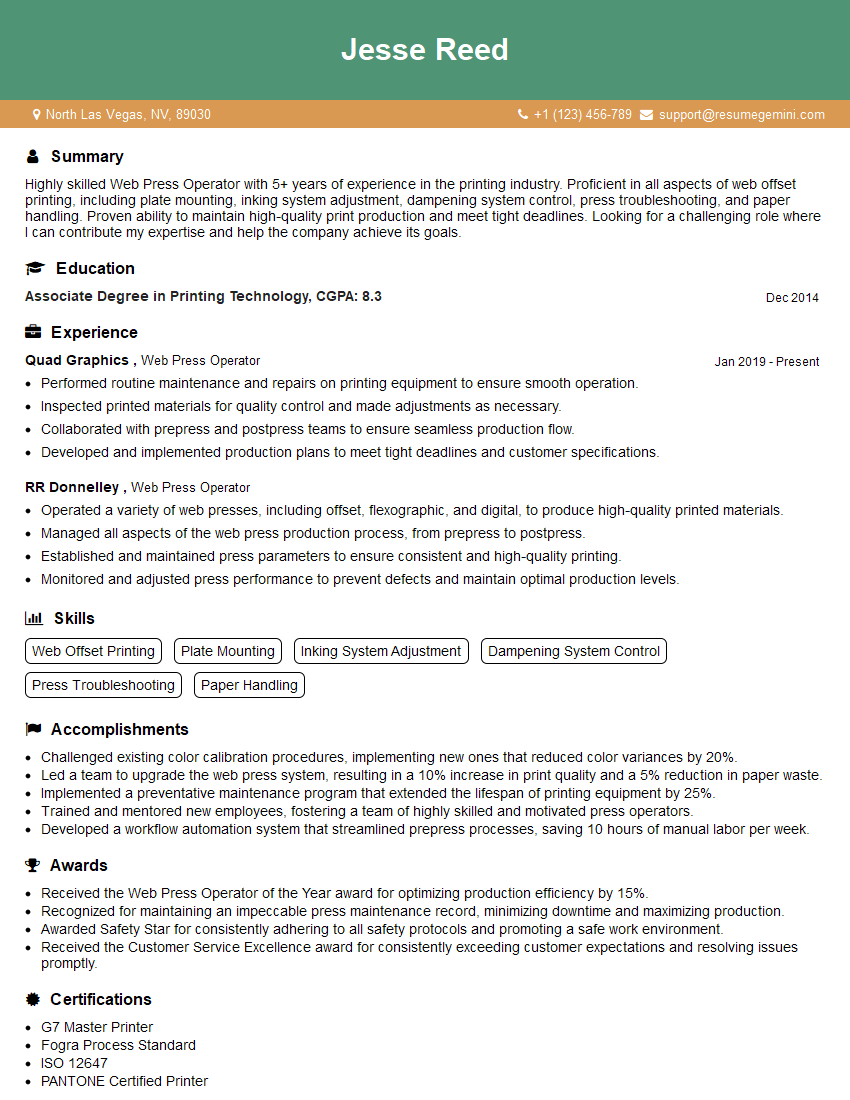
Web Press Operator Resume Sample
Explore more articles
Users Rating of Our Blogs
Share Your Experience
We value your feedback! Please rate our content and share your thoughts (optional).
What Readers Say About Our Blog
Very informative content, great job.
good