Interviews are more than just a Q&A session—they’re a chance to prove your worth. This blog dives into essential Roofing Terminology interview questions and expert tips to help you align your answers with what hiring managers are looking for. Start preparing to shine!
Questions Asked in Roofing Terminology Interview
Q 1. What are the different types of roofing materials?
Roofing materials are incredibly diverse, each with its own strengths and weaknesses. The best choice depends on factors like climate, budget, aesthetic preferences, and the building’s structural design.
- Asphalt Shingles: The most common type, known for affordability and ease of installation. They come in various styles and colors, offering a decent lifespan (15-30 years). Think of them as the ‘workhorse’ of roofing.
- Metal Roofing: Durable, long-lasting (50+ years), and energy-efficient, though more expensive than asphalt. They offer excellent protection against extreme weather and are a popular choice for areas with heavy snow or high winds. Imagine them as the ‘tank’ of roofing materials.
- Tile Roofing: Aesthetically pleasing and incredibly durable (50-100+ years), but expensive and heavy, requiring a strong roof structure. Clay and concrete tiles are common, offering superior fire resistance. They represent the ‘classic’ and ‘long-lasting’ option.
- Built-up Roofing (BUR): A multi-layered system typically used on flat roofs, involving layers of asphalt and felt. It’s durable and waterproof but requires specialized installation. Think of it as a ‘tough, layered defense’ for flat roofs.
- Single-Ply Membrane Roofing: Another common flat roof system using a single layer of synthetic material like TPO (Thermoplastic Polyolefin), EPDM (Ethylene Propylene Diene Monomer), or PVC (Polyvinyl Chloride). They offer excellent waterproofing and are relatively easy to install. These are the ‘modern, efficient’ flat roofing solutions.
- Wood Shingles and Shakes: Natural, aesthetically pleasing, but require more maintenance and have a shorter lifespan (20-30 years) compared to other options. These offer a rustic and charming look.
Choosing the right material involves careful consideration of all these factors. A professional roofing contractor can help determine the best option for a particular project.
Q 2. Explain the difference between a built-up roof (BUR) and a single-ply membrane roof.
Both BUR and single-ply membrane roofs are common for flat or low-sloped roofs, aiming to provide a waterproof barrier. The key difference lies in their construction:
- Built-up Roof (BUR): A BUR is a multi-layered system. It’s built up on the roof deck, layer by layer. This typically involves a base sheet, multiple layers of asphalt saturated felt, and a top surfacing of gravel or a coating. Think of it like a layered cake – each layer adds to its overall strength and water resistance. The process is more labor-intensive.
- Single-ply Membrane Roof: This system uses a single, continuous sheet of synthetic material (TPO, EPDM, or PVC) mechanically fastened or adhered to the roof deck. It’s a simpler, faster installation process. Imagine it as a giant, waterproof blanket laid over the roof.
While both are effective at waterproofing, single-ply membranes are generally easier and faster to install and are often chosen for their lower cost and quicker installation time. BUR systems, however, are known for their exceptional durability in certain applications.
Q 3. What is the purpose of underlayment in roofing?
Underlayment is a crucial component of a roof system, acting as a secondary water barrier beneath the primary roofing material. Its primary purpose is to protect the roof deck from water damage in case the primary roofing fails.
Think of it as insurance for your roof. If a shingle blows off in a storm, the underlayment prevents water from directly reaching and damaging the wooden sheathing. It also helps prevent moisture from entering the building in instances of minor roof leaks, giving time to perform repairs.
There are various types of underlayments, including felt paper, synthetic underlayments (like rubberized asphalt), and even specialized ice and water shields for vulnerable areas like valleys and eaves.
Q 4. Describe the various types of flashing used in roofing.
Flashing is a crucial element in roofing, designed to prevent water from penetrating vulnerable areas where the roof intersects other building components. It acts as a seal, diverting water away from the building’s structure.
- Step Flashing: Used where a vertical wall meets a sloped roof. It’s a series of overlapping metal pieces that create a watertight seal.
- Counter Flashing: Works in conjunction with step flashing, installed on the vertical wall to further protect against water intrusion.
- Valley Flashing: Installs in roof valleys (where two sloping roof surfaces meet) to channel water away from the intersection. Often made of metal to ensure durability.
- Chimney Flashing: Seals the gap between a chimney and the roof to prevent leakage around this critical intersection.
- Drip Edge: A metal flashing installed at the edge of the roof to divert water away from the fascia and soffit, preventing rot and damage.
Proper installation of flashing is crucial. Improper flashing is a very common source of roof leaks.
Q 5. What are the key components of a roof assembly?
A roof assembly is more than just the roofing material itself. It’s a complex system of interwoven components working together to protect the building. Key components include:
- Roof Deck: The structural base, usually made of plywood or OSB (Oriented Strand Board), providing support for the entire roofing system.
- Sheathing: Often the same as the roof deck, but sometimes refers to a layer of material installed over rafters for additional protection or insulation.
- Underlayment: A secondary water barrier, explained previously.
- Roofing Material: The top layer, such as shingles, tiles, or a membrane.
- Flashing: Sealing components around penetrations and intersections, as detailed above.
- Ventilation: Essential for proper air circulation to prevent moisture buildup and extend the roof’s lifespan. This often involves vents in the soffit and ridge.
- Insulation: (In many cases) Located in the attic space or within the roof structure, helping to regulate temperature and reduce energy costs.
Each component plays a vital role, and any deficiency in one area can compromise the entire roof’s performance.
Q 6. Explain the difference between asphalt shingles and metal roofing.
Asphalt shingles and metal roofing are both popular choices, but they differ significantly in durability, cost, and aesthetic appeal.
- Asphalt Shingles: Relatively inexpensive and easy to install, offering a wide range of colors and styles. They have a moderate lifespan (15-30 years) and are susceptible to damage from strong winds and hail.
- Metal Roofing: More expensive upfront, but boast exceptional durability (50+ years), energy efficiency (reflecting sunlight), and resistance to extreme weather conditions. They come in various profiles and finishes, providing a modern or rustic aesthetic.
The choice depends on budget, desired lifespan, and aesthetic preferences. Metal roofing offers long-term cost savings due to its durability, while asphalt shingles are a more affordable short- to medium-term solution.
Q 7. What are some common roofing defects and how are they repaired?
Many roofing defects can lead to leaks and structural damage. Early detection is key.
- Missing or Damaged Shingles: Common due to weather or age. Repair involves replacing the damaged shingles.
- Granule Loss on Shingles: Indicates aging and reduced shingle lifespan. While not always requiring immediate replacement, it’s a sign that the roof is nearing the end of its life.
- Flashing Issues: Leaks often occur around chimneys, valleys, and walls due to improper installation or age-related deterioration. Repair involves carefully removing and reinstalling the flashing, ensuring a watertight seal.
- Poor Attic Ventilation: Leads to moisture buildup, causing rot and shortening the roof’s lifespan. Improving ventilation often involves adding soffit vents or ridge vents.
- Cracked or Damaged Sealant: Around penetrations, sealant degrades over time. Repair involves cleaning the area and applying new sealant.
Repairing roofing defects requires specialized knowledge and safety precautions. It’s always best to consult with a qualified roofing professional for proper diagnosis and repair.
Q 8. What safety precautions are essential when working on a roof?
Roofing is inherently dangerous. Safety is paramount and should never be compromised. Essential precautions include, but aren’t limited to:
- Fall Protection: This is the most crucial aspect. Always use a properly anchored safety harness and lanyard, especially when working at heights. Consider using guardrails or safety nets where feasible. Never work on a roof alone.
- Proper Footwear: Wear sturdy, non-slip roofing boots with good ankle support to maintain your footing on uneven surfaces and prevent slips.
- Protective Gear: Always wear a hard hat to protect against falling objects, safety glasses to shield your eyes from debris, and work gloves to prevent cuts and blisters.
- Weather Awareness: Never work on a roof during inclement weather like rain, snow, or high winds. Conditions can change rapidly and increase the risk of accidents.
- Tool Safety: Securely store tools to prevent them from falling and causing injury or damage. Use tools appropriate for the task and ensure they are in good working order.
- Communication: Maintain clear communication with your team. Use hand signals if necessary to avoid shouting over noise. Have a designated spotter to help with securing equipment and observing your work.
- Training and Experience: Only experienced and trained professionals should work on roofs. Regular safety training refreshes skills and highlights evolving safety standards.
For example, I once witnessed a near-miss where a roofer forgot to properly secure his ladder; a gust of wind nearly caused a serious fall. It highlighted the critical importance of adhering to all safety procedures, no matter how routine the task seems.
Q 9. How do you calculate the slope of a roof?
Roof slope, or pitch, is expressed as a ratio of rise to run. The rise is the vertical distance, and the run is the horizontal distance. The slope is calculated as:
Slope = Rise / RunFor instance, a roof with a rise of 6 feet and a run of 12 feet has a slope of 6/12, often simplified to 1/2. This means for every 1 foot of vertical rise, there are 2 feet of horizontal run. Sometimes, slope is expressed as a percentage; a 1/2 slope is a 50% slope (Rise/Run * 100).
Measuring the rise and run can be done using a measuring tape and a level. You find the vertical rise by measuring from the eaves to the ridge. The run is half the horizontal distance from one edge of the roof to the other. You can also use specialized tools like a roof pitch gauge for a quicker measurement.
Q 10. Explain the process of installing asphalt shingles.
Installing asphalt shingles involves several key steps:
- Preparation: Start by inspecting the existing roof deck for damage. Repair any necessary areas and ensure the roof is clean and free from debris.
- Underlayment: Install an underlayment, a waterproof membrane, to provide an additional layer of protection against leaks. This is crucial for longevity and leak prevention.
- Starter Strip: Apply a starter strip along the eaves to provide a level base for the shingles.
- Shingle Installation: Begin installing the shingles, starting at the lower edge of the roof. Overlap shingles according to the manufacturer’s instructions. Pay attention to alignment and ensure proper nailing techniques to secure each shingle.
- Ridge and Hip Installation: Install ridge and hip shingles to complete the roofline, ensuring proper sealing at the edges.
- Flashing: Use flashing around chimneys, vents, and other penetrations to prevent leaks. Flashing creates a waterproof seal around these areas which are frequently vulnerable.
- Cleanup: Clean up any debris or waste material left behind after installation.
Proper nailing is critical; too few nails and the shingles won’t be secure, too many and you risk damaging the shingles. Manufacturer’s instructions are paramount for proper shingle installation.
Q 11. What are the different types of roof vents and their functions?
Roof vents are essential for attic ventilation, preventing moisture buildup and extending the life of the roof. Different types include:
- Ridge Vents: Located along the ridge of the roof, these vents provide continuous ventilation. They are very efficient and often a preferred choice due to their unobtrusive nature.
- Soffit Vents: Installed in the soffits (the overhanging eaves), these vents allow cool air to enter the attic. They are typically paired with ridge vents for optimum airflow.
- Turbine Vents: These are powered by wind and rotate to exhaust hot air from the attic. They’re effective but can be noisy and may not function well in low-wind conditions.
- Gable Vents: Located in the gable ends of the roof, they exhaust hot air, but their effectiveness depends on the design of the roof.
- Power Vents: These use electric fans to exhaust air from the attic, providing continuous ventilation regardless of wind conditions. They are energy-consuming but extremely effective.
Proper ventilation is a critical aspect of maintaining a healthy roof, preventing problems like ice dams in cold climates and excessive heat buildup in warmer climates. Balance is important; sufficient intake and exhaust are needed to maximize the effect.
Q 12. Describe the process of inspecting a roof for damage.
A thorough roof inspection requires careful observation and attention to detail. The process involves:
- Visual Inspection: Start with a visual inspection from the ground, looking for obvious signs of damage like missing shingles, curling shingles, or damaged flashing.
- Close-Up Examination: Proceed to a closer examination, moving across the roof systematically. Inspect for cracks, gaps, and missing granules on shingles. Look for signs of water damage such as staining or discoloration.
- Flashing Inspection: Carefully inspect all flashing around chimneys, vents, and valleys. Flashing failures are a major source of leaks.
- Gutter and Downspout Check: Ensure gutters and downspouts are clear of debris and functioning correctly. Clogged gutters can lead to water damage.
- Attic Inspection: Inspect the attic space for signs of moisture, water stains, or mildew. These could indicate leaks in the roof.
- Documentation: Take photos or videos of any damage found, and record observations and locations of damage. Create a detailed report of findings.
Using binoculars for the initial ground-level assessment can be helpful for identifying issues from a safe distance. Always prioritize safety and use proper equipment and techniques when accessing the roof for a close inspection.
Q 13. What are the common causes of roof leaks?
Roof leaks have several common causes:
- Damaged or Missing Shingles: Wind, hail, or aging can damage or dislodge shingles, creating openings for water to enter.
- Flashing Failures: Improperly installed or damaged flashing around chimneys, vents, and other penetrations is a major source of leaks.
- Clogged Gutters and Downspouts: Overfilled gutters can cause water to overflow and back up under the shingles.
- Poor Attic Ventilation: Inadequate ventilation leads to moisture buildup, which can damage the roof deck and cause leaks.
- Cracked or Damaged Roof Deck: A damaged roof deck, often due to age or prior damage, can allow water to penetrate.
- Skylight Issues: Cracked or improperly sealed skylights can lead to leaks.
- Tree Branches: Branches rubbing against the roof can cause damage to shingles and lead to leaks.
Identifying the root cause is key to effective repair. A seemingly minor problem, like a damaged shingle, can be indicative of more widespread issues. A thorough inspection is always the best approach to finding the source of the leak.
Q 14. Explain the different methods of waterproofing a roof.
Several methods are used for waterproofing roofs, depending on the roof type and the extent of waterproofing needed:
- Asphalt-Based Coatings: These are commonly used for flat roofs. They create a protective layer that seals the surface and prevents water penetration.
- EPDM Rubber Membranes: These synthetic rubber membranes are durable and long-lasting. They are often used for flat or low-sloped roofs.
- TPO (Thermoplastic Polyolefin) Membranes: TPO membranes are another popular choice for flat roofs. They are lightweight, durable, and resistant to UV degradation.
- Built-Up Roofing (BUR): BUR involves applying multiple layers of asphalt and felt to create a durable waterproof membrane. It’s a common choice for flat roofs.
- Spray Polyurethane Foam (SPF): SPF is a highly effective waterproofing solution that creates a seamless, insulating layer. It’s used on various roof types.
- Metal Roofing: Metal roofs, such as those made of aluminum or steel, are naturally waterproof. Proper installation is crucial for preventing leaks.
The choice of waterproofing method depends on several factors, including the roof type, climate, budget, and desired lifespan of the waterproofing system. A skilled roofing contractor can assess your needs and recommend the most appropriate solution.
Q 15. What is the significance of a roof’s R-value?
The R-value of a roof signifies its resistance to heat flow. Think of it like this: a higher R-value means better insulation, keeping your home warmer in winter and cooler in summer. It’s measured in units of ‘R’ and represents the thermal resistance of the insulation material. A higher R-value indicates less heat transfer, leading to energy savings and increased comfort. For example, a roof with R-38 insulation will significantly reduce heat loss compared to one with R-13. The appropriate R-value depends on your climate; colder climates necessitate higher R-values to maintain optimal temperatures.
In practical terms, selecting roofing materials with a high R-value is crucial during the design phase, particularly for energy-efficient buildings. It’s a key factor in reducing energy bills and minimizing environmental impact. Builders and homeowners should consult local building codes and energy efficiency guidelines to determine the appropriate R-value for their region.
Career Expert Tips:
- Ace those interviews! Prepare effectively by reviewing the Top 50 Most Common Interview Questions on ResumeGemini.
- Navigate your job search with confidence! Explore a wide range of Career Tips on ResumeGemini. Learn about common challenges and recommendations to overcome them.
- Craft the perfect resume! Master the Art of Resume Writing with ResumeGemini’s guide. Showcase your unique qualifications and achievements effectively.
- Don’t miss out on holiday savings! Build your dream resume with ResumeGemini’s ATS optimized templates.
Q 16. What are the different types of roof drainage systems?
Roof drainage systems are crucial for protecting a building’s structure from water damage. There are two primary types:
- Gravity Drainage System: This is the most common type, relying solely on gravity to channel rainwater away from the roof. It comprises gutters, downspouts, and sometimes leaders, all working together to direct water to a safe distance from the foundation.
- Surface Drainage System: This system uses a sloped roof surface to direct water to designated areas, often utilizing scuppers or drains embedded in the roof itself. It’s often seen on flat roofs or where gutters aren’t feasible.
Both systems are essential to prevent water accumulation, which can cause leaks, mold growth, and structural damage. The choice between them depends on the roof’s design and the local climate. For example, areas with heavy rainfall may benefit from a more robust gravity system, while flat roofs might require a well-designed surface drainage system.
Q 17. Explain the term ‘pitch’ in roofing.
In roofing, ‘pitch’ refers to the slope or incline of the roof. It’s expressed as a ratio of the vertical rise to the horizontal run (rise:run). For instance, a 4:12 pitch means that for every 12 inches of horizontal run, the roof rises 4 inches. A steeper pitch, like 7:12 or 9:12, allows for faster water runoff, particularly beneficial in areas with heavy rainfall. A shallower pitch, like 2:12 or 3:12, is often seen on low-slope roofs and may require more robust drainage systems.
The pitch directly impacts the selection of roofing materials and the overall structural design. Steeper pitches are generally better suited for heavier materials like clay tiles, while shallower pitches often utilize lighter materials such as asphalt shingles or membrane roofing. Accurate pitch measurement is crucial for proper installation and water management.
Q 18. What are the different types of gutters and downspouts?
Gutters and downspouts form the core of a roof’s drainage system, guiding rainwater away from the foundation. There’s a variety of options available:
- Gutters: These come in different materials (aluminum, vinyl, copper, zinc), sizes, and styles (K-style, half-round). The choice depends on factors such as budget, aesthetic preferences, and the building’s style. For example, copper gutters are more durable and aesthetically pleasing but more expensive than vinyl.
- Downspouts: These vertical pipes extend from the gutters to direct water away from the building. They are available in different materials matching the gutters and are often equipped with elbows and extensions to safely discharge water away from the foundation. Proper sizing is crucial to prevent overflow during heavy rains.
Selecting the right gutters and downspouts is vital for protecting the building from water damage. Choosing durable, appropriately sized components ensures the system’s long-term efficiency and reduces the risk of costly repairs.
Q 19. Describe the process of installing a skylight.
Skylight installation is a specialized roofing task requiring careful planning and execution. The process generally involves these steps:
- Planning & Measurement: Precisely determine the skylight’s location and size, considering structural integrity and existing framing.
- Cutting the Roof Opening: Carefully cut a hole in the roof deck, ensuring accurate dimensions to fit the skylight frame.
- Flashing Installation: This crucial step involves installing flashing around the skylight to create a waterproof seal, preventing leaks. Various flashing types are used depending on the roof material and skylight design.
- Skylight Frame Installation: Securely fasten the skylight frame to the roof deck using appropriate fasteners and sealant.
- Skylight Installation: Carefully place the skylight into the frame and secure it according to the manufacturer’s instructions.
- Sealant Application: Apply a high-quality sealant around the skylight frame to ensure a complete watertight seal.
- Final Inspection: Inspect the installation for any gaps or imperfections before restoring the surrounding roofing material.
Proper skylight installation is critical to prevent leaks and maintain the roof’s structural integrity. Improper installation can lead to costly repairs and water damage. Using quality materials and following best practices is essential for a successful installation.
Q 20. What are the common tools used in roofing?
Roofing requires a variety of specialized tools. Essential tools include:
- Safety Equipment: Hard hats, safety harnesses, and fall protection are paramount.
- Measuring Tools: Measuring tapes, levels, and squares for accurate measurements and pitch determination.
- Cutting Tools: Circular saws, utility knives, and snips for cutting roofing materials.
- Fasteners: Roofing nails, screws, and staples to secure materials.
- Hammer & Mallet: For driving nails and securing components.
- Shovels & Wheelbarrows: For material handling and debris removal.
- Roofing Hatchet/Axe: Removing old shingles.
The specific tools needed depend on the roofing project’s scope and the materials used. Proper tool selection ensures efficient and safe work practices. Always prioritize safety when working at heights.
Q 21. Explain the importance of proper ventilation in a roof.
Proper roof ventilation is critical for extending the lifespan of the roof and preventing costly damage. It helps to:
- Reduce Moisture Buildup: Ventilation allows warm, moist air from inside the attic to escape, preventing condensation and the growth of mold and mildew.
- Prevent Overheating: Ventilation reduces the temperature in the attic, preventing the premature degradation of roofing materials.
- Improve Energy Efficiency: A properly ventilated attic helps to maintain a more stable temperature within the living space, reducing the load on the HVAC system.
Insufficient ventilation can lead to serious problems, including structural damage, reduced energy efficiency, and shortened roof lifespan. It’s important to ensure adequate intake and exhaust ventilation to create a balanced airflow within the attic space. The required ventilation varies depending on the climate and the building’s design. Consulting building codes and energy efficiency guidelines is crucial for ensuring proper ventilation.
Q 22. How do you handle a difficult customer?
Handling difficult customers in roofing, like any customer service role, requires patience, empathy, and strong communication. My approach involves active listening to understand their concerns, validating their feelings, and then clearly explaining the situation from a professional perspective. I always aim to find a mutually agreeable solution. For instance, if a customer is upset about a delay, I’ll explain the reasons behind it transparently, perhaps providing photographic evidence of unforeseen challenges like unexpected structural issues or inclement weather. Offering alternative solutions, such as a revised schedule or a partial refund for the delay if appropriate, demonstrates good faith and commitment to customer satisfaction. Ultimately, I believe in treating each customer with respect and professionalism, even in challenging situations, ensuring that they feel heard and understood.
Q 23. What is your experience with different roofing warranties?
My experience with roofing warranties is extensive. I’m familiar with various manufacturers’ warranties, covering everything from asphalt shingles (like Owens Corning Duration or CertainTeed Landmark) to metal roofing (standing seam, corrugated), and even specialized products like tile and slate. Warranties vary significantly, covering different aspects like material defects, workmanship, and sometimes even labor costs. A typical asphalt shingle warranty might cover defects in materials for 20-30 years, while a labor warranty from the installer might be for a shorter period, typically 1-2 years. Metal roofing warranties often extend for much longer periods, sometimes 40+ years for materials, due to their higher durability. I understand the importance of properly documenting the warranty details at the start of each project, including manufacturer certificates and the scope of the coverage, to ensure protection for both the homeowner and the roofing company. Understanding the nuances of these warranties helps me accurately advise clients and manage potential warranty claims effectively.
Q 24. Describe a time you had to solve a roofing problem creatively.
On one project, we encountered a severe leak originating from a section of the roof inaccessible via traditional means. The house was a historic Victorian with a complex mansard roof. Scaffolding was impractical due to the building’s delicate condition and the surrounding landscaping. Creatively, I devised a solution using a combination of lightweight, maneuverable cherry pickers and specialized roofing tools that were compact enough to fit through narrow access points. This allowed my team to reach the problem area efficiently, preventing further damage and completing the repair without causing any harm to the historical structure. This experience highlighted the importance of thinking outside the box and finding safe, innovative solutions when faced with unique challenges.
Q 25. How do you manage a roofing project schedule?
Managing a roofing project schedule involves a meticulous process. It begins with a detailed assessment of the project scope, including the size and complexity of the roof, material procurement timelines, and the availability of my crew. I then create a comprehensive schedule using project management software, breaking the project down into smaller, manageable tasks with assigned deadlines. This includes material ordering, demolition, underlayment installation, shingle installation (or other roofing material), and final cleanup. I regularly monitor progress, factoring in potential weather delays and unforeseen complications. Daily communication with my team and the client is crucial, ensuring everyone is on the same page and aware of any adjustments to the schedule. This proactive approach ensures the project remains on track and is completed efficiently and within the agreed-upon timeframe.
Q 26. How do you ensure safety on a roofing job site?
Safety is paramount on every roofing job. We begin with a thorough site survey to identify potential hazards like power lines, unstable areas, and fall risks. All team members receive safety training before starting any project and are required to wear appropriate safety gear, including hard hats, safety harnesses, and fall arrest systems. We utilize safety harnesses with anchor points whenever working at heights. Proper scaffolding and ladder use is strictly enforced, and we frequently inspect equipment to ensure it’s in good working order. We comply with all OSHA regulations and maintain a culture of vigilance and proactive risk assessment. Regular toolbox talks address safety concerns and reinforce safe work practices. This commitment to safety minimizes risks and ensures the well-being of my team.
Q 27. What are your strengths and weaknesses in roofing?
My strengths lie in my problem-solving abilities, my meticulous attention to detail, and my leadership skills. I’m adept at finding creative solutions to complex roofing issues and can effectively manage and motivate teams to achieve project goals. I pride myself on consistently delivering high-quality workmanship. A weakness I’m actively working on is delegating tasks. I often find myself wanting to personally oversee every aspect of a project, which can be time-consuming. I am implementing strategies to better trust my team members and empower them with greater responsibility, improving my efficiency and overall project management.
Q 28. What are your salary expectations?
My salary expectations are commensurate with my experience and expertise in the roofing industry. Considering my extensive knowledge of roofing systems, materials, and project management, along with my proven track record of successful project completion, I’m looking for a competitive salary within the range of [Insert Salary Range Here]. I’m also open to discussing a comprehensive benefits package.
Key Topics to Learn for Roofing Terminology Interview
- Roofing Materials: Understanding the properties, applications, and limitations of asphalt shingles, tile, metal, and other roofing materials. This includes knowing their lifespan, maintenance requirements, and cost implications.
- Roofing Systems: Familiarity with different roofing systems (low-slope, steep-slope, etc.) and their appropriate applications based on climate, building design, and budget. Consider the practical application of choosing the right system for a specific project.
- Underlayment and Flashing: Knowing the purpose and types of underlayment and flashing materials, including their installation techniques and importance in preventing leaks. Practical application focuses on identifying potential failure points and solutions.
- Roof Inspections and Diagnostics: Mastering the skills needed to identify common roofing problems, such as leaks, damaged flashing, and deterioration of materials. Understanding how to assess the severity of damage and recommend solutions forms a crucial practical application.
- Roofing Safety: Understanding and applying OSHA safety regulations and best practices related to roofing work, including fall protection, proper equipment usage, and hazard identification. This is critical in both theoretical and practical applications.
- Estimating and Bidding: Understanding the process of estimating materials, labor, and overhead costs for roofing projects. This includes creating accurate bids and understanding profit margins. Practical application lies in accurate cost calculations and competitive bidding.
- Industry Standards and Codes: Familiarity with relevant building codes, industry standards, and best practices for roofing installation and maintenance. Practical application involves adhering to these standards in projects and identifying deviations.
Next Steps
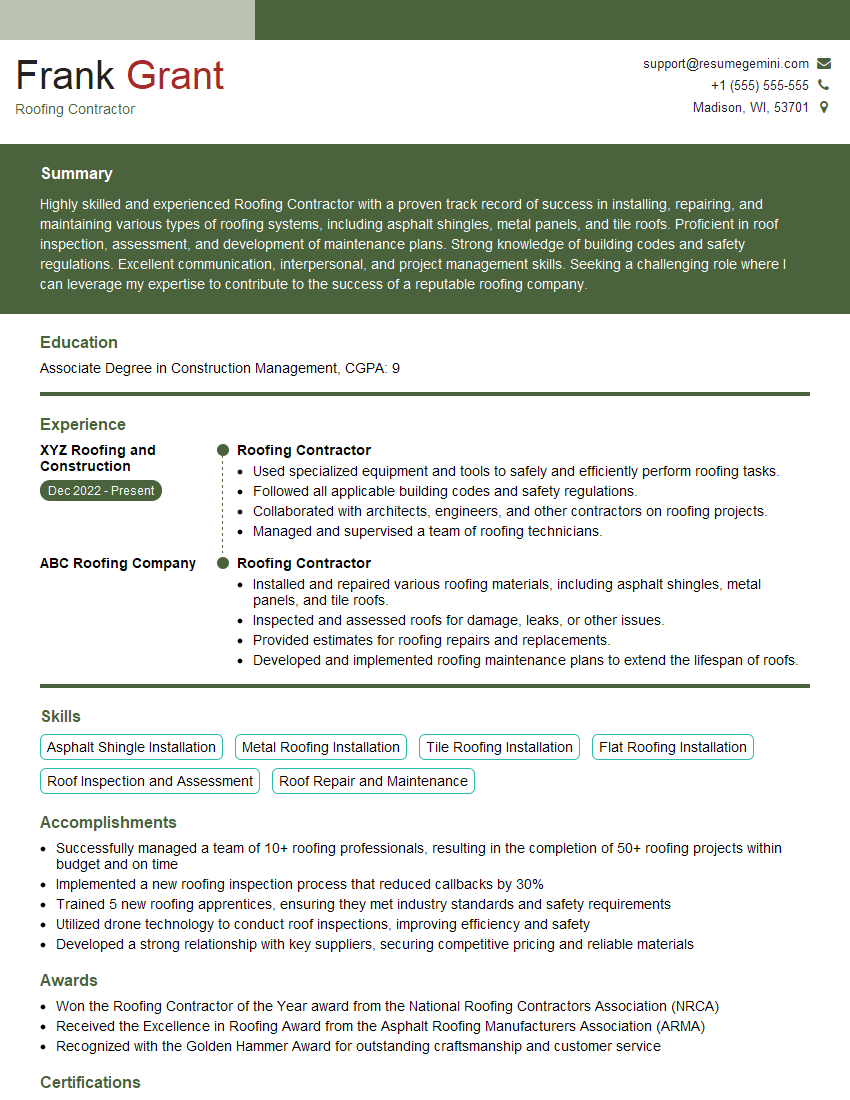
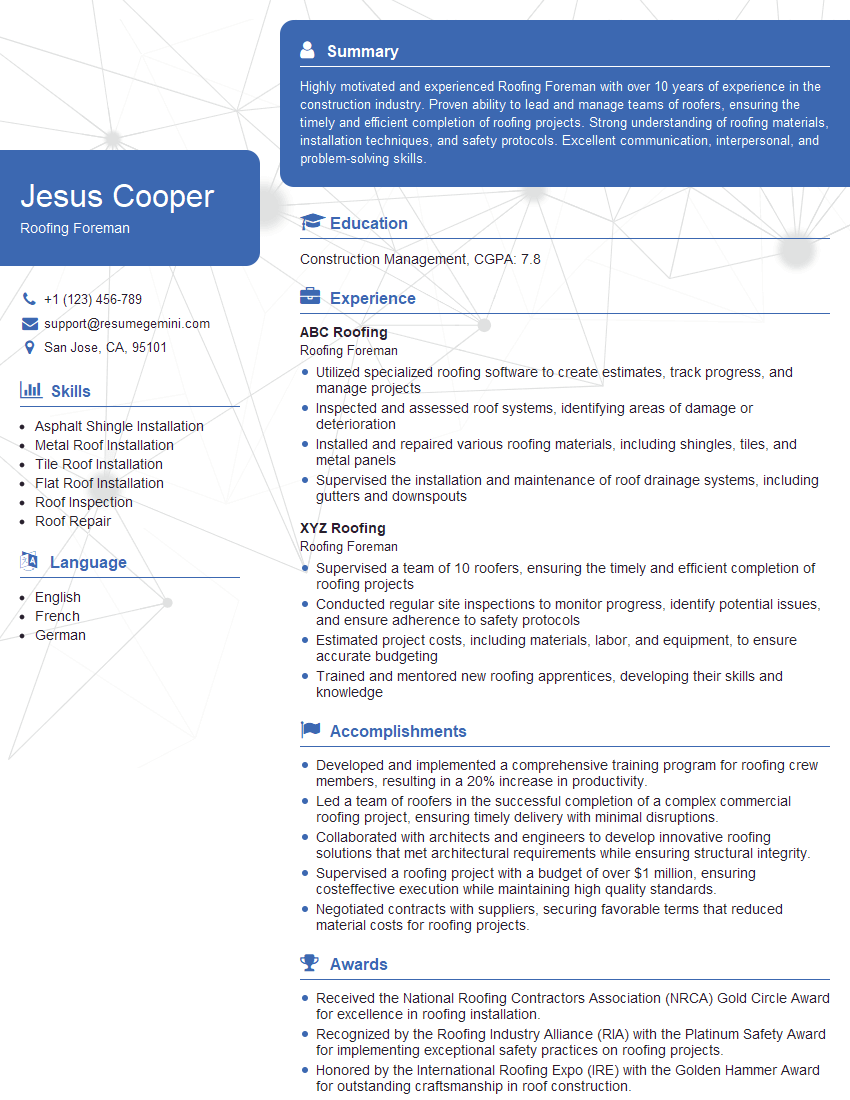
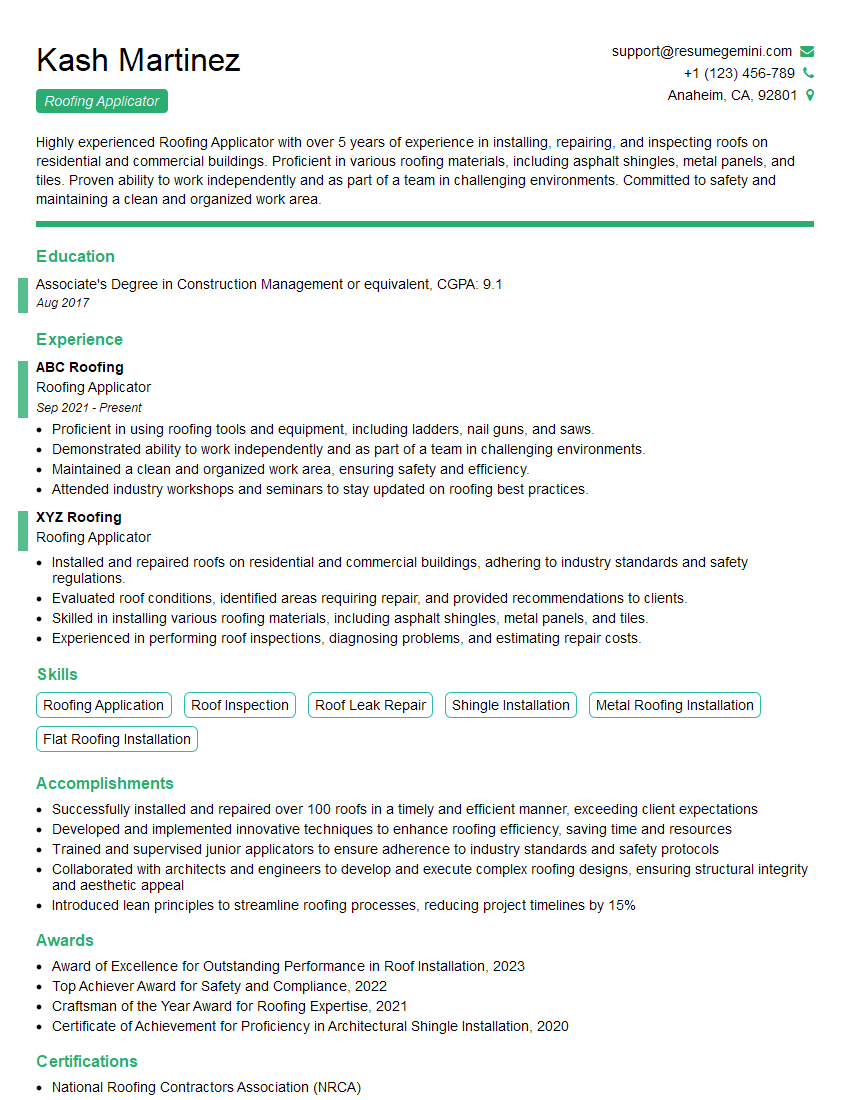
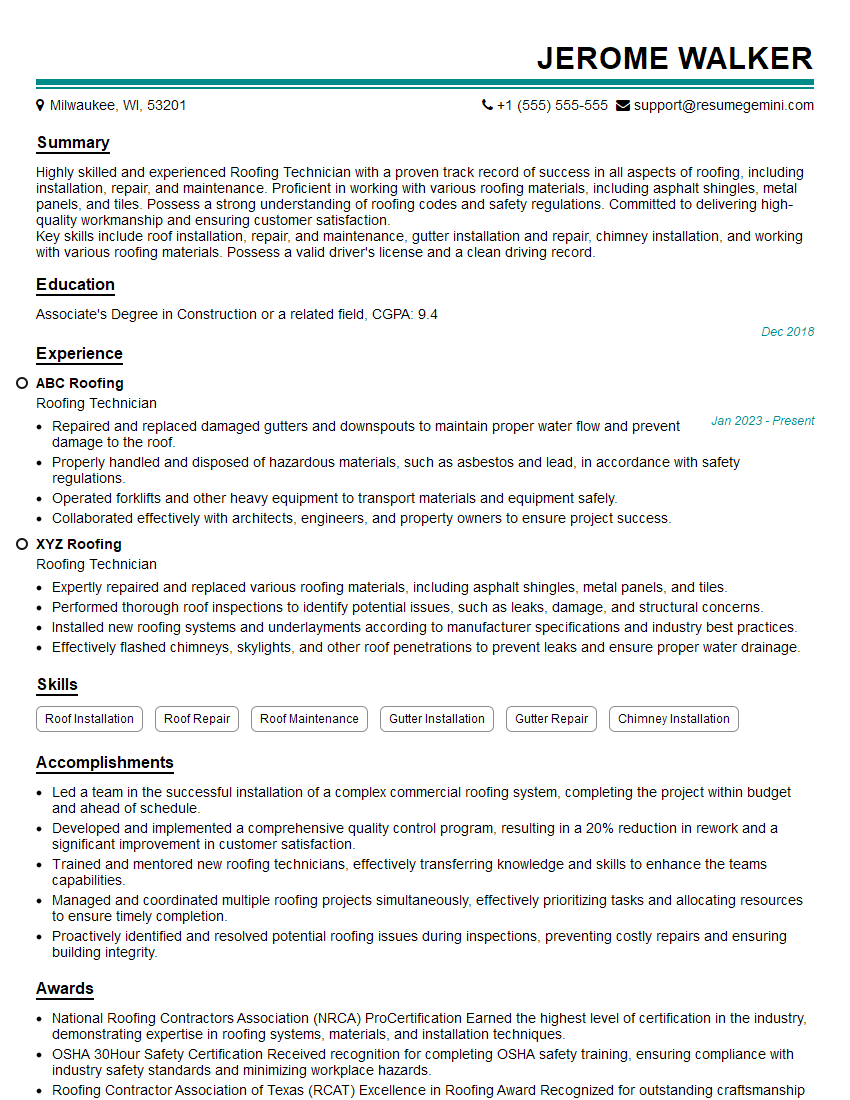
Mastering roofing terminology is crucial for career advancement in the roofing industry. A strong understanding of these terms demonstrates your expertise and professionalism, opening doors to more rewarding opportunities and higher earning potential. To maximize your job prospects, create an ATS-friendly resume that highlights your skills and experience effectively. ResumeGemini is a trusted resource to help you build a professional and impactful resume, ensuring your application stands out. Examples of resumes tailored to showcasing Roofing Terminology expertise are available to guide you.

Explore more articles
Users Rating of Our Blogs
Share Your Experience
We value your feedback! Please rate our content and share your thoughts (optional).
What Readers Say About Our Blog
Very informative content, great job.
good