Interviews are opportunities to demonstrate your expertise, and this guide is here to help you shine. Explore the essential Roofing Work interview questions that employers frequently ask, paired with strategies for crafting responses that set you apart from the competition.
Questions Asked in Roofing Work Interview
Q 1. What types of roofing materials are you experienced with?
Throughout my career, I’ve worked extensively with a wide variety of roofing materials. My experience encompasses the most common types, including asphalt shingles (both architectural and 3-tab), clay and concrete tiles, metal roofing (standing seam, corrugated, and shingles), slate, and even some specialized options like synthetic slate and rubber roofing membranes. I’m familiar with their respective strengths, weaknesses, and installation techniques, allowing me to recommend the best material for any given project and client needs.
Q 2. Describe your experience with different roofing systems (e.g., asphalt shingles, tile, metal).
My experience with different roofing systems is extensive. Asphalt shingles are arguably the most common, and I’m proficient in installing various grades and styles, understanding the importance of proper underlayment, starter courses, and shingle alignment for optimal weather resistance. With tile roofing, I’ve handled both clay and concrete tiles, appreciating the longevity and aesthetic appeal, but also aware of the complexities involved in underlayment selection, proper fastening, and managing weight distribution. Metal roofing, whether standing seam or corrugated, demands precision and experience with specialized tools and fastening techniques. I understand the importance of proper expansion and contraction allowances to avoid issues later. In each case, I prioritize proper ventilation and waterproofing techniques.
Q 3. Explain the process of installing asphalt shingles.
Installing asphalt shingles is a multi-step process requiring precision and attention to detail. First, the existing roof is inspected and any necessary repairs or replacements to the decking are made. Next, a quality underlayment is installed to act as a secondary water barrier. We then install the starter course, which creates a straight and even base for the remaining shingles. Then, we begin laying the shingles, ensuring proper alignment and overlapping for maximum protection. We work from the bottom up, following the manufacturer’s guidelines for shingle exposure and nail placement. Finally, the ridge caps are installed, sealing the roof and providing a finished look. Each step, from prep work to final touches, is crucial for ensuring a long-lasting and leak-free roof. Think of it like building a tightly woven fabric, each shingle a thread contributing to overall strength and weather resistance. I always prioritize using high-quality materials and adhering to industry best practices.
Q 4. How do you determine the slope of a roof?
Determining roof slope, or pitch, is essential for material selection and proper installation. It’s expressed as a ratio of rise over run – the vertical rise for every 12 inches of horizontal run. For example, a 4/12 slope means a 4-inch rise for every 12 inches of horizontal distance. I use a variety of tools to measure slope, including a speed square, level, and sometimes even a simple measuring tape and protractor. Accurate slope determination prevents issues with water runoff and ensures appropriate material choices; a steeper slope might need heavier shingles to withstand wind, while a shallow slope might require extra measures to prevent water pooling.
Q 5. What safety precautions do you take when working on a roof?
Safety is paramount in roofing work. I always employ a comprehensive safety plan, including the use of harnesses and fall protection systems. This includes the use of safety lines and anchor points, whenever working at heights. I always ensure that appropriate scaffolding is used when necessary and the proper Personal Protective Equipment (PPE) is worn consistently, such as hard hats, safety glasses, work gloves, and fall arrest systems. Furthermore, I conduct regular safety briefings with my team to reinforce best practices and address potential hazards. I treat every job as if it were my own home, implementing safety precautions meticulously. Proper planning and training are key components to a safe working environment.
Q 6. How do you identify and address common roofing problems (e.g., leaks, damaged flashing)?
Identifying and addressing roofing problems requires a systematic approach. For leaks, I use a variety of methods, including visual inspection, moisture meters, and even infrared cameras to pinpoint the source. Damaged flashing is often a culprit; I carefully inspect all flashing points around chimneys, vents, and valleys. Other common issues are curled or missing shingles, damaged underlayment, and ice dams. My approach is to diagnose the root cause before starting repairs; a temporary fix might mask a larger problem. I always make sure to use appropriate sealant, flashing, and replacement materials to ensure the repair is as durable as the original roofing system.
Q 7. What experience do you have with roof inspections and repairs?
I have extensive experience in roof inspections and repairs. I’ve conducted hundreds of inspections, ranging from routine maintenance checks to pre-purchase assessments and post-storm damage evaluations. My inspections are thorough, covering all aspects of the roofing system, including the condition of the shingles, flashing, underlayment, decking, and ventilation. My reports are detailed and include photographic documentation, along with clear recommendations for repairs or replacements. When conducting repairs, I always prioritize using the most appropriate materials and techniques for the specific issue while also maintaining the aesthetic integrity of the roof whenever possible. I strive to deliver long-lasting, efficient solutions that minimize disruption to the client.
Q 8. Describe your experience with roof ventilation and its importance.
Proper roof ventilation is crucial for extending the lifespan of your roof and maintaining a comfortable indoor environment. It involves a balanced system of intake and exhaust vents that allow for the continuous flow of air through the attic space. This prevents moisture buildup, which is the leading cause of premature roof failure, mold growth, and energy inefficiency.
My experience encompasses designing and installing various ventilation systems, from ridge vents and soffit vents to powered attic fans. I understand the importance of calculating the correct amount of ventilation based on the roof’s square footage and the climate. For example, in humid climates, more ventilation is needed to prevent condensation. I’ve worked on projects where inadequate ventilation led to significant damage, highlighting the critical need for proper planning and execution. I always assess the existing ventilation, recommending upgrades or repairs as needed to ensure optimal airflow.
- Intake Vents: Allow outside air to enter the attic.
- Exhaust Vents: Allow the hot, moist air to escape.
- Balance: The intake and exhaust should be properly balanced to avoid pressure imbalances.
Q 9. How do you measure and estimate roofing materials needed for a project?
Accurately measuring and estimating roofing materials is essential for a successful project, avoiding costly overages or frustrating shortages. My process begins with a thorough on-site assessment, meticulously measuring the roof’s dimensions and identifying any complex features like dormers or chimneys. I use a combination of traditional measuring techniques and digital tools for precision. For example, I use a laser distance meter for long distances and a measuring wheel for perimeter calculations.
Next, I factor in waste. Shingles are often sold in bundles, and there’s always a certain amount of waste generated during cutting and installation. This percentage varies depending on the roof’s complexity (more complex roofs generally have more waste). I typically add 5-10% for simple roofs and up to 15% for complex projects. Finally, I consult manufacturer specifications for square footage per bundle to arrive at the total number of bundles needed. I also account for all underlayment, flashing, nails, and other necessary components.
Think of it like baking a cake – you wouldn’t just throw ingredients together. Precise measurements ensure a perfect outcome. Similarly, accurate material estimation prevents delays and cost overruns on a roofing project.
Q 10. What software or tools do you use for roofing estimations and project management?
For roofing estimations and project management, I utilize a combination of software and tools to maximize efficiency and accuracy. I’m proficient in using software like On-Screen Takeoff for precise measurements from blueprints and Microsoft Project or similar tools for scheduling and task management. These programs help me create detailed estimates, track progress, and manage resources efficiently.
In addition to software, I utilize digital measuring tools like laser distance meters and digital levelers for on-site measurements, ensuring accuracy and minimizing errors. These tools significantly enhance the precision of my estimations and improve overall project management. I also rely heavily on spreadsheets for organizing material lists, labor costs, and client communication.
Q 11. Explain your experience with working from blueprints and specifications.
Working from blueprints and specifications is fundamental to successful roofing projects. My experience involves interpreting architectural drawings, understanding roof plans, identifying details, and accurately translating those plans into a real-world construction project. This includes understanding the slope (pitch) of the roof, the type of roofing material specified, and the location of all penetrations (chimneys, vents, skylights).
For instance, I’ve worked on projects where the blueprints showed intricate details like custom flashing requirements around dormers or valleys. Accurately interpreting these details ensures a watertight and aesthetically pleasing result. I cross-reference the blueprints with on-site conditions, identifying any discrepancies and resolving them before starting the project. This proactive approach prevents costly mistakes later on.
Q 12. How do you manage a roofing crew and ensure efficient workflow?
Managing a roofing crew effectively requires strong leadership, clear communication, and a focus on safety. I begin by clearly defining roles and responsibilities, ensuring each crew member understands their tasks and how they contribute to the overall project. I emphasize the importance of teamwork and collaboration, fostering a positive and productive work environment.
Daily communication is key. I hold brief morning meetings to review the day’s tasks, address any concerns, and reiterate safety protocols. I also conduct regular safety checks to ensure compliance with all safety regulations and procedures. Throughout the project, I monitor progress, provide guidance, and adjust the workflow as needed to ensure efficiency and maintain the project timeline. Regular feedback sessions help build morale and address any potential issues promptly.
Think of it as conducting an orchestra – each musician plays a part, but it’s the conductor’s role to bring it all together harmoniously. My role is to coordinate efforts, ensure safety, and keep the project moving smoothly.
Q 13. What is your experience with different types of underlayment?
Underlayment is a crucial component of a roofing system, protecting the roof deck from water damage until the final roofing material is installed. I have experience with various types, each offering unique characteristics and benefits:
- Felt Underlayment: This is the traditional asphalt-saturated felt. It’s cost-effective but less durable and offers minimal protection against UV rays.
- Synthetic Underlayment: This type typically offers superior protection, enhanced tear resistance, and better water shedding capabilities compared to felt. It is more expensive but often justified by its longevity and increased protection.
- Rubberized Underlayment: This is a high-performance underlayment that provides excellent waterproofing and is very durable. This is often used in high-wind or harsh-weather regions.
My selection of underlayment depends on the project’s requirements, budget, and the specific challenges presented by the climate and roof design. For example, on steep-sloped roofs, I might opt for a more robust, tear-resistant synthetic underlayment to minimize the risk of slippage during installation.
Q 14. How do you handle difficult customers or project challenges?
Handling difficult customers or project challenges requires a proactive and solutions-oriented approach. When dealing with challenging customers, I focus on active listening, empathetic communication, and transparent explanations. I aim to understand their concerns and address them directly, often providing options to resolve issues collaboratively. For example, I have addressed unexpected material price increases by working with the client to adjust the scope of work or explore alternative materials while maintaining transparency throughout the process.
Project challenges, like unexpected weather delays or material shortages, require quick thinking and effective problem-solving. I maintain open communication with clients to keep them informed of the situation and propose alternative solutions to keep the project on track. This may involve adjusting the schedule, negotiating with suppliers, or exploring alternative solutions to address the challenges. Proactive communication and transparent decision-making are key to managing both difficult clients and unforeseen project complications. In essence, I treat each situation as an opportunity for creative problem-solving and enhanced customer relations.
Q 15. Explain your knowledge of building codes and regulations related to roofing.
Building codes and regulations for roofing vary by location but generally cover crucial aspects like slope, materials, structural integrity, and safety. Understanding these is paramount to ensuring a legally compliant and structurally sound roof. For example, the International Building Code (IBC) dictates minimum slope requirements for different roofing materials to prevent water ponding. This means a steeper slope might be needed for asphalt shingles compared to a metal roof. Similarly, regulations often specify the required wind uplift resistance of the roofing system, ensuring it can withstand local weather conditions. I meticulously review all relevant local, state, and national codes before commencing any project, ensuring the design and construction meet all requirements. I frequently consult resources like the IBC and local building department websites to stay up-to-date on the latest regulations and amendments. I also attend continuing education courses to maintain my knowledge of evolving building codes. Ignoring these regulations can lead to project delays, costly revisions, and even legal issues.
Career Expert Tips:
- Ace those interviews! Prepare effectively by reviewing the Top 50 Most Common Interview Questions on ResumeGemini.
- Navigate your job search with confidence! Explore a wide range of Career Tips on ResumeGemini. Learn about common challenges and recommendations to overcome them.
- Craft the perfect resume! Master the Art of Resume Writing with ResumeGemini’s guide. Showcase your unique qualifications and achievements effectively.
- Don’t miss out on holiday savings! Build your dream resume with ResumeGemini’s ATS optimized templates.
Q 16. Describe your experience with waterproofing and its applications in roofing.
Waterproofing is crucial for roof longevity and preventing costly water damage. My experience encompasses various waterproofing methods, including the application of liquid-applied membranes, torch-applied membranes, and built-up roofing systems. Liquid-applied membranes, such as elastomeric coatings, are excellent for smaller areas and repairs, providing a seamless, flexible waterproof barrier. Torch-applied membranes, like modified bitumen, offer exceptional durability and are often used on larger commercial projects. I’ve also extensively worked with built-up roofing (BUR) systems, which consist of multiple layers of roofing felt and asphalt, creating a highly effective waterproof barrier. The choice of method depends heavily on factors such as the roof type, substrate condition, budget, and the specific waterproofing needs. For example, on a flat roof prone to ponding water, a high-performance membrane with excellent ponding-water resistance is crucial. A recent project involved restoring a leaky flat roof on an older building using a combination of leak repair, proper drainage system improvements, and a new torch-applied membrane system which drastically extended the building’s lifespan and eliminated future water damage concerns.
Q 17. What is your experience with different flashing types and their installation?
Flashing is critical for preventing water intrusion at vulnerable points on a roof. My experience includes working with various flashing types, including step flashing (used around chimneys and walls), counter flashing (installed over step flashing), apron flashing (used at valleys), and valley flashing. Each type requires precise installation to ensure a watertight seal. Improper flashing installation is a common cause of roof leaks. For instance, step flashing needs to be carefully installed, overlapping each layer to create a protective barrier. Any gaps or improper overlaps can lead to water seeping into the building. I always prioritize meticulous attention to detail during flashing installation, performing thorough inspections to ensure every seam is properly sealed. I utilize high-quality materials, and if necessary employ specialized sealants to create additional protection in high-risk areas. A recent project involved replacing the flashing around a complex chimney, where careful attention to detail prevented future leaks in the vulnerable area around the chimney.
Q 18. How do you ensure the quality and durability of roofing installations?
Ensuring quality and durability requires a multi-faceted approach. First, it begins with selecting high-quality materials from reputable suppliers. Then, it’s all about proper installation techniques. This includes adhering strictly to manufacturer’s specifications and employing best practices established within the roofing industry. Regular inspections throughout the installation process, from substrate preparation to the final layer, are vital. I regularly use checklists and documentation to ensure each step is completed correctly. Finally, thorough quality control involves a final inspection, typically including a walk-through with the client to address any concerns. I always encourage proactive communication with clients to ensure they’re comfortable with every aspect of the project. Proper documentation and photos are also kept on file to help with future maintenance and warranty claims. For example, in a recent project involving a large commercial building, our systematic approach involving regular checks and detailed documentation not only delivered a superior roof but also enhanced client confidence in our work.
Q 19. How do you handle unexpected problems or changes during a roofing project?
Unexpected problems are inevitable in any construction project. My approach involves open communication with the client, a thorough assessment of the situation, and a collaborative solution. For instance, discovering rotted decking during a tear-off requires immediate action. I would first document the damage, then discuss the options with the client – repair versus replacement – and outline the associated costs and timelines. It is critical to be transparent and keep the client informed every step of the way. This includes providing various solutions and their implications to help clients make informed decisions. Flexibility and problem-solving skills are critical. My experience allows me to anticipate potential issues and develop contingency plans which minimizes disruptions and delays, while preserving both client satisfaction and project success.
Q 20. What is your experience with working at heights and using safety harnesses?
Safety is my top priority when working at heights. I have extensive experience using safety harnesses, fall arrest systems, and other personal protective equipment (PPE). I am fully certified and trained in fall protection and regularly participate in refresher courses to ensure my skills are up-to-date. Before starting any work at heights, I thoroughly inspect the equipment, ensuring everything is in good working order. The entire team is briefed on safety procedures and emergency response plans. Regular safety meetings and toolbox talks highlight potential risks and best practices to minimize hazards. Our company adheres strictly to OSHA regulations regarding fall protection. We utilize appropriate safety equipment, such as anchor points, lifelines, and safety nets, where necessary. Ignoring safety regulations can have disastrous consequences, and I always prioritize safety as the most important aspect of any roofing job.
Q 21. Describe your process for cleaning up a worksite after a roofing job.
Site cleanup is a crucial aspect of professionalism. After each roofing job, we meticulously clean the worksite, removing all debris, leftover materials, and discarded equipment. This includes sweeping the grounds, disposing of waste properly, and ensuring the surrounding area is left in a better condition than we found it. We use designated disposal bins for different types of waste to comply with environmental regulations. Furthermore, we carefully inspect the surrounding area for any nails, screws, or other small objects that could pose a safety hazard. Our cleanup process includes a final walkthrough with the client to confirm their satisfaction. A clean and organized worksite reflects our commitment to both safety and professionalism, leaving a positive lasting impression on clients and the community.
Q 22. What is your experience with different types of roofing fasteners?
My experience with roofing fasteners is extensive, encompassing a wide range of materials and applications. I’m proficient with common fasteners like nails (both galvanized and stainless steel, varying in size and gauge depending on the roofing material and substrate), screws (self-tapping and other types for metal roofing and composite shingles), and staples (primarily for underlayment and felt). I understand the importance of selecting the appropriate fastener for each specific job. For example, using stainless steel screws on a metal roof in a coastal environment offers superior corrosion resistance compared to galvanized nails. Similarly, the correct nail length is crucial; too short, and it won’t penetrate sufficiently, leading to leaks; too long, and it can damage the underlying structure. I also consider the wind uplift resistance offered by different fastener types and their suitability for various roof pitches and shingle profiles.
- Galvanized Nails: Economical and suitable for asphalt shingles in most climates.
- Stainless Steel Nails & Screws: Superior corrosion resistance for coastal or high-humidity environments and metal roofing.
- Self-Tapping Screws: Ideal for metal roofing, offering secure fastening and excellent wind uplift resistance.
- Staples: Used primarily for securing underlayment and ice and water shield.
Q 23. How do you prioritize tasks and manage time effectively on a roofing project?
Effective task prioritization and time management are essential on any roofing project. My approach involves a multi-step process. First, a thorough assessment of the project scope is crucial. This includes analyzing the roof’s condition, identifying areas requiring immediate attention (like major leaks), and estimating the material and labor requirements. I then break down the project into smaller, manageable tasks, sequencing them logically. For example, removing damaged shingles, installing underlayment, and then installing new shingles would follow a strict order. Critical path method (CPM) helps visualize dependencies and identify potential bottlenecks. I use scheduling tools and maintain close communication with the team to ensure everyone stays on track. Weather is a significant variable. I constantly monitor forecasts and adjust the schedule to maximize work during favorable conditions. Regular progress meetings help to identify any issues early on and find solutions proactively. Think of it like baking a cake – you follow the recipe precisely, but you adjust oven temperatures based on your environment, and you’re always monitoring to prevent burning.
Q 24. What is your experience with different types of roof drainage systems?
My experience with roof drainage systems is extensive. I’m familiar with various systems, including gutters (aluminum, copper, vinyl, and zinc), downspouts, and leaders. I understand the importance of proper slope and pitch for effective water flow. I’ve worked with different gutter installation methods, including hidden hangers, face-mount brackets, and surface-mount systems. I’ve also encountered various drainage issues, like clogged gutters, damaged downspouts, and inadequate gutter capacity, and know how to diagnose and resolve them. I’ve worked with both traditional gravity-fed systems and more advanced systems incorporating scuppers, french drains, and even rainwater harvesting systems, depending on the client’s needs and the architectural design of the building. Understanding how water flows across the roof surface and properly directing it away from the foundation is key to preventing water damage. It’s not just about installing the gutters – it’s about understanding the entire system and ensuring its long-term performance.
Q 25. Describe your experience with dealing with different weather conditions during roofing work.
Working in various weather conditions is an inevitable part of roofing. Safety is paramount. I use appropriate safety gear and adapt my techniques based on the weather. For example, working on a hot, sunny day requires frequent breaks and hydration. In cold, icy conditions, extra caution is needed to avoid falls. High winds necessitate secure anchoring points and a careful assessment of potential hazards. Rain delays are common; I use this time to prepare the next steps or organize materials. I’ve worked through everything from extreme heat to freezing rain, and I’ve developed the experience to work safely and efficiently under these conditions. Effective communication within the team about changing weather conditions is crucial for safety and schedule management. I will always prioritize safety over speed.
Q 26. How familiar are you with OSHA regulations for roofing safety?
I am very familiar with OSHA regulations for roofing safety. I understand and consistently enforce the requirements for fall protection, including the use of guardrails, safety nets, and personal fall arrest systems (PFAS). I’m well-versed in the regulations related to personal protective equipment (PPE), including hard hats, safety harnesses, gloves, and eye protection. I know the rules for working at heights, including proper ladder and scaffold usage. I’m also aware of the requirements for hazard communication, emergency response plans, and the safe handling of materials. OSHA compliance is not just a checklist; it’s an integrated part of our work methodology, preventing accidents and protecting workers.
Q 27. Describe your problem-solving skills related to roof leaks and structural issues.
My problem-solving skills regarding roof leaks and structural issues are highly developed. I approach such problems systematically. First, I conduct a thorough inspection to identify the source of the leak. This may involve visual inspection, moisture detection tools, and sometimes even the use of thermal imaging. Once the source is pinpointed, I develop a solution that addresses both the immediate problem and potential underlying structural issues. For example, a leak might be due to damaged flashing, cracked shingles, or even a problem with the roof’s structure. My solutions are tailored to each specific situation. I have experience with repairing damaged structural members, replacing damaged flashing, and performing necessary repairs to restore the roof’s integrity and prevent future leaks. Documenting my findings and solutions is crucial for future reference and warranty purposes. It’s a blend of detective work, practical skills, and a deep understanding of roofing systems.
Q 28. How do you stay up-to-date with new roofing technologies and materials?
Staying current with roofing technologies and materials is critical. I achieve this through several methods. I regularly attend industry conferences and workshops, and actively participate in professional organizations such as the National Roofing Contractors Association (NRCA). I subscribe to relevant trade publications and online resources, and keep up-to-date on new product releases and advancements in roofing techniques. I also engage in continuing education courses to ensure I’m proficient with the latest best practices. Further, networking with other roofing professionals helps to share knowledge and stay informed about emerging trends. The roofing industry is constantly evolving, and staying updated is crucial for providing high-quality services and maintaining a competitive edge.
Key Topics to Learn for Roofing Work Interview
- Roofing Materials: Understanding different roofing materials (asphalt shingles, tile, metal, etc.), their properties, lifespan, and applications. This includes knowing the pros and cons of each type and when to recommend one over another.
- Roofing Installation Techniques: Practical knowledge of proper installation methods for various roofing systems, including underlayment, flashing, and ventilation. Be prepared to discuss safety procedures and best practices.
- Roof Inspection and Repair: Ability to identify common roofing problems (leaks, damaged shingles, structural issues), diagnose their causes, and explain effective repair strategies. This includes understanding the importance of preventative maintenance.
- Estimating and Budgeting: Experience in accurately estimating material costs, labor hours, and overall project costs. This includes familiarity with pricing strategies and potentially using estimating software.
- Safety Regulations and Practices: Demonstrate a thorough understanding of OSHA regulations and safety protocols relevant to roofing work, including fall protection, equipment use, and hazard awareness.
- Blueprint Reading and Project Management: Ability to interpret architectural plans and manage a roofing project from start to finish, including scheduling, resource allocation, and communication with clients.
- Problem-solving in Roofing: Discuss your approach to troubleshooting unexpected issues on a job site, such as weather delays, material shortages, or unforeseen structural problems. Highlight your ability to adapt and find solutions.
Next Steps
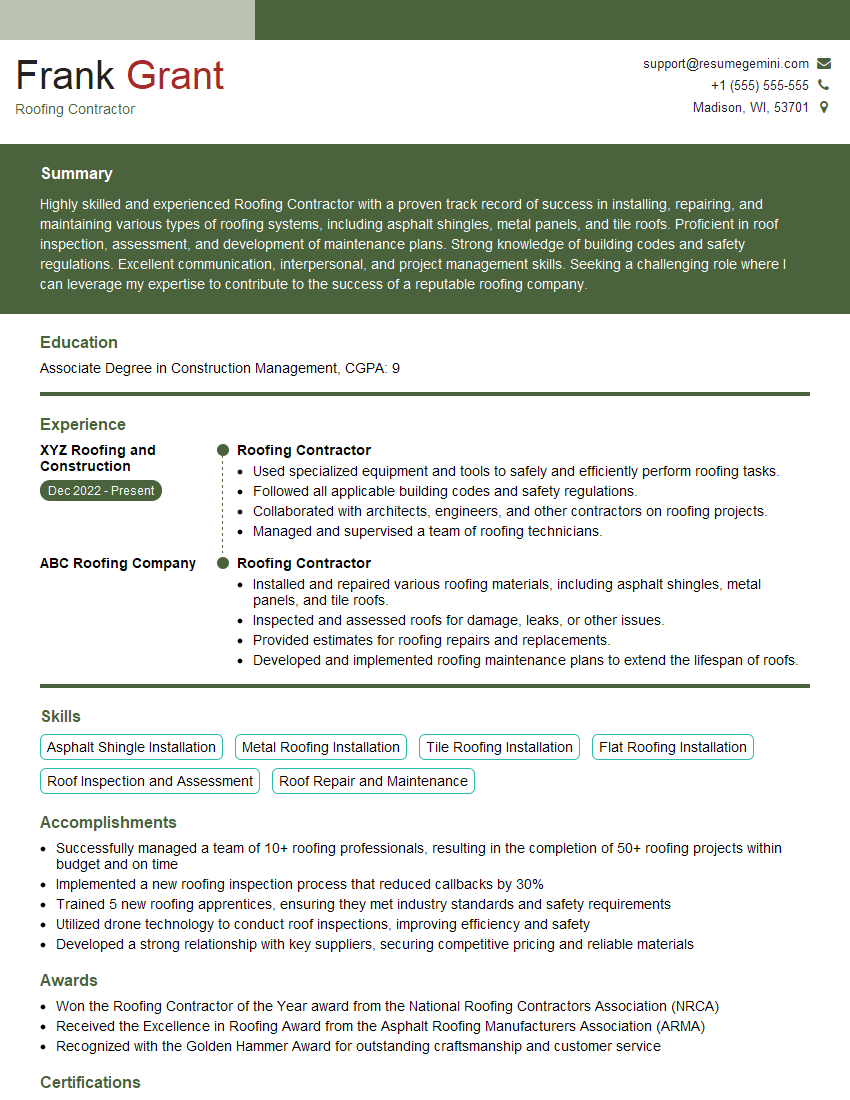
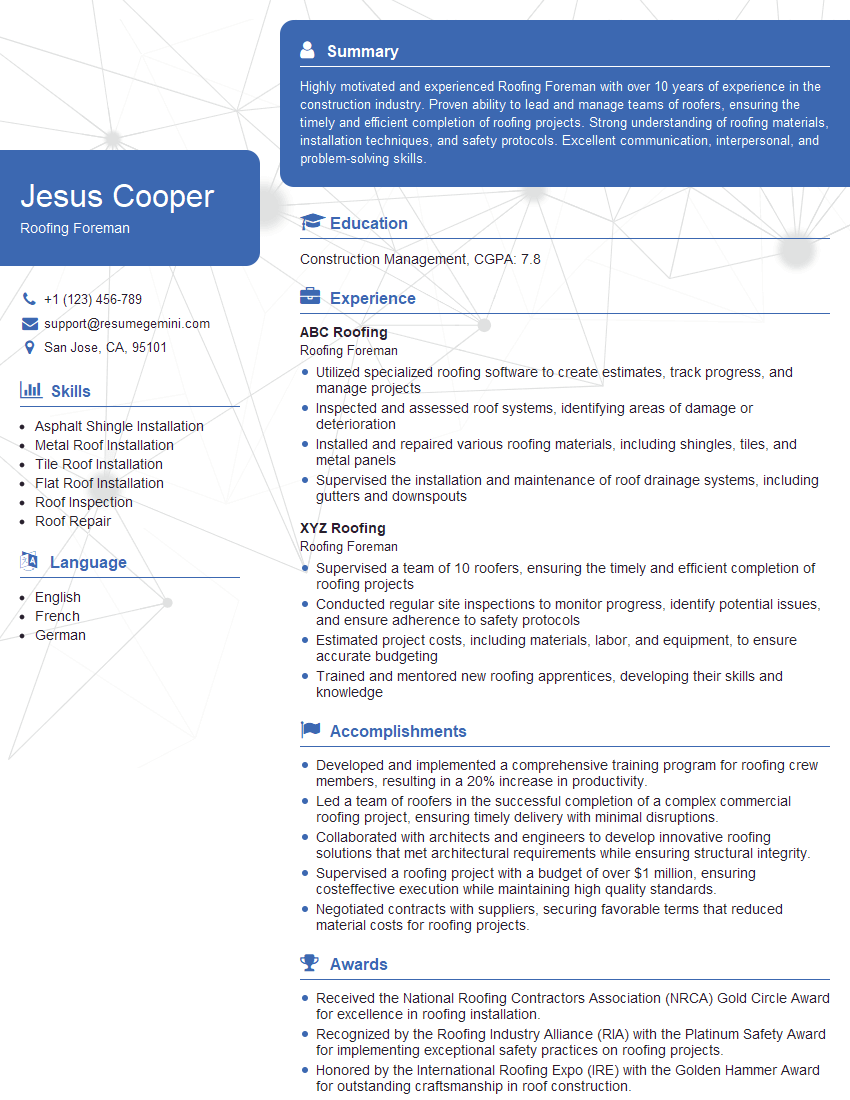
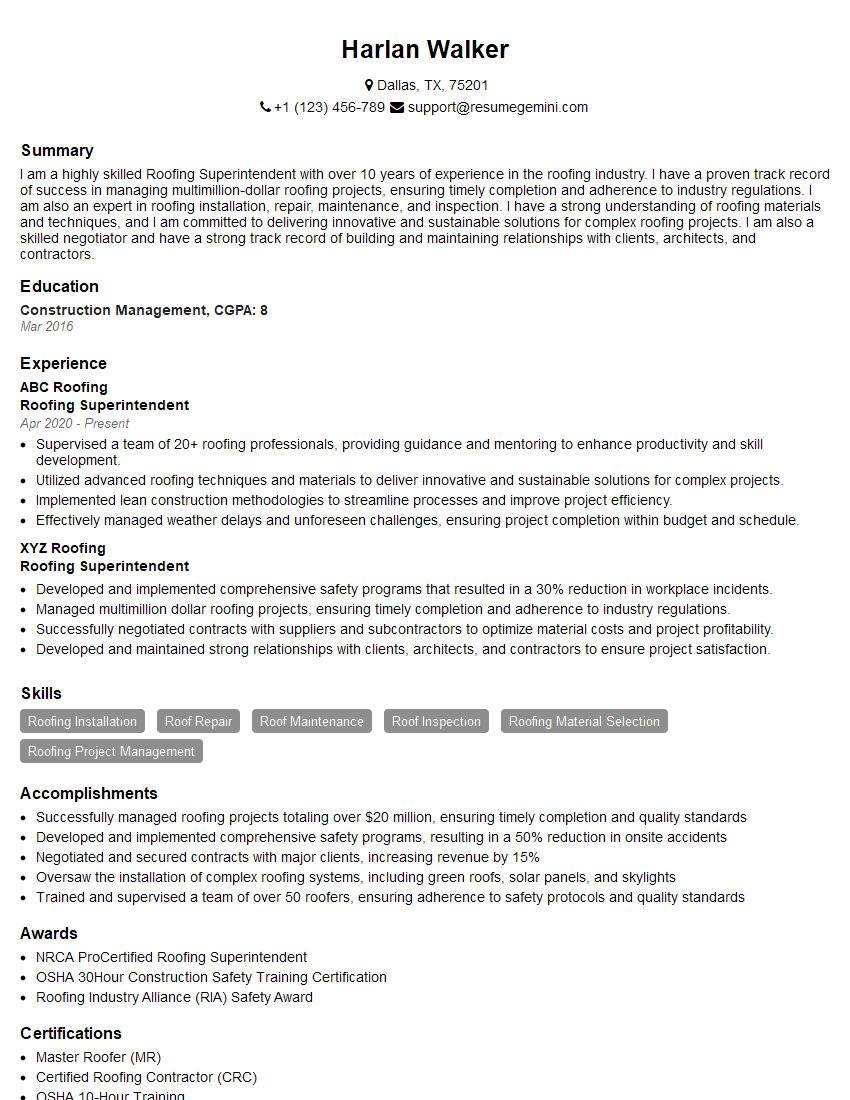
Mastering roofing work opens doors to a rewarding career with excellent earning potential and opportunities for advancement. To maximize your job prospects, focus on crafting a compelling and ATS-friendly resume that highlights your skills and experience effectively. ResumeGemini is a trusted resource that can help you build a professional resume tailored to the roofing industry. Examples of resumes specifically designed for roofing work are available to guide you. Invest the time to create a strong resume – it’s your first impression with potential employers.
Explore more articles
Users Rating of Our Blogs
Share Your Experience
We value your feedback! Please rate our content and share your thoughts (optional).
What Readers Say About Our Blog
Very informative content, great job.
good