Every successful interview starts with knowing what to expect. In this blog, we’ll take you through the top Rooftop Solar interview questions, breaking them down with expert tips to help you deliver impactful answers. Step into your next interview fully prepared and ready to succeed.
Questions Asked in Rooftop Solar Interview
Q 1. Explain the different types of solar panels and their applications.
Solar panels, also known as photovoltaic (PV) panels, come in several types, each with its own strengths and weaknesses. The most common are:
- Monocrystalline Silicon: These panels are made from a single silicon crystal, resulting in high efficiency (typically 18-22%) and a sleek, black appearance. They are ideal for space-constrained rooftops where maximizing energy output is crucial. For example, a homeowner with a small roof might opt for monocrystalline panels to generate the most power possible.
- Polycrystalline Silicon: These panels are made from multiple silicon crystals, resulting in slightly lower efficiency (typically 15-17%) and a blueish appearance. They are generally more affordable than monocrystalline panels, making them a popular choice for larger installations where cost is a significant factor. A large commercial building might prioritize polycrystalline panels for their lower cost per watt.
- Thin-Film Solar Panels: These panels are made from thin layers of photovoltaic material deposited on a substrate like glass or plastic. They are lighter and more flexible than crystalline silicon panels, making them suitable for curved roofs or building-integrated photovoltaics (BIPV). They are often used in more aesthetically sensitive applications.
The choice of panel type depends on factors such as budget, available roof space, aesthetic preferences, and energy needs. A thorough assessment of these factors is crucial for selecting the most suitable panel type for a specific application.
Q 2. Describe the process of installing a rooftop solar system.
Installing a rooftop solar system is a multi-stage process that requires careful planning and execution. It typically involves:
- Site Assessment: This involves evaluating the roof’s orientation, shading, structural integrity, and available space to determine the optimal system size and placement.
- System Design: Based on the site assessment, a customized solar system design is created, specifying the number and type of panels, inverters, racking system, and other components.
- Permitting and Inspections: Necessary permits are obtained from local authorities, and inspections are scheduled to ensure compliance with building codes and safety regulations.
- Roof Installation: The racking system is installed on the roof to securely mount the solar panels. This requires specialized tools and expertise to ensure structural integrity and prevent leaks.
- Panel Installation: The solar panels are carefully mounted onto the racking system, ensuring proper alignment and connections.
- Wiring and Electrical Connections: The panels are connected to the inverters, which convert DC power from the panels to AC power for use in the building.
- Inverter Installation: The inverters are installed, typically inside or near the building, to convert the DC electricity generated by the solar panels into usable AC electricity.
- System Testing and Commissioning: A thorough system test is conducted to ensure that everything is working correctly and meets the design specifications.
- Net Metering Setup (if applicable): The system is connected to the utility grid, and net metering arrangements are set up to allow for the exchange of electricity with the grid.
Each step requires specialized knowledge and skills, making it crucial to hire qualified and experienced installers.
Q 3. How do you ensure the structural integrity of a roof before installing solar panels?
Ensuring roof structural integrity before solar panel installation is paramount for safety and longevity. This involves a thorough assessment, often including:
- Visual Inspection: A detailed visual inspection of the roof surface, looking for signs of damage, decay, or deterioration such as cracks, missing shingles, or rust.
- Structural Evaluation: Assessing the roof’s load-bearing capacity to determine if it can safely support the added weight of the solar panels and racking system. This may involve calculations and potentially a structural engineer’s report, especially for older roofs or unusual designs.
- Roof Penetration Assessment: Identifying the best locations for mounting the racking system to minimize roof penetrations and ensure water tightness. This often involves considerations of flashing and sealant to prevent leaks.
- Wind Load Analysis: Evaluating the roof’s ability to withstand high winds, which can significantly impact solar panel installations. This often requires calculations based on local building codes and wind speeds.
Any necessary repairs or reinforcements should be completed before solar panel installation to ensure the long-term safety and performance of the system. Ignoring potential structural issues can lead to serious problems down the line.
Q 4. What are the key components of a solar PV system?
A typical solar PV system consists of several key components:
- Solar Panels (PV Modules): These convert sunlight into direct current (DC) electricity.
- Mounting System/Racking: This provides a secure and stable structure to mount the solar panels on the roof.
- Inverters: These convert the DC electricity from the panels into alternating current (AC) electricity compatible with household appliances.
- Wiring and Conduits: These connect the solar panels, inverters, and other components safely and efficiently.
- Disconnects and Safety Devices: These include circuit breakers, fuses, and disconnect switches to protect the system from overloads and ensure safety.
- Monitoring System (Optional): This allows for remote monitoring of the system’s performance and identification of potential issues.
- Batteries (Optional): For energy storage, allowing the use of solar energy even during periods of low sunlight.
The interaction of these components is crucial for generating, converting, and distributing clean energy.
Q 5. Explain the concept of net metering.
Net metering is a billing mechanism that allows solar PV system owners to sell excess electricity generated by their system back to the utility grid. Essentially, it’s a two-way flow of electricity between your home and the grid.
During the day, your solar panels generate electricity. If you’re using less electricity than your panels are producing, the excess electricity flows back to the grid. At night, or when your solar panels aren’t generating enough electricity, you draw power from the grid. At the end of the billing period, the utility company calculates the net amount of electricity consumed and produced. You’re only charged for the net difference (hence ‘net metering’). This essentially reduces or eliminates your electricity bill, sometimes even resulting in credits.
Net metering policies vary widely by location and utility company. Understanding your local net metering regulations is crucial for making informed decisions about a solar PV system.
Q 6. How do you troubleshoot common issues in a solar PV system?
Troubleshooting solar PV systems requires a systematic approach. Common issues and their solutions include:
- Low Power Output: This could be due to shading, dirty panels, faulty wiring, or a malfunctioning inverter. First, visually inspect the panels for dirt, debris, or shading. Then, check wiring connections and finally, test the inverter’s output.
- Inverter Malfunction: Inverters can fail due to overheating or other electrical issues. Check the inverter’s display for error codes and contact a qualified technician for repairs or replacement.
- Panel Faults: Individual panels can malfunction due to damage or defects. Use a multimeter to test the voltage and current output of individual panels to identify faulty units.
- Grounding Issues: Inadequate grounding can lead to safety hazards and system malfunctions. Inspect the grounding system and ensure it complies with electrical codes.
Always prioritize safety and disconnect the system from the grid before undertaking any troubleshooting tasks unless you are a qualified electrician.
Q 7. What safety precautions do you take while working on a rooftop?
Rooftop work is inherently dangerous, requiring strict adherence to safety protocols. These include:
- Fall Protection: Always use appropriate fall protection equipment, such as harnesses, lanyards, and anchor points, especially when working at heights.
- Appropriate Footwear: Wear sturdy, non-slip footwear designed for rooftop work.
- Safety Harness: Secure a properly fitted safety harness to a reliable anchor point at all times.
- Tool Tethers: Secure tools with tethers to prevent them from falling and causing injury or damage.
- Weather Awareness: Postpone work in adverse weather conditions such as high winds, rain, or snow.
- Communication: Maintain clear communication with colleagues, especially during complex tasks or emergency situations.
- Proper Training: All personnel involved in rooftop work should receive proper safety training and certification.
Prioritizing safety is not just a good practice; it’s a legal requirement. Neglecting safety protocols can result in serious injuries or fatalities.
Q 8. Describe your experience with solar panel inverters.
Solar panel inverters are crucial components of any rooftop solar system. Their primary function is to convert the direct current (DC) electricity generated by solar panels into alternating current (AC) electricity, which is what our homes and businesses use. I’ve worked extensively with various inverter technologies, including string inverters, microinverters, and power optimizers. String inverters are the most common and economical choice, connecting multiple panels in series. However, they have the drawback that a single faulty panel can impact the entire string’s performance. Microinverters, on the other hand, are individually connected to each panel, maximizing energy harvest even if one panel is shaded or malfunctioning. This leads to higher efficiency but at a greater initial cost. Power optimizers offer a middle ground, maximizing individual panel performance while still utilizing a central inverter. My experience has involved troubleshooting issues like grid-tie problems, monitoring inverter performance using data loggers, and selecting the appropriate inverter size based on system design and energy needs. For example, I recently worked on a project where we chose microinverters for a complex roof with significant shading, leading to a 15% increase in energy production compared to a string inverter design.
Q 9. How do you calculate the energy output of a solar panel system?
Calculating the energy output of a solar panel system is a multi-step process. First, you need to determine the total wattage of your solar panel array. This is simply the sum of the wattage of each individual panel (e.g., 10 panels x 300W/panel = 3000W or 3kW). Next, we consider the system’s efficiency losses. These losses occur throughout the system and include losses from the panels themselves (due to temperature, shading, etc.), the wiring, the inverter, and other system components. These losses typically range from 10% to 20%. Finally, we factor in the annual solar irradiance in your specific location. This is typically measured in kilowatt-hours per kilowatt-peak (kWh/kWp) per year and varies greatly depending on your geographical location and climate. For example, a 3kW system with a 15% loss factor in a location with an annual irradiance of 1500 kWh/kWp would generate approximately: (3kW * 1500kWh/kWp) * (1 – 0.15) = 3825 kWh per year. It’s crucial to use accurate local solar irradiance data and consider any potential shading issues for a reliable estimate. Software tools and online calculators are available to streamline this process, incorporating various factors for improved accuracy.
Q 10. What are the different types of solar mounting systems?
Solar mounting systems are critical for safely and efficiently securing solar panels to a roof. There are several types, each suited to different roof types and building structures.
- Roof-mounted systems: These are the most common type, and further categorized into:
- Racking systems: These use aluminum rails and mounting hardware to attach panels to the roof, suitable for various roof types.
- Tile-integrated systems: These systems are designed to blend seamlessly with existing tile roofs, often replacing tiles with solar panels.
- Flashing systems: Used with metal roofs, these systems create watertight seals between the panels and the roof.
- Ground-mounted systems: These systems use poles or frames to mount panels directly on the ground. This is suitable for larger installations or where rooftops are not available.
- Ballast systems: This system uses weights (ballast) to secure panels, often used for flat roofs where penetration is not desired.
Q 11. Explain the role of batteries in a rooftop solar system.
Batteries in a rooftop solar system play a vital role in energy storage. They store excess solar energy generated during the day, allowing for use at night or during periods of low sunlight. This improves energy independence and reduces reliance on the grid. Battery systems typically consist of multiple lithium-ion battery modules connected in series and parallel to achieve the desired voltage and capacity. The size of the battery bank is determined by the energy storage needs, which depend on energy consumption patterns and desired backup power duration. Using a battery system allows for Time-of-Use (TOU) billing strategies to be exploited, saving money by shifting energy consumption to off-peak hours. For instance, a household can use stored solar energy during peak hours, significantly lowering its electricity bill. However, it is essential to consider the cost of batteries, their lifespan, and the overall system efficiency when integrating them into a solar setup. The return on investment needs careful consideration, factoring in electricity rates and government incentives.
Q 12. How do you determine the optimal placement of solar panels on a roof?
Optimal placement of solar panels maximizes energy production and system efficiency. Several factors determine the ideal location:
- Sunlight exposure: Panels should receive maximum direct sunlight throughout the day, with minimal shading from trees, buildings, or other obstructions. South-facing roofs (in the Northern Hemisphere) are generally ideal.
- Roof orientation and angle: The roof’s angle should ideally be close to the latitude of the location for optimal solar exposure. Panel tilt can also be adjusted to further optimize angle.
- Roof condition and structural integrity: The roof must be able to support the weight of the solar panel system, and its condition must be assessed to ensure safety and longevity.
- Wiring and accessibility: The distance to the inverter and the ease of wiring must be considered to minimize energy losses.
Q 13. What are the benefits and drawbacks of rooftop solar systems?
Rooftop solar systems offer numerous benefits and drawbacks.
- Benefits:
- Reduced electricity bills: Generating your own electricity reduces dependence on the grid and lowers energy costs.
- Environmental friendliness: Solar power is a clean and renewable energy source, reducing carbon footprint.
- Increased home value: Solar systems often increase the market value of a property.
- Energy independence: Reduces reliance on utility companies, particularly advantageous during power outages.
- Drawbacks:
- High initial cost: The upfront investment in solar panels, inverters, and installation can be substantial, though it is offset over time.
- Weather dependence: Energy production varies with weather conditions; cloudy days and winter months yield less energy.
- Roof suitability: Not all roofs are suitable for solar panel installation due to shading, orientation, or structural limitations.
- Maintenance requirements: While generally low-maintenance, periodic cleaning and inspections are needed.
Q 14. Describe your experience with different types of solar racking systems.
My experience with solar racking systems spans various types, including fixed-tilt, adjustable-tilt, and tracking systems. Fixed-tilt systems are the simplest and most cost-effective, offering a straightforward installation. They are suitable for locations with consistent sun angles throughout the year. Adjustable-tilt systems allow for seasonal angle adjustments, optimizing energy capture during different times of the year. This is beneficial in regions with significant seasonal variations in sun angle. Tracking systems, though more expensive, offer the highest energy yield. They automatically adjust the panel angle to follow the sun’s movement throughout the day, maximizing energy capture. These are often employed in large-scale solar farms but are becoming increasingly viable for residential systems. My experience includes selecting the appropriate racking system based on project requirements, ensuring structural integrity, and coordinating with installers for efficient and safe installations. For instance, a recent project utilized an adjustable-tilt system in a location with significant seasonal variations, which led to a noticeable improvement in winter energy production compared to a fixed-tilt system.
Q 15. Explain your understanding of microinverters vs. string inverters.
Microinverters and string inverters are both crucial components of a rooftop solar system, responsible for converting the DC electricity generated by solar panels into AC electricity usable in homes. However, they differ significantly in their architecture and performance characteristics.
String inverters connect multiple solar panels in series (a string) and convert the combined DC output into AC. Think of it like a single powerful engine for a whole group of solar panels. If one panel in the string is shaded or faulty, it can affect the entire string’s output, reducing the system’s overall efficiency. They are generally less expensive upfront.
Microinverters, on the other hand, are small inverters attached individually to each solar panel. This means each panel operates independently. If one panel is shaded or malfunctioning, it doesn’t impact the others. This offers superior performance and monitoring capabilities, allowing for better diagnostics and optimization of energy generation at the panel level. The increased efficiency comes at a higher initial cost.
In short: String inverters are like a centralized power plant, while microinverters are like many smaller, independent generators. The choice depends on factors like budget, desired performance, and system size. For larger systems or areas with significant shading potential, microinverters often prove more efficient and reliable in the long run.
Career Expert Tips:
- Ace those interviews! Prepare effectively by reviewing the Top 50 Most Common Interview Questions on ResumeGemini.
- Navigate your job search with confidence! Explore a wide range of Career Tips on ResumeGemini. Learn about common challenges and recommendations to overcome them.
- Craft the perfect resume! Master the Art of Resume Writing with ResumeGemini’s guide. Showcase your unique qualifications and achievements effectively.
- Don’t miss out on holiday savings! Build your dream resume with ResumeGemini’s ATS optimized templates.
Q 16. How do you perform a site assessment for a rooftop solar project?
A thorough site assessment is the cornerstone of any successful rooftop solar project. It involves a multi-step process to determine the feasibility and optimal design of the system.
- Roof Inspection: We carefully examine the roof’s structure, material (e.g., asphalt shingles, tile, metal), orientation, and condition to ensure it can safely support the weight and withstand potential weather impacts. We identify potential issues like leaks or weak areas that might require attention before installation.
- Shading Analysis: We use specialized software and tools, often including drone photography, to assess the amount and duration of shading throughout the day from trees, buildings, or other obstructions. Shading significantly impacts energy production.
- Energy Consumption Analysis: We review the homeowner’s electricity bills to understand their energy usage patterns. This helps determine the appropriate system size to meet their needs and potentially offset a significant portion of their consumption.
- Electrical System Assessment: We inspect the existing electrical panel to ensure it has the capacity to handle the added solar power. Upgrades might be necessary, and we factor these into the project cost.
- Permitting and Regulations: We research local building codes, HOA regulations, and utility interconnection requirements. This ensures the project complies with all applicable rules and regulations. We often assist the homeowner in obtaining the necessary permits.
The assessment culminates in a detailed report outlining the findings, proposed system design, projected energy production, and a cost estimate. This report empowers the homeowner to make an informed decision.
Q 17. What are the relevant building codes and regulations for installing solar panels?
Building codes and regulations for solar panel installations vary significantly by location (city, county, state). However, common themes include:
- Structural Integrity: Codes ensure the roof can support the additional weight of the panels and mounting system. This often includes requirements for specific attachment methods and load calculations.
- Electrical Safety: Strict guidelines cover wiring, grounding, overcurrent protection, and proper interconnection to the grid. These are designed to prevent electrical hazards.
- Fire Safety: Regulations address potential fire risks, often mandating specific fire-resistant materials and installation techniques.
- Accessibility and Maintenance: Rules might govern the spacing and accessibility of panels for future maintenance and cleaning.
- Permitting: Obtaining the necessary permits before commencing installation is crucial and often involves inspections at various stages of the project.
We always consult the relevant local authorities (building department, fire marshal, and utility company) early in the project to ensure compliance. Ignoring these regulations can lead to delays, fines, and potentially even the need for system removal. Each project requires a detailed review of the specific codes in the project’s jurisdiction.
Q 18. What are your methods for ensuring the efficiency of a solar panel system?
Ensuring the efficiency of a solar panel system involves a multifaceted approach that starts well before installation and continues throughout the system’s lifespan.
- Optimal System Design: Proper site assessment and system sizing are crucial. We aim for the ideal panel placement to maximize sun exposure and minimize shading. This might involve using software simulations to predict annual energy generation.
- High-Quality Components: We utilize panels and inverters with proven performance and reliability, selecting reputable manufacturers with robust warranties.
- Professional Installation: Skilled installation is vital to ensure the system’s structural integrity and electrical safety. Proper wiring and connections minimize energy losses.
- Regular Maintenance: We recommend regular inspections and cleaning of the panels to remove dirt and debris that can reduce efficiency. We may also advise on preventative maintenance measures to ensure the longevity of the system.
- Monitoring and Optimization: Utilizing monitoring systems to track the system’s performance allows for early detection of potential issues and optimization strategies to improve energy production.
For example, a system with improperly oriented panels will not produce its full potential. Similarly, a poorly wired system will experience energy losses due to resistance. By combining careful planning, quality components, and consistent monitoring, we strive to achieve optimal efficiency and energy generation from each system.
Q 19. Describe your experience with solar energy monitoring systems.
I have extensive experience with various solar energy monitoring systems, both hardware-based and cloud-based. These systems are essential for optimizing performance and troubleshooting any issues. They provide real-time data on key metrics such as:
- Energy Production: Monitoring the system’s total energy generation, as well as individual panel or string performance.
- Power Output: Tracking the system’s current power output in real-time.
- Voltage and Current: Monitoring the voltage and current at various points in the system for early detection of abnormalities.
- Environmental Data: Recording temperature, solar irradiance, and other environmental factors that influence panel performance.
- Fault Detection: Identifying potential issues such as shading, panel failures, or inverter problems.
This data is invaluable for optimizing the system, for example, identifying shaded panels or noticing a gradual decline in performance that might indicate a developing problem. Cloud-based platforms often provide sophisticated reporting and analytics tools, helping us quickly diagnose and resolve issues, saving our clients both time and money. We use this data to ensure that the system remains at peak efficiency, and it also helps us to build a strong relationship with our clients based on transparency and data-driven decision-making.
Q 20. How do you deal with shading issues in solar panel installations?
Shading is a significant challenge in rooftop solar installations, as even partial shading can drastically reduce the energy production of an entire string in a string inverter system. Our approach to mitigating shading involves several strategies:
- Careful Site Assessment: As mentioned earlier, a thorough shading analysis is paramount. We use specialized software and tools to model the shading patterns throughout the day and year.
- Optimized Panel Placement: We carefully position panels to minimize the impact of shading. This may involve adjusting the panel layout or utilizing techniques like panel tilt adjustments to avoid shadowing.
- Microinverters: For systems in areas with significant shading, microinverters offer a superior solution. Since each panel operates independently, the impact of shading is limited to only the affected panel, significantly reducing energy losses.
- Partial Shading Mitigation Techniques: In cases where complete avoidance is not possible, we might use techniques like bypass diodes within the panels to minimize the impact of shading on the string. These diodes essentially bypass shaded cells, improving the performance of the rest of the panel.
- Pruning or Removal of Obstructions: If feasible, we might suggest trimming branches or removing minor obstructions that cause shading.
The most effective approach often involves a combination of these strategies, tailored to the specific shading conditions of each site. Our goal is always to maximize energy production despite the presence of shade.
Q 21. What are the different types of solar panel warranties?
Solar panel warranties typically cover two main aspects: the panels themselves and the workmanship of the installation.
- Product Warranty: This warranty covers defects in the manufacturing of the solar panels. Commonly, these warranties offer a performance guarantee (a percentage of nameplate power output for a certain number of years) and a materials and workmanship warranty that covers defects in materials or craftsmanship for a longer duration, typically 25 years.
- Labor Warranty: This warranty covers the workmanship of the installation. This typically covers the cost of labor and materials related to repairing any defects in the installation itself. The length of this warranty varies but is often around 10 years.
- Inverter Warranty: Similar to panels, inverters come with their own performance and materials/workmanship warranties. These are usually separate warranties from the panel manufacturer’s warranties.
It’s crucial to carefully review the specific terms and conditions of each warranty, paying attention to limitations and exclusions. Different manufacturers offer varying warranty periods and coverage levels. We always advise our clients to review and understand the warranties before making a purchase decision, highlighting the key aspects and implications.
Q 22. Explain your experience with permitting and inspections for solar projects.
Permitting and inspections are crucial for ensuring a rooftop solar system is installed safely and legally. My experience encompasses the entire process, from initial application to final inspection. This includes navigating local building codes, fire codes, and utility interconnection requirements.
For example, I’ve successfully managed projects requiring variance approvals for non-standard roof configurations. This involved detailed documentation showcasing the structural integrity of the proposed mounting system and compliance with all relevant regulations. I also have experience with addressing concerns raised during inspections, making necessary adjustments, and ensuring a timely resolution.
In another instance, I worked on a project where the utility company’s interconnection requirements were exceptionally stringent. We meticulously followed their protocol, providing detailed electrical plans and simulations to demonstrate grid compatibility. This ultimately resulted in the project’s successful completion and interconnection.
- I handle all necessary documentation, including drawings, calculations, and permits.
- I schedule and coordinate inspections with relevant authorities.
- I address any issues raised during inspections to ensure swift approval.
- I maintain comprehensive records throughout the entire process for future reference and audit trails.
Q 23. How do you communicate technical information to non-technical clients?
Communicating technical information to non-technical clients requires clear, concise language and effective visualization. I avoid jargon and use analogies to explain complex concepts. For instance, instead of saying ‘maximum power point tracker,’ I explain it as a ‘smart device that optimizes energy production from the solar panels.’
I often use diagrams and illustrations to visually represent the system’s components and functionality. Imagine explaining the electricity generation process; I’d use a simple diagram showing sunlight hitting panels, creating electricity that flows to the inverter and then the home. I also provide detailed but digestible reports outlining system performance expectations, costs, and return on investment, using charts and graphs to present the data clearly.
Finally, I encourage questions and actively listen to client concerns. Building trust and transparency are key. I find that answering questions patiently and thoroughly helps clients gain confidence in the technology and the process.
Q 24. What are the environmental impacts of rooftop solar systems?
While rooftop solar systems have significant environmental benefits, it’s important to acknowledge potential impacts. The primary benefit is the reduction in greenhouse gas emissions by replacing fossil fuel-based electricity generation with clean solar power. This directly contributes to mitigating climate change.
Manufacturing solar panels does require energy and resources, creating some carbon footprint. However, the lifecycle assessment consistently shows that the environmental benefit of solar energy far outweighs the manufacturing impact. Additionally, responsible disposal and recycling of solar panels at the end of their lifespan are becoming increasingly important to minimize waste and environmental harm.
There can be minor localized impacts, such as the use of land for manufacturing and the potential need for specialized materials in certain installations. However, these are generally minimized through careful planning and sustainable practices.
Q 25. How do you ensure the longevity of a rooftop solar system?
Ensuring the longevity of a rooftop solar system requires a multi-pronged approach encompassing high-quality components, proper installation, and regular maintenance. We prioritize using panels and inverters from reputable manufacturers with strong warranties.
Proper installation is critical; this includes secure mounting systems that can withstand extreme weather conditions and careful wiring to prevent electrical faults. Regular inspections help identify and address minor issues early on, before they escalate into major problems. These inspections may include checking for loose connections, damaged panels, and signs of corrosion.
In addition, cleaning the panels regularly, especially in dusty or snowy climates, ensures optimal performance throughout the system’s lifespan. This simple maintenance step can dramatically improve energy output.
Q 26. Describe your experience working with different types of roof materials.
My experience includes working with a wide variety of roof materials, including asphalt shingles, tile roofs, metal roofs, and flat roofs. Each material presents unique challenges and considerations for solar panel installation.
Asphalt shingle roofs, for instance, require careful consideration of penetrations to avoid leaks. We use specialized mounting techniques that minimize the risk of damage to the shingles. Tile roofs need robust racking systems to accommodate the weight and uneven surface. Metal roofs are generally easier to work with due to their strength and durability but require special fasteners to avoid puncturing the metal sheets.
Flat roofs require a different approach entirely. We assess the roof’s structural integrity and consider ballast systems or penetrative mounting depending on the roof’s condition and load-bearing capacity. Safety and structural integrity are paramount regardless of the roof type.
Q 27. What are your strategies for maintaining a safe and productive work environment?
Maintaining a safe and productive work environment is a top priority. This begins with comprehensive safety training for all team members, covering aspects such as fall protection, electrical safety, and proper handling of tools and equipment. We use appropriate personal protective equipment (PPE) consistently, including harnesses, hard hats, and safety glasses.
We follow strict safety protocols throughout every stage of the project, adhering to all relevant industry standards and regulations. We conduct regular site inspections to identify and mitigate any potential hazards. This might involve checking for potential fall hazards, ensuring proper grounding, and assessing weather conditions before commencing work.
Open communication among team members is essential; we encourage reporting any safety concerns immediately. We foster a culture of safety where everyone feels comfortable voicing concerns without fear of retribution. A safe and respectful work environment is crucial for both productivity and worker well-being.
Key Topics to Learn for Rooftop Solar Interview
- Solar Panel Technology: Understanding different types of solar panels (monocrystalline, polycrystalline, thin-film), their efficiency, and limitations. Practical application: Comparing panel performance in various climates and roof orientations.
- System Design and Engineering: Mastering the principles of designing efficient and safe rooftop solar systems, including array sizing, inverter selection, and wiring diagrams. Practical application: Troubleshooting potential system issues and optimizing energy production.
- Energy Storage Solutions: Familiarizing yourself with battery technology and its integration into rooftop solar systems. Practical application: Explaining the benefits and limitations of battery backup systems for homeowners.
- Permitting and Regulations: Understanding local building codes, permitting processes, and safety regulations related to rooftop solar installations. Practical application: Navigating the regulatory landscape to ensure compliant installations.
- Sales and Customer Interaction: Developing strong communication skills to effectively explain technical concepts to non-technical audiences. Practical application: Presenting solar system proposals and addressing customer concerns.
- Financial Modeling and ROI: Analyzing the financial viability of rooftop solar projects, including cost-benefit analysis and return on investment calculations. Practical application: Creating compelling financial proposals for potential clients.
- Installation and Maintenance: Understanding the practical aspects of installing and maintaining rooftop solar systems, including safety procedures and troubleshooting common issues. Practical application: Describing the process of a typical installation and preventative maintenance.
- Sustainability and Environmental Impact: Articulating the environmental benefits of rooftop solar energy and its role in reducing carbon emissions. Practical application: Discussing the long-term sustainability of solar energy solutions.
Next Steps
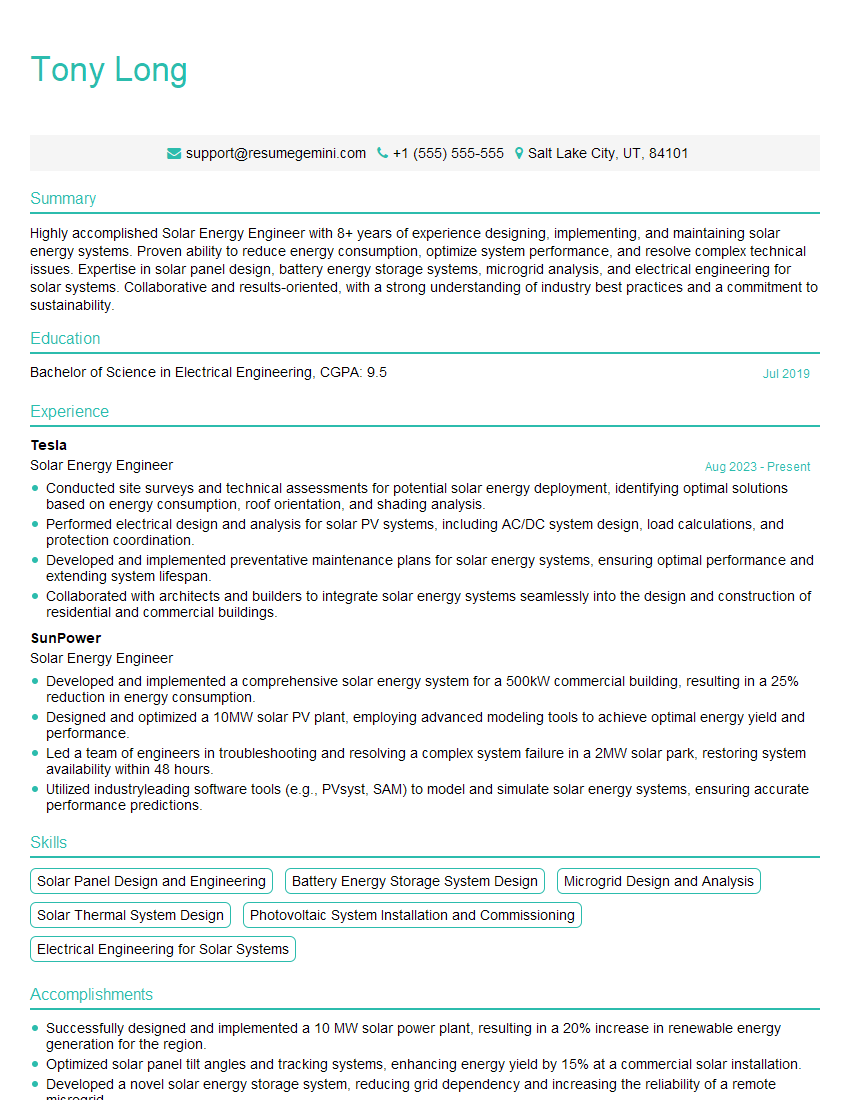
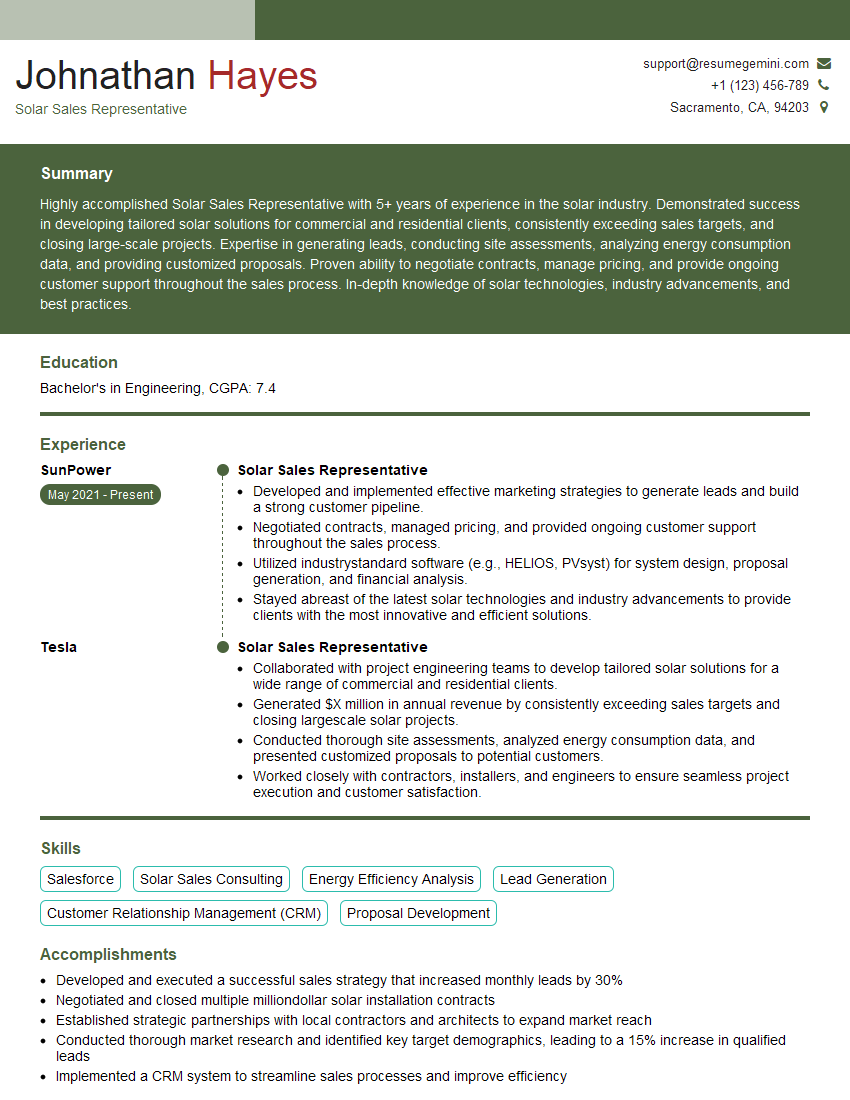
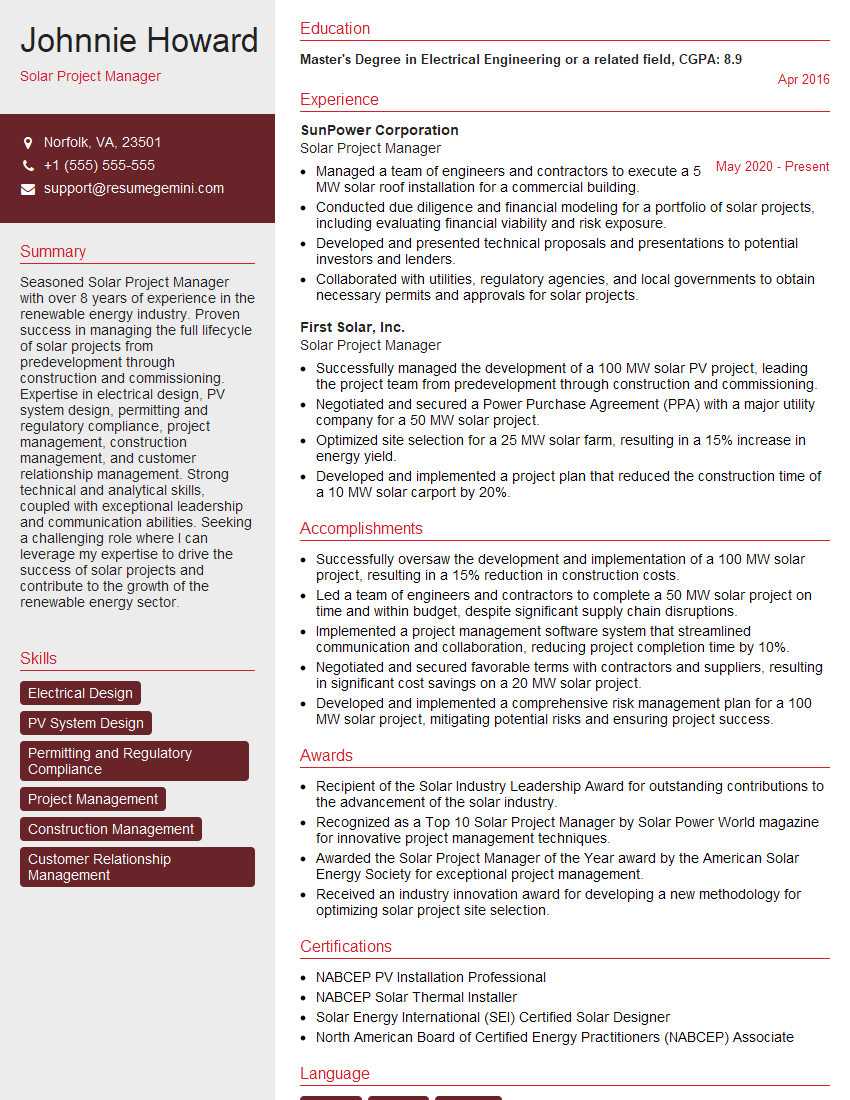
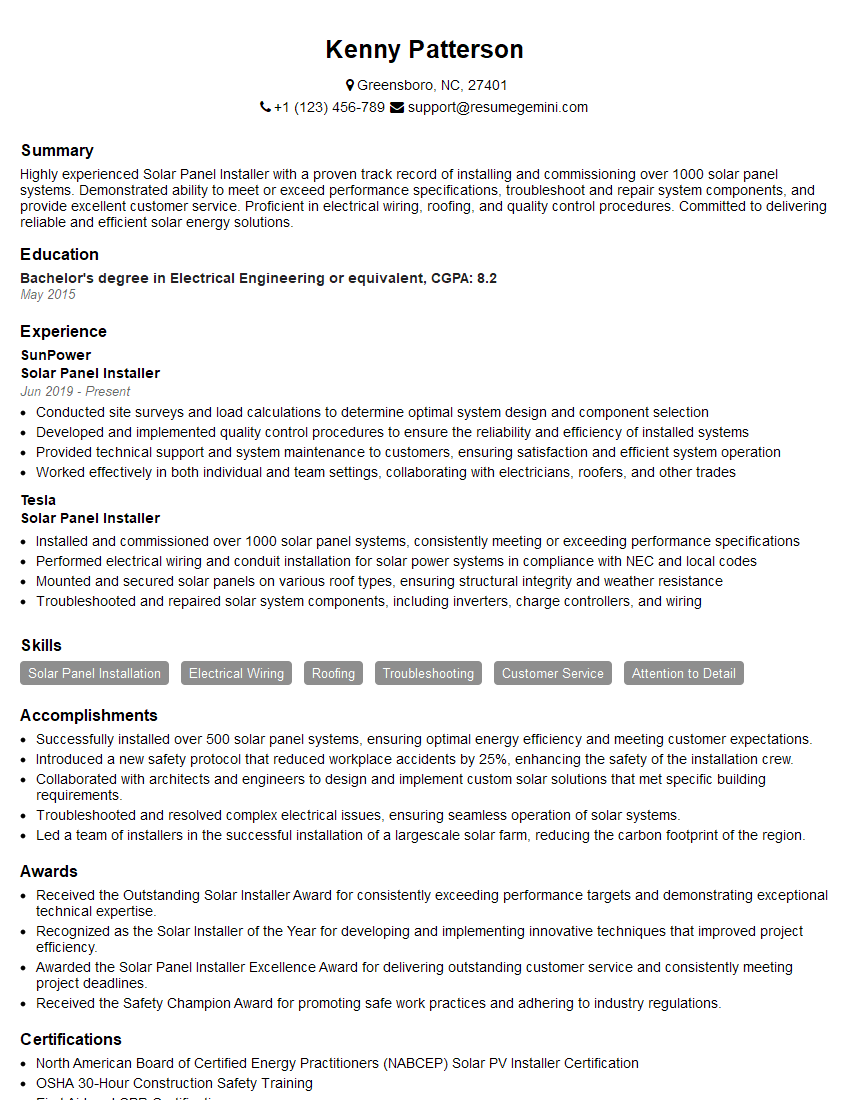
Mastering these key areas of rooftop solar will significantly boost your career prospects in this rapidly growing industry. A strong understanding of these concepts, combined with practical experience, will set you apart from other candidates. To increase your chances of landing your dream job, create an ATS-friendly resume that highlights your skills and experience effectively. We strongly recommend using ResumeGemini, a trusted resource for building professional resumes. ResumeGemini offers examples of resumes tailored to the Rooftop Solar industry to help you craft a compelling application.

Explore more articles
Users Rating of Our Blogs
Share Your Experience
We value your feedback! Please rate our content and share your thoughts (optional).
What Readers Say About Our Blog
Very informative content, great job.
good