Every successful interview starts with knowing what to expect. In this blog, we’ll take you through the top Rotary Press Operation interview questions, breaking them down with expert tips to help you deliver impactful answers. Step into your next interview fully prepared and ready to succeed.
Questions Asked in Rotary Press Operation Interview
Q 1. Explain the different types of rotary presses.
Rotary presses are categorized based on their printing method and the number of printing units. The most common types include:
- Sheetfed Rotary Presses: These presses print on individual sheets of paper, offering high-quality results and flexibility in paper stock. Think of them as high-speed cousins to your standard offset press, but with cylindrical plates and blankets. They are ideal for high-volume short runs of high-quality products like brochures, magazines, or business cards.
- Web-fed Rotary Presses: These presses print on a continuous roll of paper (the ‘web’), offering unmatched speed and efficiency for mass production. Newspapers, magazines with huge print runs, and large catalogs often use these. They are less flexible with paper type but deliver enormous printing speed and throughput.
- Heatset Web Offset Presses: A specialized type of web-fed press that uses heat to dry the ink quickly, enabling faster production and allowing for the use of thinner, glossy papers. Think of glossy magazines – the vibrant colors are often a result of this method.
- Coldset Web Offset Presses: Another web-fed type, but the ink dries through absorption into the paper, which is slower but suitable for newsprint or other absorbent papers. Newspapers frequently utilize coldset presses due to cost efficiency and the type of paper used.
The choice depends heavily on the job requirements – print quality, volume, and paper type.
Q 2. Describe the setup process for a rotary press.
Setting up a rotary press is a meticulous process demanding precision and attention to detail. The steps generally include:
- Plate Mounting: Carefully attaching the printing plates (often made of aluminum or polymer) onto the cylinders, ensuring precise registration.
- Ink and Water Setting: Adjusting the ink fountain and dampening system to achieve the correct ink-water balance for the desired color density and print quality. This is critical and often involves careful experimentation and adjustment.
- Paper Path Setup: Configuring the paper feed, rollers, and delivery systems to ensure smooth paper flow and prevent jams. This may involve adjusting various tension and guide mechanisms.
- Registration Check: Precisely aligning the colors using a registration target. This ensures that all colors perfectly overlap, producing a crisp, clear image. Misregistration is a common problem that requires careful attention during setup.
- Test Run and Adjustments: Performing a test run to evaluate the color density, registration, and overall print quality. Fine-tuning adjustments based on the test results is crucial before commencing full production. This is an iterative process; you may do multiple test runs until the desired quality is achieved.
The entire setup process requires a skilled operator with a thorough understanding of the press’s mechanics and printing principles. One wrong move can lead to significant waste and production delays.
Q 3. What are the common safety procedures for operating a rotary press?
Safety is paramount when operating a rotary press. Key procedures include:
- Lockout/Tagout Procedures: Always lock out and tag out power to the press before performing any maintenance or repairs. This is crucial to prevent accidental starts.
- Personal Protective Equipment (PPE): Wearing appropriate PPE such as safety glasses, hearing protection, and gloves is mandatory. Long hair should be tied back.
- Machine Guards: Ensuring all machine guards are in place and functioning correctly to prevent accidental contact with moving parts. Never disable safety mechanisms.
- Proper Training: Only trained and authorized personnel should operate the press.
- Emergency Shutdown Procedures: Knowing the location and proper use of emergency stop buttons and other safety devices is essential. Regular drills can reinforce this.
- Regular Inspections: Regular inspection of the press for any mechanical issues or safety hazards is critical for preventative maintenance and accident prevention.
A safe work environment is a productive work environment; cutting corners on safety is never justified.
Q 4. How do you identify and troubleshoot common printing press problems?
Troubleshooting rotary press problems often involves systematic investigation. Common issues include:
- Poor Ink Density: Check ink fountain levels, ink viscosity, and the ink-water balance. Clean the rollers and ensure proper ink distribution.
- Misregistration: Inspect the plate mounting, cylinder alignment, and registration settings. Check for any wear on the plate or blanket.
- Paper Jams: Identify the jam location and carefully clear the paper, paying attention to not damage the paper path or rollers. Check for paper misfeeds. Often, this may be caused by incorrect paper tension.
- Streaking or Blurring: This can indicate issues with rollers, improper ink distribution, or worn plates.
- Excessive Waste: Could point towards misfeeding, poor registration, or machine malfunction.
A methodical approach involving visual inspection, methodical elimination of causes and testing is crucial. Keeping detailed logs of problems and solutions can be invaluable.
Q 5. Explain the importance of maintaining consistent ink density.
Consistent ink density is crucial for maintaining uniform color and print quality across the entire print run. Variations in ink density lead to uneven colors, which are visually unappealing and can affect brand consistency.
Think of it like baking a cake – if you don’t have consistent ingredients, your cake will be unevenly baked. In printing, inconsistent ink density translates to uneven color, which looks unprofessional and can lead to costly reprints.
Maintaining consistent ink density involves careful monitoring of ink viscosity, water balance, and roller cleaning. Regular checks and adjustments are necessary to ensure uniform ink transfer throughout the print run. Using appropriate color management tools and techniques is also crucial.
Q 6. How do you manage paper jams on a rotary press?
Managing paper jams efficiently minimizes downtime and prevents damage to the press. The steps typically involve:
- Safe Shutdown: Stop the press safely before attempting to clear the jam.
- Identify the Jam Location: Locate the exact point of the jam using the press’s indicators or visual inspection.
- Careful Removal: Carefully remove the jammed paper, avoiding damage to the paper path components.
- Check for Obstructions: Check for any foreign objects or debris that might have caused the jam.
- Inspect Paper Path: Examine the rollers, guides, and other paper path elements for any damage or misalignment.
- Restart and Monitor: Restart the press and carefully monitor the paper feed for any recurrence.
Preventing jams through proper paper handling and regular press maintenance is far more efficient than constantly dealing with them.
Q 7. Describe your experience with different types of printing plates.
My experience encompasses several types of printing plates, each with its own advantages and disadvantages:
- Conventional Metal Plates: These are traditional aluminum plates, often imaged using photopolymer techniques or direct digital imaging. They are relatively durable and cost-effective but require careful handling to avoid damage and scratches.
- Polymer Plates: These flexible plates are lighter than metal plates, easier to handle, and often faster to process. They are ideal for shorter runs but may not have the same durability as metal plates.
- Surface Plates: These are plates with a treated surface designed to enhance ink transfer and reduce ink consumption. I’ve found them beneficial for improving print quality.
The selection of plate type depends on factors such as print run length, print quality requirements, and budget. I’ve found that understanding the specific properties of each plate type is critical to achieving optimal print results.
Q 8. What are the key performance indicators (KPIs) for a rotary press operator?
Key Performance Indicators (KPIs) for a rotary press operator are crucial for measuring efficiency and print quality. They typically focus on speed, quality, and waste reduction. Think of it like this: a chef doesn’t just cook, they also track how quickly they prepare a dish, how many ingredients are wasted, and of course, how delicious the food is.
- Speed/Production Rate: Measured in impressions per hour (IPH) or sheets per hour (SPH), this shows how efficiently the press runs. A higher IPH/SPH indicates better productivity.
- Waste Rate: This KPI tracks the percentage of spoiled or unusable prints. Ideally, this should be as close to zero as possible. High waste indicates issues with press setup, material handling, or quality control.
- Setup Time: The time taken to prepare the press for a new job, including changing plates, inks, and paper. Shorter setup times increase overall efficiency.
- Press Downtime: This measures the time the press is not actively printing, due to malfunctions, maintenance, or other issues. Minimizing downtime is essential for maximizing productivity.
- Quality Control Metrics: These could include the number of rejected sheets due to color inconsistencies, registration errors, or print defects. A low rejection rate is a sign of excellent print quality.
These KPIs are usually tracked and analyzed using specialized software and reporting tools. Regular monitoring helps identify areas for improvement and ensures consistent high-quality output.
Q 9. How do you ensure the quality of the printed product?
Ensuring print quality is a multi-faceted process starting long before the press even begins running. It’s like baking a cake – you need the right ingredients, the correct process, and a watchful eye throughout.
- Pre-Press Checks: Thorough review of the digital files, including color profiles, image resolution, and trapping, is vital. Catching errors early saves time and materials.
- Color Management: Accurate color calibration of the press and precise ink mixing are essential. We use spectrophotometers to measure and adjust colors to match the desired standards. Think of it as using a precise scale for baking.
- Registration: Precise alignment of colors and images across all printing units is critical. Regular checks and adjustments ensure accurate print registration.
- Paper Quality Control: Consistent paper feed, moisture content, and surface quality are monitored to prevent jams and ensure optimal ink adhesion.
- Ink and Coating Application: The correct amount of ink and coating must be applied for consistent color density and image sharpness. We carefully monitor ink levels and adjust the rollers as necessary.
- Regular Inspections: Throughout the run, we continuously inspect the printed sheets for any defects such as misregistration, color variations, or smudging. We intervene immediately if a problem is detected.
By meticulously addressing each step, I ensure the finished product consistently meets or exceeds quality expectations.
Q 10. Explain your experience with press registration and adjustments.
Press registration is the precise alignment of the printed images from different printing units. It’s like assembling a complex jigsaw puzzle; each piece (color) must perfectly align with the others. Incorrect registration results in blurry or misaligned images.
My experience includes handling various registration challenges: from minor adjustments using the press’s fine-tuning mechanisms to more complex issues requiring adjustments to plate cylinders, impression cylinders, and even gear adjustments. I’m proficient in using various tools like registration gauges and microscopes for precise measurement and correction.
For instance, I once encountered a complex registration issue on a six-color press printing a high-resolution image. Through systematic troubleshooting, using a combination of mechanical adjustments and fine-tuning of the ink rollers, I successfully achieved perfect registration, avoiding considerable waste and delays.
I approach registration adjustments methodically, starting with minor adjustments and progressing to more involved solutions only if necessary, always documenting changes for future reference. This ensures a repeatable and efficient process.
Q 11. Describe your experience with different types of inks and coatings.
I’ve worked extensively with various inks, including UV (ultraviolet), water-based, and conventional oil-based inks. Each ink type has unique properties affecting drying time, color vibrancy, and surface adhesion. It’s like choosing the right paint for a project – oil-based for a long-lasting finish, water-based for a faster-drying and less harsh option.
My experience also extends to different coatings, including UV, aqueous, and varnishes. Coatings enhance the durability and visual appeal of the print, protecting it from scratches and adding a glossy or matte finish. Selecting the correct coating depends on the paper type and desired final effect. For example, a UV coating provides exceptional protection and gloss on coated stocks while an aqueous coating might be preferred for uncoated papers.
I understand the importance of proper ink and coating management, including ink mixing, color matching, and the careful monitoring of viscosity to maintain consistent printing quality. Safety precautions associated with each ink type are strictly adhered to.
Q 12. How do you handle different paper stocks and weights?
Handling different paper stocks and weights is a fundamental aspect of rotary press operation. Each paper type has unique properties that impact how it feeds through the press and accepts ink. It’s like adjusting a recipe based on the flour type – different flour requires different amounts of liquid.
My experience covers a wide range of paper weights and types, from lightweight newsprint to heavier coated stocks. I understand the importance of adjusting the press settings accordingly, including changing the paper feed rollers, adjusting the impression pressure, and modifying the ink settings to ensure optimal print quality and prevent jams. For example, heavier stocks require higher impression pressure and potentially slower speeds to avoid paper damage. Lighter stocks may require adjustments to the feed system to prevent misfeeds.
I’m adept at recognizing the characteristics of various paper stocks and choosing the appropriate press settings for consistent and reliable printing results. My experience includes troubleshooting issues related to paper wrinkles, jams, and breaks, and implementing corrective measures promptly.
Q 13. What is your experience with pre-press and post-press processes?
My experience encompasses both pre-press and post-press processes. Understanding these stages is crucial for overall print quality and efficiency; it’s like knowing the whole recipe, not just the cooking part.
Pre-press includes file preparation, color proofing, and platemaking. I work closely with the pre-press team to ensure accurate file setup and color consistency, preventing errors that could impact print quality. This often involves reviewing color profiles and ensuring proper trapping and image resolution.
Post-press operations like cutting, folding, binding, and finishing are equally crucial. I understand how these processes affect the final product and collaborate with the post-press team to minimize waste and maximize efficiency. For example, understanding how different folding techniques impact the printed sheet allows me to adjust the press settings to optimize the cutting and folding processes.
This holistic understanding allows me to anticipate potential problems and proactively address issues that may arise during any stage of the print process.
Q 14. Describe your experience with cleaning and maintaining a rotary press.
Regular cleaning and maintenance are vital for maximizing press lifespan, minimizing downtime, and maintaining print quality. It’s like regularly servicing your car – preventative maintenance is far better than costly repairs later.
My cleaning procedures include daily cleaning of ink rollers, dampening system, and impression cylinders, followed by more thorough cleaning after each job. This involves using appropriate cleaning solvents and following manufacturer guidelines to prevent damage. I also perform weekly checks of the press, lubricating moving parts, and identifying any potential issues.
Preventive maintenance tasks I regularly perform include checking bearing lubrication, ensuring proper tension on rollers and belts, and inspecting for any wear and tear. I’m familiar with the manufacturer’s service manuals and follow established safety protocols throughout these procedures. Proper maintenance not only prevents costly breakdowns but also ensures the press delivers high-quality prints consistently.
Q 15. How do you work effectively under pressure and meet tight deadlines?
Working effectively under pressure and meeting tight deadlines in rotary press operation requires a structured approach. I thrive in high-pressure environments because I’ve developed a system based on prioritization, efficient task management, and proactive communication.
For instance, when facing a critical rush job, I begin by thoroughly assessing the job specifications and potential bottlenecks. I then break down the entire process into smaller, manageable tasks, assigning realistic timelines to each. This allows me to monitor progress effectively and identify potential delays early on. Open communication with the team is crucial – I keep everyone informed of the schedule, any challenges encountered, and potential solutions. Proactive problem-solving is key; anticipating issues and having backup plans allows for smoother operations even under pressure. Think of it like a well-orchestrated symphony – each instrument (task) plays its part in perfect harmony, resulting in a flawless final product (on-time delivery).
Career Expert Tips:
- Ace those interviews! Prepare effectively by reviewing the Top 50 Most Common Interview Questions on ResumeGemini.
- Navigate your job search with confidence! Explore a wide range of Career Tips on ResumeGemini. Learn about common challenges and recommendations to overcome them.
- Craft the perfect resume! Master the Art of Resume Writing with ResumeGemini’s guide. Showcase your unique qualifications and achievements effectively.
- Don’t miss out on holiday savings! Build your dream resume with ResumeGemini’s ATS optimized templates.
Q 16. Explain your experience with preventative maintenance on a rotary press.
Preventative maintenance is paramount for ensuring the longevity and optimal performance of a rotary press. My experience encompasses a comprehensive routine, including daily, weekly, and monthly checks. Daily checks focus on lubrication points, ink roller condition, and overall press cleanliness. Weekly maintenance involves more in-depth inspections, such as checking the plate cylinders for wear and tear, and ensuring proper register alignment. Monthly maintenance is more extensive and might involve a thorough cleaning of the inking system or a more detailed mechanical inspection depending on the specific press.
I meticulously document all maintenance activities, noting any unusual findings or necessary repairs. This detailed record-keeping facilitates identifying recurring problems and implementing more effective preventative measures. For example, if I consistently find wear on a specific roller, I can adjust operating parameters or recommend replacement earlier, preventing major malfunctions. This proactive approach significantly reduces downtime and costly emergency repairs.
Q 17. How do you handle unexpected equipment malfunctions?
Handling unexpected equipment malfunctions requires a calm and systematic approach. My first step is always safety – securing the press and ensuring the safety of myself and others. Once the immediate safety concerns are addressed, I systematically troubleshoot the problem. I begin by consulting the press’s operating manual and error codes. If the manual isn’t sufficient, I’ll draw upon my experience and knowledge to diagnose the issue.
This often involves checking sensor readings, examining electrical connections, and listening for unusual noises. I follow a structured diagnostic flow, eliminating potential causes one by one. If I cannot resolve the issue, I promptly escalate the problem to qualified maintenance personnel, providing them with a clear and concise report of my findings. I believe in a collaborative approach – quickly communicating with the team is crucial to minimizing downtime and ensuring a speedy resolution. Think of it like a detective investigating a crime scene – methodically gathering evidence (data) and piecing together the puzzle (fault) to find the solution.
Q 18. Describe your experience with different types of rotary press controls.
My experience encompasses a variety of rotary press control systems, ranging from older, analog systems to the latest digital, PLC-controlled presses. I am proficient in operating and troubleshooting both types. Analog systems require a hands-on approach, understanding mechanical adjustments and fine-tuning settings through dials and gauges. Digital systems utilize computer interfaces and sophisticated software for monitoring and controlling press functions. This includes parameters such as speed, ink density, and register accuracy.
I’m comfortable using various control panels and software interfaces, and I adapt quickly to different manufacturers’ systems. I find that understanding the underlying principles of press operation – regardless of the control system – is essential. Whether it’s a simple adjustment to an ink key or programming a complex register setting on a digital console, my focus is always on achieving precise and consistent print quality.
Q 19. How do you ensure efficient operation and minimize waste?
Ensuring efficient operation and minimizing waste in rotary press printing involves a multi-faceted strategy. Efficient operation starts with proper press setup and job planning. This includes optimizing speed and ink settings based on the substrate and print job specifications. Careful makeready, minimizing waste during the initial setup, is crucial.
Continuous monitoring of the press is essential; I track parameters such as ink consumption, paper waste, and overall production speed. Any deviations from the optimal settings are addressed promptly. Moreover, regular maintenance plays a vital role in efficiency. A well-maintained press operates smoothly, reducing downtime and minimizing waste due to malfunctions. Implementing lean manufacturing principles, such as identifying and eliminating waste in each stage of the printing process, further contributes to efficiency improvements. For instance, optimizing paper feed and employing efficient waste disposal methods minimizes material wastage.
Q 20. Explain your understanding of color management in printing.
Color management in printing is critical for achieving consistent and accurate color reproduction. My understanding encompasses the entire color workflow, from design to final output. It involves using color profiles (e.g., ICC profiles) that define the color characteristics of different devices, such as monitors, printers, and scanners. These profiles ensure that colors appear consistently across different stages of the process.
I’m experienced in using color management software to adjust color settings and calibrate equipment for accurate color rendering. This includes working with various color spaces (e.g., CMYK, RGB) and understanding color transformations. For example, I know how to compensate for the differences between screen colors (RGB) and printed colors (CMYK) to ensure a close match. Regular color calibration and monitoring using color charts and spectrophotometers are vital for maintaining consistent color output.
Q 21. Describe your experience with different types of printing substrates.
My experience extends to a wide range of printing substrates, including various paper types (coated, uncoated, and specialty papers), card stock, board, and even some films. Each substrate requires specific press settings and adjustments to achieve optimal print quality. For instance, coated paper might require different ink settings compared to uncoated paper to prevent show-through or mottling.
I understand the limitations of each substrate and how these impact print quality. Thicker substrates require different adjustments to the feeder and delivery systems to ensure smooth feeding and consistent print registration. Knowing the characteristics of each material—its moisture content, absorbency, and thickness—allows for efficient press setup and minimizes waste caused by material jams or poor print quality. For instance, working with a new paper stock might involve conducting test runs to fine-tune settings before a full-scale production run.
Q 22. How do you interpret and follow job tickets and instructions?
Interpreting job tickets and instructions is fundamental to successful rotary press operation. A typical job ticket will specify details such as the job name, quantity required, paper type and weight, ink colors, and finishing requirements. I approach this by first carefully reviewing all aspects of the ticket, paying close attention to any special instructions or notes. I then cross-reference these instructions with the provided artwork and pre-press files to ensure complete understanding and consistency. For example, if the ticket specifies a specific ink density, I’ll use a densitometer to verify accuracy throughout the run. Any ambiguities are clarified with the pre-press department or the client before proceeding. This meticulous approach minimizes errors and ensures the final product matches the client’s expectations.
I’m also adept at using various job tracking software. For instance, I’m proficient with systems that provide real-time updates on job progress, allowing for proactive management and timely adjustments if needed. This proactive approach significantly contributes to efficient workflow and on-time delivery.
Q 23. What is your understanding of different printing techniques (e.g., offset, flexo)?
My understanding of printing techniques encompasses both offset and flexographic printing, each having distinct characteristics and applications. Offset lithography, the most common technique in commercial printing, uses an indirect method where the image is transferred from a plate to a blanket cylinder and then to the substrate. This process is ideal for high-quality, fine detail reproduction, especially on coated papers. I have extensive experience optimizing offset printing for various applications, from brochures and magazines to high-volume packaging prints.
Flexographic printing, on the other hand, utilizes flexible photopolymer plates and is commonly used for packaging, labels, and flexible materials. It excels in high-speed, cost-effective printing on a wider variety of substrates, including films and corrugated board. While the print quality might not always match the finesse of offset, flexo offers a significant advantage in speed and efficiency. My experience includes optimizing flexographic print parameters such as anilox roll selection and ink viscosity to achieve consistent, high-quality results. I understand the nuances of each technology and can select the optimal technique based on the project’s requirements.
Q 24. Describe your experience with troubleshooting issues related to impression and pressure.
Troubleshooting impression and pressure issues is a critical aspect of my job. Impression refers to the contact between the printing plate and the substrate, while pressure controls the amount of ink transfer. Problems often manifest as uneven ink coverage, ghosting (faint image transfer), or damaged substrates. My troubleshooting approach involves a systematic investigation. I’ll first visually inspect the printed output, noting the location and pattern of the defect. Then, I check the press settings, focusing on impression cylinders, pressure settings, and blanket condition. If the problem is related to uneven pressure, I carefully adjust the pressure settings using the press controls, making small increments and verifying the results at each step.
For example, I once encountered inconsistent ink laydown on a large-format offset press. By closely examining the print, I discovered that a specific section of the blanket had worn down, leading to decreased impression. Replacing the worn blanket section resolved the problem. This experience highlights the importance of regular blanket maintenance and proactive monitoring of printing parameters. I also utilize specialized tools such as pressure gauges and micrometers to accurately measure and adjust these parameters. A deep understanding of the press mechanics and a methodical approach is key to efficient problem-solving in these situations.
Q 25. How do you monitor and maintain the press’s speed and efficiency?
Monitoring and maintaining press speed and efficiency requires a balance between maximizing output and ensuring consistent quality. I start by carefully reviewing the job specifications and setting the press speed according to the paper type, ink viscosity, and desired quality. I continuously monitor the press performance using the built-in monitoring systems and regularly check the quality of the printed sheets. Maintaining optimal speed while producing high-quality prints is a delicate balance; going too fast can compromise quality, while going too slow can impact productivity.
I use various techniques to optimize speed and efficiency. This includes regular cleaning and maintenance of the press components, proactive detection and rectification of minor issues before they escalate, and effective scheduling of press runs to minimize downtime. Furthermore, I utilize data collected from the press monitoring system to identify potential bottlenecks and implement corrective measures. For instance, if I notice a recurring slowdown at a specific point in the printing process, I investigate to determine the cause and take steps to remedy it, improving overall efficiency. Data-driven decision-making is paramount in this role.
Q 26. How familiar are you with different types of printing blankets?
I’m familiar with a range of printing blankets, each with its unique properties and suitability for different applications. The choice of blanket significantly impacts print quality and press performance. Common types include: 300 series blankets, known for their versatility and good ink release; 400 series blankets, offering higher durability and resilience for longer print runs; and 500 series blankets, suitable for higher speeds and demanding applications. Beyond the number designation, differences in blanket composition (rubber hardness, surface texture) influence factors like ink transfer, image sharpness, and blanket lifespan.
My experience extends to choosing the right blanket based on the press type, substrate, and the specific printing requirements of the job. For instance, a high-quality coated paper would often require a 300 or 400 series blanket for optimal ink transfer and minimal dot gain. Conversely, printing on rough, textured stock might benefit from a harder blanket to withstand the added pressure. Regular inspection for wear and tear, and timely replacement, are crucial for maintaining consistent print quality and preventing costly downtime. I’m also familiar with the importance of proper blanket storage and conditioning to prolong its lifespan.
Q 27. Explain your experience with quality control checks throughout the printing process.
Quality control is integrated throughout the printing process, beginning with a thorough pre-press review of the artwork and files, then proceeding through regular in-process checks and culminating in a final quality inspection. During setup, I carefully examine the first few printed sheets for accurate color registration, proper ink density, and any signs of defects. I use various tools like densitometers to measure ink density and spectrophotometers for precise color control. I frequently sample throughout the run, ensuring consistent quality and catching any emerging issues promptly.
For instance, if I detect a slight color shift during a long print run, I immediately adjust the ink settings to rectify the issue before a significant number of defective prints are produced. The final inspection verifies the quantity, quality, and conformance to client specifications. Any discrepancies are documented and addressed before the job is released. A strong commitment to quality control is not just about delivering a perfect product; it’s about saving time, reducing waste, and building client trust.
Q 28. Describe a situation where you had to solve a complex printing problem.
I once faced a complex printing problem involving a large-format offset press printing a high-value promotional campaign. We were experiencing intermittent banding (horizontal streaks) across the printed sheets, particularly noticeable on areas of solid color. This was severely impacting the print quality. We systematically ruled out issues with ink, paper, and pressure. After carefully examining the press components, we discovered a slight misalignment in one of the impression cylinders. A seemingly minor discrepancy, but enough to cause the banding during the rotation.
The solution involved a meticulous realignment process of the impression cylinder, requiring precise adjustments and several test prints to fine-tune the alignment. We used specialized alignment tools and followed a rigorous step-by-step procedure to ensure accurate realignment. This involved careful measurements, incremental adjustments, and repeated test prints. This incident underscored the importance of both preventative maintenance and the ability to systematically troubleshoot complex issues involving multiple variables. The successful resolution of this problem highlighted my problem-solving skills and reinforced the value of a methodical, data-driven approach in complex press situations.
Key Topics to Learn for Rotary Press Operation Interview
- Understanding Rotary Press Mechanics: Explore the fundamental components of a rotary press, including the feeder, impression cylinder, printing units, and delivery system. Understand their individual functions and how they interact as a whole.
- Paper Handling and Feeding Techniques: Master the intricacies of paper feeding, including adjustments for different paper types and weights. Learn about troubleshooting common paper jams and misfeeds.
- Ink Systems and Color Management: Gain a thorough understanding of ink distribution systems, color registration, and maintaining consistent ink density. Practice troubleshooting issues related to color variations and ink consistency.
- Plate Mounting and Cylinder Preparation: Learn the procedures for properly mounting printing plates, ensuring accurate alignment and avoiding damage. Understand the importance of cylinder preparation for optimal print quality.
- Press Setup and Operation: Develop practical skills in setting up the press for different jobs, including adjusting speeds, perfecting registration, and managing ink levels. Learn about preventative maintenance procedures.
- Quality Control and Troubleshooting: Understand the methods for identifying and resolving printing defects such as color misregistration, slurring, and impression inconsistencies. Learn about quality control checks throughout the printing process.
- Safety Procedures and Regulations: Familiarize yourself with all safety protocols related to operating a rotary press, including lockout/tagout procedures and personal protective equipment (PPE) requirements.
- Production Efficiency and Optimization: Understand techniques for maximizing press output while maintaining high quality. This includes optimizing press speeds, minimizing downtime, and managing waste.
Next Steps
Mastering Rotary Press Operation opens doors to a rewarding career with excellent growth potential. Demand for skilled press operators remains high, offering opportunities for advancement and increased earning potential. To significantly boost your job prospects, create a resume that is both ATS-friendly and highlights your key skills and experience. ResumeGemini is a trusted resource to help you build a professional, impactful resume that gets noticed. They offer examples of resumes tailored to Rotary Press Operation to guide you through the process. Invest in your future – invest in a well-crafted resume.
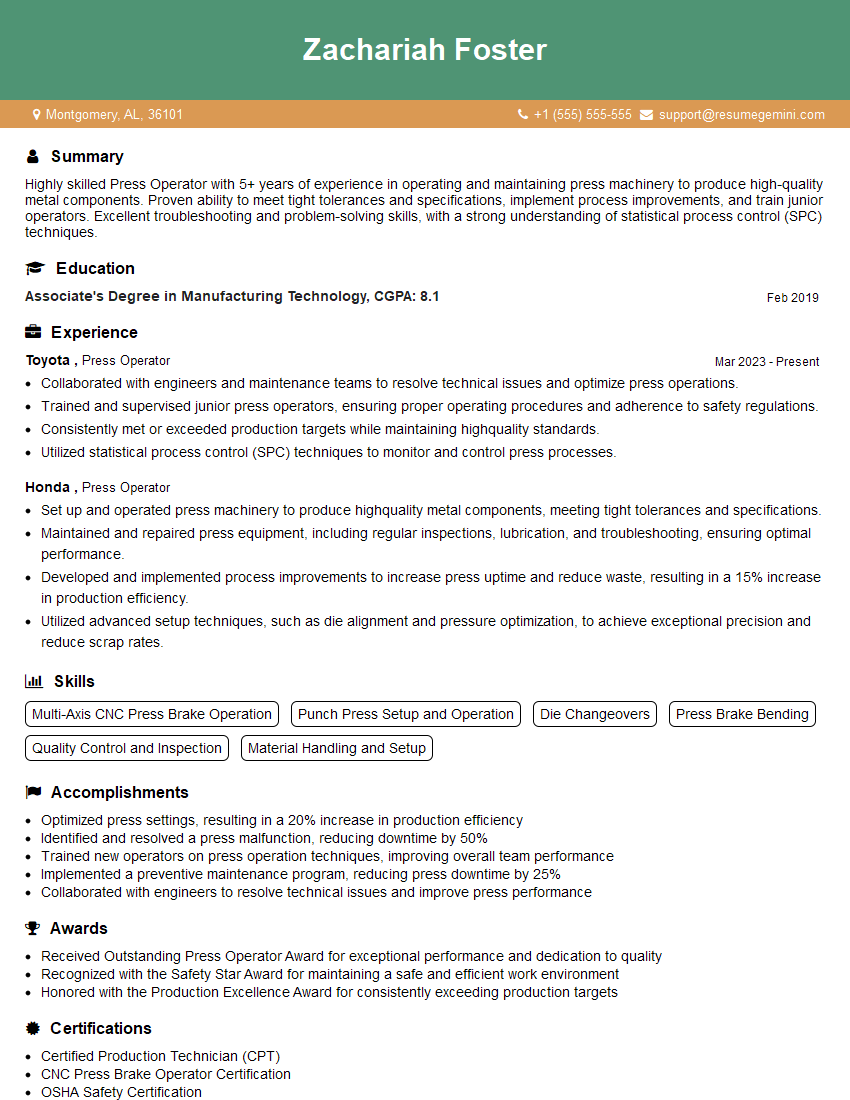
Press Operator Resume Sample

Pressroom Supervisor Resume Sample
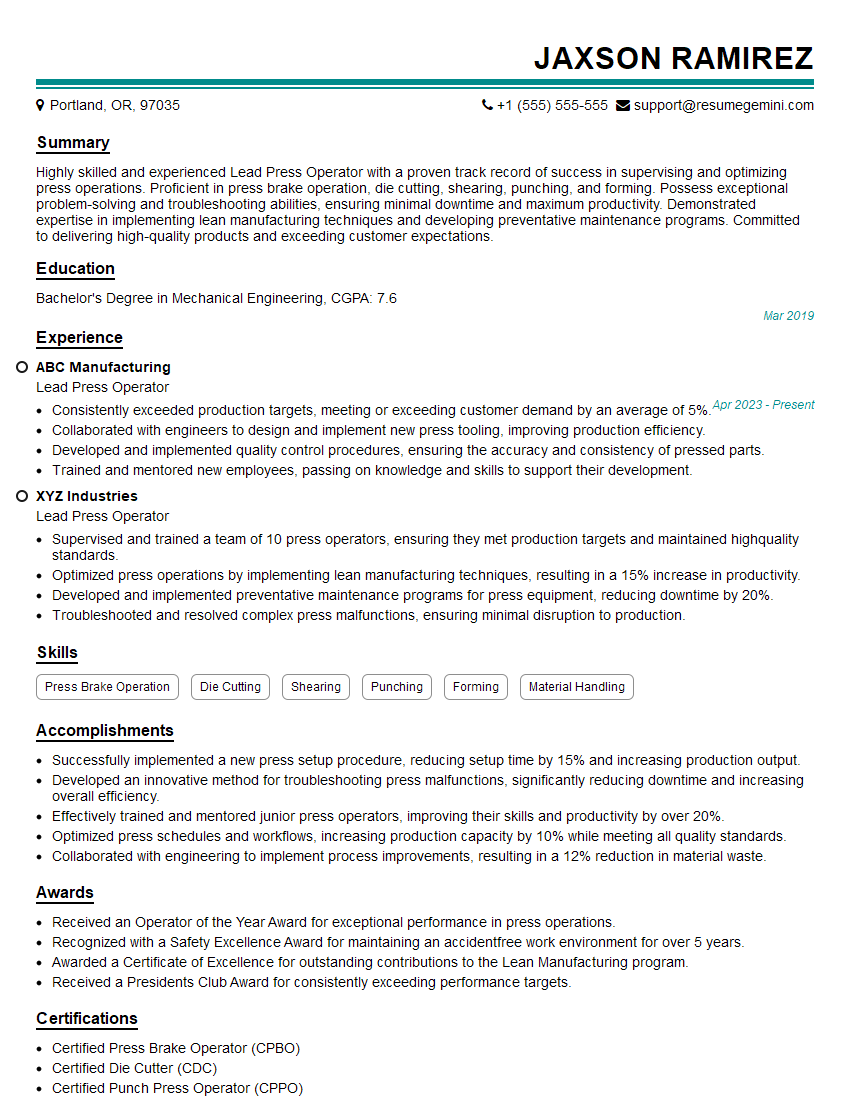
Lead Press Operator Resume Sample
Prepress Operator Resume Sample

Printing Technician Resume Sample
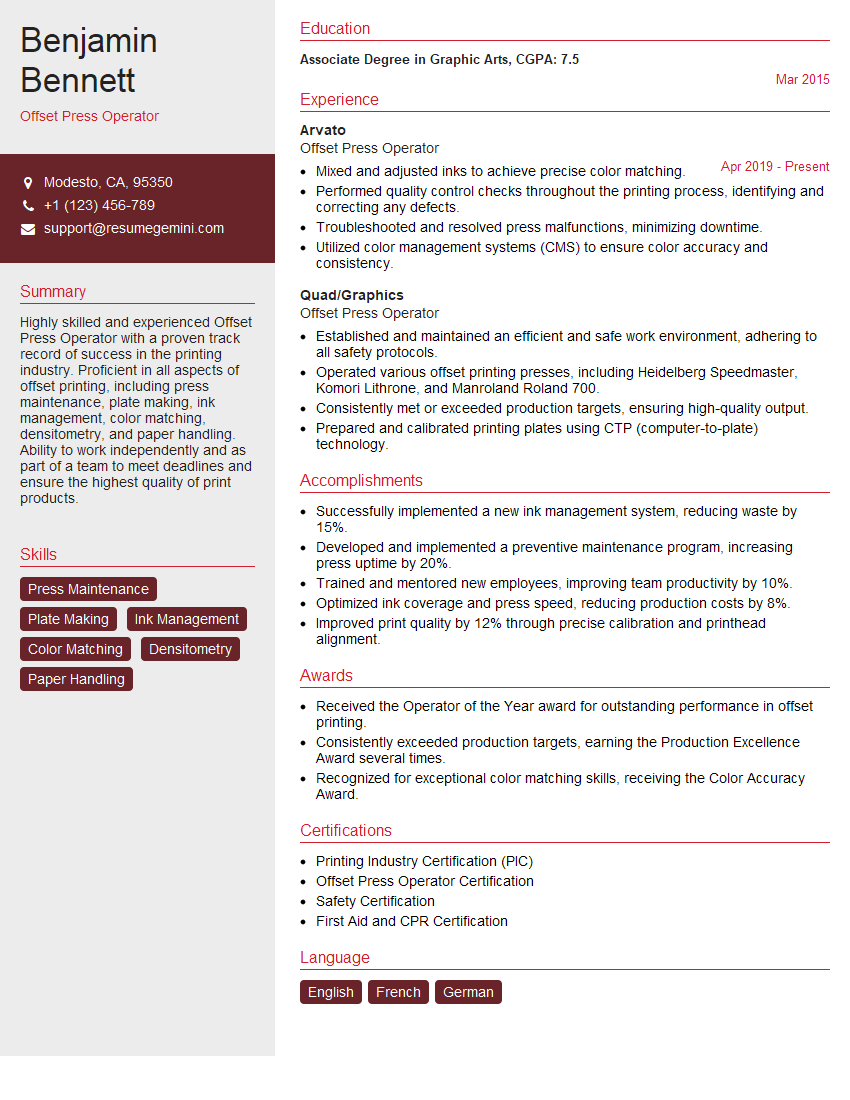
Offset Press Operator Resume Sample
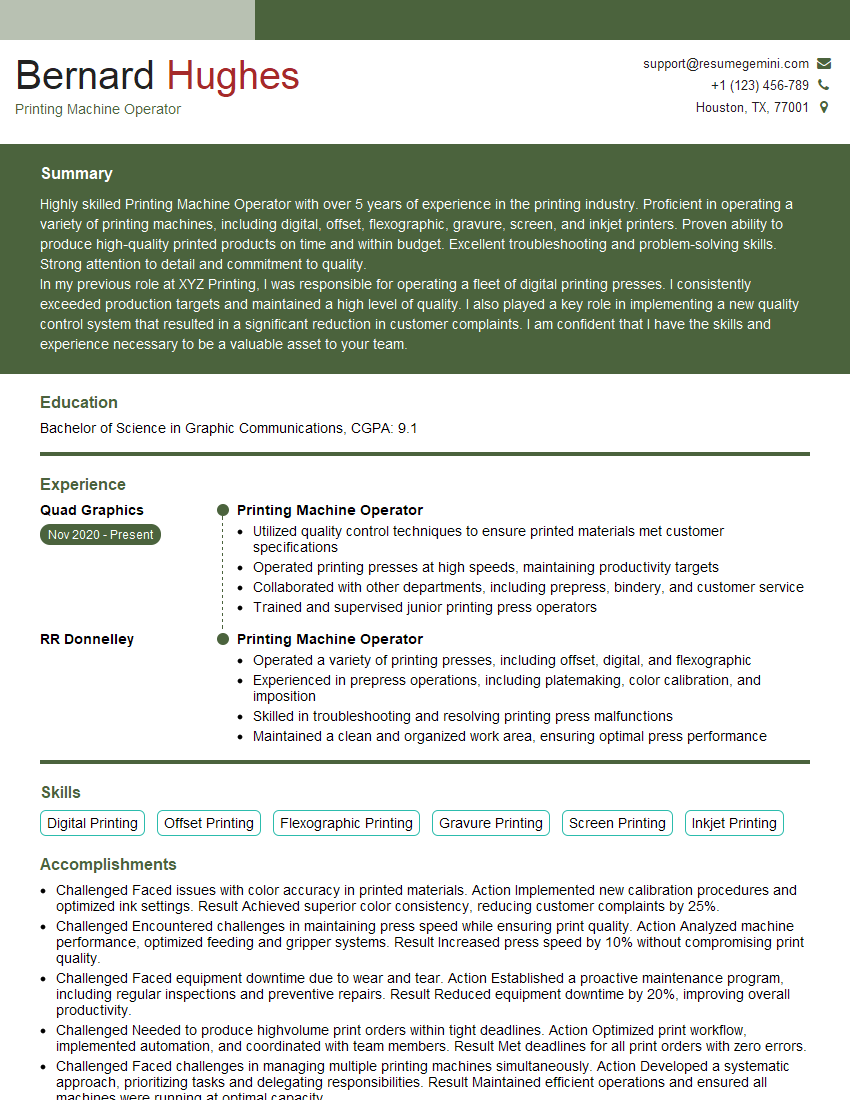
Printing Machine Operator Resume Sample
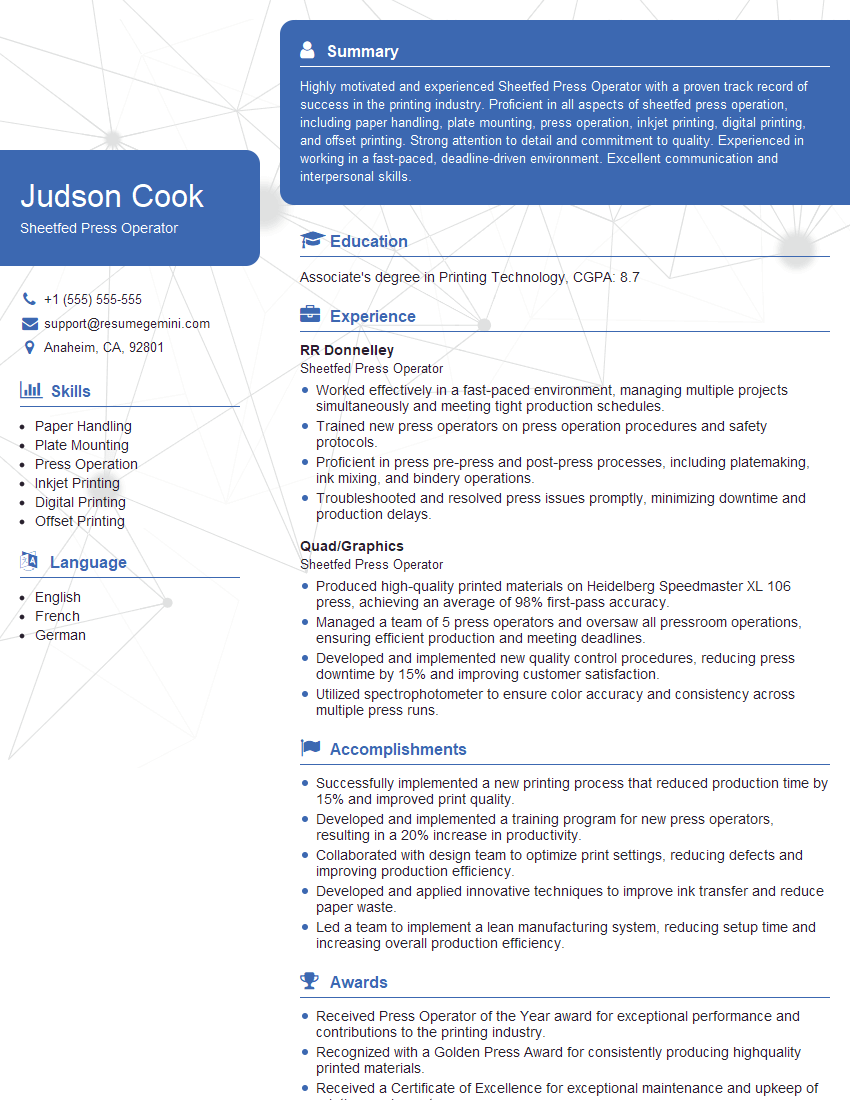
Sheetfed Press Operator Resume Sample
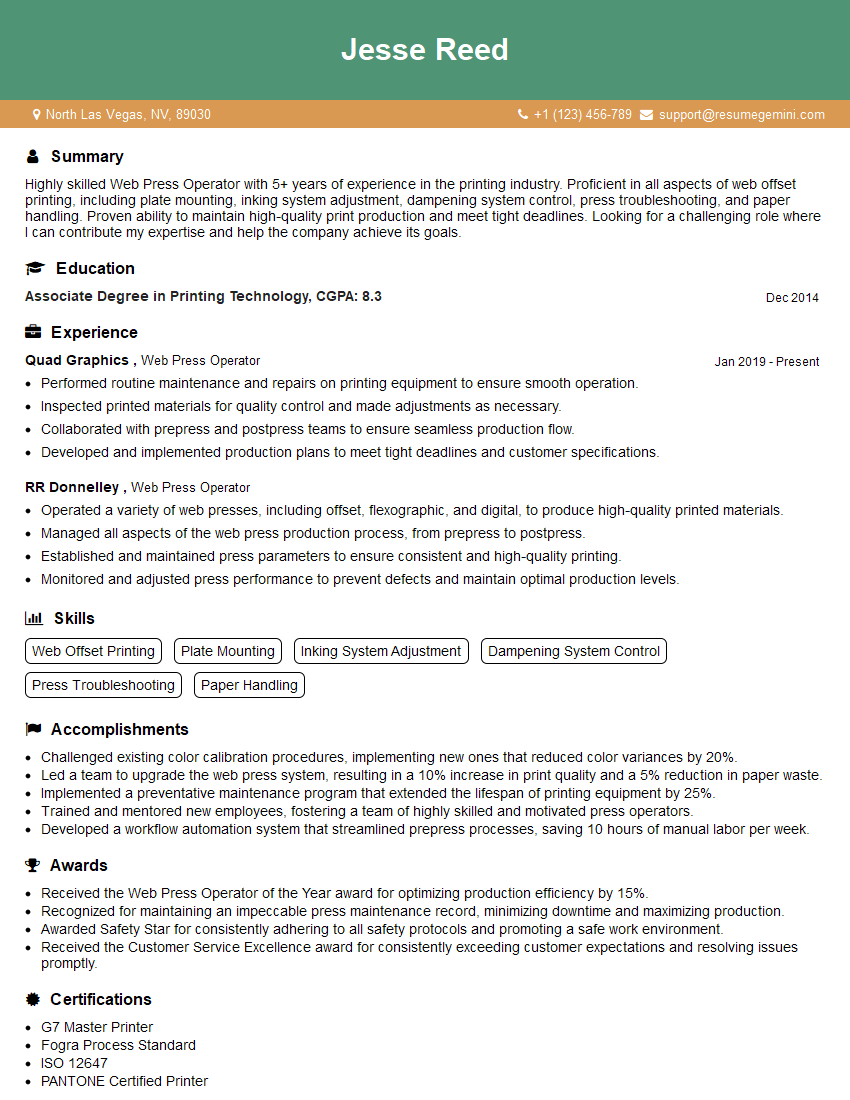
Web Press Operator Resume Sample
Explore more articles
Users Rating of Our Blogs
Share Your Experience
We value your feedback! Please rate our content and share your thoughts (optional).
What Readers Say About Our Blog
Very informative content, great job.
good