Feeling uncertain about what to expect in your upcoming interview? We’ve got you covered! This blog highlights the most important Safe Food Handling Certification interview questions and provides actionable advice to help you stand out as the ideal candidate. Let’s pave the way for your success.
Questions Asked in Safe Food Handling Certification Interview
Q 1. What are the critical control points (CCPs) in a HACCP plan?
Critical Control Points (CCPs) in a Hazard Analysis and Critical Control Point (HACCP) plan are steps in a food production process where a hazard can be prevented, eliminated, or reduced to safe levels. Think of them as the crucial points where things can go wrong if not carefully managed. Identifying CCPs requires a thorough understanding of your specific food production process and potential hazards.
- Example 1: In a restaurant preparing chicken, a CCP would be cooking the chicken to an internal temperature of 165°F (74°C) to kill harmful bacteria like Salmonella. Failure to reach this temperature is a significant hazard.
- Example 2: For a bakery producing bread, a CCP might be the proofing temperature and time, which directly impacts the yeast activity and elimination of potential pathogens. Incorrect proofing could lead to undercooked dough and potential microbial growth.
- Example 3: In a canning facility, a CCP would be the sterilization process to eliminate spores that could cause botulism. Inadequate sterilization is a critical hazard.
Each CCP requires a critical limit (e.g., temperature, time), monitoring procedures, corrective actions in case limits are not met, verification procedures, and record-keeping. The goal is to systematically manage risks throughout the food production process.
Q 2. Explain the temperature danger zone for food.
The temperature danger zone for food is the range of temperatures where bacteria multiply most rapidly. This is generally considered to be between 40°F (4°C) and 140°F (60°C). Think of it as the ‘danger zone’ where food is most susceptible to becoming unsafe.
Keeping food outside this temperature range for extended periods is crucial to prevent bacterial growth and foodborne illness. Foods need to be either kept cold (below 40°F) or hot (above 140°F).
Example: Leaving cooked chicken salad at room temperature for more than two hours puts it squarely in the danger zone, increasing the risk of Staphylococcus aureus growth, potentially leading to food poisoning.
Q 3. Describe the proper handwashing procedure.
Proper handwashing is fundamental in food safety. It’s not just about a quick rinse; it’s a thorough process to eliminate harmful bacteria.
- Wet hands with warm running water.
- Apply soap and lather well, rubbing hands together vigorously for at least 20 seconds. This includes the backs of your hands, between your fingers, and under your nails.
- Rinse hands thoroughly under warm running water.
- Dry hands with a clean towel or air dryer.
Important considerations: Use a hand sanitizer only after washing with soap and water; sanitizers don’t replace proper handwashing. Frequent handwashing is key, especially after touching raw meat, poultry, or other potentially contaminated items. Think of it as investing in the health and safety of your patrons and employees.
Q 4. How do you prevent cross-contamination?
Cross-contamination occurs when harmful bacteria or other pathogens from one food or surface transfer to another. Preventing it is essential to food safety.
- Separate raw and cooked foods: Use separate cutting boards, utensils, and storage containers. Imagine your raw chicken transferring Salmonella to your ready-to-eat salad if you use the same cutting board.
- Clean and sanitize surfaces: Regularly clean and sanitize cutting boards, countertops, and utensils with hot, soapy water, followed by a sanitizer solution. This eliminates lingering bacteria.
- Prevent drips and splashes: Cover or wrap food to prevent juices from contaminating other items. A raw chicken leaking onto other items in your refrigerator is a significant risk.
- Proper temperature control: Maintaining correct temperatures for both hot and cold food prevents bacterial growth and minimizes contamination.
- Handwashing: Regular handwashing after handling raw foods is paramount in preventing cross-contamination. Remember, your hands are major vectors of bacteria.
By following these practices, you create a safer environment, minimizing the chances of cross-contamination and subsequent foodborne illness.
Q 5. What are the common foodborne illnesses and their prevention methods?
Several common foodborne illnesses are caused by bacteria, viruses, or parasites found in contaminated food.
- Salmonella: Often found in poultry, eggs, and meat. Prevention: Cook food thoroughly to the correct internal temperature and maintain proper hygiene.
- E. coli: Found in undercooked ground beef, contaminated produce, and unpasteurized milk. Prevention: Cook ground beef thoroughly, wash produce thoroughly, and consume pasteurized milk and dairy products.
- Listeria: Found in ready-to-eat foods, such as deli meats and soft cheeses. Prevention: Ensure these foods are kept refrigerated at appropriate temperatures and practice good hygiene.
- Norovirus: A virus commonly spread through contaminated food handlers or contaminated water. Prevention: Practice thorough handwashing, and do not prepare food if you are ill.
Symptoms of foodborne illnesses vary but commonly include nausea, vomiting, diarrhea, and abdominal cramps. If symptoms develop, it’s crucial to seek medical attention.
Q 6. Explain the FIFO (First-In, First-Out) method of inventory management.
FIFO (First-In, First-Out) is an inventory management method that ensures the oldest items are used first. This prevents spoilage and reduces food waste. Imagine your refrigerator – you want to eat the oldest milk first before it expires.
In a restaurant or food production facility, this means rotating stock so that items with the earliest expiration dates are used or sold before items with later expiration dates. Proper labeling and dating of food items are crucial for successful FIFO implementation.
Example: Milk cartons are stocked with the oldest cartons at the front and newest at the back. This ensures the oldest milk is used first, reducing the chance of spoilage.
Q 7. How do you properly store different types of food?
Proper food storage is critical to preventing spoilage and bacterial growth. Different food types require different storage conditions.
- Refrigerated Foods (below 40°F/4°C): Store perishable items like meat, poultry, seafood, dairy products, and cooked leftovers at or below 40°F. Use shallow containers to ensure even cooling.
- Frozen Foods (0°F/-18°C or below): Keep frozen foods at or below 0°F. Properly wrap and seal food to prevent freezer burn.
- Dry Storage (cool, dry place): Store canned goods, dry pasta, rice, flour, and other non-perishable items in a cool, dry place away from direct sunlight, heat, and moisture.
- Specific considerations: Store raw meat below other foods in the refrigerator to prevent potential dripping onto other foods. Never refreeze thawed foods.
Regularly check expiration dates and discard any expired or spoiled food immediately. A well-organized refrigerator and pantry are key components in proper food storage.
Q 8. What are the different methods of food preservation?
Food preservation aims to extend the shelf life of food products by inhibiting microbial growth and preventing spoilage. Several methods achieve this, categorized broadly into physical, chemical, and biological techniques.
- Physical Methods: These methods use physical processes to inhibit microbial growth. Examples include:
- Refrigeration: Slows down microbial growth by lowering temperature.
- Freezing: Halts microbial growth by significantly reducing temperature.
- Heating: Methods like pasteurization (heating to a specific temperature for a set time) and canning (heating and sealing in airtight containers) kill microorganisms.
- Dehydration: Removing water inhibits microbial growth; this includes drying, freeze-drying, and evaporation.
- Irradiation: Uses ionizing radiation to kill microorganisms and extend shelf life.
- Chemical Methods: These use chemicals to inhibit spoilage. Examples include:
- Salting: High salt concentrations draw water out of microorganisms, inhibiting their growth. Think cured meats or salted fish.
- Sugaring: High sugar concentration creates a hypertonic environment, inhibiting microbial growth. Jams and jellies rely on this.
- Smoking: The smoke introduces antimicrobial compounds that inhibit spoilage.
- Acidification: Adding acids like vinegar reduces the pH, preventing microbial growth (e.g., pickling).
- Use of preservatives: Chemicals like sodium benzoate or sorbic acid are added to inhibit microbial growth.
- Biological Methods: These utilize biological processes to enhance food preservation.
- Fermentation: Microorganisms like bacteria or yeasts metabolize food, producing substances that inhibit spoilage and enhance flavor (e.g., yogurt, sauerkraut, kimchi).
The choice of preservation method depends on the type of food, desired shelf life, and cost considerations.
Q 9. What are the requirements for maintaining proper sanitation in a food facility?
Maintaining proper sanitation in a food facility is critical to preventing contamination and ensuring food safety. This involves a multifaceted approach encompassing cleaning, sanitizing, and pest control.
- Cleaning: The removal of visible soil, food residue, and other debris from surfaces. This typically involves washing with detergent and water. Regular cleaning schedules should be established and followed religiously.
- Sanitizing: The reduction of microorganisms to safe levels on cleaned surfaces. This often uses chemical sanitizers like chlorine, iodine, or quaternary ammonium compounds. Sanitizing procedures must adhere to specific contact times and concentrations, detailed in the facility’s sanitation plan.
- Pest Control: Implementing measures to prevent and control pests (e.g., rodents, insects) from entering and infesting the facility. This includes regular inspections, sealing cracks and crevices, using traps, and employing pest control services.
- Personal Hygiene: Employees must maintain high standards of personal hygiene, including handwashing, wearing clean clothing, and avoiding activities that could contaminate food.
- Equipment Maintenance: Food processing equipment must be regularly cleaned and sanitized to prevent cross-contamination and bacterial buildup. Equipment should be designed for easy cleaning and maintenance.
- Waste Management: Proper disposal of waste and garbage is crucial to prevent attracting pests and spreading contamination. Designated waste containers should be regularly emptied.
A comprehensive sanitation program should include a written plan detailing cleaning and sanitizing procedures, employee training, and monitoring systems to ensure effectiveness.
Q 10. How do you identify and address potential food safety hazards?
Identifying and addressing potential food safety hazards requires a proactive approach encompassing a Hazard Analysis and Critical Control Points (HACCP) system or a similar risk-based approach.
- Hazard Identification: This involves identifying all potential hazards that could compromise food safety. These can be biological (bacteria, viruses, parasites), chemical (pesticides, cleaning chemicals), or physical (glass, metal fragments). This often involves brainstorming sessions, reviewing past incidents, and consulting relevant literature.
- Risk Assessment: Evaluating the likelihood and severity of each identified hazard. A high-risk hazard requires immediate and thorough attention while lower-risk hazards require appropriate control measures.
- Critical Control Points (CCPs) Identification: These are the points in the food production process where control is crucial to prevent or eliminate a hazard. For example, cooking temperature is a CCP for eliminating pathogens.
- Establishing Critical Limits: Defining measurable parameters at each CCP that must be met to ensure safety. For example, the minimum internal temperature for cooked chicken.
- Monitoring Procedures: Implementing systems to monitor CCPs regularly. This might involve temperature checks, visual inspections, or microbiological testing.
- Corrective Actions: Developing procedures to address deviations from critical limits. This might involve discarding contaminated food, adjusting processing parameters, or retraining personnel.
- Record Keeping: Maintaining detailed records of monitoring activities, corrective actions, and any other relevant information. These records are crucial for traceability and accountability.
Example: In a restaurant setting, improper handwashing is a hazard. The CCP is handwashing stations, the critical limit is proper handwashing technique, monitoring involves observation, and corrective action is retraining employees on proper handwashing procedures.
Q 11. What are the legal requirements for food safety in your jurisdiction?
Specific legal requirements for food safety vary significantly by jurisdiction. However, many jurisdictions base their regulations on internationally recognized standards, such as those set by the Codex Alimentarius Commission. Generally, these regulations cover various aspects, including:
- Food safety regulations: These often stipulate requirements for food handling, processing, storage, and distribution, aiming to prevent contamination and ensure food is safe for consumption.
- Licensing and registration: Food businesses often need licenses or registrations to operate legally, demonstrating compliance with food safety regulations.
- Hazard analysis and critical control points (HACCP): Many jurisdictions require food businesses to implement HACCP or a similar food safety management system.
- Labeling requirements: Strict regulations dictate what information must appear on food labels, including ingredients, nutritional information, and allergen warnings.
- Sanitation standards: Regulations detail the requirements for maintaining sanitation and hygiene in food facilities.
- Personnel training and certification: Many regulations mandate specific training for food handlers, including safe food handling practices.
- Recall procedures: Regulations outline the procedures for conducting food recalls in case of contamination or other safety concerns.
It’s crucial to consult the specific food safety regulations relevant to your jurisdiction to ensure full compliance. Failure to comply can lead to significant penalties, including fines, license revocation, or even criminal charges.
Q 12. Explain the importance of proper food labeling.
Proper food labeling is crucial for consumer protection and public health. It provides consumers with the necessary information to make informed choices about the food they purchase and consume.
- Product Identification: Labels clearly identify the product’s name and type.
- Net Weight or Volume: The quantity of food in the package must be accurately stated.
- Ingredient List: A complete list of ingredients, listed in descending order by weight.
- Allergen Information: Clearly identifies any potential allergens present in the food (e.g., milk, eggs, peanuts, soy).
- Nutrition Facts: Provides information on the nutritional content of the food (e.g., calories, fat, protein, carbohydrates).
- Manufacturing and Expiration Dates: Indicates the date the food was manufactured and its expiration or ‘best by’ date.
- Storage Instructions: Provides guidance on how to properly store the food to maintain quality and safety.
- Handling Instructions: May include instructions for safe preparation or cooking, particularly relevant for potentially hazardous foods.
- Manufacturer’s Information: The label should identify the manufacturer or distributor and their contact information.
Accurate and complete food labeling helps prevent foodborne illnesses by alerting consumers to potential hazards and enabling them to make informed purchasing decisions. Inaccurate or misleading labeling can lead to legal consequences for the manufacturer.
Q 13. Describe your experience with food safety audits.
Throughout my career, I’ve been involved in numerous food safety audits, both as an auditor and as a facility representative. These audits typically involve a thorough inspection of food handling practices, sanitation procedures, and documentation.
- Pre-audit preparation: This involves reviewing existing documentation, such as HACCP plans, sanitation schedules, and training records, to identify areas of potential concern.
- On-site audit: This involves a detailed inspection of the facility, including observation of food handling practices, equipment sanitation, and storage conditions. Auditors interview personnel and check documentation to verify compliance with regulations and best practices.
- Findings and recommendations: After the audit, a report summarizing the findings and providing recommendations for improvement is issued. This may include areas of non-compliance, suggestions for enhancing procedures, and training recommendations.
- Corrective actions: Any identified non-compliances or deficiencies must be addressed with corrective actions. This often includes implementing new procedures, retraining personnel, and updating documentation.
- Follow-up audit: Follow-up audits are conducted to verify the effectiveness of corrective actions and to ensure continued compliance.
My experience includes auditing various food establishments, from small restaurants to large-scale processing plants, and I’m proficient in conducting audits according to various standards, including GFSI-recognized schemes.
Q 14. How do you handle food recalls or outbreaks?
Handling food recalls or outbreaks requires a rapid, coordinated response. The process typically involves:
- Immediate action: Upon confirmation of a contamination or outbreak, immediate action is taken to contain the problem, preventing further spread. This may involve stopping production, isolating affected products, and notifying relevant authorities.
- Traceability: Tracing the origin and distribution of affected products is crucial to identify all potentially contaminated items and remove them from circulation. Detailed records are essential for efficient traceability.
- Communication: Clear and effective communication is crucial, involving notifying consumers, retailers, and distributors about the recall. The communication should be precise, providing clear instructions and contact information.
- Cooperation: Collaboration with regulatory agencies, suppliers, and distributors is essential for a coordinated and effective response.
- Investigation: A thorough investigation is required to identify the root cause of the contamination or outbreak. This involves examining food handling practices, storage conditions, and supplier records.
- Corrective actions: Implementing corrective actions to prevent recurrence is crucial. This may involve reviewing and improving food safety procedures, upgrading equipment, or retraining personnel.
- Documentation: Maintaining detailed records of the entire recall or outbreak process is essential for future reference and potential legal proceedings.
The effectiveness of a recall or outbreak response hinges on preparedness, a well-defined plan, and the ability to execute it swiftly and decisively.
Q 15. What are the principles of personal hygiene in food handling?
Personal hygiene is paramount in food handling to prevent contamination and illness. It’s like building a strong wall to protect your food from harmful bacteria and viruses.
Handwashing: Frequent and thorough handwashing with soap and warm water is crucial, especially after using the restroom, handling raw food, touching your face or hair, and before starting work. Think of this as your first line of defense. I always emphasize the proper handwashing technique – 20 seconds of scrubbing, covering all surfaces.
Clean Clothing: Wearing clean, appropriate attire, such as a chef’s uniform or hairnet, prevents hair and other contaminants from falling into food. Imagine your uniform as a clean, protective shield.
Gloves: Using gloves when handling food protects it from contamination from your hands, particularly beneficial when handling ready-to-eat items. However, remember to change gloves frequently and wash hands before putting them on.
Wound Care: Any open wounds must be properly covered with a waterproof bandage to avoid contamination. Think of this as patching a hole in your defense wall.
No Smoking or Eating: Refrain from smoking or eating in food preparation areas. This avoids cross-contamination and ensures a safe working environment.
Career Expert Tips:
- Ace those interviews! Prepare effectively by reviewing the Top 50 Most Common Interview Questions on ResumeGemini.
- Navigate your job search with confidence! Explore a wide range of Career Tips on ResumeGemini. Learn about common challenges and recommendations to overcome them.
- Craft the perfect resume! Master the Art of Resume Writing with ResumeGemini’s guide. Showcase your unique qualifications and achievements effectively.
- Don’t miss out on holiday savings! Build your dream resume with ResumeGemini’s ATS optimized templates.
Q 16. Explain your understanding of allergen management.
Allergen management is about controlling the risk of allergens in food and preventing cross-contamination. This is critical, as even tiny amounts can trigger severe allergic reactions. Think of it as a meticulous detective work, identifying and eliminating potential threats.
Identification and Labeling: All ingredients containing allergens must be clearly identified on labels. This ensures transparency and allows consumers to make informed choices.
Separation and Storage: Allergenic and non-allergenic foods must be stored separately to prevent cross-contamination. I often use colour-coded containers and shelving to ensure complete segregation.
Equipment Cleaning: Utensils and equipment must be thoroughly cleaned and sanitized after use with allergenic foods. Residual traces can cause reactions.
Employee Training: All food handlers must be extensively trained on allergen management procedures, including proper labeling, handling, and cleaning protocols. Regular training and updates are vital to maintaining vigilance.
For example, a facility preparing both peanut butter cookies and gluten-free cookies needs rigorous separation of ingredients, equipment, and potentially even dedicated preparation areas. Any cross-contamination could have severe consequences.
Q 17. What are the best practices for pest control in a food facility?
Effective pest control is crucial to maintaining a safe food environment. Pests can contaminate food and spread diseases, so prevention is key. Imagine it as guarding your castle against unwanted invaders.
Sanitation: Regular and thorough cleaning of the facility, paying close attention to cracks, crevices, and drains, eliminates breeding grounds for pests. This is the foundation of a strong defense.
Exclusion: Sealing openings, repairing cracks in walls, and using screens on doors and windows prevents pests from entering. Think of this as reinforcing your castle walls.
Monitoring: Regular pest monitoring using traps and visual inspections helps to detect infestations early. This is like having a vigilant guard patrol.
Professional Pest Control: Employing a licensed pest control operator is recommended. They possess the expertise and tools to address infestations effectively and safely.
Proper Waste Disposal: Storing and disposing of garbage properly in sealed containers prevents attracting pests. This is a key aspect of minimizing the attraction.
Q 18. How do you ensure the effectiveness of your food safety program?
Ensuring the effectiveness of a food safety program requires a multi-faceted approach. It’s like conducting a regular health check-up to ensure everything is functioning optimally.
Hazard Analysis and Critical Control Points (HACCP): Implementing a HACCP plan identifies potential hazards and establishes critical control points to prevent contamination. This provides a systematic approach to identifying and managing risks.
Regular Monitoring and Inspections: Conducting regular inspections and monitoring of temperatures, cleaning practices, and employee hygiene helps to identify issues promptly.
Record Keeping: Maintaining accurate and detailed records of all food safety procedures, temperatures, and training is vital for traceability and compliance. This provides a historical audit trail.
Staff Training and Competency: Regular training and competency assessments for staff ensures that all employees understand and follow food safety procedures.
Corrective Actions: When issues are identified, prompt and effective corrective actions must be taken and documented. This shows a proactive approach to maintaining standards.
Internal Audits: Performing regular internal audits assesses the effectiveness of the food safety program. This provides an objective review and identification of areas for improvement.
Q 19. What is your experience with food safety training programs?
I have extensive experience developing and delivering food safety training programs. I’ve designed and implemented programs for various food service establishments, from small restaurants to large-scale food processing plants. My approach is always hands-on and interactive, combining theory with practical demonstrations and case studies. I tailor each program to the specific needs and context of the establishment and its staff.
For example, I recently developed a program focusing on allergen management for a bakery, incorporating practical exercises on ingredient labeling and cross-contamination prevention. Another program for a restaurant chain emphasized proper handwashing techniques and temperature control measures using interactive simulations.
Q 20. Describe your approach to maintaining food safety records.
Maintaining accurate food safety records is essential for traceability, accountability, and compliance. I utilize a combination of paper-based and electronic systems to ensure thorough record keeping. This meticulous approach provides a complete historical record of all activities. Think of it as a comprehensive diary documenting every aspect of food handling.
Temperature Logs: Accurate temperature logs are maintained for all refrigerated and frozen foods, ensuring proper storage and preventing spoilage. These are crucial for demonstrating compliance.
Cleaning Logs: Cleaning and sanitizing logs document the frequency, method, and chemicals used, ensuring consistent hygiene practices.
Training Records: Records of employee training programs, including attendance, assessments, and competency certifications, demonstrate compliance with training requirements.
Supplier Information: Supplier information, including certificates of analysis and allergen information, is carefully tracked and stored.
Incident Reports: Any food safety incidents, including complaints or illnesses, are recorded with details of the event and corrective actions taken. This is vital for learning and improvement.
All records are stored securely and organized for easy retrieval, adhering to relevant regulations and guidelines.
Q 21. How do you handle employee concerns related to food safety?
Employee concerns regarding food safety are addressed promptly and seriously. Open communication and a culture of safety are vital. I view employee concerns as valuable insights into potential vulnerabilities within the food safety system.
Open Communication: Encourage employees to report any concerns without fear of reprisal.
Prompt Investigation: Thoroughly investigate all concerns, gathering evidence and interviewing relevant personnel.
Corrective Actions: Implement appropriate corrective actions based on the findings of the investigation, addressing the root causes of the problem.
Feedback and Follow-up: Provide feedback to employees regarding the outcome of the investigation and steps taken to address the concerns.
Training Reinforcements: If the concern highlights a gap in training, the relevant training program should be reviewed and updated.
For instance, if an employee reports concerns about improper handwashing practices, an immediate refresher training session is conducted, and improved monitoring systems may be implemented to reinforce the practice.
Q 22. Explain the importance of regular equipment maintenance in food safety.
Regular equipment maintenance is paramount in food safety because malfunctioning equipment can directly compromise food quality and safety. Think of it like this: a rusty can opener could contaminate food, while a faulty refrigerator could allow bacteria to grow to dangerous levels. Proper maintenance prevents these risks.
- Preventative Maintenance: This involves regular cleaning, lubrication, and inspections to identify and fix minor issues before they escalate. For example, checking the temperature of a walk-in cooler daily and cleaning its condenser coils regularly prevents compressor failure and temperature fluctuations.
- Corrective Maintenance: This addresses problems that have already arisen. For instance, if a slicer’s blade becomes dull or damaged, it needs immediate replacement to maintain consistent slicing and prevent cross-contamination from jagged edges.
- Calibration and Validation: Equipment like thermometers, scales, and ovens need regular calibration to ensure accurate measurements. This is crucial for maintaining proper cooking temperatures and ingredient quantities, both vital for food safety.
A comprehensive maintenance schedule, documented and adhered to, is key to minimizing risks and maintaining food safety compliance.
Q 23. How do you ensure proper cleaning and sanitization of food contact surfaces?
Ensuring proper cleaning and sanitization of food contact surfaces requires a two-step process: cleaning followed by sanitizing. Cleaning removes visible soil, while sanitizing kills or reduces harmful microorganisms.
- Cleaning: This involves washing with hot, soapy water, scrubbing thoroughly to remove all food debris, and rinsing with clean water. Different surfaces require different approaches; for example, a dishwasher is best for dishware, while a hand-washing process is necessary for hard-to-reach areas of equipment.
- Sanitizing: This step uses a chemical sanitizer (like chlorine bleach solution, iodine, or quaternary ammonium compounds) to eliminate bacteria, viruses, and other pathogens. The concentration and contact time of the sanitizer are critical and must follow manufacturer instructions and regulatory guidelines. Using a sanitizer bucket with a timer ensures correct contact time.
Proper cleaning and sanitizing should always be performed in a designated area and documented. A visual check after both processes confirms effective cleaning and a lack of residue.
Q 24. Describe your experience with different types of food thermometers.
I have extensive experience with various food thermometers, each suited for specific applications.
- Thermocouples: These are highly accurate and versatile, often used for monitoring temperatures in ovens, grills, and holding equipment. They are especially useful for recording continuous temperatures.
- Thermistors: These are fast-responding and suitable for checking the internal temperature of foods quickly and efficiently. They are commonly used for checking temperatures during cooking.
- Bimetallic Stem Thermometers: These are simple, durable, and relatively inexpensive, ideal for spot-checking food temperatures. However, they are less accurate than thermocouples or thermistors.
- Infrared Thermometers: These are non-contact thermometers that measure surface temperatures, useful for checking the temperature of equipment like ovens and grills. They are less reliable when checking food temperatures as they only show surface temperature.
Understanding the strengths and limitations of each type allows me to choose the right thermometer for the task, ensuring accurate temperature readings critical for food safety.
Q 25. How do you verify the effectiveness of your cleaning and sanitization procedures?
Verifying the effectiveness of cleaning and sanitization procedures requires a multi-pronged approach.
- Visual Inspection: A thorough visual check after cleaning and sanitizing is the first step. Are there any visible food residues or signs of contamination?
- ATP Testing: Adenosine triphosphate (ATP) testing uses swabs to detect the presence of organic matter (food residue). High ATP levels indicate inadequate cleaning.
- Microbial Testing: This involves taking samples and culturing them to identify the presence and levels of specific bacteria. This is less frequent but essential for validation.
- Documentation: Maintaining detailed records of cleaning and sanitizing procedures, including dates, times, staff involved, and test results, is crucial for tracing and identifying any potential issues.
Regularly reviewing these checks helps us refine our processes and ensure consistent food safety.
Q 26. What are your strategies for continuous improvement in food safety?
Continuous improvement in food safety is an ongoing process. My strategies include:
- Regular Staff Training: Keeping staff updated on the latest food safety regulations and best practices is paramount. We hold regular training sessions and refresher courses.
- Hazard Analysis and Critical Control Points (HACCP): Implementing a HACCP system allows us to proactively identify and control potential hazards throughout the food production process.
- Data Analysis: Tracking key performance indicators (KPIs) such as ATP test results, temperature logs, and incident reports helps us identify trends and areas for improvement.
- Internal Audits: Regular internal audits evaluate our food safety program’s effectiveness, identifying gaps and recommending corrective actions. These audits are done by independent members of staff.
- External Audits: We undergo regular external audits to ensure we meet all regulatory requirements and industry best practices.
By proactively addressing issues and staying updated on best practices, we can consistently improve our food safety procedures.
Q 27. How do you manage food waste and reduce its environmental impact?
Managing food waste is crucial for both economic and environmental reasons. My strategies include:
- Inventory Control: Accurate inventory management helps us order the right amount of food, reducing waste from spoilage.
- Proper Storage: Correct storage techniques, including FIFO (First-In, First-Out) rotation, prolong the shelf life of food.
- Portion Control: Serving appropriate portions minimizes leftovers and waste.
- Staff Training: Educating staff on proper food handling, storage, and preparation techniques helps minimize waste.
- Composting: We compost food scraps whenever possible, reducing landfill waste and creating nutrient-rich compost.
- Donation: Excess edible food is donated to local food banks or charities.
By integrating these strategies, we aim to minimize our environmental impact while maximizing resource efficiency.
Q 28. Describe a time you had to solve a food safety issue. What was your approach?
During a busy lunchtime service, we experienced a power outage that caused our walk-in refrigerator to lose power. This created a significant food safety risk. My approach was:
- Immediate Assessment: I quickly assessed the situation, determining the duration of the outage and the potential impact on food safety. We checked the internal temperatures of food items immediately.
- Prioritization: We prioritized perishable items most at risk and moved them to a temporary cooler using ice packs.
- Communication: I informed staff and management immediately, outlining the necessary actions and emphasizing the need for strict adherence to food safety protocols.
- Temperature Monitoring: We continuously monitored the temperature of the affected foods, recording all readings. Once power was restored, we immediately checked refrigerator temperature.
- Decision-Making: Based on the temperature readings and the duration of the power outage, we made informed decisions regarding the disposal of potentially compromised food items.
- Documentation: The entire incident, including actions taken, temperature readings, and discarded items, was meticulously documented.
This incident highlighted the importance of having a robust contingency plan for power outages and the need for thorough training and clear communication within the team.
Key Topics to Learn for Your Safe Food Handling Certification Interview
Ace your interview by mastering these critical areas. Remember to focus on both the theory and practical application of each concept.
- Foodborne Illnesses and Prevention: Understanding common pathogens (bacteria, viruses, parasites), their sources, and effective prevention methods (temperature control, proper hygiene).
- Temperature Control for Food Safety: Applying the principles of temperature control throughout the food handling process – from receiving to storage to cooking and serving. Be prepared to discuss the danger zone and safe temperature ranges for different food types.
- Personal Hygiene and Sanitation: Demonstrate knowledge of proper handwashing techniques, safe clothing and attire, and the importance of maintaining a clean and sanitized work environment.
- Food Storage and Handling: Discuss FIFO (First-In, First-Out) principles, proper storage techniques for different food types (refrigeration, freezing, dry storage), and preventing cross-contamination.
- Cleaning and Sanitizing Procedures: Understand the difference between cleaning and sanitizing, and be prepared to describe appropriate methods for various food contact surfaces and equipment.
- Food Allergens and Management: Discuss common food allergens, their potential risks, and strategies for preventing allergic reactions, including menu labeling and safe handling practices.
- Problem-Solving Scenarios: Practice identifying and resolving potential food safety hazards in various scenarios. Consider discussing examples from your experience (if applicable) to highlight your problem-solving skills.
Next Steps: Unlock Your Career Potential
Mastering Safe Food Handling Certification opens doors to exciting career opportunities in the food industry. A strong resume is your key to unlocking these opportunities. Create an ATS-friendly resume that showcases your skills and experience effectively. ResumeGemini is a trusted resource for building professional resumes, helping you present your qualifications in the best possible light. Examples of resumes tailored specifically for Safe Food Handling Certification are available to help guide your process. Invest time in crafting a compelling resume – it’s your first impression on potential employers.
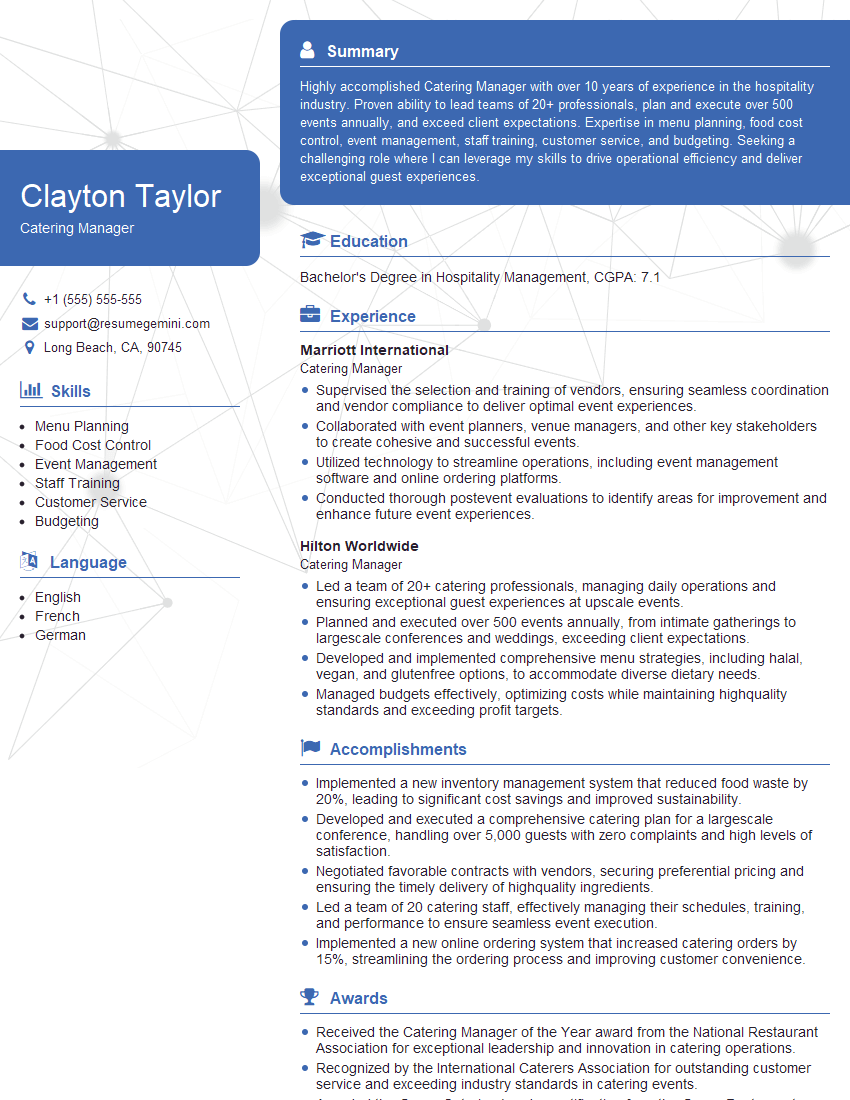
Catering Manager Resume Sample
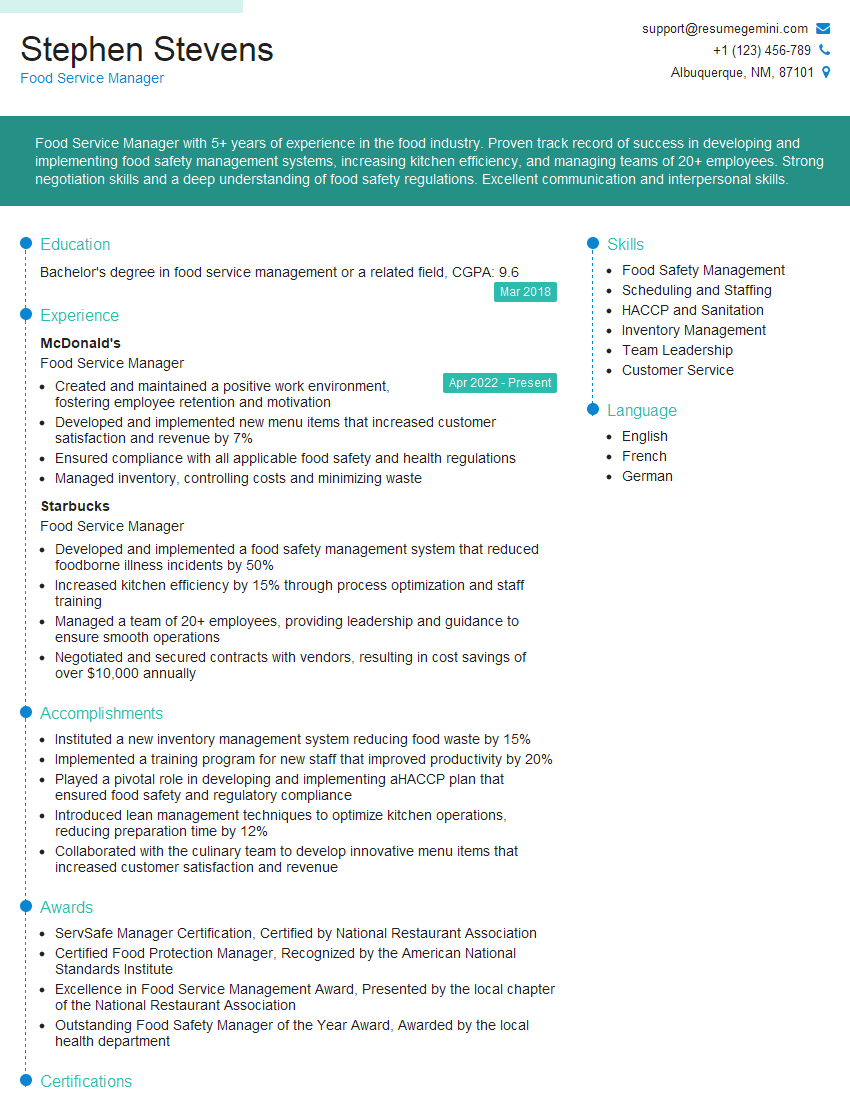
Food Service Manager Resume Sample
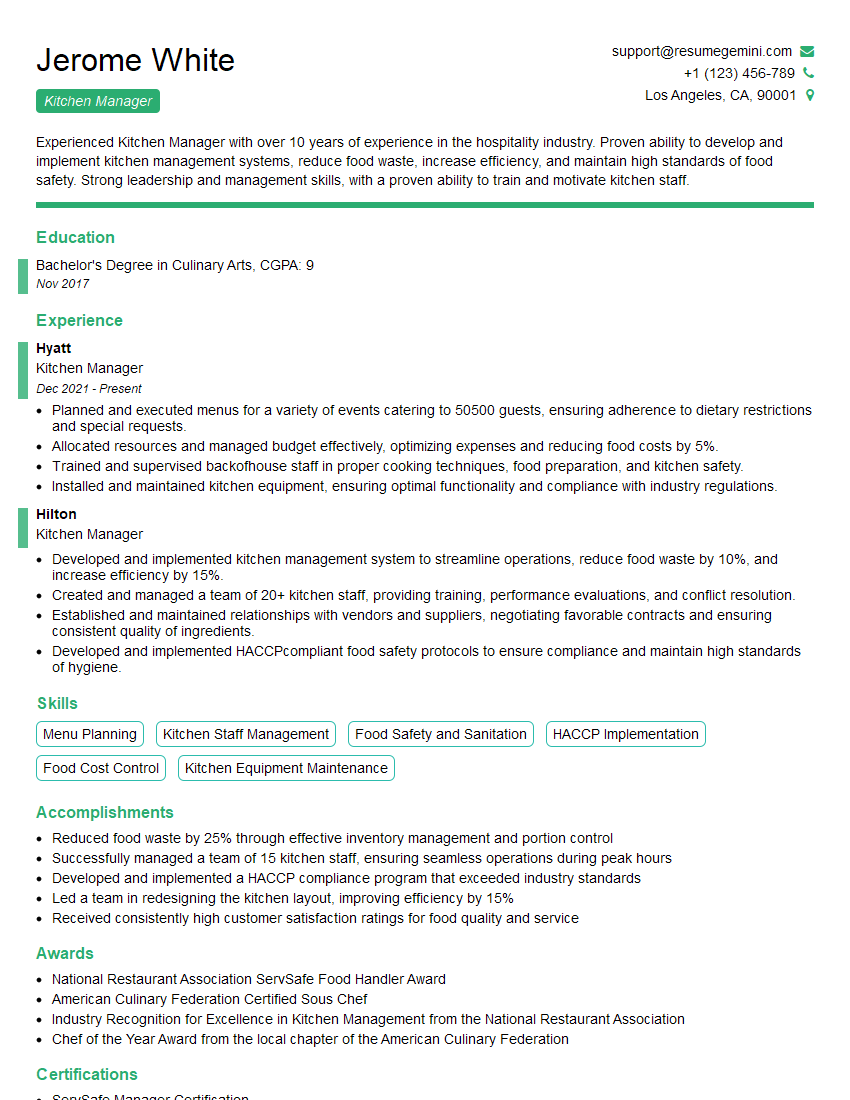
Kitchen Manager Resume Sample
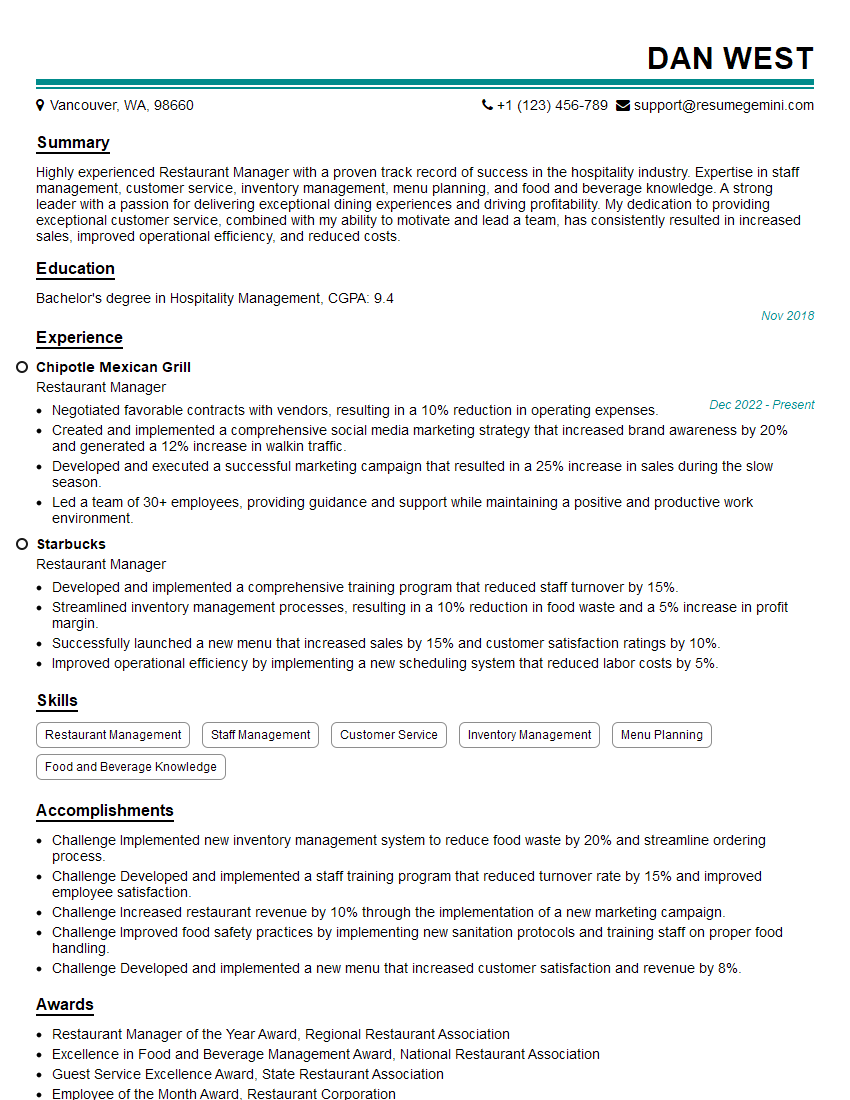
Restaurant Manager Resume Sample
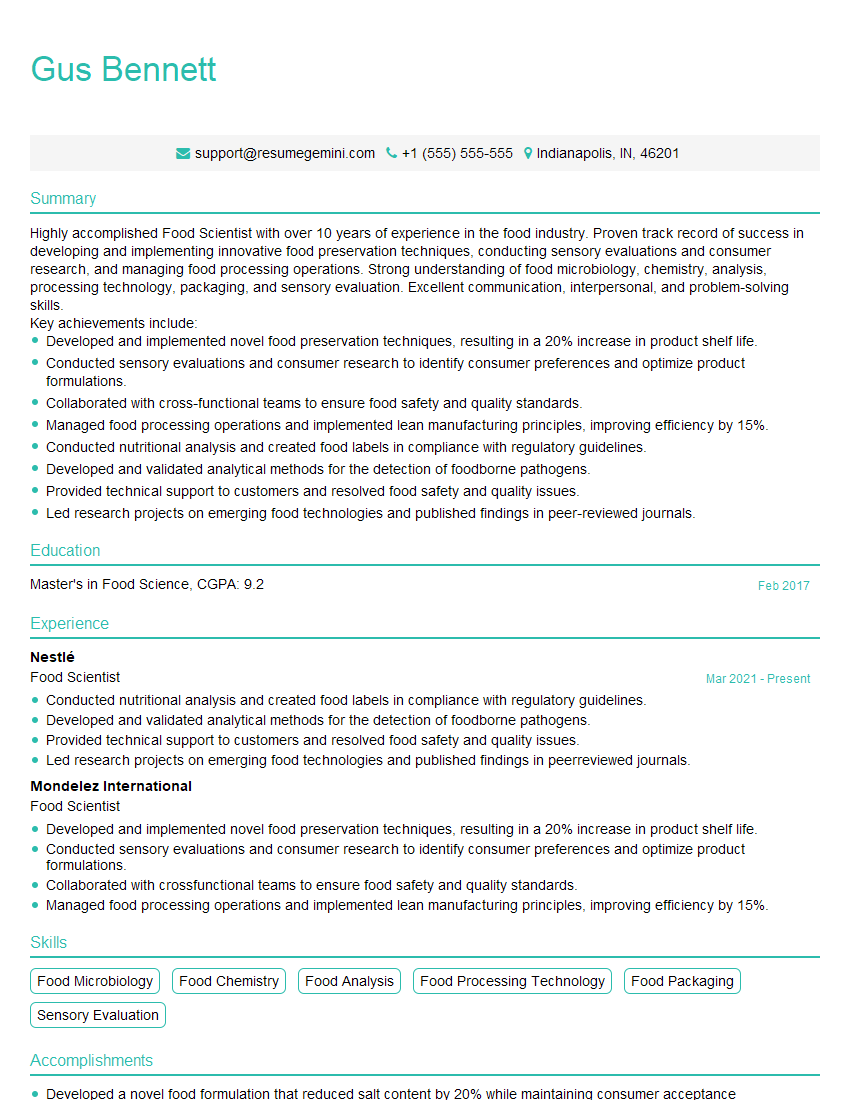
Food Scientist Resume Sample

Food Technologist Resume Sample
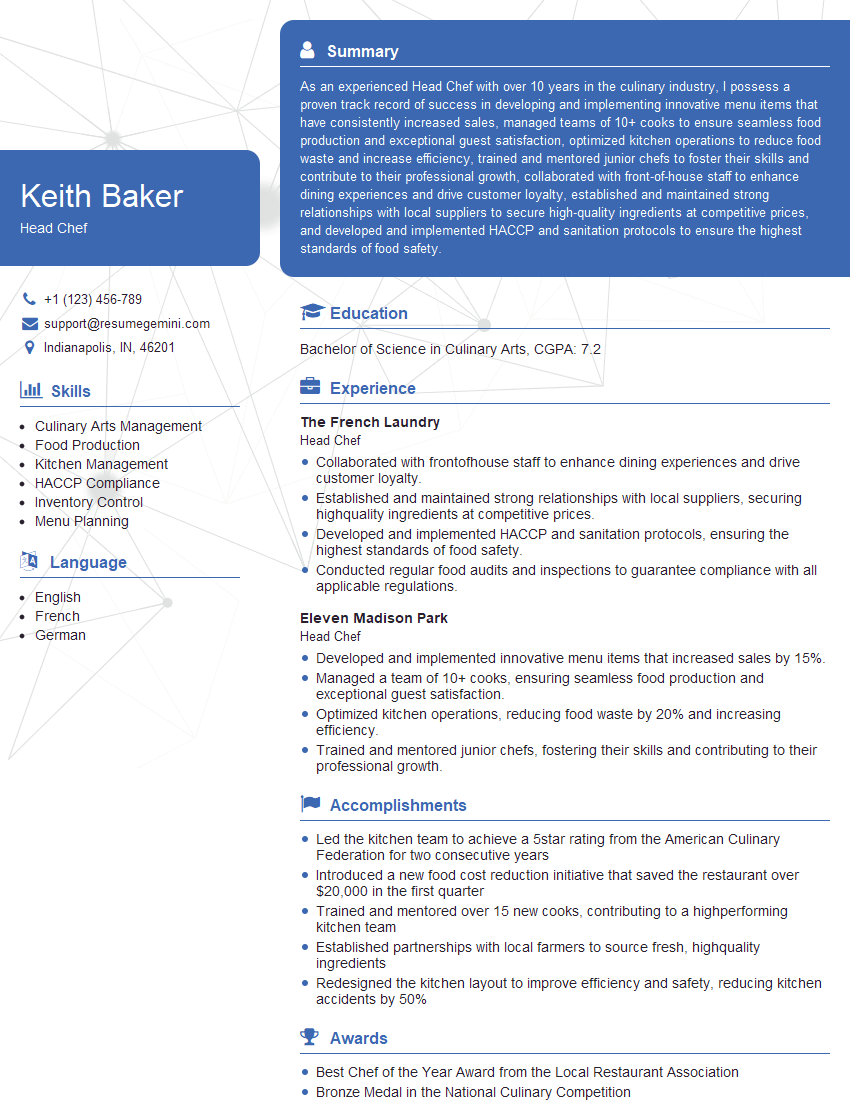
Head Chef Resume Sample
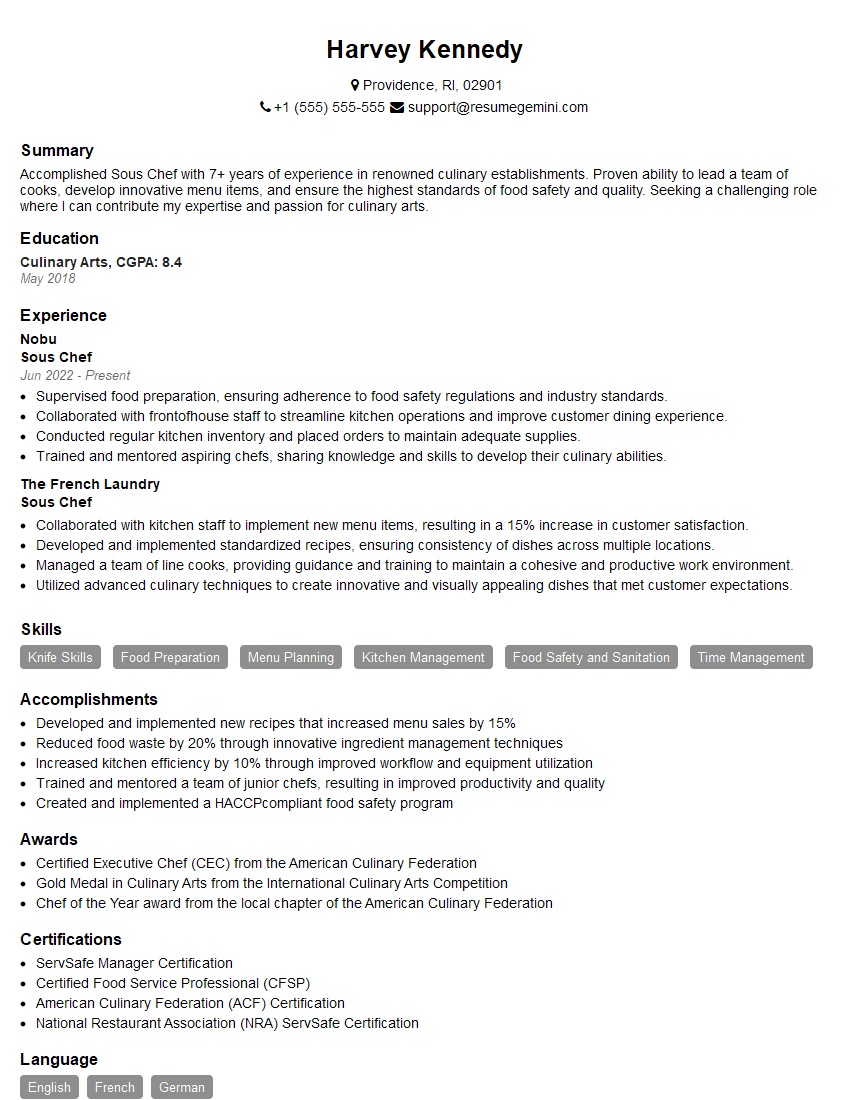
Sous Chef Resume Sample
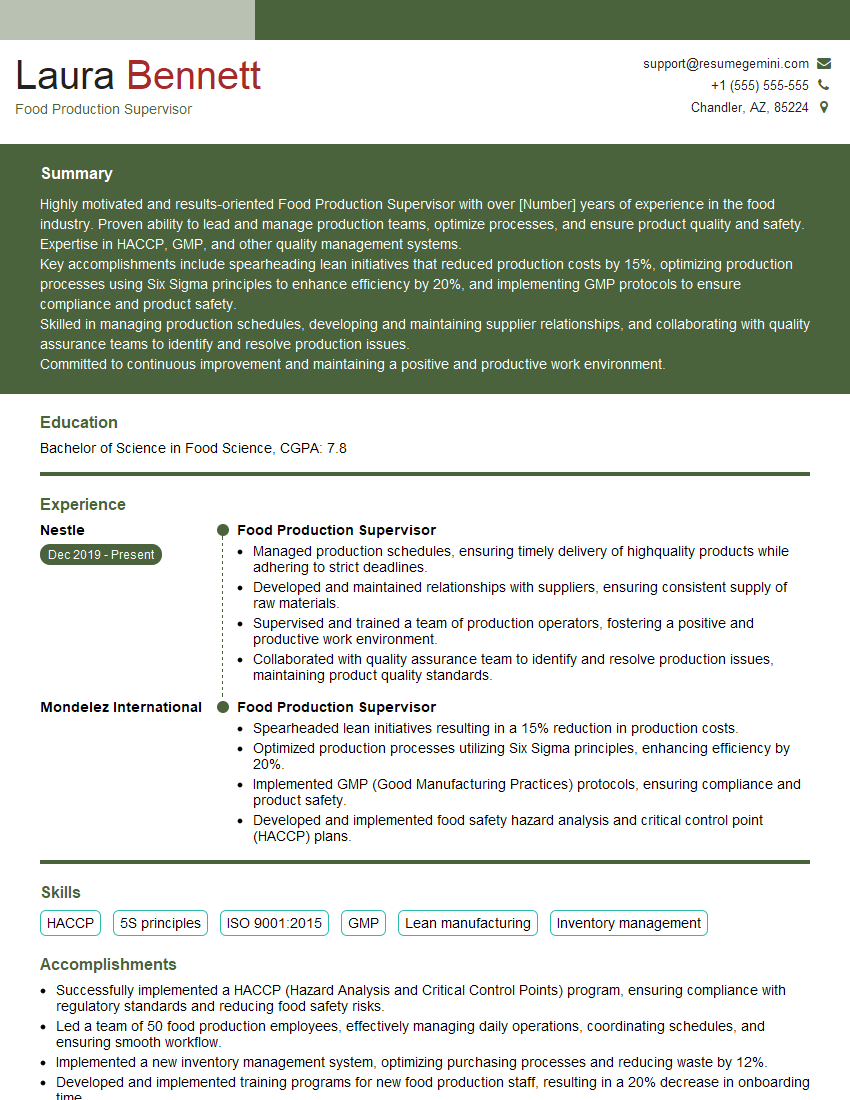
Food Production Supervisor Resume Sample
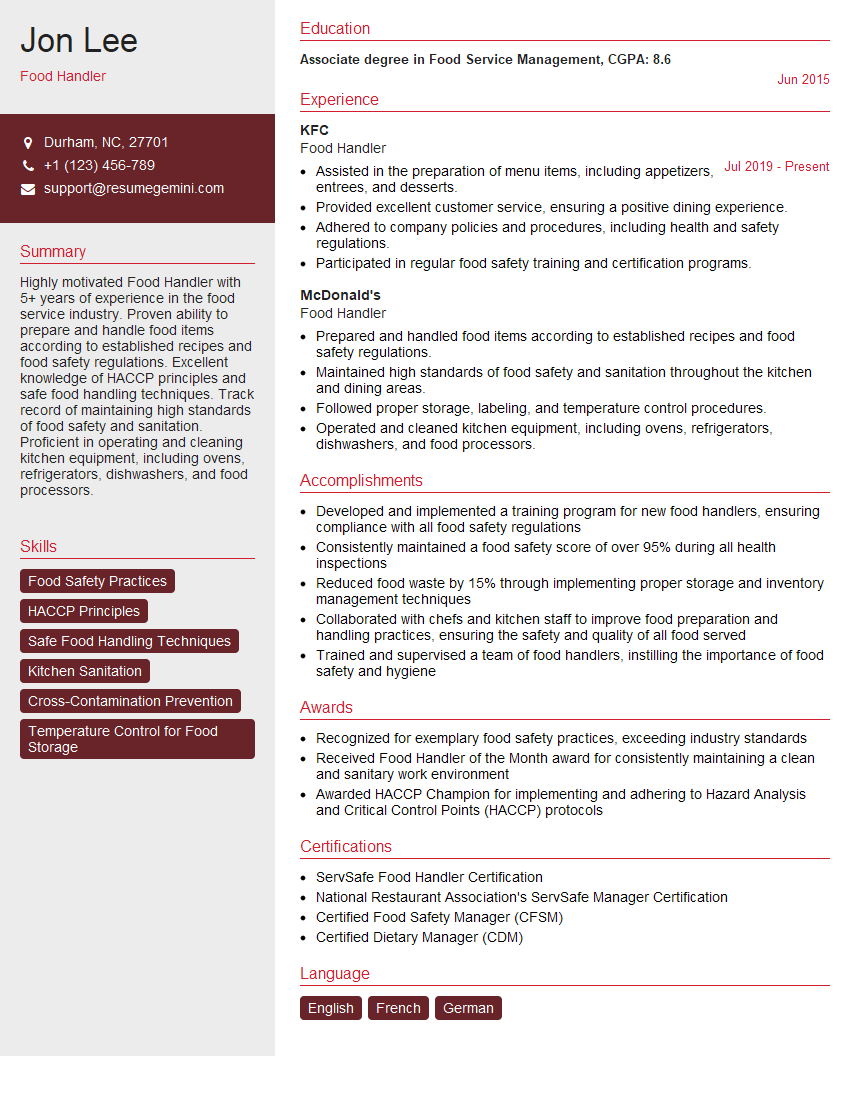
Food Handler Resume Sample
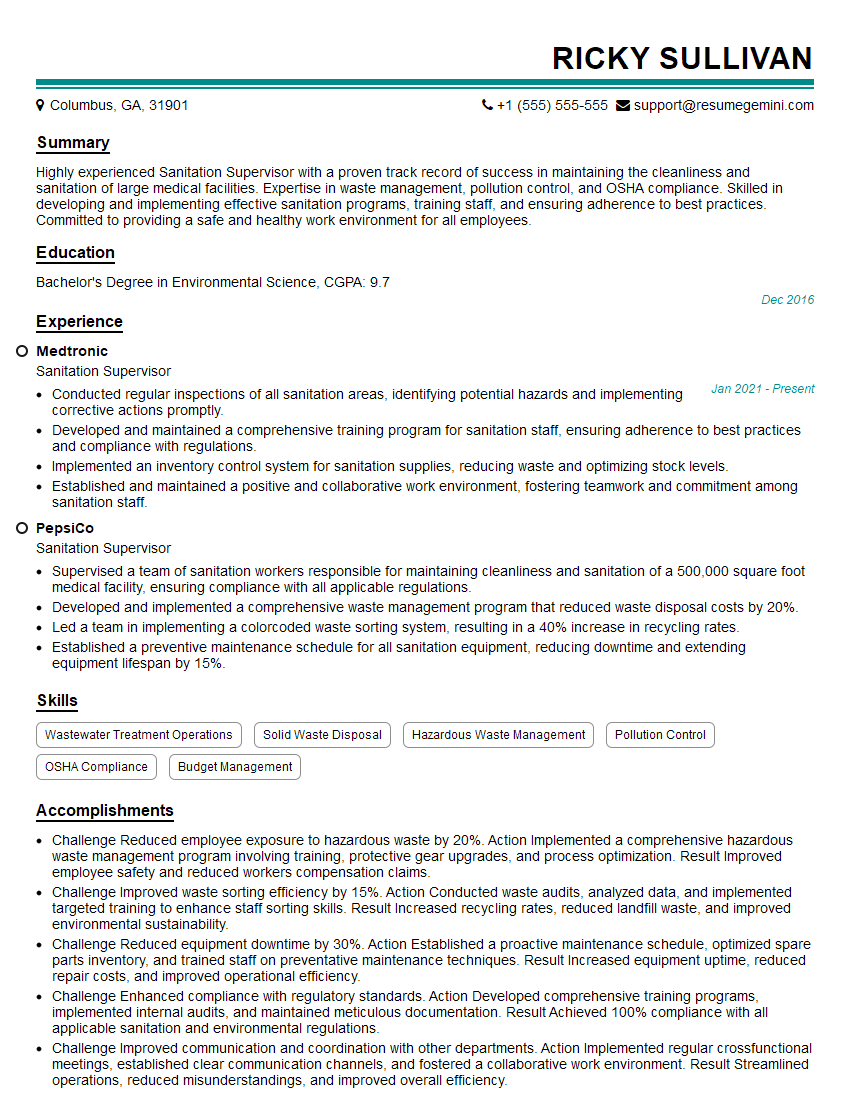
Sanitation Supervisor Resume Sample
Explore more articles
Users Rating of Our Blogs
Share Your Experience
We value your feedback! Please rate our content and share your thoughts (optional).
What Readers Say About Our Blog
Very informative content, great job.
good