Unlock your full potential by mastering the most common Safety Education and Training interview questions. This blog offers a deep dive into the critical topics, ensuring you’re not only prepared to answer but to excel. With these insights, you’ll approach your interview with clarity and confidence.
Questions Asked in Safety Education and Training Interview
Q 1. Explain the hierarchy of controls in safety management.
The Hierarchy of Controls is a fundamental principle in safety management. It prioritizes safety interventions based on their effectiveness in eliminating or reducing hazards. The goal is to implement the most effective control measure possible, progressing down the hierarchy only if the higher-level controls are infeasible or insufficient.
- Elimination: This is the most effective control. It involves completely removing the hazard from the workplace. Example: Replacing a hazardous chemical with a safer alternative.
- Substitution: Replacing a hazard with a less hazardous alternative. Example: Using a less powerful, but equally effective, piece of machinery.
- Engineering Controls: Implementing physical changes to the workplace to reduce exposure to hazards. Example: Installing machine guards, using ventilation systems to remove fumes, or implementing lockout/tagout procedures.
- Administrative Controls: Changes to work practices, procedures, or policies to reduce hazard exposure. Example: Implementing work permits, job rotation, or providing safety training.
- Personal Protective Equipment (PPE): Providing employees with equipment to protect them from hazards. Example: Safety glasses, hard hats, gloves, and respirators. This is considered the least effective control as it protects the worker, not the hazard itself, and relies on consistent and correct use.
Think of it like a ladder: you always try to climb as high as possible on the ladder, aiming for elimination or substitution, before resorting to lower-level controls like PPE.
Q 2. Describe your experience developing safety training programs.
I have extensive experience in developing safety training programs across various industries. My approach involves a thorough needs analysis to identify specific hazards and knowledge gaps within a workforce. I then design and deliver training that addresses these gaps using a variety of methods including interactive workshops, e-learning modules, simulations, and on-the-job training.
For example, I recently developed a comprehensive safety training program for a construction company. This program covered topics such as fall protection, hazard communication, lockout/tagout, and emergency response. The training incorporated scenario-based learning, practical demonstrations, and regular assessments to ensure knowledge retention and skill development. I also created a specific module focused on preventing musculoskeletal injuries, a frequent issue in construction. This module integrated ergonomic principles and demonstrated proper lifting techniques.
In another instance, I designed an e-learning module for a manufacturing plant focusing on machine safety. The module used interactive elements and 3D models to showcase potential hazards and safe operating procedures. This approach proved highly effective, leading to a significant increase in employee engagement and retention of critical safety information.
Q 3. How do you assess the effectiveness of a safety training program?
Assessing the effectiveness of a safety training program is crucial. It’s not enough to simply deliver training; you need to measure its impact on employee behavior and workplace safety. My approach incorporates a multi-faceted evaluation strategy:
- Pre- and Post-Training Assessments: These assess knowledge and understanding before and after the training, measuring knowledge gain.
- Observations: Observing employees in their work environment to see how they apply what they’ve learned. This can include checklists or structured observation forms.
- Behavioral Surveys: Gathering feedback from employees on their attitudes and perceptions of safety. This helps identify changes in behavior.
- Incident/Accident Data: Tracking the number and types of safety incidents before, during, and after the training. A reduction in incidents is a key indicator of success.
- Return on Investment (ROI): Calculating the cost of the training versus the savings from reduced incidents, lost-time injuries, and workers’ compensation claims.
A combination of these methods provides a comprehensive view of the training’s effectiveness and allows for continuous improvement.
Q 4. What are the key elements of a comprehensive safety audit?
A comprehensive safety audit involves a systematic examination of a workplace to identify existing and potential hazards. It goes beyond a simple checklist and aims to uncover root causes of potential accidents. Key elements include:
- Hazard Identification: A thorough walkthrough of the workplace to identify potential hazards using various methods like checklists, job hazard analyses (JHAs), and observations.
- Risk Assessment: Evaluating the likelihood and severity of each identified hazard to determine the level of risk. This often involves using a risk matrix.
- Compliance Review: Ensuring adherence to relevant safety regulations, standards, and company policies.
- Review of Safety Procedures and Documentation: Examining existing safety procedures, emergency response plans, training materials, and safety records for completeness and effectiveness.
- Employee Interviews: Gathering feedback from employees about safety concerns, near misses, and potential improvements. This offers valuable insights often missed by observation alone.
- Recommendations for Improvement: Based on the audit findings, developing specific recommendations for improving workplace safety. This should include prioritized actions and timelines.
- Follow-up and Monitoring: Tracking the implementation of the recommendations and measuring their effectiveness over time.
A safety audit is not a one-time event; it’s an ongoing process to continually improve safety performance.
Q 5. Explain the difference between proactive and reactive safety measures.
Proactive and reactive safety measures represent two different approaches to safety management. Proactive measures aim to prevent incidents from happening in the first place, while reactive measures address incidents after they’ve occurred.
- Proactive Safety Measures: These focus on identifying and controlling hazards before they can cause harm. Examples include regular safety inspections, hazard identification and risk assessment, implementing engineering controls, providing safety training, and promoting a strong safety culture.
- Reactive Safety Measures: These are implemented after an incident has occurred. They focus on investigating the cause of the incident, correcting the underlying problems, and preventing similar incidents from happening in the future. Examples include incident investigations, corrective actions, and disciplinary measures (as appropriate).
Ideally, a strong safety program incorporates both proactive and reactive measures. A heavy reliance on reactive measures indicates a lack of effective proactive strategies. Think of it like a doctor: preventative care (proactive) is best, but treating an illness after it occurs (reactive) is still necessary.
Q 6. How do you handle safety violations within a team?
Handling safety violations requires a fair and consistent approach. My process emphasizes education, correction, and prevention.
- Immediate Action: If a violation poses an immediate risk, I would address it immediately to prevent harm. This might involve stopping work until the hazard is corrected.
- Investigation: I would investigate the violation to understand the root cause. This might include interviewing the employee involved and others who witnessed the event.
- Corrective Action: Depending on the severity of the violation and the employee’s history, corrective action might range from verbal counseling to formal disciplinary measures. The goal is to correct the unsafe behavior and prevent future occurrences.
- Training/Retraining: Often, safety violations stem from a lack of knowledge or training. Additional training or retraining might be necessary to ensure employees understand and follow safety procedures.
- Documentation: All safety violations should be thoroughly documented. This includes the details of the violation, the investigation findings, the corrective action taken, and any follow-up measures.
My goal is not to punish employees, but rather to improve safety and prevent future accidents. I emphasize a supportive approach while ensuring accountability.
Q 7. Describe your experience with incident investigation and reporting.
I have extensive experience in incident investigation and reporting. My approach is based on a systematic process to determine the root cause of incidents, identify contributing factors, and implement corrective actions to prevent recurrence.
My process typically involves the following steps:
- Secure the Scene: Ensure the safety of personnel and preserve evidence before beginning the investigation.
- Gather Information: Collect data from various sources, including witness statements, photographs, video footage, and equipment records.
- Analyze the Data: Identify contributing factors using tools like fault tree analysis or fishbone diagrams.
- Determine Root Cause: Identify the underlying causes that led to the incident. This often involves looking beyond immediate causes to find the systemic issues.
- Develop Corrective Actions: Implement solutions to address the root cause and prevent future occurrences.
- Report Findings: Document the investigation findings, including the root cause, contributing factors, and corrective actions. This report is essential for learning and improvement.
- Follow-up: Monitor the implementation of corrective actions and assess their effectiveness.
I use a non-blaming approach, focusing on identifying system failures and implementing improvements to prevent future incidents. A key aspect is sharing learnings from investigations to improve overall safety performance across the organization.
Q 8. What are your preferred methods for delivering safety training?
My preferred methods for delivering safety training are multifaceted and tailored to the specific needs of the audience and the subject matter. I believe in a blended learning approach, combining various methods for optimal effectiveness. This includes:
- Interactive Workshops: Hands-on sessions allow for immediate feedback and practical application of learned concepts. For example, a workshop on lockout/tagout procedures would involve participants practicing the steps on simulated equipment.
- eLearning Modules: Online modules offer flexibility and scalability, allowing employees to learn at their own pace. These modules can include interactive elements like quizzes and simulations to reinforce learning. For example, a module on hazard identification could use interactive scenarios where learners identify potential hazards in a workplace image.
- On-the-Job Training (OJT): Direct observation and mentoring by experienced personnel provide valuable practical experience. This is particularly effective for skills-based training, like operating machinery safely.
- Videos and Simulations: Visual aids like videos and simulations can vividly illustrate safety procedures and hazardous situations. For example, a simulation of a fire evacuation could help employees understand proper escape routes and procedures.
- Gamification: Incorporating game mechanics into training can increase engagement and knowledge retention. This can be used effectively in eLearning modules or workshops.
The combination of these methods ensures a comprehensive and engaging learning experience.
Q 9. How do you adapt safety training to different audiences?
Adapting safety training to different audiences is crucial for effective learning and knowledge retention. I consider several factors when tailoring training:
- Literacy Levels and Language: Training materials must be accessible to all, regardless of their literacy level or primary language. This involves using clear, concise language, avoiding jargon, and offering multilingual support if necessary.
- Prior Knowledge and Experience: The level of detail and complexity of the training should match the audience’s existing knowledge and experience. Experienced workers might benefit from more advanced topics or refresher courses, while new hires may need more foundational training.
- Learning Styles: Individuals learn differently. Some prefer visual aids, others prefer hands-on activities, and some benefit from group discussions. A blended approach that incorporates diverse methods caters to various learning styles.
- Job Roles and Responsibilities: The specific hazards and safety procedures relevant to each role should be emphasized. For example, a warehouse worker will need different training than an office worker.
- Cultural Sensitivity: Training materials should be culturally appropriate and respectful of diverse backgrounds and beliefs.
By considering these factors, I can create engaging and relevant training that ensures all employees understand and can apply safety procedures effectively.
Q 10. Explain your understanding of OSHA regulations (or relevant local regulations).
My understanding of OSHA regulations (and equivalent local regulations) is extensive. I am familiar with the General Duty Clause, which requires employers to provide a workplace free from recognized hazards, as well as specific standards related to various hazards and industries. I understand the importance of:
- Hazard Communication (HazCom): Proper labeling, Safety Data Sheets (SDS), and employee training on chemical hazards.
- Lockout/Tagout (LOTO): Procedures to ensure machinery is de-energized and safe for maintenance or repair.
- Personal Protective Equipment (PPE): Providing and training employees on the proper use of PPE, such as hard hats, safety glasses, and gloves.
- Emergency Action Plans (EAP): Developing and regularly practicing EAPs to ensure a safe response to emergencies, including fire, evacuation, and medical incidents.
- Recordkeeping: Maintaining accurate records of safety training, incidents, and inspections.
Staying updated with the latest OSHA changes and interpretations is crucial. I regularly consult OSHA’s website and participate in professional development opportunities to maintain my expertise.
Q 11. Describe your experience with developing safety policies and procedures.
I have extensive experience in developing safety policies and procedures. My approach involves a collaborative process, engaging key stakeholders from various departments to ensure buy-in and relevance. The process typically includes:
- Hazard Identification and Risk Assessment: Conducting thorough assessments to identify potential hazards and evaluate their risks.
- Policy Development: Creating clear, concise, and comprehensive safety policies that align with OSHA regulations and best practices.
- Procedure Development: Developing step-by-step procedures for addressing identified hazards and performing safety-related tasks.
- Communication and Training: Ensuring all employees receive training on the new policies and procedures.
- Implementation and Monitoring: Monitoring compliance and making adjustments as needed.
- Documentation and Review: Maintaining thorough documentation of all policies, procedures, training records, and incident reports.
For instance, in a previous role, I developed a new lockout/tagout procedure that significantly reduced the risk of accidental equipment startup during maintenance.
Q 12. How do you promote a safety-conscious culture within a workplace?
Promoting a safety-conscious culture isn’t just about rules; it’s about fostering a shared commitment to safety. This involves:
- Leadership Commitment: Visible and active support from upper management is paramount. Leaders should demonstrate their commitment to safety by participating in training, leading by example, and holding employees accountable.
- Open Communication: Creating a safe environment for reporting near misses and incidents without fear of retribution. Regular safety meetings and feedback mechanisms are crucial.
- Employee Empowerment: Encouraging employees to identify and report hazards. Providing them with the authority and resources to address safety concerns.
- Recognition and Rewards: Recognizing and rewarding safe behaviors and contributions to safety improvements. This can range from simple verbal praise to formal awards.
- Continuous Improvement: Regularly reviewing safety procedures and implementing improvements based on feedback, incidents, and best practices.
A successful safety culture is built on trust, mutual respect, and a shared commitment to creating a safe and healthy workplace.
Q 13. How do you measure the return on investment (ROI) of safety training?
Measuring the ROI of safety training requires a multifaceted approach. It’s not just about the cost of training itself, but also the return in terms of reduced accidents, injuries, and associated costs. Key metrics include:
- Reduction in Lost Time Incidents (LTIs): A significant drop in LTIs demonstrates the effectiveness of the training in reducing workplace accidents.
- Decrease in Workers’ Compensation Claims: Lower workers’ compensation costs indicate a reduction in workplace injuries and associated expenses.
- Improved Employee Morale and Productivity: A safer workplace can lead to improved employee morale and productivity.
- Reduction in Property Damage: Effective safety training can minimize damage to equipment and facilities resulting from accidents.
- Increased Compliance with Regulations: Minimizes penalties and legal costs associated with non-compliance.
By tracking these metrics before and after implementing safety training, we can quantitatively demonstrate the positive impact of the investment.
Q 14. What are some common safety hazards in [relevant industry] and how would you mitigate them?
Let’s assume the relevant industry is construction. Common safety hazards in construction include:
- Falls: Falls from heights are a leading cause of injuries. Mitigation involves proper scaffolding, fall protection systems (harnesses, lifelines), and thorough training on safe work practices at heights.
- Struck-by Hazards: Being struck by falling objects, equipment, or vehicles. Mitigation includes using hard hats, establishing designated zones for equipment operation, and implementing safety procedures for material handling.
- Caught-in/Between Hazards: Being caught between objects or equipment. Mitigation involves using proper guarding and safety procedures during machinery operation and maintenance.
- Electrocution: Contact with energized electrical equipment. Mitigation involves proper lockout/tagout procedures, using insulated tools, and ensuring proper grounding.
- Excavation Hazards: Cave-ins and collapses during excavation. Mitigation involves proper shoring, sloping, and trench safety procedures.
Mitigation strategies involve a combination of engineering controls (e.g., guards, safety systems), administrative controls (e.g., policies, procedures, training), and personal protective equipment (PPE). Regular inspections, thorough training, and a strong safety culture are essential for minimizing these hazards.
Q 15. How familiar are you with different types of Personal Protective Equipment (PPE)?
My familiarity with Personal Protective Equipment (PPE) is extensive. I understand that PPE is crucial for mitigating workplace hazards and protecting employees from injury. This encompasses a wide range of equipment categorized by the type of hazard they protect against.
- Respiratory Protection: This includes respirators (e.g., N95 masks, full-face respirators) to protect against airborne hazards like dust, fumes, and gases. Proper fit testing and training are paramount here.
- Eye and Face Protection: Safety glasses, goggles, face shields, and welding helmets protect against flying debris, chemicals, and intense light sources.
- Head Protection: Hard hats are essential in construction, manufacturing, and other industries where falling objects pose a risk. The selection depends on the specific hazard.
- Hearing Protection: Earplugs and earmuffs reduce noise exposure in loud environments, preventing hearing loss.
- Hand Protection: Gloves are vital in various settings, with different materials offering protection against cuts, chemicals, burns, or extreme temperatures.
- Foot Protection: Safety footwear, including steel-toe boots, protects against crushing injuries and punctures.
- Body Protection: This includes aprons, coveralls, and other garments that shield against chemicals, heat, or other hazards.
Choosing the right PPE involves a thorough risk assessment, ensuring proper fit, and providing comprehensive training on its use and limitations. For example, a construction worker might need a hard hat, safety glasses, and steel-toe boots, while a lab technician might require gloves, a lab coat, and eye protection, depending on the specific chemicals handled.
Career Expert Tips:
- Ace those interviews! Prepare effectively by reviewing the Top 50 Most Common Interview Questions on ResumeGemini.
- Navigate your job search with confidence! Explore a wide range of Career Tips on ResumeGemini. Learn about common challenges and recommendations to overcome them.
- Craft the perfect resume! Master the Art of Resume Writing with ResumeGemini’s guide. Showcase your unique qualifications and achievements effectively.
- Don’t miss out on holiday savings! Build your dream resume with ResumeGemini’s ATS optimized templates.
Q 16. Describe your experience with conducting safety inspections.
My experience with safety inspections is broad, encompassing various industries and settings. I follow a structured approach, typically using a checklist to ensure thoroughness. This involves a visual inspection of the workplace, equipment, and employee practices.
A typical inspection includes checking for:
- Housekeeping: Cleanliness, organization, proper storage of materials, and the absence of trip hazards.
- Equipment Condition: Functionality, proper guarding, and maintenance records.
- Personal Protective Equipment (PPE): Correct usage, proper fit, and availability of appropriate PPE.
- Emergency Procedures: Accessibility and functionality of emergency exits, fire extinguishers, and first-aid kits.
- Compliance with Regulations: Adherence to OSHA (or equivalent) standards and company policies.
I document findings meticulously, highlighting any deficiencies, non-compliances, or potential hazards. This documentation serves as a basis for corrective actions, improvement plans, and follow-up inspections. For instance, during a recent inspection at a manufacturing plant, I discovered a faulty guard on a machine. This was immediately reported, the machine was shut down, and repairs were scheduled to prevent potential injuries.
Q 17. How do you ensure that safety training remains up-to-date and relevant?
Keeping safety training current and relevant requires a proactive approach. I utilize several strategies:
- Regular Updates: I review training materials annually, incorporating any changes in regulations, industry best practices, and new technologies. This often involves reviewing new OSHA standards or industry guidelines.
- Feedback Mechanisms: I solicit feedback from employees on the effectiveness of the training, identifying areas for improvement or gaps in knowledge.
- Scenario-Based Training: Using realistic scenarios and simulations to engage employees and enhance their understanding of practical applications. For example, simulating emergency situations and practicing evacuation procedures.
- Refresher Courses: Providing periodic refresher courses to reinforce key concepts and address any emerging hazards. This is especially important for tasks that involve ongoing risk.
- Technology Integration: Utilizing online modules, interactive simulations, and mobile apps to deliver training conveniently and effectively, ensuring up-to-date information.
By implementing these strategies, I ensure that the safety training remains engaging, practical, and tailored to the specific needs and risks of the workplace.
Q 18. What are your skills in using safety management software?
My skills in using safety management software are strong. I’m proficient in using various systems to manage safety data, track incidents, conduct risk assessments, and deliver training. I have experience with software that facilitates:
- Incident Reporting and Investigation: Recording and analyzing incidents to identify root causes and implement preventative measures.
- Risk Assessment Management: Conducting and documenting risk assessments, identifying hazards, and assigning appropriate controls.
- Training Management: Tracking employee training records, scheduling refresher courses, and ensuring compliance with training requirements.
- Document Management: Storing and managing safety-related documents, such as policies, procedures, and inspection reports.
- Data Analysis and Reporting: Generating reports on key safety metrics to monitor trends and identify areas needing improvement.
For example, I’ve used software to create interactive training modules, track the completion of safety training by individual employees, and generate reports showing the overall safety performance of a company over time. This data helps in focusing efforts on areas requiring more attention, proactively reducing risks.
Q 19. How do you deal with resistance to safety training from employees?
Resistance to safety training can stem from various factors, including time constraints, perceived inconvenience, or a lack of understanding of the importance of safety. I address this using a multifaceted approach:
- Communication and Engagement: Clearly explaining the benefits of safety training, emphasizing its role in preventing injuries and fostering a safe work environment. Addressing concerns and actively listening to their perspectives.
- Incentives and Recognition: Offering incentives for completing training promptly and recognizing employees who actively promote safety. This can involve small rewards, certificates, or public acknowledgment.
- Tailored Training: Providing training that is relevant and engaging, avoiding unnecessary or overly technical information. Utilizing interactive methods, such as games or simulations.
- Management Support: Ensuring that management actively supports and promotes safety training, leading by example and reinforcing the importance of participation.
- Addressing Underlying Concerns: Investigating the root causes of resistance. If employees feel overburdened, for example, alternative training schedules or formats may be explored.
By understanding the reasons behind resistance and addressing them proactively, I can foster a culture of safety and increase employee participation in training initiatives.
Q 20. Describe a situation where you had to implement a new safety procedure.
In a previous role, we experienced an increase in minor hand injuries related to a specific machine. A thorough investigation revealed a gap in the existing safety procedure. We needed to implement a new process to address this.
My approach involved:
- Root Cause Analysis: Identifying the factors contributing to the hand injuries, including improper use of the machine and a lack of appropriate hand protection.
- Development of a New Procedure: Creating a detailed safety procedure that addressed these issues, including specific instructions on machine operation, proper use of gloves, and regular machine inspections.
- Training and Communication: Providing comprehensive training to all employees on the new procedure, emphasizing the importance of following the steps and the potential consequences of non-compliance.
- Implementation and Monitoring: Implementing the new procedure and closely monitoring its effectiveness. Regular inspections were conducted to ensure compliance and identify any further areas for improvement.
The new procedure, combined with thorough training, significantly reduced hand injuries related to that machine. This demonstrated the importance of responding promptly to safety concerns and proactively implementing appropriate changes.
Q 21. Explain the importance of risk assessment in safety management.
Risk assessment is fundamental to effective safety management. It’s a systematic process to identify hazards, evaluate the associated risks, and determine appropriate control measures. It’s the foundation upon which all other safety measures are built.
The process typically involves:
- Hazard Identification: Identifying potential hazards in the workplace, including physical, chemical, biological, ergonomic, and psychosocial hazards.
- Risk Evaluation: Assessing the likelihood and severity of harm associated with each hazard. This often involves a qualitative or quantitative analysis.
- Control Measures: Developing and implementing control measures to eliminate or reduce the risks. This might involve engineering controls (e.g., machine guarding), administrative controls (e.g., procedures, training), or personal protective equipment (PPE).
- Monitoring and Review: Regularly monitoring the effectiveness of control measures and reviewing the risk assessment to ensure it remains up-to-date and relevant.
Without a thorough risk assessment, organizations are operating blindly, potentially exposing themselves and their employees to unnecessary risks. A well-conducted risk assessment allows for proactive measures to be taken to prevent incidents, reducing costs and saving lives.
Q 22. How do you communicate safety information effectively to employees?
Effective safety communication requires a multi-faceted approach, tailoring information to the audience’s understanding and learning styles. I prioritize clarity, conciseness, and visual aids. For instance, instead of lengthy paragraphs, I use bullet points, infographics, and short videos to convey key safety messages. I also ensure that the language is simple and avoids jargon, using visuals to reinforce concepts. Furthermore, I consider the employees’ native languages and literacy levels, providing translations or simplified versions when necessary. For example, I might use pictograms alongside text for instructions on operating machinery. Finally, I leverage various communication channels – emails, posters, toolbox talks, team meetings, and even SMS alerts – to reach everyone effectively. Regular feedback mechanisms, like surveys or informal chats, help me gauge comprehension and adjust my communication accordingly.
Q 23. What are your strategies for maintaining employee engagement in safety training?
Maintaining employee engagement in safety training is crucial for a safe work environment. My strategies focus on making training interactive, relevant, and rewarding. I incorporate gamification techniques, such as quizzes and challenges, to make learning fun and competitive. Real-life case studies and simulations, rather than solely theoretical lectures, help employees connect training to their everyday tasks. I also emphasize the importance of safety through storytelling and highlighting real-world consequences of unsafe actions. Regular feedback and recognition for safe behaviors reinforces positive attitudes. For instance, I might implement a points-based system where employees earn rewards for completing training modules or demonstrating safe practices. Furthermore, I encourage peer-to-peer learning and offer opportunities for employees to share their safety experiences and best practices, creating a sense of collective responsibility for safety.
Q 24. Describe your experience with developing safety communication materials.
I have extensive experience developing various safety communication materials, including safety manuals, posters, training presentations, and online modules. My approach emphasizes visual appeal and clarity. For example, I once developed a safety manual for a construction site, incorporating clear photographs and step-by-step instructions for operating heavy machinery. For online modules, I use interactive elements, such as branching scenarios and quizzes, to enhance engagement. When designing posters, I focus on simple, impactful visuals and concise messages that are easily understood at a glance. In each case, I ensure the material aligns with regulatory requirements and industry best practices. I regularly assess the effectiveness of my materials through feedback sessions and data analysis, making revisions as needed to ensure maximum impact.
Q 25. How do you handle conflicts related to safety procedures?
Conflicts regarding safety procedures are addressed through a structured and collaborative approach. My first step is to listen carefully to all parties involved, understanding their perspectives and concerns. I then clarify the relevant safety regulations and procedures, emphasizing the rationale behind them. If the conflict stems from a misunderstanding, I provide additional training or clarification. However, if the conflict involves a deliberate disregard for safety, I address the issue formally, following company disciplinary procedures. I ensure that all communications are documented, maintaining a record of the conflict, its resolution, and any corrective actions taken. Furthermore, I emphasize the importance of open communication and encourage employees to voice their safety concerns without fear of reprisal. My goal is to create a culture where safety concerns are addressed proactively and collaboratively.
Q 26. What are your experience with emergency response procedures?
My experience with emergency response procedures encompasses both theoretical knowledge and practical application. I’m proficient in developing and implementing emergency response plans, including conducting regular drills and simulations. I’m familiar with various emergency situations, such as fires, chemical spills, and medical emergencies. My training includes first aid and CPR certification, and I’ve participated in numerous emergency response training exercises. I understand the importance of clear communication during emergencies, utilizing designated communication channels and protocols to ensure efficient coordination. I’ve also played a key role in post-incident investigations, analyzing events to identify areas for improvement in our emergency response capabilities. For instance, following a mock chemical spill scenario, I analyzed response times and communication breakdowns, resulting in improved procedures and updated training materials.
Q 27. Explain your understanding of different types of safety training methods (e.g., classroom, online, on-the-job).
Different safety training methods cater to varied learning styles and needs. Classroom training offers a structured environment for in-depth learning and interaction. However, it can be time-consuming and costly. Online training, through e-learning platforms, offers flexibility and scalability, allowing employees to learn at their own pace. However, it might lack the personal interaction of classroom training. On-the-job training provides hands-on experience, directly relating learning to the workplace. However, it requires close supervision and can disrupt workflow. The most effective approach often combines these methods, leveraging the strengths of each. For example, a new employee might receive initial safety training online, followed by classroom instruction on specific equipment and procedures, and finally on-the-job training under the guidance of a supervisor. This blended learning approach ensures comprehensive and effective training.
Q 28. How do you stay current with the latest safety regulations and best practices?
Staying current with safety regulations and best practices is paramount. I achieve this through continuous professional development, actively participating in industry conferences and webinars. I subscribe to relevant professional journals and newsletters and maintain memberships in safety-related organizations. I regularly review and update my knowledge of OSHA standards (or equivalent local regulations) and industry best practices through online resources and government publications. I also network with other safety professionals, exchanging information and insights. Regular audits and internal reviews of safety procedures within the organization help to identify areas where updates are needed. This multifaceted approach ensures that my knowledge base remains aligned with the latest developments in safety, ensuring a safe and compliant work environment.
Key Topics to Learn for Safety Education and Training Interview
- Hazard Identification and Risk Assessment: Understanding methodologies like HAZOP, What-If analysis, and Job Safety Analysis (JSA). Practical application: Demonstrate your ability to identify potential hazards in a given scenario and propose effective control measures.
- Safety Training Program Development and Delivery: Designing effective training programs that cater to diverse learning styles and incorporating adult learning principles. Practical application: Describe your experience in developing and delivering safety training, highlighting successful outcomes and lessons learned.
- Regulatory Compliance and Legislation: Familiarity with relevant OSHA standards, industry-specific regulations, and legal frameworks related to workplace safety. Practical application: Explain how you ensure compliance with relevant regulations in a practical setting.
- Incident Investigation and Reporting: Mastering root cause analysis techniques and effective reporting methodologies for workplace incidents. Practical application: Describe your experience in investigating incidents, identifying contributing factors, and recommending preventative actions.
- Emergency Response Planning and Procedures: Developing and implementing emergency response plans, including evacuation procedures, first aid, and emergency communication protocols. Practical application: Outline your experience in developing or participating in emergency response drills and scenarios.
- Safety Culture and Behavior-Based Safety: Understanding the importance of fostering a strong safety culture within an organization and implementing behavior-based safety programs. Practical application: Describe how you’ve contributed to a positive safety culture in a previous role.
- Personal Protective Equipment (PPE): Knowledge of various types of PPE, their selection criteria, and proper use and maintenance. Practical application: Explain how you would select appropriate PPE for a specific task or hazard.
Next Steps
Mastering Safety Education and Training is crucial for career advancement in this vital field. A strong understanding of these concepts will significantly enhance your interview performance and open doors to exciting opportunities. To increase your chances of landing your dream job, crafting an ATS-friendly resume is essential. ResumeGemini is a trusted resource that can help you build a professional and effective resume tailored to highlight your skills and experience. We provide examples of resumes specifically designed for Safety Education and Training professionals to help guide you. Invest in your future – build a winning resume with ResumeGemini.
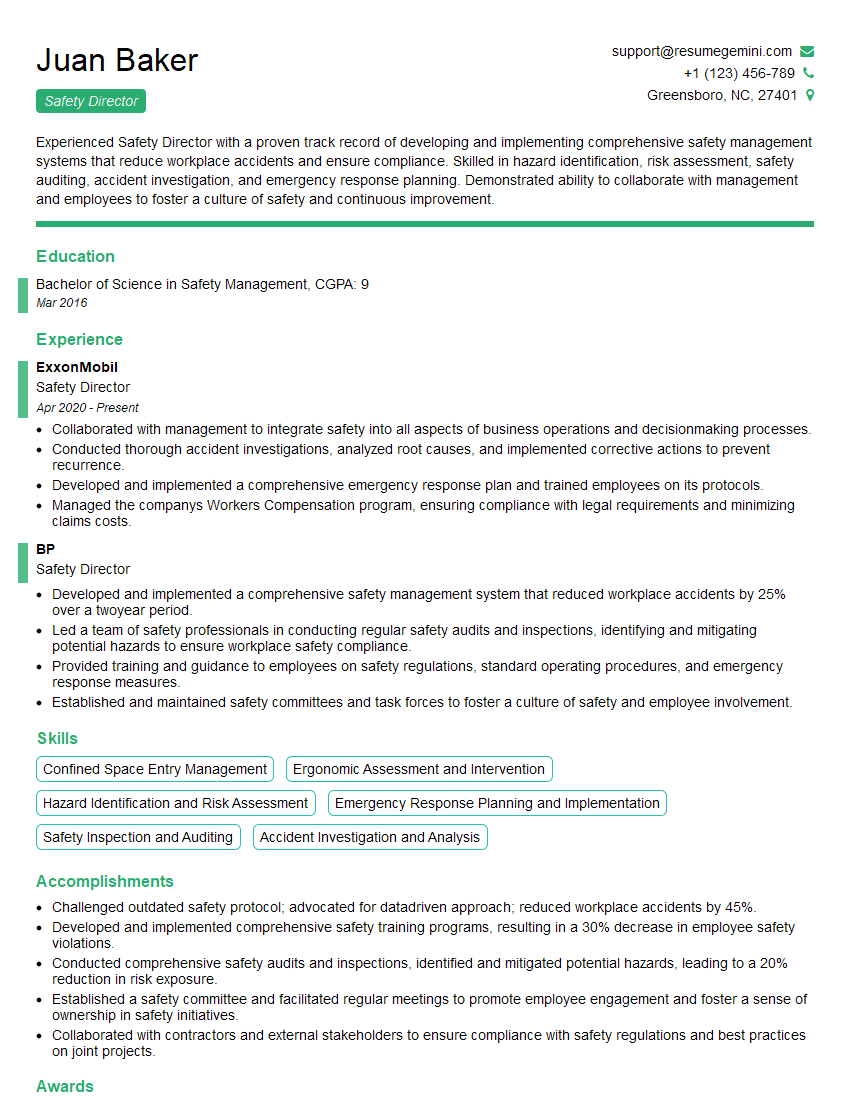
Safety Director Resume Sample
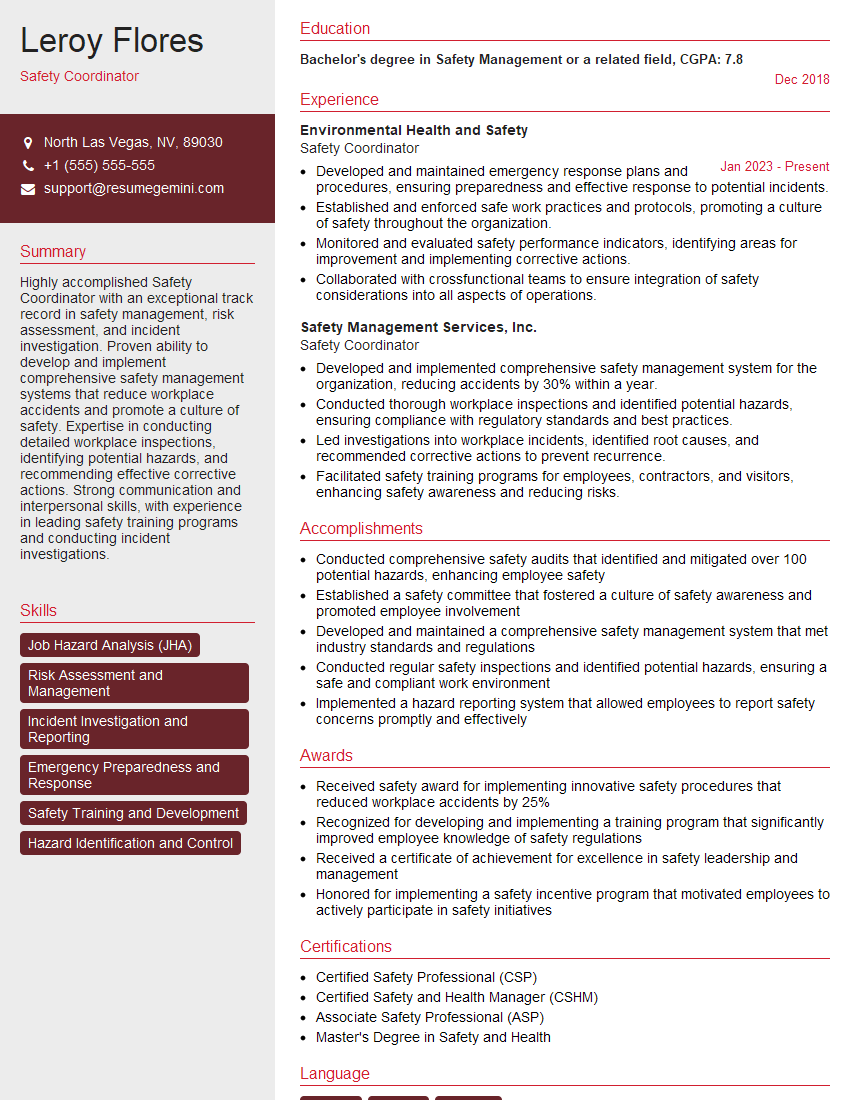
Safety Coordinator Resume Sample
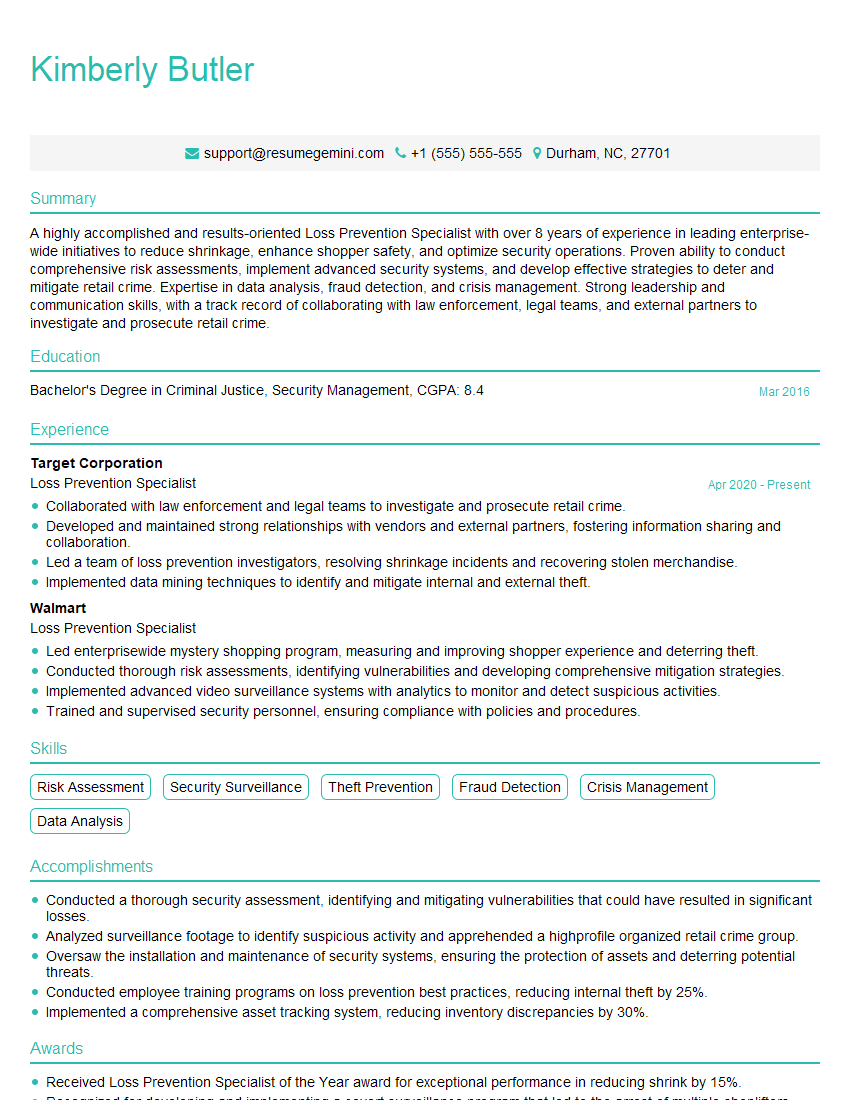
Loss Prevention Specialist Resume Sample

Risk Management Specialist Resume Sample
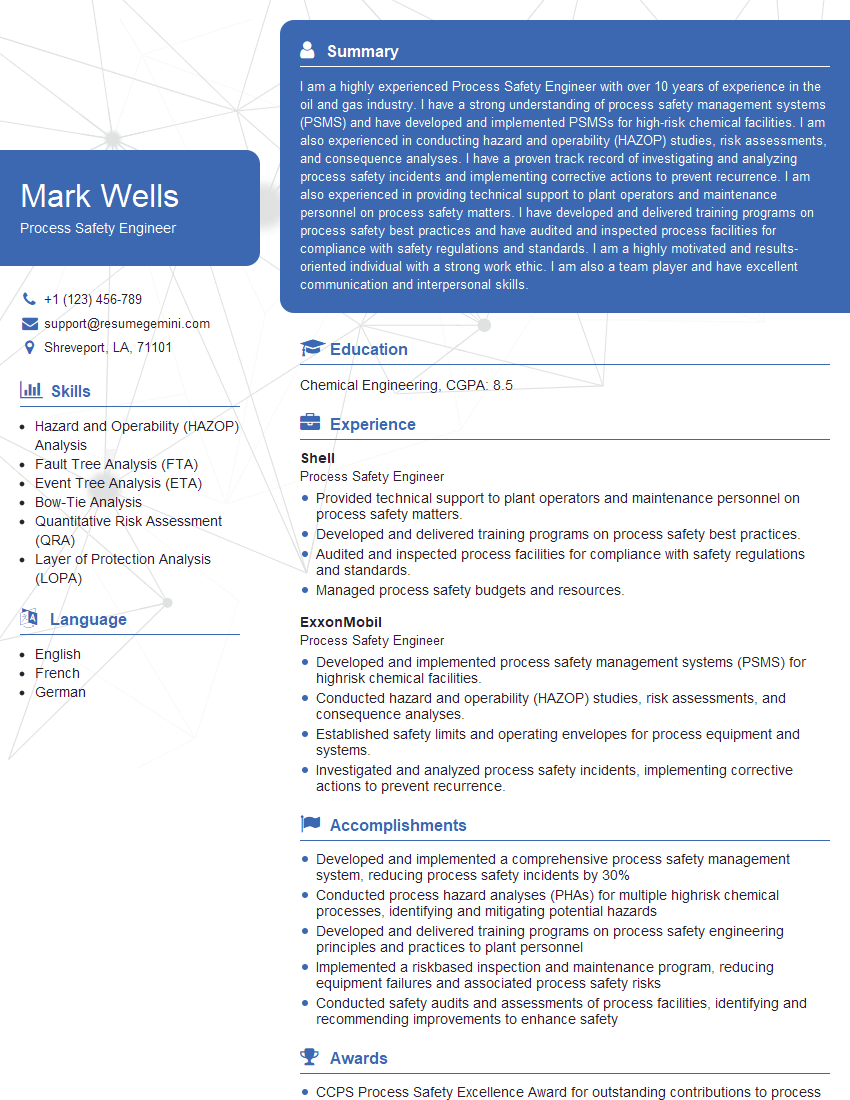
Process Safety Engineer Resume Sample
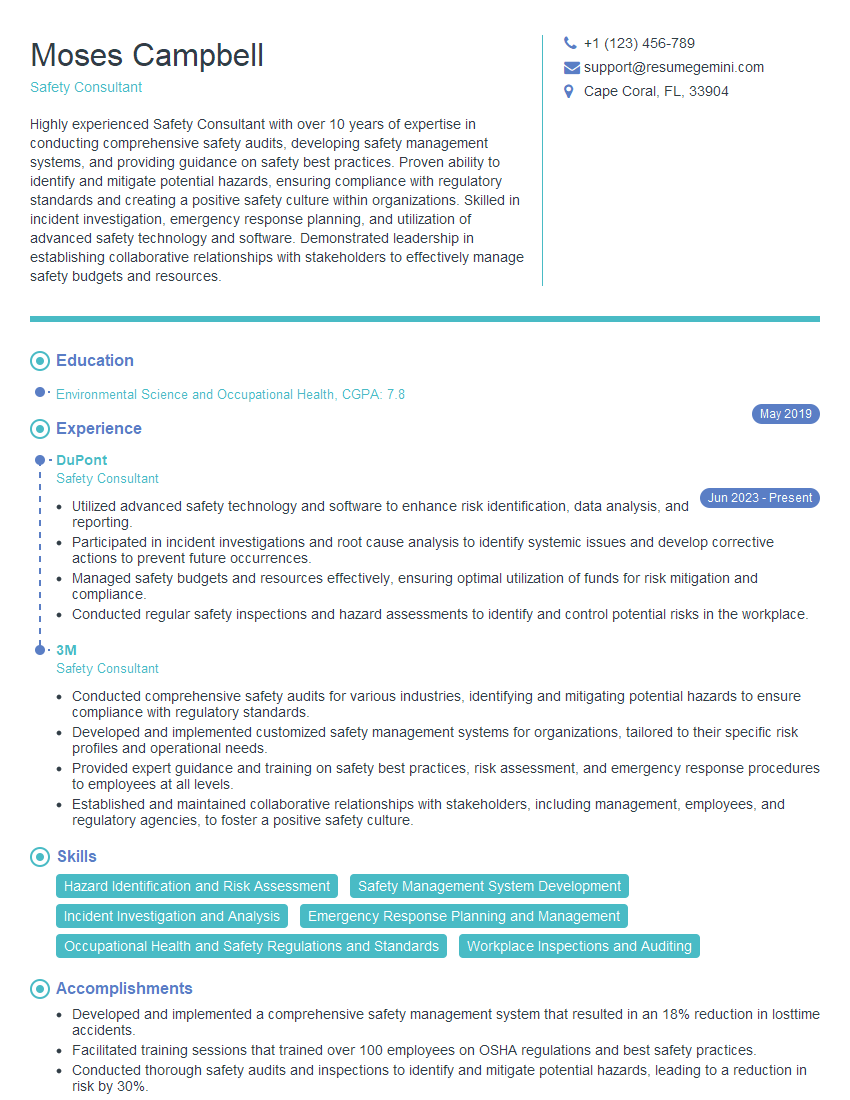
Safety Consultant Resume Sample

Safety Engineer Resume Sample
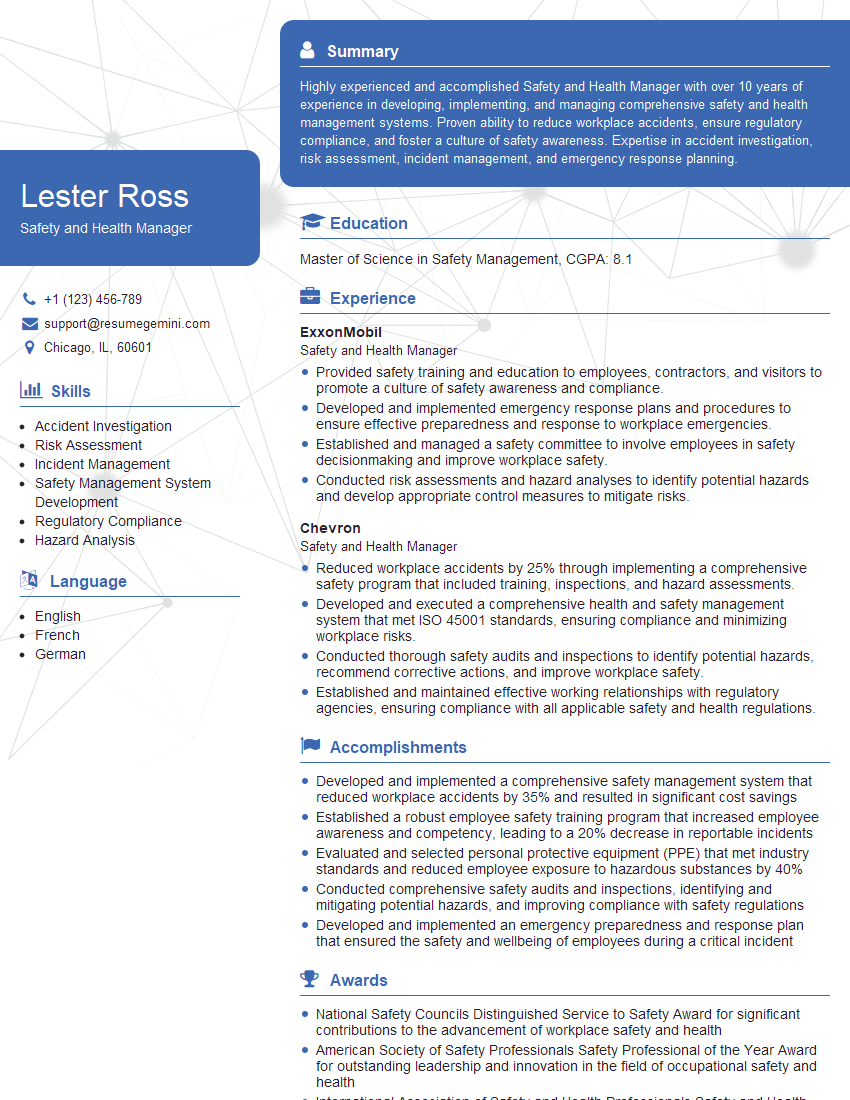
Safety and Health Manager Resume Sample
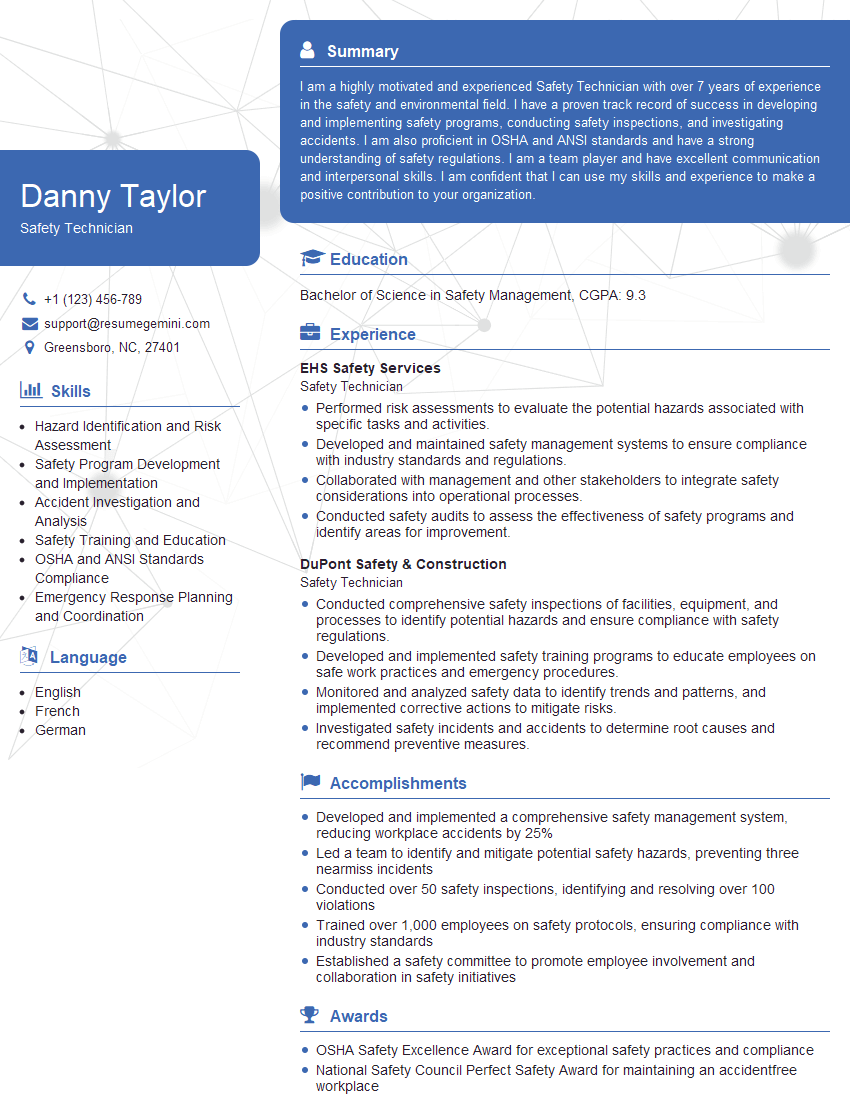
Safety Technician Resume Sample
Explore more articles
Users Rating of Our Blogs
Share Your Experience
We value your feedback! Please rate our content and share your thoughts (optional).
What Readers Say About Our Blog
Very informative content, great job.
good