Interviews are opportunities to demonstrate your expertise, and this guide is here to help you shine. Explore the essential Safety Equipment Inspecting interview questions that employers frequently ask, paired with strategies for crafting responses that set you apart from the competition.
Questions Asked in Safety Equipment Inspecting Interview
Q 1. Explain the different types of safety harnesses and their appropriate applications.
Safety harnesses are crucial for fall protection, and different types cater to various work environments. The choice depends on the specific task and potential fall hazards.
- Full Body Harnesses: These offer the most comprehensive protection, with attachment points at the dorsal (back), sternal (chest), and leg straps. They are suitable for general work at heights, confined spaces, and rescue operations. Think of a window washer – a full body harness is essential for their safety.
- Chest Harnesses: These have attachment points at the chest and back, providing good support for vertical work. However, they offer less protection than full-body harnesses and are generally less preferred unless specifically designed for a niche application, like certain types of rope access work.
- Positioning Harnesses: Designed to keep a worker in a specific position, often used for tasks requiring hands-free operation, such as welding or inspection. These harnesses are *not* designed for fall arrest.
- Specialized Harnesses: Examples include those designed for confined space rescue, swift water rescue, or specific industrial applications. These harnesses have features tailored to the unique hazards associated with those environments.
Remember, always choose a harness that meets or exceeds the relevant safety standards and is appropriate for the specific task.
Q 2. Describe the inspection process for a SCBA (Self-Contained Breathing Apparatus).
Inspecting a Self-Contained Breathing Apparatus (SCBA) is a critical process involving both visual and functional checks. A thorough inspection ensures the user’s safety and the equipment’s reliability in emergency situations.
- Visual Inspection: Examine the mask for cracks, damage, or missing parts. Check the straps, head harness, and air supply lines for wear and tear. Inspect the cylinder for dents, corrosion, or damage, and ensure the pressure gauge is functioning correctly. Verify the regulator is undamaged and the air supply valve is operating smoothly.
- Functional Test: This involves checking the air pressure in the cylinder, testing the regulator to ensure proper airflow, and testing the mask for proper sealing against leaks. A leak test is crucial and should be conducted according to the manufacturer’s instructions. This might involve using soapy water to check for air bubbles around the seal. Never attempt a full functional test without proper training.
- Documentation: After the inspection, thoroughly document all findings, including any deficiencies or damage found. This documentation should include the date, time, and inspector’s identification. Use a standardized checklist for consistency and accuracy.
Remember, regular and thorough SCBA inspections are non-negotiable for maintaining a safe working environment, especially in hazardous settings. A malfunctioning SCBA can have fatal consequences.
Q 3. What are the legal requirements for safety equipment inspection in your region?
Legal requirements for safety equipment inspection vary by region and are often dictated by national and/or local occupational safety and health (OSH) regulations. In many jurisdictions, regular inspections are mandated, with specific frequencies depending on the type of equipment and the level of risk. Employers are generally legally responsible for ensuring that equipment is inspected and maintained, often documented through signed inspection reports. Failure to comply with these regulations can result in significant penalties, including fines and even criminal charges. Specific standards and regulations should be sourced from your local OSH authority.
For example, OSHA in the US has specific regulations concerning fall protection and respiratory protection. Similar regulations exist in other countries under various names and organizations (e.g., Health and Safety Executive in the UK).
Q 4. How do you identify and document deficiencies during an inspection?
Identifying and documenting deficiencies is crucial for maintaining safety and compliance. This process involves a systematic approach that should be followed consistently for all inspections.
- Clear Identification: Clearly describe any deficiencies found, including their location and severity. Use precise and objective language. For example, instead of saying ‘damaged harness,’ specify ‘worn stitching on the dorsal D-ring of the full body harness.’
- Photography/Videography: Take clear photos or videos of any deficiencies as visual evidence. These are invaluable for documentation and tracking repairs.
- Severity Assessment: Classify deficiencies by severity (e.g., minor, major, critical). This helps prioritize repairs and determines whether the equipment is safe to use until repairs are completed.
- Detailed Documentation: Use a standardized inspection form or checklist to record all findings, including the equipment’s identification number, the date of inspection, the inspector’s name, and a comprehensive description of any defects.
- Repair/Replacement Recommendations: Provide clear recommendations for repair or replacement, and if necessary, outline the required actions to remove the equipment from service.
Accurate and thorough documentation is vital to ensure accountability and prevent future accidents. Think of it as a crucial piece of evidence should an incident occur.
Q 5. What are the common causes of failure in fall arrest systems?
Fall arrest systems, while designed to save lives, can fail due to various factors, many stemming from improper use or maintenance.
- Anchor Point Failure: A weak or improperly installed anchor point is a leading cause of system failure. This includes insufficient strength, incorrect placement, or damage to the anchor point itself. The anchor point must be rated for the load it needs to withstand.
- Component Failure: Wear and tear on components such as ropes, lanyards, and connectors can lead to breakage under stress. Exposure to chemicals, UV radiation, and excessive wear weakens these components.
- Improper Use: Incorrect use, such as using a system beyond its rated capacity or not properly connecting the harness, can result in catastrophic failure. User error is a major contributor to accidents.
- Lack of Inspection & Maintenance: Regular inspections and preventative maintenance are crucial to identify and address potential issues before they lead to failure. Ignoring wear and tear can dramatically shorten the lifespan of the equipment.
- Environmental Factors: Extreme temperatures, chemicals, and moisture can degrade the materials used in fall arrest systems, compromising their integrity and strength.
Regular inspections, proper training, and adherence to manufacturer’s recommendations are essential to minimize the risk of fall arrest system failure.
Q 6. Explain the difference between a visual inspection and a functional test.
While both visual inspections and functional tests are critical parts of safety equipment maintenance, they serve distinct purposes.
- Visual Inspection: A visual inspection is a non-invasive assessment focusing on the physical condition of the equipment. This involves looking for visible signs of damage, wear, corrosion, or defects. It’s like a quick visual check-up to ensure everything appears to be in order.
- Functional Test: A functional test assesses the operational capability of the equipment. This involves actively testing the equipment to ensure it functions as intended under load or simulated conditions. This is like a ‘performance’ test to ensure that the equipment works correctly.
For example, a visual inspection of a harness might reveal fraying on a strap, while a functional test might involve checking the strength of the webbing under load. Both are equally important in ensuring the equipment’s continued safe use.
Q 7. How do you determine the appropriate frequency of safety equipment inspections?
Determining the appropriate frequency of safety equipment inspections depends on several factors, including:
- Type of Equipment: Some equipment, such as SCBAs or fall arrest systems, requires more frequent inspections due to the inherent risks associated with their failure. Equipment used in harsh environments or under heavy use also needs more frequent checks.
- Manufacturer’s Recommendations: Always adhere to the manufacturer’s recommendations for inspection frequency. These recommendations are often based on testing and analysis of the equipment’s lifespan and potential degradation.
- Legal Requirements: Legal and regulatory requirements may dictate minimum inspection frequencies. Compliance with these is paramount.
- Usage Frequency: Equipment used daily or in demanding applications requires more frequent inspections than equipment used less often.
- Environmental Conditions: Exposure to harsh environmental conditions, such as extreme temperatures or chemicals, may necessitate more frequent inspections.
A risk assessment can help determine the appropriate inspection schedule. A well-documented inspection program is essential, clearly outlining the procedures, responsible parties, and the schedule for each piece of equipment. This ensures accountability and promotes a proactive safety culture.
Q 8. Describe your experience with different types of safety equipment.
My experience encompasses a wide range of safety equipment, from personal protective equipment (PPE) like hard hats, safety glasses, and respirators, to more complex systems such as fall protection harnesses, lockout/tagout devices, and fire suppression systems. I’ve inspected equipment across various industries, including construction, manufacturing, and healthcare. For instance, I’ve meticulously inspected hundreds of harnesses, checking for fraying, damage to buckles and straps, and proper labeling. Similarly, I’ve regularly audited respiratory protection programs, ensuring proper fit testing, training, and maintenance of respirators are in place. My experience also includes evaluating the functionality and compliance of emergency eyewash stations, fire extinguishers, and confined space entry equipment.
- PPE Inspection: Visual inspection for damage, proper fit, and cleanliness. This includes checking for expiration dates on respirator cartridges.
- Fall Protection: Thorough examination of harnesses, lanyards, and anchor points for wear, damage, and proper functionality. Testing load capacity and anchorage strength is crucial.
- Lockout/Tagout Devices: Verification of proper locking mechanisms, clear identification, and adherence to procedures.
Q 9. How do you handle situations where safety equipment is found to be non-compliant?
When non-compliant equipment is discovered, my immediate action is to take it out of service immediately. This involves tagging the equipment with a clear ‘Do Not Use’ label and explaining the reason for removal. The next step is to thoroughly document the non-compliance, including photographs, detailed descriptions of the defects, and the location of the equipment. Then, I initiate a process to repair or replace the non-compliant equipment. Depending on the severity of the non-compliance and the associated risk, I might need to inform relevant stakeholders immediately and temporarily halt operations involving the affected equipment.
For example, if a hard hat shows significant damage, like a deep crack, I would immediately remove it from service, document the damage, and ensure a replacement is available to the worker. If a fire extinguisher fails its pressure test, I’d not only remove it from service but also initiate immediate replacement, possibly coordinating with a service provider.
Q 10. What are your methods for documenting inspection findings?
My documentation methods are thorough and systematic. I utilize a combination of digital and physical records. Each inspection generates a detailed report that includes: date and time of the inspection, equipment identification numbers, a checklist of inspected items, descriptions of any defects or deficiencies noted, photographs or videos of the equipment’s condition, and corrective actions recommended. These reports are often digitally stored and backed up to ensure data security. Physical copies might also be maintained on-site for easy access. Using a standardized inspection checklist ensures consistency and completeness across all inspections.
For example, a spreadsheet or database is used to record the inspection date, equipment ID, inspector name, and status of each item inspected. This allows for easy tracking and analysis of inspection trends over time. A digital image is included whenever visible damage is detected. These digital records are easily searchable and shareable.
Q 11. Explain the importance of proper record-keeping in safety equipment inspections.
Proper record-keeping is crucial for several reasons. First, it provides a verifiable audit trail demonstrating compliance with safety regulations and company policies. This is vital for regulatory audits and liability purposes. Second, consistent documentation helps identify trends in equipment failures or maintenance needs, allowing for proactive measures to prevent future incidents. Third, well-maintained records facilitate timely repairs or replacements, minimizing downtime and risk. Finally, accurate records can be crucial in accident investigations, helping determine the root cause of incidents and prevent their recurrence.
Imagine a scenario where an accident occurs due to a malfunctioning piece of equipment. Without proper records, it would be difficult to trace the history of the equipment, its last inspection date, and any identified problems. Thorough records can be the difference between successfully defending against a claim and facing serious consequences.
Q 12. How do you communicate inspection results to relevant stakeholders?
Communicating inspection results effectively is paramount. My approach involves a multi-faceted strategy. I generally provide a written report to the relevant supervisor or safety manager, summarizing the findings and highlighting any critical issues. In cases of immediate safety concerns, I communicate verbally first, then follow up with a written report. I may also conduct briefings or meetings with workers using the equipment to inform them of any necessary adjustments to their practices or changes to the equipment itself. For critical issues, a formal communication might be circulated across multiple departments, such as safety, operations, and maintenance.
For example, If a significant defect is found in a piece of heavy machinery, I would first inform the supervisor orally so immediate action can be taken to prevent its use. Then, I would provide a written report detailing the defects and recommended corrective actions, copying the maintenance team and the safety manager.
Q 13. What are the key components of a lockout/tagout procedure?
A lockout/tagout (LOTO) procedure is a critical safety process designed to prevent the accidental energization or start-up of machinery or equipment during maintenance or repair. The key components include:
- Preparation: Identifying the energy sources, selecting the appropriate lockout/tagout devices, and notifying all affected personnel.
- Lockout/Tagout: Disconnecting energy sources and securing them with lockout devices and tags clearly identifying the responsible person and the reason for the lockout. This must be done according to established procedures and standards.
- Verification: Verifying that energy sources are de-energized before starting work. Often this involves multiple individuals confirming the lockout.
- Release: Following the completion of the work, the energy sources are restored only after a thorough verification and removal of lockout/tagout devices by the person who initially installed them.
A failure in any of these steps can result in severe injuries or fatalities. A strong LOTO program includes regular training, documented procedures, and periodic audits to ensure consistent compliance.
Q 14. How do you ensure the safety of yourself and others during inspections?
Ensuring my safety and the safety of others during inspections is my top priority. This requires a proactive approach that includes adhering to established safety protocols, using appropriate PPE, and employing safe work practices. Before any inspection, I assess the potential hazards and identify necessary PPE. This could include hard hats, safety glasses, gloves, high-visibility clothing, and fall protection equipment where necessary. I always communicate my intentions to others in the area and maintain awareness of my surroundings. I utilize site-specific safety procedures and follow all established lockout/tagout protocols when working near energized equipment. I also never take shortcuts, always prioritizing safety over speed or convenience.
For example, when inspecting scaffolding, I would wear a full body harness and use appropriate fall protection devices. If inspecting equipment in a confined space, I’d use a confined space entry permit system and have a standby person monitoring the conditions outside.
Q 15. Describe your experience with different types of personal protective equipment (PPE).
My experience with PPE spans a wide range, encompassing everything from basic items like safety glasses and gloves to more complex equipment such as respirators, harnesses, and fall arrest systems. I’ve inspected and trained personnel on the proper use and maintenance of PPE across various industries, including construction, manufacturing, and oil and gas. For example, I’ve worked extensively with different respirator types – from disposable N95 masks to self-contained breathing apparatuses (SCBAs) – ensuring their correct fit and functionality. My experience also includes working with various types of head protection, including hard hats designed for specific impact and electrical hazards, and high-visibility clothing for enhanced worker visibility in low-light conditions or high-traffic areas. I understand the critical role each piece of PPE plays in mitigating specific workplace hazards and ensuring worker safety.
- Respiratory Protection: Inspecting and fitting various respirators, ensuring proper seal and functionality.
- Fall Protection: Assessing harnesses, lanyards, and anchor points for defects and proper usage.
- Head Protection: Evaluating hard hats for cracks, dents, and proper suspension system functionality.
- Hand Protection: Inspecting gloves for tears, punctures, and appropriate material selection for the task.
Career Expert Tips:
- Ace those interviews! Prepare effectively by reviewing the Top 50 Most Common Interview Questions on ResumeGemini.
- Navigate your job search with confidence! Explore a wide range of Career Tips on ResumeGemini. Learn about common challenges and recommendations to overcome them.
- Craft the perfect resume! Master the Art of Resume Writing with ResumeGemini’s guide. Showcase your unique qualifications and achievements effectively.
- Don’t miss out on holiday savings! Build your dream resume with ResumeGemini’s ATS optimized templates.
Q 16. How do you stay updated on the latest safety regulations and standards?
Staying current on safety regulations and standards is paramount in my profession. I achieve this through several methods. First, I actively participate in professional organizations like the American Society of Safety Professionals (ASSP) and OSHA (Occupational Safety and Health Administration) training programs, attending seminars and webinars to learn about the latest updates and best practices. I also subscribe to relevant industry publications and journals, keeping abreast of new research and technological advancements in safety equipment. Furthermore, I regularly review and update my knowledge on OSHA standards and guidelines directly from their website and other reliable sources. Finally, I believe in continuous learning and actively seek out opportunities to improve my knowledge and skillset.
Q 17. What are some common hazards associated with working at heights?
Working at heights presents several significant hazards. These can be broadly categorized into:
- Falls: This is the most obvious and serious risk, leading to fatal or debilitating injuries. Falls can be caused by a variety of factors, including inadequate fall protection systems, slippery surfaces, or equipment malfunction.
- Falling Objects: Objects falling from above pose a serious threat to those working below. This could include tools, materials, or even debris.
- Environmental Hazards: Exposure to extreme weather conditions (heat, cold, wind, rain), limited visibility, and difficult terrain increase the risk of accidents at height.
- Equipment Failure: Malfunctioning equipment, such as scaffolding, ladders, or lifts, can lead to serious falls or other injuries.
- Human Error: Factors like fatigue, lack of training, or complacency can greatly increase the risk of accidents.
Imagine a scenario where a worker is installing a window on a high-rise building. The combination of a strong wind, worn-out equipment, and insufficient training could quickly lead to a devastating fall.
Q 18. How do you inspect and maintain fall protection equipment?
Inspecting and maintaining fall protection equipment is a crucial aspect of my job. It involves a thorough, multi-step process:
- Visual Inspection: This is the first step, looking for obvious signs of damage such as cuts, abrasions, fraying, burns, or excessive wear on the webbing, stitching, and hardware of the harness and lanyard. I also check for any corrosion or damage to the buckles and connectors.
- Functional Testing: I test the functionality of all buckles, D-rings, and connectors, ensuring they operate smoothly and securely. I’ll also inspect the lanyard for proper length and functionality.
- Documentation: All inspections are meticulously documented, including the date, time, equipment inspected, findings, and any necessary repairs or replacements. This documentation provides a clear record of the equipment’s history and maintenance.
- Retirement and Replacement: Equipment that shows signs of wear beyond acceptable limits is immediately retired and replaced. I adhere to manufacturer recommendations and relevant safety standards for determining the service life of PPE.
For example, a damaged stitching on a safety harness could compromise the entire system, potentially leading to a catastrophic fall. Regular and thorough inspection is vital to prevent such incidents.
Q 19. Explain the hierarchy of controls for hazard mitigation.
The hierarchy of controls for hazard mitigation prioritizes the most effective and protective measures. It’s a systematic approach to minimizing risks, following this order:
- Elimination: Completely removing the hazard is the most effective control. This might involve redesigning a process or substituting a hazardous material with a safer alternative. For instance, eliminating a trench by using a different construction method.
- Substitution: Replacing a hazardous substance or process with a less hazardous one. A good example would be replacing a solvent with a water-based cleaner.
- Engineering Controls: Implementing physical changes to the workplace to reduce hazard exposure. This might include installing guarding on machinery, improving ventilation, or using enclosed systems.
- Administrative Controls: Implementing procedures, training, and policies to manage risk. Examples include job rotation, limiting exposure times, and providing detailed safety training.
- Personal Protective Equipment (PPE): Providing workers with PPE as a last line of defense when other controls are not feasible or fully effective. This should always be used in conjunction with other controls, not as the primary method of hazard control.
Think of it like building a house: You wouldn’t rely solely on a weak roof (PPE) if you could instead build strong walls and foundations (elimination, substitution, and engineering controls).
Q 20. What are the signs of damage or wear on a safety harness?
Signs of damage or wear on a safety harness can range from subtle to obvious. It’s crucial to be vigilant and aware of these indicators:
- Cuts, abrasions, or tears in the webbing: Even small cuts can weaken the harness’s structural integrity.
- Fraying or broken stitching: This indicates significant wear and tear, compromising the harness’s strength.
- Corrosion or damage to the buckles and D-rings: Rust or deformation can significantly impact the harness’s ability to function properly.
- Stiff or brittle webbing: This suggests that the webbing has been exposed to excessive heat or chemicals, making it more prone to failure.
- Missing or damaged components: Any missing parts, such as straps or hardware, should immediately lead to the harness being removed from service.
- Burning or discoloration: These signs indicate potential exposure to excessive heat or chemicals, and a potential loss of strength.
Even seemingly minor damage can compromise the harness’s ability to protect the worker. A simple fray in the webbing, for example, could cause it to snap during a fall, resulting in severe injury.
Q 21. How do you handle an emergency situation during an inspection?
Handling an emergency situation during an inspection requires quick thinking and decisive action. My response depends on the nature of the emergency, but generally involves these steps:
- Assess the situation: Immediately identify the nature and severity of the emergency, ensuring the safety of myself and others in the immediate vicinity.
- Secure the area: If necessary, I would cordon off the area to prevent further accidents or injuries. This might involve evacuating personnel or shutting down equipment.
- Provide first aid: If there are injuries, I would provide immediate first aid according to my training, and contact emergency medical services.
- Report the incident: I would document the incident thoroughly, noting the time, date, location, and circumstances leading to the emergency. This information would be reported to the appropriate authorities and supervisors.
- Investigate the cause: Once the immediate emergency is over, I would conduct a thorough investigation to determine the root cause of the incident, contributing to preventing future occurrences.
For example, if I discovered a severely damaged piece of equipment that posed an imminent risk, I would immediately stop work and alert my supervisor. My training and experience equip me to handle a range of emergency scenarios effectively and efficiently.
Q 22. What are the key aspects of respiratory protection program?
A comprehensive respiratory protection program is crucial for protecting workers from airborne hazards. It’s not just about providing respirators; it’s a multifaceted system ensuring their proper selection, use, maintenance, and training.
- Hazard Assessment: This is the foundation. A thorough assessment identifies all potential respiratory hazards in the workplace, considering factors like dust, fumes, gases, and vapors. This informs the selection of appropriate respirators.
- Respirator Selection: Choosing the right respirator depends on the identified hazards. This involves understanding different respirator types (e.g., N95, half-mask, full-facepiece) and their capabilities. Fit testing is vital to ensure a proper seal and protection.
- Training and Medical Evaluation: Workers must receive comprehensive training on respirator use, including donning, doffing, proper maintenance, and limitations. Medical evaluations determine if workers are medically fit to use respirators.
- Maintenance and Storage: Respirators need regular cleaning, inspection, and repair. Proper storage prevents damage and contamination.
- Program Evaluation: Regularly review and update the program to ensure its effectiveness. This includes monitoring worker health, incident reports, and equipment performance.
For example, in a woodworking shop, a hazard assessment might reveal the presence of wood dust. This necessitates providing workers with appropriate dust masks, along with training on their use and fit testing to ensure an adequate seal.
Q 23. How would you assess the effectiveness of a safety training program?
Assessing the effectiveness of a safety training program goes beyond simply asking if participants enjoyed it. It requires a multi-pronged approach focusing on both knowledge retention and behavioral changes.
- Pre- and Post-Training Assessments: These tests measure the change in knowledge and understanding of safety procedures before and after the training. They should include both theoretical questions and practical scenarios.
- Observation in the Workplace: Observe employees in their work environment to assess if they’re applying what they learned. Are they using safety equipment correctly? Are they following the established procedures?
- Incident Reports: A decrease in safety incidents related to the topics covered in the training indicates effectiveness. Conversely, a rise in such incidents suggests areas for improvement in the training program.
- Feedback Mechanisms: Regular feedback from employees through surveys or informal conversations is crucial. This provides insights into their learning experiences and any challenges they face in applying the training.
- Documentation and Record Keeping: Maintaining detailed records of training attendance, assessment results, and incident reports provides a comprehensive overview of the program’s effectiveness over time. This helps identify trends and improve future training sessions.
Imagine a training program on lockout/tagout procedures. Effective assessment would include pre- and post-tests on the theoretical knowledge of the procedures, observation of employees using the procedures correctly on equipment, and a reduction in incidents related to accidental machine starts.
Q 24. Describe your experience using inspection checklists and reporting software.
I’ve extensive experience using both paper-based inspection checklists and digital reporting software. Paper checklists, while simple, can be cumbersome for large-scale operations and lack the ability for easy data analysis. Digital solutions offer significant advantages in efficiency and data management.
For example, I utilized a paper-based system for smaller facilities, ensuring that all points on the checklist are properly checked and documented. However, for larger facilities and projects, I’ve found digital solutions far more advantageous. These platforms often include features like:
- Automated Reminders: Schedule inspections and receive automated reminders, reducing the risk of missed inspections.
- Centralized Data Storage: All inspection data is stored securely and accessible, enhancing accountability and facilitating analysis.
- Reporting and Analytics: Generate reports on inspection results, identify trends, and track performance metrics across all equipment and facilities.
- Image and Video Uploads: Document inspection findings with photos or videos, offering visual evidence of equipment condition and any identified issues.
The transition from paper-based to digital systems has significantly improved efficiency and data analysis, allowing for better proactive maintenance planning and risk mitigation.
Q 25. What is your understanding of OSHA regulations related to safety equipment?
My understanding of OSHA regulations related to safety equipment is comprehensive. OSHA sets standards for various aspects, including the selection, use, maintenance, and training related to Personal Protective Equipment (PPE). Key aspects include:
- Employer Responsibilities: Employers are responsible for providing appropriate PPE, ensuring its proper use, and maintaining it. This extends to providing training on the correct use of PPE.
- Employee Responsibilities: Employees have a duty to use the provided PPE correctly and report any damage or deficiencies.
- Hazard Assessment: The cornerstone of any PPE program is a thorough hazard assessment to determine the necessary types and levels of protection.
- Specific Standards: OSHA has specific regulations for different types of PPE, including respirators, eye protection, hearing protection, and fall protection equipment.
- Record Keeping: Maintaining records of training, inspections, and any incidents involving PPE is essential for compliance.
Failure to comply with OSHA regulations can result in significant penalties, including fines and potential legal action. Understanding these regulations is paramount for ensuring a safe work environment.
Q 26. How do you prioritize safety equipment inspections based on risk assessment?
Prioritizing safety equipment inspections based on risk assessment is crucial for efficient resource allocation and ensuring the most critical equipment is inspected frequently. A risk assessment considers several factors:
- Probability of Failure: How likely is the equipment to fail? Older equipment or equipment used in harsh conditions has a higher probability of failure.
- Severity of Consequences: What are the potential consequences if the equipment fails? A failure of fall protection equipment has much more severe consequences than a failure of safety glasses.
- Exposure Frequency: How often are workers exposed to the hazards the equipment protects against? Equipment used daily requires more frequent inspections than equipment used infrequently.
A risk matrix can help visually represent the probability and severity. Equipment with high probability and high severity should be inspected most frequently. For instance, a respirator used in a confined space with hazardous chemicals would have a higher priority than safety glasses worn in an office environment.
Q 27. What are the potential consequences of failing to properly inspect safety equipment?
The consequences of failing to properly inspect safety equipment can be severe, ranging from minor injuries to fatalities. These consequences may include:
- Worker Injuries or Illnesses: Defective equipment can lead to injuries, illnesses, or fatalities, causing significant harm to employees.
- Increased Workers’ Compensation Claims: Failure to properly maintain and inspect equipment can lead to increased workers’ compensation claims and associated costs.
- Legal Penalties and Fines: OSHA violations related to inadequate inspection and maintenance can result in substantial fines and legal repercussions.
- Loss of Productivity and Downtime: Equipment failure can lead to production delays, increasing costs and disrupting operations.
- Damage to Equipment and Property: Failure of safety equipment can also lead to damage to other equipment and property.
- Damage to Company Reputation: Serious incidents can severely damage the company’s reputation and public image.
The cost of inadequate inspection far outweighs the cost of implementing a robust inspection program.
Q 28. Describe a situation where you had to make a difficult decision regarding safety equipment.
I once had to make a difficult decision regarding a company’s decision to use older fall protection harnesses that were still within their lifespan but showed signs of minor wear. The harnesses were nearing the end of their recommended lifespan, though still technically compliant. While replacing them would have been a significant expense, the potential consequences of failure – a serious fall – were far greater.
After carefully weighing the risks, consulting with safety experts, and reviewing the manufacturers’ recommendations, I recommended immediate replacement of the harnesses. While it involved additional costs, ensuring worker safety was prioritized. This decision, although challenging financially, prevented potential catastrophic consequences and reinforced the company’s commitment to worker safety. Transparency and thorough documentation helped the stakeholders understand and support the decision.
Key Topics to Learn for Safety Equipment Inspecting Interview
- Regulatory Compliance: Understanding relevant safety standards (OSHA, ANSI, etc.) and their practical application in inspections. This includes knowing how to identify violations and potential hazards.
- Equipment-Specific Knowledge: Demonstrate familiarity with various types of safety equipment (e.g., fall protection, respiratory protection, personal protective equipment (PPE), fire suppression systems). Be prepared to discuss their proper usage, inspection procedures, and common failure points.
- Inspection Techniques and Documentation: Mastering thorough and methodical inspection techniques, including visual inspections, functional testing, and record-keeping. Understanding the importance of accurate and detailed documentation is crucial.
- Hazard Identification and Risk Assessment: Discuss your ability to identify potential hazards associated with equipment malfunction or misuse. Show your understanding of risk assessment methodologies and how to mitigate identified risks.
- Communication and Reporting: Highlight your skills in effectively communicating inspection findings to various stakeholders (management, workers, etc.). Demonstrate your ability to prepare clear and concise reports.
- Troubleshooting and Problem-Solving: Be ready to discuss scenarios where equipment malfunctioned or inspection revealed a safety concern. Explain your approach to identifying the root cause and recommending corrective actions.
- Maintenance and Repair: While not always a direct inspection responsibility, familiarity with basic maintenance procedures and the limitations of your repair authority can strengthen your candidacy.
Next Steps
Mastering Safety Equipment Inspecting opens doors to rewarding careers with significant growth potential in various industries. A strong understanding of safety regulations and practical inspection techniques makes you an invaluable asset to any organization prioritizing safety. To maximize your job prospects, creating an ATS-friendly resume is essential. ResumeGemini can help you craft a professional and impactful resume that highlights your skills and experience effectively. Use ResumeGemini’s tools to build a compelling resume and explore examples tailored to Safety Equipment Inspecting professionals to help you get started.
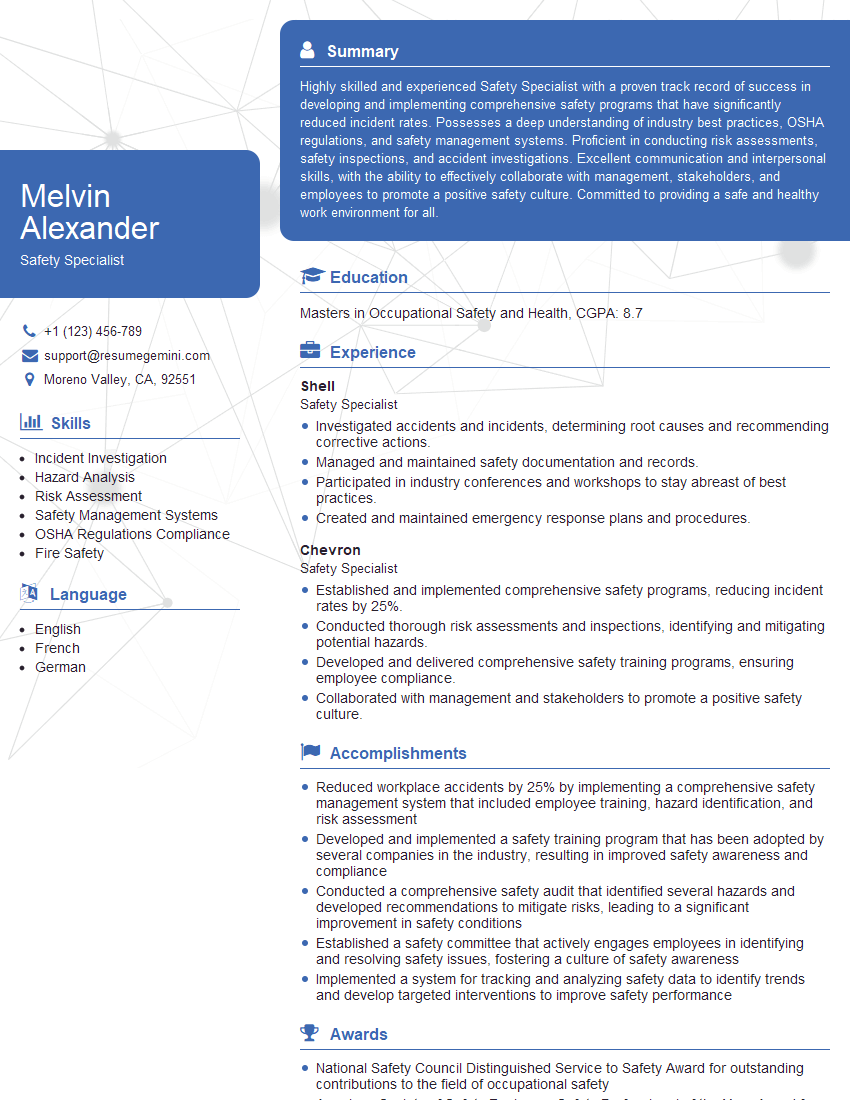
Safety Specialist Resume Sample
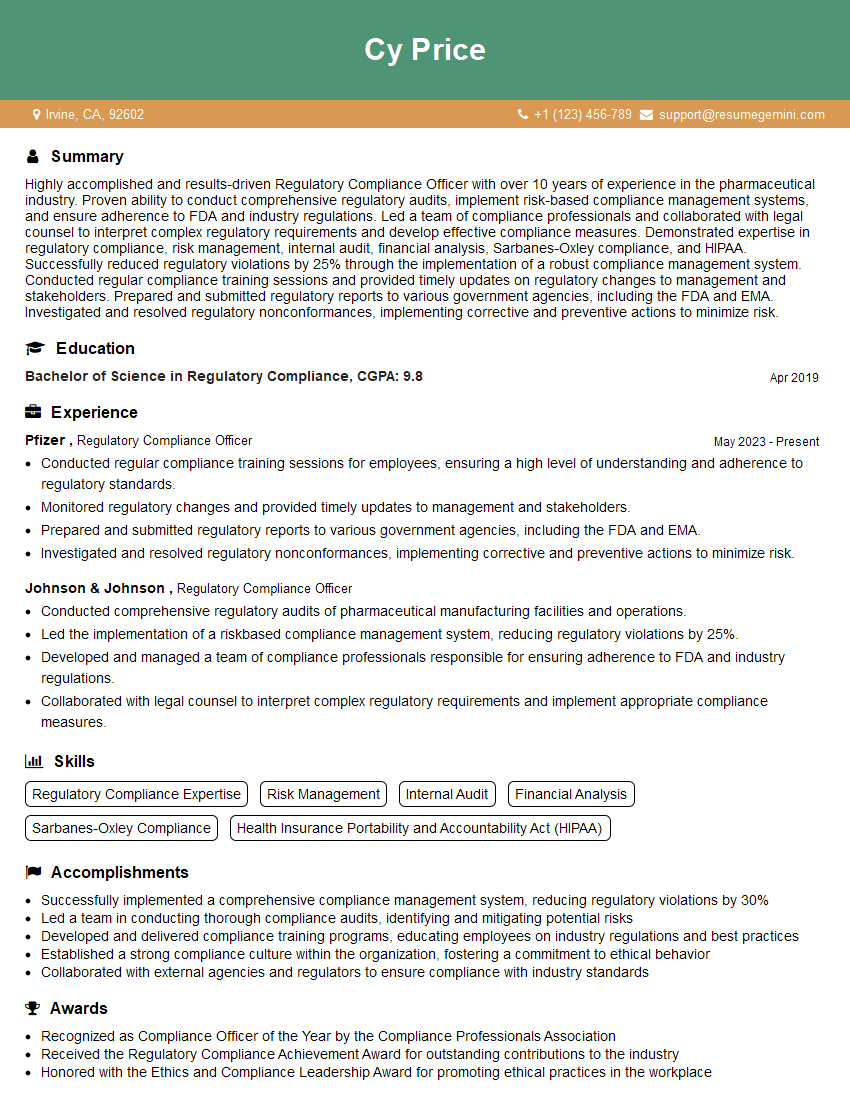
Regulatory Compliance Officer Resume Sample

Risk Management Specialist Resume Sample
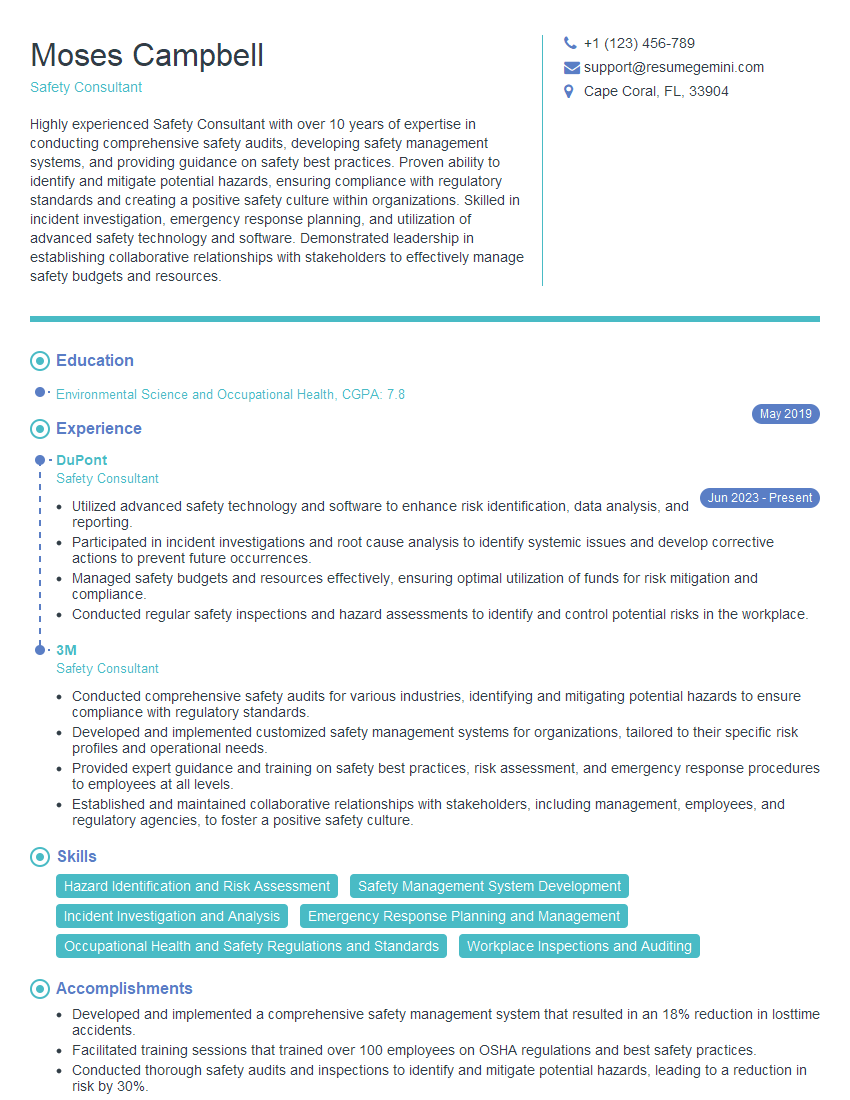
Safety Consultant Resume Sample
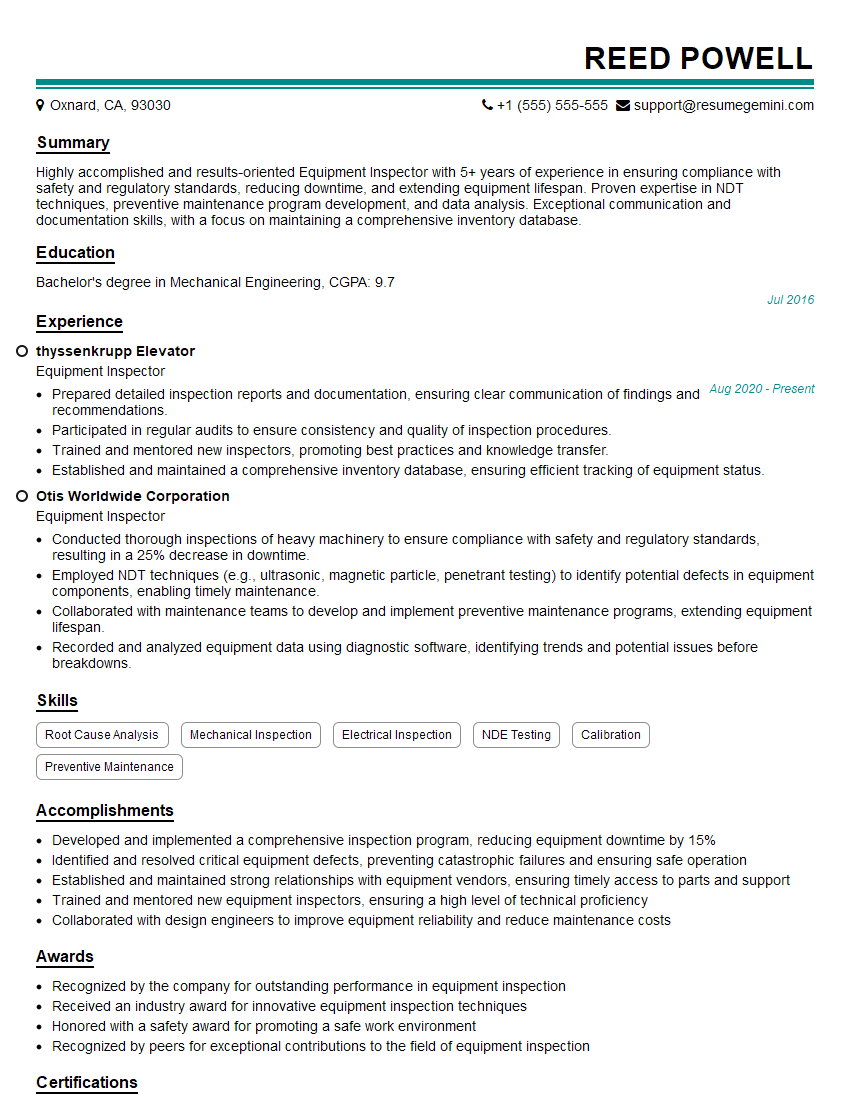
Equipment Inspector Resume Sample

Safety Inspector Resume Sample
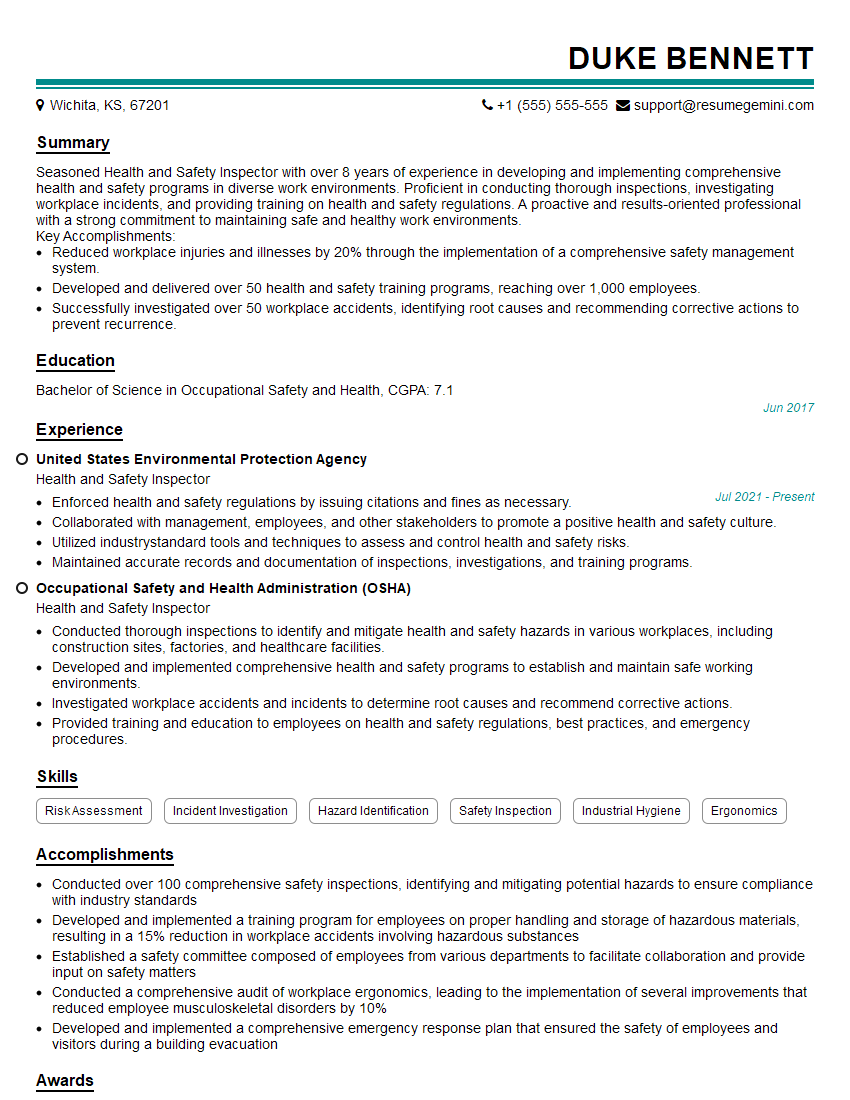
Health and Safety Inspector Resume Sample
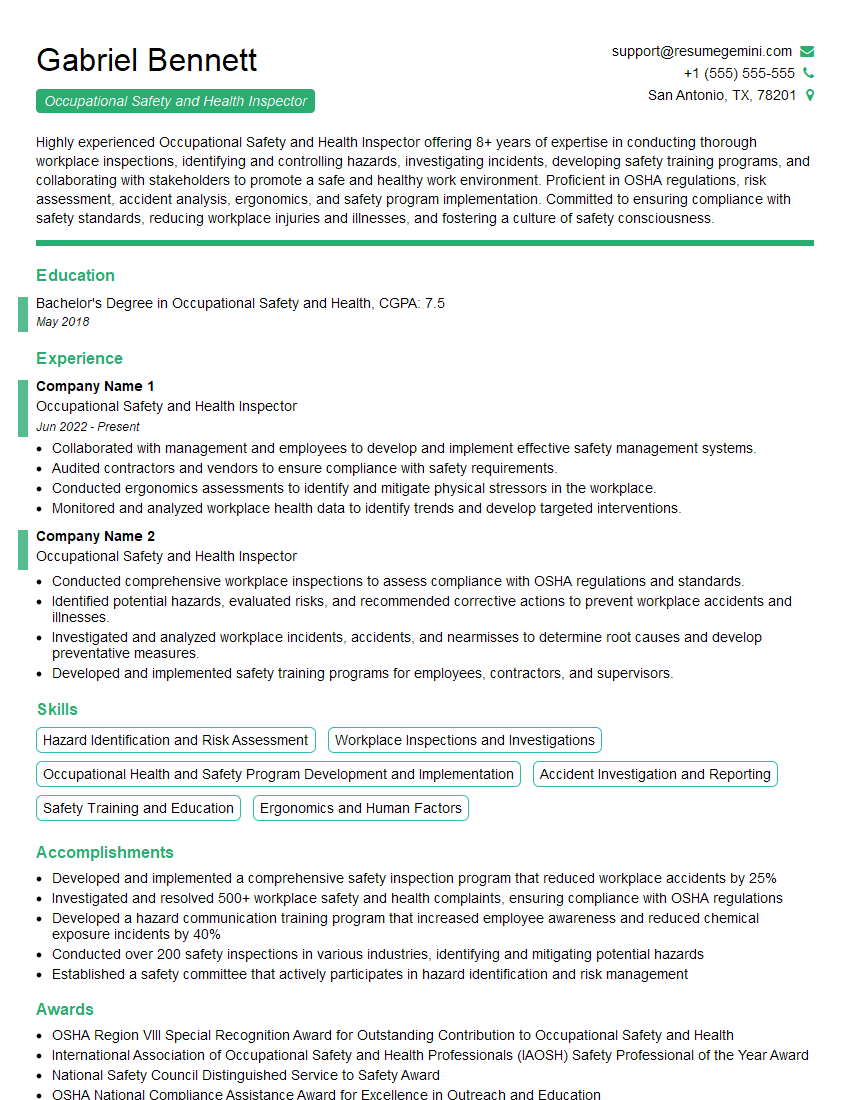
Occupational Safety and Health Inspector Resume Sample
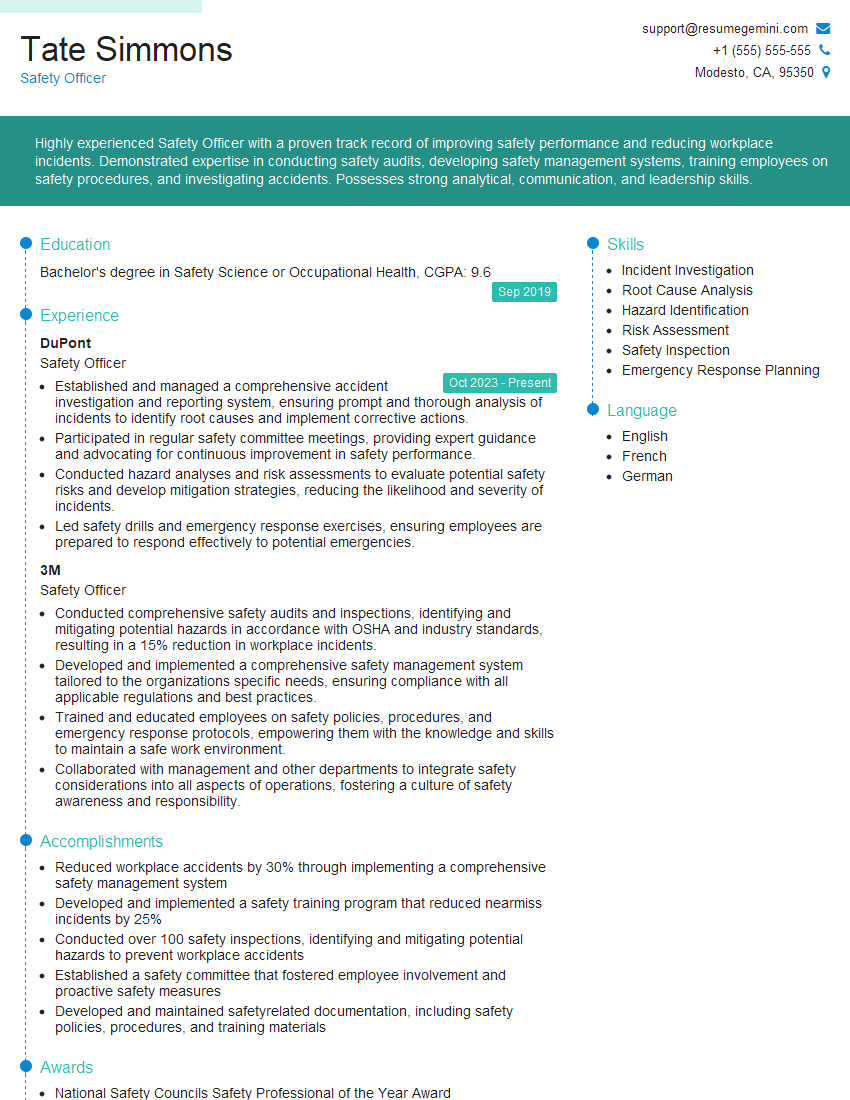
Safety Officer Resume Sample
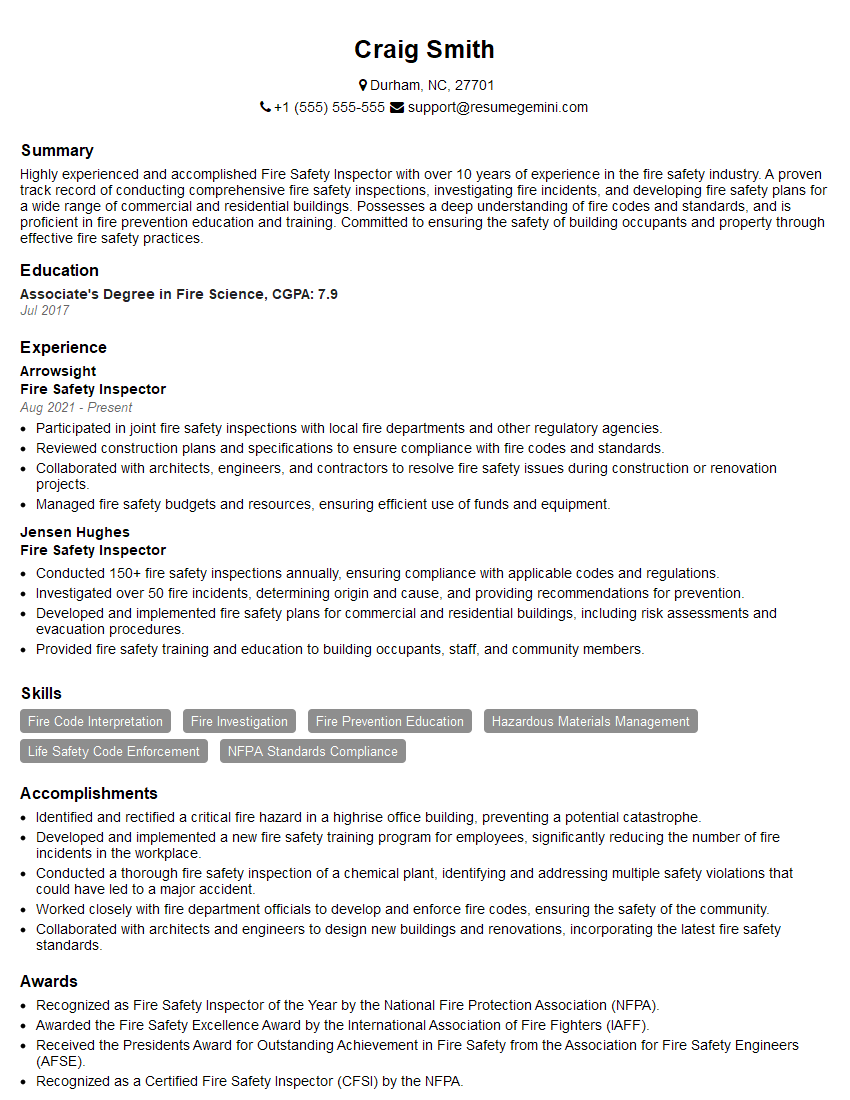
Fire Safety Inspector Resume Sample
Explore more articles
Users Rating of Our Blogs
Share Your Experience
We value your feedback! Please rate our content and share your thoughts (optional).
What Readers Say About Our Blog
Very informative content, great job.
good