Interviews are more than just a Q&A session—they’re a chance to prove your worth. This blog dives into essential Safety Glazing interview questions and expert tips to help you align your answers with what hiring managers are looking for. Start preparing to shine!
Questions Asked in Safety Glazing Interview
Q 1. Explain the difference between annealed, tempered, and laminated glass.
The key difference between annealed, tempered, and laminated glass lies in their strength and safety characteristics. Annealed glass, also known as float glass, is the standard, everyday glass you find in windows. It’s relatively inexpensive but shatters into sharp, dangerous shards upon impact. Tempered glass, on the other hand, is heat-treated to increase its strength four to five times that of annealed glass. When broken, it crumbles into small, relatively harmless pieces, significantly reducing the risk of injury. Laminated glass consists of two or more layers of annealed glass bonded together by a layer of polyvinyl butyral (PVB) interlayer. This interlayer holds the glass fragments together even after breakage, preventing shattering and maintaining structural integrity. Think of a car windshield – that’s laminated glass. It’s designed to stay in place even during an impact, preventing objects from penetrating the vehicle.
- Annealed: Brittle, shatters into sharp pieces.
- Tempered: Stronger, breaks into small, relatively harmless pieces.
- Laminated: Holds together even when broken, offering improved safety and security.
Q 2. Describe the safety standards relevant to safety glazing in your region.
Safety glazing standards vary by region, but generally, they are based on internationally recognized standards like those published by organizations such as ASTM International (American Society for Testing and Materials) and EN (European Norm). In my region, we adhere to [Insert your region’s specific safety standard codes and organizations here, e.g., ANSI Z97.1 for the US, BS 6206 in the UK]. These standards specify the requirements for impact resistance, fragmentation characteristics, and other safety-related properties for different types of safety glazing. For instance, standards often define specific testing methods to ensure the glass meets the required level of performance, including tests for impact resistance from various objects and from varying heights, depending on the intended application. Compliance with these standards is crucial for building codes and liability purposes.
Q 3. What are the common types of safety glazing used in building construction?
Several types of safety glazing are commonly used in building construction, each suited to different needs and applications. These include:
- Tempered Glass: Widely used due to its high strength and safety features. Common in shower enclosures, storefront windows, and exterior doors.
- Laminated Glass: Offers excellent security and protection against intrusion, making it ideal for high-security areas, bank windows, and areas prone to vandalism.
- Wired Glass: Although less common now due to safety concerns regarding sharp shards during breakage, it’s still found in some older buildings. The wire mesh embedded within the glass helps hold fragments together during breakage.
- Polycarbonate Sheets: A lightweight, highly impact-resistant alternative to glass, often used in situations demanding extreme strength or where weight is a significant factor. They are frequently used in industrial applications.
- Insulating Glass Units (IGUs): These units consist of two or more panes of glass separated by an air or gas-filled space for improved insulation. They can incorporate tempered or laminated glass for increased safety.
Q 4. How do you determine the appropriate type of safety glazing for a specific application?
Selecting the appropriate safety glazing depends on a thorough risk assessment. Factors to consider include:
- Impact Resistance Requirements: The potential for impact and the energy levels involved (e.g., a storefront window vs. a skylight). Higher potential impact necessitates stronger glazing.
- Security Concerns: The need to prevent penetration or vandalism will dictate whether laminated glass is necessary.
- Environmental Factors: Exposure to extreme temperatures, UV radiation, or other environmental stressors must be considered in material selection.
- Aesthetic Requirements: The overall design and appearance of the building may influence glazing choices. Some applications may prefer the visual clarity of certain types over others.
- Budgetary Constraints: Tempered and laminated glass generally cost more than annealed glass.
For example, a high-traffic area like a shopping mall entrance might necessitate tempered or laminated glass with a high impact resistance rating. Conversely, a quieter residential setting might only require tempered glass. The decision process should involve consultations with engineers and architects to ensure compliance with building codes and safety regulations.
Q 5. Explain the process of installing laminated safety glass.
Laminated safety glass installation is a precision process requiring careful handling and adherence to manufacturer guidelines. The steps generally include:
- Preparation: Ensure the framing is properly prepared and level. Clean all surfaces thoroughly to remove dust and debris that could interfere with adhesion.
- Application of Sealant (if necessary): In certain cases, a suitable sealant will be applied to the frame to prevent moisture intrusion.
- Glass Placement: Carefully position the laminated glass unit in the frame, ensuring proper alignment and clearance. Use suction cups or other specialized lifting equipment for handling larger glass units.
- Securing the Glass: Secure the glass using appropriate fasteners according to manufacturer’s recommendations. Over-tightening can lead to breakage.
- Finishing Touches: Apply additional sealant as needed, carefully fill any gaps, and clean up any excess sealant or debris.
It is imperative to wear appropriate safety gear, including gloves, eye protection, and potentially safety shoes during the installation process.
Q 6. Describe the proper techniques for handling and transporting safety glass.
Handling and transporting safety glass require meticulous care to prevent breakage and potential injury. Key practices include:
- Proper Lifting Techniques: Always use appropriate lifting equipment (e.g., suction cups, straps) for larger sheets. Avoid manual lifting unless the glass is extremely small and light. Never lift from the edges alone.
- Protective Packaging: Glass should be adequately protected during transport using protective interlayers (e.g., cardboard, foam), and secured to prevent shifting or movement within the vehicle.
- Secure Transportation: Transport glass in a secure vehicle, and avoid sudden braking or sharp turns.
- Storage: Store glass vertically or flat in a stable location, away from moisture and extreme temperatures.
- Wear Protective Gear: Always wear safety glasses, gloves, and appropriate footwear during handling.
Improper handling can lead to significant damage to the glass and can cause serious injury.
Q 7. What are the potential hazards associated with working with safety glazing?
Working with safety glazing presents several potential hazards:
- Sharp Edges and Breakage: Even tempered glass can have sharp edges. Breakage, while less likely with safety glass, still presents a significant risk of cuts and lacerations.
- Falling Glass: Dropped glass can cause serious injuries. Use appropriate lifting equipment and safety precautions.
- Chemical Exposure: Some sealants and adhesives used with safety glass may contain hazardous chemicals requiring appropriate ventilation and personal protective equipment.
- UV Exposure: Prolonged exposure to UV radiation during installation may be harmful. Consider protective clothing.
- Ergonomic Hazards: Improper lifting techniques can lead to back injuries and other musculoskeletal problems.
Implementing proper safety procedures, wearing appropriate personal protective equipment (PPE), and following manufacturer’s instructions are crucial for minimizing these risks.
Q 8. How do you ensure compliance with safety regulations during installation?
Ensuring compliance with safety glazing regulations during installation is paramount. It involves meticulous adherence to building codes, manufacturer’s instructions, and relevant safety standards. This begins with selecting the appropriate type of safety glazing for the specific application – considering factors like impact resistance, penetration resistance, and environmental conditions.
Next, the installation process itself must be carefully executed. This includes using the correct tools and techniques, ensuring proper anchoring and support, and verifying the correct sealant type and application. We always conduct thorough quality checks at each stage, meticulously documenting every step. For example, we’d carefully check the alignment of the glass, ensuring no gaps or inconsistencies that could compromise safety. Any deviation from approved methods requires immediate corrective action and re-inspection. Finally, post-installation inspection is crucial, verifying the integrity of the entire system and documenting its compliance. This often involves using specialized testing equipment to confirm the safety glazing meets the required standards.
Q 9. What are the common causes of safety glass failure?
Safety glass failures, while infrequent when correctly installed and maintained, can stem from several sources. One of the most common is impact damage – from accidental collisions, vandalism, or even extreme weather events like hailstorms. The severity of the impact, the area impacted, and the type of safety glass used all affect the outcome. Another cause is improper installation. This includes incorrect use of fasteners, inadequate sealant application, or stress concentrations created during the installation process. Environmental factors can also play a role. Exposure to extreme temperatures, UV radiation, or chemical agents can degrade the glass over time, weakening its structure and increasing the risk of failure. Finally, defects in the manufacturing process, while rare thanks to rigorous quality control, can lead to inherent weaknesses in the glass itself.
Q 10. How do you inspect safety glazing for damage or defects?
Inspecting safety glazing for damage or defects is a systematic process involving visual inspection and, sometimes, more rigorous testing. Visual inspection involves checking the entire glazing unit for any cracks, chips, scratches, or delamination – separation of the layers in laminated glass. We pay close attention to the edges and corners, as these areas are particularly vulnerable. We’ll also check the frame and sealant for signs of deterioration or damage. If we suspect deeper issues, we’ll utilize non-destructive testing methods. For example, we might use ultrasonic testing to detect hidden flaws within the glass itself. This ensures that any underlying problems, not immediately apparent to the naked eye, are identified and addressed promptly.
Q 11. Explain the importance of proper sealant selection in safety glazing.
Proper sealant selection is vital for the longevity and safety of safety glazing. The sealant acts as a crucial barrier, protecting the glass from moisture, preventing corrosion of the frame, and providing structural integrity. Choosing the incorrect sealant can lead to premature failure of the glazing unit. The sealant must be compatible with both the glass and the frame material, resisting UV degradation, temperature extremes, and any potential chemical exposure. It’s important to consider the required strength and elasticity of the sealant – a flexible sealant is often preferred to accommodate thermal expansion and contraction. For instance, in high-humidity environments, a sealant with excellent water resistance is essential to prevent moisture intrusion and the resulting damage. We always refer to manufacturer specifications and relevant industry standards when selecting sealants, documenting our choices for future reference.
Q 12. Describe your experience with different types of glass fasteners.
My experience encompasses a wide range of glass fasteners, each suited to specific applications and glass types. These include mechanical fasteners like screws and bolts, often used in conjunction with specialized clips and channels to securely hold the glass in place. For certain applications, we use structural silicone adhesives, which provide a strong bond and resist movement. I’ve also worked with chemical anchoring systems, ideal for attaching glass to concrete or masonry. The selection of fasteners depends on multiple factors: the type and thickness of the glass, the frame material, the loading requirements, and the aesthetic considerations of the project. For instance, for a high-impact application like a storefront, we might opt for a robust mechanical fastening system. In contrast, a less visible, adhesive system may be more suitable for a more delicate interior application.
Q 13. How do you handle situations where safety glass is damaged or needs replacement?
When safety glass is damaged or requires replacement, a systematic approach is essential. The first step involves a thorough assessment of the damage to determine the extent of the problem and identify the root cause. If the damage is minor, repair might be possible; however, with safety glass, replacing damaged sections is generally safer and more reliable. This requires carefully removing the damaged glass without causing further harm or damage to the surrounding structure. Next, we prepare the frame and surface for the new glass, ensuring a clean, secure fit. Installation follows the same rigorous procedures and quality checks detailed earlier. Crucially, any underlying cause of the damage (e.g., a structural issue in the frame) needs to be addressed before installation to prevent recurrence. Throughout the whole process, safety is the paramount concern, utilizing appropriate personal protective equipment and following all relevant safety protocols. We often take detailed photographs and documentation for insurance purposes or future reference.
Q 14. What are the key factors to consider when estimating the cost of a safety glazing project?
Estimating the cost of a safety glazing project requires careful consideration of several key factors. The most significant is the type and quantity of safety glass required. Different types of safety glass (laminated, tempered, etc.) vary significantly in price, as does the size and thickness of the panels. The complexity of the installation also plays a crucial role. A simple installation of standard-sized panels will be less costly than a complex project with custom shapes, unusual angles, or integration with specialized hardware. The labor costs, including project management, site preparation, installation time, and any necessary specialized equipment, are vital factors. Materials, beyond the glass itself, contribute significantly to overall project costs. This includes sealants, fasteners, frames, and any other necessary components. Finally, any unforeseen issues or required modifications during the project will need to be factored into the final cost estimate. A thorough site survey and detailed design plans are essential steps in arriving at an accurate cost estimation.
Q 15. Describe your experience with different types of safety film.
My experience with safety films encompasses a wide range of products, each designed for specific applications and levels of protection. I’ve worked extensively with polyvinyl butyral (PVB) interlayers, commonly found in laminated glass. These films bond glass layers together, holding them in place even after breakage, preventing shattering and reducing the risk of injury. I’m also familiar with various types of security and impact-resistant films applied to existing glass. These films, often made of polyester, add an extra layer of protection against impacts, vandalism, and even explosions. For instance, I’ve used high-performance films in retail settings to protect against shoplifting and in schools to enhance security. The selection of the appropriate film depends critically on the specific threat and the performance requirements.
For instance, I once worked on a project requiring glass that could withstand hurricane-force winds. We used a specialized impact-resistant film, significantly increasing the glass’s ability to resist shattering and hold its structural integrity. Another project involved retrofitting existing glass in an older building to enhance security. We chose a security film that could withstand significant impacts and help prevent penetration. Choosing the right film is never a one-size-fits-all proposition, requiring careful consideration of the specific threats and the desired level of protection.
Career Expert Tips:
- Ace those interviews! Prepare effectively by reviewing the Top 50 Most Common Interview Questions on ResumeGemini.
- Navigate your job search with confidence! Explore a wide range of Career Tips on ResumeGemini. Learn about common challenges and recommendations to overcome them.
- Craft the perfect resume! Master the Art of Resume Writing with ResumeGemini’s guide. Showcase your unique qualifications and achievements effectively.
- Don’t miss out on holiday savings! Build your dream resume with ResumeGemini’s ATS optimized templates.
Q 16. Explain the benefits of using impact-resistant safety glass.
Impact-resistant safety glass offers several crucial benefits. Primarily, it significantly reduces the risk of injury from shattered glass. When compared to standard annealed glass, which shatters into sharp, dangerous fragments, impact-resistant glass, including laminated or tempered glass, breaks into smaller, relatively blunt pieces. This minimizes the severity of injuries in case of breakage. Additionally, impact-resistant glass provides enhanced security, making it more difficult to break through, deterring intruders and increasing safety in residential and commercial buildings.
Furthermore, the improved strength of impact-resistant glass offers better protection against accidental damage, such as from dropped objects or impacts from sports equipment. This extended durability can reduce the need for frequent glass replacements, resulting in cost savings over the long term. For example, in a school gymnasium, using impact-resistant glass in windows and partitions protects both students and staff from potential injuries caused by flying balls or other sports equipment. The long-term durability pays off by reducing maintenance and replacement costs.
Q 17. How do you ensure the structural integrity of safety glazing systems?
Ensuring the structural integrity of safety glazing systems requires meticulous attention to detail throughout the design, installation, and maintenance phases. This includes proper selection of the glass type, thickness, and framing system. The glass must be correctly sized and installed to meet relevant building codes and standards. The framing system must be strong enough to support the glass and resist forces such as wind, seismic activity, and impacts.
I use a variety of methods to ensure structural integrity, including conducting thorough site assessments to understand the specific environmental and load conditions. I then create detailed design specifications that outline the necessary glass type, frame materials and fasteners, and installation procedures. I work closely with contractors to ensure that the installation process adheres to these specifications and use engineering calculations to validate the structural capacity of the chosen system. Finally, regular inspections and maintenance are crucial for long-term integrity. For example, I’d check for any signs of damage or deterioration in the frame or glass and address these issues promptly.
Q 18. What are the maintenance requirements for different types of safety glazing?
Maintenance requirements vary depending on the type of safety glazing. Laminated glass generally requires minimal maintenance, mainly involving regular cleaning to avoid dirt build-up that could obscure visibility or weaken the bond between layers over an extended period. Tempered glass, while stronger, needs to be handled with care to avoid chipping or stress that could lead to spontaneous breakage. Regular inspections for any cracks or damage are essential.
Safety films require even more careful handling and cleaning to prevent scratching or abrasion which could compromise their effectiveness. Specific cleaning solutions are recommended by the manufacturer, and abrasive cleaners should be strictly avoided. For example, I would advise clients to use a soft cloth and non-abrasive cleaner for laminated glass and films, avoiding anything that could scratch or damage the protective layers. Periodic inspections are key for early detection of any issues that could compromise safety and longevity.
Q 19. Describe your experience with troubleshooting safety glazing issues.
Troubleshooting safety glazing issues often involves a systematic approach. I start with a visual inspection to identify any visible damage such as cracks, delamination, or loose seals. I then investigate the cause of the damage, considering factors such as impacts, environmental stress, improper installation, or material defects. Detailed documentation of the problem and the surrounding context is essential.
For instance, I once encountered a situation where a laminated glass panel had delaminated. After a thorough inspection, we discovered that the initial installation hadn’t adhered to specifications. This led to stress on the glass during temperature fluctuations, resulting in the delamination. We had to replace the panel and ensure proper installation techniques were used for future installations. Careful analysis and precise documentation are critical to avoiding future problems and identifying systemic issues.
Q 20. How do you communicate effectively with clients and colleagues about safety glazing?
Effective communication is crucial in my work. With clients, I use clear, concise language to explain technical aspects of safety glazing, emphasizing the benefits and risks associated with various options. I tailor my communication style to the client’s level of technical understanding, using analogies and visuals when necessary. For example, I’ll explain the difference between laminated and tempered glass using simple metaphors to help clients grasp the concepts easily.
With colleagues, effective communication ensures seamless collaboration. I use clear and accurate documentation and specifications, ensuring that everyone is on the same page regarding design details, installation procedures, and safety protocols. Regular meetings and progress reports keep the team informed and help to resolve potential conflicts or issues before they escalate. Open communication, precise documentation, and visual aids ensure efficiency and safety.
Q 21. What are your skills in using relevant software for safety glazing projects?
My software skills include proficiency in CAD software (AutoCAD, Revit) for creating detailed drawings and specifications of safety glazing systems. I’m also skilled in using finite element analysis (FEA) software to simulate the performance of different glazing systems under various load conditions. This allows me to optimize designs and ensure they meet structural requirements. Spreadsheet software (Excel) is used extensively for calculations and creating detailed cost estimates and project schedules. Knowledge of project management software helps me manage project timelines and resources effectively.
For example, I recently used FEA software to model the behavior of a large glass curtain wall system subject to high wind loads. The simulation helped optimize the thickness and type of glass needed to withstand the anticipated loads while minimizing cost and weight. Proficiency in such software translates directly into designing safer and more cost-effective solutions.
Q 22. How do you stay up-to-date with the latest advancements in safety glazing technology?
Staying current in the rapidly evolving field of safety glazing requires a multi-pronged approach. I actively participate in industry conferences and workshops, such as those hosted by organizations like the Glass Association of North America (GANA) and the International Code Council (ICC). These events provide invaluable insights into the latest materials, techniques, and regulatory changes.
Furthermore, I subscribe to leading industry publications and journals, which keep me abreast of research findings and technological breakthroughs. I also regularly review updated building codes and standards, ensuring my work complies with the latest safety regulations. Finally, networking with other professionals in the field through online forums and professional organizations allows me to learn from their experiences and stay informed on emerging trends.
Q 23. Describe a challenging safety glazing project you’ve worked on and how you overcame the challenges.
One particularly challenging project involved installing a complex, curved safety glazing system in a high-rise building’s atrium. The curvature required custom fabrication, and the height presented significant logistical and safety concerns. The biggest challenge was ensuring precise alignment and structural integrity of the curved panels, especially considering the wind load at that altitude.
To overcome this, we employed advanced 3D modeling software to meticulously plan the installation process. This allowed us to prefabricate the panels with millimeter precision, minimizing on-site adjustments. We also implemented a rigorous quality control system throughout the process, with multiple checks at each stage of fabrication and installation. We used specialized suction cups and lifting equipment to safely handle the large, curved glass panels at height, ensuring the safety of our team. The successful completion of this project demonstrated the importance of thorough planning, precise execution, and a strong commitment to safety.
Q 24. What is your understanding of different glazing systems like curtain walls or skylights?
Curtain walls and skylights represent distinct types of glazing systems with unique design considerations and safety requirements.
- Curtain walls are exterior cladding systems typically made of glass panels attached to a framework of metal or composite materials. They are crucial for building aesthetics and energy efficiency but demand robust safety glazing to withstand impacts, wind loads, and thermal stresses. The design must account for the building’s height, location, and potential exposure to extreme weather conditions.
- Skylights are glazing systems installed in roofs or ceilings to introduce natural light. These systems need to be exceptionally durable to handle potential impacts from falling objects, as well as resist extreme temperature fluctuations and UV degradation. The design must prioritize water tightness and energy efficiency while also adhering to stringent safety regulations concerning fall protection and potential breakage.
Both systems require careful consideration of factors such as glass type (laminated, tempered, etc.), frame design, and anchoring methods to ensure structural integrity and compliance with safety codes.
Q 25. Explain the importance of understanding building codes and regulations related to glazing.
Understanding and complying with building codes and regulations concerning glazing is paramount. These codes dictate the minimum safety standards for glazing installations to protect occupants from injury due to glass breakage. Failing to comply can lead to significant legal liabilities, costly modifications, and even project shutdowns.
Different regions have varying regulations, with some focusing on impact resistance, others on fragmentation characteristics. For instance, codes often specify minimum impact resistance requirements for glazing near exits or in areas prone to accidental impacts, like schools or hospitals. Understanding these nuances ensures the selection and installation of appropriate glazing systems that meet or exceed all relevant requirements, preventing potential accidents and protecting the building’s occupants.
Q 26. What safety precautions do you follow when working at heights?
Safety at heights is my top priority. I strictly adhere to all OSHA (Occupational Safety and Health Administration) guidelines and best practices. This includes using appropriate fall protection equipment like harnesses, lifelines, and safety nets whenever working at heights above a certain threshold. Before starting any work, I always perform a thorough risk assessment of the worksite, identifying potential hazards and implementing necessary control measures.
Furthermore, I ensure all my team members are properly trained and equipped with the necessary safety gear and undergo regular safety briefings. I always prioritize teamwork and communication, ensuring that everyone is aware of their responsibilities and potential hazards. We utilize specialized equipment for handling glass panels at heights, such as vacuum lifters and cranes, to minimize the risk of accidents. Regular inspections of our equipment and adherence to safety protocols are non-negotiable.
Q 27. Describe your experience with different types of glazing tools and equipment.
My experience encompasses a wide range of glazing tools and equipment, from basic hand tools like glass cutters and suction cups to advanced machinery. I am proficient in using specialized equipment such as glass polishing machines, CNC glass cutting machines, and automated handling systems. I’m also familiar with various types of sealants, adhesives, and other materials used in glazing installations.
This experience allows me to select the appropriate tools and equipment for different projects and tasks, ensuring efficient and safe execution. For example, while smaller projects might only require hand tools, large-scale projects often benefit from the efficiency and precision of automated systems.
Q 28. Explain your understanding of the process for obtaining necessary permits for safety glazing installations.
The process of obtaining permits for safety glazing installations varies depending on location and project complexity. Generally, it involves submitting a detailed application to the local building department or relevant authority. This application typically includes detailed drawings showing the proposed glazing system, specifications of materials to be used, and calculations demonstrating compliance with relevant building codes and standards.
Supporting documentation might include engineering reports, certified test results for the chosen materials, and a detailed safety plan. The application is then reviewed by the authorities, and any necessary inspections are scheduled to ensure compliance before the permit is issued. In some cases, consultation with architects or structural engineers may be required to ensure the proposed system meets all relevant standards. Navigating this process requires a good understanding of local regulations and meticulous attention to detail in preparing the necessary documentation.
Key Topics to Learn for Safety Glazing Interview
- Standards and Regulations: Understand relevant safety standards (e.g., ANSI Z97.1, EN 12600) and their implications in design and installation.
- Material Properties: Familiarize yourself with the properties of various safety glazing materials (e.g., laminated glass, tempered glass, polycarbonate) and their suitability for different applications.
- Impact Resistance and Testing: Learn about different impact testing methods and how to interpret test results to ensure compliance with safety standards. Understand the factors influencing impact resistance.
- Design and Engineering: Explore the principles of designing safety glazing systems for various applications, considering factors such as load calculations, stress analysis, and environmental conditions.
- Installation and Maintenance: Understand best practices for the safe installation and maintenance of safety glazing systems, including considerations for sealant selection and proper handling techniques.
- Failure Analysis: Develop your ability to analyze failures in safety glazing systems, identifying root causes and recommending preventative measures.
- Health and Safety Practices: Demonstrate a strong understanding of relevant health and safety procedures during the manufacturing, installation and maintenance of safety glazing.
- Specific Applications: Research different applications of safety glazing, such as automotive, architectural, and industrial settings, highlighting the unique challenges and solutions for each.
Next Steps
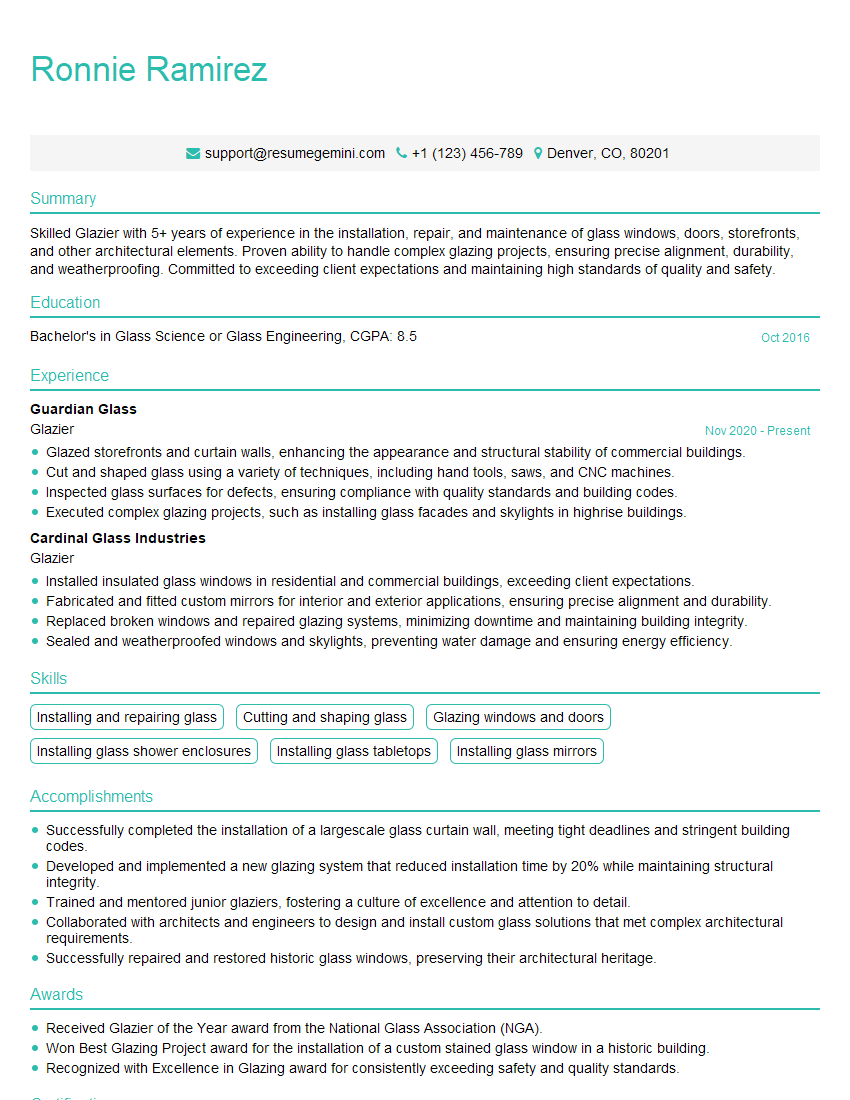
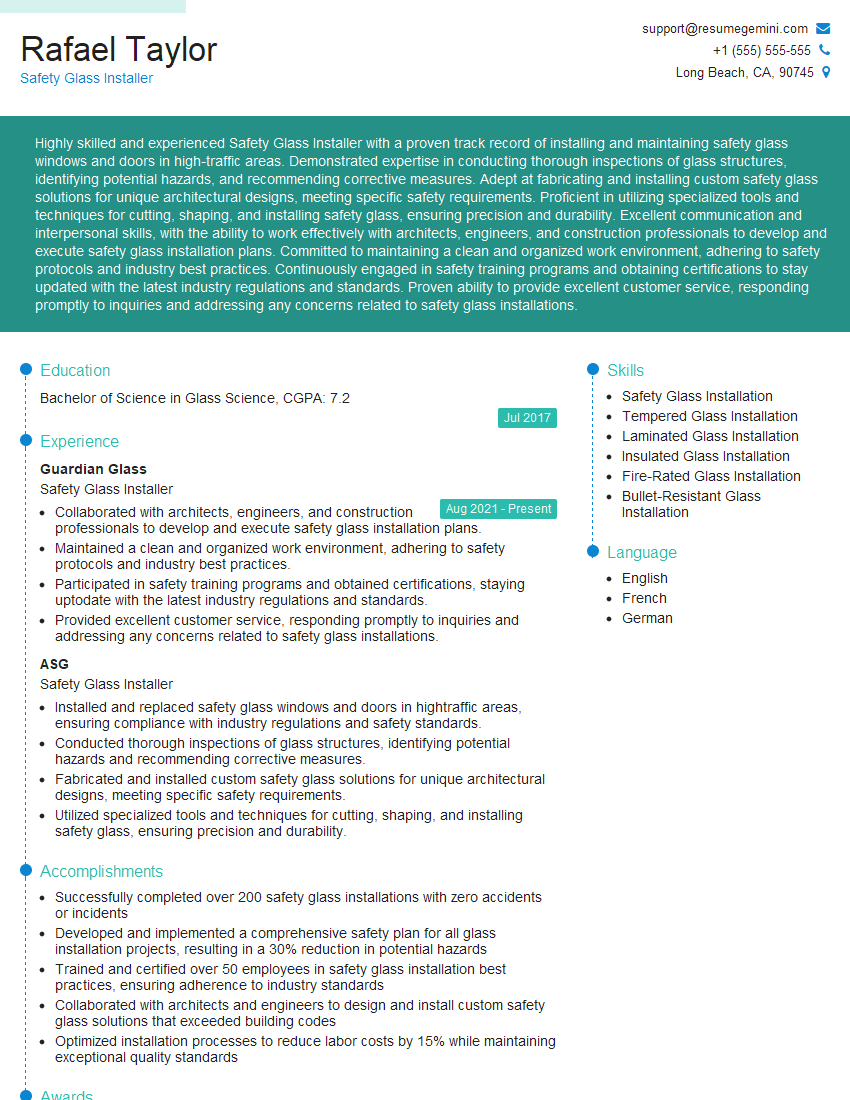
Mastering safety glazing knowledge opens doors to exciting career opportunities in a rapidly growing field. A strong understanding of these principles is highly valued by employers, setting you apart from other candidates. To maximize your job prospects, focus on creating an ATS-friendly resume that effectively showcases your skills and experience. ResumeGemini is a trusted resource that can help you build a professional and impactful resume, tailored to the specific requirements of safety glazing roles. Examples of resumes tailored to Safety Glazing are provided to help you get started.
Explore more articles
Users Rating of Our Blogs
Share Your Experience
We value your feedback! Please rate our content and share your thoughts (optional).
What Readers Say About Our Blog
Very informative content, great job.
good