The right preparation can turn an interview into an opportunity to showcase your expertise. This guide to Safety Inspector Certification interview questions is your ultimate resource, providing key insights and tips to help you ace your responses and stand out as a top candidate.
Questions Asked in Safety Inspector Certification Interview
Q 1. Describe your experience conducting safety inspections.
My experience in conducting safety inspections spans over 10 years, encompassing a wide range of industries including construction, manufacturing, and healthcare. I’ve performed both planned inspections, following pre-defined checklists and regulations, and unplanned inspections triggered by reported incidents or observations. A typical inspection involves a thorough walkthrough of the facility, examining equipment, processes, and employee practices. I document all findings, including any hazards identified, using detailed reports with photographic evidence. For example, during a recent construction site inspection, I identified a lack of proper fall protection measures near an open trench, leading to immediate corrective action. In another instance at a manufacturing plant, I uncovered a potential fire hazard due to improper storage of flammable materials, resulting in revised storage procedures.
My approach emphasizes a collaborative and proactive approach. I don’t just identify problems, I work with management and employees to develop solutions and implement preventative measures. This collaborative method encourages a safety-conscious culture where everyone feels empowered to contribute to a safe work environment.
Q 2. What safety regulations are you most familiar with?
My expertise covers a broad spectrum of safety regulations, including but not limited to OSHA (Occupational Safety and Health Administration), ANSI (American National Standards Institute), NFPA (National Fire Protection Association), and relevant state and local regulations. My familiarity extends to specific standards related to hazard communication, lockout/tagout procedures, personal protective equipment (PPE), machine guarding, confined space entry, and fire safety. I’m particularly proficient in interpreting and applying regulations relevant to the specific industries I’ve worked in. For instance, I’m well-versed in OSHA’s Construction standards (29 CFR 1926) and its General Industry standards (29 CFR 1910), and I tailor my inspections based on the applicable standards for each workplace.
Q 3. Explain your understanding of OSHA regulations.
OSHA regulations are the cornerstone of workplace safety in the United States, setting minimum safety and health standards to prevent workplace injuries, illnesses, and fatalities. My understanding encompasses the entire scope of OSHA’s mission, including its enforcement procedures, employee rights, and employer responsibilities. I’m knowledgeable about OSHA’s General Duty Clause, which requires employers to provide a workplace free from recognized hazards, even if a specific standard doesn’t address the hazard directly. I understand the process of OSHA inspections, including the issuance of citations and penalties for violations. I also know how to interpret OSHA’s recordkeeping requirements, which are crucial for tracking and analyzing workplace injuries and illnesses. Finally, I’m familiar with OSHA’s various training requirements for employees and employers.
Understanding OSHA’s hierarchy of controls is fundamental to my work. This hierarchy prioritizes elimination of hazards, then substitution, engineering controls, administrative controls, and finally, personal protective equipment (PPE) as the last line of defense. This understanding allows me to assess the effectiveness of a company’s safety program and recommend improvements.
Q 4. How do you identify and assess workplace hazards?
Identifying and assessing workplace hazards requires a systematic approach. I use a combination of methods including walkthrough inspections, interviews with employees, review of safety data sheets (SDS), and analysis of incident reports. During an inspection, I look for potential hazards such as unsafe working conditions, inadequate equipment maintenance, lack of PPE, and improper handling of hazardous materials. I use a hazard identification checklist tailored to the specific industry and workplace to ensure a comprehensive assessment. For example, in a construction environment, I might look for proper scaffolding, fall protection, and the use of lockout/tagout procedures when working on electrical equipment.
Assessing the hazards involves evaluating the likelihood and severity of potential harm. This involves considering factors like the frequency of exposure, the potential for injury, and the consequences of an accident. A risk matrix can be a useful tool in this process, assigning a numerical value to the likelihood and severity to prioritize hazards for mitigation.
Q 5. How do you develop and implement safety programs?
Developing and implementing safety programs involves a collaborative effort between management, employees, and safety professionals. The process begins with a thorough hazard assessment and risk analysis, as discussed earlier. Then, based on those findings, we develop a comprehensive safety plan that addresses identified hazards with appropriate controls. This involves creating written safety policies and procedures, providing regular safety training to employees, establishing emergency response plans, and implementing a system for monitoring and evaluating the effectiveness of the program.
For instance, a safety program might include specific procedures for lockout/tagout, a detailed hazard communication plan, regular safety inspections, and an effective reporting system for near misses and accidents. Regular review and updates to the safety program are essential to ensure its continued effectiveness.
Q 6. How do you conduct a risk assessment?
A risk assessment is a systematic process used to identify and evaluate potential hazards and their associated risks. It involves a four-step process: identifying hazards, analyzing risks, evaluating risks, and controlling risks. The goal is to determine the probability of an incident occurring and its potential severity. I use a variety of techniques including job safety analyses (JSAs), fault tree analysis, and what-if checklists. A common method is to use a risk matrix, plotting the likelihood and severity of each hazard to prioritize which ones require the most immediate attention. For example, a high likelihood/high severity hazard would require immediate corrective action, whereas a low likelihood/low severity hazard might be addressed through less urgent measures.
The outcome of a risk assessment is a prioritized list of hazards and recommended controls, which directly informs the development of safety programs and procedures.
Q 7. Describe your experience with incident investigation.
My experience in incident investigation involves thoroughly examining the circumstances surrounding a workplace accident or near miss to determine the root causes and prevent future occurrences. This involves gathering information from multiple sources, including witness statements, incident reports, equipment logs, and physical evidence. I use various investigative techniques such as the ‘5 Whys’ to get to the root cause, and fault tree analysis to understand the contributing factors. The investigation typically leads to the identification of contributing factors, which can range from human error to equipment failure, unsafe procedures or inadequate training.
For example, in investigating a fall from height incident, I would examine factors such as the adequacy of fall protection measures, the employee’s training and experience, and the condition of the equipment. The findings of the investigation inform the development of corrective actions, such as improved training, equipment upgrades, or changes to work procedures. A crucial aspect is documenting the entire investigation process meticulously to support recommendations for improvement.
Q 8. How do you communicate safety concerns to management?
Communicating safety concerns to management requires a structured and professional approach. I always prioritize clear, concise, and factual reporting, focusing on the potential risk and not just the observed hazard. My communication method adapts to the urgency and nature of the concern. For minor issues, a brief email or verbal report to the supervisor might suffice. However, for critical safety violations, I’d escalate directly to senior management, providing comprehensive documentation – including photographs, witness statements, and a detailed risk assessment outlining potential consequences (e.g., injury, equipment damage, regulatory fines).
For example, if I observed a consistently blocked fire exit, I wouldn’t just mention it casually. I’d prepare a formal report detailing the obstruction, its impact on evacuation times, the relevant safety regulations violated (e.g., OSHA regulations regarding fire safety), and propose immediate corrective actions. I’d also follow up to ensure the issue is resolved and document that resolution.
Q 9. How do you enforce safety regulations?
Enforcing safety regulations involves a combination of proactive measures and reactive responses. Proactively, I conduct regular inspections, provide training to employees on safety protocols, and ensure that safety equipment is readily available and properly maintained. Reactively, if I observe a violation, I first address it directly with the employee, providing guidance and correcting the behavior. For repeated violations or more serious infractions, I will implement disciplinary measures as outlined in company policy, which may include written warnings, suspension, or termination. Documentation is crucial at every step, to ensure accountability and demonstrate a consistent application of safety rules. The goal isn’t punishment, but rather ensuring a safe working environment for everyone.
For example, if an employee is not wearing their required safety harness while working at heights, I would immediately stop the work and remind them of the regulations. If it’s a first-time offense, I might provide additional training. However, a repeat violation would lead to a written warning, potentially escalating to further disciplinary action if the behavior continues.
Q 10. What is your experience with safety audits?
My experience with safety audits is extensive. I’ve conducted numerous audits across various industries, following established methodologies like those outlined in ISO 45001. This involves a planned approach: first, reviewing relevant safety policies and procedures, then conducting on-site inspections, observing workplace practices, interviewing employees, and reviewing safety records. I identify gaps in safety practices, potential hazards, and non-compliance issues, which I document meticulously with photographic evidence. Finally, I prepare a detailed audit report with findings, recommendations for corrective actions, and a timeline for implementation. I often participate in follow-up audits to ensure that corrective measures have been effectively implemented.
For instance, in a recent audit of a construction site, I discovered several issues, including inadequate fall protection measures and improper storage of hazardous materials. My report detailed these findings, referencing specific regulations violated, and included recommendations for improved training, equipment upgrades, and revised safety procedures. I ensured that the company understood the seriousness of the issues and the potential consequences of non-compliance.
Q 11. Explain your understanding of lockout/tagout procedures.
Lockout/Tagout (LOTO) procedures are critical for preventing accidental energy release during maintenance or repair of machinery. It’s a systematic process designed to isolate energy sources (electrical, mechanical, hydraulic, pneumatic, etc.) to prevent the unexpected start-up of equipment. This prevents injuries caused by unexpected energization. The process typically involves five steps: 1) Preparation (planning and gathering necessary LOTO devices); 2) Notification (informing others in the area about the LOTO procedure); 3) Lockout/Tagout (applying locks and tags to energy isolation points); 4) Verification (confirming the energy source is isolated); and 5) Release (removing locks and tags after verifying the equipment is safe to restart).
Proper LOTO requires specific training and adherence to company and regulatory standards. I’ve extensively trained employees on proper LOTO procedures, emphasizing the importance of following each step meticulously and never bypassing safety protocols. Failure to follow LOTO procedures can lead to serious accidents, including fatalities.
Q 12. How do you handle safety violations?
Handling safety violations requires a balanced approach that combines corrective action with education and prevention. The severity of the violation dictates the response. Minor violations often involve verbal warnings and retraining. For more serious violations, written warnings, disciplinary actions, and involvement of senior management may be necessary. Throughout, documentation is paramount. I always clearly communicate expectations, ensure the employee understands the consequences of their actions, and work towards preventing recurrence. The goal is to create a safe and compliant work environment through education and correction, not simply punishment.
For example, a worker consistently failing to wear safety glasses would receive a verbal warning initially, followed by retraining and observation. A subsequent violation might result in a written warning. However, a serious violation, such as ignoring a lockout/tagout procedure, would require immediate disciplinary action.
Q 13. Describe your experience with personal protective equipment (PPE).
My experience with Personal Protective Equipment (PPE) is extensive. I’m familiar with various types of PPE, including safety glasses, hearing protection, respirators, gloves, and protective clothing. My role encompasses ensuring PPE is appropriate for the specific hazards present in the workplace, that it’s readily available, properly maintained, and that employees understand how to use it correctly. I conduct regular inspections to ensure that PPE is in good condition and that employees are using it consistently. I provide training on proper selection, use, and maintenance of PPE to minimize risks and ensure compliance with regulatory standards.
For instance, I’ve overseen the implementation of a new respirator program, including fitting tests to ensure proper seal and training employees on respirator selection, donning, and maintenance procedures, including proper cleaning and storage. I regularly inspect the respirator storage areas to ensure the respirators are properly stored and maintained.
Q 14. What is your experience with fall protection?
Fall protection is a critical aspect of workplace safety, especially in construction, manufacturing, and other industries involving work at heights. My experience includes training employees on proper fall protection techniques, selecting and inspecting fall protection equipment (harnesses, lanyards, anchors, etc.), and ensuring that fall protection systems are properly installed and maintained according to relevant standards. I regularly assess work sites to identify fall hazards and implement appropriate control measures, such as guardrails, safety nets, or personal fall arrest systems. I am also well-versed in relevant regulations and standards, ensuring compliance with OSHA and other applicable guidelines.
For example, I have developed and delivered training programs on fall protection, covering topics such as harness selection and proper use, anchor point selection, and rescue procedures. I have also conducted regular inspections of fall protection equipment, ensuring it’s properly inspected and tagged, and that workers are using it correctly.
Q 15. Describe your experience with confined space entry.
Confined space entry is a high-risk activity requiring meticulous planning and execution. My experience encompasses all aspects, from pre-entry planning and atmospheric monitoring to rescue procedures and post-entry documentation. I’ve personally overseen hundreds of confined space entries across diverse industries, including construction, manufacturing, and utilities.
For example, during a recent project at a chemical plant, we needed to inspect a large storage tank. Before entry, we conducted thorough atmospheric testing for oxygen levels, flammables, and toxic gases. A permit-to-work system was meticulously followed, ensuring all safety precautions were in place. We utilized a dedicated entry team with standby rescue personnel equipped with appropriate PPE and rescue equipment. Post-entry, we meticulously documented the inspection findings and any unusual occurrences.
Another example involves a sewer inspection where we used specialized equipment for ventilation, monitoring, and communication. Safety was paramount, with every team member undergoing thorough training and rigorous adherence to established procedures. Successful completion of these entries hinges on a deep understanding of potential hazards, risk mitigation strategies, and effective communication.
Career Expert Tips:
- Ace those interviews! Prepare effectively by reviewing the Top 50 Most Common Interview Questions on ResumeGemini.
- Navigate your job search with confidence! Explore a wide range of Career Tips on ResumeGemini. Learn about common challenges and recommendations to overcome them.
- Craft the perfect resume! Master the Art of Resume Writing with ResumeGemini’s guide. Showcase your unique qualifications and achievements effectively.
- Don’t miss out on holiday savings! Build your dream resume with ResumeGemini’s ATS optimized templates.
Q 16. How do you maintain accurate safety records?
Maintaining accurate safety records is crucial for demonstrating compliance and identifying trends. My approach involves a multi-pronged strategy utilizing both digital and physical record-keeping systems. We employ a dedicated safety management software which allows for digital logging of incidents, inspections, training records, and permit-to-work documentation. This provides easy access, allows for instant reporting and analysis, and simplifies audits.
Beyond digital records, we maintain a robust physical filing system for original documents like safety data sheets (SDS), training certificates, and incident investigation reports. Regular audits are conducted to ensure data accuracy and completeness. Data is regularly reviewed to identify trends and areas for improvement in safety procedures. This data-driven approach allows us to proactively address potential hazards and maintain a consistently safe working environment. Imagine tracking near misses – this helps us predict potential future incidents and implement preventative measures before they escalate.
Q 17. How do you train employees on safety procedures?
Employee safety training is an ongoing process, not a one-time event. My approach combines classroom instruction, hands-on training, and regular refreshers. We utilize a blended learning model incorporating online modules for initial training, followed by in-person sessions focused on practical application and scenario-based exercises. For example, training on lockout/tagout procedures involves hands-on practice with actual equipment, ensuring employees understand the critical steps involved.
The training is tailored to the specific tasks and hazards associated with each role. Regular quizzes and assessments ensure comprehension, and training records are meticulously maintained. We also incorporate feedback sessions and actively solicit employee input to continuously improve the training program. A recent success was a significant reduction in workplace incidents after implementing a more engaging and interactive safety training program. Think of it like learning to drive; you need theoretical knowledge and lots of practical experience before you are considered safe and competent.
Q 18. What is your experience with emergency response procedures?
Emergency response procedures are critical. My experience involves developing, implementing, and regularly reviewing emergency plans. This includes scenarios such as fire, chemical spills, medical emergencies, and evacuation procedures. I’ve participated in numerous emergency response drills and real-world incidents. My approach emphasizes clear communication, well-defined roles and responsibilities, and regular practice drills.
For example, I led the response team during a simulated chemical spill incident, demonstrating effective coordination and communication. The drill highlighted areas for improvement, resulting in a revised emergency response plan. I’m also proficient in using various emergency equipment, including fire extinguishers, first aid kits, and personal protective equipment (PPE). Knowing how to react swiftly and decisively in an emergency situation is as critical as the preventative measures we undertake daily.
Q 19. How do you use safety inspection checklists?
Safety inspection checklists are fundamental for systematic hazard identification and risk assessment. I utilize pre-designed checklists tailored to specific work areas and equipment. These checklists help to ensure consistency and thoroughness in inspections. A checklist is more than just a list; it’s a tool to ensure all critical areas are covered, especially those that might be overlooked during a less structured inspection.
After each inspection, findings are documented, including any identified hazards, corrective actions required, and the responsible party. The checklists are regularly reviewed and updated to reflect changes in regulations, equipment, and procedures. For instance, we’ve developed a customized checklist for construction sites addressing specific hazards like trenching and scaffolding, ensuring meticulous attention to safety protocols.
Q 20. Describe your experience with safety data sheets (SDS).
Safety Data Sheets (SDS), formerly known as Material Safety Data Sheets (MSDS), provide critical information about hazardous materials. My experience includes reviewing, interpreting, and applying SDS information to ensure worker safety. I ensure SDSs are readily available and accessible to all employees, and I conduct regular training on how to interpret and utilize the information effectively. SDSs are essential because they identify hazards, provide safe handling procedures, and outline emergency response measures.
For example, before starting a task involving a particular chemical, I ensure all employees review the relevant SDS to understand potential hazards, safe handling practices, and first aid measures. A lack of understanding of the information provided in an SDS can lead to serious accidents. Proactive use of SDS ensures we are working safely and in compliance with regulations.
Q 21. How do you stay current on safety regulations and best practices?
Staying current on safety regulations and best practices requires ongoing effort. I regularly attend industry conferences, workshops, and training sessions to stay abreast of the latest developments. I also subscribe to professional journals and online resources and actively participate in professional organizations, such as OSHA or equivalent, to stay informed.
Furthermore, I review and update our company’s safety policies and procedures to ensure compliance with current regulations. Regular audits and self-assessments help identify areas needing improvement. Continuous learning is critical in this field, ensuring that our safety practices remain effective and aligned with the best practices in the industry.
Q 22. Describe a time you had to address a serious safety issue.
During an inspection at a construction site, I discovered that the scaffolding wasn’t properly secured, violating several safety regulations. This posed a significant risk of collapse, potentially causing serious injuries or fatalities. Instead of simply issuing a citation, I immediately halted work in the affected area, explaining the imminent danger to the site supervisor. We then collaboratively developed an immediate action plan involving reinforcing the scaffolding to meet safety standards. This included bringing in additional support beams and ensuring proper tie-offs. We also implemented a rigorous inspection process before resuming work. The site supervisor was very receptive to my observations and implemented the necessary changes promptly. This proactive approach prevented a potentially catastrophic accident.
Q 23. What are some common safety hazards in your field?
Common safety hazards in my field are numerous and vary depending on the industry. However, some consistently prevalent risks include:
- Falls from heights: This is a leading cause of workplace injuries, particularly in construction, manufacturing, and maintenance. Proper fall protection measures such as harnesses, guardrails, and safety nets are crucial.
- Electrocution: Working with electrical equipment requires rigorous safety protocols, including lockout/tagout procedures to prevent accidental energization.
- Caught-in/between hazards: Machinery with moving parts presents significant risks, necessitating proper guarding, machine lockout, and employee training on safe operating procedures.
- Struck-by hazards: Falling objects, swinging loads, or moving vehicles can cause severe injuries. Proper safety measures include hard hats, high-visibility clothing, and designated safety zones.
- Exposure to hazardous materials: This includes chemicals, asbestos, and other substances requiring specific handling procedures, personal protective equipment (PPE), and proper ventilation.
These hazards highlight the importance of thorough inspections, regular training, and adherence to safety regulations.
Q 24. How do you prioritize safety risks?
Prioritizing safety risks involves a systematic approach. I typically use a risk assessment matrix that considers the likelihood and severity of each hazard.
- Likelihood: This assesses the probability of the hazard occurring (e.g., low, medium, high).
- Severity: This evaluates the potential consequences if the hazard occurs (e.g., minor injury, serious injury, fatality).
By multiplying the likelihood and severity scores, I obtain a risk priority number (RPN). Hazards with higher RPNs are addressed first. For example, a high-likelihood, high-severity hazard (like unprotected work at heights) will receive immediate attention, while a low-likelihood, low-severity hazard (like a minor trip hazard) may be addressed later. This approach ensures that resources are allocated effectively to mitigate the most critical risks.
Q 25. How do you improve workplace safety culture?
Improving workplace safety culture requires a multifaceted approach that involves leadership commitment, employee engagement, and continuous improvement. Key strategies include:
- Leadership buy-in: Safety must be a top priority, reflected in management’s actions and communication.
- Employee training and empowerment: Regular safety training, clear communication of safety procedures, and empowering employees to stop unsafe work are crucial.
- Open communication: Establishing a culture where employees feel comfortable reporting safety concerns without fear of retribution is essential.
- Regular safety meetings and audits: These provide opportunities to address issues, share best practices, and track progress.
- Incentivize safe behavior: Recognizing and rewarding safe work practices reinforces positive behavior.
- Incident investigation and analysis: Thoroughly investigating incidents helps identify root causes and implement corrective actions to prevent recurrence.
Creating a culture where safety is everyone’s responsibility is paramount.
Q 26. What are your strengths and weaknesses as a Safety Inspector?
My strengths as a Safety Inspector include my meticulous attention to detail, my ability to identify and assess risks effectively, and my strong communication skills, enabling me to clearly explain complex safety issues to diverse audiences. I’m also proactive and solution-oriented, working collaboratively to develop and implement practical safety improvements.
A potential weakness could be my tendency to be overly thorough, sometimes leading to delays. However, I’m actively working on improving time management skills through prioritization techniques to mitigate this. My goal is to maintain the highest level of safety without compromising efficiency.
Q 27. What are your salary expectations?
My salary expectations are in line with the industry standard for experienced Safety Inspectors with my qualifications and experience. I’m open to discussing a specific range based on the details of the position and the overall compensation package.
Q 28. Why are you interested in this Safety Inspector position?
I’m highly interested in this Safety Inspector position because of [Company Name]’s strong commitment to safety, as evidenced by [mention specific company initiatives or values]. The opportunity to contribute to a proactive safety program and work alongside a team dedicated to preventing workplace incidents aligns perfectly with my professional goals and passion for ensuring a safe working environment for everyone. The specific responsibilities of this role, including [mention specific responsibilities that appeal to you], are particularly appealing, and I’m confident my skills and experience would be a valuable asset to your team.
Key Topics to Learn for Your Safety Inspector Certification Interview
Preparing for your Safety Inspector Certification interview requires a comprehensive understanding of both theoretical knowledge and practical application. Focus your studies on these key areas to confidently demonstrate your expertise:
- Occupational Safety and Health Regulations: Deep understanding of relevant legislation, codes, and standards. This includes knowing how to interpret and apply these regulations to various work environments.
- Hazard Identification and Risk Assessment: Mastering techniques for identifying potential hazards, analyzing risks, and developing effective control measures. Be prepared to discuss real-world examples of risk assessments you’ve conducted or participated in.
- Accident Investigation and Reporting: Thorough knowledge of investigative methodologies, root cause analysis, and accurate reporting procedures. Practice explaining how you would investigate an accident and present your findings.
- Safety Inspection Techniques and Procedures: Familiarity with various inspection methods, documentation practices, and the use of relevant equipment. Be ready to discuss your experience with different types of inspections and the challenges you’ve overcome.
- Emergency Response and Preparedness: Understanding emergency procedures, evacuation plans, and first aid/CPR. Showcase your knowledge of handling emergency situations effectively and safely.
- Communication and Teamwork: Effective communication skills are crucial. Be prepared to discuss how you would communicate safety concerns to different stakeholders (workers, management, etc.) and collaborate effectively within a team.
- Specific Industry Regulations (if applicable): Depending on your focus area, delve into the specific safety regulations and best practices relevant to that industry (e.g., construction, manufacturing, healthcare).
Next Steps: Unlock Your Career Potential
Mastering your Safety Inspector Certification opens doors to exciting career opportunities and increased earning potential. To maximize your job prospects, invest time in crafting a compelling and ATS-friendly resume that highlights your skills and experience. ResumeGemini is a trusted resource that can help you build a professional resume that stands out from the competition. We offer examples of resumes tailored specifically to Safety Inspector Certification to guide you. Take advantage of these resources to present yourself effectively to potential employers.
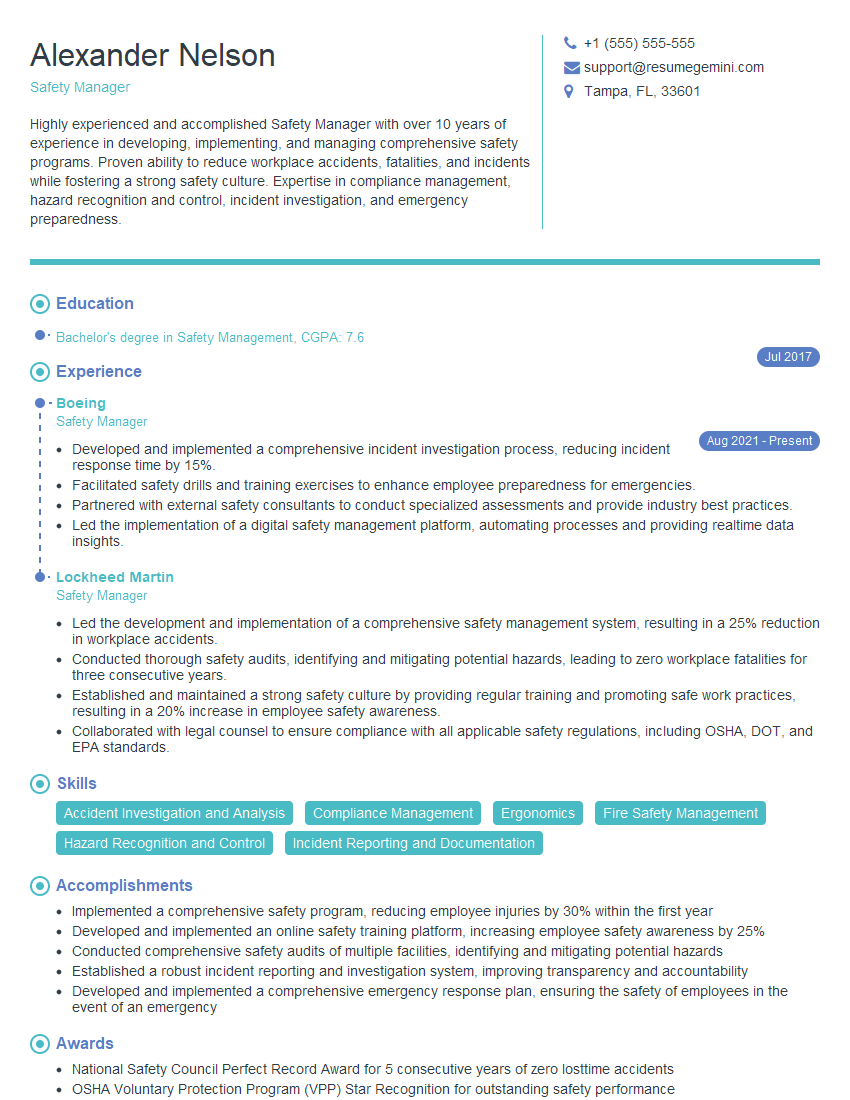
Safety Manager Resume Sample
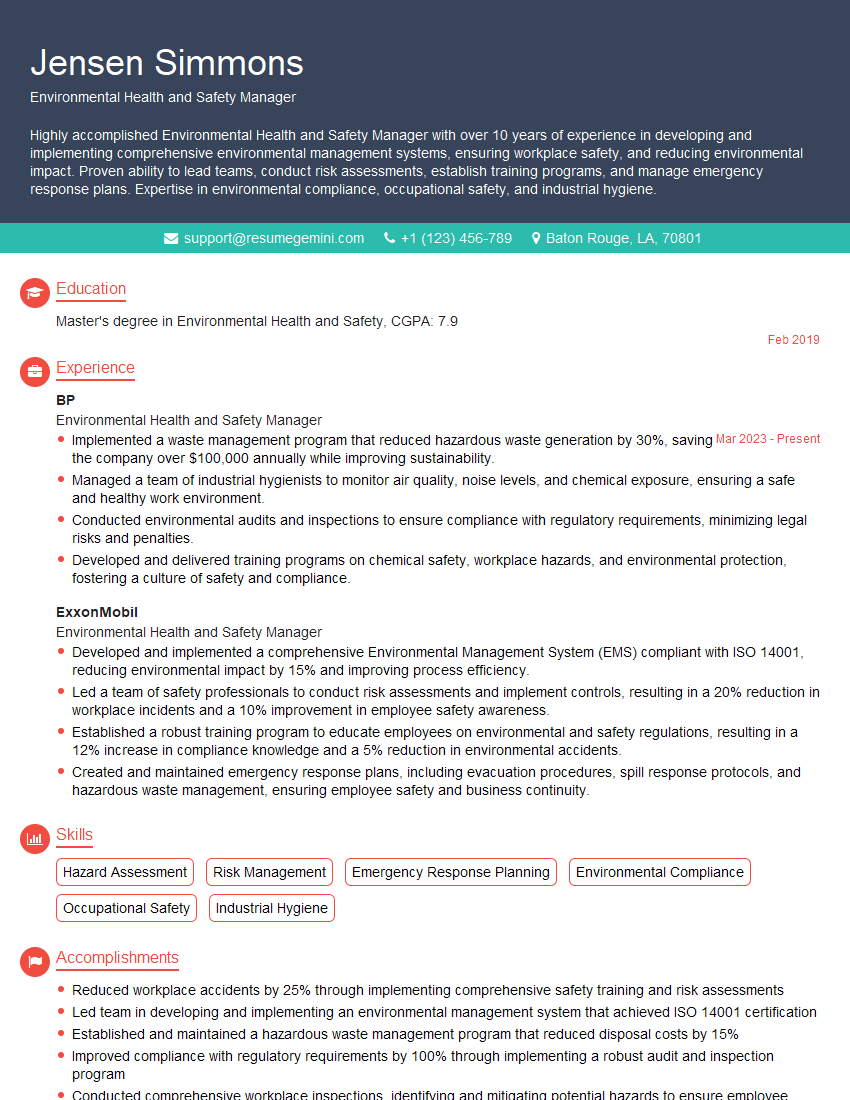
Environmental Health and Safety Manager Resume Sample

Compliance Officer Resume Sample
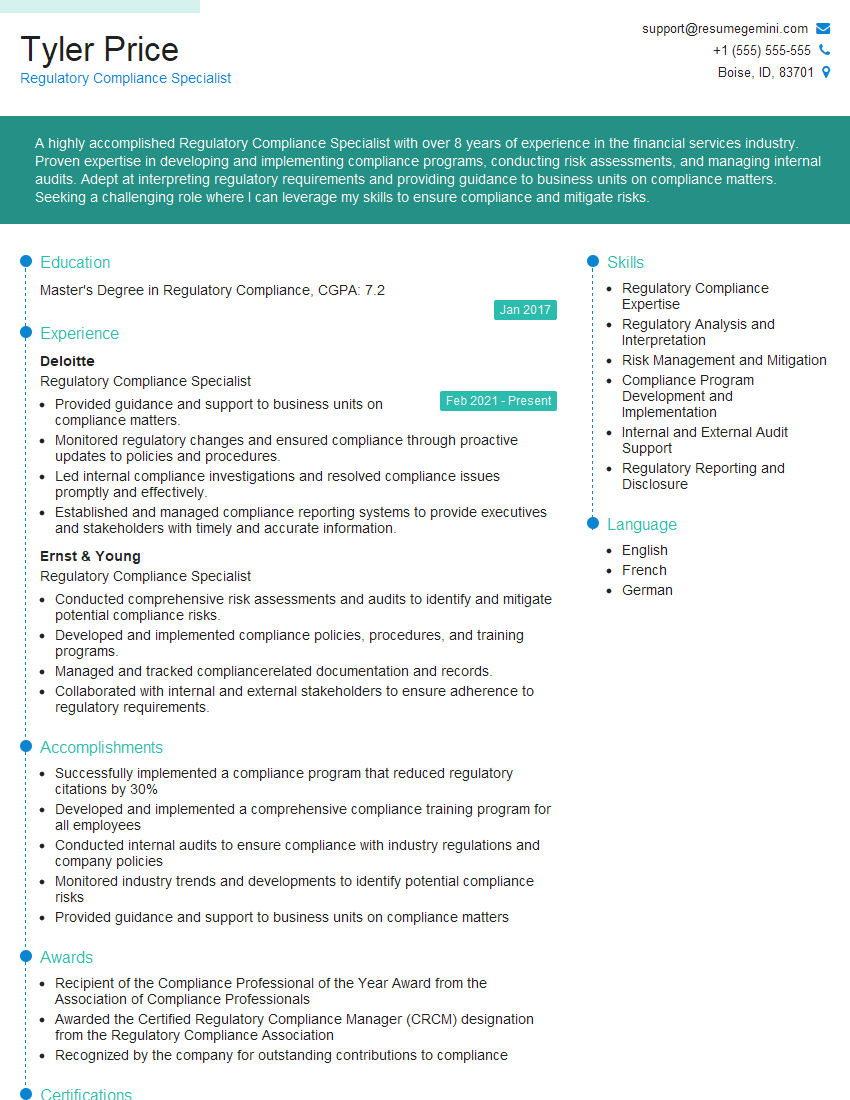
Regulatory Compliance Specialist Resume Sample
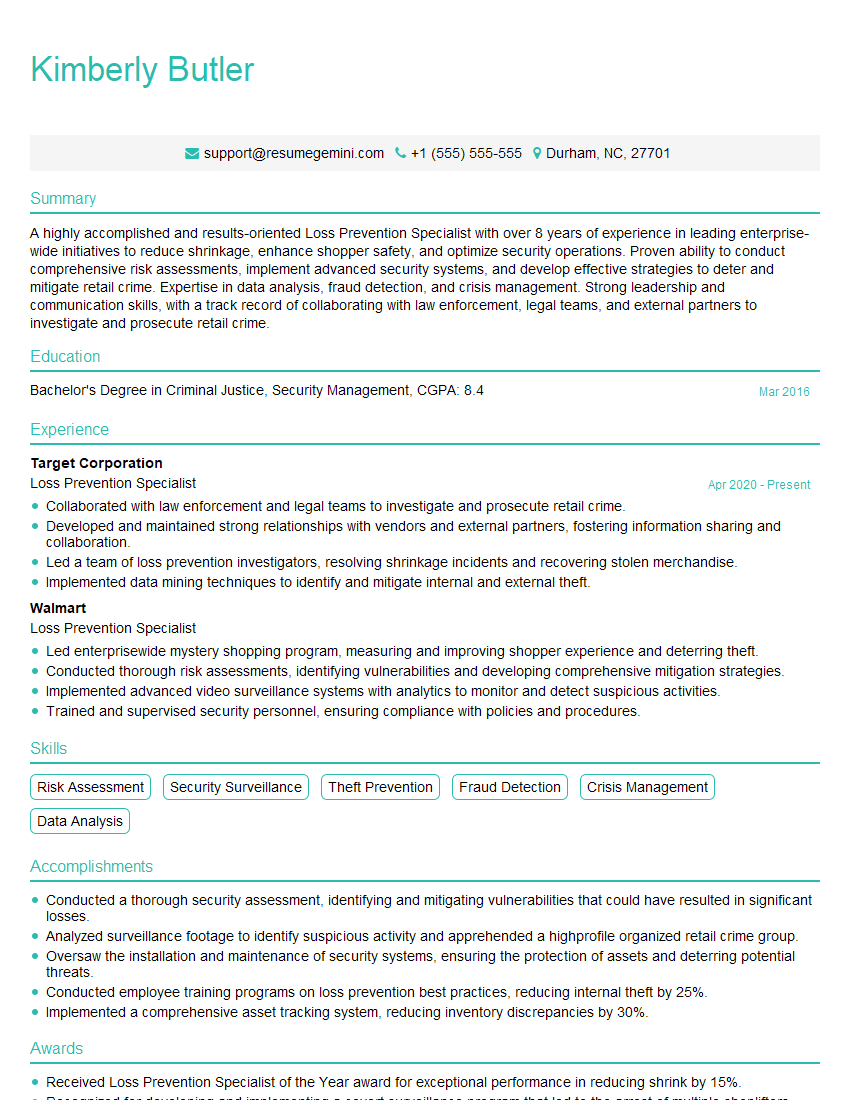
Loss Prevention Specialist Resume Sample
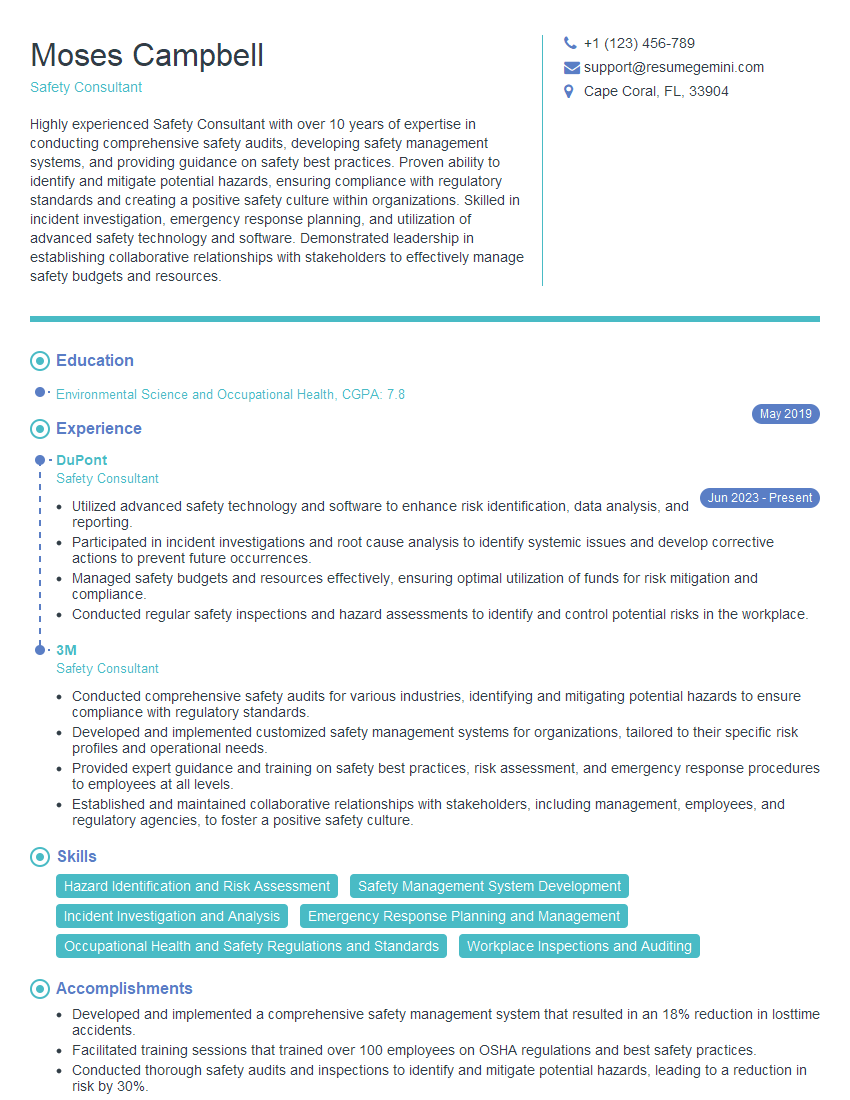
Safety Consultant Resume Sample
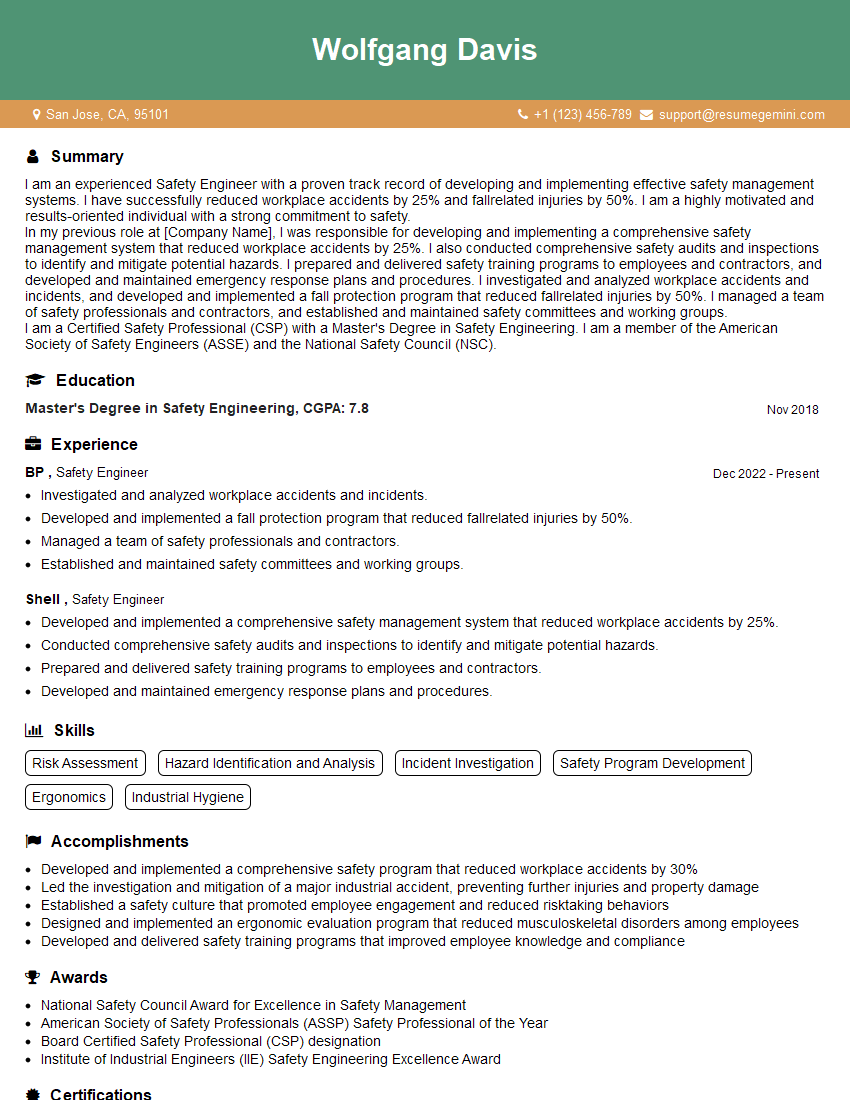
Safety Engineer Resume Sample
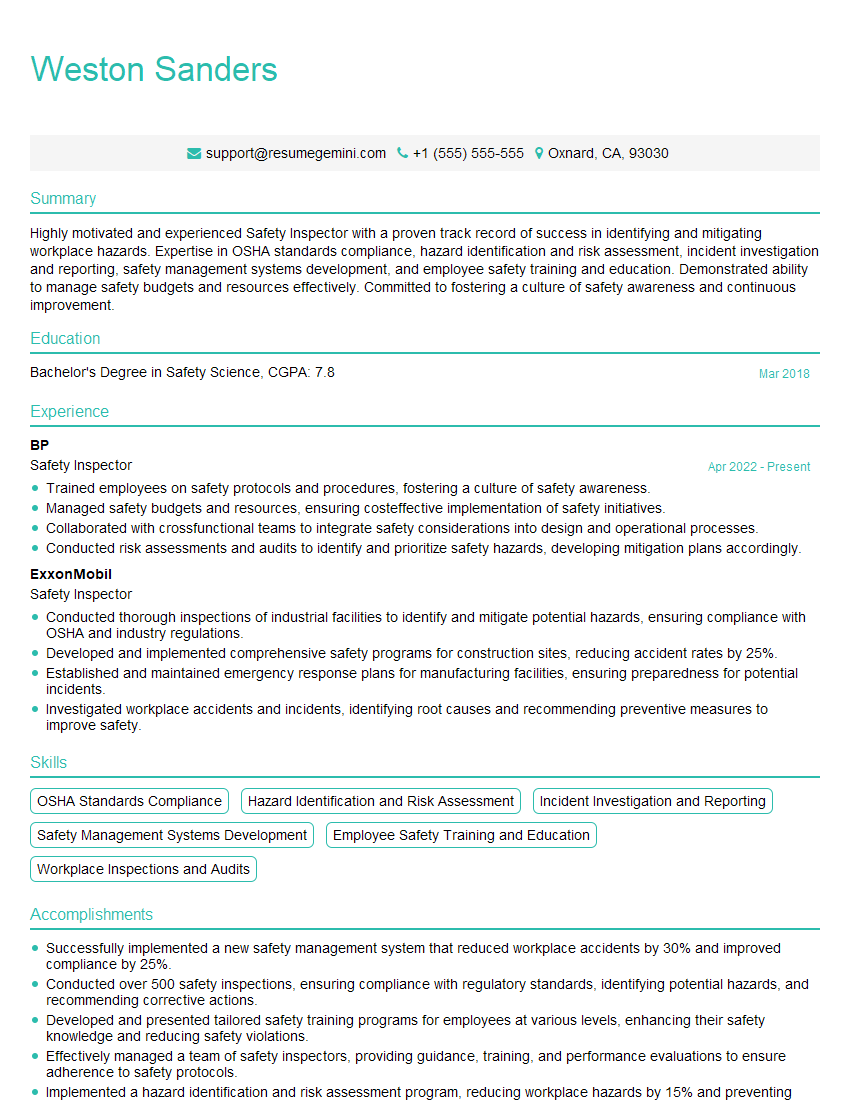
Safety Inspector Resume Sample
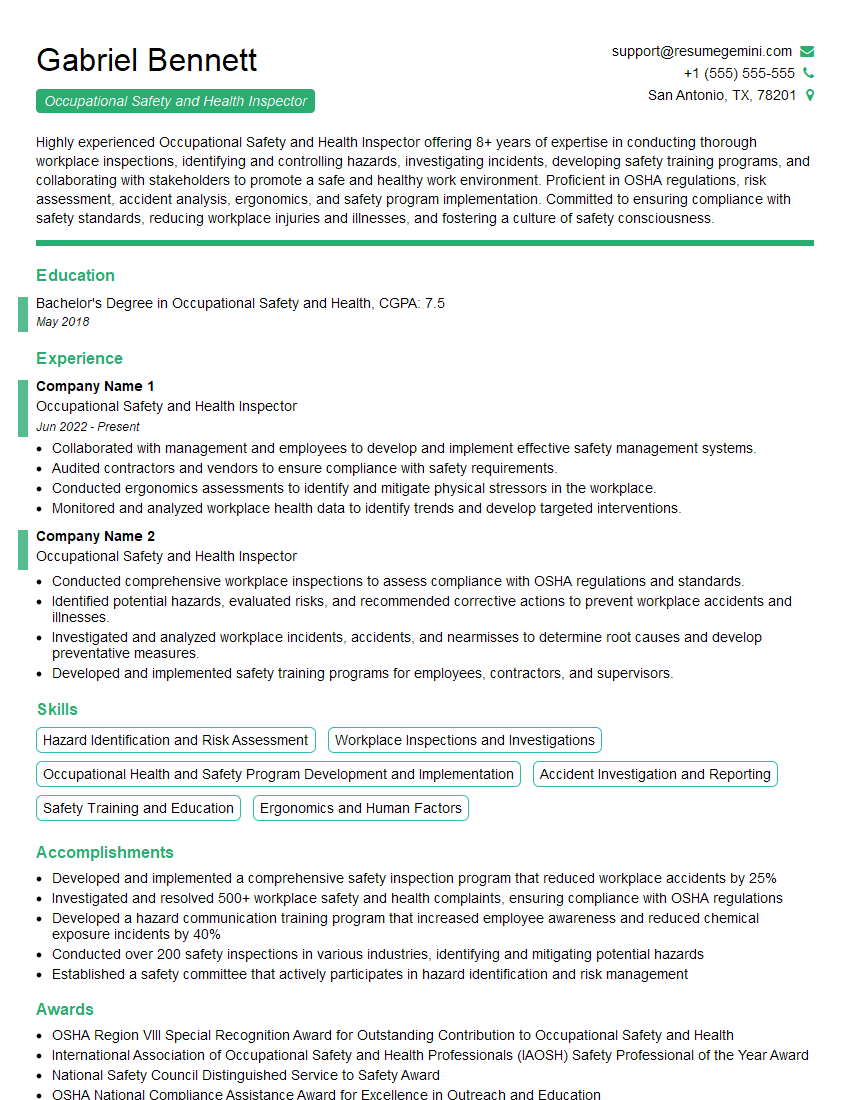
Occupational Safety and Health Inspector Resume Sample
Explore more articles
Users Rating of Our Blogs
Share Your Experience
We value your feedback! Please rate our content and share your thoughts (optional).
What Readers Say About Our Blog
Very informative content, great job.
good