Unlock your full potential by mastering the most common Safety Regulations and Environmental Compliance interview questions. This blog offers a deep dive into the critical topics, ensuring you’re not only prepared to answer but to excel. With these insights, you’ll approach your interview with clarity and confidence.
Questions Asked in Safety Regulations and Environmental Compliance Interview
Q 1. Describe your experience with OSHA regulations.
My experience with OSHA regulations is extensive, encompassing over ten years of practical application and continuous learning. I’ve worked directly with OSHA standards in various industries, including manufacturing and construction. This involved developing and implementing comprehensive safety programs, conducting regular inspections to ensure compliance, and providing training to employees on hazard recognition and prevention. For example, in a previous role, I spearheaded the implementation of a new lockout/tagout procedure, significantly reducing the risk of accidental machine starts and resulting injuries. This involved a detailed risk assessment, employee training, and meticulous record-keeping, all in strict accordance with OSHA 29 CFR 1910.147. I am proficient in interpreting OSHA standards, understanding their implications, and proactively addressing potential violations.
My understanding extends beyond simple compliance. I actively participate in industry best-practice discussions to stay ahead of evolving safety regulations and anticipate potential hazards. I’m comfortable navigating the complexities of OSHA record-keeping and reporting requirements, ensuring complete transparency and adherence to regulatory mandates. I believe a proactive and preventative approach to safety is paramount, and my experience reflects this philosophy.
Q 2. Explain your understanding of ISO 14001.
ISO 14001 is an internationally recognized standard that provides a framework for establishing and maintaining an Environmental Management System (EMS). It’s essentially a roadmap for organizations to identify, manage, and minimize their environmental impact. The standard emphasizes a holistic approach, requiring organizations to consider all aspects of their operations that could affect the environment, from energy consumption and waste generation to emissions and resource usage.
My understanding of ISO 14001 encompasses its key principles, including environmental policy, planning, implementation, monitoring, review, and improvement. I’ve been directly involved in the implementation and certification processes, guiding organizations through the necessary steps to achieve compliance. This includes conducting gap analyses to identify areas needing improvement, developing and documenting procedures, conducting internal audits, and preparing for external certification audits. Think of it like a continuous cycle of improvement where you are always striving to minimize your environmental footprint. For instance, I helped a client reduce their water consumption by 20% by implementing a more efficient irrigation system and by identifying and fixing water leaks.
Q 3. How do you conduct a risk assessment?
Conducting a thorough risk assessment is crucial for preventing incidents and ensuring safety. My approach follows a systematic process, typically involving these steps:
- Hazard Identification: Identifying all potential hazards within a specific workplace or task. This involves observation, review of past incidents, consultation with employees, and examination of relevant safety data.
- Risk Analysis: Evaluating the likelihood and severity of each hazard. This often involves assigning numerical values or using qualitative descriptions to rank risks.
- Risk Evaluation: Determining the overall risk level by combining the likelihood and severity. This prioritizes risks for mitigation efforts.
- Risk Control: Implementing controls to reduce or eliminate risks. These controls could be engineering controls (e.g., machine guards), administrative controls (e.g., work procedures), or personal protective equipment (PPE).
- Monitoring and Review: Regularly monitoring the effectiveness of controls and reviewing the risk assessment to ensure its ongoing relevance and accuracy.
For example, in a construction project, I might identify the hazard of falling objects. I’d then analyze the likelihood of this occurring (high, given the nature of construction) and the severity (potentially fatal). I’d then implement risk controls like scaffolding safety nets, hard hats, and a comprehensive fall protection plan.
Q 4. What are your methods for ensuring environmental compliance?
Ensuring environmental compliance involves a multi-faceted approach. It begins with a thorough understanding of all applicable environmental regulations and permits. This understanding informs the development and implementation of an effective environmental management system (EMS). This system typically incorporates:
- Regular Monitoring and Reporting: Continuously monitoring environmental parameters (air emissions, water discharge, waste generation) to ensure compliance with permits and regulations.
- Waste Management Program: Implementing a robust waste management program, including waste reduction, reuse, and proper disposal according to relevant regulations.
- Spill Prevention and Control: Developing and practicing procedures to prevent and respond to spills of hazardous materials.
- Employee Training: Providing comprehensive training to employees on environmental regulations and their responsibilities.
- Audits and Inspections: Conducting regular internal audits and inspections to identify areas for improvement and ensure compliance.
For example, a manufacturing plant might implement a program to reduce water usage, recycle materials, and manage hazardous waste appropriately, all while meticulously documenting all procedures and results for regulatory review.
Q 5. How would you handle a workplace safety incident?
Handling a workplace safety incident requires a prompt, organized, and thorough response. My approach is guided by established protocols and includes these steps:
- Immediate Response: Prioritize first aid and emergency medical care for injured personnel. Secure the incident scene to prevent further harm.
- Investigation: Conduct a thorough investigation to determine the root causes of the incident. This may involve interviewing witnesses, reviewing records, and analyzing physical evidence.
- Corrective Actions: Implement corrective actions to prevent similar incidents from occurring in the future. This could involve improving procedures, providing additional training, or modifying equipment.
- Reporting and Documentation: Accurately document all aspects of the incident, including injuries, investigation findings, corrective actions, and follow-up measures. File appropriate reports with regulatory agencies (e.g., OSHA).
- Follow-up: Monitor the effectiveness of implemented corrective actions and make further adjustments as needed.
For example, if a worker were injured due to improper use of machinery, I would investigate why the improper use happened—was there insufficient training, faulty equipment, or inadequate safety procedures? Based on the findings, I would then address the root cause, whether it is improved training, equipment upgrades, or a change in the operating procedure.
Q 6. Explain your experience with environmental auditing.
My experience with environmental auditing is significant, covering both internal and external audits. I’ve conducted numerous audits across diverse industries, assessing compliance with environmental regulations and ISO 14001 standards. An environmental audit involves a systematic, independent examination of an organization’s environmental performance and management system. It’s not just about finding problems; it’s about identifying opportunities for improvement.
My auditing process typically includes:
- Planning and Scoping: Defining the scope, objectives, and methodology of the audit.
- Data Collection: Gathering data through document review, interviews, observations, and sampling.
- Conformance Assessment: Assessing compliance with regulations and standards.
- Reporting: Preparing a comprehensive audit report that includes findings, conclusions, and recommendations for improvement.
- Follow-up: Monitoring the implementation of corrective actions.
I’ve found that a collaborative approach is most effective. Working closely with the auditee throughout the process helps foster a culture of continuous improvement and strengthens their EMS.
Q 7. Describe your knowledge of hazardous waste management.
Hazardous waste management is a critical aspect of environmental compliance. It requires a deep understanding of waste characterization, applicable regulations (like RCRA in the US), and safe handling procedures. My knowledge encompasses the entire lifecycle of hazardous waste, from generation to disposal. This includes:
- Waste Characterization: Accurately identifying the hazardous properties of wastes (e.g., ignitability, corrosivity, reactivity, toxicity).
- Segregation and Storage: Properly segregating and storing hazardous waste to prevent spills and cross-contamination.
- Treatment and Disposal: Selecting appropriate treatment and disposal methods in compliance with regulations. This might involve incineration, landfilling, or other specialized methods.
- Record-Keeping and Reporting: Maintaining accurate records of waste generation, handling, treatment, and disposal.
- Emergency Preparedness: Developing and practicing plans to handle spills and other emergencies involving hazardous waste.
For example, I’ve worked with clients to develop comprehensive hazardous waste management plans, including procedures for handling used oil, solvents, and other hazardous materials, ensuring compliance with all applicable federal and state regulations.
Q 8. How do you ensure compliance with air quality regulations?
Ensuring compliance with air quality regulations involves a multi-faceted approach that begins with understanding the specific regulations applicable to the industry and location. This often involves referencing the Clean Air Act and its amendments, as well as state and local ordinances. We then must identify potential sources of air emissions within the operation. This could range from vehicle exhaust to industrial processes releasing particulate matter or volatile organic compounds (VOCs).
- Emission Inventory: A thorough inventory is conducted to quantify emissions from each source. This often involves using emission factors from EPA databases or conducting on-site testing.
- Control Technologies: Based on the emission inventory, appropriate control technologies are implemented. Examples include installing scrubbers for removing particulate matter, using advanced combustion techniques to reduce NOx emissions, or implementing leak detection and repair programs for VOCs.
- Monitoring and Reporting: Continuous monitoring systems are often necessary to track emissions in real-time. Regular reporting to the regulatory agencies is critical, following their specified formats and timelines. Any exceedances must be investigated and corrective actions implemented.
- Permitting: Obtaining the necessary air permits is crucial and necessitates a complete understanding of regulatory requirements before initiating operations. Permit conditions must be strictly adhered to.
For example, in a manufacturing plant, we might implement a baghouse filter to capture particulate matter before it is released into the atmosphere. Regular maintenance and inspections of this equipment are essential to ensure continuous compliance. We’d also monitor stack emissions to ensure we stay within our permit limits and promptly report any deviations.
Q 9. What is your experience with emergency response planning?
My experience in emergency response planning spans over ten years, encompassing various industrial settings. I’ve been involved in developing, implementing, and regularly updating comprehensive emergency response plans (ERPs) that address a wide range of scenarios, including chemical spills, fires, and natural disasters. These plans are tailored to the specific risks associated with each facility.
My approach is based on a well-structured framework that begins with a thorough hazard identification and risk assessment. This leads to the development of specific procedures, including:
- Emergency response team training: Regular drills and simulations ensure the team is adequately prepared to respond effectively.
- Communication protocols: Clear communication channels are established with emergency services, personnel, and stakeholders.
- Evacuation plans: Detailed evacuation procedures are implemented and regularly tested, considering various scenarios and potential challenges.
- Emergency equipment and supplies: Properly maintained equipment and adequate supplies are crucial for a timely and effective response. This includes personal protective equipment (PPE), spill kits, and fire suppression systems.
- Post-incident review: Following each incident (even minor ones), thorough reviews are conducted to identify areas for improvement in the ERP.
For instance, in a previous role, I successfully led the team in creating a comprehensive ERP for a chemical processing plant. This involved working closely with local emergency services and regulatory authorities to ensure seamless coordination during an emergency. Our simulations identified a crucial weakness in our communication system, which was quickly rectified.
Q 10. How do you manage environmental permits and licenses?
Managing environmental permits and licenses requires meticulous attention to detail and a thorough understanding of applicable regulations. It’s a continuous process that starts long before operations begin.
- Permit Application: The application process requires detailed information about the facility, its operations, and potential environmental impacts. Accurate data is crucial for a successful application.
- Compliance Monitoring: Once permits are granted, ongoing monitoring is vital. This includes regularly collecting and submitting data required by the permits. Any deviations must be reported promptly and corrective actions implemented.
- Permit Renewals: Permits have expiration dates. The renewal process can be lengthy and requires demonstrating ongoing compliance. Proactive planning is essential to avoid disruptions.
- Record Keeping: Meticulous record-keeping is essential. This includes maintaining logs of all monitoring data, maintenance records for pollution control equipment, and any correspondence with regulatory agencies.
- Audits: Internal and external audits are conducted to ensure compliance with permit conditions and identify any potential vulnerabilities. These audits help identify and address non-compliances proactively.
For example, in my experience, I’ve successfully navigated complex permit renewal processes by anticipating changes in regulations and proactively addressing potential issues months before the renewal deadline. This ensured a seamless transition and prevented any operational interruptions.
Q 11. Explain your understanding of spill response procedures.
Spill response procedures are critical for minimizing environmental damage and protecting human health. A well-defined plan is essential, comprising:
- Prevention: Proactive measures, such as proper storage and handling of hazardous materials, are paramount. Regular inspections and maintenance of equipment can help prevent spills.
- Preparedness: Having readily available spill kits appropriate for the type of hazardous materials handled is essential. These kits should include absorbents, containment booms, and personal protective equipment (PPE).
- Response: The response plan should outline step-by-step procedures for containing and cleaning up spills of varying sizes. Personnel should be trained in the proper use of PPE and spill control techniques.
- Notification: Procedures for notifying relevant authorities (e.g., environmental protection agencies, emergency services) are crucial. This notification should include the type and amount of spilled material and the potential impact.
- Post-Spill Assessment: Once the spill is contained and cleaned up, a thorough assessment should be conducted to determine the environmental impact and to identify any factors contributing to the spill to prevent future incidents.
I’ve personally handled numerous spills during my career, ranging from small leaks to major releases. In each case, our swift and well-coordinated response minimized environmental impact and ensured the safety of our personnel. Our post-spill analyses have been instrumental in improving our prevention and response strategies.
Q 12. Describe your experience with developing safety training programs.
Developing effective safety training programs requires a deep understanding of the specific hazards present in a workplace and the relevant safety regulations. My approach involves a needs assessment to identify training gaps and tailor the program accordingly.
- Needs Assessment: This involves analyzing job tasks, identifying potential hazards, and evaluating employees’ current knowledge and skills. This will inform the content of the training.
- Curriculum Development: Once the needs are identified, a comprehensive curriculum is developed. This includes interactive modules, case studies, and practical exercises to enhance learning and retention.
- Training Delivery: The training should be engaging and accessible. It can be delivered through various methods such as classroom instruction, online modules, and on-the-job training. Hands-on training is especially useful for practical skills.
- Assessment and Evaluation: Methods to assess learning and measure effectiveness are critical. This could include written tests, practical demonstrations, and observation of on-the-job performance.
- Documentation and Record Keeping: Maintaining detailed records of training attendance, assessment results, and any corrective actions is vital for demonstrating compliance and continuous improvement.
In one instance, I developed a comprehensive safety training program for a construction site that drastically reduced workplace accidents by improving employee awareness and competency in hazard identification and control.
Q 13. How do you ensure compliance with water quality regulations?
Compliance with water quality regulations requires a similar approach to air quality, focusing on identifying sources of water pollution, implementing control measures, and monitoring water quality. This often involves adhering to the Clean Water Act and other relevant state and local regulations.
- Wastewater Treatment: For industrial facilities, proper wastewater treatment is essential to remove pollutants before discharge. This might involve using various treatment technologies, such as biological treatment, chemical precipitation, or filtration.
- Stormwater Management: Effective stormwater management plans are needed to prevent runoff from carrying pollutants into waterways. This can include best management practices (BMPs) such as vegetated buffer strips and retention ponds.
- Spill Prevention and Control: Procedures for preventing and responding to spills of hazardous materials are crucial to protect water resources. This includes adequate containment measures and emergency response plans.
- Monitoring and Reporting: Regular monitoring of water quality parameters, such as pH, dissolved oxygen, and specific pollutants, is essential. Results must be reported to the regulatory agencies according to the established guidelines.
- Permitting: Obtaining the necessary discharge permits is crucial. These permits stipulate discharge limits and monitoring requirements that must be strictly adhered to.
For example, in a food processing plant, we might implement a pretreatment system to remove oil and grease from wastewater before it’s discharged into the municipal sewer system. Regular monitoring of the discharge ensures compliance with permit limits.
Q 14. What are your methods for conducting safety inspections?
Conducting thorough safety inspections is a proactive approach to identifying hazards and preventing accidents. My approach is systematic and comprehensive, ensuring all areas of the facility are covered.
- Planning and Preparation: A checklist is developed based on the specific hazards present in the facility and the relevant safety regulations. This checklist should be tailored to the specific area being inspected.
- Inspection Process: The inspection involves a visual examination of equipment, work areas, and processes. This includes checking for damaged equipment, proper use of PPE, adherence to safety procedures, and potential hazards.
- Documentation: All findings are meticulously documented, including photographs and detailed descriptions of any identified hazards or non-compliances. This record forms the basis for corrective actions.
- Corrective Actions: A plan for corrective actions is developed to address identified hazards. This plan should include timelines for completion and responsible parties.
- Follow-up: Follow-up inspections are conducted to ensure corrective actions have been implemented effectively and to verify ongoing compliance.
For instance, during a recent safety inspection at a construction site, I identified a lack of proper fall protection in a high-risk area. This was immediately reported and addressed, preventing potential serious injuries. Regular follow-up inspections ensured the safety measures were maintained consistently.
Q 15. How do you investigate and report workplace accidents?
Investigating workplace accidents requires a systematic approach to ensure accountability, prevent recurrence, and learn from mistakes. It starts with immediate action: securing the scene, providing first aid, and contacting emergency services if necessary. Then, a thorough investigation begins, following a structured process.
Fact-finding: Gather evidence – witness statements, photos, videos, equipment logs, safety records. For example, if a worker was injured operating a machine, we’d examine the machine’s maintenance logs and interview colleagues who witnessed the event.
Analysis: Identify the root cause(s) of the accident. This often involves using techniques like fault tree analysis or the ‘five whys’ to delve beyond immediate causes. Let’s say a worker tripped on a loose cable; we wouldn’t stop at the loose cable, but rather ask why it was loose, why it wasn’t reported, and so on.
Corrective Actions: Develop and implement corrective actions to prevent similar incidents. This might include improved housekeeping, enhanced training, or modification of equipment. Following our cable example, we might implement a system for regular cable inspections and immediate reporting of hazards.
Reporting: Document the findings in a formal report, including details of the accident, root causes, corrective actions, and recommendations for improvement. This report is crucial for compliance and for identifying trends that need addressing in the overall safety program. The report would include photos, witness statements, and a detailed breakdown of the accident sequence leading to the root causes.
Reporting typically adheres to OSHA guidelines or equivalent regulations, depending on the location and industry. Accurate and thorough reporting is critical, not only for legal compliance but also for continuous improvement of workplace safety.
Career Expert Tips:
- Ace those interviews! Prepare effectively by reviewing the Top 50 Most Common Interview Questions on ResumeGemini.
- Navigate your job search with confidence! Explore a wide range of Career Tips on ResumeGemini. Learn about common challenges and recommendations to overcome them.
- Craft the perfect resume! Master the Art of Resume Writing with ResumeGemini’s guide. Showcase your unique qualifications and achievements effectively.
- Don’t miss out on holiday savings! Build your dream resume with ResumeGemini’s ATS optimized templates.
Q 16. Explain your understanding of environmental impact assessments.
An Environmental Impact Assessment (EIA) is a process used to identify, predict, evaluate, and mitigate the biophysical, social, and other relevant effects of development proposals prior to major decisions being taken and commitments made. Think of it as a pre-construction check-up for the environment.
It involves a systematic evaluation of potential environmental consequences across several stages:
Scoping: Defining the project and its boundaries, identifying potential impacts, and determining the level of detail required in the assessment.
Baseline Studies: Gathering data on the existing environment – flora, fauna, air and water quality, socio-economic conditions. For example, measuring current water quality in a river before a dam construction project.
Impact Prediction: Forecasting potential changes in the environment as a result of the project. A proposed highway might impact local wildlife migration patterns.
Impact Evaluation: Assessing the significance of predicted impacts, considering factors like severity, duration, and area affected.
Mitigation Measures: Developing and proposing strategies to reduce or eliminate negative impacts. For the highway, this could be building wildlife crossings.
Reporting and Review: Preparing a comprehensive report detailing findings and recommendations, often subject to public review and regulatory approval. This report needs to be precise and readily understandable by both technical experts and the public.
EIAs are legally mandated for many large-scale projects and are vital for making informed decisions that minimize environmental harm. The goal isn’t to prevent development but to ensure it proceeds responsibly and sustainably.
Q 17. Describe your experience with implementing environmental management systems (EMS).
Implementing an Environmental Management System (EMS) like ISO 14001 involves a structured approach to environmental responsibility. It’s not a one-time task, but an ongoing process of continuous improvement.
Environmental Policy: Defining the organization’s commitment to environmental protection and setting clear goals and objectives. This commitment needs to be publicly available and demonstrated through actions.
Planning: Identifying environmental aspects (elements of the organization’s activities that can interact with the environment), assessing potential impacts, and setting targets and programs to manage these impacts. For example, a manufacturing plant would identify waste generation, energy consumption, and emissions as key environmental aspects.
Implementation & Operation: Implementing the EMS, assigning responsibilities, providing training, and establishing operational controls to manage environmental aspects and meet targets. This includes defining protocols, checklists and documenting any non-conformance and their resolution.
Checking & Corrective Action: Monitoring and measuring environmental performance, auditing the EMS, and taking corrective actions to address any non-conformances. Regular audits and reviews, internally or externally, verify the effectiveness of the implemented EMS.
Management Review: Regularly reviewing the EMS’s performance, effectiveness, and suitability, and making necessary improvements. This is crucial to ensure that the EMS remains relevant and continuously improves over time.
In my experience, successful EMS implementation relies on strong leadership commitment, employee involvement, and a culture of continuous improvement. I’ve personally overseen the implementation of ISO 14001 in a manufacturing facility, resulting in a significant reduction in waste and energy consumption.
Q 18. How do you identify and mitigate environmental risks?
Identifying and mitigating environmental risks involves a proactive approach to anticipate and address potential hazards. It requires a thorough understanding of both the organization’s operations and the surrounding environment.
Risk Assessment: Identifying potential environmental hazards and evaluating their likelihood and consequences. For example, a chemical plant might assess the risk of a spill, considering the toxicity of the chemicals, the probability of a leak, and the potential impact on surrounding ecosystems.
Risk Evaluation: Analyzing the identified risks to determine their level of severity and prioritizing those requiring immediate action. High-probability, high-consequence risks require prompt attention.
Risk Control: Implementing control measures to eliminate or reduce risks. This could involve implementing new technologies, changing operational procedures, or investing in safety equipment. The chemical plant might install improved containment systems and develop a detailed spill response plan.
Monitoring & Review: Regularly monitoring the effectiveness of risk control measures and reviewing the risk assessment process to ensure its ongoing relevance. Regularly testing equipment, ensuring staff are adequately trained, and assessing the environmental impacts.
Effective risk management ensures proactive environmental protection and minimizes the potential for environmental incidents and their associated costs. It is a crucial part of environmental stewardship and demonstrating responsibility.
Q 19. What is your experience with waste reduction and recycling programs?
Waste reduction and recycling programs are essential for minimizing environmental impact and promoting sustainability. My experience encompasses designing, implementing, and monitoring such programs across diverse industries.
Waste Audits: Conducting thorough assessments of waste streams to identify sources and types of waste generated, quantifying waste amounts, and characterizing waste composition. This data is crucial for targeted interventions.
Waste Minimization Strategies: Implementing strategies to reduce waste generation at the source, such as process optimization, improved material selection, and better product design. For example, using recycled materials in production or optimizing packaging to minimize waste.
Recycling Programs: Establishing and managing recycling programs for various waste streams, including paper, plastics, metals, and other recyclable materials. This includes coordinating with recycling vendors, ensuring proper segregation of materials, and tracking recycling rates.
Employee Engagement: Educating and engaging employees on proper waste handling and recycling practices to encourage participation and accountability. Incentivizing employees to participate in waste reduction efforts further enhances the efficiency.
Data Tracking & Reporting: Monitoring key performance indicators (KPIs) such as waste generation rates, recycling rates, and disposal costs to track progress and identify areas for improvement. Regular reporting helps in demonstrating accountability and improvements to stakeholders.
In one project, I implemented a comprehensive waste reduction and recycling program that reduced landfill waste by 40% and significantly lowered disposal costs. Success in this area requires a holistic approach integrating operational changes, employee training, and data-driven decision-making.
Q 20. Explain your knowledge of regulatory reporting requirements.
Regulatory reporting requirements vary depending on the industry, location, and specific environmental regulations. Understanding and complying with these requirements is crucial for avoiding penalties and maintaining a strong environmental reputation.
My knowledge encompasses a wide range of reporting requirements, including:
Emissions Reporting: Reporting air emissions, greenhouse gas emissions, and other pollutants, often mandated by agencies like the EPA. This may include reporting emissions data annually or more frequently depending on the facility.
Waste Reporting: Reporting the generation, management, and disposal of hazardous and non-hazardous wastes. This is often done through manifest systems to track waste transportation.
Water Discharge Reporting: Reporting on water discharge volumes, quality parameters, and compliance with water quality standards. Regular monitoring and sampling are necessary for accurate reporting.
Spill Reporting: Reporting accidental releases of hazardous substances, as required by regulations like the CERCLA (Superfund) Act.
Other Reporting: Reporting on environmental audits, incidents, and other relevant activities, as mandated by specific regulations or permits.
I have extensive experience in ensuring timely and accurate reporting, using various reporting systems and software tools to track compliance. Understanding the specific requirements for each permit and regulation is essential and needs to be updated with any changes in regulations.
Q 21. How do you ensure the accuracy of environmental data?
Ensuring the accuracy of environmental data is paramount for effective environmental management and compliance. It involves a multi-faceted approach that covers data collection, analysis, and validation.
Data Quality Assurance/Quality Control (QA/QC): Implementing rigorous QA/QC procedures at every stage of the data collection and analysis process, including calibration and maintenance of equipment, standardized sampling protocols, and data validation checks. This process is crucial to identify and correct any errors.
Chain of Custody: Maintaining a clear chain of custody for samples and data to ensure traceability and prevent contamination or tampering. Proper documentation and clear identification of samples are critical.
Data Validation: Using statistical analysis and other methods to validate the accuracy and reliability of environmental data. This often involves comparing data to historical trends, assessing outliers, and using peer review.
Data Management Systems: Utilizing reliable data management systems to store, organize, and retrieve environmental data. This includes using software that is validated and secured to protect the data integrity.
Calibration & Maintenance: Regular calibration and maintenance of all equipment used in data collection is vital for accuracy. This ensures the equipment is operating as intended and producing reliable results.
Inaccurate data can lead to flawed decisions and ineffective environmental management. A commitment to data accuracy is essential for environmental compliance and responsible environmental stewardship. Using established QA/QC procedures, tracking data sources, and having effective data management system, together will ensure high quality data.
Q 22. Describe your experience with environmental remediation.
Environmental remediation involves the investigation and cleanup of contaminated sites. My experience encompasses a wide range of projects, from assessing the extent of soil and groundwater contamination using techniques like soil sampling and well installation, to designing and implementing remediation strategies such as bioremediation (using microorganisms to break down contaminants), pump-and-treat systems (extracting and treating contaminated groundwater), and phytoremediation (using plants to remove contaminants). For example, I was involved in a project where a former industrial site was contaminated with heavy metals. We used a combination of soil excavation and phytoremediation to successfully reduce the contaminant levels to meet regulatory standards. This involved detailed risk assessment, regulatory compliance reporting, and extensive stakeholder communication. Another project involved the remediation of a leaking underground storage tank, which required careful site characterization, excavation of the impacted soil, and installation of a vapor extraction system to mitigate vapor intrusion.
Q 23. How do you handle non-compliance issues?
Handling non-compliance issues requires a proactive and systematic approach. My first step is always to identify the root cause of the non-compliance. This might involve reviewing operational procedures, inspecting equipment, and interviewing personnel. Once the root cause is identified, I develop a corrective action plan that addresses the immediate issue and prevents future occurrences. This plan includes specific actions, timelines, responsible parties, and measurable objectives. For instance, if a non-compliance issue stems from inadequate employee training, the corrective action plan would include revising the training program, providing refresher training to all employees, and implementing a system to track training completion. The plan is documented and communicated to all relevant stakeholders, including regulatory agencies. We closely monitor the effectiveness of the corrective action plan and make adjustments as needed. Thorough documentation is critical, as it allows for a detailed audit trail and supports compliance reporting. Ultimately, preventing non-compliance is key, which is achieved through continuous monitoring, proactive hazard identification, and strong management commitment to safety and environmental compliance.
Q 24. Explain your understanding of life cycle assessments (LCA).
A Life Cycle Assessment (LCA) is a comprehensive analysis of the environmental impacts of a product or service throughout its entire life cycle, from raw material extraction to disposal. It considers various environmental factors, such as energy use, greenhouse gas emissions, water consumption, waste generation, and resource depletion. The LCA methodology typically involves four stages: goal and scope definition, inventory analysis (quantifying inputs and outputs), impact assessment (evaluating the environmental significance of the impacts), and interpretation (drawing conclusions and making recommendations). I have utilized LCA to assess the environmental performance of various projects, comparing different design options or technologies. For example, when evaluating the environmental impact of a packaging solution, we might compare the environmental footprint of plastic versus paper packaging, considering factors such as manufacturing energy, transportation emissions, and end-of-life management.
Understanding LCA helps in making informed decisions that minimize environmental harm. It is invaluable for promoting sustainability by identifying opportunities for improvement throughout the entire life cycle of a product or service. Think of it as a cradle-to-grave analysis of environmental impact, which is incredibly powerful in decision-making.
Q 25. Describe your experience with developing and implementing safety protocols.
My experience in developing and implementing safety protocols includes the creation of comprehensive safety management systems (SMS) that align with industry best practices and regulatory requirements. This involves conducting thorough hazard identification and risk assessments, developing detailed Standard Operating Procedures (SOPs), providing comprehensive employee training, and implementing robust monitoring and auditing programs. I’ve been involved in projects spanning various sectors, from manufacturing plants to construction sites. For instance, in a manufacturing environment, we implemented a lockout/tagout procedure to prevent accidental energization of equipment during maintenance. This involved training employees, providing appropriate equipment, and establishing a strict system for ensuring the procedure is followed correctly. We also implemented a permit-to-work system for high-risk activities, ensuring proper authorization and risk controls before commencing the work.
Q 26. How do you maintain up-to-date knowledge of safety regulations?
Staying up-to-date with safety regulations is crucial. I maintain current knowledge through several methods: subscribing to relevant industry publications and newsletters, participating in professional development courses and conferences, actively engaging with regulatory agency websites and updates (like OSHA and EPA), and networking with other professionals in the field. I also utilize online databases and specialized software to track changes in legislation and best practices. This proactive approach ensures that my knowledge base reflects current legal requirements and industry best practices. Moreover, I encourage continuous learning within my teams, fostering a culture of proactive compliance. This includes regular internal training sessions and discussions to ensure everyone stays abreast of relevant updates.
Q 27. How do you promote a strong safety culture within a workplace?
Promoting a strong safety culture is more than just following rules; it’s about fostering a shared commitment to safety at all levels of an organization. This begins with visible leadership commitment; safety must be a core organizational value, reflected in decision-making at every level. I’ve seen this work effectively when senior management actively participates in safety meetings, promotes open communication about safety concerns, and visibly supports safety initiatives. Furthermore, establishing clear lines of responsibility and accountability ensures everyone understands their role in maintaining a safe workplace. This includes creating channels for employees to report hazards without fear of retribution. Regular safety training, clear communication, and active employee engagement in safety initiatives are critical for creating a strong safety culture. A rewards and recognition system for safe work practices encourages positive behaviour and reinforces the importance of safety.
Q 28. Describe your experience with communicating safety and environmental information to employees.
Effective communication is critical to ensuring employees understand and adhere to safety and environmental protocols. My approach is multi-faceted. I utilize various communication methods, including safety meetings, training sessions, email updates, posters, and even interactive online modules. Tailoring the communication style and medium to the target audience is crucial. For example, complex technical information might be better conveyed in a training session with hands-on demonstrations, whereas a simple safety reminder might be best communicated through a short, easily digestible email or poster. For non-English speaking employees, translations and visual aids are crucial. I always encourage feedback and questions from employees to ensure understanding and address any concerns. Measuring the effectiveness of our communications through surveys, observations, and incident reports is crucial for making continuous improvements and ensuring the information is understood and utilized.
Key Topics to Learn for Safety Regulations and Environmental Compliance Interview
- Occupational Safety and Health Act (OSHA) Standards: Understanding key OSHA regulations, including hazard communication, personal protective equipment (PPE), and emergency response procedures. Practical application: Explain how you’d conduct a workplace hazard assessment and implement control measures.
- Environmental Regulations (e.g., Clean Air Act, Clean Water Act): Knowledge of relevant environmental permits, reporting requirements, and pollution prevention techniques. Practical application: Describe your experience with environmental monitoring and compliance reporting.
- Risk Assessment and Management: Proficiency in identifying, analyzing, and mitigating safety and environmental risks. Practical application: Outline a step-by-step process for conducting a risk assessment and developing a risk mitigation plan.
- Emergency Preparedness and Response: Familiarity with emergency response plans, procedures, and training. Practical application: Discuss your experience in developing or implementing emergency response protocols.
- Waste Management and Disposal: Understanding regulations and best practices for handling hazardous and non-hazardous waste. Practical application: Describe your experience in managing waste streams and ensuring compliance with disposal regulations.
- Environmental Auditing and Compliance Inspections: Knowledge of environmental auditing procedures and how to prepare for regulatory inspections. Practical application: Explain how you’d prepare for and respond to an environmental audit.
- Sustainable Practices and Corporate Social Responsibility: Understanding and implementing sustainable practices within an organization. Practical application: Describe your experience with implementing environmentally friendly initiatives.
Next Steps
Mastering Safety Regulations and Environmental Compliance is crucial for career advancement in many industries. A strong understanding of these regulations demonstrates your commitment to workplace safety and environmental stewardship, making you a highly valuable asset to any organization. To significantly increase your job prospects, crafting a compelling and ATS-friendly resume is essential. ResumeGemini is a trusted resource to help you build a professional resume that showcases your skills and experience effectively. ResumeGemini provides examples of resumes tailored to Safety Regulations and Environmental Compliance to guide you in crafting your own compelling application.
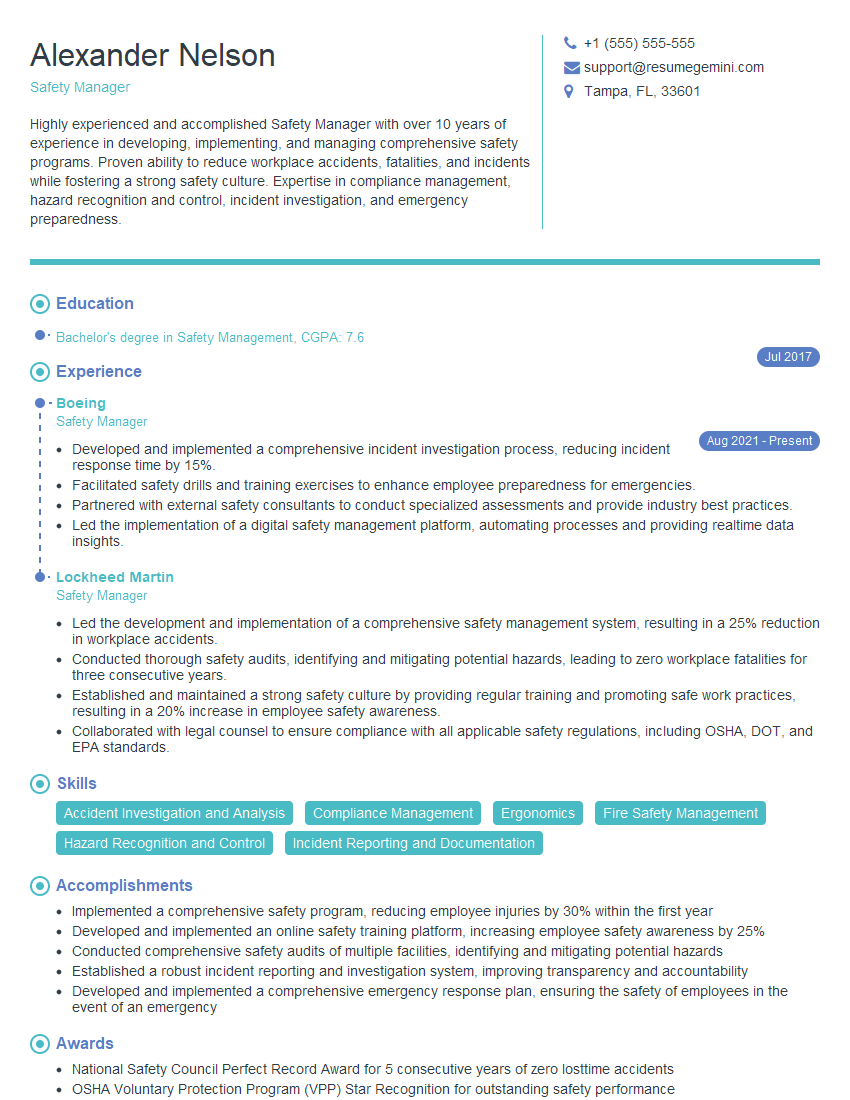
Safety Manager Resume Sample
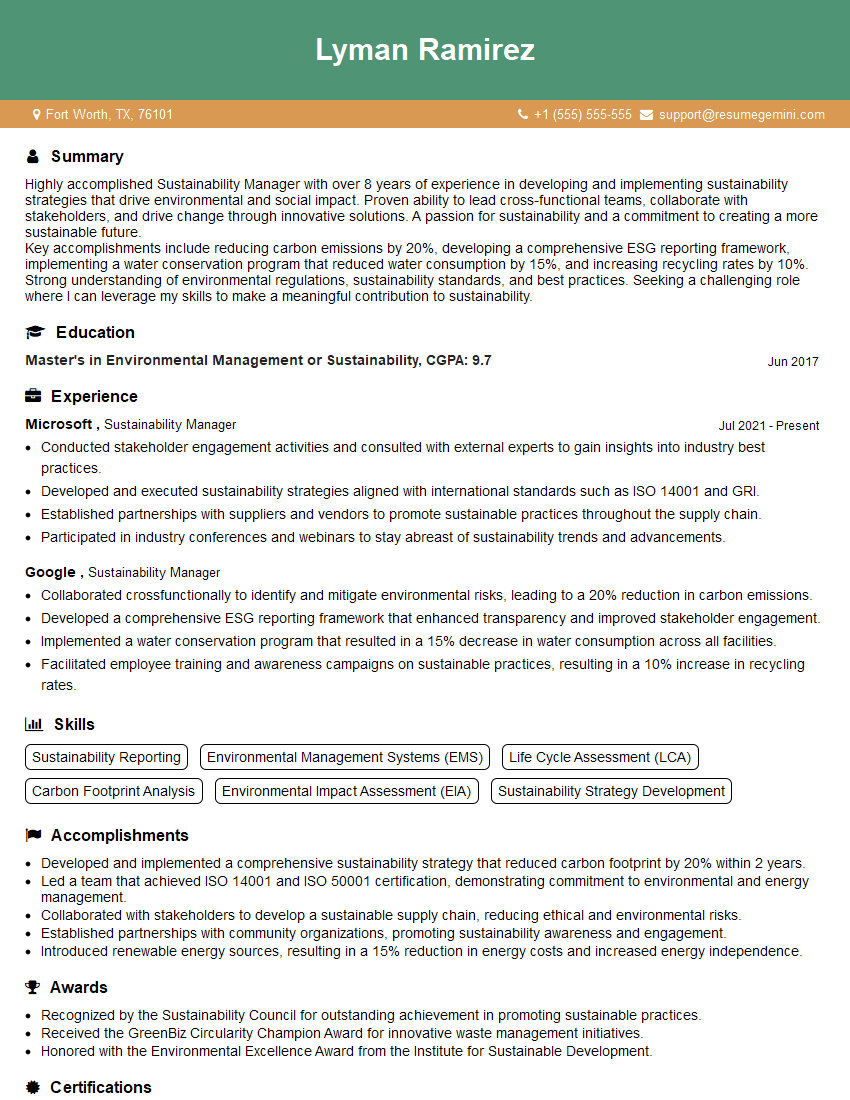
Sustainability Manager Resume Sample
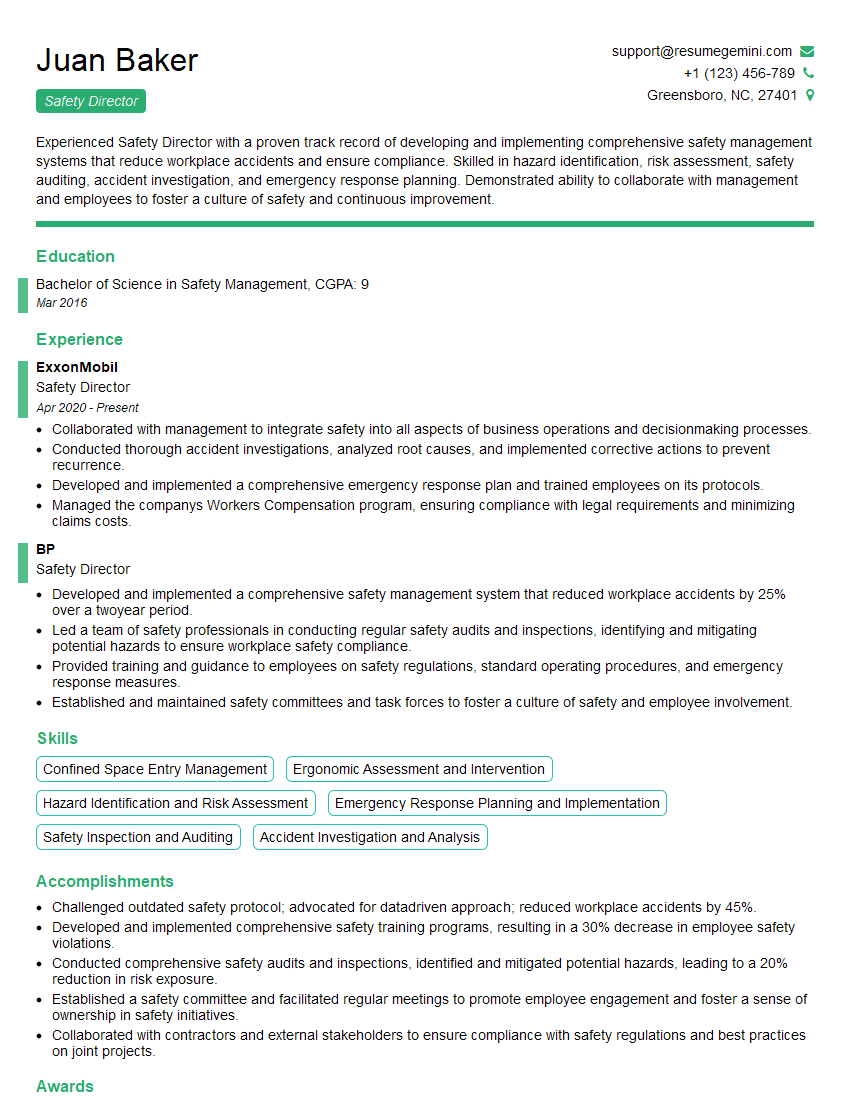
Safety Director Resume Sample
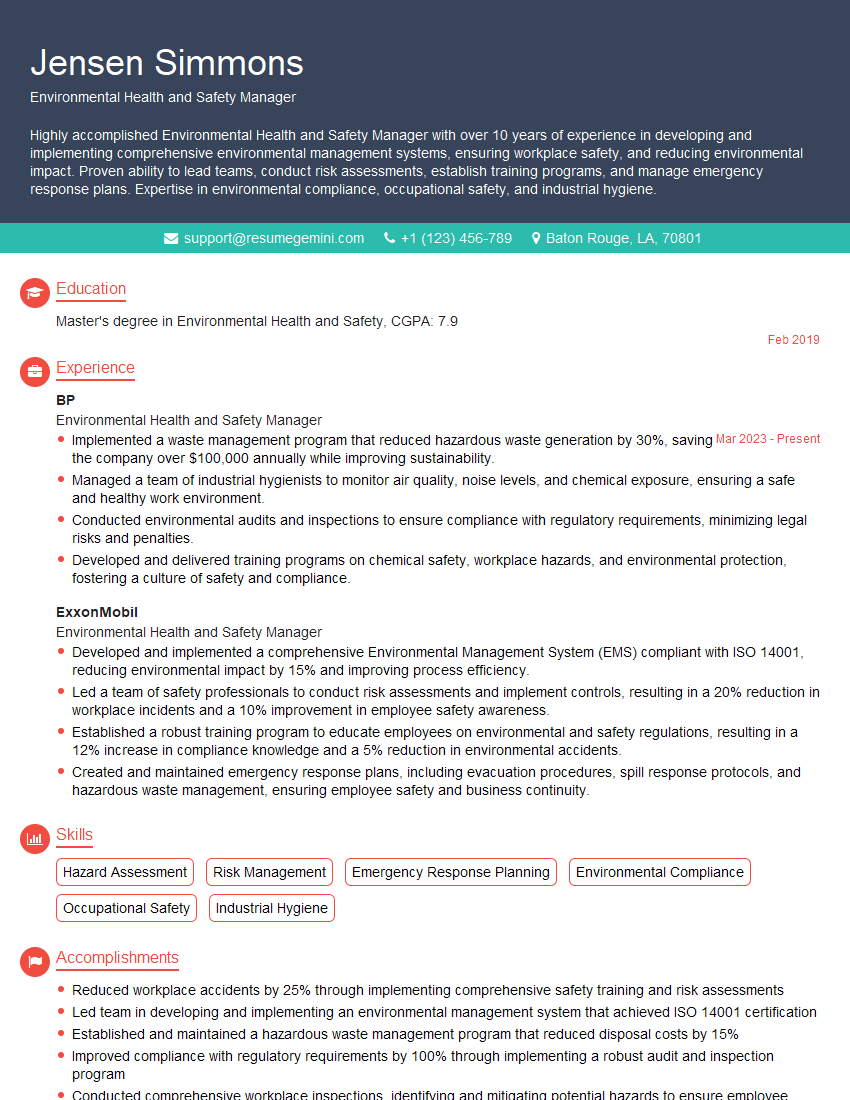
Environmental Health and Safety Manager Resume Sample
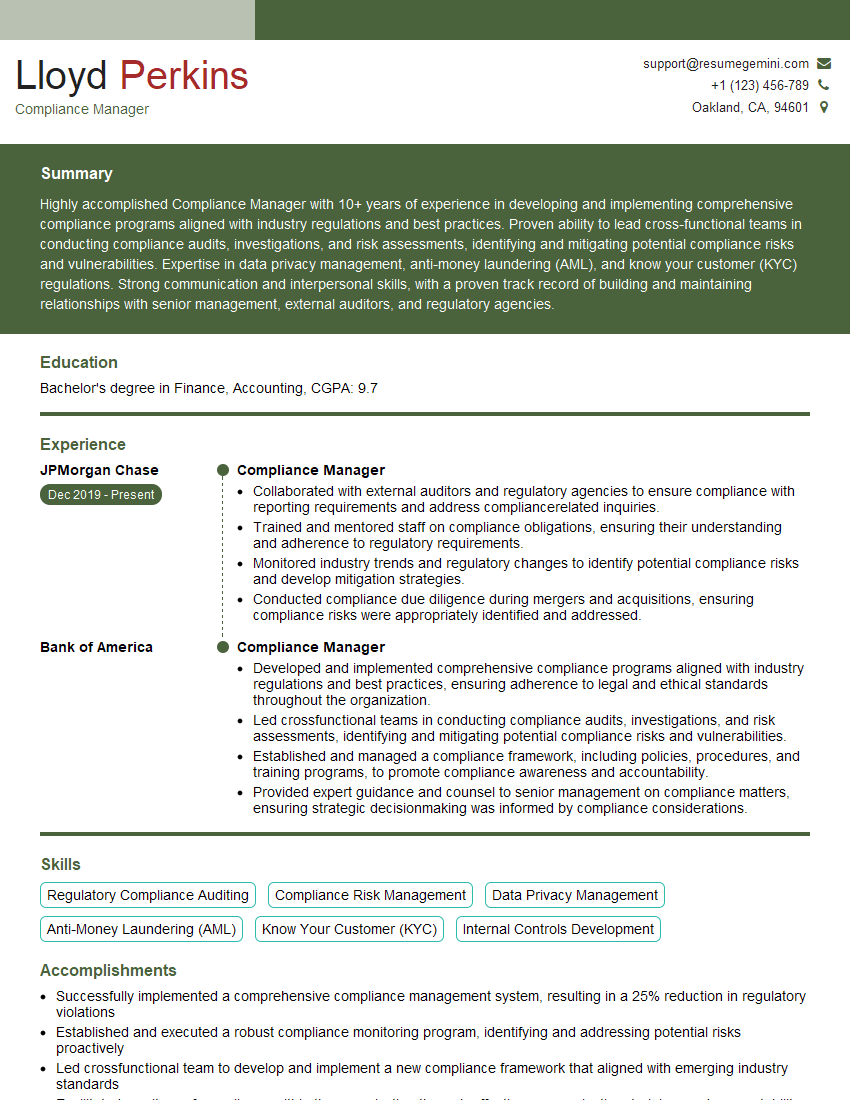
Compliance Manager Resume Sample
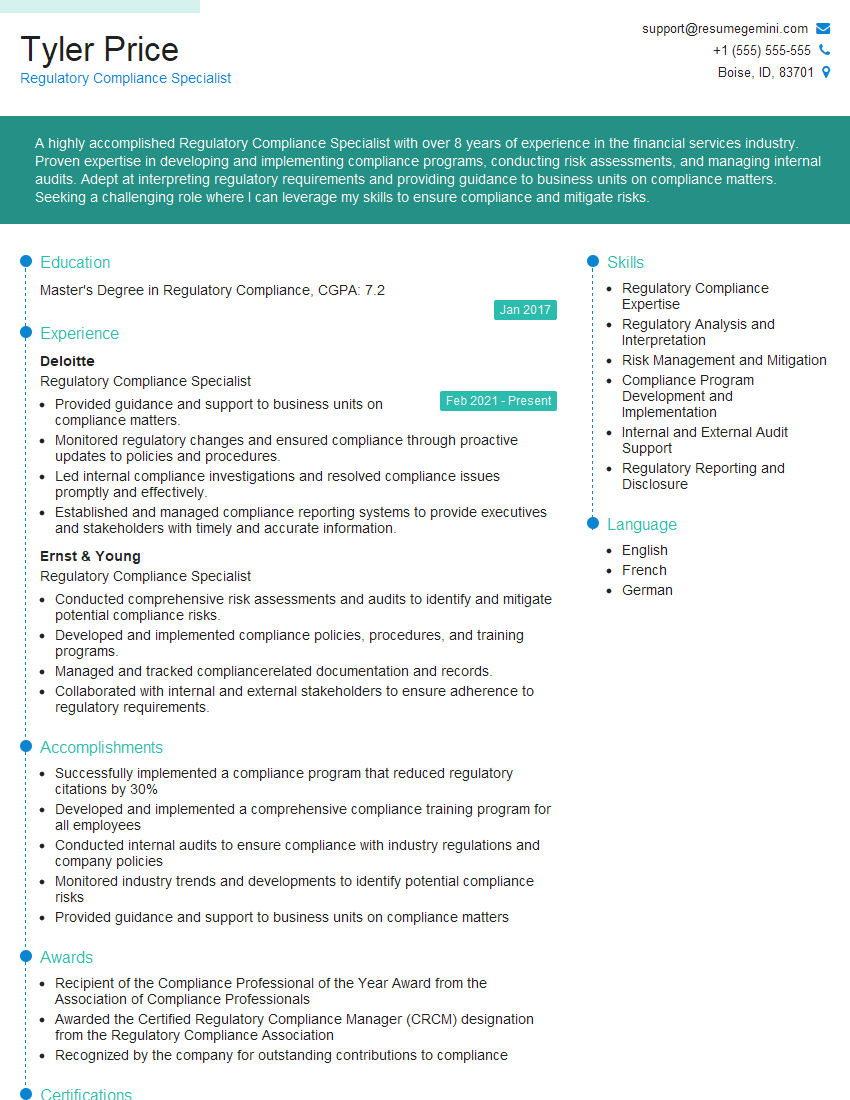
Regulatory Compliance Specialist Resume Sample
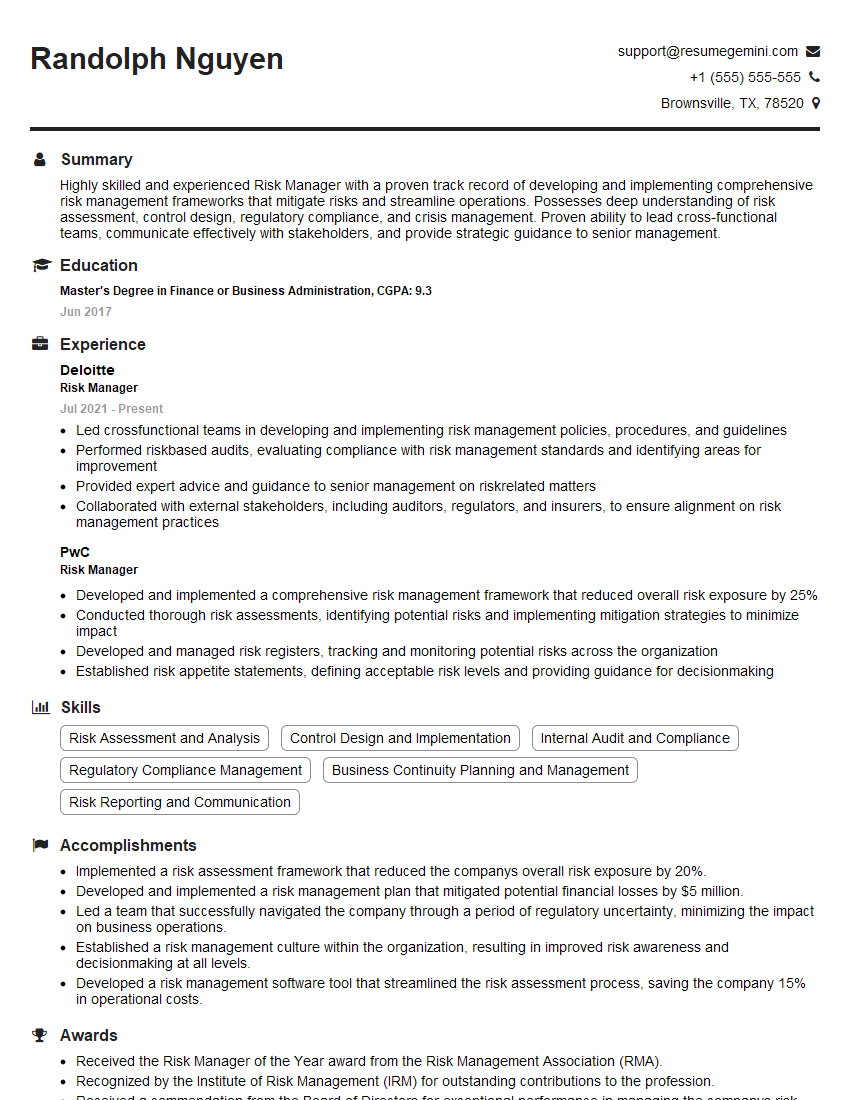
Risk Manager Resume Sample
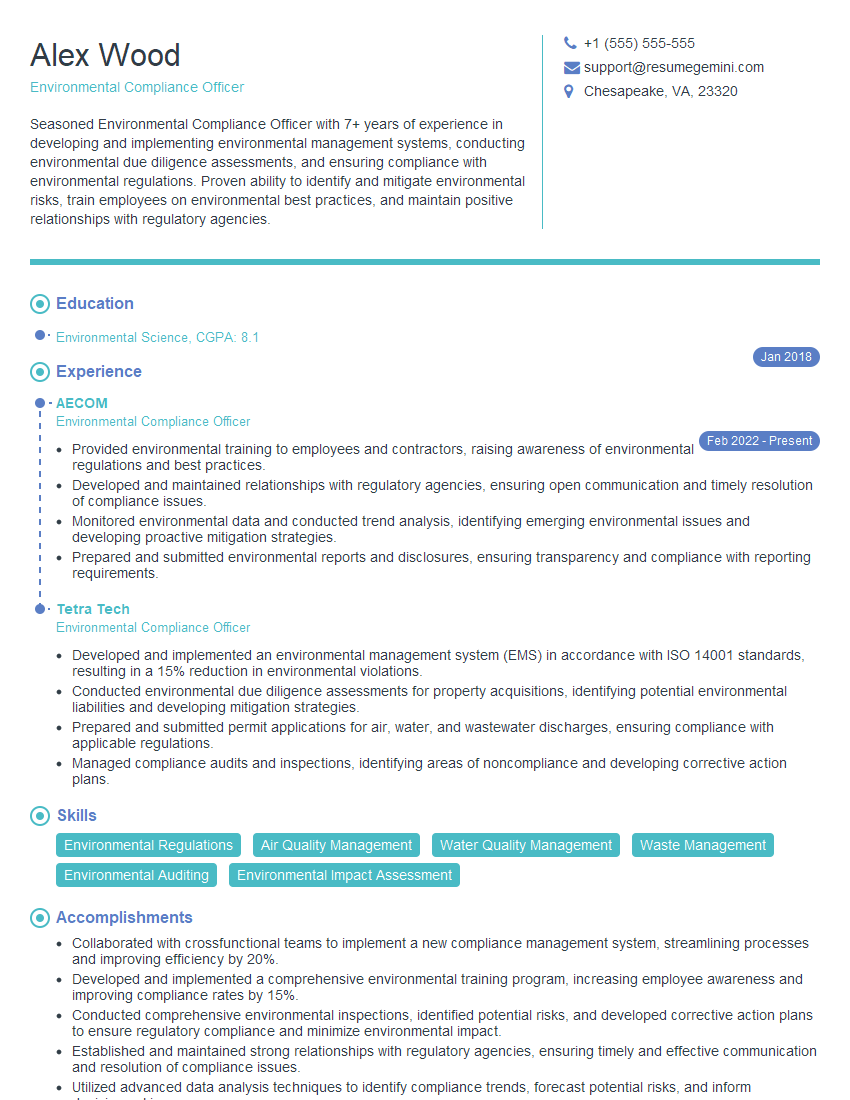
Environmental Compliance Officer Resume Sample
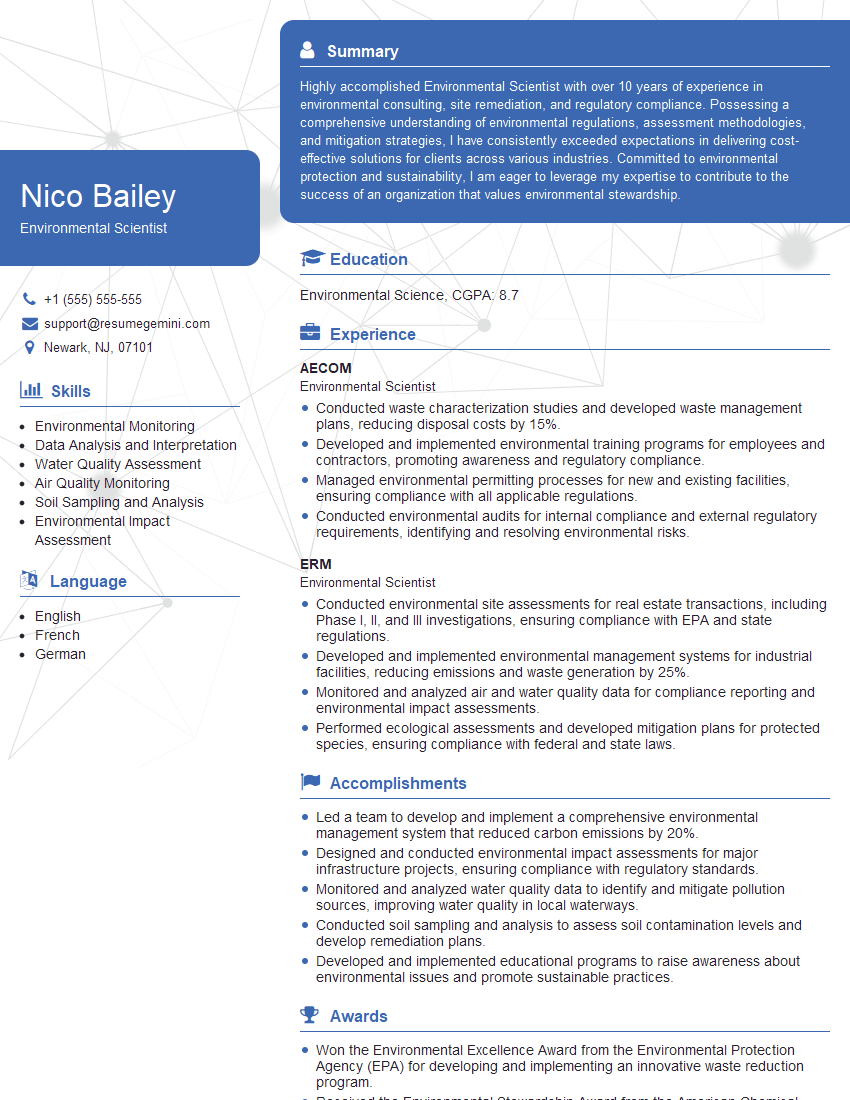
Environmental Scientist Resume Sample
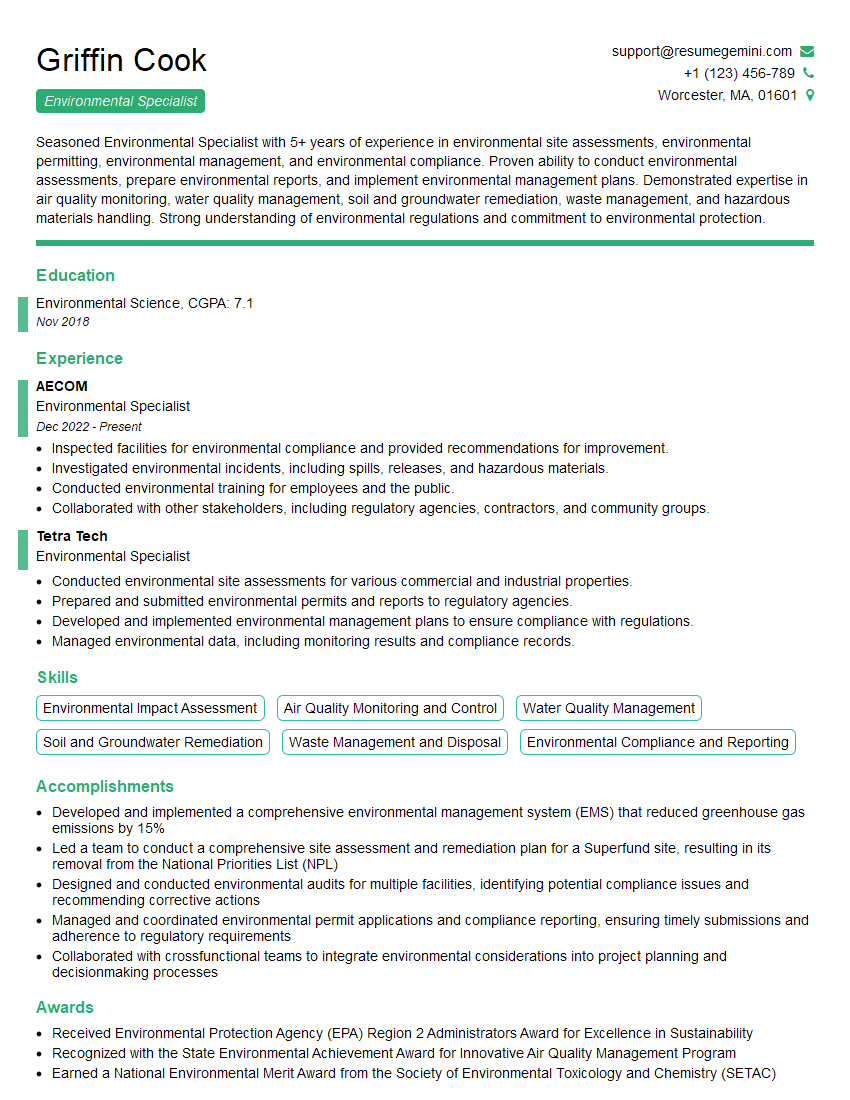
Environmental Specialist Resume Sample
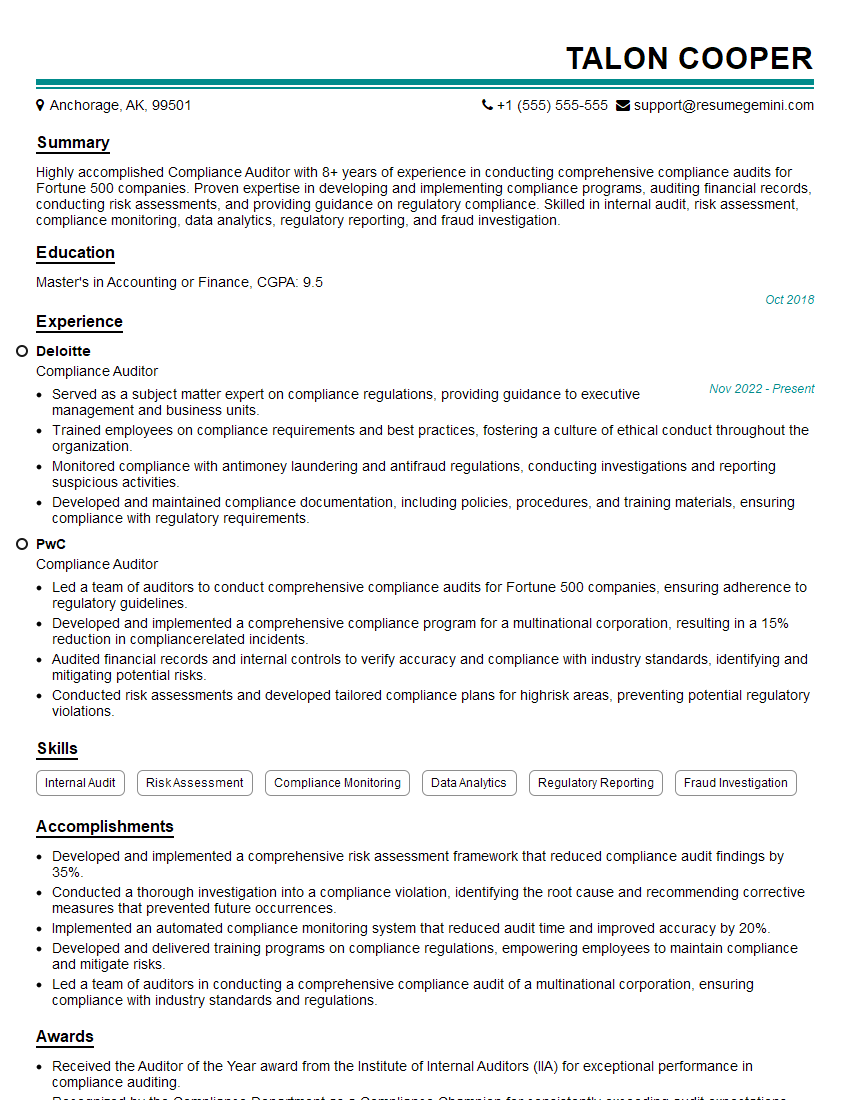
Compliance Auditor Resume Sample
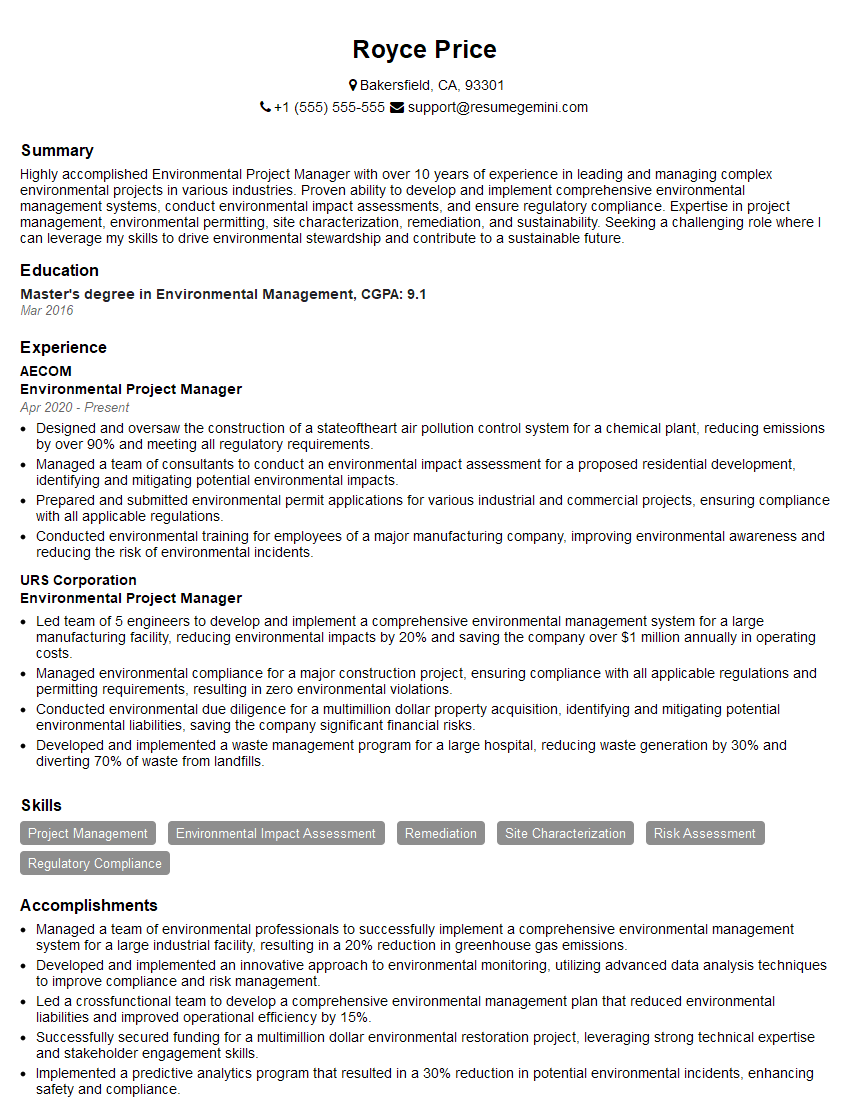
Environmental Project Manager Resume Sample
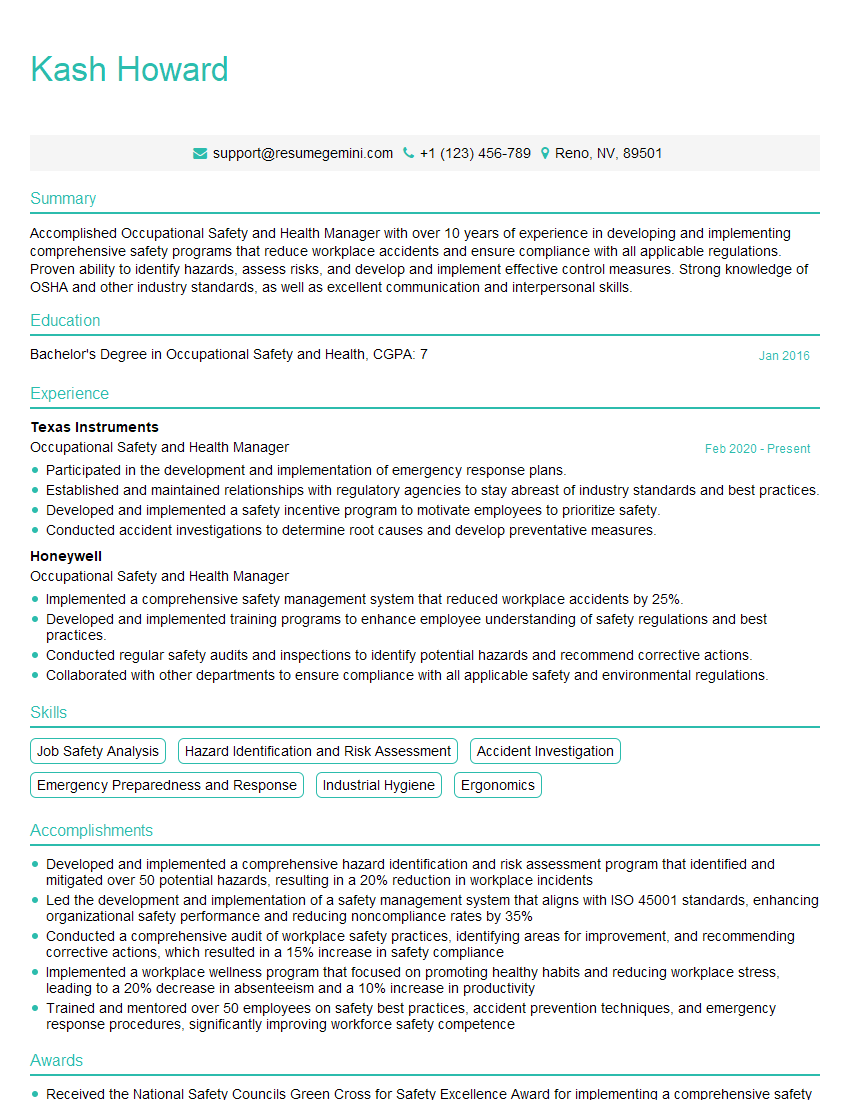
Occupational Safety and Health Manager Resume Sample
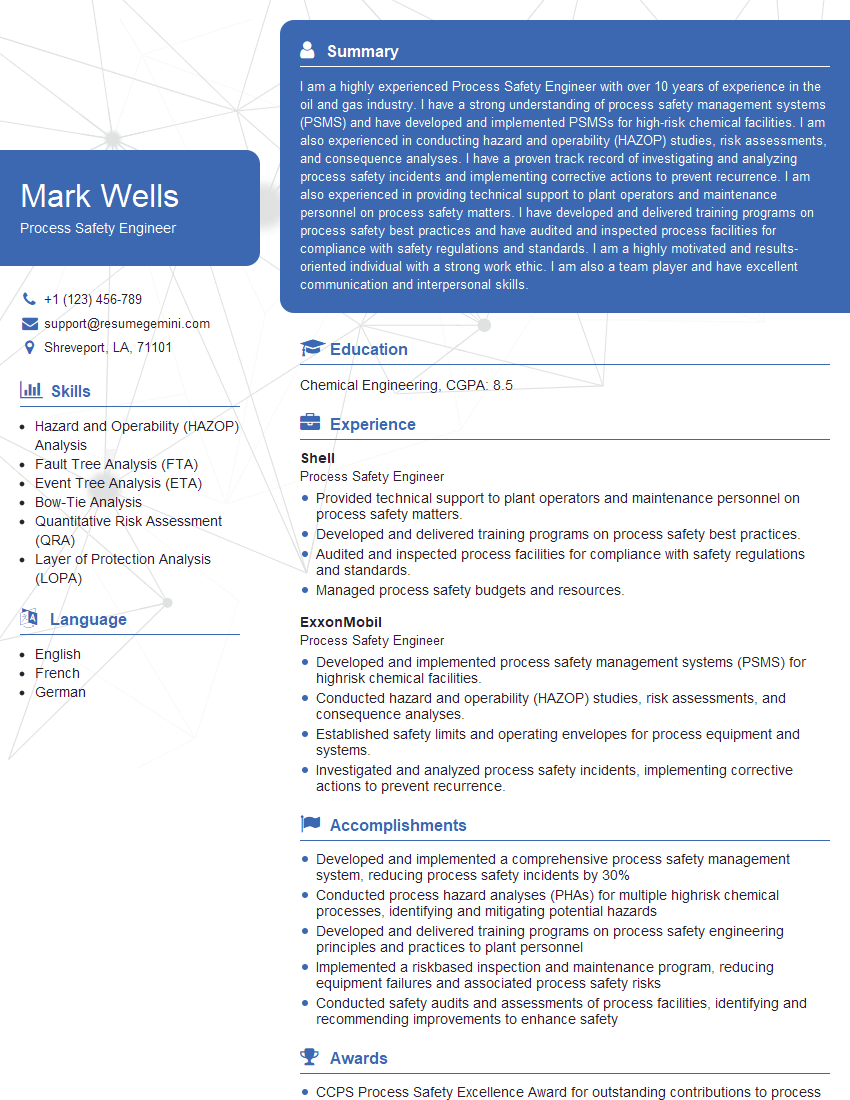
Process Safety Engineer Resume Sample
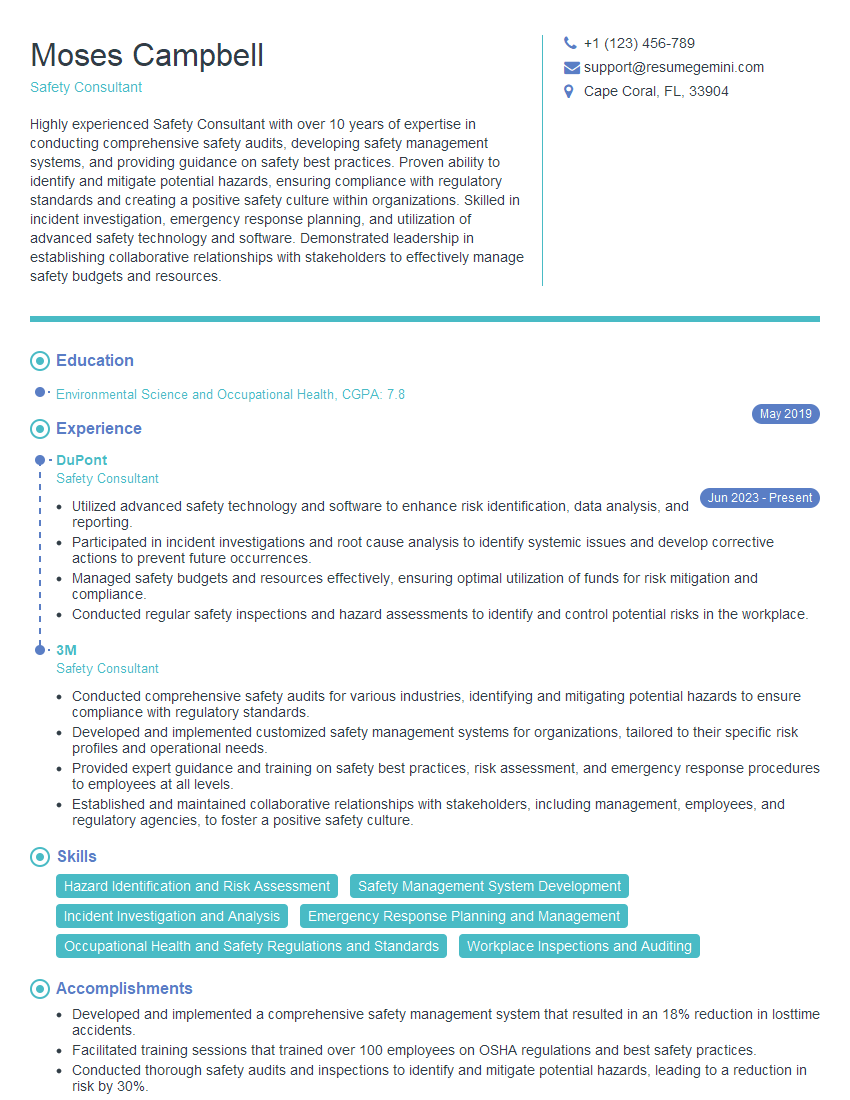
Safety Consultant Resume Sample
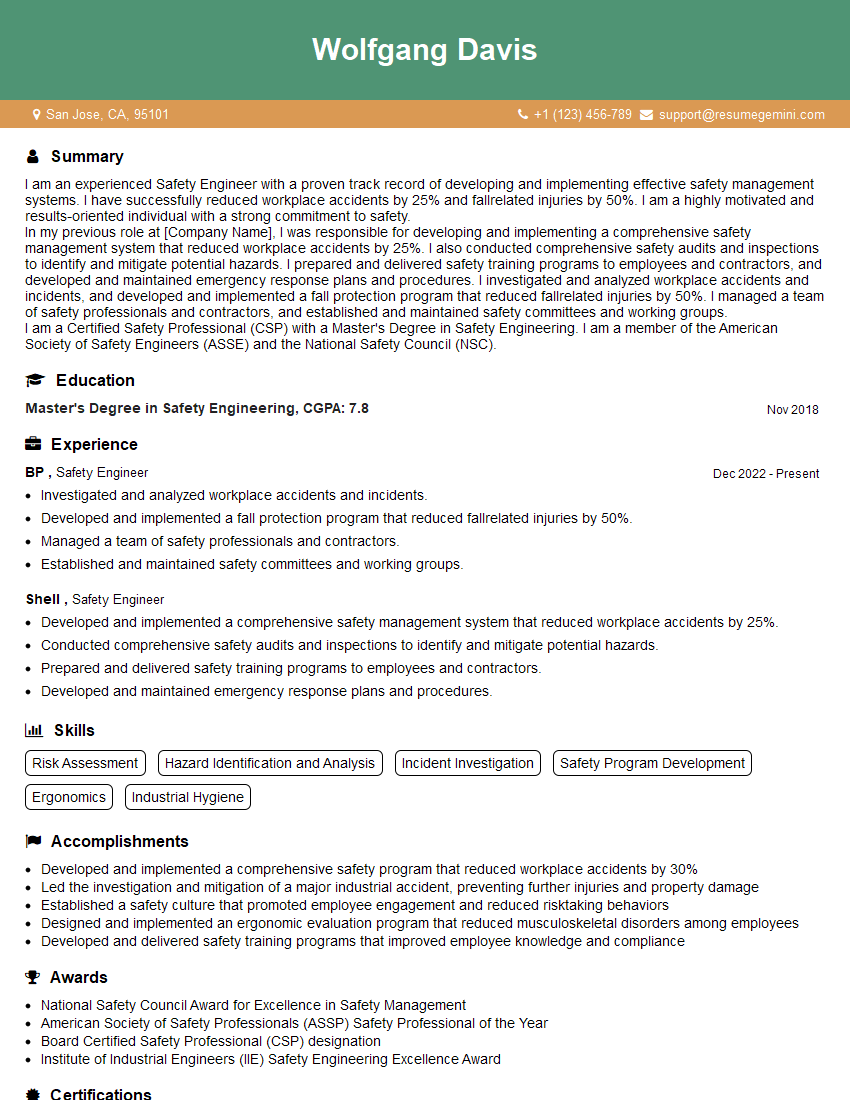
Safety Engineer Resume Sample
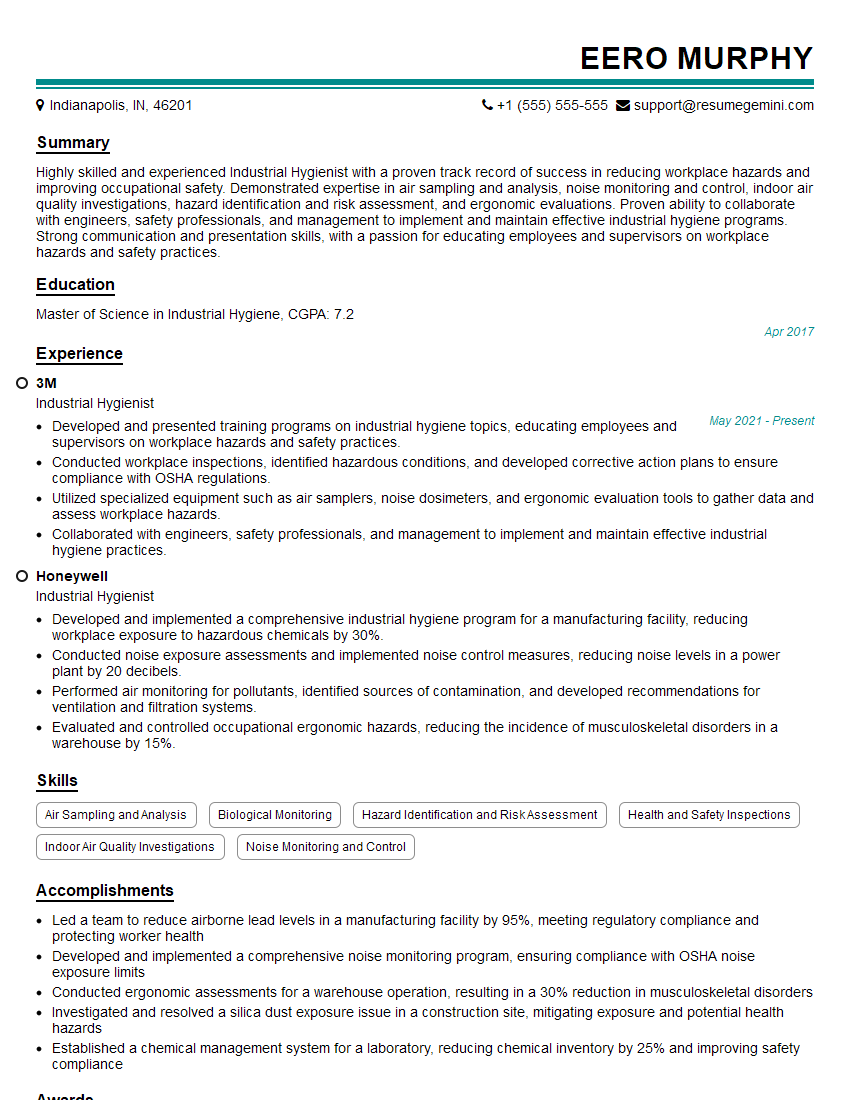
Industrial Hygienist Resume Sample
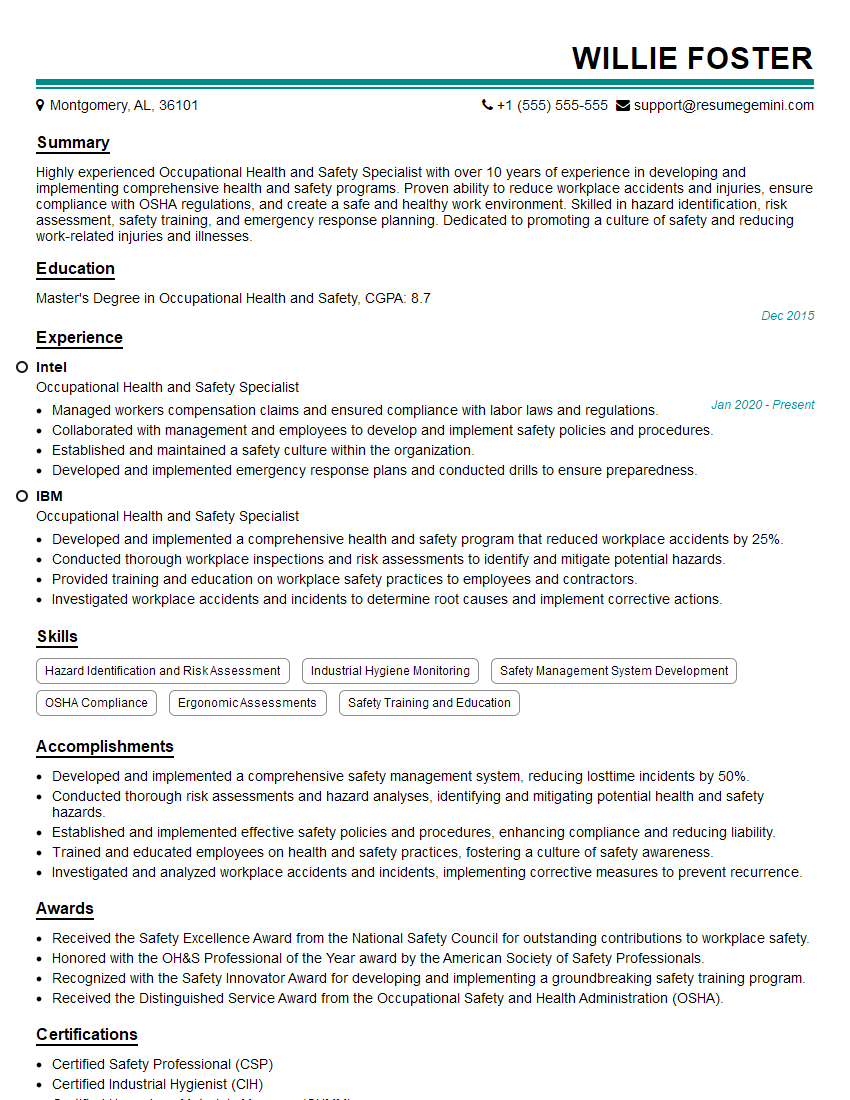
Occupational Health and Safety Specialist Resume Sample
- Safety Manager
- Sustainability Manager
- Safety Director
- Environmental Health and Safety Manager
- Compliance Manager
- Regulatory Compliance Specialist
- Risk Manager
- Environmental Compliance Officer
- Environmental Scientist
- Environmental Specialist
- Compliance Auditor
- Environmental Project Manager
- Occupational Safety and Health Manager
- Process Safety Engineer
- Safety Consultant
- Safety Engineer
- Industrial Hygienist
- Occupational Health and Safety Specialist
Explore more articles
Users Rating of Our Blogs
Share Your Experience
We value your feedback! Please rate our content and share your thoughts (optional).
What Readers Say About Our Blog
Very informative content, great job.
good