Interviews are opportunities to demonstrate your expertise, and this guide is here to help you shine. Explore the essential Salary and Benefits Administration interview questions that employers frequently ask, paired with strategies for crafting responses that set you apart from the competition.
Questions Asked in Salary and Benefits Administration Interview
Q 1. Explain the difference between gross pay and net pay.
The difference between gross pay and net pay lies in deductions. Gross pay is the total amount an employee earns before any deductions. Think of it as the total value of the services rendered. Net pay, also known as take-home pay, is the amount the employee actually receives after all deductions have been made.
For example, imagine an employee with a gross pay of $5,000. Various deductions, such as federal and state income taxes, Social Security and Medicare taxes, health insurance premiums, and retirement plan contributions, might total $1,000. Their net pay would then be $4,000.
- Gross Pay: Total earnings before deductions.
- Net Pay: Earnings after all deductions.
Q 2. Describe your experience with various payroll systems.
Throughout my career, I’ve worked extensively with several payroll systems, gaining proficiency in their unique features and functionalities. I’ve had hands-on experience with ADP Workforce Now, Paychex Flex, and UKG Pro. Each system offers different strengths; for example, ADP Workforce Now excels in its robust reporting capabilities, while Paychex Flex provides a user-friendly interface ideal for smaller businesses. My experience with UKG Pro allowed me to manage payroll for a large, geographically dispersed workforce, highlighting my ability to handle complex payroll configurations and integrations. I’m comfortable navigating various system interfaces, generating reports, and troubleshooting any issues that may arise.
Q 3. How do you ensure compliance with relevant labor laws regarding compensation and benefits?
Ensuring compliance with labor laws is paramount in salary and benefits administration. My approach is multi-faceted and proactive. First, I stay updated on all relevant federal and state regulations, including minimum wage laws, overtime rules (FLSA), and equal pay legislation. I regularly attend industry seminars and workshops and utilize resources like the Department of Labor website to ensure my knowledge is current.
Second, I meticulously review payroll processes to guarantee accuracy and adherence to these laws. This includes regular audits of payroll data and benefit plan documentation. For example, I’ve implemented automated checks within our payroll system to flag any potential overtime violations or discrepancies in pay based on employee classification. Finally, I collaborate closely with legal counsel to address any complex compliance issues or emerging regulations.
Q 4. What are some common benefits administration challenges and how have you addressed them?
Common challenges in benefits administration include managing open enrollment, ensuring accurate benefit deductions, and keeping up-to-date with changing benefit plan designs. For instance, during open enrollment, managing employee questions and navigating complex plan options can be time-consuming. To address this, I’ve implemented a comprehensive communication strategy including online resources, FAQs, and dedicated support staff. This proactive approach reduces confusion and ensures employee satisfaction. In terms of accurate deductions, I’ve successfully implemented automated processes to reduce manual data entry errors and improved data validation to minimize discrepancies.
Another challenge is keeping pace with benefit plan changes and ensuring compliance with regulatory requirements. I’ve addressed this by establishing a system for tracking changes and proactively updating internal documentation and employee communications. This ensures seamless execution and maintains regulatory compliance.
Q 5. How would you handle a discrepancy in employee payroll?
Handling payroll discrepancies requires a methodical approach. First, I would thoroughly investigate the discrepancy, verifying the source of the error. This could involve reviewing the employee’s timesheets, checking for any data entry errors in the payroll system, or examining the accuracy of benefit deductions. I would then document every step of the investigation to maintain a clear audit trail.
Depending on the cause, the resolution would vary. If the error is due to a data entry mistake, I would correct it immediately and issue a corrected paycheck. If the error stems from a misunderstanding of company policy or benefit plan rules, I would clarify the issue with the employee and provide appropriate documentation. In cases involving complex or sensitive issues, I would consult with HR and legal counsel to ensure the appropriate course of action is taken, providing prompt and accurate resolution to ensure employee satisfaction and maintain trust.
Q 6. Explain your understanding of different compensation structures (e.g., salary, hourly, commission).
Understanding different compensation structures is crucial. A salary is a fixed annual amount paid regardless of the number of hours worked. An hourly compensation structure pays employees based on the number of hours they work, usually with overtime pay for hours exceeding a specified threshold (often 40 hours per week). Commission-based pay compensates employees based on sales or performance, often incorporating a base salary with a percentage of sales or other performance metrics.
Each structure has its own advantages and disadvantages. Salaries offer stability, while hourly pay provides flexibility. Commission structures incentivize sales, but can lead to income instability. The choice depends on the nature of the job and the company’s compensation philosophy.
Q 7. How do you calculate employee PTO accrual and usage?
Calculating Paid Time Off (PTO) accrual and usage involves several steps. First, we need to determine the accrual rate. This is often expressed as hours or days accrued per pay period or per year. The company policy dictates the accrual rate, which can vary based on seniority or employment status. For instance, an employee might accrue 1 hour of PTO per 40 hours worked.
Once the accrual rate is established, we calculate the amount of PTO accrued during each pay period based on the employee’s hours worked. Usage is tracked through an approved system, usually integrated into the payroll system. When an employee requests PTO, the system automatically deducts the requested time from their accrued balance. Regular reports are generated to show the employee’s current balance. This ensures that PTO balances remain accurate and prevents unauthorized usage.
Q 8. Describe your experience with benefits enrollment and open enrollment processes.
Benefits enrollment and open enrollment are critical processes for ensuring employees understand and select the benefits that best suit their needs. Open enrollment is typically an annual period where employees can review and change their benefit selections for the upcoming year. My experience encompasses the entire lifecycle, from pre-enrollment communication and education (using various methods such as webinars, presentations, and FAQs) to the actual enrollment process itself, often involving online portals and systems. I’m proficient in managing the data entry, tracking enrollment deadlines, ensuring accurate plan selections, and resolving any enrollment issues that may arise. Post-enrollment, my responsibilities extend to auditing the data for accuracy, communicating enrollment confirmations, and addressing any discrepancies or questions from employees. I have experience with both self-service enrollment portals and manual processes, adapting my approach based on the company’s size and technology infrastructure.
For example, in my previous role, we streamlined the open enrollment process by implementing a new online portal, resulting in a 20% reduction in enrollment errors and a significant increase in employee satisfaction. This involved detailed training sessions for both employees and HR personnel, alongside clear, user-friendly instructions and support resources.
Q 9. How familiar are you with COBRA and HIPAA regulations?
COBRA (Consolidated Omnibus Budget Reconciliation Act) and HIPAA (Health Insurance Portability and Accountability Act) are fundamental regulations in benefits administration. COBRA mandates that employers offer continued group health insurance coverage to employees who have lost their coverage due to specific qualifying events, such as termination of employment (excluding gross misconduct), reduction in work hours, or death of the employee. HIPAA, on the other hand, focuses on protecting the privacy and security of Protected Health Information (PHI). It establishes standards for the use, disclosure, and safeguarding of health information.
My experience involves ensuring our processes are compliant with both COBRA and HIPAA. This includes understanding the qualifying events triggering COBRA continuation coverage, accurately calculating COBRA premiums (which are typically higher than employee-paid premiums during active employment), sending timely COBRA notices to eligible employees, and maintaining strict adherence to HIPAA privacy regulations. This might involve securing employee data, following proper procedures for accessing and disclosing health information, and implementing training programs for all personnel dealing with sensitive employee information. For instance, I’ve implemented secure data storage methods and regular audits to ensure HIPAA compliance within our benefit administration systems.
Q 10. Explain the process for handling employee benefit claims.
Handling employee benefit claims involves a systematic approach to ensure timely and accurate processing. The process typically begins with the employee submitting a claim, either electronically or through paper documentation. The claim is then reviewed for completeness and accuracy; this often involves verifying eligibility, ensuring all necessary supporting documentation is provided, and checking that the claim falls within the terms and conditions of the benefit plan. Once validated, the claim is processed, which may involve interacting with insurance providers or third-party administrators. Payments are then made to the employee or directly to the healthcare provider. Throughout this process, effective communication with the employee is crucial, keeping them informed of the claim’s status.
If a claim is rejected, the employee is notified with a clear explanation of the reason for denial, along with instructions on how to appeal the decision if necessary. My experience includes developing and implementing procedures to minimize claim processing times, improving accuracy, and building a robust appeals process. Using a claims management system significantly improved our efficiency and provided detailed tracking of claims from submission to resolution.
Q 11. How would you address an employee’s concern regarding their compensation or benefits?
Addressing employee concerns about compensation or benefits requires a sensitive and professional approach. The first step is to actively listen to the employee’s concerns, showing empathy and understanding. Then, I’d gather all relevant information, verifying the employee’s details and the policy specifics. This might involve reviewing payroll records, benefit plan documents, or company policies. Based on my findings, I’d provide a clear and concise explanation, addressing the employee’s questions or concerns directly and honestly. If the issue involves a discrepancy or error, I’d work to resolve it promptly and efficiently. For complex issues, I may escalate the matter to the appropriate manager or department for further investigation or resolution.
For example, if an employee believes their salary is incorrect, I’d investigate the payroll data, compare it to their contract and any applicable increases or adjustments, and explain the findings clearly to the employee. If there was indeed an error, I’d work to rectify it promptly. Transparency and proactive communication are key to maintaining trust and preventing misunderstandings.
Q 12. What is your experience with performance-based compensation plans?
Performance-based compensation plans, often incorporating bonuses, incentives, or commission structures, tie employee compensation to their individual or team performance. My experience involves designing, implementing, and administering these plans. This includes determining appropriate performance metrics, setting targets and thresholds, developing clear and concise performance evaluation criteria, and communicating the plan effectively to all involved parties. I’m skilled in using various compensation modeling techniques to ensure the plans are both effective and fair. It’s crucial that these plans align with overall business objectives and motivate employees towards desired outcomes.
For example, I once designed a sales commission plan that incorporated both individual and team-based incentives. This motivated individual sales representatives while encouraging collaboration and shared success. The result was a significant increase in sales performance and overall team morale. Regular reviews and adjustments to these plans are necessary to ensure ongoing effectiveness and relevance.
Q 13. How do you stay updated on changes in compensation and benefits laws and regulations?
Staying abreast of changes in compensation and benefits laws and regulations is critical for maintaining compliance and ensuring best practices. I utilize several methods to remain updated, including subscribing to professional journals and publications such as SHRM (Society for Human Resource Management) publications and relevant legal updates. I actively participate in professional development workshops and conferences, networking with other professionals in the field and learning about emerging trends and best practices. I also leverage online resources, including government websites and legal databases, to access the latest legislative updates and case law. This proactive approach ensures I can adapt our company’s policies and procedures to remain compliant and provide the best possible support to our employees.
Q 14. Explain your understanding of various retirement plan options.
My understanding of retirement plan options is comprehensive. I’m familiar with various types, including defined benefit plans (DB), defined contribution plans (DC), such as 401(k)s and 403(b)s, and profit-sharing plans. Defined benefit plans guarantee a specific retirement income based on factors like salary and years of service, while defined contribution plans require employee and/or employer contributions, with the final retirement benefit depending on investment performance. Profit-sharing plans distribute a portion of company profits to employees, contributing to their retirement savings. I understand the nuances of each plan type, including contribution limits, vesting schedules, and investment options. I can also explain the advantages and disadvantages of each plan to employees, helping them make informed decisions about their retirement planning. Moreover, I’m knowledgeable about compliance requirements related to these plans, including ERISA (Employee Retirement Income Security Act) regulations.
For example, I’ve helped employees understand the difference between a traditional 401(k) and a Roth 401(k), explaining the tax implications of each and how the choice aligns with their individual retirement goals and risk tolerance. This involves providing clear and concise explanations, often supplemented with illustrative examples, to ensure employees grasp the concepts and make informed choices.
Q 15. How do you ensure data accuracy in payroll and benefits administration?
Data accuracy in payroll and benefits is paramount. It’s the cornerstone of trust and legal compliance. We achieve this through a multi-layered approach involving rigorous data entry procedures, automated checks, and regular audits.
- Data Validation: We implement stringent data validation rules during data entry. For example, a system might automatically flag an incorrect social security number or a salary outside the approved range. This prevents errors from propagating further.
- Automated Reconciliation: Regularly scheduled automated processes compare data from different systems (e.g., HRIS, payroll, benefits providers) to identify discrepancies. This helps catch inconsistencies early on, before they impact payments or reports.
- Regular Audits: Both internal and external audits are crucial. Internal audits involve reviewing payroll processes and data for accuracy, while external audits ensure compliance with relevant laws and regulations. They provide an independent verification of our accuracy measures.
- Data Governance: Clear roles and responsibilities for data management, including data ownership and access controls, ensure that only authorized personnel handle sensitive employee information.
Think of it like building a house: each brick (data point) needs to be carefully placed (validated) and regularly inspected (audited) to ensure the final structure (payroll and benefits administration) is strong and stable.
Career Expert Tips:
- Ace those interviews! Prepare effectively by reviewing the Top 50 Most Common Interview Questions on ResumeGemini.
- Navigate your job search with confidence! Explore a wide range of Career Tips on ResumeGemini. Learn about common challenges and recommendations to overcome them.
- Craft the perfect resume! Master the Art of Resume Writing with ResumeGemini’s guide. Showcase your unique qualifications and achievements effectively.
- Don’t miss out on holiday savings! Build your dream resume with ResumeGemini’s ATS optimized templates.
Q 16. Describe your experience with budgeting and forecasting for compensation and benefits.
Budgeting and forecasting for compensation and benefits requires a thorough understanding of various factors. My experience involves collaborating with HR, finance, and executive leadership to develop realistic and strategic plans.
- Historical Data Analysis: We begin by analyzing historical compensation and benefits data to understand trends in salary increases, benefit utilization, and turnover. This provides a baseline for forecasting.
- Market Research: We conduct market research to understand prevailing compensation levels for similar roles in our industry and geographic location. This ensures our compensation remains competitive.
- Projected Headcount: Forecasting requires anticipating future headcount changes based on business plans and strategic initiatives. This allows us to accurately estimate the cost of adding new employees or managing attrition.
- Scenario Planning: We develop multiple budget scenarios to account for various economic and business conditions. This helps prepare for unexpected events and allows for flexible budgeting.
For instance, in a previous role, we developed a three-year compensation and benefits budget that incorporated anticipated salary increases based on market research and projected growth in headcount. This plan allowed us to proactively manage costs and ensure sufficient funding for our programs.
Q 17. What metrics do you use to measure the effectiveness of compensation and benefits programs?
Measuring the effectiveness of compensation and benefits programs requires a combination of quantitative and qualitative metrics. Key metrics include:
- Employee Satisfaction: Surveys and feedback mechanisms assess employee satisfaction with compensation, benefits, and overall workplace experience. A high satisfaction rate signifies a well-designed and effective program.
- Turnover Rate: Lower turnover rates indicate that employees are satisfied with their compensation and benefits packages and are less likely to seek employment elsewhere.
- Cost Per Employee: This metric tracks the total cost of compensation and benefits per employee, allowing for identification of areas for cost optimization while maintaining competitiveness.
- Recruitment Effectiveness: Effective compensation and benefits programs attract top talent, leading to a faster and more efficient recruitment process.
- Return on Investment (ROI): This metric measures the return generated from the investment in compensation and benefits programs. For example, increased productivity or reduced turnover can be attributed to a successful program.
By tracking these metrics, we can identify areas for improvement and make data-driven decisions to optimize our compensation and benefits strategies.
Q 18. How do you handle confidential employee information related to compensation and benefits?
Confidentiality of employee compensation and benefits information is of utmost importance. We adhere to strict privacy policies and regulations, such as HIPAA and GDPR (where applicable), to protect sensitive data.
- Access Controls: Access to employee compensation and benefits data is restricted to authorized personnel on a need-to-know basis. This involves using role-based access controls and robust password management practices.
- Data Encryption: All sensitive data is encrypted both in transit and at rest, protecting it from unauthorized access, even in case of a security breach.
- Secure Storage: Employee data is stored securely in compliance with all relevant regulations. This might involve using cloud-based solutions with advanced security features or on-premise servers with robust physical and logical security measures.
- Employee Training: Employees who handle sensitive data receive regular training on data privacy and security best practices.
- Incident Response Plan: We have a well-defined incident response plan to handle any potential data breaches, ensuring prompt and effective action to mitigate risks.
We treat this information with the same level of care as we would our own personal financial data – with utmost respect for privacy and security.
Q 19. Describe your experience with international compensation and benefits.
My experience with international compensation and benefits involves navigating the complexities of different legal and cultural landscapes. This requires a deep understanding of local laws, tax regulations, and cultural norms.
- Global Compensation Surveys: We utilize global compensation surveys to benchmark salaries and benefits across different countries and regions, ensuring our compensation packages remain competitive.
- Local Expertise: Collaborating with local HR professionals and legal experts in each country is crucial to ensure compliance with local labor laws and regulations.
- Tax Implications: Understanding the tax implications of compensation and benefits in different countries is essential for accurate payroll processing and compliance.
- Currency Fluctuations: We consider currency fluctuations when determining compensation packages to minimize financial risks for both the employer and employee.
- Cultural Nuances: Considering cultural nuances regarding benefits is critical. For example, certain benefits may be more valued in some cultures than others.
For example, in a past project, we developed a global compensation and benefits strategy for a multinational corporation, taking into account varying tax rates, cost of living differences, and cultural preferences across multiple countries.
Q 20. Explain your understanding of different types of health insurance plans.
Health insurance plans offer a variety of coverage options, each with different cost-sharing mechanisms. The main types include:
- HMO (Health Maintenance Organization): HMO plans typically require choosing a primary care physician (PCP) who acts as a gatekeeper to specialists. Care is generally less expensive when using in-network providers.
- PPO (Preferred Provider Organization): PPO plans offer more flexibility, allowing you to see any doctor, but in-network providers usually have lower costs.
- POS (Point of Service): POS plans combine aspects of HMOs and PPOs, providing a combination of in-network and out-of-network coverage. They usually require a referral from a PCP for specialist visits.
- EPO (Exclusive Provider Organization): EPO plans only cover care from in-network providers; out-of-network care is generally not covered.
- HDHP (High Deductible Health Plan): HDHPs have high deductibles but lower premiums. They often come with a Health Savings Account (HSA), which allows pre-tax contributions to be used for healthcare expenses.
Understanding the nuances of these plans is essential for helping employees choose the best option based on their individual needs and budgets. It’s similar to choosing a car – you consider factors like price, features, and fuel efficiency (premiums, coverage, and out-of-pocket costs) before making a decision.
Q 21. How do you handle employee inquiries about their pay stubs or benefits statements?
Handling employee inquiries about pay stubs or benefits statements requires a prompt, efficient, and courteous approach.
- Multiple Channels: We offer various channels for inquiries, such as email, phone, and self-service portals. This caters to different employee preferences and communication styles.
- Prompt Response: We aim to respond to all inquiries within a defined timeframe, typically within 24-48 hours. A quicker response ensures employee satisfaction and minimizes frustration.
- Clear and Concise Explanations: Our responses are clear, concise, and easy to understand. We avoid using jargon and provide explanations in plain language.
- Self-Service Options: A self-service portal allows employees to access their pay stubs and benefits statements independently. This empowers employees and reduces the workload for the payroll team.
- Data Security: When handling sensitive information, we always adhere to strict security protocols, ensuring confidentiality.
Imagine a help desk – we strive to provide a helpful and supportive experience, solving issues efficiently and making the process as easy as possible for our employees.
Q 22. How would you explain a complex compensation or benefits plan to an employee?
Explaining a complex compensation or benefits plan to an employee requires clear, concise communication and a focus on the employee’s individual needs. I start by understanding their existing knowledge and tailoring my explanation accordingly. I avoid jargon and use analogies to illustrate complex concepts. For example, instead of explaining a tiered health insurance plan using technical terms, I might explain it as choosing between different restaurant menus – each with varying costs and selections. I’d break down the plan into manageable chunks, focusing on key aspects like: the cost to the employee (premiums, deductibles, co-pays), the benefits covered (doctor visits, hospitalizations, prescription drugs), and how to access those benefits (claims processes, provider networks). I then provide visual aids, such as brochures or flowcharts, to further clarify the information and offer a Q&A session to ensure complete understanding. Finally, I provide written documentation and contact information for further assistance.
Q 23. What is your experience with auditing payroll and benefits data?
Throughout my career, I have been heavily involved in auditing payroll and benefits data. My experience encompasses conducting both internal and external audits, utilizing various techniques to ensure data accuracy and compliance. This includes comparing payroll data to timekeeping records, verifying benefit deductions against plan documents, and reconciling benefit payments with provider invoices. I’m proficient in identifying discrepancies and conducting root cause analyses to determine their origin and implement corrective actions. I use data analytics tools to identify trends and potential issues. For instance, I might analyze payroll data to identify potential overtime violations or use benefit data to spot anomalies in claim processing times, suggesting areas needing process improvement. Data integrity and accuracy are paramount; my auditing experience helps maintain this.
Q 24. How do you ensure compliance with wage and hour laws?
Ensuring compliance with wage and hour laws is a critical aspect of salary and benefits administration. My approach is multi-faceted. First, I stay current with all relevant federal, state, and local laws. This involves regular review of legal updates and participation in professional development activities. Second, I establish robust internal controls. This includes implementing clear policies and procedures for time tracking, overtime calculation, and minimum wage adherence. We use timekeeping systems that automatically calculate hours and flag potential violations, such as exceeding maximum daily or weekly hours. Third, I conduct regular audits, both internally and sometimes with external auditors, to verify compliance with these laws. Lastly, I provide regular training to managers and employees on wage and hour regulations. A recent example includes ensuring our company followed the correct procedures for calculating overtime pay for employees who work in multiple states with varying laws.
Q 25. What software and tools are you proficient in for salary and benefits administration?
My proficiency extends to a range of software and tools commonly used in salary and benefits administration. I’m highly experienced with payroll systems such as ADP Workforce Now and UKG Pro, and benefit administration platforms like BambooHR and Namely. I’m also adept at using HRIS (Human Resource Information Systems) like Workday and Oracle HCM Cloud to manage employee data, benefits enrollment, and compensation information. My skills extend to data analysis tools like Excel and SQL for querying, manipulating, and reporting on salary and benefits data. I am comfortable learning and adapting to new technologies as they emerge within the HR technology landscape.
Q 26. Describe a time you had to resolve a complex compensation or benefits issue. What was the outcome?
In a previous role, we faced a complex issue concerning the miscalculation of employee bonuses under a new incentive plan. The initial implementation had several flaws in the formula used to determine bonus payouts, resulting in inconsistencies and discrepancies among employees. I addressed this by systematically reviewing the incentive plan documentation, comparing it to the actual calculations, and identifying the source of the error. I worked closely with the IT team and compensation specialists to develop a corrected bonus calculation algorithm. Then, I thoroughly tested the new system on a sample dataset before implementing it company-wide. Finally, I communicated the correction to all affected employees, explaining the error and the steps taken to rectify it. The outcome was a successful resolution of the problem, regaining employee trust, and demonstrating our commitment to fair compensation practices.
Q 27. How do you manage multiple priorities and deadlines in a fast-paced environment?
Managing multiple priorities and deadlines effectively requires a structured approach. I utilize project management tools like Asana or Trello to prioritize tasks, set deadlines, and track progress. I also employ time management techniques such as time blocking and the Pomodoro Technique to maintain focus and productivity. I am proactive in communicating with stakeholders to manage expectations and ensure alignment on priorities. Furthermore, I delegate tasks effectively when possible and actively seek assistance when needed. For example, I might delegate routine tasks while focusing on high-impact activities that require my specialized expertise. Prioritization is key; I always assess the urgency and importance of each task to allocate my time effectively. I also build in buffer time to account for unexpected delays or obstacles.
Q 28. How do you approach continuous improvement in salary and benefits processes?
Continuous improvement is integral to salary and benefits administration. My approach involves regular process reviews to identify areas for optimization. I actively seek feedback from employees and stakeholders to understand their experiences and uncover potential pain points. I leverage data analytics to identify trends, anomalies, and opportunities for improvement. For instance, I might analyze employee satisfaction surveys to pinpoint areas where benefits could be enhanced or employee feedback on payroll processing to improve efficiency. I also stay updated on industry best practices and new technologies that can streamline processes and improve accuracy. Implementing these changes often involves a phased approach, testing and monitoring the results before full implementation to ensure the process improvements are effective and well-received by employees.
Key Topics to Learn for Salary and Benefits Administration Interview
- Compensation Structures: Understanding different pay structures (hourly, salary, commission), salary ranges, and pay equity principles. Practical application: Analyzing existing pay structures for fairness and competitiveness.
- Benefits Administration: Knowledge of various employee benefits (health insurance, retirement plans, paid time off) and the legal requirements surrounding them. Practical application: Designing a benefits package that attracts and retains top talent while staying within budget.
- Payroll Processing: Familiarity with payroll software, tax regulations (federal, state, local), and the entire payroll cycle. Practical application: Troubleshooting payroll errors and ensuring accurate and timely payment.
- Compliance and Regulations: Deep understanding of relevant labor laws (FLSA, ERISA, etc.) and their impact on salary and benefits administration. Practical application: Implementing and maintaining compliance with all relevant regulations.
- Data Analysis and Reporting: Ability to analyze compensation data, generate reports, and identify trends. Practical application: Using data to inform compensation decisions and demonstrate the effectiveness of benefits programs.
- Budgeting and Forecasting: Experience in creating and managing budgets related to salary and benefits. Practical application: Predicting future salary and benefits costs and adjusting strategies accordingly.
- HRIS Systems: Proficiency in using HR Information Systems (HRIS) for managing employee data, payroll, and benefits. Practical application: Efficiently managing employee information and generating reports within the HRIS.
- Performance Management and Compensation: Understanding how performance evaluations inform compensation decisions and bonus structures. Practical application: Designing a compensation system that incentivizes high performance.
Next Steps
Mastering Salary and Benefits Administration opens doors to rewarding and impactful career opportunities within HR and beyond. It demonstrates a crucial skillset highly valued by employers across various industries. To increase your job prospects, creating a compelling and ATS-friendly resume is vital. ResumeGemini is a trusted resource to help you build a professional and impactful resume that highlights your skills and experience. We provide examples of resumes tailored to Salary and Benefits Administration to help you get started. Invest time in crafting a strong resume; it’s your first impression on potential employers.
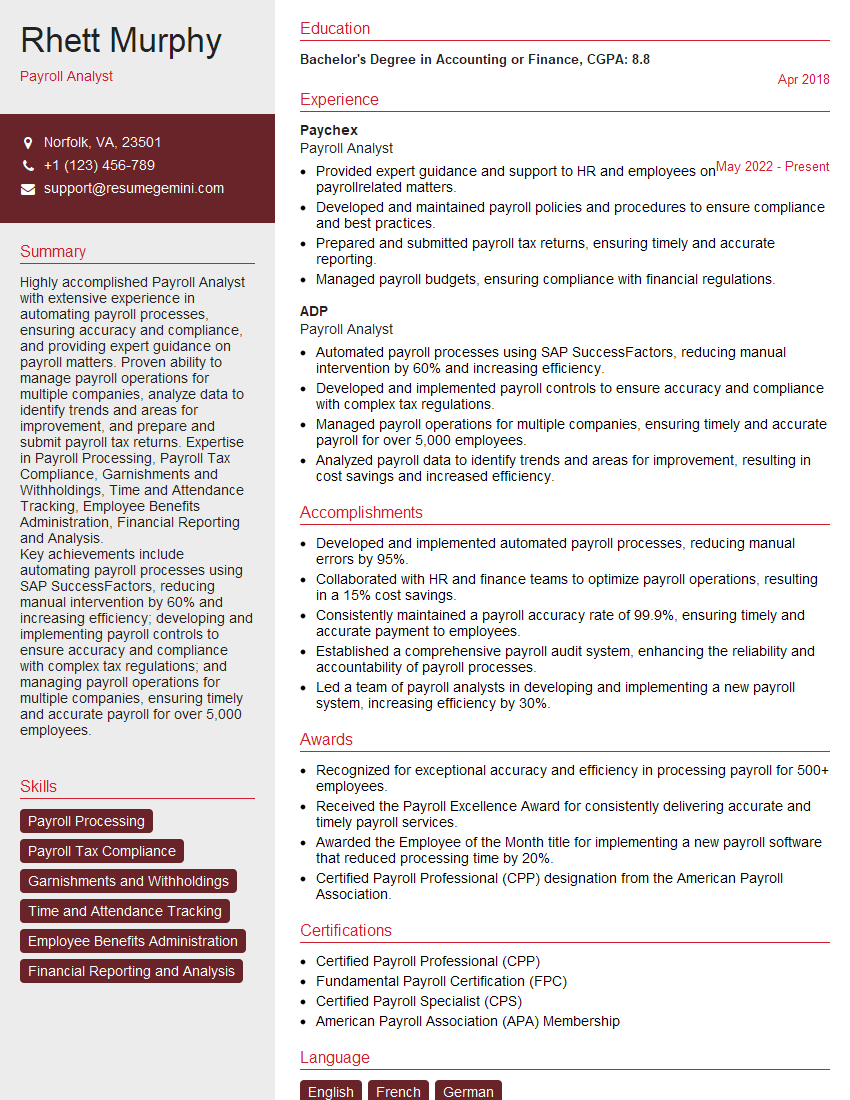
Payroll Analyst Resume Sample
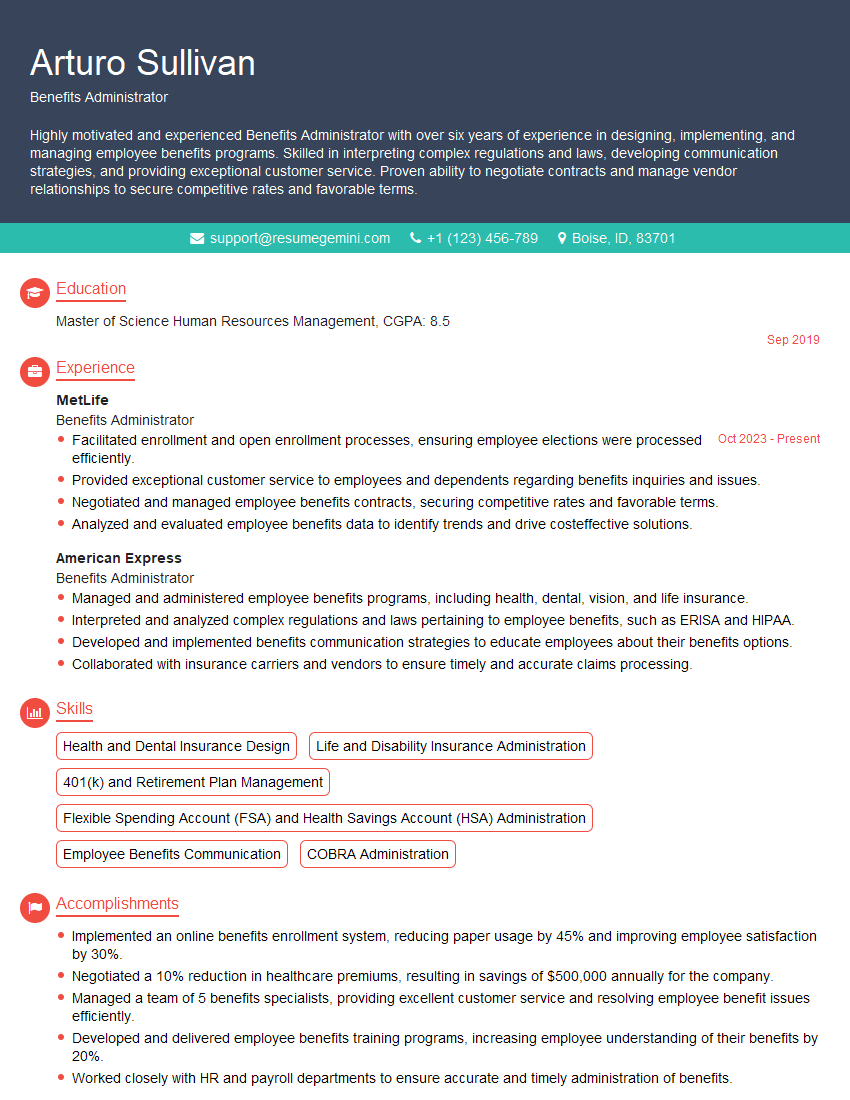
Benefits Administrator Resume Sample
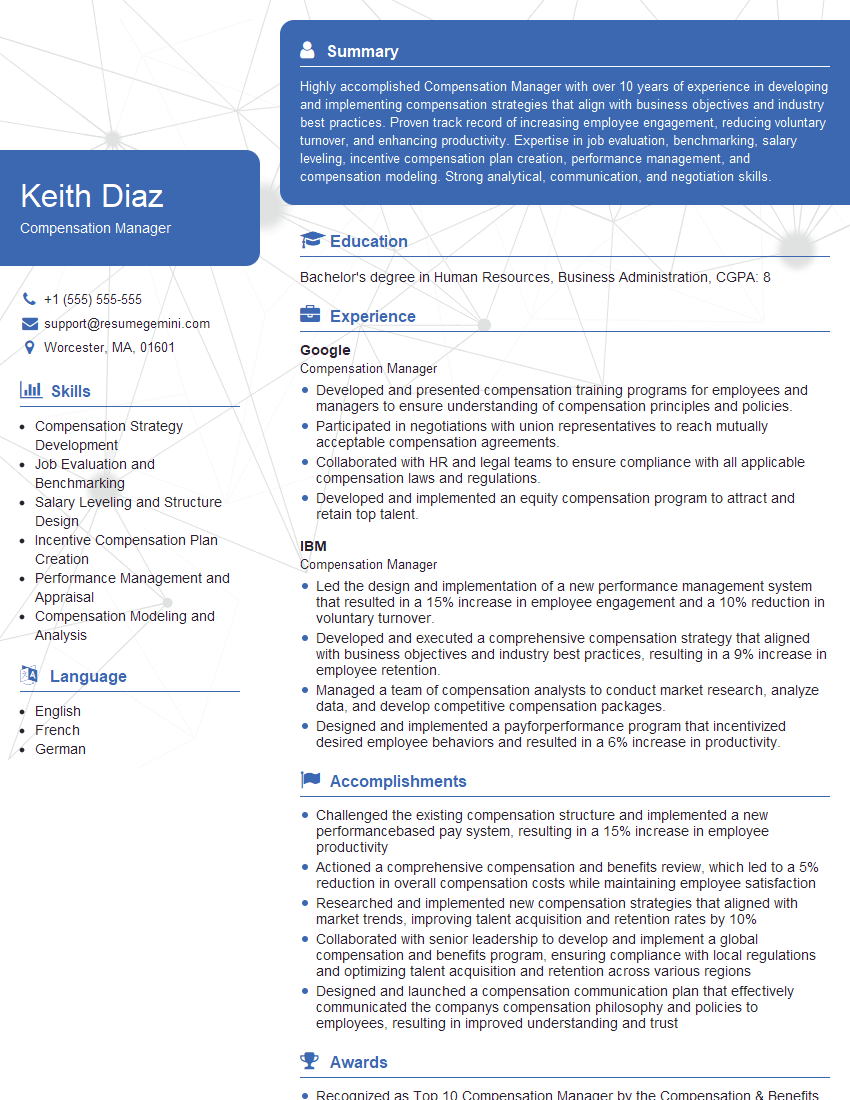
Compensation Manager Resume Sample
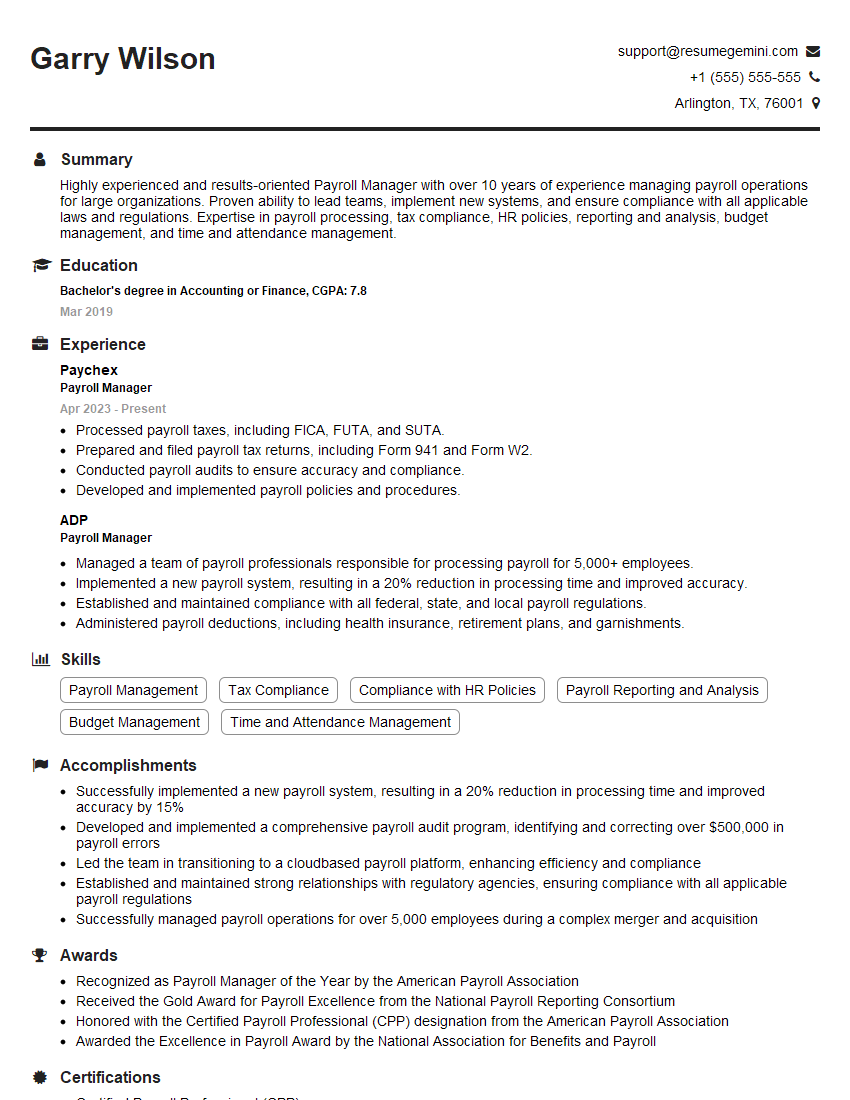
Payroll Manager Resume Sample
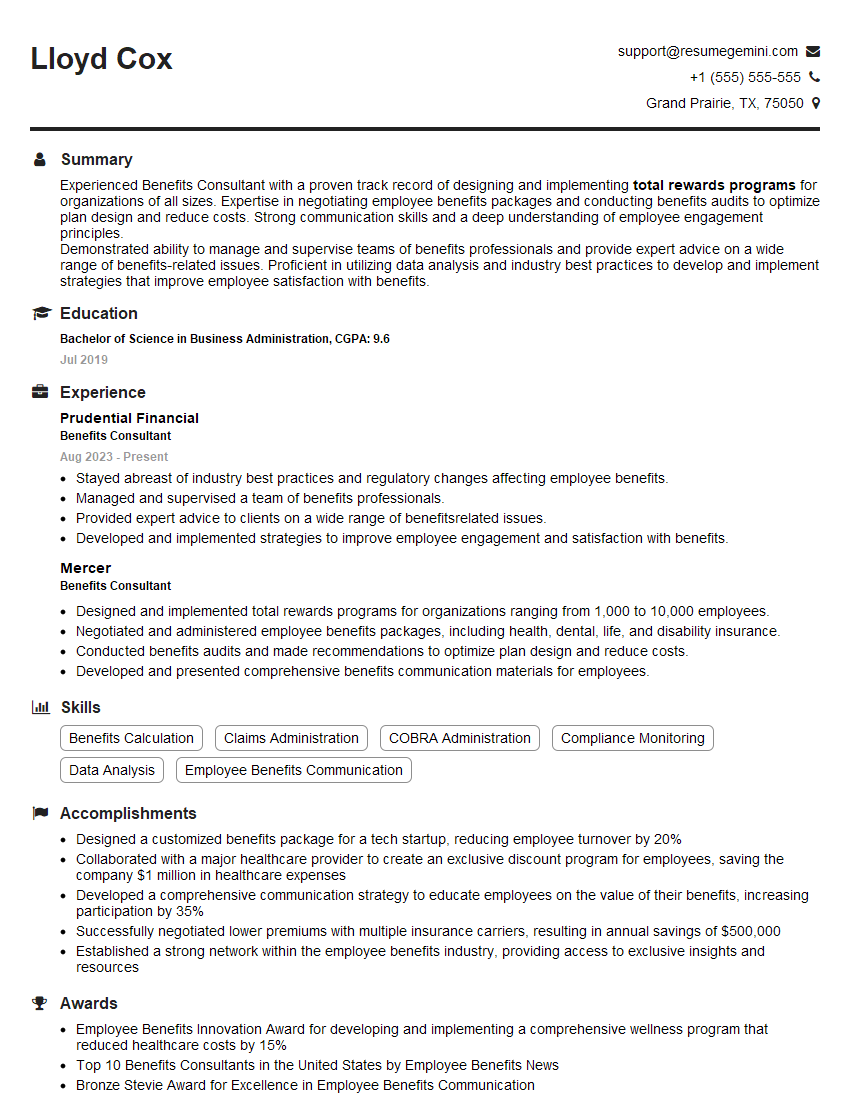
Benefits Consultant Resume Sample
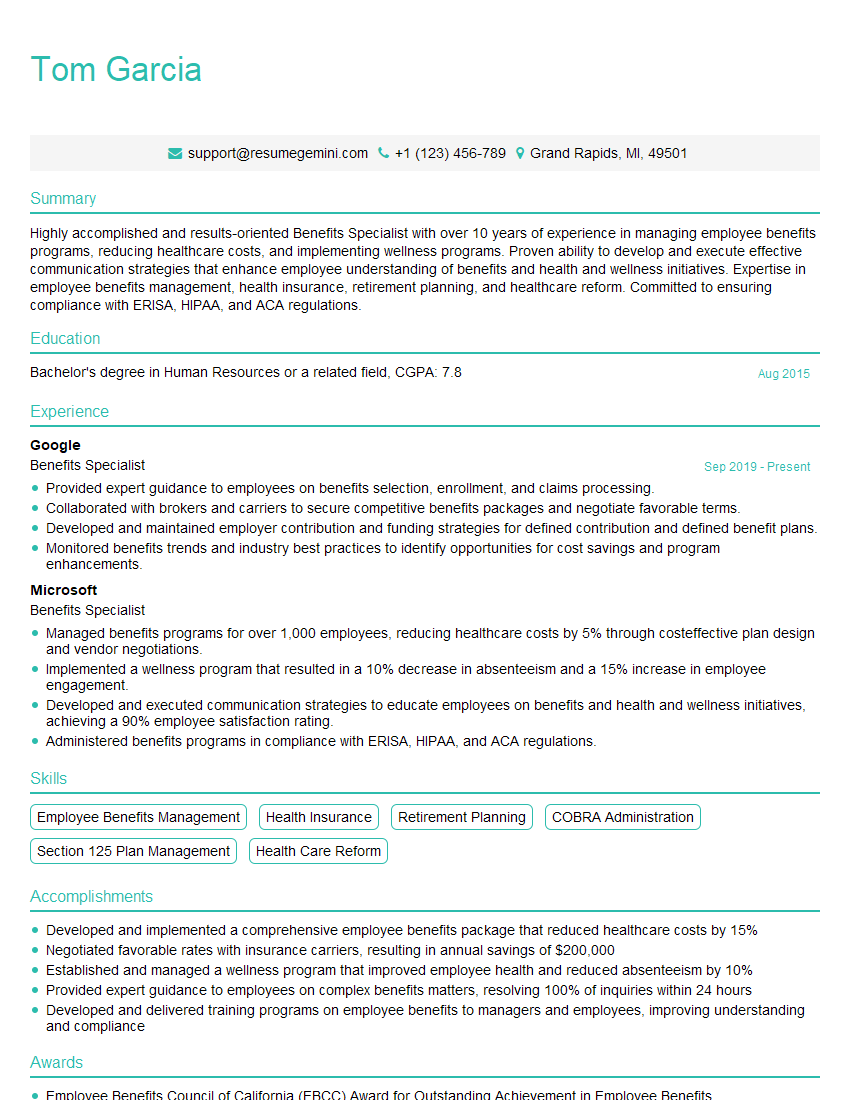
Benefits Specialist Resume Sample
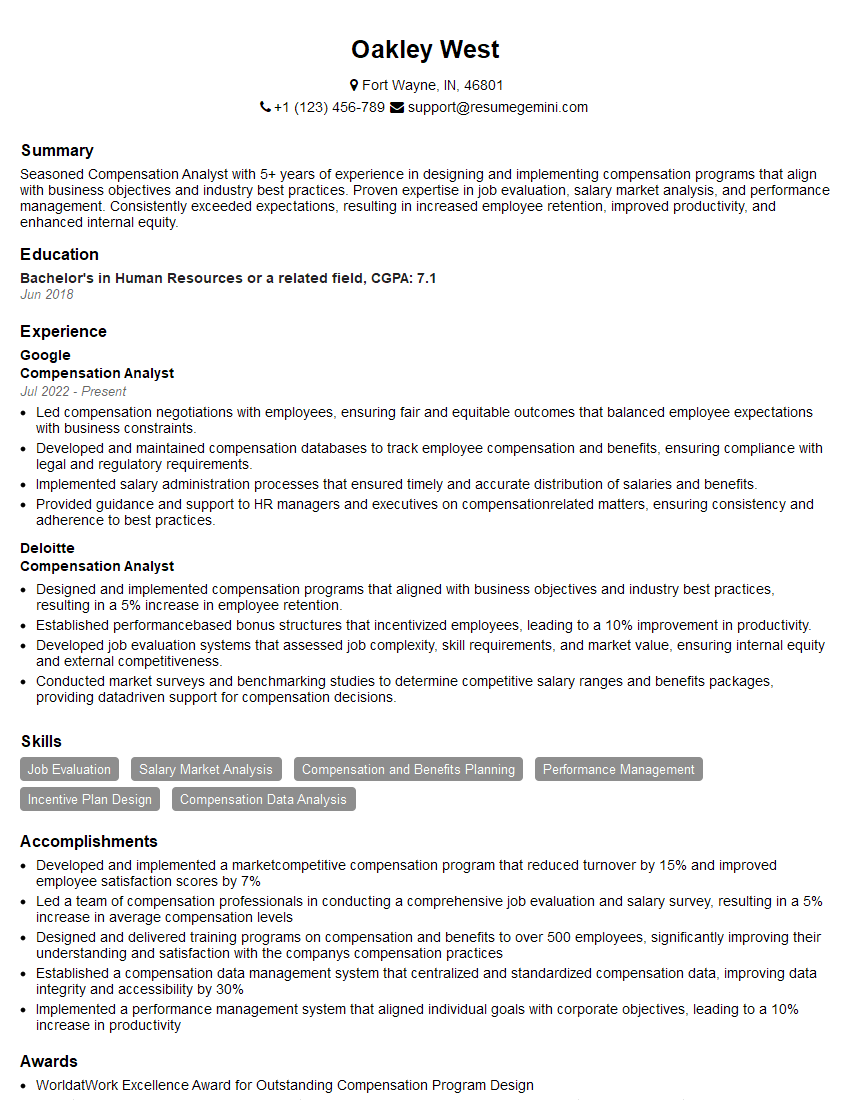
Compensation Analyst Resume Sample
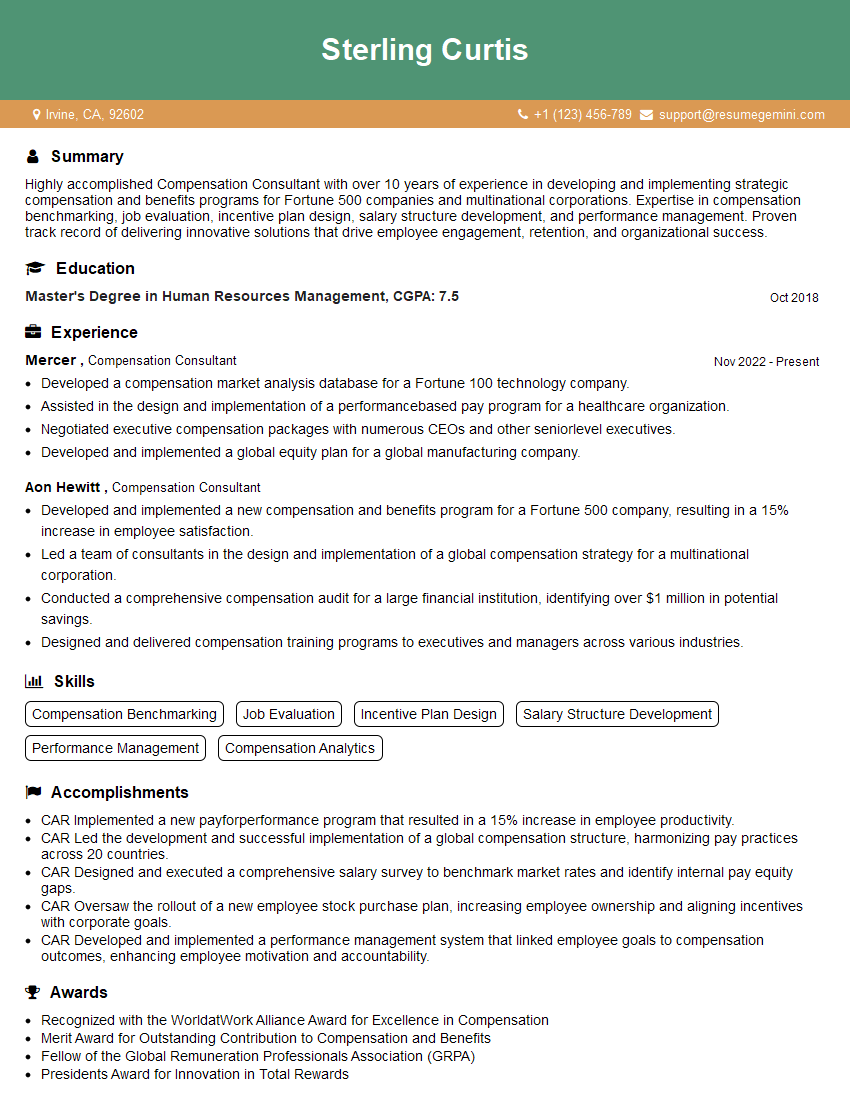
Compensation Consultant Resume Sample
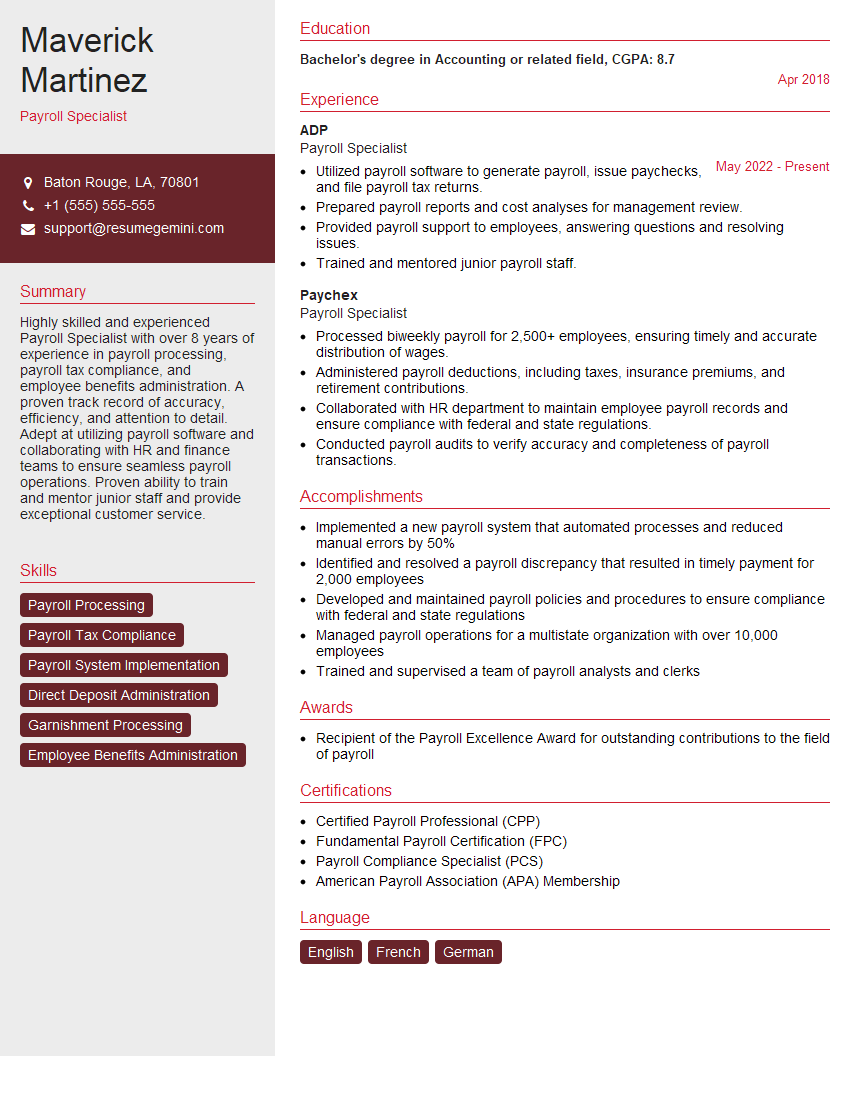
Payroll Specialist Resume Sample
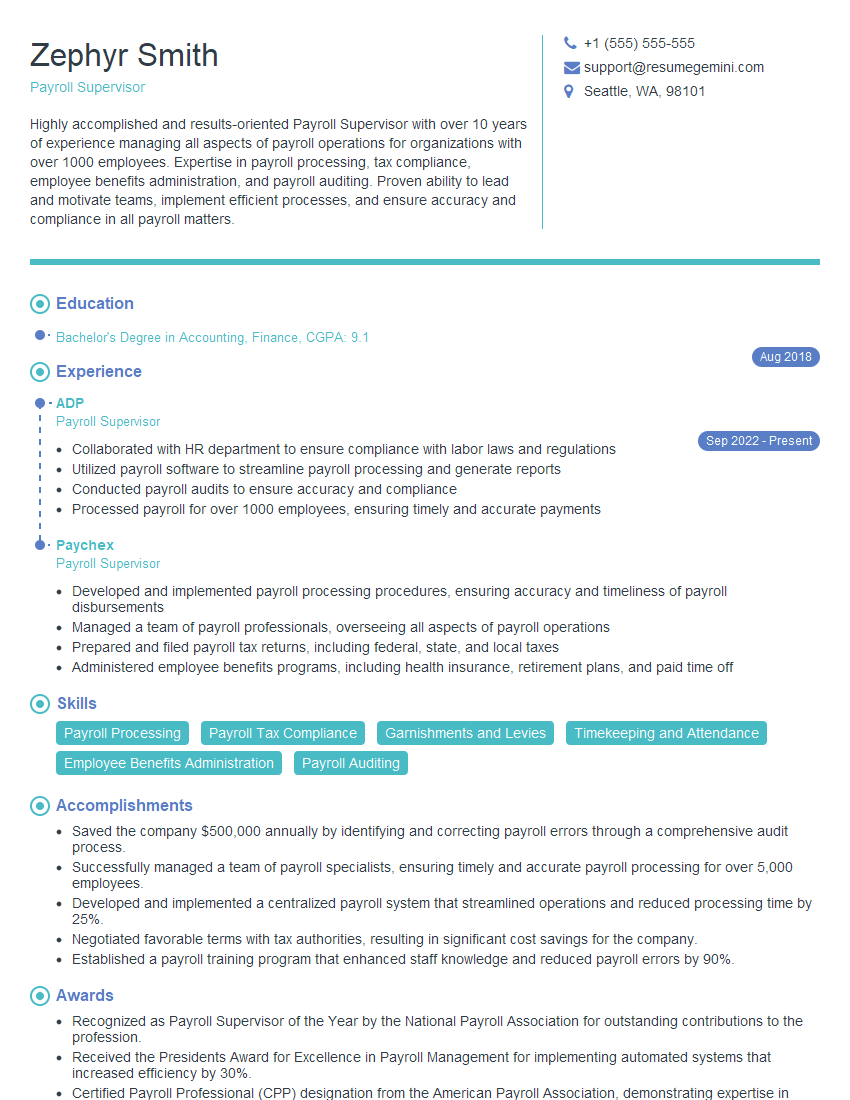
Payroll Supervisor Resume Sample
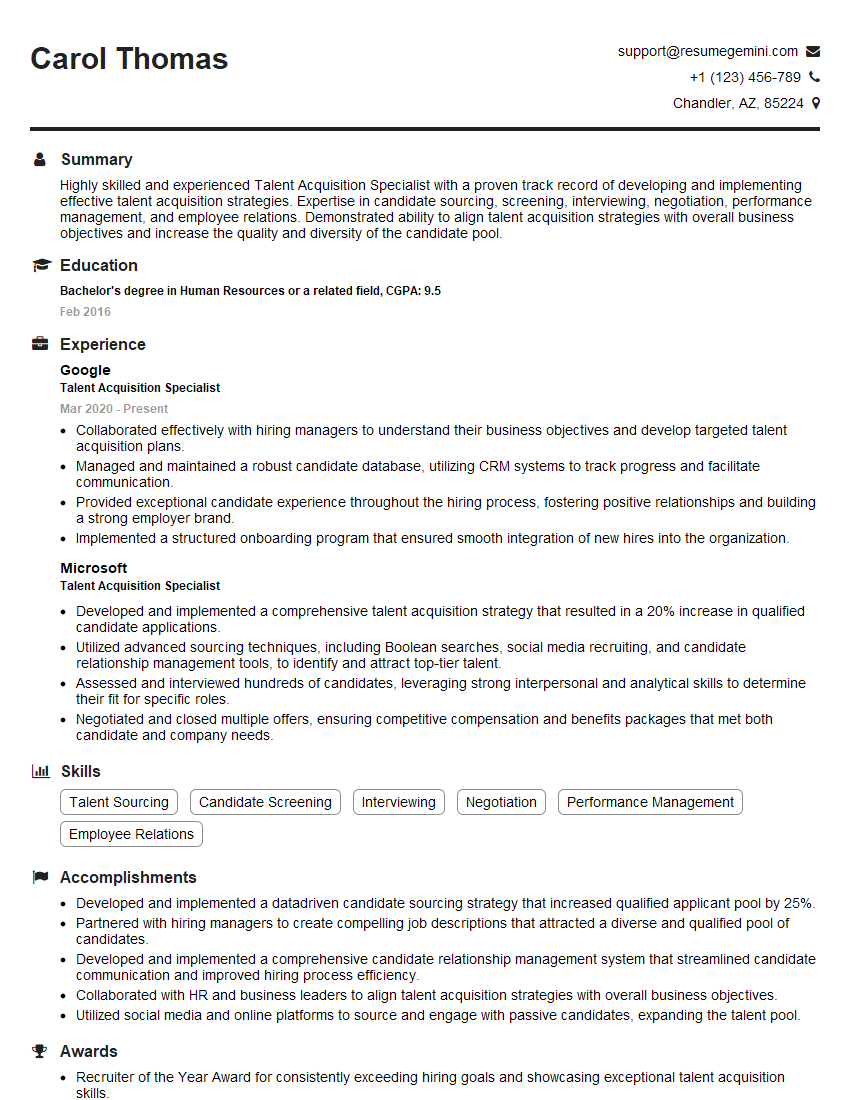
Talent Acquisition Specialist Resume Sample
Explore more articles
Users Rating of Our Blogs
Share Your Experience
We value your feedback! Please rate our content and share your thoughts (optional).
What Readers Say About Our Blog
Very informative content, great job.
good