Interviews are more than just a Q&A session—they’re a chance to prove your worth. This blog dives into essential Satellite Imagery Analysis interview questions and expert tips to help you align your answers with what hiring managers are looking for. Start preparing to shine!
Questions Asked in Satellite Imagery Analysis Interview
Q 1. Explain the difference between panchromatic and multispectral imagery.
The core difference between panchromatic and multispectral imagery lies in how they capture light. Think of it like this: panchromatic imagery is like a black and white photograph, capturing all visible light wavelengths simultaneously into a single grayscale image. Multispectral imagery, on the other hand, is like taking several photographs at once, each through a different color filter, representing specific wavelength ranges.
Panchromatic: Captures a wide range of visible light (typically 450-900nm) as a single band. This results in high spatial resolution, meaning fine details are easily discernible. It’s excellent for applications needing sharp details, like mapping roads or identifying individual buildings.
Multispectral: Records reflected light in several distinct wavelength bands (e.g., red, green, blue, near-infrared). Each band provides information about different surface features. For example, near-infrared is highly sensitive to vegetation health, making it crucial for agricultural monitoring and deforestation detection. The combination of multiple bands allows for detailed analysis of surface composition.
In short, panchromatic offers superior spatial detail, while multispectral excels in revealing spectral information about the Earth’s surface, enabling the identification of material types.
Q 2. Describe various atmospheric correction techniques used in satellite imagery processing.
Atmospheric correction is crucial because the atmosphere scatters and absorbs light, distorting the true spectral signature of the Earth’s surface. Several techniques address this. Think of it like removing a haze from a photograph to reveal the true colors.
- Dark Object Subtraction (DOS): A simple method that assumes the darkest pixel in an image represents atmospheric scattering. It subtracts this value from all other pixels. It’s quick but less accurate.
- Empirical Line Methods: These methods use established relationships between atmospheric properties and pixel values. They often rely on reference points with known reflectance values to estimate and correct atmospheric effects.
- Model-Based Methods (e.g., 6S, ATCOR): These sophisticated techniques use radiative transfer models to simulate light’s interaction with the atmosphere. They require more input data (e.g., atmospheric conditions, sensor characteristics) but provide highly accurate results. They are computationaly intensive.
The choice of method depends on the desired accuracy, the available data, and computational resources. For high-accuracy applications, model-based methods are preferred, while DOS might suffice for preliminary analysis or quick assessments.
Q 3. How do you handle cloud cover in satellite image analysis?
Cloud cover is a major challenge in satellite imagery analysis, effectively masking the ground features we’re interested in. Several strategies are used to mitigate this:
- Cloud Masking: This involves identifying and removing cloud-covered areas from the image. Algorithms use thresholding on spectral bands sensitive to clouds (e.g., near-infrared) or other sophisticated techniques like machine learning models trained on cloud and non-cloud samples. Masked areas might be filled in with data from other images or left as gaps, depending on the application.
- Image Fusion: Combining cloud-free images acquired at different times can create a complete dataset. This requires careful consideration of changes in the area between acquisition dates.
- Cloud Removal Techniques: Advanced methods attempt to actually ‘fill in’ the clouded regions, using information from surrounding areas. These methods often incorporate image interpolation or sophisticated restoration techniques. But they can introduce artifacts and should be employed cautiously.
The best approach often involves a combination of these techniques, depending on the scale and complexity of the project. For instance, cloud masking is a common first step, often followed by filling in the gaps with other imagery or interpolation.
Q 4. What are the common file formats used for satellite imagery?
Several file formats are commonly used for satellite imagery, each with its own strengths and weaknesses:
- GeoTIFF (.tif, .tiff): A very popular format that stores georeferenced imagery (meaning it has geographic coordinates embedded), supporting various compression methods and metadata.
- HDF (.hdf, .he5): Hierarchical Data Format, often used by NASA missions, capable of storing vast datasets and metadata efficiently. It’s especially suitable for multi-band imagery.
- ENVI (.dat, .hdr): Specific to the ENVI software package, widely used in the remote sensing community. It’s versatile and widely compatible with various processing software.
- JPEG 2000 (.jp2): A wavelet-based compression scheme offering good compression ratios with less information loss compared to JPEG. Useful for archiving and data transfer.
The selection often depends on the software and the specific needs of the project. GeoTIFF is highly versatile and widely accepted, while HDF is beneficial for massive datasets.
Q 5. Explain the concept of spatial resolution and its importance.
Spatial resolution refers to the size of the smallest discernible detail in a satellite image. Think of it as the ‘pixel size’ on the ground. A higher spatial resolution means smaller pixels and more detail. It’s measured in meters (or feet) per pixel.
Importance: Spatial resolution is crucial because it dictates the level of detail that can be extracted from the image. A high-resolution image (e.g., 0.5m) allows for the identification of individual trees, cars, or small buildings. A lower-resolution image (e.g., 30m) might only show aggregated features like forests or large structures. The selection depends entirely on the application: monitoring individual infrastructure requires high resolution, while broad-scale land cover mapping might benefit from lower resolution for efficient processing.
For example, monitoring deforestation at a fine scale would necessitate high spatial resolution data, whereas mapping large-scale urban areas could utilize moderate spatial resolution.
Q 6. What are different types of satellite sensors and their applications?
Satellite sensors are the instruments aboard satellites that collect data. They differ in their spectral and spatial characteristics, leading to diverse applications:
- Optical Sensors (e.g., Landsat, Sentinel): These capture reflected sunlight in various spectral bands. They provide high spatial resolution for land cover mapping, urban planning, precision agriculture, and environmental monitoring. They are not effective at night or under cloud cover.
- Thermal Infrared Sensors (e.g., Landsat Thermal Infrared Sensor (TIRS)): These detect heat emitted by the Earth’s surface. Applications include monitoring volcanic activity, wildfires, and urban heat islands.
- Microwave Sensors (e.g., RADARSAT, Sentinel-1): These use microwaves to penetrate clouds and darkness, providing data independent of weather conditions. They are valuable for mapping terrain, monitoring sea ice, and observing flooding.
- LiDAR Sensors: These use laser pulses to measure distances, generating highly accurate 3D models of the Earth’s surface, crucial for terrain mapping, forestry, and infrastructure assessment.
The selection of the appropriate sensor is driven by the specific objectives of the analysis. For instance, detecting changes in vegetation would use optical sensors, while monitoring sea ice would be best served by microwave sensors.
Q 7. Describe your experience with image classification techniques.
I have extensive experience with various image classification techniques, ranging from simple supervised methods to advanced deep learning approaches.
Supervised Classification: This involves training a classifier using labeled samples (e.g., pixels with known land cover types). Common algorithms include Maximum Likelihood Classification (MLC), Support Vector Machines (SVM), and Random Forest. I have used these extensively for tasks such as land cover mapping, urban feature extraction, and change detection. For example, I classified Landsat imagery to delineate different agricultural land uses in a specific region, using ground truth data for training.
Unsupervised Classification: This involves grouping pixels based on their spectral similarity without prior labels. K-means clustering is a widely used technique. This is useful for exploratory data analysis and identifying unknown features. I’ve employed this in situations with limited ground truth data, to identify potential areas of interest requiring further investigation.
Deep Learning (e.g., Convolutional Neural Networks – CNNs): These powerful methods leverage deep learning architectures to automatically learn features from the image data. They are particularly effective for high-dimensional data and complex classification tasks, surpassing traditional methods in accuracy. I’ve worked on CNNs for precise land cover mapping and object detection in very high-resolution imagery, significantly improving the accuracy of crop yield estimation in a farming project.
My experience extends to dealing with different classification challenges, such as handling class imbalance, optimizing classifier parameters, and validating results using accuracy assessment techniques.
Q 8. How do you perform image registration and georeferencing?
Image registration and georeferencing are crucial steps in satellite imagery analysis, ensuring that images are accurately positioned on the Earth’s surface. Georeferencing involves assigning geographic coordinates (latitude and longitude) to points within the image, effectively placing it within a known spatial reference system. Image registration, on the other hand, aligns multiple images acquired at different times or from different sensors.
Georeferencing typically involves identifying Ground Control Points (GCPs) – points with known geographic coordinates – on both the image and a reference map or dataset (e.g., a high-resolution basemap). Transformation functions, such as polynomial transformations (e.g., first-order or second-order), are then used to map the image pixels to their corresponding geographic coordinates. The accuracy of georeferencing depends on the number and quality of GCPs, as well as the chosen transformation model.
Image registration can use similar methods. If we’re aligning images from the same sensor acquired at different times, we might look for common features like roads, buildings, or natural landmarks in both images. Then, using software, we can automatically or manually identify corresponding points and apply a transformation to bring them into alignment. This could involve techniques like cross-correlation to find similar patterns.
For example, I once worked on a project requiring the precise alignment of multiple Landsat images to monitor deforestation in the Amazon. We used GCPs derived from high-resolution aerial photography and a robust polynomial transformation to achieve centimeter-level accuracy.
Q 9. Explain the concept of orthorectification.
Orthorectification is a process that removes geometric distortions from satellite imagery, creating an orthographic projection. This means that all points on the rectified image are in their correct geographic location and at a consistent scale. Think of it like straightening a slightly warped photograph to create a perfect representation. The distortions being corrected often include relief displacement (caused by terrain variations) and other systematic errors from the sensor’s viewing angle.
The process typically involves:
- Geometric correction: Removing geometric distortions through transformations.
- Elevation data integration: Incorporating a Digital Elevation Model (DEM) to account for terrain variations. This DEM shows the elevation of every point on the surface.
- Transformation application: Applying the transformation equations based on the GCPs and DEM to remove the geometric distortions.
The result is an orthorectified image where distances are accurate and parallel lines remain parallel, unlike in an uncorrected image where elevation changes can distort features near mountain ranges.
Orthorectification is essential for accurate measurements and spatial analysis. In a project mapping agricultural fields, orthorectification ensures accurate area calculations for crop yield estimations, avoiding errors induced by terrain slopes.
Q 10. What are some common image enhancement techniques?
Image enhancement techniques aim to improve the visual quality and information content of satellite imagery. They range from simple contrast adjustments to complex algorithms. Common techniques include:
- Contrast stretching: Expanding the range of pixel values to enhance the visibility of subtle features. Imagine increasing the brightness and contrast of a slightly dark photo to bring out details.
- Histogram equalization: Redistributing pixel values to make the histogram more uniform, thereby improving the overall contrast.
- Filtering (Spatial filtering): Smoothing or sharpening images to reduce noise or highlight edges. This could involve applying low-pass filters to smooth out noise or high-pass filters to highlight edges.
- Unsharp masking: Sharpening images by subtracting a blurred version of the image from the original. Think of it as the opposite of smoothing.
- Principal Component Analysis (PCA): Reducing data dimensionality by transforming multiple bands into a smaller set of uncorrelated components, which can highlight variations not easily visible in the original bands.
The choice of technique depends on the specific application and the nature of the image. For example, I used histogram equalization to improve the visibility of subtle changes in vegetation health in a time series of multispectral images.
Q 11. How do you assess the accuracy of satellite image data?
Assessing the accuracy of satellite image data is crucial for reliable analysis. The accuracy depends on several factors including the sensor’s spatial resolution, radiometric resolution, and the presence of atmospheric effects and geometric distortions. We assess accuracy through different approaches:
- Root Mean Square Error (RMSE): Measures the difference between the known coordinates of GCPs and their estimated coordinates after georeferencing. A lower RMSE indicates higher accuracy.
- Comparison with reference data: Comparing the satellite image data with higher accuracy data sources such as LiDAR data or high-resolution aerial photography. This allows for a qualitative and quantitative assessment of positional and thematic accuracy.
- Qualitative assessment: Visually inspecting the imagery for artifacts, noise, and inconsistencies. This helps identify potential issues that might not be captured by quantitative metrics.
- Accuracy assessment of classifications: For classified imagery, we use metrics like producer’s accuracy, user’s accuracy, and overall accuracy to evaluate the correctness of the classification.
In one project, we used RMSE to evaluate the accuracy of our georeferencing, and then compared our land cover classification to ground truth data collected through field surveys to assess thematic accuracy. We used a confusion matrix to get values like overall accuracy, producer’s accuracy, and user’s accuracy.
Q 12. Describe your experience with different GIS software (e.g., ArcGIS, QGIS).
I have extensive experience with both ArcGIS and QGIS, using them for various aspects of satellite image processing and analysis. ArcGIS offers a more comprehensive and commercially-supported environment with advanced tools for spatial analysis and data management. However, QGIS is an open-source alternative that is rapidly growing in popularity due to its versatility and extensive plugin support. I often use the strength of each platform for different tasks.
In ArcGIS, I frequently use the Spatial Analyst extension for tasks like image classification, terrain analysis, and surface modeling. In QGIS, I utilize its processing toolbox for batch processing and its extensibility via plugins to adapt the software to specific needs. For example, I used ArcGIS for advanced image classification algorithms on large datasets but utilized QGIS’s processing capabilities for generating visualizations and creating maps with various layers.
Q 13. Explain your experience with programming languages used in satellite imagery analysis (e.g., Python, R).
Python is my primary programming language for satellite imagery analysis. Its rich ecosystem of libraries, including GDAL, Rasterio, Scikit-learn, and OpenCV, provides powerful tools for image processing, analysis, and visualization. I’ve used Python to automate geoprocessing tasks, develop custom algorithms for image classification and feature extraction, and integrate satellite data with other datasets. For example, I developed a Python script to process a large time series of Landsat images, performing atmospheric correction, cloud masking, and vegetation index calculations.
I also have experience with R, particularly for statistical analysis and data visualization. The R packages such as ‘raster’ and ‘sp’ are very useful. However, Python’s versatility and broader ecosystem make it my preferred choice for more complex image processing tasks. For instance, in a project analyzing urban sprawl, I employed R for statistical analysis of extracted urban area data produced using my Python processing pipelines.
Q 14. How do you handle large satellite datasets?
Handling large satellite datasets requires efficient strategies to manage storage, processing, and analysis. I typically employ a combination of approaches:
- Cloud computing: Utilizing cloud platforms like Google Earth Engine, AWS, or Azure provides scalable storage and processing capabilities. These platforms offer parallel processing solutions and optimized algorithms for handling massive datasets efficiently. I use Google Earth Engine regularly for processing massive time series of satellite imagery.
- Data tiling and subsetting: Dividing large images into smaller tiles for easier handling and processing. This enables parallel processing on multiple cores or machines.
- Big data tools: Utilizing tools like Hadoop or Spark can be necessary when dealing with extremely large datasets that exceed the capacity of typical computing infrastructure. In this case, we’d often distribute the workload across a cluster of machines.
- Data compression: Applying efficient compression techniques to reduce storage needs and transmission times. This is crucial for saving bandwidth and reducing processing times.
For example, in a project involving the analysis of global deforestation patterns, I leveraged Google Earth Engine’s cloud-based infrastructure and parallel processing capabilities to handle terabytes of satellite imagery data efficiently.
Q 15. What are the limitations of satellite imagery?
Satellite imagery, while powerful, has inherent limitations. Think of it like taking a picture from a great height – you get a broad view, but details can be lost.
- Spatial Resolution: The pixel size determines the smallest discernible feature. Lower resolution means blurry images, making it difficult to identify small objects or fine details. For example, distinguishing individual trees in a forest requires high-resolution imagery.
- Spectral Resolution: This refers to the number and width of wavelength bands captured. Limited spectral resolution can restrict the ability to differentiate between materials with similar reflectance properties. For instance, distinguishing between different types of vegetation might be challenging with fewer bands.
- Temporal Resolution: This is the frequency of image acquisition. Long revisit times mean that changes occurring between acquisitions might be missed. Monitoring rapidly evolving events like floods or wildfires requires frequent imagery.
- Atmospheric Effects: Clouds, haze, and atmospheric scattering can obscure the ground surface, reducing image quality and accuracy. This is particularly problematic in humid or cloudy regions.
- Geometric Distortion: The Earth’s curvature and satellite viewing angles can introduce geometric distortions in the imagery. These distortions need to be corrected through georeferencing and orthorectification processes.
- Data Volume and Processing: Satellite images are large files, requiring significant storage and processing power. Analysis can be time-consuming and computationally expensive, especially for high-resolution imagery.
Career Expert Tips:
- Ace those interviews! Prepare effectively by reviewing the Top 50 Most Common Interview Questions on ResumeGemini.
- Navigate your job search with confidence! Explore a wide range of Career Tips on ResumeGemini. Learn about common challenges and recommendations to overcome them.
- Craft the perfect resume! Master the Art of Resume Writing with ResumeGemini’s guide. Showcase your unique qualifications and achievements effectively.
- Don’t miss out on holiday savings! Build your dream resume with ResumeGemini’s ATS optimized templates.
Q 16. Describe your experience with change detection analysis.
Change detection is a core part of my work. I’ve extensively used it for various applications, from monitoring deforestation to tracking urban sprawl. My process typically involves these steps:
- Image Preprocessing: This crucial step involves geometric correction, atmospheric correction, and radiometric normalization to ensure the images are comparable. I often utilize tools like ENVI or ArcGIS Pro for this.
- Image Differencing: Simple image differencing (subtracting pixel values of two images) can highlight areas of change. More sophisticated techniques like image registration and co-registration are employed to align the images accurately.
- Classification and Segmentation: Change detection can be integrated with classification algorithms (e.g., supervised or unsupervised) or segmentation techniques (e.g., object-based image analysis) to categorize changes into meaningful classes (e.g., deforestation, urbanization).
- Validation and Accuracy Assessment: The results are then validated using ground truth data or high-resolution imagery to assess the accuracy and reliability of the change detection map. A confusion matrix is a common tool for this assessment.
For example, in a recent project monitoring glacier retreat, I compared Landsat imagery from different years to map the extent of ice loss. The results were then used to model future glacier dynamics and understand the implications of climate change.
Q 17. Explain the concept of NDVI and its applications.
NDVI, or Normalized Difference Vegetation Index, is a simple yet powerful indicator of vegetation health and biomass. It’s calculated using the near-infrared (NIR) and red bands of satellite imagery. Think of it like a health check for plants, visible from space.
The formula is: NDVI = (NIR - Red) / (NIR + Red)
Values range from -1 to +1. High positive values (closer to +1) indicate dense, healthy vegetation, while low values (closer to 0 or negative) suggest sparse or stressed vegetation, bare soil, or water.
Applications:
- Agriculture: Monitoring crop health, assessing irrigation needs, and predicting crop yields.
- Forestry: Mapping forest cover, detecting deforestation, and assessing forest biomass.
- Environmental Monitoring: Assessing vegetation changes due to drought, fire, or climate change.
- Urban Planning: Mapping green spaces and assessing urban heat island effects.
Q 18. How do you interpret satellite imagery for various applications (e.g., urban planning, agriculture, environmental monitoring)?
Interpreting satellite imagery varies greatly depending on the application, but generally involves visual interpretation, quantitative analysis, and contextual information.
- Urban Planning: I look for patterns in land use and land cover, identifying areas of development, transportation infrastructure, and green spaces. High-resolution imagery is essential for this, allowing detailed analysis of building types, road networks, and population density.
- Agriculture: NDVI and other vegetation indices are key to assessing crop health, identifying areas of stress, and estimating yield. Spectral signatures can help differentiate between different crops or land uses.
- Environmental Monitoring: I use imagery to detect changes in land cover, monitor deforestation and reforestation, assess water quality, and map pollution events. Multi-temporal analysis is often crucial to track changes over time.
For example, in a recent urban planning project, I used high-resolution imagery to analyze traffic flow patterns and identify areas with congestion. In an environmental monitoring project, I used multi-spectral imagery to assess the extent of algal blooms in a lake.
Q 19. What are some common challenges faced in satellite imagery analysis?
Satellite imagery analysis faces many challenges:
- Data Acquisition Costs: High-resolution imagery, especially from commercial satellites, can be expensive.
- Cloud Cover: Clouds frequently obscure the ground surface, limiting the availability of usable imagery.
- Atmospheric Effects: Atmospheric conditions can affect the spectral signatures of objects, making interpretation more complex.
- Image Processing and Analysis Complexity: Sophisticated techniques and software are required to process and analyze the vast amounts of data.
- Data Interpretation Ambiguity: Spectral signatures can be ambiguous, requiring careful interpretation and validation with ground truth data.
- Data Security and Access: Access to high-resolution imagery might be restricted for security or proprietary reasons.
Q 20. Describe your experience with object-based image analysis (OBIA).
Object-based image analysis (OBIA) is a powerful technique that moves beyond pixel-based classification. Instead of classifying individual pixels, OBIA works with image objects – spatially contiguous groups of pixels with similar spectral and contextual characteristics. Think of it as classifying groups of pixels instead of individual dots.
My experience with OBIA includes using software like eCognition or ArcGIS Pro to segment images into meaningful objects, such as buildings, trees, or fields. I then extract features (shape, size, texture, spectral properties) from these objects and use them for classification and analysis. This approach allows for more accurate and detailed analysis, particularly in heterogeneous landscapes.
For instance, in a land cover mapping project, OBIA allowed me to classify different types of vegetation based not only on their spectral signatures but also on their shape and context, significantly improving classification accuracy compared to pixel-based methods.
Q 21. Explain your familiarity with different projection systems.
Projection systems are crucial for accurately representing the three-dimensional Earth on a two-dimensional map. Different projections distort the Earth’s surface in different ways, and choosing the right projection is critical for the accuracy of spatial analysis.
My familiarity includes understanding and applying various projections, including:
- Geographic Coordinate System (GCS): Uses latitude and longitude to locate points on the Earth’s surface.
- Projected Coordinate System (PCS): Transforms the spherical coordinates of the GCS onto a flat surface, introducing distortions. Examples include Universal Transverse Mercator (UTM), Albers Equal-Area, and Lambert Conformal Conic.
I regularly use tools like ArcGIS Pro and QGIS to transform imagery between different projection systems, ensuring that spatial analysis is conducted in a consistent and accurate coordinate framework. Understanding these systems is crucial for accurate measurements, analysis, and integration of data from different sources.
Q 22. How do you ensure the quality and reliability of your analysis results?
Ensuring the quality and reliability of satellite imagery analysis results is paramount. It’s a multi-faceted process that starts even before the analysis begins, focusing on data acquisition and pre-processing, and extends through the analysis and validation stages.
- Data Acquisition and Pre-processing: I meticulously select imagery based on factors like spatial resolution, spectral bands, cloud cover, and acquisition date. I carefully assess the metadata to understand the sensor characteristics and potential biases. Pre-processing steps like atmospheric correction (removing atmospheric effects like haze and scattering), geometric correction (aligning images to a known coordinate system), and radiometric calibration (standardizing the brightness values) are crucial for reliable analysis. For example, using Sentinel-2 imagery, I’d carefully evaluate the cloud cover percentage and employ advanced atmospheric correction techniques like Sen2cor.
- Analysis Methodology: I employ rigorous and validated methodologies. This might include supervised or unsupervised classification techniques (like Support Vector Machines or k-means clustering) depending on the project goals. I always validate my results using ground truth data, which could include field measurements, high-resolution imagery, or other reliable datasets. This allows me to assess the accuracy of my classification or analysis.
- Quality Control and Validation: I implement thorough quality checks at each stage. This includes visual inspection of the processed imagery, statistical analysis of the results (e.g., calculating accuracy metrics like overall accuracy and Kappa coefficient), and comparing the analysis with independent sources of information. For instance, if analyzing deforestation, I would compare my results with deforestation maps from trusted organizations.
- Uncertainty Quantification: Finally, I acknowledge and quantify uncertainties inherent in the analysis. This includes acknowledging limitations in the data and methodologies. Transparent reporting of uncertainties builds trust and demonstrates a comprehensive approach.
Q 23. What is your experience with LiDAR data and its integration with satellite imagery?
LiDAR (Light Detection and Ranging) data provides invaluable three-dimensional information about the Earth’s surface, which complements the spectral information derived from satellite imagery. My experience involves integrating both datasets for applications such as creating high-resolution digital elevation models (DEMs), identifying and mapping urban structures, and analyzing forest canopy characteristics.
For example, in a project analyzing forest health, I integrated LiDAR data to derive canopy height metrics, which were then correlated with spectral indices from satellite imagery (e.g., NDVI – Normalized Difference Vegetation Index) to assess forest density and identify areas of stress. This combined approach provided a more comprehensive and accurate assessment than using either data source alone. # Combining LiDAR and satellite data enhances analysis accuracy.
The integration process typically involves georeferencing and aligning both datasets to a common coordinate system. This may require techniques like co-registration and resampling to ensure accurate spatial alignment. Then, data fusion techniques can be applied to combine the data effectively, often using GIS software such as ArcGIS Pro or QGIS.
Q 24. Describe your experience with time-series analysis of satellite imagery.
Time-series analysis of satellite imagery is crucial for monitoring changes over time, such as deforestation, urban sprawl, or crop growth. My experience encompasses various techniques, including change detection algorithms, trend analysis, and time-series segmentation.
I’ve worked on projects analyzing the impact of climate change on glaciers by monitoring glacial retreat using Landsat time-series data. We used techniques like principal component analysis (PCA) to reduce dimensionality and highlight temporal changes, and then employed change detection algorithms to identify areas of glacial melt. This allowed for the quantification of glacial retreat over several decades.
Another example involves monitoring agricultural yields. We used MODIS time-series data to track vegetation indices throughout the growing season, allowing us to estimate crop yields and identify areas experiencing stress due to drought or pests. Here, time-series segmentation helped to isolate distinct phases of crop growth and assess the impact of environmental factors on yields.
Challenges in time-series analysis often involve dealing with inconsistent data acquisition, cloud cover, and atmospheric effects. Therefore, robust data pre-processing and imputation techniques are crucial for obtaining reliable results.
Q 25. How do you manage and organize your geospatial data?
Managing and organizing geospatial data efficiently is essential for effective analysis. I utilize a combination of strategies to ensure data integrity, accessibility, and scalability.
- Geodatabases: I leverage geodatabases (like File Geodatabases or Enterprise Geodatabases in ArcGIS) to store and manage vector and raster data in a structured manner. This allows for efficient querying and retrieval of data.
- Metadata: Comprehensive and standardized metadata are crucial. I document all relevant information about the datasets, including source, processing steps, and accuracy assessments, ensuring data traceability and reproducibility.
- Cloud Storage: Cloud-based storage solutions like AWS S3 or Google Cloud Storage provide scalable storage and accessibility for large datasets. This facilitates collaboration and data sharing among team members.
- Data Versioning: Using version control systems (like Git, particularly for code related to processing pipelines) enables tracking changes and reverting to previous versions if necessary, maintaining data integrity.
- Data Catalogs: A well-maintained data catalog provides a central repository for all geospatial data, enabling efficient discovery and management. This might be a simple spreadsheet or a dedicated data catalog software.
A structured approach to data management reduces errors, saves time, and ensures data quality throughout the project lifecycle.
Q 26. What are your preferred methods for visualizing satellite imagery data?
Effective visualization of satellite imagery is critical for communicating analysis results and identifying patterns. My preferred methods depend on the specific project and audience, but generally include:
- GIS Software: ArcGIS Pro and QGIS are my primary tools. They provide powerful capabilities for visualizing raster and vector data, creating thematic maps, and generating interactive visualizations.
- Remote Sensing Software: ENVI and ERDAS Imagine offer advanced tools for image processing and analysis, including false-color composites, spectral indices, and other visualizations tailored to remote sensing applications.
- Programming Languages: Python libraries like Matplotlib, Seaborn, and Plotly offer flexible and customizable visualization options, allowing for the creation of publication-quality figures and interactive dashboards.
# Example Python code for visualizing NDVI: import matplotlib.pyplot as plt; plt.imshow(ndvi_array); plt.show() - Web Mapping Platforms: Platforms like Google Earth Engine and ArcGIS Online provide capabilities for creating interactive web maps, allowing for sharing analysis results with a wider audience.
The choice of visualization method is driven by the need to clearly and effectively communicate insights to a specific audience, whether it is a scientific paper, a client presentation, or an interactive public dashboard.
Q 27. Describe a project where you had to overcome a significant challenge using satellite imagery.
In a project assessing the impact of a large-scale mining operation on surrounding vegetation, we faced significant challenges due to persistent cloud cover in the region of interest. Traditional methods for cloud removal were ineffective because of the high frequency and density of cloud cover.
Our solution involved a multi-step approach:
- Data Acquisition: We expanded our data sources, incorporating imagery from multiple satellites with varying acquisition times to increase the chances of obtaining cloud-free images.
- Cloud Masking and Interpolation: We employed sophisticated cloud masking techniques to identify and remove cloud-contaminated pixels. For remaining gaps, we used advanced interpolation methods, incorporating information from neighboring pixels and temporal data, to reconstruct the missing information. The choice of interpolation technique required careful consideration to minimize the introduction of artifacts.
- Temporal Smoothing: We applied time-series smoothing techniques to reduce noise and highlight underlying trends in vegetation indices, minimizing the impact of remaining data gaps.
By combining multiple data sources and sophisticated data processing techniques, we successfully overcame the cloud cover challenge and produced reliable results showing the impact of mining activity on vegetation health. This project underscored the importance of adaptive problem-solving and the use of multiple data sources and techniques in addressing challenges in satellite imagery analysis.
Key Topics to Learn for Satellite Imagery Analysis Interview
- Image Preprocessing: Understanding techniques like atmospheric correction, geometric correction, and radiometric calibration is crucial for accurate analysis. Practical applications include improving image quality for feature extraction and classification.
- Feature Extraction and Object Detection: Learn about various techniques like edge detection, thresholding, and machine learning algorithms (e.g., convolutional neural networks) used to identify and extract meaningful features from satellite imagery. This is vital for applications such as change detection and urban planning.
- Image Classification and Segmentation: Master supervised and unsupervised classification methods (e.g., Support Vector Machines, Random Forests) and segmentation techniques to categorize land cover types, identify objects, and analyze spatial patterns. Real-world applications include precision agriculture and environmental monitoring.
- Remote Sensing Fundamentals: A solid grasp of electromagnetic radiation, sensor types (optical, radar, hyperspectral), and spatial resolution is essential. This theoretical understanding underpins all practical applications.
- Data Handling and Analysis: Familiarity with GIS software (e.g., ArcGIS, QGIS) and programming languages like Python (with libraries such as GDAL, OpenCV) is vital for processing, analyzing, and visualizing large datasets.
- Change Detection and Time Series Analysis: Understanding how to analyze changes in satellite imagery over time is crucial for many applications. Techniques such as image differencing and time series analysis are key skills to highlight.
- Application-Specific Knowledge: Depending on the specific role, you should demonstrate knowledge of relevant applications like disaster response, deforestation monitoring, or infrastructure assessment.
Next Steps
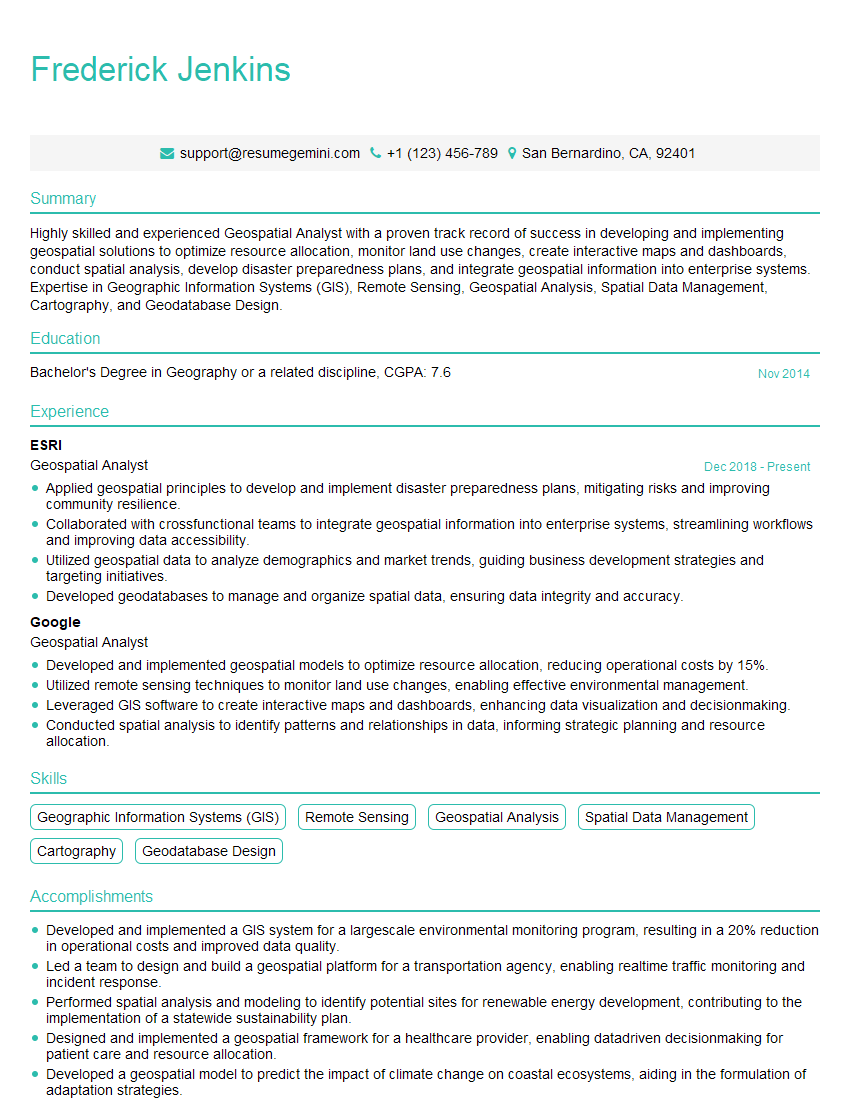
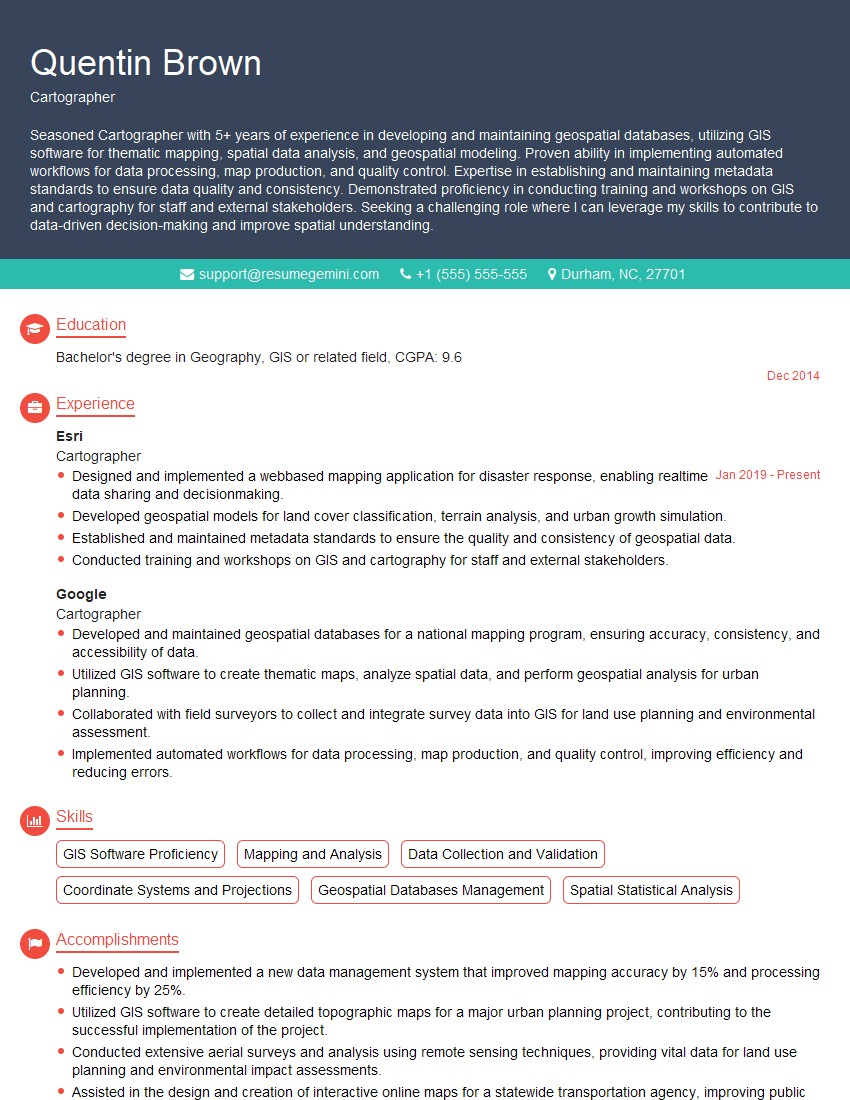
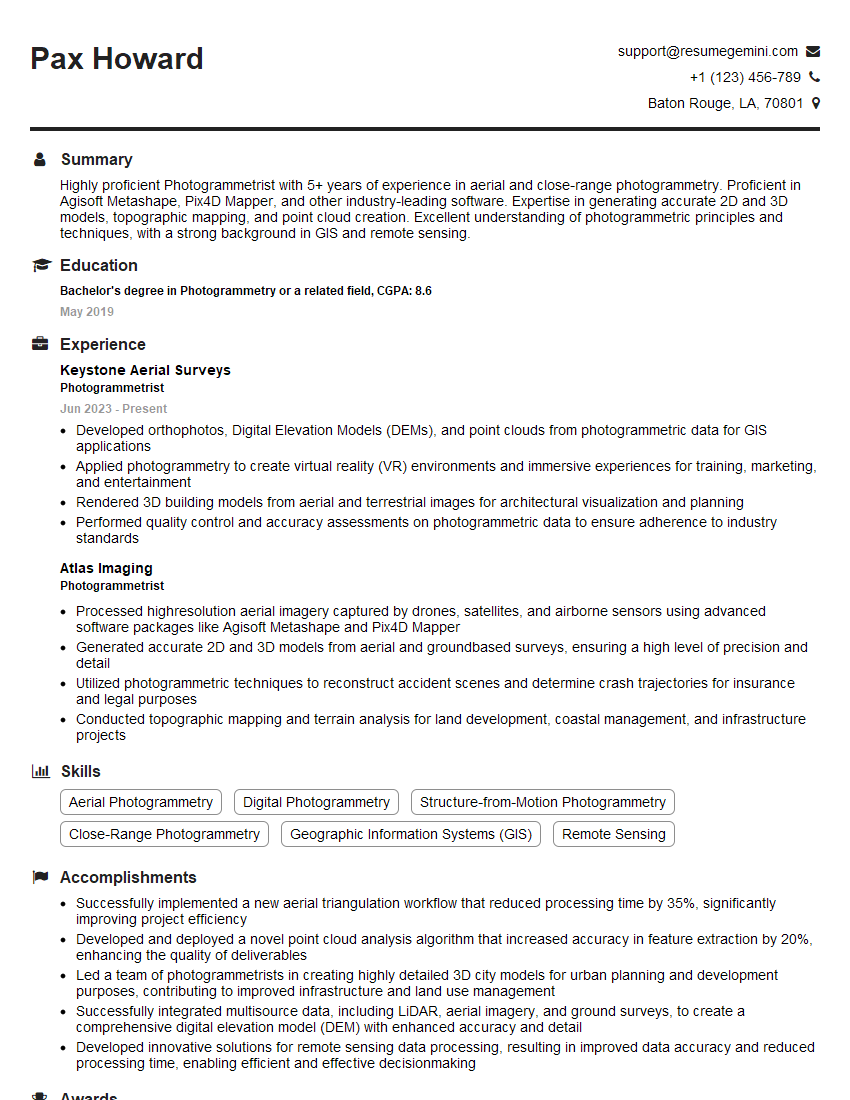
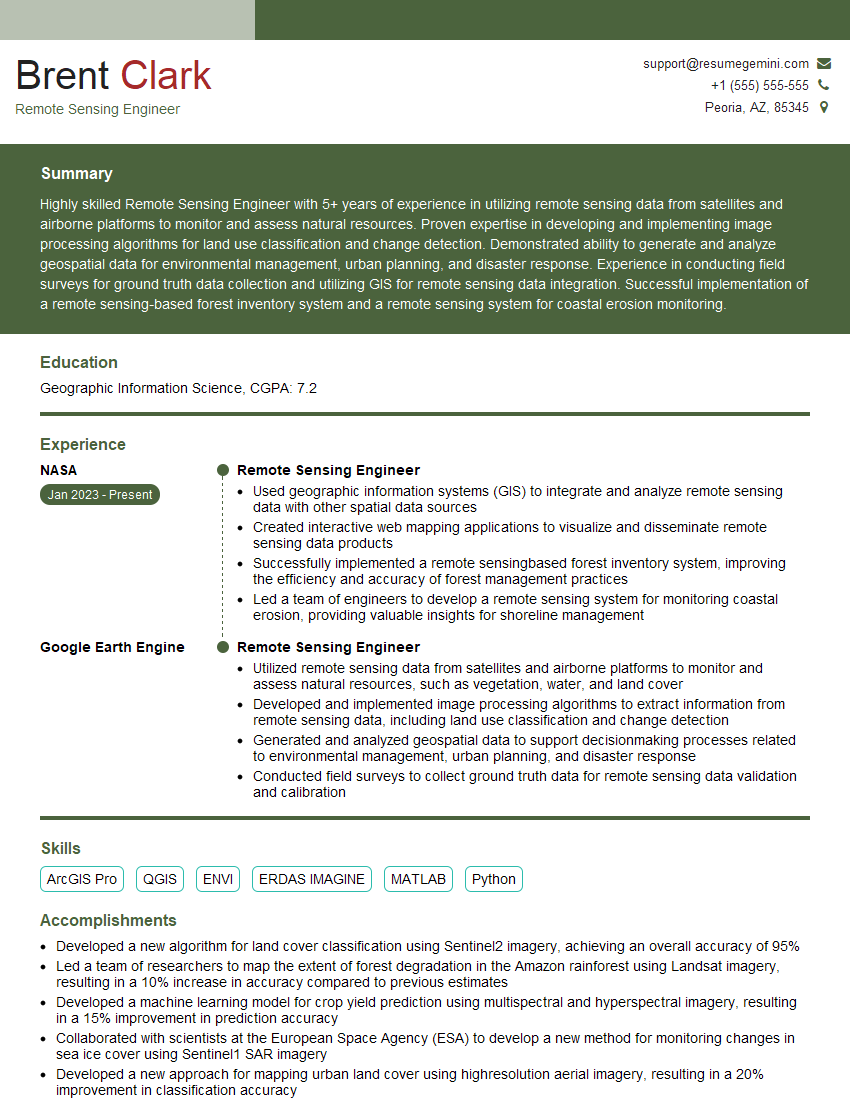
Mastering Satellite Imagery Analysis opens doors to exciting and impactful careers in various sectors. To maximize your job prospects, crafting a strong, ATS-friendly resume is paramount. ResumeGemini is a trusted resource to help you build a professional and compelling resume that highlights your skills and experience effectively. Examples of resumes tailored to Satellite Imagery Analysis are available, providing you with a valuable template to create a winning application.
Explore more articles
Users Rating of Our Blogs
Share Your Experience
We value your feedback! Please rate our content and share your thoughts (optional).
What Readers Say About Our Blog
Very informative content, great job.
good