Interviews are opportunities to demonstrate your expertise, and this guide is here to help you shine. Explore the essential Sawmill Layout interview questions that employers frequently ask, paired with strategies for crafting responses that set you apart from the competition.
Questions Asked in Sawmill Layout Interview
Q 1. Explain the key factors influencing optimal sawmill layout design.
Optimal sawmill layout design hinges on a complex interplay of factors aiming for maximum efficiency and profitability. Think of it like designing a perfectly choreographed dance – each step needs to flow seamlessly into the next.
- Log Volume and Species: The type and quantity of logs processed dictates the size and capacity of equipment needed. A mill processing high volumes of large diameter logs will require a different layout than one handling smaller, faster-moving logs. For example, a mill specializing in large Douglas Fir logs will need a robust log handling system and larger sawing equipment compared to one processing smaller Pine logs.
- Production Goals: The desired lumber output (volume and quality) directly influences the selection and arrangement of machinery. Higher production targets necessitate a more streamlined, automated layout, potentially incorporating multiple lines.
- Land Availability and Topography: The available space and the terrain significantly impact the layout’s configuration. A sloping site might require more extensive grading and specialized log handling solutions. Limited space necessitates a compact layout, prioritizing efficient material flow.
- Environmental Considerations: Modern sawmill layouts must incorporate waste management strategies for sawdust, bark, and other byproducts. Minimizing environmental impact through efficient waste handling and potentially incorporating biomass energy systems is crucial.
- Budget and Available Technology: Financial constraints and the level of technological sophistication (e.g., automated sorting, optimization software) influence the equipment choices and overall layout design.
Q 2. Describe different log handling systems and their impact on sawmill efficiency.
Log handling systems are the backbone of a sawmill, determining the efficiency of the entire process. Think of it as the circulatory system of the mill—efficient flow is crucial.
- Conventional Systems (Ground-Based): These use loaders, grapple trucks, and conveyors. They are cost-effective but may be slower and less efficient for high-volume mills. Imagine a team manually moving logs—it’s effective for smaller operations but cumbersome for large-scale production.
- Overhead Crane Systems: These use overhead cranes to move logs directly from the log yard to the debarker and sawmill. They’re faster and more efficient, especially for larger logs, and minimize ground-level congestion. This is like using a well-organized conveyor belt system to efficiently transport goods in a factory.
- Unloading Systems (Truck/Rail): Efficient unloading is crucial. Automated systems can dramatically reduce downtime. Think of a drive-through restaurant – fast and efficient service means faster turnaround and higher productivity.
- Log Decks and Storage: Proper log storage is essential for maintaining log quality and ensuring a continuous flow of materials to the processing line. A well-organized log deck is like a well-stocked warehouse, ensuring everything is readily accessible when needed.
The choice of system impacts efficiency by affecting log flow time, reducing labor costs, and minimizing damage to logs.
Q 3. How do you optimize lumber yield in a sawmill layout?
Optimizing lumber yield involves maximizing the usable lumber extracted from each log. It’s about getting the most out of your raw material. Imagine getting the most slices of bread from a loaf.
- Log Scanning and Optimization Software: Sophisticated software analyzes log characteristics (e.g., knots, defects) to determine the optimal sawing pattern to maximize yield. This is similar to a tailor creating a precise pattern to maximize fabric usage in garment making.
- Sawing Techniques: Choosing the right sawing technique (e.g., breakdown sawing, ripping, resawing) depends on log characteristics and desired lumber dimensions. This is like choosing the right knife to perfectly cut vegetables in cooking.
- Waste Reduction Strategies: Careful planning minimizes trim loss and maximizes the use of smaller pieces, potentially using them for other products (e.g., pallets, chips). Minimizing waste is like using every part of an animal in traditional cooking.
- Edger Optimization: Proper edger settings are crucial to removing unwanted wood while preserving lumber width and maximizing usable yield.
These strategies, implemented thoughtfully in the sawmill layout, minimize waste and maximize profitability.
Q 4. What are the safety considerations crucial to sawmill layout design?
Safety is paramount in sawmill layout design. It’s not just about meeting regulations; it’s about protecting lives.
- Machine Guarding: All machinery must have appropriate guards to prevent accidental contact with moving parts. Imagine a car with seatbelts and airbags – these safety features are essential to prevent accidents.
- Emergency Shut-off Systems: Easily accessible emergency stop buttons must be strategically placed throughout the mill. Think of this as a fire alarm—rapid access to emergency shut-off is vital for responding to dangerous situations.
- Clear Pathways and Signage: Wide, well-lit walkways, proper signage, and clear floor markings minimize the risk of accidents. Think of this as a well-lit and sign-posted highway – clear pathways allow for smooth and safe movement of people and materials.
- Personal Protective Equipment (PPE): The layout should facilitate the easy access and use of PPE (e.g., safety glasses, earplugs, steel-toed boots). A well-organized PPE station is like a well-equipped first aid kit – always ready to provide protection.
- Ergonomic Design: Workstations should be ergonomically designed to minimize strain and fatigue, reducing the risk of injuries. Think of a comfortable chair and desk setup for a prolonged computer session.
Integrating safety features from the initial design stage is far more effective and cost-efficient than retrofitting later.
Q 5. How does the type of wood processed impact sawmill layout decisions?
The type of wood significantly impacts sawmill layout decisions. Different woods have different properties that influence processing methods and equipment.
- Log Size and Density: Hardwoods, often larger in diameter and denser than softwoods, require stronger equipment and different cutting techniques. Think about cutting a steak versus cutting a piece of fish. Different tools are required.
- Defect Frequency: Some species have higher incidences of knots, shakes, or other defects. This impacts sawing techniques and the need for more advanced log scanning and optimization software. Imagine sorting through a pile of perfectly round marbles and another pile of irregularly shaped rocks.
- Drying Requirements: Certain woods require specific drying conditions, impacting the need for kiln capacity and layout. This is similar to storing food under different temperature and humidity settings.
- Sawdust and Waste Management: Different species produce varying amounts and types of waste, requiring appropriate handling and disposal systems.
A mill specializing in one type of wood can be optimized for its specific characteristics, resulting in increased efficiency and yield, but a mill processing multiple species needs a flexible layout and equipment capable of handling a wider range of log sizes and qualities.
Q 6. Explain the importance of material flow in sawmill layout.
Material flow is the lifeblood of a sawmill. A smooth, continuous flow of logs through the various processing stages is essential for maximum efficiency and minimal downtime. Think of it as a well-oiled machine; every component works in sync without interruption.
- Minimizing Transportation Distances: The layout should minimize the distances logs travel between different processing stages (e.g., debarking, sawing, drying, planing). Think of a car assembly line; each component is placed close to the next stage of assembly.
- Strategic Placement of Equipment: Machines should be arranged to allow for a smooth and continuous flow of materials. This prevents bottlenecks and improves throughput.
- Efficient Waste Removal Systems: Waste material should be efficiently removed from the processing area to prevent congestion and ensure safety. This is like having a garbage disposal in a kitchen—it keeps things clean and efficient.
- Storage Areas: Adequate storage space for logs, lumber, and byproducts should be integrated into the layout to ensure a smooth flow of materials.
Poor material flow leads to bottlenecks, increased labor costs, increased downtime, and reduced overall efficiency.
Q 7. Describe your experience with different sawing techniques and their applications in various sawmill layouts.
My experience encompasses a wide range of sawing techniques, each suited to different contexts and log characteristics. Choosing the right technique is crucial to optimize yield and quality.
- Breakdown Sawing: This is the initial phase, where the log is broken down into smaller cants or flitches. It’s like carving out a large block of material into smaller manageable pieces.
- Ripping: This involves cutting the cants or flitches into boards of specified widths. Think of cutting a large sheet of paper into smaller sheets of different sizes.
- Resawing: This is used to create thinner boards from thicker pieces. This is like taking a thick slice of cake and cutting it into thinner slices.
- Gang Sawing: This employs multiple saw blades to cut a log into several boards simultaneously, maximizing productivity, especially suitable for high-volume operations.
- Circular Sawing: Common and versatile, circular saws are adapted for different cutting applications. They’re like a multi-purpose kitchen knife, useful for many applications.
- Band Sawing: Ideal for producing high-quality lumber with minimal kerf loss (the thickness of the cut). It’s like a precision scalpel for creating high-quality products.
The selection of sawing techniques significantly influences the overall sawmill layout. For instance, gang sawing necessitates a larger, more specialized space compared to a mill employing primarily circular saws. The optimal choice depends on factors like log size, species, and desired product specifications.
Q 8. How do you incorporate waste reduction strategies into sawmill layout planning?
Waste reduction is paramount in sawmill layout planning, directly impacting profitability and environmental responsibility. It’s not just about minimizing wood waste; it’s about optimizing the entire process to maximize yield from each log.
My approach begins with a detailed analysis of log sizes and species. This data informs the selection of sawing patterns and equipment. For example, optimizing the breakdown of logs using different sawing techniques like gang sawing, band sawing, or circular sawing, depending on log diameter and desired lumber dimensions. We meticulously plan the flow of materials, minimizing the need for rehandling and reducing the chance of damage or loss. Implementing a robust scanning and optimization system at the infeed allows for dynamic log breakdown and maximizes lumber recovery. The placement of residue handling equipment is also crucial. Efficient systems for chipping, debarking and conveying residual material will minimize losses and contribute to a better bottom line.
- Example: In one project, by strategically placing a trimming saw closer to the primary breakdown saw, we reduced transportation time and minimized handling, resulting in a 5% reduction in wood waste.
- Example: Utilizing advanced software to optimize cutting patterns for various log diameters based on defect analysis resulted in a 3% increase in lumber yield.
Q 9. What are the common bottlenecks in sawmill operations and how can layout address them?
Sawmill bottlenecks often occur at key stages in the process, significantly impacting overall efficiency. Common bottlenecks include log handling, primary breakdown, secondary processing (e.g., trimming, planing), and lumber sorting and stacking. Effective layout planning directly addresses these issues.
A poorly designed layout might have inadequate space for log storage or inefficient material flow between machines. For example, if the log infeed is too slow for the primary breakdown saw, it creates a backlog and reduces throughput. Similarly, a lack of sufficient space for lumber stacking can cause delays in downstream operations.
To address these bottlenecks, I focus on:
- Strategic machine placement: Ensuring smooth and efficient material flow between stages, minimizing transport time and distance.
- Optimized storage areas: Providing sufficient space for raw materials and finished products to avoid congestion.
- Redundancy and buffer zones: Incorporating backup systems and storage areas to accommodate unexpected delays or breakdowns.
- Lean manufacturing principles: Implementing techniques like 5S and Kanban to improve efficiency and reduce waste.
Example: In a recent project, by redesigning the log yard and optimizing the log infeed system, we were able to increase the sawmill’s throughput by 15%.
Q 10. How do you assess the capacity and throughput of a sawmill based on its layout?
Assessing sawmill capacity and throughput based on layout involves analyzing several key factors. It’s not just about the individual machine capacities; it’s about the entire system’s ability to work in harmony.
My assessment process involves:
- Analyzing machine capacity: Determining the maximum output of each machine in the process, considering factors like speed, efficiency, and downtime.
- Evaluating material flow: Assessing the time it takes for logs to travel through each stage of the process. Bottlenecks here will limit the overall throughput.
- Calculating buffer capacity: Determining the amount of storage available at each stage to accommodate variations in production or unexpected delays.
- Simulating different scenarios: Using simulation software to model different operating conditions and predict throughput under various scenarios.
The results of this analysis provide a clear picture of the sawmill’s capacity and potential throughput. This data is crucial for determining production targets, optimizing resource allocation, and identifying areas for improvement.
Example: Using simulation software, we identified a bottleneck in the drying process that limited overall capacity. By adding an extra kiln and modifying the lumber flow, we increased the sawmill’s annual production by 20%.
Q 11. Discuss the role of automation in modern sawmill layouts.
Automation plays a transformative role in modern sawmill layouts, increasing efficiency, productivity, and safety. The level of automation can vary from individual automated machines to fully integrated, robotic systems.
Common automation applications include:
- Automated log handling: Robotic systems for log sorting, debarking, and positioning.
- Automated sawing systems: Optimizing sawing patterns and reducing manual labor.
- Automated lumber sorting and stacking: Improving efficiency and reducing manual handling.
- Automated quality control systems: Using sensors and imaging technology to detect defects and improve lumber quality.
These systems not only improve speed and accuracy but also enhance safety by reducing the need for workers in hazardous areas. When designing a sawmill with automation, careful consideration must be given to integration, maintenance, and training. The choice of automation level depends on factors such as production volume, budget, and available skilled labor.
Example: A sawmill I worked on implemented an automated log sorting system that reduced labor costs by 15% and improved sorting accuracy by 10%.
Q 12. Describe your experience with sawmill maintenance planning and its relation to layout.
Sawmill maintenance planning is intricately linked to layout design. A well-designed layout facilitates easier access to equipment for maintenance and reduces downtime. My approach to maintenance planning starts with considering accessibility and space requirements for maintenance activities during the initial design phase.
Key considerations include:
- Accessibility: Ensuring sufficient space around machines for maintenance personnel and equipment.
- Maintenance areas: Designating dedicated areas for maintenance tasks, including storage for spare parts and tools.
- Ergonomics: Designing workstations to minimize strain and improve efficiency.
- Preventive maintenance schedules: Integrating preventative maintenance schedules into the production plan, minimizing unexpected downtime.
Integrating preventative maintenance considerations into the layout can significantly reduce repair time and extend the lifespan of equipment. This careful planning reduces overall maintenance costs and ensures a more productive and safer sawmill operation.
Example: In one project, by incorporating a dedicated maintenance bay and creating better access points to equipment, we reduced downtime due to maintenance by 20%.
Q 13. How do you incorporate environmental considerations into sawmill layout design?
Environmental considerations are crucial in modern sawmill layout design. Sustainable practices are not just a trend; they’re essential for responsible operation and can also improve the sawmill’s long-term viability.
My approach involves:
- Wastewater management: Incorporating efficient wastewater treatment systems to minimize environmental impact.
- Dust control: Implementing dust collection systems to reduce airborne particulate matter and improve air quality.
- Noise reduction: Using noise-reducing materials and techniques to minimize noise pollution.
- Energy efficiency: Selecting energy-efficient equipment and optimizing the layout to minimize energy consumption.
- Residue management: Planning for efficient use of sawmill residue (bark, sawdust, shavings) for energy generation (biomass boilers) or other valuable products.
By incorporating these considerations from the outset, we create a sawmill layout that is not only efficient but also environmentally responsible. These strategies can attract customers seeking sustainably produced lumber and contribute to a positive public image.
Example: One project included designing a system to collect sawdust for use in a nearby biomass power plant, reducing waste disposal costs and generating alternative energy.
Q 14. Explain your process for evaluating and selecting equipment for a sawmill layout.
Equipment selection for a sawmill layout is a critical decision, impacting efficiency, productivity, and long-term costs. My process involves a detailed evaluation that considers several factors.
The steps are:
- Needs assessment: Defining the specific production requirements, including log types, desired lumber dimensions, and production volume.
- Market research: Identifying available equipment from reputable manufacturers, considering their performance, reliability, and maintenance requirements.
- Cost-benefit analysis: Evaluating the initial cost, operating costs (energy consumption, maintenance), and return on investment for different equipment options.
- Site analysis: Considering the physical constraints of the site, including space availability, power supply, and environmental factors.
- Vendor evaluation: Assessing the reputation, support, and service capabilities of potential equipment vendors.
- Simulation and modeling: Using simulation software to model different equipment configurations and evaluate their performance under various operating conditions.
This thorough process ensures the selection of equipment that meets the specific needs of the sawmill and contributes to optimal performance and efficiency.
Example: In one project, we carefully evaluated different types of debarking equipment, considering their efficiency, capacity, and maintenance needs. This led to the selection of a debarker that significantly reduced operating costs while maintaining high production rates.
Q 15. How do you manage space constraints in sawmill layout design?
Managing space constraints in sawmill layout design is crucial for maximizing efficiency and minimizing waste. It’s like a complex jigsaw puzzle where every piece (equipment, storage, walkways) needs to fit perfectly. My approach involves a multi-step process:
- Detailed Site Analysis: I begin by thoroughly assessing the available land, considering its topography, existing infrastructure (power lines, access roads), and potential environmental limitations. This often involves site surveys and 3D modeling.
- Equipment Optimization: Selecting the right equipment size and type is paramount. We explore options to minimize footprint without compromising capacity. For example, opting for a smaller, but more efficient, debarker might save significant space compared to a larger, older model.
- Flow Optimization: Strategic placement of equipment is key to creating a smooth material flow. This involves minimizing unnecessary transport distances and reducing congestion points. We utilize Lean Manufacturing principles to identify and eliminate waste in the process.
- Modular Design: Designing a modular layout allows for future expansion. Sections can be added or rearranged as the mill’s needs evolve, preventing costly rebuilds.
- 3D Modeling and Simulation: I utilize 3D software to create a virtual representation of the sawmill, allowing for adjustments and optimization before construction begins. This allows for early identification and resolution of space conflicts.
For instance, in a recent project with limited space, we employed a compact log sorting system and optimized the arrangement of the edger and trimmer to minimize material movement, leading to a 15% increase in throughput.
Career Expert Tips:
- Ace those interviews! Prepare effectively by reviewing the Top 50 Most Common Interview Questions on ResumeGemini.
- Navigate your job search with confidence! Explore a wide range of Career Tips on ResumeGemini. Learn about common challenges and recommendations to overcome them.
- Craft the perfect resume! Master the Art of Resume Writing with ResumeGemini’s guide. Showcase your unique qualifications and achievements effectively.
- Don’t miss out on holiday savings! Build your dream resume with ResumeGemini’s ATS optimized templates.
Q 16. What software or tools do you use for sawmill layout design and simulation?
Several software tools are essential for effective sawmill layout design and simulation. My experience encompasses the use of:
- AutoCAD: Used for creating detailed 2D and 3D drawings of the sawmill layout, including building footprints, equipment placement, and utility systems.
- SketchUp: Offers a user-friendly interface for 3D modeling, allowing for quick visualization and iterative design changes.
- 3D Max: Provides advanced rendering capabilities for creating photorealistic visualizations to present the design to clients and stakeholders.
- Specialized Sawmill Simulation Software: These programs (like some proprietary offerings from equipment manufacturers) allow for simulating the movement of logs through the mill, predicting bottlenecks, and optimizing equipment performance. This software uses algorithms to model material flow based on the layout and equipment specifications, providing valuable data for decision-making.
Furthermore, I use spreadsheet software (like Excel) to manage data related to equipment specifications, material flow rates, and cost estimations.
Q 17. How do you ensure the scalability of a sawmill layout?
Ensuring scalability in a sawmill layout requires careful planning from the outset. It’s like building a house with an expandable floor plan – future growth should be anticipated and accommodated. Key strategies include:
- Modular Design: As mentioned earlier, a modular layout enables easy expansion. Equipment placement should allow for the seamless addition of new processing lines or storage areas.
- Redundancy Planning: Including backup systems and sufficient space for extra equipment provides flexibility to handle increased production or potential equipment failures. Imagine having a spare log handling system that can be swiftly brought online if needed.
- Land Acquisition: Securing additional land adjacent to the sawmill can provide room for future growth without significant relocation hurdles.
- Infrastructure Capacity: Designing the infrastructure (power, water, waste disposal) to handle significantly increased production capacity is vital. Oversizing initial infrastructure is often cost-effective in the long run.
- Flexible Equipment Selection: Choosing equipment capable of handling increased throughput without requiring major replacements fosters scalability.
For example, a client recently expanded their sawmill’s capacity by 40% with minimal disruption by utilizing the modular design we incorporated initially. The expansion simply involved adding a new module to the existing layout.
Q 18. Describe your experience with different types of sawmill equipment and their integration into the layout.
My experience encompasses a wide range of sawmill equipment, including:
- Log Decks and Infeed Systems: From simple ground-based decks to sophisticated, automated systems, I’ve worked with various log handling technologies to optimize log flow and reduce jams. The selection depends on log size, volume, and the overall sawmill design.
- Debarkers: I’m familiar with different debarker types (drum, ring, and hydraulic), their operational characteristics, and their space requirements. The choice depends on log species, diameter, and desired level of debarking efficiency.
- Sawmills (Headrigs): Experience includes band saws, circular saws, and gang saws, each with unique operational features and suitability for specific log types and dimensions. Understanding their cutting patterns and optimizing their integration into the overall flow is crucial.
- Secondary Processing Equipment: This includes edgers, trimmers, resaws, and planers, each playing a vital role in the conversion of logs into lumber. The layout requires careful coordination to maximize efficiency and minimize material handling.
- Dry Kilns and Sorting Systems: I also consider the efficient integration of drying and sorting facilities, which are essential for managing lumber quality and inventory.
Integrating this diverse equipment necessitates a deep understanding of their operational sequences, space requirements, and interdependencies. This knowledge helps me create layouts that maximize throughput and minimize downtime. It’s about creating a smooth, choreographed dance between each machine.
Q 19. How do you assess the ergonomic factors in sawmill layout design?
Ergonomic factors are crucial in sawmill layout design to ensure worker safety and productivity. A poorly designed layout can lead to injuries, fatigue, and reduced output. My approach emphasizes:
- Workstation Design: Designing workstations to minimize repetitive movements, awkward postures, and excessive force. This involves proper height adjustments, sufficient space for movement, and the strategic placement of controls and materials.
- Material Handling: Minimizing manual material handling through the use of conveyors, lifts, and other automated systems. Heavily reducing strenuous physical work is paramount.
- Lighting and Ventilation: Providing adequate lighting to reduce eye strain and ensuring proper ventilation to maintain a comfortable working environment. The entire process is far more efficient when workers are not working in a harsh or uncomfortable environment.
- Noise Reduction: Incorporating noise-reducing measures, such as sound barriers and mufflers, to protect worker hearing. Sawmills are naturally loud environments.
- Safety Zones: Establishing clear safety zones around machinery to prevent accidents.
For example, in one project, we implemented a system of automated log handling, reducing manual lifting by over 70%, significantly improving worker safety and morale. The result was a noticeable increase in production and a reduction in worker compensation claims.
Q 20. Describe a challenging sawmill layout project and how you overcame the obstacles.
A particularly challenging project involved designing a sawmill on a steep hillside with limited access. The primary obstacle was navigating the uneven terrain while maintaining efficient material flow and ensuring worker safety. Our solution involved a multi-pronged approach:
- Grading and Site Preparation: Extensive earthworks were required to create level platforms for the sawmill building and equipment. This required careful coordination with civil engineers and contractors.
- Innovative Material Handling: We incorporated a gravity-fed log handling system that utilized the slope to its advantage, minimizing the need for expensive and space-consuming lifts. This required meticulous calculations to ensure safe and controlled log movement.
- Staggered Equipment Placement: To accommodate the uneven terrain, we placed equipment strategically on different levels, connecting them with customized conveyor systems. This unconventional layout created an efficient, if unconventional, production flow.
- Safety Considerations: Implementing robust safety measures, including reinforced walkways, handrails, and emergency stop mechanisms, was paramount due to the site’s challenging terrain. Regular safety inspections and worker training were crucial.
Despite the initial challenges, the final layout proved highly efficient and safe. The project highlighted the importance of creativity and adaptability when faced with unusual site constraints.
Q 21. How do you ensure compliance with safety regulations in sawmill layout design?
Ensuring compliance with safety regulations is paramount in sawmill layout design. It is not merely a checklist; it’s an integral part of the design process. My approach involves:
- Thorough Regulatory Research: I begin by thoroughly researching all applicable OSHA (or equivalent international) regulations and standards related to sawmill operations. These regulations cover machine guarding, emergency exits, fire safety, and personal protective equipment.
- Safety Integration: Integrating safety features into every aspect of the design, from the placement of emergency shut-off switches to the design of walkways and guarding around machinery.
- Machine Guarding: Ensuring all machinery is equipped with appropriate guards to prevent worker injury. This goes beyond simply meeting minimum requirements, involving the selection of guards that are both effective and do not hinder operation.
- Emergency Procedures: Designing the layout to facilitate efficient emergency response, including clear escape routes, fire suppression systems, and readily accessible first-aid stations.
- Documentation and Compliance: Maintaining detailed documentation of the layout, including safety features and compliance with regulations. This documentation is essential for regulatory inspections and audits.
Working closely with safety professionals and regulatory bodies is essential throughout the process to ensure the design meets and exceeds all relevant safety standards. The goal is not just compliance, but the creation of a genuinely safe and productive work environment.
Q 22. What are the key performance indicators (KPIs) used to evaluate sawmill layout efficiency?
Evaluating sawmill layout efficiency relies on several key performance indicators (KPIs). These metrics help us understand where improvements can be made to optimize production, reduce waste, and increase profitability. Think of them as a dashboard for the sawmill’s health.
- Throughput: This measures the volume of lumber produced per unit of time (e.g., board feet per hour or cubic meters per day). A higher throughput indicates better efficiency.
- Yield: This represents the percentage of usable lumber extracted from the logs. Maximizing yield minimizes waste and improves profitability. For example, a 50% yield means half the log becomes usable lumber.
- Downtime: This measures the percentage of time the sawmill is not actively producing lumber due to maintenance, breakdowns, or other issues. Minimizing downtime is crucial.
- Labor Productivity: This KPI looks at the amount of lumber produced per worker-hour. Improvements here often involve optimizing workflow and reducing unnecessary movement.
- Waste Reduction: This focuses on the amount of wood waste generated during the sawing process, including sawdust, shavings, and offcuts. Reducing waste improves sustainability and reduces costs.
- Defect Rate: The percentage of lumber pieces with defects that render them unsuitable for sale. A lower defect rate reflects better quality control.
By tracking these KPIs, we can identify bottlenecks and areas for improvement within the sawmill layout and processes.
Q 23. Explain your experience with lean manufacturing principles in sawmill layout design.
Lean manufacturing principles are central to my sawmill layout design approach. The goal is to eliminate waste and maximize value. I’ve successfully applied several lean tools in various projects:
- Value Stream Mapping: I use this to visually map the entire lumber production process, identifying areas of waste (e.g., excessive transportation, unnecessary inventory, waiting time). This helps optimize the flow of materials and information.
- 5S Methodology (Sort, Set in Order, Shine, Standardize, Sustain): Implementing 5S in a sawmill creates a cleaner, safer, and more organized work environment, improving efficiency and reducing downtime. For example, organizing tools and materials reduces search time.
- Kaizen Events: I’ve led several Kaizen events, involving teams of sawmill workers to identify and solve specific process improvement opportunities. This fosters a culture of continuous improvement.
- Pull System (Kanban): Implementing a pull system ensures that materials are only processed when needed, minimizing inventory and reducing waste. This prevents overproduction and ensures smoother workflow.
In one project, applying value stream mapping led to a 15% reduction in processing time by identifying and eliminating unnecessary steps in the lumber grading process.
Q 24. How do you incorporate preventive maintenance into a sawmill layout plan?
Preventive maintenance is paramount in a sawmill layout. Unexpected breakdowns can halt production and lead to significant losses. My approach integrates preventive maintenance into the layout design from the outset:
- Accessible Equipment: Designing the layout to ensure easy access to all equipment for maintenance and repair. This reduces downtime during maintenance activities.
- Dedicated Maintenance Areas: Allocating specific areas for equipment repair and storage of spare parts. This keeps the production area uncluttered and allows for efficient maintenance.
- Scheduled Maintenance Integration: Planning maintenance schedules around production cycles to minimize disruption. This often involves shift scheduling and equipment rotation.
- Preventive Maintenance Plan: Developing a detailed preventive maintenance plan that includes regular inspections, lubrication, and part replacements. This plan should be easily accessible to all maintenance staff.
- Centralized Lubrication Systems: Implementing centralized lubrication systems reduces maintenance time and ensures that all moving parts are adequately lubricated.
For instance, I’ve designed layouts where maintenance access points are clearly marked, and equipment is positioned to minimize movement during maintenance, leading to a 20% reduction in unplanned downtime.
Q 25. How do you handle changes or upgrades in a sawmill layout?
Handling changes and upgrades requires a systematic approach. A poorly planned upgrade can disrupt production and lead to significant costs. My strategy focuses on minimizing downtime and maximizing the benefit of the upgrade.
- Impact Assessment: Thoroughly assessing the impact of any change or upgrade on existing equipment and workflows.
- Phased Implementation: Implementing upgrades in phases to minimize production disruption. This allows for testing and adjustment before a full-scale rollout.
- Training and Support: Providing adequate training to sawmill workers on new equipment and procedures.
- Documentation: Maintaining up-to-date documentation of the sawmill layout, equipment specifications, and maintenance procedures.
- Simulation and Modeling: Using simulation software to model the impact of changes before implementing them in the real world. This helps to anticipate and resolve potential issues.
For example, when upgrading a sawmill’s sawing system, I would simulate the new process to ensure smooth integration with existing processes and optimize the material flow before implementing the changes.
Q 26. Describe your experience with the different types of sawmills (e.g., band sawmills, circular sawmills).
My experience encompasses various sawmill types, each with unique design considerations.
- Band Sawmills: These are known for their high-precision cuts and ability to handle large logs. Layout considerations include sufficient space for log handling, blade tensioning, and waste removal. The layout needs to optimize the flow of logs through the mill to minimize handling.
- Circular Sawmills: These are typically faster and less expensive than band sawmills but may produce less precise cuts. Layout optimization focuses on efficient log handling, minimizing the distance logs travel between stages and providing ample space for sawdust removal. Safety is paramount due to the high speed of the circular blades.
- Gang Sawmills: These mills use multiple saw blades to cut multiple boards simultaneously, increasing production efficiency. The layout needs to carefully manage the movement of the carriage and ensure effective log feeding and board handling.
In one project, optimizing the log handling system in a band sawmill resulted in a 10% increase in throughput.
Q 27. How do you integrate energy efficiency considerations into sawmill layout design?
Energy efficiency is critical for the economic and environmental sustainability of a sawmill. I integrate energy efficiency considerations throughout the layout design process:
- Optimized Material Flow: Minimizing the distance materials travel reduces energy consumption. Careful placement of equipment can significantly reduce transportation needs.
- Efficient Equipment Selection: Choosing energy-efficient equipment, such as variable-speed drives for motors and high-efficiency saws, reduces energy consumption during operation.
- Heat Recovery Systems: Incorporating heat recovery systems to capture waste heat from the sawing process and reuse it for drying lumber or heating the mill, thus reducing overall energy use.
- Lighting and HVAC Optimization: Designing the layout to maximize natural light and using energy-efficient lighting and HVAC systems reduces energy consumption.
- Waste Biomass Utilization: Exploring options to utilize sawdust and other wood waste for energy generation (e.g., biomass boilers).
In a recent project, integrating a heat recovery system resulted in a 15% reduction in the mill’s overall energy consumption.
Q 28. What are the key differences between designing a small-scale and large-scale sawmill?
Designing small-scale and large-scale sawmills involves different priorities and challenges.
- Small-Scale Sawmills: These often prioritize flexibility and simplicity. The layout focuses on efficient use of space, minimizing capital investment, and ease of operation. Customization to specific local timber types is often a key consideration. They might be more labor-intensive.
- Large-Scale Sawmills: These prioritize high throughput and automation. The design emphasizes efficient material flow, automation of various processes, and sophisticated equipment. They require significant capital investment and specialized expertise for operation and maintenance. There’s a greater emphasis on quality control and consistency.
For example, a small-scale sawmill might focus on a simple linear layout, while a large-scale mill might incorporate complex automated systems, including log sorting, sawing, and grading systems. The key difference lies in the scale of operation and the degree of automation.
Key Topics to Learn for Sawmill Layout Interview
- Data Structures and Algorithms in Sawmill Layout: Understanding how data is organized and manipulated within the Sawmill Layout system is crucial. Focus on efficiency and scalability.
- Sawmill Layout Architecture: Familiarize yourself with the overall design and components of the Sawmill Layout system. Understanding the interplay between different modules is key.
- Optimization Techniques in Sawmill Layout: Explore methods to improve performance and resource utilization within the Sawmill Layout environment. This often involves identifying bottlenecks and applying appropriate solutions.
- Troubleshooting and Debugging in Sawmill Layout: Develop your skills in identifying and resolving issues within the Sawmill Layout system. Practice using debugging tools and techniques.
- Security Considerations in Sawmill Layout: Understand the security implications of working with Sawmill Layout and how to implement secure coding practices. This is crucial for data integrity and system protection.
- Practical Application: Case Studies: Research real-world examples of how Sawmill Layout is used in different industries or applications. This will help you connect theoretical knowledge to practical scenarios.
- Advanced Concepts (if applicable): Depending on the seniority of the role, you may need to delve into more advanced concepts such as performance tuning, distributed systems, or specific Sawmill Layout modules.
Next Steps
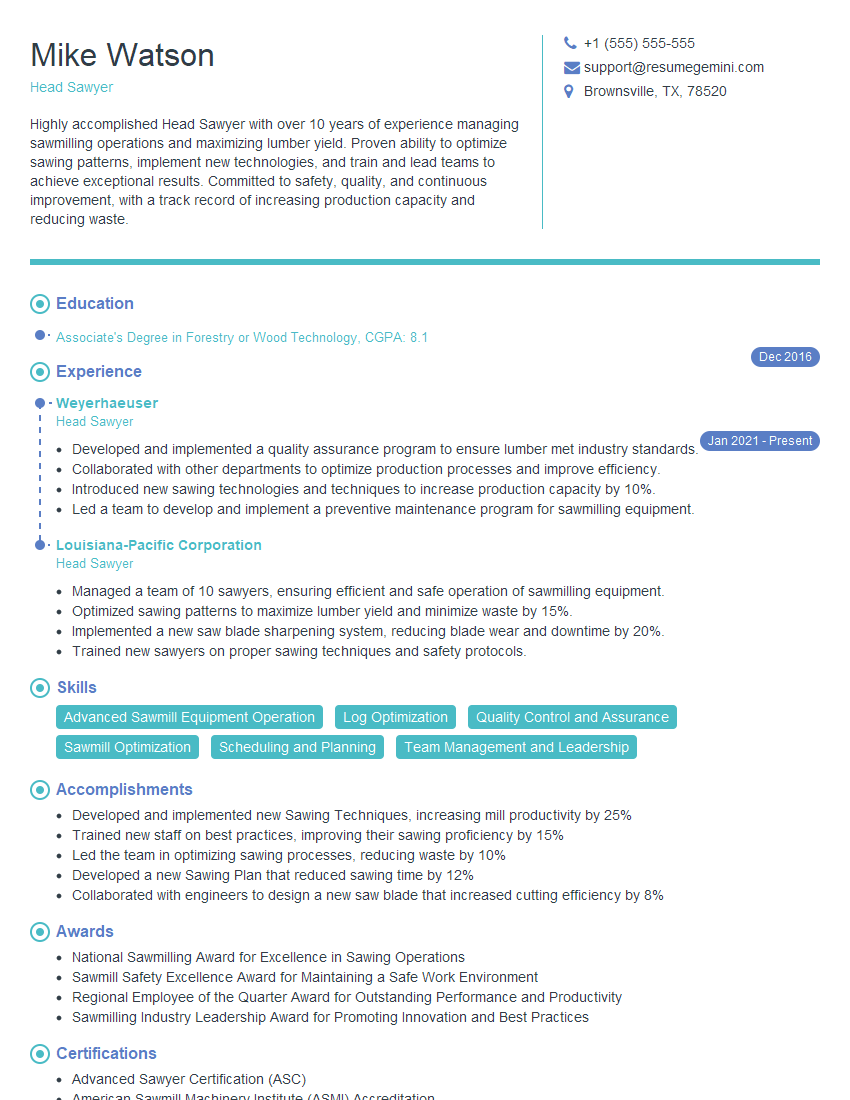
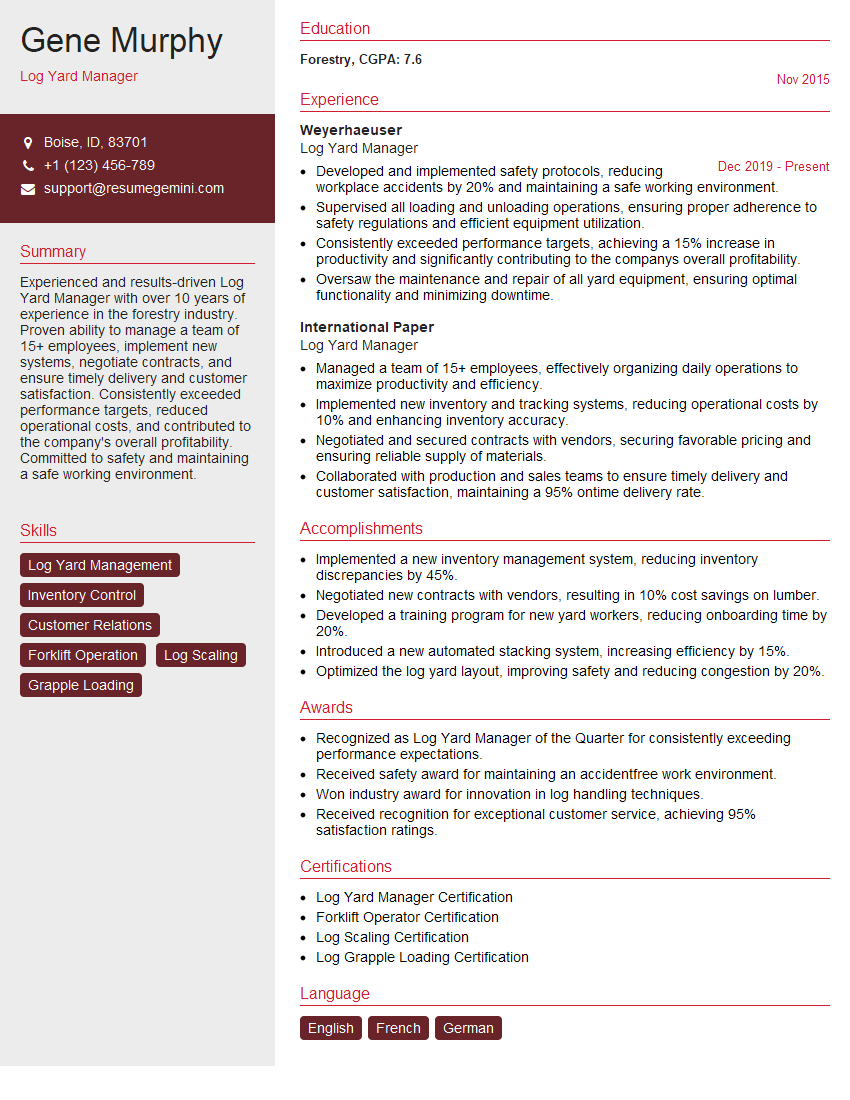
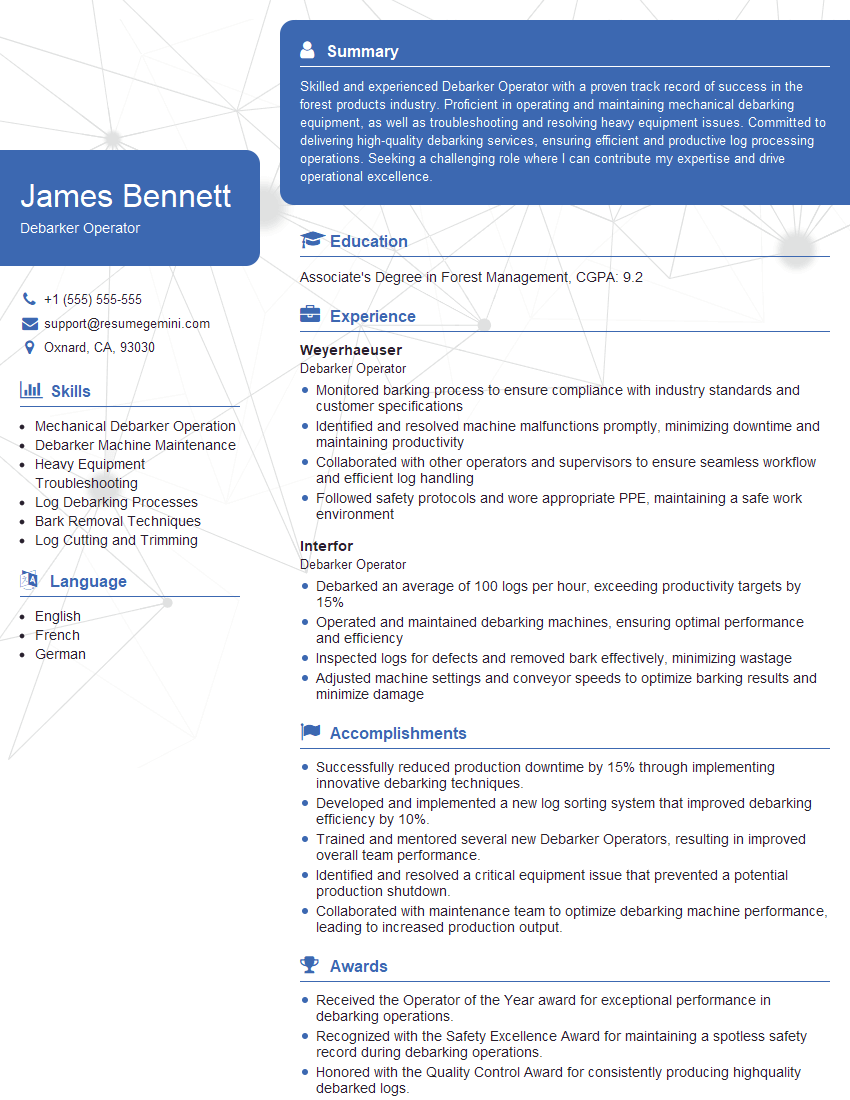
Mastering Sawmill Layout opens doors to exciting career opportunities in a rapidly evolving technological landscape. A strong understanding of this system is highly valued by employers, significantly boosting your career prospects. To maximize your chances of landing your dream job, it’s vital to create an ATS-friendly resume that showcases your skills and experience effectively. ResumeGemini is a trusted resource to help you build a professional and compelling resume. Leverage its tools and templates to create a resume that highlights your Sawmill Layout expertise. Examples of resumes tailored to Sawmill Layout are available to guide you.
Explore more articles
Users Rating of Our Blogs
Share Your Experience
We value your feedback! Please rate our content and share your thoughts (optional).
What Readers Say About Our Blog
Very informative content, great job.
good