The right preparation can turn an interview into an opportunity to showcase your expertise. This guide to Scale-Up of Pilot Plants interview questions is your ultimate resource, providing key insights and tips to help you ace your responses and stand out as a top candidate.
Questions Asked in Scale-Up of Pilot Plants Interview
Q 1. Explain the concept of linear and non-linear scale-up.
Scale-up, in the context of pilot plants, refers to the transition from a small-scale process to a larger-scale production. Linear scale-up implies a direct proportionality between the process variables in the pilot plant and the larger production unit. For instance, if you double the reactor volume, you double all other parameters like flow rate, heating/cooling capacity, and mixing intensity. This is a simplistic approach and often doesn’t work in reality.
Non-linear scale-up acknowledges the complex interactions between different process parameters. Geometric similarity, for example, might be maintained, but the heat transfer coefficient or mixing efficiency won’t scale linearly. This requires more careful consideration and often involves experimental validation and modeling to ensure consistent performance at larger scales. Imagine scaling up a cake recipe – doubling the ingredients doesn’t guarantee a perfectly scaled-up version; baking time and temperature need adjustment. Similarly, non-linear scale-up necessitates adjustments in process parameters to account for the changing physical characteristics of the system.
Q 2. Describe different scale-up strategies (e.g., geometric similarity, constant residence time).
Several strategies exist for scaling up pilot plants, each with its own advantages and disadvantages:
- Geometric Similarity: This method maintains the same ratios of dimensions between the pilot and production plant. For example, if we scale up a cylindrical reactor by a factor of 2, both diameter and height are doubled. While simple, it doesn’t guarantee identical performance due to changes in heat and mass transfer.
- Constant Residence Time: This approach maintains a constant time the material spends in the reactor (i.e., the same flow rate per volume). This is crucial for processes where reaction kinetics are time-dependent. However, it might necessitate non-linear adjustments to other parameters.
- Constant Power Input: This is primarily useful for mixing operations where maintaining similar mixing intensity is paramount, regardless of the reactor size. It focuses on the power consumed per unit volume, ensuring consistent mixing throughout the scale-up.
- Scale-up based on dimensionless numbers: Using dimensionless numbers like Reynolds number (for mixing), Nusselt number (for heat transfer), and Péclet number (for mass transfer) helps to correlate the behavior of the system across different scales. This method is more rigorous and accounts for the interplay of various physical phenomena.
The choice of strategy depends heavily on the specific process, reaction kinetics, and constraints. Often a combination of methods is employed for optimal results.
Q 3. How do you address heat transfer challenges during scale-up?
Heat transfer is a significant challenge in scale-up because the surface area to volume ratio decreases as the equipment size increases. This means that the capacity for heat removal or addition doesn’t increase proportionally to the volume. Consequently, larger reactors might experience temperature gradients, potentially leading to reduced yield, product degradation, or safety hazards.
Strategies to address this include:
- Increased Surface Area: Employing internal coils, baffles, or jacketed reactors with enhanced surface area to improve heat transfer.
- Improved Heat Transfer Fluids: Utilizing higher-conductivity fluids to enhance heat transfer efficiency.
- Optimized Process Parameters: Adjusting flow rates, temperature profiles, and other parameters to ensure efficient heat transfer and uniform temperature distribution.
- Computational Fluid Dynamics (CFD): Using simulations to model the temperature fields and optimize the design for better heat transfer.
For example, in the scale-up of an exothermic reaction, carefully designed cooling jackets are crucial to prevent runaway reactions. Similarly, in endothermic reactions, efficient heating systems are vital for maintaining reaction temperature.
Q 4. What are the common scaling-up issues encountered in mixing operations?
Mixing is critical in many chemical processes. Scaling up mixing operations can present several challenges:
- Power Number Scaling: The power required for mixing scales differently than the reactor volume. Maintaining adequate mixing intensity at larger scales requires careful consideration of impeller design and power input.
- Flow Patterns: Flow patterns and mixing homogeneity can be significantly affected by scale-up. Dead zones or poorly mixed regions can form in larger vessels, impacting product quality and consistency.
- Scale-up of Impellers: Impellers designed for small-scale reactors might not be suitable for larger ones. Proper impeller selection and scaling based on relevant dimensionless numbers are crucial.
- Baffe Design and Placement: Baffles are essential in many mixing processes for preventing vortex formation and promoting better mixing. Their design and placement need careful attention during scale-up.
For example, scaling up a stirred tank reactor without accounting for these factors can lead to incomplete reactions or inhomogeneous product quality.
Q 5. Discuss the importance of mass and energy balances in scale-up.
Mass and energy balances are fundamental to any successful scale-up. They ensure that the process remains stoichiometrically consistent and that the energy requirements are met at all scales. Accurate mass balances guarantee that the amounts of reactants and products are appropriately scaled and that no material is lost or gained during the process.
Energy balances are critical for determining the heat transfer requirements. For example, an exothermic reaction requires appropriate cooling to maintain the desired temperature, and this cooling capacity needs to scale up proportionally to the reaction rate. Ignoring these balances can lead to inefficient processes, safety hazards, and inconsistent product quality.
In practice, performing rigorous mass and energy balances early in the scale-up process is essential for selecting the right equipment, estimating operating costs, and ensuring process robustness.
Q 6. How do you ensure the quality and consistency of the product during scale-up?
Ensuring consistent product quality during scale-up demands a multifaceted approach:
- Rigorous Process Control: Implementing robust control systems to maintain critical parameters (temperature, pressure, flow rates, etc.) within tight tolerances.
- Real-time Monitoring and Analysis: Implementing inline sensors and analytical techniques for continuous monitoring of key quality attributes.
- Statistical Process Control (SPC): Employing statistical methods to monitor process variability and identify potential issues early on.
- Quality by Design (QbD): Implementing a QbD approach by understanding the critical process parameters and their impact on product quality.
- Detailed Characterization: Thoroughly characterizing the product at both pilot and production scales to ensure consistency.
For instance, regular sampling and analysis during scale-up help ensure the product meets specifications regarding purity, particle size, and other relevant parameters. Regular validation of analytical methods is critical as well.
Q 7. What are the key considerations for equipment selection during scale-up?
Equipment selection during scale-up is a critical decision with significant cost and performance implications. The selection criteria include:
- Capacity: The equipment must handle the increased production rate.
- Material Compatibility: The materials of construction must be compatible with the process fluids and operating conditions.
- Process Requirements: The equipment must meet the specific process needs, such as mixing intensity, heat transfer capabilities, and residence time.
- Scalability: The equipment should be scalable to future capacity increases.
- Cost and Maintenance: Cost, ease of maintenance, and availability of spare parts are also important considerations.
- Safety: The equipment should meet all relevant safety standards and regulations.
For example, selecting a reactor with inadequate mixing capacity can lead to incomplete reactions and off-spec product. Similarly, choosing materials incompatible with process fluids can cause corrosion or contamination. Careful consideration of all these factors ensures efficient and safe production.
Q 8. Explain the role of Process Analytical Technology (PAT) in scale-up.
Process Analytical Technology (PAT) plays a crucial role in efficiently scaling up pilot plants. Instead of relying solely on endpoint testing, PAT employs real-time, in-process monitoring to understand and control critical quality attributes (CQAs) throughout the manufacturing process. This allows for early detection of deviations, preventing costly downstream issues.
For example, in a pharmaceutical scale-up, PAT might involve using near-infrared (NIR) spectroscopy to continuously monitor the concentration of a key reactant during a reaction. This provides immediate feedback, enabling adjustments to temperature, flow rate, or other parameters to maintain the desired CQA. This proactive approach minimizes the risk of producing off-specification batches and accelerates the scale-up process by reducing the reliance on time-consuming offline analyses.
In essence, PAT provides a more robust, efficient, and predictable way to transition from pilot to commercial-scale manufacturing. It allows for better process understanding and facilitates faster troubleshooting and optimization.
Q 9. Describe your experience with scale-up validation and documentation.
My experience in scale-up validation and documentation involves a rigorous approach based on ICH guidelines and GMP principles. This includes meticulous planning, execution, and documentation of all aspects of the scale-up, from equipment qualification and process validation to cleaning validation and stability studies. We utilize a comprehensive validation plan that outlines the specific tests, acceptance criteria, and documentation requirements for each stage of the scale-up.
For instance, in a recent project involving scaling up a fermentation process, we conducted thorough equipment validation, verifying the performance of the larger bioreactor, ensuring it matched the smaller pilot-scale reactor’s performance. Each batch produced during the scale-up process was documented extensively, including detailed records of process parameters, raw materials used, in-process testing results, and final product analysis. The final documentation included comprehensive reports, demonstrating the successful validation of the scaled-up process and its consistent performance in producing a high-quality product.
I ensure that our documentation is clear, concise, and compliant, supporting any regulatory audits and providing a complete history of the scale-up process. The meticulous documentation is vital for future process improvements and troubleshooting.
Q 10. How do you handle unexpected issues or deviations during scale-up?
Unexpected issues during scale-up are inevitable. My approach involves a systematic problem-solving methodology. First, I focus on identifying and clearly defining the issue. Then, a thorough investigation is conducted, using data analysis and root cause analysis techniques to understand the underlying cause of the deviation.
For example, if we experience unexpected low yield during scale-up, we might analyze process parameters such as temperature, agitation rate, and pH to determine if any of these deviated from the optimal range. We may also investigate the quality of raw materials or the integrity of equipment. Once the root cause is identified, a corrective action plan is developed and implemented. This plan is rigorously documented, including the steps taken to rectify the issue and prevent its recurrence.
Throughout this process, effective communication with the team is crucial, fostering collaboration and rapid decision-making. This ensures that we can swiftly address the issue, minimize production delays, and prevent significant losses.
Q 11. Explain your understanding of Good Manufacturing Practices (GMP) in relation to scale-up.
Good Manufacturing Practices (GMP) are fundamental to successful scale-up. GMP principles ensure consistent production of high-quality products that meet safety and regulatory requirements. During scale-up, GMP adherence is paramount, impacting every stage of the process. This includes aspects like equipment qualification, process validation, raw material handling and storage, personnel training, and documentation practices.
For instance, in pharmaceutical manufacturing, a failure to maintain appropriate sterility during the scale-up of a sterile formulation could lead to batch failures and potential safety risks. Therefore, adhering to GMP principles, such as using validated sterilization processes and maintaining aseptic techniques, is critical. Moreover, robust documentation is critical to demonstrate compliance with GMP regulations and ensure traceability throughout the entire manufacturing process.
Understanding and implementing GMP principles throughout the scale-up ensures compliance, minimizes risks, and protects both the company’s reputation and consumer safety.
Q 12. How do you manage project timelines and budgets during a scale-up project?
Managing project timelines and budgets in scale-up requires careful planning and proactive monitoring. I typically use project management tools and techniques like Gantt charts and critical path analysis to visualize the project timeline and identify critical tasks. This allows for effective resource allocation and risk mitigation.
For budget management, a detailed cost breakdown is created upfront, anticipating all potential expenses, including raw materials, equipment, labor, and testing. Regular budget reviews are conducted throughout the project to track progress, identify any deviations, and make necessary adjustments. This proactive approach ensures that the project stays within the allocated budget and timeline. Contingency planning is also incorporated to account for unforeseen circumstances, such as equipment failures or unexpected delays.
Open communication with stakeholders, including project managers, engineers, and clients, ensures alignment on goals, resources, and timelines, leading to a smoother and more successful scale-up.
Q 13. How do you communicate technical information effectively to both technical and non-technical audiences?
Effective communication is paramount in scale-up projects. I adapt my communication style to the audience. When communicating with technical audiences, I use precise technical language and focus on detailed data and analyses. For non-technical audiences, I focus on high-level summaries, visualizations, and analogies to convey the key messages without overwhelming them with technical jargon.
For example, when explaining a complex process change to engineers, I’d use detailed process flow diagrams and technical data. When briefing management on project progress, I’d use a concise presentation highlighting key milestones and achievements, focusing on the impact on overall project goals and timelines. I also leverage visual aids like charts and graphs to make complex information more accessible and understandable, irrespective of the audience’s technical background.
Clear and consistent communication is essential for successful collaboration and preventing misunderstandings, ultimately contributing to a more efficient and effective scale-up.
Q 14. Describe your experience with risk assessment and mitigation in scale-up.
Risk assessment and mitigation are critical throughout the scale-up process. I employ a structured approach, typically using a Failure Mode and Effects Analysis (FMEA) to identify potential risks, assess their severity and likelihood, and develop mitigation strategies.
For example, in a scale-up involving a reaction with exothermic properties, a key risk could be runaway reaction. The FMEA would identify this risk, assess its potential severity (e.g., equipment damage, personnel injury), and assign a likelihood based on the historical data and process parameters. Mitigation strategies might include installing additional safety devices, such as pressure relief valves and quench systems, or modifying process parameters to lower the reaction temperature.
Continuous monitoring and reassessment of risks throughout the scale-up process are essential. This proactive approach minimizes potential disruptions and enhances the probability of a smooth and successful transition to larger-scale manufacturing.
Q 15. What are the critical parameters to monitor during scale-up?
Scaling up a pilot plant requires meticulous monitoring of several critical parameters. These parameters can be broadly categorized into process variables, material properties, and equipment performance indicators.
- Process Variables: These include temperature, pressure, flow rates, mixing intensity (e.g., impeller speed, power input per unit volume), residence time, and reactant concentrations. Deviations in these parameters can significantly alter reaction kinetics, product yield, and quality. For example, a seemingly minor change in temperature during a polymerization reaction could lead to a dramatic shift in molecular weight distribution of the polymer.
- Material Properties: Physical properties like viscosity, density, and heat transfer coefficients are crucial. Changes in these properties during scale-up can affect mixing, heat removal (or addition), and mass transfer rates. Consider a scale-up involving a highly viscous fluid; the increased viscosity in a larger reactor might necessitate modifications to the mixing system to avoid dead zones and ensure uniformity.
- Equipment Performance: This includes parameters like pump efficiency, heat exchanger performance, and reactor geometry. Scale-up often involves changes in equipment design, and it’s vital to ensure that the scaled-up equipment maintains similar performance characteristics as the pilot plant. For example, a perfectly efficient heat exchanger in the pilot plant might suffer from decreased efficiency due to increased heat transfer area in the larger scale, leading to overheating or underheating.
Continuous monitoring of these parameters using appropriate sensors and data acquisition systems is crucial to identify deviations from the pilot plant operation and guide necessary adjustments.
Career Expert Tips:
- Ace those interviews! Prepare effectively by reviewing the Top 50 Most Common Interview Questions on ResumeGemini.
- Navigate your job search with confidence! Explore a wide range of Career Tips on ResumeGemini. Learn about common challenges and recommendations to overcome them.
- Craft the perfect resume! Master the Art of Resume Writing with ResumeGemini’s guide. Showcase your unique qualifications and achievements effectively.
- Don’t miss out on holiday savings! Build your dream resume with ResumeGemini’s ATS optimized templates.
Q 16. Explain your understanding of Design of Experiments (DOE) and its application to scale-up.
Design of Experiments (DOE) is a powerful statistical method used to efficiently explore the impact of multiple variables on a process outcome during scale-up. Instead of changing one variable at a time (a time-consuming and potentially inefficient approach), DOE strategically varies multiple parameters simultaneously, allowing for identification of their individual and interactive effects. This is particularly beneficial in complex processes where interactions between variables are significant.
In scale-up, DOE helps in:
- Optimizing process parameters: By systematically changing factors like temperature, pressure, and flow rate, DOE identifies the optimal combination to maximize yield, selectivity, and product quality.
- Identifying critical parameters: DOE helps determine which variables have the greatest influence on the process, allowing for focused optimization efforts.
- Building empirical models: Statistical models are generated from DOE data, allowing prediction of process performance under different conditions. This aids in design and control of the full-scale process.
For example, consider a chemical reaction with three input variables (temperature, pressure, and catalyst concentration). A fractional factorial design could be employed to assess the effects of these variables and their interactions. The resulting data would inform the selection of an optimal set of operating conditions for the scaled-up reactor.
Q 17. How do you approach troubleshooting and problem-solving during scale-up?
Troubleshooting during scale-up involves a structured approach combining experimental investigation and process understanding. My strategy involves a systematic progression:
- Identify the deviation: Precisely define the problem. Is it lower yield, altered product quality, increased energy consumption, or another deviation from expected performance?
- Gather data: Collect comprehensive data on all monitored parameters (process variables, material properties, equipment performance). This may include analyzing samples for product composition, impurities, and other relevant properties.
- Analyze data: Look for correlations between parameter variations and deviations in the process outcome. This step often involves statistical analysis and data visualization.
- Formulate hypotheses: Based on the data analysis, generate possible explanations for the observed deviations. These hypotheses should be testable.
- Test hypotheses: Conduct targeted experiments to verify or refute the hypotheses. This may involve modifications to the process conditions or equipment operation.
- Implement corrective actions: Once a successful solution is identified, implement the necessary changes to the process or equipment design.
- Document findings: Thoroughly document the problem, the troubleshooting steps, and the final solution. This information is valuable for future scale-up efforts and process improvements.
Imagine a scale-up where unexpected fouling occurs. Following this process, I would gather data on fouling rates under different conditions, analyze the composition of the fouling material, and then test hypotheses about the cause (e.g., improper mixing, temperature changes affecting solubility, etc.), leading to a solution.
Q 18. Describe your experience with different types of reactors and their suitability for scale-up.
My experience encompasses various reactor types, each with its strengths and weaknesses concerning scale-up. The suitability of a reactor for scale-up depends strongly on the specific process characteristics.
- Stirred Tank Reactors (STRs): Widely used for homogeneous and some heterogeneous reactions, STRs are relatively easy to scale up using geometric similarity principles. However, challenges arise with very viscous fluids or high heat generation rates, necessitating careful design of mixing and heat transfer systems.
- Tubular Reactors: Ideal for continuous processes and reactions with high heat generation or sensitivity to residence time. Scale-up involves increasing the number of tubes or the tube diameter, requiring careful consideration of heat and mass transfer limitations.
- Fluidized Bed Reactors: Suitable for gas-solid or liquid-solid reactions, scale-up is more complex and involves maintaining the desired fluidization regime. Challenges include ensuring uniform particle distribution and avoiding channeling.
- Packed Bed Reactors: Used for heterogeneous catalytic reactions, scale-up must address pressure drop limitations and ensure adequate catalyst utilization. Maintaining uniform flow distribution is a critical aspect.
For example, scaling up a highly exothermic reaction in a STR might require the addition of internal cooling coils or baffles to manage the heat generation rate, whereas scaling up a gas-phase reaction might benefit from a tubular reactor design to improve conversion.
Q 19. What are the limitations of pilot plant scale-up and how to account for them?
Pilot plant scale-up is inherently limited by several factors:
- Geometric similarity: Perfect geometric scaling is often impossible, leading to differences in mixing, heat transfer, and mass transfer rates. For example, the aspect ratio (height-to-diameter) of a reactor can significantly affect mixing.
- Heat and mass transfer limitations: Heat transfer coefficients and mass transfer rates generally decrease with increasing scale, potentially affecting reaction rates and product quality. The surface area-to-volume ratio decreases as size increases.
- Mixing limitations: Achieving uniform mixing in larger reactors is more challenging, potentially leading to non-uniform reaction conditions and reduced yield or altered product quality.
- Wall effects: In small pilot plants, the influence of reactor walls on the process can be significant. These effects are diminished in larger reactors.
- Non-ideal flow patterns: The flow patterns in pilot plants might not perfectly replicate those in larger-scale reactors, especially in reactors with complex geometries.
Addressing these limitations requires careful consideration of the process physics and use of scale-up strategies, including the use of experimental techniques like DOE and computational fluid dynamics (CFD) simulations. Scaling laws based on fundamental transport phenomena (e.g., Nusselt, Sherwood, and Reynolds numbers) are essential for accurate prediction and mitigation of scale-up challenges.
Q 20. How do you ensure safety during the scale-up process?
Safety is paramount during scale-up. A robust safety plan should be developed and strictly followed. Key aspects include:
- Hazard identification and risk assessment: Thoroughly identify potential hazards associated with the process and materials, including flammability, toxicity, and reactivity. A formal hazard and operability study (HAZOP) is often beneficial.
- Process safety management (PSM): Implement robust PSM systems, including emergency shutdown systems, alarms, and safety interlocks. Regular safety training for personnel is essential.
- Material handling and storage: Ensure safe handling and storage of all materials, including proper labeling, ventilation, and containment systems.
- Equipment design and selection: Choose appropriately designed and rated equipment that meets or exceeds the safety requirements of the process. Pressure relief systems should be in place.
- Emergency response planning: Develop comprehensive emergency response plans that include procedures for handling spills, fires, and other emergencies.
- Permitting and regulatory compliance: Adhere to all relevant safety regulations and obtain necessary permits.
Regular safety audits and reviews are crucial to maintain a safe working environment and prevent accidents.
Q 21. What software or tools are you familiar with for scale-up simulations?
My experience includes the use of several software and tools for scale-up simulations. These tools help to predict process behavior at different scales, reducing the risk of unexpected problems during scale-up.
- Aspen Plus: A powerful process simulator commonly used for designing and optimizing chemical processes. It can be used to model reactors, heat exchangers, and other process equipment, allowing for prediction of process performance at various scales.
- COMSOL Multiphysics: A finite element analysis (FEA) software package used to model various physical phenomena, including fluid flow, heat transfer, and mass transfer. It is useful for simulating mixing in reactors and predicting temperature and concentration profiles.
- ANSYS Fluent: Another widely used CFD software package that enables detailed modeling of fluid flow and heat transfer in reactors, providing insights into mixing efficiency and other relevant parameters.
- MATLAB/Simulink: These tools can be used for process modeling and simulation, as well as data analysis and visualization of experimental results from pilot-plant experiments.
The choice of software depends on the specific process and the level of detail required. For simpler systems, a process simulator might suffice, while more complex systems may benefit from a more detailed CFD simulation.
Q 22. Describe your experience with scale-up of different process types (e.g., batch, continuous).
Scaling up processes from pilot plant to production involves distinct challenges depending on whether the process is batch or continuous. Batch processes, characterized by discrete production cycles, require careful consideration of scale-up factors affecting reaction kinetics, heat transfer, and mixing. Continuous processes, on the other hand, demand meticulous attention to flow dynamics, residence time distribution, and the potential for instability at larger scales.
Batch Scale-up: My experience includes scaling up a batch fermentation process for producing a therapeutic enzyme. We used a combination of geometric similarity (maintaining the same aspect ratio of the reactor) and constant power input per unit volume to maintain consistent mixing and heat transfer during scale-up. This involved careful monitoring of oxygen transfer rates and adjusting agitation speed and sparger design accordingly. We also implemented rigorous statistical experimental design (DoE) to optimize the process parameters for the larger scale.
Continuous Scale-up: I’ve also worked on scaling up a continuous crystallization process for a pharmaceutical intermediate. Here, the focus was on maintaining a constant superficial velocity to ensure consistent residence time and crystal growth. This involved detailed modeling of flow patterns using computational fluid dynamics (CFD) to optimize the design of the larger crystallizer and minimize dead zones. Process analytical technology (PAT) was crucial for real-time monitoring and control, ensuring consistent product quality at the larger scale.
Q 23. How do you identify and manage scale-up risks?
Identifying and managing scale-up risks is paramount to successful project completion. A structured risk assessment framework is essential. This typically involves brainstorming potential problems, categorizing them by likelihood and impact, and developing mitigation strategies.
- Technical Risks: These include issues like inadequate mixing, heat transfer limitations, changes in reaction kinetics, and fouling in larger equipment. We mitigate these by using scale-down models, computational simulations, and robust process control systems.
- Operational Risks: These pertain to issues like training of operators on new equipment, availability of utilities, and potential safety hazards associated with larger-scale operations. Detailed operating procedures, comprehensive training programs, and robust safety protocols are critical here.
- Regulatory Risks: Compliance with GMP (Good Manufacturing Practices) and other regulatory requirements needs to be considered from the start. We proactively incorporate these guidelines into our scale-up strategy, engaging regulatory experts as needed.
A crucial aspect is developing contingency plans to handle unexpected issues. For example, having backup equipment or procedures ready to address potential failures significantly reduces project risks.
Q 24. How do you validate scaled-up processes?
Validation of scaled-up processes involves demonstrating that the larger-scale process consistently produces the desired product with the required quality attributes. This typically entails a multi-step approach.
- Process Qualification: This involves demonstrating that the equipment operates as intended. This includes IQ (Installation Qualification), OQ (Operational Qualification), and PQ (Performance Qualification) which ensures the equipment, utilities, and the entire process meets its design specifications.
- Analytical Method Validation: The analytical methods used to characterize the product at the larger scale need to be validated to ensure they are accurate, precise, and reliable. This is crucial for assuring product quality meets regulatory standards.
- Scale-up Data Analysis: Rigorous statistical analysis of scale-up data (e.g., yield, purity, potency) is crucial to demonstrate consistency and reproducibility. Control charts and other statistical tools help in detecting and addressing any deviations from the target specifications.
A critical component is the generation of comprehensive documentation, including batch records, deviation reports, and validation reports, which are crucial for regulatory compliance and future process optimization.
Q 25. What metrics do you use to measure the success of a scale-up project?
Measuring the success of a scale-up project requires a multi-faceted approach, going beyond simply achieving a larger scale. Key metrics include:
- Yield: Achieving the target yield at the larger scale demonstrates successful process transfer and optimization.
- Purity/Potency: Maintaining or improving the product quality is crucial. Deviations in purity or potency can have significant implications on the final product and its applications.
- Cost of Goods Sold (COGS): Successful scale-up should lead to a reduction in COGS, making the product more economically viable.
- Throughput: Increased throughput demonstrates the efficiency of the scaled-up process in producing larger quantities of the product.
- On-time and within-budget completion: Meeting project timelines and budget constraints is vital for overall project success.
These metrics, when considered holistically, provide a clear picture of the scale-up project’s success and overall impact.
Q 26. Describe your experience with technology transfer during scale-up.
Technology transfer during scale-up is the systematic process of transferring knowledge, skills, and procedures from the pilot plant to the production facility. Effective technology transfer involves careful documentation, training, and communication.
My experience involves developing comprehensive Standard Operating Procedures (SOPs) and training manuals for the new production facility. These documents encompass every aspect of the process, from raw material handling to product packaging. On-site training for operators and technicians is crucial, ensuring hands-on experience with the scaled-up equipment and processes. Regular communication and collaboration between the pilot plant and production teams are vital for addressing any emerging issues or deviations from the expected performance.
In one project, we used a phased approach to technology transfer. We started with a small-scale production run at the manufacturing site to identify and resolve any minor issues before transitioning to full-scale production. This approach significantly reduced risks and ensured a smooth transition.
Q 27. How do you ensure the reproducibility of results during scale-up?
Reproducibility of results during scale-up is critical for consistent product quality. This requires meticulous attention to detail at every step of the process.
- Robust Process Design: The process needs to be designed to be inherently robust to variations in operating parameters and raw material properties.
- Detailed Process Monitoring: Implementing robust process monitoring and control systems, including PAT tools, allows for real-time tracking of key parameters and early detection of any deviations.
- Standardized Operating Procedures (SOPs): Clearly defined SOPs ensure consistent execution of the process across different batches and production runs.
- Quality Control Testing: Rigorous quality control testing at each stage of the process ensures that the product meets the required specifications.
- Data Management: A robust data management system helps to track and analyze process data, identify trends, and optimize the process for improved reproducibility.
For example, in scaling up a chemical synthesis, we implemented real-time monitoring of temperature and pressure using advanced control systems. This ensured consistent reaction conditions, minimizing variability and enhancing the reproducibility of the process. Regular audits and process reviews further help to sustain reproducibility.
Key Topics to Learn for Scale-Up of Pilot Plants Interview
- Process Scaling Principles: Understanding linear vs. non-linear scaling, the impact of scale on reaction kinetics and heat transfer, and common scaling-up methodologies (e.g., geometric similarity, constant-energy input).
- Pilot Plant Design and Operation: Familiarize yourself with the design considerations for pilot plants, including equipment selection, instrumentation, safety protocols, and data acquisition systems. Understand the practical challenges of operating a pilot plant and troubleshooting common issues.
- Data Analysis and Interpretation: Mastering data analysis techniques to extract meaningful insights from pilot plant experiments. This includes statistical analysis, process modeling, and the identification of key process parameters.
- Scale-Up Challenges and Mitigation Strategies: Explore common challenges encountered during scale-up, such as mixing limitations, heat transfer issues, and the impact of scale on product quality. Learn about strategies for mitigating these challenges and ensuring successful transition to larger production scales.
- Process Optimization and Control: Understand the principles of process optimization and control in the context of pilot plant operation. This includes the application of statistical experimental design (DoE) and advanced process control techniques.
- Economic Considerations: Analyze the economic aspects of pilot plant operation, including cost estimation, return on investment, and the trade-offs between pilot plant scale and information gained.
- Regulatory Compliance: Understand relevant safety and environmental regulations applicable to pilot plant operation and the importance of documentation and compliance.
Next Steps
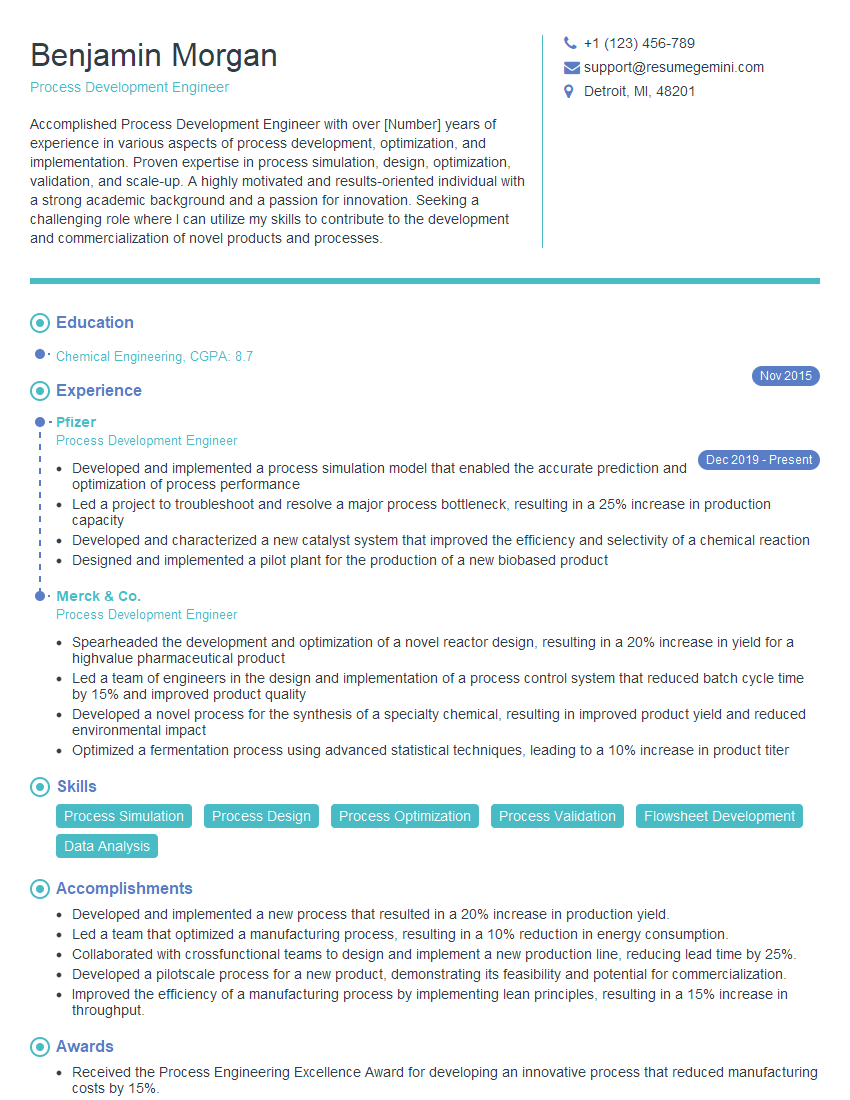
Mastering the scale-up of pilot plants is crucial for advancement in process engineering and related fields. It demonstrates a strong understanding of chemical engineering principles and practical problem-solving abilities, highly valued by employers. To increase your job prospects, create a strong, ATS-friendly resume that highlights your relevant skills and experience. ResumeGemini is a trusted resource to help you build a professional resume that showcases your qualifications effectively. Examples of resumes tailored to Scale-Up of Pilot Plants are available to help you get started.
Explore more articles
Users Rating of Our Blogs
Share Your Experience
We value your feedback! Please rate our content and share your thoughts (optional).
What Readers Say About Our Blog
Very informative content, great job.
good