Unlock your full potential by mastering the most common School Bus Drivers License (if applicable) interview questions. This blog offers a deep dive into the critical topics, ensuring you’re not only prepared to answer but to excel. With these insights, you’ll approach your interview with clarity and confidence.
Questions Asked in School Bus Drivers License (if applicable) Interview
Q 1. What are the three most important safety checks you perform before driving a school bus?
Before driving a school bus, safety is paramount. My three most important pre-trip checks are:
Brakes and Steering: I thoroughly inspect the brake system, checking for leaks, wear, and proper functionality. I test the steering for responsiveness and freedom from play. This is crucial for safe stopping and maneuvering, especially with the added weight and responsibility of carrying children.
Lights and Signals: I meticulously check all lights – headlights, brake lights, turn signals, hazard lights, and interior lights – ensuring they are all working correctly. Clear signaling prevents accidents and keeps students and other drivers safe. I also check the functionality of the stop arm and warning lights.
Tires and Wheels: I inspect the tires for proper inflation, tread depth, and any signs of damage. Loose lug nuts or visible damage could lead to a blowout. I also visually examine the wheels and suspension for anything amiss. This is especially important given the heavier load and varied road conditions a school bus encounters.
Think of it like this: brakes are your stopping power, lights are your communication, and tires are your connection to the road – all vital for safe operation.
Q 2. Describe the proper procedure for loading and unloading students.
Loading and unloading students is a carefully choreographed process designed to maximize safety. I follow these procedures religiously:
Stop Completely: I always come to a complete stop at designated bus stops, well away from any obstructions.
Activate Safety Devices: The stop arm is fully extended, warning lights are flashing, and the red lights are illuminated to alert other drivers. I make sure it’s safe before opening the doors.
Controlled Loading and Unloading: Students are instructed to load and unload one at a time in an orderly fashion. I monitor carefully to prevent pushing, shoving or running. I always ensure the students are safely seated before moving the bus.
Supervision: I closely supervise students, particularly younger ones, to ensure they reach their destination safely. I maintain visual contact with them until the doors are closed and the bus moves. I make sure no one is left behind.
This structured approach minimizes the risk of accidents, particularly those involving children running into traffic. It’s a process that requires consistent attention and patience.
Q 3. How do you handle a disruptive student on the bus?
Handling disruptive students requires a calm and consistent approach, prioritizing safety and de-escalation. My strategy involves:
Verbal Warning: I first address the behavior with a calm but firm warning, explaining the rules and consequences of disruptive actions.
Redirection: If the behavior continues, I try to redirect the student’s attention towards something positive, such as a conversation or a game.
Separation if Necessary: In cases of severe disruption or if the safety of other students is compromised, I might separate the student from others. I’ll make sure to create a safe space and contact the school administration or parents immediately.
Documentation: I meticulously document every incident, including the time, location, nature of the disruption, and actions I took. This information is crucial for both the school administration and, if necessary, law enforcement.
My goal is to maintain order and ensure the safety of all students, but it’s critical to remember that every child is different, and I adapt my strategies to individual needs. I never use physical discipline; that’s handled by appropriate personnel.
Q 4. What actions do you take if involved in a minor accident?
In case of a minor accident, my response is swift and methodical:
Safety First: My top priority is the safety of the students. I ensure everyone is safe, uninjured, and accounted for.
Alert Authorities: I immediately call emergency services (911) and the school administration to report the accident. I provide them with the location and details of the accident.
Secure the Scene: If possible, I safely secure the bus and the immediate area, turning on hazard lights and setting up warning devices.
Gather Information: I collect information like witness details, license plate numbers, and insurance information from the other party involved.
Documentation: I thoroughly document the accident using photos and a written report, noting damage, location, and the details of the incident.
My actions prioritize the safety and well-being of the students and ensure the proper reporting procedures are followed. I follow my company’s guidelines for post-accident procedures.
Q 5. Explain your understanding of pre-trip and post-trip vehicle inspections.
Pre-trip and post-trip inspections are essential for ensuring the safe and reliable operation of the school bus.
Pre-trip Inspection: This is a thorough check of the bus *before* each trip. It includes checking tires, lights, brakes, fluids, wipers, mirrors, and the overall condition of the bus. I use a checklist to ensure nothing is missed. This prevents mechanical failures while on the road, enhancing safety.
Post-trip Inspection: This inspection occurs *after* each trip and focuses on identifying any damage or issues that may have arisen during the day. This helps with preventative maintenance, identifying potential problems early on.
Both inspections are crucial for preventative maintenance and ensure the bus is in optimal condition for carrying students. Think of them as a doctor’s checkup for the bus, ensuring everything is working smoothly.
Q 6. How do you manage multiple routes and schedules effectively?
Managing multiple routes and schedules effectively requires organization and planning. My approach includes:
Detailed Route Knowledge: I thoroughly familiarize myself with each route, identifying potential challenges and optimizing routes to save time and ensure efficiency.
Time Management: I adhere strictly to the scheduled times, allowing sufficient buffer time for unexpected delays (traffic, student issues). I practice excellent time management to ensure punctuality.
Communication: I maintain clear communication with the school office about any unexpected delays or issues, keeping them informed about my progress.
Use of Technology: If available, I utilize route planning software and GPS devices to optimize routes and monitor my progress in real-time.
These strategies ensure that I complete all routes efficiently and safely, minimizing disruptions and ensuring students arrive at their destinations on time.
Q 7. What is your approach to dealing with challenging road conditions (e.g., snow, ice)?
Driving in challenging road conditions like snow and ice necessitates a significantly altered driving style to prioritize safety. My approach involves:
Reduced Speed: I significantly reduce my speed, adjusting to the conditions. The key is to drive slowly and smoothly, avoiding sudden braking or acceleration.
Increased Following Distance: I maintain a much greater following distance than usual to allow for longer stopping distances on slippery surfaces.
Smooth Maneuvers: I make smooth, gradual turns and lane changes, avoiding sudden movements which could cause loss of control.
Awareness of Surroundings: I am extra vigilant, constantly scanning the road and my surroundings for potential hazards. I take the additional time to assess risks before proceeding.
Appropriate Tire Conditions: Ensuring the tires are suitable for the conditions (winter tires) is important; this is something I discuss with the mechanics at the depot.
Driving safely in adverse weather involves anticipating challenges and planning accordingly, using gentle controls, and allowing ample time to avoid accidents.
Q 8. Describe your experience with emergency procedures (e.g., fire, breakdown).
Emergency procedures are paramount in school bus driving. My training encompassed various scenarios, from minor breakdowns to major incidents like fires. In the event of a fire, my first priority is the safe evacuation of all students. This involves calmly and quickly directing them to the nearest emergency exits, ensuring everyone follows the designated escape route. I’m trained to use the fire extinguisher if safe and appropriate. For breakdowns, I’d first assess the situation for immediate safety concerns (traffic, location, etc.). I’d then activate hazard lights, call for roadside assistance, and keep the students calm and informed throughout the process. Communication is key; I’d contact the school and parents to keep them updated on the delay and the location. I’ve had to deal with a flat tire once – I calmly handled the situation, ensuring the children remained seated and buckled, and contacted the appropriate personnel for assistance. This experience reinforced the importance of prioritizing safety and clear communication in emergency situations.
Q 9. How do you communicate effectively with parents and school staff?
Effective communication with parents and school staff is crucial. I maintain open communication channels through various methods. I’m always available to answer parent calls and emails regarding their children’s transportation. For example, if a student is repeatedly late, I’d proactively contact the parent to understand the cause and work collaboratively to find a solution. With school staff, regular communication is essential for coordinating schedules, reporting any incidents, or communicating delays promptly. I utilize the school’s communication system and maintain a positive and professional demeanor in all interactions. Building rapport with parents and staff fosters a cooperative environment, leading to safer and more efficient transportation.
Q 10. What is your knowledge of child passenger safety laws and regulations?
My understanding of child passenger safety laws and regulations is comprehensive. I’m familiar with all applicable state and federal laws regarding seat belt usage, appropriate car seat installations (where necessary), and the proper loading and unloading procedures. I meticulously ensure that all students are securely seated with their seatbelts fastened before departing and regularly check for compliance. I’m particularly knowledgeable about transporting children with special needs, ensuring their individual safety requirements are met. For instance, I understand how to properly secure wheelchairs and other assistive devices. Regular training and updates keep me informed about any changes or amendments to these regulations.
Q 11. What steps do you take to ensure the safety and security of students with special needs?
Ensuring the safety and security of students with special needs requires individualized attention. Before transporting a student with special needs, I carefully review their Individualized Education Program (IEP) or 504 plan to understand their specific needs and any necessary accommodations. This might involve specialized seating arrangements, medication administration (with proper authorization), or having an aide on board. I’m trained in emergency procedures related to specific disabilities, like recognizing signs of a seizure and responding appropriately. Communication with parents and school staff is particularly vital, ensuring a smooth and safe journey for these students. Building trust with these students is also important – I try to make them feel comfortable and safe.
Q 12. Describe your experience with student discipline and behavior management.
Student discipline and behavior management are handled with a calm and consistent approach. My focus is on positive reinforcement. I clearly communicate expectations for appropriate behavior on the bus, often reminding students about school rules. I address minor infractions with verbal warnings and reminders, while more serious misbehaviors are documented and reported to school administration. I believe in establishing a respectful environment where students feel safe and heard. I’ve had instances where students were disruptive, but by calmly engaging with them and understanding the root cause, often, the behavior could be resolved. Serious instances, though, always require reporting to the school.
Q 13. How do you maintain accurate records of daily routes and student attendance?
Maintaining accurate records is vital for accountability and efficiency. I diligently document daily routes and student attendance using the school’s provided system. This typically involves checking off student names against a manifest at pickup and drop-off. Any discrepancies, like absences, are immediately reported to the school. I also record any incidents or issues that occurred during the route. Some systems use digital technology to track these things, but good record-keeping is essential regardless of the technology used. Accuracy in these records ensures the safety and well-being of each student.
Q 14. What are your strategies for maintaining a clean and orderly bus environment?
Maintaining a clean and orderly bus environment is crucial for a safe and pleasant ride. Before each route, I conduct a thorough inspection of the bus to ensure cleanliness. After each route, I remove any trash and debris, sweeping and wiping down surfaces as needed. I also encourage students to keep the bus clean by using trash cans and reminding them to keep their belongings organized. Regular deep cleaning, as scheduled by the school, further ensures a hygienic environment. A clean bus creates a positive learning experience for students and projects professionalism.
Q 15. Explain your familiarity with school bus operating manuals and safety regulations.
School bus operating manuals and safety regulations are the bedrock of safe and efficient transportation of students. My familiarity extends beyond simply reading them; I actively understand and apply their principles daily. These manuals cover everything from pre-trip inspections (checking lights, brakes, tires, etc.) to emergency procedures and passenger management. Safety regulations, often dictated by state and local authorities, address specific requirements such as seatbelt usage, student loading and unloading procedures, and maintaining a safe driving distance. I am intimately familiar with the specific regulations in [State/Region] and have successfully completed all required training and certifications.
- Pre-trip Inspections: I meticulously follow a checklist to ensure the bus is mechanically sound before each route, documenting any issues found.
- Passenger Management: I am trained in managing student behavior, including addressing disruptive conduct and ensuring all students are safely seated and following instructions.
- Emergency Procedures: I am proficient in emergency evacuation procedures, including using emergency exits, handling fires and other hazards and knowing exactly how to contact emergency services.
Career Expert Tips:
- Ace those interviews! Prepare effectively by reviewing the Top 50 Most Common Interview Questions on ResumeGemini.
- Navigate your job search with confidence! Explore a wide range of Career Tips on ResumeGemini. Learn about common challenges and recommendations to overcome them.
- Craft the perfect resume! Master the Art of Resume Writing with ResumeGemini’s guide. Showcase your unique qualifications and achievements effectively.
- Don’t miss out on holiday savings! Build your dream resume with ResumeGemini’s ATS optimized templates.
Q 16. How do you respond to a medical emergency on the bus?
Responding to a medical emergency on the bus requires immediate action and a calm, composed approach. My training equips me to assess the situation, prioritizing student safety.
- Assess the Situation: I would immediately stop the bus in a safe location, activate hazard lights, and assess the student’s condition.
- Call for Help: I would immediately call emergency medical services (EMS) providing the bus location and a description of the situation. Our GPS system aids in this process.
- Provide First Aid: While awaiting EMS, I would administer basic first aid if trained and appropriate, focusing on maintaining airways and preventing further injury. I’ve completed extensive first aid and CPR training.
- Comfort and Reassurance: I would provide comfort and reassurance to the student and other passengers.
- Cooperate with EMS: I would provide EMS personnel with all necessary information and assist them in any way I can.
For instance, I once had a student experience a severe allergic reaction. My quick thinking allowed me to calmly access the student’s EpiPen, administer it, and contact EMS resulting in a swift recovery.
Q 17. How would you handle a situation where a student is missing from the bus?
A missing student is a serious concern. My response involves a systematic approach:
- Immediate Check: I would first conduct a thorough check of the bus, ensuring no student is hidden or overlooked.
- Contact School Personnel: I would immediately contact the school office, providing details of the missing student and last known location.
- Review Route: I would retrace my steps, carefully checking all drop-off and pick-up points to see if the student got off at the wrong stop.
- Student Contact Information: If possible, I would call the parent or guardian to ascertain if the student arrived home safely.
- Emergency Procedures: If the student remains missing after all reasonable measures have been taken, I would engage emergency procedures, including reporting to the authorities.
This thorough approach ensures the safety and well-being of the child. I would also take this opportunity to review my loading and unloading procedures to identify and correct any potential causes of the issue.
Q 18. What’s your experience with GPS tracking systems and communication devices?
Modern school buses are equipped with sophisticated GPS tracking systems and communication devices which are essential for safe and efficient operations. I am proficient in using both.
- GPS Tracking: This allows the school and parents to monitor the bus’s location in real-time. This is critical for ensuring punctuality and responding to emergencies. I understand how to interpret the information provided by the GPS system to ensure efficient routing.
- Communication Devices: The two-way radios allow for instant communication with the school, dispatch, and other drivers. This is crucial for coordinating schedules, reporting incidents, and receiving instructions during unforeseen circumstances. I am comfortable using these devices to communicate clearly and effectively.
For example, during a recent heavy snowstorm, the GPS system helped me navigate the altered routes, and the two-way radio allowed me to update the school about the delays and the new bus schedules.
Q 19. What is your strategy for dealing with traffic delays and congestion?
Traffic delays and congestion are inevitable. My strategy involves proactive planning and adaptive driving.
- Route Planning: I familiarize myself with alternative routes before starting the journey. I use GPS and traffic apps to stay informed about potential delays and adjust my route as needed.
- Time Management: I factor in potential delays when creating my schedule. I allow extra time for unexpected congestion and always account for unexpected occurrences.
- Defensive Driving: I prioritize safe driving, maintaining a safe following distance and avoiding aggressive maneuvers that could worsen traffic flow.
- Communication: I communicate with the school and parents about potential delays and adjust pick-up/drop-off times as necessary.
For example, I once encountered unexpected road closures. By utilizing alternative routes pre-planned and proactively communicating with parents and the school, we ensured that students arrived to their destinations safely, albeit with some minor delay.
Q 20. How do you handle parental complaints or concerns?
Handling parental complaints or concerns is a crucial aspect of this job. I approach them with professionalism, empathy, and a focus on finding solutions.
- Active Listening: I listen carefully to the parent’s concerns without interrupting, ensuring I fully understand their perspective.
- Empathy and Understanding: I acknowledge their concerns and validate their feelings.
- Clear Communication: I clearly explain my actions and the reasoning behind my decisions.
- Problem-Solving: We collaboratively work towards a solution that addresses the parent’s concerns. This might involve adjusting drop-off procedures, discussing student behavior, or taking corrective action.
- Documentation: I maintain detailed records of any complaints or concerns received and the actions taken.
I believe in open communication and strive to build positive relationships with parents to ensure a safe and supportive environment for their children.
Q 21. Describe your understanding of driver fatigue and its management.
Driver fatigue is a serious safety hazard. Understanding and managing it is paramount.
- Sufficient Sleep: I prioritize getting adequate rest, ensuring I’m well-rested before each shift.
- Healthy Lifestyle: I maintain a healthy lifestyle, including regular exercise and a balanced diet.
- Hydration and Breaks: I stay hydrated throughout the day and take regular breaks to prevent fatigue. I utilize short breaks during my route to stretch and stay alert.
- Awareness of Symptoms: I am aware of the symptoms of fatigue, such as drowsiness, difficulty concentrating, and irritability. If I experience these symptoms, I take immediate action to rest or seek help.
- Reporting Fatigue: If I feel excessively tired, I report it to my supervisor immediately, to prevent operating the bus in an unsafe manner.
Driver fatigue isn’t just about personal responsibility; it’s about the safety of the children under my care. It’s a commitment that I take extremely seriously.
Q 22. What is your approach to dealing with aggressive drivers on the road?
My approach to aggressive drivers prioritizes safety and de-escalation. I understand that other drivers may be stressed, but my primary responsibility is the safety of my students. I avoid engaging in confrontations. Instead, I maintain a safe following distance, signal my intentions clearly, and avoid making sudden movements that could provoke a reaction. If a driver is behaving erratically and dangerously, I will note their license plate number and report it to the appropriate authorities, ensuring I document the incident thoroughly. For example, if a car cuts me off aggressively, I wouldn’t honk or gesture, but instead focus on smoothly adjusting my speed and position to maintain a safe distance. My goal is to arrive safely at our destination, and that sometimes means prioritizing patience and careful driving over reacting to others.
Q 23. What are your strategies for staying alert and focused during long routes?
Staying alert and focused during long routes requires a multi-pronged approach. First, I ensure I get adequate sleep the night before, aiming for at least seven to eight hours. Second, I maintain a healthy diet and stay hydrated throughout the day. Regular breaks are crucial. I utilize scheduled stops to stretch my legs, move around, and take a few moments to clear my head. I also avoid distractions like using my cell phone or engaging in loud conversations while driving. To combat monotony, I listen to engaging but not distracting audio, like podcasts or calming music. Furthermore, I regularly practice self-care outside of work, so I come to each day feeling well-rested and mentally prepared. It’s about building a routine that promotes alertness and prevents driver fatigue.
Q 24. How do you maintain your professional demeanor under pressure?
Maintaining a professional demeanor under pressure involves mindful self-regulation and proactive planning. I anticipate potential challenges, such as traffic jams or student behavioral issues, and develop strategies to address them calmly and efficiently. Deep breathing exercises can help me manage stress in the moment. I remind myself that my role is to be a calm and reassuring presence for my students, and projecting that composure is paramount. If a situation arises that threatens my composure, I will pull over safely to collect myself before proceeding. For example, if a student is having a meltdown, I’ll take a moment to calmly address the situation while prioritizing the safety of all students on board.
Q 25. What are the key differences between driving a car and driving a school bus?
Driving a school bus is significantly different from driving a car. The most obvious difference is the size and maneuverability. A school bus is much larger, requiring greater awareness of blind spots and turning radius. Beyond the physical dimensions, the responsibility is vastly different. Driving a car is primarily about personal transportation; driving a school bus involves the safety and well-being of numerous children. This means adhering to stricter regulations, performing pre- and post-trip inspections, and being acutely aware of pedestrian and cyclist safety. Furthermore, the interaction with students and parents adds another layer of complexity, demanding patience, communication skills, and conflict resolution abilities. In essence, driving a school bus requires a heightened sense of responsibility and a commitment to safety far exceeding that of driving a personal vehicle.
Q 26. What are your salary expectations?
My salary expectations are in line with the prevailing market rate for experienced school bus drivers in this region with my qualifications and experience. I’m flexible and willing to discuss this further based on the complete compensation package offered, including benefits.
Q 27. Do you have any questions for us?
Yes, I have a few questions. First, what is the typical route assignment, and what are the daily start and end times? Second, what is the company’s policy regarding driver training and professional development opportunities? Finally, what is the process for reporting incidents or maintenance needs related to the bus?
Key Topics to Learn for School Bus Driver’s License Interview
- Vehicle Safety and Maintenance: Understanding pre-trip inspections, recognizing and reporting mechanical issues, and adhering to safety regulations.
- Student Management and Discipline: Techniques for managing student behavior, creating a safe and positive environment on the bus, and handling emergencies involving students.
- Traffic Laws and Defensive Driving: Demonstrating a thorough understanding of traffic laws specific to operating a large vehicle, applying defensive driving techniques, and prioritizing passenger safety.
- Route Planning and Navigation: Familiarity with route maps, efficient time management, and adapting to unexpected traffic or route changes.
- Emergency Procedures: Knowledge of emergency protocols, including accident reporting, first aid response, and evacuation procedures.
- Communication Skills: Effectively communicating with students, parents, school staff, and dispatchers, especially during stressful situations.
- Passenger Safety Regulations: Understanding and adhering to all relevant safety regulations concerning student transportation, including seatbelt usage and passenger loading/unloading.
- Special Needs Transportation: Understanding the requirements and procedures for transporting students with special needs, including proper handling of wheelchairs and other assistive devices (if applicable).
Next Steps
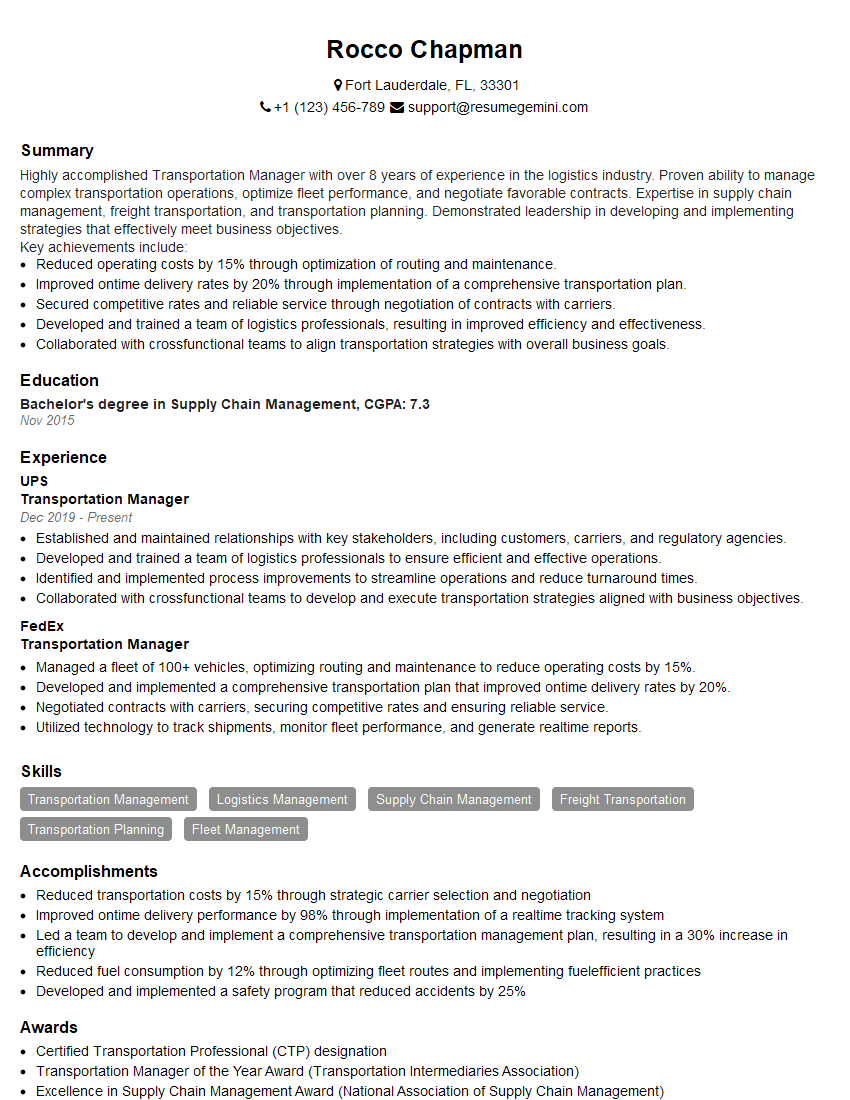
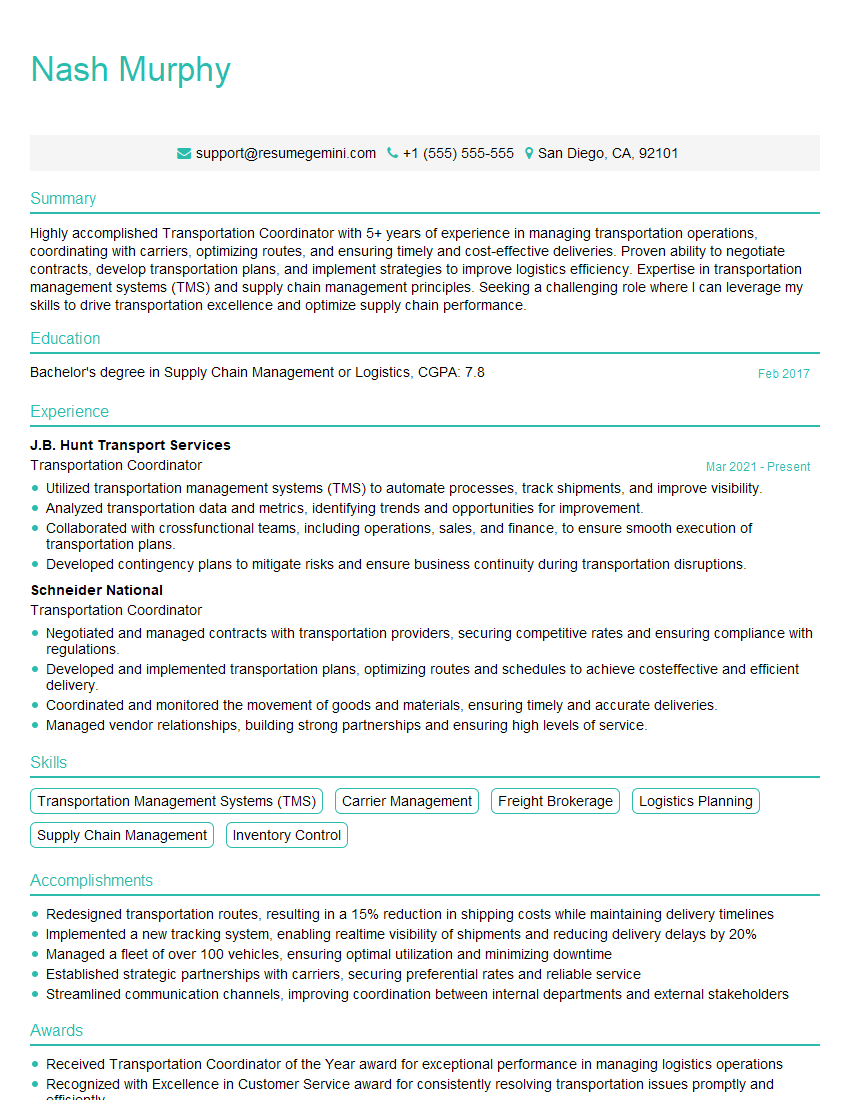
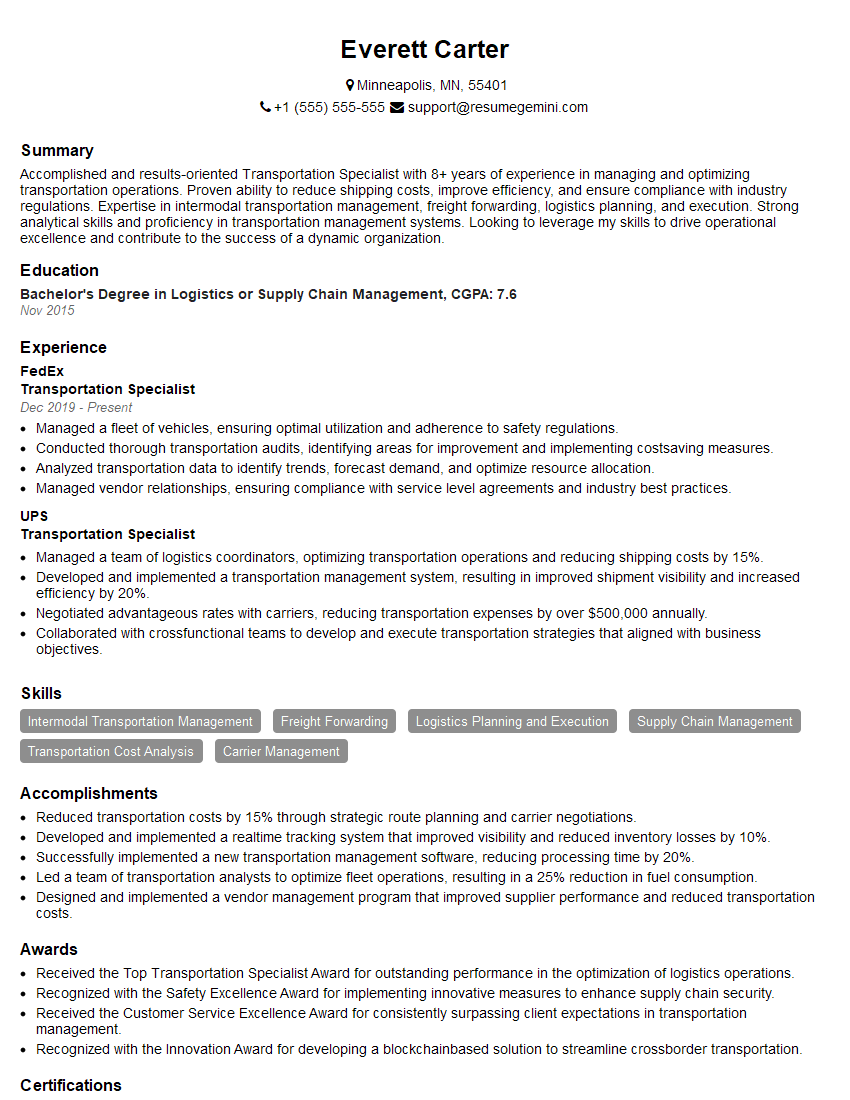
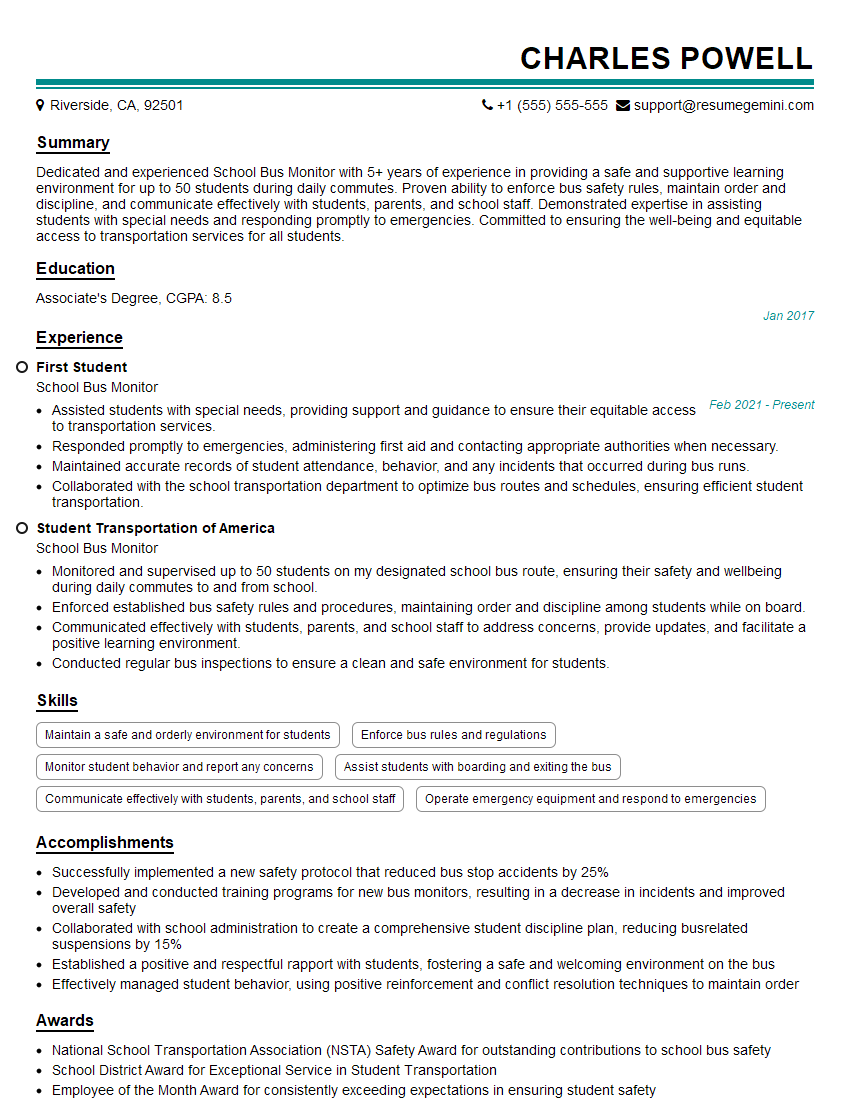
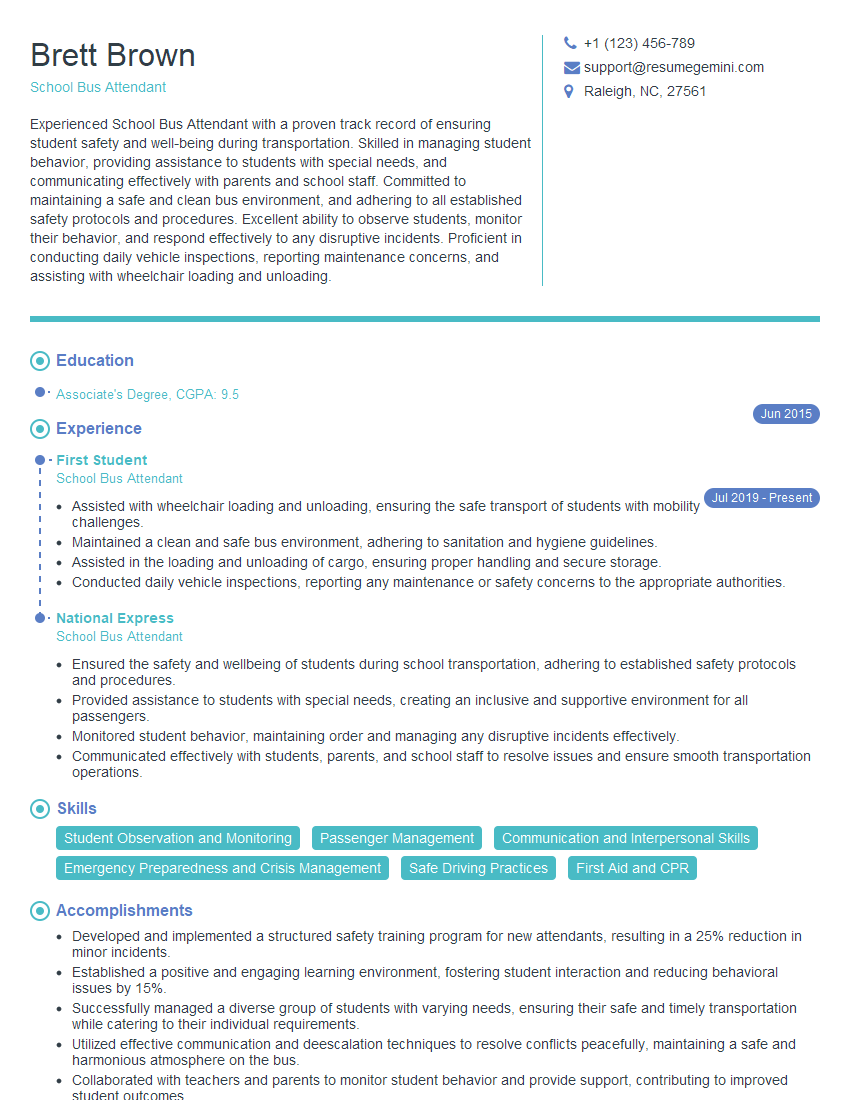
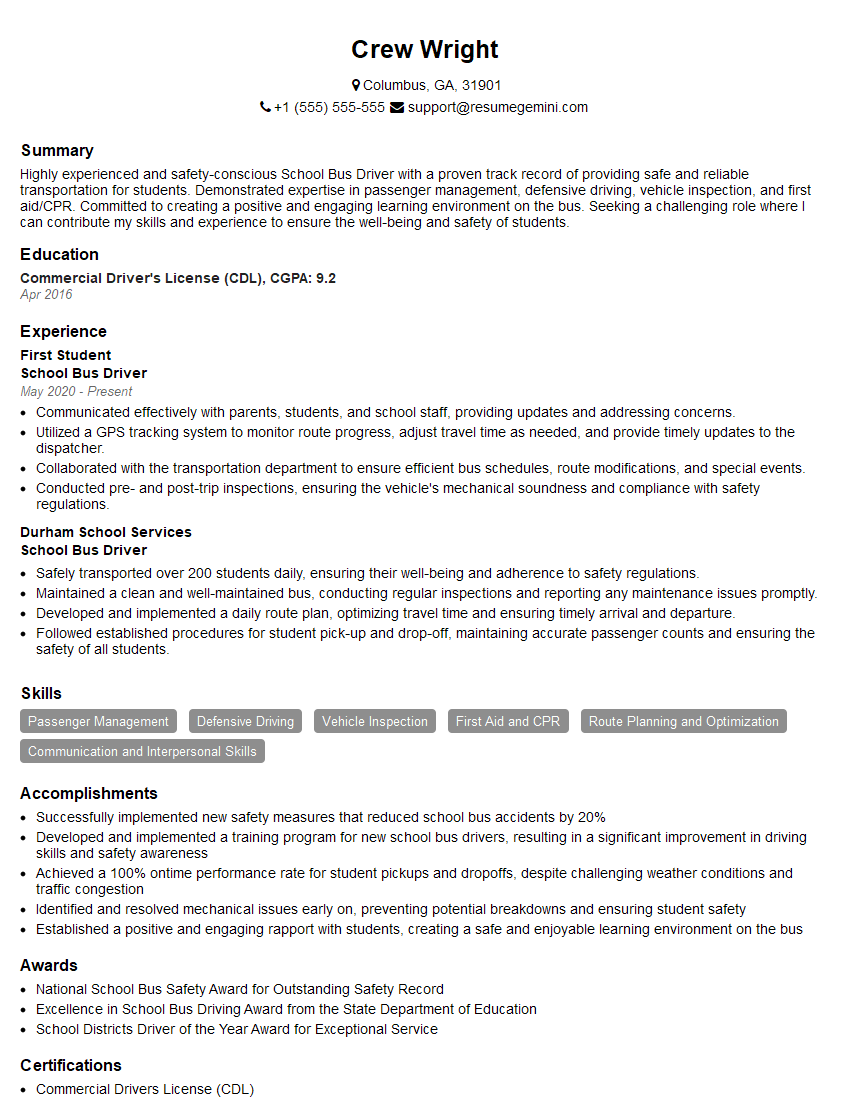
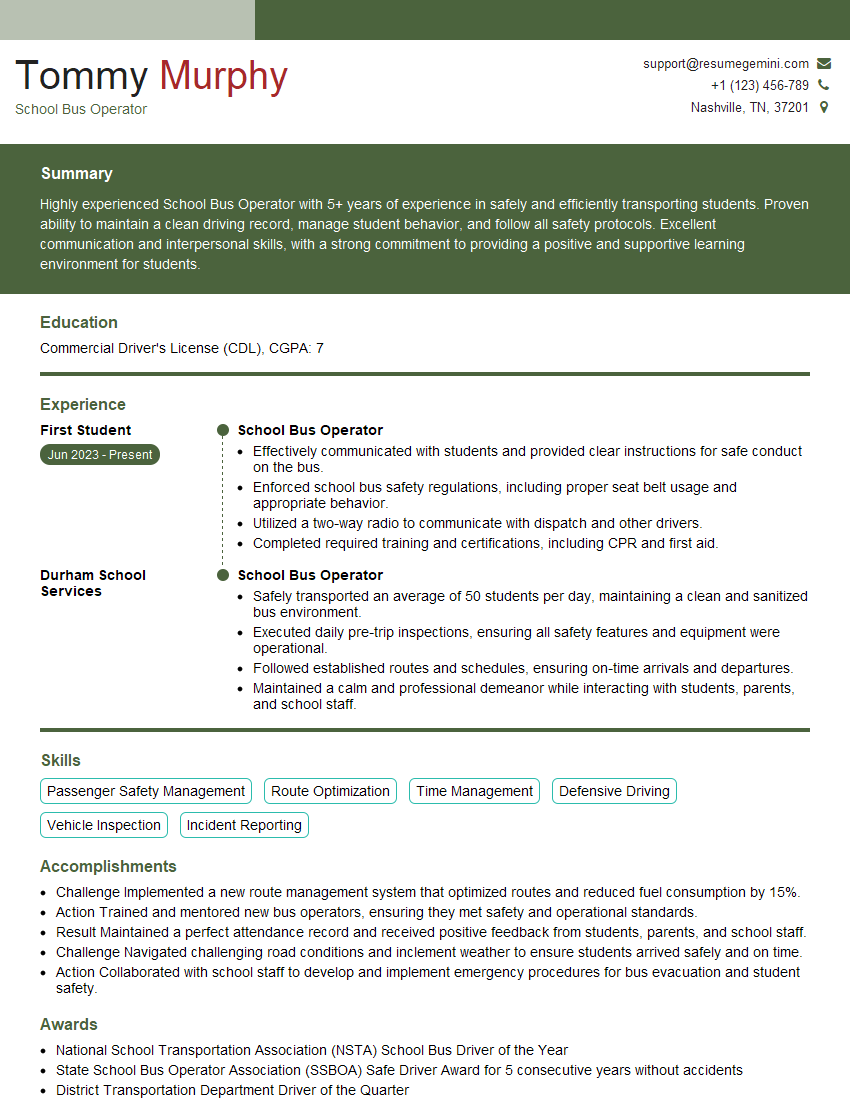
Mastering the knowledge and skills associated with a School Bus Driver’s License opens doors to a rewarding career dedicated to ensuring the safe and reliable transportation of our youngest citizens. To significantly increase your chances of landing your dream job, invest time in crafting a compelling, ATS-friendly resume that highlights your qualifications and experience. ResumeGemini is a trusted resource that can help you build a professional resume that stands out. We provide examples of resumes tailored to the School Bus Driver’s License field to guide you through the process. Take the next step towards your successful career today!
Explore more articles
Users Rating of Our Blogs
Share Your Experience
We value your feedback! Please rate our content and share your thoughts (optional).
What Readers Say About Our Blog
Very informative content, great job.
good