The thought of an interview can be nerve-wracking, but the right preparation can make all the difference. Explore this comprehensive guide to Score Reading interview questions and gain the confidence you need to showcase your abilities and secure the role.
Questions Asked in Score Reading Interview
Q 1. Explain the difference between a staff and a clef.
Imagine a musical score as a roadmap for musicians. The staff is the main road itself – a set of five horizontal lines and the spaces between them, providing the framework where musical notes are placed. It’s the foundational structure.
The clef, on the other hand, is like a signpost at the beginning of the road. It tells us which notes on the staff correspond to specific pitches. Different clefs, like the treble clef (𝄞) and the bass clef (𝄢), indicate different ranges of pitches.
Without a staff, notes would be floating without a defined position. Without a clef, we wouldn’t know which notes those positions represent. They work together to create a complete system for notating music.
Q 2. Identify the time signature 3/4 and describe its rhythmic implications.
The time signature 3/4 indicates that each measure contains three beats, and each beat is a quarter note.
This creates a moderate, often waltz-like feel. Think of a classic waltz – its gentle, flowing rhythm is largely due to the 3/4 time signature. The three beats give it a triple meter, creating a feeling of a rising and falling motion, unlike the duple meter of 2/4 or 4/4 which feels more straightforward and even.
Musicians interpret this by dividing each measure into three equal parts. The length of each beat is determined by the bottom number (the 4 in 3/4 which represents the quarter note).
Q 3. What are the common key signatures and how do they affect the music?
Key signatures define the tonality of a piece of music. They are indicated by sharps (#) or flats (♭) at the beginning of the staff.
Common key signatures include:
- C Major/A minor (no sharps or flats): The simplest key, serving as a reference point.
- G Major/E minor (one sharp): One sharp (F#) elevates the overall pitch, making the music feel brighter and more major-key-like.
- D Major/B minor (two sharps): Two sharps (F# and C#) create a feeling of further elevation.
- F Major/D minor (one flat): One flat (B♭) lowers the pitch, producing a softer, more minor-key-like sound.
Each additional sharp or flat shifts the overall tonality, altering the relationships between notes and creating unique melodic and harmonic possibilities. These changes in key profoundly impact the mood and character of the music, making some sound brighter and happier, and others darker and more serious.
Q 4. Explain the function of different types of rests.
Rests represent silence in music, just as notes represent sound. Different rests denote different durations of silence, mirroring note values.
Common rests include:
- Whole rest: A whole note’s worth of silence.
- Half rest: Half a whole note’s worth of silence.
- Quarter rest: A quarter note’s worth of silence.
- Eighth rest: An eighth note’s worth of silence.
The function is straightforward: They indicate when a musician should not play, creating rhythmic variety and contrast within a musical phrase or piece. Just as notes create melodic shapes, rests sculpt the rhythmic contour of a composition.
Q 5. Interpret a given melodic contour (ascending, descending, stepwise, leaps).
Melodic contour refers to the overall shape of a melody, defined by the direction of its pitch movement.
- Ascending: The melody moves upwards in pitch.
- Descending: The melody moves downwards in pitch.
- Stepwise: The melody moves between notes that are adjacent to each other on the scale (e.g., C to D).
- Leaps: The melody jumps between notes that are not adjacent (e.g., C to E).
Understanding melodic contour is crucial for interpreting a melody’s emotional expression. Ascending melodies often convey feelings of joy or triumph, while descending melodies might suggest sadness or resolution. A combination of stepwise and leap movements create interesting melodic phrases.
Q 6. Identify the different types of note values (whole, half, quarter, etc.).
Note values represent the duration of a note. The most common values are:
- Whole note (o): Four beats.
- Half note (d): Two beats.
- Quarter note (♩): One beat.
- Eighth note (♪): Half a beat.
- Sixteenth note (𝅗𝅥): Quarter of a beat.
These values are relative to the time signature. In 4/4 time, a whole note lasts for four beats, but in 3/4, it would last three. Understanding note values is fundamental to accurately performing a piece of music.
Q 7. Explain the concept of meter and rhythmic groupings.
Meter refers to the organization of beats into regular, recurring groups called measures. It defines the pulse and rhythmic framework of music. The time signature (e.g., 4/4, 3/4) dictates the meter.
Rhythmic groupings are how these beats are subdivided and accented within a measure, influencing the feel of the music. A 4/4 time signature might be felt as four separate beats, or as two groups of two, or even one group of four, depending on the rhythmic patterns used.
For example, a simple 4/4 piece might feel strongly four-beat, while a piece with syncopation – deliberate displacement of the accent – might have a more complex rhythmic feel. Understanding meter and rhythmic groupings is essential to interpret and perform music effectively, and to create your own music with a distinct character.
Q 8. Describe the difference between major and minor keys.
The difference between major and minor keys lies primarily in their characteristic intervals and the resulting emotional effect. A major key sounds bright, happy, and optimistic, while a minor key tends to sound darker, sadder, or more introspective. This difference stems from the arrangement of the notes within the scale.
A major scale is built using the formula: whole step, whole step, half step, whole step, whole step, whole step, half step. A minor scale uses a slightly different formula: whole step, half step, whole step, whole step, half step, whole step, whole step (this is the natural minor scale; there are also harmonic and melodic minor scales with variations in the intervals).
For example, a C major scale (C-D-E-F-G-A-B-C) is bright and cheerful, while a C minor scale (C-D-Eb-F-G-Ab-Bb-C) feels much more subdued. The difference is notably in the third degree of the scale: a major third (E in C major) gives the major sound, while a minor third (Eb in C minor) creates the minor sound.
Think of it like this: major keys are often used in celebratory music, whereas minor keys are common in pieces that evoke sadness or reflection. Composers intentionally use these keys to influence the listener’s emotional response.
Q 9. Interpret dynamic markings (e.g., p, mf, f, etc.).
Dynamic markings indicate the volume or intensity at which a piece of music should be played. They are abbreviations of Italian words and are crucial for expressing the musical phrasing and emotion.
p(piano): softmp(mezzo piano): moderately softmf(mezzo forte): moderately loudf(forte): loudff(fortissimo): very loudppp(pianississimo): extremely softfff(fortississimo): extremely loudcresc.(crescendo): gradually getting louderdim.(diminuendo): gradually getting softer
These markings aren’t always absolute; a p in a symphony will be louder than a p in a solo piano piece. The context is vital. A crescendo followed by a sudden diminuendo can create a powerful dramatic effect, for instance, mirroring a build-up of tension and then a release.
Q 10. Explain the function of articulation markings (e.g., legato, staccato, etc.).
Articulation markings specify how notes should be played regarding their connection and duration. They greatly impact the character and feel of the music.
legato(connected): notes are played smoothly and connected, with no gaps between them. Think of it as a flowing, continuous sound.staccato(detached): notes are played short and detached, with distinct gaps between them. The sound is crisp and articulated.marcato(marked): notes are played with emphasis and a slightly longer duration, often used to highlight rhythmic accents.tenuto(held): notes are played with their full value, without any shortening or cutting off.
Imagine playing a melody: legato would create a smooth, lyrical line, while staccato would make it more rhythmic and percussive. The choice of articulation significantly affects the expressive qualities of the music, reflecting the composer’s intention and the performer’s interpretation.
Q 11. Identify various types of musical forms (e.g., sonata form, rondo, etc.).
Musical forms provide a framework for organizing musical ideas. Different forms have distinct structures and characteristics.
- Sonata Form: Typically consists of three sections: exposition (presents the main themes), development (explores the themes), and recapitulation (restates the themes).
- Rondo Form: Characterized by a recurring main theme (A) interspersed with contrasting episodes (B, C, etc.). A common pattern is ABACA.
- Theme and Variations: A single melodic idea (theme) is repeated and transformed through various changes in harmony, rhythm, melody, or dynamics.
- Binary Form: Divided into two main sections (A and B), often contrasting in character.
- Ternary Form (ABA): Consists of three sections: A (main theme), B (contrasting theme), and A (return of the main theme).
Understanding these forms is essential for analyzing and interpreting musical works. They provide insights into the composer’s structure and storytelling.
Q 12. Describe the structure of a given musical phrase.
The structure of a musical phrase is akin to a sentence in language. It’s a coherent musical idea, typically containing a motive (a short, recurring melodic fragment) and progressing towards a sense of completion (cadence). Phrases can be analyzed based on their melodic contour (rise and fall of the pitch), rhythm, and harmony.
A simple phrase might have a rising melodic contour, leading to a peak, then falling to a resting point (cadence). Its length can vary greatly, but there’s an inherent musical logic in its progression. A phrase might also be characterized by repetition, sequence (repetition of a motive at different pitch levels), or other melodic devices.
Consider a simple four-bar phrase: each bar contributes to the overall shape and meaning of the phrase. Analyzing phrases helps us understand the composer’s musical thinking and how they build musical ideas into larger structures.
Q 13. Explain the concept of harmony and chord progressions.
Harmony refers to the simultaneous combination of notes, creating chords and progressions that provide depth and structure to the melody. Chord progressions are sequences of chords that create harmonic movement and progression within a piece.
A simple analogy would be the foundation of a building: the melody is the building itself, while the harmony provides the solid base (or sometimes, a surprising architectural twist!) Each chord has its own character and function within a progression. For example, a tonic chord (I) provides stability and resolution, while a dominant chord (V) creates tension and a need for resolution.
Common chord progressions, like the I-IV-V-I progression (e.g., C-F-G-C in C major), create a satisfying sense of closure. The interplay of tension and release, provided by different chords and their progression, is what makes harmony such a powerful expressive tool.
Q 14. Identify common chord symbols (e.g., Cmaj7, Gmin7, etc.).
Chord symbols are shorthand notations that represent the notes and quality of a chord. They typically consist of a root note followed by other symbols indicating the chord type.
Cmaj7(C Major Seventh): C-E-G-BGmin7(G Minor Seventh): G-Bb-D-FAmin(A Minor): A-C-ED7(D Dominant Seventh): D-F#-A-C
Understanding chord symbols allows musicians to quickly grasp the harmonic content of a piece. These symbols are essential for improvisation, composition, and analysis, streamlining communication among musicians.
Q 15. Explain the use of accidentals (sharps, flats, naturals).
Accidentals are symbols that temporarily alter the pitch of a note. Sharps (♯) raise a note by a half step, flats (♭) lower it by a half step, and naturals (♮) cancel a previous sharp or flat within the same measure. Think of them as temporary ‘overrides’ to the key signature.
For example, in the key of C major (no sharps or flats), if you see an F♯, it means that specific F is raised a half step. If later in the same measure you see an F♮, it means the F returns to its natural, unaltered pitch. Key signatures, on the other hand, establish the overall tonal context for a piece, affecting all notes of a particular letter name within that key. Accidentals provide localized alterations within the prevailing key.
- Sharp (♯): Raises a note by a half step. Example:
C♯ - Flat (♭): Lowers a note by a half step. Example:
B♭ - Natural (♮): Cancels a previous sharp or flat. Example:
A♮(cancelling a previous A♭ or A♯)
Understanding accidentals is crucial for accurate pitch and intonation, ensuring you play the correct notes within a given musical context.
Career Expert Tips:
- Ace those interviews! Prepare effectively by reviewing the Top 50 Most Common Interview Questions on ResumeGemini.
- Navigate your job search with confidence! Explore a wide range of Career Tips on ResumeGemini. Learn about common challenges and recommendations to overcome them.
- Craft the perfect resume! Master the Art of Resume Writing with ResumeGemini’s guide. Showcase your unique qualifications and achievements effectively.
- Don’t miss out on holiday savings! Build your dream resume with ResumeGemini’s ATS optimized templates.
Q 16. How do you approach sight-reading unfamiliar music?
Sight-reading unfamiliar music involves a multi-step approach that combines preparation and a strategic reading process. I first start by scanning the entire piece to get a sense of the overall structure, time signature, key signature, and general tempo. This gives me a ‘map’ of the musical landscape.
Then, I begin reading systematically, focusing on small chunks at a time – maybe four to eight bars depending on the complexity. I pay close attention to the rhythmic patterns and melodic contours. If I encounter unfamiliar harmonies, I try to analyze them based on their function within the harmonic progression. As I read and play, I maintain a relaxed but focused approach, focusing on accuracy over speed initially. Repeated practice then builds fluency.
In essence, it’s like exploring an unfamiliar city. I’d get a general overview first, explore a few blocks at a time, check the map to make sure I’m on the right street, and then explore more as I become comfortable with my surroundings.
Q 17. Describe your strategies for improving sight-reading skills.
Improving sight-reading is a continuous process. My strategies involve consistent, focused practice, using a variety of materials to expose myself to different styles and complexities. I focus on:
- Regular, Short Practice Sessions: 15-30 minutes daily is more effective than infrequent long sessions.
- Varied Repertoire: Working with different styles (Classical, Jazz, Popular) and levels of difficulty helps build adaptability.
- Metronome Work: Developing rhythmic precision through consistent metronome practice is critical.
- Systematic Approach: Focusing on small sections, mastering them before moving on.
- Recording and Analysis: Recording myself and analyzing the performance identifies areas needing improvement.
- Working with a Teacher: Receiving feedback from an experienced teacher is invaluable.
It’s a marathon, not a sprint. Consistent, well-structured practice yields the greatest results.
Q 18. What are your strengths and weaknesses in score reading?
My strengths lie in my ability to quickly grasp the overall structure and harmonic language of a piece. I’m proficient in various musical styles and can adapt my approach to different contexts. My rhythmic accuracy is also a significant asset.
However, my weakness lies in handling extremely complex contemporary scores with highly irregular rhythms and extended techniques. I’m constantly working on expanding my capacity to handle these challenges by actively seeking out and analyzing this type of music.
Q 19. How do you handle complex rhythms and time signatures?
Complex rhythms and time signatures demand careful attention to detail and a methodical approach. I begin by analyzing the rhythmic notation meticulously, breaking down complex patterns into smaller, manageable units. I might use subdivision techniques, clapping or tapping my foot to internalize the rhythm before attempting to play it.
For unusual time signatures, I mentally subdivide the measure to understand the pulse and phrasing. For instance, if the piece is in 7/8, I might think of it as 3 + 4 or 2 + 2 + 3, depending on how it’s notated and the phrasing of the music. Using a metronome and gradually increasing the tempo helps ensure rhythmic precision.
Practice is key. Repeated exposure and rhythmic exercises significantly enhance my ability to tackle intricate rhythmic challenges.
Q 20. How do you interpret expressive markings in a score?
Expressive markings—dynamics (piano, forte, crescendo, etc.), tempo markings (allegro, adagio, etc.), articulation markings (staccato, legato, etc.)—are crucial to convey the composer’s intentions. I interpret them not just as instructions, but as guidelines to shape the emotional arc of the music.
For instance, a crescendo isn’t just a gradual increase in volume; it’s a building of intensity, reflecting the emotional development of the phrase. Similarly, legato isn’t just smooth connection of notes, but also a way to create a certain flow and mood. I consider the context of the music, the surrounding harmonies, and the overall narrative to inform my interpretation of these markings. It’s about telling the story the composer intended, not just playing the notes.
Q 21. Describe your experience working with different musical styles.
My experience spans a variety of musical styles including Classical, Baroque, Romantic, Jazz, and contemporary music. This diverse background has enhanced my adaptability and broadened my understanding of musical structures and expressive techniques. Each style presents unique challenges and rewards, and my proficiency in them reflects my commitment to continuous learning and exploration.
Working with diverse styles has provided me with a deeper comprehension of musical language, helping me to approach sight-reading with flexibility and understanding, regardless of the musical era or genre.
Q 22. How do you adapt your score reading approach to different instrumental or vocal ranges?
Adapting my score reading approach to different instrumental or vocal ranges involves a multifaceted strategy focusing on understanding the instrument’s or voice’s unique capabilities and limitations. It’s not just about reading the notes; it’s about interpreting the music in a way that makes sense for the specific timbre and technical possibilities.
Range Consideration: I first identify the extreme notes of the range. This helps me mentally map the tessitura (the comfortable range) and anticipate any challenging high or low notes that might require adjustments in breath support (for vocalists) or fingering/bowing (for instrumentalists).
Technical Limitations: I consider the instrument’s or voice’s technical limitations. For example, a flute might struggle with certain rapid passages that a clarinet can easily execute, while a bass voice may find certain high notes challenging. I anticipate these difficulties and plan accordingly, perhaps adjusting my tempo or phrasing to accommodate them.
Timbral Considerations: The instrument’s or voice’s timbre greatly influences the interpretation. A rich, resonant cello passage needs to be approached differently than a bright, agile violin passage. My approach involves visualizing the sound and choosing phrasing that best suits the instrument’s sonic character.
Example: When sight-reading a piece for soprano saxophone, I focus on breath control and agility in faster passages, and ensure I can comfortably reach the highest notes without strain. For a cello part, I prioritize a smooth, legato phrasing and focus on the richness and depth of tone.
Q 23. How do you prepare for a performance involving sight-reading?
Preparing for a sight-reading performance is crucial and involves a structured approach, focusing on efficiency and minimizing surprises. I treat sight-reading not as a spontaneous act, but as a skill honed through practice and preparation.
Pre-Performance Analysis: If possible, I get a glimpse of the piece beforehand. Even a brief look allows me to get an idea of the key, time signature, and general style. This primes my brain and reduces initial shock.
Warm-up Exercises: I always warm-up my instrument or voice, concentrating on exercises that target the specific range and technical demands of the upcoming piece. This includes scales, arpeggios, and relevant technical exercises. A musician needs to be ready to perform.
Mental Rehearsal: I mentally rehearse sections, focusing on difficult passages. This is akin to a mental dry run – I visualize the notes and fingering/vocalization, helping smooth the process.
Focus on Structure: I prioritize understanding the overall structure. Identifying phrases, cadences, and form gives a roadmap, allowing me to navigate the music more efficiently.
Prioritize Clarity: My focus during sight-reading is always on clarity over speed. A well-played, though slightly slower interpretation is far preferable to a fast, inaccurate performance.
Q 24. Describe a time you overcame a challenge related to score reading.
One time, I had to sight-read a very complex piece of contemporary music with numerous unusual rhythmic notations and microtonal intervals. The score was visually daunting, and initially, I felt overwhelmed. My initial attempt was fraught with errors.
To overcome this, I broke down the process into smaller, manageable chunks. I started by analyzing the rhythmic patterns, identifying the core rhythmic units and building from there. Then, I tackled the melodic lines, focusing on understanding the microtonal intervals by relating them to familiar tonal intervals. Finally, I practiced slowly, focusing on accuracy above speed, gradually increasing the tempo as my confidence grew. The key was patience and a systematic approach.
This experience reinforced the importance of a structured approach and the need to manage anxiety through a methodical breakdown of challenging musical passages.
Q 25. Explain your approach to understanding a complex musical score.
Understanding a complex musical score is a process that requires meticulous attention to detail and a holistic approach. My strategy involves several key steps:
Initial Overview: I start with a broad overview, looking at the overall structure (sonata form, theme and variations, etc.), key signatures, time signatures, and the overall mood or character suggested by the composer’s markings.
Detailed Analysis: I then delve into the details – analyzing the melodic lines, harmonic progressions, rhythmic patterns, and dynamic markings. I pay close attention to any composer’s notes or annotations.
Contextual Understanding: Understanding the historical context of the piece is vital. Knowing the composer’s style and influences helps me interpret the musical choices. Researching the historical period and the musical style can offer invaluable insights.
Structural Breakdown: I break down the score into smaller sections, identifying phrases and cadences. This helps me grasp the flow of the music more effectively and to anticipate changes in direction.
Listening: If a recording exists, listening to a performance can aid understanding. However, I avoid letting the recording dictate my interpretation; it’s a guide, not a prescription.
Q 26. How do you ensure accuracy and efficiency while sight-reading?
Ensuring accuracy and efficiency in sight-reading involves a combination of technical skill, strategic planning, and mental discipline. It’s a process of balancing speed and precision.
Prioritize Accuracy over Speed: I always prioritize accurate note reading and articulation over speed. A perfectly executed slow interpretation is far better than a fast, inaccurate one.
Chunking: I approach the score in small chunks, focusing on short musical phrases before moving on. This helps avoid getting lost in the details.
Anticipation: I try to anticipate upcoming passages, scanning ahead while playing. This allows for smoother transitions and better phrasing.
Practice: Regular practice of sight-reading exercises is crucial. This enhances both speed and accuracy.
Systematic Approach: Following a systematic approach – melody first, then harmony, rhythm, dynamics – ensures I cover all elements of the musical notation.
Q 27. How do you maintain your focus and concentration during sight-reading tasks?
Maintaining focus and concentration during sight-reading requires discipline and strategic techniques. Distractions are inevitable, but we can minimize their impact.
Mindfulness and Breathing: I use controlled breathing techniques to help center myself and reduce anxiety. Deep, slow breaths help maintain focus and reduce tension.
Mental Rehearsal: Before sight-reading, I mentally rehearse the sections I anticipate being challenging. This reduces anxiety and improves performance.
Physical Comfort: Ensuring a comfortable playing posture and a well-lit environment contributes significantly to focus.
Minimize Distractions: I work in a quiet, distraction-free environment to minimize interruptions.
Regular Breaks: Taking short, regular breaks during extended sight-reading sessions helps prevent fatigue and maintain concentration.
Key Topics to Learn for Score Reading Interview
- Understanding Musical Notation: Mastering the fundamentals of clef, key signatures, time signatures, and note values is crucial. Practice identifying these elements quickly and accurately.
- Rhythm and Meter: Develop a strong sense of rhythm and meter. Be prepared to analyze complex rhythmic patterns and identify metrical irregularities.
- Harmonic Analysis: Understand basic chord progressions, Roman numeral analysis, and identifying harmonic functions within a score. Practice analyzing simple and complex harmonic structures.
- Form and Structure: Learn to recognize common musical forms (e.g., sonata form, rondo form) and understand how they are reflected in the score. Practice identifying sections and their relationships.
- Texture and Orchestration: Analyze the texture of a piece (monophonic, homophonic, polyphonic) and understand how different instruments are used to create specific sonic effects.
- Practical Application: Practice sight-reading excerpts from various periods and styles. Focus on accurate note reading, rhythm, and interpretation.
- Problem-Solving: Develop strategies for tackling unfamiliar scores. Practice identifying key elements quickly and efficiently, even under pressure.
- Contextual Understanding: Develop an understanding of the historical and stylistic context of the music you are reading. This will enhance your interpretation and analysis.
Next Steps
Mastering score reading is essential for career advancement in numerous music-related fields, opening doors to exciting opportunities in performance, teaching, composition, and music analysis. To maximize your job prospects, crafting a compelling and ATS-friendly resume is crucial. ResumeGemini is a trusted resource that can help you build a professional resume that highlights your skills and experience effectively. ResumeGemini provides examples of resumes tailored to Score Reading professionals, ensuring your application stands out. Invest time in crafting a strong resume – it’s your first impression with potential employers.
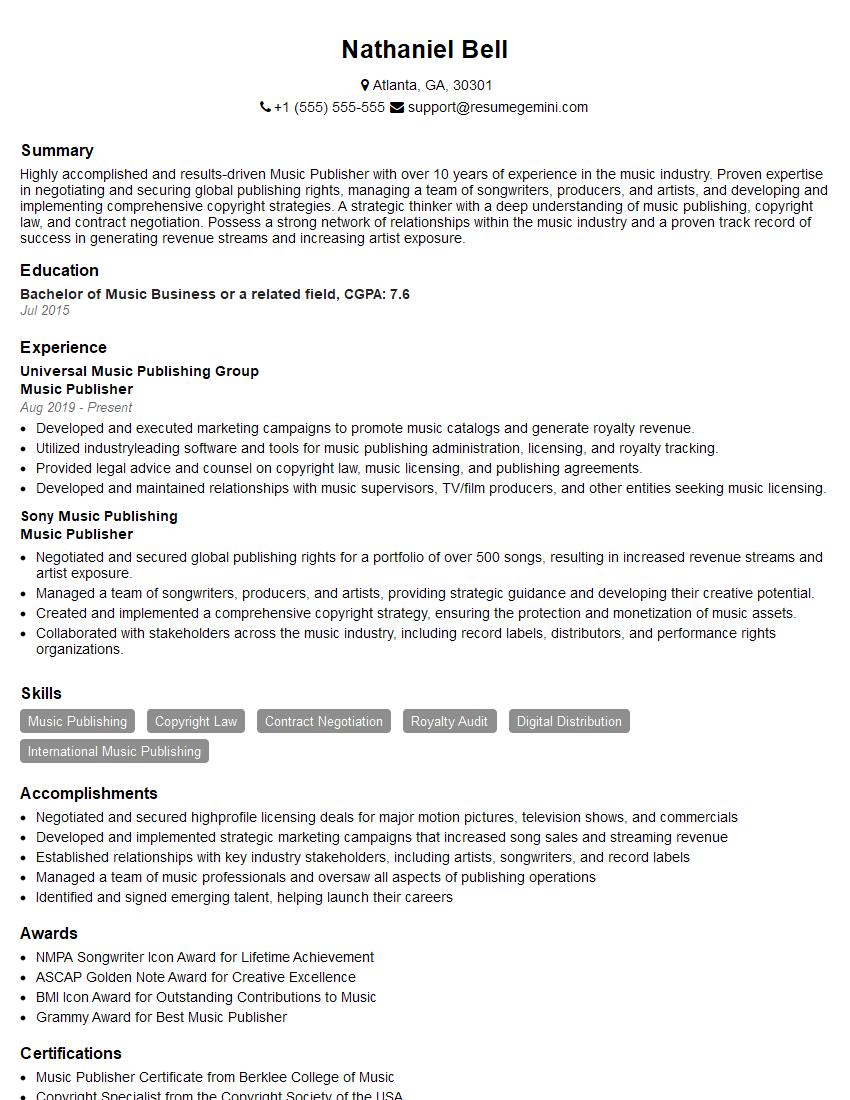
Music Publisher Resume Sample

Music Agent Resume Sample
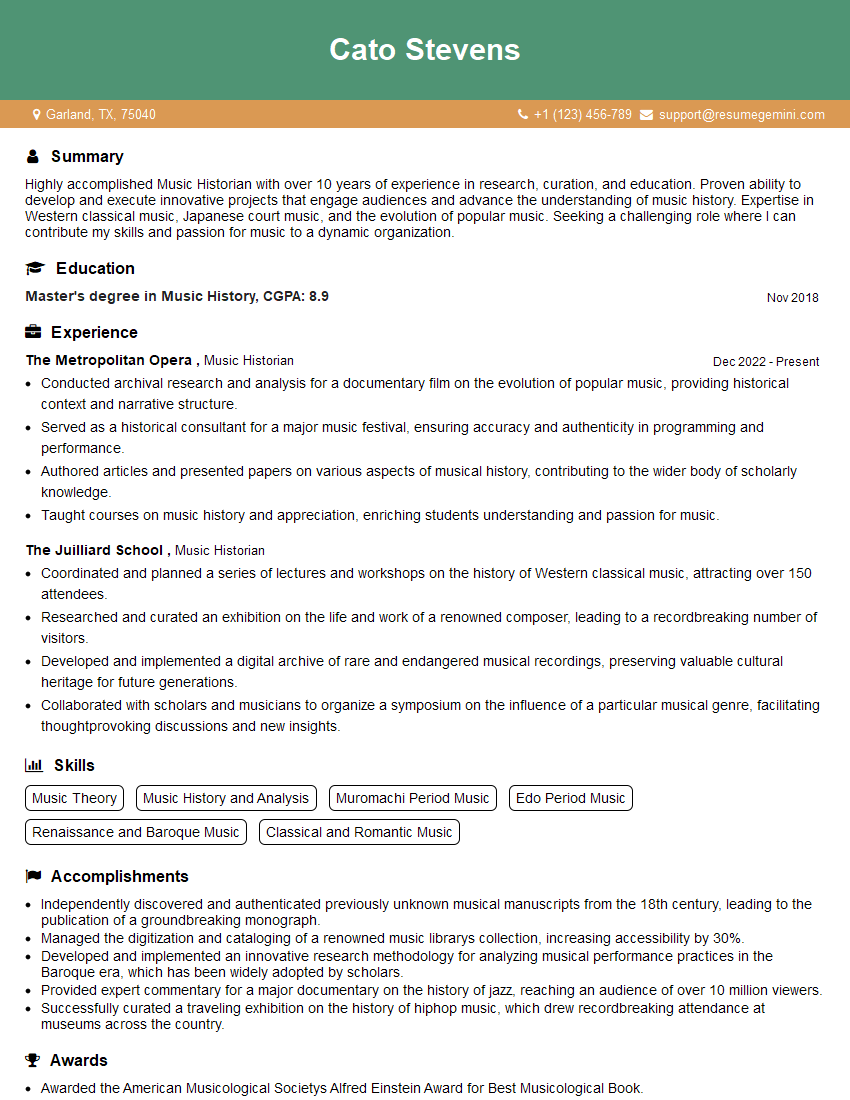
Music Historian Resume Sample
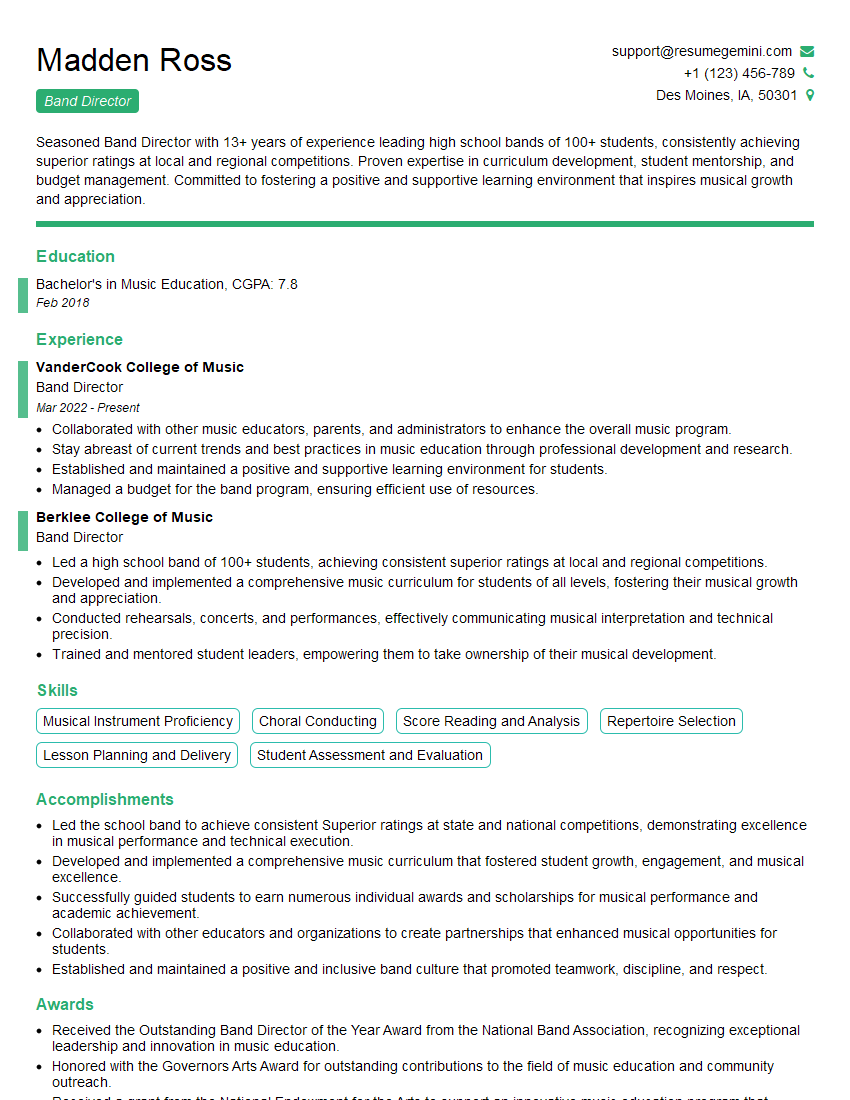
Band Director Resume Sample
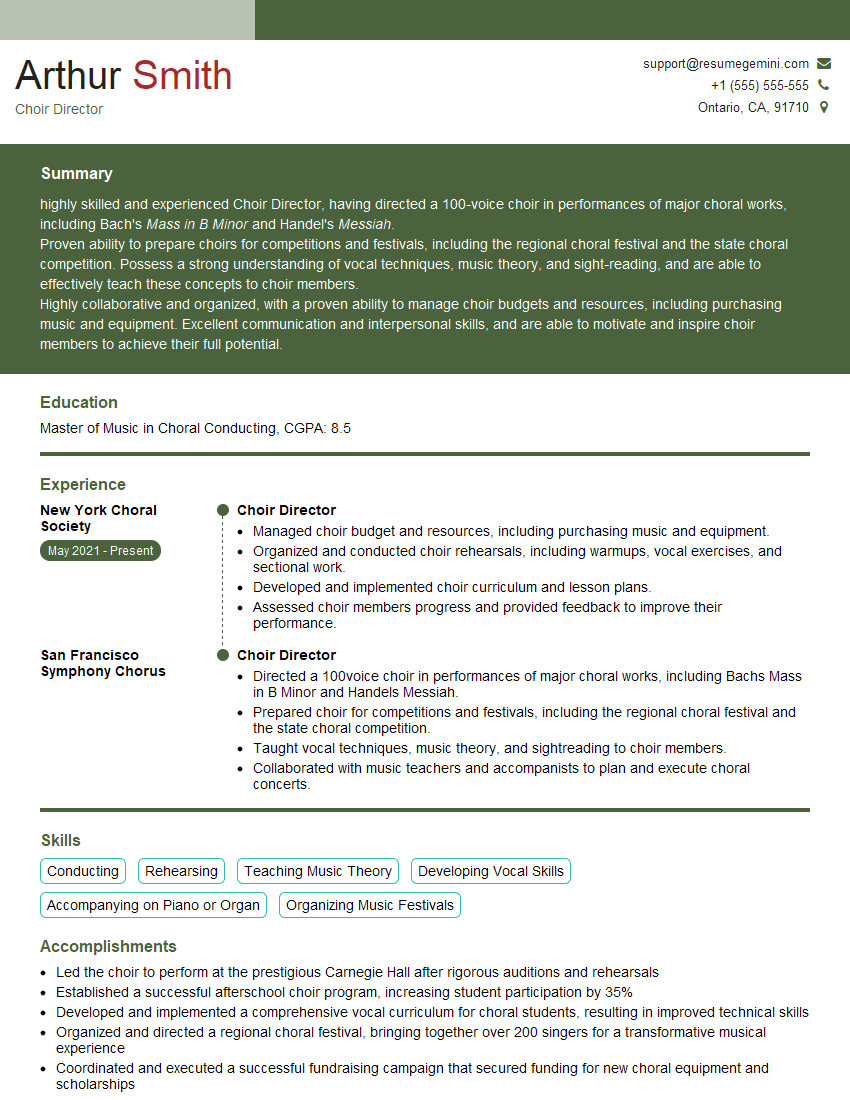
Choir Director Resume Sample
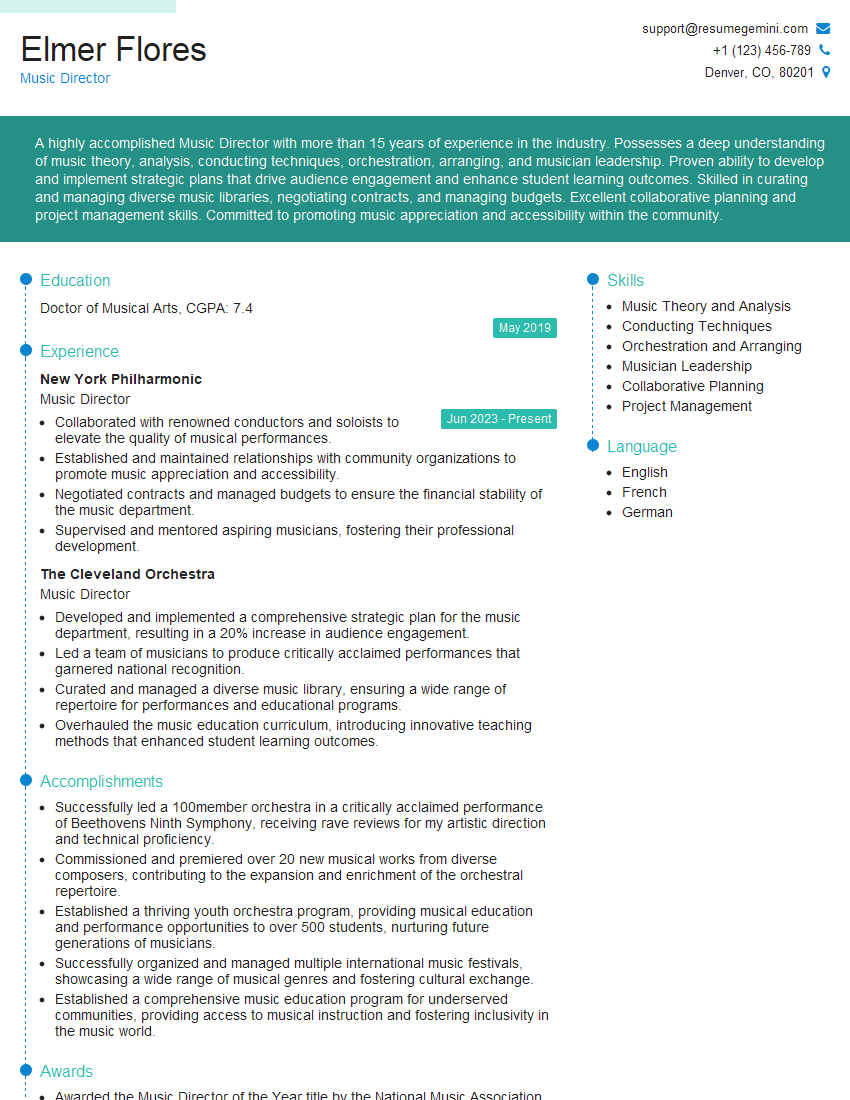
Music Director Resume Sample

Music Teacher Resume Sample
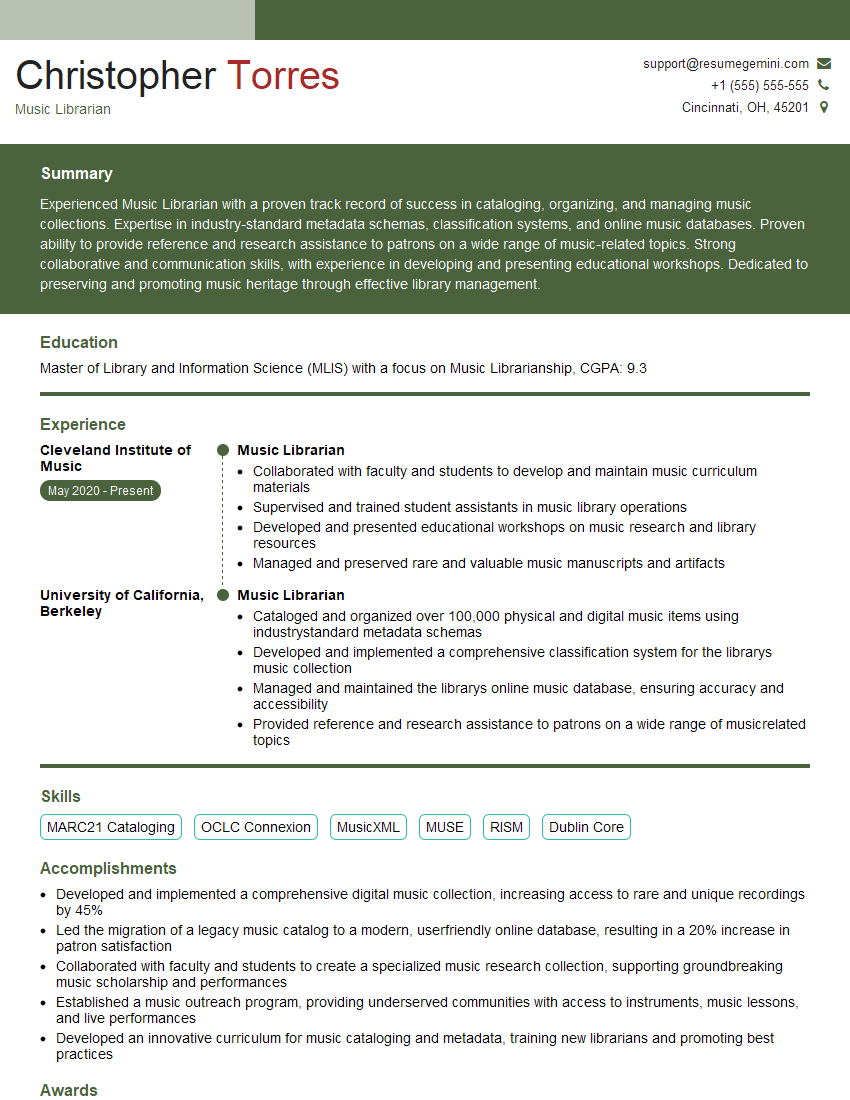
Music Librarian Resume Sample
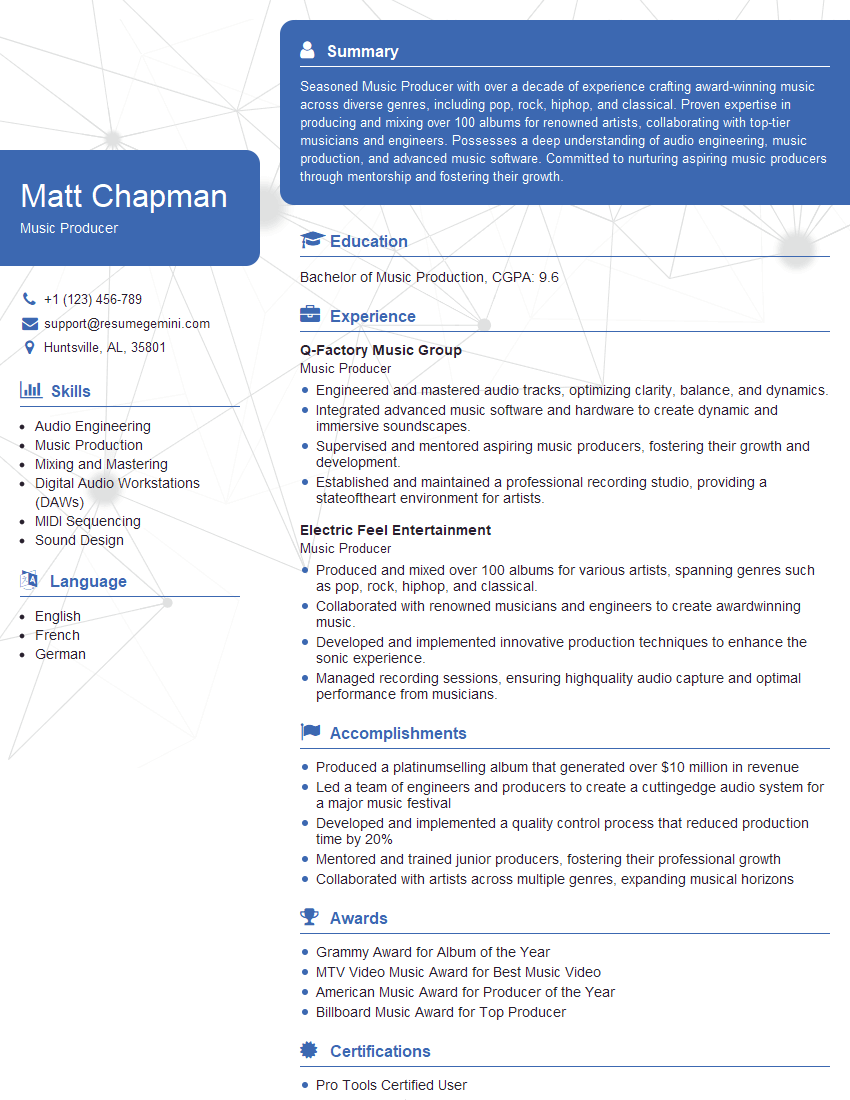
Music Producer Resume Sample
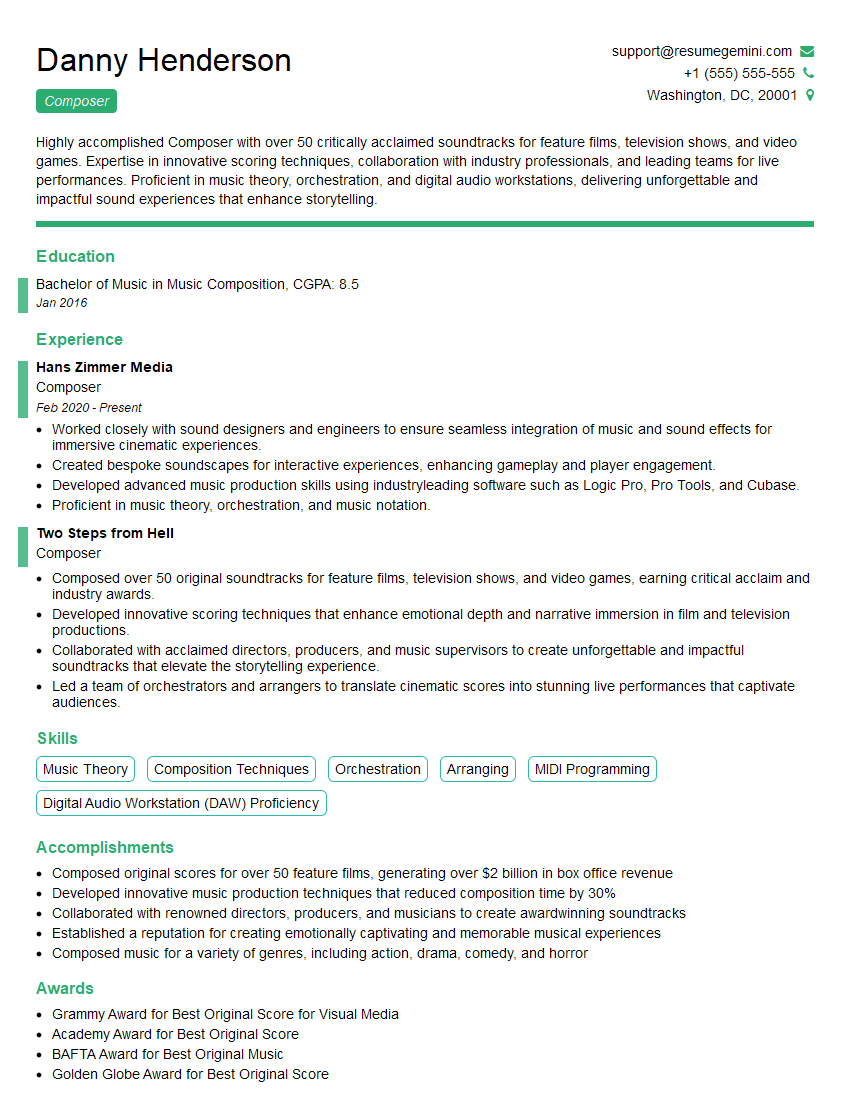
Composer Resume Sample
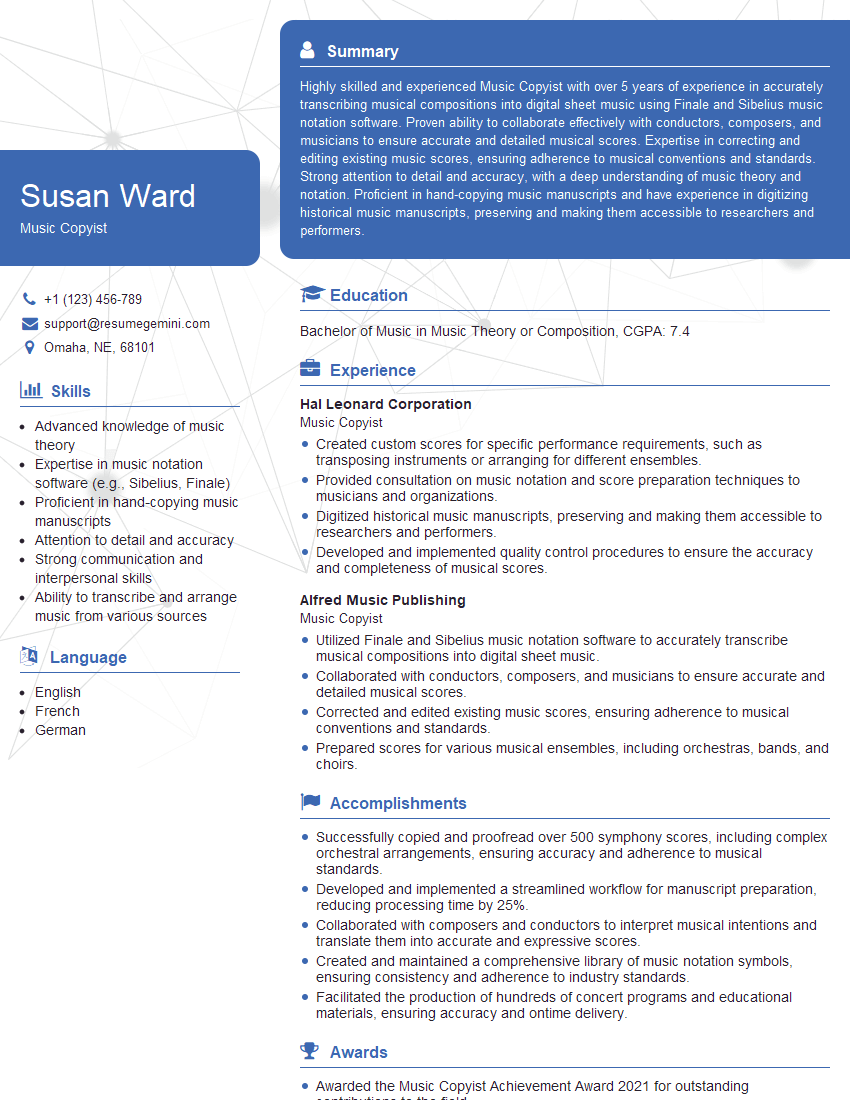
Music Copyist Resume Sample
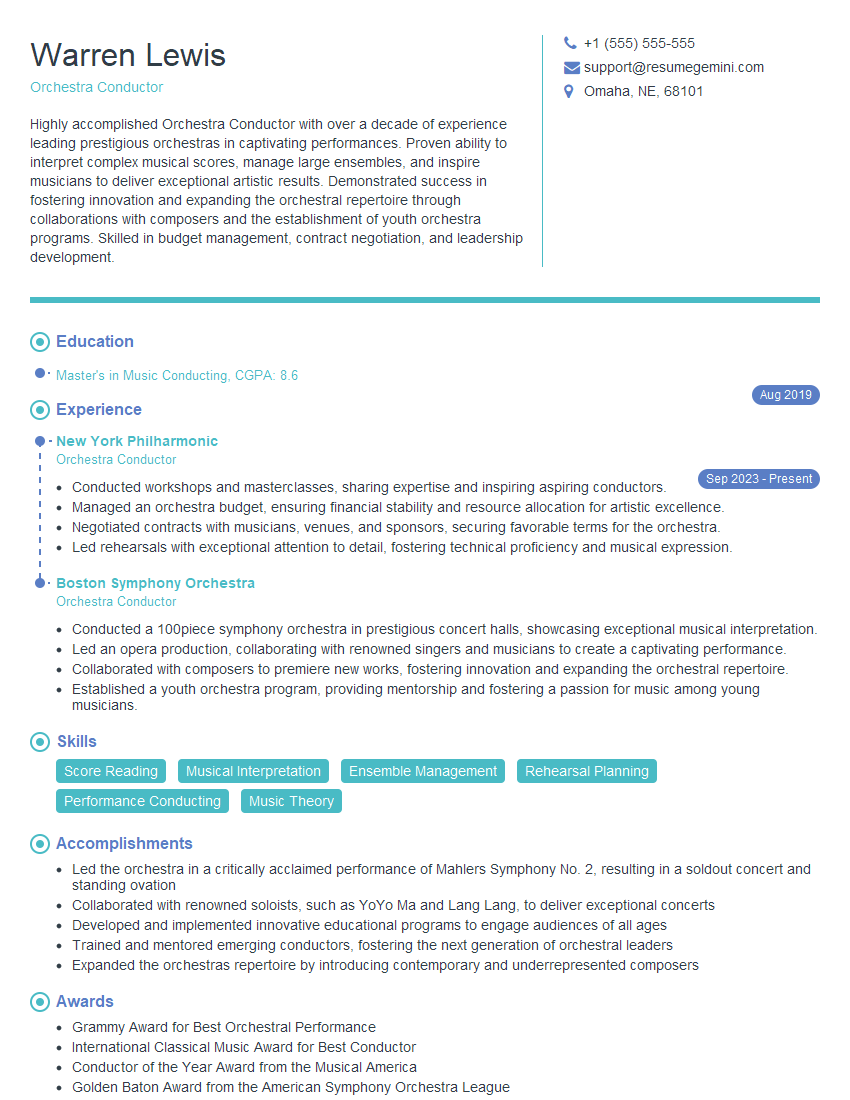
Orchestra Conductor Resume Sample
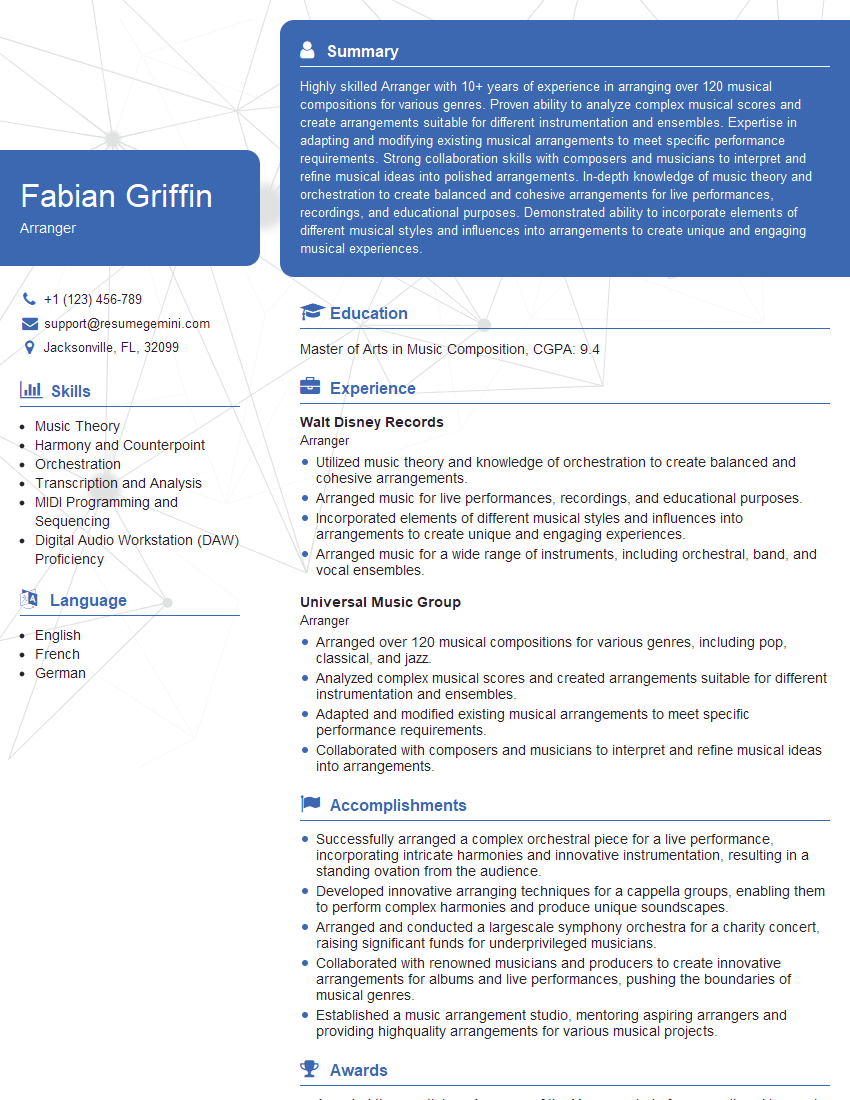
Arranger Resume Sample
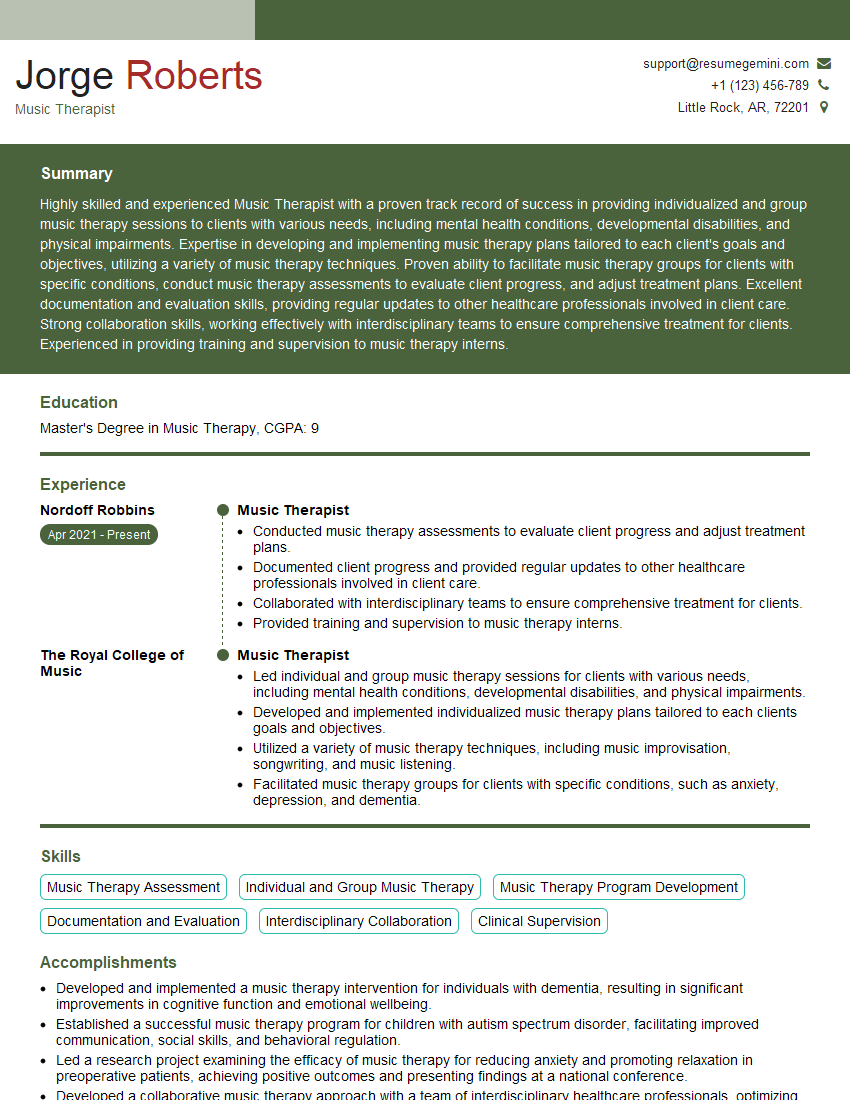
Music Therapist Resume Sample
Explore more articles
Users Rating of Our Blogs
Share Your Experience
We value your feedback! Please rate our content and share your thoughts (optional).
What Readers Say About Our Blog
Very informative content, great job.
good