Feeling uncertain about what to expect in your upcoming interview? We’ve got you covered! This blog highlights the most important Seam Allowance Adjustment interview questions and provides actionable advice to help you stand out as the ideal candidate. Let’s pave the way for your success.
Questions Asked in Seam Allowance Adjustment Interview
Q 1. What are the standard seam allowances used in the apparel industry?
Standard seam allowances in the apparel industry aren’t universally fixed, varying based on the garment type, fabric weight, and manufacturer’s preferences. However, some common allowances include:
- 5/8 inch (1.59 cm): This is a very common allowance for many garments, offering a good balance between seam strength and minimizing bulk.
- ½ inch (1.27 cm): Often used for lighter-weight fabrics or where a narrower seam is desired.
- ¼ inch (0.64 cm): Used for very lightweight fabrics, decorative seams, or when minimal bulk is crucial.
- ¾ inch (1.91 cm): Sometimes employed for heavier fabrics or where added seam strength is paramount. This is less common than the others.
It’s always crucial to check the pattern instructions as they will specify the recommended seam allowance.
Q 2. How does seam allowance affect garment fit?
Seam allowance significantly impacts garment fit. An incorrect allowance can lead to several fitting issues:
- Too large: Excessive seam allowance results in a garment that is too big, with excess fabric creating unwanted bulk and a sloppy appearance. The garment may also feel uncomfortable and heavy.
- Too small: An insufficient seam allowance can lead to a garment that’s too tight, restricting movement and causing stress on the seams, potentially leading to seam failure. Seams might also be visible or uncomfortable.
Think of it like this: the seam allowance is the ‘glue’ holding the garment together. The right amount allows for a comfortable, well-proportioned garment, while the wrong amount throws off the balance of the design.
Q 3. Explain the difference between a 5/8″ and a ½” seam allowance.
The difference between a 5/8″ and a ½” seam allowance might seem small, but it can have a noticeable impact. A 5/8″ seam allowance provides slightly more fabric for a stronger seam and allows for slight adjustments if needed. This additional space is beneficial for heavier fabrics that might require more seam strength to withstand wear and tear. A ½” seam allowance, on the other hand, produces a slightly more refined, less bulky seam, better suited to lighter fabrics where minimizing bulk is important. The difference is only ⅛”, but it adds up over many seams and can significantly affect the overall fit of a garment.
Q 4. How would you adjust a seam allowance on a princess seam for a better fit?
Adjusting a princess seam’s seam allowance requires careful consideration. If the princess seam is too tight across the bust or back, you might need to increase the seam allowance. Conversely, if it’s too loose, you’ll decrease it. The adjustment is best made gradually, not uniformly along the entire seam. For example:
- Too tight at the bust: Increase the seam allowance at the bust point only, tapering gradually to the original allowance at the shoulder and waist.
- Too loose at the waist: Decrease the seam allowance at the waist, tapering to the original allowance at the bust and hip.
This targeted adjustment ensures a smooth, flattering fit without distorting the garment’s shape. Always test adjustments on a muslin (a test garment in inexpensive fabric) before working with your final fabric.
Q 5. Describe the process of grading seam allowances for different sizes.
Grading seam allowances for different sizes involves systematically increasing or decreasing the seam allowance as the garment size changes. This is crucial for maintaining consistent proportions across all sizes. It’s not simply a matter of adding or subtracting a fixed amount; it’s about adjusting the allowance proportionally to the size. For instance, consider a sleeve: a larger size will require a larger sleeve circumference, meaning a larger seam allowance might be needed at the sleeve cap or armhole to accommodate the increased fabric. The grading is typically done using a spreadsheet or specialized pattern-making software and involves calculating the difference in measurement between sizes and distributing that difference appropriately across the relevant seams.
Q 6. What are the potential consequences of incorrect seam allowances?
Incorrect seam allowances can lead to several problems:
- Poor Fit: As previously mentioned, this is one of the most common issues, causing the garment to be too tight or too loose.
- Seam Failure: An insufficient seam allowance may cause the seams to break under stress.
- Uneven Appearance: Inconsistent seam allowances will result in a messy and unprofessional look.
- Fabric Waste: Excessive seam allowances lead to wasted fabric and higher production costs.
- Difficulty in Construction: Incorrect allowances can make the sewing process more challenging and time-consuming.
In short, accurate seam allowances are vital for creating a well-fitting, durable, and aesthetically pleasing garment.
Q 7. How do different fabric types influence seam allowance selection?
Fabric type significantly influences seam allowance selection. Heavier fabrics, such as denim or wool, require a larger seam allowance to provide sufficient strength and prevent seam breakage. Lighter fabrics, such as silk or chiffon, can tolerate smaller seam allowances, minimizing bulk and maintaining drape. Furthermore, fabrics with a tendency to fray, such as linen or cotton, might benefit from a slightly larger seam allowance to ensure the raw edges are adequately enclosed and prevent unraveling.
For example, a 5/8″ seam allowance might be perfect for medium-weight cotton, but a ½” or even ¼” might suffice for delicate silk. Conversely, a ¾” allowance might be necessary for a heavy denim jacket.
Q 8. How would you handle a seam allowance that is too large or too small?
Seam allowance discrepancies are common, but manageable. A seam allowance that’s too large results in a garment that’s too big, while one that’s too small creates a garment that’s too tight or may even fall apart.
Handling a Seam Allowance that’s Too Large: The easiest solution is to simply trim the excess seam allowance. Carefully measure the correct seam allowance using a ruler and rotary cutter for precision. For curved seams, it might be easier to trim with sharp fabric shears.
Handling a Seam Allowance that’s Too Small: This is trickier. You might need to let out the seam, which involves carefully unpicking the stitching and adding extra fabric. If the fabric’s too tight, you might need to carefully and strategically add a small fabric strip to widen the seam allowance, ensuring the added fabric blends seamlessly and matches the original fabric texture. Always test the added fabric in an inconspicuous area to check if it works. In extreme cases, you might need to recut the garment piece, depending on how much the seam allowance is off.
Remember, the key is to be precise and patient. Rushing could lead to more issues.
Q 9. What are the common methods for marking seam allowances?
Marking seam allowances accurately is crucial. Several methods exist, each with its strengths and weaknesses:
- Pattern markings: Many commercial patterns already have seam allowance markings printed directly on the pattern pieces. Follow these markings carefully.
- Measuring and marking: Use a ruler and a fabric marker or tailor’s chalk to add seam allowances directly onto your fabric after cutting out the pattern pieces. This offers flexibility and is crucial for self-drafted patterns.
- Seam allowance guides on sewing machines: Some sewing machines have built-in seam guides, which are adjustable metal plates that help maintain a consistent seam allowance.
- Marking wheels: These specialized tools create a dotted line along the edge of your fabric indicating the seam allowance. They’re incredibly useful for curves and ensure even seam allowances.
- Dressmaker’s carbon paper: Transfer markings from your pattern directly to your fabric. This is especially helpful for intricate patterns and those which require additional markings beyond the seam allowance.
Choosing the best method depends on your project’s complexity, your personal preference, and the tools you have available.
Q 10. Explain the role of seam allowances in pattern construction.
Seam allowances are essential in pattern construction. They’re the extra fabric included on each pattern piece, beyond the final garment measurements. They serve several crucial functions:
- Seaming: They provide enough fabric to allow for stitching together the different garment pieces. Without them, seams would be too close together, compromising the structural integrity of the garment.
- Finishing: They provide space for seam finishes, like serging, overlocking, or pinking. These finishes prevent seam fraying, which keeps the finished garment looking professional and durable.
- Adjustments: They allow for fitting adjustments during construction. If a seam needs to be taken in or let out slightly, the seam allowance provides the space to do so.
- Design elements: In some cases, seam allowances can be incorporated into design features like seams that are used as a design detail.
Think of seam allowances as a safety margin – ensuring that the final garment maintains the correct measurements and structure, and providing a safeguard against errors or adjustments that may be necessary.
Q 11. How do you ensure consistent seam allowances during mass production?
Maintaining consistent seam allowances during mass production is vital for quality control. Several strategies are employed:
- Automated cutting systems: Computer-controlled cutting machines ensure precise cutting with consistent seam allowances across all garment pieces.
- Specialized sewing machines with built-in guides: These machines ensure accurate stitching with minimal variation in seam allowance.
- Quality control checks: Regular inspections throughout the production process verify seam allowance consistency. This often involves using templates or gauges to compare the actual seam allowance with the specified allowance.
- Training: Thorough training for sewing machine operators is crucial to ensure that they follow the specified seam allowances and maintain consistent stitch quality.
- Templates: For hand-sewing elements, templates are frequently used to provide a reference for the required allowance.
In mass production, even minor inconsistencies can add up, leading to significant issues in quality and fit. Therefore, rigorous attention to detail and quality control processes are essential to avoid these problems.
Q 12. What tools and techniques are used for precise seam allowance adjustment?
Achieving precise seam allowance adjustment requires a combination of tools and techniques:
- Rotary cutter and ruler: A rotary cutter provides accuracy and speed for trimming seam allowances, especially on straight edges. A clear ruler ensures precise measurements.
- Sharp fabric shears: Essential for trimming seam allowances on curved edges, where a rotary cutter can be less precise.
- Seam ripper: For carefully removing stitches and adjusting seams.
- Measuring tape: To accurately check seam allowances after cutting and sewing.
- Tailor’s chalk or fabric markers: These marking tools ensure accurate seam allowance markings on the fabric.
- Seam allowance gauges: These help in maintaining consistent seam allowances during cutting and sewing by acting as a guide.
The most important technique is patience and accuracy. Take your time to measure and cut precisely, and don’t hesitate to check your work frequently to avoid mistakes.
Q 13. How do you adjust seam allowances for different garment styles?
Seam allowances vary widely depending on garment style and fabric type. Certain styles require larger seam allowances to accommodate ease or specific design details, while others require smaller allowances. For example:
- Loose-fitting garments: Often use a larger seam allowance (e.g., 5/8 inch or more) to allow for comfortable movement and ease.
- Fitted garments: May use a smaller seam allowance (e.g., 1/4 inch) to create a closer fit.
- Certain seams like French seams: Will utilize multiple seams with unique allowance considerations.
- Heavier fabrics: Typically need a larger seam allowance to accommodate the bulk of the fabric layers.
- Knits: Can often use a smaller seam allowance than woven fabrics, as they have more stretch.
It’s essential to refer to the pattern instructions for the specific seam allowance recommended for each garment style and fabric type. If you’re designing your garment, consider the fabric, final garment drape, and comfort when choosing the correct seam allowance.
Q 14. How do you account for seam allowance when cutting fabric?
Accounting for seam allowances when cutting fabric is crucial to get the final garment measurements correct. There are two main ways to do it:
- Adding the seam allowance to the pattern pieces: Before cutting, add the required seam allowance to each pattern piece, either by drawing it on with a ruler and marker or using a larger pattern that already includes the seam allowance.
- Adding seam allowance after cutting: Cut out the pattern pieces without any allowance, then add the allowance to the fabric, using the pattern pieces as guides.
The first method is generally preferred for its simplicity and accuracy, especially for those unfamiliar with adding allowance directly to the fabric. Regardless of the chosen method, careful measurement and precise cutting are crucial to ensure that the final garment will have the correct fit. It is also important to ensure that your cutting tools are sharp to prevent damaging fabric and ensure clean lines.
Q 15. How does seam allowance affect the cost of garment production?
Seam allowance, the distance between the stitching line and the raw edge of the fabric, significantly impacts garment production costs. A larger seam allowance means more fabric is consumed per garment, directly increasing material costs. This also increases the amount of time spent cutting and sewing, leading to higher labor costs. Conversely, excessively small seam allowances risk the garment falling apart, necessitating costly repairs or remakes. Finding the optimal balance is crucial for profitability. For example, a 5/8” seam allowance might be standard, but reducing it to 3/8” without compromising garment integrity could lead to considerable savings on a large production run. However, if the reduction risks quality, the savings would be offset by returns and replacements.
The impact is further amplified by the type of fabric. More expensive fabrics will see a larger cost increase with increased seam allowance. Furthermore, intricate designs with many seams require more precise cutting and sewing, making any seam allowance change more impactful on the overall cost.
Career Expert Tips:
- Ace those interviews! Prepare effectively by reviewing the Top 50 Most Common Interview Questions on ResumeGemini.
- Navigate your job search with confidence! Explore a wide range of Career Tips on ResumeGemini. Learn about common challenges and recommendations to overcome them.
- Craft the perfect resume! Master the Art of Resume Writing with ResumeGemini’s guide. Showcase your unique qualifications and achievements effectively.
- Don’t miss out on holiday savings! Build your dream resume with ResumeGemini’s ATS optimized templates.
Q 16. Describe a time you had to adjust seam allowances to fix a fitting issue.
During a recent project involving a tailored blazer, we encountered a fitting issue where the sleeves were consistently pulling tight across the bicep. The initial pattern used a standard 5/8” seam allowance. After several fittings and pattern adjustments, we realized that the sleeve cap needed more ease. Instead of altering the pattern itself, we strategically reduced the seam allowance on the sleeve cap to 1/4” while maintaining the 5/8” seam allowance on other sleeve seams. This small adjustment allowed the sleeve to drape more naturally, resolving the tightness without impacting the overall garment construction. It was a critical learning point, highlighting how targeted seam allowance adjustments can sometimes be a quicker solution than major pattern alterations, especially in time-sensitive productions.
Q 17. What are the industry standards for seam allowance documentation?
Industry standards for seam allowance documentation vary slightly depending on the company and the complexity of the garment, but consistency is key. Technical packages typically include detailed specifications, often presented in a combination of written descriptions and technical drawings. The technical drawings will clearly mark the seam allowance on each pattern piece, often using annotations and symbols. The written specifications usually include a table listing each pattern piece and its associated seam allowance. Units of measurement (inches or centimeters) must be clearly defined and consistent throughout the documentation. Computer-aided design (CAD) software plays a crucial role here. It allows for precise marking and documentation of seam allowances, minimizing the possibility of errors during production.
- Clear notation on pattern pieces: Using markings such as numbers or lines to indicate seam allowance size.
- Detailed specifications table: Listing all pieces and their respective seam allowance values.
- Unit consistency: Using either inches or centimeters consistently.
- Revision control: Tracking updates and changes to the specifications.
Q 18. How do you communicate seam allowance specifications to production teams?
Communicating seam allowance specifications requires clarity and precision. We use a multi-pronged approach: First, comprehensive technical packages are provided that include detailed drawings and tables. Second, we hold detailed pre-production meetings with the production team to walk through the specifications and answer any questions, ensuring that everyone understands the requirements. Third, we provide clear visual aids, such as sample garments with the correct seam allowances, to ensure consistent understanding. Finally, we implement a quality control system to monitor production and identify any deviations early on, using check sheets and regular inspections. Any adjustments during production are documented clearly and immediately communicated. This combination of visual, verbal, and written communication reduces misinterpretations and ensures a smoother production process.
Q 19. Explain the impact of seam allowance on draping and fabric manipulation.
Seam allowance significantly impacts draping and fabric manipulation. A larger seam allowance allows for more ease and drape, creating softer, more flowing silhouettes. Conversely, smaller seam allowances produce cleaner, more fitted looks, but can restrict movement and alter drape significantly, especially in heavier fabrics. For example, a full skirt with a generous seam allowance will drape dramatically differently from a pencil skirt with minimal seam allowance. In draping, the seam allowance is factored into the initial pattern making, affecting how the fabric flows and falls. During manipulation, altering the seam allowance can alter the desired silhouette and the overall look of the final garment; an increase in seam allowance can lead to more fullness and softness, while a decrease will result in a closer, more fitted style. Experienced pattern makers and cutters take this into account when creating patterns to match the final desired drape.
Q 20. What are some common problems encountered when adjusting seam allowances?
Common problems encountered when adjusting seam allowances include:
- Distortion: Incorrect adjustments can lead to pattern distortion and ill-fitting garments.
- Fabric slippage: Reduced seam allowances increase the risk of seams failing due to fabric slippage under stress.
- Inconsistent finishing: Uneven seam allowances create an unprofessional finish.
- Difficulty in alterations: Small seam allowances leave little room for later alterations.
- Pattern grading issues: Changes to seam allowances must be consistently applied across different sizes during pattern grading.
Careful planning and meticulous execution are crucial to avoid these issues. Using a consistent marking method on the patterns minimizes inaccuracies.
Q 21. How do you troubleshoot inconsistent seam allowances in finished garments?
Troubleshooting inconsistent seam allowances in finished garments requires a systematic approach. First, we carefully examine the garments to pinpoint the source of the inconsistencies. Is it a cutting error, a sewing error, or an issue with the pattern? We then analyze the production process, including the cutting, marking, and sewing stages to identify potential bottlenecks or flaws. We often interview the sewing team to understand their perspective and look for common patterns in the errors. Once the root cause is identified, corrective measures are implemented. This could involve retraining the staff, recalibrating the cutting equipment, or revising the technical documentation. Finally, strict quality control measures are implemented to prevent a recurrence of the problem. Continuous monitoring ensures the solution is effective. Using statistical process control methods can track trends and proactively identify potential issues before they impact a large number of finished garments.
Q 22. What are the best practices for marking and maintaining seam allowances?
Consistent and accurate seam allowance marking is paramount for achieving professional-quality garments. Best practices involve using tools like a rotary cutter and a cutting mat for precise cuts, ensuring the fabric is properly aligned before cutting, and employing marking tools such as tailor’s chalk, marking pencils, or disappearing ink pens to create clear and visible guidelines. Maintaining these allowances throughout the construction process requires careful handling and attention to detail.
- Consistent Marking: Always use the same method (e.g., consistent chalk line or pre-cut pattern pieces) to avoid variations.
- Proper Tools: Invest in high-quality marking tools and cutting implements for accuracy.
- Regular Checks: Periodically check the seam allowance during construction, especially on intricate sections, to prevent significant deviations.
- Clear Notation: If alterations are necessary, clearly note the changes on the pattern pieces for future reference.
For instance, when working with a pattern that calls for a 5/8” seam allowance, I would ensure that my rotary cutter blade is clean and sharp and my cutting mat is free of debris. I’d then carefully cut along the marked seam line, consistently maintaining the 5/8” distance from the cutting edge. Any deviation from this would be immediately corrected.
Q 23. How do you verify seam allowance accuracy during quality control?
Verifying seam allowance accuracy during quality control is crucial. This involves a multi-step process that combines visual inspection with precise measurements. We use a combination of methods, starting with a visual inspection of finished garments to check for obvious inconsistencies. Then we use precise measuring tools such as rulers and seam gauges to measure the seam allowance at various points on multiple samples. Any deviation outside of a pre-defined tolerance range—typically +/- 1/16” – indicates a problem needing attention.
We employ statistical process control (SPC) techniques. This involves taking regular measurements from a representative sample of garments and plotting these on a control chart. This helps identify any trends or patterns in variation that might indicate a problem in the cutting, sewing, or quality control process. This data is vital in preventing future defects.
For example, if we find a significant deviation in seam allowance on several garments from a specific batch, we might trace the issue back to a faulty cutting machine, incorrect pattern markings, or inconsistent operator technique. Addressing these root causes proactively prevents larger scale problems.
Q 24. Explain the relationship between seam allowance and ease.
Seam allowance and ease are distinct but related concepts in garment construction. Seam allowance refers to the extra fabric included beyond the actual cut line of the pattern piece, providing space for stitching and finishing the seam. Ease, on the other hand, is the extra fabric incorporated into a garment to allow for comfort, movement, and shaping. It’s built into the pattern itself, unlike the seam allowance which is a constant value.
The relationship is that the seam allowance is *added to* the pattern piece after the ease has been calculated. For example, a pattern with 1” of ease in the chest and a 5/8” seam allowance will first include that 1” of ease within the pattern’s dimensions. *Then* a 5/8” allowance is added to each pattern piece’s seam line for stitching.
Understanding this distinction is critical. Incorrectly accounting for either can result in a garment that’s too tight, too loose, or with uneven seams. Inaccurate seam allowance will impact the final fit independent of the intended ease.
Q 25. How do you handle complex seam allowances in curved or contoured areas?
Handling complex seam allowances in curved or contoured areas requires careful attention and specialized techniques. Simply adding a constant seam allowance along a curved line can lead to distortion and ill-fitting garments. Instead, we use several methods, including:
- Grading: Gradually increasing or decreasing the seam allowance along the curve to maintain a smooth, even fit. This is often done using a grading ruler or by hand.
- Notching: Making small cuts or notches into the seam allowance along the curve to facilitate better fitting and prevent pulling or bunching.
- Clipping: Making small cuts into the seam allowance, perpendicular to the stitch line, in curved areas to ease the seam and improve the curve’s drape.
- Seam Manipulation: Sometimes, specific seam construction techniques, like French seams or Hong Kong finishes, will be more suitable to handle complex curves gracefully.
For example, when sewing a curved neckline, carefully grading the seam allowance outwards allows for better drape and eliminates puckering. The specific approach depends on the fabric type and the design complexity of the garment.
Q 26. What software or technology do you use for managing seam allowances?
While we rely on traditional techniques for many processes, software plays a growing role in managing seam allowances. Computer-aided design (CAD) software is increasingly used for pattern making. These programs allow for precise digital pattern construction and grading, ensuring accuracy and consistency across many pattern sizes and styles. Such systems maintain exacting records of seam allowances which can be automatically adjusted. This digital approach minimizes errors and speeds up the process considerably.
In addition, we use specialized spreadsheet software to track and analyse seam allowance data, facilitating quality control and identifying any trends or anomalies.
For example, we use a CAD system to create our patterns, where the seam allowance is an integral part of the digital pattern. The software automatically generates the correct seam allowance for each pattern piece, eliminating any manual error. The data is stored in a database and reviewed regularly, allowing us to identify potential problems swiftly.
Q 27. Describe your experience with different types of seam finishes and how they affect seam allowance.
Different seam finishes impact the effective seam allowance. The choice of seam finish affects both the finished garment’s look and its structural integrity. Consider these examples:
- Serged/Overlocked Seams: These require a small amount of extra fabric because of the stitches used. The actual seam allowance will be slightly smaller than the initial seam allowance marked on the pattern. Typically this is accounted for during pattern making.
- French Seams: These enclose the raw edges within the seam, resulting in a clean finish. However, this method consumes a larger amount of fabric, effectively reducing the functional seam allowance. This must be considered during the initial pattern making process.
- Hong Kong Finish: This technique uses bias binding to enclose the seam allowance. It requires additional fabric for the binding, subtly reducing the functional seam allowance.
- Zigzag or Pinking Shears: These are simple but only provide minimal protection against fraying. The functional seam allowance would be the original seam allowance, with some reduction from the raw edge.
Therefore, selecting an appropriate seam finish is vital not only for aesthetics but also for accurate seam allowance management. The choice affects the effective seam allowance and must be integrated into the design process.
Q 28. How would you train a new employee on the importance of precise seam allowance adjustment?
Training a new employee on the importance of precise seam allowance adjustment begins with a thorough explanation of its impact on garment quality and fit. This isn’t just about following instructions; it’s about understanding the underlying principles.
My training approach is multi-faceted:
- Hands-on Demonstration: I’d start with a demonstration, showing proper marking and cutting techniques using different tools, emphasizing consistency and accuracy.
- Practical Exercises: Guided practice using various fabrics and seam allowance sizes allows them to build skills and understand the effects of even slight variations.
- Quality Control Drills: We would review quality control measures through visual and measurement checks to train them to recognize and correct deviations.
- Feedback and Review: Consistent feedback and review of their work helps identify areas needing improvement and reinforces best practices.
- Troubleshooting: We’d explore common issues like distorted seams or fabric puckering resulting from improper seam allowance and the necessary corrections.
I’d also share real-world examples of how small deviations in seam allowance can drastically impact the overall fit and appearance of a garment, emphasizing the importance of precision in their work.
Key Topics to Learn for Seam Allowance Adjustment Interview
- Understanding Seam Allowances: Defining different types of seam allowances (e.g., standard, 5/8″, French seam) and their applications in various garment constructions.
- Factors Affecting Seam Allowance Adjustment: Exploring how fabric type, design details (e.g., darts, pleats), and garment fit influence necessary adjustments.
- Practical Application: Pattern Alterations: Mastering techniques for adjusting seam allowances on existing patterns to achieve desired fit modifications (e.g., narrowing or widening seams).
- Techniques for Accurate Adjustment: Understanding methods for precise seam allowance changes, including using pattern rulers, marking tools, and grading techniques.
- Seam Allowance Adjustment in Different Construction Methods: Applying seam allowance adjustments to various sewing methods like flat-felled seams, bound seams, and serged seams.
- Problem-Solving and Troubleshooting: Identifying and correcting common issues arising from incorrect seam allowance adjustments, such as ill-fitting garments or distorted seams.
- Advanced Techniques: Exploring concepts like grading for size variations, ease allowance adjustments, and the impact of seam allowance on garment drape and aesthetics.
Next Steps
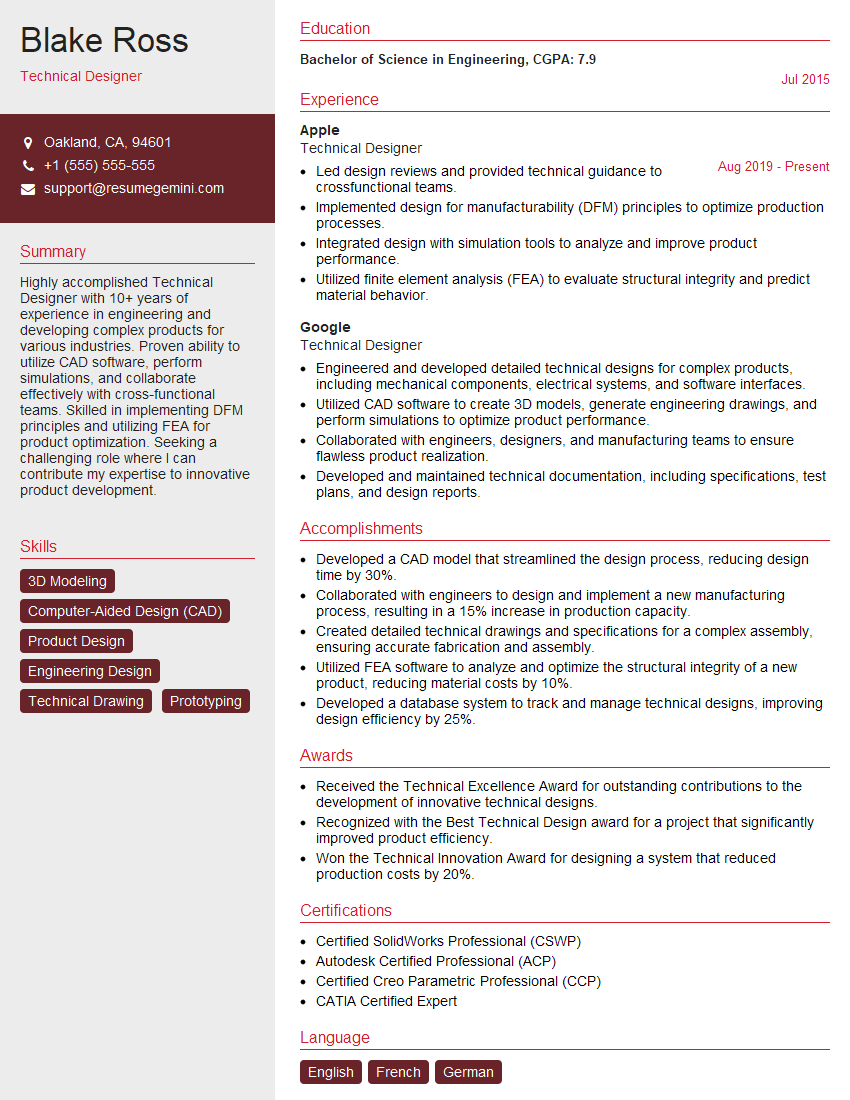
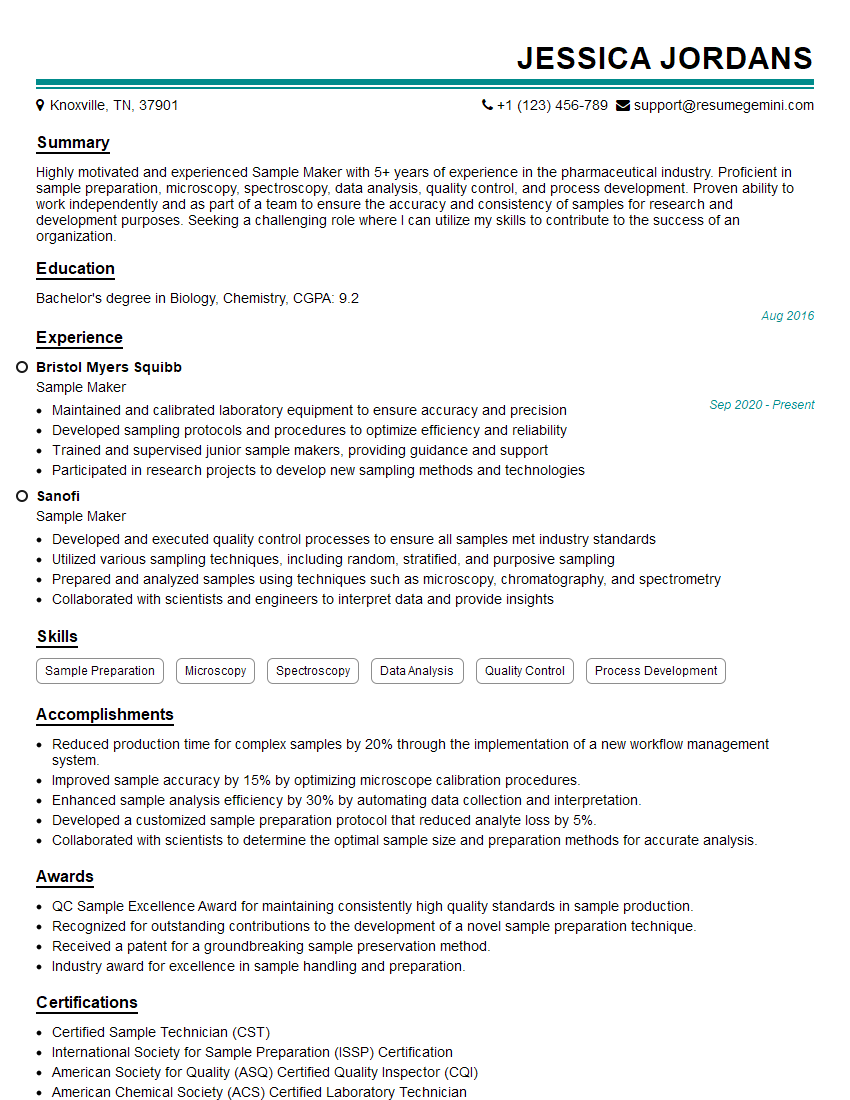
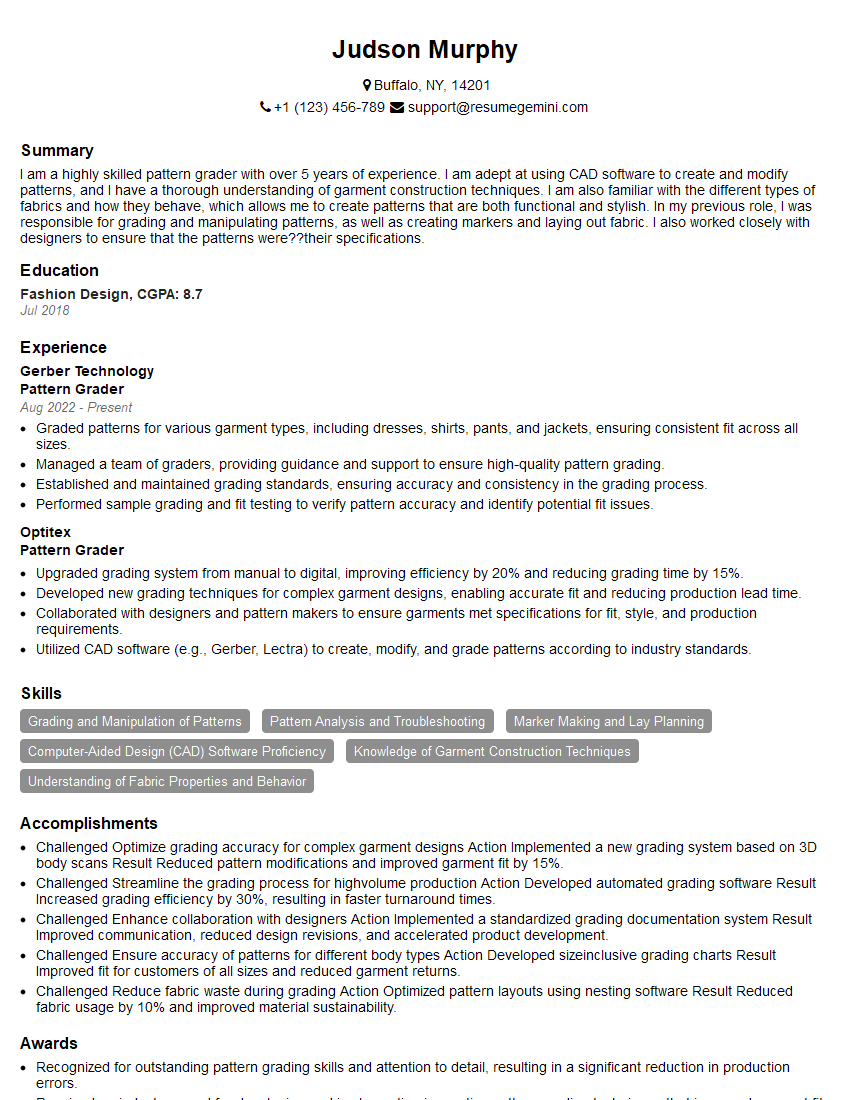
Mastering seam allowance adjustment is crucial for career advancement in the apparel industry, demonstrating your precision, attention to detail, and understanding of garment construction. A well-crafted resume is essential for showcasing these skills effectively to potential employers. Building an ATS-friendly resume significantly increases your chances of getting noticed. To help you create a professional and impactful resume, we recommend using ResumeGemini. ResumeGemini provides tools and resources to build a strong resume, and we offer examples of resumes tailored to Seam Allowance Adjustment to help guide you. Invest the time to build a strong resume—it’s an investment in your future career success.




Explore more articles
Users Rating of Our Blogs
Share Your Experience
We value your feedback! Please rate our content and share your thoughts (optional).
What Readers Say About Our Blog
Very informative content, great job.
good