Cracking a skill-specific interview, like one for Seam Inspection and Quality Control, requires understanding the nuances of the role. In this blog, we present the questions you’re most likely to encounter, along with insights into how to answer them effectively. Let’s ensure you’re ready to make a strong impression.
Questions Asked in Seam Inspection and Quality Control Interview
Q 1. Explain the different types of seam imperfections you may encounter.
Seam imperfections, or weld defects, can significantly compromise the structural integrity of a joint. They range from minor cosmetic flaws to critical defects requiring repair or rejection. These imperfections can be categorized in several ways, but a common approach is to group them by their nature:
- Lack of Fusion (LOF): This is a serious defect where the weld metal doesn’t properly fuse with the base metal, leaving an un-welded area. Imagine trying to glue two pieces of wood together, but a gap remains – that’s LOF. This drastically reduces strength.
- Porosity: Small, gas-filled voids within the weld metal. Think of it like Swiss cheese; the holes weaken the structure and can lead to leaks in pressure vessels.
- Inclusions: Foreign material, such as slag (unmelted flux) or oxides, embedded within the weld. These inclusions act as stress risers, weakening the joint and potentially causing cracks.
- Cracks: Fractures within the weld metal, ranging from surface cracks to deeper, more serious internal cracks. Cracks are particularly dangerous because they can propagate under stress, leading to catastrophic failure. Imagine a crack in a window pane – it can easily spread.
- Undercuts: Grooves melted into the base metal adjacent to the weld, leaving a weakened area. Picture a small channel carved next to your weld. It decreases the weld’s effective cross-sectional area.
- Incomplete Penetration (IP): The weld doesn’t extend completely through the joint. This is similar to LOF, but specifically refers to a lack of fusion through the entire thickness of the materials being joined.
- Overlap: Weld metal extending beyond the edges of the joint. While not always critical, excessive overlap can create stress concentrations.
The specific types and severity of imperfections will depend heavily on the welding process used, the skill of the welder, and the materials being joined.
Q 2. Describe the visual inspection process for seam welds.
Visual inspection is the first and often most crucial step in seam weld quality control. It’s a non-destructive testing (NDT) method that relies on the inspector’s trained eye and experience. The process typically involves:
- Preparation: Cleaning the weld area to remove any debris or coating that might obscure imperfections.
- Illumination: Using adequate lighting, often including angled lighting to highlight surface imperfections.
- Magnification: Employing magnifying glasses or borescopes to examine hard-to-reach areas or small defects.
- Observation: Systematically examining the entire weld for evidence of surface imperfections like cracks, undercuts, overlaps, porosity (if visible), and other anomalies. This often involves following a specific inspection plan or checklist.
- Documentation: Recording findings, including sketches, photographs, and written descriptions. This documentation forms a crucial part of the quality control record.
Experienced inspectors can often identify many significant defects through visual inspection alone. However, it is important to remember that visual inspection has limitations (discussed in the next answer).
Q 3. What are the limitations of visual inspection for seam welds?
Visual inspection, while valuable, has inherent limitations. It’s primarily a surface examination; it cannot detect subsurface defects such as internal cracks or lack of fusion hidden beneath the weld surface. Also, the effectiveness depends heavily on the inspector’s skill, experience, and even the lighting conditions. Subjectivity can creep in, leading to inconsistencies between inspectors. Furthermore, visual inspection is not suitable for inspecting welds in hard-to-reach places or areas with limited accessibility. Finally, it is not quantitative; it provides a qualitative assessment of the weld, without precise measurements of defect size or location.
Q 4. Explain the principles of ultrasonic testing (UT) for seam inspection.
Ultrasonic testing (UT) is a powerful NDT method that utilizes high-frequency sound waves to detect internal flaws in materials. For seam welds, a UT probe (transducer) is placed on the weld surface. The probe transmits ultrasonic waves into the material. These waves reflect off discontinuities like cracks, porosity, or lack of fusion. The reflected waves are detected by the same probe and converted into electrical signals that are displayed on a screen. The time it takes for the sound wave to travel to the flaw and back, along with the amplitude of the reflected signal, provides information about the defect’s size, location, and nature.
The principle is analogous to sonar or echolocation: sound waves are sent out, bounce off objects, and return to the source. The time delay and strength of the returning signal reveal information about the objects’ distance and size. In UT, these ‘objects’ are the weld imperfections.
Q 5. How do you interpret UT results for seam welds?
Interpreting UT results involves analyzing the waveforms displayed on the UT instrument’s screen. Trained technicians look for anomalies, such as:
- Reflective echoes: These indicate the presence of a discontinuity. The amplitude of the echo is proportional to the size of the defect (larger defects produce stronger echoes), while the time delay indicates its depth.
- Lack of back wall echo: This could suggest a significant discontinuity preventing the wave from fully penetrating to the opposite side of the weld.
- Changes in sound wave attenuation: This can indicate the presence of smaller, numerous defects, like fine porosity.
The interpretation process also includes referencing relevant standards and acceptance criteria to determine if the detected defects are acceptable or require remedial action. This often involves comparing the flaw’s size and location to pre-defined acceptance limits. Sophisticated software and algorithms can automate parts of the interpretation, but expert judgment remains crucial.
Q 6. Describe the principles of radiographic testing (RT) for seam inspection.
Radiographic testing (RT), also known as X-ray or gamma-ray testing, uses penetrating radiation to create images of internal weld structures. A source of radiation (X-ray machine or radioactive isotope) is positioned on one side of the weld, and a radiation-sensitive film or digital detector is placed on the other side. The radiation passes through the weld, and the amount of radiation that gets through varies depending on the density of the material. Denser areas (like solid weld metal) allow less radiation to pass, while less dense areas (like porosity or cracks) allow more radiation to pass. This difference in radiation penetration produces variations in the image’s darkness, revealing internal flaws.
Think of it like taking an X-ray of a bone: dense bone appears white, while air appears black. Similarly, in RT, dense weld metal appears dark, and flaws show up as lighter areas.
Q 7. How do you interpret RT results for seam welds?
Interpreting RT results involves analyzing the radiographic image for indications of weld defects. The appearance of these indications varies depending on the type of defect. For example:
- Porosity: Appears as small, dark spots scattered throughout the weld.
- Cracks: Appear as dark, linear features that can be straight or branched.
- Lack of fusion: Appears as a dark, irregular line showing the interface between the weld and base metal.
- Inclusions: Appear as dark, irregular shapes of varying sizes.
The interpretation also considers the size, shape, distribution, and location of the indications relative to the weld’s geometry and relevant acceptance standards. Experienced radiographers assess the image and compare it to acceptance criteria to determine whether the detected flaws are acceptable or warrant repair.
Q 8. What is dye penetrant testing (DPT), and how is it used in seam inspection?
Dye penetrant testing (DPT) is a non-destructive testing (NDT) method used to detect surface-breaking defects in materials. It works by applying a liquid dye (penetrant) to the surface. This dye seeps into any cracks or pores. After excess dye is removed, a developer is applied, drawing the dye out of the defects and making them visible to the naked eye. In seam inspection, DPT is invaluable for identifying surface cracks, porosity, or incomplete fusion in welds. For example, imagine inspecting a welded pipe joint. Applying a penetrant, removing excess, and then applying a developer can reveal tiny surface cracks that might compromise the structural integrity, even if they’re not visible to the naked eye. This is especially useful for detecting defects in hard-to-reach areas of a seam.
Q 9. What is magnetic particle testing (MT), and how is it used in seam inspection?
Magnetic particle testing (MT) is another NDT method, but it’s specifically used for ferromagnetic materials (like steel and iron). It works by magnetizing the material, then applying ferromagnetic particles (usually a fine powder). These particles are attracted to any magnetic flux leakage caused by discontinuities (flaws) within the material. The particles accumulate above the flaws, making them easily visible. In seam inspection, MT excels at detecting subsurface flaws like cracks, porosity, and lack of fusion in welds. Think of it like this: the magnetized material is like a magnet; a crack disrupts the magnetic field, creating a leakage that the particles cling to, thus revealing the flaw’s presence. This is particularly helpful for identifying defects that aren’t visible on the surface.
Q 10. What are the safety precautions you would take during seam inspection?
Safety is paramount during seam inspection. Precautions include, but are not limited to:
- Personal Protective Equipment (PPE): Always wear safety glasses, gloves appropriate for the chemicals used (e.g., nitrile gloves for penetrants), and protective clothing to prevent skin contact with testing materials.
- Proper Ventilation: Ensure adequate ventilation when using penetrants and developers, as some can release fumes. In confined spaces, respiratory protection might be necessary.
- Handling of Chemicals: Carefully follow the manufacturer’s instructions for handling and disposal of all chemicals used in DPT and MT. This includes proper storage and spill response procedures.
- Safe Work Practices: Avoid distractions, maintain a clean workspace to prevent slips and falls, and use appropriate lifting techniques for heavy components.
- Emergency Preparedness: Be aware of the location of eyewash stations and emergency showers, and know the procedures for reporting accidents or injuries.
Regular safety training is essential to reinforce these precautions and ensure everyone on the team is working safely.
Q 11. How do you document your findings during a seam inspection?
Documentation is critical for traceability and liability. My documentation process typically includes:
- Inspection Report: A detailed report documenting the date, time, location, inspector’s name, material specifications, testing methods used (DPT, MT, etc.), and results.
- Photographs/Videos: Visual records of the seam before, during, and after inspection, highlighting any defects detected. High-resolution images are particularly important for detailed documentation.
- Detailed Sketches/Drawings: Precise sketches or drawings indicating the location, size, and type of defects found, referenced to the component’s dimensions.
- Calibration Records: Documentation confirming the calibration of testing equipment, ensuring accuracy and reliability of results.
- Non-Conformity Reports (NCRs): For any discrepancies or non-conformances, detailed NCRs are created, outlining the defect, its severity, and recommended corrective actions.
All documentation is carefully stored in a secure and organized manner for future reference and audits.
Q 12. What are the common acceptance criteria for seam welds?
Acceptance criteria for seam welds vary based on the application, industry standards, and client specifications. However, common criteria include:
- Visual Inspection: Acceptable weld appearance, free of excessive porosity, undercuts, cracks, or other surface imperfections.
- Dimensional Requirements: The weld bead must meet specified dimensions regarding height, width, and penetration.
- Mechanical Testing (if applicable): The weld might undergo tensile, bend, or hardness tests to verify its strength and durability.
- Radiographic Testing (RT) or Ultrasonic Testing (UT): These NDT methods can detect internal flaws that aren’t visible on the surface.
- Specific Codes and Standards: Adherence to relevant codes (e.g., ASME Section IX, AWS D1.1) or client-specific standards.
The specific acceptance criteria are clearly defined in the project’s welding procedure specification (WPS) and drawings. Any deviation from these criteria would need justification and potentially corrective actions.
Q 13. How do you handle discrepancies or non-conformances found during inspection?
When discrepancies or non-conformances are found, a systematic approach is followed:
- Identification and Documentation: The defect is meticulously documented using the methods outlined in question 4 (photos, sketches, NCRs).
- Severity Assessment: The severity of the non-conformity is evaluated based on its potential impact on the component’s functionality and safety. This might involve consulting relevant codes and standards.
- Root Cause Analysis: An investigation is conducted to determine the root cause of the defect. This could involve interviewing welders, reviewing welding procedures, or conducting further NDT.
- Corrective Action: Based on the root cause analysis, appropriate corrective actions are implemented. This may involve repair of the weld, rework of the component, or adjustment of welding procedures.
- Verification: After corrective actions are taken, the repaired area is reinspected to verify that the defect has been successfully addressed.
- Documentation and Reporting: All corrective actions and reinspection results are carefully documented and reported to relevant parties.
A clear chain of custody is maintained throughout the process, ensuring complete transparency and accountability.
Q 14. Explain the difference between destructive and non-destructive testing.
The key difference between destructive and non-destructive testing lies in whether the testing process damages or destroys the component being tested.
- Destructive Testing (DT): DT involves testing a sample to its breaking point to determine its properties, such as tensile strength, yield strength, and elongation. This destroys the sample in the process, providing precise data but requiring a sacrifice of the test piece. Examples include tensile testing, impact testing, and hardness testing.
- Non-Destructive Testing (NDT): NDT methods, like DPT and MT described earlier, allow inspection without causing damage to the component. This preserves the part for use, making it cost-effective, especially for expensive or critical components. However, NDT methods may not provide the same level of detailed material property information as DT.
In seam inspection, the preference is often for NDT methods to ensure that the integrity of the welded structure remains intact after inspection. However, DT might be employed on a small sample from a weld to verify its properties if required by the specifications.
Q 15. What are the advantages and disadvantages of different NDT methods?
Non-destructive testing (NDT) methods offer various advantages and disadvantages depending on the application. Let’s consider a few common techniques used in seam inspection:
- Radiographic Testing (RT):
- Advantages: Detects internal flaws like porosity, cracks, and inclusions; provides permanent record; can inspect thick sections.
- Disadvantages: Radiation safety concerns; expensive; limited access for complex geometries; may miss fine cracks oriented parallel to the beam.
- Ultrasonic Testing (UT):
- Advantages: Highly sensitive to small flaws; fast inspection speed; can inspect thick sections; portable equipment.
- Disadvantages: Requires skilled operators for accurate interpretation; surface preparation may be needed; limited ability to detect surface flaws; interpretation can be complex in highly attenuating materials.
- Dye Penetrant Testing (PT):
- Advantages: Simple, inexpensive, and portable; detects surface-breaking flaws; easily adaptable to various geometries.
- Disadvantages: Only detects surface flaws; requires clean surface; part must be non-porous; environmental considerations for cleaning solvents.
- Magnetic Particle Testing (MT):
- Advantages: Detects surface and near-surface flaws; relatively fast and inexpensive; portable equipment.
- Disadvantages: Only applicable to ferromagnetic materials; surface preparation needed; limited depth penetration.
Choosing the right method depends on factors such as material type, flaw type, accessibility, cost, and required sensitivity.
Career Expert Tips:
- Ace those interviews! Prepare effectively by reviewing the Top 50 Most Common Interview Questions on ResumeGemini.
- Navigate your job search with confidence! Explore a wide range of Career Tips on ResumeGemini. Learn about common challenges and recommendations to overcome them.
- Craft the perfect resume! Master the Art of Resume Writing with ResumeGemini’s guide. Showcase your unique qualifications and achievements effectively.
- Don’t miss out on holiday savings! Build your dream resume with ResumeGemini’s ATS optimized templates.
Q 16. How do you select the appropriate NDT method for a specific application?
Selecting the appropriate NDT method is crucial for effective seam inspection. I use a systematic approach:
- Identify the material: Is it ferromagnetic (MT applicable)? Is it metallic (UT, RT applicable)? Is it porous (PT limited)?
- Determine the type of weld: Is it a butt weld, fillet weld, or something else? This influences accessibility and the choice of technique.
- Define the required sensitivity: What size flaws need to be detected? UT is better for small flaws than PT.
- Consider accessibility: Can the equipment access the seam easily? RT might be difficult in complex geometries where UT might be preferred.
- Assess cost and time constraints: PT is generally cheaper and faster than RT or UT.
- Evaluate regulatory requirements: Specific industries or codes might mandate certain NDT methods.
For instance, if inspecting a thick steel pressure vessel for internal flaws, I would likely select RT or UT. For a surface crack on a stainless steel component, PT or MT would be more suitable.
Q 17. How do you ensure the accuracy and reliability of your inspection results?
Ensuring accurate and reliable inspection results requires a multi-faceted approach:
- Calibration and Verification: All equipment undergoes regular calibration and verification against traceable standards. This includes ultrasonic transducers, penetrant materials, magnetic yokes, and radiographic equipment.
- Operator Qualification and Certification: Our inspectors are highly trained and certified to relevant standards (e.g., ASNT Level II). Regular training and proficiency tests ensure competence.
- Standard Operating Procedures (SOPs): We follow strict SOPs for each NDT method, covering everything from surface preparation to data interpretation. This ensures consistency and repeatability.
- Quality Control checks: Internal audits and cross-checking of results by different inspectors help identify potential errors.
- Use of reference standards: We utilize reference standards with known defects to assess the sensitivity and accuracy of our equipment and techniques.
- Record Keeping: Detailed records are maintained, including inspection reports, images (radiographs, UT scans), and calibration certificates. This ensures traceability and accountability.
For example, in UT, we’d use calibration blocks to ensure the accuracy of our measurements. In RT, we’d use image quality indicators (IQIs) to assess the quality of the radiograph.
Q 18. What are the common standards and codes used in seam inspection?
Several standards and codes govern seam inspection, providing guidelines for acceptable weld quality and NDT procedures. Key examples include:
- ASME Section IX: This code covers welding and brazing qualifications for nuclear power plants and other high-pressure applications. It specifies NDT requirements for weld acceptance.
- AWS D1.1: The American Welding Society’s standard covers structural welding. It defines weld symbols, types, and quality control procedures, including NDT recommendations.
- API standards: The American Petroleum Institute has standards relevant to pipeline welding and inspection, often employing specific NDT methods.
- EN ISO standards: These European standards cover various aspects of welding and NDT, providing similar guidance to those mentioned above.
The specific standard used will depend on the application and the regulatory requirements of the project.
Q 19. (e.g., ASME Section IX, AWS D1.1)
(This question is a continuation of question 4 and does not require a separate answer)
Q 20. Describe your experience with different types of welding processes.
My experience encompasses various welding processes, including:
- Gas Metal Arc Welding (GMAW): Widely used for its versatility and speed, particularly in automated systems. I’ve inspected numerous GMAW welds in various materials, focusing on detecting porosity and lack of fusion.
- Shielded Metal Arc Welding (SMAW): A common manual process, often used for field repairs. Inspection challenges here often involve slag inclusions and undercutting.
- Gas Tungsten Arc Welding (GTAW): Known for its high-quality welds, often used for critical applications. Inspections focus on ensuring complete penetration and the absence of defects.
- Submerged Arc Welding (SAW): A high-deposition-rate process often used for large-scale projects. NDT plays a vital role here in detecting potential internal flaws.
Understanding the characteristics of each process is vital in determining the most effective NDT methods and predicting potential flaw types. For example, SAW welds might be more prone to internal porosity than GTAW welds.
Q 21. How do you interpret welding symbols?
Welding symbols provide concise information about weld requirements. They contain several elements:
- Reference Line: A horizontal line connecting the symbol to the drawing.
- Arrow Side: Indicates the side of the joint where the symbol applies.
- Basic Weld Symbol: Represents the type of weld (e.g., fillet, groove).
- Supplementary Symbols: Indicate additional details, such as the weld size, length, spacing, and finishing requirements.
- Dimension and Other Data: Specifies the size and other relevant parameters of the weld.
For example, a symbol showing a filled triangle on the arrow side and a dimension ‘6mm’ would indicate a 6mm fillet weld on that side of the joint. My experience ensures fluent interpretation of these symbols and effective translation into appropriate NDT strategies.
Q 22. What are the different types of weld joints?
Weld joints are classified based on how the weld components are joined. Understanding these types is crucial for effective seam inspection, as each type presents unique challenges and potential failure points. Common types include:
- Butt Joint: Two pieces joined end-to-end, often used for joining plates or pipes. This type is frequently inspected for complete penetration and lack of fusion.
- Lap Joint: One piece overlaps the other; simpler to weld but potentially weaker, requiring close attention during inspection to the overlap area for proper fusion and lack of voids.
- T-Joint: One piece is joined perpendicularly to another, commonly seen in structural steel frameworks. Inspection focuses on ensuring full penetration at the intersection and checking for undercut.
- Corner Joint: Two pieces joined at a 90-degree angle, used in box structures. Inspection checks for proper fusion and reinforcement in the corner.
- Edge Joint: The edges of two components are joined, often requiring preparation like beveling to ensure proper fusion. Inspection looks for complete penetration and the absence of porosity.
The choice of joint type depends heavily on the application and the required strength. For example, a butt joint is preferred for high-strength applications, whereas a lap joint might be sufficient for less demanding ones. However, each joint type necessitates a specific inspection approach to ensure quality and safety.
Q 23. What is the importance of proper weld preparation in seam inspection?
Proper weld preparation is paramount for ensuring the integrity of a weld joint and subsequently simplifies the inspection process and increases accuracy. Neglecting this step significantly increases the probability of defects. The preparation process aims to create a consistent and clean surface for welding, promoting optimal fusion and minimizing potential defects. This involves:
- Cleaning: Removing dirt, grease, paint, or other contaminants that could interfere with the welding process and create imperfections.
- Edge Preparation: Shaping the edges of the materials to be joined. This might include beveling, chamfering, or using backing materials to ensure proper penetration and fusion. The specific preparation depends on the joint type and thickness of the materials.
- Fit-up: Accurately aligning the parts to be welded to ensure proper joint geometry and minimize gaps that could lead to incomplete fusion or porosity. This requires careful measurement and precise alignment.
For example, improper edge preparation in a butt joint could result in incomplete penetration, a critical defect that significantly compromises the strength of the weld. A clean surface is also essential for non-destructive testing methods like ultrasonic testing (UT) to work effectively.
Q 24. How do you calibrate and maintain inspection equipment?
Calibration and maintenance of inspection equipment are essential for ensuring accurate and reliable results. This process depends heavily on the type of equipment being used. For example, ultrasonic testing (UT) equipment requires a different calibration procedure than radiographic testing (RT) equipment.
- Ultrasonic Testing (UT): Calibration involves using standardized blocks with known thicknesses and characteristics to verify the accuracy of the equipment’s measurements. Regular maintenance includes checking the probe’s integrity and cleaning it to remove any contaminants that might interfere with the readings.
- Radiographic Testing (RT): Calibration involves verifying the exposure time and film processing conditions using standardized test pieces. Regular maintenance includes ensuring the correct functionality of the X-ray source and keeping film storage conditions optimal.
- Liquid Penetrant Testing (LPT): Maintenance includes checking the cleanliness of the equipment, ensuring the correct concentration of the penetrant and developer, and properly cleaning and storing the equipment.
A well-maintained calibration log is critical to track these activities, ensuring traceability and compliance with industry standards. It’s also crucial to follow manufacturer’s instructions for calibration and maintenance procedures.
Q 25. Describe your experience with quality management systems (e.g., ISO 9001).
I have extensive experience working within ISO 9001 compliant Quality Management Systems. My responsibilities have included developing and implementing inspection procedures, participating in internal audits, managing non-conformances, and contributing to continuous improvement initiatives.
For example, in a previous role, I developed a new inspection procedure for a specific weld joint that resulted in a significant reduction in rework. This procedure, which integrated statistical process control (SPC) techniques, was subsequently documented and integrated into the company’s Quality Management System.
My understanding of ISO 9001 principles, such as risk management and continual improvement, allows me to contribute effectively to a robust quality system. I am experienced in conducting root cause analysis to identify and rectify quality issues proactively.
Q 26. How do you contribute to a safe and efficient work environment?
Safety is always my top priority. Contributing to a safe and efficient work environment involves adhering to all safety regulations, using Personal Protective Equipment (PPE) correctly, and proactively identifying and mitigating potential hazards. I encourage a culture of communication where safety concerns can be freely discussed.
For example, I’ve spearheaded the implementation of improved lighting in our inspection area, reducing eye strain and improving the accuracy of our work. I also actively participate in safety training and toolbox talks, promoting awareness of hazards and safe work practices among colleagues. Efficiency is improved through careful planning, proactive problem-solving, and the optimized utilization of resources.
Q 27. Explain a time you had to troubleshoot a seam inspection problem.
During the inspection of a large-diameter pipeline weld, we encountered a situation where our ultrasonic testing equipment was consistently showing indications of potential defects in a specific area, even after multiple repetitions. Initial checks of the equipment’s calibration showed no issues.
Our troubleshooting process involved:
- Re-examination of the weld preparation: We carefully inspected the weld area for any surface irregularities or imperfections that might be interfering with the UT readings.
- Visual inspection: This revealed a very subtle but significant surface imperfection (a small dent) that was affecting the UT signal.
- Further investigation: We used a different UT technique with improved resolution to verify the defect.
- Corrective action: After verifying the imperfection, we determined it was not a critical issue. This highlighted the importance of a thorough visual inspection prior to and in addition to NDT testing.
This experience emphasized the importance of a systematic approach to troubleshooting and the synergy between different inspection methods. It reinforced the need for detailed investigation and the careful interpretation of inspection data.
Q 28. How do you stay updated on the latest advancements in seam inspection techniques?
Staying updated on advancements in seam inspection is critical to maintain proficiency and ensure the use of the most effective techniques. My approach includes:
- Professional organizations: Active participation in organizations like ASNT (American Society for Nondestructive Testing) allows access to conferences, publications, and networking opportunities.
- Industry publications and journals: Regularly reading journals such as ‘Welding Journal’ and online resources keeps me abreast of new techniques, standards, and developments in the field.
- Manufacturer training courses: I participate in courses offered by manufacturers of inspection equipment to learn about updates in their technologies and best practices.
- Online courses and webinars: Webinars and online courses from reputable sources offer a convenient and in-depth exploration of advanced topics.
Keeping up with the latest advancements allows me to optimize inspection procedures, improve accuracy, and contribute to a higher level of quality control in the industry. For instance, I recently learned about a new phased array ultrasonic technology and am exploring its application in our inspection processes.
Key Topics to Learn for Seam Inspection and Quality Control Interview
- Seam Types and Characteristics: Understanding different seam types (e.g., lap, butt, fillet welds) and their associated strengths, weaknesses, and common defects.
- Non-Destructive Testing (NDT) Methods: Familiarize yourself with various NDT techniques used in seam inspection, including visual inspection, dye penetrant testing, magnetic particle testing, ultrasonic testing, and radiographic testing. Understand their applications and limitations.
- Quality Control Standards and Specifications: Knowledge of relevant industry standards (e.g., ASME, AWS) and specifications for seam welds and quality control procedures is crucial. Practice interpreting technical drawings and specifications.
- Defect Identification and Classification: Learn to identify common weld defects (e.g., porosity, cracks, lack of fusion) and understand their impact on structural integrity. Practice classifying defects according to severity.
- Data Analysis and Reporting: Develop skills in documenting inspection findings, analyzing data, and preparing clear and concise reports. This includes understanding statistical process control (SPC) principles.
- Root Cause Analysis and Problem-Solving: Practice identifying the root causes of weld defects and proposing effective corrective actions. Familiarize yourself with problem-solving methodologies like 5 Whys or fishbone diagrams.
- Safety Procedures and Regulations: Demonstrate understanding of safety protocols and regulations related to seam inspection and quality control in your specific industry.
- Quality Management Systems (QMS): Familiarity with ISO 9001 or other relevant QMS frameworks will be beneficial in demonstrating your understanding of quality control processes within a larger organizational context.
Next Steps
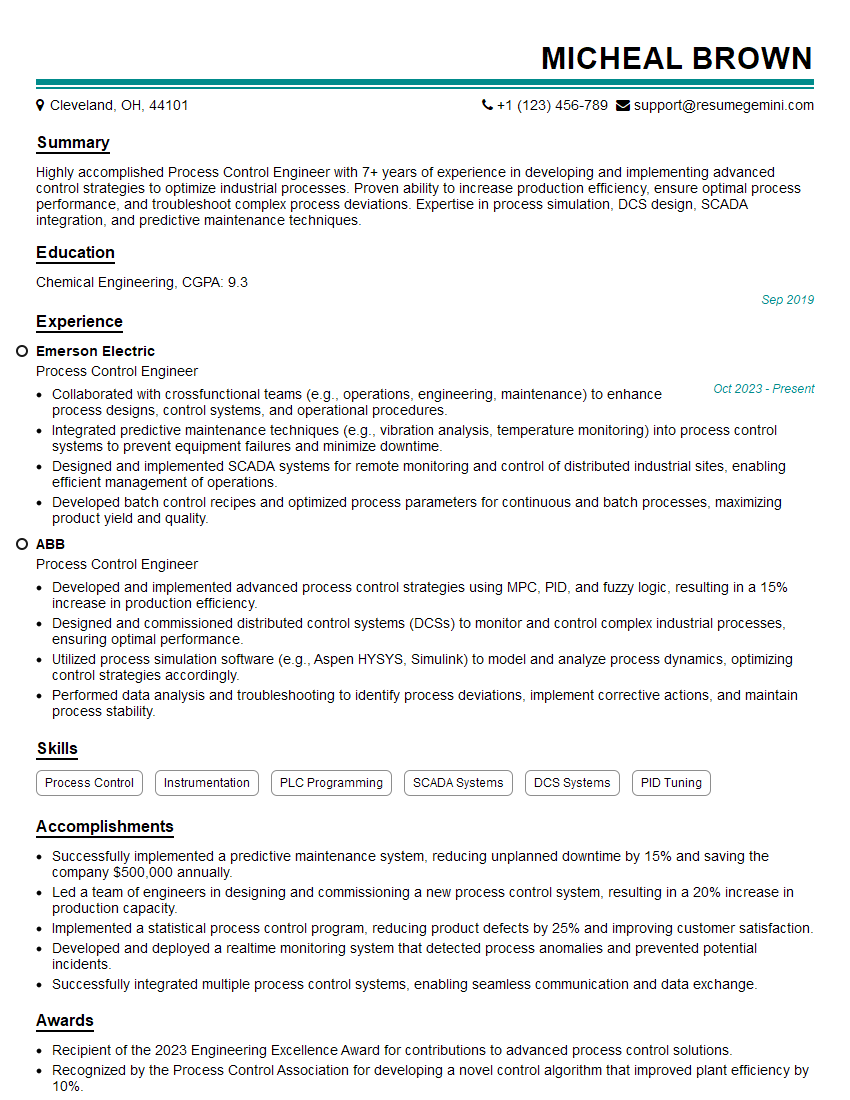
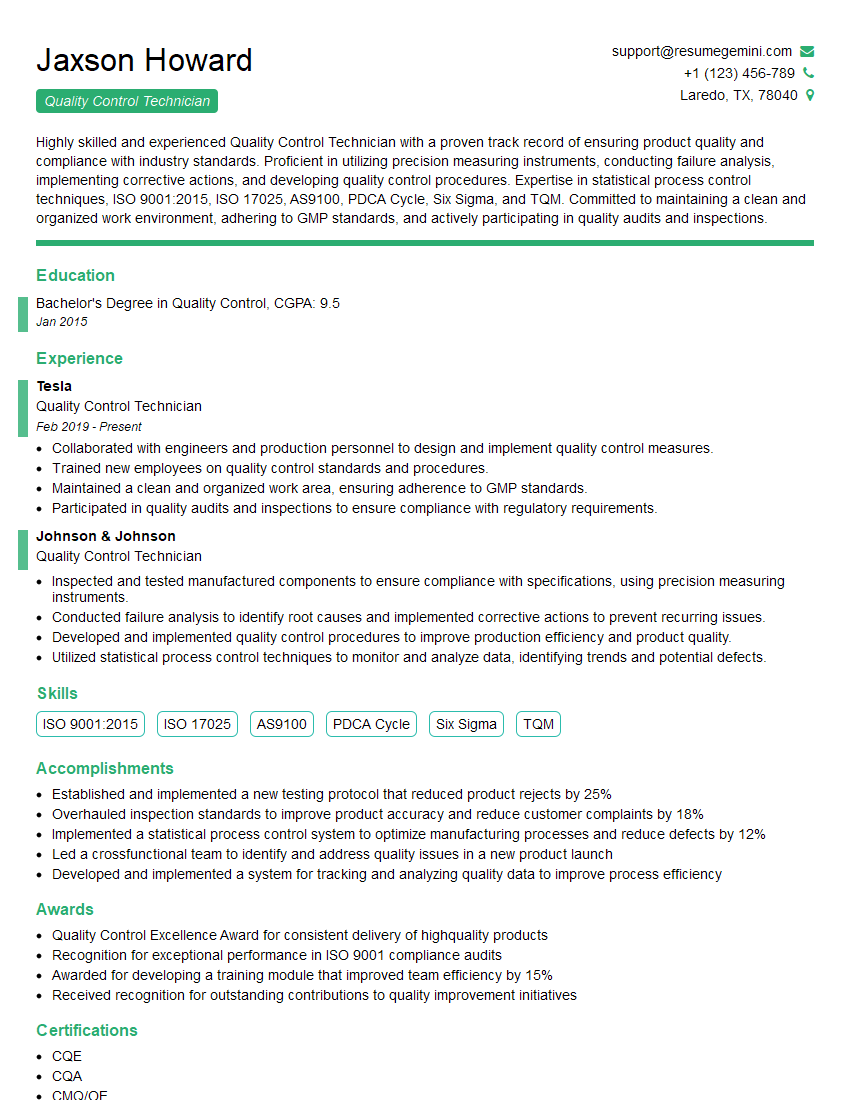
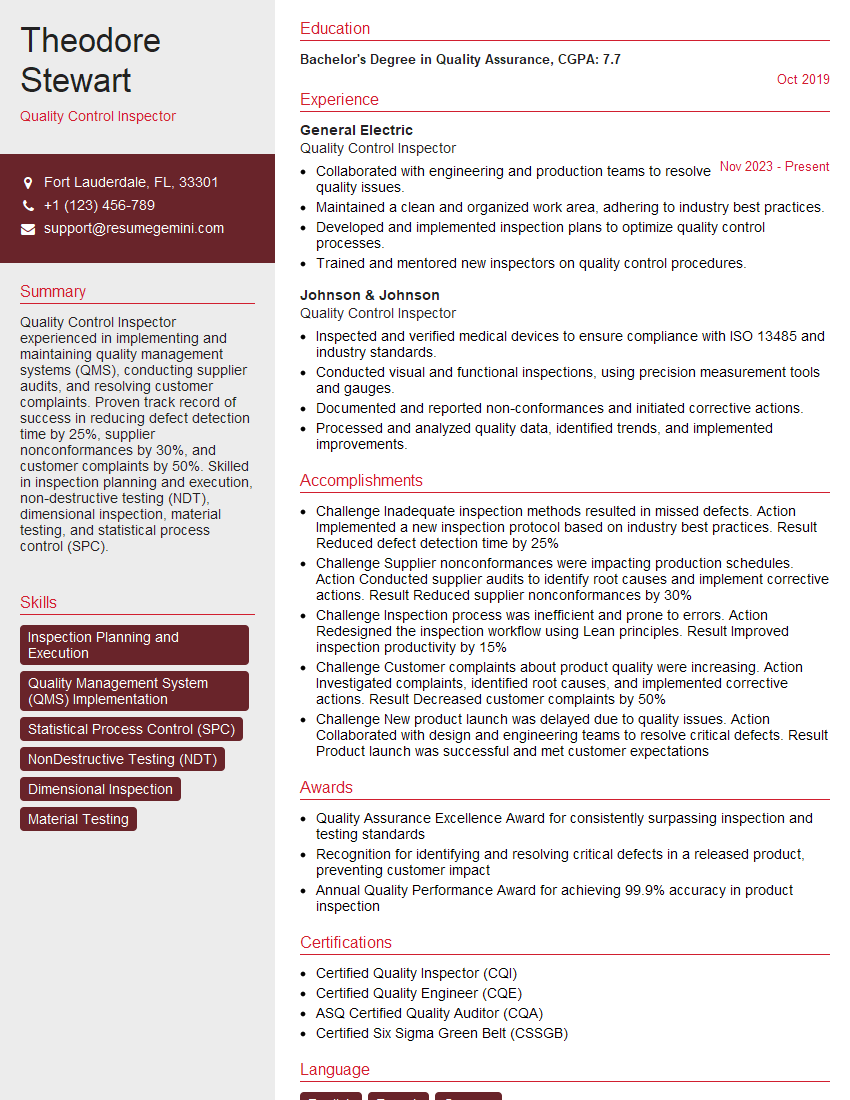
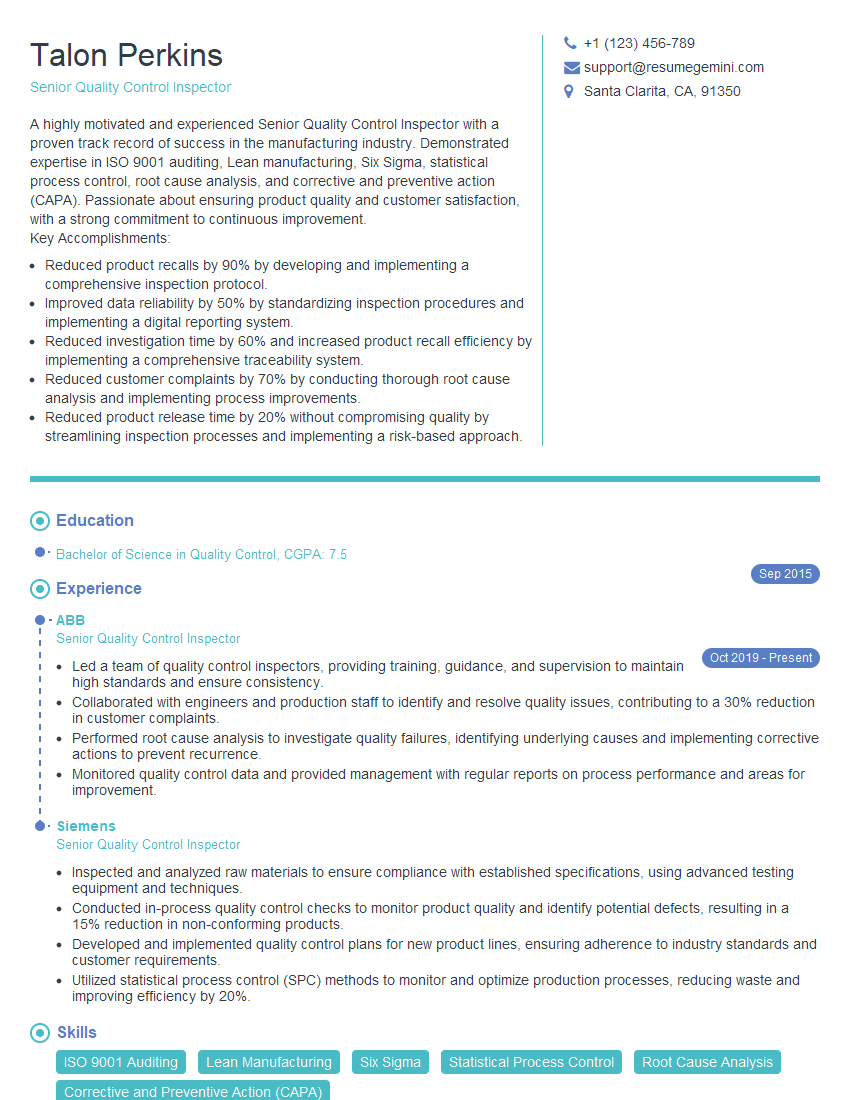
Mastering Seam Inspection and Quality Control opens doors to rewarding careers with excellent growth potential within manufacturing, construction, and various engineering sectors. A strong understanding of these skills demonstrates your commitment to quality and precision, qualities highly valued by employers. To significantly improve your job prospects, focus on creating an ATS-friendly resume that showcases your abilities effectively. ResumeGemini is a trusted resource that can help you build a professional and impactful resume. ResumeGemini provides examples of resumes tailored specifically to Seam Inspection and Quality Control roles, ensuring your application stands out.


Explore more articles
Users Rating of Our Blogs
Share Your Experience
We value your feedback! Please rate our content and share your thoughts (optional).
What Readers Say About Our Blog
Very informative content, great job.
good