The right preparation can turn an interview into an opportunity to showcase your expertise. This guide to Securing Loads interview questions is your ultimate resource, providing key insights and tips to help you ace your responses and stand out as a top candidate.
Questions Asked in Securing Loads Interview
Q 1. Describe the different methods for securing various types of cargo.
Securing cargo depends heavily on its type and characteristics. Think of it like building with LEGOs – different bricks require different techniques to build a stable structure. For example, loose materials like sand or gravel need containment and are often secured using tarpaulins and netting, sometimes in conjunction with bulkheads. Pallet-ized goods are usually secured with straps or chains, ensuring they remain stable and upright. Oversized or oddly shaped items might need custom solutions, potentially involving specialized winches, chains, and blocking and bracing to prevent movement.
- Loose Cargo: Think sand, grain, or even small parts. Containment is key. Tarps, nets, and bulkheads are used to prevent spillage and shifting.
- Pallet-ized Cargo: This is the most common type. Straps and chains are typically used to secure pallets to the vehicle, ensuring they don’t slide or tip.
- Oversized/Oddly Shaped Cargo: This requires creativity. Custom-designed blocking and bracing, along with appropriate lashing techniques, are needed to prevent movement.
- Liquid Cargo: Tanks must be properly secured and potentially equipped with baffles to minimize sloshing. Leaks must be prevented.
The choice of method always prioritizes safety and compliance with regulations.
Q 2. Explain the importance of proper weight distribution in load securement.
Proper weight distribution is paramount. Imagine carrying a heavy backpack – if all the weight is on one side, you’ll stumble. Similarly, an unevenly distributed load can cause instability, leading to accidents. The goal is to achieve a center of gravity that’s as low and centered as possible. This minimizes the risk of rollovers or shifting during transit. Think of it as balancing a seesaw; the weight needs to be evenly distributed to maintain equilibrium.
Uneven weight distribution increases stress on the vehicle’s suspension and frame, potentially causing damage. It can also lead to unsafe handling and increase braking distances. Always aim for a balanced load, following the vehicle’s load capacity and weight distribution guidelines.
Q 3. What are the common causes of load shifting during transit?
Load shifting is a serious concern. Several factors contribute: sudden braking or acceleration, cornering forces, and uneven weight distribution as previously discussed. Poor securement, using insufficient or inappropriate devices, also plays a significant role. Weather conditions like strong winds or bumpy roads exacerbate the problem. Improper loading practices, such as overloading or stacking items precariously, increase the risk of shifting. Finally, inadequate inspections before and after loading can lead to undetected issues that could cause shifting during transit.
Imagine a stack of boxes poorly secured on a truck; sudden braking could send those boxes tumbling, creating a dangerous situation.
Q 4. How do you determine the appropriate type and quantity of securement devices for a specific load?
Determining the right securement is crucial and requires careful consideration. Several factors are involved: the weight and dimensions of the load, the type of cargo, the distance of the journey, and the type of vehicle. Regulations also play a significant role. You need to calculate the required securing force considering potential acceleration, deceleration, and cornering forces. This is where knowledge of securement calculations and load factors comes into play. A structural engineer might be needed for complex loads.
For example, a heavy pallet of bricks would need stronger straps or chains than a pallet of light, fluffy material. Always refer to relevant standards and regulations to determine appropriate securement.
Q 5. Explain the difference between static and dynamic load securement.
The difference between static and dynamic load securement lies in how the load is secured relative to movement. Static securement refers to methods that secure a load in a fixed position, assuming little to no movement during transport. Think of a large, heavy object tightly secured to a flatbed trailer with multiple chains and blocks. Dynamic securement accounts for movement and changes in the load’s position due to acceleration, deceleration, or cornering. Examples include using tensioned straps that can flex slightly to absorb movement rather than rigidly holding a load.
Dynamic securement is generally preferred as it accommodates the forces acting on a load during transit, offering superior safety and stability. The choice depends on the type of load, transport distance and vehicle.
Q 6. Describe your experience with different types of load securement devices (e.g., straps, chains, etc.)
My experience encompasses a wide range of securement devices. I’ve extensively worked with ratchet straps, which are versatile and effective for securing most pallet-ized goods. Chains offer higher tensile strength and are ideal for heavier and potentially more hazardous loads, but require careful handling and regular inspection for wear and tear. I’m proficient in using winches for controlling heavier items, and experienced with various blocking and bracing methods for oversized or irregularly shaped loads, ensuring stability during transit. I’ve also worked with specialized systems like airbag systems for securing loads dynamically. The choice of device always depends on the specific load and situation. Safety is always the priority; I’m meticulous about inspecting all equipment before and after each use.
Q 7. How do you inspect cargo and securement devices before and after loading?
Inspection is vital, both before and after loading. Before loading, I visually inspect the cargo for any damage or defects that could compromise securement. I check the vehicle’s condition, ensuring it’s structurally sound and can handle the load’s weight and dimensions. Securement devices are examined meticulously for wear, tear, or any damage that could affect their integrity. I verify the proper functioning of all components, and ensure that the correct equipment is being used for the load.
After loading, another thorough inspection is conducted. I check that the load is securely fastened, paying close attention to tension, angles, and overall stability. Any movement or potential hazards are immediately addressed. Documentation of the inspection is essential for compliance and traceability.
Q 8. What are the relevant regulations and standards for load securement in your region?
Load securement regulations vary by region, but generally align with overarching safety standards. In many jurisdictions, regulations are based on guidelines from organizations like the Department of Transportation (DOT) in the US or similar national or international bodies. These regulations often specify requirements for:
- Types of securing devices: Approved tie-downs, chains, straps, etc., with specified breaking strengths.
- Securement methods: Techniques for proper placement and tensioning of securing devices, accounting for load characteristics.
- Documentation: Required paperwork showing the securement plan and verification of compliance.
- Weight limits: Maximum allowable load weight for different vehicle types and configurations.
- Load distribution: Methods for evenly distributing weight to prevent instability.
For example, the US DOT’s regulations often mandate specific securement ratios (e.g., a certain number of tie-downs per weight unit), and these ratios are crucial to prevent shifting or loss of cargo during transit. Failing to comply with these regulations can result in hefty fines and legal repercussions. It’s crucial to regularly review and update your understanding of these standards, as they can change.
Q 9. How do you handle unexpected issues or damage during load securement?
Unexpected issues during load securement require a calm, systematic response. My approach involves:
- Safety First: Immediately assess the situation for hazards – damaged equipment, potential for injury, etc. If necessary, call for assistance and ensure a safe working environment.
- Problem Identification: Determine the exact nature of the issue. Is it a broken strap, a shifting load, or damage to the cargo itself?
- Remediation Strategy: Develop a safe and effective plan to address the problem. This might involve replacing damaged equipment, re-securing the load with additional tie-downs, or even partial unloading if necessary.
- Documentation: Thoroughly document the issue, the corrective actions taken, and any resulting delays. This record is essential for insurance purposes and to prevent future occurrences.
- Communication: Keep all relevant parties informed (e.g., dispatchers, clients) of the situation and the estimated time to resolution.
For instance, if a strap breaks during securement, I would immediately stop work, replace the broken strap with a suitable alternative, re-secure the load according to regulations, and document the incident. This process ensures both safety and legal compliance.
Q 10. Explain your understanding of the center of gravity and its impact on load stability.
The center of gravity (CG) is the point where the entire weight of an object is concentrated. In load securement, it’s crucial because the CG’s position significantly affects the load’s stability. A high CG makes the load more susceptible to tipping, while a low CG enhances stability. Think of a stack of boxes – if stacked high and narrow, the CG is high, making it unstable. If the same boxes are stacked low and wide, the CG is low, creating a more stable load.
Understanding the CG is essential for proper load distribution. We aim to lower the CG as much as possible by distributing weight evenly and securing the heaviest components toward the bottom. This distribution ensures that the load’s weight is balanced, reducing the risk of tipping or shifting during transit.
In practice, we use techniques like proper weight distribution, using appropriate securing points, and keeping the load as low as possible to minimize the effect of a high CG.
Q 11. Describe your experience with load securement planning and documentation.
Load securement planning begins with a thorough assessment of the load itself—its weight, dimensions, and characteristics (fragile, hazardous, etc.). Then, a securement plan is developed, outlining the specific methods, equipment, and number of tie-downs needed. This plan includes:
- Load dimensions and weight: Precise measurements and weight of the load.
- Securing points: Identification of suitable locations on the vehicle and load for tie-downs.
- Number and type of tie-downs: Specification of the appropriate number and type of straps, chains, or other devices needed.
- Tension requirements: The necessary tension for each tie-down to ensure securement.
- Securing method: Detailed description of the securing procedure.
This detailed plan is documented, often through checklists and diagrams. After securement, a final inspection is carried out, and any deviations from the plan are noted and addressed. Proper documentation is essential for demonstrating compliance with regulations and for tracing any problems that may arise during transit. For example, I’ve used specialized software in the past to create 3D renderings of loads to better plan securement strategies, especially for complex or oversized cargo.
Q 12. What are some common hazards associated with improper load securement?
Improper load securement presents numerous hazards, both to the driver, the public, and the cargo itself. These hazards include:
- Accidents: A shifting load can cause the vehicle to swerve or lose control, leading to accidents.
- Injuries: Unsecured loads can shift and fall, causing injuries to the driver, passengers, or pedestrians.
- Cargo damage: Poor securement can lead to damage to the goods being transported.
- Vehicle damage: Shifting loads can cause damage to the vehicle itself.
- Legal ramifications: Violation of load securement regulations can result in fines and legal action.
Imagine an unsecured load of lumber shifting during a sudden stop. The lumber could pierce the vehicle’s cab, injure the driver, or even spill onto the road, creating a hazard for other vehicles. This highlights the importance of meticulous and compliant load securement.
Q 13. How do you address a situation where the load is improperly secured?
Addressing improperly secured loads necessitates a careful and methodical approach, prioritizing safety. The steps are similar to handling unexpected issues but with a stronger focus on identifying the root cause of the improper securement:
- Assess the situation: Determine the extent of the improper securement. How much is the load shifting? What is the potential for movement?
- Determine the cause: Identify why the load was improperly secured—incorrect equipment, inadequate tension, or poor planning?
- Correct the securement: Use proper methods and equipment to secure the load adequately. This may involve adding more tie-downs, adjusting the tension, or re-positioning the load.
- Document the correction: Record the details of the improperly secured load, the corrective actions taken, and the individuals involved.
- Report the incident: Report the incident to the relevant supervisors or authorities, depending on the severity.
A simple example would be noticing a load is secured with straps that are not properly tensioned. I would then tighten them, using a tensioning device to ensure sufficient securement, and document the corrective action taken. Addressing such situations promptly prevents potentially severe consequences.
Q 14. What are the consequences of failing to properly secure a load?
Failure to properly secure a load can lead to severe consequences:
- Accidents and Injuries: This is the most critical consequence, potentially resulting in serious injuries or fatalities to drivers, passengers, and other road users.
- Financial losses: Damage to cargo, vehicles, and property can cause significant financial losses.
- Legal repercussions: Fines, legal actions, and even criminal charges can be brought against those responsible for the improper securement.
- Reputational damage: Companies and individuals can suffer reputational damage if involved in accidents or incidents due to inadequate load securement.
- Insurance issues: Insurance claims related to accidents and damages caused by improper load securement might be denied.
These consequences underscore the gravity of following regulations and procedures meticulously. The costs associated with a poorly secured load far outweigh the time and effort spent on proper securement practices.
Q 15. Describe your knowledge of different types of cargo (e.g., hazardous materials, oversized loads).
Understanding the diverse nature of cargo is fundamental to safe and effective load securement. Different cargo types present unique challenges and require tailored securing techniques. For example, hazardous materials necessitate specialized containers and securement methods to prevent leaks or spills, potentially preventing catastrophic consequences. Oversized loads, which exceed standard transportation dimensions, demand creative solutions, often involving escort vehicles and specialized permits. Other important classifications include:
- General Cargo: This encompasses everyday goods like packaged consumer products, furniture, and machinery. Securement focuses on preventing shifting and damage.
- Bulk Cargo: This includes materials like grains, ores, and liquids transported in large quantities. Securement methods vary greatly depending on the material and its properties (e.g., liquid ballast, grain shifting prevention).
- Live Animals: Requires specialized considerations to ensure animal welfare and prevent injury. Proper ventilation and secure barriers are essential.
- Temperature-Sensitive Cargo: Products needing specific temperature control (pharmaceuticals, food) require insulated containers and monitoring systems during transport.
Failing to account for these differences can lead to accidents, damage, and regulatory violations. A thorough understanding of the cargo’s physical properties, weight distribution, and potential hazards is paramount.
Career Expert Tips:
- Ace those interviews! Prepare effectively by reviewing the Top 50 Most Common Interview Questions on ResumeGemini.
- Navigate your job search with confidence! Explore a wide range of Career Tips on ResumeGemini. Learn about common challenges and recommendations to overcome them.
- Craft the perfect resume! Master the Art of Resume Writing with ResumeGemini’s guide. Showcase your unique qualifications and achievements effectively.
- Don’t miss out on holiday savings! Build your dream resume with ResumeGemini’s ATS optimized templates.
Q 16. How do you adapt your securement techniques for different types of transportation (e.g., truck, rail, sea)?
Adapting securement techniques to different transportation modes is crucial for safety and efficiency. Each mode presents unique challenges and regulations:
- Trucks: Utilize straps, chains, winches, and blocks to secure cargo onto the truck bed. Weight distribution and preventing shifting are key concerns. We use appropriate tie-down points and ensure the correct tension.
- Rail: Securement focuses on preventing shifting and damage during rail transport. This often involves specialized equipment and techniques for securing containers and bulk cargo onto rail cars. Shock absorption is critical.
- Sea: Marine shipping requires robust techniques to withstand the forces of the ocean. Cargo needs to be properly lashed and secured to prevent movement during rough seas. Watertight containers and weatherproofing are essential.
For instance, securing a heavy piece of machinery on a truck involves calculating the required tie-down force, strategically placing securement points, and using appropriate equipment. On a ship, the same machinery might need to be secured to the deck using stronger lashings, taking into account the roll and pitch of the vessel and potential for extreme weather.
Q 17. Explain your experience using load securement software or technology.
I have extensive experience using load securement software. These tools help optimize securement plans, calculate required forces, and generate documentation. One particular software I’m familiar with allows inputting cargo dimensions, weight, and type, then generates a recommended securement plan, including the number and placement of straps, chains, and other equipment. This software also helps with generating load securement plans that comply with relevant regulations. It’s essential for ensuring a safe and efficient process, reducing the risk of accidents, and improving documentation.
The software I’ve used provides visualizations of the secured load, allowing for easy identification of potential problems before the actual securement process begins. This reduces the time spent on problem-solving in the field and ensures a safer working environment.
Q 18. How do you ensure compliance with safety regulations during load securement?
Compliance with safety regulations is paramount in load securement. This involves staying updated on relevant local, national, and international regulations. I ensure compliance through several key steps:
- Thorough Pre-Trip Inspection: Careful inspection of the vehicle, securing equipment, and cargo itself to identify any potential issues before loading.
- Proper Documentation: Maintaining detailed records of all securement procedures, including calculations, equipment used, and inspection results. These records are crucial for auditing and investigations.
- Regular Training: Keeping abreast of updated regulations through ongoing training and professional development. This ensures everyone involved is equipped with current best practices.
- Adherence to Regulations: Strictly following all relevant regulations and standards, including those related to specific cargo types and transportation modes.
For instance, knowing the specific regulations for transporting hazardous materials – such as placarding requirements and specific securement standards – is crucial for avoiding serious penalties and potential disasters. Ignoring regulations can result in significant fines, operational downtime, and even legal repercussions.
Q 19. How do you train others on proper load securement techniques?
Training others on proper load securement techniques involves a multi-faceted approach. I use a combination of methods:
- Classroom Instruction: Presenting theoretical information, including safety regulations, securement techniques, and the use of equipment.
- Hands-on Training: Providing practical experience in securing various types of cargo under supervised conditions. This helps build confidence and proficiency.
- Demonstrations: Showcasing proper techniques and highlighting common mistakes to reinforce learning.
- Use of Visual Aids: Employing diagrams, videos, and software simulations to clarify complex concepts.
- Regular Assessments: Conducting regular assessments to evaluate understanding and identify areas requiring further training.
I always emphasize the importance of safety, proper equipment use, and adherence to regulations. Practical exercises are crucial, as they provide a chance to apply theoretical knowledge and address potential challenges in a safe environment.
Q 20. What are the key performance indicators (KPIs) you use to measure the effectiveness of load securement?
Key Performance Indicators (KPIs) are essential for measuring the effectiveness of load securement programs. These indicators help identify areas for improvement and ensure consistent safety standards. Some important KPIs include:
- Number of Accidents Related to Load Securement Failures: Tracking the frequency of accidents attributed to improper securement, indicating the effectiveness of safety measures.
- Cargo Damage Rate: Monitoring the percentage of cargo damaged during transit provides insight into the quality of securement techniques.
- Compliance Rate with Regulations: Measuring the adherence to all relevant regulations and standards is a critical aspect of safety management.
- Time Spent on Securement: Tracking the time required for securing loads helps assess efficiency and identify areas for optimization.
- Training Completion Rate: Monitoring the percentage of employees who have completed load securement training ensures adequate knowledge and skill levels.
Regularly reviewing these KPIs allows for proactive identification of potential issues and enables continuous improvement of the load securement process.
Q 21. How do you calculate the required securement force for a given load?
Calculating the required securement force is crucial for safe and effective load securement. This calculation depends on several factors:
- Weight of the cargo: This is the primary factor determining the necessary force.
- Coefficient of friction: This accounts for the frictional resistance between the cargo and the vehicle’s surface, and between the cargo and the securement devices.
- Acceleration forces: These forces are dynamic, and they vary depending on the type of transportation and the possibility of sudden braking or acceleration.
- Angle of inclination: The angle of the cargo relative to the horizontal impacts securement force calculation.
The calculation often involves complex formulas considering all these variables. Specialized software can greatly assist in these calculations. A simplified approach might involve using a safety factor to account for unforeseen circumstances. For example, if a calculation suggests 1000 lbs of force is needed, a safety factor of 2 might lead to using securement devices capable of withstanding 2000 lbs. Underestimating the required force can lead to load shifting and damage. Overestimation is less of a safety risk but increases costs. Accurate calculations are therefore essential for maintaining both safety and operational efficiency. In complex situations, consulting an engineering professional is advisable.
Q 22. Describe your understanding of the factors affecting load securement (e.g., weather, road conditions).
Load securement is significantly impacted by various factors, primarily weather and road conditions. Think of it like building a house – you wouldn’t use the same techniques in a hurricane as you would on a calm day. Adverse weather, such as strong winds, rain, snow, or ice, drastically alters the forces acting on a load, increasing the risk of shifting or detachment. Heavy rain, for instance, can make straps slippery and reduce their effectiveness. Similarly, road conditions – potholes, sharp curves, steep inclines, or rough terrain – introduce unpredictable movements and stresses that a securement system needs to withstand.
- Weather: Wind speed and direction are crucial; high winds can easily dislodge unsecured or poorly secured loads. Rain and snow add weight and can cause slippage. Ice creates an extremely hazardous situation.
- Road Conditions: Sudden braking or acceleration on uneven surfaces can cause loads to shift. Sharp turns put additional centrifugal forces on the load. Steep grades require extra securement to prevent downhill movement.
- Load Characteristics: The type of load (e.g., fragile, heavy, bulky), its weight distribution, and its center of gravity all influence securement strategies. A load with a high center of gravity is far more susceptible to tipping.
Understanding these interconnected factors is paramount to designing a securement plan that mitigates risks.
Q 23. How do you manage risk associated with load securement?
Managing risk in load securement is a multi-faceted approach involving risk assessment, planning, and ongoing monitoring. It’s like a layered security system. First, I meticulously assess the inherent risks involved – weather forecast, route conditions, load characteristics, and the vehicle’s capabilities. Then, I develop a detailed securement plan that addresses these risks, selecting appropriate equipment and techniques. This plan isn’t just a document; it’s a living strategy that I regularly check against the reality of the situation. Throughout the journey, I conduct regular inspections to detect any issues, adjusting the securement if needed. This proactive approach ensures that potential hazards are identified and addressed before they can cause accidents.
- Risk Assessment: Identify potential hazards (weather, road, load).
- Plan Development: Detailed plan specifying equipment, techniques, and contingency plans.
- Ongoing Monitoring: Regular inspection during transit and adjustments if necessary.
- Documentation: Maintaining thorough records of the securement process and any incidents.
Documentation and training are vital components for effective risk management.
Q 24. What are the best practices for documenting load securement procedures?
Documenting load securement procedures should be thorough, accurate, and easily understandable. Think of it as a recipe for safe transportation – if it’s not clear, it can’t be followed correctly. I use a combination of methods to ensure comprehensive documentation. Pre-trip inspections are meticulously documented, noting the load’s weight, dimensions, and condition; the chosen securement method is specified, including the number and type of straps, chains, or other equipment; and photographs showing the securement process from multiple angles are taken to leave no room for ambiguity. Post-trip inspections are also recorded to assess the effectiveness of the securement. This documentation serves not only as a record of adherence to safety procedures but also as valuable evidence in case of an incident.
- Pre-trip Inspection Checklist: Detailed checklist of load characteristics and equipment used.
- Securement Diagrams: Sketches showing the placement of equipment and securing points.
- Photographs: Multiple photographs showing the securement from various angles.
- Post-trip Inspection Report: Note any changes or damage to the load or securing equipment.
Digital record-keeping, possibly integrated with a company’s safety management system, ensures easy access and audit trails.
Q 25. Describe your problem-solving skills in relation to complex load securement challenges.
Solving complex load securement challenges requires a systematic and analytical approach. I’ve encountered situations where standard methods weren’t sufficient, forcing me to think outside the box. For example, I once had to secure a very oddly shaped, oversized piece of machinery. Standard straps wouldn’t work effectively; they risked damaging the machinery. My solution involved a combination of custom-made cradles, reinforced load beams, and strategically placed straps and chains, using engineering principles to calculate stress points and ensure stability. My problem-solving process starts with a thorough understanding of the problem, then brainstorming potential solutions, evaluating feasibility and safety, and finally implementing and monitoring the chosen solution. This systematic approach helps me to address unexpected complexities efficiently and safely.
- Problem Definition: Clearly define the challenge and its constraints.
- Brainstorming: Explore different approaches and consider unconventional solutions.
- Feasibility Assessment: Evaluate each solution’s safety and effectiveness.
- Implementation: Implement the selected solution and monitor its performance.
Adaptability and resourcefulness are key for successful problem-solving in this field.
Q 26. How do you stay updated on the latest regulations and best practices for load securement?
Staying current with regulations and best practices is critical in load securement. The landscape changes with technological advancements and new safety standards. I actively engage in several methods to stay up-to-date: professional organizations such as the [mention relevant organization], industry publications, and online resources dedicated to transportation safety. Attending workshops, seminars, and conferences provides opportunities to network with other professionals and learn about new techniques and regulations. It’s crucial to understand changes in legislation relating to load securement, as violations can have serious repercussions, including fines and legal action. Furthermore, staying informed about the latest equipment and technology ensures that I’m using the most effective and efficient methods available.
- Professional Organizations: Membership in relevant industry groups.
- Industry Publications: Regular reading of trade magazines and journals.
- Online Resources: Utilizing online platforms providing updates and information.
- Training and Workshops: Participating in continuing education opportunities.
Continuous learning is essential to maintaining expertise in this dynamic field.
Q 27. Describe a time you had to troubleshoot a load securement issue.
During a long-haul transport of several heavy steel coils, we encountered unexpectedly strong crosswinds. Although the load was initially secured according to the plan, I noticed slight shifting during a routine inspection. The problem was that the wind was exerting more force than anticipated, causing the coils to move. My immediate response was to adjust the securement, adding more straps and chains to reinforce the existing system, redistributing the weight more evenly, and strategically positioning additional wedges. I also reduced speed and altered the route to avoid exposure to the strongest winds. This rapid response prevented a potential accident, highlighting the importance of consistent monitoring and adaptability in load securement. Following this incident, I reviewed the initial risk assessment to ensure future securement plans accounted for such unexpected high wind conditions.
Q 28. Explain your understanding of the relationship between load securement and vehicle stability.
The relationship between load securement and vehicle stability is directly proportional. Think of it as a balancing act – an improperly secured load can dramatically shift the vehicle’s center of gravity, making it unstable and prone to rollovers or jackknifing. Securement directly affects the vehicle’s handling by distributing the weight evenly, preventing imbalances that could lead to loss of control. The more securely the load is fastened, the more stable the vehicle will be, particularly during maneuvers like sharp turns or emergency braking. Conversely, a poorly secured load increases the risk of accidents due to shifting cargo altering the vehicle’s handling characteristics. Therefore, proper load securement isn’t merely about preventing cargo damage; it is fundamental to ensuring the safety of the vehicle and its occupants, as well as other road users.
Key Topics to Learn for Securing Loads Interview
- Understanding Load Types and Characteristics: Learn to identify different types of loads (e.g., weight, size, shape, fragility) and their specific securing requirements.
- Securing Methods and Equipment: Gain proficiency in various securing techniques, including the use of straps, chains, nets, wedges, and other specialized equipment. Understand their limitations and appropriate applications.
- Regulations and Compliance: Familiarize yourself with relevant industry regulations and safety standards (e.g., OSHA, DOT) concerning load securing. Understand how these regulations impact practical application.
- Risk Assessment and Mitigation: Develop skills in assessing potential hazards associated with unsecured or improperly secured loads and implementing appropriate mitigation strategies.
- Practical Calculations and Load Distribution: Learn to perform calculations related to weight distribution, center of gravity, and appropriate securing force.
- Emergency Procedures: Understand procedures for handling unexpected situations, such as load shifting or equipment failure, prioritizing safety and damage control.
- Documentation and Record Keeping: Become familiar with best practices for documenting load securing procedures, inspections, and any incidents.
- Different Transportation Modes: Understand the unique securing challenges presented by different modes of transportation (e.g., trucks, trains, ships).
Next Steps
Mastering the art of securing loads is crucial for a successful and safe career in transportation and logistics. It demonstrates a commitment to safety and efficiency, making you a highly valuable asset to any employer. To significantly boost your job prospects, invest time in creating an ATS-friendly resume that highlights your skills and experience. ResumeGemini is a trusted resource to help you build a professional and impactful resume. We provide examples of resumes tailored specifically to Securing Loads to help you get started.

Supply Chain Manager Resume Sample
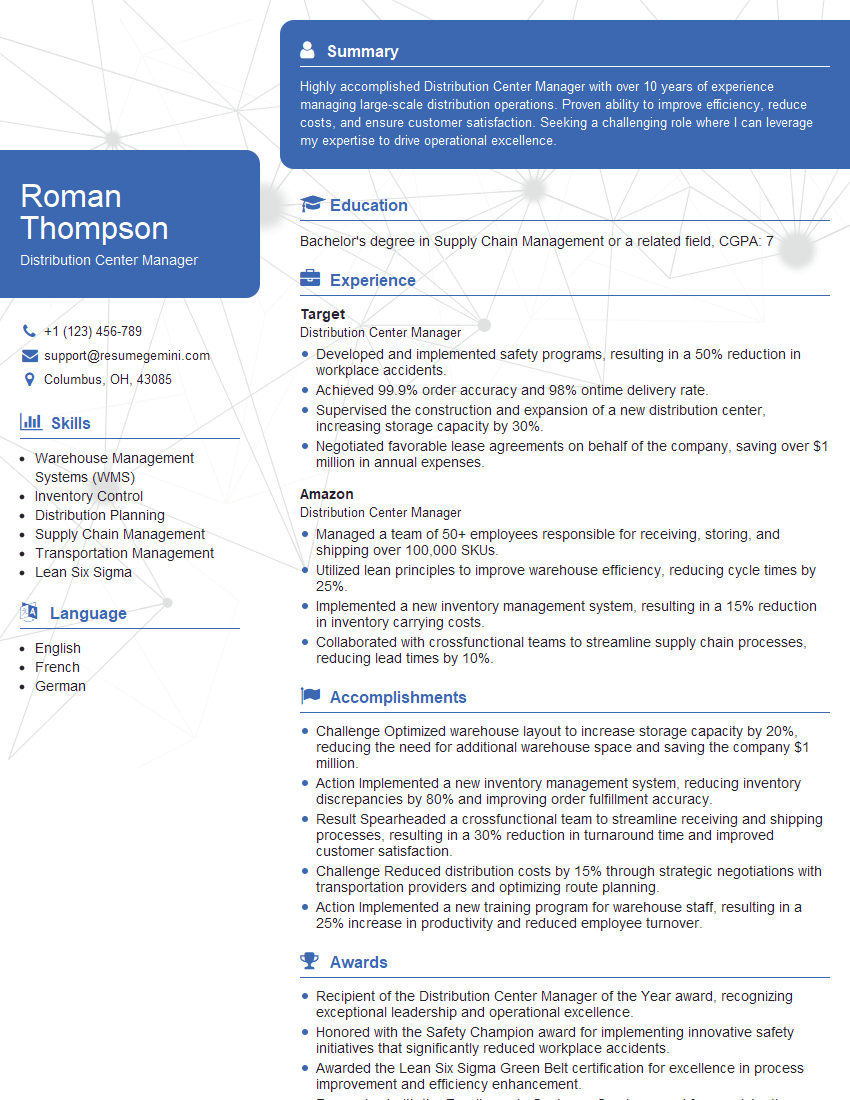
Distribution Center Manager Resume Sample

Logistics Manager Resume Sample

Fleet Manager Resume Sample

Warehouse Supervisor Resume Sample
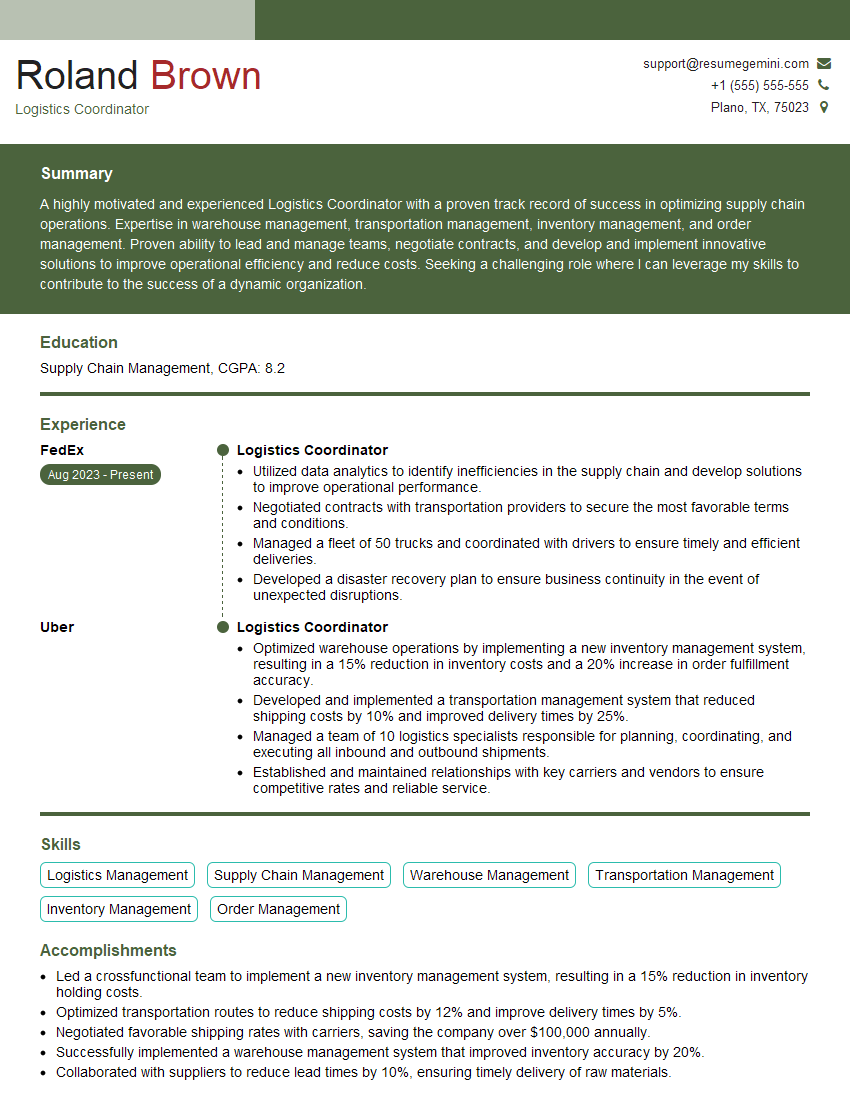
Logistics Coordinator Resume Sample
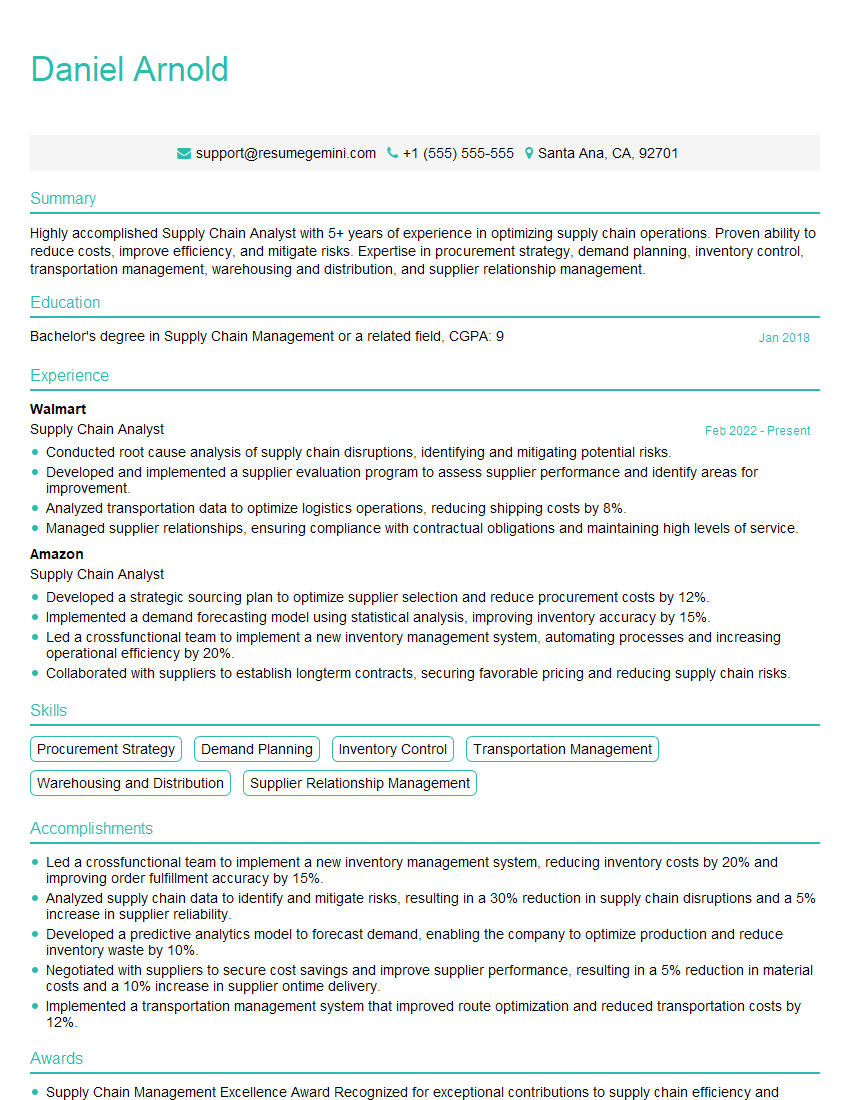
Supply Chain Analyst Resume Sample

Health and Safety Manager Resume Sample
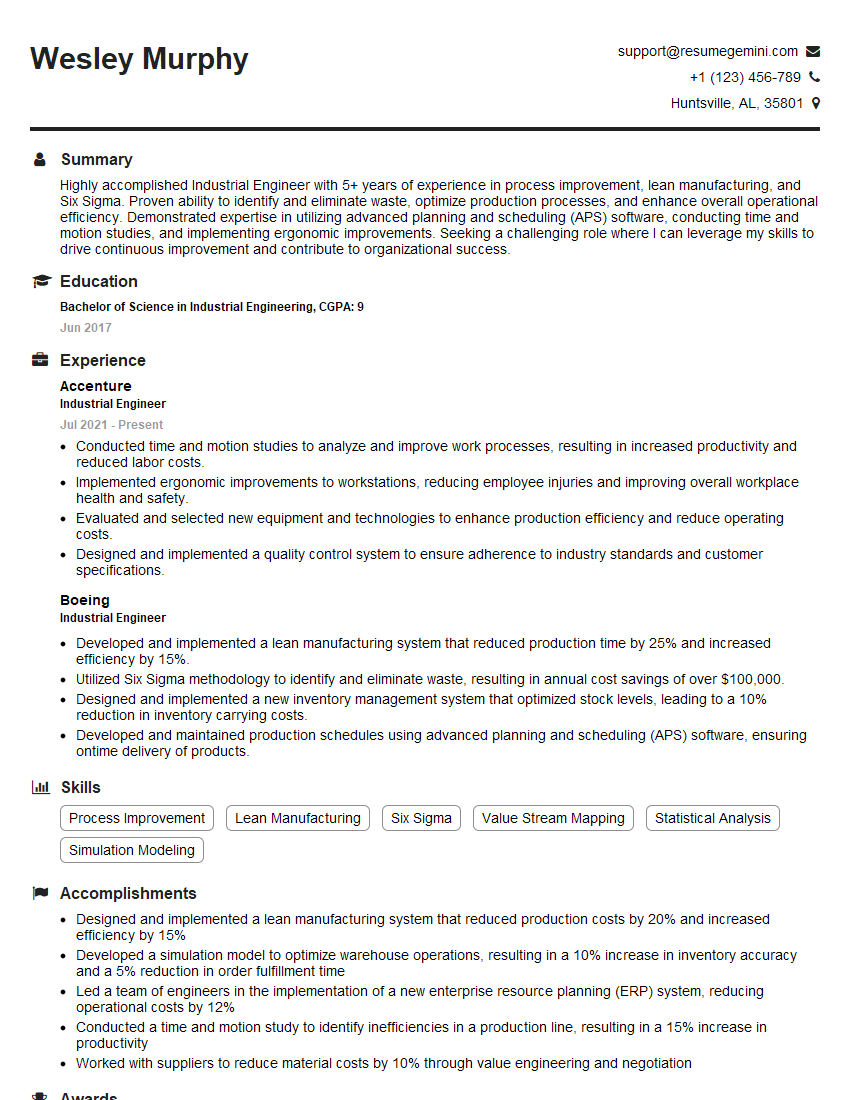
Industrial Engineer Resume Sample

Transportation Planner Resume Sample
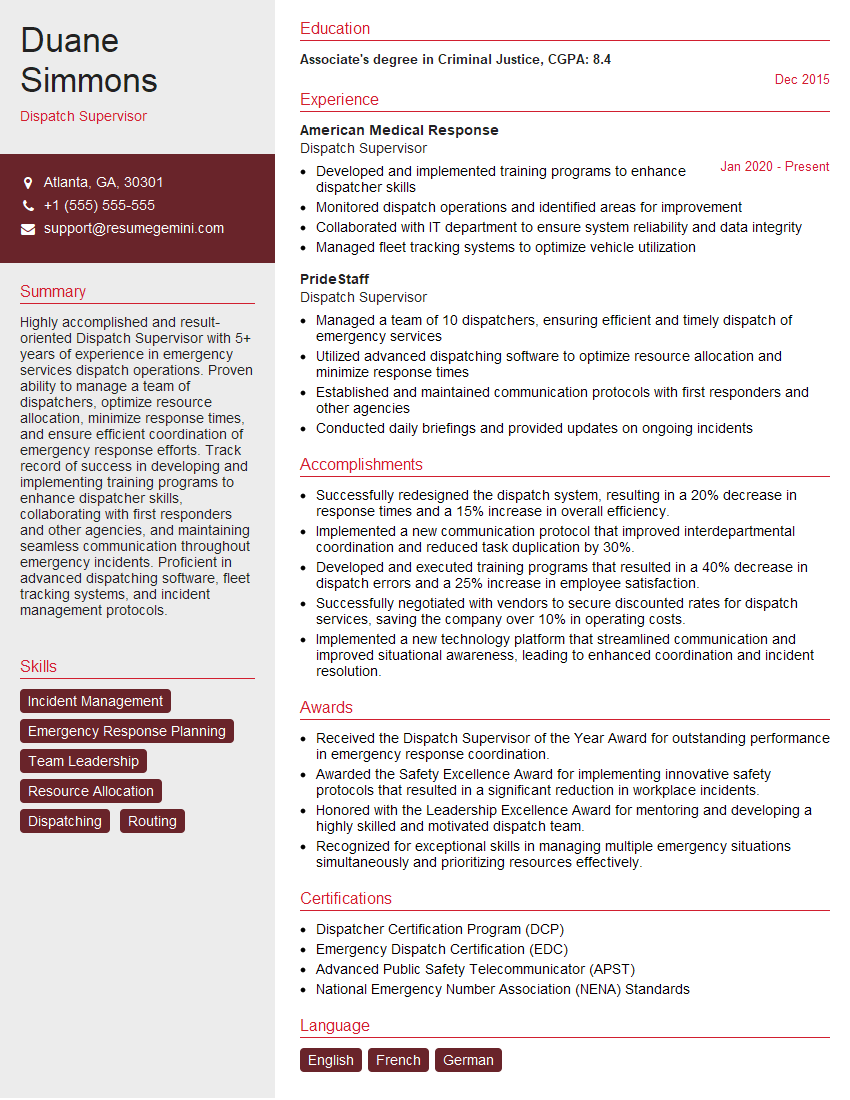
Dispatch Supervisor Resume Sample

Transportation Safety Officer Resume Sample
Explore more articles
Users Rating of Our Blogs
Share Your Experience
We value your feedback! Please rate our content and share your thoughts (optional).
What Readers Say About Our Blog
Very informative content, great job.
good