The thought of an interview can be nerve-wracking, but the right preparation can make all the difference. Explore this comprehensive guide to Security and Compliance (e.g. ISO 27001) interview questions and gain the confidence you need to showcase your abilities and secure the role.
Questions Asked in Security and Compliance (e.g. ISO 27001) Interview
Q 1. Explain the key principles of ISO 27001.
ISO 27001 is an internationally recognized standard that provides a framework for establishing, implementing, maintaining, and continually improving an Information Security Management System (ISMS). Its key principles revolve around a risk-based approach to information security. This means identifying, assessing, treating, and monitoring risks to ensure the confidentiality, integrity, and availability of organizational information assets.
- Risk Management: The core of ISO 27001. It emphasizes identifying, analyzing, and mitigating information security risks aligned with business objectives.
- Confidentiality, Integrity, and Availability (CIA): These are the three fundamental principles of information security that the ISMS must protect. Confidentiality ensures only authorized individuals access information. Integrity safeguards the accuracy and completeness of data. Availability guarantees that information is accessible when needed.
- Management Commitment: Top management must demonstrate commitment to the ISMS by providing resources, supporting initiatives, and leading by example.
- Continuous Improvement: ISO 27001 mandates a continual improvement process, with regular reviews and updates to the ISMS to adapt to evolving threats and organizational changes. This often involves using the Plan-Do-Check-Act cycle.
- Legal and Regulatory Compliance: The ISMS must comply with all relevant laws and regulations regarding information security.
Think of it like building a house: ISO 27001 provides the blueprint and guidelines, while the organization builds the actual system. The blueprint ensures the house (your data) is secure and resilient against various threats (e.g., fire, theft, intruders).
Q 2. Describe the Plan-Do-Check-Act (PDCA) cycle in the context of information security.
The Plan-Do-Check-Act (PDCA) cycle is a continuous improvement methodology integral to ISO 27001. In information security, it provides a structured approach to implementing and maintaining the ISMS.
- Plan: Define objectives, develop a plan to achieve them, and allocate resources. For example, planning a security awareness training program would involve identifying training needs, selecting appropriate materials, and scheduling sessions.
- Do: Implement the plan, conduct training sessions, and implement new security controls.
- Check: Monitor the effectiveness of the implemented plan, gather data on training effectiveness, conduct security audits, and analyze security incidents.
- Act: Review the results, identify areas for improvement, and modify the plan to enhance its effectiveness. This could involve updating training materials or adjusting security controls based on audit findings.
Imagine you’re baking a cake (implementing a security control). You plan the recipe (Plan), bake the cake (Do), taste-test it (Check), and adjust the recipe for the next time (Act).
Q 3. What are the different types of security controls and provide examples of each?
Security controls are measures implemented to reduce risks to information assets. They are categorized into several types:
- Preventive Controls: These aim to prevent security incidents before they occur.
- Example: Firewalls, intrusion detection systems (IDS), access control lists (ACLs), strong passwords.
- Detective Controls: These identify security incidents after they have occurred.
- Example: Security Information and Event Management (SIEM) systems, log analysis, intrusion detection systems (IDS), audit trails.
- Corrective Controls: These mitigate the impact of security incidents after they have been detected.
- Example: Incident response plans, malware removal tools, data backups and recovery procedures.
- Compensating Controls: These provide alternative security measures when other controls are not feasible or effective.
- Example: Using multi-factor authentication (MFA) when strong passwords alone are deemed insufficient.
- Deterrent Controls: These discourage potential attackers from attempting security incidents.
- Example: Security cameras, security guards, warning signs.
Think of these controls as layers of security, like the layers of an onion – each layer provides additional protection.
Q 4. How do you conduct a risk assessment according to ISO 27005?
ISO 27005 provides a framework for conducting risk assessments. The process generally involves the following steps:
- Risk identification: Identify all potential threats and vulnerabilities that could affect your information assets. This involves brainstorming, reviewing existing documentation, and utilizing vulnerability scanning tools.
- Risk analysis: Analyze the identified risks to determine their likelihood and potential impact. This often involves using qualitative or quantitative methods, like assigning risk scores based on likelihood and impact scales.
- Risk evaluation: Evaluate the identified risks based on their risk scores or other criteria to prioritize them. This helps focus resources on the most critical risks.
- Risk treatment: Develop and implement controls to mitigate the identified risks. This might involve implementing technical controls (e.g., firewalls), administrative controls (e.g., security policies), or physical controls (e.g., access control systems).
- Risk monitoring and review: Regularly monitor and review the effectiveness of the implemented controls and update the risk assessment as needed. This ensures that the ISMS remains effective in mitigating risks.
Imagine you’re planning a hiking trip. You identify potential hazards (e.g., weather, wildlife, terrain) – that’s risk identification. You assess the likelihood and impact of each hazard (risk analysis), decide which ones are most critical (risk evaluation), and plan how to avoid or mitigate them (risk treatment). You then monitor the conditions during the hike (risk monitoring).
Q 5. Explain the concept of a risk register.
A risk register is a document that centralizes all identified risks. It provides a comprehensive overview of the risks facing an organization, allowing for effective management and tracking. It typically includes the following information for each identified risk:
- Risk ID: A unique identifier for each risk.
- Risk Description: A detailed explanation of the risk.
- Threat: The potential cause of the risk.
- Vulnerability: The weakness that allows the threat to exploit the asset.
- Asset: The information asset at risk.
- Likelihood: The probability of the risk occurring.
- Impact: The potential consequences if the risk occurs.
- Risk Score: A numerical representation of the risk’s severity.
- Owner: The individual or team responsible for managing the risk.
- Control(s): The mitigation strategies or controls implemented to address the risk.
- Status: The current state of the risk (e.g., open, mitigated, accepted).
Think of it as a spreadsheet or database that keeps track of all potential problems and their solutions – a centralized, manageable inventory of risk.
Q 6. What is the difference between confidentiality, integrity, and availability (CIA) triad?
The CIA triad (Confidentiality, Integrity, Availability) represents the three core principles of information security. They are interconnected and equally important.
- Confidentiality: Ensures that sensitive information is accessible only to authorized individuals or systems. For example, encrypting customer data protects its confidentiality.
- Integrity: Guarantees the accuracy and completeness of information and prevents unauthorized modification or deletion. Using digital signatures ensures data integrity.
- Availability: Ensures that information and systems are accessible to authorized users when needed. Redundant servers and backup systems enhance availability.
Imagine a bank vault. Confidentiality keeps unauthorized people from accessing the money, integrity ensures that the money isn’t altered or stolen, and availability means you can get your money when you need it.
Q 7. Describe your experience with implementing security awareness training programs.
I have extensive experience in developing and implementing security awareness training programs. My approach involves a multifaceted strategy that includes:
- Needs Assessment: Identifying specific security risks and vulnerabilities within the organization and tailoring the training to address those needs. This involves analyzing risk assessments, security audits, and incident reports.
- Program Design: Creating engaging and effective training materials, including presentations, interactive modules, and realistic scenarios, to cater to different learning styles. Gamification techniques are often utilized to improve engagement and knowledge retention.
- Delivery Methods: Utilizing various delivery methods such as online modules, instructor-led workshops, phishing simulations, and newsletters to maximize participation and effectiveness.
- Measurement and Evaluation: Tracking program effectiveness through pre and post-training assessments, phishing simulations, and monitoring security incidents to measure behavioural changes and reduction in security incidents.
- Continuous Improvement: Regular review of the program and its effectiveness based on feedback, assessment results, and evolving security threats. This ensures the training remains relevant and effective.
For example, in a recent project, I implemented a phishing simulation program that significantly reduced employee susceptibility to phishing attacks by 70% within six months. This success was due to a combination of engaging training modules, realistic phishing simulations, and regular follow-up communications.
Q 8. How do you handle security incidents and breaches?
Handling security incidents and breaches requires a structured and rapid response. Think of it like a well-rehearsed fire drill – you have a plan and everyone knows their role. My approach follows a standardized incident response framework, typically incorporating these phases:
- Preparation: Establishing clear incident response plans, communication protocols, and pre-approved escalation paths. This includes defining roles and responsibilities, identifying key stakeholders, and regularly testing the plan through tabletop exercises.
- Identification: Detecting the incident through monitoring systems, alerts, or user reports. This often involves SIEM (Security Information and Event Management) systems and intrusion detection systems.
- Containment: Isolating the affected systems or data to prevent further damage or spread. This may involve disconnecting infected machines from the network or blocking malicious IP addresses.
- Eradication: Removing the root cause of the incident, such as malware or a compromised account. This might involve reinstalling operating systems, patching vulnerabilities, or deleting malicious code.
- Recovery: Restoring affected systems and data from backups, ensuring business continuity. This phase requires thorough testing to confirm functionality.
- Lessons Learned: Reviewing the incident to identify weaknesses in security controls and implement improvements to prevent future occurrences. This is crucial for continuous improvement.
For example, during a recent phishing attack targeting employee credentials, we immediately quarantined affected accounts, initiated a password reset campaign, investigated the source of the attack, and implemented enhanced security awareness training for all staff. Post-incident analysis resulted in the implementation of multi-factor authentication (MFA) across all systems.
Q 9. Explain your understanding of data loss prevention (DLP) measures.
Data Loss Prevention (DLP) measures are critical for safeguarding sensitive information. Imagine DLP as a security perimeter, but for data itself, preventing its unauthorized access, use, disclosure, disruption, modification, or destruction. My experience with DLP includes implementing a multi-layered approach:
- Data Discovery and Classification: Identifying and classifying sensitive data based on its criticality (e.g., PCI DSS, PHI, PII). This involves scanning systems and databases to locate sensitive data and tagging it appropriately.
- Data Loss Prevention Tools: Utilizing DLP software to monitor and control data movement within and outside the organization. These tools can scan emails, network traffic, and cloud storage for sensitive data and prevent its unauthorized transmission or copying.
- Access Control: Implementing robust access control mechanisms (e.g., role-based access control) to limit access to sensitive data based on the principle of least privilege. Only authorized personnel should have access to specific data.
- Data Encryption: Encrypting sensitive data both in transit and at rest to protect it from unauthorized access even if the data is compromised.
- Security Awareness Training: Educating employees about data security policies and best practices to prevent accidental data loss or misuse. This includes training on phishing awareness and safe data handling practices.
For instance, we implemented a DLP solution that blocked employees from emailing sensitive client information to personal accounts and flagged attempts to copy such data onto removable media. This significantly reduced our risk of data breaches.
Q 10. What are your experiences with vulnerability scanning and penetration testing?
Vulnerability scanning and penetration testing are essential components of a proactive security strategy. Think of vulnerability scanning as a medical check-up, identifying potential weaknesses, while penetration testing simulates real-world attacks to assess their effectiveness. My experience encompasses both:
- Vulnerability Scanning: Using automated tools (e.g., Nessus, OpenVAS) to identify known vulnerabilities in systems and applications. This includes identifying outdated software, misconfigurations, and known security flaws.
- Penetration Testing: Employing ethical hackers to simulate real-world attacks to discover vulnerabilities that automated scans might miss. This involves various techniques like network mapping, social engineering, and exploiting discovered vulnerabilities.
- Reporting and Remediation: Creating comprehensive reports that detail discovered vulnerabilities, their severity, and recommended remediation steps. This includes working with IT teams to address identified vulnerabilities and verifying that fixes are implemented effectively.
In a recent engagement, we conducted a penetration test that revealed a critical vulnerability in a web application that could have allowed attackers to gain unauthorized access to sensitive customer data. The vulnerability was promptly remediated, and the system was re-tested to confirm the fix.
Q 11. How do you ensure compliance with GDPR or other relevant data privacy regulations?
Ensuring compliance with GDPR (General Data Protection Regulation) and other data privacy regulations requires a holistic approach. Imagine it as building a house that adheres to strict building codes – every aspect must be compliant. My experience includes:
- Data Mapping and Inventory: Identifying all personal data processed by the organization, where it’s stored, and how it’s used. This is the foundation of any data privacy program.
- Data Protection Impact Assessments (DPIAs): Conducting DPIAs for high-risk processing activities to identify and mitigate potential risks to data subjects.
- Consent Management: Implementing mechanisms for obtaining valid, informed consent from individuals for processing their personal data. This often involves clear and concise privacy policies and consent forms.
- Data Subject Access Requests (DSARs): Establishing processes for handling DSARs efficiently and accurately. This ensures individuals can access, rectify, or delete their personal data.
- Data Breach Notification: Implementing procedures for promptly notifying the relevant authorities and affected individuals in case of a data breach, as required by regulations.
For example, we helped a client implement a GDPR compliance program by conducting a comprehensive data mapping exercise, developing data processing agreements with third-party vendors, and implementing processes for handling DSARs and breach notifications. This ensured their compliance with the regulation and mitigated their legal and reputational risks.
Q 12. Explain your experience with auditing information security systems.
Auditing information security systems is a critical process for ensuring the effectiveness of security controls and compliance with relevant regulations. Think of it as a thorough inspection to identify any structural weaknesses in your security system. My experience includes conducting both internal and external audits, encompassing:
- Planning and Scoping: Defining the scope of the audit, identifying key controls to be reviewed, and developing an audit plan.
- Evidence Gathering: Collecting evidence through interviews, document reviews, system testing, and observations. This involves meticulously documenting findings.
- Control Testing: Evaluating the design and operational effectiveness of security controls to ensure they meet organizational objectives and regulatory requirements.
- Reporting: Preparing a comprehensive audit report that summarizes findings, identifies any control deficiencies, and recommends corrective actions.
- Follow-up: Following up with management to ensure that identified deficiencies are addressed and corrective actions are implemented.
In a recent audit, we identified a weakness in the organization’s access control system that allowed unauthorized users to access sensitive data. This was reported to management, and corrective actions were taken to address the vulnerability. Follow-up audits ensured the problem was remediated effectively.
Q 13. How do you manage security in cloud environments?
Managing security in cloud environments requires a different approach compared to on-premise systems. Imagine it as securing a shared apartment building versus a private house. My experience covers these key aspects:
- Shared Responsibility Model: Understanding the shared responsibility model between the cloud provider and the organization. The cloud provider is responsible for the underlying infrastructure security, while the organization is responsible for securing its data and applications running on the cloud.
- Identity and Access Management (IAM): Implementing robust IAM controls to manage user access to cloud resources. This includes using multi-factor authentication (MFA), role-based access control (RBAC), and least privilege principles.
- Data Encryption: Encrypting data both in transit and at rest using encryption tools provided by the cloud provider or third-party solutions. This protects data even if the cloud provider’s systems are compromised.
- Security Monitoring and Logging: Implementing robust security monitoring and logging solutions to detect and respond to security incidents. This may involve utilizing cloud-based SIEM (Security Information and Event Management) systems.
- Vulnerability Management: Regularly scanning cloud environments for vulnerabilities and promptly patching identified issues. Cloud providers often offer automated patching services.
For example, we migrated a client’s on-premise application to AWS and implemented a comprehensive security strategy, including IAM roles, MFA, data encryption at rest and in transit, and continuous security monitoring. This ensured the application’s security in the cloud environment.
Q 14. Describe your experience with different authentication and authorization methods.
Authentication and authorization are fundamental security concepts. Authentication verifies who you are (your identity), while authorization determines what you’re allowed to do (your privileges). My experience includes working with various methods:
- Multi-Factor Authentication (MFA): Employing MFA to enhance security by requiring multiple forms of authentication, such as passwords, one-time codes, or biometrics. This significantly reduces the risk of unauthorized access.
- Single Sign-On (SSO): Implementing SSO solutions to allow users to access multiple applications with a single set of credentials. This simplifies user experience and improves security management.
- Role-Based Access Control (RBAC): Utilizing RBAC to grant users access to resources based on their roles and responsibilities. This ensures that users only have access to the information and functions they need to perform their jobs.
- Attribute-Based Access Control (ABAC): Implementing more granular access control using attributes, such as location, time, and device type. This allows for highly dynamic and context-aware access control.
- Kerberos and OAuth 2.0: Utilizing industry-standard authentication protocols for secure access to systems and applications.
In a project, we integrated an MFA solution using hardware tokens and implemented RBAC to control access to sensitive data within a financial institution. This significantly reduced the risk of unauthorized access and ensured compliance with regulatory requirements.
Q 15. Explain your understanding of encryption techniques.
Encryption is the process of converting readable data (plaintext) into an unreadable format (ciphertext) to protect it from unauthorized access. This is achieved using a cryptographic algorithm and a key. The key is crucial; it’s what unlocks the ciphertext back into plaintext. There are two main types: symmetric and asymmetric encryption.
Symmetric Encryption: Uses the same key for both encryption and decryption. Think of it like a secret codebook shared between sender and receiver. Examples include AES (Advanced Encryption Standard) and DES (Data Encryption Standard). It’s fast and efficient but requires a secure method for key exchange.
Asymmetric Encryption: Uses two keys: a public key for encryption and a private key for decryption. This is analogous to a mailbox – everyone has access to the mailbox (public key) to drop off a message (encrypted data), but only the recipient possesses the key (private key) to open it. RSA (Rivest–Shamir–Adleman) is a widely used asymmetric encryption algorithm. It’s slower than symmetric but excellent for secure key exchange and digital signatures.
In practice, hybrid approaches are often used, combining the speed of symmetric encryption for large data sets with the security of asymmetric encryption for key exchange. For example, TLS/SSL, used for secure web communication, uses this hybrid approach.
Career Expert Tips:
- Ace those interviews! Prepare effectively by reviewing the Top 50 Most Common Interview Questions on ResumeGemini.
- Navigate your job search with confidence! Explore a wide range of Career Tips on ResumeGemini. Learn about common challenges and recommendations to overcome them.
- Craft the perfect resume! Master the Art of Resume Writing with ResumeGemini’s guide. Showcase your unique qualifications and achievements effectively.
- Don’t miss out on holiday savings! Build your dream resume with ResumeGemini’s ATS optimized templates.
Q 16. How do you monitor and measure the effectiveness of security controls?
Monitoring and measuring security control effectiveness requires a multi-faceted approach. It’s not enough to simply implement controls; you need to regularly assess their performance and make adjustments as needed. This typically involves:
Regular Vulnerability Scanning and Penetration Testing: These identify weaknesses in systems and applications that attackers could exploit. This proactive approach allows us to fix vulnerabilities before they can be used against us.
Security Information and Event Management (SIEM): SIEM systems collect and analyze security logs from various sources, providing real-time visibility into network activity and potential security incidents. This allows for the detection of anomalies and the identification of successful or attempted attacks.
Security Audits and Assessments: These involve formal reviews of security controls, policies, and procedures to ensure compliance with regulations and best practices. They provide an independent view of our security posture.
Key Risk Indicators (KRIs): These are metrics that measure the likelihood and impact of specific security risks. Tracking KRIs helps us understand trends and identify areas needing improvement. Examples include the number of successful phishing attempts, the number of vulnerabilities identified, and the average time to resolve security incidents.
Metrics Reporting and Dashboards: Visual dashboards displaying key security metrics make it easy to track progress, identify trends, and demonstrate the effectiveness of our security program to stakeholders.
For example, if our KRI for phishing attempts shows a significant increase, it might indicate a need for enhanced security awareness training or improved email filtering.
Q 17. What are your experiences with implementing and maintaining an information security management system (ISMS)?
I have extensive experience in implementing and maintaining ISMSs, primarily based on ISO 27001. This includes the entire lifecycle, from initial planning and risk assessment to implementation, maintenance, and continuous improvement. My experience covers:
Scope Definition and Risk Assessment: Identifying assets, threats, and vulnerabilities relevant to the organization and performing a thorough risk assessment to determine the appropriate security controls.
Policy and Procedure Development: Creating and documenting security policies and procedures that align with the risk assessment and ISO 27001 requirements. This ensures consistent and repeatable security practices across the organization.
Control Implementation and Monitoring: Implementing and regularly monitoring the effectiveness of the defined security controls. This includes conducting regular audits and assessments to ensure compliance and identify areas for improvement.
Incident Management: Establishing and maintaining an incident response plan that outlines the steps to take in the event of a security incident. This includes incident identification, containment, eradication, recovery, and lessons learned.
Continuous Improvement: Regularly reviewing and updating the ISMS to adapt to changing threats and business needs. This involves conducting management reviews and internal audits to ensure continuous improvement.
In one particular project, I helped a healthcare provider implement an ISMS compliant with HIPAA and ISO 27001, resulting in a significant reduction in security incidents and improved patient data protection.
Q 18. How do you prioritize security risks?
Prioritizing security risks involves a systematic approach. A common framework is using a risk matrix that considers both the likelihood and impact of each risk. This allows us to focus our resources on the most critical threats.
Risk Identification: Identify all potential security risks through various methods such as vulnerability scans, threat modeling, and stakeholder interviews.
Risk Analysis: Assess the likelihood and impact of each identified risk. Likelihood is the probability of the risk occurring, while impact is the potential damage or loss if the risk occurs. Qualitative scales (e.g., low, medium, high) or quantitative estimations can be used.
Risk Prioritization: Develop a risk matrix by plotting likelihood against impact. Risks in the high-likelihood/high-impact quadrant receive top priority.
Risk Response Planning: Develop strategies to mitigate, transfer, accept, or avoid each prioritized risk. This could involve implementing security controls, purchasing insurance, or accepting the risk.
For example, a high-likelihood/high-impact risk might be a ransomware attack targeting critical systems. This would receive top priority, and the response plan might include implementing strong data backups, employee training on phishing awareness, and advanced endpoint protection software.
Q 19. What is your experience with incident response planning and execution?
Incident response planning and execution are critical for minimizing the impact of security breaches. A well-defined incident response plan should cover all phases of an incident:
Preparation: This includes identifying potential incidents, defining roles and responsibilities, developing communication protocols, and establishing escalation paths.
Identification: Detecting and confirming that a security incident has occurred. This might involve monitoring security logs, receiving alerts from security systems, or receiving reports from users.
Containment: Containing the incident to prevent further damage. This might involve isolating infected systems, blocking network access, or disabling affected accounts.
Eradication: Removing the root cause of the incident. This could involve removing malware, patching vulnerabilities, or restoring systems from backups.
Recovery: Restoring systems and data to their operational state. This might involve restoring systems from backups, recovering data from offsite storage, or reinstalling applications.
Post-Incident Activity: Analyzing the incident to understand what happened, identify weaknesses in the security defenses, and implement improvements to prevent future incidents. This involves creating a comprehensive post-incident report and documenting lessons learned.
In a past incident involving a phishing attack, our well-rehearsed incident response plan enabled us to contain the breach within hours, minimizing data loss and preventing significant disruption to business operations.
Q 20. How do you stay up-to-date with the latest security threats and vulnerabilities?
Staying up-to-date with the latest security threats and vulnerabilities is essential. I utilize a multi-pronged approach:
Subscription to Security Newsletters and Alerts: Receiving regular updates from reputable sources like CERT, NIST, and SANS provides timely information about emerging threats and vulnerabilities.
Following Security Blogs and Forums: Engaging with the security community through blogs and forums allows for a deeper understanding of current trends and techniques.
Participation in Security Conferences and Webinars: Attending industry conferences and webinars offers valuable insights from leading experts in the field.
Utilizing Vulnerability Databases: Regularly checking vulnerability databases such as the National Vulnerability Database (NVD) to identify known vulnerabilities in our systems and applications.
Threat Intelligence Platforms: Using threat intelligence platforms to gather and analyze threat information from various sources, allowing for proactive threat hunting and prevention.
I also actively participate in professional organizations such as (ISC)² to stay abreast of the latest developments and best practices.
Q 21. Explain the concept of business continuity and disaster recovery planning.
Business continuity and disaster recovery planning are crucial for ensuring organizational resilience. They are closely related but distinct concepts:
Business Continuity Planning (BCP): Focuses on maintaining essential business functions during and after a disruptive event. It’s a broader strategy that considers various scenarios, including natural disasters, cyberattacks, pandemics, and other disruptions. The goal is to minimize downtime and ensure business operations can continue, even if at a reduced capacity.
Disaster Recovery Planning (DRP): Focuses specifically on restoring IT systems and data after a disruptive event. It’s a subset of BCP and is typically more technical in nature. A DRP outlines procedures for restoring servers, applications, databases, and other IT infrastructure. The goal is to quickly restore IT systems and data to their pre-disaster state.
A comprehensive BCP and DRP typically includes:
Risk Assessment: Identifying potential disruptive events and their impact on the business.
Business Impact Analysis (BIA): Determining the critical business functions and their recovery time objectives (RTOs) and recovery point objectives (RPOs).
Recovery Strategies: Developing strategies for recovering critical business functions and IT systems.
Testing and Maintenance: Regularly testing and updating the plans to ensure their effectiveness.
For instance, a financial institution might have a BCP that outlines procedures for maintaining essential banking services during a power outage, while the corresponding DRP details the steps for restoring its core banking systems from a backup data center.
Q 22. How do you communicate security risks and recommendations to non-technical stakeholders?
Communicating complex security risks to non-technical stakeholders requires translating technical jargon into plain language and focusing on the potential impact on the business. I typically use a three-step approach: first, I explain the risk in simple terms, using analogies to relatable situations. For example, instead of saying “vulnerability in the web application,” I might say “imagine a slightly ajar window in our online storefront – someone could potentially reach in and steal customer data.”
Second, I quantify the risk, focusing on the potential financial, reputational, or legal consequences. This might involve referencing potential fines, loss of customers, or damage to brand image. Using concrete numbers and real-world examples is key here. For instance, “A data breach could cost us up to $X in fines and lost revenue.” Finally, I present clear, actionable recommendations, focusing on the benefits to the business and the simplicity of implementation. I avoid technical details and instead prioritize the positive outcome, like “Implementing two-factor authentication will significantly reduce the likelihood of unauthorized access and protect our customer data.” This approach allows stakeholders to understand the urgency and relevance of security measures without getting bogged down in technical minutiae.
Q 23. Describe your experience with security metrics and reporting.
My experience with security metrics and reporting spans several years, focusing on data-driven decision making. I’m proficient in creating and analyzing key performance indicators (KPIs) to track the effectiveness of our security posture. These KPIs range from the number of security incidents, their severity and resolution time, to the success rate of security awareness training. I use various tools like SIEMs (Security Information and Event Management) and vulnerability scanners to gather the raw data, then process it to produce insightful reports with clear visualizations (charts, graphs) to communicate trends and progress to both technical and executive stakeholders. For example, I might present a dashboard showing the monthly reduction in vulnerabilities discovered, or a report highlighting the improvement in incident response times. Furthermore, I’m experienced in using this data to justify investments in security improvements, demonstrating ROI (Return on Investment) based on reduced risk and improved efficiency.
Q 24. What are some common security frameworks besides ISO 27001?
Beyond ISO 27001, several other widely recognized security frameworks exist, each with its own strengths and focuses. These include:
- NIST Cybersecurity Framework (CSF): A voluntary framework that provides a flexible approach to managing cybersecurity risk, focusing on five core functions: Identify, Protect, Detect, Respond, and Recover.
- CIS Controls: A prioritized set of controls that organizations can use to improve their cybersecurity posture, categorized into safeguards for essential cyber hygiene and advanced persistent threat (APT) defense.
- COBIT (Control Objectives for Information and Related Technologies): A framework for IT governance and management that provides a holistic approach to managing enterprise IT risks.
- SOC 2 (System and Organization Controls 2): A report on a service organization’s system that addresses the trust services criteria relevant to security, availability, processing integrity, confidentiality, and privacy.
The choice of framework often depends on the organization’s specific needs, industry regulations, and risk tolerance. For example, a financial institution might prioritize frameworks like SOC 2 due to stringent regulatory requirements, while a smaller organization might find the NIST CSF’s flexibility more suitable.
Q 25. Explain your understanding of access control models (e.g., RBAC, ABAC).
Access control models define how subjects (users, processes) are granted access to objects (data, resources). Two prominent models are Role-Based Access Control (RBAC) and Attribute-Based Access Control (ABAC).
- RBAC: This model assigns permissions based on a user’s role within the organization. For example, an “administrator” role might have full access, while a “customer service representative” role has limited access to customer data. This simplifies management as permissions are assigned to roles, not individual users. If a user changes roles, their permissions automatically adjust.
- ABAC: This more granular model grants access based on multiple attributes of the subject, object, and environment. Attributes might include user roles, time of day, location, device type, data sensitivity level, and more. ABAC allows for fine-grained control, adapting access decisions dynamically based on various contextual factors. For instance, a doctor might only have access to a patient’s medical records during their working hours from a hospital network.
In practice, many organizations leverage a combination of these models to achieve an optimal balance between security and usability. For instance, an organization might use RBAC as a foundation and enhance it with ABAC for more refined control over sensitive data.
Q 26. Describe your experience with implementing and managing security policies and procedures.
I have extensive experience in developing, implementing, and managing comprehensive security policies and procedures. My approach begins with a thorough risk assessment to identify vulnerabilities and prioritize efforts. I then translate these findings into clear, concise policies covering areas like access control, data security, incident response, and acceptable use. These policies are not merely documents; they are actively communicated and enforced through regular training and awareness programs. I’ve used various methods to ensure compliance, including regular audits, automated monitoring tools, and periodic policy reviews. I also actively involve stakeholders throughout the process, ensuring the policies are not only effective but also practical and readily understood by all. A key aspect is establishing a clear escalation path for security incidents, ensuring that appropriate personnel are notified and that the response aligns with established protocols. Documenting every step is crucial, not only for audit purposes, but also to provide a learning experience for future incidents.
Q 27. How do you ensure the security of sensitive data both in transit and at rest?
Securing sensitive data both in transit and at rest is paramount. For data in transit (data moving between systems), encryption is crucial. This is usually achieved through protocols like TLS/SSL for web traffic, VPNs for network connections, and secure email gateways. I’ve worked with various encryption methods, carefully considering factors such as key management and the strength of the encryption algorithm. For data at rest (data stored on systems), encryption is equally important. This often involves disk encryption, database encryption, and file-level encryption. Strong access controls, limiting access to only authorized personnel, are also vital. Data loss prevention (DLP) tools are crucial to prevent unauthorized exfiltration of sensitive information. Regular security audits and penetration testing are employed to identify any weaknesses in the implemented security measures. Furthermore, implementing robust logging and monitoring systems allows for the timely detection and response to any data security incidents.
Q 28. What is your experience with security architecture and design?
My background includes extensive work in security architecture and design. I approach this by utilizing a layered security model, incorporating various security controls at multiple levels. This might include network security (firewalls, intrusion detection/prevention systems), endpoint security (antivirus, endpoint detection and response), data security (encryption, access controls), and application security (secure coding practices, vulnerability scanning). I consider various aspects during design, such as scalability, maintainability, and compliance with relevant standards and regulations. I leverage industry best practices and security frameworks (like ISO 27001 and NIST CSF) to guide the design process. I also incorporate threat modeling techniques to identify and mitigate potential vulnerabilities proactively. A crucial component is ensuring that the security architecture aligns with the organization’s overall business objectives and risk appetite. Documentation is critical, producing comprehensive diagrams and specifications for ease of understanding, maintenance, and future expansion.
Key Topics to Learn for Security and Compliance (e.g., ISO 27001) Interviews
Ace your next interview by mastering these essential areas. Remember, understanding the “why” behind concepts is as important as knowing the “how.”
- Information Security Management Systems (ISMS): Understand the core principles and the lifecycle of an ISMS, including planning, implementation, operation, monitoring, review, and improvement.
- Risk Management: Learn how to identify, assess, treat, and monitor security risks. Be prepared to discuss risk assessment methodologies and practical applications within an organizational context.
- ISO 27001 Standards: Familiarize yourself with the key clauses and annexes of the ISO 27001 standard. Understand the requirements for establishing, implementing, maintaining, and continually improving an ISMS.
- Security Controls: Explore various security controls (physical, technical, administrative) and their implementation. Be ready to discuss examples and best practices for implementing these controls effectively.
- Incident Management: Understand the process of handling security incidents, from detection and response to recovery and post-incident activity. Practice describing your approach to incident handling.
- Compliance Frameworks (beyond ISO 27001): Demonstrate awareness of other relevant compliance frameworks such as NIST Cybersecurity Framework, HIPAA, GDPR, etc., and how they relate to information security.
- Auditing and Compliance: Understand the audit process, common audit findings, and how to address non-conformities. Consider the role of internal and external audits in maintaining compliance.
- Data Security and Privacy: Discuss data classification, access control, data encryption, and data loss prevention techniques. Highlight your understanding of data privacy regulations.
Next Steps: Unlock Your Career Potential
Mastering Security and Compliance, particularly ISO 27001, significantly enhances your career prospects in a rapidly growing field. Demonstrate your expertise by crafting a compelling, ATS-friendly resume that highlights your skills and experience effectively.
To help you create a standout resume, we recommend using ResumeGemini, a trusted resource for building professional resumes. ResumeGemini provides examples of resumes tailored to Security and Compliance roles, including those specializing in ISO 27001. Let your experience shine!
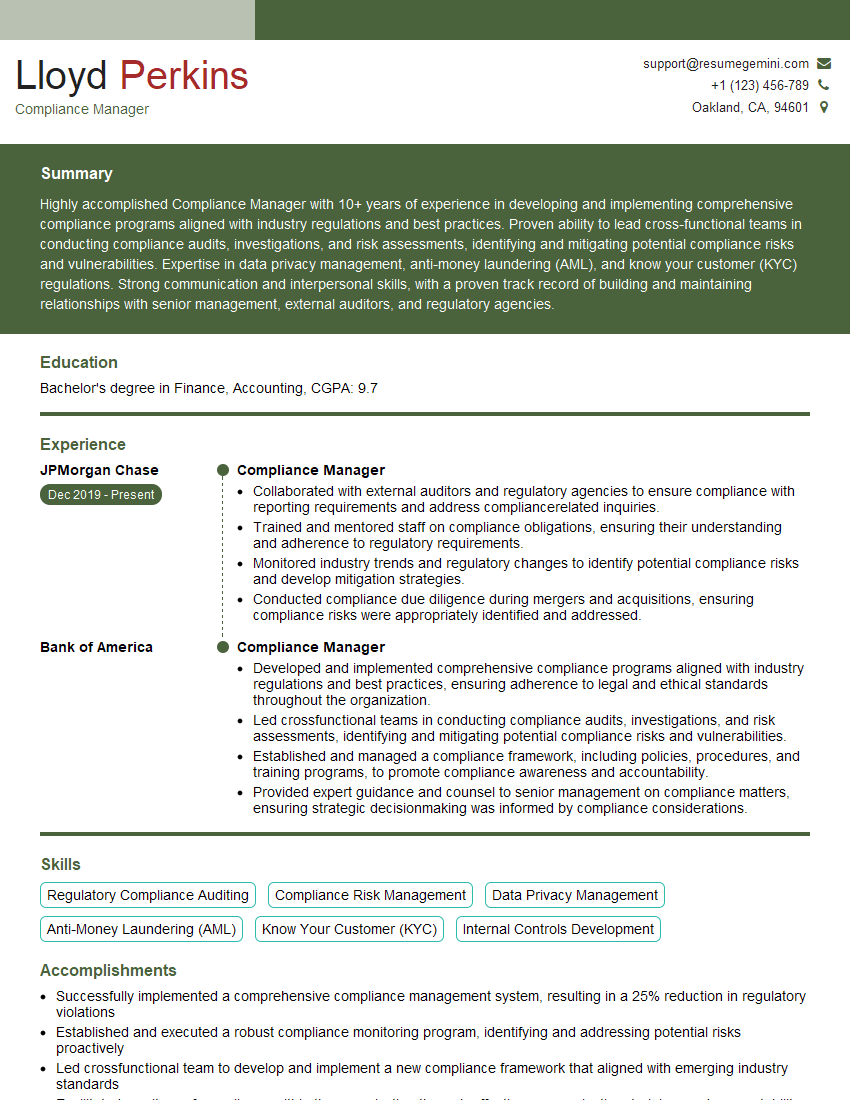
Compliance Manager Resume Sample

Compliance Officer Resume Sample
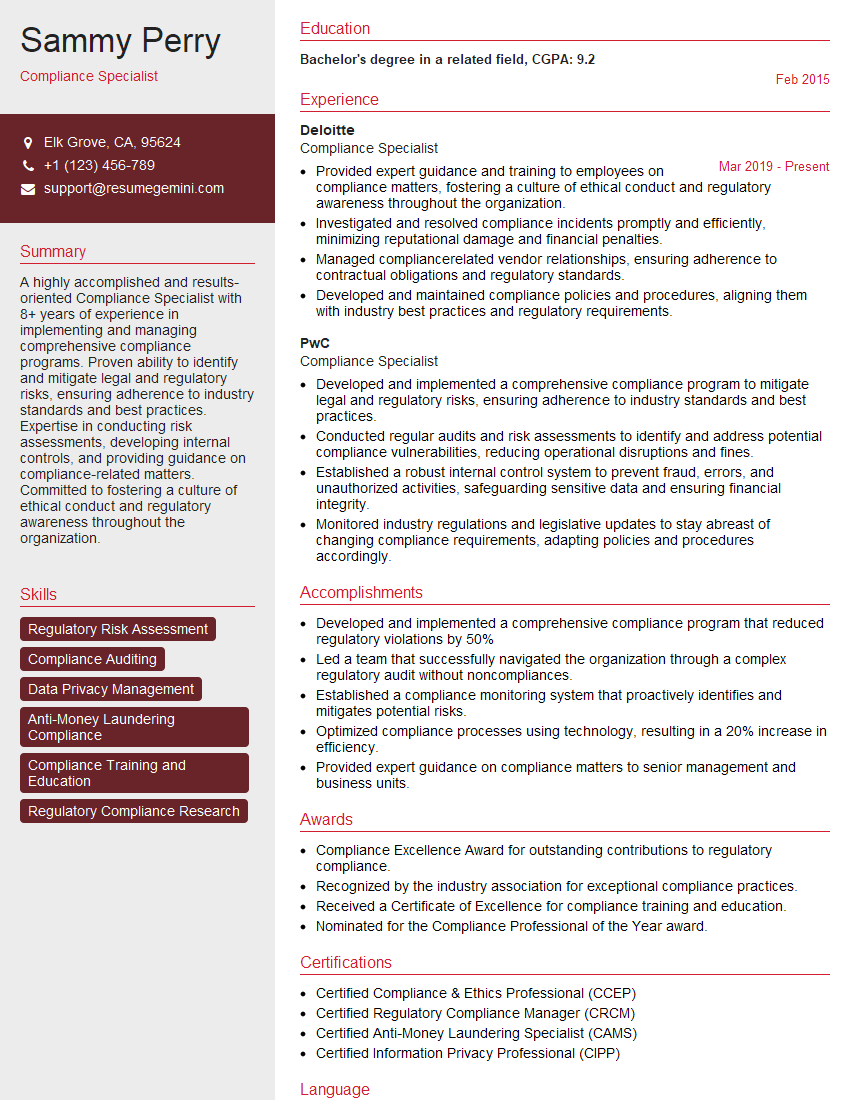
Compliance Specialist Resume Sample
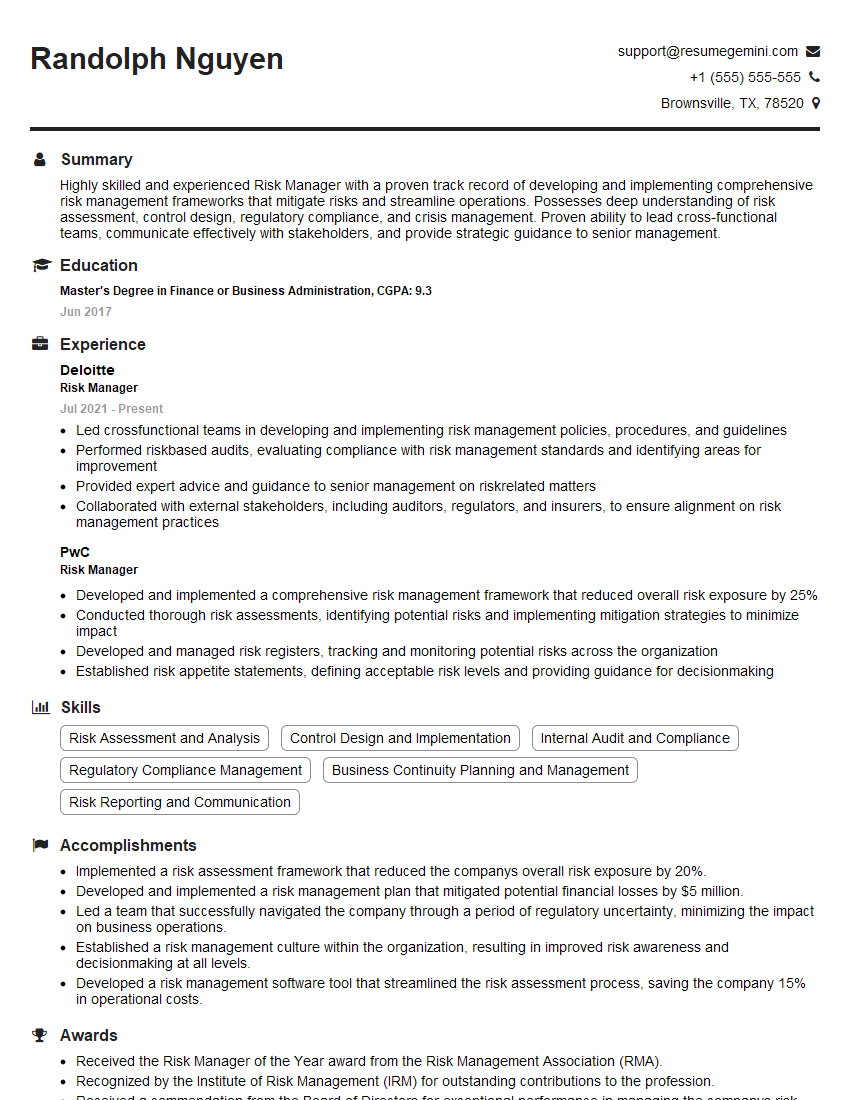
Risk Manager Resume Sample
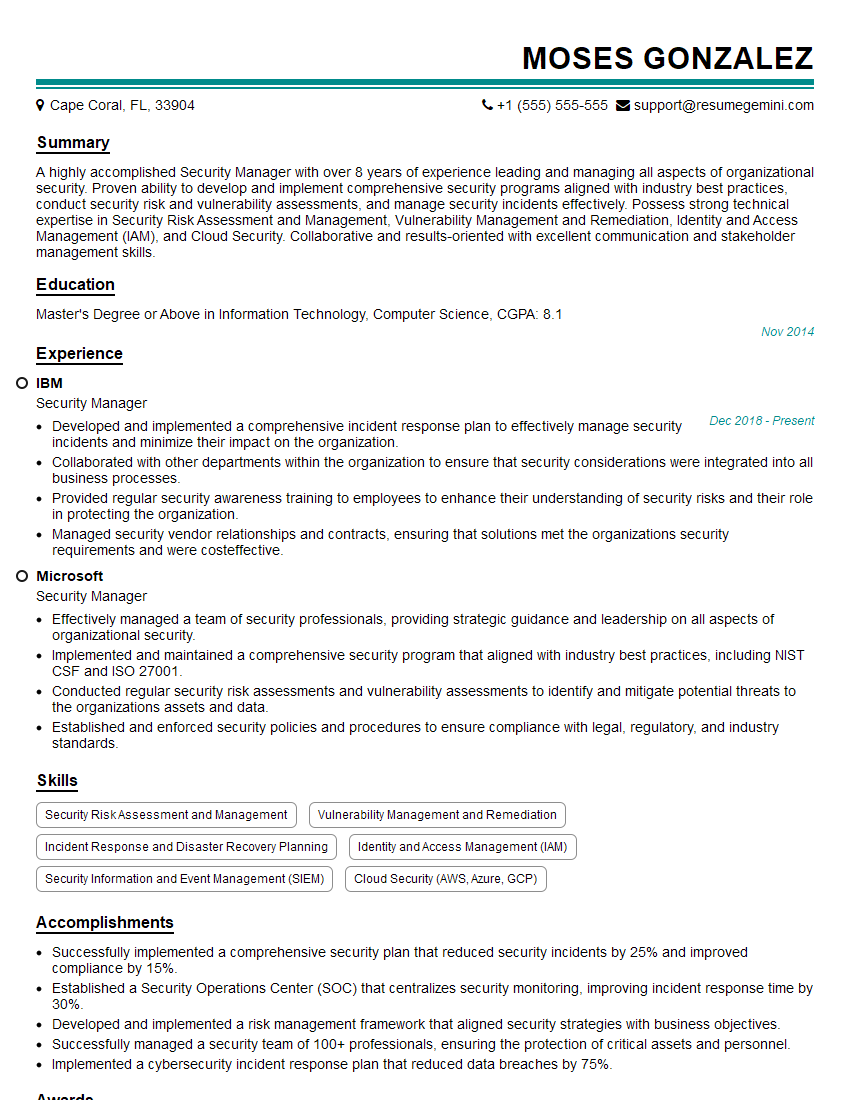
Security Manager Resume Sample
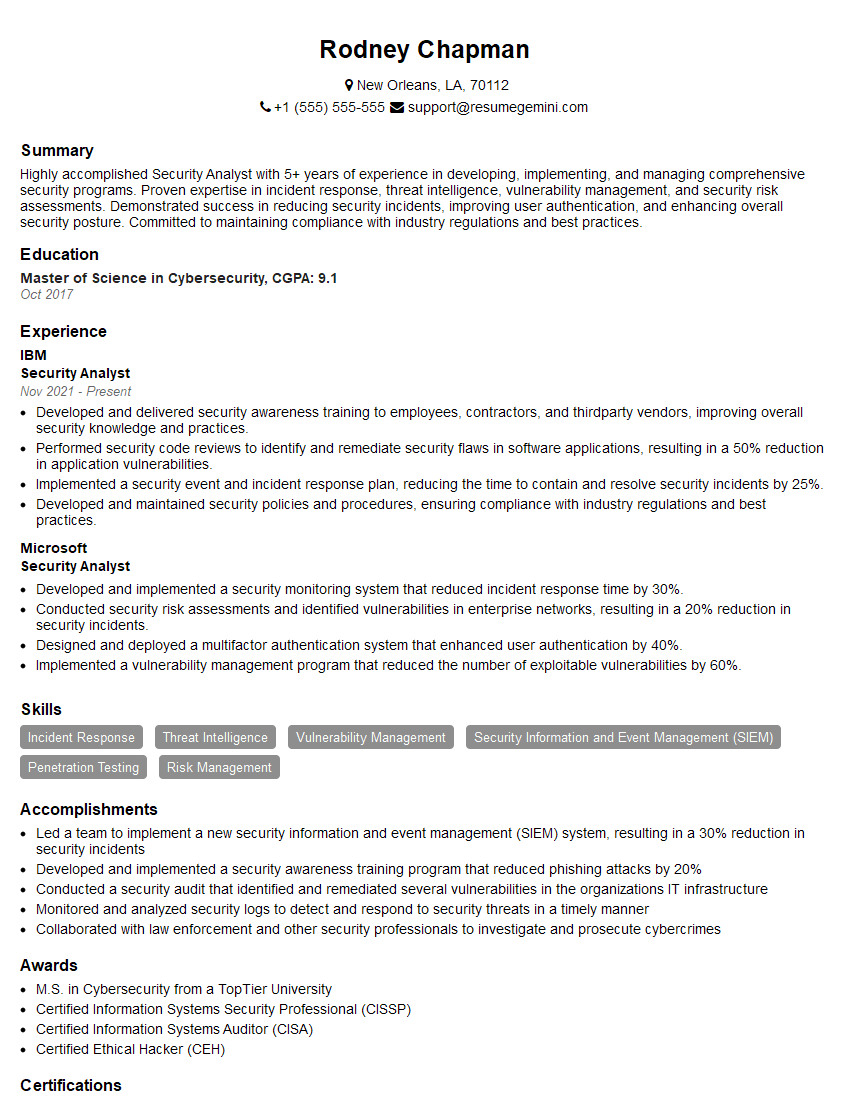
Security Analyst Resume Sample
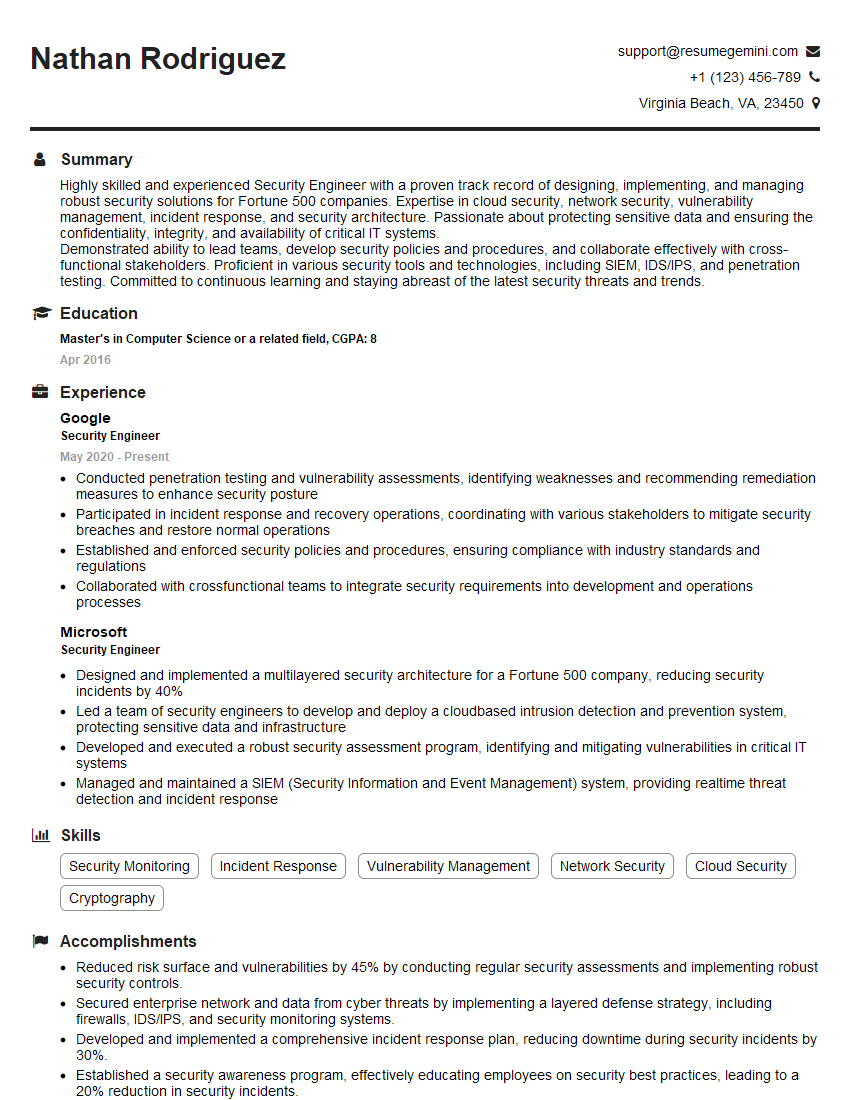
Security Engineer Resume Sample
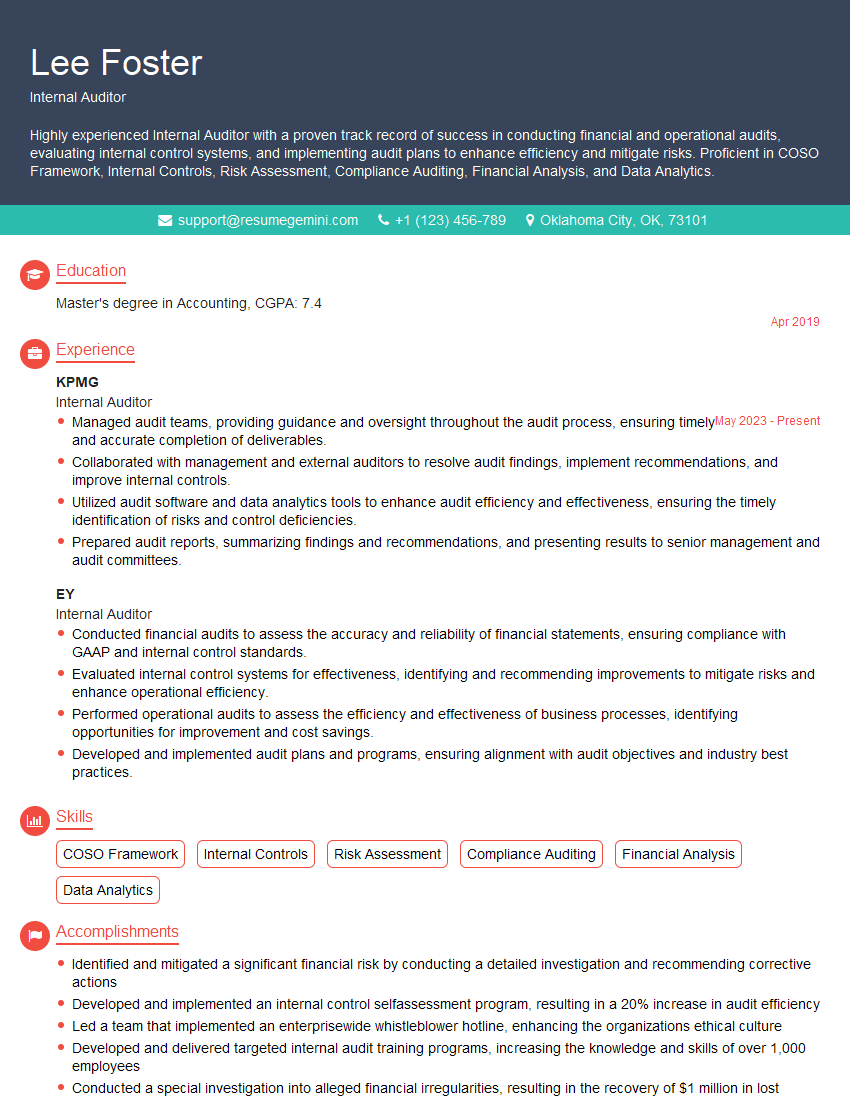
Internal Auditor Resume Sample
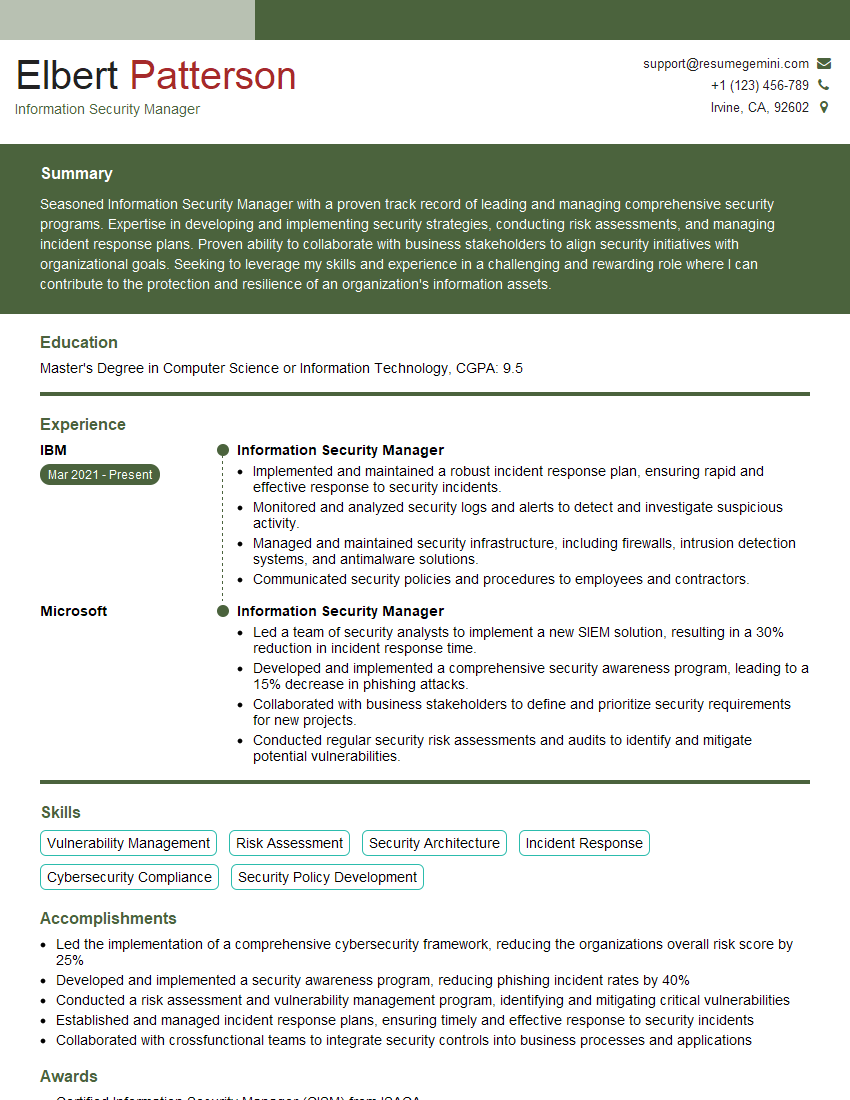
Information Security Manager Resume Sample
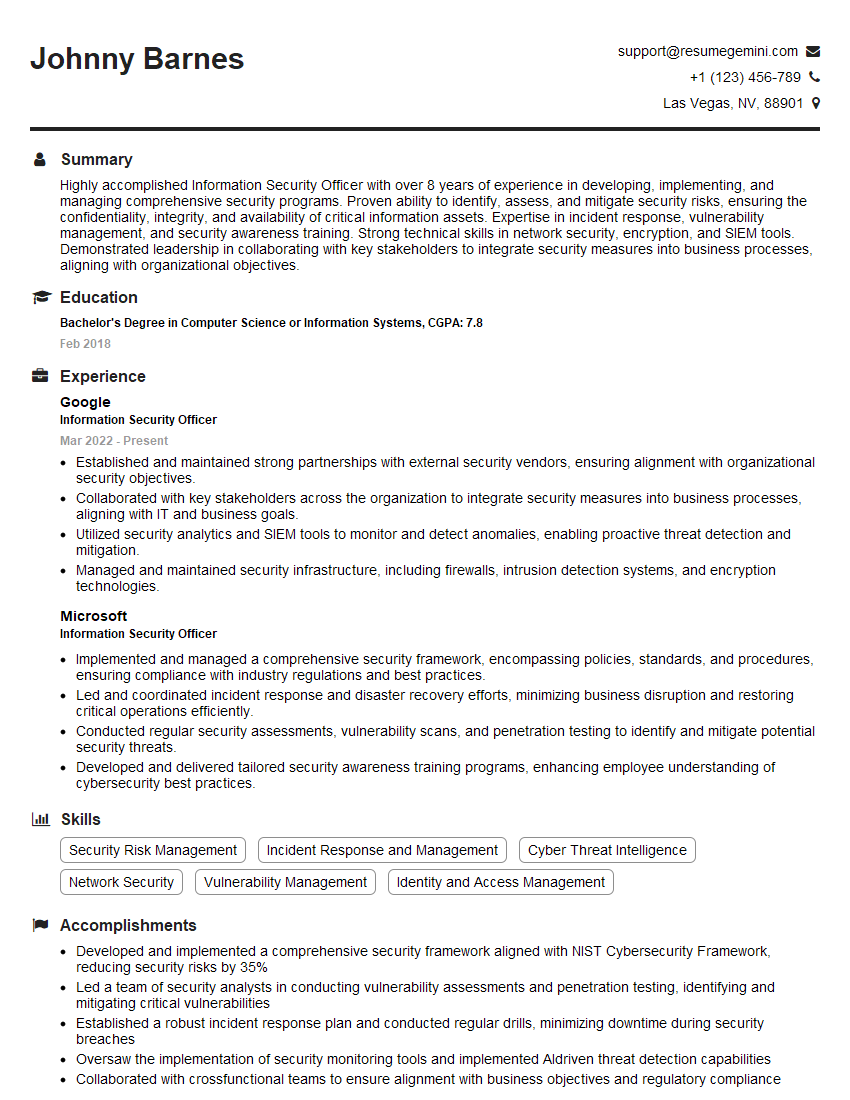
Information Security Officer Resume Sample
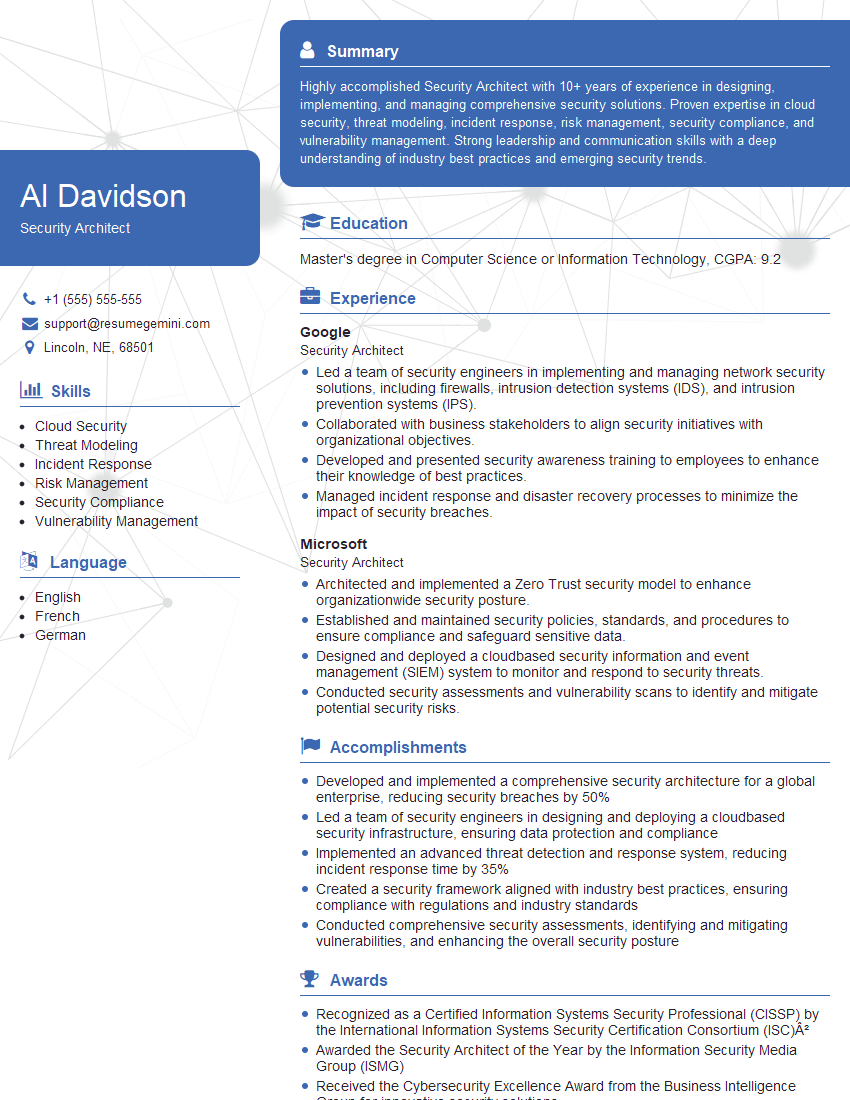
Security Architect Resume Sample
Explore more articles
Users Rating of Our Blogs
Share Your Experience
We value your feedback! Please rate our content and share your thoughts (optional).
What Readers Say About Our Blog
Very informative content, great job.
good