The right preparation can turn an interview into an opportunity to showcase your expertise. This guide to Sensors and Actuators interview questions is your ultimate resource, providing key insights and tips to help you ace your responses and stand out as a top candidate.
Questions Asked in Sensors and Actuators Interview
Q 1. Explain the difference between a sensor and an actuator.
Sensors and actuators are fundamental components in any control system, but they perform opposite functions. Think of it like this: a sensor is your eyes and ears, while an actuator is your hands and feet.
Sensors are devices that detect physical quantities (like temperature, pressure, light, or motion) and convert them into electrical signals that a computer or other system can understand. They essentially provide information about the environment or a system’s state. Examples include a thermometer (detects temperature), a photoresistor (detects light intensity), and an accelerometer (detects acceleration).
Actuators, on the other hand, receive electrical signals and convert them into physical action. They are the ‘doers’ of the system, carrying out commands based on the information received from sensors. Examples include a motor (rotates a shaft), a valve (controls fluid flow), and a solenoid (generates linear motion).
In short, sensors sense, and actuators act.
Q 2. Describe different types of sensors and their applications.
The world of sensors is vast! They are categorized by the physical quantity they measure. Here are a few key types:
- Temperature Sensors: Thermocouples, thermistors, RTDs (Resistance Temperature Detectors). Applications include industrial process control, automotive engines, and weather monitoring.
- Pressure Sensors: Piezoresistive, capacitive, and strain gauge pressure sensors. Applications span from aircraft altimeters to medical blood pressure monitors and industrial process control.
- Optical Sensors: Photodiodes, phototransistors, and CCDs (Charged Coupled Devices). These are used in everything from cameras and barcode scanners to medical imaging and environmental monitoring.
- Position Sensors: Potentiometers, encoders, and LVDTs (Linear Variable Differential Transformers). Applications include robotics, industrial automation, and automotive systems (like throttle position sensing).
- Motion Sensors: Accelerometers, gyroscopes, and IMUs (Inertial Measurement Units). These are crucial in smartphones, drones, and self-driving cars for motion tracking and stabilization.
- Chemical Sensors: Gas sensors, pH sensors, and biosensors. Applications range from environmental monitoring to medical diagnostics and industrial safety.
This is just a glimpse; many specialized sensors exist for niche applications.
Q 3. Explain the concept of sensor accuracy, precision, and resolution.
These three terms are crucial for understanding sensor performance. Let’s define them:
- Accuracy: How close a sensor’s measurement is to the true value. It’s often expressed as a percentage of the full-scale range or as an absolute error. A high accuracy sensor consistently provides readings very close to reality.
- Precision: How repeatable a sensor’s measurements are. A high-precision sensor will provide very similar readings when measuring the same quantity multiple times, even if those readings are not necessarily close to the true value. Imagine shooting at a target; high precision means your shots are all clustered together, regardless of whether they hit the bullseye.
- Resolution: The smallest change in the measured quantity that a sensor can detect. A sensor with high resolution can distinguish between very small changes in the measured parameter. For example, a temperature sensor with 0.1°C resolution can differentiate between 25.0°C and 25.1°C.
A sensor can be precise but not accurate (consistent errors), accurate but not precise (scattered results), or both accurate and precise (ideal).
Q 4. How do you handle sensor noise and drift?
Sensor noise and drift are common challenges. Noise refers to unwanted random variations in the sensor output, often caused by electrical interference or environmental factors. Drift is a slow, gradual change in the sensor’s output over time, even when the measured quantity remains constant. Here’s how to handle them:
- Filtering: Apply digital filters (like moving average or Kalman filters) to smooth out noise in the sensor data. These filters average out random fluctuations to get a cleaner signal.
- Calibration: Regularly calibrate the sensor to compensate for drift. This involves comparing the sensor’s readings to a known standard and adjusting the output accordingly.
- Shielding: Reduce noise by shielding the sensor from electromagnetic interference using conductive enclosures or grounding techniques.
- Signal Conditioning: Use amplifiers and other signal processing techniques to amplify the desired signal and reduce the impact of noise.
- Redundancy: Use multiple sensors to measure the same quantity. If one sensor drifts or experiences noise, the others can provide more reliable readings.
Choosing a high-quality sensor with low inherent noise and drift is also crucial.
Q 5. What are the common types of actuators and their working principles?
Actuators are the muscle of a system. Their types depend on the type of motion or action needed:
- Electric Motors: DC motors, AC motors, stepper motors, servo motors. These provide rotational motion and are used in countless applications, from robots to pumps and fans. They work by converting electrical energy into mechanical energy through electromagnetic interaction.
- Hydraulic Actuators: Hydraulic cylinders and motors. These utilize pressurized fluids to generate linear or rotational motion and are suitable for high-force applications like construction equipment and aircraft control surfaces. They are powerful but require a hydraulic power unit.
- Pneumatic Actuators: Pneumatic cylinders and motors. These use compressed air to generate motion and are often preferred in applications requiring clean operation and ease of control, like automated manufacturing systems. They are less powerful than hydraulic systems but offer safety advantages in certain environments.
- Piezoelectric Actuators: These utilize the piezoelectric effect, where a material generates mechanical stress when an electric field is applied. They provide very precise and rapid motion control for applications like nanopositioning and inkjet printing.
- Electromagnetic Actuators: Solenoids and relays. These generate linear motion or switching actions and are found in applications ranging from car locks to industrial valve control.
The choice of actuator depends on factors such as required force, speed, precision, power source, and environmental conditions.
Q 6. Describe different feedback control mechanisms used with actuators.
Feedback control is essential for precise actuator control. It involves using sensors to monitor the actuator’s performance and adjust its operation accordingly. Here are some common mechanisms:
- Proportional (P) Control: The actuator’s output is proportional to the error (difference between the desired and actual values). Simple but can result in steady-state error.
- Integral (I) Control: The actuator’s output is proportional to the integral of the error over time. This eliminates steady-state error but can cause overshoot.
- Derivative (D) Control: The actuator’s output is proportional to the rate of change of the error. This anticipates future errors and improves stability, preventing overshoot.
- PID (Proportional-Integral-Derivative) Control: Combines P, I, and D control for optimal performance. This is a widely used and highly effective control algorithm.
The specific gains (proportional, integral, and derivative) in a PID controller are tuned to optimize the system’s response based on its dynamics and requirements. Choosing the right feedback control mechanism depends on the application’s specific demands for accuracy, speed, and stability.
Q 7. Explain the importance of sensor calibration and how it’s performed.
Sensor calibration is critical for ensuring accuracy and reliability. It involves comparing the sensor’s output to a known standard and adjusting the sensor’s response to match. This corrects for systematic errors and drift.
Calibration methods vary but generally involve these steps:
- Establish a reference standard: Use a highly accurate instrument or traceable standard to provide known values for the measured quantity.
- Collect data: Measure the quantity using both the sensor and the reference standard under various conditions.
- Develop a calibration curve or equation: Use the collected data to create a mathematical relationship between the sensor’s output and the true value. This often involves curve fitting techniques.
- Apply corrections: Use the calibration curve or equation to correct the sensor’s readings in real-time or post-processing.
Types of Calibration:
- Two-point calibration: uses two known points to create a linear calibration curve. Simple but less accurate than multi-point.
- Multi-point calibration: uses multiple known points to create a more accurate curve, especially for non-linear sensor responses.
Regular calibration is essential to maintain the sensor’s accuracy and reliability over time, ensuring the system functions correctly. The frequency of calibration depends on factors like sensor type, application, and environmental conditions.
Q 8. How do you select appropriate sensors for a given application?
Selecting the right sensor for a given application is crucial for the success of any project. It’s a multi-step process that involves careful consideration of several key factors. Think of it like choosing the right tool for a job – a hammer won’t work for screwing in a screw!
- Measured Parameter: What physical quantity needs to be measured? (Temperature, pressure, acceleration, light, etc.)
- Measurement Range: What is the expected range of values? A sensor with a too-narrow range will be useless, while one with too wide a range may lack precision.
- Accuracy and Precision: How accurate and precise does the measurement need to be? This depends on the application’s sensitivity requirements.
- Resolution: What is the smallest change in the measured quantity that the sensor can detect?
- Response Time: How quickly does the sensor need to respond to changes in the measured quantity?
- Environmental Conditions: What are the operating temperature, humidity, pressure, and other environmental factors? The sensor needs to withstand these conditions.
- Interface and Power: What type of interface (analog, digital, I2C, SPI) is compatible with the system? What is the available power supply?
- Cost: Sensors range drastically in price; the optimal sensor balances performance with budget.
For example, if you’re designing a system to monitor the temperature of a furnace, you’d need a high-temperature sensor with a wide range and good accuracy. In contrast, a simple light sensor for a room automation system may require less precision and a narrower measurement range.
Q 9. Discuss different signal conditioning techniques for sensors.
Signal conditioning is essential to transform the raw sensor signal into a usable format. This often involves amplification, filtering, and linearization. Imagine your sensor signal as a faint whisper; signal conditioning makes it a clear, powerful voice.
- Amplification: Many sensors produce weak signals that need amplification to be accurately measured. Operational amplifiers (op-amps) are commonly used for this purpose.
Example: An op-amp configured as a non-inverting amplifier can increase a low-voltage signal. - Filtering: Filters remove unwanted noise or interference from the signal. Low-pass, high-pass, and band-pass filters are commonly employed.
Example: A low-pass filter removes high-frequency noise, which might be caused by electromagnetic interference. - Linearization: Many sensors have a non-linear response. Linearization techniques, such as look-up tables or curve fitting, are used to convert the non-linear output to a linear one.
Example: A thermistor's resistance changes non-linearly with temperature, requiring a lookup table to obtain linear temperature readings. - Level Shifting: This adjusts the voltage level of the signal to be compatible with the input range of the subsequent circuitry.
Choosing the appropriate signal conditioning technique depends on the specific sensor and the application requirements. Careful design ensures reliable and accurate data acquisition.
Q 10. Explain the concept of sensor integration and data fusion.
Sensor integration and data fusion involve combining data from multiple sensors to obtain a more comprehensive understanding of the environment or system. Think of it like having several witnesses to an event; combining their testimonies provides a more complete picture than any single account.
Sensor Integration focuses on connecting and managing the data from multiple sensors, often involving hardware and software solutions. This could include data acquisition systems, communication buses (like I2C or SPI), and signal processing units.
Data Fusion takes this a step further by intelligently combining the sensor data. Algorithms are used to correlate, reconcile, and integrate the data to enhance accuracy, reliability, and create a more complete representation than any single sensor could provide. Techniques like Kalman filtering are frequently used for this purpose.
Example: In autonomous vehicle navigation, data fusion combines data from GPS, IMU (Inertial Measurement Unit), lidar, and cameras to create a robust and accurate map of the vehicle’s surroundings and its position within that map. This allows the vehicle to navigate safely and efficiently.
Q 11. How do you troubleshoot a faulty sensor or actuator?
Troubleshooting faulty sensors or actuators involves a systematic approach. It’s akin to diagnosing a medical condition – a thorough examination is needed.
- Visual Inspection: Check for any physical damage to the sensor or actuator, such as loose wires, broken components, or corrosion.
- Power Supply Check: Verify that the sensor/actuator is receiving the correct voltage and current. Use a multimeter to check for proper voltage and current flow.
- Signal Measurement: Use a multimeter or oscilloscope to measure the sensor’s output signal. Compare this to the expected output based on the sensor’s datasheet and the environmental conditions.
- Calibration: If the signal is off, check for the need to recalibrate the sensor. Follow the manufacturer’s instructions for calibration.
- Interface Check: Ensure that the communication interface (I2C, SPI, analog) is functioning correctly. Check connections and communication protocols.
- Software Check: If using a microcontroller or computer, review the code to ensure the sensor data is being read and interpreted correctly.
- Replacement: If all else fails, replace the faulty sensor or actuator with a new one.
Accurate record-keeping throughout the process is important; documenting the steps and measurements taken helps to resolve the issue efficiently and prevents future recurrences.
Q 12. Describe your experience with different sensor interfaces (e.g., I2C, SPI, analog).
I have extensive experience with various sensor interfaces. Each interface has its strengths and weaknesses, making them suitable for different applications.
- Analog Interfaces: These provide a continuous voltage or current signal proportional to the measured quantity. Simple to implement but susceptible to noise and require careful signal conditioning. I’ve used this extensively in projects involving thermocouples and potentiometers.
- I2C (Inter-Integrated Circuit): A two-wire serial communication bus commonly used for low-speed communication with multiple sensors. I’ve utilized I2C in projects requiring communication with multiple sensors such as temperature and humidity sensors on a single bus, reducing wiring complexity. It offers simple addressing and is power-efficient.
- SPI (Serial Peripheral Interface): A full-duplex, synchronous serial communication bus known for its high speed and flexibility. This is ideal for applications needing fast data transfer, such as with high-resolution image sensors or ADCs.
The choice of interface depends on factors like data rate, number of sensors, power consumption, and complexity. My experience spans numerous applications requiring diverse sensor interface implementations.
Q 13. What are the common challenges in designing sensor systems?
Designing robust sensor systems presents several challenges. These challenges, if not carefully addressed, can lead to inaccurate, unreliable, or even dangerous outcomes.
- Noise and Interference: External electromagnetic fields, vibrations, and temperature fluctuations can introduce noise into sensor signals. Careful shielding, filtering, and signal processing are crucial for mitigating these effects.
- Calibration and Drift: Sensors can drift over time due to environmental factors or aging, leading to inaccurate readings. Regular calibration is necessary to maintain accuracy.
- Power Consumption: Sensors, particularly wireless ones, often have limited battery life. Power management techniques are crucial for maximizing battery life while maintaining performance.
- Integration Complexity: Integrating multiple sensors, data acquisition systems, and processing units can be complex, requiring expertise in hardware and software design.
- Data Rate and Bandwidth: High-speed sensors can generate large amounts of data, requiring sufficient bandwidth and processing power to handle the data stream.
Addressing these challenges requires careful planning, design, and testing. Experienced engineers use proven techniques and methodologies to overcome these hurdles and create functional and reliable sensor systems.
Q 14. How do you ensure the reliability and robustness of sensor systems?
Ensuring the reliability and robustness of sensor systems is paramount. It’s about building systems that can withstand the test of time and varying conditions. Think of it like building a house – a sturdy foundation is essential.
- Redundancy: Using multiple sensors to measure the same parameter provides redundancy. If one sensor fails, others can continue providing data.
- Error Detection and Correction: Incorporating error detection and correction techniques in the software and hardware can mitigate the impact of faulty data or sensor failures.
- Robust Signal Processing: Using advanced signal processing techniques, like Kalman filtering, can improve accuracy and reduce the effects of noise.
- Environmental Protection: Protecting sensors from harsh environments (temperature extremes, humidity, vibration) through proper housing and shielding is essential for long-term reliability.
- Thorough Testing: Rigorous testing under various operating conditions, including extreme temperatures and vibrations, is critical for verifying the system’s robustness.
By carefully considering these aspects, we can design sensor systems that are not only accurate but also reliable and capable of operating reliably in the real world for extended periods.
Q 15. Explain your understanding of different sensor technologies (e.g., optical, capacitive, piezoelectric).
Sensor technologies are diverse, each leveraging a different physical phenomenon to convert a measured quantity into a measurable signal. Let’s explore a few:
- Optical Sensors: These sensors use light to measure various parameters. For instance, a photodiode measures light intensity, useful in applications like light meters or optical encoders. A spectrometer analyzes the spectrum of light, enabling chemical analysis or material identification. Optical fiber sensors can measure strain, temperature, or pressure based on changes in light transmission through the fiber. Think of a fiber optic gyroscope used in navigation systems.
- Capacitive Sensors: These sensors measure changes in capacitance, which is the ability of a system to store electrical energy. A change in capacitance typically reflects a change in the distance between two conductive plates. This principle is used in proximity sensors, touchscreens, and level measurement systems. Imagine a capacitive sensor detecting the presence of a liquid in a tank without physical contact.
- Piezoelectric Sensors: These sensors utilize the piezoelectric effect, where mechanical stress is converted into an electrical charge. Conversely, an applied voltage generates mechanical stress. This is widely used in accelerometers (measuring vibrations in smartphones), pressure sensors (monitoring tire pressure), and microphones (converting sound waves into electrical signals). Consider a piezoelectric sensor detecting impact forces in a car’s airbag system.
Selecting the appropriate sensor technology depends heavily on the application’s specific requirements, including the measurand (quantity being measured), accuracy, cost, environmental conditions, and size constraints.
Career Expert Tips:
- Ace those interviews! Prepare effectively by reviewing the Top 50 Most Common Interview Questions on ResumeGemini.
- Navigate your job search with confidence! Explore a wide range of Career Tips on ResumeGemini. Learn about common challenges and recommendations to overcome them.
- Craft the perfect resume! Master the Art of Resume Writing with ResumeGemini’s guide. Showcase your unique qualifications and achievements effectively.
- Don’t miss out on holiday savings! Build your dream resume with ResumeGemini’s ATS optimized templates.
Q 16. Discuss your experience with data acquisition systems and software.
My experience with data acquisition (DAQ) systems and software spans various platforms and applications. I’ve worked extensively with both hardware and software aspects of DAQ, including designing custom DAQ systems and integrating commercial off-the-shelf (COTS) solutions. This includes working with National Instruments LabVIEW, Python libraries like PyVISA and PyDAQmx, and Arduino-based data logging systems.
In one project, we used LabVIEW to build a high-speed DAQ system to acquire data from an array of strain gauges mounted on a bridge structure. The system sampled the data at a rate of 10 kHz, processed it in real-time to detect any structural anomalies, and sent alerts if critical thresholds were exceeded. In another project, I developed a Python script to control a low-cost DAQ device and process the sensor data for further analysis and visualization using libraries like matplotlib and numpy.
My experience includes understanding the nuances of sampling rate, resolution, noise reduction techniques, and data synchronization across multiple channels. I’m proficient in handling both analog and digital signals, and understand the importance of proper grounding and shielding to minimize noise.
Q 17. Describe your experience with different actuator control strategies (e.g., PID control, fuzzy logic).
Actuator control strategies are critical for achieving desired system behavior. I have extensive experience with both classic and advanced control techniques. Let’s look at two examples:
- PID Control: Proportional-Integral-Derivative (PID) control is a widely used feedback control loop mechanism. It uses the error signal (difference between the desired setpoint and the actual value) to adjust the actuator. The proportional term addresses the current error, the integral term considers past errors, and the derivative term predicts future errors. PID control is robust and simple to implement, making it suitable for many applications like temperature control in ovens or position control in robotic arms. Tuning the PID gains (proportional, integral, and derivative constants) is crucial for optimal performance and stability.
- Fuzzy Logic Control: Fuzzy logic uses linguistic variables and fuzzy sets to handle uncertainty and imprecision in system models. This is particularly useful when the system’s dynamics are complex or poorly understood. For instance, controlling a robot arm in a cluttered environment might benefit from fuzzy logic’s ability to handle the imprecise nature of the environment. Fuzzy logic rules are designed based on expert knowledge or data-driven approaches. It provides a more flexible and robust control compared to PID when dealing with non-linear systems.
The choice between PID and fuzzy logic (or other advanced control strategies like model predictive control) depends on the specific application and its complexity. Factors like the accuracy needed, the complexity of the system’s dynamics, and the availability of accurate system models influence this choice.
Q 18. How do you handle sensor data in real-time applications?
Handling sensor data in real-time applications requires efficient data acquisition, processing, and response mechanisms. Key aspects include:
- High-speed data acquisition: Using appropriate hardware and software to acquire data at the necessary rate. This might involve using high-speed DAQ cards, optimized data transfer protocols, and parallel processing techniques.
- Data buffering: Temporarily storing the acquired data to handle variations in data rates or processing delays. Circular buffers are commonly used to efficiently manage large datasets.
- Real-time processing: Employing techniques like interrupt handling, preemptive scheduling, and optimized algorithms to process data with minimal latency. This might involve using dedicated real-time operating systems (RTOS).
- Data filtering and noise reduction: Employing appropriate digital signal processing (DSP) techniques to remove noise and enhance the signal-to-noise ratio. This could involve using filters such as moving averages or Kalman filters.
- Decision-making and actuation: Making decisions based on the processed data and sending appropriate commands to the actuators in a timely manner.
For instance, in a robotics application, a vision system might need to process images in real-time to guide the robot’s movements. Effective real-time data handling ensures smooth and responsive robot behavior.
Q 19. What are the safety considerations when working with sensors and actuators?
Safety is paramount when working with sensors and actuators, especially in systems with potential risks. Key considerations include:
- Sensor and actuator failure: Implementing redundancy and fail-safe mechanisms to handle sensor or actuator failures. This might include using multiple sensors to measure the same parameter and comparing their readings, or incorporating safety circuits to prevent hazardous situations.
- Power supply issues: Ensuring a stable and reliable power supply to prevent unexpected shutdowns or malfunctions. This might involve using uninterruptible power supplies (UPS) or incorporating power monitoring systems.
- Environmental hazards: Addressing potential hazards associated with the operating environment, such as extreme temperatures, high humidity, or exposure to chemicals. This might involve using sensors and actuators with appropriate environmental protection or selecting materials that are resistant to corrosion.
- Mechanical hazards: Considering potential risks associated with moving parts or high forces generated by actuators. This might involve using safety guards, interlocks, or emergency stop mechanisms.
- Software safety: Ensuring the reliability and integrity of the software controlling the sensors and actuators. This includes rigorous software testing and verification processes to prevent software bugs from causing hazardous situations.
Rigorous testing and validation are vital to ensure the safety of any system involving sensors and actuators.
Q 20. Explain your experience with sensor modeling and simulation.
Sensor modeling and simulation play a crucial role in system design and analysis. I have experience developing both physical and empirical models for various sensor types. Physical models are based on the underlying physics of the sensor, allowing for a deeper understanding of the sensor’s behavior. Empirical models, on the other hand, are based on experimental data and are often used when a detailed physical model is difficult to obtain.
I’ve used simulation software like MATLAB/Simulink and specialized sensor simulation tools to model sensor performance under various conditions. This allows for predicting sensor behavior in different environments and evaluating different sensor designs before physical prototypes are built. For instance, I simulated the performance of an ultrasonic sensor in a noisy environment to determine the optimal signal processing parameters. This modeling work helped in selecting the appropriate sensor and optimizing the system design for reliable performance.
Sensor simulation helps in designing and testing control algorithms and optimizing system performance before deployment.
Q 21. Discuss your familiarity with different sensor communication protocols.
I’m familiar with a variety of sensor communication protocols, each with its own strengths and weaknesses. The choice of protocol depends heavily on factors such as bandwidth requirements, distance, power consumption, and cost.
- Analog: Simple and cost-effective, often used for short-range communication, but susceptible to noise. Example: using a simple voltage signal from a sensor to an analog-to-digital converter.
- Digital: More robust to noise and allows for higher data rates. Examples include:
- I2C (Inter-Integrated Circuit): A two-wire serial bus widely used for communication between microcontrollers and sensors.
- SPI (Serial Peripheral Interface): A multi-master synchronous serial bus offering higher data rates than I2C.
- UART (Universal Asynchronous Receiver/Transmitter): A simple serial communication protocol used in many embedded systems.
- CAN (Controller Area Network): A robust protocol designed for automotive applications, featuring high reliability and noise immunity.
- Ethernet/IP: Used for industrial networks, offering high bandwidth and long-range communication capabilities.
- Wireless protocols: Bluetooth, WiFi, Zigbee, and others offer flexibility in placement and reduced wiring requirements, but introduce challenges related to power consumption, range, and interference.
Choosing the right communication protocol is a crucial design consideration to ensure reliable and efficient data transfer from sensors to the processing unit.
Q 22. How do you choose appropriate power supplies for sensors and actuators?
Selecting the right power supply for sensors and actuators is crucial for their reliable operation and lifespan. It’s not just about voltage; current, stability, and noise are equally important considerations. The process involves understanding the device’s specifications and environmental factors.
Step 1: Understanding Device Requirements: Begin by consulting the sensor or actuator’s datasheet. This document specifies the operating voltage (e.g., 3.3V, 5V), current draw (in mA or A), and potentially power-up/down sequences. For instance, a high-precision pressure sensor might require a very stable voltage, while a simple relay might be more tolerant to voltage fluctuations.
Step 2: Accounting for Environmental Factors: The operating environment plays a significant role. Extreme temperatures can affect battery performance and require over-voltage or under-voltage protection. For example, a sensor deployed outdoors needs a power supply that can withstand wide temperature ranges and potential moisture.
Step 3: Choosing the Appropriate Power Supply Type: Several options exist, each with trade-offs:
- Batteries: Convenient for portable applications but have limited life and capacity. Consider battery chemistry (Li-ion, alkaline), capacity (mAh), and discharge rate.
- AC-DC Adapters: Provide a constant power source but require a wall outlet. Choose one with sufficient voltage and current ratings, including safety certifications.
- DC-DC Converters: Ideal for regulating voltage from an unregulated source like a battery. Consider efficiency and output noise levels, as high noise can interfere with sensitive sensors.
Step 4: Considering Noise and Stability: Sensitive sensors require a clean power source to avoid noise interference affecting readings. Using a low-noise regulator or a properly shielded power supply is vital. In one project involving a precision accelerometer, we used a linear regulator with very low output noise to achieve the required accuracy.
Step 5: Safety Considerations: Always prioritize safety. Select power supplies with appropriate certifications (e.g., UL, CE) and employ protective measures like fuses or circuit breakers to prevent damage from overcurrent or short circuits.
Q 23. Describe your experience with sensor networks and wireless communication.
My experience with sensor networks and wireless communication is extensive, encompassing design, implementation, and troubleshooting. I’ve worked on various projects utilizing different wireless protocols and network topologies.
Wireless Protocols: I’m proficient in Zigbee, Bluetooth Low Energy (BLE), Wi-Fi, and LoRaWAN. Each protocol offers a unique balance of range, data rate, power consumption, and cost. For example, LoRaWAN is well-suited for long-range, low-power applications like environmental monitoring, while BLE is ideal for short-range, low-power applications such as wearable sensors.
Network Topologies: I have experience with star, mesh, and tree network topologies. The choice of topology depends on application requirements. Mesh networks are highly resilient as they offer multiple communication paths, making them suitable for critical applications where network reliability is paramount. In contrast, star networks are simpler to implement but vulnerable to single points of failure. I designed a mesh network for a smart agriculture project where reliable data transmission was essential.
Data Acquisition and Processing: I’m experienced in using various data acquisition techniques, including data aggregation, filtering, and compression to optimize network bandwidth and energy efficiency. I often use cloud platforms for data storage and processing, allowing for real-time monitoring and analysis of sensor data.
Challenges and Solutions: Wireless communication introduces challenges like signal attenuation, interference, and security vulnerabilities. I’ve overcome these challenges using techniques like error correction codes, antenna optimization, and encryption protocols.
Q 24. How do you test and validate sensor and actuator performance?
Testing and validating sensor and actuator performance is a critical step in ensuring system reliability and accuracy. It’s a multi-faceted process involving various stages and techniques.
1. Component-Level Testing: This involves testing individual sensors and actuators against their datasheets. We use calibrated equipment, such as multimeters, oscilloscopes, and signal generators, to measure key parameters like voltage, current, response time, sensitivity, and accuracy. For example, a pressure sensor would be tested across a range of pressures to verify its linearity and accuracy.
2. System-Level Testing: Once components are individually validated, the entire system undergoes testing. This checks the integration and interaction between sensors, actuators, and the control system. We often use automated test scripts and data logging tools to efficiently collect and analyze data during system testing.
3. Environmental Testing: Sensors and actuators are often deployed in harsh environments. Environmental testing simulates these conditions, such as temperature extremes, humidity, vibration, and shock, to assess their resilience and performance under stress. We use environmental chambers to control and monitor the environmental factors and record system performance.
4. Calibration and Validation: Calibration ensures accurate measurements by comparing sensor readings to known standards. Validation confirms that the system performs as expected within its specified operational limits. This often involves comparing sensor readings to those obtained from a reference instrument or conducting field tests.
5. Data Analysis and Reporting: The data collected during testing is analyzed using statistical methods to identify trends, outliers, and potential errors. We generate comprehensive reports documenting test procedures, results, and conclusions.
Q 25. What are the ethical considerations related to sensor data privacy and security?
Ethical considerations concerning sensor data privacy and security are paramount. The widespread use of sensors raises concerns about potential misuse of personal information and the integrity of collected data.
Data Privacy: Sensors can collect sensitive data, like location, health information, or even biometric data. Ethical development requires careful consideration of data minimization (collecting only necessary data), data anonymization (removing personally identifiable information), and data encryption (protecting data from unauthorized access). We should always adhere to relevant privacy regulations such as GDPR and CCPA.
Data Security: Secure data transmission and storage are crucial to prevent data breaches. Encryption, access control mechanisms, and intrusion detection systems are essential for safeguarding sensor data. Regular security audits and updates to security protocols are vital to mitigating vulnerabilities.
Transparency and Consent: Users must be informed about data collection practices and be given the opportunity to provide informed consent. Transparency builds trust and helps ensure ethical data handling. This includes clearly explaining how data is used, stored, and protected.
Accountability and Responsibility: Clear lines of accountability should be established for data handling and responsible use. Organizations must be held accountable for any misuse of sensor data. Implementing robust security measures and regularly reviewing data collection practices are vital to ensuring responsibility.
Bias and Fairness: Sensor data can reflect biases present in the data collection process or the algorithms used to analyze the data. It’s crucial to actively mitigate these biases to ensure fairness and equity. This involves careful data collection design, algorithm audits, and consideration of potential societal impacts.
Q 26. Discuss your experience with designing for electromagnetic compatibility (EMC).
Electromagnetic Compatibility (EMC) is critical in designing sensor and actuator systems. EMC refers to the ability of a device or system to function correctly in its electromagnetic environment without causing unacceptable electromagnetic interference (EMI) to other devices.
Design Strategies: Several design techniques improve EMC. Shielding, grounding, filtering, and proper cable management are fundamental. Shielding reduces EMI by enclosing components in conductive materials. Grounding provides a low-impedance path for unwanted currents. Filtering attenuates unwanted frequencies, and proper cable management minimizes radiated emissions.
Testing and Compliance: EMC testing is conducted to verify compliance with international standards such as CISPR and FCC. These standards specify limits for conducted and radiated emissions and immunity levels. Testing usually involves using specialized equipment like anechoic chambers and EMC test receivers.
Real-world Example: In a project involving industrial sensors near high-power motors, the initial design suffered from significant EMI. By implementing extensive shielding, implementing better grounding techniques, and carefully selecting appropriate filters, we successfully reduced EMI to acceptable levels, ensuring accurate sensor readings and preventing interference with other equipment.
Component Selection: Choosing components with inherent EMC characteristics is crucial. Some components are inherently more susceptible to EMI than others. Datasheets should be carefully reviewed for relevant EMC specifications.
Layout Considerations: The physical layout of components significantly impacts EMC. Careful placement of components, including the spacing between sensitive and noisy components, is vital in minimizing interference. This is frequently addressed with PCB design software which can simulate electromagnetic fields.
Q 27. Describe a challenging sensor integration project and how you overcame the obstacles.
One challenging project involved integrating a network of vibration sensors into a large industrial machine. The primary challenge was the harsh environment: high temperatures, significant vibration, and high levels of electromagnetic interference from the machine’s motors and electrical systems.
Obstacles:
- Sensor Failure: Initial sensors frequently failed due to excessive vibration.
- Data Corruption: EMI caused significant data corruption in the wireless communication link.
- Difficult Wiring: Installing sensors required navigating complex cabling and limited access within the machine.
Solutions:
- Robust Sensor Selection: We replaced the original sensors with industrial-grade vibration sensors designed for high-vibration environments.
- Enhanced EMI Shielding: We implemented more robust shielding around the sensors and wiring, reducing EMI-induced data corruption.
- Redundant Communication: We implemented a redundant communication system with error correction codes to ensure reliable data transmission even with intermittent signal loss.
- Modular Design: To improve accessibility, we designed the sensor system with modular components, which simplified installation and maintenance.
- Data Validation: We developed advanced algorithms to filter noise and validate the data, improving accuracy.
The project’s success depended on a multi-disciplinary approach, combining expertise in mechanical engineering, electronics, and signal processing. It was a learning experience that highlighted the importance of thorough system analysis, component selection, and robust design strategies in overcoming integration challenges in complex systems.
Q 28. Explain your understanding of microelectromechanical systems (MEMS) sensors.
Microelectromechanical systems (MEMS) sensors are miniature devices that integrate mechanical and electrical components on a single silicon chip. Their small size, low cost, and high sensitivity make them suitable for a wide range of applications.
Fabrication: MEMS sensors are typically fabricated using microfabrication techniques, similar to those used in integrated circuit manufacturing. These processes allow for the creation of complex three-dimensional structures on a microscopic scale.
Types: Various MEMS sensors exist, including accelerometers, gyroscopes, pressure sensors, microphones, and flow sensors. Each type uses a different transduction mechanism to convert a physical quantity into an electrical signal.
Operation: A MEMS accelerometer, for example, typically contains a tiny mass suspended by a spring. When acceleration is applied, the mass moves, and this movement is detected by capacitive, piezoresistive, or other sensing elements, generating an electrical signal proportional to the acceleration.
Advantages:
- Small size and weight: Ideal for portable and embedded systems.
- Low cost: Mass production techniques enable low manufacturing costs.
- High sensitivity: Capable of detecting very small changes in the measured quantity.
- Low power consumption: Suitable for battery-powered applications.
Applications: MEMS sensors are ubiquitous in many modern devices, including smartphones (for accelerometers and gyroscopes), automotive applications (for airbag deployment), medical devices, and industrial control systems.
Key Topics to Learn for Sensors and Actuators Interview
- Sensor Principles: Understanding transduction mechanisms (e.g., resistive, capacitive, inductive, optical), signal conditioning, and noise reduction techniques. Consider exploring different sensor types like pressure, temperature, acceleration, and optical sensors.
- Actuator Technologies: Familiarize yourself with various actuator types (e.g., pneumatic, hydraulic, electric motors, piezoelectric actuators) and their operating principles, control strategies, and limitations. Think about their applications in robotics, automation, and mechatronics.
- Signal Processing and Data Acquisition: Mastering analog-to-digital conversion (ADC), digital-to-analog conversion (DAC), filtering techniques, and data analysis methods is crucial. Practical experience with data acquisition systems will be beneficial.
- Microelectromechanical Systems (MEMS): Understand the fabrication processes and applications of MEMS sensors and actuators. This includes a grasp of scaling effects and limitations.
- Calibration and Characterization: Learn about sensor calibration methods, accuracy, precision, and linearity. Understand how to characterize the performance of both sensors and actuators.
- Control Systems: Familiarize yourself with feedback control systems, PID controllers, and other control algorithms used to regulate actuator behavior based on sensor feedback. Practical examples in various applications would be helpful.
- Embedded Systems and Microcontrollers: Understanding how sensors and actuators are integrated into embedded systems and programmed using microcontrollers is vital for many applications.
- Troubleshooting and Problem-Solving: Develop a systematic approach to diagnosing and resolving issues related to sensor and actuator malfunctions, including interpreting sensor data and identifying potential sources of error.
Next Steps
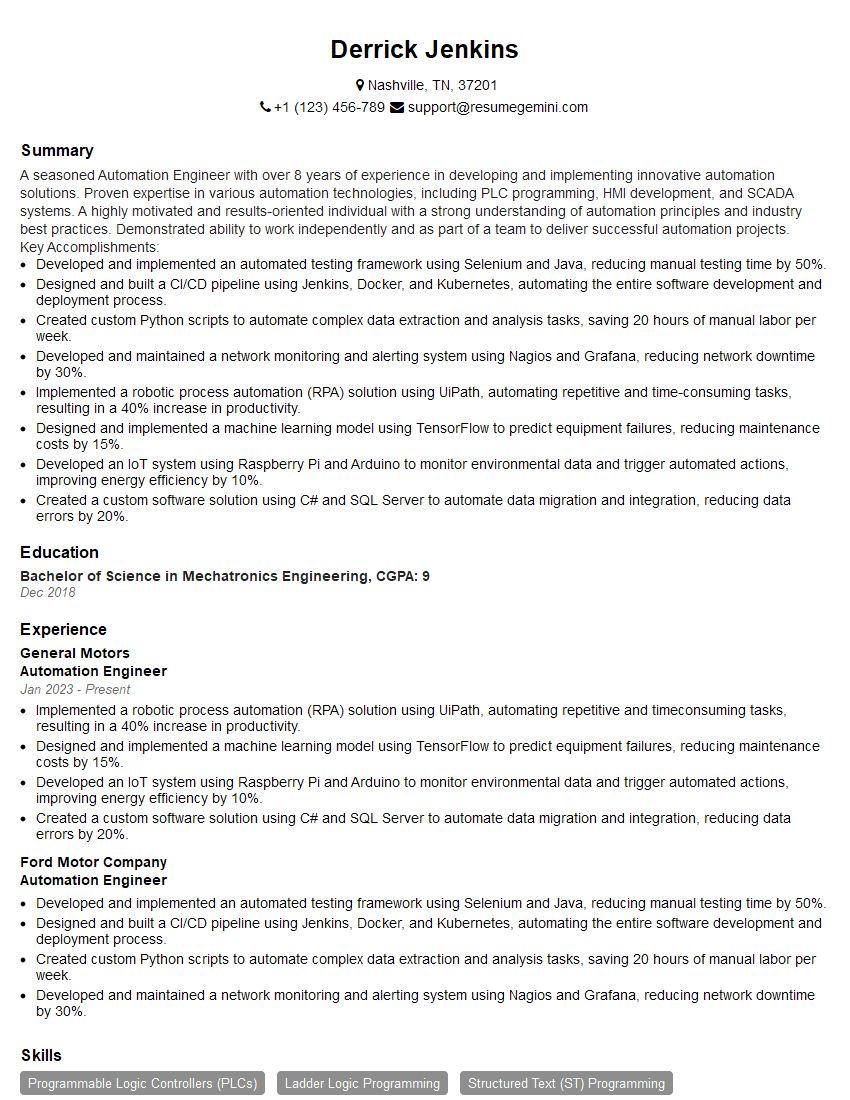
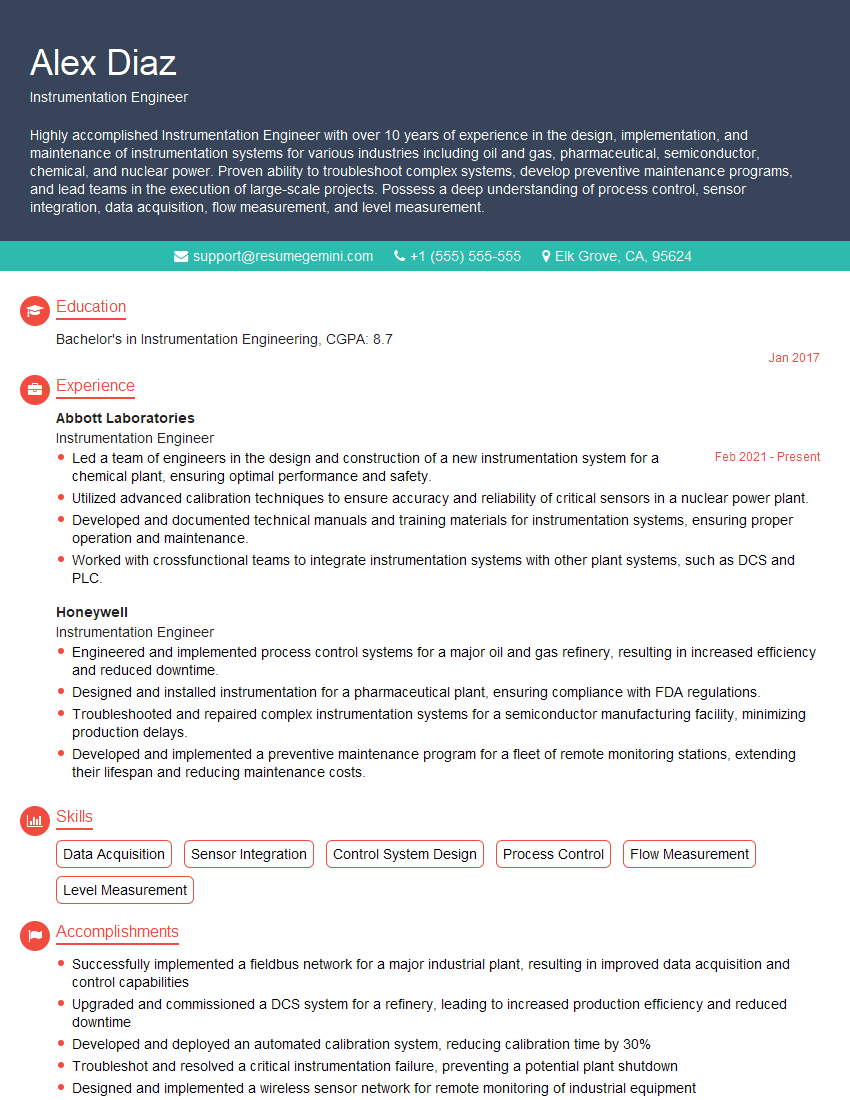
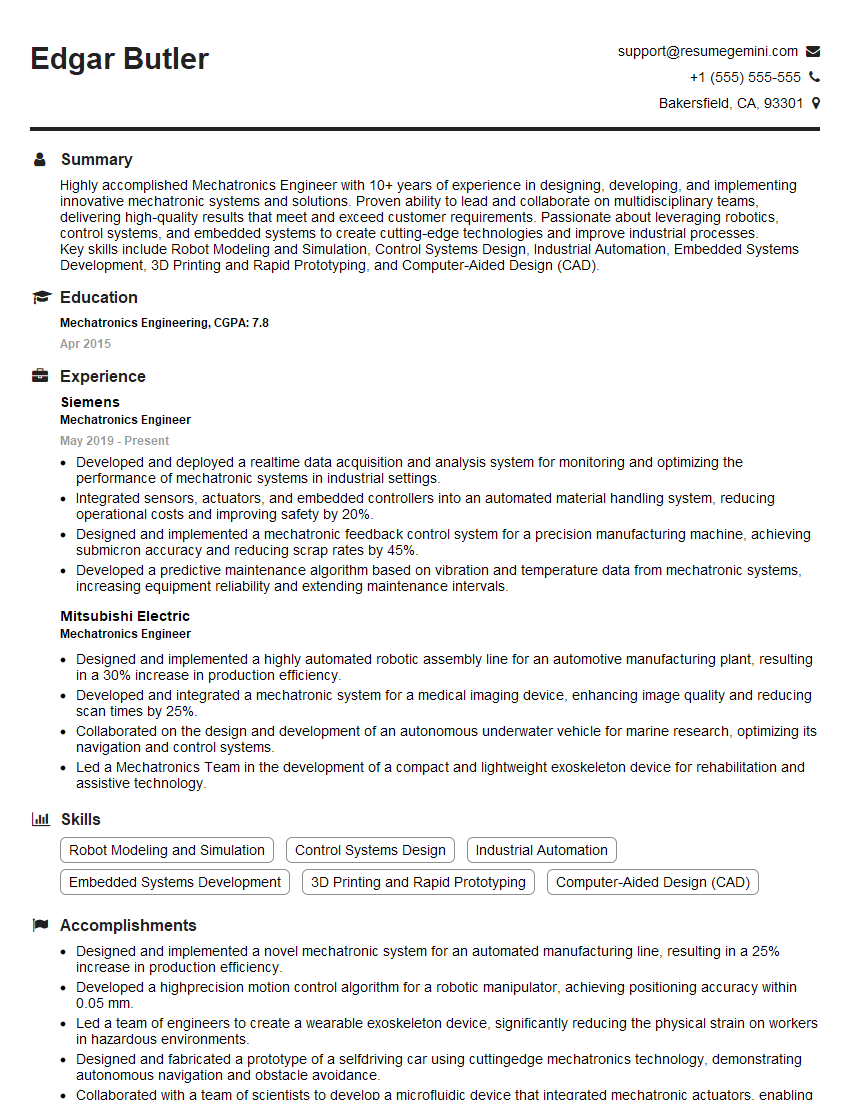
Mastering Sensors and Actuators opens doors to exciting careers in diverse fields like automation, robotics, automotive engineering, aerospace, and biomedical engineering. A strong understanding of these technologies significantly boosts your job prospects. To maximize your chances, create an ATS-friendly resume that highlights your skills and experience effectively. ResumeGemini is a trusted resource to help you build a professional and impactful resume. They provide examples of resumes tailored to the Sensors and Actuators field to guide you, ensuring your qualifications shine through to potential employers.

Explore more articles
Users Rating of Our Blogs
Share Your Experience
We value your feedback! Please rate our content and share your thoughts (optional).
What Readers Say About Our Blog
Very informative content, great job.
good