The right preparation can turn an interview into an opportunity to showcase your expertise. This guide to Service Level Agreement (SLA) Development and Management interview questions is your ultimate resource, providing key insights and tips to help you ace your responses and stand out as a top candidate.
Questions Asked in Service Level Agreement (SLA) Development and Management Interview
Q 1. Define a Service Level Agreement (SLA).
A Service Level Agreement (SLA) is a formal contract between a service provider and a customer that documents the level of service expected from the provider. Think of it as a legally binding promise of performance. It outlines the specific metrics, targets, and responsibilities of both parties, ensuring clarity and accountability. For example, an SLA between a cloud hosting provider and a business might specify uptime guarantees, response times for support tickets, and data recovery procedures.
Q 2. What are the key components of an effective SLA?
An effective SLA needs several key components to be truly useful. These include:
- Service Definition: Clearly defines what services are covered, including specific features and functionalities. Vague language is the enemy here!
- Service Level Objectives (SLOs): These are the measurable targets for service performance. Examples include 99.9% uptime, average response time of under 2 hours, and resolution time within 4 hours.
- Metrics and Reporting: Specifies how service performance will be measured and reported. This might involve daily, weekly, or monthly reports on key metrics.
- Responsibilities: Clearly outlines the responsibilities of both the service provider and the customer. Who does what, when, and how?
- Service Credits or Penalties: Defines the consequences of failing to meet the agreed-upon service levels, often involving financial penalties or service credits for the customer.
- Escalation Procedures: Describes how issues and disputes will be handled, outlining the escalation path from initial contact to higher-level management.
- Term and Termination: Specifies the duration of the agreement and the conditions for termination.
A well-defined SLA leaves no room for misinterpretation and ensures both parties are on the same page.
Q 3. Explain the difference between an SLA and an OLA.
While both SLAs and OLAs (Operational Level Agreements) define service expectations, they differ in scope and audience. An SLA is an external agreement between a service provider and a customer, focusing on the customer’s perspective of service quality. An OLA, on the other hand, is an internal agreement between different teams within an organization to ensure seamless service delivery. It defines how different teams will collaborate to meet the overall service commitments outlined in the SLA.
Think of it this way: the SLA is the public-facing promise, while the OLA is the internal roadmap for fulfilling that promise. For example, an SLA might guarantee 99.9% uptime to a customer, while the OLA might outline the responsibilities of the networking, server, and application teams to ensure that target is met.
Q 4. How do you measure SLA compliance?
Measuring SLA compliance involves consistently monitoring the defined metrics and comparing actual performance against the agreed-upon SLOs. This requires robust monitoring tools and processes. For example, we might use monitoring software to track server uptime, response times, and error rates. The data collected is then compared to the SLA targets. Any deviations are documented and analyzed. Regular reporting dashboards are essential to show progress against the targets.
We might also use automated systems to flag SLA breaches, triggering alerts for immediate attention. This ensures that problems are addressed promptly, minimizing the impact on the customer.
Q 5. What are some common metrics used in SLAs?
Common metrics used in SLAs vary widely depending on the type of service being provided, but some common examples include:
- Uptime/Availability: Percentage of time a service is operational.
- Mean Time To Repair (MTTR): Average time taken to resolve an incident.
- Mean Time Between Failures (MTBF): Average time between service failures.
- Response Time: Time taken to acknowledge a request or incident.
- Resolution Time: Time taken to fully resolve an incident.
- Customer Satisfaction (CSAT): Measured through surveys or feedback forms.
- First Call Resolution (FCR): Percentage of incidents resolved on the first contact.
Choosing the right metrics is crucial, ensuring they’re relevant, measurable, achievable, relevant, and time-bound (SMART).
Q 6. Describe your experience in negotiating SLAs.
My experience in negotiating SLAs involves a collaborative approach. It’s not just about pushing for the best deal for my organization; it’s about finding a balance that’s acceptable to both parties. I start by understanding the customer’s needs and priorities, listening carefully to their concerns and requirements. I then present options and solutions that align with both our organizational goals and the customer’s needs. I use data and past performance to justify our proposed service levels, and I’m prepared to compromise and negotiate to reach a mutually beneficial agreement. The goal is not to win a battle, but to establish a long-term, successful partnership.
One memorable negotiation involved a customer demanding exceptionally high uptime guarantees. Instead of simply rejecting this, I proposed a tiered SLA with different price points based on different service levels. This approach allowed the customer to choose the level of service that best suited their needs and budget, ultimately leading to a more satisfactory agreement for both parties.
Q 7. How do you handle SLA breaches?
Handling SLA breaches requires a structured and professional approach. The first step is to acknowledge the breach promptly and communicate it transparently to the customer. This involves explaining the cause of the breach, the impact it had, and the steps being taken to rectify the situation. This builds trust and maintains a positive relationship. Depending on the severity of the breach and the terms of the SLA, service credits or other forms of compensation might be applied.
A thorough root cause analysis is essential to prevent future breaches. This involves identifying the underlying cause of the problem and implementing corrective actions to address it. The analysis should also include recommendations for improvement and should involve all relevant stakeholders.
Regularly reviewing and updating the SLA is also crucial to ensure it remains relevant and effective. As business needs and technology change, the SLA should evolve to meet these changes.
Q 8. What is your process for developing an SLA?
Developing a robust SLA involves a collaborative, iterative process. It’s not just about defining metrics; it’s about building a mutual understanding and agreement between service providers and consumers. My process typically follows these steps:
- Needs Assessment & Requirements Gathering: I begin by thoroughly understanding the service recipient’s needs and business objectives. This includes identifying critical functionalities, acceptable downtime, and key performance indicators (KPIs) crucial for their success. For example, an e-commerce company might prioritize order processing speed and website uptime above all else.
- Service Definition: Clearly defining the services covered by the SLA is crucial. Ambiguity here leads to disputes. This includes specific tasks, responsibilities, and deliverables. We’d use precise language to avoid misunderstanding.
- Metric Selection: Choosing the right KPIs is paramount. These should be measurable, attainable, relevant, and time-bound (SMART). Examples include response time, resolution time, uptime percentage, and customer satisfaction scores. I would carefully select metrics directly impacting business value.
- Service Level Targets: We establish specific targets for each metric, setting realistic yet ambitious goals. For instance, we might aim for 99.9% uptime, a 2-hour maximum resolution time for critical incidents, and an average customer satisfaction rating of 4.5 out of 5 stars.
- Responsibilities & Roles: We clearly define the responsibilities of both parties – the service provider and the recipient – regarding service delivery, monitoring, reporting, and escalation procedures. This step includes defining communication channels and response times for different types of issues.
- Escalation Procedures: A clear escalation path is essential for resolving issues efficiently. This might involve multiple levels of support, with clear timelines for each level of escalation. It’s important to identify key decision-makers and their contact information.
- Review & Approval: The draft SLA undergoes a thorough review and approval process by all stakeholders involved to ensure alignment and mutual agreement before its finalization. The final document is signed by both parties.
- Ongoing Monitoring & Review: SLAs aren’t static. We schedule regular reviews (e.g., quarterly) to assess performance, adjust targets as needed, and identify opportunities for improvement.
Q 9. How do you ensure SLAs are aligned with business objectives?
Aligning SLAs with business objectives is fundamental. SLAs are not just technical documents; they are strategic tools. My approach involves the following steps:
- Strategic Alignment: I start by understanding the overall business goals and strategies of the organization. This often involves discussions with senior management and business unit leaders to identify key performance drivers.
- KPI Prioritization: SLAs should focus on metrics directly impacting the achievement of business objectives. For example, if a company’s goal is to increase customer retention, then the SLA should include metrics like customer satisfaction, issue resolution time, and first-call resolution rate.
- Business Value Focus: I ensure that the selected metrics reflect the true business value provided by the service. The focus is not just on technical performance, but on the impact of that performance on the business’s bottom line or operational efficiency.
- Regular Review and Adjustment: SLAs are living documents. As business priorities evolve, the SLAs should be regularly reviewed and adjusted to reflect those changes. This ensures the SLAs remain relevant and effective.
For example, if a company’s primary goal is to launch a new product successfully within a tight timeframe, SLAs for development and testing teams would be critical, focusing on on-time delivery and defect resolution rate. Regular reviews ensure continuous alignment.
Q 10. Explain the role of monitoring and reporting in SLA management.
Monitoring and reporting are the heart of effective SLA management. They provide the data needed to track performance, identify problems, and demonstrate accountability.
- Monitoring: This involves continuously tracking the key performance indicators (KPIs) defined in the SLA using automated tools and dashboards. This provides real-time insights into service performance. Think of it as a dashboard showing the vital signs of a patient.
- Reporting: Regular reports summarize the performance data, highlighting achievements, shortcomings, and areas needing improvement. These reports should be concise, easy to understand, and visually appealing, typically including graphs and charts.
For example, a monitoring system might track website uptime, response time, and error rates, automatically sending alerts when predefined thresholds are breached. Reports then summarize this data, showing trends and deviations from targets. This allows for proactive issue resolution and data-driven improvements.
Q 11. How do you use data to improve SLA performance?
Data is the fuel for SLA improvement. I utilize data in several ways:
- Performance Analysis: Regular analysis of performance data reveals trends and patterns, pinpointing areas needing immediate attention or long-term improvements. We look for bottlenecks, recurring issues, and areas where the service underperforms.
- Root Cause Analysis: When problems arise, we use data to perform thorough root cause analysis, digging deep to uncover the underlying reasons for performance issues. This involves analyzing logs, metrics, and other relevant information.
- Predictive Modeling: In some cases, we can use historical data to build predictive models, anticipating potential problems and proactively taking steps to prevent them. This is especially useful for capacity planning and resource allocation.
- Continuous Improvement: Data guides our continuous improvement efforts, helping us refine processes, optimize resources, and implement changes that improve service delivery and meet the SLA targets.
For instance, if response time is consistently exceeding the target, we might analyze the data to identify whether it’s due to inadequate staffing, inefficient processes, or insufficient infrastructure. This data-driven approach ensures targeted improvements.
Q 12. How do you communicate SLA performance to stakeholders?
Effective communication of SLA performance is crucial for maintaining transparency, trust, and accountability. My approach involves:
- Regular Reporting: I create regular performance reports (weekly, monthly, quarterly) that are easily understandable and visually appealing. These reports clearly show the progress towards achieving the targets, highlighting both successes and areas needing improvement.
- Visual Dashboards: Interactive dashboards provide real-time visibility into SLA performance, allowing stakeholders to quickly grasp the current status and identify any potential problems. This allows for proactive interventions.
- Targeted Communication: Depending on the stakeholder’s role and level of detail needed, I tailor the information and the communication channels. Senior management might need high-level summaries, while operational teams need more detailed information.
- Open Communication: I encourage open communication and feedback from stakeholders, creating a culture of transparency and collaboration. This helps build trust and ensures that everyone is on the same page.
I utilize a variety of tools—from email reports to dedicated dashboards to presentations during regular meetings. The medium should match the message and audience.
Q 13. What are some common challenges in SLA management?
SLA management faces several common challenges:
- Defining Measurable Metrics: Choosing appropriate and measurable KPIs is crucial but can be challenging. Vague or poorly defined metrics lead to disputes and lack of accountability.
- Lack of Stakeholder Buy-in: Without strong support from all stakeholders, SLAs might not be taken seriously. This can lead to lack of compliance and poor performance.
- Insufficient Monitoring and Reporting: Lack of robust monitoring systems and reporting tools can hinder effective performance tracking and identification of issues.
- Unrealistic Targets: Setting overly ambitious targets can lead to demotivation and frustration, while setting targets that are too low defeats the purpose of the SLA.
- Scope Creep: The scope of services covered by the SLA might expand over time, leading to disagreements and conflicts.
- Conflict Resolution: Disputes about performance and accountability require a clear and efficient conflict resolution process.
Addressing these challenges requires careful planning, proactive communication, regular review, and a commitment to continuous improvement.
Q 14. How do you address conflicts between different SLAs?
Conflicts between different SLAs often arise when multiple services are interdependent. For example, an application’s performance might depend on the network’s availability and database response times. Resolving such conflicts requires a holistic approach:
- Prioritization: Determining the relative importance of different SLAs is crucial. This might involve prioritizing business-critical services over others, allocating resources accordingly.
- Dependency Mapping: Clearly mapping the dependencies between services helps identify potential conflicts and areas where improvements are needed. We visually represent the inter-relationships.
- Negotiation & Collaboration: Negotiation and collaboration between different teams are essential to reach mutually acceptable solutions. This ensures alignment and avoids conflicts.
- SLA Consolidation (Where Possible): If feasible, consolidating overlapping SLAs into a single, comprehensive agreement simplifies management and reduces the risk of conflict.
- Escalation Procedures: Defining a clear escalation path for resolving conflicts helps ensure timely and efficient resolution. This usually involves a higher authority mediating disagreements.
A well-defined escalation process is crucial. It might involve a steering committee or a dedicated SLA manager to resolve disputes and ensure fairness.
Q 15. Describe your experience using SLA management tools.
My experience with SLA management tools spans several platforms, from simple spreadsheets for smaller projects to sophisticated SaaS solutions like ServiceNow and Jira Service Management for enterprise-level agreements. I’ve used these tools to track key performance indicators (KPIs), automate reporting, manage incidents and requests, and ultimately, ensure compliance with agreed-upon service levels.
For example, with ServiceNow, I’ve configured dashboards to visualize real-time performance against SLAs, allowing for proactive identification of potential breaches. This proactive approach allows for timely intervention and prevents minor issues from escalating into major problems. With Jira Service Management, I’ve leveraged its workflow automation features to streamline the incident resolution process, ensuring that tickets are addressed within the defined timeframes and following the proper escalation paths outlined in the SLAs.
My proficiency extends beyond basic tool usage; I understand how to configure these tools to precisely reflect the specifics of each SLA, including custom metrics, escalation procedures, and reporting requirements. This ensures that the tools accurately reflect our service commitments and provide the necessary data for effective monitoring and management.
Career Expert Tips:
- Ace those interviews! Prepare effectively by reviewing the Top 50 Most Common Interview Questions on ResumeGemini.
- Navigate your job search with confidence! Explore a wide range of Career Tips on ResumeGemini. Learn about common challenges and recommendations to overcome them.
- Craft the perfect resume! Master the Art of Resume Writing with ResumeGemini’s guide. Showcase your unique qualifications and achievements effectively.
- Don’t miss out on holiday savings! Build your dream resume with ResumeGemini’s ATS optimized templates.
Q 16. What is your approach to resolving SLA-related disputes?
Resolving SLA-related disputes requires a structured, collaborative approach. My first step is to thoroughly review the SLA itself to understand the specific commitments and any potential ambiguities. Then, I gather data from all involved parties, including monitoring logs, incident reports, and communication records. This helps to establish a clear timeline of events and objectively assess performance against the SLA.
Open communication is key. I facilitate discussions between the service provider and the customer, ensuring that both parties have the opportunity to present their perspective and supporting evidence. I act as a neutral mediator, guiding the discussion towards a mutually acceptable resolution. If the SLA itself is unclear or incomplete, I work with both parties to clarify the relevant clauses and expectations. In cases where a breach is undeniable, I explore options for remediation, such as service credits or corrective actions, always aiming for a fair and equitable outcome.
For instance, if a customer claims a service outage violated the uptime SLA, I’d verify the outage duration against our monitoring systems and any root-cause analysis reports. We would then discuss the impact on the customer and explore solutions like offering compensatory service or credits based on the pre-defined mechanisms in the SLA.
Q 17. How do you ensure SLAs are understood and adhered to by all parties?
Ensuring that SLAs are understood and adhered to requires a multi-faceted approach focusing on proactive communication and continuous reinforcement.
First, the SLA must be clearly written and easily understandable, avoiding technical jargon where possible. I use plain language and visual aids to make it accessible to all stakeholders, regardless of their technical expertise. Before implementation, I conduct training sessions and workshops to explain the SLA’s key components, responsibilities, and procedures for reporting and resolving issues.
Ongoing communication is essential. Regular performance reports highlight progress against the SLA’s metrics, providing transparency to both parties. We incorporate SLA performance into regular service review meetings, facilitating open discussions and early detection of potential problems. Finally, I establish a clear escalation path for addressing SLA breaches and promptly resolving any disputes that may arise. This process of proactive education, transparent reporting, and readily available support is crucial for ensuring ongoing compliance.
Q 18. How do you balance the needs of the customer with the capabilities of the service provider when developing an SLA?
Balancing customer needs with service provider capabilities is a crucial aspect of SLA development. This requires a collaborative, iterative process involving open communication and a willingness to compromise.
I begin by gathering requirements from both sides. Customers outline their desired service levels, while the service provider assesses its capacity and limitations. This often involves a series of discussions to clarify expectations and identify any potential conflicts. For example, a customer might demand 99.999% uptime, while the service provider’s infrastructure might only realistically support 99.9%. In this situation, a compromise needs to be reached, perhaps through tiered service levels with different pricing structures to reflect the varying degrees of reliability.
Throughout this process, I emphasize transparency and realistic goal setting. The final SLA should reflect a balance between what the customer needs and what the service provider can reliably deliver. This approach avoids setting unattainable targets that lead to conflict and dissatisfaction.
Q 19. What are some best practices for designing effective SLAs?
Designing effective SLAs requires adherence to several best practices.
- Clearly Defined Metrics: Use specific, measurable, achievable, relevant, and time-bound (SMART) metrics to track performance. Avoid ambiguous terms and ensure everyone understands how each metric is measured.
- Comprehensive Scope: The SLA should clearly define the scope of services covered, including what is and isn’t included. This prevents misunderstandings and disputes later on.
- Escalation Procedures: Establish clear escalation paths for handling issues and breaches, ensuring timely resolution and effective communication.
- Service Credits: Clearly define the mechanism for providing service credits in case of breaches. This should be tied to specific performance metrics and be fair and transparent.
- Regular Review and Updates: SLAs should be reviewed and updated regularly to reflect changes in business needs and technological advancements.
- Mutual Agreement: The SLA should be mutually agreed upon by both the service provider and the customer, ensuring both parties are committed to its terms.
By following these best practices, organizations can create SLAs that are both effective and fair, fostering strong customer relationships and a clear understanding of service expectations.
Q 20. How do you incorporate risk management into SLA development?
Incorporating risk management into SLA development is crucial for ensuring the agreement is robust and adaptable to unforeseen circumstances. I approach this by identifying potential risks throughout the SLA development lifecycle. This includes technical risks (e.g., system failures, security breaches), operational risks (e.g., staff shortages, process inefficiencies), and business risks (e.g., changing market conditions, regulatory changes).
For each identified risk, I assess its likelihood and potential impact. This assessment helps to prioritize risk mitigation strategies. For high-impact, high-likelihood risks, the SLA may include contingency plans or specific performance guarantees. For example, if a major natural disaster is a potential risk, the SLA might include provisions for service restoration timelines and alternative service provision methods. The SLA may also include clauses that allow for adjustments in service levels based on specific circumstances, provided these adjustments are fairly negotiated.
By proactively identifying and addressing potential risks, we create a more resilient SLA that can withstand unexpected challenges and maintain a high level of service quality.
Q 21. Explain the concept of service credits within an SLA.
Service credits are a key component of many SLAs. They represent financial compensation provided by the service provider to the customer when agreed-upon service levels are not met. They serve as an incentive for the service provider to deliver high-quality service and as a form of recourse for the customer in case of performance failures.
The specifics of service credits are usually defined within the SLA itself. This includes the metrics that trigger service credits (e.g., downtime exceeding a certain threshold), the calculation method for determining the amount of credit (e.g., percentage of monthly fees), and the process for claiming and receiving credits. For example, an SLA might stipulate that the customer receives a 10% credit for every hour of downtime exceeding the agreed-upon uptime percentage. It’s important that the calculation is transparent and easily verifiable.
Service credits should be seen not merely as a penalty, but as a mechanism to incentivize performance and foster a positive relationship between the service provider and the customer. They help in aligning incentives and improving service delivery in the long term.
Q 22. How do you track and report on key performance indicators (KPIs) related to SLAs?
Tracking and reporting on SLA KPIs involves a multi-step process. First, we need to identify the critical KPIs relevant to the specific SLA. These might include uptime, response time, resolution time, customer satisfaction scores, or error rates, depending on the service being measured. Next, we establish a system for data collection. This often involves integrating monitoring tools directly into the service delivery process. For example, we might use network monitoring tools to track uptime, ticketing systems to monitor response and resolution times, and customer surveys to gauge satisfaction. Then, this data is aggregated and analyzed using reporting dashboards or dedicated business intelligence (BI) tools. These dashboards visually represent the KPI performance against the agreed-upon targets in the SLA. Finally, regular reports, often automated, are generated and distributed to stakeholders. These reports highlight areas of strong performance and those requiring attention. For instance, a report might show that while the average response time is within the SLA, a specific subset of high-priority tickets is consistently exceeding the target, allowing for focused improvement efforts.
Think of it like monitoring your fitness goals. You track steps, heart rate, and sleep, then analyze the data to see if you’re on track. The same principles apply to SLA KPIs – consistent monitoring and analysis are crucial.
Q 23. Describe a time you had to revise an SLA due to changing business needs.
In a previous role, we had an SLA with a major client for data backup and recovery services. The initial SLA stipulated a maximum recovery time objective (RTO) of 4 hours. As the client’s business grew and they adopted more cloud-based applications, their tolerance for downtime significantly decreased. They required a much faster recovery process. We recognized this change in their needs and proactively proposed a revised SLA. This involved upgrading our infrastructure, implementing faster recovery procedures, and rigorously testing the new processes. The revised SLA reflected a reduced RTO of 1 hour, demonstrating our commitment to adapting to the evolving business needs. This required careful negotiation with the client to balance the improved service level with a fair adjustment to the contract price. The successful revision not only prevented a potential loss of the client but also strengthened our partnership and solidified our reputation for responsiveness and adaptability.
Q 24. How familiar are you with ITIL framework and its relevance to SLA management?
I’m very familiar with the ITIL framework. It’s a widely recognized best-practice framework for IT service management (ITSM), and it significantly impacts how SLAs are developed, implemented, and managed. ITIL provides a structured approach to service lifecycle management – from strategy and design to operation and improvement. Key ITIL processes like Service Level Management, Incident Management, Problem Management, and Change Management directly influence SLA creation and performance monitoring. For example, Incident Management ensures that issues are addressed efficiently, directly impacting response and resolution times defined in the SLA. ITIL’s focus on continuous improvement drives regular SLA reviews and revisions, ensuring they remain aligned with changing business requirements. It’s a powerful framework that provides a solid foundation for efficient and effective SLA management.
Q 25. How do you ensure that SLAs remain relevant and up-to-date?
Keeping SLAs relevant and up-to-date requires a proactive and systematic approach. Regular reviews, ideally quarterly or bi-annually, are essential. These reviews should involve key stakeholders from both the service provider and the customer sides. The review should assess the performance against the current SLA targets, identify any gaps or areas for improvement, and consider any changes in business needs or technology. Furthermore, it’s vital to incorporate feedback from both internal teams and external customers to identify areas where the SLA may not accurately reflect current service capabilities or expectations. Any necessary revisions should be documented and communicated clearly to all relevant parties. Think of it as regularly recalibrating your compass; it ensures you’re always heading in the right direction.
Q 26. What are the legal implications of SLAs?
SLAs carry legal implications because they are legally binding contracts. They define the responsibilities and expectations of both parties. Failure to meet the agreed-upon service levels can lead to contractual breaches, potentially resulting in financial penalties, service credits, or even legal disputes. Therefore, SLAs must be drafted carefully, avoiding ambiguity and ensuring that all terms and conditions are clearly defined. The specific legal implications vary depending on jurisdiction and the nature of the service provided. However, it’s crucial to consult with legal counsel during the drafting and negotiation phases to ensure the SLA is legally sound and protects the interests of both parties. A well-drafted SLA minimizes the risk of legal disputes and ensures a clear understanding of rights and obligations.
Q 27. How do you prioritize different SLAs when resources are constrained?
Prioritizing SLAs with constrained resources requires a strategic approach that balances business needs with resource availability. A common method is to employ a prioritization matrix that considers factors such as business criticality, financial impact of non-compliance, and contractual obligations. SLAs supporting critical business functions and those with significant financial penalties for non-compliance receive higher priority. A risk-based approach can also be used, prioritizing SLAs associated with higher-risk services. Furthermore, resource allocation needs to be transparent and communicated effectively to all stakeholders. Regular monitoring and adjustment of priorities may be necessary as circumstances change. Prioritization should never be arbitrary; it should be driven by data and a clear understanding of business priorities.
Q 28. Describe your experience with different types of SLAs (e.g., time-based, availability-based).
I have extensive experience with various SLA types. Time-based SLAs focus on the speed of service delivery, such as response time and resolution time for support tickets. For example, an SLA might guarantee a response within 1 hour and resolution within 4 hours. Availability-based SLAs concentrate on the uptime or accessibility of a service, often expressed as a percentage (e.g., 99.9% uptime). These SLAs typically define acceptable downtime windows and recovery time objectives (RTOs). Performance-based SLAs measure service performance against specific metrics, such as throughput, transaction speed, or error rates. For instance, an SLA for a web application might specify minimum transaction processing speeds and acceptable error rates. I’ve also worked with SLAs that combine these types, offering a holistic approach to service measurement. Selecting the right SLA type depends on the specific service being offered and the critical business requirements.
Key Topics to Learn for Service Level Agreement (SLA) Development and Management Interview
- Understanding SLA Fundamentals: Defining key performance indicators (KPIs), service credits, and escalation procedures. Practical application: Analyzing existing SLAs to identify areas for improvement.
- SLA Negotiation and Contract Drafting: Balancing stakeholder needs and expectations during the negotiation process. Practical application: Creating a draft SLA that addresses potential risks and ensures mutual agreement.
- Monitoring and Reporting: Implementing effective monitoring tools and generating reports to track SLA performance. Practical application: Analyzing performance data to identify trends and areas needing improvement, and proactively addressing potential breaches.
- SLA Management Lifecycle: Understanding the entire process from initiation and negotiation to implementation, monitoring, review, and renewal. Practical application: Developing a detailed project plan for managing an SLA throughout its lifecycle.
- Technical Aspects of SLA Management: Integrating SLA metrics with monitoring and ticketing systems. Practical application: Designing a system for automated reporting and alerting based on SLA performance.
- Problem Solving and Risk Management: Identifying potential risks and developing mitigation strategies for SLA breaches. Practical application: Developing a detailed contingency plan for addressing critical SLA failures.
- Communication and Collaboration: Effectively communicating SLA performance to internal and external stakeholders. Practical application: Preparing and delivering presentations summarizing SLA performance and recommendations.
Next Steps
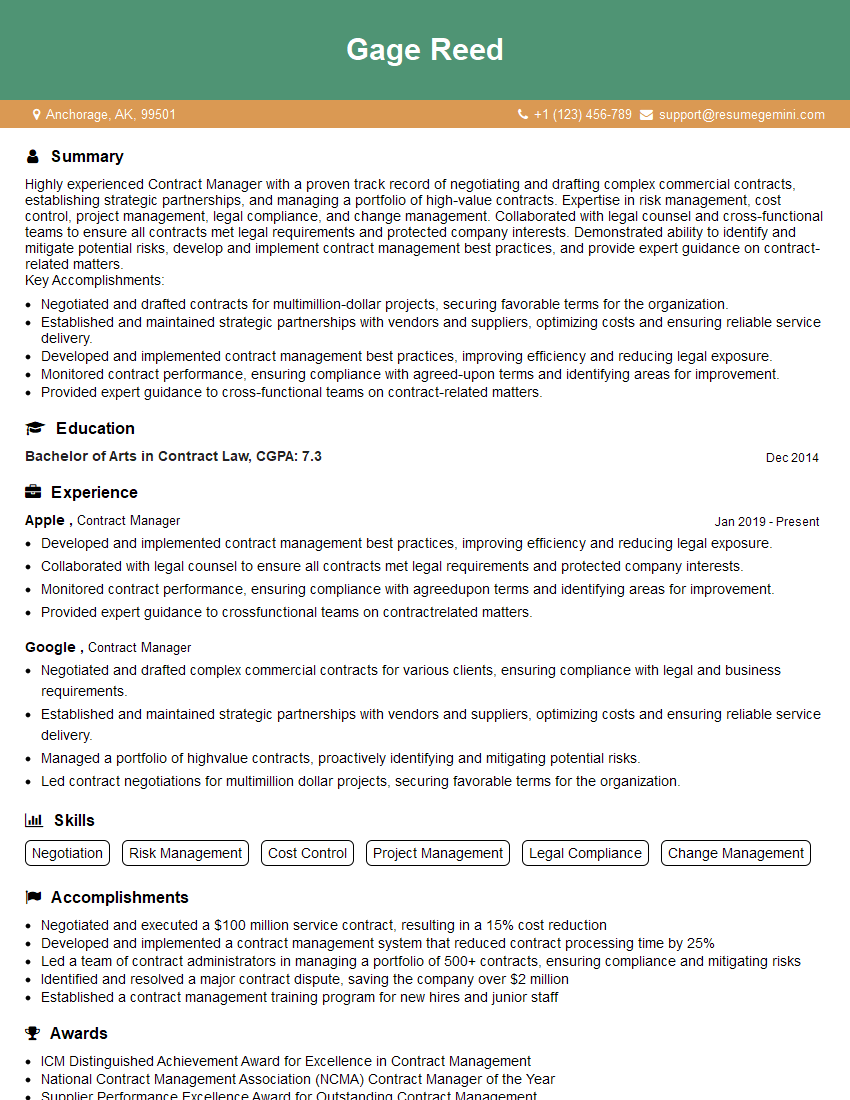
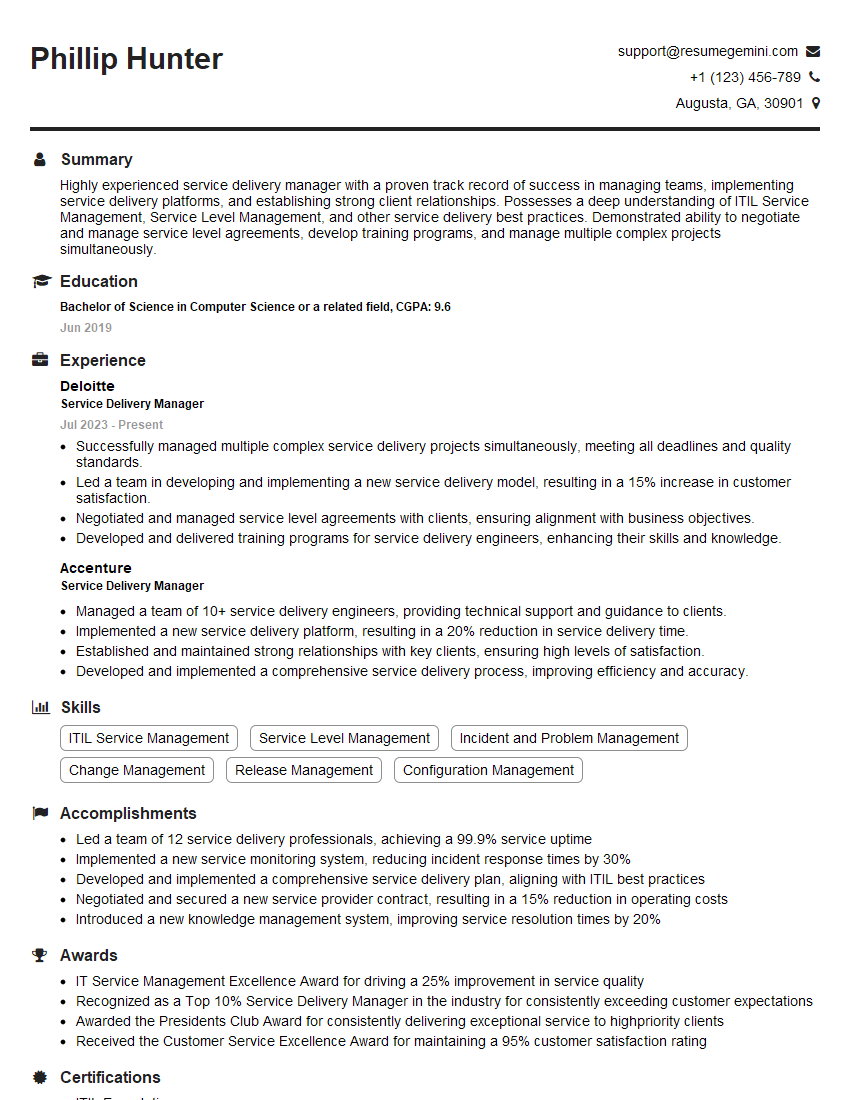
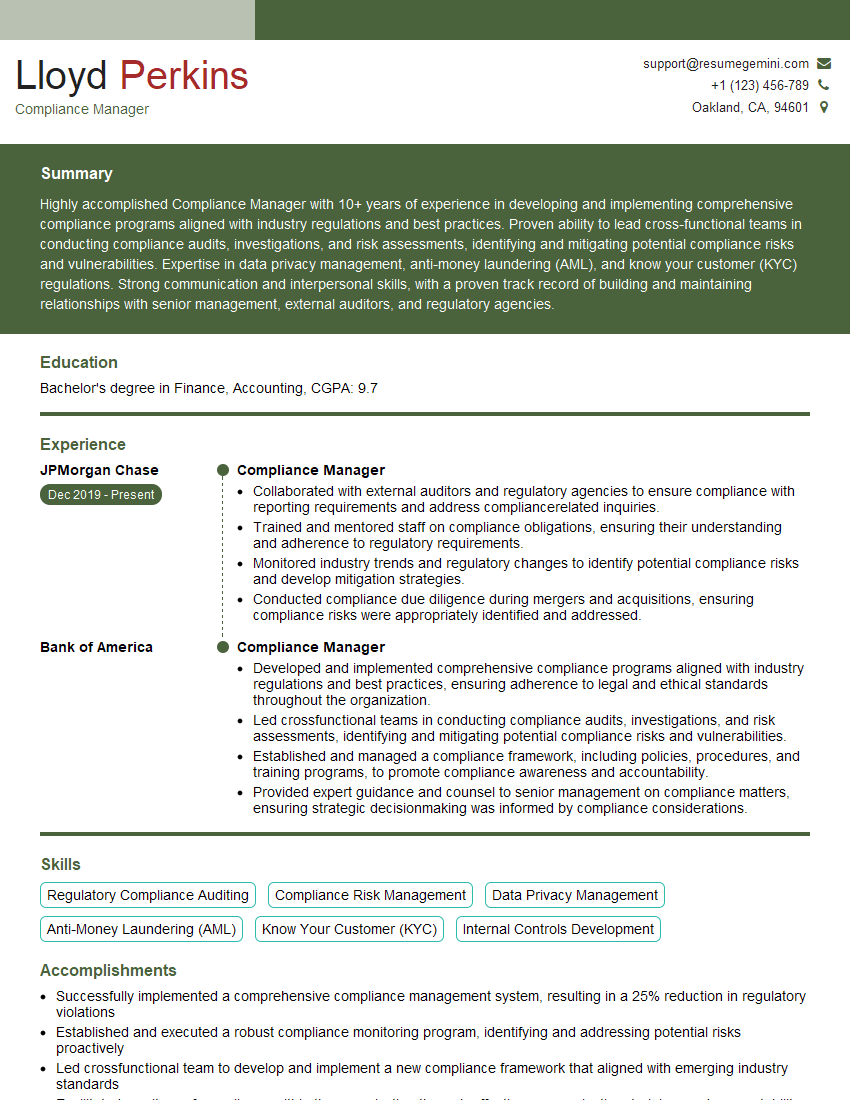
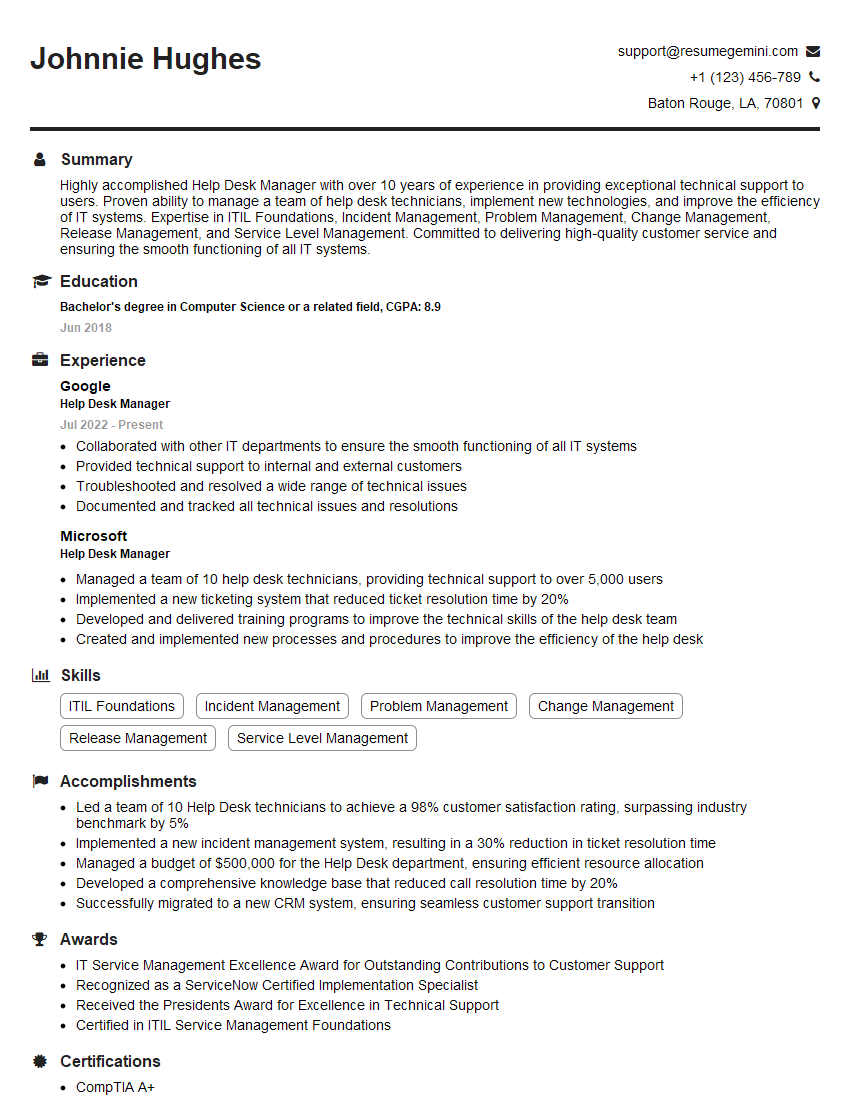
Mastering Service Level Agreement (SLA) Development and Management is crucial for career advancement in IT operations, project management, and customer service. A strong understanding of SLAs demonstrates your ability to manage expectations, improve service delivery, and contribute significantly to organizational success. To maximize your job prospects, it’s essential to present your skills effectively. Creating an ATS-friendly resume is key, and we strongly recommend using ResumeGemini to build a professional and impactful resume that highlights your SLA expertise. ResumeGemini provides examples of resumes tailored to Service Level Agreement (SLA) Development and Management to help you craft the perfect application.

Explore more articles
Users Rating of Our Blogs
Share Your Experience
We value your feedback! Please rate our content and share your thoughts (optional).
What Readers Say About Our Blog
Very informative content, great job.
good